In Which the Author Opens a Time Capsule
This is the greatest idea I've ever had (there is going to be a renewed emphasis on positivity on the site henceforward).
Each of the two yearbooks I have preserved from high school contain a two page spread dedicated to the various phrases and words which defined the year. These phrases are not listed in any kind of linear order but float over grainy images of largely unidentifiable groups of students. Some of them are strictly school or regionally specific references, while other are broader in origin and would be familiar to anyone inhabiting this country in a state of reasonably developed consciousness at the time. I thought it would be curious to examine whether they signify anything now. For what it is worth, I went to a public high school in Portland, Maine from 1986 to 88. Like most places, Northern New England seemed at that time much more culturally remote and isolated from the rest of the country, to say nothing of the world, than it is now. I gather that for most intelligent people, the intervening political and social and technological changes have greatly improved the quality of their mental lives and social discourse, and they have no desire to go back. Neither do I, of course. I only spend most of my writing energy in the past because that is where such paltry references and experiences as I have primarily reside. I regret to report haven't found much of life that I have discovered after age 30 to be terribly interesting compared to what I did up to that point.
Without further delay, especially as there are so many of them to break down, here are the vital terms of 1986-'87.
Staph Infection. This is a local reference, there being an outbreak of this malady during the winter. Its ravages were mostly limited to the wrestling team. I remember that their mats had to be burned, or something like that.
Beastie Boys' Licensed to Ill. The now legendary album of course, which famously "caught the guardians of popular culture napping" in 1987. We did have MTV (and not much else) in Maine, so we knew about the Beasties.
Mousse and Styling Gel. It was certainly big with the girls at the time. Is it still? Perhaps not. One does not see the rather spectacularly teased hairdos among the younger set nowadays that were so prevalent in the 80s. I tried to put some gel in my hair exactly once and predictably, it was a disaster, unless you consider looking like a regular on Dance Party USA to be a triumph.
Converse High-Tops. I assume this refers to Chuck Taylors? That retro fashion statement lasted well into the early 90s, at my college anyway. I never had Chucks, because I had an idea of presenting myself as a quasi-"real" athlete in those days and considered most of the people who wore them to not belong to that category. These are many of the people same however who now run triathlons and eat gluten-free diets. I currently dent the scales at 230 and can barely run 200 yards without collapsing, though I'm pretty sure I can still beat 85% of the 'men' half my age in a footrace at that distance, as well as 99% of the guys who actually are my age. Not that this means anything.
Driver's Ed. I took driver's ed the year before, when I was still in Pennsylvania. If you're usually in the 'college-bound' track, this was one of your chances to take a class with the regular population. It was not an inspiring experience. Looking back of course I should have taken the opportunity to try to bond with the two girls in the class who were fellow refugees from 'honors' English, etc. and who clung to each other pretty tightly in their revulsion at everyone around them, not least the teacher, who was one of those unctuous JV coach types whom no one was ever going to entrust with running his own program. It was really dismal.
Homecoming. I didn't go.
Feathered-Back Hair. I associate this more with the '81-'84 period, though I guess a few laggards were still squeezing the last dregs of fashion out of the style in the winter of '87.
Intense. A popular catch-all adjective of the season, applicable to the gamut of teenaged experience. I used it sparingly, and almost certainly never accurately.
It's Harsh. See entry for "intense". There was one very cool and decidedly affluent guy, who wore plaid shorts and sunglasses with straps around his neck and knew all about Camper Van Beethoven and even Vigil (to be honest, I'm not sure that he really belonged at our school), who expanded this to the--when he spoke it--somewhat hipper sounding "You're harshing my mellow", which no imitator among our student body could really pull off. I can't find this guy on Facebook, but I have no doubt that his current profession involves words like "investment", "securities" and such.
The Iran-Contra Scandal. I cannot pretend that I was paying terribly close attention to this at the time. My main association with this episode of history involves a kid who was called "The Dumpster". This was the most accurate and all-around brilliant nickname given to anybody I have personally ever known, by the way. By the time I came along no one could even remember where it originated; the second you heard it, it was immediately obvious to whom it referred, and why, such the word could never thereafter be separated from the image of the man. The Dumpster was a rather intelligent, if strange fellow, who looked like and carried himself in every way like a 46-year old man who had been working in some dreary bureaucratic office for seventeen years, never married, or remotely close to being married, ate a greasy grilled meat and cheese sandwich every day for lunch, manhandled multiple newspapers daily while reading them front to back, and took driving tours to famous battlefields on his vacations. He was a diehard Republican, champion of Reagan and sworn enemy of communism in all its forms; the stridency with which he expressed all this was decidedly singular at our school. Along with lunch, it appeared to be the great joy of his life to shake his head with a bemused smirk at such effusions as the various committed liberals of the class--mainly earnest girls, several of whom I was mildly in love with at the time, fey boys, and a handful of would be rebel boys whose fury at various social injustices came across to me at least, who was admittedly jealous of them, as slightly put upon (they certainly did better with the chicks than either I or the Dumpster)--were wont to make. When the scandal broke big, I remember that he took to regularly wearing an Oliver North t-shirt to school both to show his solidarity with the president and to antagonize his political enemies. Update: I have found the Dumpster on Facebook! And he has 30 more friends than I do! It looks like he is a high school teacher in rural Maine, which I would not have thought would be his destiny (the teaching part). His info also says he has been to China seven times, which I really would not have thought to be his destiny.
Football Games. Our program was not very powerful in those days; the team went 1-8 both of my years at the school, which was pretty pitiful considering we were the 3rd largest high school in the state and were close to twice as big as most of our rivals. I never played organized football. I thought about giving it a try before both my sophomore and junior years but due to various circumstances, I was not settled at a school in either of those years until the day or two before classes started, long after practice had started. So I gave up the idea.
Macdonald's. I think it is supposed to be McDonald's, isn't it? I'm not sure why this made the list. Obviously people went there, but they went to other places just as much, and which were much more conducive to hanging out, and had more poignant atmospheres as well.
Couching. Must have been a slang term, but one that seems to have passed me by.
Snow Days. This was actually notable, as the Portland schools hardly ever closed since A) most people lived within a mile of school, which was considered walking distance, and B) people expected it to snow in the winter in those days, and nobody seemed to worry too much about the roads and accidents and slipping on ice and all of that like they do now. The school had to close because the roof was leaking as a result of all the snow that was piled up on it; not the roof of the original 1924 building of course, but the one on the addition that had been put on the back and was less than 10 years old at the time.
Tretorns. I have no idea what this is (ed--I looked it up and it apparently is some kind of sneaker). Whomever these were a big deal among, I did not know them.
Ronald Reagan. Wasn't this around the time that he really began to be affected by his condition and largely cease to appear publicly though?
Penny Loafers. They were kind of a trend among a certain crowd that seemed to me to have something going for them, though exactly what I do not remember at present, and I must admit I had a pair myself, and put the pennies in them. They probably were an improvement over whatever shoes I had been wearing to school before, but they didn't propel me into a new realm of social success or anything like that.
Road Trips. When you live in Maine, you do get in the habit of roadtripping quite a lot, even in high school. The main destinations on these trips were Boston and the beaches further south (i.e. Mass and even New Hampshire!) where inherently tougher and sexier people and more dangerous vices were supposed to be found. Montreal, which is 4-5 hours away, was also popular, among other things because the drinking age is 18 there. There are also lots of strip clubs and I suppose other illicit entertainments to be had as well, and at discount Canadian prices. The Mexican versions of these expeditions for the underaged crowd--Tijuana, Cancun--are more celebrated in popular lore. I suppose they are technically more wild, more decadent, and host more spectacular physical specimens than their Canadian counterparts. As is the case with Las Vegas and bascially anywhere warm however I cannot imagine myself among such scenes having any fun and suspect I would have been totally lost in them. Therefore the Montreal/Niagara Falls-type drinking and (attempted) whoring weekends have always held a greater interest for me. I never went on one of these trips myself, it probably goes without saying.
MTV. It was a big part of day to day life. '87 was the year they started switching heavily to the pop metal bands (Def Leppard, Poison, etc), which most people I knew were not too happy about. There was still hope at that time that it would become cool again, maybe another girl like Martha Quinn would be hired, and so on.
Platoon. The movie. Won the best picture at the Oscars that year. In case you have forgotten, it was directed by Oliver Stone and starring Charlie Sheen, and I am guessing this has contributed to the eclipse of its reputation as a significant work of art in the ensuing 25 years.
Denim Jackets. These were pretty big.
Norweigan Sweaters. I guess these were big too, though I did not notice it at the time. I assumed everybody wore them all the time because it was a cold climate. In general, during the vital years of my youth--approximately 1985-95--young women really were not flaunting a lot of skin in public. Anytime you look at pictures from 1990 or so, they've all got the heavy sweatshirt over turtleneck look going on, and the stirrup pants. It's probably for the best that girls were not regularly going around in heavy cleavage-revealing tank tops with visible thongs in the places I was when I was seventeen, eighteen, nineteen. I probably would have had to be institutionalized.
Dances. The dances at my high school were actually really lame, which surprised me, and still does surprise me a little. People just didn't know what to do at them, there was no organization or direction emanating from anyone enough people trusted, and the majority of the attendees suffered from bad inhibitions. They (the dances) were just a mess. It didn't help that the all-boys Catholic school and statewide sports powerhouse a half mile away threw dances open to any girls who wanted to come to them which were major and much looked forward to happenings as far as many of the ladies were concerned for miles around, especially when they were scheduled on the same night. Especially when they were scheduled on the same night that this rival school beat us in basketball 92-59.
SATs. The yearbook was run by the ambitious, GPA-calculating, prestigious university striving crowd, so they made a lot of fuss about the SATs. Believe it or not, I was not part of this crowd. I wanted to get high test scores and go to a hoity-toity college and all that, but I kind of kept that to myself, mainly because I knew my effort would have looked pretty ridiculous compared to these people, and I didn't want to expose myself to having that pointed out.
Benetton. I didn't realize anybody at our school actually wore this. Whoever it was never came anywhere near me.
Funneling. Now this was an activity that I achieved a reasonable amount of proficiency in, enough that I was a little disappointed that the opportunity to demostrate my prowess never came up in college, the drinking culture there being too sophisticated I guess for the introduction of silly contraptions into the process. Of course I could have made my own funneling apparatus and brought it to the party, but you see that would not have worked, because I certainly would not have been the best or most prolific funneler, the idea was merely to show modestly that, yes ladies, I do know my way around the world of binge drinking and wild parties and thus if you feel the urge to indulge in a session of sloppy, non-committal sensual intimacy, you can trust that you will be in secure hands. Needless to say, this idea was never effectively communicated.
Closing the Gym. I cannot remember if this was on account of the staph infection or the leaking roof. Perhaps both.
College Application Deadlines. See SATs, above.
Macbeth. This must have been the drama club's offering that year, which I would have ignored, being preoccupied with my own obsessions. Our school was the kind that always had a pretty good drama program however. The auditorium was part of the original 1924 building, maybe even its highlight. It was beautiful. It had a balcony, arched stone doorways, plush red seats. Portland is a comparatively liberal and cultured city, or at least a significant part of it is, so any stigmas that existed against boys acting in plays, or even presenting themselves as pretty blatantly gay, were somewhat less pronounced than they would have been in many other places, especially at that time.
Skiing. I never learned how to ski, though it is still a big social thing that normal people do in New England. My wife of course knows how, and I've had my two oldest sons take lessons through their school the last few years, and I'm told that they're very good at it, so that pleases me. It is one of those things, like piano playing, that it is good to know how to do. It is done all over the world in invariably pleasant places by good-looking, healthy, affluent, and usually reasonably well-educated people. Skiing locales in Europe, especially, are filled with gorgeous women looking to party and whatever else, but you're kind of cut off from this pleasurable scene if you can't ski yourself. This all sounds calculating, but I don't mean it to be. As somebody who doesn't have, in the parlance of Napoleon Dynamite, a lot of skills, I would like to see my kids be a little more able than I am, especially in areas like skiing that are easy to learn when you're six, not so much when you a long-legged 6'3" adult with a high center of gravity and precarious balance.
The Red Sox in the World Series. This was of course the infamous 1986 World Series when they lost to the Mets. This all took place about a month to six weeks after I moved there, so it was a good introduction both to the relationship and its accompanying angst of the Boston Red Sox to the collective life of the entire New England region. The spring of '86 had seen the last, and most dominant, of the Larry Bird championship Celtics teams, following shortly afterwards by the drafting of Len Bias and his death by cocaine overdose the very same night. So I missed that, but the spirit was still high through '87, when the Celtics miraculously beat Detroit in the Eastern playoffs and lost to an admittedly superior Lakers team in the finals. I was at a party the next year when they lost to Detroit in the rematch in the Eastern finals and the minute the game ended everybody knew immediately that that was the end of this team, which it was. The point is, for all these people Larry Bird, Parish, McHale had been around since they were little children, 8 or 9 or so, and now they were finally vanquished and done and it really was like a part of their life, albeit a minor one, was over. It was actually kind of dramatic, not in a hysterical way, but it was sad (and yes, those players played on for a few more years, increasing old and injured, but they were no longer a great team after '88).
Sweet! Another popular expression. I think this was in one of those army bootcamp movies, Full Metal Jacket or one of those. I did not use it. My word I liked to throw out was "treacherous" which is really an awful word, especially when it's being flung around indiscriminately by a 17-year old.
Dissecting in Biology. Something else the smart kids did. Obviously I did this too, but it would not have stood out to me as a vital memory. The only thing I remember from high school biology is the day the teacher, who was the kind of guy that you just knew hadn't had sex in 30 years, and maybe never, talked about animal reproduction, sperm-and-egg, testes-enlargening nuts and bolts kind of stuff, with diagrams on the board and all the rest of it. Naturally this now conjures up the vision of a certain blondish individual who sat in the front row of the class in the far left seat with her well-formed face visible to me in profile, the rows of chairs being arranged in semicircles as in an amphitheatre or traditional lecture hall. This was not one of those girls you consciously connected with animal behaviors though the instant you saw her, at least I didn't at that age. The association was doubtless always there, but had always been convoluted, and the two memories maintained separate existences. Until now.
Crew Cuts. I had one. It did not look good, and I have never gotten another since. It took six months for my hair to grow back to a normal appearance, so I guess I saved some money on haircuts. Looking back, it is odd that this fashion statement suddenly became popular again. I don't know what I was thinking when I got it. I have always had a certain amount of angst about my hairstyle, and believed there was some elusive look I could capture that would make me appear more commanding, dapper, serious, or whatever. Doubtless some guys I thought possessed a winning look had gotten the buzz cuts and these seemed to be working for them, and I figured I had nothing to lose. It didn't work.
PDA. I don't remember much of this going on at our school, with the exception of the (admittedly sizable) heavy metal contigent. As I thought these people, the females included, were almost uniformly gross, I suppose I tended not to count them. No one could deny however that on the whole they were getting a lot more action than the more conventional community was, for whatever it was worth.
Bon Jovi's Slippery When Wet. Had to have been the album of that year in Portland for 1987 (the album of the year for 1988 will be revealed in that year's post). It was almost all because of the girls of course, and not just the metal ones (though nowadays, judging from the size of the hair, they all look like potential metal girls, there were major gradations of metaltude within the female population, and one learned pretty easily what these were) though Bon Jovi himself was not as widely despised among the males at our school as elsewhere. This was because a lot of the male social leaders were Italian and they thought he was cool. Unlike at the school I had gone to in PA, where only fat people and obvious losers listened to music a mainstream person would ever have heard of, in Maine there were really pretty girls who not only listened to lame contemporary top 40 pop but even old stuff like Simon and Garfunkel. I cannot overstate the extent to which this state of affairs struck me as almost quasi-miraculous at the time.
Parking Bans. I don't remember this. I didn't pass my driving test until around April, so these did not effect me.
"Twist and Shout" I assume this refers to the Beatles version of the song becoming a minor hit again that year due to the Ferris Bueller movie, which (the movie) I never liked.
Guess Jeans. Needless to say, I wasn't getting close to any girls who wore these.
The Health Clinic Controversy. I didn't even know we had a health clinic. Wherever you are, it turns out there is always something going on with the health clinic that is enraging certain people, and I never have any idea what it is.
Detention. I never had detention in high school. I had it once in 7th grade for throwing a couple of tomato slices at a girl who physically excited me. I have no recollection of what the thought process was that inspired that particular gesture.
The Bonfire. I missed the bonfire, both years. Once I had to work, and the other time I think I was depressed or something. They had them in mid to late October. In New England this is an extremely poignant and sentimental time of year anyway, and I think something about the whole scene, and feeling that I was not really a part of the community, was somehow too much for me at the time. I kind of regret not going now. The poignant falls of youth are fleeting.
Chemistry Labs. I wish I had done better in science throughout my life. I suppose I could try to learn it now, but given that guys who are science whizzes in high school go to college and are immediately slapped down and told they don't understand anything, it seems that any self-taught knowledge I might acquire would be unreliable.
Bruce Springsteen Live 1975-1985. This album had like 5 records in it. And everybody got the set with the records too, never the cassettes. A lot of people got this as a Christmas present from their parents or other older family member, I think. I did. The package was substantial, the perception of Springsteen among adults was that, unlike say, Billy Joel, he was cool enough that a teenager could play his records among friends without becoming a social outcast, but also acceptably retro and unannoying, unlike the Beastie Boys or Guns and Roses. I have dragged the thing around for all these years and probably still have it, though I haven't listened to it maybe even since before college. When I did show up at college, I actually made small talk about this album with a guy who spotted it in a crate I was carrying in who became one of my best friends and remains so to this day, as far as I know (there was a moderately unbalanced girl who tried to convince me that he was not my friend and had done terrible things to me, but she wouldn't specify what they were, I never received any other hints or clues as to the veracity of her accusations, and the man himself seemed genuinely puzzled and bemused when I related the story to him, so I did not bother myself about the matter any further). I don't know that we ever got around to listening to any of the album, though. Maybe briefly that very first afternoon, but I'm pretty sure some real music aficiondos arrived and took over the record player.
That marks the end of this journey into the depths of lost time. It took me an embarrassingly long time to write this post.
Tuesday, June 21, 2011

Friday, June 17, 2011
Photo Update
We haven't had any straight picture posts for a while. Between the pregnancy, and not going to Florida, and the camera's going down for a while there isn't a ton of riveting material. Still, it's a whole season or two of life, and even ten random selections can put a little coherence to it and help you remember it.
1. All the way back to the aftermath of Christmas. Children #4 and #2. That red toy in the center of the frame is a device for scooping sand/making sand castles, though in the winter we use them with snow for the same purposes. 2. Line for Snowtubing, Ski Lifts, et al
 3. The Making of a Triple Decker Bunk Bed. #s 3 & 2.

4. Easter. My annual Easter verses are visible on the table, though happily I don't think anybody will be able to read them.
 5. On the Verge of Spring. This may even have been the first day the buds were out. #2 learned to ride in literally a single afternoon. Lest I be mistaken for a modern safety nut, I try to discourage them from wearing the helmets, but the kids today think it's de rigueur equipment and it's cool. Like I would have thought about playing baseball without a glove, even though the tough kids in the Dominican who grew up to be real ballplayers didn't need any stinking gloves. I would have thought it was declasse' at the time though.

6. 9th Birthday Party for Child #1. At the bowling alley.
 7. The End of the Party. Deer Hunting
 8. #5, a Few Hours Old
 9. We Did Go on an Outing to White Lake, Near the White Mountains, on Memorial Day Weekend.

10. #5, 2-3 Weeks Old. Her head still looks like the other guys, but the rest of her looks more like a girl, especially her limbs, fingers, toes and such are daintier and more refined in appearance.
 3 quickie posts. I probably won't be able to get up anything quasi-reminiscent of a piece of writing by a legitimate intelligent male adult until the middle of next week at the earliest.
We haven't had any straight picture posts for a while. Between the pregnancy, and not going to Florida, and the camera's going down for a while there isn't a ton of riveting material. Still, it's a whole season or two of life, and even ten random selections can put a little coherence to it and help you remember it.
1. All the way back to the aftermath of Christmas. Children #4 and #2. That red toy in the center of the frame is a device for scooping sand/making sand castles, though in the winter we use them with snow for the same purposes.
 2. Line for Snowtubing, Ski Lifts, et al
 3. The Making of a Triple Decker Bunk Bed. #s 3 & 2.

4. Easter. My annual Easter verses are visible on the table, though happily I don't think anybody will be able to read them.
 5. On the Verge of Spring. This may even have been the first day the buds were out. #2 learned to ride in literally a single afternoon. Lest I be mistaken for a modern safety nut, I try to discourage them from wearing the helmets, but the kids today think it's de rigueur equipment and it's cool. Like I would have thought about playing baseball without a glove, even though the tough kids in the Dominican who grew up to be real ballplayers didn't need any stinking gloves. I would have thought it was declasse' at the time though.

6. 9th Birthday Party for Child #1. At the bowling alley.
 7. The End of the Party. Deer Hunting
 8. #5, a Few Hours Old
 9. We Did Go on an Outing to White Lake, Near the White Mountains, on Memorial Day Weekend.

10. #5, 2-3 Weeks Old. Her head still looks like the other guys, but the rest of her looks more like a girl, especially her limbs, fingers, toes and such are daintier and more refined in appearance.
 3 quickie posts. I probably won't be able to get up anything quasi-reminiscent of a piece of writing by a legitimate intelligent male adult until the middle of next week at the earliest.
The only Google search that led anyone to the site today was for "paul eskey". Who wouldn't be intrigued?
Wednesday, June 15, 2011
A Few Songs to Cover the Gap
Maybe it is better to be honest about our habits and try to work through them than to keep them hidden.
"I've Told Every Little Star" (1961, Linda Scott). It was evidently featured in a David Lynch movie (Mulholland Falls) and is accompanied by clips from his various films.
One thing I will say about David Lynch, unlike many people in the visual entertainment field over the last 20-25 years, he has an eye for good-looking white girls, and a sense for how to bring out some of the latent and sadly underutilized appeal that a lot of us have been missing during that time.
My Lennon Sisters fetish is perhaps getting clinical. I'm going to have to bleed my sentiments until I am purged. Now I've stumbled upon a treasure trove of their really old Laurence Welk appearances from the 50s and early 60s, when they were just little girls and teenagers. The arrangements are better and the performances more poignant than those I've been putting up from the mid to late 60s, when the show began to get really corny and the girls' genuine wholesome good looks and assuring poise were about the only things it had left going for it.
In their early years on the show the girls mostly just stood in a little group on the stage in tasteful but unspectacular dresses and sang, no ridiculous costumes or props or little skits. To be honest the skits from the 50s were not even that bad, were in fact often in keeping with the times, and the program does not appear to have started becoming the paragon of bad taste and total uncoolness that it is famed as now until sometime in the early 60s. This one below for example, from 1959, would not have been far out of place on any music-themed show of the era. (The three older Lennon Sisters only provide backup in this one but at ages 16, 18 & 19 they display the mainstream teen-age girl styles of the day in all their considerable glory).
Linda Scott was good-looking in the matronly way young women sometimes have, where they are twenty-two and good-natured but already have the features and movements of a fifty year-old. I've known a couple of women like that and I remember thinking, not so much at the time but an hour later, or the next day, or the next week, that gosh, that girl was really sexy (followed by, why was/am I so unresponsive to my own instincts in real time?).
Sunday, June 12, 2011
New Baby I figure I had better announce, before she starts popping up, without formal introduction, in photos of writers' graves or outhouses or whatever, that I have a daughter, born May 18, 2011. This is a surprise, and perhaps an additional comfort for my declining years, even if society does descend into the total barbarism and chaos that is frequently predicted. Her name is Susanna. One of Shakespeare's daughters was named Susannah, you may recall, though that had nothing to do with my daughter's name, in fact I did not remember it until after the fact. It does give it a certain poetic glamour though, I think, which cannot be harmful to its bearer. Susanna was also the name of the bride in The Marriage of Figaro. I am sure I will remember or come upon other ancient or modern Susannas who further add to this lustre.
Since I recounted when my last son was born all the books I was reading at the times of the children's various births (The Golden Bowl; Confessions of an English Opium-Eater; The Spectator; and The Tower of London), I should report that the reading on this occasion was On Approval by Frederick Lonsdale, which is a champagne-fizzy British drawing room comedy from 1927. There are worse omens to be born under. On the other hand, my wife's own mother was reading The Gulag Archipelago at the time she delivered Dearest, and this has not resulted in any ill-effects thus far, so most likely there is nothing in these literary circumstances that surround ones birth.
 I figure I had better announce, before she starts popping up, without formal introduction, in photos of writers' graves or outhouses or whatever, that I have a daughter, born May 18, 2011. This is a surprise, and perhaps an additional comfort for my declining years, even if society does descend into the total barbarism and chaos that is frequently predicted. Her name is Susanna. One of Shakespeare's daughters was named Susannah, you may recall, though that had nothing to do with my daughter's name, in fact I did not remember it until after the fact. It does give it a certain poetic glamour though, I think, which cannot be harmful to its bearer. Susanna was also the name of the bride in The Marriage of Figaro. I am sure I will remember or come upon other ancient or modern Susannas who further add to this lustre.
Since I recounted when my last son was born all the books I was reading at the times of the children's various births (The Golden Bowl; Confessions of an English Opium-Eater; The Spectator; and The Tower of London), I should report that the reading on this occasion was On Approval by Frederick Lonsdale, which is a champagne-fizzy British drawing room comedy from 1927. There are worse omens to be born under. On the other hand, my wife's own mother was reading The Gulag Archipelago at the time she delivered Dearest, and this has not resulted in any ill-effects thus far, so most likely there is nothing in these literary circumstances that surround ones birth.
Tuesday, June 07, 2011
Football Scandals, Death of a Sex Fiend and, Why Won't the Literary Itch Ever Just Die?
Football Scandals, Death of a Sex Fiend, and, Why Won't the Literary Itch Ever Just Die?
With USC and Ohio State football both being handed big punishments recently after some scandals, or at least blatant rulebreaking, by various of their coaches and players, much of the progressive sports media has been reviving the call for paying college athletes, or at least football and basketball players at powerhouse programs. I do not follow college sports that closely so I don't really care whether things move in this direction--I would prefer it didn't, though it doesn't look like the college presidents and other people who would be in charge of this have any intention of (officially) implementing such a system. One suspects a modest stipend would not be satisfactory to some of the more prominent talents; and anything more than that would remove most of the remaining pretenses that the players were students and would require them to be dealt with as employees, with all that that entails, which I don't think the university powers are interested in doing.
The primary source of amusement for me in these debates is all the hand-wringing about how the players on scholarship, many being from disadvantaged backgrounds, don't have any money to so much as go to a movie or take their girlfriends out for pizza (and presumably milkshakes). They aren't allowed to hold jobs anymore, apparently because of the probability of abuse at the most extreme football-mad schools (i.e., $10,000 for putting in a couple of hours sitting at the desk at a prominent alumnus' car dealership). For some reason one never hears about the football players at Appalachian State or Arkansas-Pine Bluff having to forgo dates or be consigned to their rooms for the weekend because they have no walking around money, yet they are presumably from similar backgrounds as athletes at most of the big time schools. My father was a scholarship athlete back in the 60s at a fairly major sports school (Villanova) in track and field, now a minor sport but more significant at that time. Everything having to do with life at school--books, meals, laundry, etc--was completely free. He was fond of telling the story that he was given so many 'snack tickets' (i.e. for free snacks) that he ended up giving most of them away. My father was intelligent and had gotten a very good education in the pre-Vatican II Catholic school system--much better than the public education I received 20 years later--but due to parental alcoholism, chronic unemployment, marital separation--the usual story--his family was quite poor at the time he was in school, and he certainly would never have attended a comparable private university without the scholarship. I realize this was a different era, and people were in general accustomed to living more austerely, especially at school, but he regarded himself as having gotten the break of his life. He was able to work in the summer, and though he gave quite a bit of that to his mother, what he had left was sufficient to support a perfectly reasonable social life. I doubt that the problem today is that the players are so materially deprived, but that their expectations and grandiose self-conceptions, as well as those of their coaches and institutions, have 'gotten out of hand'. I would say 'transcended far beyond the bounds which a proper foundation in liberal learning might have had the effect of inculcating', but the use of phrases like "liberal learning" as if it represented something that actually existed seems to send more college graduates into a state of fury nowadays than any number of scandals involving athletes and money, crime, etc.
Another anecdote about my father's career is that the Villanova team, which was in those days, and generally still is, a powerhouse in college track, got to travel several times a year to big meets in places in New York and Boston, and I think they even went to Tennessee once. This going to New York and staying in a hotel and being taken sightseeing and all--even though the college was just in Philadelphia--was considered kind of a big deal, a real perk, as it were. Even when I was a kid, there would be footage on TV of the players from Iowa or Ohio State visiting Disneyland when they made the Rose Bowl as if being able to go to California must be the thrill of their lives. Nowadays of course the top high school teams in most sports fly all over the country to play each other, often televised on ESPN 2 or 3. Of course they expect to get paid.
I know the colleges--or at least a handful of them at the very top of the pyramid--make a lot of money off of these players, and unlike the institutional networks at Harvard and places like that, the players' affiliation with their school does not seem to be of much help to many (though not all) of them later in life. The amount of money at stake clearly contributes to corruption, compromises of integrity, and so forth, at many of the schools, and the institutional energy and resources expended on athletics in general at most places I think has become really disproportionate even compared to what it was in the 1970s. I also think it puts the schools in a bad position vis-a-vis the players, many of whom obviously consider that they should be getting a cut of this largess beyond their scholarships and the benefits of their prominent affiliation with the university. I think there is a place for athletics in collegiate life, but it should never have been allowed to get to the point where it is so much about money at all, and especially the kind of sums that are involved now.

I was going to write something a sex maniac I read about who killed himself at age 73 while facing trial for thirteen separate rape charges. He was the guy wrote the song "You Light Up My Life"--which I thought was about God or Jesus or something but never mind--and he had been a moderately succesful, if not critically respected, figure in show business, with the peak of his career coming during the 1970s. My immediate impression was "Gosh, this guy has had a lot of sex in his life, and, at least in his own desire and expectation to fornicate, he remained voracious into his old age (He lured the girls he is accused of raping--all aged 18-30--to his apartment via ads for a 'casting call'). Obviously the guy was a total sleaze even on his good days and was revealed as a criminal in the end, but for somebody like me who goes through life feeling as if I so much as put a hand on a woman's shoulder in a moment of spontaneity authorities are going to instantly descend upon me and make sure that I am forbidden entry to any pleasant corner of society ever again and that my life will be generally ruined, the audacity and sense of entitlement of people like this just blows you away. I could have used just a little of it, and it would have made a enormous difference in my life.
Literary Nudgings?
Several incidents happened this week which made me wonder if I should not go back and try writing again. In short, I found out that a couple of people I vaguely know, who were decidedly outsiders of the publishing world at the time that I knew them, have succeeded not only in having their books published, but have received some good acclaim and more than enough validation to bear the title and status of 'writer' among all but the very uppermost reaches of the educated classes. I am a long way from getting to such a point now, farther than I was 10 years ago, but...there is still something there, some material, some idea that I would like to see presented in a way that may be peculiar to myself. It needs to be organized and thought through with a clearer head than I have at the moment, but my instincts for the type of writing I would want to do are still pretty good, and I am still pretty secure in their value, assuming they could be skillfully executed. But as I say, I am now a very long way from being capable of doing that...
Monday, May 30, 2011
Movies 1983-1998
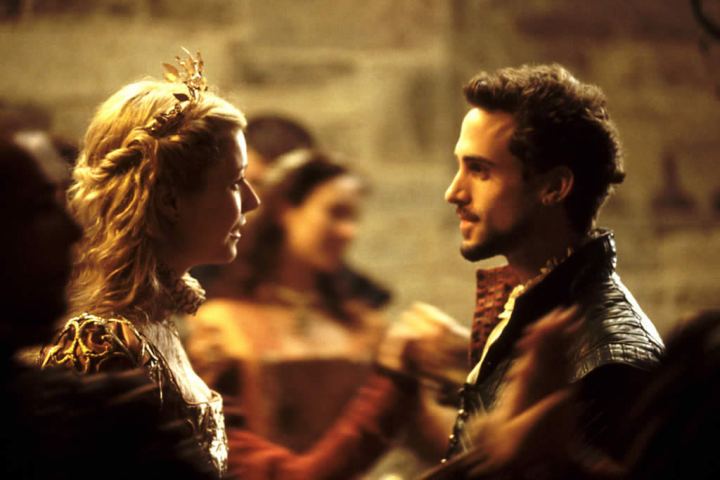
The first one this time is Shakespeare in Love.
I am protected by my inability to be too much enamoured of anything this recent from imagining that it was actually any good, though I think it is harmless enough, and unlikely to delude many people into thinking they are cleverer than they are or understand anything important about Shakespeare or literature or English history, which some of the people who do understand these things often seem to worry about. It won the Oscar for Best Picture in its year (1998--I hadn't realized this was that old either--1997 seems to be the cutoff point after which my active participation in life effectively stopped. Everything since then merges together in one amorphous period lacking in any demarcation of time) and is often rated among the worst such winners, though I could probably come up with 10 even lamer ones pretty easily. I don't remember what ought to have won in its place. There were a few things I liked about this movie however, which is what I will emphasize here.
1. The Imagery of Taking a barge down the Thames and debarking at a palatial estate. Preferably your own, though that of a dear friend or lover I suppose would be acceptably pleasant too. They break out this motif in other movies set during the Tudor period, such as A Man For All Seasons, and even now there is the option for tourists of riding a barge down to Hampton Court Palace, which Henry VIII famously accepted as a 'gift' from Cardinal Wolsey in the latter's unsuccesful bid to preserve his head. I admit to finding the prospect of this ride tempting at the time, and the idea of it still stirs my romantic imagination, It is inextricably identified with that age when what we think of more or less as classical England burst forth (from the standpoint of cultural, political and economic power) from the winter of the Middle Ages in all its sunny freshness.
2. Having the Run of One of These Palatial Estates Even For a Short Period. I would almost be content to have this even if I knew beforehand there was to be no possibility of sex/romantic intrigue whatsoever. This has nothing inherently to do with the movie's actual quality again, but is another image of European high civilization served up for middlebrow consumption without any indication of or necessity of undergoing any of the difficult mental work that was required to build and maintain that civilization, which perhaps more than anything in the world drives legitimate intellectuals and artists to absolute fury when it attempts to pass itself off as meaningful or edifying. These homes are central to the cultural and artistic history of every European country, and are replete with significance in all their parts to such as can interpret them. One of the running underlying half-comic themes in Powell and Waugh is that many of these houses (whose numbers are obviously limited) have at any given time fallen--before WWII, still usually through ancestral inheritance at least--into the possession of dull people who are failing to properly maximize these houses' potential as the settings for great social occasions.
3. I Am Always a Sucker For Depictions of Artistic Troupes, Even When Not Romanticized As It is Here. This is because the dream of my life was to be an artist and associate primarily with--indeed live among--artistic people, and needless to say that has not happened. I could not be more estranged from the kind of people whose lives consist of the sorts of things I am actually interested in if I had set out intentionally to avoid them. Seeing the interactions among and processes of theater people, even idealized beyond the point of being interesting to a normal person, warms something in my bone-dead soul that I wish I could bring out into the arena of actual life.
4. I Rather Like the Depiction of Shakespeare That is Offered Here. Even more than with other great authors, the dearth of certain knowledge about Shakespeare seems to encourage people to imagine him, or whoever was the author of the plays published under his name, as a more or less idealized version of their vision of themselves. Individuals not given much to frivolity, such as Henry James, often insist that the author of the 'Shakespeare' oeuvre must have been a figure who emitted an air of gravitas so thorough and imposing as to be quite terrifying and incomprehensible to anyone beneath the most diligently bred and educated quarters of society. I like to think of him as a man with an extraordinary talent not merely for literature but for living, who found means to express that talent from the very midst of the tumult of life rather than as an aloof, calculating pure genius of intellect surveying humanity from a perch of consciousness far removed from tumult. I take that to be the spirit in which this character was written, and I think it came off reasonably well.
5. I Was Not Able to Hate Ben Affleck, Eager as I Was to do so. I can see what people mean when they say he can't act, but I didn't think he was that bad, he was certainly trying, and he seemed pretty good-natured. I know good-naturedness is no substitute for talent or skill, but on the whole I don't think his presence detracted that much from the movie.
A Private Matter (1992)
The main rating book I am using must have a different person critiquing TV movies and programs than whoever is doing the regular films, because on several occasions it has given a pedestrian TV movie a 5-star ranking while grading some groundbreaking European masterpiece or other a mere 4 or 4 and a half. This movie was well-made, and everything in it looks good--it is set in Phoenix, Arizona in 1962, when that city/region was around 1/10? 1/20? the size that it is now, and before the complete perfection of the antihuman, corporate-inspired architecture of sprawl that has prevailed for most of my life. Sissy Spacek is the star, and I don't know how old she was at the time--she looks to be around the same age I am now (ed--she was 42)--but she looks great as a 1962 version of an ubermom, and of course she's a swell movie actress, indeed one of the few Baby Boomer stars I actually like (it takes a lot to get me to admit that). There was not anything even quirkily brilliant or thrilling about it that I am going to remember in a month, however. Aidan Quinn plays the husband and he is kind of blandly creepy and insubstantial, as indeed are pretty much all the men, and most of the women too for that matter, except for Sissy Spacek, which gives a hint I think as to what is wrong with the movie.

The film is based on a factual (I think) incident, in which the host of the children's TV show Romper Room, who already had four children, got pregnant again, was told that there was a likelihood due to some defective medicine she took as a sleeping aid that the baby would be severely retarded and was persuaded by several male doctors to make arrangements to (quietly) abort the baby. Unfortunately the media got wind of the story, the woman became for a short time a pariah, she of course lost her position on the television show, and her medical situation became much more problematic, since nobody in the United States would agree to perform the procedure now out of fear of all the negative publicity. In case you haven't guessed, the movie has a decidedly pro-choice message, the transmission of which was the overarching concern of the screenwriters. The good Romanian film I referenced a few weeks ago, Four Months, Three Weeks, Two Days, also centers around an abortion which is illegal and puts its women characters in a really terrible position, but it is still primarily about its particular characters and the society which they inhabit. The abortion is the crisis through which various aspects of these are revealed, and it is probably a symbol, but it is not in itself the object of either moral or political crusade, or outrage; and as such the circumstances in which it occured rendered the characters involved and their situation more sympathetic than in the typical Hollywood social justice movie.
Hollywood social outrage movies, and this even includes Holocaust films, have always been marred by various blindnesses, but one of the major ones is the seeming inability to identify at all with whatever force or ideology is the designated enemy of the idea it wants to push. Whether it is Nazis, southern racists, paternalistic males, greedy capitalists or whomever, they are presented as creatures of a mindset of such thorough evil as to be completely unfathomable to any decent person watching the movie, and great emphasis is made of their awesome and wholly impersonal and merciless power, whose origin is so remote from its victims that it can only be expressed by terrifying images. This is a highly unsatisfying way of understanding such matters, and this mindset has no doubt contributed to the particular political and social problems which afflict this country.

The first one this time is Shakespeare in Love.
I am protected by my inability to be too much enamoured of anything this recent from imagining that it was actually any good, though I think it is harmless enough, and unlikely to delude many people into thinking they are cleverer than they are or understand anything important about Shakespeare or literature or English history, which some of the people who do understand these things often seem to worry about. It won the Oscar for Best Picture in its year (1998--I hadn't realized this was that old either--1997 seems to be the cutoff point after which my active participation in life effectively stopped. Everything since then merges together in one amorphous period lacking in any demarcation of time) and is often rated among the worst such winners, though I could probably come up with 10 even lamer ones pretty easily. I don't remember what ought to have won in its place. There were a few things I liked about this movie however, which is what I will emphasize here.
1. The Imagery of Taking a barge down the Thames and debarking at a palatial estate. Preferably your own, though that of a dear friend or lover I suppose would be acceptably pleasant too. They break out this motif in other movies set during the Tudor period, such as A Man For All Seasons, and even now there is the option for tourists of riding a barge down to Hampton Court Palace, which Henry VIII famously accepted as a 'gift' from Cardinal Wolsey in the latter's unsuccesful bid to preserve his head. I admit to finding the prospect of this ride tempting at the time, and the idea of it still stirs my romantic imagination, It is inextricably identified with that age when what we think of more or less as classical England burst forth (from the standpoint of cultural, political and economic power) from the winter of the Middle Ages in all its sunny freshness.
2. Having the Run of One of These Palatial Estates Even For a Short Period. I would almost be content to have this even if I knew beforehand there was to be no possibility of sex/romantic intrigue whatsoever. This has nothing inherently to do with the movie's actual quality again, but is another image of European high civilization served up for middlebrow consumption without any indication of or necessity of undergoing any of the difficult mental work that was required to build and maintain that civilization, which perhaps more than anything in the world drives legitimate intellectuals and artists to absolute fury when it attempts to pass itself off as meaningful or edifying. These homes are central to the cultural and artistic history of every European country, and are replete with significance in all their parts to such as can interpret them. One of the running underlying half-comic themes in Powell and Waugh is that many of these houses (whose numbers are obviously limited) have at any given time fallen--before WWII, still usually through ancestral inheritance at least--into the possession of dull people who are failing to properly maximize these houses' potential as the settings for great social occasions.
3. I Am Always a Sucker For Depictions of Artistic Troupes, Even When Not Romanticized As It is Here. This is because the dream of my life was to be an artist and associate primarily with--indeed live among--artistic people, and needless to say that has not happened. I could not be more estranged from the kind of people whose lives consist of the sorts of things I am actually interested in if I had set out intentionally to avoid them. Seeing the interactions among and processes of theater people, even idealized beyond the point of being interesting to a normal person, warms something in my bone-dead soul that I wish I could bring out into the arena of actual life.
4. I Rather Like the Depiction of Shakespeare That is Offered Here. Even more than with other great authors, the dearth of certain knowledge about Shakespeare seems to encourage people to imagine him, or whoever was the author of the plays published under his name, as a more or less idealized version of their vision of themselves. Individuals not given much to frivolity, such as Henry James, often insist that the author of the 'Shakespeare' oeuvre must have been a figure who emitted an air of gravitas so thorough and imposing as to be quite terrifying and incomprehensible to anyone beneath the most diligently bred and educated quarters of society. I like to think of him as a man with an extraordinary talent not merely for literature but for living, who found means to express that talent from the very midst of the tumult of life rather than as an aloof, calculating pure genius of intellect surveying humanity from a perch of consciousness far removed from tumult. I take that to be the spirit in which this character was written, and I think it came off reasonably well.
5. I Was Not Able to Hate Ben Affleck, Eager as I Was to do so. I can see what people mean when they say he can't act, but I didn't think he was that bad, he was certainly trying, and he seemed pretty good-natured. I know good-naturedness is no substitute for talent or skill, but on the whole I don't think his presence detracted that much from the movie.
A Private Matter (1992)
The main rating book I am using must have a different person critiquing TV movies and programs than whoever is doing the regular films, because on several occasions it has given a pedestrian TV movie a 5-star ranking while grading some groundbreaking European masterpiece or other a mere 4 or 4 and a half. This movie was well-made, and everything in it looks good--it is set in Phoenix, Arizona in 1962, when that city/region was around 1/10? 1/20? the size that it is now, and before the complete perfection of the antihuman, corporate-inspired architecture of sprawl that has prevailed for most of my life. Sissy Spacek is the star, and I don't know how old she was at the time--she looks to be around the same age I am now (ed--she was 42)--but she looks great as a 1962 version of an ubermom, and of course she's a swell movie actress, indeed one of the few Baby Boomer stars I actually like (it takes a lot to get me to admit that). There was not anything even quirkily brilliant or thrilling about it that I am going to remember in a month, however. Aidan Quinn plays the husband and he is kind of blandly creepy and insubstantial, as indeed are pretty much all the men, and most of the women too for that matter, except for Sissy Spacek, which gives a hint I think as to what is wrong with the movie.
The film is based on a factual (I think) incident, in which the host of the children's TV show Romper Room, who already had four children, got pregnant again, was told that there was a likelihood due to some defective medicine she took as a sleeping aid that the baby would be severely retarded and was persuaded by several male doctors to make arrangements to (quietly) abort the baby. Unfortunately the media got wind of the story, the woman became for a short time a pariah, she of course lost her position on the television show, and her medical situation became much more problematic, since nobody in the United States would agree to perform the procedure now out of fear of all the negative publicity. In case you haven't guessed, the movie has a decidedly pro-choice message, the transmission of which was the overarching concern of the screenwriters. The good Romanian film I referenced a few weeks ago, Four Months, Three Weeks, Two Days, also centers around an abortion which is illegal and puts its women characters in a really terrible position, but it is still primarily about its particular characters and the society which they inhabit. The abortion is the crisis through which various aspects of these are revealed, and it is probably a symbol, but it is not in itself the object of either moral or political crusade, or outrage; and as such the circumstances in which it occured rendered the characters involved and their situation more sympathetic than in the typical Hollywood social justice movie.
Hollywood social outrage movies, and this even includes Holocaust films, have always been marred by various blindnesses, but one of the major ones is the seeming inability to identify at all with whatever force or ideology is the designated enemy of the idea it wants to push. Whether it is Nazis, southern racists, paternalistic males, greedy capitalists or whomever, they are presented as creatures of a mindset of such thorough evil as to be completely unfathomable to any decent person watching the movie, and great emphasis is made of their awesome and wholly impersonal and merciless power, whose origin is so remote from its victims that it can only be expressed by terrifying images. This is a highly unsatisfying way of understanding such matters, and this mindset has no doubt contributed to the particular political and social problems which afflict this country.
Zelig (1984)
I'm not in Woody Allen mode at the moment. I have my own existential problems, and currently they seem to me to be more serious than his do. I like the idea of the roaring 20s homage. I usually like the idea in Woody Allen movies. He has similar interests to me. This movie just wasn't funny or clever enough.

The movie is made in a mock documentary fashion and there were a number of cameos by famous writers. Saul Bellow, who would have been about 68 at the time, was one of them, and he looked great. But the real coup de grace was Bruno Bettelheim, who I had not realized had still been alive at this time, and even then never imagined that he knew Woody Allen or would have deigned to have anything to do with such a low form as the popular cinema.
Experience Preferred...But Not Essential (1983)
British TV production, where it was called First Love. Not sure what necessitated the name change, unless there some worry about it being confused with the Brooke Shields catastrophe Endless Love, which came out around the same time. I could not find any uploadable picture of it. It doesn't seem to be out on DVD, and I had to buy an old VHS tape to see it. Here's a clip from the beginning.
I have to say, I liked this quite a lot. It's not a sweet movie, exactly--most of the lives depicted in it are about equal parts grim and hopeless by our standards--but it has a certain good nature and spiritedness that is appealing. Most of the characters, the women especially, try in their own ways to enliven and make as good a go as they can of what are not very promising situations. It probably helps the story that no one in it is married or has any children--this leaves them available for sex and the attendant sexual tension that inhabits places where even passably attractive single people congregate. The movie is set in--yes--1962 (was that a great year or what?) in a third rate seaside hotel in Wales, so we are talking about not particularly good-looking British people having not particularly good pre-60s liberation sex, but, as I have written elsewhere, something about it is not completely unappealing. Recommended.

Saturday, May 21, 2011
Essay Concerning Human Understanding Part 3
It is important to me to remember to try to imagine the spirit of inspiration and ferment in which so many men of realized and energetic humanity in the eighteenth century received the writings of Locke; not necessarily Jefferson or Franklin, the strain of attempting to enter whose singular spirits would likely throw the entire enterprise off course, but some among the largely forgotten figures, the men of leisure and enterprise who had somehow managed to obtain good enough schooling to retain a lively interest in humanistic developments throughout life, the diffusion of which characters was so crucial to the history of that era. In short, I need to keep in the front of my mind the remembrance that the writings of this particular author set some of the most interestingly developed and ideally educated men found in all of history to consider and write long interpretations and opinions of his arguments, largely as personal correspondence, and to regard the material in a manner as commensurate with this history as possible.
This is off-topic, but I came across this 1883 passage from Henry James the other day regarding Oxford, which he frequently lamented his ill-fortune at not having been able to attend in his youth (he did go to Harvard, but he considered it, like the rest of America, to be crude, modern, devoid of poetry, tradition, meaning, etc. He wrote of his years there as if they constituted a several years quarantine from beauty and civilization that scarred him for life):
"(Oxford) typifies...the union of science and sense--of aspiration and ease. A German university gives a greater impression of science, and an English country house or an Italian villa a greater impression of idle enjoyment; but in these cases, on the one side, knowledge is too rugged, and on the other, satisfaction is too trivial. Oxford lends sweetness to labour and dignity to leisure."
I cannot testify as to whether this is an accurate assessment of Oxford in 1883 or not, but there is much in this that corresponds with my own ideas of what school should ideally be like which I have been having some trouble expressing, ideas which are very much out of fashion, to say the least. The last sentence, particularly the bit about 'sweetness' captures well what I often have perceived to be missing from many contemporary attitudes towards learning and accomplishment, which Henry James, needless to say, would have found beyond barbaric. Not that anyone can be expected to care much what he said in 2011, he being a fellow of extreme privilege for whom having to attend Harvard College (where his brother, incidentally, now probably regarded as the greater of the two, was on the faculty for most of his career) ranked as a major calamity in his life. He did think a great deal about the cultivation of the mind for reasons other than professional advancement, it was perhaps the most important consideration in the world to him, and I think he had many good ideas where it was concerned, even if he was not able to, or interested in, making their development applicable to the needs of the economy.
Henry James of course is not the best role model for the likes of me. It was not imperative on him to have a career as a means of sustaining his physical existence in the way that it is for most people. I still seem somehow to think of myself as a man of leisure, though I have not had more than two consecutive weeks off from paid labor since 1997. I still haven't any idea what practicable career that is both necessary, realistic of attainment, and which would identify me as belonging in some way to the more generally educated class of people I might have liked to have pursued. I have been working in the health care industry for a long time and one cannot help but observe the gulf in status and general social presentableness between the actual MDs and the other medically trained professionals (The administrators/business class type people in the organization are a whole other category, which I cannot relate to at all however). I probably did not have the focus to complete the training properly, but I suppose at this point I can see myself getting up every day and being a doctor, whereas I still cannot envision myself doing most regular high-paying respectable jobs that I am aware of. People warned me all my life that I needed to be serious about this, so I cannot complain that nobody explained the hard cruel realities of the world to me, but it just doesn't sink in when you're 25--let alone 18--and you think you still have some life in you on a modestly grand scale and people are badgering you to become an accountant. I thought I had enough general talent that I could eventually make my way into the life and the circles where I would recognize myself as belonging and making the best use of my abilities. I don't really think that has happened, but as it still is not clear to me what exactly I should have done to produce a more desirable outcome, this particular aspect of my sluggishness (apart from the sluggishness itself) does not bother me that much.
 The will is determined mainly by uneasiness. This is something I picked up from the reading. It would explain in great part the persistence with which I pursue my mainly fruitless endeavors, such as this site.
From the section "Idea of Power": "...the will being the power of directing our operative faculties to some action, for some end, cannot at any time be moved towards what is judged at that time unattainable..." This would explain why nerds never try to bird-dog hot chicks.
"God Almighty himself is under the necessity of being happy; and the more any intelligent being is so, the nearer its approach to infinite perfection and happiness." I.e., free will is overrated in the grand scheme.
"...we should take pains to suit the relish of our minds to the true intrinsic good or ill that is in things; and not permit a...possible great and weighty good to slip out of our thoughts, without leaving any...desire of itself there, till...we have formed appetites in our minds suitable to it, and made ourselves uneasy in the want of it..." The quotation is rather unwieldy, but I think it contains good advice.
Torture on the rack is offered as an example as a cause of uneasiness in the will. I thought it was funny at the time. Possibilities for humor can be rare in philosophy books.
 Montaigne is quoted in the notes on numerous instances, which was also a source of momentary excitement. This one struck me as particularly elegant: "Si la douleur de teste nous venait avant l'ivresse, nous nous garderions de trop boire; mais la volupte', pour nous tromper, marche devant, et nous cache sa suite." ("If the unhappiness of the result came to us before the drunken state, we would keep from drinking too much; but the pleasure, in order to deceive us, walks before us, and hides from us what follows.")
After I had an inconclusive grapple with the wager as regards eternal happiness that men who determine to be good are said to make, I quickly moved on to the section "Our Complex Ideas of Substances". Of these, "Powers therefore justly make a great part". What a thing does is what it is. This pretty much applies to all of life as far as it is lived by most people.
"...were our senses altered, and made much quicker and acuter, the appearance and outward scheme of things would have quite another face to us; and, I am apt to think, would be inconsistent with our being, or at least wellbeing, in this part of the universe which we inhabit." I seemed to think that the expansion of modern knowledge, including the increased possibilities of body modification/enhancement, might offer some kind of test of this statement. But under soberer consideration I have reverted to the opinion that these changes in the modern condition are cosmetic and trivial in comparison with the conception of the original sentiment.
Black swans apparently had not been discovered in 1690. (There is a passage in the section on ideas of substances where among the characteristics identified with the word "swan" was whiteness of color. A footnote explains that "Black swans have since been found").
I like the way this is put. It strikes me as elegant:
"For putting together the ideas of thinking and willing, or the power of moving or quieting corporeal motion, joined to substance, of which we have no distinct idea, we have the idea of an immaterial spirit; and by putting together the ideas of coherent solid parts, and a power of being moved, joined with substance, of which likewise we have no positive idea, we have the idea of matter."
 "...it seems probable to me, that the simple ideas we receive from sensation and reflection are the boundaries of our thoughts; beyond which the mind, whatever efforts it would make, is not able to advance one jot; nor can it make any discoveries, when it would pry into the nature and hidden causes of those ideas." According to the notes, this is the main thesis of the Essay. It seems intuitively wrong, since some people anyway must have the ability to push beyond existing boundaries. Perhaps he is saying that even these expansions of existing ideas are dependent on this basic procedure however, and that we are not capable of generating ideas via different means.
"The ideas, then, of relations, are capable at least of being more perfect and distinct in our minds than those of substances." Ideas of substances would be truer and deeper knowledge however.
"But the sun and stars, though they have outlasted several generations of men, we call not old, because we do not know what period God hath set to that sort of beings." More scientific improvements.
I wish I had more time to think and write about these various things that I like. I suppose I do neither well, but I used frequently to feel that I did them well, which is something I rarely feel when doing anything else.
It is important to me to remember to try to imagine the spirit of inspiration and ferment in which so many men of realized and energetic humanity in the eighteenth century received the writings of Locke; not necessarily Jefferson or Franklin, the strain of attempting to enter whose singular spirits would likely throw the entire enterprise off course, but some among the largely forgotten figures, the men of leisure and enterprise who had somehow managed to obtain good enough schooling to retain a lively interest in humanistic developments throughout life, the diffusion of which characters was so crucial to the history of that era. In short, I need to keep in the front of my mind the remembrance that the writings of this particular author set some of the most interestingly developed and ideally educated men found in all of history to consider and write long interpretations and opinions of his arguments, largely as personal correspondence, and to regard the material in a manner as commensurate with this history as possible.
This is off-topic, but I came across this 1883 passage from Henry James the other day regarding Oxford, which he frequently lamented his ill-fortune at not having been able to attend in his youth (he did go to Harvard, but he considered it, like the rest of America, to be crude, modern, devoid of poetry, tradition, meaning, etc. He wrote of his years there as if they constituted a several years quarantine from beauty and civilization that scarred him for life):
"(Oxford) typifies...the union of science and sense--of aspiration and ease. A German university gives a greater impression of science, and an English country house or an Italian villa a greater impression of idle enjoyment; but in these cases, on the one side, knowledge is too rugged, and on the other, satisfaction is too trivial. Oxford lends sweetness to labour and dignity to leisure."
I cannot testify as to whether this is an accurate assessment of Oxford in 1883 or not, but there is much in this that corresponds with my own ideas of what school should ideally be like which I have been having some trouble expressing, ideas which are very much out of fashion, to say the least. The last sentence, particularly the bit about 'sweetness' captures well what I often have perceived to be missing from many contemporary attitudes towards learning and accomplishment, which Henry James, needless to say, would have found beyond barbaric. Not that anyone can be expected to care much what he said in 2011, he being a fellow of extreme privilege for whom having to attend Harvard College (where his brother, incidentally, now probably regarded as the greater of the two, was on the faculty for most of his career) ranked as a major calamity in his life. He did think a great deal about the cultivation of the mind for reasons other than professional advancement, it was perhaps the most important consideration in the world to him, and I think he had many good ideas where it was concerned, even if he was not able to, or interested in, making their development applicable to the needs of the economy.
Henry James of course is not the best role model for the likes of me. It was not imperative on him to have a career as a means of sustaining his physical existence in the way that it is for most people. I still seem somehow to think of myself as a man of leisure, though I have not had more than two consecutive weeks off from paid labor since 1997. I still haven't any idea what practicable career that is both necessary, realistic of attainment, and which would identify me as belonging in some way to the more generally educated class of people I might have liked to have pursued. I have been working in the health care industry for a long time and one cannot help but observe the gulf in status and general social presentableness between the actual MDs and the other medically trained professionals (The administrators/business class type people in the organization are a whole other category, which I cannot relate to at all however). I probably did not have the focus to complete the training properly, but I suppose at this point I can see myself getting up every day and being a doctor, whereas I still cannot envision myself doing most regular high-paying respectable jobs that I am aware of. People warned me all my life that I needed to be serious about this, so I cannot complain that nobody explained the hard cruel realities of the world to me, but it just doesn't sink in when you're 25--let alone 18--and you think you still have some life in you on a modestly grand scale and people are badgering you to become an accountant. I thought I had enough general talent that I could eventually make my way into the life and the circles where I would recognize myself as belonging and making the best use of my abilities. I don't really think that has happened, but as it still is not clear to me what exactly I should have done to produce a more desirable outcome, this particular aspect of my sluggishness (apart from the sluggishness itself) does not bother me that much.
The will is determined mainly by uneasiness. This is something I picked up from the reading. It would explain in great part the persistence with which I pursue my mainly fruitless endeavors, such as this site.From the section "Idea of Power": "...the will being the power of directing our operative faculties to some action, for some end, cannot at any time be moved towards what is judged at that time unattainable..." This would explain why nerds never try to bird-dog hot chicks.
"God Almighty himself is under the necessity of being happy; and the more any intelligent being is so, the nearer its approach to infinite perfection and happiness." I.e., free will is overrated in the grand scheme.
"...we should take pains to suit the relish of our minds to the true intrinsic good or ill that is in things; and not permit a...possible great and weighty good to slip out of our thoughts, without leaving any...desire of itself there, till...we have formed appetites in our minds suitable to it, and made ourselves uneasy in the want of it..." The quotation is rather unwieldy, but I think it contains good advice.
Torture on the rack is offered as an example as a cause of uneasiness in the will. I thought it was funny at the time. Possibilities for humor can be rare in philosophy books.
Montaigne is quoted in the notes on numerous instances, which was also a source of momentary excitement. This one struck me as particularly elegant: "Si la douleur de teste nous venait avant l'ivresse, nous nous garderions de trop boire; mais la volupte', pour nous tromper, marche devant, et nous cache sa suite." ("If the unhappiness of the result came to us before the drunken state, we would keep from drinking too much; but the pleasure, in order to deceive us, walks before us, and hides from us what follows.")After I had an inconclusive grapple with the wager as regards eternal happiness that men who determine to be good are said to make, I quickly moved on to the section "Our Complex Ideas of Substances". Of these, "Powers therefore justly make a great part". What a thing does is what it is. This pretty much applies to all of life as far as it is lived by most people.
"...were our senses altered, and made much quicker and acuter, the appearance and outward scheme of things would have quite another face to us; and, I am apt to think, would be inconsistent with our being, or at least wellbeing, in this part of the universe which we inhabit." I seemed to think that the expansion of modern knowledge, including the increased possibilities of body modification/enhancement, might offer some kind of test of this statement. But under soberer consideration I have reverted to the opinion that these changes in the modern condition are cosmetic and trivial in comparison with the conception of the original sentiment.
Black swans apparently had not been discovered in 1690. (There is a passage in the section on ideas of substances where among the characteristics identified with the word "swan" was whiteness of color. A footnote explains that "Black swans have since been found").
I like the way this is put. It strikes me as elegant:
"For putting together the ideas of thinking and willing, or the power of moving or quieting corporeal motion, joined to substance, of which we have no distinct idea, we have the idea of an immaterial spirit; and by putting together the ideas of coherent solid parts, and a power of being moved, joined with substance, of which likewise we have no positive idea, we have the idea of matter."
"The ideas, then, of relations, are capable at least of being more perfect and distinct in our minds than those of substances." Ideas of substances would be truer and deeper knowledge however.
"But the sun and stars, though they have outlasted several generations of men, we call not old, because we do not know what period God hath set to that sort of beings." More scientific improvements.
I wish I had more time to think and write about these various things that I like. I suppose I do neither well, but I used frequently to feel that I did them well, which is something I rarely feel when doing anything else.
Saturday, May 14, 2011
Exercise at Writing a Real Post Again (Because I am Powerless to Give Up Producing Superfluous Content, Even Though Most of the Professional Thinkers of the World Are Begging People Like Me to do This Above All Else)
I was listening to the podcast (needless to say, I have been tempted by the idea of doing that sort of thing here; however I don't have the technical equipment for it at the moment) on Gil Roth's site about the recently deceased Argentinian (Argentine?) writer Sabato, of whom I had never heard. He quoted some commentary in which this author was contrasted favorably with Borges on the grounds of being more engaged with political and economic reality. I don't know much about Borges either, but his name calls up for me numerous associations, nearly all of which up to now have signified to me a nearly perfect realization of life and talent such as tens of millions aspire to in the course of a century and I don't know how many actually attain--ten thousand? twenty thousand? A couple hundred? I don't think I had ever heard a criticism of him before that struck me as possessing such an air of surety, that was not obviously defensive and arising from a position of weakness. Ambitious but obscure professors, second and third rank critics, and such others as constitute the lower ranks of the artistic wing of the official intelligentsia generally come across in their writing and conversation as unhappy people. Life and other people are largely disappointing to them, the conversation and artistic efforts of most others, especially their contemporaries, bore them to point of inducing misanthropy, and they find their own little better. Their positions in society are providing them but a fraction of the pleasure and satisfaction they desire. All the excitement and success and progress is taking place in other fields of which they have no understanding and consequently no standing or ability by which to help consecrate and celebrate the triumphs. These are the people who, certainly in this country, largely idolized Borges, or what he represented. He, or the idea of him, satisfied them. He figured out how to do that most difficult and concretely desired of artistic tasks, come up with something new and clever and thrilling in a familiar and prestigious medium. He escaped, or gave the appearance of having escaped, the mediocre, unfulfilled mental life mired in trivialities that is the fate of nearly everyone in advanced societies, writers and musicians and professors included.
My primary image of Borges's life as Realized Other is from the account Paul Theroux made of visiting him in Buenos Aires in, I think, 1978. I went through a period there for a while where about once a year I would read one of Theroux travel books, where he makes his way along some interesting itinerary using mainly public transport, staying in slightly rundown hotels, and so on. Usually in the course of these journeys, around once or twice per book, he will drop in on some famous writer who lives along his path, usually the big name (in the West) associated with his country's literature--we get to meet Mahfouz in Cairo, Pomuk in Istanbul, Murakami in Tokyo, etc--but sometimes the person visited is an English-speaking expat whose decades living in exotic locales far from New York and London (which they hate) have made them kind of difficult to effectively communicate with--Paul Bowles in Tangiers and the aged and nearly senile Arthur C Clarke in Sri Lanka, where he lived for many many years and found far preferable to England, are the two examples of this type of interview which stand out. Anyway, on the South American trip, after several months of crossing through the tropics and poor cities and sparsely populated and perhaps even poorer mountainous regions of South America, he arrives in Buenos Aires, a famously Parisian-like city practically at the end of the earth, and goes to visit Borges, who was even at that time aged, blind, and not really a creature of the familiar world.
Borges lived, if I remember correctly, in an apartment, but one of those large ones, with a suite of rooms, very comfortable and in its decoration and visible air of culture a refuge from banal life. I cannot remember if he had any wife or not at the time, though there was an old housekeeper. (One of the fatal mistakes most aspiring smart people make that contributes to their unhappiness when they turn out to be not so smart as they imagined themselves is that they take it for granted that some other poor schmoe or schmoes, whether a spouse or a servant, are going to take care of all their housework for them so they can be left alone to live brilliantly). He kept asking Theroux to read to him--Theroux speaks Spanish pretty well, from what I gather. I think there were cats. Nothing else that the Great Man said really stands out so much as the atmosphere of transcendence over ordinary experience which emanated from his presence.
The type of mind needed to produce this effect of serenity--by which I refer really to a fuller self-possession and control over the material and substance of one's thoughts--and transport from most of the peculiar banalities of modern life seems to be passing out of existence altogether. Though the internet age magnifies these trends even more, it really affects everyone who has grown up since television and perhaps popular music became ubiquitous, which at this point includes pretty much everyone in the western world at least. When I was at school I would go to the houses of some of the older professors and it was like going to a foreign country as far as the depth of immersion in certain attitudes of thought, living, etc. The houses of the younger professors, which at that time (20 years ago) included anybody under age 50-55 or so, even where the person involved was quite intellectually brilliant, nonetheless had the same tone about them as anyone else's house did, as if the higher orders of civilization in which they were certified experts and had devoted years and years of study to had yet been taken up too late in life and not been able to penetrate and influence every minor ritual and action of their existences, their dress, their manners, etc, which is the impression that Borges and various of these other genius writers and scholars of the early 20th century give me...
Gave that one five days. Having a busy week. On to the next post now...
Monday, May 09, 2011
Music Video Deluge
I know I need to try harder than this.
I happened to be driving close enough to Maine on Saturday that I could pick up one of their public radio stations, which unlike those in the state I live in, actually play music once in a while. It was the 70th anniversary (May 7, 1941) of Glenn Miller's famous recording of "Chattanooga Choo Choo", so that was the centerpiece of one of the segments on the program I was listening to.
In contrast to the 10 and 20 year-old artifacts which seem to me to be more or less on a continuum with the present, this song seems a lot older than 70 years. Is it possible that anyone with any memory of the world out of which it arose can really still be alive? In addition Glenn Miller's music in particular sounds more dated right now than that of most of his prominent contemporaries. Besides that the more famous hits have remained ubiquitous enough even for people my age to have grown overfamiliar with them, their animating spirit is about as far from the current zeitgeist as it probably ever will be. I still like them, but they definitely come across as dead museum pieces that don't have anything to say about even my life going forward.
My favorite Elvis song. Probably in part because the Smiths did a partial cover of it, which led me back to the original. I have never really been much of an Elvis fan and was decidedly not one in those days.
That said, the young Elvis seems to be pretty close to the absolute limit of coolness, at least if you're white. He is untouchable. Pretty much everybody who has come along after him pays him deep homage, and ridiculing him on the grounds of one's own superiority to the King whether in taste, musicianship, breeding, manliness, overall worth to humanity, and so on, even if it is absolutely true, has little effect on the stature he possesses as an icon of modern life and usually recoils on the ridiculer, diminishing him and his claims to importance even more.
Someday, when I find a few more solid examples, I am going to do a post called Books and Movies Nominally Set in New Hampshire That Bear No Resemblance to Actual Life in New Hampshire (there are probably already enough to do a similar post for Maine, though). So far I can think of Peyton Place and Our Town. I haven't seen On Golden Pond, so I can't include that one for sure. There is some dispute as to whether the college in Animal House is supposed to modeled on Dartmouth or somewhere else. If it is Dartmouth, I can assure you there is no bar like the one Otis Day and the Knights were playing at within about a five hour drive of campus. The most egregious example by far of course is the first half of the 1962 Stanley Kubrick version of Lolita. As if!
Lolita is rare among films of the 60s in that it seems to be more popular among people around my age and younger than older cinephiles, who have always regarded it rather indifferently. It was a favorite among my set at school back in the early 90s. Of course at my school, especially at that time, it was frequently possible to imagine that something of the air of 1962, especially that particular strain of it illuminated (suggested?) in the movie, still infiltrated the atmosphere. This was one of the charms of the place. Whatever the purported flaws of the film are supposed to be, I would have to consider them as minor compared to the barrage of style, good humor, intelligence and coolness that bursts out of from practically every set, song, role and line in this movie.
If I may once have tried to qualify my interest in the following as a guilty and rather shameful pleasure, I have to admit now that I have moved beyond any sense of guilt. I am not giving them up.
The Lennon Sisters's father was Irish, for what it's worth (I am lately realizing that 90% of the girls I am in love with are substantially of Irish descent).
I was on a 70s kick a couple of weeks ago. This is rare but it does happen from time to time. I was listening to the Blackbyrds ("Walking in Rhythm"), Yvonne Elliman, who had a number of hits and also played Mary Magdalene in Jesus Christ Superstar, the songs "Midnight at the Oasis" and the pathetic "Seventeen", and last but not least, the immortal Andrea True Connection ("More More More") who is just a bit too much for this site's handling capacity. I've chosen this song because for some reason I was in love with the backup singer on the left in the video for several days. I am mostly over it now, but it still happened. She is very 70s looking and was probably a total bitch but I was taken with her look. That retro-1890s hairstyle was quite prevalent for a few years there, especially among the more fair-haired types. It didn't work all that well on everybody, but this particular woman has very fine, clear features and it suits her.
Leo Sayer, 30 years on and channeling Richard Simmons in a multitude of ways, came out of retirement to collaborate with the Wiggles on a version of his signature hit. Other than one goofy part in the middle it pretty much is a jam. Singing in Greek during the second half of the song was an inspired touch.
The guy in the yellow shirt is not the original yellow-shirt Wiggle. The original guy was the frontman, and he was much cooler, but he had some kind of illness and had to drop out of the band. I confess to being somewhat fascinated by the Wiggles. They are Australian, and when they get going, they really do appear to be having a good time--oh yes, and perhaps more importantly the hot Aussie girls that they have singing and dancing backup appear to be having the time of their lives too. The cuts are very quick--the dads don't really have time to leer at these girls at all, but they flash by just long enough that you are like "Wow! Who was she? I want, I..." They are really...at the bottom of it all, is there any better state of life to inhabit in 2011 than being a young stud in Australia with direct and eagerly welcomed access to perhaps the last large group of Western women on the planet who have some sense of how to have a good time? I am not seeing it right now.
Another retro Smiths video. I like it even though it doesn't really fit the song that well. The saddest thing to me is that the boys who are having such a swell and wholesome time in the film would be pounded into jelly and turned into quivering psychological wrecks within a couple of days at the typical high school nowadays.
I included this because the images in the video really grab your attention, and the song is great too. It reminds me of the summer I painted houses. Like almost every job I have had, I was dismal at it--on my most infamous day on site I spent the entire 8 hours painting a single closet that was supposed to have taken 90 minutes tops--which leads me to think that maybe I really was meant for a more aristocratic life. Almost everyone else I know is rather good at working, and at their jobs; or at least believe themselves to be so. I wonder why I am not good at doing anything. It is not merely laziness; for I know a number of essentially lazy people who are still very good at their work.
You really can't sing. I am pretty sure that you are evil, and I have resisted you for years. But I am giving up. You win.
She looks Irish too--and she is Irish. And French. That appears to be all. God, she must be a Catholic too (if we were still using 1960 requirements; which is how I count, by the way.)
Tuesday, May 03, 2011
Movies 1985-2004
Recent movies again--recent in my case being anything after about 1980--so it's no surprise that the undertaking of the new series has been sluggish again.
The Lord of the Rings, Part I: The Fellowship of the Ring (2001)
The critics were enraptured and by and large gave five stars to all three parts of the LOTR saga. As they were originally released at yearlong intervals however--and as they are all 3 and a half hours long--I am going to count them as three different movies and watch them separately over time myself.
I am burnt out on this type of picture, as it is what constitutes my older children's main current obsessions--Star Wars, Harry Potter, Narnia, and so on--so I'm sure most of the stuff that is supposed to be great about it floated past my attention without disturbing its slumber. The Lord of the Rings movies look to me to be pretty much the same as these others, perhaps a bit slower and bleaker, with less action, less interesting enemies, and a less compelling, or more confusing premise. No small part of the first film involves the main characters endlessly journeying across barren landscapes and empty forests and mountains speaking in whispers (this is a movie that would probably be much better to see in a theater, provided there was an intermission) with an occasional interval of conflict. The first 15-20 minutes or so has an omniscient narrator filling in the backstory of the rings and various of the inhabitants of Middle Earth for the unitiated viewer. I did not mind this, but my 8 and 7-year old sons were annoyed by it and wanted to know if the whole movie was going to be "someone explaining everywhere"--they want to be shown, not told, I guess. I have never read the books, which I assume are better, or at least make more immediate sense, given the wild popularity and devotion which they inspire. Oddly, I never had much of an interest in this genre of literature dealing with wizards and elves and tokens and power which is so popular among a certain type of boy (i.e., nerds), of which I might seem to have been one, though in fact I was not quite of that extreme masculine high intelligence that with the emergence of the internet especially has become so ubiquitous and even dominant throughout a wide strain of popular culture. The pop culture of the decade+ since the year 2000 has been heavily dominated by these sterile, escapist, rather humorless fantasy stories that almost revel in their sense of arrested development, movies especially, but certainly books, games, organized social life, et al, to a great extent. I assume that the people who most voraciously indulge in this mental atmosphere are unhappy, frustrated, bored, disappointed, and so on, with actual life, but while in other genres and eras, where the escape sought through entertainment was frequently to a life of easy wealth, glamour, dancing girls, champagne and generally the opportunity to partake of some of the fun available to people doing better than oneself, the impulse of this escapist bent seems to be a desire to be substantial and important; which, however, being perceived now as largely unattainable in actual life, involves getting away from as much resemblance to reality as possible. The imagination, heroism, identification with the characters and so on which are supposed to be driving the success of these kinds of films are nothing to which I find myself responsive at all. They really do not speak to me. Maybe I should read the books. Apparently the people who read them as adolescents are somehow much smarter as adults than those small numbers who read Dickens and Balzac and the like. That is the opinion on a wide swathe of the internet at least.
As I still think of this movie as something that has just come out recently, I was astounded to realize that it was ten years old. A fourth of my life has gone by since this was made, though it feels like about 5% at most based on traceable brain activity and the quantity of other experiences that have made any impression on my memory. The careers of most of the stars in this movies have already long crested too, though with the exception of the long-established Ian McKellan I would consider all the rest of them as new stars with whom I had little acquaintance.
One reason however why I might be forgiven for still imagining LOTR as a recent saga is that the radio station I usually listen to in the morning runs a commercial featuring "Sean Astin, star of Lord of the Rings" in which the star reminds any young men who might be listening, or on this station more likely their parents, of the necessity of registering for Selective Service ("It's what every young man's got to do"). I realize now though that they have been running the same ad since around the time the current unpleasantness in the Middle East first got underway, which does date back to when the movies were new. I just looked up Sean Astin and he is at the moment 40 years old, well past the expiration date for draft registration, and more likely to be regarded by the ad's supposed target audience as an old man than as someone who has anything to do with them. They are still running the ad though. I just heard it the other day.
I'm Not Scared (2004)
I was beginning to think the Italians had lost it entirely, and perhaps even given up, but this was a promising sign, at least for the time being. It is not quite Great, but it is comfortably above mediocrity, and often very good. I would not have been inclined to see it based on the plot if it had not shown up on my list. A boy living in a remote village in the impoverised south of Italy discovers another boy his age chained up in a hole in the ground near an abandoned farmhouse where he sometimes plays. Shortly afterwards he finds out that a rich Milanese child has been kidnapped and ransom is being demanded for his return; and also that his father is in on the plot.
 That much revealed, the interest of this movie is more in its style that in the story. I had the feeling in watching it that the director (Gabriele Salvatores--b.1950--apparently has a venerable resume, though I am not familiar with his other work--I had imagined it to be done by someone around my age, I suppose because the story is set in 1978 and told from a child's point of view) was trying to re-establish some of the strengths that were formerly characteristic of European art cinema as contrasted with Hollywood and that the formal plot was just a device around which to create the atmosphere and attitude he sought. The filming looks to have taken place in Basilicata and Puglia (the instep and the heel, repectively of the Italian boot), poor, hot, thinly populated and, in human terms, ancient regions that I would consider to be among the most beautiful, unique and haunting landscapes on the planet. Much is made of this countryside, and its isolation, antiquity, poverty, extraordinary light and geography that is really unlike anywhere else, and wisely so, for the visions it produces tells at least as much of a story as the dialogue and action of the human characters in the movie.
Another signature device in this movie that I like is how it plays off your conditioning by Hollywood movies by setting up terrifying scenarios where you are constantly expecting that at the next false step some knife-wielding maniac or adrenaline-pumped SWAT team to burst out of the darkness and begin going to work carving up the protagonist's body, but in fact what happens, while still terrifying enough--finding a filthy and starving, though not physically dangerous child chained up to a rock in a cave, for example--is always a more subdued and realistic outcome than the confrontation which organized and expert practitioners of violence which the movies really haved trained us to anticipate lurking around every corner. There were four or five little tricks like this in the course of the film, and I fell for every one of them.
One notable development in Italian movies in recent years is the evolution of the Italian mother character from the traditional fat, rosary-counting, neck-cuffing, soup and pasta-cooking battle-ax into (increasingly) a tank top wearing, physically handsome 30-something M.I.L.F. exuding European sexual maturity and attitude. I believe Cinema Paradiso may have gotten this trend rolling back in the late 80s--wasn't the boy's mother a hottie in that? I've seen it in some other movies since then. The actress's name in this one is Aitana Sanchez-Gijon. For some reason pictures of her on the internet are harder to find. She's about 14 months older than I am (now 42--she was probably 34 when this movie was filmed) and modern Italian women seem to age well, so if you're my age I bet she still would get your attention at the hotel bar in Cannes the next time you're all there.
My Left Foot (1989)
Has definitely been superceded in the genre of Biographies of Writers Overcoming Serious Handicaps by The Diving Bell and the Butterfly, in which a single eyelid is the only part of the guy's entire body that moves--that one will be hard to top--but still pretty entertaining. And of course the acting required was much more involved in this role.
Although the protaganist, Christy Brown, is an artist and writer, the main energy in this movie centers around growing up in an enormous Irish family in the 1940s and early 50s--the mother gave birth to 22 children, of which 12 survived long enough to distinguish themselves as a separate group from those that did not--one of whom has cerebral palsy and whom everyone except possibly his mother assumes is utterly retarded until he is around ten. My father is 100% of Irish descent and grew up in a family (in Philadelphia in the 1950s-60s) with a lot of similar characteristics. My wife is also about 75% Irish, so my own children have more Irish blood in them than I do. In brief, I did have the sensation in watching this of seeing a lot of people who looked and acted a lot like most of my own closest relations--Daniel Day-Lewis when he has his 50s haircut and he's curling his lip and furrowing his eyes angrily actually looks quite a bit like my father did at the same age (seriously, my father was, and still is, a very handsome and suave man. Though now in his his 60s, he was still within the last few years dating a woman younger than I am who would never let the likes of me so much as ride on an elevator alone with her. This in part explains in part why I have bothered having children, as I am wondering if talent really does sometimes skip a generation; for he was also a division I college athlete and supported himself as an artist for a good part of his adult life). The Irish girls tend to look to me more like sweethearts than the run of other nationalities too, even when they are supposed to be bitchy. But that is doubtless the family resemblance working in me again. This has no effect of course on whether the movie is any good or not, but there is an added interest in the story because I imagine myself to have a certain empathy with the kind of people they are biologically, the sort of temperaments and intellects they have, the nature of their emotions and psychological maladies, etc.
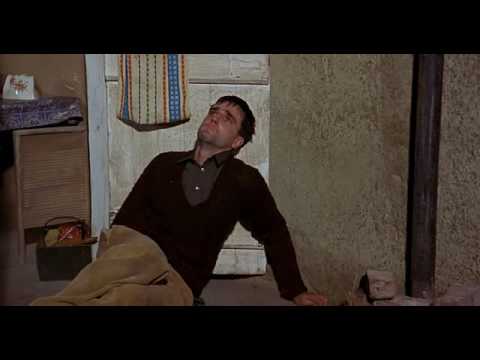 One area in which the internet has had an understated impact on contemporary life is that one is much more readily made aware of how much some people are conscious of individual and group biological and ethnic characteristics, hold them to be of great importance, and consequently really hold other types of people in disdain. I have to admit, while I was growing up, if I was aware that there were people who considered the ethnic Irish to be intellectually inferior, I a) did not understand on what basis they could possibly be determining this belief, and therefore easily persuaded myself that it must be frivolous, and b) did not believe that it would ever apply in my case anyway, because everybody would just see and know by looking at me that I was smart. I have since come to realize of course that the matter, and most discussions of intelligence in this vein refer to the mastery and application of science, mathematics, engineering, technology and other such subjects as are, or are believed to be, the main sources of any modern nation's power. Ethnic Irish are not as a group (I gather) prominent in these fields, and indeed, in the specialized global marketplace, those of Irish blood seem to be not especially well set up to thrive, as there are not, apart from speaking English, any broadly required skill sets in the modern economy in which they have a meaningful competitive advantage vis-a-vis people of other ethnicities.
Recent movies again--recent in my case being anything after about 1980--so it's no surprise that the undertaking of the new series has been sluggish again.
The Lord of the Rings, Part I: The Fellowship of the Ring (2001)
The critics were enraptured and by and large gave five stars to all three parts of the LOTR saga. As they were originally released at yearlong intervals however--and as they are all 3 and a half hours long--I am going to count them as three different movies and watch them separately over time myself.
I am burnt out on this type of picture, as it is what constitutes my older children's main current obsessions--Star Wars, Harry Potter, Narnia, and so on--so I'm sure most of the stuff that is supposed to be great about it floated past my attention without disturbing its slumber. The Lord of the Rings movies look to me to be pretty much the same as these others, perhaps a bit slower and bleaker, with less action, less interesting enemies, and a less compelling, or more confusing premise. No small part of the first film involves the main characters endlessly journeying across barren landscapes and empty forests and mountains speaking in whispers (this is a movie that would probably be much better to see in a theater, provided there was an intermission) with an occasional interval of conflict. The first 15-20 minutes or so has an omniscient narrator filling in the backstory of the rings and various of the inhabitants of Middle Earth for the unitiated viewer. I did not mind this, but my 8 and 7-year old sons were annoyed by it and wanted to know if the whole movie was going to be "someone explaining everywhere"--they want to be shown, not told, I guess. I have never read the books, which I assume are better, or at least make more immediate sense, given the wild popularity and devotion which they inspire. Oddly, I never had much of an interest in this genre of literature dealing with wizards and elves and tokens and power which is so popular among a certain type of boy (i.e., nerds), of which I might seem to have been one, though in fact I was not quite of that extreme masculine high intelligence that with the emergence of the internet especially has become so ubiquitous and even dominant throughout a wide strain of popular culture.
The pop culture of the decade+ since the year 2000 has been heavily dominated by these sterile, escapist, rather humorless fantasy stories that almost revel in their sense of arrested development, movies especially, but certainly books, games, organized social life, et al, to a great extent. I assume that the people who most voraciously indulge in this mental atmosphere are unhappy, frustrated, bored, disappointed, and so on, with actual life, but while in other genres and eras, where the escape sought through entertainment was frequently to a life of easy wealth, glamour, dancing girls, champagne and generally the opportunity to partake of some of the fun available to people doing better than oneself, the impulse of this escapist bent seems to be a desire to be substantial and important; which, however, being perceived now as largely unattainable in actual life, involves getting away from as much resemblance to reality as possible. The imagination, heroism, identification with the characters and so on which are supposed to be driving the success of these kinds of films are nothing to which I find myself responsive at all. They really do not speak to me. Maybe I should read the books. Apparently the people who read them as adolescents are somehow much smarter as adults than those small numbers who read Dickens and Balzac and the like. That is the opinion on a wide swathe of the internet at least.As I still think of this movie as something that has just come out recently, I was astounded to realize that it was ten years old. A fourth of my life has gone by since this was made, though it feels like about 5% at most based on traceable brain activity and the quantity of other experiences that have made any impression on my memory. The careers of most of the stars in this movies have already long crested too, though with the exception of the long-established Ian McKellan I would consider all the rest of them as new stars with whom I had little acquaintance.
One reason however why I might be forgiven for still imagining LOTR as a recent saga is that the radio station I usually listen to in the morning runs a commercial featuring "Sean Astin, star of Lord of the Rings" in which the star reminds any young men who might be listening, or on this station more likely their parents, of the necessity of registering for Selective Service ("It's what every young man's got to do"). I realize now though that they have been running the same ad since around the time the current unpleasantness in the Middle East first got underway, which does date back to when the movies were new. I just looked up Sean Astin and he is at the moment 40 years old, well past the expiration date for draft registration, and more likely to be regarded by the ad's supposed target audience as an old man than as someone who has anything to do with them. They are still running the ad though. I just heard it the other day.
I'm Not Scared (2004)
I was beginning to think the Italians had lost it entirely, and perhaps even given up, but this was a promising sign, at least for the time being. It is not quite Great, but it is comfortably above mediocrity, and often very good. I would not have been inclined to see it based on the plot if it had not shown up on my list. A boy living in a remote village in the impoverised south of Italy discovers another boy his age chained up in a hole in the ground near an abandoned farmhouse where he sometimes plays. Shortly afterwards he finds out that a rich Milanese child has been kidnapped and ransom is being demanded for his return; and also that his father is in on the plot.
That much revealed, the interest of this movie is more in its style that in the story. I had the feeling in watching it that the director (Gabriele Salvatores--b.1950--apparently has a venerable resume, though I am not familiar with his other work--I had imagined it to be done by someone around my age, I suppose because the story is set in 1978 and told from a child's point of view) was trying to re-establish some of the strengths that were formerly characteristic of European art cinema as contrasted with Hollywood and that the formal plot was just a device around which to create the atmosphere and attitude he sought. The filming looks to have taken place in Basilicata and Puglia (the instep and the heel, repectively of the Italian boot), poor, hot, thinly populated and, in human terms, ancient regions that I would consider to be among the most beautiful, unique and haunting landscapes on the planet. Much is made of this countryside, and its isolation, antiquity, poverty, extraordinary light and geography that is really unlike anywhere else, and wisely so, for the visions it produces tells at least as much of a story as the dialogue and action of the human characters in the movie.Another signature device in this movie that I like is how it plays off your conditioning by Hollywood movies by setting up terrifying scenarios where you are constantly expecting that at the next false step some knife-wielding maniac or adrenaline-pumped SWAT team to burst out of the darkness and begin going to work carving up the protagonist's body, but in fact what happens, while still terrifying enough--finding a filthy and starving, though not physically dangerous child chained up to a rock in a cave, for example--is always a more subdued and realistic outcome than the confrontation which organized and expert practitioners of violence which the movies really haved trained us to anticipate lurking around every corner. There were four or five little tricks like this in the course of the film, and I fell for every one of them.
One notable development in Italian movies in recent years is the evolution of the Italian mother character from the traditional fat, rosary-counting, neck-cuffing, soup and pasta-cooking battle-ax into (increasingly) a tank top wearing, physically handsome 30-something M.I.L.F. exuding European sexual maturity and attitude. I believe Cinema Paradiso may have gotten this trend rolling back in the late 80s--wasn't the boy's mother a hottie in that? I've seen it in some other movies since then. The actress's name in this one is Aitana Sanchez-Gijon. For some reason pictures of her on the internet are harder to find. She's about 14 months older than I am (now 42--she was probably 34 when this movie was filmed) and modern Italian women seem to age well, so if you're my age I bet she still would get your attention at the hotel bar in Cannes the next time you're all there.
My Left Foot (1989)
Has definitely been superceded in the genre of Biographies of Writers Overcoming Serious Handicaps by The Diving Bell and the Butterfly, in which a single eyelid is the only part of the guy's entire body that moves--that one will be hard to top--but still pretty entertaining. And of course the acting required was much more involved in this role.
Although the protaganist, Christy Brown, is an artist and writer, the main energy in this movie centers around growing up in an enormous Irish family in the 1940s and early 50s--the mother gave birth to 22 children, of which 12 survived long enough to distinguish themselves as a separate group from those that did not--one of whom has cerebral palsy and whom everyone except possibly his mother assumes is utterly retarded until he is around ten. My father is 100% of Irish descent and grew up in a family (in Philadelphia in the 1950s-60s) with a lot of similar characteristics. My wife is also about 75% Irish, so my own children have more Irish blood in them than I do. In brief, I did have the sensation in watching this of seeing a lot of people who looked and acted a lot like most of my own closest relations--Daniel Day-Lewis when he has his 50s haircut and he's curling his lip and furrowing his eyes angrily actually looks quite a bit like my father did at the same age (seriously, my father was, and still is, a very handsome and suave man. Though now in his his 60s, he was still within the last few years dating a woman younger than I am who would never let the likes of me so much as ride on an elevator alone with her. This in part explains in part why I have bothered having children, as I am wondering if talent really does sometimes skip a generation; for he was also a division I college athlete and supported himself as an artist for a good part of his adult life). The Irish girls tend to look to me more like sweethearts than the run of other nationalities too, even when they are supposed to be bitchy. But that is doubtless the family resemblance working in me again. This has no effect of course on whether the movie is any good or not, but there is an added interest in the story because I imagine myself to have a certain empathy with the kind of people they are biologically, the sort of temperaments and intellects they have, the nature of their emotions and psychological maladies, etc.
One area in which the internet has had an understated impact on contemporary life is that one is much more readily made aware of how much some people are conscious of individual and group biological and ethnic characteristics, hold them to be of great importance, and consequently really hold other types of people in disdain. I have to admit, while I was growing up, if I was aware that there were people who considered the ethnic Irish to be intellectually inferior, I a) did not understand on what basis they could possibly be determining this belief, and therefore easily persuaded myself that it must be frivolous, and b) did not believe that it would ever apply in my case anyway, because everybody would just see and know by looking at me that I was smart. I have since come to realize of course that the matter, and most discussions of intelligence in this vein refer to the mastery and application of science, mathematics, engineering, technology and other such subjects as are, or are believed to be, the main sources of any modern nation's power. Ethnic Irish are not as a group (I gather) prominent in these fields, and indeed, in the specialized global marketplace, those of Irish blood seem to be not especially well set up to thrive, as there are not, apart from speaking English, any broadly required skill sets in the modern economy in which they have a meaningful competitive advantage vis-a-vis people of other ethnicities.
To my contemporary docile bourgeois eyes it is striking how much Christy Brown is allowed to drink--he apparently drank a great deal in real life, too--considering that he cannot unscrew a bottle or fill his own glass, has to sip through a straw, and is prone to throwing rather violent and enraged fits once he gets going in his cups. There is one especially famous scene in a restaurant where in a pique of love jealousy he furiously begins to slurp up entire tumblers of whiskey one after the other while screaming more or less unintelligibly and banging his head on the table; all the while the waiter standing by dutifully refills his glass and the other people around the table do nothing until 5 or 6 drinks have been sucked down. At various times and places in history it is just sort of accepted that this is what people will do, and it is too much a part of the fabric of life to seriously consider preventing them from doing it. We are not living through such a period now, I think it is pretty safe to say.
Cocoon (1985)
I should--well, maybe not should, but I want to note that I had never seen any of today's four movies previously. The Italian one I had not heard of. I am sure I meant to see My Left Foot when it came out but never managed to get around to it. The Lord of the Rings I was already in my 30s and not going out to movies much, besides that the look and presentation of it that I was seeing just did not appeal to me. Cocoon was kind of a surprise hit back in '85 when I was fifteen. I don't think I was tempted to see it and probably would not have gotten to much into it at the time. Seeing it at a remove of 26 (wow!) years the characters and the world in which they live are immediately recognizable to me, almost remarkably so, given that the collective presence and personality of the major generation (that being the WWII cohort) highlighted in this movie, still prominent in 1985, has almost entirely passed into shadow now.
Baby Boomer director Ron Howard, 31 at the time, pays a kind of homage to these once powerful but now fading elders by restoring their sexual vigor and sending them on a one way trip to the outer reaches of space with a bunch of aliens disguised as respectable middle class Americans but who in fact possess more frightening powers than I think I would be comfortable being alone for eternity in a spaceship with. It is insinuated that these powers are all completely of a positive kind and will bequeath strength and serenity of mind to the old people far beyond anything they could have attained on Earth. For the viewer who is asked to believe that Brian Dennehy, who plays the role of the leader of the aliens, is exuding a reassuring and spiritually elevating vibe exponential by many factors beyond regular human experience.

There are certain pleasant reminiscences specific to the generations involved--I do miss the days when the music associated with geezers was Glenn Miller rather than the Doors, for example, or the skill, increasingly lost among us, with which the old-timers of that era could deliver an elaborate or formal joke. It is different from the usual run of movies, and has some poignancy in it, though the take on old age and eventual death in themselves as the most depressing and horrible things conceivable gives has an especially Baby Boomerish quality about it. These generational aspects are what is most interesting about it to me, as well as the sensation of returning to the mid-80s and realizing various little things that have changed.
Not many women in this group of movies that I feel the urge to gush about. The Italian mother was really good-looking. A couple of the girls in the Irish movie were adorable, but their parts were decidedly of the bit variety. Lord of the Rings had Liv Tyler, who besides being born in Portland, Maine was actually kind of pretty for a time, though her career seems to have lacked any kind of coherent direction, and the unshakeable image of her father's general nastiness does get in the way of any sense one might try to make of what kind of a person she might be. Cocoon had Jessica Tandy, Gwen Verdon, and um, well, this lady, who played the human disguise of one of the aliens. Her name is Tahnee Welch and she is the daughter of legendary 60s bombshell Raquel Welch. She seems to belong to that class of women which are known as specimens, about whom nothing ever does or can strike one other than the extreme perfection of her form. This was definitely the role she was born for.
Among the male stars of Cocoon (leaving out Steve Guttenberg), Don Ameche--who won the Oscar for Best Supporting Actor for this role, and may have deserved it, I don't know--and Hume Cronyn were appropriately aged (77 & 74), but my man Wilford Brimley, who was born in November of 1934, was a mere stripling of 50 when the film came out, and might only have been 49 during the filming. That's only nine years older than I am. Heaven knows he certainly looked old enough to be living in a retirement home. I probably will be by then too.
Monday, May 02, 2011
curtain wall poet dead occurrence (or, this site needs a more definitive personality)
There are three possibilities to achieve this that I can see. The first is what I originally envisioned the site as being, which is the dissemination of a highly developed, sparkling, singular and consistently rigorous point of view in the matter of my pet subjects. This obviously has not come to pass. The second is to find some niche or quirky subject matter that will capture some people's attention --bathroom stalls of Manhattan or obscure baseball players or high end Belgian furniture or bicycling culture--and burrow deep enough into it so that everything you write or post a picture of becomes informed and often made slightly more interesting than it was before by your consuming obsession. I might like this, but I have not been struck yet by the particular theme that I was born to run a blog about. The third possibility is to stop being earnest at all costs and try to cultivate a kind of mannered weirdness wherein coherence with regard to anything independent of the manner is of scant importance. This last is, while a slim one, probably the best hope I have at this point. There are others, such as to go the Samuel Beckett route and start writing in French or some other foreign language to cultivate a more streamlined style; but most of these are not really practicable at the moment either. I don't know what to believe is going on in the supposed Osama Bin Laden killing, but if the official story is true, I think he should have been brought back to the United States and placed on public trial. Yes, it would have been a circus, but so what? The American public needs to become better acquainted with its alleged enemies, besides that openness and the spectacles of justice and respect for law are supposed to be our core values, to which this whole saga right from the start has demonstrated either a lack of faith in or indifference, both of which strike me as bad. The new policy of openly (as opposed to covertly) targeting specific prominent international figures and killing them, accompanied by a high degree of public enthusiasm based on limited knowledge of the government's motivations strikes me as a dangerous mindset to be cultivating in the masses. I am not reassured when I encounter it.
I put up a few old pictures from college on my Facebook page, in commemoration of one of the rites of spring there. I had told myself when I first went on that I would never do that, that I would try to remain psychically in the present and facing forward there as much as possible, but in truth for the 99% of the population who are not visionary figures and the 80-85% who have not figured out the secrets of true adult satisfaction vis-a-vis the freedom and sensual possibilities of youth this mindset is probably nonsense, and does more harm to the associations and relationships which might give his life meaning, which sources of that meaning are almost entirely rooted in past memories. I certainly have some need to be alert to present life and cognizant of the future, but in general when I seek in my day to day existence for signs or indications of new associations and causes for optimism as regards my own prospects, as well as those of my children, I do not encounter much that excites a sense of possibility stronger than what I felt when I was in my 20s (hopefully the children are experiencing their own present lives differently) so why should I give up entirely the sense of self and life that I had when I was less resigned and dull until I do figure out the superior, or at least more realized, mode of being, that will allow me to leave the past more or less where it belongs, and live eternally in the moment, with the most vital parts of my psyche always pushing, slightly but ever firmly, into the future?
 I am going to make this another short posting. I do have other things I would like to write about but they all require organization or elaboration or review which would take longer than the 15 minutes I have right now before I want to post this. Better pre-organization of the random observations and subjects I sometimes would like to touch upon, as well as the half-baked serials I undertake, would be a major step in improving the quality of the site. I just don't have a lot of time.
There are three possibilities to achieve this that I can see. The first is what I originally envisioned the site as being, which is the dissemination of a highly developed, sparkling, singular and consistently rigorous point of view in the matter of my pet subjects. This obviously has not come to pass. The second is to find some niche or quirky subject matter that will capture some people's attention --bathroom stalls of Manhattan or obscure baseball players or high end Belgian furniture or bicycling culture--and burrow deep enough into it so that everything you write or post a picture of becomes informed and often made slightly more interesting than it was before by your consuming obsession. I might like this, but I have not been struck yet by the particular theme that I was born to run a blog about. The third possibility is to stop being earnest at all costs and try to cultivate a kind of mannered weirdness wherein coherence with regard to anything independent of the manner is of scant importance. This last is, while a slim one, probably the best hope I have at this point. There are others, such as to go the Samuel Beckett route and start writing in French or some other foreign language to cultivate a more streamlined style; but most of these are not really practicable at the moment either.
 I don't know what to believe is going on in the supposed Osama Bin Laden killing, but if the official story is true, I think he should have been brought back to the United States and placed on public trial. Yes, it would have been a circus, but so what? The American public needs to become better acquainted with its alleged enemies, besides that openness and the spectacles of justice and respect for law are supposed to be our core values, to which this whole saga right from the start has demonstrated either a lack of faith in or indifference, both of which strike me as bad. The new policy of openly (as opposed to covertly) targeting specific prominent international figures and killing them, accompanied by a high degree of public enthusiasm based on limited knowledge of the government's motivations strikes me as a dangerous mindset to be cultivating in the masses. I am not reassured when I encounter it.
I put up a few old pictures from college on my Facebook page, in commemoration of one of the rites of spring there. I had told myself when I first went on that I would never do that, that I would try to remain psychically in the present and facing forward there as much as possible, but in truth for the 99% of the population who are not visionary figures and the 80-85% who have not figured out the secrets of true adult satisfaction vis-a-vis the freedom and sensual possibilities of youth this mindset is probably nonsense, and does more harm to the associations and relationships which might give his life meaning, which sources of that meaning are almost entirely rooted in past memories. I certainly have some need to be alert to present life and cognizant of the future, but in general when I seek in my day to day existence for signs or indications of new associations and causes for optimism as regards my own prospects, as well as those of my children, I do not encounter much that excites a sense of possibility stronger than what I felt when I was in my 20s (hopefully the children are experiencing their own present lives differently) so why should I give up entirely the sense of self and life that I had when I was less resigned and dull until I do figure out the superior, or at least more realized, mode of being, that will allow me to leave the past more or less where it belongs, and live eternally in the moment, with the most vital parts of my psyche always pushing, slightly but ever firmly, into the future?
 I am going to make this another short posting. I do have other things I would like to write about but they all require organization or elaboration or review which would take longer than the 15 minutes I have right now before I want to post this. Better pre-organization of the random observations and subjects I sometimes would like to touch upon, as well as the half-baked serials I undertake, would be a major step in improving the quality of the site. I just don't have a lot of time.
Subscribe to:
Posts (Atom)

