Showing posts with label artifacts from 1962. Show all posts

Monday, May 30, 2011

Movies 1983-1998


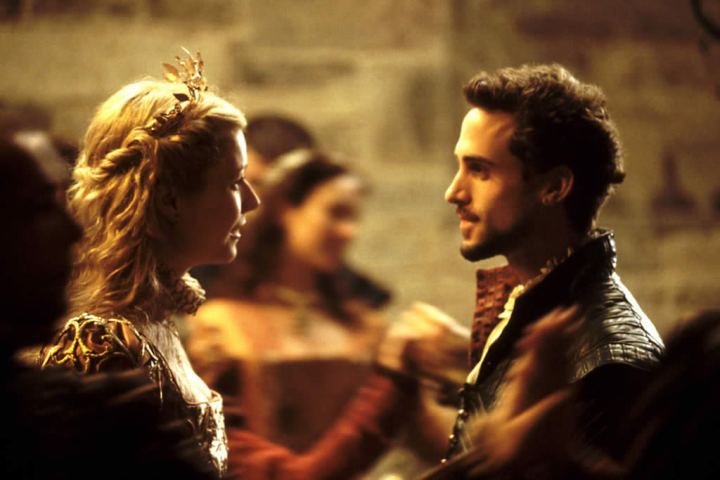
The first one this time is Shakespeare in Love.

I am protected by my inability to be too much enamoured of anything this recent from imagining that it was actually any good, though I think it is harmless enough, and unlikely to delude many people into thinking they are cleverer than they are or understand anything important about Shakespeare or literature or English history, which some of the people who do understand these things often seem to worry about. It won the Oscar for Best Picture in its year (1998--I hadn't realized this was that old either--1997 seems to be the cutoff point after which my active participation in life effectively stopped. Everything since then merges together in one amorphous period lacking in any demarcation of time) and is often rated among the worst such winners, though I could probably come up with 10 even lamer ones pretty easily. I don't remember what ought to have won in its place. There were a few things I liked about this movie however, which is what I will emphasize here.

1. The Imagery of Taking a barge down the Thames and debarking at a palatial estate. Preferably your own, though that of a dear friend or lover I suppose would be acceptably pleasant too. They break out this motif in other movies set during the Tudor period, such as A Man For All Seasons, and even now there is the option for tourists of riding a barge down to Hampton Court Palace, which Henry VIII famously accepted as a 'gift' from Cardinal Wolsey in the latter's unsuccesful bid to preserve his head. I admit to finding the prospect of this ride tempting at the time, and the idea of it still stirs my romantic imagination, It is inextricably identified with that age when what we think of more or less as classical England burst forth (from the standpoint of cultural, political and economic power) from the winter of the Middle Ages in all its sunny freshness.

2. Having the Run of One of These Palatial Estates Even For a Short Period. I would almost be content to have this even if I knew beforehand there was to be no possibility of sex/romantic intrigue whatsoever. This has nothing inherently to do with the movie's actual quality again, but is another image of European high civilization served up for middlebrow consumption without any indication of or necessity of undergoing any of the difficult mental work that was required to build and maintain that civilization, which perhaps more than anything in the world drives legitimate intellectuals and artists to absolute fury when it attempts to pass itself off as meaningful or edifying. These homes are central to the cultural and artistic history of every European country, and are replete with significance in all their parts to such as can interpret them. One of the running underlying half-comic themes in Powell and Waugh is that many of these houses (whose numbers are obviously limited) have at any given time fallen--before WWII, still usually through ancestral inheritance at least--into the possession of dull people who are failing to properly maximize these houses' potential as the settings for great social occasions.

3. I Am Always a Sucker For Depictions of Artistic Troupes, Even When Not Romanticized As It is Here. This is because the dream of my life was to be an artist and associate primarily with--indeed live among--artistic people, and needless to say that has not happened. I could not be more estranged from the kind of people whose lives consist of the sorts of things I am actually interested in if I had set out intentionally to avoid them. Seeing the interactions among and processes of theater people, even idealized beyond the point of being interesting to a normal person, warms something in my bone-dead soul that I wish I could bring out into the arena of actual life.

4. I Rather Like the Depiction of Shakespeare That is Offered Here. Even more than with other great authors, the dearth of certain knowledge about Shakespeare seems to encourage people to imagine him, or whoever was the author of the plays published under his name, as a more or less idealized version of their vision of themselves. Individuals not given much to frivolity, such as Henry James, often insist that the author of the 'Shakespeare' oeuvre must have been a figure who emitted an air of gravitas so thorough and imposing as to be quite terrifying and incomprehensible to anyone beneath the most diligently bred and educated quarters of society. I like to think of him as a man with an extraordinary talent not merely for literature but for living, who found means to express that talent from the very midst of the tumult of life rather than as an aloof, calculating pure genius of intellect surveying humanity from a perch of consciousness far removed from tumult. I take that to be the spirit in which this character was written, and I think it came off reasonably well.

5. I Was Not Able to Hate Ben Affleck, Eager as I Was to do so. I can see what people mean when they say he can't act, but I didn't think he was that bad, he was certainly trying, and he seemed pretty good-natured. I know good-naturedness is no substitute for talent or skill, but on the whole I don't think his presence detracted that much from the movie.

A Private Matter (1992)

The main rating book I am using must have a different person critiquing TV movies and programs than whoever is doing the regular films, because on several occasions it has given a pedestrian TV movie a 5-star ranking while grading some groundbreaking European masterpiece or other a mere 4 or 4 and a half. This movie was well-made, and everything in it looks good--it is set in Phoenix, Arizona in 1962, when that city/region was around 1/10? 1/20? the size that it is now, and before the complete perfection of the antihuman, corporate-inspired architecture of sprawl that has prevailed for most of my life. Sissy Spacek is the star, and I don't know how old she was at the time--she looks to be around the same age I am now (ed--she was 42)--but she looks great as a 1962 version of an ubermom, and of course she's a swell movie actress, indeed one of the few Baby Boomer stars I actually like (it takes a lot to get me to admit that). There was not anything even quirkily brilliant or thrilling about it that I am going to remember in a month, however. Aidan Quinn plays the husband and he is kind of blandly creepy and insubstantial, as indeed are pretty much all the men, and most of the women too for that matter, except for Sissy Spacek, which gives a hint I think as to what is wrong with the movie.


The film is based on a factual (I think) incident, in which the host of the children's TV show Romper Room, who already had four children, got pregnant again, was told that there was a likelihood due to some defective medicine she took as a sleeping aid that the baby would be severely retarded and was persuaded by several male doctors to make arrangements to (quietly) abort the baby. Unfortunately the media got wind of the story, the woman became for a short time a pariah, she of course lost her position on the television show, and her medical situation became much more problematic, since nobody in the United States would agree to perform the procedure now out of fear of all the negative publicity. In case you haven't guessed, the movie has a decidedly pro-choice message, the transmission of which was the overarching concern of the screenwriters. The good Romanian film I referenced a few weeks ago, Four Months, Three Weeks, Two Days, also centers around an abortion which is illegal and puts its women characters in a really terrible position, but it is still primarily about its particular characters and the society which they inhabit. The abortion is the crisis through which various aspects of these are revealed, and it is probably a symbol, but it is not in itself the object of either moral or political crusade, or outrage; and as such the circumstances in which it occured rendered the characters involved and their situation more sympathetic than in the typical Hollywood social justice movie.

Hollywood social outrage movies, and this even includes Holocaust films, have always been marred by various blindnesses, but one of the major ones is the seeming inability to identify at all with whatever force or ideology is the designated enemy of the idea it wants to push. Whether it is Nazis, southern racists, paternalistic males, greedy capitalists or whomever, they are presented as creatures of a mindset of such thorough evil as to be completely unfathomable to any decent person watching the movie, and great emphasis is made of their awesome and wholly impersonal and merciless power, whose origin is so remote from its victims that it can only be expressed by terrifying images. This is a highly unsatisfying way of understanding such matters, and this mindset has no doubt contributed to the particular political and social problems which afflict this country.


Zelig (1984)


I'm not in Woody Allen mode at the moment. I have my own existential problems, and currently they seem to me to be more serious than his do. I like the idea of the roaring 20s homage. I usually like the idea in Woody Allen movies. He has similar interests to me. This movie just wasn't funny or clever enough.


The movie is made in a mock documentary fashion and there were a number of cameos by famous writers. Saul Bellow, who would have been about 68 at the time, was one of them, and he looked great. But the real coup de grace was Bruno Bettelheim, who I had not realized had still been alive at this time, and even then never imagined that he knew Woody Allen or would have deigned to have anything to do with such a low form as the popular cinema.


Experience Preferred...But Not Essential (1983)


British TV production, where it was called First Love. Not sure what necessitated the name change, unless there some worry about it being confused with the Brooke Shields catastrophe Endless Love, which came out around the same time. I could not find any uploadable picture of it. It doesn't seem to be out on DVD, and I had to buy an old VHS tape to see it. Here's a clip from the beginning.


I have to say, I liked this quite a lot. It's not a sweet movie, exactly--most of the lives depicted in it are about equal parts grim and hopeless by our standards--but it has a certain good nature and spiritedness that is appealing. Most of the characters, the women especially, try in their own ways to enliven and make as good a go as they can of what are not very promising situations. It probably helps the story that no one in it is married or has any children--this leaves them available for sex and the attendant sexual tension that inhabits places where even passably attractive single people congregate. The movie is set in--yes--1962 (was that a great year or what?) in a third rate seaside hotel in Wales, so we are talking about not particularly good-looking British people having not particularly good pre-60s liberation sex, but, as I have written elsewhere, something about it is not completely unappealing. Recommended.


Sunday, August 15, 2010

Changes

My eight year old has reached the age where he has become interesed in certain kinds of facts--about presidents, states, television shows. In addition to those morsels of knowledge that can be definitively stated--such as that Warren G. Harding was the 29th president and died in office, or that Lansing is the capital of Michigan--he desires me to give or direct him to more subjective judgements, what are the best, and especially, what are the worst, presidents, movies, states, cities, and so on, to which I give the best answers I can, though usually with so many qualifiers as to be ultimately unsatisfactory to the eight year old mind. I suppose I could give him books like Howard Zinn's Children's History of the United States, which offer more confident assessments of historical events, but the particular variety of stridency and point of view of such books I must confess I am not in a very close sympathy with. This is not much of moment at present, however. Of those more solid facts that are printed in his books, he sometimes quizzes me, partly to see what I know, and partly to be reassured of the truth of his reading, and I don't do too badly; however I have noticed that according to his atlas--a recent publication--the largest cities in quite a few states are different from what they were when I was eight. As these changes had taken place with me wholly oblivious to them, and I have always had some interest in populations and the history of them, I was curious to see what had been going on, and whether or I could glean any insight from the patterns and answers I discovered.

In all, 6 U.S. States have a different largest city than they did in 1962, the date of the primary reference atlas of my youth, which I still have. For a while I thought there were 7, but the last turned out to be an error in strict detail, thought still revealing much in drift. I also have an atlas from 1938 which gives population figures that I would think would be of much general interest, not only in the remarkable growth of certain locales both national and international, but the comparative stagnancy of others. So for even more vivid effect I will include the data from this atlas in my essay too.

The states with new largest cities fall into 3 groups. The first, being those states where a longtime champion has been recently toppled from its provincial primacy, group thus consists of three states. They are:

Connecticut. In Connecticut the competition for population supremacy among its cities has long been a tightly contested affair between the big 3 of Hartford, Bridgeport and New Haven. In '38 Hartford edged New Haven 164,000-163,000, with Bridgeport holding 3rd place at 147,000. In '62 Hartford still carried the prize with 162,000, while Bridgeport had risen to 2nd with 156,000 and New Haven slumped behind at 152,000. Currently however Bridgeport has taken a surprisingly substantial lead despite having a considerably reduced population of 139,000, Hartford and New Haven being in a veritable heat for 2nd place at around 124,000 apiece (and still falling?).

These numbers are interesting to me because all 3 of these cities have a reputation in New England as being dumps, and Bridgeport especially; while I have driven through each of the three at least a hundred times in my frequent travels across the northeast I have always made a general point of avoiding stopping in them (though years ago there was a diner in New Haven I used to stop at somewhat regularly, and cannot remember when or why I stopped doing so). Bridgeport's relatively strong continued population showing would seem to be objectively inexplicable, unless it is warehousing a lot of people who can't afford to live anywhere else in what is an expensive area. I was just in Hartford last week (which trip I intend to write about more at length in an upcoming post), where I had never spent any time at all before, and while my visit was brief the parts I was in anyway I found to be much less unappealing than I had expected. This, combined with the general trend in much of the rest of the country that state capitals and other seats of government seem to be growing at the expense of the old industrial cities, makes the city's continued shedding of population and inability to generate much enthusiasm for itself a mystery to me.

Missouri. I knew that St Louis had been going down for some time, but this really shocked me. Here are the numbers: 1938: 1. St Louis, 822,000 2. Kansas City 400,000 3. St Joseph 81,000. 1962: 1 St Louis 750,000 2. Kansas City 475,000 3. Springfield 95,000. 2010: 1. Kansas City 441,000 2. St Louis 320,000 3. Springfield 150,000 (in case you were wondering, St Joseph's is in 7th place currently, down to about 71,000).

I know I may seem to have a habit of going to places and finding them not as bad as their reputations, but St Louis, which 100 years ago was one of the great cities of North America, and really the world, was truly depressing. What in the heck happened? Percentage-wise, the population drop from 1938 to now is greater than Detroit's (and I would say that the cultural contribution of St Louis, including music, was substantially greater than Detroit's). The other obvious question is, Why has Kansas City, also seemingly not quite at the center of the action of modern life, been able for the most part to hold its population?

Ohio. 1938: 1. Cleveland 900,000 2. Cincinnati 451,000 3. (tie) Columbus & Toledo 291,000. 1962: Cleveland 876,000 2. Cincinnati 502,000 3. Columbus 471,000. 2010: 1. Columbus 736,000 2. Cleveland 449,000 3. (tie) Toledo & Cincinnati 306,000.

Cleveland's decline has been well documented; it is the rise of Columbus that was stunning to me. I had no idea the place had over 700,000 people. The other question is, why is Toledo comparatively doing so well? It is dead smack in the midst of some of the most depressed and rapidly depopulating areas in the nominal first world. I stayed in a Motel 6 on the outskirts of Toledo on one of my driving trips once, and the place had one of the worst vibes I have ever felt anywhere. And this impression was before I was awakened in the middle of the night to find the hallway full of cops who had been called to intervene in a domestic dispute that had been taking place in a room down the hall.

The second category consists of one state where a former champion has re-ascended to the penthouse.

Florida. In 1938, the biggest city in Florida was Jacksonville, with 146,000 souls, followed by Miami at 128,000 and Tampa at 100,000. By '62 Miami was the biggest city with 291,000, followed by Tampa at 274,000 and Jacksonville dropped to 3rd at 201,000. Today however Jacksonville, which occupies a huge area and was born to absorb sprawl, is back on top at a whopping 797,000, with Miami a distant 2nd at 382,000, and Tampa still trailing 324,000.

Jacksonville looks like it would be a singularly ugly, boring and depressing place to live, but I know a number of people who retired to that city, the main reason given for which is that it is cheap. The appeal of cheap can never be underestimated, though it frequently is by people like me in the Northeast who are perpetually boggled by how millions of people can endure living in dreary endless apshalt hellholes like Houston or Phoenix or Jacksonville. I suppose I could endure it if I had a steady stream of hot girlfriends drawn from the local pool of Applebee's and Hooters waitresses and for-profit college students, but otherwise...no.

Orlando had only 30,000 people back in 1938 but even now it has only 207,000, not near as big as I thought and is only the 6th largest city in Florida (behind St Petersburg & Hialeah, for the record).

That leaves two states where there has been a different largest city in each of the three years.

Montana. I know nothing about any of these cities, Montana being surely in the handful of the most obscure states in the country. In 1938 the biggest city there was Butte, with around 40,000 people, followed by Great Falls (29,000) and Billings (16,000). In '62 Great Falls (55,000) had taken a slim lead over Billings (52,000) while Butte, now 3rd, had slipped all the way to 27,000. The methodical ascent of Billings has carried into the present, where the population now stands at 99,000 and its position as the main municipality of the state seems to be pretty solid for the foreseeable future. If there is to be a challenger however, the money would like to be on the new runner-up, Missoula, seat of the state university and, it is my impression, an increasingly popular destination for the organic food and natural body hair crowd (a crowd I secretly kind of like, incidentally), which has come out of nowhere to be the home of 63,000 people. Great Falls at 56,000 has remained stagnant now for half a century, and Butte, the one time champion, now dropped to fourth with a count of 34,000 people, has yet to regain the population it had in 1938.

Given the relatively small population figures for these towns, it does not require much of an influx or outflux of people to have an effect on their statuses vis-a-vis each other. However I should do the service of researching a little what has gone on in these places to explain the patterns of growth and decline.

Butte was a copper boomtown that actually reached its peak around 1920 or so. It underwent a major decline in the 1950s.

Great Falls, due in part to the hydroelectric possibilities suggested by its name, became an industrial, transportation and supply center for both the mining and agricultural industries--the town's main landmark until it was demolished in 1983 was an enormous smokestack for a copper smelter. After the 1940s there was also a military base. All of these enterprises declined precipitously in the 1980s.

Billings originated as a railroad town. Even in the beginning, it was known as "The Magic City" because it 'seemed to grow by magic'. Today it is the 'financial, medical, agricultural and cultural center for the Northern Rockies/Great Plains', and the nearest city larger than it is 350 miles away. It must have a good location. The photos of it are pretty, but the surrounding landscape reminds one more of one of the remote cities on the Trans-Siberian railroad than an American city.

Virginia. 1938: 1. Richmond 183,000 2. Norfolk 130,000 3. Roanoke 69,000. 1962: 1. Norfolk 304,000 2. Richmond 219,000 3. Portsmouth 144,000. 2010. 1. Virginia Beach 425,000 2. Norfolk 234,000 3. Chesapeake 199,000.

The geography of Virginia is somewhat difficult to keep up with. Virginia Beach, now officially the largest city in the state, is listed in the 1938 atlas as having 2,000 people, but that municipality was but a small part of the present city called Virginia Beach, which is the result of the consolidation of a good number of formerly separate towns in 1963. Also Norfolk, Portsmouth, Chesapeake and Virginia Beach are all right next to each other and together, with a few other places, make up a significant metropolis of over one and a half million people that most people even in the northern part of the state are barely aware of the existence of. Norfolk seems to still be considered the primary "city" around which this conurbation is oriented, with the other places, even 400,000+ Va Beach being suburbs. Needless to say I have never been down there to try to make some sense of what looks like a mess. And man, there are a lot of people living there. What do they do? Are the girls hot? (I'm running a comparison on Hotornot.com between the women of Billings and the women of Virginia Beach. The Va. Beach team has more depth and overall hotness, but the Billings girls look cleaner and bring a lot less attitude--and when they are hot, they are really hot, and in a manner largely exotic in quality to those of us in the northeast--all this just for the record).

I don't know where this state is going in the future.

Tennessee. I started all this because my boy's book had Nashville listed as the largest city in Tennessee with 511,000 people, surpassing longtime king Memphis, and indeed in 1962 Memphis was home to 497,000, with Nashville logging a distant second at 170,000. Subsequent researches have left me pretty certain that Memphis is in fact still the biggest city there, though not by too much, perhaps 100,000 for so. Nashville has grown much during my lifetime from a respectable but decidedly minor league sized state capital and cultural center to a fairly major city. A lot of formerly modest state capitals have followed in a similar vein, particularly those that are also home to mega-universities. Austin, Texas is the size of Boston now. Madison, Wisconsin it is my impression is more of a big city than the intimate all-American kind of place it was formerly. Columbus of course. Is Sacramento a major city now, or do I just imagine that because they have an NBA team? (ed--est. current pop. 407,000, up from 191,000 in 1960).

Saturday, July 24, 2010

Great Smoky Mountains National ParkI went here recently on vacation. It's hardly an unknown spot--it gets something like 10 million visitors a year, is the most visited of all the national parks, several of the towns around the edges of it are major, even notorious, tourist resorts--but I did not know much about it. My family when I was growing up was not much into parks or spending time in nature, so I have never been accustomed to think of these kinds of places as being on the list of destinations I might want to see someday. As far as I can tell, this area is not very well known in the Northeast generally. It is a pretty long way from New England but not terribly far--8 or 9 hours--from the Washington, D.C. area, not farther than Cape Cod and closer than Maine certainly, but I don't remember hearing of anyone going to the Smokies when I lived there either, though it is possible it did not register with me because at the time I did not know anything about the place and hearing about it probably would not have interested me.
As has happened in other instances over the last few years, I came upon the idea of going to the Smoky Mountains from my 1962 World Illustrated Encyclopedia, which offers travel recommendations rooted in the earnest enthusiasms and interests of an optimistic and aspiring middle class person of that time, with which sensibility I have a lot of sympathy. As I have noted elsewhere, this encyclopedia was especially keen on patriotic historical sites and parks, the main national ones of course, but a fair number of state parks or gardens and such were included as well. It liked the Smoky Mountains park a great deal, recommending the latter accompanied by numerous photographs in both the North Carolina and Tennessee sections (the park is located along the border of these states), but giving it its own article as well. Another set of (small) books I have from that same year, the American Geographical Society's "Know Your America Program" touts it enthusiastically and at great length as well. I was piqued and marked it down as something to look into, along with a few other possibilities within reasonable driving distance (defined this year as 12 hours or less either from New Hampshire or Philadelphia--Gatlinburg barely made the cut). Once I got on the internet and saw what a big deal tourism in the Smokies was and how fervently so many people loved it, and how fervently so many other people loathed the scene around the park and the masses who took part in it (no one loathes the park itself by the way) I was overcome with a very strong desire to go and see what this place was all about.
Gatlinburg and Pigeon Forge (home of Dollywood) especially, my researches were telling me, were abominations, nightmares, horrid and tasteless spectacles, Wal-Mart culture at its most depraved, the poor man's Orlando or even Branson. They bulged with the spawn of southern America's trailer parks, an astoundingly (for this day and age) white crowd devoted to Jesus and guns and tattoos, most of whom had never had any exposure to real civilization at all, let alone been within fifty miles of even a semi-respectable school. This all actually did worry me a lot, though more for the sake of my wife, who (knowing nothing of the area herself) I thought might be really angry to find she had been dragged seventeen hours from home to find herself in a hellhole surrounded by stupid and nasty rednecks. However there was still the allure of the park, of which the consensus even of the most vociferous Gatlinburg haters was that it was super-duper, and also I read through a lot of personal blogs by people who loved vacationing there, and they seemed nice enough, and their lack of pretentiousness compared to east coast people was actually kind of charming--pretty young wives expressing enthusiasm about going to a favorite pancake house or a hotel with a heated pool, that sort of thing. I thought if it turned out to be absurd enough without being really disastrous I could at least get an essay out of it like the famous one David Foster Wallace wrote about his trip on a cruise ship which everyone loved so much.
The park is truly gorgeous and spectacular, well worth going a long way for. Being from the east, and therefore at a long distance from most of the National Parks, this was the first one I had ever been to, including Acadia. It more than surpassed my expectation, which was high but based upon a much lower scale. Now I am curious to see more, though I don't know when I might get around to doing that, as must of the other famous ones are really far away (and then what does one do in say, Death Valley, anyway? It isn't like you can go hiking in the middle of the day, can you?). The Smoky Mountains are unique and interesting in addition to their beauty, which salient impressions I am not always on a sure footing with in matters of nature. The trees and plants and animals at the highest (4,000+ ft) elevations are similar to our mountains in New England, and southern Canada, a relic of the last ice age, the more common southern vegetation which gradually overtook the rest of the region having never conquered these peaks. The lower elevations, especially on the North Carolina side, have a more southern appearance, with horse trails and white water rafting and sycamore and oak trees. The air when one is up in the mountains is fresh and even primeval compared with what in usual in that part of the country in the summer, and even in town though it was in the 80s and fairly humid the air was still cleaner than one would have expected given the extent of traffic and other environmentally appalling human activity taking place there.
On the way back we came some of the way, in both North Carolina and Virginia, on the Blue Ridge Parkway, which is a scenic road that is also administered by the National Park Service (several of the pictures on the page here--I believe the 1st and 4th from the top--were taken in North Carolina along this road). We did not go the whole way, as the road is 469 miles long through mountainous country and is rather slow going. At many points in North Carolina I had a hard time getting above 35 miles per hour. In any event I came away from this trip impressed with the work of the Park Service. Apart from the nature in and through which they operate, the human incursions in these parks--bridges, roads, trails, visitors centers, signs, etc, are tastefully and thoughtfully designed and beautifully maintained. I found the presentation of such information as regarded the natural and human history of the areas under consideration to be at a reasonable adult level of comprehension and interest without being overwhelming or abstruse for the amateur. A lot of people don't like government agencies as being unnecessary and bloated with incompetent and expensive employees, but most of the ones I come into contact with at my level of society are far more reliable, serious, on the level and accountable to the general public without the necessity of hiring legal counsel than most comparable private enterprises.
The horrors of Gatlinburg (where I ended up staying), of which I was so apprehensive that I only reserved rooms for four days in case it should all be too unbearably awful, were decidedly overstated, such that I regretted I had not booked an extra night or two when it was time to leave. The polite travel writing community repeatedly emphasized the place as a mecca for the hee-hawing, tobacco-spitting Dukes of Hazzard loving community, and the kinds of amusements that appeal to this type; there were a few of these people, but no more than at the scruffier beaches or lakefronts in New England, of which there are more than a few. A person I know in New Hampshire who used to live in Nashville assured me when I mentioned where I was going that if I hung out in the town I would see the fattest people I had ever seen in my life; I did not notice that the people were on the whole any fatter than they are anywhere else other than perhaps Paris. In addition the ratio of attractive women to people who made one depressed simply by looking at them was considerably higher than it is almost anywhere in the east, especially at the socioeconomic level that frequents Gatlinburg. The area attracts a lot of families and as such most places are very relaxed about children, which is something I have to take into consideration. We did not stand out nearly as much in Tennessee as we do in much of the north, where families our size seem to be rarer and are considered quite big.
Other misconceptions. The traffic in Gatlinburg and Pigeon Forge, it was related in book after book and site after site, was reputedly a nightmare. While there is some congestion in town that makes for slow going, "town" is about six blocks long, which maybe takes 15 or 20 minutes to get through and has the advantage of very good people watching and the ridiculous/fascinating conglomeration of shopping and outrageous attractions to distract one's attention. If you have ever driven anywhere in the D.C. or New York areas between about 2 and 8 pm on a weekday you will wonder what the fuss is even about. The first day or two I took the recommended shortcuts to avoid this, but I found I actually enjoyed checking out the strip and that the amusement this provided the whole family was well worth the extra twenty minutes it took to get into the park.
A lot of people nowadays (doubtless from both the pro- and anti-diversity contigents) like to make note of the racial makeup of popular vacation spots and take this into consideration when deciding whether to go somewhere. The National Parks especially have become suspect in the eyes of many in recent years due to the fact that they appeal overwhelmingly to white people. It is true that there were very few blacks or hispanics at this place, though still more than you will find at similarly popular vacation spots in New England, with the exception perhaps of the city of Boston. Nonetheless, given the general area of the park's location, the absence of black people would have to be remarked upon by any sensitive reporter. I did see a good amount of Asian Indians there, as I do at parks and natural places in New England as well, and while I did not see any Indians of the American variety, there is a substantial Cherokee reservation just outside the North Carolina entrance of the park (with a big casino). I did not see a lot of Koreans, Japanese, etc, which one does come across quite frequently in New England during the popular seasons. I wondered if they had picked up on the fact that the Yale crowd doesn't think the Smokies are cool and planned their vacation accordingly. It is true that one does not see a lot of people who look like they went to Yale there, though there are certainly plenty of people who went to the University of Tennessee (which is only 30 miles away), and people who went there (as well as plenty of people who didn't go there) really love the University of Tennessee to a degree that would appear bizarre to most state school graduates in the northeast, few of whom seem willing to express the kind of passionate affection for their alma maters that people from Harvard and Bowdoin (people who went to Bowdoin I find really love Bowdoin) and the major state schools in flyover country do. Penn State is a partial exception to this rule, but that is because the school is at least half midwestern in personality. PSU-love is not especially detectable in Philadelphia but grows in fervor the further across the state, especially westward, one fans out.
Another demographic circumstance I suppose I must note is that openly gay people were in serious short supply--I didn't notice anyone obvious at all--and by extension gay couples with children, of which there is at least one family in nearly every class/team/congregation/office I encounter in New England now, were nowhere to be seen. Being me, I actually hadn't noticed this at first. I only minimally have any kind of progressive instinct, and am only conscious of certain kinds of people when they are present and forget when they are blatantly absent to wonder what it is wrong with the place that they should not be there. It was only when I commented to my wife how I was surprised by how friendly everyone was, after reading about how backwards and hostile to anybody progressive or educated they were supposed to be, that she reminded me that yes, they were, but then we are conventional white people with a pretty large family (also of course, I can obviously easily pass for someone who is neither progressive nor educated). This was a good lesson for me.

Al Gore Award. I know what you are thinking, I allowed myself to be overexcited by one of the sweet-talking Tennessee honeys and attempted an unwelcome and inappropriate love attack on her person, but no, though doubtless one can easily imagine a scenario in which such an unfortunate incident might come to pass, it did not do so on this occasion. No, it was my dear wife Sabrina, who hauled several large garbage bags of bottles all the way back to Philadelphia that she might recycle them, Al Gore's nominal home state evidently not having gotten around as yet to setting up a convenient system for doing this. When I asked Angie, the not bad-looking and slightly provocative-dressing manager of my hotel, what I ought to do with the bottles, she shrugged her shoulders and laughed mildly at the ludicrous earnestness of my question, and said in her Appalachian twang--I generally don't go for most southern accents but the Appalachian and general Tennessee versions really work on me for whatever reason--"Just throw 'em in the garbage."

Thursday, January 28, 2010

Memories of Annapurna

My writing has been getting even more than usually whiny and trivial of late. One has to fight this mindset, so I am going to try to overcome it by doing some posts on hyper-manly topics.

When I was a boy, there was a picture in my set of old encyclopedias that always especially disturbed me. By good luck I have found another reproduction on the internet: This picture is actually quite a bit less disturbing than the one in my encyclopedia. For one thing the bottom finger on the left hand, which has the most grotesque growth of ice on it, is cut off in this image, and the light contrast of the ice on the other fingers in general is much more vivid in the encyclopedia picture. This gentleman is Maurice Herzog, a French mountaineer. In 1950 Herzog led a team of Frenchmen, along with eight sherpas on a climb to the top of Mt Annapurna in Nepal, which is over 26,500 feet high. At the time it was the highest mountain known to have ever been scaled by men, though of course since then most of the top peaks have reached many times, and some are even getting crowded. For people to whom the metric system means something, this was also the first mountain over 8,000 meters to be conquered. This seems to have been a big deal at the time.

The trip up seems to have gone well enough, but as often happens in mountaineering and travel to remote places, the way back was not so good:

"Many of the men suffered frozen feet and hands, and Herzog lost his gloves, which is almost the worst thing that can happen. The party was caught in an avalanche at one time. The doctor had to cut off most of Herzog's fingers and toes, because they had been frostbitten. Some of the men had to be carried most of the way."

That little section really worked on my imagination..."the worst thing that can happen...the doctor"...How did Herzog lose his gloves in such extreme conditions? Did he drop them over the side of a cliff? Did they fall into a swirling whirlpool of snow where they were impossible to find? Did the doctor stretch Herzog out on the ice on the trail and cut his fingers and toes off? Did he use a saw? Who else had to be carried? Why did some of the guys not have to be carried? Unbeknownst to me all the years of my youth these questions may actually be answerable, for when Herzog returned to France, he wrote an account of the journey, no doubt in the elegant pithy style all French schoolboys of his generation learned to write in, which sold over eleven million copies worldwide and remains to this day the biggest-selling book about mountaineering ever written:

Not surprisingly, enlightened contemporary opinion is that Herzog took great liberties with the truth in the book (translation: the expedition was much more boring and prosaic than its earlier renown made it seem). Herzog, remarkably, it appears is still alive, at the age of 90. If the United States is the best country to be (and stay) exorbitantly rich in, France seems to be the best country in which to be and stay renowned, at least if you are fond of recognition and being celebrated for your contributions to your nation. Herzog is a Grand Officer of the Legion d'Honneur, as well as a kind of emeritus member of the I.O.C., the former Minister of Youth and Sport for France, as well as the former mayor of the elite Alpine and Olympic town of Chamonix. Despite the loss of most of his extremities, he seems to have lived an enviably full life and achieved a high degree of self-realization. This is the kind of thing a strong cultural and educational upbringing and continued awareness of and attention to throughout life can do for a person, which very few people in positions of authority in America seem to have any sense of. There is a flaccidity, a lack of solid purpose or meaning in the details of American day to day life, as well as minute to minute thought, that one feels the lack of immediately in reading a few sentences of purposeful French writing or in an account of some commonplace activity, regardless of how otherwise annoying or tiresome the account may be.

My wife gets the family out during the summer to hike various mountains around New England, nothing so far much above 2,000-3,000 feet. At first I admit I was not overly enthusiastic about this kind of exercising--I frequently used to daydream about being in cafes in Paris and that sort of thing while on these hikes--but I am starting to develop a feel for what you are supposed to do, think about, notice, etc, on them. My spirit seems to be deficient pretty much all around, and that part of it that is acted upon by nature definitely needs to be cultivated, though I feel that part of me is still relatively small, and would just be an additional aspect I could draw on in work and social settings if I were fully developed in the ways most congenial to my temperament.

Thursday, September 11, 2008

They Laughed When I Suggested We Visit Calvin Coolidge's Birthplace; and When We Got There They Were Still Laughing

In August some relatives of mine from Pennsylvania came up to Vermont for their vacation and they wanted me to show them some exciting places. While these visitors love the natural beauty of the area, they prefer to limit their enjoyment of it to gazing upon it and contemplating its sublimity rather than engaging in strenuous activities amid it. On a previous visit we had gone to the Von Trapp family's Austrian chalet complex near Stowe and that had been a hit, as had been the entire village of Stowe itself, which is quaint and has lots of shopping. An excursion to the Vermont Country Store had proven to be popular too, as had taking a tour of antique shops. Indeed, with the restrictions placed upon what we could do, I began to worry that I was running out of good options for new experiences. I considered Stockbridge, Massachusetts, which was where Norman Rockwell lived, and which has not neglected to cash in on the connection, but as James Taylor once noted, it is the very last town in that state before one gets to New York, and due to the configuration of the roads in that mountainous area it is actually about a three hour drive from Brattleboro, where we were all staying, too far for these guests of mine to go to and back in a day.

As I always do when I am in doubt, I went to my 1966 Illustrated World Encyclopedia to see their recommendations for visitors to do in Vermont; being a mid-century family-oriented publication, they love parks, monuments, and American history, and I am always reassured that a place is worth seeing in some way if they recommend it, even if for no other reason than it's been around for 40 years. The IWEs lineup of sights for Vermont include the Shelburne Museum near Burlington, which would have been good I think but it too was around 3 hours away; the Green Mountains National Forest including the Long Trail, a 250 mile hike, which would have been too ambitious; the granite quarries at Barre, which do not sound very exciting, but I see that they are still being touted in current travel books, so maybe I will make an effort to go see them sometime; Mount Mansfield State Forest, more rugged outdoors stuff (Sabrina has us do this on our own) and, of course, Calvin Coolidge's birthplace at Plymouth Notch, which is about 80 minutes from Brattleboro. I decided I would investigate it.

The farming village where the 30th President of the United States (term: 1923-29) was born and raised, which only had around 29 residents even when he lived there, has been preserved as it would have looked like in 1923 as much as possible. As such it is sometimes called the "Brigadoon of Vermont". There is a general store/post office with an upstairs social club, several barns, a restaurant (converted from one of the old houses), a cheese factory (which, along with the general store, now houses a gift shop), a Unitarian-looking church, a schoolhouse, the houses where Coolidge was born and the bigger one where the family moved when he was four years old, and his father's workshed where they keep the tools, sledges, ice saws, etc. The historic area is still surrounded by working farms and rolling hills, as the pictures will show.

Coolidge's presidency is viewed either as a disaster or as the last period in American history where any respect was shown by the government to the nation's founding principles, depending of course on one's political ideology. Coolidge seems to have been an incredibly hands-off, even at times disinterested executive compared to what anybody would find acceptable today. He must be the last president who actually did not want to spend any taxpaper money unless he absolutely had to. He also refused to forgive the Europeans their World War I debts on the grounds that the banks had to be paid one way or another, and why should that fall on the American taxpayer? (as you can imagine, the paleo-conservatives love this guy). The government ran a budget surplus every year of his administration which he applied to paying down the national debt, which was reduced from $24 billion in 1920 to $16 billion in 1930, a low point that I think it is safe to say will never be reached again. During his re-election campaign in 1924, the President spent most of the summer helping his aged father with the farm chores in Vermont, staying in the old family house which still lacked plumbing among other modern conveniences; the general store did have a functioning telephone so that Washington could reach the President in a case of national emergency, though the caller may have had to hold for a while the chief executive was fetched from the fields. I note this because this is only 80 years ago that we are talking about, when my grandparents, and many other people who are still alive now, were children, that the government was able to operate at this rather low-intensity level.
One ironic development is that when we were at the place I was thinking that no one from this type of background would have any chance of becoming President today. Why, Coolidge went from being a small town attorney in Northampton, Massachusetts, to the mayor of that municipality, to the lieutenant governor, to governor, to eccentric choice for Vice-President of the United States, and then to President upon the death of Warren G. Harding, in ten short years (four of which involved a war which just about levelled Western Civilization), without any obviously calculated plan for attaining that office. It is impossible he, or anybody else, could have dreamed it possible, and today, or so I thought, it would not be possible. And then about 2 weeks later we were introduced to the Governor of Alaska, whose possible ascent to the highest office is if anything more improbable than Coolidge's was. I haven't noticed that there is much, if any commentary on the similarity of this particular aspect of Sarah Palin's career to Calvin Coolidge's, though I think it is quite striking. Personality-wise, they don't appear to have much in common. Coolidge was the minimalist President, both in his conversation and style of governing. His biography, while typical in his era, was pretty undramatic. His family was of a modest size, especially for the time. He only had 2 sons, one of whom died as a teenager, I believe from an infected cut he got playing tennis or something, which now seems a rather stupid thing to die of. Similar to Sarah Palin, Coolidge was not considered much of a deep thinker, though this was probably even less of an issue in the 1920s than it is now. If common sense, rural wisdom, etc, weren't adequate qualifications for the Presidency, the thinking seemed to go, than America had lost its way and turned into something unrecognizable that we don't acknowledge. Evidently a lot of people still feel that way.

But I should get on to the tour. I will probably have to do more than 1 post on this.

Figure 1: An apple tree. They were all eating the apples too, though they weren't ripe yet. Figure 2: This is the house where Coolidge was born in 1872. I meant to put a picture of the birth-room up. All the furniture was the possession of the Coolidge family. It was interesting to us because they had a lot of the same furniture that is in the Brattleboro house I am always talking about, which they probably got from some common local manufacturer. This house has been in my wife's family for around 75 years and no one has lived in it full time for close to 30 so it has a kind of time capsule effect about it (though someone caved and put up a satellite TV dish about 5 years ago). It is in the woods and has a swimming pool and is used now as a kind of shared camp among various relatives who still live in the area.
Figure 3: This house is across the street from the modest birth-house, where the family moved when Coolidge was 4, and where he was actually sworn in as President by his father (who, as a notary public, had the privilege to do this) in the middle of the night on August 2 (I think), 1923, having of course been on vacation in Vermont when he found out that Harding had died. This is a pretty standard late-Victorian New England house. I have known lots of people who have lived in houses just like this and have lived in a few myself. They are lovely, well-built, atmospheric houses, which helps to mitigate the fact--and it really does mitigate it to a large extent--that they are freezing in winter and cost a fortune to keep even at 50-55 degrees.
Figure 4: This is sort of the edge of the preserved town. The ramp on the right leads to the 1880s era schoolhouse. The fallow-looking field in the background was part of a neighboring farm and the farmer came out on the tractor about five minutes after this picture was taken and mowed some of that hay.
Figure 5: Picnic lunch. This is almost how they drew it up in America 101, or at least on those homeschooling/wholesome childhood/Christian websites. Nobody is fearing that a riot is about to break out, that middle American values are about to be subverted in any way. But at least I am having some doubts about the desirability of that.

All right, this was kind of an overview. The next group of pictures will have, if not more edge, perhaps slightly more flair, or aesthetic value.

Wednesday, November 21, 2007

Asia

I was thinking the other day about how when I was a young boy, say from 1975-1982 or so, and my understanding of the world was highly influenced by my circa 1962 atlas and other reference books that I am constantly referring to in these pages, how remote the entire continent of Asia seemed to be to me. China, Siberia, Japan and Korea struck me especially forcefully as being a long, long way from home, moreso even than the wilder, more tropical nations, which were so unlike what I was familiar with that they did not register to me at that age with any vividness as real places. With Russia and China one could deal with statistics and images that made a real impression. The temperature had once been -71 degrees in Verkhoyansk, a town I could imagine myself having been born in more readily than I could a jungle. Train rides between cities which appeared to be neighbors on the map were 22 hours (I don't think I took a trip longer than 4 hours until I was 16). When I was a little older I had pen pals in the Soviet Union and the letters would often take a month to be delivered each way. This was in the 1980s. The seasons and the landscape in Japan and China that the pictures showed resembled ours enough to be identifiable as a reasonable place for human habitation but, like Turkey and other lands of great human antiquity, the colors and texture of the earth and the rocks and the sky seemed older and careworn. One knew in looking at them that the places they depicted did not belong to one, a sensation that is peculiarly absent from pictures taken more recently. Also it was always the next day in Asia, all the countries on the other side of the world were always ahead of us in time, which used to bother me a great deal when I was about eight, though I didn't complain about it to anyone, for I had once made the mistake of commenting to one of my teachers who had lived for a time in Washington state (which was pretty remote itself in my mind at the time) that I would not want to live there because there was no history in the place (compared to Pennsylvania/Mid-Atlantic Region), and I was duly assigned to read a book about Chief Seattle, whom I have always confused with Chief Joseph of the Nez Perce, though I believe both of those chiefs were reputed to love peace, and one I think loved learning. Though the history lesson was perhaps lost on me at the time, the deserved chastisement for making a foolish and ignorant statement has remained with me to this day.

In those days of course few people from the West ever went even to India and Japan compared to today, and about as many went into outer space every year as went to China and Siberia. One also of course almost never met people from these countries here before about 20 years ago. At least I didn't. I don't presume to speak for the cool smart people, who are always attuned to great changes and intellectual developments and make the appropriatement mental adjustments years before I realize what is happening. I am pretty sure I never met a person from India in the flesh before about 1990. The same with Russia. Consequently these parts of the world will always retain some sense for me of being faraway and exotic that would obviously be impossible for anybody growing up now to have in the same magnitude.
I'm not sure what point I am trying to make here. I was watching an excruciatingly slow-paced, quiet, somber, at times almost elegiac movie about Japanese teenagers called Linda, Linda, Linda which I could not stay awake long enough to finish and there was a scene in which some girls are sitting on a balcony of one of the upper floors of their high school which had a view of some distant green hills in a late afternoon sunlight that was evocative of a wet sky in which a rainbow would be seen, and I thought, "ah, that is my image of what Asia looks like from the photographs in my 1962 Time-Life atlas", an image that I had not had evoked in some time. Japan of course, as well as Russia, South Korea and several other countries in the region, are experiencing extremely low birth rates and consequent steep declines in the population of young people, which does seem to lead to real doubts about the direction and purpose of the society even among people who nominally favor such declines. The sense that something very serious is missing, or has been lost, of what I will call spiritual as opposed to economic or political value is an undercurrent in many of the productions coming out of nations that can feel themselves to be in rapid decline--though many Americans, including me, talk a great deal of decline, it has not permeated the arts and polite discourse yet to the degree that it seems to have in Japan or Italy, where it is increasingly the subject even when it is not the subject because it is unavoidable. How does this relate to my photographs and the images they evoke? It has to do with a sort of life that seems more or less organic and natural but at least recognizably human in some way conrasted with a life that comes to seem ever increasingly artificial, even down to its fun, its travelling and consumption and dancing, etc. But you all knew that years ago.