Showing posts with label silent movies. Show all posts

Tuesday, January 15, 2019

I Guess I'll Continue on With More Movie Reviews (Almost Caught Up!)

Willard (2003)


Remake of a 1971 movie, starring professional eccentric Crispin Glover as a sort of proto-incel who lives in a nice Victorian house he has, at least temporarily, inherited from his parents which gets taken over by especially vindictive rats. It's pretty terrible and disgusting. The non-rat parts of it, the character's inability to function in the workplace or the modern world in general, and his anachronistic house, held my interest briefly, but they were minor aspects of the plot. At the end of this movie I determined that it wasn't necessary for me to watch anything that wasn't a widely renowned classic all the way through any more if I didn't want to. Some stuff is really irredeemable, but it took me a long time to come to the point where I felt myself entitled/qualified to say so.


Casino (1995)


Famously interminable Scorcese movie about the mob in Las Vegas. Everything that happens in this is completely morally repugnant, with no redeeming qualities. You probably knew that, but there are films with similar overarching themes that manage to be more interesting. Sharon Stone's performance in this was pilloried at the time and marked at least the beginning of the end for her as a headlining star, but I have to say her acting did not stand out to me as any worse than anyone else's did. I know I am not differing much from consensus opinion on this movie. My recent belief, or at least curiosity, garnered mainly from reading the movie blogs of very clever film fans, is that there are infinite delights to be mined from films that are comparatively uncelebrated by the critical consensus. Doubtless there are many instances where this is the case, however my somewhat random approach to trying to find examples has hit a cold streak lately.


Vampyr (1932)


The first sound movie from the great Danish-born, but really pan-European director Carl Theodor Dreyer, made in France but with dialogue primarily in German. The style decidedly shares characteristics with the scary German expressionist movement that was coming to its final culmination at the time. With this at least I had the comfort of knowing I was watching a real European classic of impressive age from a master artist. The dialogue, such as it is, is minimal, and it is a little difficult to follow and sleep-inducing to watch at home. The most memorable scene is shot from the point of view of a corpse looking out through the window of his coffin at the sky, branches, steeples, etc, as he is being carried to his burial. That is what stands out to me about this film.


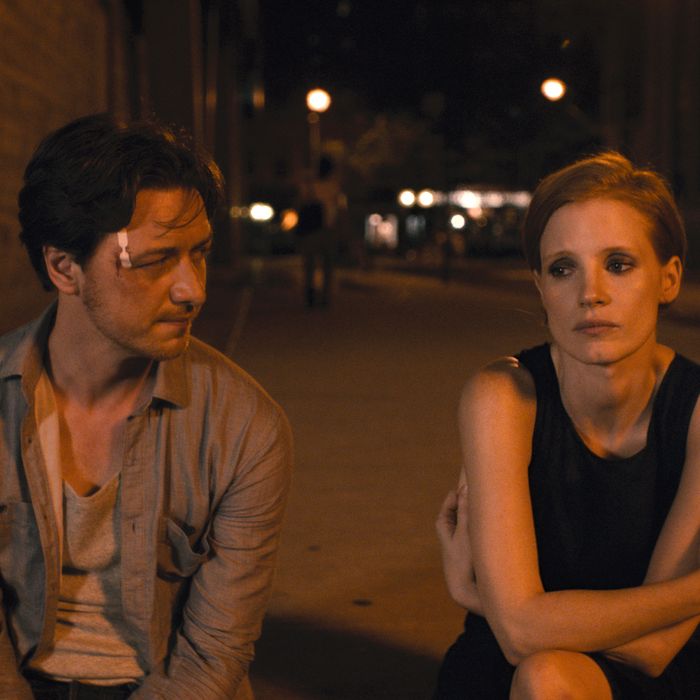
The Disappearance of Eleanor Rigby (2013)


For reasons that I am still trying to tease out, because the plot and the characters don't have any particularly outstanding appeal in themselves, and in fact are rather depressing, I quite liked this at the time that I saw it. Annoying and neurotic and over-privileged as most of the characters are, the general level of intelligence, cultural references, topics of conversation and so on which permeates the atmosphere of the picture is in the range where it holds my interest, which is something you know is increasingly lacking in my regular life. Most of the people in this movie belong to the higher end of the academic/well-traveled/urban liberal class, which is the class I certainly for better or for worse identify with, mainly because my IQ and general education level are commensurate with the average for this group I think, though I don't really belong to it, especially in the judgment of its actual members. Of course that none of these people are happy, their relationships are all disasters and they are inevitably professionally unfulfilled and disappointed, albeit their failures occur at a higher level than mine do. This is all true. There is nonetheless a relief in being in the company of people with mental outlooks and experiences that one can somewhat relate to.


The Vanishing (1988)


Oh boy. They (actually, my wife) told me not to watch it, but naturally I said, 'it's a 5-star movie. I have to watch it.' I'm not sorry I watched it--the chance to revisit the scenes and pastimes of late 80s France alone make it worthwhile for me (this is the Dutch version, not the Hollywood remake that came out a few years later and apparently was not very good)--but the ending is definitely a downer. While I realize now that the movie is full of all kinds of creepy foreshadowing, it has the kind of languid pace and pointed, unfrenetic construction that I like when I see it, though if too many movies were made in that way I would grow tired of it. And as noted above, the atmosphere is congenial to me.
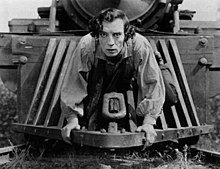
The General (1926)


As someone who at least went through a phase a few years back where I really went in for silent movies, with the works of Buster Keaton (naturally) prominent among my favorites from that period, I was anticipating this, considered by many to be his masterpiece and which I had never seen before, with considerable excitement; however my attempts--for I made two--to watch this and absorb something of the frisson that often accompanies a viewing of such a universally-acclaimed classic, were failures on this occasion. As with so many similar experiences of late, I am chalking it up in part to where I am currently in life, in which my constitution as well as my brain are undergoing another transitional period with regard to how they process and respond to things like art. I have at present no other time to see movies but in the evening--my family doesn't allow me to get through so much as a football game when they are awake--and I simply cannot stay awake, at home anyway, for something like this at that hour, with the only sound being repetitive silent movie music. Besides this though, any resemblance of the old thrill that I would at times feel when confronted with a film of this class and stature was lacking entirely. At no point was I pulled in in any aspect. Perhaps (hopefully) this phase of my sensibility will pass and a future version of myself will be able to encounter this again and be moved by it in the way that its acclaim promises is possible. It has happened before.
Far and Away (1992)


I have not been averse to certain of Ron Howard's crowd-pleasing films, namely Cocoon and A Beautiful Mind, and thought at the least that this mini-saga about Irish immigrants in America might share some similarly comforting qualities, but I found it to be emotionally flat and distant on top of a story that was oddly un-engaging and pedestrian. I've never been enamored of Tom Cruise in any movie that I've seen; his longtime stardom, even accounting for his handsomeness, is a mystery to me. Nicole Kidman I never generally liked either, though once she stopped appearing in so many movies with Tom Cruise and occasionally wore her hair in an appealing style, she grew on me, a little. My opinion of this duo has further doubtless been colored by a wild story about them told to me by a woman I worked with back in the 90s who had gone on a vacation to a resort where, she said, Tom Cruise and Nicole Kidman were also staying and that it was "known to all the other guests" that Nicole went to bed every night in her trainer's room while Tom was shacking up with a younger gentleman friend. Of course I completely believe this. Anyway this movie was a dud. It had top end Hollywood production values and a reasonably competent team working on it, but it never picked up or came alive.

Friday, October 21, 2016

Moving On to the Next Pile of To-Dos

I will get to those election and election-issue related essays. Especially those of us whose overall righteousness was subject to question anyway are being called to account for themselves in the wake of this ongoing debacle that has revealed the presence of so much rancidness in the body politic. But I have to make quick notes on all these movies and then I should be set on that for a little while.


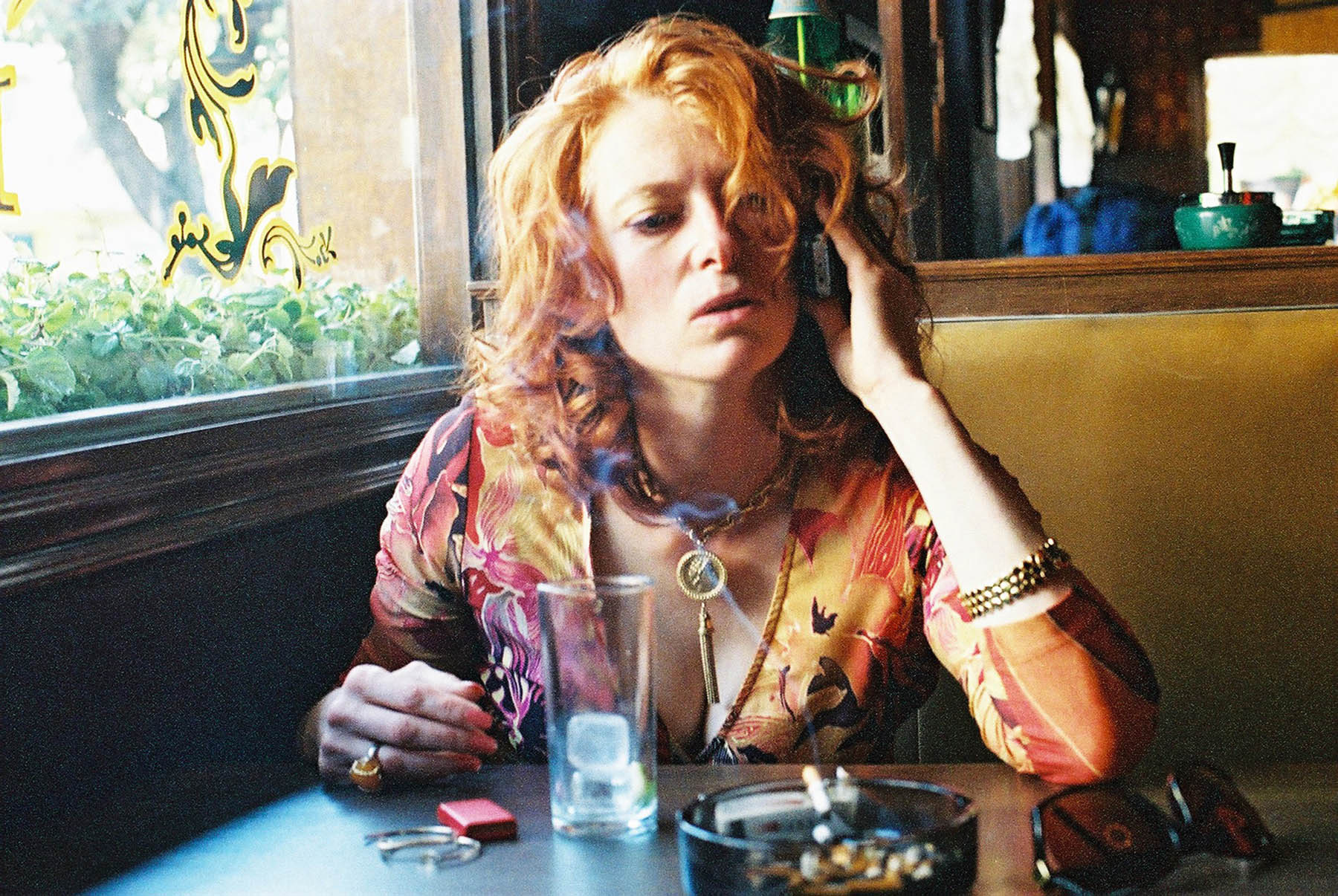
Julia (2009)


This was pretty good, it had a plot that was both different and edgy (by bourgeois standards), professional grown up acting, much of it takes place in Mexico, which seems on film like a more free flowing and natural, and therefore in many ways more alive, place than the U.S. at this point. I thought the ending was anticlimactic, if perhaps the most 'realistic', though the film had not been particularly realistic up to that point. Tilda Swinton is the star, and I must say she is quite aggressively good as an abrasive, middle-aged alcoholic wastrel with no evident family, or career, or interests outside of drinking. Most of the characters in this movie come from this down and out milieu, or are professional criminals. The main plot involves Julia's kidnapping a child, the grandson of a well-known millionaire, with some vague idea of collecting a ransom. It held my interest.


Traffic (2000)


Before the Fall


This won the Best Picture Oscar in its year, which I still think of as recent, though in fact it was over a third of my life ago. It takes on the cross-border drug trade, and also has a good portion of it set in Mexico. It has some entertaining aspects, though a bit over the top, particularly the storyline where Michael Douglas's daughter goes from being an Ivy League-bound straight A student at her prep school to whoring herself out to vicious drug dealers in the hood to support her coke habit. Maybe this really happens a lot, but to me it is a sign of how the times have changed just since 2000. There kind of was a perception, certainly in the 90s, that hard drug use tended to be concentrated among spoiled upper middle class brat types and was something of a problem. But I don't perceive this to be the case now, while of course in poorer rural areas the rates of drug addiction and even drug-related death have soared to levels that I think would have been shocking in 2000. So the movie also is dated in the sense that the serious problem it was trying to address seems only to have gotten gradually worse, at least up to this time.


Rear Window (1954)


More my scene


This is, thus far, my favorite of Alfred Hitchcock's later (post-1950) movies. Sitting at a window in a big important city looking out at people, with my beautiful girlfriend attending me and engaging with me in ongoing commentary, appeals to my sensibility anyway, and then there are the various fascinations that whatever version of the past I am watching hold for me. So this one is very easy for me to get into. The plots of most of these Hitchcock films, and especially their resolutions, always seem rather simple and almost primitive to me, but of course the style and composition and the intelligence and wit of the dialogue are where their main value lies for me. I know there are endless critical studies that explain the intricacies and hidden depths of these movies in excessive detail, and I have read some of them, but I am rarely struck by anything in them that seems important. What is important here are the simple activities of seeing, and thinking, and talking, and noticing, and offering something for others to notice.


I missed the Hitchcock cameo in this. I have to assume he was at one of the songwriter's parties, or passed by the alley.


Since Donald Trump has now unleashed a scarcely precedented outpouring of feminine rage in this past week, which is probably not going to abate until at least after the election, if even then, I did take note of the especially egregious sexism of Jimmy Stewart's war buddy the detective in his dismissive analysis of the workings of the feminine mind. The popular entertainment of the 50s and 60s, for reasons I have explored elsewhere in my writings, seem to be the most offensive to our sensibilities in this regard. In my opinion the condescension and general assurance of male competence was not as pronounced in the 20s, 30s and even early 40s. The combination of success in the war and the male-centric prosperity that arose after it made American men feel perhaps a little overly good about themselves, at least as vis-a-vis women.


In addition to her other attractions, Grace Kelly is probably the most famous figure to emerge from Philadelphia's Irish Catholic community, with which I have familial connections as well. In other words I am kind of claiming an especial closeness to her.


The Bank Dick (1940)


A W.C. Fields comedy that seems to have claimed the mantle among modern critics as the Most Essential of his titles. I didn't really get it. I thought it was silly, slow, cheap-looking, and not remotely funny. Of course the experts can't be that wrong, so I will assume I am missing something. I had never actually seen a W.C. Fields movie, so I was expecting him to be a lot different, namely a more slashing wit and the kind of, if not manic, certainly aggressive energy that I associate with more modern comedians. None of this is in evidence here, in which the humor, or attempts at it, take fairly mild and languid forms. Not one of my favorites.


Grand Illusion (1937)


Regularly celebrated as one of the greatest movies of all time, and among the most poignant. If one of the themes of the film is the passing of the aristocratic ethos of old Europe as a result of World War I, it is experienced by us as being made with a particularly old European, and especially old French, sensibility of its own that was itself about to pass away forever. I had seen this a very long time ago, and I'm sure I liked it, or the atmosphere of it but I had not remembered it all that well, and doubtless almost all of the class and historical symbolism must have gone over my head. But I was more attuned to that this time. I should note, it also helps that I have a new television that is about five times as big as the one I used to have, so watching movies now is much more like a theatrical experience. Jean Gabin made the strongest impression on me that he ever has (I assume I must have seen him before in something besides this; on the other hand, after perusing his 'filmography', perhaps I haven't). He has a great star presence. The role of the enigmatic von Stroheim of course is also legendary, but it is borne out in the viewing, his signature and unusual combination of haughtiness and deep melancholy is very affecting. I had not recognized Pierre Fresnay, whose work as Marius in the Fanny trilogy I remember praising, as Captain Boldieu, nor Dito Parlo, the German farm widow, as the newlywed from L'Atalante. I note these trivialities because all of these movies represent something important to me--indeed, in some ways the entire purpose of this whole project is as an excuse to see certain films without appearing to unduly favor them--and I like to be conscious of the relation and continuity of the artistic people involved in them.


While I am willing to believe this may be one of the twenty or so greatest films ever, I cannot with honesty rank it there on my own list, because for all of its depth of character and generosity of spirit I have not been able to reach the point with it where it has resonated with me emotionally, in terms of true love. But I do admire it.


The Awful Truth (1937)


Even though I do my best when finding a movie to put on my list to have as random and eclectic a selection as possible, there are periods when by whatever coincidence certain actors seem to turn up multiple times within a very short space. I have gone through a Toshiro Mifune period, a Burt Lancaster period, even a mini-Fernando Rey period. For the last year or so I feel like I have entered a heavy Cary Grant period, after almost never encountering the man over the first forty-five years of my existence. To my mind he has not aged as well as a movie star as some of the other golden age titans like Spencer Tracy or Jimmy Stewart or Bogart, because he is either strangely impersonal (queue the famous Mel Brooks monologue about going out to lunch with Cary Grant) or because his persona is not really like that of anyone nowadays not only in show business but in life itself. My wife likes him however, and in addition to the movies I write about here we have seen quite a few of his other ones with the children (whom we periodically subject to oldies as a supplement to whatever other education they might have picked up over the years), such as Arsenic and Old Lace, Room For One More, etc. And of course a lot of his movies are pretty good or otherwise have some interest about them, but him personally I don't really find appealing at all. Something about him makes me uncomfortable. Not like Jean Gabin or Erich von Stroheim. I'm very comfortable around them.


Getting back to the subject at hand, The Awful Truth is I guess one of the more celebrated of the 30s screwball comedies, in which genre Grant was one of the true mainstays. His foil in this one is Irene Dunne, whom we have also been seeing a lot of lately (Anna and the King of Siam; Life With Father), though about ten years younger than she was in these other roles. I like it--I don't love it, the screwball comedy not being a genre I have fully taken to (yet). Maybe I will watch this again soon, as part of the children's classics series. I am not sure if my wife has ever seen it, and she often has very original insights about things, because she is intelligent but is not mentally in the same rut as everyone else because she reads very little contemporary media, criticism, and social commentary. One thing I have to admit is that, as much as I love a lot of 1930s Hollywood product, the over the top depiction of wealthy characters that flourished in this era I often find to be wearying. All the furs and jewelry, the enormous doors and dining rooms, the silver table settings, the silk bathrobes and the top hats, the dogs of the ladies, when there is one. I don't find it attractive, I suppose.


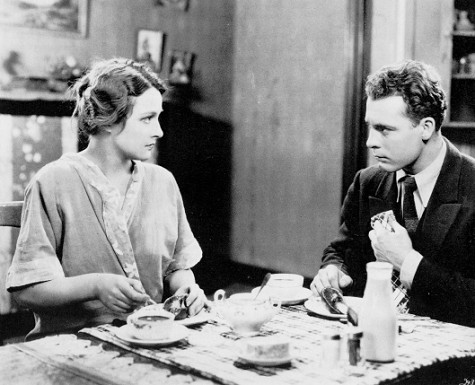
The Crowd (1928)


Hitting a little too close to home at times


Great late silent movie about mediocrity in a mass society and its feeble consolations that is surprisingly modern and still packs a considerable emotional punch almost 90 years later. It isn't available on DVD for some reason (it was one of the first 25 movies designated for preservation by the Library of Congress, so it's not like it is that obscure) so I sprung for a VHS copy. I can't recommend it enough, though it is a little depressing. My wife found out that a child dies in it and refuses to watch it on that account, which is unfortunate, since I would have valued her observations and perhaps reassurance about the film, since the two lead characters are quite similar to us, the man being delusional and lacking the drive to advance in life, eventually becoming an unemployed and unemployable loser, the woman (played by notable silent star Eleanor Boardman) being supposedly ordinary but appearing to her husband of course as the most beautiful girl in the world, which she in fact is close to being, more responsible and harder-working but too indulgent of her husband's flaws and, the movie suggests, culpable in their situation by not taking a more hard-headed stand against his frittering away of money on entertainments and other frivolities. There are just so many famous scenes that are painful to watch, because the director is not wholly sympathetic to his subjects; he is a little, and they are to some extent victims of circumstance, but they also walk blithely into every trap the world has set for them, and we can't really admire that, can we? It is an all-time great movie though, and in its time very innovative.


Thursday, January 21, 2016

Eleven Movie Reviews

Getting to the point where I am forgetting all the movies I have to write about...

Woodstock (1970)

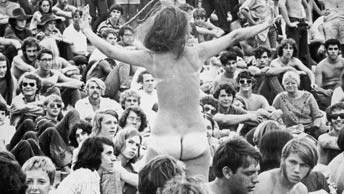
I had never seen whole thing before, though of course I have been seeing loads of the footage my entire life. It is probably the best rock concert movie I have seen, or been able to endure, though I haven't seen that many of them. The difference in the levels of physical exertion between various of the performers was marked, Richie Havens being the most vigorous, with the Grateful Dead, whose soporific thirty minute guitar indulgence was thankfully relegated to the bonus features, being at the opposite end of the spectrum. The Who was probably my favorite of the groups here, but it seemed like they were out of place in this scene. I was never much into the hippie music which predominates in this movie, though my wife used to listen to some of it when I first met her. I was in the womb in August of '69 when this was going on, and this is very recognizably the world I was born into, so that is interesting to me. Some of my earliest recollections, or impressions, of life involve being on a wool blanket placed on stamped down and dried out grass in the middle of what seemed to my three or four year old self a large crowd of people at some kind of festival, though I don't remember there ever being loud rock music. My father went in more for the kind of fairs where there were blacksmiths and people making saddles and dressing up like it was 1790, which must have been somewhat popular at the time. Back to Woodstock, this was when the middle class was so large and constrained within narrower extremes of education and income so as to almost constitute a world onto itself, as well as being at the end of the four decade period of very low immigration, so that pretty much everyone in the enormous crowd comes from a similar socio-economic and cultural background. This will be especially striking to anyone watching the movie today. Even if it were possible I don't know that I would want to go back to that kind of society entirely, at least in the form it had taken by the late 60s and 70s, which had induced a kind of broad despair throughout the populace, but it is remarkable how much everyone at the time, including the young me, took it for granted as the normal and hopelessly permanent state of society. I am still pretty sure I would not have wanted to be at Woodstock, unless I was part of the crowd bathing with the beautiful naked girls in the lake. But I wouldn't have been.


Party on

Stella Maris (1918)

Silent, obviously. Not tremendous, but enjoyable enough for what it is, which is an over the top melodrama featuring alcoholic first wives who beat their servants, beautiful invalids, fortunes that need to be maneuvered into the legal possession of the most likable characters, and so on. It stars Mary Pickford, the original "America's Sweetheart", and after this one movie I am a believer in the Mary Pickford legend. The bonus features included great home movies from Mary Pickford featuring a glimpse of the glories of pre-smog, pre-sprawl (and pre-income tax) Los Angeles during the teens and twenties.


42 Up (1998)

Installment of the much acclaimed British documentary series which has followed the lives of fifteen or so people every seven years since 1964 when they were seven years old. I had seen a couple of the earlier ones, I assume 21 and 28, back in the 90s, and remember liking them. 42 I found to be somewhat depressing. These people are for the most part distressingly ordinary, though there was one guy who ended up as a science professor (I don't recall which branch, physics, I think) at the University of Wisconsin who was obviously more intelligent than most of the subjects, and the one upper class bred man, at age 42 a successful and rather hard-headed barrister, who still consented to take part in the program, had a few matter of fact observations about the professional life that were interesting to me at least, though he was mostly pretty guarded with the interviewer/director (Michael Apted, who has been with the project from the beginning all the way to the most recent episode, which was 56. He himself is 73 or 74 now). The main problem for this episode from the narrative standpoint that I see is that as people get into their 40s and beyond, they don't change or develop that much anymore. Things may still happen in their lives, but they themselves pretty much are what they are, and as noted earlier, most people once they age out of the time in their lives when their personalities, education, sexual desirability can be understood in terms of potential to that when these have been effectively established, generally have nothing left that is very compelling about them. By that token I would expect the series to get worse as it goes on. However the critics seem to have thought that the two installments that have come after this have kept up the interest of the project. Doubtless they will come up on my list at some point.

The Trial (1962) 

Orson Welles take, made in Europe during his long exile-from-Hollywood period, on the seminal Kafka novel, starring Anthony Perkins (!) as the hapless K. While it has great visuals, it suffers for me from some of the same problems I observed in seeing The Magnificent Ambersons, too much long, intellectually dense and hard to follow dialogue combined with a lack of music, or at least noticeable music, that between the combination of my age and declining verbal intelligence, at least for interpreting the spoken word in large portions, made it difficult for me to concentrate/stay awake. Welles's celebrated genius clearly contains a claustrophobic/oppressive element, in this apart and beyond that suggested by the source material, that I do not find congenial. However many people think this is a masterpiece of sorts.


Office Space (1999)

Something of a cult movie, apparently. I found it diverting in a return to the late 90s way, nothing very profound. It is noticeable to me that such ennui and cultural pessimism as made its way into this--most of which is played as comedy--seem as nothing compared to the almost apocalyptic vision of society that has become predominant in the last ten years or so. It may just be me, and that I work in an unusually female-heavy environment, but I had forgotten about the atmosphere of offices full of placeholding, quietly desperate middle aged men who have no enthusiasm for the actual work they do but are terrified of losing the paycheck. The kinds of guys who lose it if they don't get their coffee breaks at the set times and all of that. I am one of those guys now, but there are not as many like me as there used to be. Most of the men I know seem to be either somewhat major professionals with purpose, authority and so on, or freelancers of one kind or another, with purpose and authority of a sort.


The Plainsman (1937)

Entertaining golden age western starring Gary Cooper as Wild Bill Hickok and Jean Arthur as Calamity Jane (the two had been paired a year earlier in Mr Deeds Goes to Town as well). Buffalo Bill and George Custer feature as characters also, as does Abraham Lincoln, who opens the movie by reiterating four or five times in a cabinet meeting as the Civil War is winding down that the plains need to be made "safe" for settlement for all the restless Americans coming home from the war or otherwise released from past claims or duties or ways of life from its result. Very smooth production, with the characters presented mythologically but not in a 'serious', overly reverent manner. Enjoyable, but not distinctly memorable.


Melancholia (2011) 

This kept turning up in various of the games I play with word combinations on Google, so I decided to get it. Relentlessly dour and pessimistic movie, even before it becomes certain that the world is going to end before the summer is out. Like a lot of modern movies it is well done in a slick kind of way. The characters have everything, seemingly--great looks, brilliant intellects, vast wealth, estates, leisure, privacy--yet they are uniformly miserable and disdainful of others and nothing is good enough for them. I have no sympathy towards them whatsoever, though of course I would still like to sleep with all of the women. They would prefer anybody else, but unfortunately our civilization has produced me, or variations on me, a few million times over. And women have, seemingly, never been less satisfied with the quality of men available to them.


All That Heaven Allows (1955) 

Archetypical 50s technicolor melodrama by Douglas Sirk of the type that was dismissed at the time as pap, but has gained respect in recent years for its lush production and cinematography as well as its sly undercurrent of commentary on the moral and intellectual rot at the heart of bourgeois American society in the 1950s. I was kind of fascinated by it. Nothing in it--town, characters, houses--resembles anything real in the naturalistic sense, yet it feels like a familiar, real world--a horrible one, mostly, but nonetheless psychologically it is only too attainable.


The Emperor's Club (2002)

Probably an all right movie, but more stinking rich and privileged kids who transition mostly smoothly from prep school to the Ivy League to the heights of finance, law, politics, culture, and so on. I'm at a place in my life where the stories of people of this sort, unless they go off on some sort of completely bizarre and unpredictable tangent, are not interesting to me. The crisis in this movie concerns the charismatic but academically indifferent son of a senator who mocks/undermines his classics teacher and cheats during the Mr Julius Caesar pageant/history quiz, which is one of the social highlights of the school calendar. Because his father his so important/gives so much money to the school, no one can bring the hammer down or even effectively express anger towards the kid, who goes on to Yale and eventually becomes a CEO of some kind. Later, at a 25 year reunion of the class in which the Mr Julius Caesar contest is reprised, the CEO cheats again and announces he is running for his father's old senate seat. The classics teacher tries to call the CEO on his cheating but the guy laughs in his face and asks his old teacher where all his learning and study of virtue, etc, has gotten him, and the teacher lacks the wherewithal/confidence in his own learning and development to effectively give any kind of an answer. So it does not really give us the alternative universe vis-a-vis real life that we are looking for. There is a reason why Mr Smith Goes to Washington is a classic and this is not, after all.


Gone Girl (2014)

Silky smooth Hollywood product that investigates more of the rotting heart of the American dream. The most fascinating thing for me about modern movies like this is to see how my contemporaries live, or are supposed to live, since I have little social contact outside my immediate family, and our lives and home follow an apparently outdated rhythm, and we are as well located very far from most of the drama propelling national politics, culture, etc. The main characters is this are around my age, or slightly younger. The Gone Girl, who literally has the adjective 'Amazing' as a huge part of her identity (her parents were the authors of a once popular book series based on her life titled "Amazing Amy"), is a lifelong New Yorker who is forced by the recession, and the losses of her and her husband's media jobs, to move out of the city to her husband's hometown, which unfortunately is a cultural black hole town on the Mississippi River in Missouri (though not so dead that there aren't plenty of large-breasted twenty year old bimbos who are interested in having sex with her husband). All of this drives Amazing Amy over the brink and she disappears in an elaborate hoax to make it appear that she has been bodily as well as spiritually murdered by her fundamentally inferior husband. Perhaps she is a symbol of our whole generation, though she is not really an attractive representation of the supposed brilliance, hotness and overall awesomeness of the contemporary woman. At the end she morphs into what Hollywood seems to consider to be a current feminine ideal, a sculpted. hardened, pitiless shrew whose combination of hyperintelligence and unapproachable sexual magnetism is not to be engaged or resisted, similar to the Robin Wright character in House of Cards, which program I abandoned after about two and a half episodes because I determined my life was too short to feel that miserable, both about myself and the greater society...


Gillian Flynn, best-selling author of Gone Girl and Generation X superwoman

White Bird in a Blizzard (2014)

This movie came up in one of my games rather out of the blue. I have to say I thought it was kind of good, and stylistically attractive. The director is a American of Japanese descent named Gregg Araki, with whose work I was previously unfamiliar. He seems to be a big name in gay cinema. While there is certainly gayness hovering around the edges of this movie, it is mostly of a subdued kind. The main character is another girl/woman of exactly my age, but it is set from 1988-1991, so she is 17/18 to 21 in the film. Other than a kind of uniform blandness and by comparison to now somewhat less all-encompassing relation to media, there is not much specific in the film that is that evocative of 1988. There is a pretty good soundtrack (The Cocteau Twins!) of some of the affecting melancholy sensitive white kid music of the time, but it is doesn't seem to me to quite fit with the movie.


The girl who is my age in generational time has a sexual coming of age at what appears to be the right age for it--when you get your 1st kiss in your junior year of college (as a man at least) it appears that you missed the time for 'coming of age' and all of the specific later-in-life maturity related to that experience--including a lover who is a much older man, which despite having gone out of style in our time appears to be a dynamic that is usually incredibly healthy for all concerned. I am reminded, depressingly for myself, that almost all interesting and attractive women have these deep secret lives and wealth of erotic experiences that people like me have no inkling of, and therefore have can have no real relation to them and their lives and art and basically everything good and desirable in the world. So a good movie, but it did depress me because of the particularly gut-punching reminder of my ------- irrelevance.


I am caught up now, though I wish I had expanded more on some of these.

Thursday, December 03, 2015

Lightning Movie Posts

I am so far behind on my movie documenting now, that I am going to go through as many as I can as succinctly as I can, sticking as much as possible to my most pertinent impressions:


Die Nibelungen: Siegfried & Kriemhild's Revenge (1924)

On Youtube, which is never my preference, but I have to take what I can get. Earlier Fritz Lang. Very good, I was into the Teutonic mythology. Supposedly Hitler was an enthusiast of these movies, which do feature a lot of Aryan types engaging in bloodshed. When Kriemhild marries Attila and goes off to live with the Huns we get a more convincing idea of the extreme filth and squalor in which barbarian peoples habitually lived of old. Margarete Schon, the actress who played Kriemhild, was striking to me for personal reasons (i.e., she bore a strong resemblance to someone I know and find attractive).


The Cabinet of Doctor Caligari (1919)

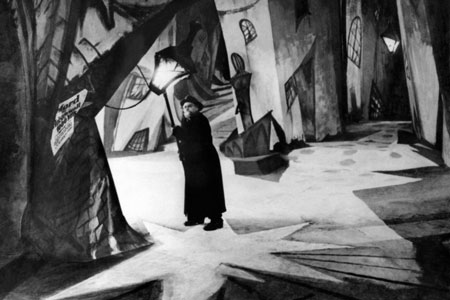
Dark, menacing German Expressionist classic, in a great print. Admirable for its style, daring, grasp of the civilizational mood in its moment, but with my current diminished concentration due to lack of rest and downtime this is one of those movies that I had a hard time staying awake through and actually following what was going on. Definitely appropriate for genuine smarties though. I will have to take it up again at some less hectic time.


L'Argent (1983)

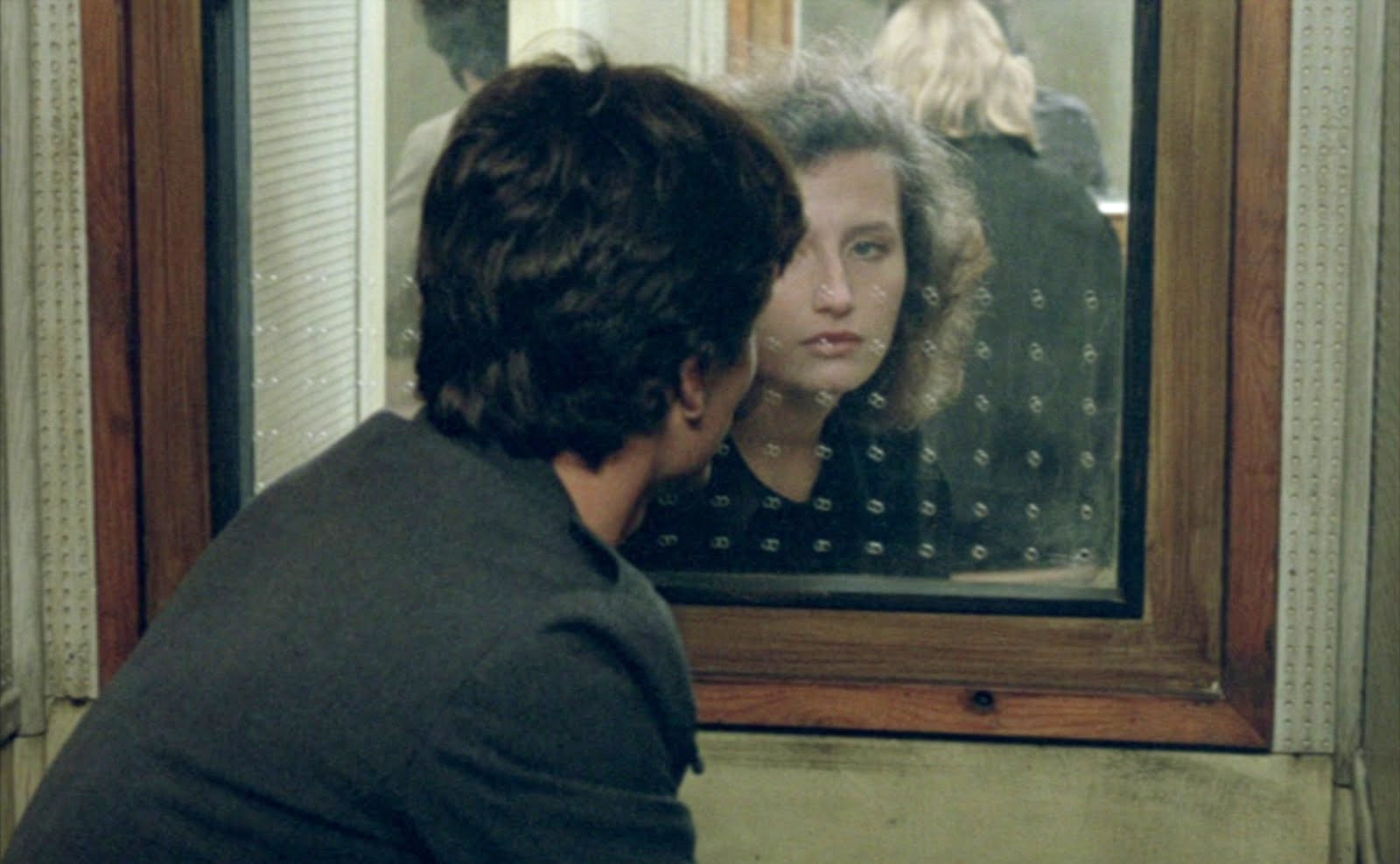
Among the directors who seem to be universally considered as serious contenders for all time top-20 status, Robert Bresson has always been to me the most obscure. None of the video stores I used to frequent during that era ever had any of his movies, the college film society never showed any of them, his movies were never obviously referenced in any writing or other cinema that achieved any kind of mainstream penetration. Yet in time, influenced by the odd drop of the name in various corners accompanied with a forceful conviction of the greatness of the man's oeuvre, the idea formed in me that he was one of the small number--twenty? fifty? certainly one hundred--of the all time greats in the field. L'Argent was his last movie, and still the only one of his that I have seen. I bought a used VHS copy of it some years ago now, and had been unable to keep up with it at that time, but this revisiting was much better in that regard, and I was able to appreciate much more the amount of skill and control that is packed into every shot and scene, and their interconnectedness and flow, the quality of which is Bunuel-like. The movie is only around eighty minutes in length, yet a great many significant actions and psychological transformations happen. All of this is impressive, and therefore pleasing in spite of the rather doleful story and seeming message. Also on a less substantial note, we have some nice scenes from (a deliberately gritty and workaday) early 80s Paris, which resembles pretty well the city as it looked and felt like when I was there in 1990, but which I sense it does not in general tone resemble very much any more.

  
So I did not get too far tonight, but I will revisit this exercise again until I have caught up somewhat...

Wednesday, November 04, 2015

Three Movies From 1925

1925 was the high point, in terms of spiritedness, of the silent era. Of course there would still be further development and notable achievement, artistically, in the form up through the end of the decade; but by then the end of the silent period was obviously at hand, and while the self-consciousness of this inevitability does not diminish the quality of these later works, it imposes an air of artificiality and constraint on them that is missing from the efforts of 1925, which are not yet afflicted by this consciousness.

The Phantom of the Opera 


One of the most legendary silents, famous for the performance of Lon Chaney as the title character, fresh off of his similarly dominating portrayal of The Hunchback of Notre Dame (which I have not yet been seen), the previous year. People love this story, and a sense of Drama pulses through one at the mere contemplation of the title and the outline of the plot. So I was fired up to see it, and I have to admit I was a little disappointed, though I believe in this instance the fault is probably my own. I don't feel like the print I saw was very good--it was sepia-tinted and was neither sharp nor striking to me. I found my mind wandering a lot, to the point of frequently losing the track of the intertitles and the flow of the story, so that I needed to backtrack to the beginning of a scene, at which my brain would immediately drift off again. Perhaps I was too tired during the particular stretch of days that I took on this movie. Perhaps I am simply too stupid to watch it, though I don't think the basic story is overwhelmingly difficult to follow. I have frequently maintained that it is not reasonable or desirable to expect that one will click with everything even that is good, at least on the initial run, and I think something of that kind happened here. I would be attentive at the beginnings of scenes, in anticipation of some promising development, and then for whatever reason it would not go off with me. I accept that some grand things probably escaped me. What is to be done? I will have to come back to it some other time.

The Freshman


Harold Lloyd comedy, the first of his movies that I have seen. Even though it is enshrined indisputably as a classic, I had to watch it on Youtube because I could not procure a copy of it in any physical form for less than $20 or so. I love it. It has great energy, and while most of the jokes are ridiculous on the surface and to the faculty of higher thought, they are hammered through so relentlessly and elaborately that they extract a feeling of delight in spite of one's modern defenses. Hollywood, being after all not devoid of people who approach things from the artistic mindset, figured out early on that what is really significant--the essence, if you will--about 'college' as far as the general public, even some of the more intelligent levels of it, are concerned, is not professional credentialing, STEM training and research, debates over the Canon, or finding innovative ways to put the whole experience online so as to save a few bucks, but football, parties, and girls. The Freshman goes light on the academics--indeed it leaves them out altogether--and organizes itself around these other often absurd but nonetheless highly formative experiences. And then who, who is a kindred spirit to the likes of us, at least, does not love the image of the 20s that survives in artifacts like this? Such beautiful clothes and rooms and an outdoor physical environment that to contemporary eyes is attractive, manageable and not an overwhelming mess, parties and other activities that look as if they may actually have been fun. At some point in our history the emphasis on having 'fun' seems to have given way in more instances to that of being cooler or smarter or otherwise more dominant than other people in social settings, though perhaps this is not true within true peer groups.

Jobyna Ralston, who in mainly remembered now for frequently appearing as the love interest in Harold Lloyd movies, was pretty beautiful in this. So much so, in fact, that the plot contrivance that Harold requires the whole movie to figure out that she is the one who likes him and that he should be with should be ludicrous, but she is so sweet, so unneurotic, so unconniving, so apparently unnoticed in her ridiculous beauty, that I appreciate the effort and doggedness to create such an unreal but highly satisfying sentiment.


Stella Dallas (silent version)


This was included in the extras for the DVD of the more famous 1937 version starring Barbara Stanwyck. It had no accompanying music, so it was a truly silent hour plus long movie. Ronald Colman, who later transitioned successfully to talkies, appearing in A Tale of Two Cities (1935) among other noteworthy roles, was the big star in this version. Stella was played by the more obscure Belle Bennett, who at the beginning of the movie was more appealing and wholesome than Barbara Stanwyck but in the inimitable old Hollywood style quickly metamorphosed into every man's (or at least cutie-pie lover's) worst nightmare. It was directed by Henry King, who would keep working into the 60s and who has turned up a couple of times in my dabbles in film history (The Gunfighter and Carousel, both from the 50s). I wish I did not take so long to get around to filing these reports, because while I remember that I liked the movie, and liked it about equally with the 1937 version, I no longer remember, what, if anything, was substantially different about the two versions, which have now kind of blended together in my mind. Some of the aspects, such as the squalid Ed Munn character and the extremity of Stella's lower class habits and mindset, stand out more from the sound version, but that may be because they can be emphasized more fully and directly with the aid of sound, especially to the more unsubtle viewer.

Friday, October 09, 2015

Two Movies by Josef von Sternberg

An American Tragedy (1931)

Josef von Sternberg was born in Austria but emigrated to the United States with his parents when he was fourteen, so that professionally he came up through the American film industry, first in New York and then Hollywood, though he would later make movies in Germany as well. He seems to be well-regarded by experts, though none of his catalog of movies stood out to me as a familiar classic title.  An American Tragedy, based on the then six-year old Dreiser novel that I happened to read, and thought highly of, over the summer, is a somewhat forgotten adaptation--it does not appear to have ever been been released even on VHS--in the shadow of the later A Place in the Sun, starring Elizabeth Taylor and Montgomery Clift. Someone has posted it, apparently in its entirety, on Youtube. As is to be expected with an 874 page book condensed to a 90 minute movie, the plot of the movie is considerably streamlined from that of the source material, but as an admirer of the book I found it a good treatment, probably better in that regard than A Place in the Sun, though I also like that version as a movie qua movie. Von Sternberg's version has the advantage of being nearly contemporary with the book; this is especially helpful where the actors are concerned, as they all conform more to my idea of what the characters were like both as far as looks and general temperament went. Also the 1931 version placed its emphasis more on the relationship between Clyde and the factory girl Roberta, who was played beautifully (and far more sympathetically than Shelley Winters's depiction 20 years later) by an actress named Sylvia Sidney, whom I had never heard of before, but who had a very long career, earning an academy award nomination in 1973 and appearing in movies as late as 1996's Mars Attacks!, while the later one was much more interested in that between Clyde and the wealthy Sondra Finchley character, which was the role played by Elizabeth Taylor. The Sondra role in the 1931 movie was played by the way by Frances Dee, whom I had never seen before either but whom I remember having been praised by James Agee for 'having a face' and 'never being around nearly enough', and indeed her part in this was surprisingly small. As is often the case in old mid-list type Hollywood movies of this type, the general impression one gets is that there were an absurdly large number of beautiful women under contract in Hollywood in the 30s. In this movie even among the extras and non-speaking, whether among the factory workers or Sondra's chi-chi friends, there are just rooms full of gorgeous girls.


Sylvia Sidney (with the much-maligned Joseph Holmes, as Clyde)

The dialogue in the courtroom scenes in the book were I thought unusually well-written, and the writers of the screenplay had the good sense to transfer several of the key exchanges pretty much as they were into the movie, which maintains its interest and intensity, despite the circumstance that the verdict in the case is never for a second in doubt, more than is common in courtroom dramas.


...and Frances Dee

Whenever titles are employed to indicate a passage of time or a change of locale, they appear against a backdrop of a shimmering lake with a frame of leaves, which I thought was a really fine aesthetic touch, and a nod to the serious quality of the book.

Highly recommended.


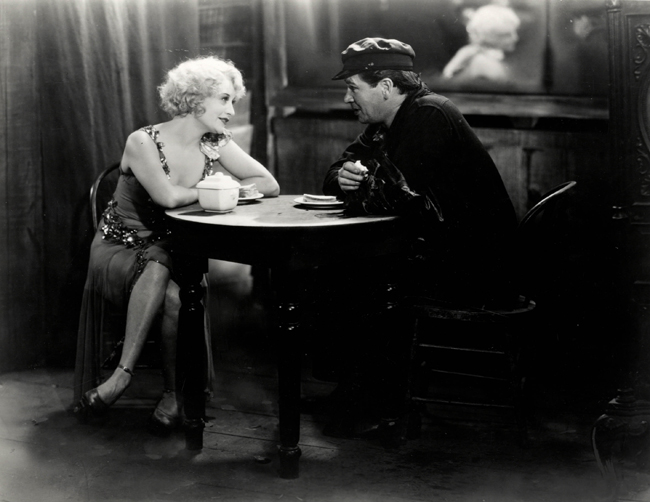
The Docks of New York (1928)

Taking us back to the silent era, this movie feels like being dropped into a Eugene O'Neill play (The Hairy Ape, especially), with its desperate, brutish machine-age laborers, dive bar never more than an inadvertent jostle or stare held a second too long from bursting into violence, and prostitutes and other damaged women who never had a chance. I didn't like this one quite as much--even with O'Neill, I have to admit I prefer his plays which feature somewhat more evolved and articulate characters--though the (presumably) restored print from the Criterion Collection I saw was striking. But I don't have much more than that to say about it.


Thursday, February 10, 2011

The Battleship Potemkin (1925)

Probably the most famous of all Soviet silent movies, and one of the landmarks of the form in any genre, we are singularly unlikely to do it any justice here. Nonetheless to the tourist of film its approach and brief incursion on one's own life are exciting in a way similar to the way those of the Grand Canyon or the Leaning Tower of Pisa are to his geographical counterpart. Like numerous other classics I have recorded watching, Battleship was shown at school, and even then with my extremely limited knowledge of movie history, in the days leading up to the showing I would see one of the flyers posted up at various places around campus and think almost hypnotically "Battleship Potemkin! Sergei Eisentstein! Odessa steps! Baby carriage! The maggots on the hunk of rotted beef!" While I won't say that I was aflame with excitement, not really having any idea what the movie was or why it was supposed to be great, it pleased me to think that a pretty much universally acknowledged masterpiece in which almost all smart people, but hardly any stupid ones, would have some degree of interest was going to be making an appearance in our little society of burgeoning thinkers. So as I say, at that time I was, as I am now, primarily a dutiful viewer, still experiencing the movie as a night's entertainment, though perhaps at a more elevated intellectual level than usual, mentally checking off the celebrated scenes and attitudes and propagandistic points as they came along, feeling mildly disappointed that the massacre on the Odessa steps did not affect me more powerfully--I found the cinematic language which was informing it to be confusing. On the whole though I was satisfied with my evening's morsel of culture, not unlike the feeling one has in completely a single awkward dance or five minute conversation with a girl one has been interested in from afar, neither of which has been carried off with any skill or will ever lead anywhere. Nonetheless I had seen the Battleship Potemkin, much as I had once procured an innocent dance with some Jenny or Betsy who seemed desirable to me, and I could enter it into my '+' column for all times.

About ten years afterwards, in deference to another system I had generated for determining which movies to watch, less defined than my current one and therefore soon abandoned, I saw the Battleship again. I had apparently not learned much that I could apply to my viewing of it in the ensuing decade however, for my response to it was largely the same. I watched it as seriously as I could, appreciated it duly, sat in the dark for half an hour afterwards letting the images and the score sink in, drank two shots of Smirnoff, which, this product being distilled in Connecticut, was probably a completely pointless gesture, in spite of all of which I soon largely forgot about the film.

So another ten years pass by, yet another system derived with the object of identifying and seeing only movies possessing some claim to greatness (why? I should scrap this altogether and devote all my free time to studying opera and the foundations and ornaments of art history, seeing as my only object in any of this is to be able to present to the world indisputable evidence of visible cultivation, though nothing seems to have any effect on me in that regard), and Potemkin comes up again, being apparently so classic that there is no program of comprehensive film history one can undertake that does not land upon it almost at once. By now do I dread its appearance? Not in the least! I was as excited to see it as I was on the other occasions; for with anything so special and the object of such widely-shared enthusiasm at the highest levels of criticism and expertise, one is infected with the conviction that something remarkable could easily strike one or come to one at anytime. Even my blog post could catch the eye of some wonderfully perceptive and alive reader with whom I could develop a mutually rewarding intellectual correspondence. Probably not, but even the thought of such a circumstance resulting from my review of The Hangover was impossible to entertain (Wasn't it?).

So I saw it for a third time, this movie that I never tire of but never enter the wondrous dynamism of either. It was still innovative, it was still grand and ambitious, the meat was still rotten, the officers vicious, the priest ridiculous, the sea and the panaroma of Odessa shimmering, the steps sequence iconic and spectacular and confusing, the revolutionary hero still rather too bull-necked and unintelligent-looking for me to embrace wholly. I am stuck on the proverbial treadmill in relation to this remarkable movie, largely able to appreciate it, or much of it anyway, but only coldly. I suspect I will not think of it again until another 10 years goes by and it appears somewhere on my social schedule again, as if the movie is an orbiting planet that keeps re-appearing in my line of sight at predictable intervals without getting close enough for me to make out very much about it beyond what is obvious.

I think this is the third ship movie I've had in the last year, after The Navigator, which is almost contemporaneous with this and therefore makes for an interesting comparison, as well as The Caine Mutiny, which is also about a captain of a ship at least being relieved of his duties by an uprising of his crew, though of course that was a bourgeois conflict centering around technocratic competence and mental health rather than an expression of all out war between two completely polarized and ultimately incompatible classes of men.

Thursday, April 08, 2010

The Navigator (1924)Buster Keaton was among the foremost of that race of performers, who flourished especially in the early days of Hollywood, who possessed such a singular collection of talents that his films are necessarily organized around their display, and are not conceivable without him in the lead role. Charlie Chaplin, Fred Astaire, the Marx Brothers and Judy Garland are other people who fit this type of the indispensible star, which is one that doesn't really seem to exist anymore; movies featuring rock stars as themselves I suppose are a relation to these types of movies, but even these are more reliant on the stars' pre-existing celebrity cult than any unique talents employed in the movie. There are of course famous acting performances without which it is difficult to imagine the movies having the impact they have on people--Brando in Streetcar, James Dean's movies, many of Jimmy Stewart's celebrated roles, Schwarzenegger in Conan the Barbarian--but all of these films, even Conan, would still have been written and made even without the stars with whom they are so closely identified. Buster Keaton movies do not exist, and are probably not conceived of as existing, without Buster Keaton. When one considers how repetitive and done to death most things in the arts are, the remarkable thing about the Keaton movies 85 years on is that even when you have something kind of like it, and you sort of know what is coming, you still have not quite seen anything exactly like it, that is exactly as satisfying, which is why he continues to have an impressively wide appeal among serious people and naifs alike even in our time.

I did not enjoy The Navigator quite as much as I did College, which is the only other Buster Keaton movie I have seen to date. I think this is due in part to the circumstance that I have a terror of boats and water generally, so the comic possibilities of drowning or being adrift at sea which the movie has to play upon come off to me perhaps somewhat darker than they do other people. Of course where I live there are ponds and lakes and rivers everywhere, often coming very close up by the road, especially during the rainy seasons such as now and in late fall, where there are also often no guardrails, so I have frequent occasion for Ted Kennedy-style flashbacks and apprehensions. I am a little better on ferries, which I sort of like to take, though I still worry slightly when I am on deck about myself or one of the children falling overboard. The film starts off with two inspired jokes right off the bat, the line where he turns to his valet and says "Wilson (or whatever), I've decided I want to get married. (pause). Today." Of course he has no girlfriend but he has someone in mind to propose to, so he calls for the car, which pulling up to the curb, he gets into it with great ceremony, at which the car pulls out, does a U-turn in the middle of the blissfully empty Los Angeles street (internet photos reveal that the street and the house are still there today, but traffic is much heavier, and pulls up in front of the house directly across the street. At this point I was thinking, this is going to be really great. And it is good, but the various gags on the ship, while often ingenious, don't always strike me as being as funny as other situations do.

To this point also I have to say I am more of a Chaplin than a Keaton fan--these two camps forming one of those strange divisions of life across which there seems to be little commonality or fraternization. Chaplin to me is the fuller human, and brings more of it really is like to be a person into his movies. Keaton may better represent some vision of modernity though. I know he was admired by Samuel Beckett, as well as other modernist intellectual types. His face really was striking, and a work of art in itself, which I don't have to tell you is rare, though it is a quality one notices in celebrated actors. Laurence Olivier's face made something of a similar impression, that of having been deliberately worked by the mind above all into the rather extraordinary and specific appearance it made on the screen.

The tape I had of this movie also included two shorts that kept with the maritime theme, The Boat and The Love Nest. The Boat is about a husband, a wife and their two sons who are a boat that springs a leak in the middle of the night during a tempest. It is actually kind of scary. The Love Nest is set on some kind of cargo ship. The captain is a tyrant who grabs people by the collar and tosses them overboard for things like spilling coffee while pouring it. Which is actually kind of funny.

I often think when watching these old films that my wife missed her true calling, which was to be a 1920s silent film actress, since about half the starlets of this time are of a similar height and body type, and have similar hairstyle and facial structures, which for the most part you don't see so much on television today. Now I don't want to come off as being like either one of those born-again Christians or nerds with a mail order bride from the third world that everyone makes fun of, the guys who are always proclaiming on the internet how hot and incredible their wives are and thanking Jesus for sending them an angel from heaven and so on. As was said of Samuel Johnson's mother, "she knew her son's value" but apparently did not talk about it much. And besides, perhaps not everyone will think it a wonderful thing to look like a 1920s movie star, though I will admit I do think it so. Now among the actresses I have seen lately that reinforced this impression that was made on me some time ago, Lya Da Putti looks like Mrs Bourgeois Surrender/Sabrina/Sarah whatever you want to call her while moving about and doing things in Variete, though not so much in the stills, but the dear one's real doppelganger is the lady who plays the wife in The Boat and several other Buster Keaton classics, the beautiful Sybil Seely, whom one internet commentator I have read considers to be "a whole world of hot" even today. In the film, and other clips available on the internet the resemblance sometimes is really uncanny. I realize this is of little interest to the general public, but some may like the comparison of the pictures. So first we have Sybil Seely, circa 1920:

Mrs Bourgeois Surrender circa 1994:


People love Buster Keaton. Lots of videos made to his work, which does lend itself to this kind of montage very well. I don't have time to watch through all of them. This one looks pretty good.


Wednesday, April 07, 2010

Variete (1925) I have a backlog of movies I wanted to make short commentaries on, and while I would usually prefer to combine them in one big post, the low number of posts I have put up the last few months and the current scarcity of time I have for writing here have persuaded me to try to do a series of White Castle Hamburger-sized mini-posts to get through these movies.

It is only within the last few years that I have begun to watch silent movies in any appreciable manner. As anyone's would, my investigations so far have revealed that greatness in this era has been largely designated as residing in three major scenes: the great comedians of Hollywood, Chaplin, Keaton, Lloyd, et al, plus D.W. Griffith, of whose work I have not seen anything yet, but who must be a truly awesome director, as he is the only American I am aware of whose greatness is insisted upon even though he was an avowed and virulent racist (seriously--I'm not sure it is even safe yet to put in a good word for Jefferson in respectable company, and his racism seems to have somewhat more of the conflicted rather than virulent strain); the Soviet avant garde, flush with the tumult of revolution and outrageous ideology combined with a high art tradition; and the brilliant nihilistic productions of Weimar Germany, in the very dark heart of the old shattered Europe, known by the name of Expressionism, which is the camp out of which Variete emerged.

This is not the easiest film in the world to find a copy of. I was able to buy a DVD for $14.99 from a guy in Phoenix, Arizona. The design, packaging and presentation of this DVD is a slight cut above the disks people burn on their home computers, but it was definitely not put out by any kind of high level media company either. The quality of the movie on it seems to be pretty good as far as I can tell. Variete was directed by Evald Andre Dupont, a native of Saxony, and stars Emil Jannings (born Switzerland) and Lya De Putti, a Hungarian born in what is now part of Slovakia. She died at age 32 and was buried in Ferncliff Cemetery in Hartsdale, New York, where James Baldwin and Judy Garland, among dozens of other celebrities, were also laid to rest. I am not familiar with any of these people outside of this film, but they were important figures in the German theater and arts of their time, which was a very advanced and serious culture that I take an interest in whenever I run across it as a kind of ultimate contrast to my own life.

Like so many classic movies, from Les Enfants du Paradis to La Strada to numerous of Ingmar Bergman's movies to a hundred others I can't think of off hand, the story is set among a troupe of vagabond performers, in this instance circus acrobats, a kind of life that is presented as hard, perilous and a great strain on any kind of stability on one's emotional life, but that also has a certain romantic appeal to bourgeois intellectuals, as the innate physicality suggests both heightened sensuality and authenticity, which are the two components of an interesting life most elusive to bourgeois intellectuals. I love these kinds of movies myself, as well as certain kinds of real theaters and circuses. In the summer in New Hampshire and Vermont there are a number of very small time circus troupes that either travel around from fairground to fairground or pitch a tent at one of the minor league amusement parks. These circuses are probably rather melancholy and pitiful affairs, but there is also a low tech human immediacy about them that makes them a refuge from a lot of the clinical harshness and impersonality of life that oppresses me. Most of the performers in these circuses seem to be Russian, the women attractive but hard-looking when you get closer to them. Some of the acrobats are Hispanic. But I am getting away from the movie again.

Like the best parts of life itself the movie is a tale of desire, jealousy, betrayal, and so forth. The scenes involving the acrobatics as well as the fading in and out between two contiguous scenes were innovative at the time and are celebrated for that, as is explained here. Unlike the vast majority of movies, the camera actually operates like an eye with a highly functioning and interesting brain attached to it. The effect of this is that human life, and its places and objects and rooms, when seen through the filter of this intelligence, appears to be possessed of such weight and meaning as it ordinarily lacks, which is of course the minimum aim I would suspect of all artistic creation. Here is one of the places where success is attained in this, and it is also an example of why I think it is impossible at bottom for any genuine piece of art to be nihilistic. In this case the camera by what it seeks and finds betrays any effect of meaninglessness that one might be susceptible to. It finds meaning everywhere.

Friday, January 22, 2010

Back to the Movies

I've been reading some of James Agee's film writing this past week, so maybe that will have some positive influence on this post. His essays make some good reading, especially the ones about the silent era, the comedians, D.W. Griffith, and such, though I'm not sure I would have included them in the Library of America series alongside Melville, Faulkner, Henry James, The Federalist Papers, and so on, where they now are. Most of the book consists of weekly columns, many of which were clearly dashed off in a hurry, from the Nation and Time magazines. Most of these are about insignificant and long-forgotten movies to boot. Compared to modern film writing there is not a great deal of analysis either of films' meanings or of the filmmarker's technique. Agee's persona, as it were, is as a literate commentator who responds, or doesn't respond, to various experiences he gets from movies; the main question for him is where a film works and doesn't work, and why, which answer he usually either does not seem to find difficult, or at least does not make difficult. He makes great use of one of my favorite techniques, which is to expostulate on the ten or fifteen egregious flaws intellectual types will be sure to point out in a film such as Casablanca or The Best Years of Our Lives, to cover himself, and then confess to liking them a great deal anyway. In this way I find him engaging, though perhaps I don't learn much from him, for we have both a similar approach and often a similar response. When a particular actress moves or excites him, he writes about her with a kind of heartfelt tenderness that it is almost impossible to imagine a professional critic expressing today. He had a good eye in these matters too. Here he is, for example, on my old favorite:

"I cannot, however, resist speaking briefly, anyhow, of Teresa Wright. Like Frances Dee, she has always been one of the very few women in movies who really had a face. Like Miss Dee, she has also always used this translucent face with delicate and exciting talent as an actress, and with something of of a novelist's perceptiveness behind the talent. And like Miss Dee, she has never been around nearly enough. This new performance of hers (Best Years...), entirely lacking in big scenes, tricks, or obstreperousness--one can hardly think of it as acting--seems to me one of the wisest and most beautiful pieces of work I have seen in years. If the picture had none of the hundreds of other things to recommend it, I could watch it a dozen times over for that personality and its mastery alone."

How about the young Judy Garland, before she became a thoroughly sad, campish ruin of a human being:

"Girl Crazy has nothing in it I can recommend unless...(actually names 2 other things)...and unless, like me, you like Judy Garland. Miss Garland is a good strident vaudeville actor too; and has an apparent straightness and sweetness with which I sympathize."

And two years later, on the now-forgotten wartime movie, The Clock:

"There are quite a few things wrong with this picture--some of them basic. The average lonely soldier in New York doesn't have the good luck to pick up Judy Garland, or true love, or anything remotely resembling either. But it could be justly argued that such things do occasionally happen--and ought to happen more often."

When Jean Simmons came on the scene Agee was so gaga and unrestrained in his enthusiasm for her that he is still made fun of for it by writers today:


No, she's nothing special, just looks like somebody's overly well-behaved girlfriend or daughter. Probably boring too. Not sexy like the Kardashian sisters or whomever.

Agee doesn't seem to be taken as much by Deanna Durbin however, for whom I have a lot of (heretofore) secret affection.

Pretty much all the articles in the book date from 1941 to 1948. Such immortal classics as Bathing Beauty, Butch Minds the Baby, Two Girls and a Sailor and His Butler's Sister are well-covered, while Orson Welles, whom Agee doesn't seem to like, is alluded to only in passing, except for the 1946 film The Stranger (which is about a Nazi who escapes and hides out as a teacher in a New England prep school, in case you were wondering), which gets a review. Casablanca is only mentioned in passing, usually with the sense that the author is still trying to justify the fact that he liked it, and It's a Wonderful Life also gets one of those I-liked-this-movie-even-though-my-friends-won't-and-there's-also-a-myriad-of-problems-with-it assessments, with a promise that a longer review is coming next week, which review either never got written or didn't make it into the collection.

I find Agee a more aimable writer about movies than such celebrated and provocative later critics such as Pauline Kael, Andrew Sarris, Richard Corliss, and pretty much anybody who ever reviewed films for the Village Voice. Obviously Agee generally allows people like me to remain comfortable and doesn't challenge us much either about our preferences or our way of seeing and thinking about what the artists are intending for us to see. He talks about what he likes, and why, but doesn't seem very interested in attacking or trying to change the habits even of his readership. let alone the mass of the population. Part of this no doubt was due to the time in which he wrote--there was a rather refreshing break during the war years from publicly bashing ordinary people's bad taste given that most of them were sacrificing in some way, though even in 2010, it is fairly obvious that most people are not and never will be interested in movies that set out primarily to provoke questions of any kind of difficult or abstract nature, or that depend on subtle rather than easily identifiable pleasures. They like the production and packaging, the professional polish and shine, of the big studio releases. The problem I have with the Village Voice school isn't so much that they criticize this, but that one gets the sense that if one isn't a chosen member of their club, who sees things in their way, etc, like things and people that they (in some cases unjustly) despise, etc nothing you do is ever going to be acceptable to them, so at a certain point I began to tune them out. Even when I like the movies with edgy sex, violence and subversive attitudes such as these critics favor I inevitably don't, and can't, respond to them at the level that they really require, for unlike the Old Hollywood comedies and romances I tend to favor, there is not a lower base of simple entertainment built into the overall artistry that is O.K. to enjoy. You cannot emerge satisfied from a Robert Altman or Cassavetes film without a substantial understanding of human sexuality, art, ambition, and the dark motivations of capable people such as are wholly foreign to the lives of about 92% of the population; if you tried to claim that you did anyway, that you were entertained on a simple-minded level, the directors and their fans act as if they would rather punch you in the face than graciously accept your compliment. This however is an attitude that a lot of smart, fed-up people seem to approve of, and one they seem to believe it is necessary to cultivate if society has any hope of ever being generally improved--in their sense of the word improved, it should be added.

All right, on to the reviews. You may have noticed if you have been following me for a long time that there has been a general movement backwards in time with the films I've been watching. I tend to make lists of about 40 or 50 movies I want to see, and then go through them from the present day backwards. As you can see I am getting near the end of one of these lists, as today we finally make it back all the way to the silent era. But first there is one last talkie:

All Quiet on the Western Front (1930)

I had never seen this. This is one of those films of course that is iconic historically, referred to as much in textbooks and surveys of history as those of cinema. It's one of the earliest talking films, and the plot and dialogue are a little stilted (Agee referred to it, or quoted someone else who referred to it as 'a good Phd thesis'). The battle sequences are excellent and vivid however even by modern standards, and are played very matter-of-factly and convincingly by the actors, which experience tells me is not easy to do. When characters get wounded and are screaming or have to demonstrate exhaustion after several hours of relentless machine gun firing, there is absolutely nothing that feels phony about it. There are several sequences where there are a solid 10 or 15 minutes of loud machine gun activity and screaming that is truly technically impressive (I watched this on the Saturday night before Christmas; my wife was in the next room wrapping presents, and she commented in one of these parts that the movie was really getting her in the Christmas spirit, though I think this was supposed to be sarcastic).

It is interesting to me that a film dealing so comparatively honestly with the evil aspects of the First World War came out just 12 years after it ended. Of course there had been poems detailing its particular horrors even as it was going on, and the novelists and memoirists were publishing books about it in pretty vivid detail before the movie. This is in a pretty sharp contrast with World War II, most films about which stuck largely to a heroic or even comic (i.e. 'Hogan's Heroes') treatment (U.S. & Britain) or made references to it obliquely (Europe/Japan) well into the 60s, with comparably graphic or 'realistic' depictions, particularly with regard to the Holocaust, not really beginning to come out in force until 25 or 30 years later. One of the main differences is, I think, first, that World War I, while horrible, was not especially personal. The guy who killed you in most cases was not usually in any more privileged position then you, he probably didn't despise you, and he was not personally humiliating you to gain some advantage he didn't need. In many instances he probably suffered the same fate a few days, or even a few minutes, later. Conditions seem to have been equally bad and absurd among all the various armies in the conflict, with the exception of the Russians, (where they were actually worse). The ruling classes who supported the war were by 1918 so discredited and weakened, if they hadn't been overthrown, that these could hardly have been said to have benefitted by the disaster either. During the 20s it wasn't in the interest of any government or ideology to play up the war as necessary or heroic, and play down the more unsavory aspects of it, the way it was for the U.S. to do in the decades after WWII. In any case, the veterans of 1918, as well as the ruling interests of the time, were much more amenable to unrosy and unheroic depictions of that war than seems to have been the case in wars since then.

My Deanna Durbin Picture Got Out of Order. Oh Deanna!


The Passion of Joan of Arc (1928)

It states right on the box that critics from Roger Ebert to the Vatican have declared this the greatest of all silent movies, and that Maria Falconetti in her role as Joan is widely considered the greatest filmed performance of all time; so you know when you put this movie on that you are going to see some of the greatest cinema you will ever see in your life, and can only hope you are ready to profit by it. On top of that it is, like the Third Man, a veritable smorgasborg of top flight international talent; the director is the Danish genius Carl Theodor Dreyer, the cinematographer Rudolph Mate was one of those subjects of the Austro-Hungarian empire who dwelled and worked in many countries and among many peoples throughout his life, and in addition to Falconetti the French cast includes Antonin Artaud, almost the eidos of an avant-garde French artist and intellectual, and the author of the book The Theater and Its Double, which is on my reading list, though it doesn't look like I'll be getting to it for ten or fifteen years at least.

I had seen this once before, perhaps at St John's--this seems like the kind of thing they would have shown there, and at the time they were very partial to classic French cinema generally. It was doubtless one of those inferior prints the serious cinephiles will say invalidates whatever experience of the film you may have had, though I'm sure I still knew it was good--I mean it's pretty obvious that it's good. Is it one of my favorite/most beloved movies of all time? Not yet, nothing has clicked for me in that regard. It has great intensity, especially religious intensity, and you have to be in the right frame of mind, alert, with good concentration, and so on, to follow and be swept up by this. I think this film is one that would be especially helped by viewing it in the theater and feeding off the energy of the people around you (it is, indeed, both rather theatrical and rather Catholic mass-like in presentation now that I think of it). At home, after a long day, without dialogue, without a lot of movement and with only a medieval-inspired musical composition for sound, I find it rather hard to stay awake and fully riveted by the movie at this particular time, which I find regrettable.

Of course I did a series on Joan of Arc a couple of years ago, having read 4 plays about her that I wrote on, and it is natural to wonder what I think of this film in comparison to those. Interestingly, 2 of the 4 plays (Brecht and Anouilh) date from after this movie--which is itself based on a 1925 novel by a man named Joseph Delteil--and a 3rd, the Shaw, was only 4 years older than this film. It isn't really comparable to any of them, that I can remember. The Anouilh perhaps would be the most similar, but even that, as I remember, is not as confined and straightforward with regard to action and story as this is. The plays of course have lots of dialogue, and this has very little, the emphasis here is on the passion, passion in the religious meaning of the drama of the execution of a martyr, and you have to be into that idea, and feeling it, to get this.
Storm Over Asia (The Heir to Genghis Khan)--1928

I had been really jacked up to see this for a number of years, as it has 1) one of the greatest titles of all time, 2) it's the early Soviet avant-garde, which nobody is either too cool or too sophisticated for, and is always never less than outrageous in some way at the very least, and 3) I actually thought it was about Genghis Khan and the Mongols storming across Asia in the 13th century raping and pillaging, which, combined with the Soviet avant-garde touch, was something I evidently wanted to see. So I have to say that although it is a great movie in completely different ways, I was overall a little disappointed. First off it is set in the Russian Revolution, and the heir to Genghis Khan is a hunter who lives in a yurt who has to drive some foreign capitalist fur traders and their military backup out of the region. Secondly it is rather slow moving, with (often extremely beautiful) long shots of desolate landscape or ritual dances or capitalists decking themselves out in expensive clothes and jewelry, and I again found myself drifting in and out of sleep after about a half hour over two nights. I would like to see this again sometime, if not in a theater, than at least when my concentration and stamina will be better than they are now, because I am quite sure I missed a lot. I don't know if this is the first occasion in cinema where the motif of the stoic, put-upon Asian guy who goes apeshit at the end and wreaks all manner of havoc is used, but that was definitely operating on my mind throughout the movie.

Not Had Enough? How about some quickie reviews of recent movies. I watch a lot of movies in December and January. It's dark 15 hours a day and freezing most of the time where I live. The Diving Bell and the Butterfly I had been avoiding because I thought it was going to be pretentious, but it really wasn't. Actually it was outstanding, in a minimalist kind of way, and the cinematography was first-rate. It is very rare that I see anything new that either doesn't annoy me or doesn't seem stupid. I also saw The Hangover, the dialogue of which isn't going to make anyone forget the Marx Brothers or the young Woody Allen (anyone who hasn't forgotten them already, that is). It at least showed something of an instinct for real comedy, which you don't see much of these days either. I didn't fall asleep, and I laughed enough (bought very cheap, admittedly) to keep me going in anticipation of more of the same. Still, while I like to see the kinds of things guys my age and a little younger are up to, I could easily go another year without seeing anything else like this. I've gotten my annual dose of bachelor party/weekend in Las Vegas/slovenly, vulgar, hopeless modern male pictures.