Showing posts with label hollywood--2000s. Show all posts

Wednesday, January 27, 2021

1965-2016

I need to catch up on a little on my movie posts. As I went through a period where I was watching several extended TV series, I am not that behind (about 18 entries to do)

Bleak House (TV-1985)

Standard 1980s BBC literary adaptation, 8 hour long episodes. This one features the late Diana Rigg as Lady Dedlock and the warhorse English character actor Denholm Elliott as Mr. Jarndyce. It's pleasant enough to watch in the evening if one is too tired to read, especially the parts when they go out to the countryside. This one especially though you should just read the book. There is not much humor in this production at all, while much of the book is a veritable laugh riot, though of a kind that I guess is especially dependent on the author's delivery, which can be difficult to translate to the screen. I was disappointed that the Caddy Jellyby character, one of my favorites in the story, was cut out of this version entirely.


I was struck here, as happens sometimes in pre-1990s films or TV shows with entirely English casts, by how much all of the people on the screen broadly resemble each other in mien, as though the whole country prior to recent times was somewhat closely inbred, as perhaps it was. The strongest sense of this I ever had was when I visited the cathedral town of Lichfield in Staffordshire in 2001, and the faces of practically every person walking through the streets of the town bore a family resemblance to everyone else to an extent which I have never experienced in the United States apart from perhaps a few very isolated towns in the northern parts of Maine or Vermont. Anyway, I felt something of that in watching this movie. Nowadays of course it is fashionable to have diverse casts even in period pieces that are perhaps somewhat traditionally identified with a specific ethnicity. I understand the purpose in doing this, especially in the current climate where a lot of people without long roots in England feel excluded from much in the traditional culture, while the higher points at least of that culture are as yet too significant to just entirely chuck away, though I haven't as yet seen anything in this line that has struck the true tone, in the way that something like the Hamilton play seems to have in this country.

Blind Spot: Hitler's Secretary (2002)

Documentary, really just a series of interviews with an old woman who was, indeed, Hitler's secretary during the last couple of years in the war and was even in the bunker with Hitler and Eva Braun and Goebbels and the whole gang. At first I really did not like this, the subject was an ordinary, not especially brilliant or interesting old lady telling anecdotes about taking dictation from and having lunch with Hitler, and it didn't seem worth doing. It is an Austrian production so I trust their motivation for making it being perhaps more serious than if some adventurous or provocative American or Brit had undertaken the project, though the subject is not that exciting. Some of the recollections of the final days in the bunker when the end was truly at hand do admittedly hold a certain fascination. The secretary (whose name was Gertraud Junge, which I mention because I feel like my comment, while short, is too long now not to) was arrested and held briefly for questioning by both the Soviets and the Americans after the war but was let go to live out her life. She does not appear to have ever married or had children. Unless you have an especial interest in the mundane details of life in Hitler's inner circle, I think this can be skipped. 

The Village (2004)

I did like the aesthetic of this. It is set in a retro Amish-like village in Pennsylvania surrounded by woods, everyone dresses like it's 1850, and the pretty girls in it are all of the pale, blue-eyed, reddish blonde type that I am not going to pretend I don't like. It's an M. Night Shyamalan movie, which means it has a rather stodgy plot with a twist ending that seems like it maybe could have had more of an emotional punch to it but is missing something. I do like that he sets most of his movies in the Philadelphia area, being from that part of the world myself, and I remember thinking at the time--it's been a while since I've seen it--that this film had a very appealing and in some ways gentle atmosphere, though there is also a decent amount of blood and violence in it, and I neglected to write down any specific examples and now I can't remember any. So I kind of liked it, and this even though William Hurt (again!), who is something of a bete noire of mine, was in it, though he is not quite as annoying as an older actor (he was around 53 when this was made) as he was when he was in his 30s and 40s. 

Juliet of the Spirits (1965)
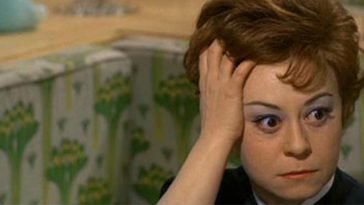

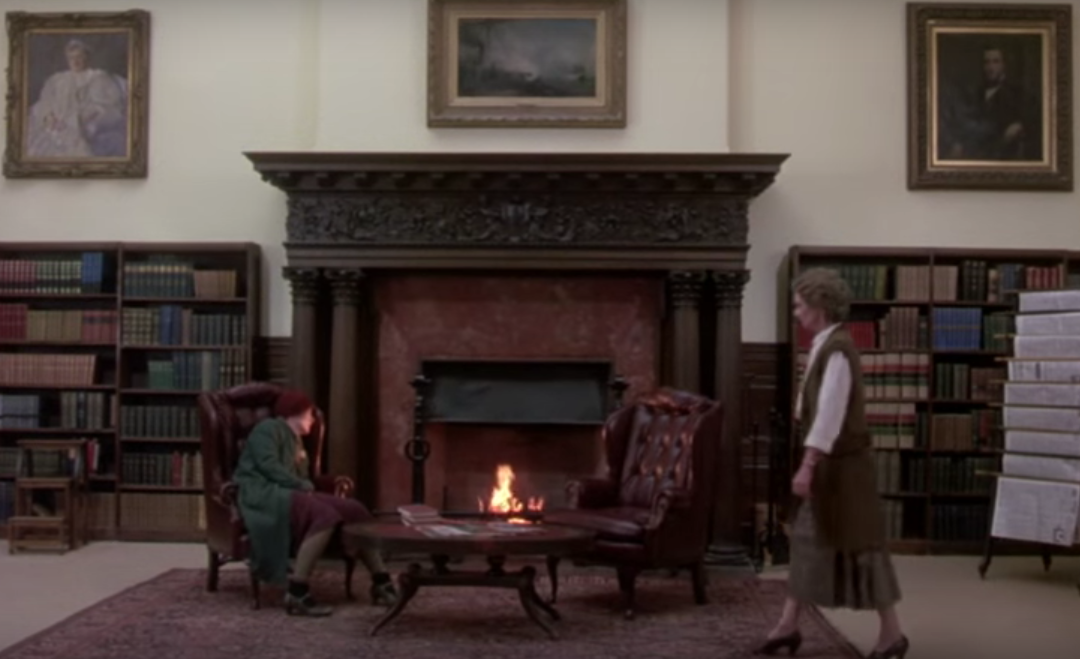
High period Fellini movie, his first in color if I remember correctly. When I watched this (on August 26th!) I paused it in the middle to tweet out "So I am watching Juliet of the Spirits tonight. It is of course end to end weird Fellini stuff, which I like. I've gotten to the point in recent years where I'll be watching one of these movies and I will suddenly be struck with some idea of what it is actually about, but I am 90 minutes into this one, and I am still drawing a complete blank." (this tweet received 66 impressions, whatever that means). I have to admit that the moment of deeper revelation never came, but still, by the mid-60s we're in the heroic era of the postwar European cinema, and the whole effect from the clothes and the camera work and the artistry (there is a flashback to a school play in which the young Giuletta gets burned at the stake by an amazing fire made out of bed sheets blown by fans or something of that sort) is kind of an awesome spectacle in itself. It took me three viewings to get anything out of 8 1/2. I do remember liking the later Amarcord, which must be a little more  straightforward, on a first viewing, as well as La Dolce Vita, though my impression is that the latter film is mostly liked by people who have no first hand experience of partying with beautiful people in Rome or anywhere else and imagine it is artistically meaningful in itself. The 50s films, La Strada and Nights of Cabiria, were less extravagant and had something of the emotional appeal of the neo-realist movies, I think. I should revisit them. Some years back, when my wife used to watch movies with me (she still does once in a while, though none of these, which is unfortunate, because she has a lot of sharp insights),  we started to watch Fellini Satyricon, in which multiple disgusting things happened within the first five minutes, after which she was like "no way", and I was feeling rather sheepish myself, so I don't know whether I have the stomach for that one even if it comes up on my list again.

"Gossip Girl" (Season 1-2007)

When this came up in my game by which I pick which movies I am going to watch, I was not quite sure how to proceed, since the entire 6-season run of the TV show seemed to be specified, which could easily have taken up a year or more of my life to no obvious purpose. As it was, I decided that I would just watch the first season, and that in itself took up a ridiculous amount of time that I really don't have. I don't know now why I didn't just stop watching it. Part of it is that the kinds of things I like and am inclined to watch fall within a pretty narrow category and I feel like I have to endure other things both to be more aware of the world around me and in order to "deserve" an occasional treat of something I like, or think I like, usually for some nostalgic or sentimental reason. I also just have a hard time breaking off watching shows once I have started them unless they make me physically uncomfortable or I get completely lost trying to follow them, which was at least not the case with this. I also kept hanging in I suspect because there is a ton of hauteur with regard to money and education (not that anyone exactly seems that superiorly educated) and the characters carry themselves under the assumption that they own New York City, all of which is calculated to appeal to me. The show is well-cast, I guess. The characters entirely lack physical flaws and empathy for other people, so that it is pretty much impossible for a regular person to imagine himself being friends or have a romantic interest with any of them, which I think might be the point of the show. As if any more proof of the failure of my education were needed, I often imagined in the course of the program that it would be nice if, when I died, rather than going straight to the presence of God to contemplate His Holy Presence forever (as a result of my good behavior), I could be permitted to experience a couple of years of life in the manner of Chuck Bass, the dissolute, amoral, cruel scion of a billionaire who lives in the penthouse of his father's hotel and regularly enjoys threesomes with the property's female employees. I did tweak my system after this to try to address the problem of too many long seasons of TV shows getting onto my list. 
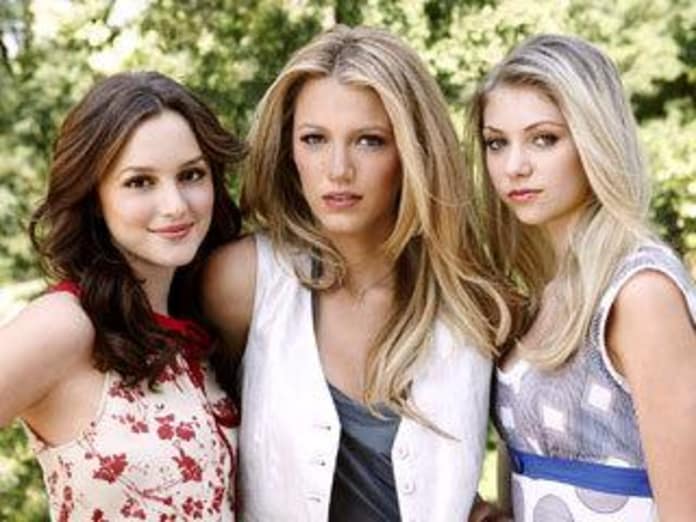

To think that there were 5 more seasons after this.

I am cutting my "Gossip Girl" review short but if anyone wants to have a more in-depth exchange about this program please don't hesitate to reach out. 

The Night of (2016)

One of those modern limited TV series that everyone binge watches nowadays (this was an HBO production) this also takes place in New York, though a completely alternative vision of it from that depicted in "Gossip Girl" and perhaps in some ways just as sensational. This was written by the fairly well known novelist Richard Price, once memorably (to me) described in one of the book reviews as "self-consciously hard" which image has always stuck with me. For the first couple of episodes I actually had confused Richard Price with the Pynchonesque highbrow writer Richard Powers, and was thinking, this is kind of a departure for him, isn't it? but eventually I realized that it was actually this other guy. This is psychologically unpleasant to watch much of the time, as most of it takes place in police precincts and in prison, but it is extremely well made and has a ton of detail. I actually started taking notes on it on my phone while I was watching it, but then I stopped, I don't remember why. Sometimes I am suddenly struck by the urge to do this, and then I am not. Here are a few thoughts that floated through my normally airy brain while I was watching this:

There is a tremendous amount of effort put into these relentlessly distressing, joyless modern TV shows. Traditional literature not like this (ed--I should say that it doesn't feel like this. And even in Greek or Shakespearean tragedy the idea is that the unpleasant events are necessary for the fulfillment of divine or universal justice, and to open up the possibility at the end of cleansing or rebirth, right?) There are interludes (in traditional literature) of humor, joy, and other emotions. Do modern artists feel more oppressed and suffocated than their predecessors?

Show excels in gritty realism. But how realistic is the crime itself?


There are no white people in this version of Riker's prison (though my wife was watching a show some time after I finished this where Hugh Grant of all people was incarcerated there--they must have used some of the same sets, including the one for the waiting room, it looked just like it did in this movie). The intended effect on your college-educated white audience, which I assume is the primary consumer of this particular type of program, I would imagine is to remind them, or at least those that are mildly interested in such things, that there are entire worlds and ecosystems right under their noses, of which they know nothing, more brutal and elemental and dynamic than anything they have or ever will have a part in.  

Some of the characters in "Gossip Girl" were supposed to be facing jail time themselves, but they of course were able to meet bail or flee the country via private plane.

Judge to a black convict complaining about the much lighter sentence meted out to a Jewish businessman who had committed some white collar offense: "You want Jew time? Do a Jew crime." Great line. Would they really say this?

Is this what we want our police to be? It's too much. (referring to the unbelievably thorough gathering of evidence and information via surveillance, acquisition of phone/GPS/financial records, DNA testing of everything, etc.)

The fact that none of the crimes, including murder, that take place in prison are very aggressively pursued, contrasts with the total surveillance state of the outside "free" society.  

I wonder if Richard Price came across the Tavon White story--he was the inmate who took over a prison in Baltimore, got four of his nominal guards pregnant, and orchestrated a steady stream of lobster, steaks, drugs, phones, and all kinds of other goodies to flow into the jail--and used it as inspiration for the ruler of the prison in this. It was a fascinating story, though maybe a common one to people who know more about the world of prisons. It was the first thing that came to my mind however.

I want to wrap this up now. There are a lot of things about this I do like. It would be great to see a New York based series about this same gritty world of immigrants and small time lawyers and hole in the wall businesses and all of these kind of urban non-bourgeois characters without the murder and prison and police, or at least without so much of it, with this same sensibility. I'm not going to have time to say what I wanted about the ending, or about what this show is trying to say about prisons, which is less a question of their being good or bad as that it is a fact with an immense influence on the kind of society we have--but I have to stop now, I am imposing a deadline on this posting. 


Tuesday, October 22, 2019

Idle Movie Post

De-Lovely (2004)


I had seen this before, back when I was going through a phase where I was especially into Cole Porter songs. It hadn't come up on the "official" record yet so when it did I felt obligated to see it again. If you like the music and the time period it is fun enough to see once--at least I found it to be so when I was ten years or so younger than I am now. I didn't find this second viewing of it to add anything to the initial experience. This modern movie naturally puts a lot of emphasis on Porter's luxurious lifestyle as well as his homosexual inclinations and the strain it put on his marriage, which don't hold much interest for me. In the absence of genius filmmaking, I honestly would have preferred to have seen scenes set at Yale, his more youthful years in Paris, his musical upbringing. While I didn't pay much attention to it the first time, I wasn't enthralled by the modern pop stars performing their versions of the famous songs. Elvis Costello was all right, I like him as an act himself, besides that I think he has a more visceral feeling for the traditions in which those songs were composed and are meant to be presented. The other singers seemed to be doing the songs in their own styles, which is what they naturally would do--I just don't happen to be a fan of these particular artists, as they are called.


Will Penny (1968)


Late stage classic period western starring Charlton Heston as an illiterate cowhand approaching middle age who can see his life options beginning to narrow. Perhaps it is a metaphor for the genre as a whole. It is pretty well-regarded, especially the script, though I found it to be kind of strange in many ways--the antagonists are a sadistic, almost proto-Manson family (without the orgies) led by a father who speaks in the language of a 17th century religious fanatic. I was hoping it would grab me, but it never did, really. The female lead was played by Joan Hackett, a woman of the type I am often interested in without any noteworthy reciprocation, whom I had never seen before. She reminded me of someone I knew who died of cancer when she was 41. Joan Hackett herself died of cancer when she was 49, which I found out in looking her up for this article, which is kind of a downer.


This is notable in my personal history as the first time I've had to turn on the subtitles in a movie made in English because I couldn't make out the spoken dialogue. This was in part because I watched this on a very hot night during the summer when I had on a window air conditioner that was difficult to hear over. But still.


I guess the most interesting aspect of this was the consideration of its aforementioned place in the timeline of the old style Western in film history, as well as that of Charlton Heston's run as a star leading man, which was also kind of at the end of the line here. It has a subdued, pensive atmosphere about it, not emitting a great amount of energy.


I'm clearly in a part of my life where movies are not speaking to me very much, at least not the ones I am seeing. I'm not putting in a lot of time on them, being down to about one or two a month now, but as I formerly got some enjoyment from the habit and there are still a lot of the types of classics that I like that I have never seen, I don't want to give it up entirely. I might be looking into re-tweaking my method of choosing films to get the kind of stuff I like to pop up more frequently however.


Edge of the City (1957)


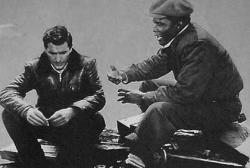
Another one that I saw a few years back which finally became available via the Netflix CD service. Here's what I wrote about it 3 years ago. It's a stripped down, basic movie, but poignant, saturated with that quality of yearning that was peculiar to the 1950s and comes across today, to me at least, as appealing. I know there is some ambivalence, especially from more fiery or progressive observers, with regard to the career and film persona of Sidney Poitier, but it seems to me he is pretty dynamic in this, and is in general one of the major presences of the 50s and 60s. The objections to him, I gather, are that he is too watered down and therefore acceptable to white people, such as me, such that even when he is angry or decrying some injustice he is not threatening or existentially terrifying to the mainstream Caucasian ego in the manner that one might wish it to be. His character in this, as well as in numerous of his other movies, is something of a mensch, the only man to consistently display much in the way of what are thought of as admirable qualities (the John Cassavetes character is sympathetic, but is a weak and confused young man), so it is hard to dislike him.


I have a few more but I will put those in a second post.


Friday, June 21, 2019

June 3, 2019 Movie Log

Separate Tables (1958)


This is one I saw on a VHS tape about five years back. After having sat in the "availability unknown" section of my Netflix queue for seven years or so, it finally turned up in the mail one day so I watched it again. I wrote quite a lot about it on that earlier occasion. I sounded like I was more sure of myself than I probably would be now, though I don't have any much stronger takes than I had on the earlier occasion. I evidently thought Burt Lancaster was out of place in this film on the earlier viewing, which I was not struck by this time, I thought his presence was good. I also wrote that the while the author of the play, Terence Rattigan, was gay, that any suggestion of homosexual themes were "nowhere in evidence." I feel like this isn't quite true. It isn't explicit, of course, but a number of the more repressed characters, those played by Wendy Hiller and David Niven especially, and maybe even Deborah Kerr's, seem like the explanation of some of their issues could lie in that direction. Most of the other comments I made I pretty much feel the same. One thing I noted on this occasion was the portrait of Queen Elizabeth, at that time still a very young woman, hanging in the hallway. I don't know what to say about that other than, it's been a long reign.


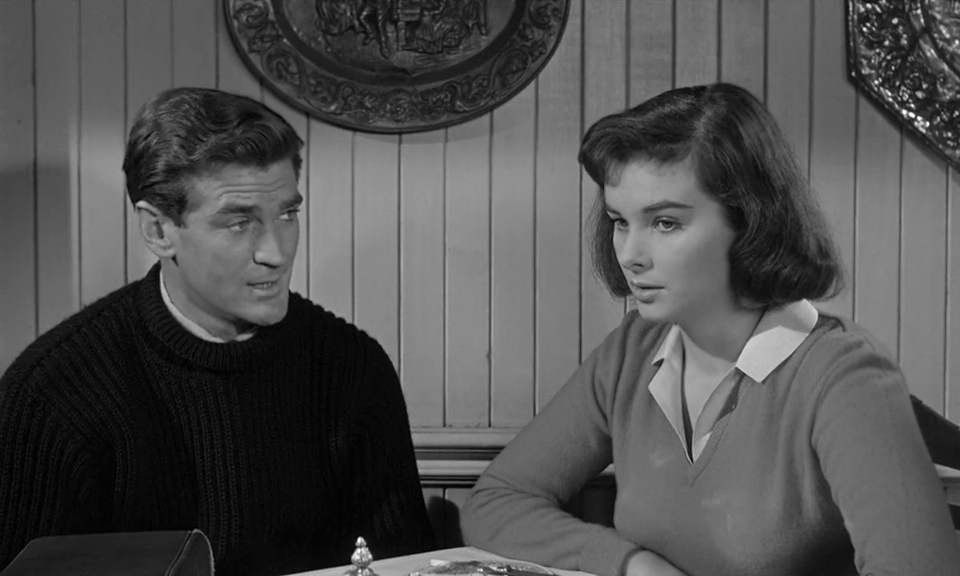
In looking over my movie books I discovered that this film I have watched twice now is not even the version of this play that I was supposed to watch for the list. There was a 1983 version directed by John Schlesinger and which starred Alan Bates and Julie Christie which was the one that earned 5 stars in my book. Copies of that version appear to be even more difficult to come by than the 1958 one however.


Scent of a Woman (1992)


I don't like the title and I don't like the ending. Some of the other parts of it were all right. I had no idea what this was about. I was surprised that prep school was involved, as well as a weekend jaunt to a New York City that was still somewhat recognizable to me. In general I like re-visiting the early 90s, it's a time in my life that I am fond of even if it was otherwise not the most exciting period, and in fact comes off at times as the last dull years before the explosion of technology and globalization that has really marked the adult phase of my life. Al Pacino won the Oscar for this, widely regarded by experts as a lifetime achievement award, as he had not won one previously. I would agree that while his role here was not wholly uninteresting, it was not a great one. I thought overall that this movie was not that bad at the time, but not much of it has stayed with me. There is a somewhat famous scene where Al Pacino's character (who is blind) expertly dances a tango with a young woman of my generation who, it is supposed, had never had the opportunity to dance with anyone skilled in the art before, but the scene is memorable mainly because the lady was so gorgeous (Gabrielle Anwar, born 1970, about a month younger than I am, in Laleham, Surrey, England, which is also the hometown of Matthew Arnold).


One minor pet peeve I had about this movie which is not a big deal unless you happen to live here is that the boarding school is supposed to be in New Hampshire and the story to take place over Thanksgiving weekend, but the weather is about six-seven weeks off, the fall foliage is still in its robust fullness and the students are still walking around in light jackets, which is a season that is over by the middle of October. Thanksgiving is pretty much winter, it's not getting above 40 degress and about a third of the time, including last year, there is already snow on the ground. So after going through 20 Thanksgivings in this climate the picture presented of it on the screen is not congruent with experience.


Medium Cool (1969)


Another one that I had already seen and that then suddenly showed up after languishing for years in the Netflix queue. It had held my interest when I saw it before so I watched it again. It throws a lot of zeitgeisty type things of its time at the viewer, most prominently the manner in which the modern media, especially visual media and television, frames and manipulates news and information and so forth, but also black empowerment, discontent over the Vietnam War, the assassination of Robert F Kennedy, middle class fear of crime and disorder, the war on poverty, drug psychedelic culture. The various issues are presented episodically, though there are a couple of main characters (a television journalist and a pretty young single mother who has moved from Appalachia to a poor part of Chicago) who re-appear throughout the story. While there is I guess some actual footage from the 1968 Democratic convention in Chicago, almost all of the movie is scripted and uses actors. The first time I saw it I was under the impression, I'm not sure why, that more of it was a documentary. It's different. Most of the themes raised in it are things I feel like everyone has been railing on my whole life without ever resolving to any serious person's satisfaction so I'm not sure in the end I took away much from this film even on the second viewing other than a sense of where certain observers thought society was headed in 1968/69.


Schindler's List (1993)


I remember when this came out it was a very big deal, or least to me as a 23 year old it felt like it was, that if one was any kind of regular moviegoer at least you were supposed to see/pay homage to it, the great, or at least colossally successful, Steven Spielberg's acknowledged magnum opus, at some point. The Best Picture Oscar was a foregone conclusion, the only year I can remember where there was not even a contrarian attempt at debate. It placed 9th in the AFI's by-the-book 1998 rankings of the one hundred greatest American movies of all time--the only post-1980 offering to crack the top 50. Yet for all this hoopla I don't remember any of the real giants of either the movie industry or among critics and historians making a passionate case for its being a film of this level of greatness. I did my duty and went to see it in '93 and I thought it was kind of what you knew it was going to be, a catalog of senseless atrocities and murders against the gloomy, dead, black and white backdrop of the Eastern European hellscape. I went with some intelligent friends of mine from school and their comments upon leaving the theater were pretty much of the shrugging "what can you say?" type. While it is very detailed and large in its scope, unless you went in knowing nothing, or at least not very much, about the Holocaust, it didn't feel like there was anything new to really chew over. It follows the Hollywood tendency to keep the focus on the most inarguable manifestations of evil and sensations of terror. Some of the better European films on the subject, such as the 1965 Czechoslovakian Oscar winner The Shop on Main Street, have always struck me as perhaps being a more accurate depiction, at least in some places, of what World War II in occupied Europe was probably actually like, a lot of people who were not especially smart nor brave nor, when their own hides were on the line, inclined to care much about the fate of anyone else, caught up in an enormous world historical event that nothing in their previous lives had begun to prepare them to navigate admirably. And yes, in these other films you get the snarling dogs and relentless searchlights and preening vulgar Nazis, but there was a lot more involved in the whole mess that Hollywood tends to leave out.


So, 26 years later this movie comes up on my very complicated selection system to see again. In the interim I had not thought much about it nor seen it referred to in the kind of movie writing that I read when compared with things like Fight Club and Office Space. Seeing it again, I do have respect for it as a production. It is well-made, even lush in its attention to detail and objects. I noticed more how stupid all of the German characters are depicted as being, and how foolish in believing themselves to be cultured. Even Schindler, who comes out in the end certainly as a kind of hero, is portrayed as somewhat lazy and not on the same level of shrewdness as the smarter Jewish characters. It's a stupid thing to notice I suppose but if you're putting it in the movie fairly unsubtly, especially in this day and age, of course people are going to pick up on it. It does still have something of a flat effect about it--it really is more like a monument in some ways than a work of art--that causes me to resist embracing it as the great movie it wants to be. Those are my main thoughts about it at this time.


I remember there was a guy at our college when this came out, not the smoothest operator, who after plotting for months to ask out a particular girl, when she accepted his request for a date, took her to see this. I don't think they went out again (this guy was not me by the way--my folly would have been taking somebody who was deadly serious and mature to something like a Jerry Lewis movie).


The word "taxi" came up in one of my internet search games that determines some of the things I do, so I ended up having a spate of taxi movies to watch. The next two both garnered "turkey" ratings, which is lower than even one star, in the most of the ratings guides I have, so I was a little disturbed that I kind of liked both of them.

Taxi (2004)


The--I don't want to say all-star but recognizable personality--cast includes Queen Latifah, Jimmy Fallon, Ann-Margret, Gisele Bundchen and someone named Jennifer Esposito whom I did not recognize but who is attractive. Except for Ann-Marget all of these people are around my age. This movie involves a lot of wild driving around New York City, especially in pursuit of Gisele and the gang of supermodel-gun-toting-bank robbers that she is the leader of. The premise is not really the attraction. That, I guess, would be the efforts of Queen Latifah and Jimmy Fallon especially to good-naturedly re-create some of the spirit of the more middle class New York City of my generation's teenage years and young adulthood, which was already waning by the early 2000s.  Gisele Bundchen is not the most accomplished actress, though she manages to smirk attractively a few times. In general I am not a big supermodel lover, in the sense of rating them so far above other attractive women. I often think that this is a somewhat artificial distinction promoted by wealthy and powerful men who need others to be convinced that their wives have as many times the value of lesser men's wives as they themselves do in their achievements/financial success, etc, over their lesser fellow creatures. But that's enough to say about this movie.  


D.C. Cab (1983)


This one I really was not expecting to last beyond a few minutes, especially when I saw it was directed by Joel Schumacher, whom I have always found to be perhaps the most execrable director in Hollywood who seems to have some idea that he is trying to be good. However the downtrodden characters had a camaraderie that was kind of infectious, maybe because it is something that you almost never see anymore, at least genuinely. It also has a goofy humor that is none the less engaging as well. Now, while it may be Joel Schumacher's personal masterpiece, I am not claiming that it is really a good movie. However, like the other Taxi movie, it reminded me of some things from my youth that I guess I missed without realizing them.


This picture is not from this movie but this girl (Jill Schoelen) was adorable.


Taxicab Confessions--New York City (2006?)


The sleeve this came in gave a date sometime in the 90s but the people in it speak of 9/11 as already several years in the past; at the same time no one has a smart phone yet so it can't be too many years afterwards. This is just a reality show where people riding in a taxi reveal things about themselves. Apparently there were episodes in other cities and so on. Again, there is nothing of greatness in it, but to me it is an interesting slice of life type of thing to look at for an hour because, especially since I have had children, I haven't really done anything else. I haven't gone out at night, I haven't ridden in a taxi in New York, no women have flirted with me, I haven't had conversations with smart people. I've been kind of dead to the greater world. So these sorts of shows which even suggest the possibility of nightlife or adventure hold more fascination for me than they really merit.


Tuesday, January 15, 2019

I Guess I'll Continue on With More Movie Reviews (Almost Caught Up!)

Willard (2003)


Remake of a 1971 movie, starring professional eccentric Crispin Glover as a sort of proto-incel who lives in a nice Victorian house he has, at least temporarily, inherited from his parents which gets taken over by especially vindictive rats. It's pretty terrible and disgusting. The non-rat parts of it, the character's inability to function in the workplace or the modern world in general, and his anachronistic house, held my interest briefly, but they were minor aspects of the plot. At the end of this movie I determined that it wasn't necessary for me to watch anything that wasn't a widely renowned classic all the way through any more if I didn't want to. Some stuff is really irredeemable, but it took me a long time to come to the point where I felt myself entitled/qualified to say so.


Casino (1995)


Famously interminable Scorcese movie about the mob in Las Vegas. Everything that happens in this is completely morally repugnant, with no redeeming qualities. You probably knew that, but there are films with similar overarching themes that manage to be more interesting. Sharon Stone's performance in this was pilloried at the time and marked at least the beginning of the end for her as a headlining star, but I have to say her acting did not stand out to me as any worse than anyone else's did. I know I am not differing much from consensus opinion on this movie. My recent belief, or at least curiosity, garnered mainly from reading the movie blogs of very clever film fans, is that there are infinite delights to be mined from films that are comparatively uncelebrated by the critical consensus. Doubtless there are many instances where this is the case, however my somewhat random approach to trying to find examples has hit a cold streak lately.


Vampyr (1932)


The first sound movie from the great Danish-born, but really pan-European director Carl Theodor Dreyer, made in France but with dialogue primarily in German. The style decidedly shares characteristics with the scary German expressionist movement that was coming to its final culmination at the time. With this at least I had the comfort of knowing I was watching a real European classic of impressive age from a master artist. The dialogue, such as it is, is minimal, and it is a little difficult to follow and sleep-inducing to watch at home. The most memorable scene is shot from the point of view of a corpse looking out through the window of his coffin at the sky, branches, steeples, etc, as he is being carried to his burial. That is what stands out to me about this film.


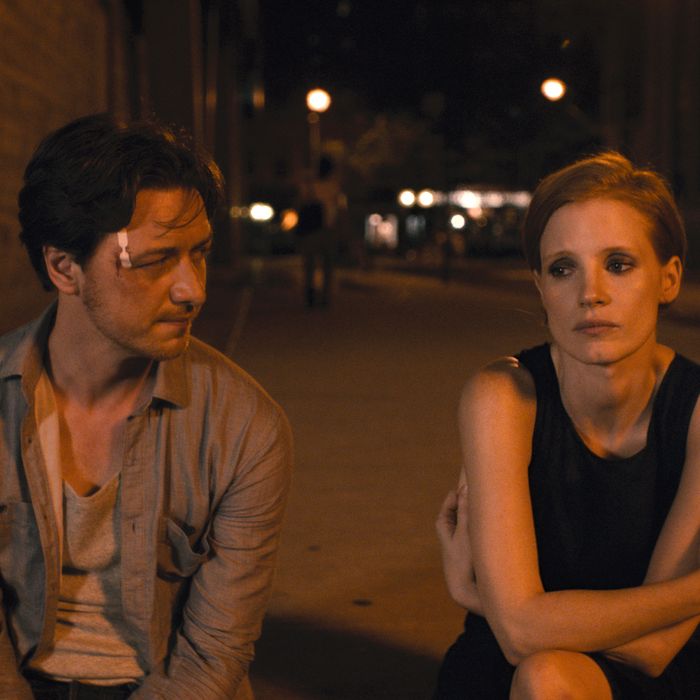
The Disappearance of Eleanor Rigby (2013)


For reasons that I am still trying to tease out, because the plot and the characters don't have any particularly outstanding appeal in themselves, and in fact are rather depressing, I quite liked this at the time that I saw it. Annoying and neurotic and over-privileged as most of the characters are, the general level of intelligence, cultural references, topics of conversation and so on which permeates the atmosphere of the picture is in the range where it holds my interest, which is something you know is increasingly lacking in my regular life. Most of the people in this movie belong to the higher end of the academic/well-traveled/urban liberal class, which is the class I certainly for better or for worse identify with, mainly because my IQ and general education level are commensurate with the average for this group I think, though I don't really belong to it, especially in the judgment of its actual members. Of course that none of these people are happy, their relationships are all disasters and they are inevitably professionally unfulfilled and disappointed, albeit their failures occur at a higher level than mine do. This is all true. There is nonetheless a relief in being in the company of people with mental outlooks and experiences that one can somewhat relate to.


The Vanishing (1988)


Oh boy. They (actually, my wife) told me not to watch it, but naturally I said, 'it's a 5-star movie. I have to watch it.' I'm not sorry I watched it--the chance to revisit the scenes and pastimes of late 80s France alone make it worthwhile for me (this is the Dutch version, not the Hollywood remake that came out a few years later and apparently was not very good)--but the ending is definitely a downer. While I realize now that the movie is full of all kinds of creepy foreshadowing, it has the kind of languid pace and pointed, unfrenetic construction that I like when I see it, though if too many movies were made in that way I would grow tired of it. And as noted above, the atmosphere is congenial to me.
The General (1926)


As someone who at least went through a phase a few years back where I really went in for silent movies, with the works of Buster Keaton (naturally) prominent among my favorites from that period, I was anticipating this, considered by many to be his masterpiece and which I had never seen before, with considerable excitement; however my attempts--for I made two--to watch this and absorb something of the frisson that often accompanies a viewing of such a universally-acclaimed classic, were failures on this occasion. As with so many similar experiences of late, I am chalking it up in part to where I am currently in life, in which my constitution as well as my brain are undergoing another transitional period with regard to how they process and respond to things like art. I have at present no other time to see movies but in the evening--my family doesn't allow me to get through so much as a football game when they are awake--and I simply cannot stay awake, at home anyway, for something like this at that hour, with the only sound being repetitive silent movie music. Besides this though, any resemblance of the old thrill that I would at times feel when confronted with a film of this class and stature was lacking entirely. At no point was I pulled in in any aspect. Perhaps (hopefully) this phase of my sensibility will pass and a future version of myself will be able to encounter this again and be moved by it in the way that its acclaim promises is possible. It has happened before.
Far and Away (1992)


I have not been averse to certain of Ron Howard's crowd-pleasing films, namely Cocoon and A Beautiful Mind, and thought at the least that this mini-saga about Irish immigrants in America might share some similarly comforting qualities, but I found it to be emotionally flat and distant on top of a story that was oddly un-engaging and pedestrian. I've never been enamored of Tom Cruise in any movie that I've seen; his longtime stardom, even accounting for his handsomeness, is a mystery to me. Nicole Kidman I never generally liked either, though once she stopped appearing in so many movies with Tom Cruise and occasionally wore her hair in an appealing style, she grew on me, a little. My opinion of this duo has further doubtless been colored by a wild story about them told to me by a woman I worked with back in the 90s who had gone on a vacation to a resort where, she said, Tom Cruise and Nicole Kidman were also staying and that it was "known to all the other guests" that Nicole went to bed every night in her trainer's room while Tom was shacking up with a younger gentleman friend. Of course I completely believe this. Anyway this movie was a dud. It had top end Hollywood production values and a reasonably competent team working on it, but it never picked up or came alive.

Friday, December 14, 2018

More of the Same

The Threepenny Opera (1931)


Director: G.W. Pabst


Notable Stars: I have the impression that Lotte Lenya is something of a name. Doubtless several of the other actors are substantial figures in German cinematic history but none of them are as yet familiar to me.


Did I like it? I found it difficult to self-generate any kind of response to it, positive or negative.


What I remember: All of these Weimar Republic era movies, especially the very late ones, are almost impossible to have any thoughts about without reference to the period that followed. This has the oppressive atmosphere, the hard characters and the air of cynicism that I associate with this family of movies, though I was unable to break through this impression to detect anything I thought was grand. Based on the 18th century John Gay play The Beggar's Opera, it is nominally set in London, but there is nothing about it that evokes any sense of London in any period whatsoever. While this may be an unimportant detail, it is nonetheless strange.


What I associate it with: M


Immortal (2004)


Director: Enki Bilal


Notable Stars: Charlotte Rampling


Did I like it? No


What I remember: It's set in 2095, when my daughters will be 80 and 84, and my sons, if any of them are still around, 86, 89, 92 & 93. The future, as always, appears to be even more seriously horrible than the present. There's no romance, no fun music, no sunshine actually--is that a side effect of climate change? People are killed a lot. Some of them are genetically enhanced, which seems to make them more coldly rational and heartless. It's based on a comic book/graphic novel. I don't care about it.


What I associate it with: Avatar? I don't know, I don't watch these kinds of movies for the most part.


The art of the modern world is absolutely killing me.


About Time (2013)


Director: Richard Curtis


Notable Stars: Rachel McAdams, Bill Nighy, the guy who played Levin in Anna Karenina.


Did I like it? I am ashamed to admit it, but at the time, yes. The explanation in the next section will hopefully put this in some context.


What I remember: This was not on any of my lists. My wife had seen it on an airplane, and when I had my kidney stone last December at this very time and was laid up in bed for a week and had a catheter in and was feeling like my life was essentially over she made me watch this ridiculous English movie (from the same team that foisted the gross Love, Actually, which I genuinely detest, on the world) about a young man of the geeky type who has the ability to travel in time, though generally only in short distances, because when you go back too far the consequences of changing your past have too many other effects, including altering the genes of people not yet born, etc. However if you make a false step in talking to a girl or not being aggressive enough in bed or whatever, you can keep going back 5 minutes or a half an hour and try something else until you get a more satisfactory outcome. Rachel McAdams is a sweet-faced Canadian. She is also renowned as a activist for environmentalism and other left-wing causes, I am not sure how ferociously. Apparently Zooey Deschanel was originally supposed to have her role and she probably would have carried it off well enough too, but it would have been more playing to type for her, and I liked Rachel McAdams' presentation of the character. After being shell-shocked from all of the nihilistic modern movies full of mumbling dialogue, I was softened up enough to find the Bill Nighy (an actor I usually find annoying) character's propensity for quoting Dickens and finding consolation in the civilized pleasures of life a welcome diversion. If one were more critical one could take issue with the family's self-satisfied bourgeois smugness and apparently unassailable comfort and financial security--I believe they are all academics and lawyers in the most respectable tracks of those professions--but obviously I would like nothing more at this point than to have those comforts myself, my desire for which is much stronger than any I have to man the barricades (which desire Rachel McAdams, a participant in the "Occupy" movement, ironically does have). The occasion on which the Levin actor met Rachel, his love interest, for the 1st time, took place on a blind date type event in London in which the various opposed types--this is the kind of movie that wants to present itself as believing that same sex and other non-heterosexual orientations and couplings are completely socially mainstream--go separately into a basement restaurant in complete darkness where they are seated at a table with possible dating partners who they are supposed to talk to while being served a meal by blind waiters. It struck me as a quintessentially ridiculous 21st century ultra first world rich city idea while also making me kind of wistful at having both aged out of and been largely priced out of taking part in such scenes. The mere thought of having to sit alert for two hours and try to eat a meal and try hopelessly to make out what any women I might be talking to looked like in complete darkness caused my eyes to be possessed by a kind of panic though.


I associate this with: Four Weddings and a Funeral, which is the only other modern British movie of this type (romance among young professionals) that I can bear.


The Man With the Golden Arm (1955)


Director: Otto Preminger


Notable Stars: Frank Sinatra, Kim Novak, Eleanor Parker.


Did I like it? Yes. I love the down and out 1950s (cinematic version) pretty much everywhere it turns up.


What I remember: Great jazz soundtrack by Elmer Bernstein (we'll see him again later). I've always thought Frank Sinatra was quite good as an actor. He did not, prior to 1960 or so at least, often play Himself, or the popular image of Himself, that has come down to us. He frequently played a scrappy underdog or deeply troubled type of character, and played them endearingly. The atmosphere of the dingy bars and apartments of this era in glorious black and white. Eleanor Parker's hair and skin tone. Kim Novak's hair and skin tone. Connection with late 40s/50s literary scene through the novel on which the movie is based, which I haven't read however.


Associated in my mind with: On the Waterfront, Edge of the City


Far From Heaven (2002)


Director: Todd Haynes


Notable Stars: Julianne Moore, Dennis Quaid, Patricia Clarkson. I'm not a great fan of any of these people, but I can't pretend to not know who they are.


Did I like it? I have to admit I do like it. The story was not anything I thought great, but it is a gorgeous movie, and as a visual homage to the Sirk pictures of the 50s and the general nostalgic fantasies that have grown up around that period it strikes the right note a lot.


What I remember: While I don't have any better suggestions for what might have been done with the plot other than having more original treatments of the two major themes of repressed (though by the end not very) homosexuality and vile racism against the backdrop of evil 1950s society. The black character who befriends Julianne Moore checks off every box in the educated white liberal imagination: he is dignified, cultured, hardworking, entrepreneurial, an expert botanist, (tragically) a widower who is devoted to his daughter as well as an aging parent, he is constantly harassed and condescended to by moronic whites who don't have a tenth part of his intellect, grace, or character. Not that a person like this couldn't have existed, of course, but all of these qualities existing in the same person while suffering from oppression seems a little heavy-handed. Dennis Quaid's secretly gay corporate 50s man in the gray flannel suit on the other hand is so physically overwhelmed by the pull of his true orientation that everything else in his life has to be cast to the winds so that he can indulge whole hog in the love he craves. That aside I do love this particular recreation of 1957 Connecticut, though it is over the top in its preciousness as well, down to the dreamy blue title letters and the soundtrack by authentic 50s composer Elmer Bernstein, the same guy who wrote the music 47 years earlier for the just catalogued Man With the Golden Arm. He died in 2004 at the age of 82.


I associate this with: What you would expect. The authentic 50s movies, Sirk, et al, plus the more recent Mad Men type stabs at the era. But no direct companion stands out.


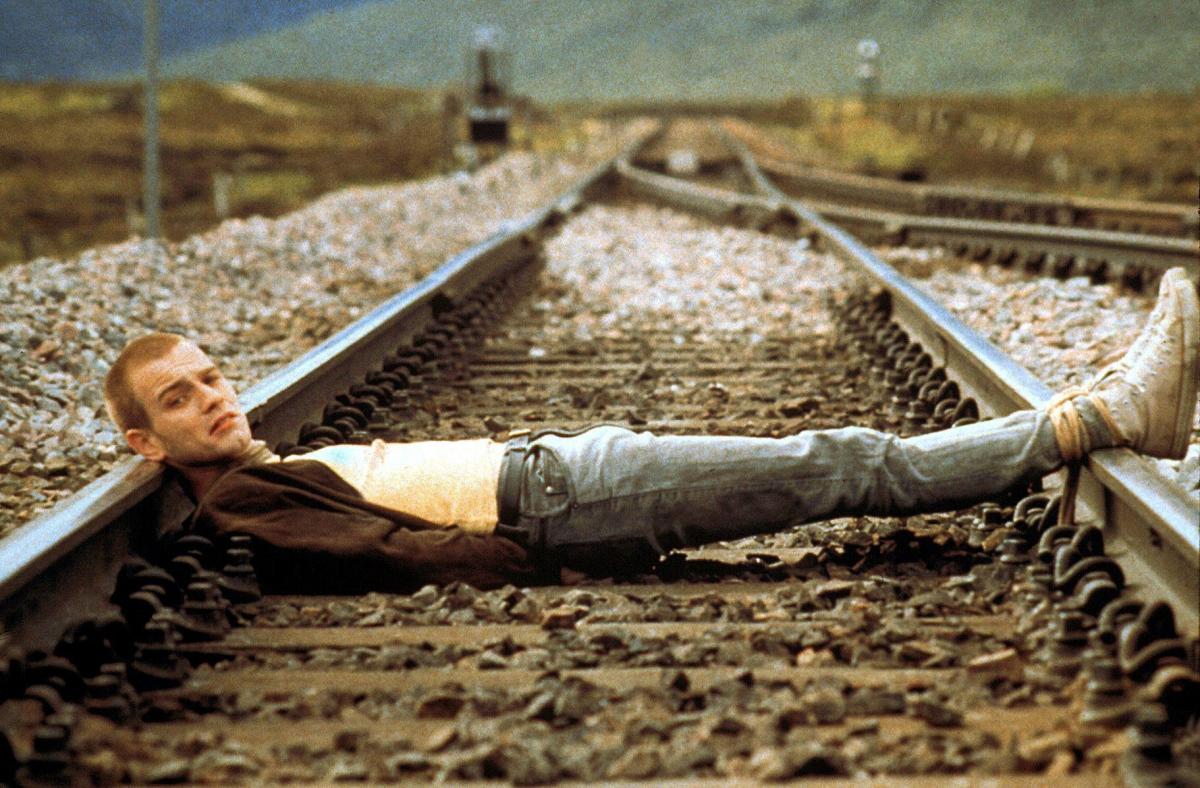
Trainspotting (1996)


Director: Danny Boyle


Notable Stars: Robert Carlyle became kind of famous, and Ewan McGregor I think became even more famous, though he isn't someone I usually take note of even when I see something he is in.


Did I like it? Yes, it is really good. I actually saw this in a theater in Prague when it initially came out, and I'm sure I thought it was good then, but when it came up now I had my doubts as to how well it would hold up, but upon seeing it again I was really impressed by how good it is, it's fantastic even. It's hard now at a remove of some months to exactly explain why this is so, but it gets so many things right, pace, energy, mood, the various scenes feel authentic but also feel like something actually important is at stake, which is remarkable for a movie about a bunch of heroin addicts and thugs in Scotland whose lives in conventional terms "aren't going anywhere." It is inventive in a genuinely interesting way. It never feels dated or obsolete even though it obviously takes place in a different time and predates the internet and other systems and attitudes characteristic of the present.


What I remember: I kind of summed up my impression above, but I still haven't put my finger on what is so effective about this movie. It is very good at inducing a sense of longing, for love or some approximation of it, or comfort, or joy or some thrill, and occasionally something like these desires actually come to fruition, but very fleetingly, a matter of seconds or minutes at best. I suppose the whole pattern of life is very much like this, which is why the movie works so well.


I associate this with: I don't know. Itself? It seems like there must be other movies like this, but they are all kind of rip-offs of this in one way or another.


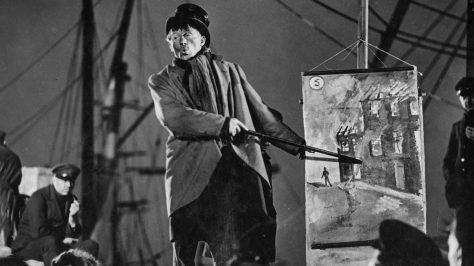
Throne of Blood (1957)


Director: Akira Kurosawa


Notable Stars: Toshiro Mifune. Isuzu Yamada is a legend among film snobs but this is the only thing I've seen her in so far.


Did I like it? I know it's a classic. I sometimes have trouble connecting with Kurosawa's samurai pictures (my favorite movie of his is The Idiot, which I love). I would love, at least in theory, to join some kind of film club that showed these films on a big screen and had some kind of drinks and hors d'oeuvres reception afterwards with light but intelligent discussion. However whenever you go to one of those things, at least if you are me, the people are never the crowd you were looking for.


Yes, this has come up here previously. This is another title that I watched on VHS while the DVD languished in the Netflix "unavailable" purgatory for eight years or so before suddenly appearing in my mailbox.


What I remember: I know it's Macbeth translated to a medieval Japanese setting. I remember a lot of scenes in the rain. The woods of Dunsinane scene was very well done. The madness of the two lead characters was by Western standards highly exaggerated but I guess it is characteristic of the Japanese tradition.


I associate this with: the 1950s Kurosawa canon


This stretch ended with quite a few good movies in a row. Our luck will not hold out (entirely) into the next set.

Friday, December 07, 2018

Movie Reviews End of November 2018

Silent House (2011)


Director: Chris Kentis & Laura Lau


Notable Stars: None, although Elizabeth Olsen is a sister of the once-famous child actors the Olsen twins. She was cute.


Did I like it?: No. It was boring.


What I remember about it: Not much. It was a remake of a Uruguayan movie, of all things, which I'm sure was awesome. For some reason which was never clear to me the titular house that was being remodeled had no electricity and the windows were all boarded up with boards that were effectively impossible to wrench off so that if you misplaced your flashlight you were in complete darkness. I have no recollection of what happened in the movie.


I associate this with: The third movie in this set, maybe, but really nothing.


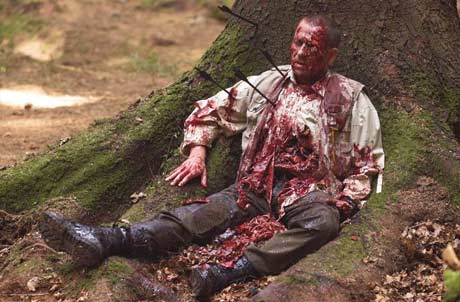
King of the Ants (2003)


Director: Stuart Gordon


Notable Stars: George Wendt; late-80s era MTV bimbo Kari Wuhrer


Did I like it?: In spite of the excessive violence, I am going to say yes. It held my interest.


What I remember: There is an interesting dynamic going in that this starts out like a 90s era Generation X slacker movie--aimless guy sleeping on a futon looking for odd jobs, the presence of at least the 2 actors named above in an apparent indie movie--and then it transitions rather abruptly into the more sinister, ruthless, dystopian cinematic world that has been familiar to audiences since around this time. The George Wendt character is introduced as the kind of schlumpfy, house painter type guy that you would expect a 90s era George Wendt character to be, but he turns out to be a brutal, sadistic administer of violence, and a good one. He also wears t-shirts and shorts throughout so you can see how enormous he is, which is considerably more so than I had realized previously. I don't like Kari Wuhrer even though I find her alluring, which is unusual with me. She radiates bitchiness, which in itself of course is not an admissible criticism anymore in itself, but she doesn't compensate for this by ever being witty or incisive or any fun at all, so what's the point?


I associate this with: Some combination of Quentin Tarantino meets Kevin Smith meets Traffic meets whoever the big 21st century nihilists are in a dystopian California.


The Others (2001)


Director: Alejandro Amenabar


Notable Stars: Nicole Kidman. Christopher Eccleston, who has appeared in a couple of things that have been written up on this blog.


Did I like it? No. It's another movie full of scary weird people or people-like entities who obviously have something off about them. Not my type of film.


What I remember: The house is very nice. It's set in Britain in the 1940s, but since the children who live in it cannot be exposed to sunlight this is another movie that takes place largely in the dark, which having just seen Silent House was a plot device I was already weary of. This was a good example of how I have a hard time discerning by the style of filmmaking or theme in what year many movies since around 2000 were made, especially period pieces that don't give themselves away by what technology the characters have. By the time it came in the mail I had forgotten it was on the list or what year it was from, and I thought it was a relatively new movie. As such I found myself thinking throughout that Nicole Kidman, who I believe is older than I am (she is--she is 51 now, which would have made her 33 at the time this was filmed), looked remarkably good, and that the 1940s era hairstyle she was sporting really worked for her compared to the usual way of she wears her hair. It did not occur to me that the movie was actually 20 years old until I looked it up.


I associate this with: Everything wrong with modern movies. The production values are lush and beautiful, but the result is lifeless and unsatisfying.


Imitation of Life (1959)

Director: Douglas Sirk

Notable Stars: Lana Turner; Sandra Dee; Mahalia Jackson. Juanita Moore, who played Lana Turner's black maid, is much lauded for her role in this, for which she received an Oscar nomination. I have to admit I had never heard of her before this, though.

Did I like it? I think I like All That Heaven Allows better among the Douglas Sirk oeuvre, but compared to all the more recent stuff I've been making myself watch, this was like cultural oxygen.

What I remember: Personally I found it somewhat uneven and clunky. Sirk has come back in fashion  to a certain degree, but I don't always find that whatever it is people like about him overcomes his well-documented shortcomings, such as the extreme artificiality and heavy-handedness of his movies. This film is an adaptation of a novel by Fannie Hurst, a book which I have not read, though I did read another of her novels, Back Street, which is one of the most relentlessly depressing books I can recollect reading, though one which admittedly tackles some often overlooked subject matter. I wrote about it on my other blog. This story has a similar unsentimental and pessimistic underpinning though proximate to and in this instance even achieving a certain degree of worldly success. The most memorable storyline involves Juanita Moore's mulatto daughter who wants to pass as white once she becomes a teenager and is consequently resentful of her mother and wants nothing to do with her, though the mother has devoted her entire life to her. I have always been rather cold to my own mother in a similar way over the years, and have always wanted nothing more than to get away from her, because of my various unhappinesses with regard to my own social status and popularity and education level. I don't exactly believe that my failures in these areas were her fault, but she would never acknowledge, or more probably had no idea how serious and angry I was about them, and in any event she was incapable of doing anything that might improve my relative standing in any of these areas. Most people would say that at this point of my life I would have been able to move past this but no, I haven't, or at least do not want to. I may have come to some amount of peace with who I am now, but I have not been able to do the same with what I was in the important, formative years of my life. Anyway I have gotten away from the movie. The appearance of Mahalia Jackson was a highlight, and a surprise.    

I associate this with: Nothing, really. It doesn't specifically remind me of anything else.


Wilderness (2006)

Director: Michael J. Bassett

Notable stars: No one I am familiar with.

Did I like it? No. It's a British movie, and I think they have an even more dystopian view of life in the 21st century than we do.

What I remember: It's about a bunch of juvenile delinquents sent to a remote island which is already inhabited by other criminals, and in the ensuing conflict almost everyone dies by some kind of extreme violence. The dialogue does not share any lineage with the fizzy British stage  tradition either. I remember people being killed every few minutes, ambushes, things being burned, 2 girls being on the island among about 20 or 30 guys and one of them having sex, which I think was sort of consensual, in that she seems to picked a favorite out of the crowd, though abstinence probably would not have been a option. I was not into this. I am watching more of these modern movies to try to get a more nuanced understanding of what's going on in the present day world of my own adulthood. They are by and large not helping me.

I associate this with: Fish Tank, modern British crime shows emphasizing the psychological and physical hellscape that apparently a lot of people think England has become.


We're a long way from Stolen Kisses.

The Train (1964)

Director: John Frankenheimer

Notable Stars: Burt Lancaster, Paul Scofield, Jeanne Moreau. Now these are movie stars.

Did I like it? Of course. I cheated a little here, since I watched this and wrote about it for the blog back around 2010-11, and I have a policy generally about not repeating myself. However as I had watched it on VHS on that earlier occasion, and as it came available after sitting in my "saved" Netflix queue for the better part of a decade I took advantage of the opportunity to see it again. It does feature Nazis and there are firing squads and bullets to the head and crowds sprayed with machine gun fire and all of the well worn associations of the 2nd World War, so to criticize the other movies for their fixation on murder and blood while enjoying the wartime body count in this one because I find it more aesthetically to my taste seems not wholly consistent. The 1964 take on World War II does nod at least to the former existence of a fairly advanced civilization and the continued existence of individual people who have some such idea as a reference point, which saves films of this type from just being pointless demonstrations of depraved man's savage butchery without any redeeming higher qualities, which is how I experience these more modern movies.

What I remember: As I noted before, I love all of the old European railroad stuff, the stations, the yards, the iron and steel and grinding wheels, the little offices with their wooden file cabinets and their coffeepots. This was filmed in France and while my memory of that country is that much of the railroading scene had been modernized and suburbanized by the 90s, the aesthetic in Eastern Europe, the Czech Republic, Poland, Hungary, et al, was still similar to that depicted in this movie. The France presented here, while still somewhat romanticized, is nonetheless done so in a grimier and more elemental way than it is usually presented, especially by Americans. I even like Jeanne Moreau here, who in her immortal ur-French art movie roles is usually a little too complicated and lofty for me to appreciate.

I associate this with: Closely Watched Trains (for the railroad connection). I have not seen a lot of the classic World War II action movies that were ubiquitous in this era, to which family I imagine this movie belongs somewhat. They must not be rated very high.


Harry Potter and the Sorcerer's Stone (2001)

Director: Chris Columbus     

Notable Stars: You probably know.

Did I like it? Maybe it is because I have children and have been overexposed to them, but it seems that, in part because of the popularity of this series, there are so many movies like this now, and to me this didn't stand out from any of the other hundreds of kids' fantasy movies that have been released during the last 20 years. Ho hum. But obviously it is beloved by people of a certain age.

What I remember: There is a school story, and traditionally I have liked school stories. Maybe it is a generation gap problem, but the characters in this world do not grab me. Nor do I have any interest in the problems they face. The story isn't beautiful, or poignant, or profound, that I can see, and an air of self-satisfaction and arch runs through it that I find annoying.

I associate this with: Every carefully formulated kids' series of the last 20 years.


Wednesday, April 04, 2018

Movies--Many Movies

I've fallen way behind on my movie notes. I have a list of thirty-seven that I haven't recorded here yet! I hardly remember a lot of them, naturally. I will go seven at a time, and put down any impressions that have stayed with me. I should also note that around the time these new lists start I tweaked my system to allow more recent movies to be included, since the main book I was relying on ceased publication in 2007. I don't generally like the more recent movies but I'm not quite ready yet to give up everything current and escape into the past at every possible chance. I am now extra excited when an oldie comes up though.


Ironweed (1987)


I wouldn't have chosen to see this if it hadn't come up via the System, mostly because it stars 80s era Jack Nicholson and Meryl Streep as alcoholic vagrants in depression era Albany, the idea of which, probably because of my age relative to them, has not traditionally appealed to me. It wasn't bad I guess, though it wasn't great either. Its depiction of how dreary being homeless in the long, dark, cold nights of the American Northeast would be was pretty accurate. Jack Nicholson, whom I found annoying most of my life, inhabits the role here well, I think. We all know about Meryl Streep and how remarkable she is. Her character dies in this (spoiler alert, sorry) and she has to play dead on screen for around five minutes, and I don't know that I have ever seen a more convincing portrayal of a dead person. It also illustrates an observation I have made elsewhere, the uncanny ability Meryl Streep has to always command your attention upon whatever awesome thing she is doing. Here she is just lying down, on a carpet I think playing dead, and all I can think about is her technique in portraying this dead person, whose character however I had forgotten about.


Tom Waits was in this too, perhaps not surprisingly as a fellow vagrant. I had not thought about him in years, though in this era he was something of a cultural touchstone, making several forays into acting. I found him mildly annoying at the time too because he was supposed to be cool, though you would only get that if you were a certain kind of person, which I was not. But now that he's been kind of forgotten and no one talks about him anymore I like him. He takes me back to that era.


Serpico (1973)


I had never seen this before--again, in my youth the themes would not have appealed--and while it has always had a decent reputation, I think seeing it now that it holds up really well. It has the whole gritty-New-York-in-the-70s vibe that was scary to live through but looks great on television 45 years later, but the story, about a policeman with a conscience taking on corruption in the NYPD that was apparently based on a true story that did not resolve in the exaltation of the honest cop and the disgrace of the crooked, seems daring to me. I don't feel like I have seen anything recent where some evil force in society that has not as yet been taken down has been confronted so directly and the exact nature of their crimes identified and demonstrated so clearly. This was directed by Sidney Lumet, who did not necessarily make the most lovable movies, but whose work I usually find to contain admirable aspects, even if I do so grudgingly.


There is a great scene shot on a hill overlooking the old Yankee Stadium from beyond center field, where the train tracks are. If you follow baseball at all of course you've seen the view looking out that direction from the stadium, but I had never seen it from that outside vantage, where in 1972-3 at least there was still a decent amount going on as far as traffic and street life. This would have been filmed before the 1974-75 renovation of the classic stadium too, which we still see intact.


Al Pacino's look in this was very early Springsteen-esque, which I have to assume was characteristic of the time. I at least don't see many people who look like that anymore. When I was a child I thought the era I lived in (this one) was nasty and terrible, and longed even then for some unknown past, but now of course I find I miss some of what has been lost since then--animated conversation, normal people and what seem to me normal business enterprises in cities come immediately to mind as examples from this movie.


Around the World in Eighty Days (2004)

This version starring Jackie Chan in the Passepartout role came up in my revised system because I had read the book (which I enjoyed), though the 1956 version, itself often maligned though it did win the Oscar for best picture, did not. This illustrates the risks of the open system, since I don't remember anything about that that was worth seeing. I had the impression that Jackie Chan was a mixture of comedian and action hero, but not here. Dreadful. Waste of money.


Read the book.

Fantastic Beasts and Where to Find Them (2016)

Written by Harry Potter author J. K. Rowling and set in a 1930s New York version of the same magic universe--there is a hoity-toity American counterpart to Hogwarts, naturally--I actually liked this better than the Harry Potter movies I have seen. I'm sure this is because of the highly stylized retro setting, which apparently is supposed to be 1926, but it looked and felt more like the 30s to me. I remember thinking the women actresses in it were pleasantly attractive enough without being gratuitously 'hot', though you probably aren't supposed to remark on that. The plots of all these fantasy movies with their incredibly violent final battles don't make much of an impression on me, but this was engaging enough as a nostalgia piece.


L'Auberge Espanole (2002)

A French-Spanish joint production made during the heady days just after the introduction of the Euro and the true realization of the dream of the free movement of Europeans, especially young and relatively good-looking and educated ones, throughout the zone. The title refers to an apartment in Barcelona that is shared by about eight different post-graduate 20-somethings, all from different (Western) European countries. Seriously, there is a Frenchman, an English girl, a Dane, an Italian, a Spanish woman, probably a German. I didn't particularly like any of the characters in the house, all of whom spoke English with the arrogance peculiar to their particular nationality, but I enjoyed the movie because it was made not long after my own time being there and it was familiar to me. If I were dropped into this movie I would be able to function and get along very well right away. My children like to watch the TV show The Amazing Race and when the contestants are in these foreign cities everything seems so different now. People are doing everything with their phones of course, even buying metro tickets, and everything everywhere looks so crowded and expensive. In this movie eight people in an apartment are still sharing one telephone hung on a wall, and this is only sixteen years ago! (though I feel like some of the characters had cell phones). Third world immigrants are barely a presence at all in this film, apart from Africans getting Phds in economics. There are no Muslims at all, nor does there seem to be much consciousness of them. Relatively average looking young people are still a real threat to have sex, or try to have sex, if they have too much to drink or otherwise find themselves in a bawdy mood, which is an element that seems to be missing from more recent movies, where everyone is too interested in maintaining control, or at least the appearance of it. The movie spawned two sequels featuring several of the same characters, Russian Dolls (2005) and Chinese Puzzle (2013), which I have not seen, though I would be interested to see how they have incorporated the changes in the European scene into the newer films, since the early 2000s time capsule quality of the original is the most interesting thing about it to me.


I liked this chick the best. She didn't live in the house.

Arsenic and Old Lace (1944)

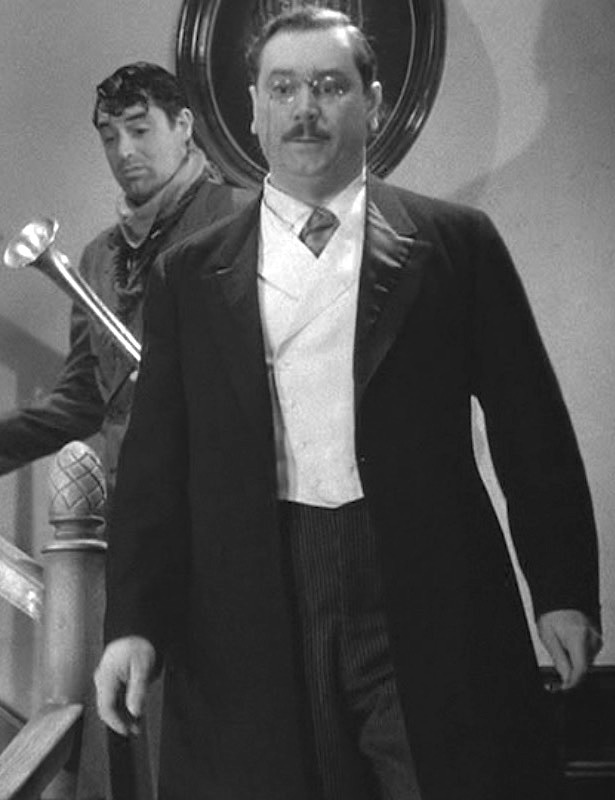
We do make it back in this set to a couple of old classics. Here of course we have the impressive lineup of Frank Capra directing and Cary Grant and Peter Lorre among others, including Raymond Massey. The story is implausible to say the least--the implausibility level is about the same as something like I Married a Witch, actually, but as you know I almost never watch movies for the story anymore. According to Wikipedia this was filmed way back in 1941, but was held back from release until the popular stage show from which it was adapted finished its run. Either way it has a good 40s ambience, good sets, etc. I like both the indoor and outdoor scenes, which are supposed to being taking place in Brooklyn, but which look like they belong in Connecticut, though the outdoor scenes have what is supposed to be the Manhattan skyline in the background. Somehow it works though. It's a nice little movie if you are into that kind of thing (basically a 1940s mainstream American idea of wackiness).


Hey Priscilla Lane. I liked her in this (romantically). Haven't seen her in much else.

I Love You Again (1940)

The first half hour of this screwball-esque comedy starring the classic Thin Man duo of William Powell and the ubiquitous Myrna Loy I thought was great, the best movie I had seen since maybe Rebecca. It couldn't keep up that torrid early pace, which was disappointing, but I still think it merits a high rating. The subject is one that I have seen in other old movies and that never fails to hold my attention, doubtless because I often fantasize about something of the sort happening to myself. A sententious, risk-averse, teetotaling prig, played by Powell, receives a blow to the head while on a cruise ship and wakes up with a completely different personality, roguish, witty, vigorous, and so on. His wife Myrna Loy, here still in her sexy 30-something persona, to be distinguished from the handsome, dignified, almost arch 40-something persona which she later inhabited, was bored out of her mind and in the process of drawing up the divorce papers before the accident, but needless to say gradually backed off from these legal activities as her husband's transformation into a completely irresponsible and even amoral person began to become apparent. In the end a minor favorite, especially in its genre.