Showing posts with label painting--italy. Show all posts

Wednesday, December 10, 2008

Ruskin--Part XVIII

This will be the second to last of the Ruskin posts. As a response to the...well, I saw the exact, right word, and then I lost it again before my fingers could hit the keys...insipid niceness and easy accomodation of my rivals for supremacy in the blogosphere that have recently settled themselves far too comfortably in these pages, I am going to be adopting a far colder, more pointed, even revolutionary attitude on the site. Anyway, that is what people want, and they will respond to it.

Picture 1--Palazzo Foscari. "The noblest example in Venice of the fifteenth century Gothic...but lately restored and spoiled, all but the stonework of the main windows. The restoration was necessary, however..." I am through with celebrating palaces and all this aristocratic architecture and values they want to beat us about the head with, but which can't nourish us, our intestines not being finely wrought enough to digest them cleanly. In the section on the Church of St Giorgio Maggiore, there is a good and long (I wrote this accomodating piece of prostration before I realized it wasn't doing me a damn bit of good) essay on Tintoretto's altarpaiece in the north transept The Martyrdom of St Stephen. The "freedom and ease" with which the leaf of a book (the Mosaic history) is crumpled is "as characteristic of the master as any of the grander features" (this image shows, by the way "how the blind rage of the Jews was violating their own law in the murder of Stephen"). Later on, Ruskin remarks that "It is almost impossible to praise too highly the refinement of conception which withdrew the unconverted St Paul into the distance, so as entirely to separate him from the immediate interest of the scene, and yet marked the dignity by which he was afterwards to be raised, by investing him with the colours which occurred nowhere else in the picture except in the dress which veils the form of the Godhead." The run of painters, he argues, could not have pulled off such exquisite subtlety. I haven't been able to find a great picture of this painting on the internet, but here is one that comes with the voice of a droning tour guide at least. (Now the new me starts in earnest). One of my revolutionary aims will be to make it possible and normal for human beings to engage with real works of art and beauty without looking or feeling like jackasses (Another is to have myself fitted with dignified tailor-made clothes, which I have never had before. To which my wife would doubtless say, "Other people would want to end hunger or something like that...").
In the note on the Church of St Gregorio, it is mentioned as being beside the Church of the Salute, which made me think about how close together churches were built in all the ancient cities of Europe. Rome famously has 981 churches, and London had 107 in the one square mile of the City prior to the fire of 1666, of which 21 survived and 51, plus St Paul's Cathedral, were rebuilt. Many of these churches are within no more than a block or two of each other; none of them that I know of supports an active congregation of more than a handful of members now, if they are even still functioning as churches. It is one of those things which is obvious enough once one examines it, but is rather striking upon a first casual amble around the old quarters of these cities.

Picture 2. I don't get angry at (presumably) ordinary people having a good time rather than humbling themselves in awe at great sites and straining to improve their dim understanding of what such greatness entails. Ruskin presumably would have, as well as most of the canonical writers and scholars who lived before 1960. They expected something more out of men. The mirthful, even blasphemous exploits of men like Byron and Casanova amid such scenes may be tolerated because they are such superior spirits and talents; the frivolities of the lesser sorts of men should expect to meet no such tolerance.

Libreria Vecchia--"by no means to be missed, whatever may be sacrificed to see them", according to Ruskin: a beautiful and strange Madonna, by Bendetto Diana; two noble Bonifazios; and two groups, by Tintoret, of the Provedditori della Zecca. I can't make out whether these paintings are still to be found at this location however. The library itself seems still to exist.

Ruskin's flamboyant description of the grotesque sculpted childrens' heads tied up by the hair on the altar steps at the Church of Santa Maria dei Miracoli merited being quoted in a mainstream modern guidebook I happened to look into in my researches, for what it's worth.

Picture 3--Chiesa di Santa Maria de Miracoli. Of course I did not see this church on my brief visit there. I find the pictures of it to be especially impressive, in spite of my new skeptical attitude towards received wisdom and opinion.


Church of St Moise--Tintoretto's representation of Christ and the disciples: "He never loses sight of the fact that all were poor, and the latter ignorant; and while he never paints a senator or a saint, once thoroughly canonized, except as a gentleman, he is very careful to paint the Apostles, in their living intercourse with the Saviour, in such a manner that the spectator may see in an instant, as the Pharisee did of old, that they were unlearned and ignorant men; and whenever we find them in a room, it is always such a one as would be inhabited by the lower classes."

Although I have a tendency to fetishize Christian art and certain theological writings that appeal to me, I am not actually a believer, i.e. I am not a citizen of Christendom or any other community of the spirit (I don't like atheists--especially self-satisfied ones--however, so I am looking for a way to avoid identifying myself as one of them). My wife was brought up in the Episcopalian church, and she has gotten the children going to that church and involved in some of the activities there--all of which I generally approve of--so as it turns out I have ended up going there a lot too, much more often certainly than I ever I thought I would. This is a very liberal church as churches go: gay bishop, gay marriages, abortionist on the vestry, male and female priests who run off with each other though already married to other people. You would think this would all be right up my alley given my social aspirations but to be honest I find myself, if it is to be the case that I am going to be a regular churchgoer for the next fifteen years, daydreaming about at least making my weekly show under the slightly more exacting auspices of Rome. My wife will have no truck with the Pope however, and in her mind as I was never confirmed I have no claim to being a Catholic at all, though I think this is not exactly true, that baptism carries some status with it. I have never, to my knowledge, been officially excommunicated. Nonetheless as things stand I will probably have my funeral and be buried as a Protestant, and no one will ever suspect anything was ever otherwise. That is why men must ever make these records of themselves.

There is more German tourist trashing to get to however, the scene this time being before the picture of San Rocco in the Hospital by Tintoretto in the Church of St Rocco: "In order to show what waste of human mind there is in these churches of Venice, it is worth recording...there came in a party of eighteen German tourists, not hurried, nor jesting among themselves, as large parties often do, but patiently submitting to their cicerone, and evidently desirous of doing their duty as intelligent travellers. They sat down for a long time on the benches of the nave, looked a little at the "Pool of Bethesda", walked up into the choir, and there heard a lecture of considerable length...they then turned and went slowly out of the church, not one of the whole eighteen ever giving a single glance to any of the four Tintorets, and only one of them, as far as I saw, even raising his eyes to the wall on which they hung..." To be honest I think he is a bit overcritical. Art appreciation requires a peculiar combination of relaxation (namely freedom from extraneous concerns), intensity (readiness to receive and engage with impressions) and organization of the mind to form solid ideas from the impressions, that requires a lot of practice and habit of thought to attain. People should not delude themselves as to the quality of their overall experience/engagement, of course, but I have always considered even fleeting instances and glimpses of deep engagement and understanding to count for something in a man's life.

Picture 4--Scuola di San Rocco. Where the biggest hoard of Tintoretto masterpieces is to be found. In Ruskin's estimation one of the three most important sites in all of Venice.

I have written myself a note at this point to "comment on neglect even of famous pictures". I assume this refers to neglect by me as well as other visitors, even such as may have come a long way with some idea of seeing such pictures as one of the main purposes of the trip. I have touched on my ideas about this before on this site, namely that it is very difficult to incorporate something, even something of uncommon beauty and excellence, semi-permanently into one's mind, such that said object as it were lives with one always, on a single viewing, no matter how much effort or concentration one puts into it. I think you have to encounter things variously, in different moods, different seasons or kinds of days or times of one's life, to have some awareness of it in a variety of contexts before meaning can begin to sink in to you; it is the same generally with women, or important friends, or other interest. Of course there are always exception, one-time encounters where the impression is so overwhelming as to remain with one always; but these are necessarily rare.

Here it is, the three most precious buildings in Italy for pictures, according to Ruskin: the Sistine Chapel, the Campo Santo of Pisa--I would not have guessed it (I have not been there or anything to have an opinion)--and the Scuola di San Rocco, Venice.

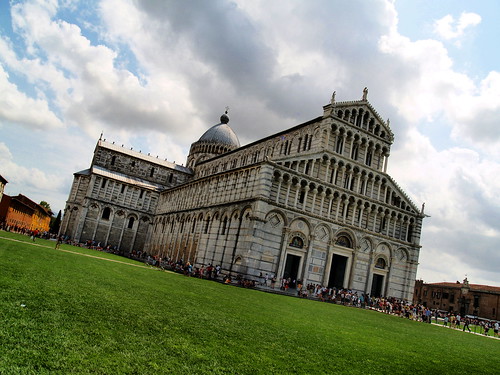
Picture 5--The Campo Santo runs behind the Dome, I believe.
"Exactly in proportion to a man's idiocy is always the size of the letters in which he writes his name on the picture that he spoils."

Wednesday, November 26, 2008

Ruskin--Part XVII
I updated the layout of the blog in another attempt to embed some kind of visitor-tracking device in the sidebar, but once again it didn't work.

I am aware that this is the 18th post on Ruskin. There is a purpose, a grand project, an ambition of sorts at work in all of this that I believe is eventually become apparent to me, the resolving of which matter I am convinced will be the most important event to occur in my mental life in many, many years.

There is an interesting little section alluding to the associations and meanings excited by the words "Venice" and "Byron" in conjunction. Ruskin writes first that "the reader will find the influence of (the Bridge of Sighs) on the public mind ascribed chiefly to the 'ignorant sentimentalism of Byron'", and "that (Byron's) feelings about Venice had been founded on an extremely narrow acquaintance with her history," but then saves himself from too insufferable priggishness by admitting that, on his earlier visits anyway, "in spite of all my carefully collected knowledge, I still felt exactly as Byron did, in every particular...I had formed my own precious 'style' by perpetual reading of him, and imitation of him in various alliterative and despairing poems...for the love of Byron, I had run the risk of a fever in drawing the under-canal vaults, and the desolate and mud-buried portico of the ruined Casa Foscari." The argument however is that while Byron rather remarkably tapped into and brought into existence a whole cornucopia of exciting feelings and perceptions about Venice that appealed to the contemporary imagination, his seductive depiction of these perceptions and feelings was not merely inaccurate as to the Truth of the essences of these perceptions, but far inferior to them and infinity less whole, as we would realize had we still the capacity to understand the kind of mindset that informed their creation.

Later in the same chapter, Ruskin offers a course syllabus to an imaginary questioner who asks "But if I'm really good, and mean to try to see it (Tintoret's Paradise, in the Ducal Palace), what's to be done?":

"Well, you've got to read Homer all through, first, very carefully; then, with increasing care, the Prophet Ezekiel; then, also with always increasing care, the Gospel of St John, and then the Apocalypse..." These read over a thousand times or so and got pretty much by heart, "...they will lead you as far as, I will not say Tintoret, for you would have to spend another college-residence in actual painter's work before you could make much of him; but as far as Gentile Bellini and Giorgione, and the rest is according to the time and faculty you can dispose of..." It is somewhat rare that people give such specific direction as to what one needs to know utterly before it can even begin to be discussed whether he understands anything or not, so I always include such instances in my posts.

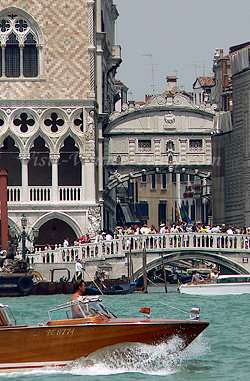
Picture 1--The Palazzo Contarini Fasan. There is a note on this further down the page. Once again I can get no control over the order in which the pictures arrange themselves.
"...the greatest pictures represent men and women in peace, clouds and mountains beautiful. Never in the moral or the material universe does the great art of man acknowledge guilt, grief, change, or fear." This is a lead-in to a discussion of such a picture, the Castel-Franco altar, which I was going to put among the pictures on this post but it transferred as rather absurdly gigantic. The statement quoted is not something of the sort you usually hear anyone, other than perhaps Thomas Kinkade, asserting nowadays, and I suspect it would not be considered a morally acceptable viewpoint by many well-developed modern minds even if they were able to grant that in a certain historical or religious context it might have legitimacy. However, if the greatness of human art consists in grandeur of conception united with grandeur of execution, which certainly seems reasonable, it is likely that the art an age which does not conceive man, or existence generally, in some fairly intense degree of awe, will be ultimately impoverished.

He adds, "And the strength and joy, and height of achievement, of any group or race of mankind has, from the day of Christ's nativity to this hour, been in exact proportion to their power of apprehending, and honesty in obeying the truth of His Gospel." I thought this should be noted. I don't have anything to say about it. I don't pretend to have such developed apprehension, and I am not convinced that Ruskin had it in any such degree as he was striving for, but I certainly believe it is a real phenomenom that gives such people as have it real power.

Picture 2--Byron on an adventure, accompanied by the wit, the fun, the bravado, the sex, the title, and the associates that have given generations of phlegmatic library-bound drips far more enjoyment and consolation to read about than he had in the doing.
My impression at the time apparently however was that 'He is in the end not really in touch with reality.'

I also noted that 'The base mind has no conception of sin, no capacity for beauty.' I don't know whether Ruskin stated this, or I came upon it by deduction. Probably the former, as it is too neat a maxim for me to have come up with on my own.

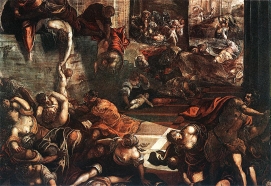
Picture 3--Tintoretto's Slaughter of the Innocents. Referred to below.
Good news! We have now finished the book proper and are now in Appendix 1 ("Grotesque Renaissance").

There is a three page footnote in this section about the arrogance of Germans and their lack of any feel for as well as understanding of painting which must almost warm the heart of anyone who has had, as Ruskin himself presumably did, to suffer a representative of this people's pronouncing upon the value, or truth, or nature of any aspect of existence as if were the only and absolute word on the matter for all times and all peoples. I am sure however that his criticism and ridicule of the German mentality and approach to art would be dismissed by its intended targets as containing nothing of substance or concern in it. It would not sting them in the least; they would not understand what in it could possibly be supposed to. I will quote part of the section anyway, though, as it gets somewhat close to feelings I often have towards people generally, though this group includes more than a few Germans.

First he writes about the philosophical system of a German painting: "...its objective side, and subjective side; and mythological division, and symbolical division, and human and Divine division; its allegorical sense, and literal sense; and ideal point of view, and intellectual point of view; its heroism of graceful attitude and braided hair; its inwoven web of sentiment, and piety, and philosophy, and anatomy, and history, all profound: and twenty innocent dashes of the hand of one God-made painter, poor old Bassano or Bonifazio, were worth it all, and worth it ten thousand times over."--I am just setting up the rest of the quote here. If ever met an artist or intellectual with this precise a breakdown of his thought and work processes, I would doubtless be so overawed by the organization that I would scarcely be able to question whether whatever he did was really any good or not--such a distinction would not be for the likes of me to make--"...the worst result of the system is the intense conceit into which it cultivates a weak mind. Nothing is so hopeless, so intolerable, as the pride of a foolish man who has passed through a process of thinking, so as actually to have found something out. He believes there is nothing else to be found out in the universe. Whereas the truly great man, on whom the revelations rain till they bear him to the earth with their weight, lays his head in the dust, and speaks thence--often in broken syllables...I was once introduced to a German philosopher-painter before Tintoret's "Massacre of the Innocents." He looked at it superciliously, and said it 'wanted to be restored.' He had been himself employed several years in painting a 'Faust' in a red jerkin and blue fire; which made Tintoret appear somewhat dull to him." There is of course some truth in it; you are generally safe in assuming that most efforts, most people, amount to nothing much, either where you or the credit of the human race is concerned, though I must say I think this is not how the most truly brilliant and imaginative people view the world. I am not sure that Ruskin himself is that much more insightful than the people he is continually trashing. He pays a closer attention to certain things that are matters of interest to people of above average education and social stature--that is his most valuable quality--but his grasp of the larger part of Man, or Life, that is the portion of the great artist, is not, I think, very strong.

"I think that the central man of all the world, as representing in perfect balance the imaginative, moral, and intellectual faculties, all at their highest, is Dante; and in him the grotesque reaches at once the most distinct and the most noble development to which it was ever brought in the human mind." (In his youth Ruskin denoted Michelangelo and Tintoretto as the second and third greatest men Italy had ever produced, though in later years he denounced "the false reverence for Michael Angelo in which I had been brought up"). At the very top of such rankings all the contenders are so well-developed and excellent in so many facets of mental life that it seems rather nit-picking to me--to me--to determine that Dante is more supreme than Homer, or Socrates or Moses (I assume this is due mainly to his having been denied revelation of the Christian faith), or Thomas More or Samuel Beckett in any way that has any relevance to a minor person, but the sentiment of why anyone would be so designated is very well-expressed. Most people instinctively believe there is a proper, much higher, if not absolutely ideal, form of humanity towards which they ought to be ever striving, which would in turn suggests that human existence has a more ultimate purpose beyond its purely animal aspect, however unlikely a prospect that may appear to the rational mind. It is the great challenge and purpose of civilizations and cultures to define what these purposes are by the clearest and vivid, and in the way most harmonious to the soul, means possible.
I wanted to take a little more time on the thought and writing in my posts, which have become sloppy and displeasing to me of late, but I also don't want to spend 30 hours writing up a sheet of little comments summarizing my deadbrain reactions to what are supposed to be provocative ideas.

Now we are in Appendix II ("Venetian Index").

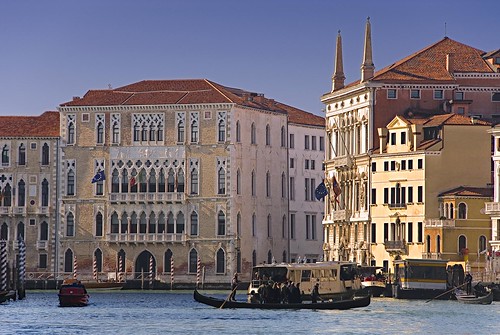
The Palazzo Contarini Fasan (picture #1 this page) was, according to Ruskin, foolishly criticized in English accounts of foreign buildings for being ill-proportioned, "the simple fact being, that there was no room in this part of the canal for a wider house, and that its builder made its rooms as comfortable as he could, and its windows and balconies of a convenient size for those who were to see through them, and stand on them, and left the 'proportions' outside to take care of themselves..."

My observation was that the builder of this house was perhaps not a renowned genius architect, but a practical craftsman with enough absorbed culture from the surrounding environment to be able to produce beauty. I was thinking of this at the time because I had recently been to Woodstock, Vermont, which is a very posh town nowadays, in part because its center has some of the most architecturally renowned colonial-era houses in the United States. None of these houses were built by professional architects, but by regular citizen-amateurs of the village who had good groundings in geometry, Latin literature and philosophy, and the confidence that (along with obviously a general knowledge of the fundamentals of building construction) they were adequate to the task of not only building their own dwellings, but doing so in a manner that demonstrated a high degree of "civilization".

On Tintoretto's Paradise, which has already been reproduced and remarked upon in an earlier section: "The picture is on the whole wonderfully preserved, and the most precious thing that Venice possesses. She will not possess it long; for the Venetian Academicians, finding it exceedingly unlike their own works, declare it to want harmony, and are going to retouch it to their own ideas of perfection."

Friday, November 07, 2008

The Stones of Venice--Part XVI

Once again, all the pictures loaded not in the order which I had intended. They came up 3rd-4th-2nd-1st. Obviously I will have to come up with a new strategy.

Ruskin wrote that "the Raphael who seemed sent and inspired from heaven that he might paint Apostles and Prophets, sank at once into powerlessness at the feet of Apollo and the Muses", though he adds in a footnote that "yet the Parnassus is the greatest of the Vatican Raphael frescoes". What do I have to say about this? I suppose I was thinking, "Oh yes, I have seen those". I most remember "The School of Athens", of course, all of those philosophers, the muscular Aristotle, Archimedes drawing a circle with a compass in the dirt, the haughty Dante, and so on. I found the rooms pleasant enough and the atmosphere lofty enough in spite of the crowds. Serious people always consider the crowds to debase such sites beyond all salvation. This is mostly I think an accurate observation considering our usual relationship to masterpieces and grandeur in general. We think of them--or rather perhaps ourselves--as not so great as to be able to withstand so much sharing, and of such a rather rough kind, with all its noblest qualities intact.

On the unhappy trend of using the greatest gifts of imagination upon fictitious subjects: "The images summoned by art began gradually to assume one average value in the spectator's mind; and incidents from the Iliad and from the Exodus to come within the same degrees of credibility." The Iliad is here supposed to represent the fiction.

I very often write things on this blog of which I realize a couple of days--frequently a couple of hours--afterwards I have missed entire important aspects. I do not necessarily believe what I have written to be wrong; I have simply failed to see enough of the whole. Even the greatest of geniuses comprehend and reveal at any given time only a sliver of the whole and real truth of any matter. The greatness is in the wholeness, richness and importance of the particular sliver under consideration. Weak thought, weak writing, weak understanding is above all a problem of narrowness of view, an inability to grasp enough sides, enough facets of an issue. This deficiency of course cripples the critic no less than it does the creative artist. Ruskin does not deal sensibly, nor, I think, honestly enough with the real reasons for the decline of genuine religious feeling among artists and intellectuals in the West. He writes as if intelligent people ceased believing due purely to perverse wilfulness, a desire to be lesser and more wicked men than their fathers. Surely this is an oversimplistic view of the dynamics of the case. The life of traditional faith had ceased to serve many people's deeper intellectual as well as emotional needs. If it had not truly done so, there is little reason to believe the cultural leaders of the day would have dealt with it in such an artificial, coldly felt manner in the kinds of artworks which Ruskin talks about that date from the decline period. In a later note on the statement that 19th-century Western Europe is as Pagan as it was in the 2nd century: "I wish it were! But the worship of Bacteria and Holothuriae had not been instituted when this was written". (Holothuriae are echinoderms [water polyps?-Greek translation] having an elongate flexible tough muscular body). This is not really on the subject, but I have often thought that while modern medical facilities are truly remarkable--indeed awesome--testaments to human learning and achievement, and are indeed in many communities by far the largest, richest and most important institution for miles around, akin in some instances almost to the medieval church, I have my doubts as to how positive of a trend this is as it absorbs ever more and more of the populace into its ethos, either as workers, patients or citizens.

"...at last, in the very institutions of which the administration may be considered as the principal test of the genuineness of natural religion--those devoted to education--the Pagan system is completely triumphant; and the entire body of the so-called Christian world has established a system of instruction for its youth, wherein neither the history of Christ's Church, nor the language of God's law, is considered a study of the smallest importance; wherein, of all subjects of human inquiry, his own (my emphasis) religion is the one in which a youth's ignorance is most easily forgiven..." This idea of religion as a birthright, and the most vital one a man possesses, is important, because it is a force that is certainly very much alive today, and is still powerful. Orthodox Jews are an obvious example of this in our country, not to mention Mormons, who should probably be taken more seriously as a force in the world, because they are one, seemingly entirely on the strength of their oft-ridiculed creed. Others of us however have little or no meaningful sense of such an inheritance.

A prophecy: "I believe that in a few years more we shall wake from all these errors in astonishment, as from evil dreams; having been preserved, in the midst of their madness, by those hidden roots of active and earnest Christianity which God's grace has bound in the English nation with iron and brass." This is accompanied by a footnote, which reads "Carlyle allows two hundred (years) or so; I hope, too liberally." 200 years from the publication of the book would be 2051. It certainly does not look like things are headed in that direction, especially in England's green and pleasant land, though maybe things are at, or at least very near, the nadir now, and people will begin to reclaim their birthright (though if Anglicanism is a genuine and particular birthright [as opposed to Romanism], how and at what point did it attain to this status).

Picture--Postgraduate American Girls on the Grand Tour. Ahhh. Sorry, I can't help myself. These chicks (I think they're from Texas) obviously aren't really my type, and I am certainly not theirs, which is unfortunate, because in the prime pickups spots of Europe they outnumber the kinds of girls I like by about 2.3 to 1, and those I might ever have had a chance at getting by around 734 to 1.
Ed--New picture 7/8/2019


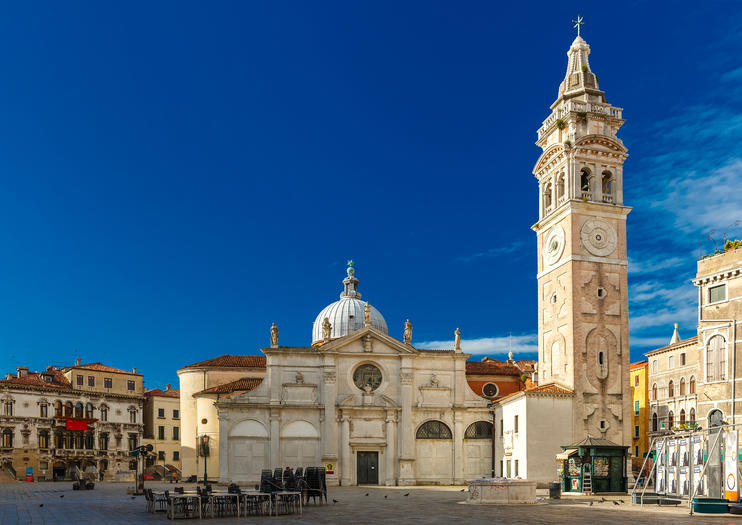
All right, I got through that. Now we are in the chapter titled "Mene", which I believe is a Latin word, the meaning and significance of which eludes me at the moment. There is a long description of the "Feast of the Maries" which was carried on for four centuries up to 1379 and was the exclusive marriage day for the noblest families of the city during that time, that is very beautiful and evocative. The event was by all accounts marked by extraordinary splendor. The occasion for the feast was a vision of the Virgin by the 7th century Bishop of Uderzo, in which the mother of the Lord commanded him to found a church in the spot he should see a white cloud rest, which was done, and the church was known as St-Mary-the-Beautiful, in the square of which was carried out the main pomp of the feast (see picture below, though the church dates from after the time of the festival). Ruskin assures us that "the spot is still worth (the traveller's) pilgrimage, for he may receive a lesson upon it, though a painful one." As I have noted before, I am mad about the idea of pilgrimages.

On the grotesque heads from the later, decadent Renaissance period which adorn many of the city's bridges: "...they are evidences of a delight in the contemplation of bestial vice, and the expression of low sarcasm, which is, I believe, the most hopeless state into which the human mind can fall." I can vouch that it is a pretty disgraceful state to descend to, but there are at least gradations in the extent to which one is lost.

Now we are in the Castel-Franco chapter (picture next time). It opens with a very nice slam of English tourists in Venice, especially such as had read his book: "...I find on re-reading it, so clearly, that it greatly amazes me at this date to reflect how no one has ever believed a word I said, though the public have from the first done me the honor to praise my manner of saying it; and, as far as they found the things I spoke of amusing to themselves, they have deigned for a couple of days or so to look at them, helped always through the tedium of the business by due quantity of ices at Florian's, music by moonlight on the Grand Canal, paper-lamps, and the English papers and magazines at M. Ongaria's, etc..." I suppose I am glad that I have discovered at a relatively early age that no matter how hard you try, if you lack the quality either of deep seriousness or luminescent brilliance somewhere inherent in your mind from an early age, you are never going to be accepted by or do anything right in the eyes of smart people.
Picture--Piazza de Santa Maria Formosa. Ruskin thought this square, which looks pretty gorgeous to me, a place to learn an unpleasant lesson about the degradation of a people and a culture.

Ruskin describes Venice at the end of the above rant as "the umquhile Queen of the Sea." Umquhile is such an outdated word that it does not even appear in the Webster's Seventh New Collegiate Dictionary of 1965, which is the most useful and intelligent dictionary for a person seeking a quick, clear, precise definition of problematic words that I am aware of. It seems to mean the same as "erstwhile" which is a word I do not feel I can pull off using myself, either in speech or writing, but enjoy very much coming across when it is used by others.


Picture--Parnassus (Raphael)


Ruskin denies that he has written "as an egotistic person would, my own impressions, as thinking those, and not the history of Venice, the most important business to the world in general..." I mean, really. Please.

Wednesday, August 06, 2008

The Stones of Venice--Part VII

Still discussing St Mark's Basilica: "From the vine-leaves of that archivolt, though there is no direct imitation of nature in them, but, on the contrary, a studious subjection to architectural purpose more particularly to be noticed hereafter, we may yet receive the same kind of pleasure which we have in seeing true vine-leaves and wreathed branches traced upon golden light; its stars upon their azure ground ought to make us remember, as its builder remembered, the stars that ascend and fall in the great arch of the sky; and I believe that stars, and boughs, and leaves, and bright colours are everlastingly lovely, and to be by all men beloved...I believe the man who designed and the man who delighted in that archivolt to have been wise, happy, and holy."

Whether this last is literally true as a general circumstance is not important. To see or to conceive of any aspect of human experience of life as possessing beauty, and by extension meaning, and to convey that conception to others through the peculiarly human arts--language, symbols, architecture, music, illustration, etc--is to have fulfilled the function of being human to the highest degree--and it is only in this that true wisdom, happiness and holiness lies, even if the wise man considers himself to be extremely wretched and stupid on account of more trivial matters.

Another central and intriguing idea of the book, which I have never seen dwelt on much elsewhere: "We attach, in modern days, a kind of sacredness to the pointed arch and the groined roof, because, while we look habitually out of square windows and live under flat ceilings, we meet with the more beautiful forms in the ruins of our abbeys. But when those abbeys were built, the pointed arch was used for every shop door, as well as for that of the cloister, and the feudal baron and freebooter feasted, as the monk sang, under vaulted roofs; not because the vaulting was thought especially appropriate to either the revel or psalm, but because it was then the form in which a strong roof was easiest built." Assuming this is true, and it does smack heavily of conjecture, it suggests many other questions, the most obvious of course being the eternal question of whether technology as we understand it, and certainly as we apply it, is crippling our ability to develop our humanity to this degree to which Ruskin refers. This question is almost always dealt with with us from the general material point of view, which no one in modern Western Civilization can really see around enough to divorce from anything else. Namely, we don't want to give up our comforts, our health system (which occupies the energies of what, 20% of the population now, and growing?) our ease, and even if we sense something of the sort to be the case in a vague way it is difficult to advance the argument publicly that these might be in any general way antithetic to realizing a more exalted state of humanity. That sort of intimacy with the sense of man's proper place in the universe (probably rather grim materially) and leading one's life somewhat in harmony with that which Ruskin appears to be championing, if it ever existed was based, I would imagine, on a fairly compact and readily interconnected unity of knowledge within both individuals and communities--the better one's mind, the further one could range, but he could not become untethered from the core unity from which all his understanding, and that of his fellows, emanated. This is something of the liberal arts ideal of course; it is not against the expansion of knowledge, but it emphasizes the importance of the unities being in place on which to graft that knowledge.

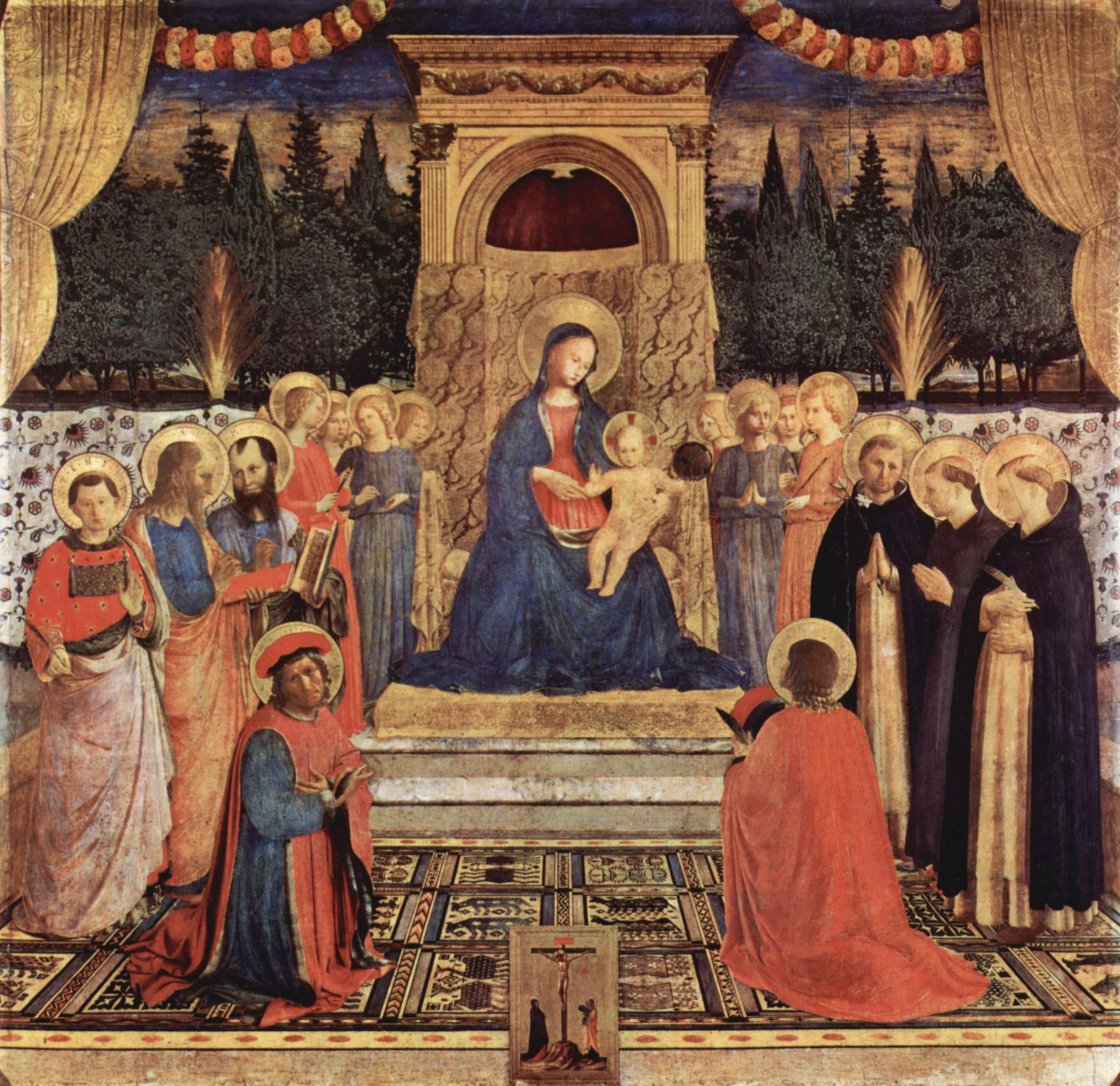
Fig 1: Fra Angelico--Adoration of St Dominic I guess we lost the picture.


"...because the Gothic and Byzantine styles are fit for churches, they are not therefore less fit for dwellings. They are in the highest sense fit and good for both, nor were they ever brought to perfection except where they were used for both."

"I cannot answer for the experience of others, but I never yet met with a Christian whose heart was thoroughly set upon the world to come, and, so far as human judgement could pronounce, perfect and right before God, who cared about art at all." This is an almost intuitive idea once you have some basic grasp of Christian theology, but the reality of maintaining such an attitude appears to be terrifying to more sophisticated people even if they are sympathetic to or even enthralled by some aspects of its possibilities (in Catholicism this terror apparently emanates from the very top). On a side note I have been finding many of the beautiful pictures for this series on websites and blogs dedicated pretty much exclusively to Catholic news and discussions of the myriad doctrines and services and robes and so forth of the Faith. I don't know who these people are, or where they get the time for their discourses, but they are certainly hardcore. I, by comparison, am not hardcore. I am self-indulgent. Which brings us nicely to...

Figure 2--The Baptistery, Parma I was never in Parma. It's looking pretty nice to me right now. A place like that, which is a city of considerable historical significance, but not particularly over-visited, I would not feel I was overstepping decency by poking around in a bit.


"Thus most Protestants, entering for the first time a Paradise of Angelico, would be irrevocably offended by finding that the first person the painter wished them to speak to was St. Dominic; and would retire from such a heaven as speedily as possible..." I evidently thought this was hilarious at the time.
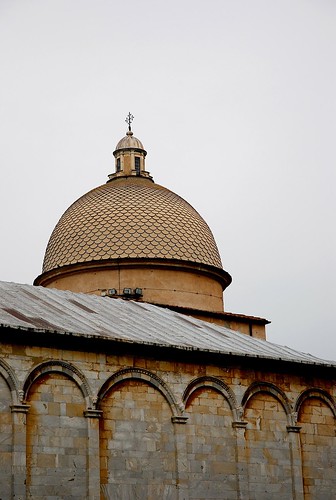
Fig 3. The Dome of the Cathedral at Pisa I was never at Pisa either. It sounds like the sort of place I would have enjoyed; old, cheap, and home to a university (hence lots of bourgeois-intelligent people idling around in taverns and cinemas and that sort of thing). Obviously it is a mecca for kitsch tourism, but I really only mind that because I usually feel like I am near the top of everybody's list of candidates for who should be persuaded to stay home in the future travel utopia. I understand also that most visitors only stay in town for four hours or so and move on.
A long passage but one I want to take up a little: "For as religious faith renders emotion facile, so also it generally renders expression simple...a truly religious painter will very often be ruder, quainter, simpler, and more faulty in his manner of working, than a great irreligious one...It is impossible to calculate the enormous loss of power in modern days, owing to the imperative requirement that art shall be methodical and learned: for as long as the constitution of this world remains unaltered, there will be more intellect in it than there can be education...And all unpolished power is in the present state of society lost...in nine cases out of ten, people mistake the polish for the power. Until a man has passed through a course of academy studentship, and can draw in an improved manner with French chalk, and knows foreshortening, and perspective, and something of anatomy, we do not think he can possibly be an artist; what is worse, we are very apt to think that we can make him an artist by teaching him anatomy, and how to draw with French chalk; whereas the real gift in him is utterly independent of all such accomplishments..." Obviously I am sympathetic to this opinion up to a point, which anyway is hardly as outrageous nowadays as it might have been in 1850. The problem he is hinting at is akin to the problem with creative writing schools, and why they don't really work. Generally speaking, flourishing arts depend, whether formally or informally, on the combination of, in addition to talent, a certain critical, organic level of knowledge, support, and the capacity to nurture, teach and incorporate rising proteges. Writing schools have always struck me as an artificial attempt to mimic the urban cafe or salon literary scenes of Europe, much as academic art settings were similarly artificial attempts at reproducing the conditions that spawned the great epochs of art history. They don't work because first of all, the people running and teaching in the schools usually are not good enough, or do not have enough real status within the profession, and by extension the personal security, to exude the authority of a true Master Artist, or at least of someone who really knows of what that consists. The teacher is as confused about how to make his work a vital factor in the life of his community, even the tiniest part of it, as his students are. Secondly the institutional setting seems to have the effect of grounding people and forcing them into pragmatic assessments of their likely place and function in the world, which has a fairly deadly effect on art. You just can't do that. I know I bring up Ezra Pound a lot, and I know that he was a loathsome person and probably legitimately insane but he was absolutely convinced that literature was the most significant thing in the world, and his energetic and unrelenting devotion to this belief sustained and supported a real significant scene of writers that outwardly at the time had no bearing on the direction of the culture at all. Something of the same no doubt could be said of jazz musicians, neo-realist filmmakers and so on. (Of course there is a grounding of basic abilities in various arts that must be attained; but these abilities are more easily and naturally attained in environments where the arts are already thriving than in an academic setting where the subject matter requires the student to unlearn most of the habits and bad opinions of his previous life).
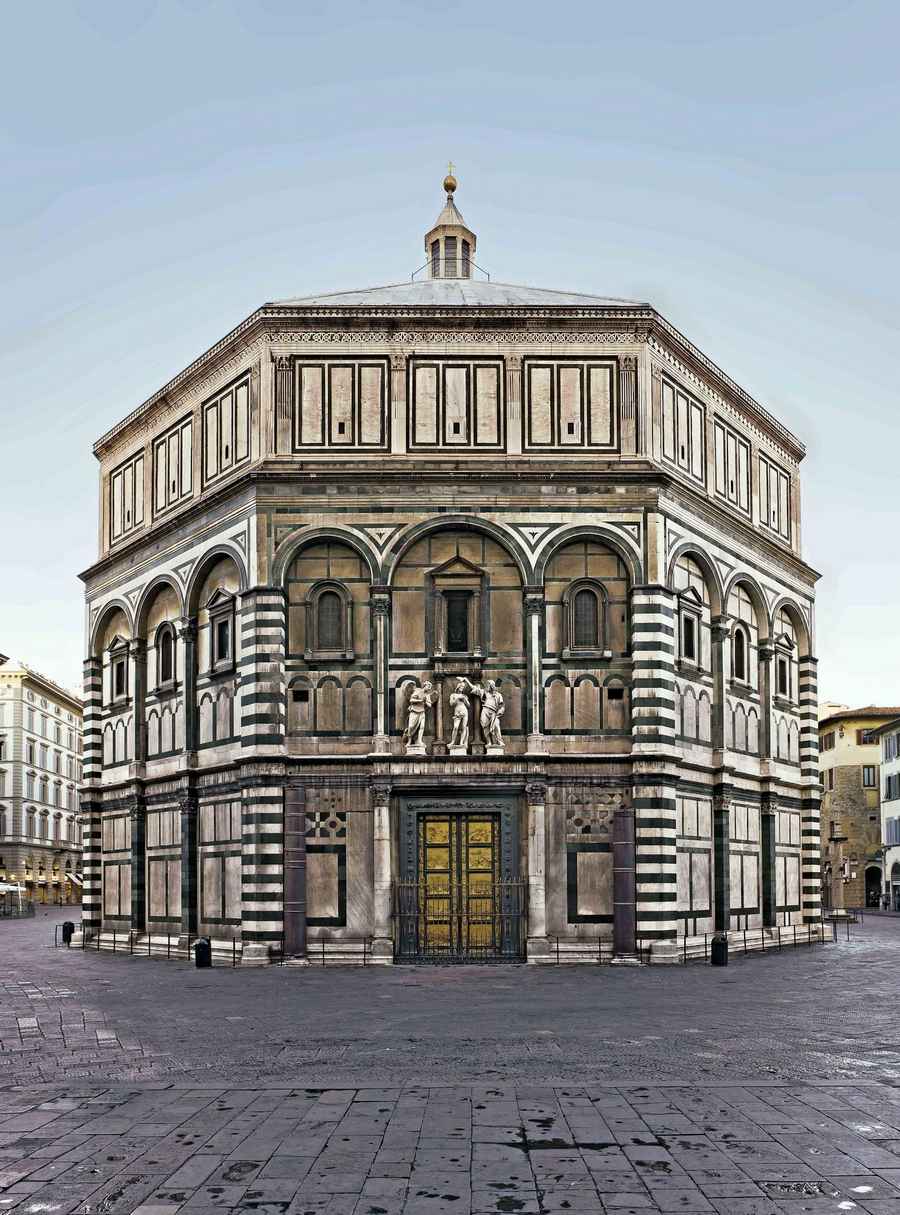
Fig. 4--This was supposed to be the Baptistery in Florence. I am sure most people know what this looks like already though.


Another long note, but I found it to be interesting: "All the efforts of Byzantine art to represent violent action are inadequate, most of them ludicrously so, even when the sculptural art is in other respects far advanced. The early Gothic sculptors, on the other hand, fail in all points of refinement, but hardly ever in expression of action. This distinction is of course one of the necessary consequences of the difference in all respects between the repose of the Eastern, and activity of the Western, mind..."
I know nobody reads these 12-part reviews of books. I need the practice of trying to decipher ideas and also to state my own as closely as possible. Also I like looking for and putting up the pretty pictures.
"...the man must be little capable of receiving a religious impression of any kind, who, to this day, does not acknowledge some feeling of awe, as he looks up to the pale countenances and ghastly forms which haunt the dark roofs of the Baptisteries of Parma and Florence..."
Fig 5. The Main Entrance of St Mark's Basilica I am pretty sure this entrance is referenced in one of the last 2 quotes.
"A large atrium or portico is attached to two sides of the church, a space which was especially reserved for unbaptised persons and new converts. It was thought right that, before their baptism, these persons should be led to contemplate the great facts of the Old Testament history; the history of the Fall of Man, and of the lives of Patriarchs up to the period of the Covenant by Moses..."
There is some writing embedded in the mosaic over the main entrance (according to Ruskin): "I AM THE DOOR: BY ME IF ANY MAN ENTER IN, HE SHALL BE SAVED."; "I AM THE GATE OF LIFE; LET THOSE WHO ARE MINE ENTER BY ME."; and "WHO HE WAS, AND FROM WHOM HE CAME, AND AT WHAT PRICE HE REDEEMED THEE, AND WHY HE MADE THEE, AND GAVE THEE ALL THINGS, DO THOU CONSIDER." Of the symbolism of this, he says: "...every one who at any time entered was supposed to look back and to read this writing; their daily entrance into the church was thus made a daily memorial of their first entrance into the spiritual Church..." This sounds like the sort of basic thing that everybody knows already, and is conscious that they are supposed to be thinking of when they enter a church with writing over the door. You will have to excuse my foolishness in copying this. I am an eternal novitiate in all matters corresponding to symbolism and the Spirit.

Tuesday, April 03, 2007

Favorite Women of Art #2: La Donna Velata-Raphael (1516)

This painting I have actually seen in person and I was struck by it at the time as, unlike most of the other paintings in the gallery, depicting a human figure that might, however remotely, be knowable to the likes of me. This is no doubt an incorrect and wholly inadvertent conjecture; Raphael's figures having the air, especially to those of us in latter ages, of being flesh and blood human beings in the same way as ourselves, more than those of his contemporaries, and indeed more than perhaps any other painter in history. This is the most immediately distinctive characteristic of his pictures, and is quite wonderful for people who desperately want to feel some connection with the European tradition and the higher points of its history but are usually too completely intellectually overmastered by such specimens as they encounter to consider they have achieved this. I have always thought him one of those figures whose talent/genius is such that his work, once executed, appears to be so obviously what was called for, so obviously true, as to puzzle one that it is so rare, and so unique even among the rarities. He shows men things that they know and have always known, how they would see and think about them if their minds were not so encumbered by crudity and stupidity and conceit. Is it not wonderful how little art manages to attain this clarity, or even strives to?

I suppose one cannot quite imagine taking this particular Donna Velata to McDonalds (on the first date anyway) but certainly I can see her in a kind of scoop-necked black blouse at some cafe connected to an art museum (say the one at the Isabella Stuart Gardner) surrounded by a lot of potted palm plants and Germans declaiming in irritatingly flawless English about the inferiority of the coffee and the comparative weaknesses of the economics faculties at the Universities of Michigan and Cal-Berkeley. So she is not really knowable to me, though I come within a table or two of her on this singular occasion before I have to descend once again from the empyrean of the beautiful, educated, globalized set to my more humble regular life.

Monday, March 19, 2007

The Game of Art--Part 6


By the time I have arrived at the high moderns my connection, both emotional and cognitive, to museum art, is already grown feeble. After them it evaporates entirely. Abstract expressionism, Postmodernism, Pop Art, whatever came after those things (I have a hard time even reading about anything that has happened since about 1970, so impossible is it to find a neutral or at least reasonably phlegmatic account about what is supposed to have actually happened and why it is important) have no resonance with me. Whatever particular delights or aspirations motivate its admirers to seek it out and try to lay claim to an identity with this work remain beyond my ability even to experience them, cold and inscrutable and indifferent as most of the world and most of life becomes.

Though we have reached the end of the game for me both chronologically and with regard to the height of the social levels I can glimpse, at the end I do not remain confused and despondent among the teasing Picasso and his uptight sensualist-wannabe fans, but decamp back a few centuries in time to a moderately high ground, 2/5ths of the distance from the center to the remote edge of the landscape, an excellent position from which to view nearly all the other hills populated by Westerners anyway, from the Sumerians to the last of the pre-1945 modern Europeans. My hill is fairly sparsely populated, mostly men in proper dinner dress with a scattering of good-looking but forbidding women, all in appearance rich, capable, expensively and carefully educated, possessed of frigid taste, stridently conservative in politics and social behavioral ethics, nastily disdainful of almost everything that does not approach the (not very) various personal standards they have set for themselves. Though they are formally polite enough to me I do not enter into serious conversations with any of them but observe them from a distance. I listen in on them because they speak more often about the things I am interested in than any of the other groups, though they are rarely able to get through a whole relation of anything without encountering a particularly unsavory specimen of their ideological enemies, who must be intellectually skinned and flayed and rendered wholly impotent before they can return to the story of the expatriate poets of 1950s Alexandria or Henry Green's half-decades lost to drink or whatever had been engaging my attention. The totemic painters of this my hill, approved heartily by all my fellows, are Poussin and Tiepolo. I had never heard of either of these artists, and probably would not to this day consider them any more special than dozens of others of their stature at the just sub-Rembrandt/Leonardo/VanGogh level of fame, until I was confonted by each's having a substantial part to play in Anthony Powell's A Dance to the Music of Time (painting by Poussin which inspired the title, above). It is not that I consider Powell or the supremely self-satisfied men and women on my hill paragons of taste, but it is clear that they have had such an education as both makes them capable of having it, and of having a fairly indomitable confidence in such opinions as they do form.

These painters have achieved a most comfortable and, to the confirmed bourgeois, enviable position in the art-stature game by the mores of early 21-century technocentric culture, though they are never set in the very highest niches of the pantheon; they are nonetheless largely unassailable by any force that the most rigorous current criticism seems to have at its disposal. Their technical proficiency is exemplary; their taste in and execution of their subject matter is uniformly of a high and thoroughly intellectually considered nature; in them, man is a more dignified creature in his degradation than moderns are generally able to conceive him in his triumphs. Their works appear, albeit by my very limited anecdotal evidence, to be relatively rare; Poussin's scattered a painting or two at a time around many minor and major museums, though with a decent concentration in London; Tiepolo having the bonus advantage (for snob value) that many of his finest works are on the not easily transportable ceilings of Venetian palaces, many of which remain in private hands and therefore inaccessible to the general public. Indeed I do not know that I have ever seen any of Tiepolo's work--certainly not since I became conscious of who he was, and the fresco of Candaules and Gyges that Powell writes about at such length I have not even been able to find any other reference to in my researches, though I find it strange that if he does refer to an actual work that there should be any difficulty in finding out basic factual information about it. In the Game of Art that I have been writing about however this (very intimate familiarity with and understanding of a painter's work) is often not so important of course, if a certain artist, or certain works or types of works fill an obvious symbolic need in the persona that the player wants to adopt to attract the potentially superior admirers/friends/contacts he seeks by engaging in it. Certainly there are other artists who occupy a similar position with me, especially some of the hyperbolical French romantics, David and Delacroix and the like, many English painters such as Constable and Hogarth, and all manner of academic painting, which I think it is not so hard to find charming if one can find television commercials charming, which doubtless in certain conditions most people probably do in spite of themselves. All these however are vulnerable to attacks in various major points of intellectual or even artistic weakness or failure, where the other two seem on stronger ground, only lacking that highest sublimity which is so rare that very few are in a position to attack it without making themselves more ridiculous than it is possible for their intended target to be. This kind of solidity of mind and competence has always fascinated me because it is the very remotest state to my current existence--sometimes more remote than genius I think.
Thus ends the game of art.