Movies 1985-2004
Recent movies again--recent in my case being anything after about 1980--so it's no surprise that the undertaking of the new series has been sluggish again.
The Lord of the Rings, Part I: The Fellowship of the Ring (2001)
The critics were enraptured and by and large gave five stars to all three parts of the
LOTR saga. As they were originally released at yearlong intervals however--and as they are all 3 and a half hours long--I am going to count them as three different movies and watch them separately over time myself.
I am burnt out on this type of picture, as it is what constitutes my older children's main current obsessions--
Star Wars,
Harry Potter,
Narnia, and so on--so I'm sure most of the stuff that is supposed to be great about it floated past my attention without disturbing its slumber. The
Lord of the Rings movies look to me to be pretty much the same as these others, perhaps a bit slower and bleaker, with less action, less interesting enemies, and a less compelling, or more confusing premise. No small part of the first film involves the main characters endlessly journeying across barren landscapes and empty forests and mountains speaking in whispers (this is a movie that would probably be much better to see in a theater, provided there was an intermission) with an occasional interval of conflict. The first 15-20 minutes or so has an omniscient narrator filling in the backstory of the rings and various of the inhabitants of Middle Earth for the unitiated viewer. I did not mind this, but my 8 and 7-year old sons were annoyed by it and wanted to know if the whole movie was going to be "someone explaining everywhere"--they want to be shown, not told, I guess. I have never read the books, which I assume are better, or at least make more immediate sense, given the wild popularity and devotion which they inspire. Oddly, I never had much of an interest in this genre of literature dealing with wizards and elves and tokens and power which is so popular among a certain type of boy (i.e., nerds), of which I might seem to have been one, though in fact I was not quite of that extreme masculine high intelligence that with the emergence of the internet especially has become so ubiquitous and even dominant throughout a wide strain of popular culture.

The pop culture of the decade+ since the year 2000 has been heavily dominated by these sterile, escapist, rather humorless fantasy stories that almost revel in their sense of arrested development, movies especially, but certainly books, games, organized social life, et al, to a great extent. I assume that the people who most voraciously indulge in this mental atmosphere are unhappy, frustrated, bored, disappointed, and so on, with actual life, but while in other genres and eras, where the escape sought through entertainment was frequently to a life of easy wealth, glamour, dancing girls, champagne and generally the opportunity to partake of some of the fun available to people doing better than oneself, the impulse of this escapist bent seems to be a desire to be substantial and important; which, however, being perceived now as largely unattainable in actual life, involves getting away from as much resemblance to reality as possible. The imagination, heroism, identification with the characters and so on which are supposed to be driving the success of these kinds of films are nothing to which I find myself responsive at all. They really do not speak to me. Maybe I should read the books. Apparently the people who read them as adolescents are somehow much smarter as adults than those small numbers who read Dickens and Balzac and the like. That is the opinion on a wide swathe of the internet at least.
As I still think of this movie as something that has just come out recently, I was astounded to realize that it was ten years old. A fourth of my life has gone by since this was made, though it feels like about 5% at most based on traceable brain activity and the quantity of other experiences that have made any impression on my memory. The careers of most of the stars in this movies have already long crested too, though with the exception of the long-established Ian McKellan I would consider all the rest of them as new stars with whom I had little acquaintance.
One reason however why I might be forgiven for still imagining LOTR as a recent saga is that the radio station I usually listen to in the morning runs a commercial featuring "Sean Astin, star of
Lord of the Rings" in which the star reminds any young men who might be listening, or on this station more likely their parents, of the necessity of registering for Selective Service ("It's what every young man's got to do"). I realize now though that they have been running the same ad since around the time the current unpleasantness in the Middle East first got underway, which does date back to when the movies were new. I just looked up Sean Astin and he is at the moment 40 years old, well past the expiration date for draft registration, and more likely to be regarded by the ad's supposed target audience as an old man than as someone who has anything to do with them. They are still running the ad though. I just heard it the other day.
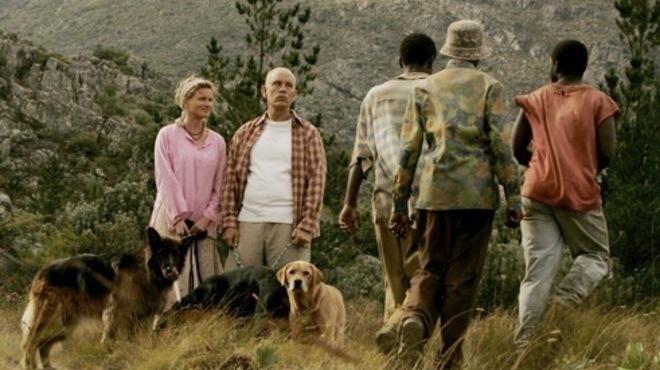
I'm Not Scared (2004)
I was beginning to think the Italians had lost it entirely, and perhaps even given up, but this was a promising sign, at least for the time being. It is not quite Great, but it is comfortably above mediocrity, and often very good. I would not have been inclined to see it based on the plot if it had not shown up on my list. A boy living in a remote village in the impoverised south of Italy discovers another boy his age chained up in a hole in the ground near an abandoned farmhouse where he sometimes plays. Shortly afterwards he finds out that a rich Milanese child has been kidnapped and ransom is being demanded for his return; and also that his father is in on the plot.

That much revealed, the interest of this movie is more in its style that in the story. I had the feeling in watching it that the director (Gabriele Salvatores--b.1950--apparently has a venerable resume, though I am not familiar with his other work--I had imagined it to be done by someone around my age, I suppose because the story is set in 1978 and told from a child's point of view) was trying to re-establish some of the strengths that were formerly characteristic of European art cinema as contrasted with Hollywood and that the formal plot was just a device around which to create the atmosphere and attitude he sought. The filming looks to have taken place in Basilicata and Puglia (the instep and the heel, repectively of the Italian boot), poor, hot, thinly populated and, in human terms, ancient regions that I would consider to be among the most beautiful, unique and haunting landscapes on the planet. Much is made of this countryside, and its isolation, antiquity, poverty, extraordinary light and geography that is really unlike anywhere else, and wisely so, for the visions it produces tells at least as much of a story as the dialogue and action of the human characters in the movie.
Another signature device in this movie that I like is how it plays off your conditioning by Hollywood movies by setting up terrifying scenarios where you are constantly expecting that at the next false step some knife-wielding maniac or adrenaline-pumped SWAT team to burst out of the darkness and begin going to work carving up the protagonist's body, but in fact what happens, while still terrifying enough--finding a filthy and starving, though not physically dangerous child chained up to a rock in a cave, for example--is always a more subdued and realistic outcome than the confrontation which organized and expert practitioners of violence which the movies really haved trained us to anticipate lurking around every corner. There were four or five little tricks like this in the course of the film, and I fell for every one of them.
One notable development in Italian movies in recent years is the evolution of the Italian mother character from the traditional fat, rosary-counting, neck-cuffing, soup and pasta-cooking battle-ax into (increasingly) a tank top wearing, physically handsome 30-something M.I.L.F. exuding European sexual maturity and attitude. I believe
Cinema Paradiso may have gotten this trend rolling back in the late 80s--wasn't the boy's mother a hottie in that? I've seen it in some other movies since then. The actress's name in this one is Aitana Sanchez-Gijon. For some reason pictures of her on the internet are harder to find. She's about 14 months older than I am (now 42--she was probably 34 when this movie was filmed) and modern Italian women seem to age well, so if you're my age I bet she still would get your attention at the hotel bar in Cannes the next time you're all there.
My Left Foot (1989)
Has definitely been superceded in the genre of Biographies of Writers Overcoming Serious Handicaps by
The Diving Bell and the Butterfly, in which a single eyelid is the only part of the guy's entire body that moves--that one will be hard to top--but still pretty entertaining. And of course the acting required was much more involved in this role.
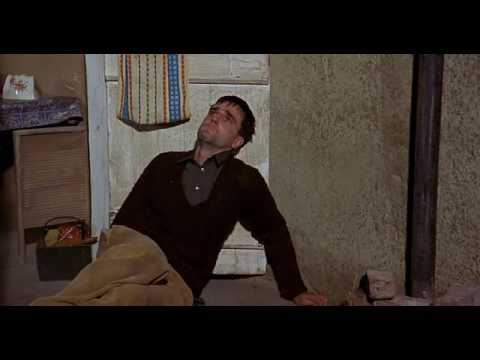
Although the protaganist, Christy Brown, is an artist and writer, the main energy in this movie centers around growing up in an enormous Irish family in the 1940s and early 50s--the mother gave birth to 22 children, of which 12 survived long enough to distinguish themselves as a separate group from those that did not--one of whom has cerebral palsy and whom everyone except possibly his mother assumes is utterly retarded until he is around ten. My father is 100% of Irish descent and grew up in a family (in Philadelphia in the 1950s-60s) with a lot of similar characteristics. My wife is also about 75% Irish, so my own children have more Irish blood in them than I do. In brief, I did have the sensation in watching this of seeing a lot of people who looked and acted a lot like most of my own closest relations--Daniel Day-Lewis when he has his 50s haircut and he's curling his lip and furrowing his eyes angrily actually looks quite a bit like my father did at the same age (seriously, my father was, and still is, a very handsome and suave man. Though now in his his 60s, he was still within the last few years dating a woman younger than I am who would never let the likes of me so much as ride on an elevator alone with her. This in part explains in part why I have bothered having children, as I am wondering if talent really does sometimes skip a generation; for he was also a division I college athlete and supported himself as an artist for a good part of his adult life). The Irish girls tend to look to me more like sweethearts than the run of other nationalities too, even when they are supposed to be bitchy. But that is doubtless the family resemblance working in me again. This has no effect of course on whether the movie is any good or not, but there is an added interest in the story because I imagine myself to have a certain empathy with the kind of people they are biologically, the sort of temperaments and intellects they have, the nature of their emotions and psychological maladies, etc.
One area in which the internet has had an understated impact on contemporary life is that one is much more readily made aware of how much some people are conscious of individual and group biological and ethnic characteristics, hold them to be of great importance, and consequently really hold other types of people in disdain. I have to admit, while I was growing up, if I was aware that there were people who considered the ethnic Irish to be intellectually inferior, I a) did not understand on what basis they could possibly be determining this belief, and therefore easily persuaded myself that it must be frivolous, and b) did not believe that it would ever apply in my case anyway, because everybody would just see and know by looking at me that I was smart. I have since come to realize of course that the matter, and most discussions of intelligence in this vein refer to the mastery and application of science, mathematics, engineering, technology and other such subjects as are, or are believed to be, the main sources of any modern nation's power. Ethnic Irish are not as a group (I gather) prominent in these fields, and indeed, in the specialized global marketplace, those of Irish blood seem to be not especially well set up to thrive, as there are not, apart from speaking English, any broadly required skill sets in the modern economy in which they have a meaningful competitive advantage vis-a-vis people of other ethnicities.
To my contemporary docile bourgeois eyes it is striking how much Christy Brown is allowed to drink--he apparently drank a great deal in real life, too--considering that he cannot unscrew a bottle or fill his own glass, has to sip through a straw, and is prone to throwing rather violent and enraged fits once he gets going in his cups. There is one especially famous scene in a restaurant where in a pique of love jealousy he furiously begins to slurp up entire tumblers of whiskey one after the other while screaming more or less unintelligibly and banging his head on the table; all the while the waiter standing by dutifully refills his glass and the other people around the table do nothing until 5 or 6 drinks have been sucked down. At various times and places in history it is just sort of accepted that this is what people will do, and it is too much a part of the fabric of life to seriously consider preventing them from doing it. We are not living through such a period now, I think it is pretty safe to say.
Cocoon (1985)
I should--well, maybe not should, but I want to note that I had never seen any of today's four movies previously. The Italian one I had not heard of. I am sure I meant to see My Left Foot when it came out but never managed to get around to it. The Lord of the Rings I was already in my 30s and not going out to movies much, besides that the look and presentation of it that I was seeing just did not appeal to me. Cocoon was kind of a surprise hit back in '85 when I was fifteen. I don't think I was tempted to see it and probably would not have gotten to much into it at the time. Seeing it at a remove of 26 (wow!) years the characters and the world in which they live are immediately recognizable to me, almost remarkably so, given that the collective presence and personality of the major generation (that being the WWII cohort) highlighted in this movie, still prominent in 1985, has almost entirely passed into shadow now.
Baby Boomer director Ron Howard, 31 at the time, pays a kind of homage to these once powerful but now fading elders by restoring their sexual vigor and sending them on a one way trip to the outer reaches of space with a bunch of aliens disguised as respectable middle class Americans but who in fact possess more frightening powers than I think I would be comfortable being alone for eternity in a spaceship with. It is insinuated that these powers are all completely of a positive kind and will bequeath strength and serenity of mind to the old people far beyond anything they could have attained on Earth. For the viewer who is asked to believe that Brian Dennehy, who plays the role of the leader of the aliens, is exuding a reassuring and spiritually elevating vibe exponential by many factors beyond regular human experience.
There are certain pleasant reminiscences specific to the generations involved--I do miss the days when the music associated with geezers was Glenn Miller rather than the Doors, for example, or the skill, increasingly lost among us, with which the old-timers of that era could deliver an elaborate or formal joke. It is different from the usual run of movies, and has some poignancy in it, though the take on old age and eventual death in themselves as the most depressing and horrible things conceivable gives has an especially Baby Boomerish quality about it. These generational aspects are what is most interesting about it to me, as well as the sensation of returning to the mid-80s and realizing various little things that have changed.
Not many women in this group of movies that I feel the urge to gush about. The Italian mother was really good-looking. A couple of the girls in the Irish movie were adorable, but their parts were decidedly of the bit variety. Lord of the Rings had Liv Tyler, who besides being born in Portland, Maine was actually kind of pretty for a time, though her career seems to have lacked any kind of coherent direction, and the unshakeable image of her father's general nastiness does get in the way of any sense one might try to make of what kind of a person she might be. Cocoon had Jessica Tandy, Gwen Verdon, and um, well, this lady, who played the human disguise of one of the aliens. Her name is Tahnee Welch and she is the daughter of legendary 60s bombshell Raquel Welch. She seems to belong to that class of women which are known as specimens, about whom nothing ever does or can strike one other than the extreme perfection of her form. This was definitely the role she was born for.
Among the male stars of Cocoon (leaving out Steve Guttenberg), Don Ameche--who won the Oscar for Best Supporting Actor for this role, and may have deserved it, I don't know--and Hume Cronyn were appropriately aged (77 & 74), but my man Wilford Brimley, who was born in November of 1934, was a mere stripling of 50 when the film came out, and might only have been 49 during the filming. That's only nine years older than I am. Heaven knows he certainly looked old enough to be living in a retirement home. I probably will be by then too.