Showing posts with label television. Show all posts

Wednesday, January 27, 2021

1965-2016

I need to catch up on a little on my movie posts. As I went through a period where I was watching several extended TV series, I am not that behind (about 18 entries to do)

Bleak House (TV-1985)

Standard 1980s BBC literary adaptation, 8 hour long episodes. This one features the late Diana Rigg as Lady Dedlock and the warhorse English character actor Denholm Elliott as Mr. Jarndyce. It's pleasant enough to watch in the evening if one is too tired to read, especially the parts when they go out to the countryside. This one especially though you should just read the book. There is not much humor in this production at all, while much of the book is a veritable laugh riot, though of a kind that I guess is especially dependent on the author's delivery, which can be difficult to translate to the screen. I was disappointed that the Caddy Jellyby character, one of my favorites in the story, was cut out of this version entirely.


I was struck here, as happens sometimes in pre-1990s films or TV shows with entirely English casts, by how much all of the people on the screen broadly resemble each other in mien, as though the whole country prior to recent times was somewhat closely inbred, as perhaps it was. The strongest sense of this I ever had was when I visited the cathedral town of Lichfield in Staffordshire in 2001, and the faces of practically every person walking through the streets of the town bore a family resemblance to everyone else to an extent which I have never experienced in the United States apart from perhaps a few very isolated towns in the northern parts of Maine or Vermont. Anyway, I felt something of that in watching this movie. Nowadays of course it is fashionable to have diverse casts even in period pieces that are perhaps somewhat traditionally identified with a specific ethnicity. I understand the purpose in doing this, especially in the current climate where a lot of people without long roots in England feel excluded from much in the traditional culture, while the higher points at least of that culture are as yet too significant to just entirely chuck away, though I haven't as yet seen anything in this line that has struck the true tone, in the way that something like the Hamilton play seems to have in this country.

Blind Spot: Hitler's Secretary (2002)

Documentary, really just a series of interviews with an old woman who was, indeed, Hitler's secretary during the last couple of years in the war and was even in the bunker with Hitler and Eva Braun and Goebbels and the whole gang. At first I really did not like this, the subject was an ordinary, not especially brilliant or interesting old lady telling anecdotes about taking dictation from and having lunch with Hitler, and it didn't seem worth doing. It is an Austrian production so I trust their motivation for making it being perhaps more serious than if some adventurous or provocative American or Brit had undertaken the project, though the subject is not that exciting. Some of the recollections of the final days in the bunker when the end was truly at hand do admittedly hold a certain fascination. The secretary (whose name was Gertraud Junge, which I mention because I feel like my comment, while short, is too long now not to) was arrested and held briefly for questioning by both the Soviets and the Americans after the war but was let go to live out her life. She does not appear to have ever married or had children. Unless you have an especial interest in the mundane details of life in Hitler's inner circle, I think this can be skipped. 

The Village (2004)

I did like the aesthetic of this. It is set in a retro Amish-like village in Pennsylvania surrounded by woods, everyone dresses like it's 1850, and the pretty girls in it are all of the pale, blue-eyed, reddish blonde type that I am not going to pretend I don't like. It's an M. Night Shyamalan movie, which means it has a rather stodgy plot with a twist ending that seems like it maybe could have had more of an emotional punch to it but is missing something. I do like that he sets most of his movies in the Philadelphia area, being from that part of the world myself, and I remember thinking at the time--it's been a while since I've seen it--that this film had a very appealing and in some ways gentle atmosphere, though there is also a decent amount of blood and violence in it, and I neglected to write down any specific examples and now I can't remember any. So I kind of liked it, and this even though William Hurt (again!), who is something of a bete noire of mine, was in it, though he is not quite as annoying as an older actor (he was around 53 when this was made) as he was when he was in his 30s and 40s. 

Juliet of the Spirits (1965)
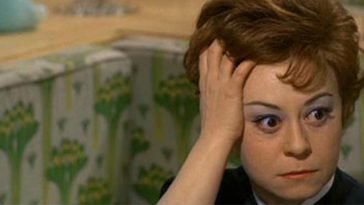

High period Fellini movie, his first in color if I remember correctly. When I watched this (on August 26th!) I paused it in the middle to tweet out "So I am watching Juliet of the Spirits tonight. It is of course end to end weird Fellini stuff, which I like. I've gotten to the point in recent years where I'll be watching one of these movies and I will suddenly be struck with some idea of what it is actually about, but I am 90 minutes into this one, and I am still drawing a complete blank." (this tweet received 66 impressions, whatever that means). I have to admit that the moment of deeper revelation never came, but still, by the mid-60s we're in the heroic era of the postwar European cinema, and the whole effect from the clothes and the camera work and the artistry (there is a flashback to a school play in which the young Giuletta gets burned at the stake by an amazing fire made out of bed sheets blown by fans or something of that sort) is kind of an awesome spectacle in itself. It took me three viewings to get anything out of 8 1/2. I do remember liking the later Amarcord, which must be a little more  straightforward, on a first viewing, as well as La Dolce Vita, though my impression is that the latter film is mostly liked by people who have no first hand experience of partying with beautiful people in Rome or anywhere else and imagine it is artistically meaningful in itself. The 50s films, La Strada and Nights of Cabiria, were less extravagant and had something of the emotional appeal of the neo-realist movies, I think. I should revisit them. Some years back, when my wife used to watch movies with me (she still does once in a while, though none of these, which is unfortunate, because she has a lot of sharp insights),  we started to watch Fellini Satyricon, in which multiple disgusting things happened within the first five minutes, after which she was like "no way", and I was feeling rather sheepish myself, so I don't know whether I have the stomach for that one even if it comes up on my list again.

"Gossip Girl" (Season 1-2007)

When this came up in my game by which I pick which movies I am going to watch, I was not quite sure how to proceed, since the entire 6-season run of the TV show seemed to be specified, which could easily have taken up a year or more of my life to no obvious purpose. As it was, I decided that I would just watch the first season, and that in itself took up a ridiculous amount of time that I really don't have. I don't know now why I didn't just stop watching it. Part of it is that the kinds of things I like and am inclined to watch fall within a pretty narrow category and I feel like I have to endure other things both to be more aware of the world around me and in order to "deserve" an occasional treat of something I like, or think I like, usually for some nostalgic or sentimental reason. I also just have a hard time breaking off watching shows once I have started them unless they make me physically uncomfortable or I get completely lost trying to follow them, which was at least not the case with this. I also kept hanging in I suspect because there is a ton of hauteur with regard to money and education (not that anyone exactly seems that superiorly educated) and the characters carry themselves under the assumption that they own New York City, all of which is calculated to appeal to me. The show is well-cast, I guess. The characters entirely lack physical flaws and empathy for other people, so that it is pretty much impossible for a regular person to imagine himself being friends or have a romantic interest with any of them, which I think might be the point of the show. As if any more proof of the failure of my education were needed, I often imagined in the course of the program that it would be nice if, when I died, rather than going straight to the presence of God to contemplate His Holy Presence forever (as a result of my good behavior), I could be permitted to experience a couple of years of life in the manner of Chuck Bass, the dissolute, amoral, cruel scion of a billionaire who lives in the penthouse of his father's hotel and regularly enjoys threesomes with the property's female employees. I did tweak my system after this to try to address the problem of too many long seasons of TV shows getting onto my list. 
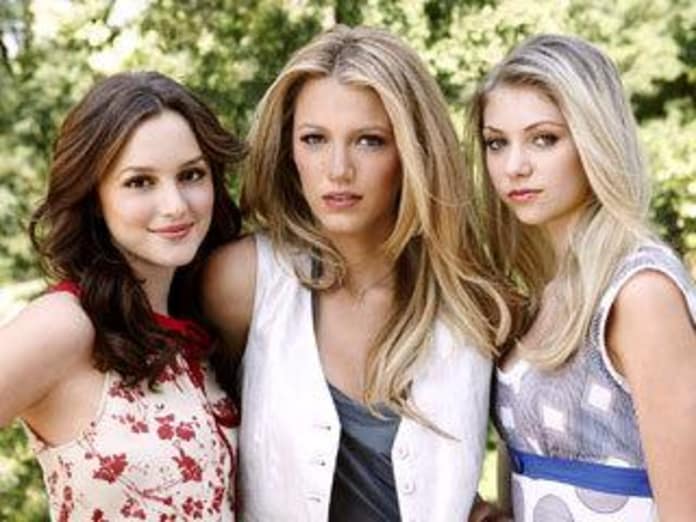

To think that there were 5 more seasons after this.

I am cutting my "Gossip Girl" review short but if anyone wants to have a more in-depth exchange about this program please don't hesitate to reach out. 

The Night of (2016)

One of those modern limited TV series that everyone binge watches nowadays (this was an HBO production) this also takes place in New York, though a completely alternative vision of it from that depicted in "Gossip Girl" and perhaps in some ways just as sensational. This was written by the fairly well known novelist Richard Price, once memorably (to me) described in one of the book reviews as "self-consciously hard" which image has always stuck with me. For the first couple of episodes I actually had confused Richard Price with the Pynchonesque highbrow writer Richard Powers, and was thinking, this is kind of a departure for him, isn't it? but eventually I realized that it was actually this other guy. This is psychologically unpleasant to watch much of the time, as most of it takes place in police precincts and in prison, but it is extremely well made and has a ton of detail. I actually started taking notes on it on my phone while I was watching it, but then I stopped, I don't remember why. Sometimes I am suddenly struck by the urge to do this, and then I am not. Here are a few thoughts that floated through my normally airy brain while I was watching this:

There is a tremendous amount of effort put into these relentlessly distressing, joyless modern TV shows. Traditional literature not like this (ed--I should say that it doesn't feel like this. And even in Greek or Shakespearean tragedy the idea is that the unpleasant events are necessary for the fulfillment of divine or universal justice, and to open up the possibility at the end of cleansing or rebirth, right?) There are interludes (in traditional literature) of humor, joy, and other emotions. Do modern artists feel more oppressed and suffocated than their predecessors?

Show excels in gritty realism. But how realistic is the crime itself?


There are no white people in this version of Riker's prison (though my wife was watching a show some time after I finished this where Hugh Grant of all people was incarcerated there--they must have used some of the same sets, including the one for the waiting room, it looked just like it did in this movie). The intended effect on your college-educated white audience, which I assume is the primary consumer of this particular type of program, I would imagine is to remind them, or at least those that are mildly interested in such things, that there are entire worlds and ecosystems right under their noses, of which they know nothing, more brutal and elemental and dynamic than anything they have or ever will have a part in.  

Some of the characters in "Gossip Girl" were supposed to be facing jail time themselves, but they of course were able to meet bail or flee the country via private plane.

Judge to a black convict complaining about the much lighter sentence meted out to a Jewish businessman who had committed some white collar offense: "You want Jew time? Do a Jew crime." Great line. Would they really say this?

Is this what we want our police to be? It's too much. (referring to the unbelievably thorough gathering of evidence and information via surveillance, acquisition of phone/GPS/financial records, DNA testing of everything, etc.)

The fact that none of the crimes, including murder, that take place in prison are very aggressively pursued, contrasts with the total surveillance state of the outside "free" society.  

I wonder if Richard Price came across the Tavon White story--he was the inmate who took over a prison in Baltimore, got four of his nominal guards pregnant, and orchestrated a steady stream of lobster, steaks, drugs, phones, and all kinds of other goodies to flow into the jail--and used it as inspiration for the ruler of the prison in this. It was a fascinating story, though maybe a common one to people who know more about the world of prisons. It was the first thing that came to my mind however.

I want to wrap this up now. There are a lot of things about this I do like. It would be great to see a New York based series about this same gritty world of immigrants and small time lawyers and hole in the wall businesses and all of these kind of urban non-bourgeois characters without the murder and prison and police, or at least without so much of it, with this same sensibility. I'm not going to have time to say what I wanted about the ending, or about what this show is trying to say about prisons, which is less a question of their being good or bad as that it is a fact with an immense influence on the kind of society we have--but I have to stop now, I am imposing a deadline on this posting. 


Friday, September 04, 2020

"You Will Get Nothing"

The title is another phrase that plays on constant replay in my mind, usually whenever I think of something that I would like to be able to have but am certainly not going to get. Writing the other little catchphrases out as blog post titles does seem to have done some good as far as not having them repeating in my (mind) ad nauseam after I did it, so maybe I will have a similar result with this one.  

Birds of Prey (1973)

Another weird selection, this is a made-for-TV movie from 1973 that somehow got on my list and that I could never find a copy of. One night when I didn't have any DVDs, due to a delay in the mail probably, I was searching through the fairly large group of movies on my list that have never been available to see if any of them happened to be streaming for free on Amazon, and this one came up. It had not been re-mastered or anything, so the quality was reminiscent of watching an educational movie on a reel-to-reel projector in school in 1978. It was only about 70 minutes long, but I fell asleep about 20 minutes in, and while I would occasionally revive myself, I could never do so enough to concentrate long on what was happening. I saw enough that I didn't feel the need to try to watch it again on a night when I was better rested. The premise, about a middle-aged World War II pilot who was working as a helicopter traffic reporter on the radio in Denver* who has to assist the police in chasing down (through the air) some people who have committed some kind of major crime and escaped via a helicopter of their own, was not uninteresting, but the whole movie was too subdued and yellow-hued to keep me awake. 


In my memory Denver was kind of a trendy, up and coming place in the 1970s, but it has faded in the national consciousness in our day compared to places like Seattle and Portland. I never think of it or have any sense of what kind of people live there now.

The Sea Hawk (1940)

Swashbuckling, big budget (for the time) Errol Flynn vehicle, in which Flynn was reunited with his frequent collaborators, director Michael Curtiz and co-stars Claude Rains and Alan Hale, Sr (but not, alas, Basil Rathbone and Olivia de Havilland). I was probably influenced by the general deprivation of late of golden age Hollywood movies that I have inflicted upon myself (lest I never bother to explore anything else) but this was real excitement for me. I love the dialogue in these movies, the espirit du corps, the usually outrageous but highly entertaining interpretation of history. I almost never like post-1965 male movie stars, especially if they are considered good-looking, but Errol Flynn--safely long dead and not any kind of immediate personal threat to one's self, to be sure--I always find eminently likable in his film roles. He is always believable as a man that other men would trust and gladly follow even in the most dangerous or hopeless situations, and it is certain that such men have existed at such times in the world and accomplished astonishing feats, though we do not see this depicted or celebrated much it seems to me in our time, at least in such an appealing way. 

This movie is set in the time of Elizabeth I and the Spanish Armada by the way, with all of the accompanying madcap tomfoolery in the depiction of the arrogant Spanish ruling class that might be expected. Flynn's daring sea captain is pretty obviously based on the career of Sir Francis Drake, though he is not named as such. Made during the early part of World War II before the entrance of the United States into the conflict, the parallels between the contemporary English position and the historical period of the movie probably don't need to be spelled out. 

A Civil Action (1998)

I admit I groaned when this came up on the program. Apart from being about lawyers, it has a very off putting promotional poster featuring an unbearably smug-looking John Travolta adjusting his cufflinks. I also had an idea that it was based on a John Grisham book, which kind of put me off as well. Not that I have anything particularly against John Grisham, but I think of him as representative of the rather bloodless, data-driven New Class of the 90s that has kind of ruined everything that I used to like in American public and cultural life. However, this was not based on a John Grisham book--it was in fact based on an actual case that was already fairly famous--and it was not that bad, as far as such things go though it isn't like I enjoyed it or anything. I had a few disparate thoughts while watching it that I will try to remember, since I neglected to write them down.

1. It is set and filmed in and around Boston, in largely unglamorous parts of it, especially in suburban Massachusetts, which being a longtime resident of this region, I get some pleasure out of seeing on film. When I was younger, it felt like nothing was ever filmed in New England--even if a movie was supposed to be set there, they would still shoot it in California. But over the last twenty years I note a great many more films being shot around here, in Boston and its environs especially. One oddity is that while most of the outdoor scenes seemed to be filmed during the grittier and most unattractive parts of the year, when the trees are bare, the sky is gray, and the snow is dirty, Robert Duvall's Harvard professor/corporate superlawyer character is always listening to the Red Sox game on the radio whenever he appears (of course there are rarely games played in the middle of the afternoon except on Sunday either, when I would not expect even top law offices to be operating at full capacity, but this is nitpicking).


2. Not having studied up on the case beforehand, I naturally expected a typical Hollywood resolution ending in John Travolta attaining a complete triumph for the average schmo over Harvard and corporate America, so when this did not happen I don't know exactly what I thought, because I approached this movie with deliberate detachment, but I suppose I felt some credit was due. From the vantage of the present day I found it quaint that the complainants in the case were insistent that they did not want money but an apology and admission of wrongdoing (which needless to say they didn't get) from the corporations. 

3. I guess you would say that this movie is a well-made generic late 90s Hollywood product, completely bloodless, full of famous and highly competent actors, glossy. The stars are maybe too big for their parts. They all come off as if they visiting the world of this movie in their Hollywood personae rather than inhabiting it in for some kind of artistic. One imagines John Travolta and Robert Duvall are on the plane heading back to Los Angeles even before the closing credits have started to roll.

Play It Again, Sam (1972)

Written by and starring (though not directed by) Woody Allen in his early period, this movie is, to be honest, kind of a mess, and it may even be inappropriate for anyone with no memory of the 1970s to put what they are seeing into some context (I was only two years old in 1972, but I remember the second half of that decade very well). It really isn't very good, and I didn't even find it to be all that funny, which was disappointing since it deals with all of the great early Woody Allen themes ("Why can't I be cool?") which I usually find hilarious. It is, however, still interesting, mainly for being smack dab in the middle of that insane era (the Woody Allen character's main goal for most of this movie, to which the viewer is supposed to be sympathetic and to bring about which the spirit of Humphrey Bogart has been summoned up for assistance, is to bed his best friend's wife) which was comparatively such a departure, both artistically and socially, from what has traditionally prevailed in this country (and which I thought of, coming into my first consciousness of the world, as the normal state of affairs, or at least what would be the normal state of affairs henceforth. We get a little glimpse into the 1970s cinephile scene, which I would have been into for the babes alone, but I also miss watching the kinds of movies I like on a big screen in a public theater or auditorium. I hadn't realized Diane Keaton, who I really do not like, was on the scene this early. The guy who always played Woody Allen's more successful and worldly friend in the 70s and 80s, whose name is Tony Roberts, is in this as well. I find it somewhat of interest that all three of these people are still alive, since watching this movie now feels like coming upon an artifact not much less remote, and in some ways even more strange, than something from the era of Beowulf. 


I am aware that this film as a stand alone work of cinema has its fans, and I mean to make a point of seeking out some of that commentary after I make a record of my personal reaction, since I am interested in seeing what others of a sharper or more penetrating eye may have seen in it.  

Sleepless in Seattle (1993)    

Yes, even though it was, and still remains popular, I knew this was going to be bad going in. I was even prepared for it--one gets these kinds of creeping feelings about certain things--to be one of the worst movies I have ever had to watch for this blog; and despite all of this advanced preparation it still managed to be brutal beyond what I was already resigned to. Was anyone involved in this seriously trying to make something good? It is hard to see any evidence of it in what made it to the screen. Supposedly this is one of the key roles that cemented Tom Hanks's superstardom and status as his generation's Jimmy Stewart. Huh? What is the role? What is the character? It's all a big bucket of slop and nothing. The plot is stupid, the screenplay is completely unfunny and unendearing. I know that you, (my idealized reader), know all of this without having had to actually watch the movie. Still, most things that are genuinely popular even when I know they are no good I can usually understand why people like them. But I am baffled by this one. The only remotely saving grace of the whole thing, and even it is a minor one, because I don't really like her either (though I would have happily gone dancing with her, don't get me wrong) is that Meg Ryan is confessedly very pretty and has beautiful hair. Her character is ridiculous however.


A few more brief notes on this. I was in college at the time this came out, though like most mainstream Hollywood rom-coms at that time, it was about the later baby boomers, who are only about ten years older than I am, though I think of them as having belonged to a completely different world, as one does. In the early 90s, Seattle--which, I might note, I have never been to--was widely seen as being perhaps the coolest place in the country, certainly among the more up-and-coming cities. I thought of it as being especially identified with the alienated Generation X grunge people, though that is certainly not the "Seattle" that is depicted in this movie. Granted, "Seattle" is not depicted in this at all, other than as somewhere with yuppie restaurants where one can live on the water if one makes the kind of income a person should, though I had assumed that they had the character live there rather than Cincinnati or Binghamton because it was currently fashionable...

I would have organized this last section better but I want to post this as I have to leave the computer for three days now...      

Monday, June 15, 2020

Quarantine Movies I

I know the riots have been going on and of course I considered that perhaps I ought to say something about them, but I don't see any good in trying to write some earnest commentary about this at the moment, especially as I don't perceive that anyone is looking to me for any, so I am going to write about what I want to and presumably whatever I think about these important societal matters will be expressed therein.

I did have a dream the other night that one of my middle aged female social media friends and former top ten crushes, who now seems to be in the vanguard of the revolution, had an appointment to come to my house to help me de-colonize my bookshelves--it's looking like putting up those pictures in the last post might not have been a great idea. I was genuinely apprehensive in the dream that she was going to just set them on fire when she arrived, even though she is a St John's graduate, because she is so ferocious now, at least online. But she was actually very polite when she arrived and we had a nice discussion about the de-colonization process like real adults rather than her telling me to sit down and shut up so she, or somebody else, could educate me, or, even worse, tell me to educate myself. She was also of course only about thirty years old in my dream, so she looked like her lovely old self. So the culture war and its effects are clearly making some impression on me.
 
Now, to the post in progress...

I haven't seen many movies lately. I have too much to do, there are too many people in my house, and they are older now so someone is up late watching TV pretty much every night (and none of them share my taste, or my lists' taste, in entertainment). Also between what my system is generating lately and what is available I've going through a stretch of movies of the sort that I don't like that much, so I haven't been in a hurry to get around to watching them.

Goodbye, Christopher Robin (2017)

This actually is a kind of movie that I do like, and now that I am fifty and have accepted that I am never going to ingratiate myself with any kind of real film-connoisseur crowd, do not even feel guilty or ashamed about liking anymore. It is a slickly produced, emotionally manipulative, middlebrow film set in a (no doubt) impossibly glorious-looking past, in this case England between the wars. Everything in it is beautiful, the language is literate if not ingeniously inventive (at this point I'll take it), and the plot is easy to follow, not devoid of interest, and I would assume must be somewhat historically accurate, since it is not entirely flattering to its subjects. I watched it a second time with the whole family, with the exception of the youngest, and all of the children (ages 8-17) found it comprehensible and/or tolerable, and several of them even claimed they enjoyed it. This is not easy for us to pull off these days.

Every chance to lay on some classic cliched Englishness is seemingly taken. Tea-drinking, cricket-playing, and rose-planting take up much screen time. Young Christopher Robin loves his nanny more than he loves his mother, in keeping with the popular idea of the period. When he goes to his posh public school he is immediately set upon by cruel bullies who continue to torment him for the ensuing ten years.  All of it is highly stylized. Still, take me back to England in 1926 any day (when I say this sort of thing, I mean as a tourist. I would like to visit it for a couple of weeks, ride the trains and drink in the pubs and see classic plays on their early runs and that sort of thing, and then return to my own time).


I don't think the Pooh books are holding up too well in the current age (they certainly aren't showing up on any of the suggested reading lists currently being promoted by the "educate yourself" crowd), even more than other older children's classics. We tried reading some of them with our older children-- sadly, we are so overwhelmed now that we don't do, or at least never finish any, literary reading with the younger ones--and they didn't really take to them, though they liked the Pooh Disney movies, which I remember thinking at the time were not that bad either. I had not known much about the life of A. A. Milne, had not realized that he was a veteran of the First World War, had been at the Somme and so on, and according to the movie he seems to have suffered a pretty severe case of PTSD and become rather withdrawn. He only had the one child. His wife, who was played by a very beautiful actress (Margot Robbie, who is actually Australian), was depicted as rather spoiled, status-seeking, unsympathetic and not especially maternal person for much of the film.

I remember reading once that the murder rate in England sank to historic and almost incredible lows during the 1920s--something like 12 in the entire calendar year of 1928--but I don't remember the book I read that in and I am not finding anything to corroborate that number in a quick internet search. But my impression from the many books I have read set in and about that time over the years is that it was an unusually tranquil era.

Tidy Endings (1988)

This was a made for TV film (HBO) about the AIDS crisis. It was written by and stars Harvey Fierstein, a longtime New York theater person and actor, who was in his 30s at the time. It is more like a play, and may have originally been written as such. I think it would work a lot better as a play in a very intimate (100 people or less) setting, because most of it is two characters in a New York apartment talking through their pain and anger following the death by AIDS of a character with whom both of the leads knew as lovers, one as the deceased's ex-wife, the other as the same sex partner he later moved on to when he embraced his dominant inclination, the intensity of which would be much more vivid in a live setting. On TV it's easier for someone like me who never had any visceral connection to the AIDS catastrophe--in truth at the time I was barely aware that it was even going on--to get distracted and find fault with the writing and what strikes me from my vantage as a grouchy middle-aged man with a lot of children as immaturity and selfishness in the gay lover character. But I do think it would be good as a play.

Conflict (1973) 

A.K.A The Catholics. Another made for TV movie, British I think. This belongs to a fairly extensive genre I didn't know existed until recently, Martin Sheen Catholic movies. This is set in a remote monastery in Ireland where the day to day life of the monks is, certainly compared to our time, pretty pre-modern, though they do have electricity, I think. I am reminded of how old-fashioned and civilized life in Europe comes across to well into my own lifetime. Anybody you run across in a school or religious institution or other profession requiring a formal course of education actually has a quite solid educational foundation and can call on it readily when talking to other adults of the same background. It's incredible. That was the main pleasure of this movie, the plot of which concerned the monastery's rebellious act of reverting to the Latin mass against the dictates of Vatican IV and the envoy sent from Rome to impose discipline on the order. Vatican IV is not a misprint, the story is nominally set in the future, roughly around the year 2000, but the cars, the clothes, the televisions, the telephones, the hair, the roads, and everything else are exactly as they were in Ireland in 1973, so imagining that this is taking place anywhere remotely proximate even to the 1990s is pretty much impossible to anybody who was alive at that time.


The Ghost in the Darkness (1996)

Not much to say about this, I thought it was completely boring and without interest. It's set sometime in the late Victorian age in colonial Africa and is about an Englishman trying to build a railroad bridge but the project was disrupted by some vicious and practically unkillable who kept breaking into the camp and mauling and eating the workers. No spark about it whatsoever. Didn't like it.


Friday, June 21, 2019

June 3, 2019 Movie Log

Separate Tables (1958)


This is one I saw on a VHS tape about five years back. After having sat in the "availability unknown" section of my Netflix queue for seven years or so, it finally turned up in the mail one day so I watched it again. I wrote quite a lot about it on that earlier occasion. I sounded like I was more sure of myself than I probably would be now, though I don't have any much stronger takes than I had on the earlier occasion. I evidently thought Burt Lancaster was out of place in this film on the earlier viewing, which I was not struck by this time, I thought his presence was good. I also wrote that the while the author of the play, Terence Rattigan, was gay, that any suggestion of homosexual themes were "nowhere in evidence." I feel like this isn't quite true. It isn't explicit, of course, but a number of the more repressed characters, those played by Wendy Hiller and David Niven especially, and maybe even Deborah Kerr's, seem like the explanation of some of their issues could lie in that direction. Most of the other comments I made I pretty much feel the same. One thing I noted on this occasion was the portrait of Queen Elizabeth, at that time still a very young woman, hanging in the hallway. I don't know what to say about that other than, it's been a long reign.


In looking over my movie books I discovered that this film I have watched twice now is not even the version of this play that I was supposed to watch for the list. There was a 1983 version directed by John Schlesinger and which starred Alan Bates and Julie Christie which was the one that earned 5 stars in my book. Copies of that version appear to be even more difficult to come by than the 1958 one however.


Scent of a Woman (1992)


I don't like the title and I don't like the ending. Some of the other parts of it were all right. I had no idea what this was about. I was surprised that prep school was involved, as well as a weekend jaunt to a New York City that was still somewhat recognizable to me. In general I like re-visiting the early 90s, it's a time in my life that I am fond of even if it was otherwise not the most exciting period, and in fact comes off at times as the last dull years before the explosion of technology and globalization that has really marked the adult phase of my life. Al Pacino won the Oscar for this, widely regarded by experts as a lifetime achievement award, as he had not won one previously. I would agree that while his role here was not wholly uninteresting, it was not a great one. I thought overall that this movie was not that bad at the time, but not much of it has stayed with me. There is a somewhat famous scene where Al Pacino's character (who is blind) expertly dances a tango with a young woman of my generation who, it is supposed, had never had the opportunity to dance with anyone skilled in the art before, but the scene is memorable mainly because the lady was so gorgeous (Gabrielle Anwar, born 1970, about a month younger than I am, in Laleham, Surrey, England, which is also the hometown of Matthew Arnold).


One minor pet peeve I had about this movie which is not a big deal unless you happen to live here is that the boarding school is supposed to be in New Hampshire and the story to take place over Thanksgiving weekend, but the weather is about six-seven weeks off, the fall foliage is still in its robust fullness and the students are still walking around in light jackets, which is a season that is over by the middle of October. Thanksgiving is pretty much winter, it's not getting above 40 degress and about a third of the time, including last year, there is already snow on the ground. So after going through 20 Thanksgivings in this climate the picture presented of it on the screen is not congruent with experience.


Medium Cool (1969)


Another one that I had already seen and that then suddenly showed up after languishing for years in the Netflix queue. It had held my interest when I saw it before so I watched it again. It throws a lot of zeitgeisty type things of its time at the viewer, most prominently the manner in which the modern media, especially visual media and television, frames and manipulates news and information and so forth, but also black empowerment, discontent over the Vietnam War, the assassination of Robert F Kennedy, middle class fear of crime and disorder, the war on poverty, drug psychedelic culture. The various issues are presented episodically, though there are a couple of main characters (a television journalist and a pretty young single mother who has moved from Appalachia to a poor part of Chicago) who re-appear throughout the story. While there is I guess some actual footage from the 1968 Democratic convention in Chicago, almost all of the movie is scripted and uses actors. The first time I saw it I was under the impression, I'm not sure why, that more of it was a documentary. It's different. Most of the themes raised in it are things I feel like everyone has been railing on my whole life without ever resolving to any serious person's satisfaction so I'm not sure in the end I took away much from this film even on the second viewing other than a sense of where certain observers thought society was headed in 1968/69.


Schindler's List (1993)


I remember when this came out it was a very big deal, or least to me as a 23 year old it felt like it was, that if one was any kind of regular moviegoer at least you were supposed to see/pay homage to it, the great, or at least colossally successful, Steven Spielberg's acknowledged magnum opus, at some point. The Best Picture Oscar was a foregone conclusion, the only year I can remember where there was not even a contrarian attempt at debate. It placed 9th in the AFI's by-the-book 1998 rankings of the one hundred greatest American movies of all time--the only post-1980 offering to crack the top 50. Yet for all this hoopla I don't remember any of the real giants of either the movie industry or among critics and historians making a passionate case for its being a film of this level of greatness. I did my duty and went to see it in '93 and I thought it was kind of what you knew it was going to be, a catalog of senseless atrocities and murders against the gloomy, dead, black and white backdrop of the Eastern European hellscape. I went with some intelligent friends of mine from school and their comments upon leaving the theater were pretty much of the shrugging "what can you say?" type. While it is very detailed and large in its scope, unless you went in knowing nothing, or at least not very much, about the Holocaust, it didn't feel like there was anything new to really chew over. It follows the Hollywood tendency to keep the focus on the most inarguable manifestations of evil and sensations of terror. Some of the better European films on the subject, such as the 1965 Czechoslovakian Oscar winner The Shop on Main Street, have always struck me as perhaps being a more accurate depiction, at least in some places, of what World War II in occupied Europe was probably actually like, a lot of people who were not especially smart nor brave nor, when their own hides were on the line, inclined to care much about the fate of anyone else, caught up in an enormous world historical event that nothing in their previous lives had begun to prepare them to navigate admirably. And yes, in these other films you get the snarling dogs and relentless searchlights and preening vulgar Nazis, but there was a lot more involved in the whole mess that Hollywood tends to leave out.


So, 26 years later this movie comes up on my very complicated selection system to see again. In the interim I had not thought much about it nor seen it referred to in the kind of movie writing that I read when compared with things like Fight Club and Office Space. Seeing it again, I do have respect for it as a production. It is well-made, even lush in its attention to detail and objects. I noticed more how stupid all of the German characters are depicted as being, and how foolish in believing themselves to be cultured. Even Schindler, who comes out in the end certainly as a kind of hero, is portrayed as somewhat lazy and not on the same level of shrewdness as the smarter Jewish characters. It's a stupid thing to notice I suppose but if you're putting it in the movie fairly unsubtly, especially in this day and age, of course people are going to pick up on it. It does still have something of a flat effect about it--it really is more like a monument in some ways than a work of art--that causes me to resist embracing it as the great movie it wants to be. Those are my main thoughts about it at this time.


I remember there was a guy at our college when this came out, not the smoothest operator, who after plotting for months to ask out a particular girl, when she accepted his request for a date, took her to see this. I don't think they went out again (this guy was not me by the way--my folly would have been taking somebody who was deadly serious and mature to something like a Jerry Lewis movie).


The word "taxi" came up in one of my internet search games that determines some of the things I do, so I ended up having a spate of taxi movies to watch. The next two both garnered "turkey" ratings, which is lower than even one star, in the most of the ratings guides I have, so I was a little disturbed that I kind of liked both of them.

Taxi (2004)


The--I don't want to say all-star but recognizable personality--cast includes Queen Latifah, Jimmy Fallon, Ann-Margret, Gisele Bundchen and someone named Jennifer Esposito whom I did not recognize but who is attractive. Except for Ann-Marget all of these people are around my age. This movie involves a lot of wild driving around New York City, especially in pursuit of Gisele and the gang of supermodel-gun-toting-bank robbers that she is the leader of. The premise is not really the attraction. That, I guess, would be the efforts of Queen Latifah and Jimmy Fallon especially to good-naturedly re-create some of the spirit of the more middle class New York City of my generation's teenage years and young adulthood, which was already waning by the early 2000s.  Gisele Bundchen is not the most accomplished actress, though she manages to smirk attractively a few times. In general I am not a big supermodel lover, in the sense of rating them so far above other attractive women. I often think that this is a somewhat artificial distinction promoted by wealthy and powerful men who need others to be convinced that their wives have as many times the value of lesser men's wives as they themselves do in their achievements/financial success, etc, over their lesser fellow creatures. But that's enough to say about this movie.  


D.C. Cab (1983)


This one I really was not expecting to last beyond a few minutes, especially when I saw it was directed by Joel Schumacher, whom I have always found to be perhaps the most execrable director in Hollywood who seems to have some idea that he is trying to be good. However the downtrodden characters had a camaraderie that was kind of infectious, maybe because it is something that you almost never see anymore, at least genuinely. It also has a goofy humor that is none the less engaging as well. Now, while it may be Joel Schumacher's personal masterpiece, I am not claiming that it is really a good movie. However, like the other Taxi movie, it reminded me of some things from my youth that I guess I missed without realizing them.


This picture is not from this movie but this girl (Jill Schoelen) was adorable.


Taxicab Confessions--New York City (2006?)


The sleeve this came in gave a date sometime in the 90s but the people in it speak of 9/11 as already several years in the past; at the same time no one has a smart phone yet so it can't be too many years afterwards. This is just a reality show where people riding in a taxi reveal things about themselves. Apparently there were episodes in other cities and so on. Again, there is nothing of greatness in it, but to me it is an interesting slice of life type of thing to look at for an hour because, especially since I have had children, I haven't really done anything else. I haven't gone out at night, I haven't ridden in a taxi in New York, no women have flirted with me, I haven't had conversations with smart people. I've been kind of dead to the greater world. So these sorts of shows which even suggest the possibility of nightlife or adventure hold more fascination for me than they really merit.


Wednesday, April 03, 2019

TV & Movies Update

I am almost all the way caught up. This is not, alas, a particularly inspiring group.


The Young Pope (TV Show--2016)


This came up in one of the internet search games I use to pick out movies to watch. I have not really seen any of the myriad high quality made-for-cable TV series that have been so popular over the last decade so I thought I would give this a try. There were 10 hour-long episodes. At the time, which I think was last summer, I found it mildly interesting, but looking back I don't think it was really worth the time I had to invest in it (It could be asked whether the time I spend reading books, many of them outdated and of little apparent contemporary value, is any more worthwhile. It is worthwhile to the extent that I really do enjoy it, because I really have trained myself to enjoy it, but it does seem to serve me primarily as an escape from the actual questions and problems that are too overwhelming for me to contend with and resolve in reality. I don't think the reading at this point holds much benefit for my mind in this important regard). It stars Jude Law as the first American Pope who is chosen as a compromise candidate because the really powerful and not morally admirable people in the Vatican think they will be able to easily control him but he takes wholly unanticipated positions and actions which seem to baffle them. I was never really sure what it was supposed to be about. It's a great looking show, as most shows seem to be these days. I admit to having had concerns that it was going to be a Hollywood production that would be unable to restrain itself from gleefully piling on against Catholics and the Church, so I was pleased to find out that it was largely written and made by Italians, who at least treat the institution with the seriousness it deserves. Diane Keaton, whom I cannot stand, is unfortunately in this as a nun. Jude Law's Pope leads a fairly ascetic life, certainly compared to most of the other church officials. His main vices are smoking and drinking Diet Coke at breakfast.


There was a pretty catchy Italian pop song in it that I will forget about if I don't mention it here.


Young Soul Rebels (1991)


I'm not sure that Giants jersey is historically authentic for 1977.


This is a British movie set in 1977 about young gay black men who are into DJ'ing and circulating cassettes of soul music. Needless to say, they are very much out of the mainstream of British society in 1977, a point emphasized by the contrast of Queen Elizabeth's 25-year Jubilee that is taking place in the background of the film. Of course nowadays it might be increasingly the case that Queen Elizabeth is the one who is out of the mainstream of British society, but that is an idle digression. The opening scene features a murder during a gay sex encounter in a London park at night, which was provocative but didn't get the movie going on the right foot for me, and in truth I never really got into it, though I am sure it is very good if you are the sort of person who would get into this sort of thing. I was never quite able to make it to being that sort of person however.


Barabbas (1961)


I was looking forward to this lesser-known Biblical epic from the era of Ben-Hur and Spartacus, which, if not as celebrated as these other films, I anticipated as perhaps sharing some of their more agreeable qualities (and yes, I know agreeable is a strange word to use about movies that feature people being drowned by having their heads held down in pots of boiling soup and widescreen shots of hundreds of wretched people nailed to crucifixes stretching away to the horizon. Perhaps memorable was the better word, as those movies are memorable). I had also recently read the book from which it was adapted, which I had liked. This movie was slow, however, and it dragged, and it was pretty relentlessly dark, and it wasn't memorable to me, or perhaps I was not in the right frame of mind at the time that I saw it, because I see it has good reviews. It stars the legendary macho actors Anthony Quinn (in the title role) and Jack Palance, as well as Ernest Borgnine and the Italian actress Silvana Mangano.


Secrets of the Cross (2009)


This is a National Geographic TV series about "mysteries" of the Bible, such as the tomb of Jesus or the truth about Mary Magdalene. I found it rather boring and unpersuasive, I guess. There was something interesting that I learned at the time, but I didn't write it down and I've forgotten what it was now. I imagined it was going to be something like a Rick Steves travelogue meets Joseph Campbell, because the show featured a number of what appeared to be oddball academics, mostly British, on location in the Holy Land, but it didn't come off in any kind of compelling way.


You should trust me that 1) sometimes I really do like things, and 2) that I will tell you if I do. But I am not finding much I like lately. I may have to go back to my old system of only watching 5-star rated classics soon, at least for a while.


Die Another Day (2002)


I don't know why I even watched this all the way through. It's one of the "modern" James Bond movies (although almost 20 years old now) and I suppose I thought something might happen in it that would be interesting to me, but that did not occur. I have never actually seen any of the original James Bond movies from the 60s, which are supposed, I think, to have a kind of British charm that set them a little apart from your run of the mill action films, but anything redolent of old England is completely dead in this even with the appearances of John Cleese and Judi Dench in the cast. Even having been made in 2002 the "action" and atmosphere are way too 'tech' influenced for me to understand, or care about. Really the whole thing was a ridiculous waste of my time.


This girl (Rosamund Pike) was attractive. But only sexually accessible to a James Bond level man.


The Jewel in the Crown (1984)


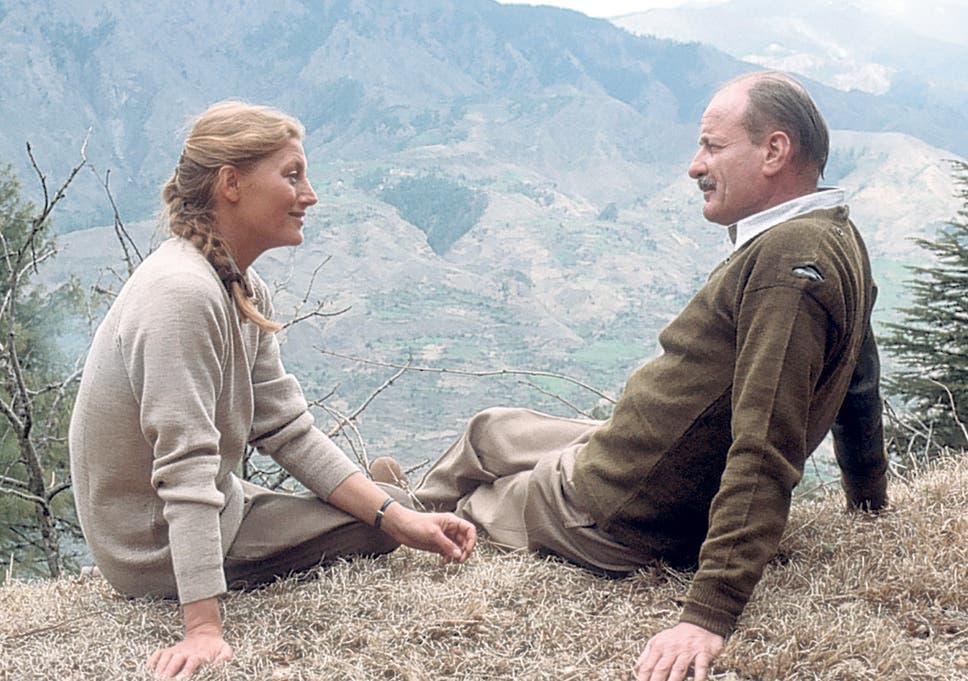
Highly regarded 14 episode Masterpiece Theatre type British TV series from the Brideshead Revisited era, based on the even more highly regarded Raj Quartet novels by Paul Scott, which I have not read. I watched these on DVD and did not realize until the end of the very last episode, when I idly pushed the "settings" button, that there was an option to watch each episode with the original Alistair Cooke introduction, which would have been the piece de resistance for TV viewing nostalgia. But that did not happen.


Where to begin with this...The pace and the writing and the overall lack of freneticism are much more novelistic than most things being produced now are. Needless to say it was much more attuned to the way my mind processes stories and information. Of course the world moves on, no one would really wish it otherwise (though they might take issue with the particular directions it has moved into), but it is striking to see at a distance of 35 years how familiar and natural it is to encounter the forms of one's upbringing. There is no way to put this without sounding ridiculous either, but the (non-Indian) actors in this are to me strikingly "English" physically in a deep sort of way that I do not detect in more recent generations. I grant that they are actors, and are in general finer-featured and expressive in a way that likely makes them stand out from the general population anyway, and also that we are doubtless influenced by the kinds of faces and cultural tics that served as identifiers in our formative years. But certainly the people in this are more evocative of the tea-sipping, rose garden-cultivating, well-lettered, reserved and somewhat forbidding people of popular imagination than the likes of say, Russell Brand and Keira Knightley are.


This story, for the unaware reader, is about a number of ends--the end of World War II, the end of British rule in India, and I suppose of the imperial attitude in general. As you know I love stories about the ends of great and epic events when the old order is in the process of being swept away but the new one is not yet fully in place, so I liked this aspect of the series. Most of the British characters are from the higher social classes, and for the most part the sympathies of the story are with them, though a few of them are depicted negatively. Such persons from lower social strata as make it into the story are however either not terribly substantial or are depicted as vulgar or not able to perceive what is going on. At one point one of the well-bred characters observes of a socially ambitious officer that he (the officer) didn't realize that no one (meaning no one who mattered) cared about the empire anymore, and that was that. But there was a lot about this that I liked, and certainly it was much better than anything else I had seen in a while.

Wednesday, April 20, 2016

6 Movie Reports

Midnight in Paris (2011)


F Scott Fitzgerald partying

This is the recent Woody Allen movie in which a blond Woody Allen stand-in is able at the stroke of midnight to go to the 1920s (and even beyond) where he hangs out with Hemingway and Fitzgerald and Picasso and other famous people from that time. I am in the camp that liked this. I thought it was fun. A lot of people, who obviously did not think it was fun, despised it. (This guy, for example, appeared to have been seething with contempt the entire time). It is pointed out by most of the more intensely intelligent viewers of the movie that the jokes, the music, the personas and conversation of the famous historical people, Woody Allen's idea of Paris itself, rely on the most hackneyed, shallow and cliched tropes in which all of these things have become packaged for mass consumption. It is not that I did not notice all of this, or imagined that Hemingway and all these other people were friendly, good people--though they may well have been fun people--the Paris in the 20s era is attractive to people in large part after all because it seems like it was a good time, even at the dumbed down intellectual level necessary for the general public to conceive some idea of it; but it did not upset me. I am at an age, and perhaps even Woody Allen is too, where I have probably given up on the idea that I will ever experience Paris, or anything else, on the terms that constitute its real interest and greatness. The blogger linked to above talks contemptuously about the philistines who want to seem sophisticated without sacrificing their familiar comforts or facing their limitations. I don't know, it is true I have not been properly pushed to do these things to the extent which seems to be required now for many years, and I have generally avoided intellectual conflict both on the internet and in person because I don't have the ready-made foundation to draw on that I would need to endure and struggle through them, or the time to meticulously respond to all of the tough invective and cross-examining that serious assertion requires to be backed up. Yet I have devoted a lot of time to reading and study, certainly to an extent that seems to lead places and produces palpable results and abilities in other people. I have made some sacrifices in doing this as far as not following other pursuits which might have been more suitable for me goes, though whether any such pursuits exist has never been demonstrated. As to facing limitations, the levels at which I run up against these would preclude even residual participation in any of the attractive or serious areas of life at all if I were to submit to the most exacting standards, and I have decided that in the absence of anything more desirable to me being available, that I don't want to do that.

I even watched this a second time, and thought it, even acknowledging the clunky and even bad writing and characterization in the modern segments of the movie, just about as fun--though I've been known to watch reruns of Rick Steves' cosmopolitan-aspirant travel shows multiple times if they are about a place I like, or imagine I would like.

I thought fleetingly while watching this that it was an old-man work, analogous to the late Graham Greene novel Monsignor Quixote. This may be because the references and shape of the story seemed purposely to have been not been overly daunting or obscure, and reflected some of the artists' standard tastes, interests, what have you. But I did not dig into it any more than that.

Off the cuff top 10 Paris movies. I know I haven't seen that many of them, and I'm sure I'm forgetting something I have seen.

1. Les Enfants du Paradis
2. Stolen Kisses
3. The 400 Blows
4. A Bout de Souffle
5. Boudu Saved From Drowning
6. Celine and Julie Go Boating
7. L'Argent
8. Midnight in Paris
9. An American in Paris
10. Window to Paris 


All we ever asked for was that romantic walk along the Seine (maybe not all, but that was included in the desired overall package)

A Fatal Inversion (1991--incomplete)

This was a British TV production, about three hours long. It is about a couple of college friends who had spent the lazy, glorious summer of 1979 hosting parties and eccentric visitors at the Georgian mansion in Suffolk that one of them had inherited. Ten years later the friends have moved on to careers and wives and children and live in the suburbs. The summer in Suffolk seems to be forgotten until a dead body is found in the woods near the mansion house that seems to have been buried for about a decade. When the police come around to ask the former owner of the house--he sold it shortly after the summer ended--some general questions about his time there, he appears to be nervous...very nervous...I watched the first 1:46:02 on Youtube, which was the only place I could find it. It was very good, a thorough English police mystery type of thing, though I dragged my feet on watching the end because I thought I could see where it was going and I was not very enthralled about arriving there. I waited so long in fact to finish the program that when I did go back it had been taken down and I couldn't find it anywhere else. So I don't know what happens. 

Seeing movies from the early nineties are so very odd to me, because it is a familiar world that one lived in one's self, where young people read newspapers and don't have tattoos and of course the old telephones and cars and all of that, but also the people's bodies. All of the people in this movie have distinctly 1990-95 era bodies that have a quality you recognize instantly if you were alive at the time, that is different from what people look like now. It must have to do with the composition of musculature, fat, presence or non-presence of drugs and other stimulants (and the same holds true for 1970s bodies also, prime examples of which are to be seen in Village People and Jesus Christ Superstar videos).

The Autobiography of Miss Jane Pittman (1974)

TV movie about the life of a (fictional) woman who was born a slave and lived to be 110, which brought her into the civil rights era. It won a lot of Emmy awards, including best actress for Cicely Tyson, which I thought mildly interesting in light of the recent brouhaha over the traditional lack of Oscar recognition for black performers, as this movie and the accolades it got seems to have been largely forgotten. It was based on a book of the same name by a writer named Ernest J Gaines which somehow I had never heard of either though at one time at least it seems to have been quite celebrated and frequently taught in schools. This movie is of that school whose virtues, such as they are, are more in the educational than entertaining line. A litany of the expected atrocities and injustices runs through the course of the narrative, nothing either new in the way of incident or that adds to the understanding. Depictions of life in the old south I often find interesting, though that is, I hate to say, because the presence, in a fairly nearby part of our own country, of a feudal and near-feudal culture up to a time not very far in the past, and probably all of the associated violence in the background, though I am not directly attracted to that as a matter of study, is largely what makes it interesting.


Black Sunday, or The Mask of Satan (1960)

Somewhat pioneering horror movie, made in Italy and based on a story by Gogol (!), the DVD version is dubbed into English. Stars cult legend Barbara Steele (described by the Film Snob's Dictionary as a "wild-eyed, witchie-poo B-movie actress equally at home playing seminude seductresses and scarifying goth girls in horror movies of the 1960s and 70s"). I found it mildly diverting. Such gore as is in it, while envelope-pushing for its time, is not overwhelming, and the atmosphere is gothic in a cheery Addams Family-esque way, as long as people aren't being trapped in dank cellars and in the grasp of determined and thirsty vampires. I have mostly forgotten it though.


I kind of like the idea of vampires being a running theme through the culture, since I mostly associate them as occupying milieus at high levels of taste, cultivation and what have you, but I can never really remember what the meaning of them is supposed to be. I know that you can ward them off with a cross and kill them by driving a stake through their heart, but whatever is signified by this does not strike me as anything that has a deep meaning for most of the people who make these kinds of films.

The Yearling (1946)

The Yearling seems like something I would have responded to more strongly than I did. It was made in the middle of my usual favorite period, is based on a classic, if now somewhat fading, American story, shot in lavish technicolor, and features stars towards whom I have been favorably inclined in the past. These things remain positives in the movie too. There is some kind of spark or underlying energy missing in the execution. It is a handsome and technically fine production, but it felt dull and rather joyless much of the time. Nothing happens in it that particularly charmed or interested me or drew me into the world, imagined or otherwise, of the movie. But I still think it is worth seeing for the student of this time period, or older technicolor movies, or older adaptations of literary classics, if for no other reason to get a better sense of why the better movies of this type work.


Alice Adams (1935)

I thought this was a very good adaptation right up until the end, which unfortunately was completely changed from what it was in the book (which I am an admirer of) in the cause of happiness. I would not have minded it being longer and including more episodes from the story, which is something I rarely say about movies. The young Katharine Hepburn not only does her expected fine performing, but is actually pretty believable as the hopelessly striving, borderline middle class Alice. George Stevens, who would go on to make many notable films, Gunga Din, A Place in the Sun, Shane, etc, etc. was the director. The book came out around 1921 and there was an earlier silent version of it, but this version is close enough to it that it seems contemporary and comprehends the general spirit with which it is animated. The Adams family's economic problems are experienced by them as more of a social/individual nature than the result of a general depression, which latter would have been so immediate to audiences in 1935 of course, but 30s movies excelled in depictions of social rejection and cruelty, much more so than I find to be the case in our own time--at some point I hope to be able to expand on why I think this was the case--so the onset of the Great Depression---I don't know what I am getting at here. I saw the movie a while ago. I enjoyed it, except that for the different ending, both with regard to Alice's love life and her father's career, which obviously play out completely differently in the book.


Pretty sad for a post 3 weeks in the making.

Saturday, January 17, 2015

Battle of the Broadcasting Erins

I need to get some quick copy in here while waiting for the appearance of my next important think piece. I do have a few new posts up on my spinoff blog dedicated primarily to the nostalgic feelings aroused in me by old books and literature. It has an appropriately miniscule readership, so anyone going there will immediately be one of the elect, after a fashion.

Of course there is no actual battle here. That is entirely the creation of my fancy. Doubtless if these two seasoned professionals met they would embrace cordially and agree that they would never let that silly Bourgeois Surrender pit them against each other.

For some time now when I have a fifteen minute break at my work I often go and sit in an empty meeting room in the dark and watch television. There is never anything on that interests me, but I'll still sit there and flip through the channels figuring there must be some cute girls on somewhere, if nothing else. In spite of supposedly knowing better I find some of the Duggar girls to be cute (the ones old enough to get married, obviously), so I've watched five or ten minutes of that show a few times. Their lifestyle and belief system would not be my ideal, but evidently they have some qualities I find appealing. I assume they fit in much better in Arkansas than they would in the east, where there is a lot of company it would be problematic to bring them into. They are not in themselves weird in the least; if anything, they are the very product that the culture they grew up in desired them to be, and the projection of that inner sense of success probably contributes to my perceiving them as attractive. It is the people who end up completely at odds and unable to connect with their own native environment that develop the most characteristics of pure weirdness.

There was another night, however, when I noticed that the woman doing the news, or some kind of news-driven program, on CNN was more than usually attractive to me. I lingered for a minute or so and moved on, as the topic on the show was terrorists or racism or immigration or some other subject that never gets resolved or even produces interesting conversation on television. But afterwards I came across the same lady on a few other occasions and thought each time 'she is really quite pretty', I made a point of finding out her name so that I could at least look her up on the Internet. This proved to be *Erin Burnett*, which is a very good 90s-era liberal arts girl kind of name. I could relate to that. Of course the substance of her interviews with leading experts on major international financial and political events was always so far above where my mind was in the moment that I never even bothered trying to analyze or otherwise make sense of it.


Erin Burnett seems to be an identifiable representative of the .01 percent, certainly of the northeast meritocracy division of that club. She grew up in Maryland (albeit on the eastern shore, which is not a region at the white hot center of the production of these kinds of people), went to a boarding school in Delaware and to Williams College, in my lifetime always considered one of the only real contenders (out of a field of about three) for the title of American's best liberal arts college. She got a job at Goldman Sachs, and not as a secretary either, right out of school before getting into television, it seems through connections acquired through the Goldman Sachs job. Seeing what is at the end of that gauntlet, socially, of trampling all the competitors of your generation for admission to the best schools, the best graduate programs, the best internships, the best jobs, in traveling and athletic prowess and financial acumen, is interesting to me. I don't know these people at all naturally, though I admit that if the king were to tell young me before I set out to try to achieve something worthwhile that my reward on coming back successful would be the best-looking (or even the second or third best-looking) girl on the Williams College field hockey team, I would have been pretty pleased with that prospect without even needing to know who the person was as an individual. And it will always be curious to clueless people that individual persons not of immediately obvious and overwhelming superiority should occupy particular positions at such commanding heights, and to possess a value in monetary terms that would appear impossible of attainment to most onlookers.


Erin Burnett acts out the course of her life trajectory vis-a-vis the author 

Here are the students of Williams College on the annual day when they hike their mountain. They don't look that intimidating, but nearly all of them will make their way to being high end adults. Not too many of them are very fat either. From what I have seen of other top schools in my neck of the woods (Dartmouth, Middlebury, Bates, Bowdoin) they seem to do some kind of screening to weed out fat people, and the slovenly and unkempt in general. Coming from St John's, the total absence of this element (which includes a lot of highly intelligent people, by the way) on these campuses strikes one immediately.


For all that I don't really 'like' Erin Burnett all that much, though my response to her indicates to me that her type is representative of one of the especially important missing pieces of my youthful experience and attempts to participate actively in Life, the paucity of success in which I have never been able to overcome. Also I can only take her show in very small doses. Fortunately her program often runs opposite The New Hampshire Chronicle on WMUR-TV channel 9, an ABC affiliate that is New Hampshire's only non-PBS broadcast station. One of the stars of the Chronicle, and also WMURs news anchor, keeping us informed on a nightly basis of all the crimes, fires, car crashes, wild animal incursions and other perils of living in the Granite State, is Erin Fehlau, the other half of our battling Erins. In contrast to Erin Burnett's nightly powwows with potentates of finance and government policy breaking down the state of the world, Erin Fehlau, in her NH Chronicle incarnation, travels around to the hidden corners of our tiny state visiting apple farms and outposts of the Appalachian Mountain Club. It is truly a Main Street versus Wall Street confrontation.

  
Erin Burnett was born in 1976, and Erin Fehlau in 1973, the same year as my wife. 1973 was a great year for women, though the vintage is a rare one, 1973 being the year with the lowest total number of births in the United States of any since 1945, and the only one in which the total number of births dropped below 3 million (by comparison, the current number is around 3.9 million, and it was over 4 million in the years before the recession). I was born in 1970; the birth rate crashed noticeably in 1972, bottomed out in '73, and remained low all the way through the remainder of the decade. Like many men, since I was and remain fairly immature it was evident from a fairly early point that if I were ever going to get any women they were going to have to be from one of the younger age cohorts--age cohorts that turned out to be considerably smaller than my own, causing a squeeze in the competition for these ladies. I have always clung to the theory that this shrunken pool of women in the key years for my fishing for them was a leading cause of my restricted success in getting to date many of them. Because even admitting my many shortcomings, I am still far enough above the true average in most areas that I should have been able to do a little better than I did.

Like most successful people in New Hampshire, Erin Fehlau actually grew up in Massachusetts. I wonder if there is any other state in the union where the majority of the most prominent citizens originate not only from another state, but from one particular state, as if it were a de facto colony of that state. I guess Vermont seems to largely run by people from New York (Howard Dean, Bernie Sanders, Ben & Jerry; J.D. Salinger, ever the contrarian, managed to end up in New Hampshire, though the town where he lived was right across the river from Vermont, and is culturally more like that state), and I suspect there is a state or two in the west that has been taken over by settlers or refugees from California. Whatever native talent there is in New Hampshire usually finds it necessary to leave. Anyway Erin Fehlau went to Syracuse, which (along with Northwestern) is a school people actually go to to study how to be in television media. She has three children (Erin Burnett, though she is married to a Wall Street trader who presumably has genes nearly as spectacular as hers are, as well as hundreds of millions of dollars to boot, has just one, which lends credence to my theory that people who perceive that they have attained kind of maximization or perfection of their genetic potential do not feel as great a need to have children as people who do not think they have done this). I actually know very little about her, and I don't even have much of an idea of how smart she is, but I enjoy seeing her on television, she doesn't annoy me, and I think she is cute, so she must have some kind of brains going for her.


This guy plays 'rhythm bones'. Sounds like something you could make a joke out of. Erin F. was intrigued enough to put him on her show.


Erin F with a retro 80s hairstyle. Still cute.