Sunday, October 06, 2013
Vivian Grey (1826-7)--Benjamin Disraeli Part 1
I started this May 6, 2009. I scarcely remember anything about it, except that the title character went to Germany and hung out in several bizarre castles belonging to various of the petty princelings there, and that there was not a plot that was intelligible to me over the last 2/3rds of the book. So I am going to have to rely on my largely illegible notes to see what my impressions of it were.
This is a 393 page Victorian novel written by a 21-year old. It shows in over-elaborate constructions (I presume sentence constructions), and 100-something something, (maybe 100-pound words)?
I could have used a glossary for all the school terms and slang (I have still not really learned to use the internet as a real-time reference while reading, though I will go to it if there is a question that I simply must have the answer to).
Someone's eyes gaze 'in all the vacancy of German listlessness." This was the stereotype for a long time. Of course most people in the West wold have considered the Chinese and the Indians to have been listless as recently as the 1960s. I wonder what happens at certain points of history to kick large groups of people into gear where in the course of a generation they come to be seen as just about the antithesis of listless (and apply the discovery in my own family).
I was musing at one point about Vivian's being a member of the famous family of literary Greys--Dorian, Agnes, et al--I did not check the spelling on these names, and besides bohemian English people are at liberty to spell their names any way they want. This probably tells you something about how scintillating the story was.
It only took to page 57 to find the Minor Character Who is Just Like Me for this book: "Mr Boreall (nice name) was one of those unfortunate men who always take things to the letter."
Goethe was still alive at the time this book was published. For some reason this struck me as remarkable when I considered it at the time.
Party Girls in Warsaw (see below)
It also struck me as remarkable that the author of such a juvenile novel could go on to have the political career that Disraeli had without constantly being attacked about the thoughts he revealed in it. Maybe he was, but it doesn't seem to have hurt him if it did happen.
I also noted on the same page that Disraeli was obviously of the type that has no sympathy for timid hem-hawers, people who don't know their own minds.
It only took as far as page 79 to find the one sentence Anti-me of this book: "Frederick Cleveland was educated at Eton and at Cambridge; and after having proved, both at the school and the University, that he possessed talents of a high order, he had the courage, in order to perfect them, to immure himself for three years in a German University."
B.D. is more of a teller than a shower (as in one who shows, not a fall of water under which one cleans oneself, which is how I was trying to read it before I could decipher "teller").
This is a strange book. Mrs Felix Lorraine is strange. The scene of the midnight meeting evokes the college atmosphere well though, via rustles, shadows, odd silence and the unnatural stillness of objects. This is all one note, and I don't have the slightest idea what I meant by it.
Smart people (really smart people) have so much attitude and easy superiority. It gets to be a bit much for me however.
Of course they have to talk about Byron. His role in the civilizational imagination at this time cannot be overstated. He was a presence that people could not get around. When Byron's admiration of Bolivar is referenced, it is spoken of as if Bolivar's personal greatness is confirmed as much by Byron's opinion of it as by the man's own actions. Frederick Cleveland, already shown to be a superior being himself, said of the poet, "He was indeed a real man; and when I say this, I award him the most splendid character which human nature need aspire to."
Heidelberg is described as 'a place of surpassing loveliness, where all the romantic wildness of German scenery is blended with the soft beauty of the Italian." I haven't been there.
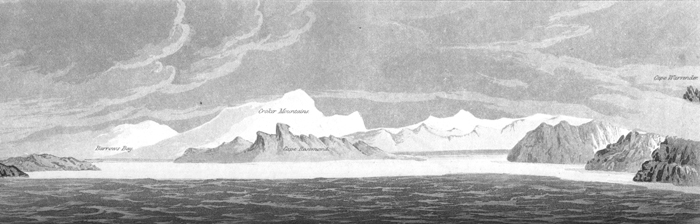
Warsaw is described as a 'Paradise of women' by the Baron Julius von Konigstein. I suspect that it is. The Baron was a great traveler, and claimed that the only places he hadn't seen were "In Europe...the miracles of Prince Hohenlohe. In Asia, everything except the ruins of Babylon; In Africa, I have seen everything but Timbuctoo; and in America, everything except Croker's Mountains." Croker's Mountains were a mirage reported as being seen near Baffin Island in Arctic Canada by a British explorer who was searching for the Northwest Passage, the non-existence of which were demonstrated shortly before this book was written.
Tuesday, December 08, 2009
Chapter 20. After two years of marriage, somewhere around 1966-1968, Joan and Arthur still have no sink, and Arthur has not yet deigned to get a job. My impression is that smart women don't put up with this kind of lifestyle anymore. Life would be potentially more interesting for me if more of them did, but that is no consideration of anybody's.
The construction of the part detailing the curiosities of the little district (Toronto hipster scene), finding the dead dog, etc, I seem to have thought was well done. It gave the book 'dimension', I wrote. Though in all seriousness, is it really credible that Margaret Atwood was ever a hipster, or hung out much among them? To me, crashing/penetrating these kinds of scenes are like pushing against the very limits of human possibility. I don't understand how some people can just get in and make themselves accepted in these circles and remain enshrined for the rest of their lives while others can never convince anybody that they have any part of the soul of a bohemian.
p.248 "When Women's Lib had appeared, Marlene had dismissed it as bourgeois; now she was a convert." I can see how that would have been confusing at the time.
p.254--"Byron, I remember, had kept a pet bear in his rooms and drunk wine from a skull." Yes, of course you did. For many years I thought Byron should be just about everyone's hero, science geniuses and people of that ilk included, because it seemed to me he had mastered every aspect of human existence that mattered in modern life, and then left it off carelessly, more or less in disdain, while still in the full throes of his powers and superiority, both of intellect and spirit, over other humans. His seemed to me the most ideal life accessible to people who were incapable of religious serenity or profound philosophical cogitation. I am of late less inclined to this opinion, since it seems to steer one towards a nihilistic attitude towards life, and this is generally not considered to be acceptable. No one else is as pleasing or convincing to me in his self-expression that I have discovered yet as old Byron seems to have been however.
p. 259--"He goes to all the parties, he goes to every party he can get into." Why not. Back then parties were actually fun.
p.264--"He'd heard from one of his friends, also a concrete artist, that if you got a string of Christmas tree lights, plugged it in, unscrewed one of the lights, and stuck your finger in the socket at the moment of ejaculation, not only you but your partner would have the greatest orgasm in the world." This is stupid, but it did inspire me to ask how people had so much time away from jobs and spouses and other people back in the day to conduct sexual affairs and still be home before midnight. Though I am sure it isn't true, my impression is that people were much hornier, certainly more openly so, in the 60s and 70s than they are now. There were, percentage wise, far more people of rutting age, socio-economically the middle class at least was far more equal, and I would say that given the lower numbers both of obese people and people adopting really unnatural appearances--cosmetic surgery, extreme levels of exercising, whatever people are doing with facial make-up and hair so as to only remotely resemble human beings--there were far more attractive people around to awaken and flame one's desires than there are in the ordinary person's life today.
p.273--"The television set had vertical on the lower third of the screen..." Hey, I remember that.
p. 289--"He hated celebrities, he felt they diminshed him." Contemporary celebrities tend to be so ridiculous that they don't in themselves diminish anybody. The people with relentless drive, self-confidence, and ambition for the sake of ambition are what is diminishing me. Where does this belief that one is a winner, that one can do whatever he wants, and that one deserves all of the top prizes to be claimed in life all of the time and in perpetuity, come from?
p.310--"I was feeling marooned; the impulse to send out messages, in bottles or not, grew every day. I am still alive." That is the whole and only object of this blog at this point.
Italians are depicted in this as utterly ruthless people, not just the mafiosi but more or less everybody. Are they still like this? The conventional wisdom is that they have gone completely soft, at least morally, like every other western country.
I like the conceit of the structure here, having the romance novels, with all their absurdity, parallel her own life. I ought to come up with some kind of clever device like that for my own next book.
Wednesday, February 04, 2009
I haven't resorted to the pictures option for a while. Given my dismal rate of posting recently, I feel that inner urgency to slap something up here. February is always a slow month. Last year I think I got 3 posts up the whole month, and that was in a leap year. The combination of the missing days, the cold office, and the of late annual trip to Florida makes for not much writing.
I am not, by the way, the first to break out the cold weather excuse to try to justify failure. You will remember that before he was able to finish Paradise Lost, Milton lamented for many years that the damp and unsunny climate of England appeared to be unsuitable for epic poetry and such other glorious achievements as the Mediterrenean world had produced.
Wednesday, November 26, 2008
I updated the layout of the blog in another attempt to embed some kind of visitor-tracking device in the sidebar, but once again it didn't work.
I am aware that this is the 18th post on Ruskin. There is a purpose, a grand project, an ambition of sorts at work in all of this that I believe is eventually become apparent to me, the resolving of which matter I am convinced will be the most important event to occur in my mental life in many, many years.
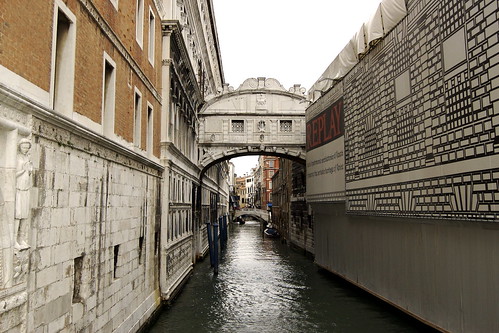
There is an interesting little section alluding to the associations and meanings excited by the words "Venice" and "Byron" in conjunction. Ruskin writes first that "the reader will find the influence of (the Bridge of Sighs) on the public mind ascribed chiefly to the 'ignorant sentimentalism of Byron'", and "that (Byron's) feelings about Venice had been founded on an extremely narrow acquaintance with her history," but then saves himself from too insufferable priggishness by admitting that, on his earlier visits anyway, "in spite of all my carefully collected knowledge, I still felt exactly as Byron did, in every particular...I had formed my own precious 'style' by perpetual reading of him, and imitation of him in various alliterative and despairing poems...for the love of Byron, I had run the risk of a fever in drawing the under-canal vaults, and the desolate and mud-buried portico of the ruined Casa Foscari." The argument however is that while Byron rather remarkably tapped into and brought into existence a whole cornucopia of exciting feelings and perceptions about Venice that appealed to the contemporary imagination, his seductive depiction of these perceptions and feelings was not merely inaccurate as to the Truth of the essences of these perceptions, but far inferior to them and infinity less whole, as we would realize had we still the capacity to understand the kind of mindset that informed their creation.
Later in the same chapter, Ruskin offers a course syllabus to an imaginary questioner who asks "But if I'm really good, and mean to try to see it (Tintoret's Paradise, in the Ducal Palace), what's to be done?":
"Well, you've got to read Homer all through, first, very carefully; then, with increasing care, the Prophet Ezekiel; then, also with always increasing care, the Gospel of St John, and then the Apocalypse..." These read over a thousand times or so and got pretty much by heart, "...they will lead you as far as, I will not say Tintoret, for you would have to spend another college-residence in actual painter's work before you could make much of him; but as far as Gentile Bellini and Giorgione, and the rest is according to the time and faculty you can dispose of..." It is somewhat rare that people give such specific direction as to what one needs to know utterly before it can even begin to be discussed whether he understands anything or not, so I always include such instances in my posts.
Picture 1--The Palazzo Contarini Fasan. There is a note on this further down the page. Once again I can get no control over the order in which the pictures arrange themselves.
"...the greatest pictures represent men and women in peace, clouds and mountains beautiful. Never in the moral or the material universe does the great art of man acknowledge guilt, grief, change, or fear." This is a lead-in to a discussion of such a picture, the Castel-Franco altar, which I was going to put among the pictures on this post but it transferred as rather absurdly gigantic. The statement quoted is not something of the sort you usually hear anyone, other than perhaps Thomas Kinkade, asserting nowadays, and I suspect it would not be considered a morally acceptable viewpoint by many well-developed modern minds even if they were able to grant that in a certain historical or religious context it might have legitimacy. However, if the greatness of human art consists in grandeur of conception united with grandeur of execution, which certainly seems reasonable, it is likely that the art an age which does not conceive man, or existence generally, in some fairly intense degree of awe, will be ultimately impoverished.He adds, "And the strength and joy, and height of achievement, of any group or race of mankind has, from the day of Christ's nativity to this hour, been in exact proportion to their power of apprehending, and honesty in obeying the truth of His Gospel." I thought this should be noted. I don't have anything to say about it. I don't pretend to have such developed apprehension, and I am not convinced that Ruskin had it in any such degree as he was striving for, but I certainly believe it is a real phenomenom that gives such people as have it real power.
Picture 2--Byron on an adventure, accompanied by the wit, the fun, the bravado, the sex, the title, and the associates that have given generations of phlegmatic library-bound drips far more enjoyment and consolation to read about than he had in the doing.
My impression at the time apparently however was that 'He is in the end not really in touch with reality.'I also noted that 'The base mind has no conception of sin, no capacity for beauty.' I don't know whether Ruskin stated this, or I came upon it by deduction. Probably the former, as it is too neat a maxim for me to have come up with on my own.
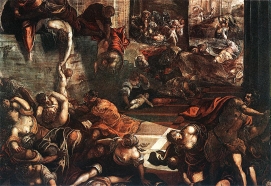
Picture 3--Tintoretto's Slaughter of the Innocents. Referred to below.
Good news! We have now finished the book proper and are now in Appendix 1 ("Grotesque Renaissance").There is a three page footnote in this section about the arrogance of Germans and their lack of any feel for as well as understanding of painting which must almost warm the heart of anyone who has had, as Ruskin himself presumably did, to suffer a representative of this people's pronouncing upon the value, or truth, or nature of any aspect of existence as if were the only and absolute word on the matter for all times and all peoples. I am sure however that his criticism and ridicule of the German mentality and approach to art would be dismissed by its intended targets as containing nothing of substance or concern in it. It would not sting them in the least; they would not understand what in it could possibly be supposed to. I will quote part of the section anyway, though, as it gets somewhat close to feelings I often have towards people generally, though this group includes more than a few Germans.
First he writes about the philosophical system of a German painting: "...its objective side, and subjective side; and mythological division, and symbolical division, and human and Divine division; its allegorical sense, and literal sense; and ideal point of view, and intellectual point of view; its heroism of graceful attitude and braided hair; its inwoven web of sentiment, and piety, and philosophy, and anatomy, and history, all profound: and twenty innocent dashes of the hand of one God-made painter, poor old Bassano or Bonifazio, were worth it all, and worth it ten thousand times over."--I am just setting up the rest of the quote here. If ever met an artist or intellectual with this precise a breakdown of his thought and work processes, I would doubtless be so overawed by the organization that I would scarcely be able to question whether whatever he did was really any good or not--such a distinction would not be for the likes of me to make--"...the worst result of the system is the intense conceit into which it cultivates a weak mind. Nothing is so hopeless, so intolerable, as the pride of a foolish man who has passed through a process of thinking, so as actually to have found something out. He believes there is nothing else to be found out in the universe. Whereas the truly great man, on whom the revelations rain till they bear him to the earth with their weight, lays his head in the dust, and speaks thence--often in broken syllables...I was once introduced to a German philosopher-painter before Tintoret's "Massacre of the Innocents." He looked at it superciliously, and said it 'wanted to be restored.' He had been himself employed several years in painting a 'Faust' in a red jerkin and blue fire; which made Tintoret appear somewhat dull to him." There is of course some truth in it; you are generally safe in assuming that most efforts, most people, amount to nothing much, either where you or the credit of the human race is concerned, though I must say I think this is not how the most truly brilliant and imaginative people view the world. I am not sure that Ruskin himself is that much more insightful than the people he is continually trashing. He pays a closer attention to certain things that are matters of interest to people of above average education and social stature--that is his most valuable quality--but his grasp of the larger part of Man, or Life, that is the portion of the great artist, is not, I think, very strong.
"I think that the central man of all the world, as representing in perfect balance the imaginative, moral, and intellectual faculties, all at their highest, is Dante; and in him the grotesque reaches at once the most distinct and the most noble development to which it was ever brought in the human mind." (In his youth Ruskin denoted Michelangelo and Tintoretto as the second and third greatest men Italy had ever produced, though in later years he denounced "the false reverence for Michael Angelo in which I had been brought up"). At the very top of such rankings all the contenders are so well-developed and excellent in so many facets of mental life that it seems rather nit-picking to me--to me--to determine that Dante is more supreme than Homer, or Socrates or Moses (I assume this is due mainly to his having been denied revelation of the Christian faith), or Thomas More or Samuel Beckett in any way that has any relevance to a minor person, but the sentiment of why anyone would be so designated is very well-expressed. Most people instinctively believe there is a proper, much higher, if not absolutely ideal, form of humanity towards which they ought to be ever striving, which would in turn suggests that human existence has a more ultimate purpose beyond its purely animal aspect, however unlikely a prospect that may appear to the rational mind. It is the great challenge and purpose of civilizations and cultures to define what these purposes are by the clearest and vivid, and in the way most harmonious to the soul, means possible.
I wanted to take a little more time on the thought and writing in my posts, which have become sloppy and displeasing to me of late, but I also don't want to spend 30 hours writing up a sheet of little comments summarizing my deadbrain reactions to what are supposed to be provocative ideas.Now we are in Appendix II ("Venetian Index").
The Palazzo Contarini Fasan (picture #1 this page) was, according to Ruskin, foolishly criticized in English accounts of foreign buildings for being ill-proportioned, "the simple fact being, that there was no room in this part of the canal for a wider house, and that its builder made its rooms as comfortable as he could, and its windows and balconies of a convenient size for those who were to see through them, and stand on them, and left the 'proportions' outside to take care of themselves..."
My observation was that the builder of this house was perhaps not a renowned genius architect, but a practical craftsman with enough absorbed culture from the surrounding environment to be able to produce beauty. I was thinking of this at the time because I had recently been to Woodstock, Vermont, which is a very posh town nowadays, in part because its center has some of the most architecturally renowned colonial-era houses in the United States. None of these houses were built by professional architects, but by regular citizen-amateurs of the village who had good groundings in geometry, Latin literature and philosophy, and the confidence that (along with obviously a general knowledge of the fundamentals of building construction) they were adequate to the task of not only building their own dwellings, but doing so in a manner that demonstrated a high degree of "civilization".
On Tintoretto's Paradise, which has already been reproduced and remarked upon in an earlier section: "The picture is on the whole wonderfully preserved, and the most precious thing that Venice possesses. She will not possess it long; for the Venetian Academicians, finding it exceedingly unlike their own works, declare it to want harmony, and are going to retouch it to their own ideas of perfection."
Sunday, July 06, 2008
From Volume I, Chapter II: "The Throne":
The first sentence of this chapter is long, but it is pertinent to the major themes of the book:
"In the olden days of travelling, now to return no more, in which distance could not be vanquished without toil, but in which that toil was rewarded, partly by the power of deliberate survey of the countries through which the journey lay, and partly by the happiness of the evening hours, when, from the top of the last hill he had surmounted, the traveller beheld the quiet village where he was to rest scattered among the meadows beside its valley stream; or, from the long-hoped-for turn in the dusty perspective of the causeway, saw, for the first time, the towers of some famed city, faint in the rays of sunset;--hours of peaceful and thoughtful pleasure, for which the rush of the arrival in the railway station is perhaps not always, or to all men, an equivalent,--in those days, I say, when there was something more to be anticipated and remembered in the first aspect of each successive halting-place, than a new arrangement of glass roofing and iron girder, there were few moments of which the recollection was more fondly cherished by the traveller, than that which, as I endeavored to describe in the close of the last chapter, brought him within sight of Venice, as his gondola shot into the open lagoon from the canal of Mestre."
I like 1850s-ish modernity of course--it has had time to be formed, packaged, what have you for my romantic imagination. That said, I also agree with the idea that speed and noise and crowds are not optimal conditions for beautiful and profound thinking, at least for certain types of highly sensitive and easily distractable people--obviously plenty of people have been able to thrive, at least artistically, to some degree in the new conditions. Still, lately I have been moving towards the viewpoint that museums, say, at least as they are used by most people, are not optimal settings in which to place good art, unless one is able to go to the museum repeated times, and to devote at least a couple of hours on every occasion to revisiting various works until they really insinuated themselves permanently into one's consciousness. I suspect when the first public museums opened in the late 18th and 19th centuries that it was anticipated that this was how they would work, and probably it is how they do work still for some people.
In his revisions later in life, Ruskin made many footnotes derogating the silly and foolish sentences he had written as a younger man. I can understand why he did not delete them though; a generally successful work (this does not apply to undisputed world masterpieces, but such works of course are extremely rare) often depends on a certain tone, or attitude, in its thinking, and sometimes to correct the occasional overexuberant or ill-considered thought in the sobriety of older age would be detrimental to the overall effect of the whole.It is sometimes difficult for me to remember that Ruskin, and other authors who are like him (such as Proust), are not, despite their psychological problems and flirtations with romanticism, really people like me, but come from extremely wealthy and cultured backgrounds, the pervasive mental atmosphere of which would be something entirely foreign to me. While Ruskin makes it pretty clear in his writings that he thinks the elite owe it to the lower orders to create an aesthetic and spiritual environment for them in which their basic human natures are not degraded any more than they need to be, and even founded some institutions (which can still be seen today) which the intention of uplifting the common people, his intention seems to be to make them more pious men, better craftsmen, and so on, within the intellectual limitations that the mass of men are bound by. This is not an unsensible idea on the whole--its assumptions however are a little too off-puttingly aristocratic for me, since I interpret it as unequivocally excluding people like me from getting the full, the high view, the high education, the intellectually wider sense of life, the idea of which has seduced me, and probably not for the proper reasons. As it turns out I haven't gotten these things anyway, and I lack the simple piety and capacity to work nobly and skillfully at some beneficent task which is every man's proper lot.
"...though the noble landscape of approach to her can now be seen no more, or seen only by a glance, as the engine slackens its rushing on the iron line; and though many of her palaces are for ever defaced, and many in desecrated ruins, there is still so much of magic in her aspect, that the hurried traveller, who must leave her before the wonder of that first aspect has been worn away, may still be led to forget the humility of her origin, and to shut his eyes to the depth of her desolation."
"The impotent feelings of romance, so singularly characteristic of this century, may indeed gild, but never save, the remains of those mightier ages to which they are attached like climbing flowers; and they must be torn away from the magnificent fragments, if we would see them as they stood in their own strength."
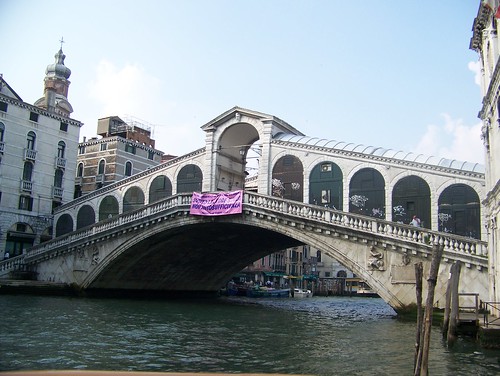
"No prisoner, whose name is worth remembering, ever crossed that "Bridge of Sighs", which is the centre of the Byronic ideal of Venice; no great merchant of Venice ever saw that Rialto under which the traveller now passes with breathless interest: the statue which Byron makes Faliero address as of one of his great ancestors, was erected to a soldier of fortune a hundred and fifty years after Faliero's death..." O.K., I am sobered--a little. I still think there are worse things in the world than revelling in the Byronic ideal of Venice, especially if you have clearly distinguished it in your mind from the actual, or rather the more solidly demonstrable history. The point however is that this ideal is not merely a fiction, but it is vastly inferior in substance to what it obscures, which is its real crime. This I, perhaps more than most, should know better.
"The remains of their Venice lie hidden behind the cumbrous masses which were the delight of the nation in its dotage; hidden in many a grass-grown court, and silent pathway, and lightless canal, where the slow waves have sapped their foundations for five hundred years, and must soon prevail over them for ever. It must be our task to glean and gather them forth, and restore out of them some faint image of the lost city; more gorgeous a thousandfold than that which now exists, yet not created in the day-dream of the prince, nor by the ostentation of the noble, but built by iron hands and patient hearts, contending against the adversity of nature and the fury of man..."
I will have to remember that I can't steal pictures from the Gutenberg site.
On the unique and fortuitous circumstances of Venice:
"Had deeper currents divided their islands, hostile navies would again and again have reduced the rising city into servitude; had stronger surges beaten their shores, all the richness and refinement of the Venetian architecture must have been exchanged for the walls and bulwarks of an ordinary seaport. Had there been no tide, as in other parts of the Mediterranean, the narrow canals of the city would have become noisome, and the marsh in which it was built pestiferous. Had the tide only been a foot or eighteen inches higher in its rise, the water-access to the doors of the palaces would have been impossible..."