Showing posts with label USSR. Show all posts

Tuesday, April 14, 2020

Tourism Nostalgia Part 2

There was going to be a series of these posts. I was going to include all of my favorite pictures, and make some kind of personal claim on the places in them, and make some reference to the overcrowding and other vulgar changes brought about in them by our modern age, if I could not quite join in on the lamenting of them. Now of course the crowds are gone from all of these places, perhaps never to return in the numbers that had become common in recent years, which of course would be a positive development, other that it may further decrease the chance of my ever going to any of them again. The photos in this group are from the second volume of the Catholic history survey, which covers the Western story from 1600 to about 1960, so the sites are more modern. They loaded from my phone somewhat out of order, but that does not matter enough that I am going to bother fixing it. 


The scene around the Arch of Triumph doesn't look that different from the old days, at least from the air, though the Elysian Fields I guess has been effectively Times Square for at least forty years now. It's still too iconic a site to leave out of the post.


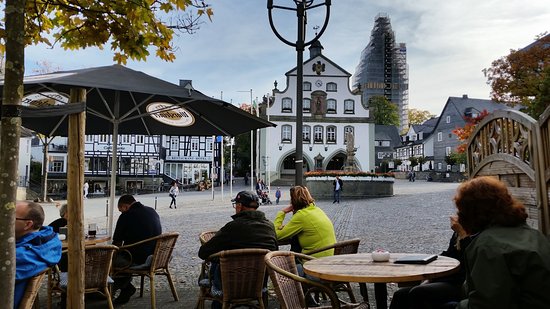
Brilon, Westphalia, Germany


I admit that I don't know anything about this place, but the old scene at least reminds me of the kind of town in the Czech Republic that we would ride into on our bicycles and drink beer and eat soup and wiener schnitzel in. Which I loved.


Church of St Peter and St Paul, St. Petersburg


Everything looks so clean and restored nowadays. So many experts and culture lovers swarming over and caring for everything. I think I miss the days when everything was neglected and run down and I could imagine I, and a few other earnest and sexy but not especially enterprising people, were the only ones who really cared about all of this stuff.


The view from the other side still has some trees in the picture, but all of the ones I've been able to find aren't allowing me to steal them.


Such a big deal was made of the U.N. in all of my childhood reference books, and it seems so comparatively passe and not a big part of where the world is going now, that I have always kind of wanted to go visit it, especially while it is still an active organization. However I haven't gotten around to doing it yet.


I should note here that this was the very last photograph in the book, the most up-to-date representation of Western Civilization as it appeared in 1962. 


Wall Street, 1929. Probably more crowded then than now.


I can remember walking past Wall Street but I don't think I have ever been on it. It is one place I definitely don't belong anyway, but at the time (I was still in my 20s) I'm sure I felt like I couldn't go there, that somehow I would be exposing myself to existential danger (my upbringing to that point had instilled in me an idea that Wall Street was one of the vortexes of evil in all the world to a would-be artist or serious thinker).


Osnabruck. Another one of these German places from the Thirty Years' War that I do not know that much about but would probably be interested in


That's the place. It is one of my weaknesses, and probably the major real cause of my dissatisfaction thus far with the whole coronavirus episode, that there is all this fun to be had out there in the world that I have largely missed out on, or that I am constantly being prevented from taking part in, in which European and big city traveling plays an outsized part, especially now that I am too old to go partying in places like Ibiza or Thailand or the more decadent Greek Islands. While it is true, as my wife would argue, that spending all your afternoons and evenings lounging around drinking beer even in the most picturesque setting would be a waste of your life, it is also true that some of the happier memories of my life involved doing just this. And as it's been over 20 years now since I have been able to indulge myself in this way I do have a hankering to do it again (as I have a hankering to see a real classic or good adult movie in an actual cinema, or even an auditorium again, which I haven't done in 20 years either). 

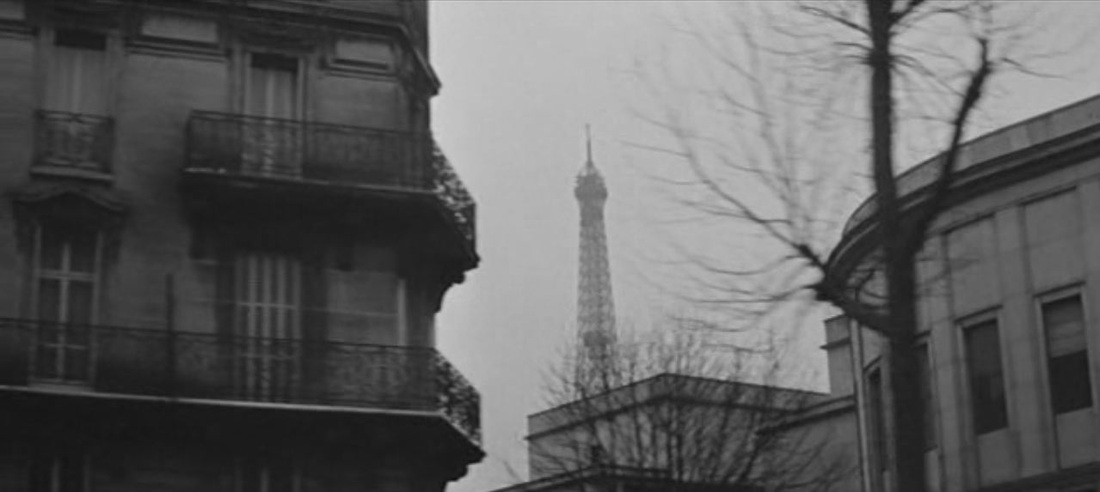
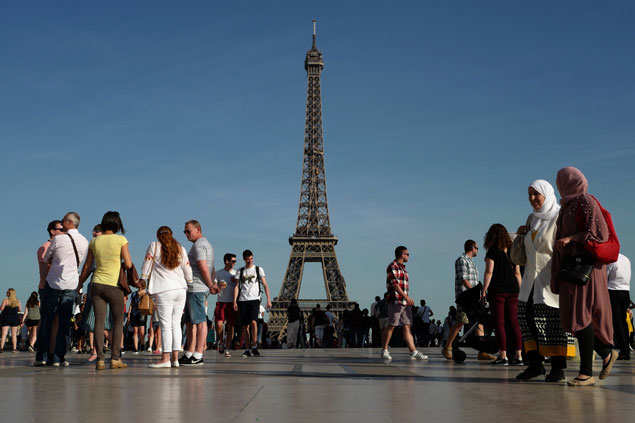
In 1990, on my first trip abroad, I did go up in the Eiffel Tower like a typical chump, however I did manage to strike up a conversation with a couple of really beautiful Israeli girls on this occasion. They were in truth such a leap up in glamor from anyone who had ever talked to me on a friendly basis up to that time that I unfortunately was not quite ready to follow through with laying out some appealing post-Eiffel Tower plans that might interest them, as I didn't haven't any, though they did give me an opening to bring the subject up. At the time I thought, well, I was caught off-guard this time, but the next time I find myself chatting up such babes at one of these tourist attractions, I'll be prepared. Of course I never would find myself chatting up any such babes at any tourist attraction or anywhere else ever again.   


How it really is.


How we imagine it (below)


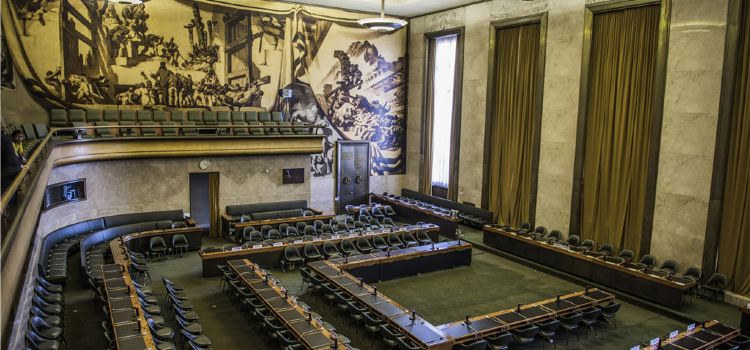
League of Nations Building, Geneva. The idea of international organizations, provided they were Western-dominated, had a hold on the imagination of leaders and educated men in the decades following World War II, even when they were epic failures.


This building still exists, and looks about the same as it did in past days. The inside of it looks to have something of an old European grandeur that the present U.N. lacks (though I also have a certain weakness, entirely rooted in nostalgia, for 1950s American modernism).


Admittedly, this place was built to hold crowds, and attract even the dregs of humanity (to some extent). I love it there, and the whole area around it. A lot of excitement.


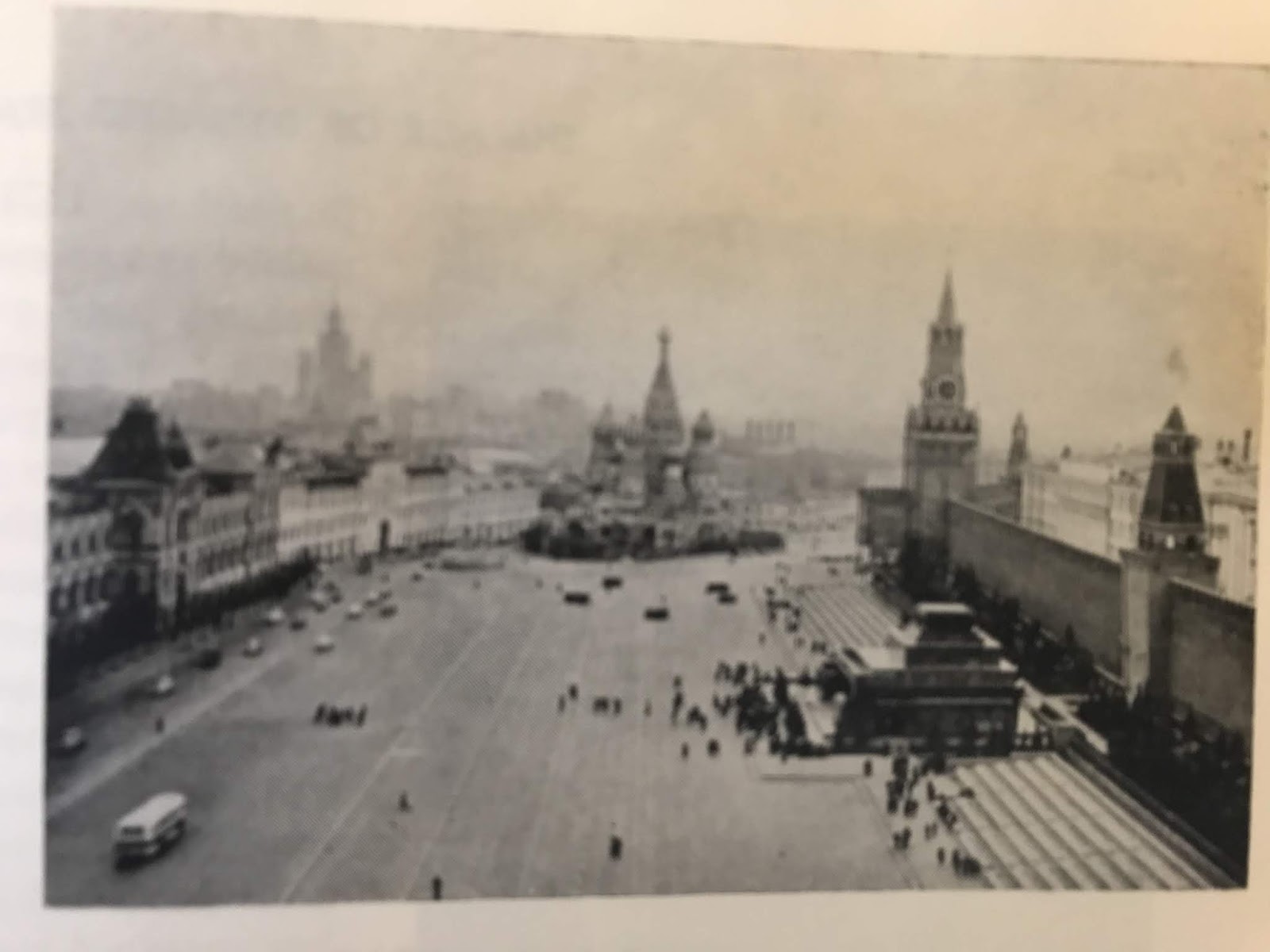
Red Square, long view.


I know I have no place to be a snob, but Red Square isn't quite the same now that people who shop at Whole Foods can go there (and come back again to their office park jobs a few days later).


Modern cameras, or perhaps modernity itself, seems to have diminished the effect that many of these monuments have in these old photos.


Maison Lafitte, France


French castles are not one of my particular areas of expertise. 


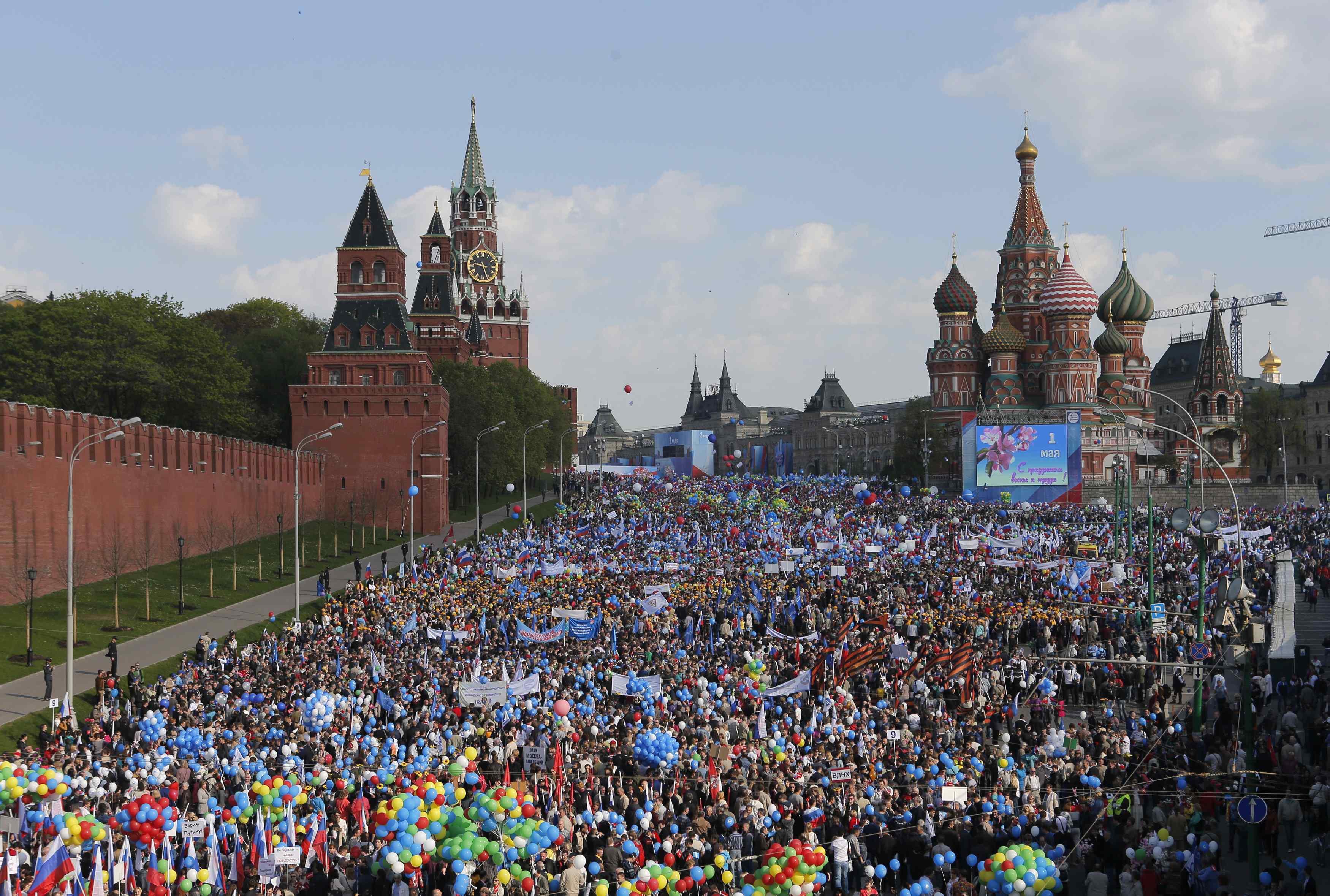
May Day Parade, Red Square Again!


These epic events did end after 1991 (there is still a military parade on May 9 every year to commemorate the end of World War II), but there was an (apparently?) one-time revival in 2014 that drew 10,000 people.


This Catholic history textbook I got all these pictures from unabashedly hated the International Communist Party and all that they stood for and didn't skip any opportunity to excoriate them in print.


Palace of Versailles


I haven't actually been here. When the crowd is this big, we're all tourist scum, unless maybe you are really good-looking. I hope there is some time of year when it isn't like this. 


St Martin's-in-the-Fields, London. 


This is the church that is right off Trafalgar Square, across the street from the National Gallery, so I have seen it, but I haven't visited it. Due to its location and the fortune of its not having been bombed out during World War II (which fate befell a great many of the 17th and 18th century London churches recognizable to students of English literature) it is one of the most prominent 18th century buildings remaining in the city.


Belvedere Palace, Vienna. 


I have been to a number of the secondary palaces of the Hapsburg family, including Franz Ferdinand's cottage at Konopiste in Bohemia, and Franz Joseph's hunting lodge in Bad Ischl, but I have never made it to Vienna. The treeless, relatively unadorned approach to the gigantic Viennese palaces (Schonbrunn presents similarly in photos) has always struck me as strange, but perhaps the effect is different in person. 

I don't know how to end these kinds of posts, so I'm just going to say "This is the end."


Tuesday, March 21, 2017

Notes on Movies Continued

As I am months behind in this, I am going to have to do a few of these. The good news is that I have not seen too many movies either, so three (posts) might do the trick. Of course at my rate that could take another two months.


Anna Karenina (2012)

I admit I liked what they did with this. They got Tom Stoppard to write the screenplay, and his vision was to take episodes from the book and put them in a theater setting, but the theater is usually just a starting off point for a good deal of clever filmwork. I remarked at the time that the movie makes a lot of assumptions that viewers have read the book and have a good recollection of it. Many minor characters for example make appearances without any introduction or explanation of who they are, you have to recognize them from the novel, and a similar dynamic is applied to various of the situations that the major characters are involved in, they appear or are alluded to in the course of the movie without being any further developed. As in often the case with modern productions that have some money to work with, the colors and sets and clothes and most of the people are lustrously beautiful. I was not enamored some of the casting, in particular Keira Knightley as Anna, though she does seem to fit with many people's idea of what Anna is. Older men (by which I mean older men than me) in the business love her, she is an ideal art-world sex goddess for them. Personally I don't detect much of a soul there, or an appealing mind either, though reputedly she is very smart. Maybe I don't like her, or Anna, because they are too superior to me all around, or at least there is no opening for me to approach them in a way that is pleasing to me. Even in the book there is with Anna much of a sense that her mental and emotional life, more as the result of cultured habit and upbringing than intellectual development, are inaccessible, certainly to the lowlier sort of reader.


I didn't like the actor they had playing Levin either, who played him as more of a goober than I think was merited. I thought it was widely known, or understood, that Levin was modeled in large part after Tolstoy himself, and in the book he had some cachet in Moscow society even if he was regarded as a bit of an oddball.
I do remember thinking that Vronsky was well-cast.


The King's Speech (2010)


I had seen this a few years back and I gave it another try. It still strikes me as a weak Oscar best picture winner. The material is too slight, the class dynamic strikes my American sensibility as rather gross, not that we do not have problems of our own in this regard; some of the particular forms of the British system are still alien enough to strike me as strange. The uninspiring George VI is not one of my favorite British royals. I was always partial to his disgraced brother, mostly on account of his clothes. I suppose the film had some appeal for me as a period piece, given my general affection for this period, though even in this I thought the effect was overly drab. Not in the physical sense--I like drab as an aesthetic in that--but in its animating forces.


It appears from reading this that I think it is dreadful and was rolling my eyes and generally not enjoying myself throughout the movie, but I am not fierce enough to denounce anything that thoroughly. Some of the performances are quite good. Still, overall I found it a disappointment.


The Hurt Locker (2009)


The second of the back to back Oscar winners from the turn of the current decade, and I suppose the best-known movie to deal with George Bush II's Iraq War. What I remember most about it was that it was filmed in videotape, and its overwhelming aura of alienation and nihilism. Compared with World War II movies or even to some extent Vietnam movies it is striking to me how little emphasis is placed on the connection of the soldiers with the greater society back home, effectively there is not much of one, and this is of course one of the themes of the movie. While I am partial to some landscapes more than others, I usually am able to feel some sense of beauty in most places. Iraq in this movie at least looks to be oppressively unlovable and alien in a geographic sense. The barracks--trailers I guess--where the soldiers reside are equally devoid of any tribute to aesthetics or positive cultural associations. We are reminded that there are still men in the world--I don't remember there being any women soldiers in this movie, which was somewhat famously directed by a woman--who take to the life of soldiering and war as their calling, though perhaps there are not as many being produced in the Western nations as there used to be, for good or ill, I am not clear in my own mind on this point. The Iraq War is presented in this movie as a somewhat endless series of military exercises and maneuvers, which, however skillfully executed, do not seem to be leading towards any obvious end, at least from the American point of view. Perhaps I should see it again sometime. It is not an enjoyable or hopeful movie in any way however.


Top Gun (1986)


Another military-themed movie, of a sort, though immersed in late Cold War Reagan-era jingoism rather than the fractured confusion that in the public mind at least has characterized the more recent conflicts. What a difference 30 years makes! I was not looking forward to seeing this, but I enjoyed it more than I thought I would, not because of anything to do with the story, but because I found it (as I have on several of the rare occasions when I take up movies from these particular years) so much fun to be back again in the oddly lost world of the mid-1980s, which were my high school years and the details of which therefore I recollect very vividly and which belong to me--not that I was myself doing anything very exciting compared to most people at the time--much more than the present does. There is a lack of oppressiveness in the atmosphere of this movie compared to pretty much everything about life in the present that does ring true in my memory. The look and demeanor of the women in the 80s were so comparatively pleasing too. Of course it is easy to be gulled by movie stars, but with the NCAA basketball tournament being on this week I was looking on the internet at some of the old games of the 80s and when the cameras scans the crowd or shows the cheerleaders they look a lot happier and like they are having a lot more fun, and are therefore cuter, than what I feel when I look at similarly aged people today, though perhaps I am partial to my own time. And then of course the lively, beautiful young women of the 80s are the 40 and 50-somethings who seem to be not especially happy with circumstances in the present.


And Quiet Flows the Don (1957)

3 part, 6 hour Soviet adaptation of the Sholakhov novel about Cossacks during the period of World War I and the Revolution. I found it to be very poignant. Why would this be, given all of the horrible things that not only take place in this story, but that we know are going to happen in the future to anyone who is surviving at the end as well? To begin with I am emotionally susceptible to the historical events of the period under consideration more than most others. I am as well susceptible to certain of the particular sensations which cinematic evolution had become adept at projecting by the 1950s, so much so that much that the default or base of most my ideas about geography and how the natural world especially is supposed to look like date from this time. I had also read the book, and the story is moving and stirring, in the sense of having sweep and movement. Even though they were a wicked regime and our enemies and they stifled entrepreneurship the circumstance that it seems to have been a prestige project in the Soviet Union may have made some impression on me also, the idea of the existence of this whole other film industry completely cut off from Hollywood certainly, but even Western Europe, full of actors and directors most people in the West know nothing, who if they ever had occasion to speak English, did not do so professionally. The movie was shot in bright and unsubtle color that makes it appear somewhat cartoonish at first but I found it grew on me.


I have written in the past about my time in Prague in the 90s and how I found certain lingering aspects of the lifestyle and organization of the era appealing, namely in the form of (certain of) the kinds of shared experiences that people had with one another, which seemed to me superior to the weak shared experiences, if there are any at all, that I at least have with anyone in the United States. This called some of that to mind too.


This came with a 4th disc exclusively devoted to some of the oddest special features I've ever seen. There was a droning interview with a modern day Cossack ataman (something like a chief), who was a balding, heavyset, rather unwarlike middle aged man wearing a medal-covered blue dress uniform and sitting behind a desk in what looked like an office in a community center. There was about a twenty minute segment devoted to traditional Cossack songs and dances which I was going to take a quick glimpse at and move on, but I found I was drawn into and rather uplifted by it, because, at least during the performance, the people were so proud and comfortable in their own skin not merely as awesome or superior individuals but as members of a community with some sense of positive identity and purpose. I know this sort of thing is discouraged nowadays among us because it often ends in conflict and people getting killed, but it is very attractive when you see it. The anomic life spent in shuffling about with one's head down, unable to drawn strength from or commune with such vitality as does exist around you is pitiful in comparison. This was what I was thinking while watching the dances anyway.


Friday, March 28, 2014

Lennon Sisters Magazine Covers

auteur mouths war lovers again son squier

I do take note of the important events of the day, to an extent. I find it hard to get very overheated about them, when so many other people have already taken it upon themselves to be so.


This question answers itself.

Ukraine-- it is and has been since its independence an unusually weak and unstable state, large, almost unbelievably poor, its population in free fall; in short, it seems to have very little going for it. I did think, for a fleeting moment or two, in the early 1990s when the Soviet Union broke up that Ukraine and Belarus especially becoming and remaining independent countries for any substantial length of time seemed odd. As a child I had little sense of Ukrainians having a national identity separate from Russians, because as in the case of Serbs and Croatians, or Czechs and Slovaks, I don't think the differences were emphasized as being particularly important in those days, if the people I grew up around were even aware of them.


In late 1966 and early 1967, the theme of the Lennon sisters having a lot to teach President Johnson's daughters about romance achieved popularity in this type of media.

I am now aware that Ukraine has had, going back to the 1800s at least, active nationalist leaders and inclinations, though the effectiveness of these does not seem to have ever been very strong. That is to say, there has never been much of a sense afoot in the world that the Ukrainians were a coming people. They certainly do not give that impression now. My whole point is, that Ukraine strikes me as an unusually vulnerable state to begin with (though for that matter, so does Russia, at least as regards its sparsely populated far eastern territories bordering China).


I probably did give some passing thought, while watching The Battleship Potemkin or reading some reference to Chekhov's dacha in Yalta, that the Crimea, and most of the Black Sea coast, for that matter, not being part of Russia any longer and that nation's acceding to this seemed odd, but I probably assumed that the two countries must have a relation similar to that of the United States and Canada, in which I tend to assume that Canadian ports and water are essentially 'open' to American commerce and military needs, especially in the event of emergency. Perhaps this is not the case either, and I can look forward to some abuse from offended Canadians, but I note my idea as an instance of how the uninformed mind tends to fill in the blanks of its knowledge. I am a little surprised that our intelligence agencies and governmental leaders do not appear as if they had a plan of response in place in anticipation of Russia moving into the Crimea or other parts of Ukraine, which surely must have seemed a possibility or even a likelihood by experts in these matters. Of course I am sure there must have been something of the kind; our reactions to most of these international crises in the last twenty years do unfold as though we had never made any contingency for them however.


The supposed excessive fertility of the Lennon sisters was an endless object of fascination for television magazines in the 1960s, an era in which I thought the average family consisted of 3-4 children across the population. While Peggy did have 6 children, I am pretty sure the other three only had around five more between them, which does not seem extreme. I guess one or another, and sometimes two, of the sisters were pregnant continually for a few years there, and it was kind of part of their personae, so the impression stuck.

Lots of celebrities in the 1950s and 60s had a fairly large number of children (though normal for the time). Elizabeth Taylor for example I believe had four children, though no one ever thinks of her as especially fertile or maternal, for that matter.

I make note of the lack of contingency for the Ukraine situation because I note that a lot of important people in America seem rather angry about the development, saying that it affects business and trade, etc, and is basically irresponsible. So I am surprised that they don't have a devastating plan of some kind that they can coldly implement and send a forceful message to Putin to control himself going forward. But of course they probably do.


I would actually be interested to know the contents of this discussion.

Why the fascination with plane crashes? Does it have to do with the fact that upper middle class and
even higher people fly a great deal as passengers, and that that period when the plane is off the ground is one of the few times in their lives when they cannot feel that they are the absolute masters of their situations and that this in itself causes them anxiety. Or is the idea to continue to cultivate the seeds of fear in the duller middle orders, as has been done so expertly in the cases of school and workplace shootings, and compel them to submit to ever increasing security measures and so forth.


Who is the sexiest? We all know that I love Dianne, but objectively, the sexiest, or the one who most had it in her to be an animal in bed in general, was probably Kathy. As far as who was most likely to be an animal in bed with me, that is a different story, and the most likely answer is no one, though if I had to pick, I would say Janet. But that's only because I like her the least of the four (though still enough) and that seems to inspire excitement in women. The smartest? Dianne fer sherr, though Kathy may be the shrewdest in terms of cold business sense. Peggy is undeniably the sweetest, and I think she was also quite smart. She looks so to me, and I consider myself to be a good judge in this matter, at least in cases where it is not an absolutely dominant or obvious feature (I find these types of women the most lovable, when I can find them). Her husbands, a musician and a doctor, were presumably intelligent, which is in most instances a good advertisement for being so oneself.

I want to make a few comments on Roger Angell's story in the New Yorker about being 93.


I was taken aback in this story by how much emphasis there was on the desire for sex and trolling Match.com for romantic partners even among the extremely aged. I always thought, maybe even hoped, that if I should make it to that age that I would not be oppressed by those kinds of thoughts anymore. They seem increasingly ridiculous now, at age forty-four. That I should still be grasping at them deep into old age, when they can only ever more and more come to nothing, seems almost unbearable.

Roger Angell was my age in 1965. There are not many people left who were my age now before I was born.


Yes, cut it out with the babies already.

Roger Angell is famous for his baseball writing. I have of course read some of it over the years, and thought it was generally good, in a New Yorkerish way certainly, but the pieces usually captured something about the way baseball connected to and fit in with other aspects of life. This is a staple of New York and New England-based baseball writing that is often ridiculed by less self-consciously cerebral and more jockish types, but the genre developed for a reason, because one has the sensation in New York City and most of the better places in New England that there are a lot of interesting things going on, of which flow baseball, and the baseball season, are a part, at times a bigger part than others, but never in the kind of relative mental isolation in which it seems possible for even sensitive writer types to experience sports seasons in other places. I remember in the famous book Moneyball a passage about organized baseball's acceptance and even celebration of these pastoral, elegiac chroniclers of the sport, who posed no threat to its powers, which has come in the last generation with the statistical revolution spearheaded by Bill James (a writer for whom I actually have a great deal of esteem) and the more recent crop of completely hard-headed and rather pitiless analysts of data, of which Nate Silver, who has been in the news recently, is representative. I don't really like these new books very much either, and I will try to explain why, aside from the complaint that I must be too stupid to understand the math and the objective realities that they reveal, because I think at times there really is more to the matter than that, or at least I certainly hope there is.


Now we're talking. I will take odds that none of the Lennon sisters ever asked their husbands the question this magazine claims they asked them every night, however.

Yes, so the problem with the Nate Silver school of baseball writers even leaving them in the realm of pure statistical analysis is a tendency to 1) overstate their case, both in its conclusions and its ultimate importance, which is a problem across the contemporary intellectual spectrum; 2) write as if the primary, maybe even the only interest in baseball is in demonstrating one is smarter than everyone else at interpreting statistics. The atmosphere of these books is depressingly airless. This obviously speaks to the nature of elite education nowadays, that data somehow speaks for itself, and is not merely the support of thought, but in most instances serves as thought...

I am sure I will post on this again, if more thoughts on this subject occur to me. I am out of time for the week and I still have no computer at home. Maybe this weekend I will get one.

Wednesday, February 06, 2013

Why the Birthrate Will Continue to Decline


Dear Octavia (the new site muse--I think she is some kind of urban literary scenester):

I don't have many topics anymore. Or at least I don't have many topics I contemplate in an in-depth fashion anymore. I am essentially the person in the video below, which one of my Facebook amigos, who has evidently come to terms with modern masculinity in a way I have not yet been able to manage, recently  shared with us:


Now I don't know anything about this guy. Perhaps he is happy. Perhaps his wife loves and respects and admires him the way we all want, and superior men expect, to be loved and respected and admired. This wallowing in the tropes of contemporary middle class fatherhood might be just a show. He may have a fully developed adult life and a serious and essential profession or field of endeavor. His soul may not be crying within him that his existence has been reduced to doing endless amounts of laundry and playing with babies. Indeed, my impression is that in many instances this is not the case. I don't believe it though. Such men as have legitimately above average levels of testosterone or competitiveness or ambition or other intellectual or creative energy or maybe just perception of their own dignity, that is to say, those who have more attractive options for passing the hours of adulthood, easily have the strength and position to say no to all this. They have more important and worthy things to do, and what's more they are able to convince everyone around them that this is indeed the case. Men who live like the prototypical modern father, I am quite certain, exist in a constant state of deep confusion. Life can make little sense to them. They are playing a role that deep down no one really prefers them to play, themselves especially, yet they see no way to reclaim or assert a single vestige of their natural sense of who they are, or should be. Yes, you will say this is the lot of nearly all people, that no one thinks him or herself put on the earth to be primarily the companion and caretaker of non-prodigious children, but that the course of our lives, especially one so far advanced as my own, has revealed to each of us exactly who we are and what roles we are suited for in the drama of existence, and that it is in our best interest to be happy in these. I am quite certain that any such severe sense of disconnect from one's proper self must have its basis in something real that the person has lost the means of conveying meaningfully into his day to day existence.

A few months ago I wrote about a Soviet ballet (Don Quixote) that I had seen a movie of. One always had the impression that in the days of the Soviet Union, in spite of that regime's many abominations and propensity to throw any number of its most deeply serious and brilliant artists and intellectuals into the gulag, to maintain a level of high culture, by which is meant a critical mass of individuals both learned and proficient in various classical high arts and academic disciplines at an extremely high level, the fruits of which in the ordinary discourse of daily life among such people was found enviable and astonishing by numerous Western students and journalists who spent time among these circles in Moscow and Leningrad during the 1960s and 70s (or among the exiles who settled in New York during the same period). A common despairing lament in these reports was that Americans of the time thought Bob Dylan and other rock stars were poets, but the Russians had real Poets (and real every other kind of artist too), all of whom made their U.S. counterparts look like children in every aspect of their existences. This seems to have dissipated with the collapse of the U.S.S.R. and the opening up of the society to the West, with all of its vulgar and civilization-killing influences, doesn't it? Sophisticated cultures are obviously like flowers that cannot survive in the state of unbridled nature if weeds are to be permitted to swarm unabated all over it. I know it will always ultimately be argued that these cultivated people were failed beings as long as the regime, which ironically seems to have been the safeguard protecting their level and kind of intellectual development, survived. I am obviously of two minds about this. Serious people from the old Soviet Union as well as similar people from present-day societies with comparable governmental repression but apparently, for certain fortunate classes, sophisticated educational systems, such as Iran, clearly do not envy us our mental development--they may sometimes claim to envy our innocence, i.e. lack of mental development, but I don't think they can really mean it (and by 'our' here, I mostly  mean 'my' of course, as other of my countrymen seem to be better off than I am in this regard, though I do perceive that foreigners' perception of us is as kind of universally lacking, apart from a tiny sliver of genuine geniuses at the very top of the pyramid). Maybe in the 1940s and 1950s Americans were capable in their naivete of deriving a joy out of life that was inaccessible to peoples more hardened than life but I don't think that joy, or kind of joy, is accessible to us anymore either.

Thursday, November 10, 2011

The 1988 Time Capsule

The companion post to the 1987 time capsule I put up back in June (I like to have a lot of different unfinished series going on at a time), based on the important catch phrases of the year according to my high school's yearbook staff. A cursory glance indicates that this list is even lamer than that of '87, and that I am not going to have much to say about most of the subjects on it. However I feel compelled to go through with the exercise.

White Snake Isn't it Whitesnake, just one word? Long-haired, pop metal group whose videos were ubiquitous on MTV that year. The singer had formerly been in another band which I had never heard of but seemed to have great respect in the hard rock community. They did nothing for me at all.

Fawn and Rob I presume this is Fawn of Iran-Contra fame. I don't know who Rob would be (A search for "Fawn and Rob 1988/7" turns up very little. Perhaps refers to Robert MacFarlane, National Security Advisor?). Overlapping episode from '87. I really had no interest in this or sense of what the big deal was at the time.

Winter Olympics Calgary. The Olympics of the inept ski jumper Eddie "the Eagle" Edwards and Commie glamourpuss Katarina Witt. The eastern bloc countries, especially the USSR and East Germany, were dominant. The U.S. did so humiliatingly bad (and looking at the medal standings it was even worth than I thought--a grand total of 6 medals, 2 gold, 1 silver and 3 bronze) that shortly thereafter the I.O.C. began declaring recreations such as snowboarding and double-cross X to be Olympic sports in a shameless ploy to pump up the U.S. medal total and protect their television fees. I remember it as kind of a fun Olympics, obviously the last winter games featuring the communist sports machines, though the severe beatdown at the hands of our mortal enemies at the time, who then appeared as driven to make a mockery of our entire way of life via athletic dominance as the Chinese do now by standardized tests, was wince-inducing, at the very least. To reiterate, the tally in total medals was, USSR & East Germany, 54, the US of A, 6. Restricting it simply to gold, the Commies had the advantage 20-2. Woe!

Platoon Also on the '87 list (Did they even check it?). Oscar-winning Vietnam film that seems to me to have been downgraded in stature in the years since.

Iran Contra hearings Zzzzz.

Godspell Must have been the school play that year. In fact, I'm pretty sure it was. I didn't really pay attention to the student productions, either in high school or college. I'm sure I didn't miss that much artistically, but it wouldn't have killed me either. Plus it seems like would have been an easier way to meet girls than attempting unsuccessfully to play sports.

Andy Warhol I think he died that year. I don't remember its being much of an event at school. The listmakers of '88 were much more enthralled with national and world events at the expense of local trends than their predecessors in '87. As to my general impression of Andy Warhol, I find his art to be amusing. He obviously had a good instinct for what would sell, catch the eye, what have you, and there is a lot of cleverness in it--a lot of the things he does seem simple or obvious, only no one else would have thought of them, or thought to execute them, in just the way that he gets right, as far as it goes. Whether any of it means anything substantial in world-historical terms I have no idea.

illegal aliens There was a controversial amnesty around that time, which primarily effected California, I believe. The issue wasn't a pressing day-to-day concern in Portland in the late 80s. In the last decade there has been a decent inflow of immigrants into the city, particularly from Somalia (I am always tempted to make a joke about the wisdom of settling Somali refugees right on the ocean like this, but that's the kind of thing that the people I need to try to be friends with don't think is funny). Given that they are designated as refugees, I presume that they are legal. Our school appears to have about a 10% nonwhite population now, which still seems pretty low, though the school district at a whole is around 21% (which suggests that most of the immigrants attend the other, more 'inner city' high school in town). Of course these figures are up from essentially zero in the 80s/early 90s, so it is not an insubstantial change. I don't really have a point in all this--obviously, the standard line coming from everybody respectable is that the schools and everything else in town is better as a result of this modest diversity than they were before--I find demographic studies of all kinds to be interesting, especially of course when they involve places with which I am familiar. I read the book Outcasts United, which is about a soccer team of refugee kids from a lot of different countries in a suburb just outside Atlanta, not long ago. It's a journalistic read, though it was engaging enough that there was no doubt that I was rooting for the refugees when they played the team of evil blond kids with $300 shoes and aggressively Blackberrying parents (even though my children are mostly blond, they couldn't make it onto that team either). It does provoke a lot of interesting questions about the future of America, given that very poor immigrant children whose parents have quite low levels of education such as these make up a substantial portion of this next generation. If the children of ordinary married college-educated parents--and less than 20% of American children under 18 currently live in such a household--have, as we are often told, little hope of leading productive and fulfilling public lives unless they step it up in a big way, how are we supposed to be optimistic about the prospects of kids like this? Something has to give here. Sorry to go off on that digression. A lot of thoughts on these kinds of things strike me and I have a hard time putting them all together.

divine Possibly a slang word? I don't remember it. Perhaps it refers to the grotesque movie actress from the films of John Waters, who I see died in 1988. I still have never seen any of the immortal pictures featuring this icon. This list isn't resonating with me. I didn't hang out with the yearbook kids, obviously.

John Huston He also would have died during that school year, though again I didn't notice that his work cast much of an influence over the personality of our school. I have written about him elsewhere. I think he even has his own category on the sidebar.

Aids Aids was big news in 1988 even in Maine, which I think had around 2 confirmed cases at that time. Nonetheless, since getting it seemed to involve doing naughty stuff with exceptionally naughty people around 99.8% of the time, no one I knew figured there was much of a realistic threat of their contracting it. Even the depraved people in Maine are modest about the extent of their depravity compared to what they surmise goes on out in the great world.

Presidential elections They would still have been sorting out the primaries when the book went to press. I did vote in '88 in the general election, though I certainly would have had no idea on what basis I was voting, other than that I vaguely sensed even at that age that Republicans seemed to be hostile to people like me--my idea of a desirable life at that time was the avoidance of business and the adoration of money to the greatest extent possible--so I figured I would not be doing myself any favors by voting for them, which assessment was probably correct, as far as it went.

Dirty Dancing The great hit of the season of course, whose legend has only grown stronger in the years since. Never a favorite of mine, naturally. My sensitive feelings were hurt right in the beginning when Swayze sneaks the girl out of the lame, parent-sanctioned party and they go to the real party, with rock and roll, black people, drugs, and, you know, dirty dancing. Which crowd do you think I identified with?

SuperQuest I have no idea what this was. (It looks like it's some kind of computer competition. The first one was in 1988. I could not have been more out to lunch as far as computers were concerned during the entirety of my youth. I had no interest in them whatsoever).

Wok In...crawl out The real expression was "Wok in...Fuck out!" This place was open until 2 or 3 in the morning, which made it besides Denny's the only place in town open after 10 o'clock or so. This meant that from around 11pm to midnight on weekend nights it was swarmed with obnoxious teenagers such as myself, many of whom were inebriated to some degree. The night manager's English was limited, so when he had to dispatch of an especially unruly patron, not being able to summon up the entire expression "Get the fuck out!", shortened it to "You! Fuck out!" Looking back from the vantage of Police State America 2011, it's remarkable how much was tolerated at this restaurant. To begin with, the dining room would be utterly trashed, not necessarily on purpose but as an effect, after this nightly rush, with chairs and condiments and trays and dishes moved all around the room and left as they were when people were finished with them. Especially during the winter the floor was about as filthy as you can imagine with everyone tracking in snow and sand and mud and then moving constantly around the room the whole time they were there. Sometimes fights would break out, usually in the parking lot. The police certainly made a point of stopping in on their rounds most days and if there was a substantial crowd lingering outside they would order everybody to leave. I don't recall anybody ever getting arrested for doing anything that was not blatantly provocative however.

The Wok-Inn is still in business, and apparently as successful as ever. I stopped in a couple of years ago when I was in town. I used to go over to Portland a couple of times a year when I first moved back up this way, but lately I've only been making it every 2 or 3 years. I also always used to make a point of stopping in whenever I was passing through on the way to somewhere else, which I still do a few times a year, but lately I've stopped doing that too. It still has some meaning to me but it has ceased to be in any way a place I could claim to belong to for a long time now. I used to entertain sometimes the idea of moving back there too but my wife, not having the same connection to the city that I do, never developed much enthusiasm for it and in time I suppose I have come around to looking at it more through her eyes and less through those of my 16 or 17 year old self. So it is more like a lost love that has long moved on and left me behind now rather than an organism with which I maintain any sort of active engagement.

California Raisins You've got to be kidding.

"This is drugs, this is your brain on drugs" My personal favorite anti-drug ad was the Jon Bon Jovi spot which began "I've partied with the best of them. But drugs were never a part of my scene." Please.

Jim and Tammy Not interested in them.

Donna Rice Not much interested in her either, though she is admittedly still in the front rank in looks of political mistresses (post-Kennedy era) all these years later.

Vacations in Florida I didn't go to Florida at that time, but I have acquired the habit since and come to respect the power of the ritual for New Englanders.

Jesse Jackson Active in the primary campaign that year. Reputedly came to my wife's high school in New Hampshire, which may have been even more extremely lily-hued than mine was, that year, and had the progressive part of the student body anyway whipped into a frenzy to go out and demand retribution from the power structure for its many sins.

mini skirts I do remember mini skirts being a trend, especially denim ones. This may be because a girl that I imagine to possibly have liked me is wearing one front and center in her class picture in the yearbook. In other words, I imagine I could actually have been immersed to some extent in the very fine details of this fleeting fad, if I had been a little more alert and ready to spring into action during the brief two week period when this window of opportunity may have been open. Probably not though.

"I don't remember saying that."--R.R. More Iran-Contra stuff. Somebody on the staff was really into this. By '88 it was widely accepted I thought that Reagan was in cognitive free-fall and was in no way actively participating in the running of the country's affairs.

Colors L.A. gang and drug movie starring Sean Penn and featuring the dramatic Ice-T title song (from the same era as his sublime "Girls Let's Get Buck Naked and Fuck Tonight"). This was big at the time. I haven't seen it referred to in some time. I have two memories associated with this film. The first is during one of the drug busts in the film a woman was arrested, handcuffed and taken into the police station completely naked, which is absurd. The second is of a guy who used to sing the song all the time as a kind of nervous tic. He was one of the most socially hopeless people I have ever known in my life, who actually tried. Everything was just not working though. Brillo pad hair. An exceptionally weak chin area. Thick glasses, a doughy body, mouth always appeared agape. Not very smart. Just a disaster. He latched on to this other guy who was in contrast almost preternaturally winning; square jaw, fiercely chiseled body, irreverent, shoulder length hair and mustache, but in a handsome way. One weekend the handsome guy took care of business with a girl who, according to this sidekick, "could have been in Playboy", which was doubtless the highest compliment he could think of. When the stud came into school on Monday he had put the episode behind him, but his chinless friend had not yet recovered from the contemplation of his master's deeds, because when saw him in the hallway he literally began to foam and pulsate with the second hand excitement. "That's what I'm talking about! That's what I'm talking about! That's what I'm talking about!!! My boy got paid! My boy got paid! My...boy...got...paid!!!" It was truly one of the most bizarre, as well as funniest displays of behavior I have ever seen in my life.

Broadcast News Another movie? Never saw it.

Stress I was not very stressed myself, at least not about attaining a dominant GPA and succeeding in the college sweepstakes, which I'm sure is the stress being referred to here. I suppose I should have been more stressed, but I was bizarrely in love with what I perceived to be my abilities at this time, and was sure that wherever I ended up going to college that my teachers would love me and my fellow students look up to me as a genius and everything in my life would magically take off. In general I have had a very stress free life, though a woefully uneventful one.

Oprah Winfrey Her show was just starting to take off. She never meant anything much in my life.

puffetts I don't have the slightest idea. Are they the puffy sleeves that adorned certain articles of girls' clothing? I liked that look all right.

Fatal Attraction End it with the movies already. I never saw this either.

Exchange students There were four at our school that year, a boy and a girl from Spain, a girl from Germany and a boy from Austria. They were all of well-above average hotness and social graces for us, which was unusual among exchange students. The Spanish girl fell in with the haughty artsy clique and didn't have much to do with people outside of that, but the Austrian propelled our soccer team from the middle of the pack to the #1 seed in the state tournament (though we were upset there), as well as took a number of American girls to bed, the Spanish guy smoked a lot of weed and enjoyed no insignificant amount of feminine companionship himself, and the German girl came to all the parties and school activities and glared upon everyone with a contemptuous scowl; she was highly attractive in doing so, however, which inclined most of the weaker people to forgive her.

No "Appetite for Destruction?" Yes, the exchange students were the end of the list. How out of touch were our DHS elite not to have noticed that Guns and Roses breakthrough record was the album of the year in 1987-88? I swear to God I did not go anywhere that whole year where this did not get put on at some point. Portland was seriously loving G n' R. Major omission. Throws the credibility of the whole list into disrepute.

Thursday, February 10, 2011

The Battleship Potemkin (1925)

Probably the most famous of all Soviet silent movies, and one of the landmarks of the form in any genre, we are singularly unlikely to do it any justice here. Nonetheless to the tourist of film its approach and brief incursion on one's own life are exciting in a way similar to the way those of the Grand Canyon or the Leaning Tower of Pisa are to his geographical counterpart. Like numerous other classics I have recorded watching, Battleship was shown at school, and even then with my extremely limited knowledge of movie history, in the days leading up to the showing I would see one of the flyers posted up at various places around campus and think almost hypnotically "Battleship Potemkin! Sergei Eisentstein! Odessa steps! Baby carriage! The maggots on the hunk of rotted beef!" While I won't say that I was aflame with excitement, not really having any idea what the movie was or why it was supposed to be great, it pleased me to think that a pretty much universally acknowledged masterpiece in which almost all smart people, but hardly any stupid ones, would have some degree of interest was going to be making an appearance in our little society of burgeoning thinkers. So as I say, at that time I was, as I am now, primarily a dutiful viewer, still experiencing the movie as a night's entertainment, though perhaps at a more elevated intellectual level than usual, mentally checking off the celebrated scenes and attitudes and propagandistic points as they came along, feeling mildly disappointed that the massacre on the Odessa steps did not affect me more powerfully--I found the cinematic language which was informing it to be confusing. On the whole though I was satisfied with my evening's morsel of culture, not unlike the feeling one has in completely a single awkward dance or five minute conversation with a girl one has been interested in from afar, neither of which has been carried off with any skill or will ever lead anywhere. Nonetheless I had seen the Battleship Potemkin, much as I had once procured an innocent dance with some Jenny or Betsy who seemed desirable to me, and I could enter it into my '+' column for all times.

About ten years afterwards, in deference to another system I had generated for determining which movies to watch, less defined than my current one and therefore soon abandoned, I saw the Battleship again. I had apparently not learned much that I could apply to my viewing of it in the ensuing decade however, for my response to it was largely the same. I watched it as seriously as I could, appreciated it duly, sat in the dark for half an hour afterwards letting the images and the score sink in, drank two shots of Smirnoff, which, this product being distilled in Connecticut, was probably a completely pointless gesture, in spite of all of which I soon largely forgot about the film.

So another ten years pass by, yet another system derived with the object of identifying and seeing only movies possessing some claim to greatness (why? I should scrap this altogether and devote all my free time to studying opera and the foundations and ornaments of art history, seeing as my only object in any of this is to be able to present to the world indisputable evidence of visible cultivation, though nothing seems to have any effect on me in that regard), and Potemkin comes up again, being apparently so classic that there is no program of comprehensive film history one can undertake that does not land upon it almost at once. By now do I dread its appearance? Not in the least! I was as excited to see it as I was on the other occasions; for with anything so special and the object of such widely-shared enthusiasm at the highest levels of criticism and expertise, one is infected with the conviction that something remarkable could easily strike one or come to one at anytime. Even my blog post could catch the eye of some wonderfully perceptive and alive reader with whom I could develop a mutually rewarding intellectual correspondence. Probably not, but even the thought of such a circumstance resulting from my review of The Hangover was impossible to entertain (Wasn't it?).

So I saw it for a third time, this movie that I never tire of but never enter the wondrous dynamism of either. It was still innovative, it was still grand and ambitious, the meat was still rotten, the officers vicious, the priest ridiculous, the sea and the panaroma of Odessa shimmering, the steps sequence iconic and spectacular and confusing, the revolutionary hero still rather too bull-necked and unintelligent-looking for me to embrace wholly. I am stuck on the proverbial treadmill in relation to this remarkable movie, largely able to appreciate it, or much of it anyway, but only coldly. I suspect I will not think of it again until another 10 years goes by and it appears somewhere on my social schedule again, as if the movie is an orbiting planet that keeps re-appearing in my line of sight at predictable intervals without getting close enough for me to make out very much about it beyond what is obvious.

I think this is the third ship movie I've had in the last year, after The Navigator, which is almost contemporaneous with this and therefore makes for an interesting comparison, as well as The Caine Mutiny, which is also about a captain of a ship at least being relieved of his duties by an uprising of his crew, though of course that was a bourgeois conflict centering around technocratic competence and mental health rather than an expression of all out war between two completely polarized and ultimately incompatible classes of men.