Separate Tables (1958)
This is one I saw on a VHS tape about five years back. After having sat in the "availability unknown" section of my Netflix queue for seven years or so, it finally turned up in the mail one day so I watched it again. I wrote quite a lot about it on that earlier occasion. I sounded like I was more sure of myself than I probably would be now, though I don't have any much stronger takes than I had on the earlier occasion. I evidently thought Burt Lancaster was out of place in this film on the earlier viewing, which I was not struck by this time, I thought his presence was good. I also wrote that the while the author of the play, Terence Rattigan, was gay, that any suggestion of homosexual themes were "nowhere in evidence." I feel like this isn't quite true. It isn't explicit, of course, but a number of the more repressed characters, those played by Wendy Hiller and David Niven especially, and maybe even Deborah Kerr's, seem like the explanation of some of their issues could lie in that direction. Most of the other comments I made I pretty much feel the same. One thing I noted on this occasion was the portrait of Queen Elizabeth, at that time still a very young woman, hanging in the hallway. I don't know what to say about that other than, it's been a long reign.
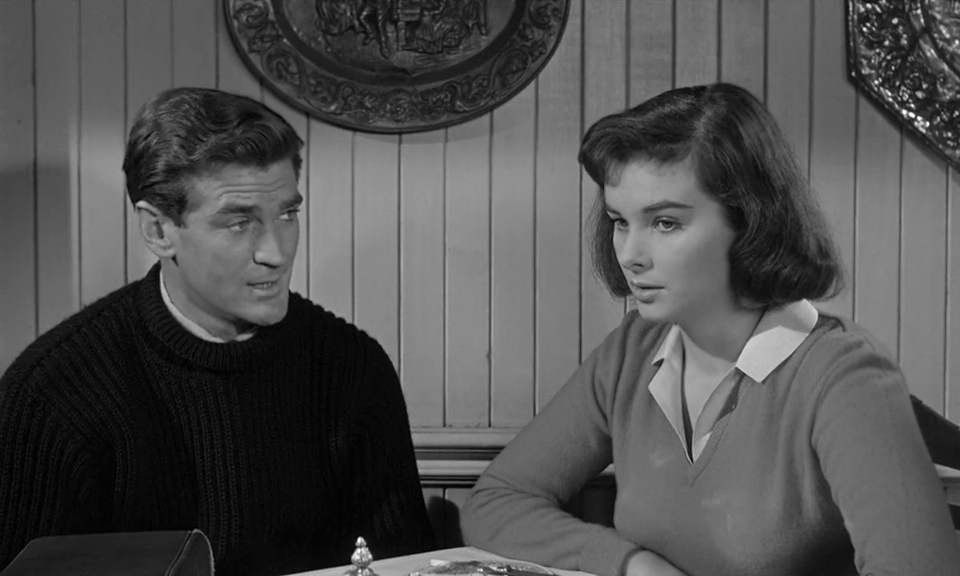
In looking over my movie books I discovered that this film I have watched twice now is not even the version of this play that I was supposed to watch for the list. There was a 1983 version directed by John Schlesinger and which starred Alan Bates and Julie Christie which was the one that earned 5 stars in my book. Copies of that version appear to be even more difficult to come by than the 1958 one however.
Scent of a Woman (1992)
I don't like the title and I don't like the ending. Some of the other parts of it were all right. I had no idea what this was about. I was surprised that prep school was involved, as well as a weekend jaunt to a New York City that was still somewhat recognizable to me. In general I like re-visiting the early 90s, it's a time in my life that I am fond of even if it was otherwise not the most exciting period, and in fact comes off at times as the last dull years before the explosion of technology and globalization that has really marked the adult phase of my life. Al Pacino won the Oscar for this, widely regarded by experts as a lifetime achievement award, as he had not won one previously. I would agree that while his role here was not wholly uninteresting, it was not a great one. I thought overall that this movie was not that bad at the time, but not much of it has stayed with me. There is a somewhat famous scene where Al Pacino's character (who is blind) expertly dances a tango with a young woman of my generation who, it is supposed, had never had the opportunity to dance with anyone skilled in the art before, but the scene is memorable mainly because the lady was so gorgeous (Gabrielle Anwar, born 1970, about a month younger than I am, in Laleham, Surrey, England, which is also the hometown of Matthew Arnold).
One minor pet peeve I had about this movie which is not a big deal unless you happen to live here is that the boarding school is supposed to be in New Hampshire and the story to take place over Thanksgiving weekend, but the weather is about six-seven weeks off, the fall foliage is still in its robust fullness and the students are still walking around in light jackets, which is a season that is over by the middle of October. Thanksgiving is pretty much winter, it's not getting above 40 degress and about a third of the time, including last year, there is already snow on the ground. So after going through 20 Thanksgivings in this climate the picture presented of it on the screen is not congruent with experience.
Medium Cool (1969)
Another one that I had already seen and that then suddenly showed up after languishing for years in the Netflix queue. It had held my interest when I saw it before so I watched it again. It throws a lot of zeitgeisty type things of its time at the viewer, most prominently the manner in which the modern media, especially visual media and television, frames and manipulates news and information and so forth, but also black empowerment, discontent over the Vietnam War, the assassination of Robert F Kennedy, middle class fear of crime and disorder, the war on poverty, drug psychedelic culture. The various issues are presented episodically, though there are a couple of main characters (a television journalist and a pretty young single mother who has moved from Appalachia to a poor part of Chicago) who re-appear throughout the story. While there is I guess some actual footage from the 1968 Democratic convention in Chicago, almost all of the movie is scripted and uses actors. The first time I saw it I was under the impression, I'm not sure why, that more of it was a documentary. It's different. Most of the themes raised in it are things I feel like everyone has been railing on my whole life without ever resolving to any serious person's satisfaction so I'm not sure in the end I took away much from this film even on the second viewing other than a sense of where certain observers thought society was headed in 1968/69.
Schindler's List (1993)
I remember when this came out it was a very big deal, or least to me as a 23 year old it felt like it was, that if one was any kind of regular moviegoer at least you were supposed to see/pay homage to it, the great, or at least colossally successful, Steven Spielberg's acknowledged magnum opus, at some point. The Best Picture Oscar was a foregone conclusion, the only year I can remember where there was not even a contrarian attempt at debate. It placed 9th in the AFI's by-the-book 1998 rankings of the one hundred greatest American movies of all time--the only post-1980 offering to crack the top 50. Yet for all this hoopla I don't remember any of the real giants of either the movie industry or among critics and historians making a passionate case for its being a film of this level of greatness. I did my duty and went to see it in '93 and I thought it was kind of what you knew it was going to be, a catalog of senseless atrocities and murders against the gloomy, dead, black and white backdrop of the Eastern European hellscape. I went with some intelligent friends of mine from school and their comments upon leaving the theater were pretty much of the shrugging "what can you say?" type. While it is very detailed and large in its scope, unless you went in knowing nothing, or at least not very much, about the Holocaust, it didn't feel like there was anything new to really chew over. It follows the Hollywood tendency to keep the focus on the most inarguable manifestations of evil and sensations of terror. Some of the better European films on the subject, such as the 1965 Czechoslovakian Oscar winner The Shop on Main Street, have always struck me as perhaps being a more accurate depiction, at least in some places, of what World War II in occupied Europe was probably actually like, a lot of people who were not especially smart nor brave nor, when their own hides were on the line, inclined to care much about the fate of anyone else, caught up in an enormous world historical event that nothing in their previous lives had begun to prepare them to navigate admirably. And yes, in these other films you get the snarling dogs and relentless searchlights and preening vulgar Nazis, but there was a lot more involved in the whole mess that Hollywood tends to leave out.
So, 26 years later this movie comes up on my very complicated selection system to see again. In the interim I had not thought much about it nor seen it referred to in the kind of movie writing that I read when compared with things like Fight Club and Office Space. Seeing it again, I do have respect for it as a production. It is well-made, even lush in its attention to detail and objects. I noticed more how stupid all of the German characters are depicted as being, and how foolish in believing themselves to be cultured. Even Schindler, who comes out in the end certainly as a kind of hero, is portrayed as somewhat lazy and not on the same level of shrewdness as the smarter Jewish characters. It's a stupid thing to notice I suppose but if you're putting it in the movie fairly unsubtly, especially in this day and age, of course people are going to pick up on it. It does still have something of a flat effect about it--it really is more like a monument in some ways than a work of art--that causes me to resist embracing it as the great movie it wants to be. Those are my main thoughts about it at this time.
I remember there was a guy at our college when this came out, not the smoothest operator, who after plotting for months to ask out a particular girl, when she accepted his request for a date, took her to see this. I don't think they went out again (this guy was not me by the way--my folly would have been taking somebody who was deadly serious and mature to something like a Jerry Lewis movie).
The word "taxi" came up in one of my internet search games that determines some of the things I do, so I ended up having a spate of taxi movies to watch. The next two both garnered "turkey" ratings, which is lower than even one star, in the most of the ratings guides I have, so I was a little disturbed that I kind of liked both of them.
Taxi (2004)
The--I don't want to say all-star but recognizable personality--cast includes Queen Latifah, Jimmy Fallon, Ann-Margret, Gisele Bundchen and someone named Jennifer Esposito whom I did not recognize but who is attractive. Except for Ann-Marget all of these people are around my age. This movie involves a lot of wild driving around New York City, especially in pursuit of Gisele and the gang of supermodel-gun-toting-bank robbers that she is the leader of. The premise is not really the attraction. That, I guess, would be the efforts of Queen Latifah and Jimmy Fallon especially to good-naturedly re-create some of the spirit of the more middle class New York City of my generation's teenage years and young adulthood, which was already waning by the early 2000s. Gisele Bundchen is not the most accomplished actress, though she manages to smirk attractively a few times. In general I am not a big supermodel lover, in the sense of rating them so far above other attractive women. I often think that this is a somewhat artificial distinction promoted by wealthy and powerful men who need others to be convinced that their wives have as many times the value of lesser men's wives as they themselves do in their achievements/financial success, etc, over their lesser fellow creatures. But that's enough to say about this movie.
D.C. Cab (1983)
This one I really was not expecting to last beyond a few minutes, especially when I saw it was directed by Joel Schumacher, whom I have always found to be perhaps the most execrable director in Hollywood who seems to have some idea that he is trying to be good. However the downtrodden characters had a camaraderie that was kind of infectious, maybe because it is something that you almost never see anymore, at least genuinely. It also has a goofy humor that is none the less engaging as well. Now, while it may be Joel Schumacher's personal masterpiece, I am not claiming that it is really a good movie. However, like the other Taxi movie, it reminded me of some things from my youth that I guess I missed without realizing them.
This picture is not from this movie but this girl (Jill Schoelen) was adorable.
Taxicab Confessions--New York City (2006?)
The sleeve this came in gave a date sometime in the 90s but the people in it speak of 9/11 as already several years in the past; at the same time no one has a smart phone yet so it can't be too many years afterwards. This is just a reality show where people riding in a taxi reveal things about themselves. Apparently there were episodes in other cities and so on. Again, there is nothing of greatness in it, but to me it is an interesting slice of life type of thing to look at for an hour because, especially since I have had children, I haven't really done anything else. I haven't gone out at night, I haven't ridden in a taxi in New York, no women have flirted with me, I haven't had conversations with smart people. I've been kind of dead to the greater world. So these sorts of shows which even suggest the possibility of nightlife or adventure hold more fascination for me than they really merit.
Showing posts with label new hampshire. Show all posts
Friday, June 21, 2019
Friday, May 31, 2019
Early Take on the Presidential Primary Candidates
Trying to see where I am, if I am anywhere at all at this point, and making note of any local gossip I may have overheard about any of these present or future celebrity candidates. It is not very serious or well-informed, but of course I live in the first primary state, and the candidates have already been around for months now, and many people are passionate about the upcoming election, so I feel like I should make an attempt to figure out where my mood is. I am still registered as a Democrat, increasingly wary of them as I am, and I will probably vote in that primary.
Wikipedia has the candidates lifted in alphabetical order, so I will do them in that order, with the exception of a few which my mind considers to be paired with another candidate further down the list.
Michael Bennet: I had not heard of this guy until the other day, when he appeared on a local radio program. There is nothing objectionable about him, I guess, but he didn't say anything much different from the other Democrats who have more star appeal so I am not sure what his plan to get more attention is going to be. I don't have a lot of faith (yet) that any of these people can really accomplish what they say they want to accomplish--increasingly these elections are taking on the character of desperate gambles in which the electorate prays it will be lucky in its choice as far as the direction they hope for their lives to take. I don't sense that Michael Bennet is the vessel in which that fortune is to be found. He did make a Don Quixote reference which indicated a possible familiarity with the actual book in his radio interview, but I need more than that to go on.
Biden and Sanders: We are already being warned from some quarters of the respectable press about being ageist, but I don't care, I think being on the doorstep of 80 is too old to be beginning the presidency, especially at this hinge of history which we seem to be struggling to negotiate at present. I think Churchill may have hung on as prime minister until he was 81, but even in his case--and his second stint as P.M. was, after all, something of an anticlimax--Britain in the mid-50s was pretty sclerotic, though possessed of a certain literary charm. The only appeal of Biden, that I can detect, is that he has been close enough to the Presidency to have some idea of how the office is supposed to function, which I guess is important to a lot of people now. Otherwise, I never thought he was particularly smart even when he was younger, politically he's a fossil, it's not clear to me that the struggles of younger people, which at this point includes anyone under 45 or 50, which is going to be a major issue at least underlying this election, is even on his radar. I suspect his high poll numbers are a smokescreen, that people are marking or giving out his name to the pollsters because they haven't figured out who they really like yet.
While I like Bernie Sanders's public persona better than almost any other politician on the contemporary scene (which isn't hard), I think he's a more divisive figure within the Democratic ranks than is widely acknowledged. The more diehard of the Hillary people, who are still numerous (and whose intractability when it comes to hearing any disparaging words with regard to their champion even now is I think a problem) hate him, not perhaps as much as Donald Trump in substance, but probably more in consequence. Of course we are assured constantly that any one of his pet policies if adopted would almost instantaneously destroy the country, though attempting to gauge which aspects of this catastrophe the naysayers actually are worried about is a telling exercise, which is why his supposedly terrible ideas can still get traction with the electorate, because it is far from clear that anyone representing mainstream power is dealing with them on the level. But I can't see him winning anyway, and I'll be surprised if he retains his following in the face of other at least potentially intriguing younger candidates.
Cory Booker: I haven't really figured out what his angle is going to be yet, at least in New Hampshire, where I don't expect there is a lot of enthusiasm for slavery reparations, though I could be wrong. His campaign actually called my phone regarding an event, though they were looking for my wife. When they found they had gotten me, they said sorry and hung up. Hey, I'm a registered Democrat, can't I come to your event too? Seriously, the last campaign that got me when they thought they were getting someone else and actually asked me questions and invited me to something was Bill Bradley's in 2000. I was severely chastened in the last election by one of Hillary Clinton's young workers who got me when they were (again) trying to reach my wife, whose participation in this process seems to be much more coveted than mine is. She was however occupied with something at the time of this call and didn't wish to come to the phone. I told the person calling that my wife was busy, but assured her that she was all in for Hillary, etc, apparently in an overly paternalistic voice, as the volunteer(?) proceeded to snarl at me, "I think your wife can speak for herself."
I have been hearing about Cory Booker as a potential future president since I was in college, and I thought when he was still in college, though perhaps he was in law school by that point. There was a story in the newspaper about how Bill Clinton had personally contacted Booker, having identified him as one of the most promising young men in the country, to encourage him to consider getting involved in Democratic politics. My takeaway from the article at the time was of course, "Hey, why isn't Bill Clinton calling me?"
Steve Bullock: I haven't heard of him. Governor of Montana apparently. When I lived in the D.C. area I knew a girl who was the daughter of a congressman from Montana. She was like half a Gen-X grunge person, half one of the sisters from the Waltons. She was cute.
Mayor Pete and Andrew Yang: Representatives of the under-45 meritocratic class. I find both of these guys kind of chilling, since in spite of their best efforts to be empathetic and inclusive, they clearly consider the mass of the population to be so limited due to their lack of intellectual and other useful talent as to be practically retarded, such that they will require more aggressive tending and managing going forward. Yang is the really scary one to me since he is so persuaded of the inevitability of the future as envisioned by the technology oligarchs that he allows for no alternative possibility or rival faction that those currently in ascendance would ever need to take seriously, and it seems like a decent number of people who at least consider themselves to be coldly rational and unsentimental agree with him. Now I do not think he will move much beyond the 3% or so he is polling at now because his message is not inspiring in the tradition of American political heroes like John F. Kennedy or Franklin Roosevelt (to say the least), who, whatever one might say about them, had a genius for making their supporters feel like they had a significant and even exciting part to play in making both the present and future life of the country, which is the complete opposite of Yang's core message that at least half the population is about to become totally redundant without any recourse or hope of contributing, while the technocrats and the hyper cognitive elite continue to rule and amass enormous fortunes completely unchallenged. Personally I still don't think the ruling class could get off that easily, without any unpleasantness, forever if these sorts of blows keep raining down especially upon the former middling orders, though I suppose it is possible that they have amassed enough high-tech weaponry to deploy remotely against discontents without needing the support of a human police force or military that resistance really is futile. These are still proud people, some of them, the provincial old Americans, even if you think this is impossible because they haven't got anything to be proud of. Dismissing them too off-handedly and humiliating them too much I think is a dangerous game.
I overheard some old ladies at my church who had gone to see Mayor Pete in person gushing about how--I can't remember now whether the exact word they used was "wonderful" or "fantastic"--he was. Perhaps I am just jealous of his relentless brilliance, but something about this guy smells just a little phony. Maybe all of the stories about his language prowess are real, and he is a prodigiously gifted linguist, though most of the testimonials raving about him do not seem to be coming from quarters who would be able to tell. The one that set off alarm bells with me was the story of how he happened to be passing though an emergency room where a family of bewildered refugees with a sick three old were waiting, unable to communicate effectively with anyone on the hospital staff, and Mayor Pete with his Arabic ability was able to step in and comfort the child and effectively set the process of care in motion. Obviously I cannot disprove the story, and I know nothing about the situation in Indiana or wherever this took place, but I do work in a hospital and in my state there are regulations regarding who is qualified to serve as an interpreter in a medical setting and so forth, and interpreting is considered a good source of employment for immigrants who might otherwise struggle to find professional work. Also cultural sensitivity in the healthcare setting, generally not considered a strong suit of white Americans especially, is currently a big issue throughout the medical field. So it strikes me as incongruous that a white guy passing through the ER would be able to interject himself into this situation so readily. However, he was the mayor, and he apparently radiates a kind of genius, which I have not really paid enough attention to to pick up on yet, so perhaps the usual rules did not apply in the case. But if Mayor Pete hangs around in the race I'm sure I will come back to him...
Julian Castro: I have heard of him, though unfortunately mostly on alt-rightish sites which consider his role to be comic relief. That said, I have not read anything else about him that is able to serve as an effective counterweight to this impression.
John Delaney: I don't know anything about him.
Tulsi Gabbard: I've come across a few things about her in passing that sounded interesting, though I have not done any real research on her. I assume that if she hangs around in the election and says more interesting things that she will at least make it onto my finalists list, since there is nothing about her that I am aware of yet that is a big turn-off.
Kirsten Gillibrand: Superficial impression: she is tall, icy, blonde, and her base is affluent women around my age who drink wine and went into such deep depressions when Trump was elected that they absent-mindedly crashed their cars into houses and didn't talk to their husbands for months. I'm actually interested in this demographic, though the candidate doesn't seem to be getting much traction thus far. Her proposals seem the dippiest of the bunch that I have encountered as well.
Mike Gravel: This guy has run before, multiple times. He got 91 votes in the primary here in 2008. The internet says he is 89 years.
Kamala Harris: Seemingly the choice of at least some segment of the Establishment, she is not, coming in, a well-known figure in New Hampshire, or in the northeast generally I think. The main reputation she brings is that she is a strange combination of pro-corporate and strongly pro-immigrant to the extent that she identifies more with this population than with the old Americans. She is also coming out of California whose politics over the last 20 years look, from afar, to have resulted in disastrous, bordering on apocalyptic, outcomes. That's going to be a lot for her to overcome here, at least, I think, unless people just don't care about these things and determine that she is somehow what is needed at the moment.
John Hickenlooper and Jay Inslee: Total blanks on these guys.
Amy Klobuchar: Here is what I know about Amy Klobuchar: she has been accused of being verbally abusive to people who work for her, she was a childhood fan of Fran Tarkenton and the 1970s Minnesota Vikings, and there is a guy on my Facebook page who thinks she is the best candidate (along with Swalwell) to actually defeat Trump and run a serious, mature White House that accomplishes something positive for the American population. The verbal abuse business I really shouldn't care about, and it may well have been exaggerated or was in no degree different from how any of these other people treat their staffs. However the fact that it was one of the first things that came out without a countervailing image (as yet) that is equally vivid might be difficult for her to overcome, unless a not wholly aboveboard source and motivation for the story coming out can be, or has been, identified. Also I am bitter because I lack the capacity to deal forcefully with anyone myself, and I am always resentful of having to submit to or at least quietly endure people who can.
Wayne Messam: Who? This guy has the name of a quality control coach on a football team.
Seth Moulton: This guy sounds like the kid you went to high school with who didn't seem like he was all that much smarter than you were but evidently was.
Beto O'Rourke: I like what I've seen of his wife, I will give him that. Normal, attractive married couples in their 40s have become something of an exoticism, apparently. The circumstance of their being billionaires is kind of strange, since outwardly at least they don't appear to be preternaturally hard-driving or ambitious or desirous of re-organizing or correcting society. He has raised a lot of money. Who wants him and why? Why am I supposed to like/vote for this guy? I feel like he is not going to go away, that he is going to be buoyed up insidiously and people subliminally confused into thinking they ought to consider voting for him.
Tim Ryan: Has a similar name to a number of other people with whom I am more familiar. I am not familiar with him at all.
Eric Swalwell: As I said above, I have a Facebook friend who is a fan of this guy. My problem, and I suspect that of many current voters, is that the suggestion that someone is "competent" sets off alarm bells. Competent at what? I associate the word with having the capacity to frustrate and stifle the ability of the middling type of people to thrive and live at home in the world, and perhaps these people should be stifled, but since I seem to be one of them the competence is not reassuring. I should really look up his program and see if there is anything interesting in it.
Elizabeth Warren: I don't dislike Elizabeth Warren. She is the only person in the field who genuinely seems to care about addressing some of the difficulties that the present system wreaks on families with children--even the fathers!--which obviously would be important to me. She also still comes off as not really being of the 'ruling class', even though she has obviously achieved some degree of acceptance within it. It is not clear whether she has any powerful allies on her economic issues.
The Republicans seem determined to make an issue of her claiming to have been Native American despite her only being (apparently) genetically 1/1024, native blood, but I don't think most people care about that particular issue. On the contrary, for most people (rightly or wrongly) I think it highlights how ludicrous many of the avenues for advancement in the country have become for sort of regular middle class white people. Elizabeth Warren was clearly perfectly capable of succeeding at Harvard and using that as a springboard to even greater prominence and achievement, but to get a foot in the door, apparently, she had to claim to be a Native American, which in her case was about the least significant thing about her. I think people have moved beyond the stage of being angry about that sort of thing and are increasingly wondering how they can possibly work the system to benefit themselves a little.
Marianne Williamson: I seriously thought this was Marilynne Robinson the celebrated author. It is not though.
(Late Entry) Bill de Blasio: I assumed this must be a joke since he has managed to pull off the rare feat in this age of bi-partisan unpopularity among his own constituency. I cannot see any substantial part of America being interested in what he is selling right now...
Of course this is a dashed off post...I will revisit some of these people if anything more comes to me about them.
Wikipedia has the candidates lifted in alphabetical order, so I will do them in that order, with the exception of a few which my mind considers to be paired with another candidate further down the list.
Michael Bennet: I had not heard of this guy until the other day, when he appeared on a local radio program. There is nothing objectionable about him, I guess, but he didn't say anything much different from the other Democrats who have more star appeal so I am not sure what his plan to get more attention is going to be. I don't have a lot of faith (yet) that any of these people can really accomplish what they say they want to accomplish--increasingly these elections are taking on the character of desperate gambles in which the electorate prays it will be lucky in its choice as far as the direction they hope for their lives to take. I don't sense that Michael Bennet is the vessel in which that fortune is to be found. He did make a Don Quixote reference which indicated a possible familiarity with the actual book in his radio interview, but I need more than that to go on.
Biden and Sanders: We are already being warned from some quarters of the respectable press about being ageist, but I don't care, I think being on the doorstep of 80 is too old to be beginning the presidency, especially at this hinge of history which we seem to be struggling to negotiate at present. I think Churchill may have hung on as prime minister until he was 81, but even in his case--and his second stint as P.M. was, after all, something of an anticlimax--Britain in the mid-50s was pretty sclerotic, though possessed of a certain literary charm. The only appeal of Biden, that I can detect, is that he has been close enough to the Presidency to have some idea of how the office is supposed to function, which I guess is important to a lot of people now. Otherwise, I never thought he was particularly smart even when he was younger, politically he's a fossil, it's not clear to me that the struggles of younger people, which at this point includes anyone under 45 or 50, which is going to be a major issue at least underlying this election, is even on his radar. I suspect his high poll numbers are a smokescreen, that people are marking or giving out his name to the pollsters because they haven't figured out who they really like yet.
While I like Bernie Sanders's public persona better than almost any other politician on the contemporary scene (which isn't hard), I think he's a more divisive figure within the Democratic ranks than is widely acknowledged. The more diehard of the Hillary people, who are still numerous (and whose intractability when it comes to hearing any disparaging words with regard to their champion even now is I think a problem) hate him, not perhaps as much as Donald Trump in substance, but probably more in consequence. Of course we are assured constantly that any one of his pet policies if adopted would almost instantaneously destroy the country, though attempting to gauge which aspects of this catastrophe the naysayers actually are worried about is a telling exercise, which is why his supposedly terrible ideas can still get traction with the electorate, because it is far from clear that anyone representing mainstream power is dealing with them on the level. But I can't see him winning anyway, and I'll be surprised if he retains his following in the face of other at least potentially intriguing younger candidates.
Cory Booker: I haven't really figured out what his angle is going to be yet, at least in New Hampshire, where I don't expect there is a lot of enthusiasm for slavery reparations, though I could be wrong. His campaign actually called my phone regarding an event, though they were looking for my wife. When they found they had gotten me, they said sorry and hung up. Hey, I'm a registered Democrat, can't I come to your event too? Seriously, the last campaign that got me when they thought they were getting someone else and actually asked me questions and invited me to something was Bill Bradley's in 2000. I was severely chastened in the last election by one of Hillary Clinton's young workers who got me when they were (again) trying to reach my wife, whose participation in this process seems to be much more coveted than mine is. She was however occupied with something at the time of this call and didn't wish to come to the phone. I told the person calling that my wife was busy, but assured her that she was all in for Hillary, etc, apparently in an overly paternalistic voice, as the volunteer(?) proceeded to snarl at me, "I think your wife can speak for herself."
I have been hearing about Cory Booker as a potential future president since I was in college, and I thought when he was still in college, though perhaps he was in law school by that point. There was a story in the newspaper about how Bill Clinton had personally contacted Booker, having identified him as one of the most promising young men in the country, to encourage him to consider getting involved in Democratic politics. My takeaway from the article at the time was of course, "Hey, why isn't Bill Clinton calling me?"
Steve Bullock: I haven't heard of him. Governor of Montana apparently. When I lived in the D.C. area I knew a girl who was the daughter of a congressman from Montana. She was like half a Gen-X grunge person, half one of the sisters from the Waltons. She was cute.
Mayor Pete and Andrew Yang: Representatives of the under-45 meritocratic class. I find both of these guys kind of chilling, since in spite of their best efforts to be empathetic and inclusive, they clearly consider the mass of the population to be so limited due to their lack of intellectual and other useful talent as to be practically retarded, such that they will require more aggressive tending and managing going forward. Yang is the really scary one to me since he is so persuaded of the inevitability of the future as envisioned by the technology oligarchs that he allows for no alternative possibility or rival faction that those currently in ascendance would ever need to take seriously, and it seems like a decent number of people who at least consider themselves to be coldly rational and unsentimental agree with him. Now I do not think he will move much beyond the 3% or so he is polling at now because his message is not inspiring in the tradition of American political heroes like John F. Kennedy or Franklin Roosevelt (to say the least), who, whatever one might say about them, had a genius for making their supporters feel like they had a significant and even exciting part to play in making both the present and future life of the country, which is the complete opposite of Yang's core message that at least half the population is about to become totally redundant without any recourse or hope of contributing, while the technocrats and the hyper cognitive elite continue to rule and amass enormous fortunes completely unchallenged. Personally I still don't think the ruling class could get off that easily, without any unpleasantness, forever if these sorts of blows keep raining down especially upon the former middling orders, though I suppose it is possible that they have amassed enough high-tech weaponry to deploy remotely against discontents without needing the support of a human police force or military that resistance really is futile. These are still proud people, some of them, the provincial old Americans, even if you think this is impossible because they haven't got anything to be proud of. Dismissing them too off-handedly and humiliating them too much I think is a dangerous game.
I overheard some old ladies at my church who had gone to see Mayor Pete in person gushing about how--I can't remember now whether the exact word they used was "wonderful" or "fantastic"--he was. Perhaps I am just jealous of his relentless brilliance, but something about this guy smells just a little phony. Maybe all of the stories about his language prowess are real, and he is a prodigiously gifted linguist, though most of the testimonials raving about him do not seem to be coming from quarters who would be able to tell. The one that set off alarm bells with me was the story of how he happened to be passing though an emergency room where a family of bewildered refugees with a sick three old were waiting, unable to communicate effectively with anyone on the hospital staff, and Mayor Pete with his Arabic ability was able to step in and comfort the child and effectively set the process of care in motion. Obviously I cannot disprove the story, and I know nothing about the situation in Indiana or wherever this took place, but I do work in a hospital and in my state there are regulations regarding who is qualified to serve as an interpreter in a medical setting and so forth, and interpreting is considered a good source of employment for immigrants who might otherwise struggle to find professional work. Also cultural sensitivity in the healthcare setting, generally not considered a strong suit of white Americans especially, is currently a big issue throughout the medical field. So it strikes me as incongruous that a white guy passing through the ER would be able to interject himself into this situation so readily. However, he was the mayor, and he apparently radiates a kind of genius, which I have not really paid enough attention to to pick up on yet, so perhaps the usual rules did not apply in the case. But if Mayor Pete hangs around in the race I'm sure I will come back to him...
Julian Castro: I have heard of him, though unfortunately mostly on alt-rightish sites which consider his role to be comic relief. That said, I have not read anything else about him that is able to serve as an effective counterweight to this impression.
John Delaney: I don't know anything about him.
Tulsi Gabbard: I've come across a few things about her in passing that sounded interesting, though I have not done any real research on her. I assume that if she hangs around in the election and says more interesting things that she will at least make it onto my finalists list, since there is nothing about her that I am aware of yet that is a big turn-off.
Kirsten Gillibrand: Superficial impression: she is tall, icy, blonde, and her base is affluent women around my age who drink wine and went into such deep depressions when Trump was elected that they absent-mindedly crashed their cars into houses and didn't talk to their husbands for months. I'm actually interested in this demographic, though the candidate doesn't seem to be getting much traction thus far. Her proposals seem the dippiest of the bunch that I have encountered as well.
Mike Gravel: This guy has run before, multiple times. He got 91 votes in the primary here in 2008. The internet says he is 89 years.
Kamala Harris: Seemingly the choice of at least some segment of the Establishment, she is not, coming in, a well-known figure in New Hampshire, or in the northeast generally I think. The main reputation she brings is that she is a strange combination of pro-corporate and strongly pro-immigrant to the extent that she identifies more with this population than with the old Americans. She is also coming out of California whose politics over the last 20 years look, from afar, to have resulted in disastrous, bordering on apocalyptic, outcomes. That's going to be a lot for her to overcome here, at least, I think, unless people just don't care about these things and determine that she is somehow what is needed at the moment.
John Hickenlooper and Jay Inslee: Total blanks on these guys.
Amy Klobuchar: Here is what I know about Amy Klobuchar: she has been accused of being verbally abusive to people who work for her, she was a childhood fan of Fran Tarkenton and the 1970s Minnesota Vikings, and there is a guy on my Facebook page who thinks she is the best candidate (along with Swalwell) to actually defeat Trump and run a serious, mature White House that accomplishes something positive for the American population. The verbal abuse business I really shouldn't care about, and it may well have been exaggerated or was in no degree different from how any of these other people treat their staffs. However the fact that it was one of the first things that came out without a countervailing image (as yet) that is equally vivid might be difficult for her to overcome, unless a not wholly aboveboard source and motivation for the story coming out can be, or has been, identified. Also I am bitter because I lack the capacity to deal forcefully with anyone myself, and I am always resentful of having to submit to or at least quietly endure people who can.
Wayne Messam: Who? This guy has the name of a quality control coach on a football team.
Seth Moulton: This guy sounds like the kid you went to high school with who didn't seem like he was all that much smarter than you were but evidently was.
Beto O'Rourke: I like what I've seen of his wife, I will give him that. Normal, attractive married couples in their 40s have become something of an exoticism, apparently. The circumstance of their being billionaires is kind of strange, since outwardly at least they don't appear to be preternaturally hard-driving or ambitious or desirous of re-organizing or correcting society. He has raised a lot of money. Who wants him and why? Why am I supposed to like/vote for this guy? I feel like he is not going to go away, that he is going to be buoyed up insidiously and people subliminally confused into thinking they ought to consider voting for him.
Tim Ryan: Has a similar name to a number of other people with whom I am more familiar. I am not familiar with him at all.
Eric Swalwell: As I said above, I have a Facebook friend who is a fan of this guy. My problem, and I suspect that of many current voters, is that the suggestion that someone is "competent" sets off alarm bells. Competent at what? I associate the word with having the capacity to frustrate and stifle the ability of the middling type of people to thrive and live at home in the world, and perhaps these people should be stifled, but since I seem to be one of them the competence is not reassuring. I should really look up his program and see if there is anything interesting in it.
Elizabeth Warren: I don't dislike Elizabeth Warren. She is the only person in the field who genuinely seems to care about addressing some of the difficulties that the present system wreaks on families with children--even the fathers!--which obviously would be important to me. She also still comes off as not really being of the 'ruling class', even though she has obviously achieved some degree of acceptance within it. It is not clear whether she has any powerful allies on her economic issues.
The Republicans seem determined to make an issue of her claiming to have been Native American despite her only being (apparently) genetically 1/1024, native blood, but I don't think most people care about that particular issue. On the contrary, for most people (rightly or wrongly) I think it highlights how ludicrous many of the avenues for advancement in the country have become for sort of regular middle class white people. Elizabeth Warren was clearly perfectly capable of succeeding at Harvard and using that as a springboard to even greater prominence and achievement, but to get a foot in the door, apparently, she had to claim to be a Native American, which in her case was about the least significant thing about her. I think people have moved beyond the stage of being angry about that sort of thing and are increasingly wondering how they can possibly work the system to benefit themselves a little.
Marianne Williamson: I seriously thought this was Marilynne Robinson the celebrated author. It is not though.
(Late Entry) Bill de Blasio: I assumed this must be a joke since he has managed to pull off the rare feat in this age of bi-partisan unpopularity among his own constituency. I cannot see any substantial part of America being interested in what he is selling right now...
Of course this is a dashed off post...I will revisit some of these people if anything more comes to me about them.
Labels:
new hampshire,
politics,
the Modern Educated Classes
Friday, March 22, 2019
On the Disappearance of Toll Booths (and Cash)
I recently returned from my annual driving trip to Florida, which is increasingly almost the only occasion in the year when I am able to get beyond a 100 mile or so radius around my house. The most striking part of this year's trip was how many long familiar toll booths have been removed and replaced with eerie banks of cameras. I had come across these occasionally before, of course, but only one or two on a trip. This time I will probably have $40 or $50 worth of toll bills coming in the mail over the next few weeks which I would just as soon have paid for out of the beautiful billfold of cash I had brought along with me for the purpose, and which I ended up paying out for sodas and pretzels at Wawa and other lesser gas stations along the way instead...
Before expanding upon the toll theme I want to digress onto the subject of carrying around paper money, which even in this modern age I have tried to do as much as possible, though in recent years many circumstances have chipped away at my adherence to this position also. I am fond of reminiscing about my routine in college, when I did not even have an ATM card or any other credit card, but would go to the bank every Friday afternoon and withdraw $25 for the weekend, with no hope of getting any additional funds until Monday. While most weeks this money was depleted by Saturday night, as I ate lunch and dinner in the dining hall on Sunday and in those days always maintained enough of a stash of alcohol so that I was never in danger of having to go a night without it, it was very rare that I encountered any inconvenience from not being able to buy anything on Sunday. Up until recently I have always regularly carried some cash, though many years ago I gave up using it for bigger purchases such as gas and, as my family grew larger, the grocery store. Unfortunately in November the branch of the bank, and its accompanying ATM machine, that was located around the corner from my house closed, and the nearest machine where I can withdraw money now without paying fees is 6 miles away. The consequence of this has been that, somewhat against my will, I don't have cash on me as frequently as I used to, though I still need some from time to time, as my children often need snack money or $4 for a field trip or other such small sums which it is irritating to have to write a check or pull out a bank card for every time. But as with the smart phone, which I could tell was evil and held out against getting until 2015, circumstances seem to be moving in a direction where trying to have paper money about one at all times, at least for the harried person with children and too many things to do in the course of a day, is going to get increasingly impractical and inconvenient.
Anyway, this business about the tolls I am finding more and more disturbing the more I reflect upon it. The awareness of how constantly you are being tracked alone is enough to sap you of your will to go on living. In New Hampshire, where I live, there are 4 toll areas in the state, though I only ever encounter two of them, they cost $1 (there was much gnashing of teeth when this rate was raised from 75 cents about 10 years ago), and for the moment at least they all still have a couple of booths at the far end manned by actual human beings to collect cash. Neighboring Maine still has human toll collectors on their turnpike as well, and as these are the toll roads which I mainly frequent at this point in my life, I have been oblivious to what has been going on elsewhere. Massachusetts, perhaps prodded by a notorious scandal earlier in this decade where an unscrupulous toll worker had managed to scam enough overtime that he brought home $70,000 (or perhaps it was $90,000) in a single year, seems to have eliminated all of its former toll booths both in Boston, where it does have obvious benefits from a traffic standpoint, and along the turnpike. New York City doesn't have toll booths for at least the Triborough and Verrazano Narrows bridges anymore either, though upstate (I came home by a different route) the New York Thruway is still running on the pay-by-the-distance-travelled system and still has a toll-taker, and I was most delighted to encounter the toll booths still running on the Hamilton Fish Bridge on I-84, though who knows for how long (as an aside, in the area of 19th century New York politicians, I've never able to keep straight Hamilton Fish from Rufus King. And then you can also throw in William Rufus Devane King, though he was not actually from New York). (ed--and then perhaps the Bridge is really named after Hamilton Fish II, Hamilton Fish III, or Hamilton Fish IV, all of whom served in Congress representing New York. There is also a Hamilton Fish V, but he is still alive and works in publishing. It appears that he only has 2 daughters).
New Jersey, both on the turnpike and on the Garden State Parkway, which I took on the way home, have stuck with the old toll booth ways, though the Turnpike, which used to be about $3 from New York to Philadelphia, is more like $10 now. The bridge over the Delaware River connecting the New Jersey Turnpike with the Pennsylvania Turnpike, which was previously always included in the price of the latter, is now a separate toll--for how much I don't know, since the once somewhat dignified entry into my home state is now marked by the sinister flashing of a bank of cameras, and I haven't received that particular bill in the mail yet. The PA turnpike you can still pay for with cash. Ever since I started at St John's almost 30 years ago I have almost always made the trip from Philadelphia by getting off of I-95 in Delaware and taking US 301 down through the eastern shore of Maryland to the Bay Bridge, which is an uncrowded and pleasant way to get there, as that particular road and the farmland through which it mostly passes is old-fashioned and looks as if unchanged since the 1950s at least. There had never been a toll on it in all of these years until the state of Delaware, through which it runs for about 10 miles, decided apparently in the past year to divert the old road onto a newly built section entered through an arch of flashing cameras and charging $4 for the privilege. What a greedy little state they are! The one consolation was that once you get into Maryland the road again is the same sleepy old road it has always been. For now. The Bay Bridge still has a toll booth too, for the record.
In the course of writing about these roads I remembered a by today's standards quite bad thing I did when I was younger that I had completely forgotten about for more than 20 years, and that would be, if not impossible, difficult to pull off today unless you were very aware of where all these cameras were, though even in that case there are other ways to track you, GPS records or what have you. When I was in college, this would be around 1993 or '94, whenever there was a holiday or vacation during the school year, as I didn't care to go home for more than a couple days I would often arrange to squat in the house or apartment of people I knew during some part of the break. As I would often be alone and did not require a great deal of maintenance in those days, food and drink for one person who slept 12 hours a day being cheap enough, I enjoyed these occasions, read any number of books in a leisurely manner, went out in the evenings and in general led the kind of life I would have least indulged in more of if it had been the gods' pleasure to make me born to wealth. Over one Christmas holiday while staying in such a situation, I quite by accident stumbled upon the car keys that one of the regular inmates of the house, who lived somewhere too far to drive to and had flown home, had left behind, and, somewhat uncharacteristically for me, the temptation was too great to resist and I took the car on a little overnight trip which involved paying many tolls and driving into and parking in a major city which was a more hazardous undertaking at that time than it would be now. However I made it back and I must have even gotten the car back in the same parking spot, or one close enough to it, because the owner, who was not a particular friend of mine (I was more friendly with one of the other residents of the house) does not seem to have ever had any suspicion of my journey.
As I noted above, in the time elapsed while this post was written, a couple of the bills have already come in, from Massachusetts and New York, and it appears that the process is not going to come off without a good deal of the chicanery that has been creeping, or perhaps re-asserting, itself into American life over the past couple of decades. The Massachusetts bill only includes my Turnpike toll on the way down, which was 90 cents. However they are also charging 60 cents for a completely bogus "invoice fee"--you are the ones who ripped out the toll booths and made these mailings necessary, I believe, though I suppose they will argue that I could have an E-Z Pass account set up, though as I do not drive on a toll road more than once or twice a month why should I have to do that? Oh, and there is a "Previous balance" of $22.40, what for is not explained. I will note here that I have paid every toll by mail bill I have gotten in good faith (though not the invoice fees), if not always on time, so either they are cashing my checks and failing to record this in their books, or there is some kind of accrual of 'late fees' or some such nonsense that exist because it is no longer possible to pay on the spot and I have to send out a check for 90 cents (sorry, paying online involves filling out too many personal questions). In short, I won't be paying the previous balance. The New York bill is actually slightly less offensive, though they are claiming that I have an overdue balance of $8.50, which I either never received an invoice for or I have paid and they have neglected to note this in their system. I did rack up $26.75 worth of actual tolls there, headed by a whopping $17 for the Verrazano Narrows Bridge, which I took because the George Washington Bridge was, as usual, backed up, even though it was around midnight when I passed through. When you throw in the $8.50 for the Triborough Bridge, it was an expensive detour. On the other hand, this is the extent of my experience of New York City for about five years past now, so I have to take what I can get. The radio stations are still free when you get close enough to town, at least.
Before expanding upon the toll theme I want to digress onto the subject of carrying around paper money, which even in this modern age I have tried to do as much as possible, though in recent years many circumstances have chipped away at my adherence to this position also. I am fond of reminiscing about my routine in college, when I did not even have an ATM card or any other credit card, but would go to the bank every Friday afternoon and withdraw $25 for the weekend, with no hope of getting any additional funds until Monday. While most weeks this money was depleted by Saturday night, as I ate lunch and dinner in the dining hall on Sunday and in those days always maintained enough of a stash of alcohol so that I was never in danger of having to go a night without it, it was very rare that I encountered any inconvenience from not being able to buy anything on Sunday. Up until recently I have always regularly carried some cash, though many years ago I gave up using it for bigger purchases such as gas and, as my family grew larger, the grocery store. Unfortunately in November the branch of the bank, and its accompanying ATM machine, that was located around the corner from my house closed, and the nearest machine where I can withdraw money now without paying fees is 6 miles away. The consequence of this has been that, somewhat against my will, I don't have cash on me as frequently as I used to, though I still need some from time to time, as my children often need snack money or $4 for a field trip or other such small sums which it is irritating to have to write a check or pull out a bank card for every time. But as with the smart phone, which I could tell was evil and held out against getting until 2015, circumstances seem to be moving in a direction where trying to have paper money about one at all times, at least for the harried person with children and too many things to do in the course of a day, is going to get increasingly impractical and inconvenient.
Anyway, this business about the tolls I am finding more and more disturbing the more I reflect upon it. The awareness of how constantly you are being tracked alone is enough to sap you of your will to go on living. In New Hampshire, where I live, there are 4 toll areas in the state, though I only ever encounter two of them, they cost $1 (there was much gnashing of teeth when this rate was raised from 75 cents about 10 years ago), and for the moment at least they all still have a couple of booths at the far end manned by actual human beings to collect cash. Neighboring Maine still has human toll collectors on their turnpike as well, and as these are the toll roads which I mainly frequent at this point in my life, I have been oblivious to what has been going on elsewhere. Massachusetts, perhaps prodded by a notorious scandal earlier in this decade where an unscrupulous toll worker had managed to scam enough overtime that he brought home $70,000 (or perhaps it was $90,000) in a single year, seems to have eliminated all of its former toll booths both in Boston, where it does have obvious benefits from a traffic standpoint, and along the turnpike. New York City doesn't have toll booths for at least the Triborough and Verrazano Narrows bridges anymore either, though upstate (I came home by a different route) the New York Thruway is still running on the pay-by-the-distance-travelled system and still has a toll-taker, and I was most delighted to encounter the toll booths still running on the Hamilton Fish Bridge on I-84, though who knows for how long (as an aside, in the area of 19th century New York politicians, I've never able to keep straight Hamilton Fish from Rufus King. And then you can also throw in William Rufus Devane King, though he was not actually from New York). (ed--and then perhaps the Bridge is really named after Hamilton Fish II, Hamilton Fish III, or Hamilton Fish IV, all of whom served in Congress representing New York. There is also a Hamilton Fish V, but he is still alive and works in publishing. It appears that he only has 2 daughters).
New Jersey, both on the turnpike and on the Garden State Parkway, which I took on the way home, have stuck with the old toll booth ways, though the Turnpike, which used to be about $3 from New York to Philadelphia, is more like $10 now. The bridge over the Delaware River connecting the New Jersey Turnpike with the Pennsylvania Turnpike, which was previously always included in the price of the latter, is now a separate toll--for how much I don't know, since the once somewhat dignified entry into my home state is now marked by the sinister flashing of a bank of cameras, and I haven't received that particular bill in the mail yet. The PA turnpike you can still pay for with cash. Ever since I started at St John's almost 30 years ago I have almost always made the trip from Philadelphia by getting off of I-95 in Delaware and taking US 301 down through the eastern shore of Maryland to the Bay Bridge, which is an uncrowded and pleasant way to get there, as that particular road and the farmland through which it mostly passes is old-fashioned and looks as if unchanged since the 1950s at least. There had never been a toll on it in all of these years until the state of Delaware, through which it runs for about 10 miles, decided apparently in the past year to divert the old road onto a newly built section entered through an arch of flashing cameras and charging $4 for the privilege. What a greedy little state they are! The one consolation was that once you get into Maryland the road again is the same sleepy old road it has always been. For now. The Bay Bridge still has a toll booth too, for the record.
In the course of writing about these roads I remembered a by today's standards quite bad thing I did when I was younger that I had completely forgotten about for more than 20 years, and that would be, if not impossible, difficult to pull off today unless you were very aware of where all these cameras were, though even in that case there are other ways to track you, GPS records or what have you. When I was in college, this would be around 1993 or '94, whenever there was a holiday or vacation during the school year, as I didn't care to go home for more than a couple days I would often arrange to squat in the house or apartment of people I knew during some part of the break. As I would often be alone and did not require a great deal of maintenance in those days, food and drink for one person who slept 12 hours a day being cheap enough, I enjoyed these occasions, read any number of books in a leisurely manner, went out in the evenings and in general led the kind of life I would have least indulged in more of if it had been the gods' pleasure to make me born to wealth. Over one Christmas holiday while staying in such a situation, I quite by accident stumbled upon the car keys that one of the regular inmates of the house, who lived somewhere too far to drive to and had flown home, had left behind, and, somewhat uncharacteristically for me, the temptation was too great to resist and I took the car on a little overnight trip which involved paying many tolls and driving into and parking in a major city which was a more hazardous undertaking at that time than it would be now. However I made it back and I must have even gotten the car back in the same parking spot, or one close enough to it, because the owner, who was not a particular friend of mine (I was more friendly with one of the other residents of the house) does not seem to have ever had any suspicion of my journey.
As I noted above, in the time elapsed while this post was written, a couple of the bills have already come in, from Massachusetts and New York, and it appears that the process is not going to come off without a good deal of the chicanery that has been creeping, or perhaps re-asserting, itself into American life over the past couple of decades. The Massachusetts bill only includes my Turnpike toll on the way down, which was 90 cents. However they are also charging 60 cents for a completely bogus "invoice fee"--you are the ones who ripped out the toll booths and made these mailings necessary, I believe, though I suppose they will argue that I could have an E-Z Pass account set up, though as I do not drive on a toll road more than once or twice a month why should I have to do that? Oh, and there is a "Previous balance" of $22.40, what for is not explained. I will note here that I have paid every toll by mail bill I have gotten in good faith (though not the invoice fees), if not always on time, so either they are cashing my checks and failing to record this in their books, or there is some kind of accrual of 'late fees' or some such nonsense that exist because it is no longer possible to pay on the spot and I have to send out a check for 90 cents (sorry, paying online involves filling out too many personal questions). In short, I won't be paying the previous balance. The New York bill is actually slightly less offensive, though they are claiming that I have an overdue balance of $8.50, which I either never received an invoice for or I have paid and they have neglected to note this in their system. I did rack up $26.75 worth of actual tolls there, headed by a whopping $17 for the Verrazano Narrows Bridge, which I took because the George Washington Bridge was, as usual, backed up, even though it was around midnight when I passed through. When you throw in the $8.50 for the Triborough Bridge, it was an expensive detour. On the other hand, this is the extent of my experience of New York City for about five years past now, so I have to take what I can get. The radio stations are still free when you get close enough to town, at least.
Friday, August 31, 2018
New Hampshire Girl of the Week
I don't usually do this sort of thing, and in the end I am not going to link to the page now, but the germ of this post came when I was doing one of my games where I do a search using random words looking for a place to go to lunch and a picture of a somewhat tough-looking but attractive woman, who is of a type that one frequently encounters in these parts, came up. So I clicked on the story and, sure enough, she lived about twenty miles from me in one of the lake towns that I end up in once a month or so. As it happened, she was being featured on a site that was mocking people for having frivolous GoFundMe campaigns. While this aspect was more sad than anything else, I was drawn in by the extensive documentation of how her life, and the lives of seemingly everyone she associated with, were such absolute train wrecks. Children by multiple fathers, drug arrests, domestic violence arrests, rehab, no one having a job, social workers taking the children away, etc, etc. This is not atypical of a large swathe of the population in many of the towns around here, though they are not, or at least don't seem to me to be, as hopelessly dreary and depressing as the hollowed out towns of the rust belt. They are minor tourist centers and have a lot of vacation homes, though I suppose the year round local population is a little underprivileged; still I do not feel uncomfortable or even particularly out of place going to most places in these towns. Perhaps it is further evidence of how my own expectations for myself, and my conception of the world that I personally inhabit, continue to shrink and shrink. I checked out a travel book on Chicago from the library last week, one of those Insight Guides with glossy bright pictures on every page, not merely of the sights, but of the paneled lobbies of impossibly expensive hotels, the sleek dining rooms of trendy restaurants, and gorgeous retro bars in renovated packing houses. But when am I ever going to have a week, or even four or five days, to go to Chicago and do any of these things? And that is just Chicago, not Spain or Berlin, or heaven forfend, Singapore or Tokyo or Nairobi or Dubai. Within a few years I'll probably be grateful if I can still go to the coastline that's a hour away a couple of times a year.
New Hampshire was featured recently (at the time I started writing this, which was about a month ago) in a New York Times article that got some attention about how the state, or some of its business leaders anyway, are seeking to attract more diverse people--evidently a lot more--to move here, mainly for the sake of the economy, of course, which, while not currently that bad by many measures--highest household income in the country, lowest poverty rate, 2% unemployment, etc--is facing some demographic problems in the coming years, and, perhaps more pressingly does not as currently constituted appear to allow as many opportunities for the ongoing accumulation of the kinds of massive fortunes that are available in other places. Naturally several people here have already commented on this article on various internet platforms, and a few have already gotten in trouble for it, so perhaps it is not really worthwhile for me, with my readership of eight people, or maybe 8 robots for that matter, to risk writing anything that is not in the correct spirit and be exiled to what a commenter on another site referred to as "the gulag of low-wage employment". But seeing as I do not actually have an agenda to push either of my own or on behalf of someone else, what would be the point of just reiterating all of the points on either the good or evil side of the issue that everyone is expected to reiterate once they have established which side they have chosen to be on? I have never persuaded anyone to do anything that I am aware of in the whole of my life, so what is going to happen is largely going to happen in spite of anything I say or do.
In the first place it is inevitable short of dramatic and unpalatable measures that I don't foresee happening that the state is going to grow somewhat more diverse in the coming years. It can scarcely grow less diverse, and there aren't enough younger white people either among the current population or in the pool of potential migrants to replace the older people, almost all of whom are white, who are going to pass on in the next twenty years. To what extent this happens, or how noticeable it is going to be, remains to be seen, obviously. I was surprised to read in one of the local newspapers commenting on the New York Times piece that in the school systems in Manchester and Nashua already something like 45% of the students are minorities. I don't have much occasion to go to Nashua, but I am in Manchester a couple of times a month and as an adult at least I don't get much sense of the presence, yet, of a minority or immigrant population anywhere close to this size, and the character of the city still seems much like it has always been, though admittedly trending older.
As is usual in these kinds of articles, the talent conundrum/shortage that hangs over every discussion involving professional politicians and business interests rears its head. In some ways New Hampshire perhaps would seem to be comparatively well-positioned in the global battle for talent and human capital, apart I suppose from having insufficient numbers, especially of younger people. The violent crime rate I believe is now the lowest of any state and its school test scores are usually in the top three in the country; if it were an independent nation it would rank in the top tier of countries I think, just behind the usual east Asian states and Finland. Of course I have learned over the years that when politicians and businessmen talk about attracting Talent they have something much more spectacular in mind than generally functional Americans of perhaps slightly above the middle rank (such as myself and my children). As with all classes of people who are highly coveted, whether by schools, cities, professions, businesses seeking customers, for the purposes either of increasing/maintaining their wealth/status, or more pitifully, as a desperate ploy for survival, there are not close to being enough of these desired souls to support more than a handful of these communities, since the best sorts tend to like to cluster together in superplaces. I don't pretend to know how competitive New Hampshire can be in this game. I suspect ultimately not very. As a place to live year round, the weather is very rough. I don't mind it, except for March and sometimes April, which psychologically wear on one, and autumn, while beautiful, is effectively over by October 20, which is a bit early--I grew up in the Mid-Atlantic, where Halloween occurs at the height of the beautiful crisp fall weather, but here it is often decidedly cold, not to mention black dark by 5 in the afternoon. The weather in Boston is admittedly dreary as well (which most of the Talent that has had to relocate there complains about endlessly), but it is even worse, or at least colder, here, and the well-known cultural and historic reasons that make Boston an important city do not seem to apply either.
One of the people interviewed for the New York Times article was a social worker who seemed to be advocating for an increase in immigrants who were likely to require a lot of services, improved public transportation options, affordable housing, and the like. Aside from racial issues this in itself would be a major cultural departure for New Hampshire, which even today is less than keen on levying taxes or funding schools or parks or providing services beyond the minimal amount required to maintain a functioning state. It is only within the last few years that we have gotten garbage pick up in my town--before that we had to haul all of our trash and recycling to the city dump ourselves--and even for that we have to put all of the garbage in special bags that cost $2.50 apiece or they won't take them. All of this stinginess heretofore has had the effect of not making the state particularly attractive to needy people. While of course there are a decent number of needy people who are homegrown they really do not overwhelm the schools, hospitals, prisons, etc compared to other places in this country. Whenever I return to my home state of Pennsylvania nowadays, especially when you get out of the nicer parts of the Philadelphia metro area, the roads and towns are increasingly reminiscent of Russia rather than the heartland of industrial age America. It is very sad, for me. It is frequently emphasized in the media that in many of these hollowed out and depopulating towns immigrants are propping up whatever is left in them that bears a resemblance to life, which is fine, though somewhat misleading, as Reading, Hazelton, Wilkes-Barre and their ilk are obviously not the kinds of places that people who are at all educated, or even imagine themselves to be educated, would consider acceptable to live in, being full of residents who are by middle class standards shockingly poor, have shockingly low test scores and employment prospects, and have astoundingly high rates of incarceration among their citizenry. And seemingly more and more of America is becoming like this, with seemingly little prospect of imminent improvement. But perhaps this impression is wrong, and they are not really very different from where I live, which I regard as still somewhat pleasant, generally functional, not yet impossibly expensive and that still has some degree of civic spirit, if not comparative to the 1940s and 50s then at least to similar sized cities in the present day. Perhaps these other formerly, or presently, All-American type cities have not fallen into this dismal state, or perhaps ours has but I have not even realized it because I am not fixated on the right things. Perhaps these changes are inevitable like they say, and they will be more wonderful than anything I could ever have imagined, though I still feel the urge to try to impress on my children that if you have been gifted with any degree of brains, you have got more than ever to make sure you develop them enough to give yourself a life that is tolerable to you, and not live perpetually in an atmosphere of squalor, hopelessness and intellectual torpor, because regardless of all the optimism and cheerleading, there is clearly a lot of that all over the place, and the means of escaping from the totality of it seem to have become more difficult than it used to be. I don't think the children grasp what I am saying at all though, and maybe that is for the good.
New Hampshire was featured recently (at the time I started writing this, which was about a month ago) in a New York Times article that got some attention about how the state, or some of its business leaders anyway, are seeking to attract more diverse people--evidently a lot more--to move here, mainly for the sake of the economy, of course, which, while not currently that bad by many measures--highest household income in the country, lowest poverty rate, 2% unemployment, etc--is facing some demographic problems in the coming years, and, perhaps more pressingly does not as currently constituted appear to allow as many opportunities for the ongoing accumulation of the kinds of massive fortunes that are available in other places. Naturally several people here have already commented on this article on various internet platforms, and a few have already gotten in trouble for it, so perhaps it is not really worthwhile for me, with my readership of eight people, or maybe 8 robots for that matter, to risk writing anything that is not in the correct spirit and be exiled to what a commenter on another site referred to as "the gulag of low-wage employment". But seeing as I do not actually have an agenda to push either of my own or on behalf of someone else, what would be the point of just reiterating all of the points on either the good or evil side of the issue that everyone is expected to reiterate once they have established which side they have chosen to be on? I have never persuaded anyone to do anything that I am aware of in the whole of my life, so what is going to happen is largely going to happen in spite of anything I say or do.
In the first place it is inevitable short of dramatic and unpalatable measures that I don't foresee happening that the state is going to grow somewhat more diverse in the coming years. It can scarcely grow less diverse, and there aren't enough younger white people either among the current population or in the pool of potential migrants to replace the older people, almost all of whom are white, who are going to pass on in the next twenty years. To what extent this happens, or how noticeable it is going to be, remains to be seen, obviously. I was surprised to read in one of the local newspapers commenting on the New York Times piece that in the school systems in Manchester and Nashua already something like 45% of the students are minorities. I don't have much occasion to go to Nashua, but I am in Manchester a couple of times a month and as an adult at least I don't get much sense of the presence, yet, of a minority or immigrant population anywhere close to this size, and the character of the city still seems much like it has always been, though admittedly trending older.
As is usual in these kinds of articles, the talent conundrum/shortage that hangs over every discussion involving professional politicians and business interests rears its head. In some ways New Hampshire perhaps would seem to be comparatively well-positioned in the global battle for talent and human capital, apart I suppose from having insufficient numbers, especially of younger people. The violent crime rate I believe is now the lowest of any state and its school test scores are usually in the top three in the country; if it were an independent nation it would rank in the top tier of countries I think, just behind the usual east Asian states and Finland. Of course I have learned over the years that when politicians and businessmen talk about attracting Talent they have something much more spectacular in mind than generally functional Americans of perhaps slightly above the middle rank (such as myself and my children). As with all classes of people who are highly coveted, whether by schools, cities, professions, businesses seeking customers, for the purposes either of increasing/maintaining their wealth/status, or more pitifully, as a desperate ploy for survival, there are not close to being enough of these desired souls to support more than a handful of these communities, since the best sorts tend to like to cluster together in superplaces. I don't pretend to know how competitive New Hampshire can be in this game. I suspect ultimately not very. As a place to live year round, the weather is very rough. I don't mind it, except for March and sometimes April, which psychologically wear on one, and autumn, while beautiful, is effectively over by October 20, which is a bit early--I grew up in the Mid-Atlantic, where Halloween occurs at the height of the beautiful crisp fall weather, but here it is often decidedly cold, not to mention black dark by 5 in the afternoon. The weather in Boston is admittedly dreary as well (which most of the Talent that has had to relocate there complains about endlessly), but it is even worse, or at least colder, here, and the well-known cultural and historic reasons that make Boston an important city do not seem to apply either.
One of the people interviewed for the New York Times article was a social worker who seemed to be advocating for an increase in immigrants who were likely to require a lot of services, improved public transportation options, affordable housing, and the like. Aside from racial issues this in itself would be a major cultural departure for New Hampshire, which even today is less than keen on levying taxes or funding schools or parks or providing services beyond the minimal amount required to maintain a functioning state. It is only within the last few years that we have gotten garbage pick up in my town--before that we had to haul all of our trash and recycling to the city dump ourselves--and even for that we have to put all of the garbage in special bags that cost $2.50 apiece or they won't take them. All of this stinginess heretofore has had the effect of not making the state particularly attractive to needy people. While of course there are a decent number of needy people who are homegrown they really do not overwhelm the schools, hospitals, prisons, etc compared to other places in this country. Whenever I return to my home state of Pennsylvania nowadays, especially when you get out of the nicer parts of the Philadelphia metro area, the roads and towns are increasingly reminiscent of Russia rather than the heartland of industrial age America. It is very sad, for me. It is frequently emphasized in the media that in many of these hollowed out and depopulating towns immigrants are propping up whatever is left in them that bears a resemblance to life, which is fine, though somewhat misleading, as Reading, Hazelton, Wilkes-Barre and their ilk are obviously not the kinds of places that people who are at all educated, or even imagine themselves to be educated, would consider acceptable to live in, being full of residents who are by middle class standards shockingly poor, have shockingly low test scores and employment prospects, and have astoundingly high rates of incarceration among their citizenry. And seemingly more and more of America is becoming like this, with seemingly little prospect of imminent improvement. But perhaps this impression is wrong, and they are not really very different from where I live, which I regard as still somewhat pleasant, generally functional, not yet impossibly expensive and that still has some degree of civic spirit, if not comparative to the 1940s and 50s then at least to similar sized cities in the present day. Perhaps these other formerly, or presently, All-American type cities have not fallen into this dismal state, or perhaps ours has but I have not even realized it because I am not fixated on the right things. Perhaps these changes are inevitable like they say, and they will be more wonderful than anything I could ever have imagined, though I still feel the urge to try to impress on my children that if you have been gifted with any degree of brains, you have got more than ever to make sure you develop them enough to give yourself a life that is tolerable to you, and not live perpetually in an atmosphere of squalor, hopelessness and intellectual torpor, because regardless of all the optimism and cheerleading, there is clearly a lot of that all over the place, and the means of escaping from the totality of it seem to have become more difficult than it used to be. I don't think the children grasp what I am saying at all though, and maybe that is for the good.
Wednesday, June 20, 2018
Making a Belated Record of April Vacation
I had another vacation at the end of April. I did not actually do very much during it but due to my state of mind over the course of this past year it felt significant to me and I wanted to make a record of it. I will start by putting up a picture from just three summers ago (2015). While the location is not of particular relevance, this picture was taken in front of the at that time former country store in Grafton, Vermont, though it looked then as if someone were trying to get it up and running again. I don't think we have been back there since, though over the years we have probably gone there at least five times, as it is near our camp in Brattleboro. There is a small low tech, what I supposed could be called dusty nature museum there that we always visit, and that it is one of those places I think of fondly now...
This is all sort of apropos of nothing, however, the point of the picture is to see how little everyone still is just three years ago. They all really were children. The two older boys are definitely not children anymore, at least not like they are here. So that is a significant change. And of course I feel that I have departed a certain phase of life since then and entered a new one that, to be blunt, seems even less personally exciting than the previous ones seemed to be. Three years ago I was 45, but how young 45 seems compared to 48! At 45, especially if you have not had any indications of real physical decline set in yet, you can sort of persuade yourself that you still have more than half of your life remaining to you, during which you are somehow going to feel more or less the same, energy and health-wise, as you always have. At least I did, which obviously was insane, though I guess I can console myself that I made it to nearly fifty feeling relatively youthful. Up until four or five years ago as well a few reasonably attractive women in their thirties would still, if not exactly be flirtatious with me, at least give me cause to wonder whether they had some inclination to be so. But even this kind of supremely mild speculation of possible sexual tension seems to be over now. Especially when I am out with my youngest daughter, women increasingly ask me if I am the grandfather now. So I am experiencing a lot of ambivalence and distaste as I go through this adjustment.
On the first activity day of this vacation I loaded my children in the car and drove an hour north to Lincoln, New Hampshire, the gateway to the Kancamagus Highway and the White Mountains. The main destination of this trip was a thrift shop in a shopping center along the main strip, which I had alighted on during one of my internet search games, but after going to that we were free to improvise. The thrift shop visit was a success. I did not find anything for myself but several of the children were able to leave with presents, for a total cost of under $15. Unfortunately I neglected to take any pictures there. We proceeded thence to the White Mountains Visitors Center, newly re-opened for the season. I have to confess that I love Visitors Centers, and always try to find an excuse to stop in them when I can. It's the idea of having arrived at the destination but not having yet plunged into the experience, but being in a limbo between anticipating the experience and having any part of it behind you. So I love that sense of having momentarily suspended time, even if all I am doing is the most mundane activity such as going to the bathroom or drinking water...
Needless to say the picture above is at the White Mountains Visitor Center, which I consider a superior representative of the species. There are numerous appealing visuals and displays, nostalgic touches, a large 3-d relief map set out on a table. The bathrooms are calm, quiet, and reminiscent of the past. I wish I could find a tavern that worked for me half so well.
From the town of Lincoln we drove a mile or two into the White Mountains National Forest and pulled into a parking area. As one of the children refused to leave the car we were unable to walk anywhere where we would have lost sight of the parking lot. Despite the still profuse amount of snow cover it was 60 degrees on the day we were there. Most of April was still essentially winter this year where I live as well. I'm still not entirely caught up on my heating bills and it is nearly July.
Though it does not look it, this is very close to the parking lot. Even for just a few minutes, it was good for me to be out in this beautiful country and air after the long winter with all of its obligations and other problems.
The view from the bridge pictured below. It is a sad truth that I only live an hour away from this place yet I usually only make it up there maybe three times a year, and most of those for rather short and haphazard visits. I just have too many other things to do. It's madness, really. I think it is peak madness right now and for the next couple of years, perhaps, but who can say I will ever have the time for slower and more contemplative days of travel in a state of comparative health again?
Some of the children on the bridge. My son is wearing the hat he got at Fenway Park. We had already gone to a game there about a week before this outing (baseball season starts early in New England). It was my first time ever going there as well. I had previously been to baseball games at Veterans Stadium (Philadelphia), and the old Memorial Stadium and the then new Camden Yards in Baltimore. I also went to a football game at RFK Stadium in Washington once. This is my sum experience of famous baseball and football stadiums.
The next day we headed to Vermont, stopping along the way to climb a small hill with a view of Lake Sunapee. As you can see the snow was melted here. This first "hike" of the year was about 1/2 a mile up a paved trail. As we grow more numerous (and temperamental) our walking is becoming less ambitious, I am sad to say.
View of the still slightly iced lake with the ski slopes of the mountain resort visible as well. I don't know what the children make of "views". I assume it makes some impression on them.
On the third day we are finally arrived in Brattleboro. It rained all day, so we went into town. I went to the used book store (not pictured) to pick up a book that I had been monitoring for 15 years because it was finally coming up on my reading list, and it was no longer there! After this disappointment we went to a restaurant on Main Street that was vaguely hipsterish I guess. The people in it looked like they had all spent a lot of time in modern liberal colleges and other strongly left-leaning environments. I really have not, so I find this atmosphere somewhat stimulating because I feel like something of the social life I never had could have been found among this class of people even if I have trouble understanding a lot of the driving passion and motivation behind this type of education and political position. The sandwiches were of the artisan bagel variety, with an underground selection of juices and other drinks. We had to mix and match quite a bit to satisfy everybody. Someone's sandwich was loaded with sweet potato which no one, including me, could get down. In the end I think we ended up sharing two or three egg oriented concoctions.
After the restaurant we went bowling, which took us quite away from the degreed lefty crowd (though we once went to a bowling alley in Portsmouth, New Hampshire that seemed to have quite a few people there who were something of a variation, and overall a more attractive one, of this type, appearing more affluent and less socially sour than the standard version. Don't ask me to explain how they came to be bowling).
When I looked at this rather melancholy sight outside the bowling alley, the phrase "the era of big parking lots is over" popped into my head. The mountain visible in the background is in New Hampshire, on the other side of the Connecticut River, which would be barely 200 yards away.
On the fourth day we went to Deerfield in Massachusetts, which is about a 40 minute drive from Brattleboro. We had gone there before to visit the Yankee Candle world headquarters and superstore, but this was our first time going to the historic village, which consists of around ten or fifteen preserved houses dating from the 1700s, some of which are furnished in period style, others of which hold special collections such as furniture or silver pieces, or have craft demonstrations. This is the sort of thing we used to do a lot before there were so many of us and it became both expensive and difficult to appeal to so many varied interest levels. However I wanted to have one outing of this type during the vacation and this is one of the places out that I have long had an interest in going to, so we took the plunge. It cost $61 for all of us to get in, which is not too bad. The guides at the various houses, who looked to be retirees and who are almost certainly volunteers, were very good. Personable human guides are a commodity and attraction in themselves in today's world.
The picture above by the way is of the town's Civil War monument--every village and town and city in New England has one--with one of the old buildings of the Deerfield Academy prep school in the background.
Still in the center of the village, turned 90 degrees from the view in the previous picture. I think this is the Unitarian church. The Unitarians of course were very prominent in these old well-educated Massachusetts towns. Beautiful New England sky as well. I believe this was around April 26th, and still no leaves visible.
The two older boys, not exactly mesmerized by the history or other circumstances of the village, but the assumption is that exposure to the general atmosphere will leave some kind of impression that produces a jolt of recognition or insight in later life.
There were too many of us to even contemplate taking lunch at the historic Deerfield Inn, which seems to have been the only restaurant in the village, but the museum shop had a little sort of tea room, pictured here with its pretty windows and curtains, where you could get a muffin and a drink.
A little footpath through some of the local farmland as well as the playing fields of the Deerfield Academy down to the river.
The whole group spent about 20 minutes hanging out and exploring the river. At this point my camera (actually my phone) ran out of picture space. This is an ongoing problem for me when I go out, since it seems like I have to delete 20 pictures to clear out enough space to take three.
This is back in Vermont. The two girls who have so many good qualities we don't even have to talk about them make some homemade pizza.
Here they are standing outside the then still-covered pool, which is open now. We were even in it the other day (June 17-18th) when it was 93 degrees.
This picture is from Easter. The building blocked by my head is the New Hampshire State House. I'm still getting used to my sudden transition to looking old. I do think I look like someone who in a past age might have been a writer or local intellectual of some kind, at least in this photo.
I probably shouldn't put up so many pictures of the girls, but, on the other hand, the years go by fast and one forgets. I have a decent little archive of pictures on here for the last ten years or so, many of which commemorate times that are especially meaningful to me.
Daisy scout uniform. These two are my fifth and sixth children, and a lot of environmentalists and other sour people are pretty open in their belief that they shouldn't exist, but while acknowledging that every child is a gift from God and without praising my own children too effusively, because you never know how things are going to turn out, I suspect in the overall balance of human society and civilization they are going to be overwhelmingly positive additions.
Friday, June 08, 2018
High School Yearbooks
I have (believe it or not) some other posts in progress, but this subject presented itself to me the other day and I thought if I waited to complete those other posts before getting to this, the moment would be past.
Now that I have a child in high school, yearbooks have entered my life again. The high school version, still printed on glossy paper and bound in a ponderous cover, is surprisingly little changed from its (classic?) late 20th century incarnation. I have noted elsewhere that as a general rule, people love their 18 year olds, if not more than at any other age, at least more than at any age that comes after that. It is to be a last gasp, or final climax, of the intense love that is uniquely felt for children, so it is obviously very poignant. I am sure high school yearbooks everywhere capture something of this feeling, but having gone to high school in this part of the country myself I feel like there are factors here which further amp up the poignancy, and which I still perceive to be at work in my son's school. I admit that there is a slight sense of sweetness for me in the idea of this continuity. The factors I am thinking of are:
1. This is still an area where most of the graduating class has lived here their entire lives, and many have family connections dating back generations, including my son, one of whose great-grandfathers can still be seen in a 1934 baseball team photo hanging in the school's main hallway. Even the people whose parents came from elsewhere have usually lived here almost exclusively. Established professional people who move here generally do so at the outset of starting a family so that the children can grow up here. While prosperous, this is a not an area for the most part to which people move as a career-enhancing step, so there is not much of an influx of uprooted or temporary classmates coming in from year to year. Of course my father moved to Maine when I was sixteen, escaping an ugly situation in his former locale and otherwise looking for a change of scene. He stayed there for about nine years and eventually moved back to Pennsylvania. I went for my last two years of high school and drifted back to the Mid-Atlantic myself for 7 years or so, but then I ended up in this part of the country again. I don't know how many people fall into this latter category, though I suspect it is more common in coastal Maine, that being a more romantic locale in the minds of east coast big city/suburban dwellers.
2. This is course an extremely beautiful area and many of the personal photos taken anywhere outdoors, even those on the school grounds at certain times of year, make the adolescences depicted therein look almost idyllic.
3. While it cannot be regarded as entirely sad, and indeed I hope at least some of my children will be included among this number, most of the eighteen year olds are going to now leave this beautiful and in many ways anachronistic place where they have lived all their lives and go away, the more dynamic and capable ones perhaps especially likely never to return. That is eternally part of life, and it is healthy, but it is also poignant.
My youngest son has his last baseball game of the season with his regular team tomorrow. Fortunately because he practices so much he is actually pretty good so he made the all star team for his age group so he will get a couple of extra weeks and a tournament in. But still, we wait all year for this season and it's over so quickly, barely more than a month. It wouldn't be that big of a deal except that this nine year old boy really loves playing baseball right now, as in, I don't know if he'll ever be as passionate about anything in his life as he is about baseball this year--after games we'll come home and he'll run a further hour of practice with me hitting him ground balls and so on. I hate to see that pass by and possibly wither and die because I think it's a positive drive, and I have long lost any comparative passion in my own heart.
I may correct this later, but given the time I wanted to get this to post tonight.
Now that I have a child in high school, yearbooks have entered my life again. The high school version, still printed on glossy paper and bound in a ponderous cover, is surprisingly little changed from its (classic?) late 20th century incarnation. I have noted elsewhere that as a general rule, people love their 18 year olds, if not more than at any other age, at least more than at any age that comes after that. It is to be a last gasp, or final climax, of the intense love that is uniquely felt for children, so it is obviously very poignant. I am sure high school yearbooks everywhere capture something of this feeling, but having gone to high school in this part of the country myself I feel like there are factors here which further amp up the poignancy, and which I still perceive to be at work in my son's school. I admit that there is a slight sense of sweetness for me in the idea of this continuity. The factors I am thinking of are:
1. This is still an area where most of the graduating class has lived here their entire lives, and many have family connections dating back generations, including my son, one of whose great-grandfathers can still be seen in a 1934 baseball team photo hanging in the school's main hallway. Even the people whose parents came from elsewhere have usually lived here almost exclusively. Established professional people who move here generally do so at the outset of starting a family so that the children can grow up here. While prosperous, this is a not an area for the most part to which people move as a career-enhancing step, so there is not much of an influx of uprooted or temporary classmates coming in from year to year. Of course my father moved to Maine when I was sixteen, escaping an ugly situation in his former locale and otherwise looking for a change of scene. He stayed there for about nine years and eventually moved back to Pennsylvania. I went for my last two years of high school and drifted back to the Mid-Atlantic myself for 7 years or so, but then I ended up in this part of the country again. I don't know how many people fall into this latter category, though I suspect it is more common in coastal Maine, that being a more romantic locale in the minds of east coast big city/suburban dwellers.
2. This is course an extremely beautiful area and many of the personal photos taken anywhere outdoors, even those on the school grounds at certain times of year, make the adolescences depicted therein look almost idyllic.
3. While it cannot be regarded as entirely sad, and indeed I hope at least some of my children will be included among this number, most of the eighteen year olds are going to now leave this beautiful and in many ways anachronistic place where they have lived all their lives and go away, the more dynamic and capable ones perhaps especially likely never to return. That is eternally part of life, and it is healthy, but it is also poignant.
My youngest son has his last baseball game of the season with his regular team tomorrow. Fortunately because he practices so much he is actually pretty good so he made the all star team for his age group so he will get a couple of extra weeks and a tournament in. But still, we wait all year for this season and it's over so quickly, barely more than a month. It wouldn't be that big of a deal except that this nine year old boy really loves playing baseball right now, as in, I don't know if he'll ever be as passionate about anything in his life as he is about baseball this year--after games we'll come home and he'll run a further hour of practice with me hitting him ground balls and so on. I hate to see that pass by and possibly wither and die because I think it's a positive drive, and I have long lost any comparative passion in my own heart.
I may correct this later, but given the time I wanted to get this to post tonight.
Labels:
false nostalgia,
maine,
new hampshire,
poignancy,
scholarship,
sports,
weakness
Monday, January 22, 2018
Trying a New Feature
On my other blog I started doing a monthly update a few years ago, mainly a record of what books I happen to be reading, in order to increase somewhat the number and frequency of posts there. I thought I would try something similar here, fifteen days or so apart. The idea here was that I would just write about something about the days themselves, in the hope of opening up my stifled mind and get it thinking (or at least seeming more alive) again. What one wants, of course, is for other minds to emerge that are receptive to the produce of one's own, and that one can be receptive to mentally in turn, which is an experience I have not had in a very long time. What material is there to work with though(?) I will start by going over my day yesterday, which was the 21st, the scheduled day for this report.
Woke up at 6am to take my 14 year old to a swim meet in White River Junction, Vermont, about an hour away. I don't mind this drive during the daytime, it is quiet and reassuring, and I always am happy to go to Vermont, even just over the border it is quainter and less up to date than New Hampshire. I have a hard time maintaining conversation with my older children now, the teenagers, they are not exactly sullen but they are content to be mostly quiet. I feel I should be imparting all kinds of advice and information to them about such things as I have any knowledge about, yet I don't seem to be able to do much of this. I think, for example, that I know more than or at least as much about colleges, in terms of how good they are/how smart the students at them are (and this still seems the most important thing to me), than most people do, yet I have not begun to expostulate on my theory of all of this yet, whereas at Christmas other relatives quite freely and naturally began to tell my oldest (a sophomore in high school) that it was time to start preparing for the process, and to ask him whether he wanted to stay in the area, what he wanted to study, whether he had any places he was interested in, which I hadn't begun to think of introducing yet, because I feel I don't have a clear enough idea of how advanced or talented a student he is. On the other hand these other people probably have a clearer understanding that the questions they asked better mirror the way life actually plays out if one is to be a part of it. I am nearly fifty and am still trying to figure out where exactly I slot in in the intelligence hierarchy (not highly, based on re-reading this post), what useful talents I might have had and which would have been fruitful for me to pursue, etc. So it likely that my helpfulness in this whole process for my children might not be of any great extent.
Swimming is not a sport that is in my background, plus I have many (other) children involved in endless sports and activities, so I am not as intense at the swim meets as many of the other parents are. Track, basketball, baseball are all sports I have played or followed so I have more of a sense of what a good time is, whether the coaching is any good, and so on. The atmosphere at the pools is probably good for my sanity, getting to rub elbows with adults (i.e. the other parents) who mostly have something on the ball, though it is very warm in most of the venues where the pools are and this makes me drowsy.
My son finished 4th and 5th in the events he was entered in, though he did not lower his time in his best event, which he needs to do by 2 seconds in order to qualify for some regional mega-meet in Massachusetts. He didn't want to linger around Vermont at all as he might have done in the old days, so we came home and were back by noon. My wife wanted to take the four younger children to the park to sled and ice skate. Originally I was going to rest at home but she decided she needed help so I went along too. The main park in our town actually has a historic marker which I stopped to read for the first time. The land was donated by one of the founders of the American Express Company. Another historical figure with associations to the park, though he was not named on the state sign, was hockey legend and alpha male Princeton classmate and alleged idol of F Scott Fitzgerald Hobey Baker, who founded a hockey tournament on the park's pond during his time at St Paul's Prep School that is still revived annually.
Then I went home and watched the end of the Patriots winning the AFC Championship game and then watched the Philadelphia Eagles, my childhood team which I supposed I must say, given the amount of time and thought I gave to them over the course of many years, I at one time at least loved as much as one loves any entity outside one's self, also advance to the Super Bowl, which they have still never won. This certainly looks like the best Eagles team of my lifetime....
I will stop now. This wasn't the worst thing I've ever written, I don't think (actually,...).
Woke up at 6am to take my 14 year old to a swim meet in White River Junction, Vermont, about an hour away. I don't mind this drive during the daytime, it is quiet and reassuring, and I always am happy to go to Vermont, even just over the border it is quainter and less up to date than New Hampshire. I have a hard time maintaining conversation with my older children now, the teenagers, they are not exactly sullen but they are content to be mostly quiet. I feel I should be imparting all kinds of advice and information to them about such things as I have any knowledge about, yet I don't seem to be able to do much of this. I think, for example, that I know more than or at least as much about colleges, in terms of how good they are/how smart the students at them are (and this still seems the most important thing to me), than most people do, yet I have not begun to expostulate on my theory of all of this yet, whereas at Christmas other relatives quite freely and naturally began to tell my oldest (a sophomore in high school) that it was time to start preparing for the process, and to ask him whether he wanted to stay in the area, what he wanted to study, whether he had any places he was interested in, which I hadn't begun to think of introducing yet, because I feel I don't have a clear enough idea of how advanced or talented a student he is. On the other hand these other people probably have a clearer understanding that the questions they asked better mirror the way life actually plays out if one is to be a part of it. I am nearly fifty and am still trying to figure out where exactly I slot in in the intelligence hierarchy (not highly, based on re-reading this post), what useful talents I might have had and which would have been fruitful for me to pursue, etc. So it likely that my helpfulness in this whole process for my children might not be of any great extent.
Swimming is not a sport that is in my background, plus I have many (other) children involved in endless sports and activities, so I am not as intense at the swim meets as many of the other parents are. Track, basketball, baseball are all sports I have played or followed so I have more of a sense of what a good time is, whether the coaching is any good, and so on. The atmosphere at the pools is probably good for my sanity, getting to rub elbows with adults (i.e. the other parents) who mostly have something on the ball, though it is very warm in most of the venues where the pools are and this makes me drowsy.
My son finished 4th and 5th in the events he was entered in, though he did not lower his time in his best event, which he needs to do by 2 seconds in order to qualify for some regional mega-meet in Massachusetts. He didn't want to linger around Vermont at all as he might have done in the old days, so we came home and were back by noon. My wife wanted to take the four younger children to the park to sled and ice skate. Originally I was going to rest at home but she decided she needed help so I went along too. The main park in our town actually has a historic marker which I stopped to read for the first time. The land was donated by one of the founders of the American Express Company. Another historical figure with associations to the park, though he was not named on the state sign, was hockey legend and alpha male Princeton classmate and alleged idol of F Scott Fitzgerald Hobey Baker, who founded a hockey tournament on the park's pond during his time at St Paul's Prep School that is still revived annually.
Then I went home and watched the end of the Patriots winning the AFC Championship game and then watched the Philadelphia Eagles, my childhood team which I supposed I must say, given the amount of time and thought I gave to them over the course of many years, I at one time at least loved as much as one loves any entity outside one's self, also advance to the Super Bowl, which they have still never won. This certainly looks like the best Eagles team of my lifetime....
I will stop now. This wasn't the worst thing I've ever written, I don't think (actually,...).
Labels:
C- posts,
f scott fitzgerald,
monthly report,
new hampshire,
vermont
Subscribe to:
Posts (Atom)
-screenshot.jpg)