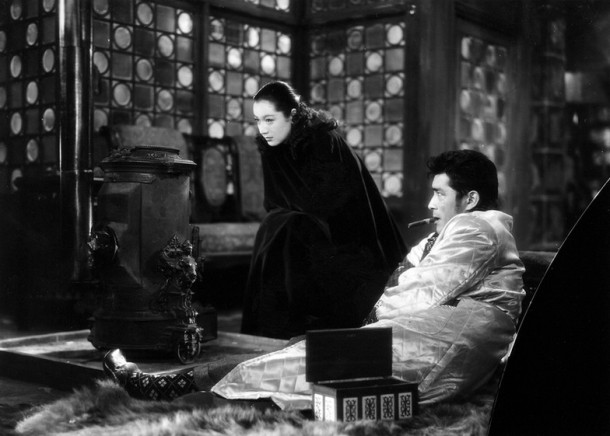
Showing posts with label Laurence Olivier. Show all posts

Friday, September 29, 2017

Playing Some Catch Up

Needless to say I've fallen way behind on recording the movies I've seen. Some of these go back to the beginning of the year. I've got twenty-five of them that I haven't written about. I'll be keeping these very short, hopefully honest, which shouldn't  much of a challenge since I won't have remembered many details by this time.


The Last Days of Pompeii (1935)

I am prejudiced in favor of almost anything halfway decent from this time, so I enjoyed it as far as that goes. It was produced by Merian Cooper of King Kong fame. Cooper was a dynamic man of action more than an aesthete, and the film takes on this general character. In the credits it claims to be "inspired by" the famous Bulwer-Lytton novel, which I have not read, though apparently it has a completely different plot. While I believe the book features some early Christians as major characters, this movie is set mostly during the time of Christ, which of course pre-dated the famous Vesuvius eruption by about 50 years, tying the stories together by having a man who encountered Jesus while young be settled as a rich old man in Pompeii at the time of the disaster. As a production the movie is a little clunky and forced anyway, and all of this rather fantastic far-fetchedness is not done in a way that holds together. The always entertaining Basil Rathbone appears here as Pontius Pilate.
Good enough for fans of 1930s Hollywood, but I would not call it a classic.


Rebecca (1940)


It won the Oscar for best picture, the only movie directed by Alf Hitchcock (in I believe his first Hollywood effort) to do so, featuring a comparatively young Laurence Olivier and Joan Fontaine, though all of this is incidental. It is famously not a typical Hitchcock picture--he was under some restraint by the studio at this time--and while a well-regarded classic, it seems to be ranked outside his most essential films by the experts, and the same critique is often applied to Olivier too. I had never seen it before, but it has all of the kinds of things I like with regard to dialogue, setting, faces, sensibility, general intelligence, etc, which I recognized within about five minutes. It's easily my favorite movie since Stolen Kisses.


Raging Bull (1980)


I had seen this a couple of times before, though I'm pretty sure the last time was when I was in college, which was a long time ago, so it seemed like a good opportunity to revisit it when it came up. I'm not a huge Scorcese fan, mainly for reasons that have little to do with the quality of his movies, the better of which I usually concede are decent enough. His characters tend to be completely unrelatable to me, to the point of striking me as probably having advanced forms of various mental illnesses, a pattern which runs through movie after movie after movie. The other reason is that he turns up on a lot of these DVDs I get on the commentary track or some other of the special features, and I don't enjoy him or find what he has to say particularly interesting. He goes on too much for my taste about the lens being used or the panning and so on, a little bit of which is informative, but there is no humor or sense of mischief such as I like to leaven the technical presentation.


But this has nothing to do specifically with Raging Bull, which I think holds up pretty well as a work of cinema art. As far as deriving a thought exercise from the movie, I suppose the obvious question is, What are we supposed to think of LaMotta? He is possessed of a kind of demonic force that is relatively rare even among the more violent subcultures in America, which is the entire source of interest in him. Early on he is able to at least temporarily impose enough discipline on himself to become a top ranked prizefighter, yet he seems to give up even on this as he gets older, and has more need of it. He demonstrates an obnoxiously low level of intelligence, however I think we are supposed to feel a little sorry for him for this as such things are not ultimately one's one fault. He causes an awful lot of havoc however, and the people around him don't really seem to get much in return.


California Solo (2012)


I've adopted a new system for picking movies which is not completely an improvement, though it allows more opportunity for more recent films and others that may not have attained the highest rankings. For every title generated by the new system, which is a much more random process, I match it with one attained via the old system, to ensure that I still have a steady supply of the classics that I like.


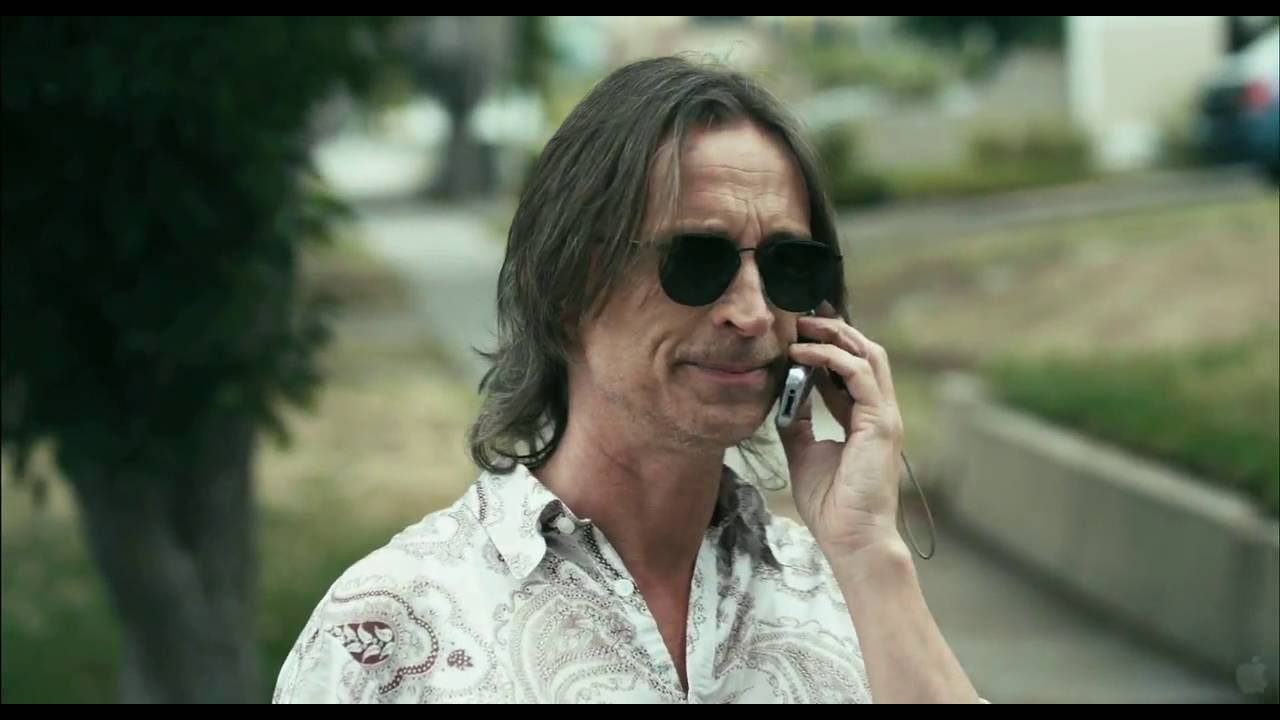
California Solo, a recent production of modest distinction, is thus one of the first movies of this "new" type to appear in my lists. It features the actor Robert Carlyle, who appeared in the late 90s indie hits Trainspotting and The Full Monty. Here he is playing a former minor member of a moderately acclaimed 80s era British rock band who now lives in California doing agricultural labor, making music-related podcasts, and drinking a lot. He's also divorced and has a teenage American daughter whom he barely knows; and he is also facing deportation back to the U.K. because he gets arrested for drunk driving. While he has a certain amount of British rocker charm, his life is in the mess it's in because he drinks so much that no one can really help him. I suppose that is the most interesting part of the movie, I have rarely seen a depiction of alcoholism that is so thorough and illustrative of the pitiful state that it reduces a man to. A lot of movies that are supposed to feature the bleak side of alcoholism still induce me to want to join in and imagine that I could carry off that lifestyle if I put my mind to it. But this character I knew was beyond anything I would be able to pull off at this point of my life. I can't go that far, not that I want to obviously, but some people have compulsions to be so extreme in everything, their souls are so volatile. My soul seems to be entirely bland in that regard.
I think there was supposed to be a message for us about immigrants here because it's a fairly relatable Scotsman who is being put through the grinder with police, lawyers, and all the rest of it, and perhaps we'll be sympathetic to his desire to stay and equate that with the plights of people who aren't white and/or English-speaking and move or fortify our personal take on this issue. I tend to be of the mindset that seemed to me to be prevalent when I was growing up that if any individual country decided that they didn't want any particular foreign national camping out on their territory indefinitely that there was always a risk of deportation. Obviously the sentient part of the world has moved on from this way of thinking about the matter.


The Tree of the Wooden Clogs (1978)


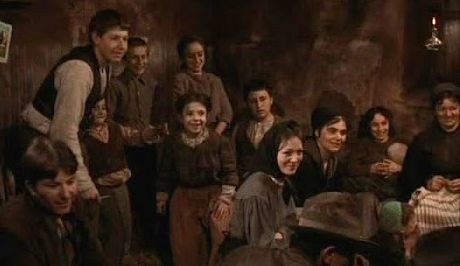
Italian epic from the heroic era of European filmmaking. I had seen this a few years back on a poor quality VHS tape and written a post about it. In addition to the dark print on the much smaller television I had at that time, I seem to have been distracted on that occasion and not taken much away from the viewing. In the meantime I kept the movie saved in my Netflix queue along with about thirty other DVDs whose statuses are perpetually "availability unknown". However, as occasionally happens, one of these elusive discs will suddenly become available and turn up in my mailbox, in this instance the Criterion Collection release. So I had to see it again.


Of course my experience was much better this second time. I was evidently in a more relaxed state of mind, which helped, and the bigger screen and clearer print brought out much more of its grandeur and depth than I had been able to perceive the first time. There is a very well known scene in which a pig is slaughtered, and there was another episode again involving an animal, a diseased cow that has to be put down. As this cow is the only one that the family, who was exceptionally poor, owned, and they cannot sell the meat or anything due to its being diseased, it represents years worth of financial devastation. It would be hard to concoct a "pitch" of this movie describing what it's about, it's an accumulation of small incidents or strokes of ill or good luck that given the narrowness and rigidity of this world determine the courses or nature of people's lives. One boy is identified by the local priest as intelligent and is given the opportunity to go to school. A woman's husband dies and she has to take in laundry to support herself. Meanwhile the local lord of course has access to books and newspapers and even a record player on which he listens to recordings of Caruso while his peasants lead the same lives their forbears have led for hundreds of years, and this all taking place, as I noted in the earlier post, perhaps within the lifetime of the filmmakers themselves, or at least their parents, as the director (Ermanno Olmi) was born in 1931. He is still alive, by the way.


The Red Shoes (1948)
Much-loved Powell and Pressburger film about a ballet troupe and the artistic process intended as an infusion of beauty and color into a still dreary postwar England. There is a lot about it that I like, though I did not have the same response to it as I did to the earlier The Life and Death of Colonel Blimp by the same duo, which I thought was pretty much a masterpiece. However this does star favorite of this blog (and of Powell and Pressburger) Anton Walbrook as the ultra sophisticated and exacting director of the ballet company, and an English redhead (seemingly another P & P staple), Moira Shearer, who, I had not realized, was a real ballerina of some renown, as the unknown dancer who persuades the master Walbrook that she has what it take to dance the lead in his company. There are some pretty hard observations on the demands and sacrifices necessary to lead the life of the true artist, though these probably apply almost equally to being a true businessman, or a true scientist, or true tech innovator, or ace high school student, or almost anything requiring true excellence. Whether true art still occupies an elevated position relative to these in anyone's mind I am not sure.


There is of course the incongruity of the brilliant young composer and the brilliant young dancer in the film both being standard issue born and bred English people, given that these are arts in the English are not traditionally recognized as having a culture of greatness in, and even the English composers who have achieved some degree of fame (Britten, Vaughn Williams, Walton) I tend to think of as somewhat stodgy, respectable establishment types--sort of like the professor at the beginning of the Red Shoes who cribs from his student's work for his new composition--rather than the more fiery, intense younger men identified with this art on the continent. However, I find the optimism expressed by attributing the possibility of attaining great and noble heights where they have not traditionally been considered to have been reached to one's own people, as the phrase goes, to be admirable. This particular sort of confidence is not consistent with most peoples across the ages.


Iron Man 3 (2013)


Another selection by my new system, I figured that these movies were hits so they must have some kind of appeal, or fun to them, so I wasn't opposed to seeing it. I couldn't understand this at all, it made absolutely no sense to me. All the technology and machines that were constantly introduced were way over my head, explained in an impenetrable foreign language. I lost the plot about fifteen minutes in, around the point at which any resemblance to life on Planet Earth as I have always experienced it departed from the movie. If this is at all representative the mental world the mass of the population comfortably inhabits nowadays it no wonder I am so isolated and incapable of understanding anybody. Good God. Look at the cast they got for this thing. Gwyneth Paltrow? Not that I ever liked her particularly, but I thought she wanted to be a snob. Don Cheadle is in this too. I know, money, money, money. Not too many people in America can win a real following doing the kinds of movies I like, But some can.


Friday, March 31, 2017

Next Group

It's been at least a couple of months since I saw these as well. I'll try to remember what I wanted to say about them at the time.

Divided We Fall (2000)

Czech World War II movie that involves the hiding of an escaped Jew by a married couple in his former neighborhood, but for those accustomed to the highly moralized approach that Hollywood usually applies to this subject, this may seem an original and slightly more intricate examination of it. European movies, and especially those made in the eastern countries, are pretty loath to depict anyone in the occupied territories as heroic, or motivated by heroic impulses, at least as the Hollywood mindset conceives of what form this would, or should have taken. I had seen this shortly after it came out--I was at that time still just a few years removed from my time in Prague and eagerly sought out any new Czech movies that made their way to this country--and I had forgotten how good it was. It is the kind of thing that does not sound that good if you try to explain it broadly. Within the apparently standard and perhaps even tired framework there is a lot of inventiveness that I did not anticipate, in part no doubt because I am so conditioned to regard the events of this period of history through the lens that American sources have usually insisted on their being understood. This is not however the way that artists, and presumably a significant portion of the sentient population, in most of the European countries seem to understand it however.
I like this picture because it is reminiscent of every dining room in Prague I had the pleasure of being invited to for drinks. 


I must have watched this just after the election because it was around the time that people on the Internet were asking if anyone would "hide them" from Trump's white Nazi supporters when they were imminently unleashed. Of course I have no sense that anything of this sort is really gearing up, at least for educated upper middle class people, and therefore cannot bring myself to take such alarms very seriously, though if people genuinely feel that they are facing this kind of existential danger from the current government, I am about the last person who is going to be able to persuade them otherwise. Given the advances in surveillance and detection technology, apart from the already established custom in this country of SWAT teams, etc, being able to kick in your door and tear apart your house if they consider they have a good enough reason, I'm not sure that hiding anyone for any amount of time nowadays is terribly plausible, especially if you have already committed to doing it on Facebook. Perhaps if you have truly been existing completely outside of legitimate society, banks, identity papers, taxes, and so on, it is possible to lose yourself in the fabric of the country, but that situation applies to few of the more vociferous members of the Resistance. Now, if some kind of government orchestrated genocide is implemented, and many of the intended victims are not able to get out of the country beforehand, the futility of the gesture will still not excuse slamming the door in the face of the persecuted and leaving them to their fate in order to preserve yourself, but one of the insights of the better sort of Holocaust art, usually, I find, a product of the smaller and poorer European countries, is that if things really come to that point, almost no one has a clear sense of what might be demanded of them or how they are going to respond to particular situations that arise. Especially someone like me who just doesn't have the righteousness and fire and hatred of my political enemies that I guess are going to bear other people through whatever transpires.


That said, I acknowledge that our current societal order is clearly exhausted, and needs some kind of rebirth or reorganization. My personal exhaustion, however, is increasingly of everyone who has no sense of humor and no appreciation for any of the things that I appreciate, or am able to appreciate, no matter what their politics are. ...    

Jupiter's Wife (1995)

Documentary about a mentally ill homeless woman in New York who claims among other things to be Jupiter's wife. This probably seemed like an interesting idea in 1995, but the development of all media in the ensuing years, at least for this type of story, makes it seem rather quaint now. The main problem is that the subject (by which I mean the woman) is not that interesting. The filmmaker did manage to find out who she was and that she had a conventional suburban upbringing, attending high school on Long Island in the early 60s and that she had once driven a horse carriage in Central Park for which she had been featured in newspaper articles and TV spots, as being a girl driver was evidently considered unusual at that time. However, she was much more strange than brilliant, and her adult life and spoken thoughts had little evocative about them, at least that I can remember. The movie is also shot on videotape which further adds to the tired effect, the 90s being now at that distance from us that its negative qualities still carry force in the present and not enough time has passed to make many charms peculiar to that time readily jump out at us.


New York City was still quite dingy in 1995 compared to what it is now, or at least what it was the last few times I was there, when Bloomberg was still the mayor. Most people claim that they liked it better when it was dingy, but I much prefer like the way it looks now, at least the older parts that have been preserved and restored to some of their former charm and grandeur, to the way it looked all through the earlier part of my life. I am certainly sympathetic to the claims that the character of the city at the street and boarding house and library reading room and cafeteria level has been negatively impacted by the ever increasing demands that the immensely wealthy of the entire world make on Manhattan especially, which has had the effect of pushing out most of the people who were sort of like me, if there were ever any such people, which will make anybody upset. It does seem to me to be becoming more remote as an aspirational destination for ordinary young (i.e. not Wall Street bound) Americans who have to earn their own bread, which would obviously be a terrible cultural loss, for them. Of course, it isn't like the city is lacking for people, or younger people, it is just more daunting for those whose main ambitions there are to loaf around reading books, walking around the streets for hours on end, drinking beer and looking at girls, and who live in denial and fear of the forces and necessity of capitalism and enterprise. Who it goes without saying are not reckoned much of a loss by anybody but themselves.

Bizet's Carmen (1985)

This is a film of the famous opera, but not of a stage performance, the singers and actors are out in the open air in various locations around Andalusia. This worked better for me than a stage performance would have, I actually feel like I got something out of seeing it, though of course Carmen is famous for being an opera popular with people who don't know anything about opera, or music, or culture, and probably food, wine, sex, and whatever else there is that is worth knowing, but I am peace with this aspect of myself now. The famous opera star Placido Domingo is in this. I don't recognize any of the other stars by name, including Carmen herself. Even though I obviously have not spent much time in my life in Europe, this production conveys something of the spirit that I felt the first time I was there in 1990 that I have often written about, before the hyper modern strands of global economics and mass migration had set in, and more people seemed to live according to the rhythms and habits more traditionally associated with their particular country or region. Since the contemplation of this was an especial joy and inspiration to me in my youth, it always revives my rather deadened soul a little to be reminded of it again, though I wish I could anticipate some such excitement in the future. As the trend however seems to be for everything to be changed and transformed into some more efficient or exalted version of itself in which most people have less and less of an active part to play, it's not clear what there is for any non-superperson to be excited about.


The Grey Fox (1982)

I believe this movie is categorized under the genre of "Canadian Western", though much of it is set in Washington and Oregon and it stars the well-known Hollywood actor Richard Farnsworth, who plays the gentlemanly real-life outlaw Bill Miner, famed for pulling off Canada's first train robbery (I noted on my Twitter account at the time that train robbing was a crime that has really gone out of style). I liked the mood of this, which is somewhat surprisingly quiet and understated given its subject matter. It mainly takes part in the rainy, heavily forested, and at the time in which the movie was set (1900-1910 or so) practically uninhabited Pacific Northwest, on both sides of the border, and Miner spends a lot of time living in the woods or lying low in sleepy frontier towns. The conflict in the story is that Miner, while intelligent and charming enough to be well-liked by such relatively cultivated people as he is able to encounter who don't know who he is, is unable to "go straight" and live an honest and respectable life, but has a constant compulsion to return to his life as a notorious criminal, in which field he has attained the notoriety and grudging respect due to accomplished practitioners that most men of spirit crave. It is a good, if relatively uncelebrated movie that I had to watch on a VHS tape before Christmas, though now that my wife has gotten Amazon Fire TV I will probably need to seek out VHS copies ever less and less now. This is perhaps one of the last ones I will ever watch in that primitive format.
Three Sisters (1970)
Adaptation of the Chekhov play by Laurence Olivier and a number of other familiar names from the British stage of that era, including Joan Plowright and Alan Bates. Notable for being the last movie that Olivier directed, though he would continue acting of course almost up to the end of his life in 1989. I have not read the play, and I wish I had had more familiarity with the story before seeing the movie, since I have to confess that I increasingly have trouble keeping up with British stage productions with regard to the pace of both the story and the dialogue. Of all the really great authors whose stature pretty much everyone agrees, I think Chekhov may be the one of whom I have read the least. My various lists and games surprisingly have not thus far turned up anything by him apart from The Cherry Orchard, which is consequently the only work of his that I have read. I thought this movie, though (another) British interpretation of an obviously Russian play, was very beautifully done, and took a subdued and yet unaffected tone that the material called for that I am not sure a contemporary production could pull off. Also, as I get older I am increasingly interested in films made right around the time when I was born (1970), since that time seems more and more to belong to another age, particularly in the cinema, where nearly half of the form's history has occurred in my lifetime, and it is reassuring to me, who is so sidelined mentally from contemporary currents of life, to reconnect with the more recognizable world I was born into. This applies to the next movie on the list also.


Louise Purnell, the actress who played the beautiful youngest sister Irina, was so beautiful herself in this that I feel the need to commemorate it here, especially she does not seem to have gone on to do anything else notable in films, and does not even merit her own Wikipedia page. Still, she was once exceptionally beautiful in a high end Chekhov production, and that is not nothing..


Medium Cool (1969)


Somewhat falsely advertised as more of a documentary than it in fact is (though there is some documentary footage in it), this is more accurately a rumination on the state of society that was made in a documentary style, culminating in the real-life events around the Democratic convention in Chicago in 1968. Its director was a man named Haskell Wexler who I think it is safe to say could be described politically as "Old Left". He just died in 2015 at age 93, which was too bad, since he was still active within this decade, the special features on the Criterion DVD including a film he made at an Occupy Wall Street rally which it was obvious he was hoping would reveal some hints of an incipient inspiring movement of the people akin to those of the 60s (needless to say, it didn't). The '68 movie is concerned with the mass media's control and distortion of the narrative and the effects it had on the public perception and understanding of everything, activism, the youth culture, the poor community of Appalachian transplants in Chicago, suburbanites arming themselves, politically aroused and confrontational young black people, the eternal class struggle. A very different and interesting movie, probably would reward more than one viewing (I was nearly halfway through it before I realized most of it it must be scripted). Recommended.
I liked this lady in the yellow dress, who played a rather sweet Appalachian woman from West Virginia. I have always had a little bit of a thing for girls from West Virginia since I went to basketball camp (at Morgantown) in high school and thought 'I wouldn't mind partying with some of these cuties.' Of course you hardly ever meet anyone from West Virginia outside of the state itself, at least I don't remember that I ever have.


Thursday, January 24, 2013

1951 Movies


Five of them here (though it looks like one might really have been from 1952). I don't remember this year being often mentioned as one of the landmark years in cinema history, but it produced a hogshead's worth of classics. I have already noted here in passing having seen, from that year, A Streetcar Named Desire, The African Queen, A Place in the Sun, and the Alistair Sim Christmas Carol. Besides those featured in today's post, there are still quite a few more celebrated titles from this year presumably to come. Based on my listkeeping, it looks to date like the champion year for the number of individual movies that have merited the highest rating in mainstream publications.

An American in Paris


Won the Oscar for Best Picture in that highly competitive year. The choice seems to have been considered an upset at the time, Streetcar and A Place in the Sun being the favorites going in. I enjoyed the movie very much, though of course I am a mush-brain. I am surprised by how well-regarded it still seems to be by many people who seem to be demanding, the sort who not only talk about things like the Real Paris, but have intimate knowledge of it. Obviously there is a sophisticated way to appreciate it requiring legitimate mental seriousness as well as a mindless one; however, all that I am able to get from it seems inconsistent with all my sense of what sophisticated people would be impressed by. And the film certainly has its share of detractors, though again, mainstream opinion seems to have accepted it as a classic on its own terms. My own take is that it is better than its detractors, most of whose arguments against it are almost too obvious to be convincing, would have it, but it is not Great great.

The saying that all good Americans, when they die, will go to Paris, is no less pointed because it is over-quoted. Indeed, I suspect that this promise is likely is not true, and am rather downtrodden in mood because of it. I suspect we are not talking about the Real Paris, especially that of the present day, that alternate place which has the genuine good food and is supposed to be far more interesting, because everything and everyone in it is held to and lives always by high standards in which Truth is the dominant governing element; but of something more like the Paris of this movie, though hopefully a little more populated and less stagy. The opening sequence of real footage--from a distance, aloft--of the city circa 1950 with its sparse auto traffic, slightly less worn out monuments and suggestive glimpses at the miles of streets and boulevards of (for Americans) dirt cheap rents and endless carafes of wine, is getting pretty close to the fantasy. What do I ask of Paris but to give me a few sensations. That I am an artist, or at least that I appreciate beauty and all of those wonderful things. That I have a mind. That I like to drink and eat well and enjoy life, without the necessity of being a prig about it because I can take it for granted that my victuals are of acceptable quality. That I am capable of being a subject of romantic interest. This is the whole extent of it really. Is it such a joke to desire these things? Well, yes, if they haven't any grounding in truth, it is. The experience of "Paris" is not a gift or reward given for earnestness and good behavior, especially to outsiders.


Forbidden Games


This is the one I think is in fact from 1952. My book said '51 but everything else says otherwise.

This is a French movie, very different, not only from the image of France depicted in American in Paris, but even from most other famous French movies, that I have seen anyway. It reminds me more of an earlier or mid-career Ingmar Bergman movie like The Virgin Spring as far as its themes and cinematography go than anything else I can think of. It also takes for a direct subject the death and destruction, indeed the fact itself, of World War II, then still quite recent and in France especially painful to have to recall. I probably should have watched it a second time. There was nothing obviously wrong about it, and I am sure it is as great a film as it is supposed to be, but nothing about it absorbed me or made any kind of emotional connection with me either. The affection that developed between the children would have been the likeliest route to my heart and sensibility but I just wasn't up to feeling it on this occasion. I will have to try to see it again. Sometimes the second viewing is the charm.

The Idiot


This, on the other hand, was exactly the kind of thing I was looking for, the more so as it was completely unanticipated. Despite the presence of cinema legends Akiru Kurosawa and Toshiro Mifune in the project, it must not be among their top 6 or even 10 most celebrated collaborations in this country, as I was previously unaware of it. And then upon discovering that it was an adaptation of Dostoevsky, I just assumed it was set in Samurai times, another two hours and 46 minutes of the rituals and other formal cultural trappings of that genre, which I am learning, I think, to appreciate more as the years go by, though it still involves some work for me. However the movie is set in the modern world, in Hokkaido, the big northern island of Japan, where, as I remember from one of Paul Theroux's travel books in which he went there, it really does snow as much as it does in Switzerland or pre-global warming Vermont. It has great atmosphere, and a deliberateness of pace that however never fails to be interesting and makes for a pointed counterpart to hyper-distracted contemporary digital life. I should have kept it a little longer and watched it a second time, so taken with it I was.

The Idiot is one of the great stories of the post-1500 world, I believe. The dramatic background of the saintly man who is not insipid, the sickly man who is not (entirely) weak, the innocent man who is not wholly ignorant of the world, who indeed at the outset of the story is himself returning from abroad, where he has presumably been engaging with life at some serious level after his own fashion, I find to be highly affecting to the imagination. All of its main characters, and most of its minor ones, are superior representations of humanity than their counterparts in actual life, as are the incidents and settings of the plot. While the story is ultimately unhappy, I suppose, the experience of it as art marks a high point in one's mental biography that is usually to be but too rarely replicated, especially it seems as one ages. I recommend it (the book, but the film gives something of the same sense in miniature) to anyone unfamiliar with it, particularly in the dregs of mid-life, who is feeling sluggish and disengaged mentally from all of the higher currents in life.

The Magic Box


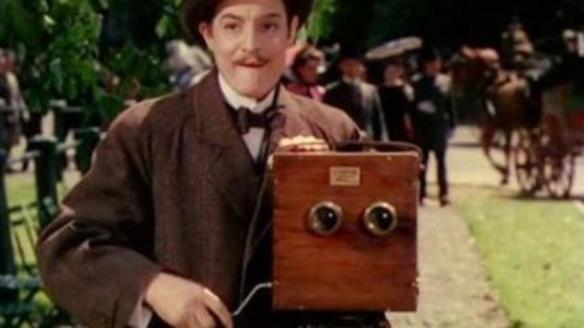
Almost four years ago I wrote about how I was unable to find this movie anywhere. Finally I discovered a couple of months back that someone had uploaded a copy of a television broadcast of it, presumably from England, to Youtube, where in exactly 1 year (January 24, 2012) it has received the rather paltry total of 738 views. So I have now seen it on the computer at least.

I noted on the other post that this was the British film industry's contribution to the 1951 Festival of Britain, that it was shot in Technicolor, that it starred the great actor Robert Donat and featured cameo appearances by numerous other British acting luminaries of the day including Laurence Olivier, and that its subject matter is a man named William Friese-Green who may or not have been the inventor of the movie camera but who according to the film at least invented a machine that produced moving pictures independently of whatever else was proceeding in that area at the time. The film is good, especially in its depiction of the main character's obsessiveness regarding his inventions, to the point of ruining his finances, his and his family's social position, both of his marriages, and any relationship with his sons, the elder three of whom feel obligated by the family's circumstances to enlist in World War I, which in British movies especially is so readily understood to be a death sentence that they don't even have to insert a scene later on in which the mother gets the bad news or refer at all to it having happened; the boys just don't return to the movie. And Robert Donat as William Friese-Green doesn't seem to be affected by any of this in his pursuit of invention. He repeatedly borrows large sums of money from anyone he can get to lend it to him, with no real effort undertaken to ever pay it back, and clearly thinks it an injustice when one of his creditors finally cuts him off. There is a tradition, that this is the attitude visionary and creative people have to have, and that normal types can't understand what goes on in the mind of such a person. In Europe especially that the visionary dies unappreciated in poverty and obscurity is almost preferable. Americans generally want to see some kind of payoff or vindication in the end, at the very least recognition, or reconciliation with friends and loved ones. Otherwise, how do we know the person is worth celebrating with a movie?

I am obviously not a visionary, but I did have, and still have, a certain amount of this impractical nature. It is quite amazing how long into my adult life, almost until I was in my mid-30s, that I believed I would eventually  be accepted by the greater world as some kind of writer or other intellectually-oriented line of work and be paid for it in line with other middle class professionals. Even today I don't really know or have a clear sense of how I am likely to come by money enough to live reasonably on for the rest of my life. Though the alternatives eventually happen and take on a life of their own, they always remain to some degree unthinkable, and to this day I cannot really face the reality of my situation and acknowledge it as anything significant. As this, I have noted many times here, it has rendered completely unable to function socially. In this I am completely the opposite of the Idiot.

Both of the actresses who play the beleaguered wives of William Friese-Green are of exceptional attractiveness in this particular movie, especially the one who plays the first, the Viennese-born Maria Schell.


The River


In keeping with the (loosely) overarching French theme here, this was a later project of directing icon Jean Renoir, though in English and set in India, based on a novel by a writer named Rumer Godden, with whose work I am not familiar but who I am guessing falls quite distinctly into the category of 'colonialist literature'. It was notable at the for being, I am pretty sure I remember this correctly, the first Western feature film shot in India. It is a strange and often discordant movie, which combined with the fame of its director's genius, persuades one that its art value must be high in a way that is inaccessible to the casual viewer, which I assure you is a disappointment for him. None of the actors in this movie that I am aware of when on to achieve much notoriety, and several of them are actually quite awkward in their performance. I don't know how comfortable Renoir was with English but he does not appear to have been deeply intimate with this language's spoken theater traditions (which a few short minutes of the Magic Box will serve to refresh your acquaintance with). The attitudes towards things like European colonialism and the place and nature of women vis-a-vis men are pretty close to what was consensus mainstream opinion at the time. A little English boy is killed by a cobra he is trying to charm. There was a very British Colonial speech made in the wake of the boy's death that did not go in for the sentimental or woebegone view but emphasized the duty of those surviving to move forward. I thought it made some sense at the time but obviously the argument hasn't stuck with me.

There was a mid-90s documentary included on the DVD about the then 88 year old Rumer Godden, who grew up in the English community in what is now actually a part of Bangladesh, but returned to India, or so it said, for the documentary, which I also found strange and in fact I did not finish it. I didn't like Rumer Godden. I grant that she was really old and having to go around an India that she really didn't recognize or have much affinity with by that time, but still, there was a deeper than usual air of coldness and cynicism about her. She was a real artist and turned in completed and well-received books on a regular basis, which should be more than satisfactory to me, and it is. Still, she had the air of someone who had some number of bad nights too many at the English club...

Tuesday, November 16, 2010

Movies 1972-1991

These movie recapitulations may seem a poor use of such little time and energy as I yet retain. However, the Blogger site now offers primitive statistics on visitors to your page, which reveal in my case that the postings which receive the most "views" are by far those about movies and, surprisingly, poems, a lot of people evidently stumbling upon me in the quest for assistance with their English homework (Sorry employers of America. Again). My all-time top 5 most-viewed posts are 1) 10 Best (Movie) Literary Adaptations (reminder to do more top 10 lists); 2) Cleopatra Overview; 3) Planes, Trains & Automobiles; (the ferocious popularity of this movie and nominal Thanksgiving classic never ceases to astound me) 4) A Streetcar Named Desire Part 1 (alas, no one seems to have been induced to examine Part 2) and 5) John Donne, "The Bait". If I had known how many people were cruising the web at all times looking for insights into this poem, I would have...well, I would have done something else with it, though what I am not sure.

Onto the movies, which are being presented in the odd order that their pictures came out in during the setting up of this post.

Sleuth (1972)

Adapted from a play that must have made for an exhausting night at the theater. Great acting--that Larry Olivier fellow is in this--clever, rapid-fire dialogue, a battle of wills and mental gamesmanship that demands some exertion of the intellect on my part anyway, which, not being prepared to do to the extent necessary on the initial viewing, I can't say that I greatly enjoyed the movie, as there does not seem to be much else to it other than this. I don't feel particularly energized to bother watching it again more closely either, at least right now. I'm quite sure it is impossible for every individual person to 'get' every individual clever thing that exists with equal clarity of understanding. This is a problem I have always had with certain critics and scholars about the arts who write as if they are the final authority, or at least the last one most people will ever need, on 90% of the works and artists worthy of anyone's notice. Anybody who declaims with complete assurance in the space of a few pages about the meanings and interior thought processes of say, Dickens, D H Lawrence, Samuel Beckett, Henry James and Emily Dickinson I always consider to be immediately suspicious.

There is a little intermission in the middle of the movie where Laurence Olivier eats a sandwich or something while three or four scratchy Cole Porter tunes play on a record player. I liked that part.

Decoration Day (1991)

The picture is of Edna St Vincent Millay and is not from the movie. I couldn't find any pictures I liked from that.

Decoration Day was a Hallmark Hall of Fame TV presentation starring James Garner and a young Lawrence Fishburne, among others. It was recommended with the highest rating by the video guidebook I tend to like the most, that which was formerly written by Mick Martin, who is apparently some kind of well-regarded indie rock musician, and Marsha Porter, but unfortunately was discontinued after the 2006 edition because, according to the publisher, all of the information in it is widely available on the internet. Unlike similar books, which stick mainly to theatrically released feature films, this book reviewed TV programs, music video and short film compilations, moderately obscure documentaries, and the like, and though I haven't found most of the TV stuff they recommend to be any good, I agree with their movie evaluations enough to be willing to give them a try.

I can't believe they liked this. It's a pretty standard fare TV movie, set in the south and centered on the attempt to belatedly award the Congressional Medal of Honor to a highly dignified black World War II veteran who would prefer to be left alone. James Garner is a retired successful judge whose even more imposing father entrusted him and his brother as pre-adolescents and teenagers to the tutelage of the slightly older black future war hero to teach them how to be men--hunting, fishing, repairing things, being as resourceful and forthright and honorable and uncowardly as white boys can reasonably be expected to be--only to establish, in keeping with their times, a chilly distance from his former mentor and friend upon reaching age eighteen or so. There were some tepid subplots centering around various white people who had cancer. I'm not sure whether this was intended to be symbolic of anything or not.


The movie tries very hard both to be and to show itself as respectful towards black people. It's a little too self-conscious and hokey to pull it off convincingly. James Garner's judge character, who is still the main focus of the plot, I suppose begs a comparison with the now widely detested Atticus Finch. There are some surface similarities, though Finch was depicted in his movie (which despite its many flawed and to us offensive presumptions, I cannot bring myself to wholly dislike as a work of cinema) practically as the second coming of Abraham Lincoln, while the Garner character is more of a sharp, crafty old pro at both the legal and social games than any kind of moral symbol.

I don't care about this movie enough to spend any more time on it.

These last two I actually liked.

Let Him Have It (1991)

This was based on a notorious criminal case in 1950s London in which a 16 year old shot and killed a policemen, and the epileptic and the developmentally delayed--and unarmed--19 year old who accompanied him was sentenced to death by hanging, one of the last people to receive the death penalty in Britain. The violent crime rate in Britain was so low during most of the 20th century that cases that would have been fairly pedestrian in the United States became major episodes in the national life there (this one was also the inspiration for the Elvis Costello song "Let Him Dangle", as well as numerous books). The Manson family this crowd is not. Some people are of the opinion that the movie is manipulative and distorts the case too sympathetically on the side of the doomed young man. I can see where that might be plausible, and even likely, though I would excuse it on artistic grounds because that sympathetic identification and conviction of the injustice of the sentence is where the movie's force comes from, and that is presented very effectively.


While not a great era for movies, the early 90s is starting to look better and better to me compared to most of what has come since. This may be because it is the period of my own youth, but the films set in this period seem less artificial, i.e., the imaginative world in which they are set seems more real to my mind/sensibility that that in which most recent films take place. This one of course was set 40 years in the past--in a period for which I have a lot of interest, and some (probably misplaced) fondness, I might add--and while all of it does not feel equally authentic, many of the more focused smaller scenes, especially indoor family ones, are very believable and evoke something of life.

The sister of the condemned man, who was a consultant on the film and consequently one suspects was portrayed in an especially favorable light, was played by an actress named Clare Holman who is possessed, at least in this movie, of a distinctly English variation of the quality which the French call, and celebrate, by the appellation jolie laide. Further research reveals her to be the typical icy, highbrow English theater actress, but I was taken by her circa 1951 smart working class hair and clothes in this picture. Especially the canary yellow slacks she appears in in her entrance on the screen.

Here's a video of scenes from the movie set to the Elvis Costello song.
Das Boot (1981)
Famous World War II submarine movie. I'm not sure what I expected--something drier and more utterly nihilistic, I think. It was a lot better than that, though. It was made with too much care, and had too much care for its main subjects, if not for anything else.

I assume this movie counts as part of the 'German New Wave' of roughly the 1973-82 period. It is very much of the sensibility of that school of filmmaking, paying great attention to the technical and practical details of its environment and allowing its dominant characters to emerge through the activity and forcefulness of their finely developed intellects so as to give the story a particular rather than a general sense of truth. The German New Wave may be the last great wave, that I am familiar with anyway, that I like a lot*. The more I see of these movies and begin to get a sense of their patterns and the mindsets and concerns that animate them, the more I am impressed by their thoroughness, their coherence and their truth. Also to see these movies is to be impressed by how affected all of the arts have been by the internet and the other distracting technology of the last two decades. There is a degree of concentration in all the aspects of successful filmmaking--the control of pace, emotional pitch, distinctive episodes which cohere to the rest of the plot, consistency of character without predictability or irrelevance--in the execution of this movie from beginning to end which I increasingly notice contemporary filmamkers having a hard time managing. One could make the case that I using as my example of the superiority of the past some of the most meticulous movies ever made. This is fair enough--the contrast really stands out in these instances--but even many inane movies from the past, such as my beloved soda fountain and bobby soxer romances from the 1940s, achieve a certain internal consistency with regard to pace and plot development, the purpose of introducing specific characters and skills, dilemmas, etc, that people seem to have a hard time with now. I really believe people's capacity for the sustained concentration necessary to produce art of a certain fulfilling quality has become strained (Note this paragraph as an example of that).

If one is not on the ball, one can at moments find oneself in a certain degree of sympathy with characters who are, after all, in the service of the Nazi regime--at the least one does not care to watch them in the act of suffocating or drowning on the ocean's floor, which situations threaten them at various points in the film. None of the major characters expresses any enthusiasm for Hitler, or the war. This is perhaps too convenient, but was doubtless a necessary device in 1981 and probably would still be now. The film does not glorify the war, and goes out of its way to emphasize this in fact, but it does decidedly appreciate the ingenious grandeur and beauty of the submarine; it is this as much as anything else which makes the movie so compelling.

Sometime in the 90s the theme music from Das Boot got a techno remix; it was not a bad job. here it is with scenes from the movie.

*There was a wave of Chinese movies in the 90s with something of these same qualities of intense concentration, classical density and structure, transcendent humanity; I haven't been able yet to ferret out the relations in their patterns, themes, beliefs about the world, and so on, so as to be able to organize them in my mind as representing a distinct movement that means anything to me. But I think they probably were one.

Thursday, November 19, 2009

10 Best Literary Adaptations

This subject sort of suggested itself in the last question of the nerd survey I took a couple of posts ago. It is a natural blog post. I have also not looked at anyone else's list on the same topic, so this will be pretty much straight from my active memory. I have made a rule that I have to have actually read the book for the movie to be included, which is why some obvious choices may not appear. #10-Ulysses (1967) I've always thought this film was underrated. It appears to have been made on a budget of about $100. The characters walk around Dublin in their Joycean costumes while 1960s street markings and shopfronts and heavy auto traffic in the distance are in plain view. I like the effect this makes though. It is kind of surreal. I'm surprised something like it isn't tried more often. This surrealness in an odd way gives the impression of being in the spirit of the novel, which was, and still is, widely considered to be unfilmable, though I think this movie proves that between all the real landmarks and places, and espisodes in those places, referred to and the thread of a genuine underlying story (Molly Bloom's adultery) to follow, it is actually filmable to a decent degree.


#9--Goodbye, Mr Chips (1939) Some might contend that the book on which this story was based is not properly literature, but the story is iconic, it primarily came to the consciousness of the world via the printed page, and it has enough of a literary sensibility about it that I am inclined to count it. The sentimental and whimsical works of James Hilton (he also wrote Shangri-La) and old Hollywood were destined to attract each other. The film has an excellent, intelligent cast, who, along with the director and other contributors to the film, grasped the spirit of the material but were able to treat it (the spirit) seriously, which is the secret of most successful literary adaptations.


#8--Hamlet (1948) I haven't seen the (4 hour+) Kenneth Branagh Hamlet, which a lot of people like, and I haven't seen the Olivier Henry V or Richard III which are also much loved, which leaves this for the moment as my favorite Shakespeare film adaptation. I'm kind of a Hamlet person by nature anyway, but the combination of the sort of atmosperically dreary postwar setting with the black and white cinematography is an especially good combination for this particular set of actors and this particular play.


#7-Tom Jones (1963) A lot of people like to rag on this movie, but I think it's pretty good. Tom Jones is a 1,000 page novel with one of the most complicated, albeit brilliant, plots of all time, and there is no way to make a two hour movie of it except as a kind of lively collage of character sketches, impressions, elaborate renderings of particular scenes (such as the fox hunt), and so on.

This movie gets extra credit for having Susannah York, who is such a babe to me at this time (early-mid 60s) as Sophie Western, Tom Jones's ultimate girlfriend. Like a number of the beautiful British women of this era--Shirley Anne Field, Charlotte Rampling, Edna O'Brien (who I know was Irish but the effect was similar) myriad Beatle and other rock star girlfriends--she did not age in a way that I would call graceful. The tumult of the late 60s and early 70s seems to have contributed to these women developing what I consider rather hard and unappealing looks by the time they were in their mid-30s, which is an age at which plenty of women are still plenty attractive without having totally compromised their principles or otherwise lobotomized themselves. The spirit of the time however was equally opposed to conceding anything to convention, including what some might call wisdom, the effect of which I think shows in the faces of the people who indulged in the ethos of that period the fullest.
(ed--looking over this again in July, 2019, I am not sure what I was talking about with regard to the decline of these actresses. However as I obviously thought something of this nature at the time, I will leave it up).


#6-A Christmas Carol (1951 & 1984) I include both the Alastair Sim version and the later George C Scott version since I like them both. Also the later version is similar enough to the earlier that it seems to have been based on it (there is also the Muppets' Christmas Carol with Michael Caine as Scrooge and Kermit the Frog as Bob Crachit, which isn't bad either). The '51 is usually considered the classic, but having been made in the height of the austerity period it is a little spare in some of the warmer and more exuberant party scenes, which I like in the '84. Most Dickens adaptations I find disappointing. I haven't seen the Lean Great Expectations and Oliver Twist from the 40s, which are supposed to be the best ones (I have seen Oliver! the musical, but it didn't really do it for me). The Dickens mindset or attitude is one that many people feel and think they understand, but it seems to be hard to convey it if one is not actually Dickens, on film or in performance or critical analysis or otherwise. With The Christmas Carol I suspect the story is enough that filmmakers and actors are more easily able to give themselves up to it and let themselves be guided by it than they are comfortable doing with the other books.
#5-A Streetcar Named Desire (1951) I wrote about this fairly recently. One feels that it captures where American writing and its relation to other artistic forms and movements was at in 1951 as well as any film ever made, and that that vision has held up pretty well going on 60 years later.


#4-The Magnificent Ambersons (1942) This represents an important strain of American literature (and life) that is more or less dead now, the novel of midwestern small-town aristocracies, their business interests, social ambitions, etc, between the Civil War and World War II, which events correlate exactly with the rise and decline of this kind of town and economic order. As I noted once on this blog, I live in the ruins of this sort of town, in a mansion (now divided into 3 units) that was built and lived in by one of the former local magnates who are usually major figures in this genre of novels. This movie gets what was appealing and stifling about that world pretty well (Orson Welles I believe came from such a midwestern town himself), as well as grasping its role, again for better and worse, in the rise of the modern American behemoth that had really begun to come into view in something like its accurate shape in the decades following World War I.

Booth Tarkington was a good novelist. I suspect his esteem plummeted due to the double blow of the ascendance of modernism, which essentially set itself up in opposition to writers like Booth Tarkington, and the fact that whenever a black character enters the narrative, usually as some kind of hapless servant, he does not, shall we say, rise to the occasion that a proper humanity would require he should. F Scott Fitzgerald to be frank has a similar problem, but the number of pages marred by it are somewhat lower in his books than in Tarkington's, and then Fitzgerald is still a good and interesting enough writer to important contemporary readers that he is cut a lot more slack. I will assert that Tarkington is a better novelist than Arnold Bennett, who is sort of his English counterpart, both having a similar provincial bent and relation to modernism. My impression is that Bennett's status has been a bit on the mend in recent years.


#3--Dr Zhivago (1966) Both the movie and book have been declining in esteem in recent years, why I am not sure. Perhaps they were both overcelebrated at the times that they came out. Still, I don't see a whole lot of stuff coming out in the years since that is so appreciably better as to make these laughable now, as some seem to consider. The novel, at least in the old translation, reads very much like a classic (19th-century) Russian novel, set in only slightly recognizably more recent times. I thought there was a lot of interest in it, particularly the descriptions of the general shutting down of the ordinary functioning of society during the revolution--the cropfields overrun with millions of rats and other vermin, the trains sitting buried immobile under mounds of unplowed snow--especially as many people predict we are headed for an analogous type of societal collapse in this country within the next few years. Considering that the manuscript had to be smuggled out of the Soviet Union, and the author subsequently awarded the Nobel Prize (which he was not allowed to accept) as much for infuriating the Soviet authorities as for the quality of the book, it did not strike me as particularly subversive or condemnatory. Doubtless there are lot of hard judgements cast and truths revealed in the book too subtle for outsiders, especially those from cultures with low levels of intellectual refinement, to perceive, but at the same time it is a marvel to an American that the political leadership in other countries feels compelled to acknowledge artists and intellectuals who criticize them, in effect dealing with them as equals, or at least as humans, rather than just ignore or laugh at them.

The movie is actually very similar in tone to the book, again as it reads in English, and reproduces the plot quite faithfully as well. There is surprisingly little, narrative-wise, that gets left out. And yes, it is a very fanciful, Americanized (or maybe Britishized) vision of Russia, but I give it credit at least for making it a good one. If you're going to fancify, go all the way with it.

#2--A Room With a View (1988) In case you were wondering, my ranking is not necessarily in order of what is the best movie overall, but what is the best adaptation, in my opinion, of the book. In this instance the movie and the book are so nearly identical that I am inclined to say that the movie is actually better. I always thought Forster was quite a bit overrated as a novelist, but I may be influenced in this by the apparent ease with which he translates to film (Howard's End may also be more effective as a film than as a novel) and fairly easily digestible film at that. The Merchant and Ivory team take a lot of hits from sophisticates for their upper class Anglophilic porn movies, but in Forster at least they found a subject perfectly suited to their peculiar talents (I also thought the film of Remains of the Day seemed well-done; I haven't read that book however). You can see them get into trouble when they try to take on Henry James, though in this they are not alone. Indeed the evidence would suggest that the great unfilmable classic author is not Joyce or Sterne or Fielding, but Henry James, the odd fascination with adapting whom has sabotaged, or at least tied up for several years to no good end more than one career (maybe Spike Jonze's next assignment should be The Ambassadors). Why are people fascinated by these projects? One mistake is taking the approach that a Henry James movie should be at all a costume drama. Being a character in a Henry James novel is like being in one of those poker games with a $50,000 minimum bet rule: it can be taken for granted that you are in the top 1/10th of 1% in wealth and wear fabulous clothes. The distinctions between characters are almost entirely in their degree of mental refinement and development, their perception of these vis-a-vis the others, and their peculiar and often trivial petty resentments and grievances. In other words, things which are very difficult to convey on film. There is no mincing Cecil or strapping George or hormonally aroused Lucy in a Henry James novel to save the cinematic day. That said, one Henry James novel which seems to me like it might make a decent movie is the early The American. It has a Parisian setting, some over-the-top snooty French aristocrats (the sort who insist that the actual head of the French State is Louis XVIII's doddering great-great nephew who lives in the country and spends all his time hunting grouse), filthy rich naive Americans who have yet to become fully internalized psychologically. It could work I think since danger of the temptation to extreme earnestness combined with faulty understanding of the material would be less than usual.
I was once watching this movie with a group of (surprisingly manly) male friends when an aggressive man who happened to make one of the party turned violently to me and demanded "Do you like her?" referring to the lovely star Helena Bonham Carter, who plays Lucy Honeychurch. Stunned out of my customary hemming and hawing and qualifying by the urgency of the question I simply blurted out "Yes!" with a burst of some feeling.


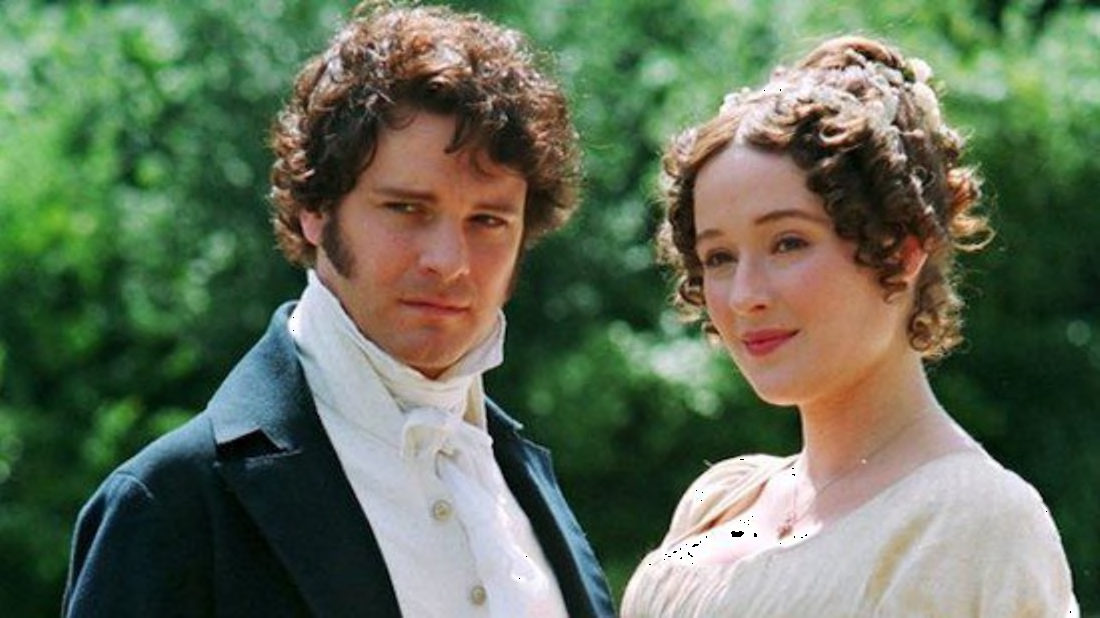
#1--Pride and Prejudice (1992) There are a lot of Jane Austen adaptations, most of which are OK, some of which are unbearable, but this 5 hour miniseries is the champion of them all (though I do think Colin Firth is too much of a pussy to be a convincing Mr D'Arcy, the consensus is otherwise). A good Jane Austen movie has above all else to properly appreciate the humor and spirited exchanges of intellect in the dialogue, and most of the people in this version seem to get that. The costumes, furnishings, and so on also feel to me to be accurate based on my readings in her books. As such they are unobtusive in the movie, so that they seem wholly natural to the characters moving about in them. Also I have one of those special loves such as one can only feel towards a very few distant and uattainable women for the girl who plays Elizabeth Bennett in this. Her name is Jennifer Ehle, and she is actually an American to boot. She also was born the exact same week I was (she is older by a couple of days) So I think between astrological and various other shared generational cohort experiences, we must have a great deal in common.
Honorable mention: My favorite costume drama of all time is probably Barry Lyndon, but I have never read the book on which that is based. Similarly I have never read, I must admit, the book of Lolita, which isn't supposed to resemble the Kubrick movie anyway, though that is also one of my favorites. When I made the list I forgot about the excellent film productions of Shaw and O'Neill plays, i.e. Pygmalion, Major Barbara and A Long Day's Journey Into Night, which are akin to A Streetcar Named Desire in being fairly contemporaneous with the original productions, featuring actors who had done the roles on stage, etc. I'm not sure where I would have slipped them in.

Saturday, May 30, 2009

The Hamlet Song

You have probably noticed by now that I have a fondness for these little video compilations from favorite black and white movies of mine set to music. This song is really pretty silly I know, but, it isn't a bad idea for a novelty tune. I like the images from the movie. They are supposed to be depressing, I know, but your own mind has to be pretty beautiful and exquisite to really feel even a decent Shakespeare interpretation oppressive.