There were a lot of old ones in this group, so it should have been a good set for me, but it was just kind of so-so.
Mildred Pierce (1945)
Well-regarded, noir-ish picture directed by Michael Curtiz, also notable for being one of the better known roles--she won an Oscar for it--of the legendary star Joan Crawford, who remains an object of some fascination in our time seemingly as much for her reputation for being a colossal pain in the ass as for her acting career, as her heyday as a star--and she truly was huge in her time--was the early 1930s, and other than Grand Hotel, most of her big starring vehicles are not widely known today. I was a little disappointed by this on the first viewing. Being right in my favorite era of Hollywood movies as well as knowing the regard a lot of film buffs had for it, I was expecting it to make more of an impression, but I don't remember much about it, and I didn't think much about it even after I had just seen it. Mildred Pierce is a single mother who becomes a tough and very successful restaurant owner. Her daughter is resentful of her social origins and is one of the most notorious villains of the noir period. Has some different themes. Maybe I'll see again another time in a more receptive mood.
Julius Caesar (1953)
All-star black and white production of the Shakespeare play directed by Joseph Mankewicz and featuring Marlon Brando as Mark Antony, James Mason as Brutus, and John Gielgud (in his pre-Sir days, I believe) as Cassius. The whole presentation is very much in keeping with the earnest Great Books/mass college/theater as a fine art aesthetic of that postwar period, which is the background I come out of, so to me this is very much how I imagine the play should look and be acted according to my understanding of that time. According to Wikipedia MGM wanted to make the movie in color but the filmmakers (Mankewicz and the producer, John Houseman, who, yes, is also the famous actor) didn't want to make a spectacle, and also wanted audiences to infer a parallel with the recent Fascist movements, in particular the newsreels. As usual it was a good decision, especially in light of the ever shrinking provenance of the black and white era in the history of cinema. As often seems to be the case, there was a lot of fighting among the stars (in contrast to today of course, where everyone is always claiming to get along swimmingly and to love their fellow cast members). I never know how much I should care about those things or whether they are particularly relevant when watching a movie. This is as good of a mainstream version of one of the more watchable and accessible Shakespeare plays I think you are going to get.
Gotcha! (1985)
Mid-80s young person comedy with a Cold War twist featuring the same director (Jeff Kanew) and one of the stars (Anthony Edwards) that had given the world Revenge of the Nerds the previous year. I don't remember this coming out, though I went to the movies often at this time, as well as heard about all the movies other people went to see that I missed. I was hoping that at the very least it would provide some unlooked-for morsels of 80s nostalgia, but it really didn't have anything I liked. It is unbelievable now that East Berlin and the rest of the Iron Curtain countries were closed off until after I was out of high school. The (very) little taste we get of Communist East Germany is the most interesting part of the movie to me, though this is the kind of film that can only depict the world behind the Wall (and most of that on our side of it, to be honest) in completely cartoonish terms. As in many Hollywood efforts of that era, there is a "Czechoslovakian" spy whose presumed nationality itself is taken to be a source of hilarity, and the character is given a Russian name that no Czech person actually has. This happened frequently enough that I almost want to assume it was done on purpose. A pretty lame movie all around. Even the mid-80s soundtrack was a miss, at least as far as original songs went.
Night of the Hunter (1955)
Hailed by many critics as one of the very greatest films (as in top 50) of all time, I don't like it that much. It is artistic, and it is unsettling, and it is unique for its era, and I can kind of see what hardcore movie people love about it, and maybe if it hadn't been hyped so much its quality might have taken me by surprise. But I have to say, there was nothing about it that I particularly enjoyed, and since it ended I have not been overcome by any great desire to see any part of it again. It is famed for being the only directorial effort of the beloved Charles Laughton, a truly great actor and formidable all around artistic presence in his lifetime. He is the kind of towering figure from the past whose presence is, I sense, perhaps most strikingly missed in the present cultural environment. Anyway, he is lavishly praised for this movie.
Night of the Living Dead (1968)
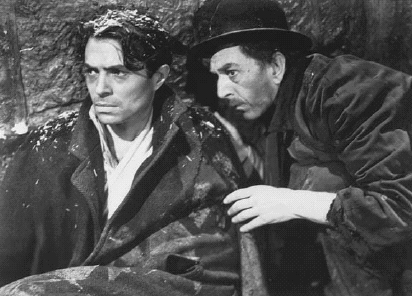
I have no background in "horror" movies. I had no interest in them as an adolescent. I don't have any interest in them as a genre now, and even if some of them can be said to have genuine artistic quality or entertainment value, my true feelings would be to wish that the talent involved could have been deployed in a different kind of movie. That being said, I went into this cult classic with no pre-existing idea whatsoever of what it was going to be like, expecting to suffer dutifully through a half hour or so of gratuitous gore before giving it up, but to my surprise it had a lot to hold my interest. I still don't care for the overall premise too much, but the storytelling isn't bad, and a late 60s, black and white low budget indie film shot in Western Pennsylvania without special effects or other high-tech tricks where all of the clothes, cars, appliances, furniture, and so on are immediately recognizable to me from my earliest childhood is pretty captivating. At one point in the commentary when the victims are frantically boarding up the windows of the farmhouse (which looks a lot like the house I live in now) one of the speakers jokingly asked "Who has this many boards lying around their house?" But I actually do have that many. I thought the set-up of this movie was better than the resolution. They were probably running seriously low on money by the end of filming.
The Milky Way (1936)
These last two movies were contained on the same DVD. By the time it arrived I had forgotten which was the one I was supposed to watch so I watched them both, especially seeing as neither one was much longer than an hour. They are very loosely connected in that both involve boxing, or at least have a plot that leads up to a boxing match. The Milky Way is supposed to be the better film, I think--it features Harold Lloyd in one of his more successful talking roles--but its particular humor, pretty much all of it, in fact, and this is the case with a lot of 30s movies, was lost on me. I did like Harold Lloyd's silent classic The Freshman from 1925, which has a ton of style and pointedly mocks some of the stereotypes and absurdities of college life, though with a romantic underpinning which makes it a lot of fun. The focus in this one is not as sharp, and the dynamics of boxing and street brawling and shady underworld characters are perhaps not as inherently amusing to us as they seem to have been to audiences in the 1930s, the films of which era frequently feature mild-mannered characters who find themselves in dilemmas where violence is not merely an option but the dominant way of life, so to speak, the social currency. Oh yeah, Adolphe Menjou is in this too.
Kid Dynamite (1943)
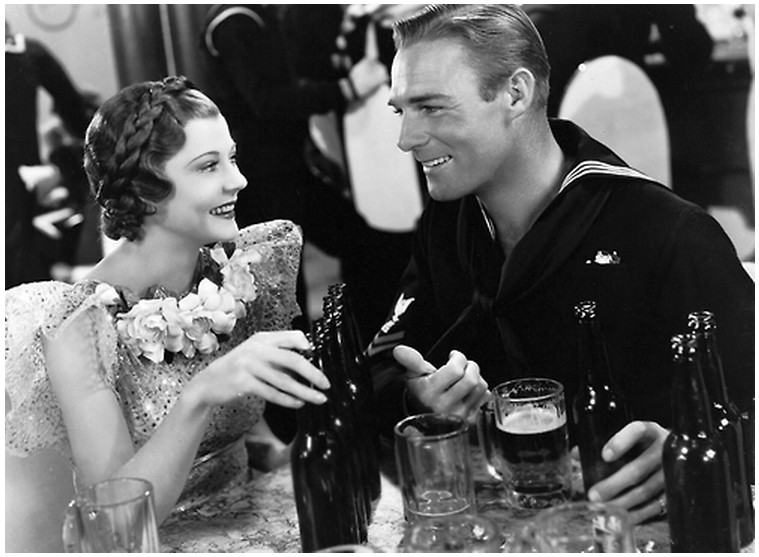
This was even more of a throwaway movie, the equivalent of a TV show really. Nonetheless I really liked it, because it's about teenagers set in 1940s New York City, and I have always loved those kinds of movies. This was part of an unbelievably long series of films (around 78 in total) featuring much of the same core of actors about a gang of kids, and presumably, as the series went on, young men, that ran under various incarnations, such as the Dead End Kids, the East End Kids, and the Bowery Boys, from the mid-30s until 1958 (!). Kid Dynamite was made during the East End Kids period, which ran from 1940 to 1945. The main character and leader of the gang, Muggs McGinnis (played by Leo Gorcey through almost the entirety of the series), is supposed, I think, to be a lovable Irish rogue type, but in truth he's really a pretty violent thug. Some of the other characters have a modicum of manners and are a little more endearing. I like the parts where the guys hang around the clubhouse and shoot pool and the girls dance to records. There's also a nice scene at a community dance hall. The girls are very pretty and sweet, even the ones who are supposed to be (mildly) "bad". At the end of the movie, it being wartime, three of the older boys, including Muggs, enlist in the Navy, and appear in uniform in the final scene. This part is heavy-handed and crudely jingoistic on a level that the classics of this era which people are mostly familiar with today, which are often considered jingoistic enough themselves, do not begin to approach. This class of film is definitely not going to be for everybody, but perhaps since they were not heretofore part of my consciousness combined with my general love for almost everything from this era, I kind of got a kick out of it, and was glad I saw it.
I was going to write here about my recent sluggishness and lack of interest in anything, including writing, including reading, including movies, including anything else, and wondering what I was supposed to do to revive interest in my life. But I feel better today so maybe I will put that essay off for now.
The Grapes of Wrath (1940)
I have never gotten around to reading the book yet (though it appears on all of my lists eventually), nor had I seen the movie until now. It was probably time for one of them. The film was satisfying to me. John Ford of course directed it, though I have still not had that moment of profound, I-see-the-light connection with his personal style. It is more that I like most of the studio productions I see from this specific period, the prewar pinnacle from '38 to '41 or so. The images and sensibility they present, of the landscape, of the people, of history, of literature, still inform the ideas of much of the common mind with regard to all of these subjects. It was a transitional period, which will be a theme throughout this post. For me at least, the people in movies in 1930 and the world they inhabit seem quite remote and foreign, but by 1940 these have become very recognizable--in many instances almost more so than the present.
I liked the presentation of the road trip--Route 66, passing the state capital in Oklahoma City, how the road was unpaved when crossing into Arizona, the roadside diner, the bridge at Needles, the desert. Some hardcore critics have complained, as someone always must, that the real hardships and poverty of the Okies were softened to be palatable for the public, but I think their circumstances as presented here are plenty grim. Movies that insist on being relentlessly miserable also tend to kill in me any hopefulness that improvements can be effected. I liked the beginning scenes in Oklahoma too, they they are reminiscent of the Kansas portions of the Wizard of Oz. I thought the tone was a good one to take, the emphasis on these people being Americans and having cultural and linguistic affinity with both the filmmaker and the audience, and the confidence that the government, representing the greater nation, could have a positive role in mitigating some of the really ugly consequences of the economic situation (as represented by the much more pleasant and competently organized government camp--with showers!--that the family is able to stay at near the end of the movie).
Mutiny on the Bounty (1935)
Another real monument, eminently watchable and crowd pleasing. an early realization of the finely polished Hollywood product that we all know. We also have the irrepressible Charles Laughton starring as Captain Bligh, though while he still gets some good lines ('Clear the deck of this r-rrrabble"), he does not have quite the free range to completely take over the character of the film the way he does in many of his other roles. I really notice in this movie and the two below the jump, or break, as some might see it, that took place in film production from 1933 to 1935--those in the latter year seeming so much more modern in terms of dialogue, mood (superficially at least much less dark), humor, what constitutes attractiveness in women, the stars such as Laughton and Clark Gable still have a general resonance with modern audiences whereas some of the earlier stars do not. I mentioned in an earlier post (on Baby Face, I think) how I was struck by the general crassness and slatternliness of the pre-code era films in contrast with anything that has come since, even the self-consciously edgy movies of the post-1970 era. The Code doubtless is responsible for a lot of these changes, but perhaps, in certain areas, it had a positive influence. It did raise the tone of movies, and one suspects of public discourse in general, as far as the mass mind was concerned.
The part where the daily log is read when Bligh and those loyal to him in the castaway boat have been several weeks on the open sea and are out of food and water, with no immediate prospect of finding land, essentially dead men floating, and it is noted that all there is left to do is to pray to the Almighty for deliverance struck me as noteworthy, for this is precisely the kind of situation at which modern intellectuals, or the more comfortable ones at least, are fond of pointing out as a demonstration of the absurdity of the idea of a higher power, conscious or otherwise, that takes the slightest hand in human affairs. Yet it makes perfect sense that if a man were really reduced to the woeful state that the castaways found themselves in, that prayer, or something akin to it, would be almost the instinctive response. That does not mean that it is 'true' or that it proves the material or objective supernatural existence of anything, but the impulse in such instances is a profound one and means more in terms of the human experience than perhaps some people appreciate.
This was based on an at one time famous book as well, though I don't think it is read much anymore.
Dinner at Eight (1933)
Now in two years we are back practically in another era, not just in the movies of course but in American history, as doubtless along with the code the Rooseveltian political ascendance and the more hands-on, technocratic approach to governing and its underlying aims that Americans began to accept after 1933 had no small influence on the character of films. Based on a hit play by George S. Kaufman and Edna Ferber, who were big name writers at the time, the movie was an extravaganza full of huge stars who were at the peak of their fame at the time, most of whom however would be facing has-been status within a couple of years. John Barrymore, one of the greatest American actors ever and in my top ten favorite male stars, though I had only seen him before this in two movies (Grand Hotel and Counsellor at Law), in both of which he was magnetic, is in this, though he was not his usual awesome self such as I was expecting. And indeed, many historians of the movies note this particular film, in which he plays an alcoholic has-been actor having an affair with a woman half his age that apparently was a mirror of his own place in life at that time, as the beginning of his decline. This is my first time seeing Marie Dressler, a blowsy, overweight, middle-aged vaudeville veteran who was the number 1 box office star in the country in 1932 and 1933. Her persona in this was as a wise-cracking, seen it all, worldly wise artistic mother hen with a big heart. My impression was that her shtick was a little overplayed, but that was the vaudeville style. She actually died of cancer in 1934 at the height of her fame, but it is hard for me to see her maintaining her status as a top draw as the 30s wore on. Jean Harlow, who was one of the major 'sex symbols' (I thought today that this was an odd expression; but then as I don't especially like most of the people who are designated as symbolic in this way, it is perhaps because the term does not strike me with significant meaning) of the 30s, famous for her pussycat pouting, platinum hair, and the pointedly underdeveloped intellects of most of her characters, is also here. Not really my type. She died (at age 26!) in 1937, at which time she was still a pretty big star, though I have not heard of most, if any, of the movies she was in.
The story in this, as well as its tone, definitely belong to that side of the 1930s cinema that I find to be strange, of enormous doors and lavishly furnished rooms that look as if no one ever occupied them, of naked social climbing and social misery, and a certain blunt honesty about people's sexual and financial interests. The movie is of interest as a glimpse of its time, and of all of its so soon to be vanished megastars, and if Netflix ever sends me a DVD of it (I had to check it out on early 90s era VHS from the library) I will certainly watch it again and see if I can get anything more from it.
King Kong (1933)
Probably more important and epic for the sci-fi/monster/special effects aficionado, but it is certainly historically iconic, and I feel like I have achieved the next level in my progression as a movie buff in having seen it. Speaking of seeing it, have the PC police checked this out lately? I would advise them to skip it, but I get the sense that a lot of them feel a thrill of righteousness and vindication in seeing what they know all white people really perceive exotic peoples and countries to be like anyway depicted on the screen.
There was quite a bit of material in the extras about the director, Merian Cooper, who was the kind of daredevil, hyperenergetic, independent, endlessly resourceful and creative American male specimen that seems to have especially flourished in the early decades of the 20th century, at least I am discovering more and more individuals who broadly fit the type. A fighter pilot in World War I, Cooper was shot down and taken prisoner, knocking him out of action for the remainder of the war. His appetite for fighting not quenched (thus joining Hitler as the only men I am aware of who did not get enough of World War I), he went and joined the Poles in their fight for independence against the fledgling Soviet Army, in which conflict he was taken prisoner again. He escaped from Soviet prison, where his life was only spared because they did not realize who he really was, and made his way back to the United States, where he and his friend and collaborator Ernest Schoedsack took up documentary filmmaking, making intrepid ventures to places like Iran and Thailand and Sudan that were scarcely on anyone's radar in the United States in the 1920s. In addition to producing many films, especially numerous of John Ford's classics, he became an off and on executive at MGM and other companies. When the United States entered World War II he immediately re-enlisted in the Air Force and directed numerous bombing raids in Japanese held areas of China, rising to the rank of brigadier general. One could go on, but you get the general idea. And this guy is not someone who is really all that well-known, even as the director of King Kong, which is what he is most famous for.
I also watched Odd Man Out again, as Netflix finally sent me a disc of it, from the Criterion Collection too. My second impressions are, above all, that it is one of the most gorgeous movies I have ever seen, which is all the more remarkable when you consider that much of it was shot in Belfast (with the remainder in London) in 1947, a time and place not thought of at the time as being beautiful, but in contrast with today's world there is an elegance in day to day common speech, clothing, cityscapes, customs and the like that hold a deep attractiveness to a person like me. This atmosphere, more so than in The Third Man (which was Carol Reed's next film after this) is what makes the movie what it is.
As often happens around this time of year, I had a period of a couple of weeks where I could not get any kind of essay going. One day I was going to take up the subject of the particular types of monsters that are currently ascendant in our society and how there are things about them, in spite of their unopposable greatness and superiority, that still really are troubling, and another day I scribbled down an idea that I cannot remember or make out what it was now (it looks like "long camp" or "one camp" which signifies nothing to me). Then I was driving and in Florida for about ten days, and when I tried to log onto the site it would not let me because I was in an unusual location--evidently now you have to check in with Google when go on vacation, at least if you don't bring your own computer with you. And then while I was away a frozen pipe burst in the office requiring that room to be cleaned out. The carefully typed out manuscripts of my old attempts at writing that had been moldering there for years bundled in special gold paper clips, were finally destroyed at least. I thought maybe I would even be permanently blocked from logging onto this site but now that I am home it is letting me in again.
It is still not my intention that the site become exclusively a record of movies I have watched. I do want to keep that record however and I have said before this is a convenient place to keep it.
That said, we are back to the 1930s now, which means I am pretty much going to like everything no matter what it is. I was not particularly amped beforehand to see any of these four I am reviewing today, yet I thought there were fine things about all of them.
The Adventures of Robin Hood (1938)
This is a real classic, for what it is--and that seems to me nothing inconsiderable--it is perfect in just about every way. I do not think it would be possible to make a movie (or write a book, or a song) like this, in this kind of spirit, now even if one wanted to, which in spite of all the powerful arguments in favor of progressivism in the culture due to technology and the increasing dominance of fact and information in every facet of human endeavor, seems to me to be a real shame.
I suppose I should try to explain why I would say this. The movie pleases a part of the brain which is not usually stimulated in such a fashion in modern life. To begin with, it has one of the best casts of all time. Having been raised in the modern era, the presence of particular stars or actors rarely has struck me as being all that important to the interest of the movie, even when they are good (the late Philip Seymour Hoffman was one exception to this that I can think of offhand). But it is unusual that I see a performance and feel that this one actor has made the role or the part really special. Claude Rains (who plays the wicked Prince John here) almost always has this effect, and by himself is usually enough to make any movie he is in a matter of cinematic interest. Basil Rathbone is also an oddly compelling actor to watch perform. This is my first time seeing Errol Flynn, who plays Robin Hood. He holds his own among this highly distinguished company, but my overall impression is still somewhat undefined. He was a major star at this time, though today his most characteristic movies (Captain Blood, et al) do not seem to me to be well-known today. The adjective most commonly used to describe his film persona is 'swashbuckling'. Swashbuckling carries with it an implication of roguish (but adult) fun, and the successful combating with people who on paper at least are as strong as one's self, all without apparent stress or worry regarding the outcome on the part of the swashbuckler. Olivia de Havilland, another of my favorite stars of this time, is one hand as Maid Marion. She is not required to do a lot other than look good (in a 1930s idea of 12th century dress), be cold to Guy of Gisborne, and provide encouragement and a reward to Robin Hood for continuous heroic deeds, but as almost the only female character in the movie, she does this well enough. (As an aside, Olivia de Havilland is still alive, aged 97. She was 22 when Robin Hood came out).
A second strength of this is that it has a great uncomplicated understanding of what is most broadly appealing in the source material and it goes with that above any other consideration, such that nearly every scene is its own satisfaction and hits the viewer's romantic susceptibility head on. The story flows almost effortlessly from the romantic setting of the forest to the early dramatic peaks of the confrontation in the castle and the archery tournament and back and forth all the way to the anticipated climax. But getting to the end or anywhere in the future is less the point in this movie than almost anything I have ever seen.
While today this would be considered a children's project, and any attempt at an adult interpretation would have to be sexed up considerably, this 1938 version seems to be directed at an amorphous general filmgoer who is composed of childlike and adult elements at the same time. Claude Rains and Basil Rathbone approach the material in the full adult personas of Claude Rains and Basil Rathbone. They aren't hamming it up for the kids or mailing it in and sneering at the earnest middlebrow American public. Even though their parts are funny and over the top and are to a certain extent meant to be, they took the execution of them most seriously.
This came with many bonus features, most of which I enjoyed, though this entailed spending a week or more considering this one movie. There was the regular commentary, which was by a film scholar named Rudy Behlmer, who had a congenial manner of talking and some sense of humor, which I liked, there was an hour long documentary on the history of technicolor which I found enjoyable (Robin Hood was not the first major technicolor movie--it was around the ninth or tenth--but it may have been the first really memorable one), there were some shorts from the 1940s, including one of Errol Flynn taking a yacht trip along the coast of Mexico and Jamaica (by way of the Panama Canal, though filming was forbidden there) with his scientist father, one of his many wives, and numerous of his colorful friends, including the archery expert who had consulted on Robin Hood. There was a (too brief) look at some scenes from the 1922 silent version of Robin Hood starring Douglas Fairbanks, which looks like a pretty good, as well as hilarious, movie in its own right. There was a blooper reel of 1938 Warner Brothers productions that was an staple at the studio's annual employee banquet. In short, quite a lot of good stuff of the sort that I have not seen before.
Apparently in the scenes where people are shot in the chest with arrows they really were shot with arrows. Of course they had on thick padding underneath, cork and other types of reinforcement, though it still seems rather dangerous to me (what if the archer was off a couple of feet and got you in the eye?) It was noted that the extras who took these arrow shots got paid an extra $50.
There were two directors credited on the film, William Keighley and Michael Curtiz, the latter of whom directed a number of famous movies, including Casablanca.
Captains Courageous (1937)
Another movie that was much more emotionally engaging than I had anticipated, and also featured a cast full of big names. Spencer Tracy appears yet again, though in a much younger incarnation than we have seen him yet, and is, as film performances go, more or less spectacular. I suspect this is the best role of his increasingly impressive career. Old Hollywood legend Lionel Barrymore is in the house as the captain of the fishing boat. Though by today's standards his management style is a series of negligence and wrongful death lawsuits waiting to be filed, we are supposed, I think, to recognize him as a serious and noble man at the end of the movie. Freddie Bartholomew, who played the kid, is genuinely obnoxious in the beginning but becomes quite affecting by the end. Mickey Rooney is also in it, though I don't think his presence adds much. But then I've never been able to like that guy.
This was directed by Victor Fleming, who is most famous for directing both The Wizard of Oz and Gone With the Wind in 1939. He was obviously an able director of studio films.
The home base of the fisherman in this movie is Gloucester, Massachusetts, another place pretty close to where I live (probably 90 minutes) which I am reminded I have never been to. I have put on my list for the upcoming spring and summer. Whatever else there is to do, we can check out the famous fisherman monument (which is in the movie) and probably there are some atmospheric places to get seafood, even if the fishing industry is effectively dead there compared to what it had been well into my lifetime. I suspect there must be a few old ship captain's houses around, too. Those kinds of kinds of towns usually have enough interest to fill a day.
The story is from a Rudyard Kipling book. I believe Kipling wrote it during the time when he was living in Brattleboro. I also believe it is his only book that has an American setting. I have not read it, though it is on at least one of my lists, so I probably will someday.
The movie romanticizes and extols the humble life devoted to hard work and simple, honest pleasures, and contrasts it with the kinds of grotesque and empty excesses of a life too much cushioned by wealth. These fishermen are rough characters, sure, but they are at bottom good men who instinctively as it were knew exactly what the boy needed to flesh out his character. I was quite taken aback at the end when the fisherman donned ties and jackets upon arriving back on land and also by the highly civilized and almost genteel personality of the captain's household. The modern day New England fishermen don't really seem to clean up like this, not that I know that many.
Follow the Fleet (1936)
Another 30s movie carried by the presence of brilliant superstars, Fred Astaire and Ginger Rogers in this case. It is probably my least favorite of this set; however it has some pretty good songs in it and it seems, compared to other 30s musicals I have seen, to be more full and more like a real movie all around. That is to say that the plot, such as it is, tries to resemble the form of a plot, and develop an identifiable structural framework. The plausibility of Fred Astaire's having joined the navy to get over the breakup of his partnership/nightclub act with Ginger, of his running dancing classes on board a battleship, and of his organizing and starring in a civilian stage show during his shore leave to pay for the restoration of the sailing sloop that had belonged to the father of Ginger and her sisters, are not important.
The decline of the song and dance man (and woman) as a major component of the movie and television entertainment scene over the last 40-50 years is really one of the more astounding developments in the history of these media.
The woman in the photo above is Harriet Hilliard, who played Ginger Roger's sister. She would become best known for marrying Ozzie Nelson, fathering Ricky, and playing herself on the iconic 1950s TV show starring the family.
Ruggles of Red Gap (1935) Charles Laughton is the star of this, and of course we know all about him (as an actor). He apparently had the kind of sex life, heavy on the gay side and full of breathtakingly casual and borderline respectable encounters, that shocks the living daylights out of people like me who have never touched another person's body in any kind of risky or illicit or even mildly socially disapproved manner. That is to say, I am aware that he had this kind of side to him, and was not the distinguished and respectable European gentleman he often portrays in films 24 hours a day. It is important that I note this because this sensual and artistic life with its seemingly (at the highest levels) carefree and casual creativity and wit and fun is so foreign to me that I forget that it is a serious world that is very different from that known to me. Anyway, in these four movies we have definitely seen five of the better movie actors/performances of all time (Rains, Rathbone, Tracy, Astaire, and Laughton), five big names who may or may not be at that level in other films (Flynn, de Havilland, Barrymore, Rogers, Melvyn Douglas), besides much excellent work by the supporting players.
Ruggles of Red Gap is based on a novel by Harry Leon Wilson, which I had not known beforehand. I had actually read one of Harry Leon Wilson's books, Merton of the Movies, probably 20 years ago, and I have always thought it one of those good-natured, cleverly written books that is undervalued. Besides the similarity of the alliterative title, of which the author was apparently fond, Ruggles and Merton are similar kinds of stories. In both instances a young, or at least youngish, man migrates to the American west in the early 20th century--Merton to Hollywood to try to break into the movies, Ruggles as an English butler whose lord loses him in a poker game in Paris to the uncouth scion of a mining operation (who looks and dresses rather like Mark Twain) based in Red Gap, Washington. Some fish out of water hilarity ensues as the greenhorn adapts to his new surroundings, but eventually both Merton and Ruggles find their level, embrace the freedom of men in command of their own destiny that early 20th-century America, and especially the western parts of it, offers, and get the girl (even though we know enough now to suppose that Charles Laughton probably doesn't want the girl). There is some corn in it--the scene where Ruggles recites the Gettysburg Address to a teary-eyed audience in the saloon is a bit much even for me--but on the whole it is a satisfying, feel good kind of picture. It's also not available on Netflix, so I sprang for a $1.79 VHS copy.
My wife observed during one of the early scenes in Paris where two Americans spot each other in the road in front of a cafe and being whooping and hollering and snorting like cows and riding on each others' backs, to the extreme horror of the cafe patrons, that "unfortunately only the Australians act like this now."
I have lots of great essays on general and pertinent topics coming.
The Journey of Natty Gann (1985)
Disney movie, not really for little children so much as for the 10-14 range I would think, that one of my ratings guides (my favorite one, actually) really liked. I don't think they make this kind of movie much anymore. The modern child would doubtless find its pace and method of storytelling hopelessly old-fashioned and ponderous. Not my children perhaps, or at least some of them, but we seem to be well out of the main currents of contemporary life. I already feel my sons' pain when they will arrive at college and be surrounded by boys who have long had the text message booty call (or whatever its 2020s equivalent will be) down cold; because they probably won't. I didn't like the movie quite that much, though I'm not going to rip it either. It is set in the 30s, a time period which often works well in cinematic renderings, and is probably popular for that reason. Comparatively speaking, movies from the 20s are much rarer, and usually feel off besides; and the 1910s are essentially a decade forgotten by everyone at this point, in part because nobody has a good feel, or much interest, in how to make visually compelling movies about them. But filmmakers seem to have some sense of the aesthetic of the 30s, what they felt like visually if nothing else, that is more accurate than that which they have for other periods.
The star of the movie was the great Meredith Salenger, who is two months younger than I am. Who didn't want a piece of like her back in the 80s? Nobody, I think. She only appeared in five films before retiring to go to Harvard and Pepperdine Law School, and I think I only saw part of one of them (though she appears to have returned to acting in recent years). Obviously, it was enough.
Reminder of What the 80s Could Have Been Like (if it had only been given to one to be a winner)
I have assumed in past posts (Vanessa Paradis, Jennifer Connelly) the privilege of being allowed to express my teen-aged thoughts about teen-aged girls who were teenagers at the same time I was. Is it not more wistful in that sense than perverse, to recall that lost but in retrospect beautiful summer of 1985, when Meredith and I were both 15, and I was walking up the Easton Road or across some parched empty ball field on a 93 degree day, and she was out there, in Hollywood hanging out with the Corey Feldmans of the world, our paths decidedly not doomed to cross...I have always liked the name Meredith, since about 1985 in fact, enough that usually the mere hint that one bearing that name might be in the vicinity has always had the effect of piquing my consciousness and arousing some heat to flow into the old joints in anticipation of pleasurable experience. The name calls to mind the girl one knew at summer camp (I never went to summer camp), standing on the dock, framed by the encompassing silhouette made by countless and endless pine trees, her wet shoulder length hair and field hockey player's taut calves and arms glistening in the half moon, and you soon to know to partake of the pleasure contained in this for the first time...For those of us who never got to be young in this way, there is a kind of therapy in pretending we once were.
I once knew a bartender named Meredith who was kind of a loudmouthed party girl, but I liked her personality. She had a slight belly, but she had beautiful arms, and beautiful teeth, both of which stood out especially, as well as blue eyes and shoulder length black hair which had, or which she had given, the aspect of being animated. She had no use for me at all, but how could she? I have no personality, have nothing to say that will interest them, to 999 out of every 1,000 women I encounter.
I could look at pictures of Meredith Salenger, if not quite all day, for a while. I had forgotten about her. Probably this was for the best.
Meredith Salenger Today.
And Another One. Hey, Why Not?
To Die in Madrid (1963)
This could go on the list of supposedly great movies that are not readily available in this country. I did watch it on the internet, however I could not find any uploads (?) of it with English subtitles. It is in French, and while I can understand more French than I can any other language, I don't understand it well enough to really follow the narration in its finer points. The movie is a documentary about the Spanish Civil War. Whether all of the footage was historical or if there were some parts (the non-battle, non-mass crowds under wartime condition parts obviously), mainly of traditional or pastoral settings, that were filmed contemporaneously by the (a?) director. The Spanish Civil War of course has always spoken to intellectuals and artists. Apart from the most superficial facts and analyses of it I don't know very much about it, as least not what inspires such deep responses to it by astute and gifted people; though perhaps it is nothing more than the sense of the unique and antiquated beauty of the Spanish country and culture that seems viscerally to contain a depth and nobility that is inaccessible to people living in modern societies. I don't know how much this movie would have taught me, as I got the impression from the narrator's tone of voice, what I could make out of the French, and the types of footage that were emphasized, that the filmmakers were of the strident, highly indignant school and that the view of the war that they were pressing, while it might have explained a great deal, might also have explained nothing useful to me. Nonetheless, the film was strong on this antiquated Spanish beauty and atmosphere--is it a lie, or a distraction from facing very unpleasant facts about a culture (or the several cultures who co-exist to however much of an extent in the territory known as Spain) and the people who make it up? I don't think so, simply because the atmosphere is so seductive and is the main reason many people care so much about the war that took place there in the 1930s. I have very much wanted to go to Spain over the last couple of years, as if doing so would clear my head and restore my lost equilibrium in some way, as if all of the elements that I am missing and which are essential to living a fully human life, or at least a Western idea of a human life, could still be found there.
Witness For the Prosecution (1957)
As I have noted often, courtroom movies are not the kind of thing I usually get excited about. I was a little more open to seeing this one than the run of pictures of this type, because it was directed by Billy Wilder and had Charles Laughton as one of its stars. Wilder is probably in the top five of my all time favorite directors at this point, and while I have not seen a lot of Charles Laughton, I already have the idea that he always delivers. And Laughton does deliver here. He is great, the movie is worth watching for him alone. It is not that Billy Wilder doesn't deliver--the movie is eminently watchable, and makes for good entertainment--it does not exactly feel like a Billy Wilder movie however. This is probably because it is based on an Agatha Christie story and is set in the Inns of Court in London. I have never read any Agatha Christie, but this is the 2nd movie (And Then There Were None was the other) based on one of her stories that I have seen; evidently her trademark was the multiple twist ending. These are clever, but they are not, at this stage of my development, what I am going to remember, or even be particularly interested in, about either of these films. Among the other stars in this movie worth noting are Marlene Dietrich, whom I had never seen before, and who I thought had retired after the 30s. She is about 55 in this and looks quite remarkable. Combined with her German attitude this is at times a genuinely scary combination. Elsa Lanchester, a great beauty in the 30s (Rembrandt) and the wife of Charles Laughton, looks more her age, which is the same as Marlene Dietrich's, in a deliberately somewhat dowdy role here, though it is still evident that she had been a beautiful young woman. Charles Laughton himself was always one of those jowly, enormous-headed, highly competent and well-trained, brandy-drinking, decidedly non-metrosexual British men of the Brideshead generation (what happened to this stock?). Tyrone Power, an American who was a fairly big star for a brief period in the 50s (he died of a heart attack at age 44 the year after this came out) was in this as well. I haven't seen him before; he wasn't very impressive--or at least he seems out of place--when contrasted against all of the other talent here.*
I would give this movie 3 1/2 stars out of five, maybe push it to four on the basis of Laughton's performance alone. Otherwise my prejudice against courtroom movies is too much to overcome for me to truly love it, and the cleverness of the twists at the end after being led so diligently for the better part of two hours to another specific and pat conclusion does not provide enough satisfaction. It is much better to have a sense of myriad possibilities for an ending and anticipate which direction the story will end up taking than to be persuaded throughout that the story and the characters are of such and such a type, only to have the switch at the end that tells you, no, no, it is all completely the opposite of what the entirety of our previous storytelling would have permitted you to believe, which latter I obviously do not like as a technique.
*I have since discovered that Tyrone Power was actually quite a big star in the 1930s and 40s. However he must be largely forgotten today, as I had scarcely heard of him and had never seen him in a movie until this.
Friday, October 16, 2009
This Week's Movies: Oldboy (2003) and Rembrandt (1936)
As you have may have noticed, I don't write about recent movies very often. I still have occasion to see one from time to time but they don't usually do much for me. It may or may not be their fault, but they lack either the poignancy or sense of spirited elevation from the mundane that I like most about the old classics, many of which may have only obtained these effects themselves with the passage of time. I don't know if this is what the professional critics have in mind when assessing movies, but I find that most of the ones I use as resources for what to see do not think much of most films made in the last twenty years either, and rarely give them their highest rating. So when I saw that Oldboy had earned almost universally enthusiastic praise not just from antisocial geeks but from the kinds of people who get excited at the prospect of a Billy Wilder retrospective, I was very curious to see it despite the indications that it was packed pretty much end to end with cruelty and extreme violence.
One review I read stated that "This is the kind of movie Quentin Tarantino wishes he could make" which is probably true, though why he, or for that matter even Chan-Wook Park, the director who did make the movie, have desires leaning in this particular direction, is something that eludes me. This is a really sharp, good-looking movie. Except for the more egregious scenes of physical torture (I didn't even find the part where he eats the live squid as disturbing as apparently other people did) I got a pretty big kick out of watching this. The commentary on the DVD, which I only listened to about 20 minutes of, doesn't give a lot of insight into the meaning of or motivation behind what the movie is all about, but there was some interesting technical information, such as the manner in which films are bleached in the final production process, and what kind and how many light bulbs are used to create a particular effect, etc. There are some obvious similarities to the situation in Kafka's TheTrial, but in other important ways there are not. There is nothing entirely implausible or incommensurate with normal experience in the Kafka novel, which is the key to its brilliance. Not only psychologically but also in its practical measures it eerily mimics actual life, only with a more attuned sense than most people ordinarily can call on. The machinations of the plot do not hold together so well in Oldboy. Still, a lot of things were done well. I am impressed with how Asian filmmakers in general handle erotic scenes, which have become mostly ridiculous in Hollywood and overly serious/intellectualized in Europe in recent decades.
This film is Korean, and it is my impression, and I am certainly not alone in this, that South Korea--I won't even touch the north here--may be a society that is extremely psychically unhealthy. Stories about the competition to get into the best schools and so on, both in Korea and abroad, are legendary, the fanaticism of the parents, who sometimes send their children overseas as early as 8 or 9 years old so that they might learn English, making their hyperambitious American counterparts seem almost to have a rational perspective on what life is all about. Americans I have known and consider myself to be friendly with who have taught South Koreans have noted that while they are diligent students and test well across the board, they don't detect in them what might be called a love of learning for its own sake, or that they have much of a sense of education in the humanistic sense of development of the whole man or woman (not that many Americans do either, but the idea is still floating around out there in a few places). The Korean educational approach of course has been very successful at producing high achievers in terms of grades, test scores, mathematical ability, etc, compared to our own, so naturally there is some sense among our technocrats especially that we need to become more like them in our approach to schooling and learning. Except for the mathematical prowess, which I do think is impressive and which perhaps we should look at to see what they do, because we have too many capable people in this country who should know more advanced mathematics than they do, something in this approach strikes me as lacking. It certainly is not the answer to our existential problems.
Rembrandt is a very nice, pleasant, pretty little movie, and I mean that in the best possible way. I don't know all that much about Rembrandt so I am not sure if the film captured the essence of the man or not, but if Rembrandt was really anything like the man he was portrayed as here, he was as much as we might want him to be. This movie, which is British, has great stars; Charles Laughton, whom if I am not seeing him for the first time here I can't remember where else I saw him, is legendary among cinephiles, and it is not hard to see why. He may be playing an idealized Rembrandt, but he has a damn good sense of what that ideal consists of; the incomparable Gertrude Lawrence--now this was a talent: being this good means never having to sink to playing earnest (Kate Winslet and your ilk, take note); the absurdly gorgeous Elsa Lanchester. The stylized Dutch-themed sets are of course modeled after the famed paintings. They are beautiful. If the movie doesn't exactly lay out the nature of Rembrandt's genius, it evokes an attitude of appreciation and respect for it that has the air of being somewhat comprehending and of a worthy, affecting but not grovelling spirit.
I am going to share with you a couple of my favorite classic movie blogs, both by women, and both actually quite popular. (Given that I am not popular, and never been popular, you would think I would take the hint and give up--after all, nowadays we barely have time to give to all the popular people that we like--but of course I won't). They are The Self-Styled Siren and this one which is actually done by an 19 year old college student, but one who has an near encyclopedic knowledge of 1930s-50s cinema. She does memes with questions like: Your favorite post-MildredPierce Joan Crawford film or Columbia's 1930s archive is on fire; you can save one film; which is it? The thing is, it is pointless to lament that I didn't know people like this when I was 19, because if I had, I either wouldn't have, or couldn't have, hung out with them.
Classic film blogs--some of them anyway--tend to be more fun than classic book blogs. I guess great books are just too serious and too difficult and too important and too beyond the functioning sensibility of ordinary people to create a plausibly joyous atmosphere in writing about them at the level of intellectual camaraderie I would need to seek. The level of intelligence required to enjoy 1930s Hollywood movies well is of course much lower, but still high enough to exclude most of the contemporary riffraff, which is about all I'm looking for at this point.
"I comprehended...how an ardent, serious, inquiring mind, struggling into passion under the load of knowledge, had, with that stimulus sadly and abruptly withdrawn, sunk into the quiet of passive, aimless study." Bulwer-Lytton, "The Caxtons: A Family Picture"


.webm/250px-seek%3D44-Night_of_the_Living_Dead_(1968).webm.jpg)

_1.jpg/300px-Million_Dollar_Kid_(1944)_1.jpg)