Showing posts with label cinema-india. Show all posts

Friday, August 19, 2016

Five Movies 1949-1977. Two Golden Age Foreign Classics, One Golden Age Hollywood Comedy, One Neglected Classic, and One Exhibition of Edgy Modern Nihilism

Abigail's Party (1977)


British teleplay, written and directed by a young Mike Leigh, whose work I have always found a little too relentlessly unflinching and vicious. This might be the most depressing movie I have ever seen that didn't involve child rape, or the Holocaust or something. I didn't know anything about it, apart from the blurb on the sleeve, which made it sound like a comedy in which working class British people drink too much with socially disastrous results. Based on this, I induced my wife to watch it with me. She did not find it uninteresting, though at several intervals she did ask "What is this?" and "Where are you finding these things?" It is a comedy, of sorts, though of an extremely uncomfortable variety. It is not uproarious.


This work is better-known in England than it is in the U.S., and seemingly well-regarded there. I guess it is the sort of thing they like, and it speaks to their uniqueness as a people. For all of its artistic and literary virtues, I see it still as a story about vulgar, animalistic people who are neither bright nor virtuous nor original with and to and around whom nothing good or positive happens. It is almost a ne plus ultra of spiritual nihilism.


My wife thought it was the kind of thing certain people at St John's would have gotten into on account of its ironic, passive-aggressive edginess and alienation. Perhaps.


The Hidden Fortress (1958)


Now we are back in the sunny days of the first flowering (in terms of popular success in the West) of the golden age of the great international directors, whose fame I suspect will continue on and occupy the position in the history of cinema that the famous novelists of the 19th century (Dickens, Twain, Austen, Balzac, Tolstoy, et al) do in the history of that genre, even if certain of their attitudes and concerns and even techniques become outdated or superseded. Everyone will still know them, better than they will most of their worthiest contemporaries, and will probably still like them to some degree because their films, especially the earlier ones, have many likeable qualities.


Kurosawa has at present perhaps the strongest cult following among this group, Bergman, Fellini, various other new wavers, et al, at least among important people. Maybe this is because he is not European. Sometimes it seems like it, that certain Western people want to respond to a vision that is more definitively other. I greatly admired Kurosawa's version of The Idiot, but that is to this point the only one of its films that has strongly resonated with me. There is a lot of fun and high spiritedness in this movie, and it conveys an optimism, about the direction of the art of cinema if nothing else that was characteristic of a lot of these celebrated foreign movies (though I think it picks up as well on certain other positive attitudes that were widespread in the later 50s even if brooding artistic types denied sharing in them). However, and this is about the third time I have watched it, my mind always wanders about during it, thinking about the terrain, and the sunlight on the rocks, and maybe the sweep of the vista in certain shots, and I lose track of the characters for minutes at a time. In truth, they are not as compelling to me. Of course, I have never been able to get through Star Wars either, large parts of the plot of which George Lucas has confessed to lifting from this movie. So there is something in the story that does not connect with me.


Edge of the City (1957)


I liked this one very much, perhaps because it is not especially well known, and thus a pleasant surprise for me (I had never heard of it before), though there is no especial reason for it not to be known at this point in time. It was the directorial debut of Martin Ritt, who went on to make many well-known films, the only one of which I have seen is  Hud, which however I also liked very much as an American movie with something of the atmosphere and sensibility of the European art films. This one has something of that as well. It also reminds me of Paths of Glory, which came out the same year. Sidney Poitier stars in what I think probably should be one of his more celebrated roles, along with John Cassavetes, who is one of those people the edgy art-film crowd always talks about but whom I had never managed to encounter until now. It has a lot to recommend it besides being a solidly made movie: New York in the 50s, even some of the redeeming aspects of America in the 50s, a jazzy contemporary soundtrack of the sort that was criminally underexploited at the time, Poitier's character is extremely likeable, though perhaps primarily to whitebread types, as some prominent studies by black writers have been dismissive of the character. One example given in the Wikipedia article on the movie calls the character a "colorless black" with "little ethnic juice in his blood", who acts in the tradition of "the dying slave content that he has served the massa". I think this is a little harsh (To be honest, I also find it humorous. Why I do, since I am sure it was not intended for me to find it so, I think is because there is something of truth in it, though only partial truth, and I am pretty certain the effect that the film inspired in the critic was entirely unintentional). The Poitier character does not seethe with anger every second that he is around white people, though I don't think he lacks ethnic juice, nor is he in a totally submissive role relative to any of the white characters, though perhaps this aspect was somewhat sugar-coated for 1957. In the first scene when his light-skinned wife, played by Ruby Dee, appeared, I thought for a moment that she was actually white; but I knew there was no way that would have flown at the time. In fact I have seen several claims that this was the first American movie to depict a genuine interracial friendship, and one of the reasons it did not make a lot of money or otherwise have much of a national impact was because the studio didn't even bother trying to show it in the south. There is a lot here that I found moving. There is an undercurrent of anger in it, but it is understated and low-key and allows for a lot of fine impressions to come through.


Not available via Netflix. I bought a cheap DVD (around $1.99) on the internet, well worth it.


Pather Panchali (1954)


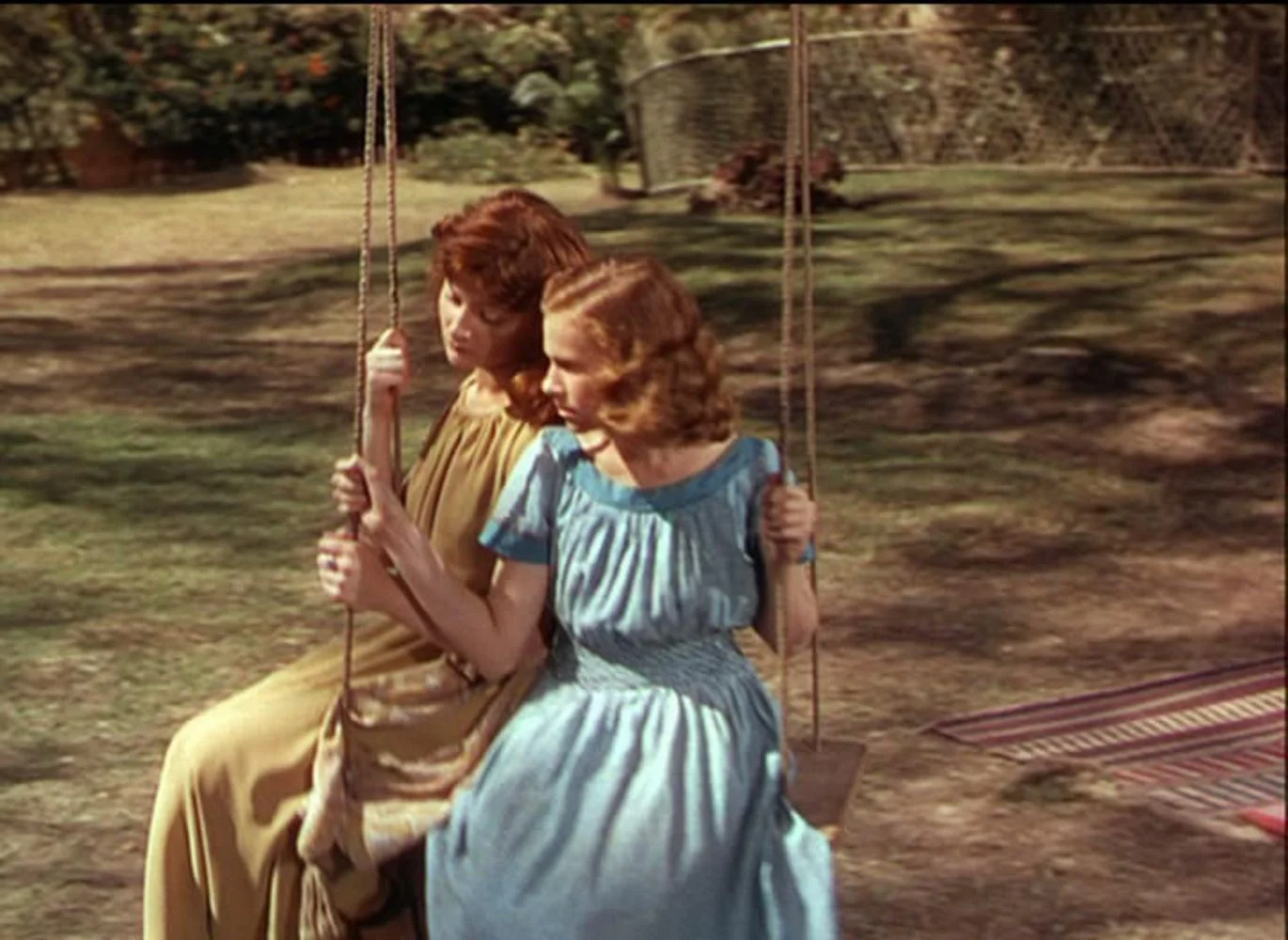
I had seen this probably three times already, but not in ten or fifteen years, and as it is to me one of the greatest of all movies, I was glad for the excuse its coming up in my system afforded for seeing it again. I cannot say much about it beyond what has already been said a million times, that it is so moving because it is really a very simple, ordinary story out of which great secrets and other depths have been pulled. This is not the whole of art, but it is a substantial and in terms of power usually underdeveloped part of it.


The night after I saw the movie I had a dream about the toothless, ancient "Auntie" who is one of the more visually memorable characters in all of cinema. I am usually rushed in the morning but I took a couple of seconds to jot down what I could remember of it:


"Twice came across Auntie blocking road while driving, once legless body, second time just a head still breathing. Both times waited for another guy to move her out of the way, set her up on the side of the road. Second time she stared at me hard in disgust. I couldn't think of what else to do. I was in New Hampshire, not India..."


Adam's Rib  (1949)


One of the famous Tracy/Hepburn "battle of the sexes" comedies that judging by this don't appear to have dated very well. Since I usually love just about anything from this time I watched it through twice just to make sure, but I could not get into it. Besides the changes in the male/female dynamic in our day that have rendered most of the jokes stale when they are not actively wince-inducing, the writing and direction in general I did not find strong enough to be able to overcome the contrivedness of the plot and the artificiality of the situations, including the marriage. The screenplay was written by women, which I suppose was somewhat unusual at the time, though many famous female writers of the 20s and 30s, such as Dorothy Parker, Anita Loos, Lillian Hellman, Mary Chase (author of Harvey), etc, received paychecks from Hollywood during this era, so it wasn't completely unheard of.


The most interesting character in this movie to me is the Cole Porter-esque piano-playing, always tuxedo-clad song and dance man who lives in the apartment across the hall from Hepburn and Tracy. He is interesting mainly because he was a type who was a staple in these kinds of entertainments who has largely faded away. What was the cause of his demise? Rock and roll, perhaps, or television, or the decline of the cocktail party in general, or the movement towards music-playing among those who could do so as exclusively an instrument for self-aggrandizement rather than shared camaraderie and joie de vivre? Yes, I wonder.

Thursday, January 24, 2013

1951 Movies


Five of them here (though it looks like one might really have been from 1952). I don't remember this year being often mentioned as one of the landmark years in cinema history, but it produced a hogshead's worth of classics. I have already noted here in passing having seen, from that year, A Streetcar Named Desire, The African Queen, A Place in the Sun, and the Alistair Sim Christmas Carol. Besides those featured in today's post, there are still quite a few more celebrated titles from this year presumably to come. Based on my listkeeping, it looks to date like the champion year for the number of individual movies that have merited the highest rating in mainstream publications.

An American in Paris


Won the Oscar for Best Picture in that highly competitive year. The choice seems to have been considered an upset at the time, Streetcar and A Place in the Sun being the favorites going in. I enjoyed the movie very much, though of course I am a mush-brain. I am surprised by how well-regarded it still seems to be by many people who seem to be demanding, the sort who not only talk about things like the Real Paris, but have intimate knowledge of it. Obviously there is a sophisticated way to appreciate it requiring legitimate mental seriousness as well as a mindless one; however, all that I am able to get from it seems inconsistent with all my sense of what sophisticated people would be impressed by. And the film certainly has its share of detractors, though again, mainstream opinion seems to have accepted it as a classic on its own terms. My own take is that it is better than its detractors, most of whose arguments against it are almost too obvious to be convincing, would have it, but it is not Great great.

The saying that all good Americans, when they die, will go to Paris, is no less pointed because it is over-quoted. Indeed, I suspect that this promise is likely is not true, and am rather downtrodden in mood because of it. I suspect we are not talking about the Real Paris, especially that of the present day, that alternate place which has the genuine good food and is supposed to be far more interesting, because everything and everyone in it is held to and lives always by high standards in which Truth is the dominant governing element; but of something more like the Paris of this movie, though hopefully a little more populated and less stagy. The opening sequence of real footage--from a distance, aloft--of the city circa 1950 with its sparse auto traffic, slightly less worn out monuments and suggestive glimpses at the miles of streets and boulevards of (for Americans) dirt cheap rents and endless carafes of wine, is getting pretty close to the fantasy. What do I ask of Paris but to give me a few sensations. That I am an artist, or at least that I appreciate beauty and all of those wonderful things. That I have a mind. That I like to drink and eat well and enjoy life, without the necessity of being a prig about it because I can take it for granted that my victuals are of acceptable quality. That I am capable of being a subject of romantic interest. This is the whole extent of it really. Is it such a joke to desire these things? Well, yes, if they haven't any grounding in truth, it is. The experience of "Paris" is not a gift or reward given for earnestness and good behavior, especially to outsiders.


Forbidden Games


This is the one I think is in fact from 1952. My book said '51 but everything else says otherwise.

This is a French movie, very different, not only from the image of France depicted in American in Paris, but even from most other famous French movies, that I have seen anyway. It reminds me more of an earlier or mid-career Ingmar Bergman movie like The Virgin Spring as far as its themes and cinematography go than anything else I can think of. It also takes for a direct subject the death and destruction, indeed the fact itself, of World War II, then still quite recent and in France especially painful to have to recall. I probably should have watched it a second time. There was nothing obviously wrong about it, and I am sure it is as great a film as it is supposed to be, but nothing about it absorbed me or made any kind of emotional connection with me either. The affection that developed between the children would have been the likeliest route to my heart and sensibility but I just wasn't up to feeling it on this occasion. I will have to try to see it again. Sometimes the second viewing is the charm.

The Idiot


This, on the other hand, was exactly the kind of thing I was looking for, the more so as it was completely unanticipated. Despite the presence of cinema legends Akiru Kurosawa and Toshiro Mifune in the project, it must not be among their top 6 or even 10 most celebrated collaborations in this country, as I was previously unaware of it. And then upon discovering that it was an adaptation of Dostoevsky, I just assumed it was set in Samurai times, another two hours and 46 minutes of the rituals and other formal cultural trappings of that genre, which I am learning, I think, to appreciate more as the years go by, though it still involves some work for me. However the movie is set in the modern world, in Hokkaido, the big northern island of Japan, where, as I remember from one of Paul Theroux's travel books in which he went there, it really does snow as much as it does in Switzerland or pre-global warming Vermont. It has great atmosphere, and a deliberateness of pace that however never fails to be interesting and makes for a pointed counterpart to hyper-distracted contemporary digital life. I should have kept it a little longer and watched it a second time, so taken with it I was.

The Idiot is one of the great stories of the post-1500 world, I believe. The dramatic background of the saintly man who is not insipid, the sickly man who is not (entirely) weak, the innocent man who is not wholly ignorant of the world, who indeed at the outset of the story is himself returning from abroad, where he has presumably been engaging with life at some serious level after his own fashion, I find to be highly affecting to the imagination. All of its main characters, and most of its minor ones, are superior representations of humanity than their counterparts in actual life, as are the incidents and settings of the plot. While the story is ultimately unhappy, I suppose, the experience of it as art marks a high point in one's mental biography that is usually to be but too rarely replicated, especially it seems as one ages. I recommend it (the book, but the film gives something of the same sense in miniature) to anyone unfamiliar with it, particularly in the dregs of mid-life, who is feeling sluggish and disengaged mentally from all of the higher currents in life.

The Magic Box


Almost four years ago I wrote about how I was unable to find this movie anywhere. Finally I discovered a couple of months back that someone had uploaded a copy of a television broadcast of it, presumably from England, to Youtube, where in exactly 1 year (January 24, 2012) it has received the rather paltry total of 738 views. So I have now seen it on the computer at least.

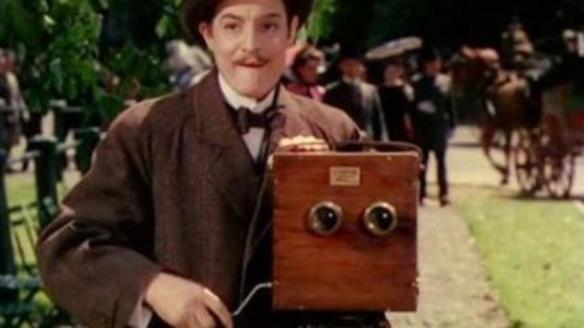
I noted on the other post that this was the British film industry's contribution to the 1951 Festival of Britain, that it was shot in Technicolor, that it starred the great actor Robert Donat and featured cameo appearances by numerous other British acting luminaries of the day including Laurence Olivier, and that its subject matter is a man named William Friese-Green who may or not have been the inventor of the movie camera but who according to the film at least invented a machine that produced moving pictures independently of whatever else was proceeding in that area at the time. The film is good, especially in its depiction of the main character's obsessiveness regarding his inventions, to the point of ruining his finances, his and his family's social position, both of his marriages, and any relationship with his sons, the elder three of whom feel obligated by the family's circumstances to enlist in World War I, which in British movies especially is so readily understood to be a death sentence that they don't even have to insert a scene later on in which the mother gets the bad news or refer at all to it having happened; the boys just don't return to the movie. And Robert Donat as William Friese-Green doesn't seem to be affected by any of this in his pursuit of invention. He repeatedly borrows large sums of money from anyone he can get to lend it to him, with no real effort undertaken to ever pay it back, and clearly thinks it an injustice when one of his creditors finally cuts him off. There is a tradition, that this is the attitude visionary and creative people have to have, and that normal types can't understand what goes on in the mind of such a person. In Europe especially that the visionary dies unappreciated in poverty and obscurity is almost preferable. Americans generally want to see some kind of payoff or vindication in the end, at the very least recognition, or reconciliation with friends and loved ones. Otherwise, how do we know the person is worth celebrating with a movie?

I am obviously not a visionary, but I did have, and still have, a certain amount of this impractical nature. It is quite amazing how long into my adult life, almost until I was in my mid-30s, that I believed I would eventually  be accepted by the greater world as some kind of writer or other intellectually-oriented line of work and be paid for it in line with other middle class professionals. Even today I don't really know or have a clear sense of how I am likely to come by money enough to live reasonably on for the rest of my life. Though the alternatives eventually happen and take on a life of their own, they always remain to some degree unthinkable, and to this day I cannot really face the reality of my situation and acknowledge it as anything significant. As this, I have noted many times here, it has rendered completely unable to function socially. In this I am completely the opposite of the Idiot.

Both of the actresses who play the beleaguered wives of William Friese-Green are of exceptional attractiveness in this particular movie, especially the one who plays the first, the Viennese-born Maria Schell.


The River


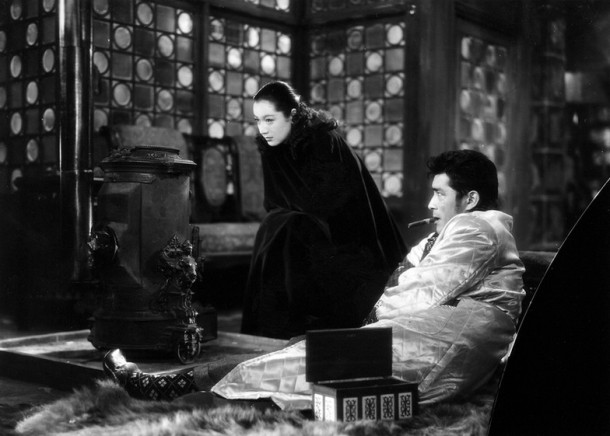
In keeping with the (loosely) overarching French theme here, this was a later project of directing icon Jean Renoir, though in English and set in India, based on a novel by a writer named Rumer Godden, with whose work I am not familiar but who I am guessing falls quite distinctly into the category of 'colonialist literature'. It was notable at the for being, I am pretty sure I remember this correctly, the first Western feature film shot in India. It is a strange and often discordant movie, which combined with the fame of its director's genius, persuades one that its art value must be high in a way that is inaccessible to the casual viewer, which I assure you is a disappointment for him. None of the actors in this movie that I am aware of when on to achieve much notoriety, and several of them are actually quite awkward in their performance. I don't know how comfortable Renoir was with English but he does not appear to have been deeply intimate with this language's spoken theater traditions (which a few short minutes of the Magic Box will serve to refresh your acquaintance with). The attitudes towards things like European colonialism and the place and nature of women vis-a-vis men are pretty close to what was consensus mainstream opinion at the time. A little English boy is killed by a cobra he is trying to charm. There was a very British Colonial speech made in the wake of the boy's death that did not go in for the sentimental or woebegone view but emphasized the duty of those surviving to move forward. I thought it made some sense at the time but obviously the argument hasn't stuck with me.

There was a mid-90s documentary included on the DVD about the then 88 year old Rumer Godden, who grew up in the English community in what is now actually a part of Bangladesh, but returned to India, or so it said, for the documentary, which I also found strange and in fact I did not finish it. I didn't like Rumer Godden. I grant that she was really old and having to go around an India that she really didn't recognize or have much affinity with by that time, but still, there was a deeper than usual air of coldness and cynicism about her. She was a real artist and turned in completed and well-received books on a regular basis, which should be more than satisfactory to me, and it is. Still, she had the air of someone who had some number of bad nights too many at the English club...

Sunday, August 22, 2010

(Probably Not) The End

I wanted to embed this, but that option has been disabled on this clip. It is so well-done, the work of a real artist. The whole trilogy is easily one of the greatest movies of all time. There is no sense of strain either in the story or the filming, every scene once it has been accomplished seems obvious, as if anybody given a camera and a scenario ought to be able to produce something at least proximate to. But of course virtually no one can. There is pity in this too.

Given the difficulties I have been having coming up with even passable material for this blog in recent months, and my increasingly sour attitude whenever I sit down to write in recent months, I have once again been giving some consideration to trying to close down the blog again. After all, I have been at it for 4 years now, which is quite a long time--many celebrated literary magazines of long ago days had much shorter runs than that--and I have not managed to make much of a splash in any way. This consideration aside, the quality of the operation can no longer be said to be consistently improving, and the contemplation of it is not usually a cause even of private pleasure to its author. The temptation to carry on will almost certainly prove too much however. The great dreams, of an audience, of popularity, of respect, of conceiving oneself an author, even of producing some halfway decent bit of writing, are yet too strong, and there is no other convenient way of indulging them.

Surprisingly, I have not had my usual summer depression this year. It has been a very good summer, with lots of outdoor activities and sun, which was unusual for me in my earlier life. Indeed my private life overall is quite happy, and whatever shortcomings I have are with great tactfulness not emphasized or alluded to therein at all unless I force the subject of them myself. I have also been less affected by the usual worldly worries and disappointments than I have been for many years. Having turned forty it is as if a certain amount of anxiety has finally cleared off from my mind. I was always pre-occupied with youthful desires and youthful markers of success, which, finally being utterly unattainable, I have noticed these anxieties starting, albeit slowly, to be evaporating somewhat. One still wants to be active and useful and important in some way, of course, but so far the middle-aged versions of the failure to be these things seem to be much less traumatic to my imagination than their youthful incarnations were. Perhaps it is because I am already accustomed to not having a public identity, and so do not reasonably expect to ever have one now. Whatever the cause, my state of mind as regards much of the world is usually calm but strangely empty and detached at this time.

But if you have not seen the clip I linked to above, I highly recommend taking the three minutes to look at it, it will be well worth the time. It is very beautiful.