Showing posts with label john ford (hollywood director). Show all posts

Monday, May 17, 2021

1931-2017 (Jim Bunning Memorial Movie Post)

 The Words (2012)

When I watched this (way back on January 2nd), I paused it midway through to tweet out "This movie radiates evil. There are (admittedly, French) films about incest that are at least beautiful and more beguiling." It's awful. I guess I hate movies about writers anyway, especially straight white male writers. If all people know about them is from watching movies, it's not surprising that they hate them. It's very negative all around. There's a young guy with neither talent nor any other point of entry into the field, as a published professional, anyway, who is wasting his life in his delusions, until he finds an old manuscript in a briefcase in an antique store that happens to be a masterpiece, which he published as his own, winning hollow accolades. The character who actually wrote the masterpiece but left his briefcase on a train in Paris and lost it turned out to be still alive, bitter and unfulfilled. Though too old I guess to covet the literary glory that should have been his in the prime of life, he least emerges to privately torment the fraudulent author. These two gentlemen were actually themselves the fictional creations of the type of obnoxious successful writer who appeals to Hollywood screenwriters, and who has a luxurious (and oddly under-furnished) apartment in New York City with a plate glass window view of the skyline, holds such a dominant position over critics and readers that he can sneer at and insult them with impunity, and routinely has beautiful and ambitious younger women coming onto him. This movie manages to make even this guy's life seem kind of gross and unappealing. The theme of the grasping mediocrity finding success by appropriating to himself other peoples' obviously superior work is echoed in the movie Yesterday, which is about a struggling musician who after some kind of cosmic event finds himself apparently the only person in the world who can remember the Beatles. Evidently this imposter syndrome is especially rampant in our current environment. Also notable to me about this film is the seeming absence of any kind of organic literary culture or society even for the writers who have some talent. All of these people are working as it were on their own islands and don't appear to know anyone else even the slightest bit like themselves, let alone at a comparable level of development or status or age or in their artistic sympathies or anything. It is so uninspiring and depressing.  

Bonjour Tristesse (1958)


Film version of the popular-in-its-time novel which I read last summer. Directed by the prolific but usually disappointing Otto Preminger and starring David Niven, Jean Seberg, and Deborah Kerr, who was seemingly in everything in the late 50s. I would rather this had been a French movie--it isn't as if that country was hampered by a deficiency of moviemaking talent at the time. I didn't do a ton of research on it beforehand (obviously) and I had the idea that it was in French, with a French cast and so on, so I was surprised and disappointed when this turned out not to be the case. It looks at least like it was filmed in part in the Riviera, though I am not 100% sure of that either. It is passable, and some of the locales and clothes and colors and those sorts of things are pleasant enough to look at but for the most part it is flat and lacking in pizazz. Like Deborah Kerr, David Niven was a big name and pretty ubiquitous at this time, and not unlikeable, though whenever I see him I always feel that he was either miscast or that he played his role in a way that must have been appealing at the time but that comes over now as rather treacly. He was by all accounts quite debonair in his civilian life, but at least in the mainstream movies I've seen him in he always seems to be trying to come across as more of an everyman, and it always seems a little off. Although the subject of the movie (and the book) is the ennui and aimlessness of the postwar upper middle classes, the background against which all this happens, the casinos and cafes and restaurants full of well-dressed, reasonably intelligent people dancing to live music and so on, empty though I suppose it is, looks like it should be a lot of fun even in pretty large doses. The well-developed human spirit seeks more though.

Arrowsmith (1931)
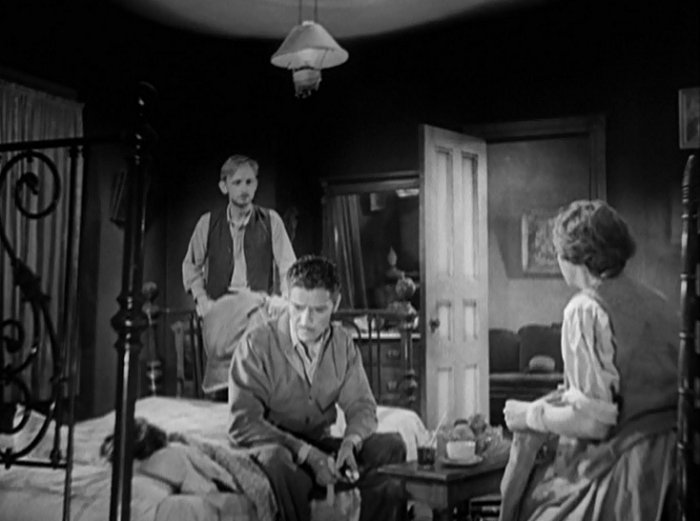

Another near contemporary adaptation of a book I've read in the past few years. Directed by John Ford and starring Ronald Colman, Helen Hayes and a very young Myrna Loy, this is an extremely polished film by the standard of 1931, with an unusually sophisticated script, beautiful sets (particularly the McGurk medical research institute in New York City) and a much more modern sensibility than is found in most movies from this period. As a narrative it's decent enough, however it leaves out large sections of the book, which obviously is necessary in such instances, but in the more successful adaptations this is done in a way that manages to distill something of the essence of the best parts, which did not happen here, as what were to me many of the most interesting parts of what I thought was an excellent (and presently somewhat undervalued) novel, such as Arrowsmith's entire childhood and college career, his time living with the Pickerbaughs as a public health official in Iowa, and so on, are passed over entirely. So I did not find the movie as altogether satisfying as I might have.

Insidious (2010)

This is the kind of movie that turns up on my list from time to time and I feel obligated to give it a try. It's about a family that moves into an old house that is inhabited by demons, one of whom manages to entirely drain one of the children of his soul, or animating spirit, or whatever you want to call it, for its own use. I don't really get too into these types of plots. In fact after watching about 27 minutes I stopped it and said OK, that's enough. However--the mother of this family is a character (30ish, college educated, moderately cultured middle class mom who likes restoring old houses) that is just my type, played by an actress, whose name is Rose Byrne, who is also evidently just my type, so the next evening, when I sat down to watch my little bit of a movie before bedtime, I confessed that I wanted to see a little more of Rose Byrne, so I ended up watching the rest of the movie, and it was kind of worth it. This was no fluke either--I'd only seen her one other time, as Briseis in Troy (2004), which I did not realize until after I finished this movie, but when I wrote my blog review of that movie in May 2014 I made note of her as well, writing that "the actors are very good-looking, have incredible bodies (assuming they are real), to the point that it would be ridiculous if they did not have sex with each other all the time, which they do." After going on a bit about Diane Kruger, who played Helen, I noted that there was a "similarly smoldering Briseis, who holds a knife to Achilles, played by a supernaturally buff Brad Pitt. Needless to say he does not panic, but smiles devilishly and begins to massage her sensitive areas, and pretty quickly the knife falls harmlessly to the floor. After all this sex, in marked contrast to modern life, the women are wiped out and look as if they won't be able to rise from the bed in any kind of functional state for several days, while the men are up at the break of dawn as fresh as newly laid eggs ready for a full day of ancient warfare in open arid terrain in 90 degree heat..", etc. So anyway, the takeaway here is that I really like Rose Byrne. She's 41 now. She's originally from Australia. She doesn't seem to be on Twitter. 

A Cure For Wellness (2017)

This got mixed reviews. Visually, it is pretty spectacular, albeit in a frigid way, but the point of it is unclear and the story fails to be moving. It takes place in an opulent, exquisitely styled sanitarium in Switzerland catering to the Western .01% class which no one, having arrived, ever leaves. It is inspired in part by The Magic Mountain, which I have actually never read (most of the really famous early 20th European novels of this type I feel like I have read through at least at this point). Maybe I would have more feeling for it if I had. It has a weird and kind of inscrutable ethos. At times I felt like this was a missive from some kind of Anglo-Germanic-Celtic blue-eyed overclass, if such a conglomeration even exists, that has detached itself with its billions from everyone else, letting us know spiritually where they are, a dark and sinister but fantastically stylized place where the masses can't join them. However I will tie myself up in knots trying to explain what I imagine this movie is about, and I didn't really like or think it worth spending a lot of time on. 

Vincent and Theo (1990)
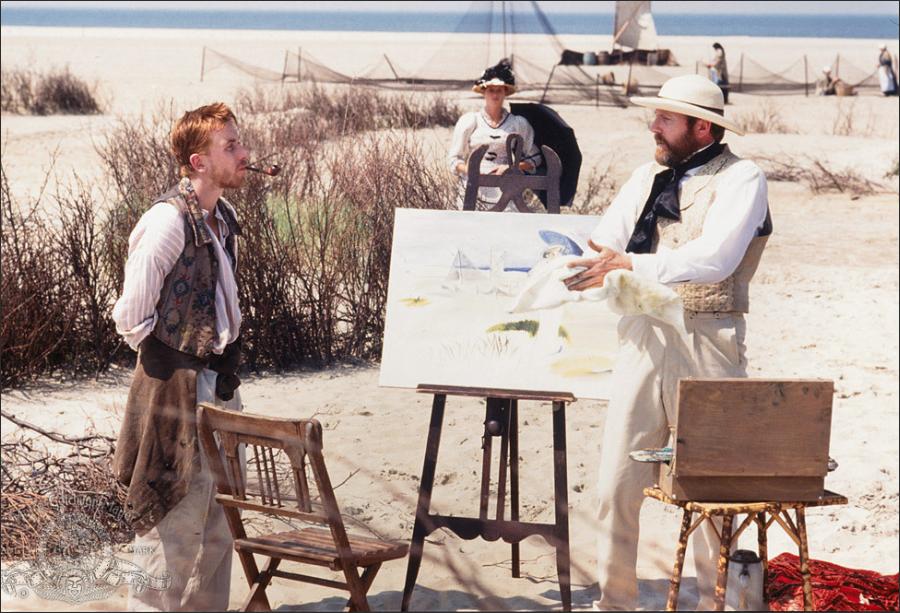

I hadn't seen this before, though it is right from my prime era of indie movie theatergoing (ca. 1989-95).  I don't know what I would have thought of it then, but my sensibility, such as it is, was formed during this time, so I think of this as what art movies are supposed to be like. I felt a little like I had come home, especially after The Cure For Wellness, which not only didn't feel like a continuation of the same art form, but whose human characters and society didn't feel much like a continuation of those that inhabited the world I grew up in either. I wondered if it wasn't undervalued for being one of the lesser, or at least less celebrated, works of a famous director (Robert Altman). To me it compares favorably with what is being made today but was more typical perhaps of this era, especially the European movies. Though directed by Altman, this was a European production, originally planned for television, and there is a 200 minute version of this made for television, though I saw the shorter movie version, which is the one that got released in America. 

One is struck in watching this by how leisurely and unfrenetic the pace is. Scenes are allowed to play out at length, the viewer has time to take note of some of the artistic touches. Altman is famous for his attentiveness to sound, of course, and there is one scene where some characters are sitting in the front parlor of a gallery in Paris and you can hear the clopping of horses and other sounds emanating from the street, which is never shown, an effect that is usually neglected in period films. At least I haven't noticed it before. Also when Theo's wife is about to go into labor they show her on her hands and knees fanatically scrubbing the kitchen floor, which is very typical behavior--my wife was doing such things at the last minute with all of our children, and it would have counterproductive to try to persuade her not to--but again I have rarely seen it depicted so authentically and kind of matter-of-factly on film. Of course as in all biographical films, even good ones, I don't suppose that the historical figures being depicted were anything like their movie versions. As my wife, who did not watch this with me though I am going to try to get her to, as I think she would like it, once said of another movie--whether it was Amadeus or Ivan the Terrible I can't remember right off hand--"If these guys could see the movies that were made about them." 

I was twenty years old in 1990, and the three years from 1989-91, I assume because I was very alert and perceptive to impressions during those, always seem to me now when I see them in movies to have a definite "look"--the color and texture of the sky, the trees, the situation of dust and mud puddles on the ground, the progression and quality of rust on fences--all seems very specific to that time, and those things do not look exactly the same way now. I'm not sure whether this can be true, or if it is merely an effect of the type of film that was commonly used at the time and that is actually what I am remembering, but I do have this impression a lot when I see movies from that time.  

Saturday, July 11, 2015

Maybe the Most Classic Movie Post Yet (1933-1940)

The Grapes of Wrath (1940)

I have never gotten around to reading the book yet (though it appears on all of my lists eventually), nor had I seen the movie until now. It was probably time for one of them. The film was satisfying to me. John Ford of course directed it, though I have still not had that moment of profound, I-see-the-light connection with his personal style. It is more that I like most of the studio productions I see from this specific period, the prewar pinnacle from '38 to '41 or so. The images and sensibility they present, of the landscape, of the people, of history, of literature, still inform the ideas of much of the common mind with regard to all of these subjects. It was a transitional period, which will be a theme throughout this post. For me at least, the people in movies in 1930 and the world they inhabit seem quite remote and foreign, but by 1940 these have become very recognizable--in many instances almost more so than the present.


I liked the presentation of the road trip--Route 66, passing the state capital in Oklahoma City, how the road was unpaved when crossing into Arizona, the roadside diner, the bridge at Needles, the desert. Some hardcore critics have complained, as someone always must, that the real hardships and poverty of the Okies were softened to be palatable for the public, but I think their circumstances as presented here are plenty grim. Movies that insist on being relentlessly miserable also tend to kill in me any hopefulness that improvements can be effected. I liked the beginning scenes in Oklahoma too, they they are reminiscent of the Kansas portions of the Wizard of Oz. I thought the tone was a good one to take, the emphasis on these people being Americans and having cultural and linguistic affinity with both the filmmaker and the audience, and the confidence that the government, representing the greater nation, could have a positive role in mitigating some of the really ugly consequences of the economic situation (as represented by the much more pleasant and competently organized government camp--with showers!--that the family is able to stay at near the end of the movie).

Mutiny on the Bounty  (1935)

Another real monument, eminently watchable and crowd pleasing. an early realization of the finely polished Hollywood product that we all know. We also have the irrepressible Charles Laughton starring as Captain Bligh, though while he still gets some good lines ('Clear the deck of this r-rrrabble"), he does not have quite the free range to completely take over the character of the film the way he does in many of his other roles. I really notice in this movie and the two below the jump, or break, as some might see it, that took place in film production from 1933 to 1935--those in the latter year seeming so much more modern in terms of dialogue, mood (superficially at least much less dark), humor, what constitutes attractiveness in women, the stars such as Laughton and Clark Gable still have a general resonance with modern audiences whereas some of the earlier stars do not. I mentioned in an earlier post (on Baby Face, I think) how I was struck by the general crassness and slatternliness of the pre-code era films in contrast with anything that has come since, even the self-consciously edgy movies of the post-1970 era. The Code doubtless is responsible for a lot of these changes, but perhaps, in certain areas, it had a positive influence. It did raise the tone of movies, and one suspects of public discourse in general, as far as the mass mind was concerned.


The part where the daily log is read when Bligh and those loyal to him in the castaway boat have been several weeks on the open sea and are out of food and water, with no immediate prospect of finding land, essentially dead men floating, and it is noted that all there is left to do is to pray to the Almighty for deliverance struck me as noteworthy, for this is precisely the kind of situation at which modern intellectuals, or the more comfortable ones at least, are fond of pointing out as a demonstration of the absurdity of the idea of a higher power, conscious or otherwise, that takes the slightest hand in human affairs. Yet it makes perfect sense that if a man were really reduced to the woeful state that the castaways found themselves in, that prayer, or something akin to it, would be almost the instinctive response. That does not mean that it is 'true' or that it proves the material or objective supernatural existence of anything, but the impulse in such instances is a profound one and means more in terms of the human experience than perhaps some people appreciate.

This was based on an at one time famous book as well, though I don't think it is read much anymore.

Dinner at Eight (1933)

Now in two years we are back practically in another era, not just in the movies of course but in American history, as doubtless along with the code the Rooseveltian political ascendance and the more hands-on, technocratic approach to governing and its underlying aims that Americans began to accept after 1933 had no small influence on the character of films. Based on a hit play by George S. Kaufman and Edna Ferber, who were big name writers at the time, the movie was an extravaganza full of huge stars who were at the peak of their fame at the time, most of whom however would be facing has-been status within a couple of years. John Barrymore, one of the greatest American actors ever and in my top ten favorite male stars, though I had only seen him before this in two movies (Grand Hotel and Counsellor at Law), in both of which he was magnetic, is in this, though he was not his usual awesome self such as I was expecting. And indeed, many historians of the movies note this particular film, in which he plays an alcoholic has-been actor having an affair with a woman half his age that apparently was a mirror of his own place in life at that time, as the beginning of his decline. This is my first time seeing Marie Dressler, a blowsy, overweight, middle-aged vaudeville veteran who was the number 1 box office star in the country in 1932 and 1933. Her persona in this was as a wise-cracking, seen it all, worldly wise artistic mother hen with a big heart. My impression was that her shtick was a little overplayed, but that was the vaudeville style. She actually died of cancer in 1934 at the height of her fame, but it is hard for me to see her maintaining her status as a top draw as the 30s wore on. Jean Harlow, who was one of the major 'sex symbols' (I thought today that this was an odd expression; but then as I don't especially like most of the people who are designated as symbolic in this way, it is perhaps because the term does not strike me with significant meaning) of the 30s, famous for her pussycat pouting, platinum hair, and the pointedly underdeveloped intellects of most of her characters, is also here. Not really my type. She died (at age 26!) in 1937, at which time she was still a pretty big star, though I have not heard of most, if any, of the movies she was in.


The story in this, as well as its tone, definitely belong to that side of the 1930s cinema that I find to be strange, of enormous doors and lavishly furnished rooms that look as if no one ever occupied them, of naked social climbing and social misery, and a certain blunt honesty about people's sexual and financial interests. The movie is of interest as a glimpse of its time, and of all of its so soon to be vanished megastars, and if Netflix ever sends me a DVD of it (I had to check it out on early 90s era VHS from the library) I will certainly watch it again and see if I can get anything more from it.  

King Kong (1933)

Probably more important and epic for the sci-fi/monster/special effects aficionado, but it is certainly historically iconic, and I feel like I have achieved the next level in my progression as a movie buff in having seen it. Speaking of seeing it, have the PC police checked this out lately? I would advise them to skip it, but I get the sense that a lot of them feel a thrill of righteousness and vindication in seeing what they know all white people really perceive exotic peoples and countries to be like anyway depicted on the screen.


There was quite a bit of material in the extras about the director, Merian Cooper, who was the kind of daredevil, hyperenergetic, independent, endlessly resourceful and creative American male specimen that seems to have especially flourished in the early decades of the 20th century, at least I am discovering more and more individuals who broadly fit the type. A fighter pilot in World War I, Cooper was shot down and taken prisoner, knocking him out of action for the remainder of the war. His appetite for fighting not quenched (thus joining Hitler as the only men I am aware of who did not get enough of World War I), he went and joined the Poles in their fight for independence against the fledgling Soviet Army, in which conflict he was taken prisoner again. He escaped from Soviet prison, where his life was only spared because they did not realize who he really was, and made his way back to the United States, where he and his friend and collaborator Ernest Schoedsack took up documentary filmmaking, making intrepid ventures to places like Iran and Thailand and Sudan that were scarcely on anyone's radar in the United States in the 1920s. In addition to producing many films, especially numerous of John Ford's classics, he became an off and on executive at MGM and other companies. When the United States entered World War II he immediately re-enlisted in the Air Force and directed numerous bombing raids in Japanese held areas of China, rising to the rank of brigadier general. One could go on, but you get the general idea. And this guy is not someone who is really all that well-known, even as the director of King Kong, which is what he is most famous for.

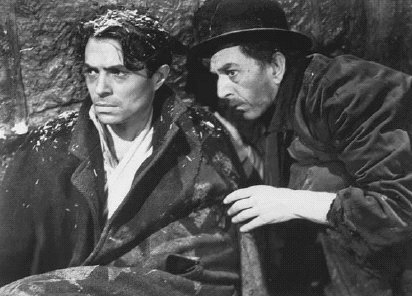
I also watched Odd Man Out again, as Netflix finally sent me a disc of it, from the Criterion Collection too. My second impressions are, above all, that it is one of the most gorgeous movies I have ever seen, which is all the more remarkable when you consider that much of it was shot in Belfast (with the remainder in London) in 1947, a time and place not thought of at the time as being beautiful, but in contrast with today's world there is an elegance in day to day common speech, clothing, cityscapes, customs and the like that hold a deep attractiveness to a person like me. This atmosphere, more so than in The Third Man (which was Carol Reed's next film after this) is what makes the movie what it is.


Friday, December 27, 2013

Golden Age of Hollywood 1939-1942

The Magnificent Ambersons (1942)

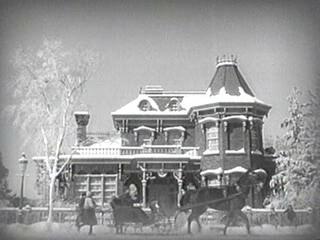
I had seen this ten or fifteen years ago. It did not seem as good to me as I had remembered. It is very talky, and not in the way that moves the story along. It is also darker (as in shadowy), quieter--there is no music in large parts of it, if there is any at all-- and more claustrophobic than I had remembered. Also the circumstance that the film ends abruptly in the middle of the story, given that it does have a story, and that the story is not incidental to its execution, is a problem that I cannot seem to wave off as easily as I must have before. It still might have been one of the all time greats if it had been completed, though it would have been awfully long and ponderous. I am not as high on it as I used to be however.


How Green Was My Valley (1941)

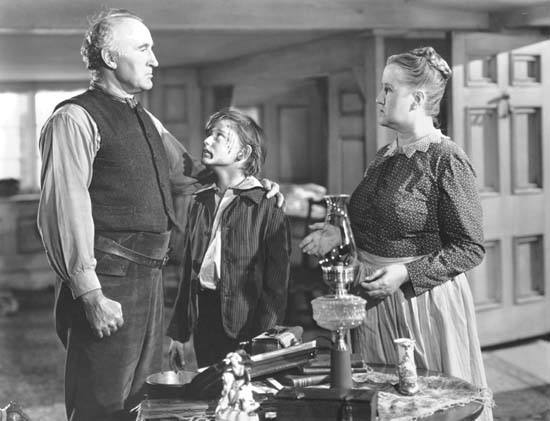
Celebrated John Ford tearjerker that won the Best Picture Oscar over Citizen Kane but was so great in its own right that cinephiles do not complain much about this decision. I had never seen it before. I like it, it's very good, and several times it came close to causing the swell in my bosom and welling up in my eye that I had feared. As I often find to be the case with John Ford however, perhaps because the expectations for his films have been raised so high, I found myself thinking that as good and well laid out as the movie was, that it could have been still better, or at least could have gone for the full pathos or sentimental effect, and did not. The opening scene, for example, I felt would have made more of an impact incorporated into the ending. At other times he went for humor instead of pathos, which humor hasn't really aged well. This is my take as someone who was especially looking forward to seeing this and eager to like it. I do like it, but not as much as other people do.

It has been noted by most astute commentators that even though the characters are nominally Welsh, Ford essentially depicts them as if they are Irish, which he was by ancestry, and his parents by birth. The repressed love between Maureen O'Hara and the priest even when she was being courted by the son of the factory owner was a pleasing example of the Irish romantic sensibility. Marrying for wealth, or the potential of wealth, does not seem to be as developed an instinct among Irish girls, even pretty ones, as it is among women of other nationalities. The immortal quote "I'd rather cry in the back of a Mercedes than laugh on the back of a bicycle" that appeared in the New York Times report on the dating situation in China a few years back is not a sentiment that seems to be as widely held among Irish women. Even after marrying the wealthy man she did not love and moving into the mansion and having a taste of life with servants and other luxuries the beautiful Angharad (Maureen) is still pining for the priest, who is a good man, but is not exactly a fiery take-charge type, unless prompted heavily. Not to mention that he lives in the dingy rooms appropriate to his station. But for all that I didn't think it was an unrealistic portrayal.

How Green Was My Valley, like a lot of classic films from this time, was based upon a book that was a huge bestseller in its day that has been forgotten. This one even won the (U.S.) National Book Award in 1940. The author was Richard Llewellyn, whom I had never heard of before this. I suspect the book is not half bad, and probably better than the movie in some ways.


The Letter (1940)

William Wyler directed movie starring Bette Davis based on a story by Somerset Maugham and set in colonial era Singapore. These are all points in its favor. It's the most smoothly classical of the classic Hollywood films in this group, or at least it has the most sophisticated veneer. Murder, adultery, expat Brits, cynical, plotting natives, fairly crisp, literary dialogue, The plot is nothing spectacular but the Maughamian atmosphere is conveyed well enough to hold one's interest, the acting and direction are first-rate, and Bette Davis, who is still young here (she would have been 31 or 32) does have a kind of mesmerizing quality, especially when considering that she is playing a stone-cold murderess in this movie. She looks to have been rather small, as actresses. I had not known either that she was a New Englander (Massachusetts). She described herself as her first screen test, when fifteen men had to lie on top of her and give her a passionate kiss, as the 'most yankee-est, most modest virgin who ever walked the earth" (Wikipedia). It sounds like she was able to overcome this Yankee prudery as her career progressed however.


Take Me Back to Oklahoma (1940)

This is what I would assume is a B-movie, Saturday afternoon matinee, what have you. The production values are a shock after seeing the three above films. It is like being dragged back to the early silent period. I wanted to get into the spirit of this, which features the singing cowboy Tex Ritter, his sidekick Arkansas Slim, a singing group called the Texas Playboys who are not unversed in the use of firearms either, and some non-musical bad guys who want to take over, preferably by violent means, the only on the level coach line left in the west. It was just a little too goofy and raw for me however. It is only 60 minutes long.


Destry Rides Again (1939)

Another odd western, starring Jimmy Stewart and Marlene Dietrich, who is the current old star that is all of the sudden turning up all over the place on my list. It's got some entertaining parts to it, and I thought it was mildly interesting for a while, but it kind of lost me towards the end. I think I was tired, and maybe I should have tried to watch the ending a second time. Marlene Dietrich's character, I have to confess, was more trashy than I really have a taste for, especially at this point of my life, and while I like the idea of Jimmy Stewart as an even-keeled, law-revering, use the guns only as a last resort sheriff in the midst of a world wholly composed of morally corrosive hotheads, it doesn't strike me as very plausible. The lawlessness of the town at the beginning of the movie was one of the most extreme examples of what that would mean that I have seen in a film. That was one superlative thing about it.


Tuesday, December 18, 2012

Getting Back to the Good Stuff


For a little while anyway.

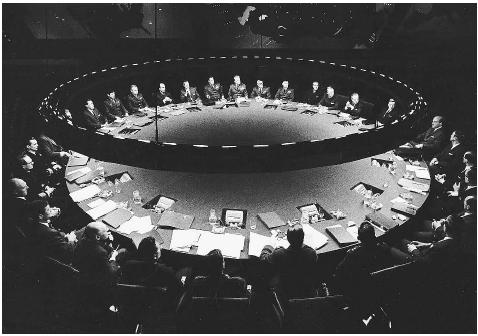
Dr Strangelove (1964)


I had seen this I believe twice before, but it had been ten years at least since the last viewing, I hadn't made any record of it here, and I am fond of the movie, so I decided to see it again.

Many commentators note that a lot of the jokes, especially the more famous ones, lose impact on repeated viewings. I did notice something of this--perhaps age has something to do with it also--but it isn't like my affection for the movie was ever based on a selection of quotable but evidently insubstantial and transient lines.

I do suspect that the main appeal of this for me now, as it is with most of these old films that I like, is as a nostalgia piece, of which Dr Strangelove is an especially potent artifact for me. While it is true that film dates from six years before I was born, the world it depicts, its images, many of its attitudes, are more familiar to me, or at least resonate more with me, than almost everything about current existence, in which I almost never feel really at home. I will try to express what I mean by this below.

I wrote recently that my ten year old wanted a typewriter for Christmas. After poking around online I found someone near me who was selling a pale blue 1970s vintage Smith-Corona Coronet for $40, which is a good price for a working typewriter. It seemed beautiful to me when I beheld it, and even though I had not banged on this kind of machine for 25 years certain of the various idiosyncrasies of handling it that have been lying utterly dormant during the whole of that time returned to me within a few moments. In brief, given this antique instrument to play with, I had the opportunity to feel almost competent to perform some adult activity for a few moments. Movies from the 1960s especially often have a similar effect on me because the details and objects and even the geography in them are within the range of my knowledge and sense of what the world is properly like. I have noted elsewhere that even 1960s depictions of sex seem more natural and to make more sense to me than most of what has developed in that realm--both in films and real life--since.  Dr Strangelove is full of both little and big instances like this. To begin with the whole struggle of the Cold War, with the United States and Soviet Union as mortal enemies and the threat of nuclear annihilation always hovering somewhere in the back of one's consciousness was a dominant fact of the first 20 years of my life that suddenly evaporated into nothing. It is odd to say that returning to days when that state of mind prevailed as a cinematic tourist is comforting, and I don't think that is the right word anyway; but it does seem normal. The movie also conveys an idea of the physical earth, as least in the northern hemisphere, as vast, cold, mostly barren, alien to refined human sensibility but also exciting in a masculine measuring-oneself-against-nature kind of way that I am in tune with, an idea that also had strong roots in the far flung military activities required by the Cold War and also with the Space Age. Even though outrageous, the characters as human types do not seem to me as remote as almost anyone either in or portrayed by media or the arts today. This has to be illusory, and the result of my just not feeling able to trust anyone in contemporary society, or always being wary of whatever agenda it is they want to push. The agendas of people who are dead or superannuated are less threatening to me, not least perhaps because enough time has passed to identify anything that would strike me as really insincere or incoherent or sinister about them, which I cannot seem to effectively do with contemporaries...

Yes, so I hope you get the idea. I didn't pick up much insight from the bonus materials. There were two tidbits I found of mild interest. The first is mainly for those who are obsessed by dates. Dr Strangelove was supposed to be released on November 22, 1963, but the date was moved back to January of '64 due to the Kennedy assassination. The second was a story, probably apocryphal, that when Ronald Reagan arrived at the White House upon his inauguration as President, he inquired of various aides where the War Room was, having apparently gotten the idea from this movie that such a place actually existed, which, however, is not the case.

Along this same general theme of nostalgia and my mental image of what the universe is like, the opening sequence remains one of my favorites of all time.


Shane (1952)

Most of the reference books have it listed as 1953, though the copyright date on the movie itself is '52, which is why I am going with that.


I never watched Westerns as a young person. I don't know why, I suppose somewhere along the line I got the idea that they weren't very interesting. As a result just about the entire genre is unknown to me. But maybe I am ready for it now, or at least for the better specimens of it, because I liked this. It is emotionally appealing. While it is a cliche to say that Westerns have classic story structures, in the case of Shane at least there is more than a little truth in it. In the execution of the key scenes there is a deliberation that allows the viewer to ponder the particular drama that is unfolding and to savor it, without being gratuitous. The director was George Stevens, who had had another triumph the previous year with A Place in the Sun, which I wrote about here a couple of years ago, as well as several other well-regarded films. I would rate Shane above A Place in the Sun, which I also like, but not as much--Shane hits a number of high points and seems to me to attain nearer to perfection with regard to what it is trying to do. I don't think it is inherently a great story in bare form, but there was a meaningful story in it that the filmmakers hit upon and were able to bring out.

The cast featured several name actors in prominent roles whom I had not, however, seen before. Alan Ladd and Jean Arthur especially, but also Jack Palance, who was kind of a kooky but somewhat engaging old guy who was always on television when I was a kid, as a young man. All of these people have a certain appeal to them that I think was used to good advantage in the movie.

The Quiet Man (1952)


All right, this movie. Where to begin? I saw it some years ago and, like a lot of people, did not get why it would ever be supposed objectively great. I still think that absent the considerable backstory and the magnitude of the beloved personalities involved in the production that this would not have attained to classic status; and while I think it perhaps can pass as a work of art of a kind, I do not think it is of any very profound kind. That asserted, I do have some greater appreciation of the fact that in this instance the magnitude of the personalities is indeed important, that the film does have a beauty and energy about it that is decidedly unique, and that, especially as I enter the nostalgia phase of my life, it is highly charming.

The movie was a pet project of John Ford, the legendary director whom my various inquiries into the matter have begun to persuade is more widely considered the greatest American director of all time than anybody else. I was astonished to find out that he grew up on turf with which I am very familiar, being born in Cape Elizabeth, Maine and growing up on Munjoy Hill in Portland. He graduated from Portland High School (this was the other public high school in Portland, and the mortal enemy of my school), yet at least from 1986-89 when I lived there he seemed to be forgotten in his hometown, for I never had any idea that he was from there until this past year. At far as Portland celebrities go, he is really at least as big as Longfellow and Robert Peary, and much bigger than Judd Nelson, Linda Lavin, Annie Proulx and whoever else we can lay claim to. This guy is a titan in the history of cinema. He is our Fellini or Kurasawa.

I had the impression from somewhere that one of the reasons usually given for John Ford's successful development into a significant artist compared against the pygmies of the present day is that instead of watching television and throwing away years of his life going to college he obtained a varied experience of life and people while working on ships and construction sites and getting into bar fights and having affairs with girls from the wrong side of the tracks and that sort of thing, but the reality is much more prosaic and logical; he moved to Hollywood, where his older brother already was established in the fledgling movie industry, when he was 20, and began working on film sets, spending those crucial years of one's early twenties, when no process seems overly daunting given a thorough enough immersion in its operation, learning about how movies were made. In those heady days when demand for film production was increasing exponentially and technical skill in the art was largely the province of the young and rambunctious generation, Ford was made a director of quickie silent films (most of which , however, are are lost--only 10 of the estimated 60 silent movies Ford made survive today) at the age of 23. None of this is giving any particular insight about John Ford yet, but I am still in the process of gathering my impressions about him; perhaps by the 7th or 8th film I will have some insight into what is really going on with him.

The Quiet Man is also famous for John Wayne's branching out from his standard cowboy/war hero role to a more domestic part. We haven't seen much of John Wayne on this list. I am not sure what my opinion of him is yet. His persona obviously is his most important quality as a star but does he really earn it, really carry it off? I'm not convinced. He seems to take himself, or his image of himself, awfully seriously, more than I am used to at this point. He's also almost utterly humorless. I realize he was embodying an image of manhood that was much admired and aspired to at the time, and it was almost certainly a better model than whatever sad examples we are expected to emulate, but at this particular point in time there is something really foreign about it...

John Wayne is one of the three great celebrities of the 1940s and 50s whose body type and history pretty much mirrors mine from age 20 to 42 certainly, and is probably predictive of it going forward, the other two being Ted Williams and Charles de Gaulle. Modern day big shots have personal trainers and dieticians--or are otherwise extremely disciplined--all of which largely prevents their physiques from developing in a manner parallel to my own.

Maureen O'Hara, a healthy looking redhead, and native of Ireland, who frequently worked with John Wayne and John Ford, is the female lead here. Her character requires some mild Taming of the Shrew type treatment due to her predictable temper, but John Wayne obviously is up to that challenge. There was an interview with Maureen O'Hara in the extra materials in which she stressed the serious old-world training in the art of acting she received at the Abbey Theatre school, adding that no European movie actress got her start by being spotted sitting at a lunch counter. I wonder who that barb was aimed at.

I think the over the top Irish stereotypes that fill the movie are entertaining, silly as they are, because they are the kinds of things that a conscientious artist or intellectual would be so concerned about avoiding today. That sort of thing was of course rampant at the time, and it turns up again in another movie more or less contemporary which will be discussed in the next set, where I plan to go into it with more detail.

A woman I went to college with claimed that her grandfather had been the inspiration for the character of the Quiet Man. I have no idea whether this is true or not, but there is no obvious reason to believe it was not at least a family legend, since I doubt many people even at our school were familiar with either the story or the film. I certainly wasn't.

You could hardly have made an Irish movie from 1940-1955 without having a part for Barry Fitzgerald, who appears in his third picture, and really his first in a supporting role, of those I have written about on the site--the others were And Then There Were None and The Naked City, and this gets him into the first tier of the Bourgeois Surrender Movie Star Hall of Fame. Sterling Hayden (The Asphalt Jungle, The Godfather, and Dr Strangelove, also secured his spot with today's reviews.


I will do a brief post next on a couple of leftover matters not related to movies that I was going to stick in here.