Showing posts with label james baldwin. Show all posts
Showing posts with label james baldwin. Show all posts
Saturday, September 07, 2013
Brief Notes on Some Comments (James Baldwin)
My weekly posting.
I got a couple of comments this week. I don't get many comments--four so far this year, one in 2012 (and that all of seven words)--so it was a pretty momentous occasion. The commenter(s) didn't think much of something I wrote about James Baldwin five years ago. That is fine, I looked over what I wrote and while the introduction was a bit silly, the rest of the piece does not strike me as unreasonable or even disrespectful. In any event the criticisms directed at me were neither particularly coherent nor devastating. However, some of the things that were said interested me, and I wanted to briefly address them.
The childishness of my opinions was emphasized, twice in fact, though specific examples were not given. I don't feel childish when I am alone, but as this is the impression I make on most serious people above the age of seventeen or so, despite all that I have done to try to combat this shortcoming and give myself some gravitas over a period of many years, I must face the possibility that I don't have whatever quality people have that enables them to read and think out important things with perception and maturity. I must confess though, when I got bogged down writing this paragraph I cleared my head by watching a couple of numbers from On the Town on Youtube, which is not exactly an argument in favor of my having any kind of mind that is to be reckoned with.
The commenter accuses me of paying too much attention to what other critics have said about James Baldwin. I don't recall having ever read anything about James Baldwin. He is not at this point, and has not been for most of my reading life, someone who is talked about as a literary figure very much. Indeed, if I am coming to similar conclusions as other readers of a certain type, perhaps it speaks to something that is actually there. I do not deny that the man was courageous, or that he did not accomplish meaningful things in his life, or even that I did not like his first two books, Go Tell It On the Mountain, and Notes of a Native Son, both of which are well worth reading, though I do think Another Country was pretty bad. However, childish as I am, I have still read a thousand or so books in my life, most of them 'literary' in nature, and I also have spent a decent amount of time trying to write, and based on this experience, Baldwin displays some limitations as a writer that really jump out at you compared to other authors. Maybe these limitations are not important in the grand scheme of Baldwin's career, perhaps they are not even real, and I am blinded by certain biases related to my situation in life that have nothing to do with Baldwin's literary plan--I am not a scholar, after all. I am basically a person jotting down hasty impressions in a diary, or better, a journal. There is a way to do that well.
In my notes on Baldwin I was really thinking of him purely in a literary/artistic context and his place and relations in that universe, which is how I tend to perceive reality, interpret history, and so on. His status as a public figure or civil rights champion did not really factor much into what I was writing.
I am usually criticized for being over-reverent of authors. This is a change for me.
The writer pointed out that a number of black icons such as Malcolm X, Toni Morrison, etc, would probably not agree with my assessment of Baldwin, which, I might add, was not actually either bad or dismissive. It is hard for me to imagine a scenario where I could sit down with the likes of Malcolm X and Toni Morrison and say anything I genuinely believed or thought that would be enlightening or pleasing to them however.
The commenter closes by saying that I owe Baldwin (or maybe they really mean someone else) an apology. Do dumb readers whose offenses mainly consist of an inability to understand a celebrated (and dead) author's work even have the capability of insulting him? I don't think so. You have insulted your readers, if you have any, or teachers, or whomever, by wasting their time with falsehoods, and maybe you owe them an apology, which they can convey to Plato or James Joyce or Baldwin or whomever by understanding them even incrementally better than they did before. And can an inferior mind offer a legitimate apology to a great one anyway? Not really.
I am tired this week. I wanted to spend a little more time of this, but I have no concentration. I think I am more manic/bi-polar than I had realized. I notice that my moods and energy really swing back and forth. This week I am on a down cycle.

Thursday, June 03, 2010
Louis Armstrong--"What Did I Do to be So Black and Blue"
"I'd like to hear five recordings of Louis Armstrong playing and singing "What Did I Do to Be so Black and Blue"--all at the same time. Sometimes now I listen to Louis while I have my favorite dessert of vanilla ice cream and sloe gin...Perhaps I like Louis Armstrong because he's made poetry out of being invisible. I think it must be because he's unaware that he is invisible...Invisibility, let me remind explain, gives one a slightly different sense of time, you're never quite on the beat. Sometimes you're ahead and sometimes behind. Instead of the swift and imperceptible flowing of time, you are aware of its nodes, those points where time stands still or from which it leaps ahead. And you slip into the breaks and look around. That's what you hear vaguely in Louis' music."-- from Invisible Man.
Well, this is a good song, isn't it? It's the blues, which I know I've said in the past I don't like, but there are exceptions to everything. Ideally art is still an elevation of the ordinary banalities of feeling, and most thought, to a form where the sensation gives pleasure to the mind, even where the subject is an unhappy one. This last point has I suppose always been a point of conflict among people who prefer truths to be delivered unvarnished and discomfiting, but most consumers of art will not, after a time, return to a production that offers to the mind no pleasure along with its difficult medicine. This music sounds like the state of mind in which an astute and unavoidable melancholic would most desire to endure life, because there are contained in it consolations of greater spirits, beauties, and hopes that ordinary experience generally shows him.
A lot of people I went to school with live in New Orleans, which is famously where Louis Armstrong came from of course, and apparently they love it, the food, the culture, the diversity, the street talk, the edginess. People who move to staider places like Minnesota lament the food and street culture they've left behind for years afterwards, and I have to say, there does seem to be a level of social comraderie among what I guess you would call my demographic that is for whatever reason non-existent almost everywhere else. Still, I can't imagine I would like it there. The weather first of all would be unbearable. I start to wilt around 78 degrees, and there the air is basically soup 8 months a year and disturbingly mild in winter. The place just looks seedy and weedy and underdeveloped in a disturbing rather than comforting way. I probably wouldn't actually like the food, certainly not enough to appreciably enhance my joy in living there. I would lack the personality and verbal agility to banter with all the colorful characters there, which would make me irritable and depressed. The place is increasingly a vortex attracting disasters both natural and manmade towards it. In short, it seems like kind of a hellhole, though obviously cultural and personal magic for people with the right temperament and receptivity to its dynamic. I don't think that would be me though.
Wednesday, May 05, 2010
Mahalia Jackson--"In the Upper Room"
This is the last of the songs from this book.
"She put on a record by Mahalia Jackson, In the Upper Room, and sat at the window, her hands in her lap, looking out over the sparkling streets."
It takes a couple of minutes to get going, but I have to say, when it does, this is a ferocious good number.
Gospel music is yet another of the many genres I know virtually nothing about, though it is one of the great musical forms of our nation. As I have noted before, I seem to live in perhaps the most unmusical corner of the whole country, though it is not clear to me why this should be so. It just isn't important to people, even those with an earnest desire to know about it, in the same way it is elsewhere. The heretic church that I have been known to attend from time to time will sometimes slip an American 'spiritual' into its program--they had "Go Down, Moses" a few weeks ago--these really are great songs, absolutely on the level of the better traditional hymns. I suppose everybody else knew this already, but I had to see it played out over a period of months in the church setting, etc, before I could sign on wholeheatedly. I consider myself signed on now.
Saturday, April 24, 2010
Another Country 3
"She might very well love him and yet--he shuddered and threw down his drink--be groaning on some leather couch under the weight of Ellis." In the end I appear to have been fortunate in love, but the person who is overly susceptible to such feelings and is not equipped to cope in some productive way with potential catastrophes is going to invariably lead a limited and second rate life compared to those peers who attain a degree of mastery over the romantic prerogative.
"She had embarked on a voyage which might end years from now in some horrible villa, near a blue sea, with some unspeaking, unspeakably phallic, Turk or Spaniard or Jew or Greek or Arabian. Yet, she did not want it to stop. " Probably because it wouldn't really be all that bad. The Mediterrean villa as a repository of sexual decadence so pronounced, so fantastic and so masterful as not to be contended against by anybody wandering in out of ordinary life was a popular theme at this time, the prospect of being caught up in which obviously titillated and terrified in equal measure the more rulebound, conventional set in the era.
"...the three youths were giggling and covertly watching the dark man and the pasty girl; and if this evening ended as all the others had, they would presently drive off to some haven and watch each other masturbate." This is not my usual fare.
There is a discussion about Franco at one point. The Fascist era in Spain has always rather fascinated me because it artificially preserved a kind of society and way of life for quite a long time, well past the point of exhaustion and dead end. Obviously the old Iron Curtain countries offered a similar fascination, though Spain is unique in the ideas of sort of endless centuries of priests and haying carts and bulls and afternoon bottles of wine under the shade of a tree that play on the imagination, all of which has just abruptly come to an end within my actual living memory. I am sure what I imagine here is not true either, and of course the governments of all stagnant countries are by necessity repressive and horrible, but people are fascinated by these kinds of places where the world or 40 or 50 or more years past is as preserved in amber, as they are with Cuba and North Korea today, because sure as heck nothing remotely like this phenomenom ever happens here.
 "They were both, as it were, racing before a storm, struggling to 'make it' before they were sucked into that quicksand, which they saw all around them, of an aimless, defeated, and defensive bohemia." One thing about this book that is somewhat interesting is that it is clear Baldwin reached the point in his life, around his mid-30s, which most non-geniuses usually do in spite of themselves, where he realized that the people who actually made everything happen in New York, and the world in general, were the ones who primarily cared about and directed all their waking efforts towards making money in a big way, and that 99% of the people who thought themselves writers and artists were not only kidding themselves as to their having any value in society, but were wholly dependent on these awful capitalists even to support their alcoholic poverty in some semblance of a style.
Americans, white ones anyway, are globally renowned for their unique ignorance of suffering, which in the case of ordinary people especially is considered to be wholly attributable to luck, real suffering being something one cannot choose to forego, but which engulfs one so as to mark and inform every facet of his character. The hour when this imbalance is corrected, being perceived as necessary to the progression of history, has been often predicted, though to no end as yet.
"'A woman who admires you will open her legs for you at once, she'll give you anything she's got.'" I don't know why I am writing this down. A part of me always wanted to talk like this, I guess. It's a bit crass, perhaps, but in the real world most people who have sex a lot really are quite crass, the girls too.
In Book III, Chap. 1, the male gay sex kicks in in earnest. I'm desperate to be accepted as a friend among the most civilized people, so I'll just say I really enjoyed reading about it.
 "The physical pain he had sometimes brought to vanished, phantom girls had been necessary for them, he had been unlocking, for them, the door to life..." Do I need to say that the guy who has taken on all these women is really gay. There really is a lot of life on this planet but I'll be danged if...but all this will do is make people think 'he wanted the gay sex', because that's how people make themselves think nowadays. Most of the women are apparently astounded that people they don't like would have the audacity to even think about taking them to bed, which, for the most part, the inferior men are so cowed and tamed that they actually don't.
 "'Hope? No, I don't think there's any hope. We're too empty here...This isn't a country at all, it's a collection of football players and Eagle Scouts. We think we're happy. We're not. We're doomed." In my note I was clearly still traumatized by the explicit gay sex, because I wrote that 'that isn't helping, I don't think'.
"She might very well love him and yet--he shuddered and threw down his drink--be groaning on some leather couch under the weight of Ellis." In the end I appear to have been fortunate in love, but the person who is overly susceptible to such feelings and is not equipped to cope in some productive way with potential catastrophes is going to invariably lead a limited and second rate life compared to those peers who attain a degree of mastery over the romantic prerogative.
"She had embarked on a voyage which might end years from now in some horrible villa, near a blue sea, with some unspeaking, unspeakably phallic, Turk or Spaniard or Jew or Greek or Arabian. Yet, she did not want it to stop. " Probably because it wouldn't really be all that bad. The Mediterrean villa as a repository of sexual decadence so pronounced, so fantastic and so masterful as not to be contended against by anybody wandering in out of ordinary life was a popular theme at this time, the prospect of being caught up in which obviously titillated and terrified in equal measure the more rulebound, conventional set in the era.
"...the three youths were giggling and covertly watching the dark man and the pasty girl; and if this evening ended as all the others had, they would presently drive off to some haven and watch each other masturbate." This is not my usual fare.
There is a discussion about Franco at one point. The Fascist era in Spain has always rather fascinated me because it artificially preserved a kind of society and way of life for quite a long time, well past the point of exhaustion and dead end. Obviously the old Iron Curtain countries offered a similar fascination, though Spain is unique in the ideas of sort of endless centuries of priests and haying carts and bulls and afternoon bottles of wine under the shade of a tree that play on the imagination, all of which has just abruptly come to an end within my actual living memory. I am sure what I imagine here is not true either, and of course the governments of all stagnant countries are by necessity repressive and horrible, but people are fascinated by these kinds of places where the world or 40 or 50 or more years past is as preserved in amber, as they are with Cuba and North Korea today, because sure as heck nothing remotely like this phenomenom ever happens here.
"They were both, as it were, racing before a storm, struggling to 'make it' before they were sucked into that quicksand, which they saw all around them, of an aimless, defeated, and defensive bohemia." One thing about this book that is somewhat interesting is that it is clear Baldwin reached the point in his life, around his mid-30s, which most non-geniuses usually do in spite of themselves, where he realized that the people who actually made everything happen in New York, and the world in general, were the ones who primarily cared about and directed all their waking efforts towards making money in a big way, and that 99% of the people who thought themselves writers and artists were not only kidding themselves as to their having any value in society, but were wholly dependent on these awful capitalists even to support their alcoholic poverty in some semblance of a style.Americans, white ones anyway, are globally renowned for their unique ignorance of suffering, which in the case of ordinary people especially is considered to be wholly attributable to luck, real suffering being something one cannot choose to forego, but which engulfs one so as to mark and inform every facet of his character. The hour when this imbalance is corrected, being perceived as necessary to the progression of history, has been often predicted, though to no end as yet.
"'A woman who admires you will open her legs for you at once, she'll give you anything she's got.'" I don't know why I am writing this down. A part of me always wanted to talk like this, I guess. It's a bit crass, perhaps, but in the real world most people who have sex a lot really are quite crass, the girls too.
In Book III, Chap. 1, the male gay sex kicks in in earnest. I'm desperate to be accepted as a friend among the most civilized people, so I'll just say I really enjoyed reading about it.
"The physical pain he had sometimes brought to vanished, phantom girls had been necessary for them, he had been unlocking, for them, the door to life..." Do I need to say that the guy who has taken on all these women is really gay. There really is a lot of life on this planet but I'll be danged if...but all this will do is make people think 'he wanted the gay sex', because that's how people make themselves think nowadays. Most of the women are apparently astounded that people they don't like would have the audacity to even think about taking them to bed, which, for the most part, the inferior men are so cowed and tamed that they actually don't.While we were on the subject, I was going to write about the worst gay sex image I have had the misfortune of coming across, but it will just show my eternal immaturity. The key words however were "rancid Crisco".
I commented that the characters in this book don't really come to life, except maybe Yves, the French guy. I also observed that it was not clear why anyone would be in love with any of them. I wanted to like Cass, the depressed alcoholic white lady who though a mess herself understood what was going on where other people were concerned, but she was ultimately too repulsive even for me.
"You begin to see that you yourself, innocent, upright you, have contributed and do contribute to the misery of the world." Jeez, you're in bohemian New York--Man-f-ing-Hattan at that--in the 50s. Savor the moment for me at least. Just kidding. I actually like this sentence.
"'Hope? No, I don't think there's any hope. We're too empty here...This isn't a country at all, it's a collection of football players and Eagle Scouts. We think we're happy. We're not. We're doomed." In my note I was clearly still traumatized by the explicit gay sex, because I wrote that 'that isn't helping, I don't think'. "How I hated them...their little weak, white pricks jumping in their drawers...they wanted to do something dirty and knew that you know how. All black people knew that. Only, the polite ones didn't say dirty. They said real. I used to wonder what in the world they did in bed, white people I mean, between themselves, to get them so sick." Man am I tired.
Tuesday, April 13, 2010
Another Country--Part 2 Book I, Chap. 3: "'Look like you people done got serious about your drinking too,' she said, in a raucous, whiskey voice. 'Let me have a taste of that there Cutty Sark.'" Now that's something I haven't had in a long time. Maybe that will be the spark I have been looking for to propel me back somewhat closer to bohemian writer mode.
.JPG) "'My novel's about Brooklyn'...'That's quite an assignment. And if you don't mind my saying so, it sounds just a little bit old-fashioned... Brooklyn's been done. And done.'" They were already saying this in 1960 apparently.
"'My novel's about Brooklyn'...'That's quite an assignment. And if you don't mind my saying so, it sounds just a little bit old-fashioned... Brooklyn's been done. And done.'" They were already saying this in 1960 apparently.
 "This sex dominated the long landscape of his life as the cathedral towers dominated the plains." Oh! No!
 On folk singers: "The singers, male and female, wore blue jeans and long hair and had more zest than talent. Yet, there was something very winning, very moving, about their unscrubbed, unlined faces, and their blankly shining, infantile eyes, and their untried, hypocritical voices. They sang as though, by singing, they could bring about the codification and the immortality of innocence." I would have loved the chicks in this scene.
 Book I, Chap. 3: "'Look like you people done got serious about your drinking too,' she said, in a raucous, whiskey voice. 'Let me have a taste of that there Cutty Sark.'" Now that's something I haven't had in a long time. Maybe that will be the spark I have been looking for to propel me back somewhat closer to bohemian writer mode. "'My novel's about Brooklyn'...'That's quite an assignment. And if you don't mind my saying so, it sounds just a little bit old-fashioned... Brooklyn's been done. And done.'" They were already saying this in 1960 apparently.
Book II, Chap. 1. The action has moved to France. "Yves was not very fond of Americans, but he liked their clothes." That's a new one for me.
"Ah, les americains avec leurs drinks! I will surely become an alcholic in New York." The French love us!
"Yves did not like showers, he preferred long, scalding baths, with newspapers, cigarettes, and whiskey on a chair next to the bathtub..." This vision of the bathtub as a logical extension of bar and cafe life was a popular theme in films of the 60s, especially the early part of it, and especially in France (I have never seen Mad Men, but they haven't incorporated a scene like this into it by now, you know they really don't have a feel for the era). Personally I have always been too tall to loll comfortably in the standard bathtub. Either I have to sit way up or my knees are up or my feet have to be left hanging over the other end or propped on the wall above the faucets. The French tend to be shorter though, so it's a more natural proposition for them.
"'People who go to America,' said Madame Belet, 'never come back.'"
"Contrary to its legend, Paris does not offer many distractions; or, those distractions that it offers are like French pastry, vivid and insubstantial, sweet on the tongue and sour in the belly." I feel like I am being warned away from coming, or even desiring to come, just as when I was young the experienced and hardened drug users and sex indulgers used to tell me which hallucinigens and techniques they considered would be too intense for my delicate psyche to handle, and almost demanded that I not even think about or make reference to their existence. People feel the same way about Paris, that it is a place that quickly exposes the weak, the second-rate, and the failed, and having in some cases gotten a taste of this themselves and not liked it consider that anyone they consider weaker than themselves will be so far out of their depth even in speaking about it as to cause a needless and embarrassing spectacle. They are probably right, but it gives me a great deal of illusionary pleasure to write about it, so I am going to continue to do so until the urge is driven out of me through, most likely through some extreme humiliation or other.
Then went to Chartres. "All of the beauty of the town, all the energy of the plains, and all the power and dignity of the people seemed to have been sucked out of them by the cathedral...the people...seemed stunted and misshapen...even the children seem to have been hatched in a cellar...It was a town...frozen in its history as Lot's wife was trapped in salt.." There seem to have been a lot of tourists there too--Baldwin notes 2 accessories, 5 types of gauche clothing, 3 varieties of children, 7 behaviors indicative of inferior education/breeding, 2 modes of obnoxious transport, 4 nationalities, 2 varieties of unattractive body parts, and 1 military contigent (I'll let you guess where they came from).
"This sex dominated the long landscape of his life as the cathedral towers dominated the plains." Oh! No!
Book II, Chap.2. Back in New York. "So superbly was it in the present that it seemed to have nothing to do with the passage of time..." I have never gotten this feeling myself, but he is the one who lived there most of his life, not I. "This note of despair, of buried despair, was insistently, constantly struck." That sounds like my kind of town.
By the way, what is up with the phenomenon of primarily gay males having numerous girlfriends who they also sleep with if there is nothing else to do? Why is the typical straight bookish type seemingly less sexually desirable to beautiful art girls than guys who, all things being equal, would rather be sodomizing a teenage boy? And what, if anything, can be done about this sorry state of affairs?
"...As though there were an incipient war going on between himself and the musicians, having to do with rank and color and authority." At the jazz club. I never liked going to concerts much either, for similar reasons.
"...As though there were an incipient war going on between himself and the musicians, having to do with rank and color and authority." At the jazz club. I never liked going to concerts much either, for similar reasons.
On folk singers: "The singers, male and female, wore blue jeans and long hair and had more zest than talent. Yet, there was something very winning, very moving, about their unscrubbed, unlined faces, and their blankly shining, infantile eyes, and their untried, hypocritical voices. They sang as though, by singing, they could bring about the codification and the immortality of innocence." I would have loved the chicks in this scene.
"So long, genius. I'm sorry you don't like me. Maybe one of these days you ought to ask yourself why. It's no good blaming me, you know, if you don't know how to hold on to what you want." The speaker is a guy who produces television shows. He's dynamic, confident, rich, is in a cutting edge field and is perhaps supposed to be shallow, but who cares about that? The addressed is a floundering, and soon to be failed would-be novelist. I think we all see where this is going.
"Everything was for the first time; at fifteen or sixteen; and what was her name? Zelda. Could that possibly be right? On the roof, in the summertime, under the dirty city stars." Why am I including this? Because it is the kind of thing that is reality, the stuff of life itself, for a great many people, and that fascinates me.
Tuesday, April 06, 2010
James Pete Johnson & Bessie Smith--"Backwater Blues"
James Baldwin--Another Country Book I Chapter 1:
"Vivaldo said nothing. His face was pale and angry and he concentrated on looking through his records. Finally he put one on the machine; it was James Pete Johnson and Bessie Smith batting out Backwater Blues."
"There's thousands of people, Bessie now sang, ain't got no place to go, and for the first time Rufus began to hear, in the severely understated monotony of this blues, something which spoke to his troubled mind. The piano bore the singer witness, stoic and ironic. Now that Rufus himself had no place to go--'cause my house fell down and I can't live there no mo', sang Bessie--he heard the line and the tone of the singer, and he wondered how others had moved beyond the emptiness and horror which faced him now."
Bessie Smith--"Empty Bed Blues"
"He got up and turned the record over. Then there was silence, except for the voice of Bessie Smith.
When my bed get empty, make me feel awful mean and blue
'Oh, sing it, Bessie,' Vivaldo muttered.
My springs is getting rusty, sleeping single like I do."
This kind of music has so many fans and authorities that I will not attempt to add to it here. While I do like the first song especially, and can understand why people would think it was something special, I am at the same time quite self-conscious about putting these up on my site here, and wouldn't have done it if it weren't for the references in the book. This is as yet music I admire rationally but do not respond to in any kind of visceral or emotional way, though I have quite strong emotions for the time period in which it originated as well as for much music that are derivations from or inferior imitations of it. This frigid appreciation is not restricted to the blues with me. I have it as well with certain important classical pieces, operas, and such.
James Baldwin--Another Country Book I Chapter 1:
"Vivaldo said nothing. His face was pale and angry and he concentrated on looking through his records. Finally he put one on the machine; it was James Pete Johnson and Bessie Smith batting out Backwater Blues."
"There's thousands of people, Bessie now sang, ain't got no place to go, and for the first time Rufus began to hear, in the severely understated monotony of this blues, something which spoke to his troubled mind. The piano bore the singer witness, stoic and ironic. Now that Rufus himself had no place to go--'cause my house fell down and I can't live there no mo', sang Bessie--he heard the line and the tone of the singer, and he wondered how others had moved beyond the emptiness and horror which faced him now."
Bessie Smith--"Empty Bed Blues"
"He got up and turned the record over. Then there was silence, except for the voice of Bessie Smith.
When my bed get empty, make me feel awful mean and blue
'Oh, sing it, Bessie,' Vivaldo muttered.
My springs is getting rusty, sleeping single like I do."
This kind of music has so many fans and authorities that I will not attempt to add to it here. While I do like the first song especially, and can understand why people would think it was something special, I am at the same time quite self-conscious about putting these up on my site here, and wouldn't have done it if it weren't for the references in the book. This is as yet music I admire rationally but do not respond to in any kind of visceral or emotional way, though I have quite strong emotions for the time period in which it originated as well as for much music that are derivations from or inferior imitations of it. This frigid appreciation is not restricted to the blues with me. I have it as well with certain important classical pieces, operas, and such.
Saturday, April 03, 2010
James Baldwin--Another Country (1962) Part 1
 Book I, Chapter I: "And he took her arm, deliberately allowing the back of his hand to touch one of her breasts..." Life of the artist, man. What studs some people are.
One woman is described as "a big-assed Joan of Arc".
"...the slackness of their bodies making vivid the history of their degradation."
"He tried to force his mind back through all the beds he had been in..." And this guy is a pathetic nobody. How many girls do most people have?
"She held a drink and a cigarette in one hand and looked at once like the rather weary matron she actually was and the mischievous girl she once had been". I wouldn't mind knowing some people like this. I can think of one person I have met in the last five years who might even have tendencies in this direction.
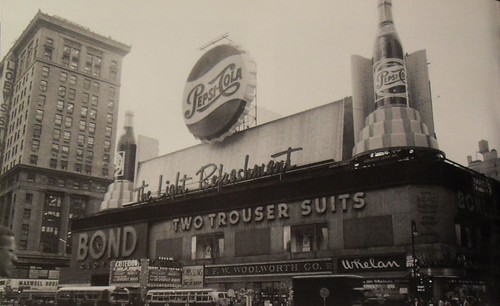 "Small flames flared incessantly here and there and they moved through shifting layers of smoke...Two boys, one Spanish-looking in a red shirt, one Danish-looking in brown, stood at the juke box, talking about Frank Sinatra." lol. At least I have some memory of what such times were like.
"Head" as a word for toilet I have not encountered before.
"The train rushed into the blackness with a phallic abandon..." There is too much of this kind of stuff.
One of the characters commits suicide by jumping off the George Washington Bridge after addressing the city in the tone of a spurned lover with troubling woman issues. I've walked across this same bridge in not much sounder of a state, and while I had no intention of jumping off, when one is standing out there in the middle of the river looking on the glittering city that probably is never going to give you the love you crave, there is definitely that thought in the back of your head that I'll have to keep this in mind.
On another note I was reading an article a few years ago about all the people who commit suicide jumping off of the Golden Gate Bridge, and there was one guy who had actually survived his attempt. He had slipped his body over the railing and let his hands go off it. He said that about half a second after letting go, his thought was "why did I do that?"
Hey, and there's the bridge. On another note I'm not usually one to talk sales but if this book really sold 2 1/2 million copies that's impressive for a nominally literary novel (albeit one with a decent amount of sex), isn't it? I remember reading that some pretty big names, your Philip Roths and Martin Amises, sometimes can't even get to 50,000 sales (on the other hand The Catcher in the Rye is over 65 million worldwide)
 Book I, Chapter 2: "Sorrow became him. He was reduced to his beauty and elegance--as bones, after a long illness, come forward through the flesh." It was beside this sentence on page 109 that I finally wrote "I think this book is kind of bad."
One thing I will say, the New York depicted in this book does feel more like what I think of as the real, normal New York than pretty much anything I read about it now. Even though I know when I go there or listen to a radio call in show when driving around in the area that the place is still full of the kind of people it has been for the last 150 years the Manhattan as a playground for millionaires theme and to a somewhat lesser extent the Brooklyn as destination for the environmentally conscious latte and microbrew-loving sets motif have kind of taken over the media presentation of the city over the last 15 years or so.
"The great question that faced him this morning was whether or not he had ever, really, been present at his life." When I do my own novel-writing, I really do try to stick to the parts of my life where I was present, even though that places severe limits on the kind of material available to be. The wisdom of that approach is reinforced by reading this book however.
"'She used to be a nice girl. Some cat turned her on, and then he split.' He spat on the sidewalk. 'Man, what a scene.'" This is just so much like my own life that I had to include it.
"They had just come up from the subway and it was perhaps this ascent from darkness to day which made the streets so dazzling." Yeah, everybody notices this, but it's still true, and still has the power to give me a thrill when it happens even at age 40, so I like it, and I'm putting it up here.
I began a long and tortured introduction to this post, but decided to toss it out and just confess that I think this is a pretty bad novel. James Baldwin's life having provided him with enough material, it seems, to get through three books--Go Tell It On the Mountain, which I like, and Notes of a Native Son, which I read with interest, being primarily about being about James Baldwin's experience as a young black man in the 1930s and 40s, and Giovanni's Room, which I haven't read, but which it is my impression is about James Baldwin's experience as a young gay (and black) man in postwar Europe--Another Country, it looks like, was to be about James Baldwin's experiences among bohemians of various races and sexual orientations in 1950s New York. His imaginative powers noticeably hit a wall on this subject however. There is a lot of slang and listing first of all, which weaken the writing--indeed, the book's defining characteristic is how weakly written it is. The speech of the characters and the sex they have comprise most of what passes for action in the book, but even these parts are not tightly written, excessive speech and words that do not move the story, if indeed there even is an identifiable story in this at all. The sex scenes are bad, and don't give us anything we don't know--even me, for Christ's sake! So much of the writing has the effect of filling space--it is clear to me that he had no idea what he wanted to do with this book, but he was James Baldwin and he had to produce a novel, not that there isn't often some virtue in pushing through a period when things aren't working for one, as some of his later books, The Fire Next Time and Tell Me How Long the Train's Been Gone especially, still have some reputation (though so apparently does this one). The ending is wincingly, embarrassingly bad.
I determined about two thirds of the way through that "Another Country" may be supposed to be referring to Love. Though I am not sure.
In spite of the badness of the book, there will still probably be several posts worth of various passages from it with my commentaries on them. It is still New York in the 50s, there is sex, there are lots of great song references which 20 years ago I would have had no idea what was being referred to but which the power of the internet now allows me to fire up on the spot, so I will doubtless play a couple of those numbers too.
Book I, Chapter I: "And he took her arm, deliberately allowing the back of his hand to touch one of her breasts..." Life of the artist, man. What studs some people are.One woman is described as "a big-assed Joan of Arc".
"...the slackness of their bodies making vivid the history of their degradation."
"He tried to force his mind back through all the beds he had been in..." And this guy is a pathetic nobody. How many girls do most people have?
"She held a drink and a cigarette in one hand and looked at once like the rather weary matron she actually was and the mischievous girl she once had been". I wouldn't mind knowing some people like this. I can think of one person I have met in the last five years who might even have tendencies in this direction.
"Small flames flared incessantly here and there and they moved through shifting layers of smoke...Two boys, one Spanish-looking in a red shirt, one Danish-looking in brown, stood at the juke box, talking about Frank Sinatra." lol. At least I have some memory of what such times were like."Head" as a word for toilet I have not encountered before.
"The train rushed into the blackness with a phallic abandon..." There is too much of this kind of stuff.
One of the characters commits suicide by jumping off the George Washington Bridge after addressing the city in the tone of a spurned lover with troubling woman issues. I've walked across this same bridge in not much sounder of a state, and while I had no intention of jumping off, when one is standing out there in the middle of the river looking on the glittering city that probably is never going to give you the love you crave, there is definitely that thought in the back of your head that I'll have to keep this in mind.
On another note I was reading an article a few years ago about all the people who commit suicide jumping off of the Golden Gate Bridge, and there was one guy who had actually survived his attempt. He had slipped his body over the railing and let his hands go off it. He said that about half a second after letting go, his thought was "why did I do that?"
Hey, and there's the bridge. On another note I'm not usually one to talk sales but if this book really sold 2 1/2 million copies that's impressive for a nominally literary novel (albeit one with a decent amount of sex), isn't it? I remember reading that some pretty big names, your Philip Roths and Martin Amises, sometimes can't even get to 50,000 sales (on the other hand The Catcher in the Rye is over 65 million worldwide)
Book I, Chapter 2: "Sorrow became him. He was reduced to his beauty and elegance--as bones, after a long illness, come forward through the flesh." It was beside this sentence on page 109 that I finally wrote "I think this book is kind of bad."One thing I will say, the New York depicted in this book does feel more like what I think of as the real, normal New York than pretty much anything I read about it now. Even though I know when I go there or listen to a radio call in show when driving around in the area that the place is still full of the kind of people it has been for the last 150 years the Manhattan as a playground for millionaires theme and to a somewhat lesser extent the Brooklyn as destination for the environmentally conscious latte and microbrew-loving sets motif have kind of taken over the media presentation of the city over the last 15 years or so.
"The great question that faced him this morning was whether or not he had ever, really, been present at his life." When I do my own novel-writing, I really do try to stick to the parts of my life where I was present, even though that places severe limits on the kind of material available to be. The wisdom of that approach is reinforced by reading this book however.
"'She used to be a nice girl. Some cat turned her on, and then he split.' He spat on the sidewalk. 'Man, what a scene.'" This is just so much like my own life that I had to include it.
"They had just come up from the subway and it was perhaps this ascent from darkness to day which made the streets so dazzling." Yeah, everybody notices this, but it's still true, and still has the power to give me a thrill when it happens even at age 40, so I like it, and I'm putting it up here.
Wednesday, May 28, 2008
Notes of a Native Son--Part 7
This will be the final post on this book.
Observation from a day spent in French court (for being in possession of a bedsheet stolen from a hotel by someone else): "The great impulse of the courtroom seemed to be to put these people where they could not be seen--and not because they were offended at the crimes, unless, indeed, they were offended that the crimes were so petty, but because they did not wish to know that their society could be counted on to produce, probably in greater and greater numbers, a whole body of people for whom crime was the only possible career." And on the laughter which the story of his case elicited in the courtroom when it was dismissed, after he had spent about a week in jail: "This laughter is the laughter of those who consider themselves to be at a safe remove from all the wretched, for whom the pain of the living is not real."
In the final essay he has removed to Switzerland, where he was struck again by the self-assurance of the people in their Westernness, and offers up another list of icons of Western culture that he is both impressed by and which he feels is less accessible to him than to the simplest European villager. "These people cannot be, from the point of view of power, strangers anywhere in the world; they have made the modern world...The most illiterate among them is related, in a way that I am not, to Dante, Shakespeare, Michelangelo, Aeschylus, Da Vinci, Rembrandt, and Racine; the cathedral at Chartres says something to them which it cannot say to me, as indeed would New York's Empire State Building...Out of their hymns and dances come Beethoven and Bach." Such is the tenor of our time that it strikes me as unusual to come upon a nonwhite person who intimates both that he detects much of worth, or at least that is formidable, in Western culture, and that this quality is elusive and intimidating to him by the mere virtue of his not being white. My impression is that nowadays Euro-culture is seen as admirable primarily for its economic and technological efficiency, which however can be easily enough mastered by the clever outsider; and of such cultural works of value that it may have produced, these work little effect on the collective spirit of the people--especially in the United States--as is apparently the case in more ancient or traditional societies.
 He refers to his presence--his presence as a generic black man--as occasioning a war in the American soul. The very raw fury and violence that American whites used to unleash against black people--and I know many people argue that this attitude persists effectually unchanged today, but I have to think some of the really nasty edge at least has to have been taken off--does indicate to that something very like this was happening. Though the American soul may be calmer now, it is not quite easy; every major episode and character from mainstream American history or the arts has a racial backstory in it somewhere which is usually embarrassing, and frequently appalling, to the modern sensibility, and even if one shrinks to lay it bare, the more one is aware it is there the harder it becomes to ignore it completely. With regard to black Americans he notes how their "past was taken...almost literally, at one blow. One wonders what on earth the first slave found to say to the first dark child he bore...It was his necessity, in the words of E. Franklin Frazier, to find a 'motive for living under American culture or die.'"
The ideas of white supremacy and of the West as the only really legitimate civilization seem to be weakening, at least compared to their past incarnations. Obviously Westerners retain a great many unconscious assumptions about human nature and a properly organized society that emanate arrogance to differently-cultured people, but many at least are far more susceptible to pangs of doubt than almost anyone was in 1955.
Illustration: Jean Gabin (not, apparently, in a hotel room however; see Part 6).
 "American white men still nourish the illusion that there is some means of recovering the European innocence, of returning to a state in which black men do not exist...the American vision of the world--which allows so little reality, generally speaking, for any of the darker forces in human life..." I think the first part of this is still true to a surprisingly large extent. The second has been frequently observed by people from cultures which have suffered greatly within living memory and consider that language, the arts, love, all of the alert areas of life are experienced by them more seriously, meaningfully and intensely than they are by generic Americans. I am also pretty sure however that this ability to maintain a kind of blissful ignorance of the "darker forces in human life" was in great part what enabled America to ascend so spectacularly on the world scene as it did. That has doubtless been the source of its historically extraordinary attractiveness, as well as its energy, however maddening this is to philosophers and other people who know better what is really going on.
This will be the final post on this book.
Observation from a day spent in French court (for being in possession of a bedsheet stolen from a hotel by someone else): "The great impulse of the courtroom seemed to be to put these people where they could not be seen--and not because they were offended at the crimes, unless, indeed, they were offended that the crimes were so petty, but because they did not wish to know that their society could be counted on to produce, probably in greater and greater numbers, a whole body of people for whom crime was the only possible career." And on the laughter which the story of his case elicited in the courtroom when it was dismissed, after he had spent about a week in jail: "This laughter is the laughter of those who consider themselves to be at a safe remove from all the wretched, for whom the pain of the living is not real."
In the final essay he has removed to Switzerland, where he was struck again by the self-assurance of the people in their Westernness, and offers up another list of icons of Western culture that he is both impressed by and which he feels is less accessible to him than to the simplest European villager. "These people cannot be, from the point of view of power, strangers anywhere in the world; they have made the modern world...The most illiterate among them is related, in a way that I am not, to Dante, Shakespeare, Michelangelo, Aeschylus, Da Vinci, Rembrandt, and Racine; the cathedral at Chartres says something to them which it cannot say to me, as indeed would New York's Empire State Building...Out of their hymns and dances come Beethoven and Bach." Such is the tenor of our time that it strikes me as unusual to come upon a nonwhite person who intimates both that he detects much of worth, or at least that is formidable, in Western culture, and that this quality is elusive and intimidating to him by the mere virtue of his not being white. My impression is that nowadays Euro-culture is seen as admirable primarily for its economic and technological efficiency, which however can be easily enough mastered by the clever outsider; and of such cultural works of value that it may have produced, these work little effect on the collective spirit of the people--especially in the United States--as is apparently the case in more ancient or traditional societies.
He refers to his presence--his presence as a generic black man--as occasioning a war in the American soul. The very raw fury and violence that American whites used to unleash against black people--and I know many people argue that this attitude persists effectually unchanged today, but I have to think some of the really nasty edge at least has to have been taken off--does indicate to that something very like this was happening. Though the American soul may be calmer now, it is not quite easy; every major episode and character from mainstream American history or the arts has a racial backstory in it somewhere which is usually embarrassing, and frequently appalling, to the modern sensibility, and even if one shrinks to lay it bare, the more one is aware it is there the harder it becomes to ignore it completely. With regard to black Americans he notes how their "past was taken...almost literally, at one blow. One wonders what on earth the first slave found to say to the first dark child he bore...It was his necessity, in the words of E. Franklin Frazier, to find a 'motive for living under American culture or die.'"The ideas of white supremacy and of the West as the only really legitimate civilization seem to be weakening, at least compared to their past incarnations. Obviously Westerners retain a great many unconscious assumptions about human nature and a properly organized society that emanate arrogance to differently-cultured people, but many at least are far more susceptible to pangs of doubt than almost anyone was in 1955.
Illustration: Jean Gabin (not, apparently, in a hotel room however; see Part 6).
"American white men still nourish the illusion that there is some means of recovering the European innocence, of returning to a state in which black men do not exist...the American vision of the world--which allows so little reality, generally speaking, for any of the darker forces in human life..." I think the first part of this is still true to a surprisingly large extent. The second has been frequently observed by people from cultures which have suffered greatly within living memory and consider that language, the arts, love, all of the alert areas of life are experienced by them more seriously, meaningfully and intensely than they are by generic Americans. I am also pretty sure however that this ability to maintain a kind of blissful ignorance of the "darker forces in human life" was in great part what enabled America to ascend so spectacularly on the world scene as it did. That has doubtless been the source of its historically extraordinary attractiveness, as well as its energy, however maddening this is to philosophers and other people who know better what is really going on. James Baldwin was on TV a lot in the 60s, and compared to other writers there is a trove of clips of him on YouTube, (and probably on other sites too). This is a good one here to start with. It's 7 minutes long, which is usually an eternity for Youtube, but though I was planning to just watch it for a minute I got drawn into it and easily sat through the whole thing (though this might only be because I had read a few of his books). His manner of speaking initially struck me as affected but I marked this down to the habits of mind which the literary life of much reading and writing and discoursing continually with oneself about these habits entails.
Sunday, May 18, 2008
Notes of a Native Son--Part 6
Six segments, a reader might credibly say, on this slight volume is really dragging matters out a bit too much. As I have stated elsewhere however it does help me to remember certain things I have read, and certain thoughts which I have had at the time, much better than I would have otherwise, which I believe generally contributes to the better organization and power of association in my mind. So I stick to the format.
The rest of the essays in the book are about the author's experiences in postwar Europe, especially Paris, which is pretty titillating terrain for me, though I have kind of given up Paris, for the moment at least, as a place with which I can ever really have anything to do. The essay is typical heady-young-American-goes-to-Paris fare, the twist offered by the author's being black largely mitigated by the Parisians having a sterotype of black Americans ("the French...consider that all Negroes arrive from American, trumpet-laden and twinkle-toed, bearing scars so unutterably painful that all the glories of the French Republic may not suffice to heal them") as convenient for their purposes as that which they have of white Americans. He discovers that an American "needs to establish himself in relation to his past...that this depthless alienation from oneself and one's people is, in sum, the American experience." He expresses the hope that "What time will bring Americans at last is their own identity." He finds that Paris has wretched plumbing and dirt, and that whatever exciting might be happening there is largely inaccessible to him, because he has not the acquaintance with the language, the tradition, the history, the affection for the French people, to enter into any very close contact with the main currents of life in it. "The sordid French hotel room, so admirably detailed by the camera, speaking, in its quaintness, and distance, so beautifully of romance, undergoes a seachange, becomes a room positively hositle to romance, once it is oneself, and not Jean Gabin, who lives there....Paris is, according to its legend, the city where everyone loses his head, and his morals, lives through at least one histoire d'amour, ceases, quite, to arrive anywhere on time, and thumbs his nose at the Puritans...It is limited, as legends are limited, by being--literally--unlivable, and by referring to the past." I have found something of this sort to be true myself, though I always assumed it was just me--the people who matter still more or less live the legend--they must, for it still exists. They may not be ultimately any happier, but the sounds, the tastes, the frisson that constitute the total Paris ideal are certainly there to be found, somewhere.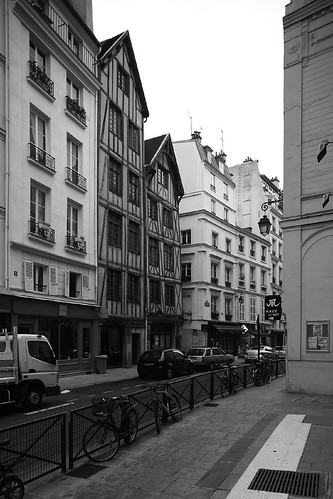 "Though the students of any nation, in Paris, are allowed irresponsibility, few seem to need it as desperately as Americans seem to need it."
American identity in the 50s as seen by the French: "the Marshall Plan, Hollywood, the Yankee dollar, television...Senator McCarthy". Needless to say, the American student only wants to be liked "as a person...which makes perfect sense to him, and none whatever to the European". Plus ca change, et al.
"One very often finds in this category that student whose adaptation to French life seems to have been most perfect, and whose studies--of French art, or the drama, the language, or the history--give him the greatest right to be here. This student has put aside chewing gum forever, he eschews the T-shirt, and the crew cut, he can only with difficulty be prevailed upon to see an American movie, and it is so patent that he is actually studying that his appearance at the cafe tables is never taken as evidence of frivolity..." The American of this type is in an unenviable spot, for he can never win, never attain fullness as a person, which is what any man seeks above all. Since I am afflicted with something of this condition, I have always considered it among the foremost of our long term national problems, the development of reasonably capable people into more fully realized, self-contained human beings. This is a serious flaw in the culture.
"Thus they lose what they had so bravely set out to find, their own personalities, which, having been deprived of all nourishment, soon cease, in effect, to exist"
"I considered the French an ancient, intelligent, and cultured race, which indeed they are. I did not know, however...that there is a limit to the role of intelligence in human affairs; and that no people come into possession of a culture without having paid a heavy price for it...One had, in short...to understand that a culture was not a community basket-weaving project...was something neither desirable nor undesirable in itself, being inevitable, being nothing more or lessthan the recorded and visible effects on a body of people of the vicissitudes with which they had been forced to deal.."
Six segments, a reader might credibly say, on this slight volume is really dragging matters out a bit too much. As I have stated elsewhere however it does help me to remember certain things I have read, and certain thoughts which I have had at the time, much better than I would have otherwise, which I believe generally contributes to the better organization and power of association in my mind. So I stick to the format.
The rest of the essays in the book are about the author's experiences in postwar Europe, especially Paris, which is pretty titillating terrain for me, though I have kind of given up Paris, for the moment at least, as a place with which I can ever really have anything to do. The essay is typical heady-young-American-goes-to-Paris fare, the twist offered by the author's being black largely mitigated by the Parisians having a sterotype of black Americans ("the French...consider that all Negroes arrive from American, trumpet-laden and twinkle-toed, bearing scars so unutterably painful that all the glories of the French Republic may not suffice to heal them") as convenient for their purposes as that which they have of white Americans. He discovers that an American "needs to establish himself in relation to his past...that this depthless alienation from oneself and one's people is, in sum, the American experience." He expresses the hope that "What time will bring Americans at last is their own identity." He finds that Paris has wretched plumbing and dirt, and that whatever exciting might be happening there is largely inaccessible to him, because he has not the acquaintance with the language, the tradition, the history, the affection for the French people, to enter into any very close contact with the main currents of life in it. "The sordid French hotel room, so admirably detailed by the camera, speaking, in its quaintness, and distance, so beautifully of romance, undergoes a seachange, becomes a room positively hositle to romance, once it is oneself, and not Jean Gabin, who lives there....Paris is, according to its legend, the city where everyone loses his head, and his morals, lives through at least one histoire d'amour, ceases, quite, to arrive anywhere on time, and thumbs his nose at the Puritans...It is limited, as legends are limited, by being--literally--unlivable, and by referring to the past." I have found something of this sort to be true myself, though I always assumed it was just me--the people who matter still more or less live the legend--they must, for it still exists. They may not be ultimately any happier, but the sounds, the tastes, the frisson that constitute the total Paris ideal are certainly there to be found, somewhere.
"Though the students of any nation, in Paris, are allowed irresponsibility, few seem to need it as desperately as Americans seem to need it."American identity in the 50s as seen by the French: "the Marshall Plan, Hollywood, the Yankee dollar, television...Senator McCarthy". Needless to say, the American student only wants to be liked "as a person...which makes perfect sense to him, and none whatever to the European". Plus ca change, et al.
"One very often finds in this category that student whose adaptation to French life seems to have been most perfect, and whose studies--of French art, or the drama, the language, or the history--give him the greatest right to be here. This student has put aside chewing gum forever, he eschews the T-shirt, and the crew cut, he can only with difficulty be prevailed upon to see an American movie, and it is so patent that he is actually studying that his appearance at the cafe tables is never taken as evidence of frivolity..." The American of this type is in an unenviable spot, for he can never win, never attain fullness as a person, which is what any man seeks above all. Since I am afflicted with something of this condition, I have always considered it among the foremost of our long term national problems, the development of reasonably capable people into more fully realized, self-contained human beings. This is a serious flaw in the culture.
"Thus they lose what they had so bravely set out to find, their own personalities, which, having been deprived of all nourishment, soon cease, in effect, to exist"
"I considered the French an ancient, intelligent, and cultured race, which indeed they are. I did not know, however...that there is a limit to the role of intelligence in human affairs; and that no people come into possession of a culture without having paid a heavy price for it...One had, in short...to understand that a culture was not a community basket-weaving project...was something neither desirable nor undesirable in itself, being inevitable, being nothing more or lessthan the recorded and visible effects on a body of people of the vicissitudes with which they had been forced to deal.."
Thursday, May 08, 2008
Notes of a Native Son Part 5
The next part of the book which obviously begged for some comment was the incident the author described while living in Trenton during the war where he was refused service in a restaurant and threw a glass mug in the general direction of the waitress's head (for which he managed to avoid getting arrested). I grew up near enough to this town, which is very rarely featured in the world's literature, to have some familiarity with what it looks like, the type of buildings and restaurants and people it has, or would have had in the 1940s, and so on. The author observes several times that this sort of discrimination "in bars, bowling alleys, diners, places to live" was common throughout New Jersey at the time--noticeably worse than New York City, apparently. I do not doubt that this was the case, though as northerners are accustomed to think of this sort of blatant refusal of public establishments to serve black people together with whites as a southern phenomenon, I admit to have been taken aback for just a moment. I certainly knew that whites and blacks--as well as Jews and gentiles--did not for the most part frequent the same public spaces at all, and that anyone from outside one or another of the groups' intruding upon foreign turf would have been deliberately made to feel unwelcome; but the type of confrontational incident related in this story is never talked about as having been a fact of life, by white people anyway, in this area of the world. Indeed, it may not have been a common occurrence, for the general feeling seems to be that these arrangements were "understood" and adhered to by pretty much everyone apparently without thinking or worrying too much about it.
Most of my reactions to the Trenton story were colored of course by my own sympathies combined with my awareness that the author knows he is writing for a predominantly white audience--writing, in fact much more to the likes of me than Evelyn Waugh or Marcel Proust ever intended to write to such likes--about his desire to wring the neck of his waitress, a white girl with "great, astounded, frightened eyes", just description enough to plant the idea in our heads that she isn't some wholly discreditable fat, cretinous white girl that we can gladly join him in despising but somebody who might be cute enough to really desire to protect from the violence of this raging black man. "She did not ask me what I wanted, but repeated, as though she had learned it somewhere, 'We don't serve Negroes here.' She did not say it with the blunt, derisive hostility to which I had grown so accustomed, but, rather, with a note of apology in her voice, and fear. This made me colder and more murderous than ever." (emph. mine). (I also could not refrain several times from noting my astonishment at his being in a crowd where "everyone was white" or coming to "an enormous, glittering and fashionable restaurant" with the comment "in Trenton?!", which incongruities with one's own experience I have a bad habit of always finding slightly humorous even if the larger context within which the meaning of the amusement lies is not funny.) The point, I believe, is that he was driven to this undignified and dishonorable behavior (throwing the mug) by the circumstance that the world around him continually denied him any opportunity to be--or certainly to feel and appear--dignified, which last was of exceeding importance to James Baldwin, as it is to most people of course, but he was not the sort of artist who infuses a distinctly singular and self-contained relation to life into his work. Or as I wrote back on January 22:
--Baldwin has lots of good material and is pretty perceptive but there is always something a little off in his composition and general style. I don't know that he ever nails/achieves his own voice and molds it into the cast of literature. The incidents don't come together to make a coherent impression of the man's self...he has not the high mastery over the world that enables him to take in a whole picture. He remains unrealized--overaware--
"Racial tensions throughout this country were exacerbated during the early years of the war, partly because the labor market brought together hundreds of thousands of ill-prepared people, and partly because Negro soldiers, regardless of where they were born, received their military training in the south." James Baldwin himself seems not to have gotten drafted into the military; at least he doesn't mention it.
"It would have demanded an unquestioning patriotism, happily as uncommon in this country as it is undesirable, for these people not to have been disturbed by the bitter letters they received, by the newspaper stories they read, not to have been enraged by the posters, then to be found all over New York, which described the Japanese as 'yellow-bellied Japs'." I include some of these quotes because it seems to have gone widely unremarked during the hyping of the current military situation, in which the devoted patriotism, courage and devotion to the armed forces of the American people during World War II was continually extolled to shame the modern generation, that a great deal of the letters and books which were produced during and about the period, by white as well as black authors who were actually there, are pretty negative in tone, especially where Army life was concerned. Obviously there are the big names, Heller, Vonnegut, James Jones, Mailer, even Herman Wouk, among whom the consensus seemed to be that the military establishment was either insane, sadistic, incompetent, or some combination of the three (and the books about the British army in World War II paint an even more wretched picture--so much so that one assumes the accounts must be gravely exaggerated, but that is a matter for another time). But even such letters as survive from my grandfather and uncles written from the front are pretty grouchy--complaints about bad coffee and having to eat mutton for weeks on end (my grandfather spent a lot of time in England) seem to predominate--there was certainly no sense of poetry or excitement. My grandfather, who was a Catholic and not a bookish man at all, regarded England as little more than a sort of giant toilet until the day he died and thought it ridiculous when I would say I dreamed of visiting it someday. I guess the point is that they bothered to show up, they didn't shirk their duty, and the national goals were in very large part able to be achieved, which increasingly it looks like is not going to be the case in our own generation.
"It was the Lord who knew of the impossibility every parent in that room faced; how to prepare the child for the day when the child would be despised and how to create in the child--by what means?--a stronger antidote to this poison than one had found for oneself.."
I should have noted that the whole of the essay "Notes of a Native Son" centers around the events of the day of August 3, 1943, which besides being Baldwin's 19th birthday, was also the day of his father's funeral, as well as the day on which a big race riot had broken out in Harlem.
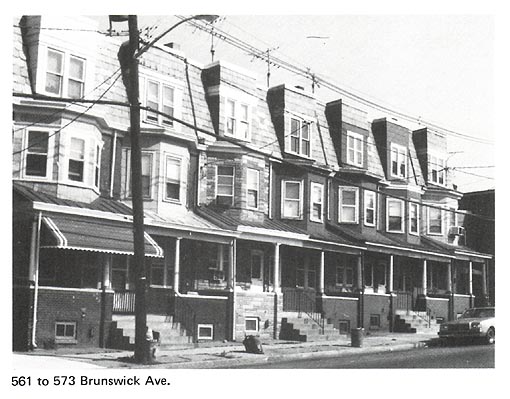 I had attempted to put up a picture--a stolen picture, let us make no mistake--of some Trenton rowhouses circa 1940 here. I confess I am so desperate to sex up my blog in any way possible and attract attention that I do steal pictures without authorization a lot.
The next part of the book which obviously begged for some comment was the incident the author described while living in Trenton during the war where he was refused service in a restaurant and threw a glass mug in the general direction of the waitress's head (for which he managed to avoid getting arrested). I grew up near enough to this town, which is very rarely featured in the world's literature, to have some familiarity with what it looks like, the type of buildings and restaurants and people it has, or would have had in the 1940s, and so on. The author observes several times that this sort of discrimination "in bars, bowling alleys, diners, places to live" was common throughout New Jersey at the time--noticeably worse than New York City, apparently. I do not doubt that this was the case, though as northerners are accustomed to think of this sort of blatant refusal of public establishments to serve black people together with whites as a southern phenomenon, I admit to have been taken aback for just a moment. I certainly knew that whites and blacks--as well as Jews and gentiles--did not for the most part frequent the same public spaces at all, and that anyone from outside one or another of the groups' intruding upon foreign turf would have been deliberately made to feel unwelcome; but the type of confrontational incident related in this story is never talked about as having been a fact of life, by white people anyway, in this area of the world. Indeed, it may not have been a common occurrence, for the general feeling seems to be that these arrangements were "understood" and adhered to by pretty much everyone apparently without thinking or worrying too much about it.
Most of my reactions to the Trenton story were colored of course by my own sympathies combined with my awareness that the author knows he is writing for a predominantly white audience--writing, in fact much more to the likes of me than Evelyn Waugh or Marcel Proust ever intended to write to such likes--about his desire to wring the neck of his waitress, a white girl with "great, astounded, frightened eyes", just description enough to plant the idea in our heads that she isn't some wholly discreditable fat, cretinous white girl that we can gladly join him in despising but somebody who might be cute enough to really desire to protect from the violence of this raging black man. "She did not ask me what I wanted, but repeated, as though she had learned it somewhere, 'We don't serve Negroes here.' She did not say it with the blunt, derisive hostility to which I had grown so accustomed, but, rather, with a note of apology in her voice, and fear. This made me colder and more murderous than ever." (emph. mine). (I also could not refrain several times from noting my astonishment at his being in a crowd where "everyone was white" or coming to "an enormous, glittering and fashionable restaurant" with the comment "in Trenton?!", which incongruities with one's own experience I have a bad habit of always finding slightly humorous even if the larger context within which the meaning of the amusement lies is not funny.) The point, I believe, is that he was driven to this undignified and dishonorable behavior (throwing the mug) by the circumstance that the world around him continually denied him any opportunity to be--or certainly to feel and appear--dignified, which last was of exceeding importance to James Baldwin, as it is to most people of course, but he was not the sort of artist who infuses a distinctly singular and self-contained relation to life into his work. Or as I wrote back on January 22:
--Baldwin has lots of good material and is pretty perceptive but there is always something a little off in his composition and general style. I don't know that he ever nails/achieves his own voice and molds it into the cast of literature. The incidents don't come together to make a coherent impression of the man's self...he has not the high mastery over the world that enables him to take in a whole picture. He remains unrealized--overaware--
"Racial tensions throughout this country were exacerbated during the early years of the war, partly because the labor market brought together hundreds of thousands of ill-prepared people, and partly because Negro soldiers, regardless of where they were born, received their military training in the south." James Baldwin himself seems not to have gotten drafted into the military; at least he doesn't mention it.
"It would have demanded an unquestioning patriotism, happily as uncommon in this country as it is undesirable, for these people not to have been disturbed by the bitter letters they received, by the newspaper stories they read, not to have been enraged by the posters, then to be found all over New York, which described the Japanese as 'yellow-bellied Japs'." I include some of these quotes because it seems to have gone widely unremarked during the hyping of the current military situation, in which the devoted patriotism, courage and devotion to the armed forces of the American people during World War II was continually extolled to shame the modern generation, that a great deal of the letters and books which were produced during and about the period, by white as well as black authors who were actually there, are pretty negative in tone, especially where Army life was concerned. Obviously there are the big names, Heller, Vonnegut, James Jones, Mailer, even Herman Wouk, among whom the consensus seemed to be that the military establishment was either insane, sadistic, incompetent, or some combination of the three (and the books about the British army in World War II paint an even more wretched picture--so much so that one assumes the accounts must be gravely exaggerated, but that is a matter for another time). But even such letters as survive from my grandfather and uncles written from the front are pretty grouchy--complaints about bad coffee and having to eat mutton for weeks on end (my grandfather spent a lot of time in England) seem to predominate--there was certainly no sense of poetry or excitement. My grandfather, who was a Catholic and not a bookish man at all, regarded England as little more than a sort of giant toilet until the day he died and thought it ridiculous when I would say I dreamed of visiting it someday. I guess the point is that they bothered to show up, they didn't shirk their duty, and the national goals were in very large part able to be achieved, which increasingly it looks like is not going to be the case in our own generation.
"It was the Lord who knew of the impossibility every parent in that room faced; how to prepare the child for the day when the child would be despised and how to create in the child--by what means?--a stronger antidote to this poison than one had found for oneself.."
I should have noted that the whole of the essay "Notes of a Native Son" centers around the events of the day of August 3, 1943, which besides being Baldwin's 19th birthday, was also the day of his father's funeral, as well as the day on which a big race riot had broken out in Harlem.
I had attempted to put up a picture--a stolen picture, let us make no mistake--of some Trenton rowhouses circa 1940 here. I confess I am so desperate to sex up my blog in any way possible and attract attention that I do steal pictures without authorization a lot.
Friday, May 02, 2008
Notes of a Native Son IV
Notes of A Native Son--Part 4
Scene from Carmen Jones (See Part 3)


The next essay was "The Harlem Ghetto", out of which I marked 2 sentences as of particular interest. The first was "The American ideal, after all, is that everyone should be as much alike as possible". I think it is the American ideal, and the ideal of most societies and power-wielding organizations, that everyone accept the legitimacy of the prevailing hierarchy and the rules and values that the top of it imposes as much as possible, accesion to which I suppose results in curtailing most people's range of personality and and action and making everyone seem more or less alike. This effect may be more pronounced in America than in other places because of the nature of the society and the culture; the mechanisms of individual character formation being rather more free-flowing and wholly dependent on the individual's personal parts than elsewhere, submission and conformity may cause him to be stripped of distinguishing characteristics more completely. The other one was about Jews covering their own vulnerability by frenzied adoption of the customs of the country, i.e. discrimination and appalling treatment of blacks. I am not really sure what I wanted to say about this. Something about reconciling competition between groups of people--of which racial division is but one of many differentiations, albeit perhaps the most important one--which appears to be endemic to the human character, with some standard of justice to ease the bitterness of the one side or the other that must inevitably lose. The scale of America makes this kind of bitterness, it seems to be, all the more difficult to overcome in a historical sense because the size and power and wealth of the country give its particular racial problems a more universal and intractable aspect than when they are confined to a backwater of minor global significance; also in a less historical sense the rewards for being really successful are so apparently extragavant and out of proportion to what is left for even comparative failures that it is inevitable more people will be likely to consider themselves one.
The next essay "Journey to Atlanta" is about a trip two of Baldwin's brothers got cajoled into taking to that city as part of a singing group intended to help canvass for a political party. The trip was a fiasco; the organizers were corrupt, the aristocratic white woman who was the chairman of the local party took offense when the group begged off from singing a fifth song at a reception due to the hoarseness of their voices and cut them off, at which the group was abandoned and forced to find their own way home to New York, several of them by working at a construction company for ten days. It is one of the more vivid essays. The difficulty the group had in getting any food, not to mention the apparent lack of any planning for this eventuality, even before they were abandoned, from their nominal sponsors, is astounding.
It was noted in this essay that at this time in Atlanta black policemen (of whom there were five) of course could not arrest whites. This is the sort of detail that tends not to occur to me when trying to contemplate Big Issues but which in its way gives a clearer impression than more sensational sorts of atrocities. I found myself at one point wondering what Frank Sinatra thought about all this. He came to mind because I began to feel that if one did not have satisfactory solutions to social problems that would please everybody, worrying about them could drain all the charm and wit out of your personality. This doesn't seem to have happened with Frank. He never conflated the outer world's troubles with himself, and certainly his popularity did not suffer by it.
The title essay, the central one of the collection, was next. The main subject is Baldwin's father, or the man who he thought was his father (and who raised him) at the time, though apparently he found out in later years that the man was not actually his biological father. The father was born in New Orleans and had known Louis Armstrong as a young man. There was a sentence I found funny: "My father never mentioned Louis Armstrong, except to forbid us to play his records; but there was a picture of him on our wall for a long time." Given the terrible communication problems between the father and son in these writings, as well as similar anecdotes that have come down through my own family history, I wondered if child-rearing, or at least connecting, had gotten easier due to prosperity, or what was the cause? The fathering style, when there is a father anyway, seems to have become so different, though certainly the jury is still out on their overall effectiveness where raising boys is concerned, given the general level of dissatisfaction people express with most men under age 50 or so, who traditionally have been the shapers and assessors of character in society, not the assessed.
"This inability to establish contact with other people had always marked him." I underlined this twice, so I assume I must have been identifying strongly with the concept.
On his father's fear of being robbed: "I didn't fail to wonder, and it made me hate (!) him, what on earth we owned that anybody else would want."
"He spent great energy and achieved, to our chagrin, no small amount of success in keeping us away from the people who surrounded us, people who had all-night rent parties to which we listened when we should have been sleeping, people who cursed and drank and flashed razor blades on Lenox Avenue." I believe these people are Mailer's hipsters, are they not?
All right, I am interrupted again. It may be two more days before I could finish this, though I could do it with 20 minutes of silence at a time of day when I am half-awake. It doesn't look like I am going to have that though.
Tuesday, April 15, 2008
Notes of a Native Son--Part 3
I have been out of town for a week; and before I was out of town I couldn't seem to write anything. Re the essay "Many Thousands Gone":
In this the author speaks of collective national guilt, primarily white of course, which Baldwin considers to be an absolutely real burden that has been "reinvested in the black face" in which "time has made some changes" whenever an attempt is made to wash it of the past (as whites have done, rendering their faces "blank"). As to the guilt, while it is certainly a pervasive feature of one strand of the national character, and a fairly significant and influential one, it doesn't seem to me to be at present a defining element of most non-black people's psychological makeup. Real historical guilt I would think could only truly be felt through deep suffering and humiliation that the guilty party is convinced he somehow deserves. Cataclysms such as this have been frequently predicted for the American populace, but they never seem to come off quite all the way.
A few pages later he makes the claim, which is often made, that blacks know whites better than whites know blacks, and even better than whites know themselves. Perhaps this is true as far as attitudes, matters of justice, indignity, etc, specific to race relations are concerned, but of course this does not constitute the whole of any man's knowledge, or thought, or being, or at least not any man who would be a subject of general interest. I know that this is not exactly what is meant by such assertions, but that is what is always suggested to me by the words, that a man's knowledge of life is wholly contained within the limits of his racial attitudes.
The conversion of the American slaves to the Christian religion, and the seemingly enthusiastic acceptance of the same by many black Americans down to the present time, is, as Baldwin remarks upon somewhat in passing here, really a very odd phenomenon, however black of an identity is given to Jesus and the church. It does, I think, demonstrate one of the central characteristics of Christianity, which is that it appeals most strongly wherever people despair of getting anywhere desirable in this life but at the same time feel they cannot really ever abandon, or escape, their hopeless course. I have read a lot of commentary over the years, most of it not I believe consciously Marxist in its intent, which opines that the black church is not generally good for black people, that too many ambitious black men take up preaching instead of more demonstrably empowering professions, and so on.
The critique of Native Son in this essay is good, though I still do like that other book as a piece of literature. Clearly there is something in it that appeals to very white people such as myself, and has since it came out; one doesn't exactly care for Bigger Thomas too much, not enough to feel than anything much could ever have been done for him, but the hopelessness of his whole situation, the sense of the forces that are arrayed against him, is conveyed as starkly as anything else I have read. The world presented is half our utterly familiar American urban world of newspapers, police, movies, cars, sloe gin fizzes, etc, and half something inaccessible buried within that, which is very fascinating (Baldwin by contrast maintains some psychological link to the whiter world at nearly all times). Here are some Baldwin quotes regarding the book:
"Bigger has no discernible relationship to himself, to his own life, to his own people, nor to any other people--in this respect, perhaps, he is most American--"
"...that depth of involvement and unspoken recognition of shared experience which creates a way of life."
"it is not his love for them or for himself which causes him to die, but his hatred and his self-hatred; he does not redeem the pains of a despised people, but reveals, on the contrary, nothing more than his own fierce bitterness at having been born one of them."
The next essay is a critique of the 1955 film Carmen Jones, a version of Carmen directed by Otto Preminger using an all-black cast and set in a much-sanitized interpretation of a contemporary Chicago ghetto. It starred Dorothy Dandridge, Harry Belafonte and Pearl Bailey and apparently was a complete artistic disaster. I didn't expect it would be in print anymore but of course two days after I read the essay I noticed my local quasi-bohemian independent video store had a brand new copy on DVD. I have not been tempted to get it however.
My only notes on this chapter were: Has consuming passion declined because people have more options? (not betas), and Oh, to have sexuality! which I was relieved to find was not entirely a commentary on myself, but referred to the quotation "What is distressing is the conjecture this movie leaves one with as to what Americans take sex to be."
I have been out of town for a week; and before I was out of town I couldn't seem to write anything.
Re the essay "Many Thousands Gone":In this the author speaks of collective national guilt, primarily white of course, which Baldwin considers to be an absolutely real burden that has been "reinvested in the black face" in which "time has made some changes" whenever an attempt is made to wash it of the past (as whites have done, rendering their faces "blank"). As to the guilt, while it is certainly a pervasive feature of one strand of the national character, and a fairly significant and influential one, it doesn't seem to me to be at present a defining element of most non-black people's psychological makeup. Real historical guilt I would think could only truly be felt through deep suffering and humiliation that the guilty party is convinced he somehow deserves. Cataclysms such as this have been frequently predicted for the American populace, but they never seem to come off quite all the way.
A few pages later he makes the claim, which is often made, that blacks know whites better than whites know blacks, and even better than whites know themselves. Perhaps this is true as far as attitudes, matters of justice, indignity, etc, specific to race relations are concerned, but of course this does not constitute the whole of any man's knowledge, or thought, or being, or at least not any man who would be a subject of general interest. I know that this is not exactly what is meant by such assertions, but that is what is always suggested to me by the words, that a man's knowledge of life is wholly contained within the limits of his racial attitudes.
The conversion of the American slaves to the Christian religion, and the seemingly enthusiastic acceptance of the same by many black Americans down to the present time, is, as Baldwin remarks upon somewhat in passing here, really a very odd phenomenon, however black of an identity is given to Jesus and the church. It does, I think, demonstrate one of the central characteristics of Christianity, which is that it appeals most strongly wherever people despair of getting anywhere desirable in this life but at the same time feel they cannot really ever abandon, or escape, their hopeless course. I have read a lot of commentary over the years, most of it not I believe consciously Marxist in its intent, which opines that the black church is not generally good for black people, that too many ambitious black men take up preaching instead of more demonstrably empowering professions, and so on.
The critique of Native Son in this essay is good, though I still do like that other book as a piece of literature. Clearly there is something in it that appeals to very white people such as myself, and has since it came out; one doesn't exactly care for Bigger Thomas too much, not enough to feel than anything much could ever have been done for him, but the hopelessness of his whole situation, the sense of the forces that are arrayed against him, is conveyed as starkly as anything else I have read. The world presented is half our utterly familiar American urban world of newspapers, police, movies, cars, sloe gin fizzes, etc, and half something inaccessible buried within that, which is very fascinating (Baldwin by contrast maintains some psychological link to the whiter world at nearly all times). Here are some Baldwin quotes regarding the book:
"Bigger has no discernible relationship to himself, to his own life, to his own people, nor to any other people--in this respect, perhaps, he is most American--"
"...that depth of involvement and unspoken recognition of shared experience which creates a way of life."
"it is not his love for them or for himself which causes him to die, but his hatred and his self-hatred; he does not redeem the pains of a despised people, but reveals, on the contrary, nothing more than his own fierce bitterness at having been born one of them."
The next essay is a critique of the 1955 film Carmen Jones, a version of Carmen directed by Otto Preminger using an all-black cast and set in a much-sanitized interpretation of a contemporary Chicago ghetto. It starred Dorothy Dandridge, Harry Belafonte and Pearl Bailey and apparently was a complete artistic disaster. I didn't expect it would be in print anymore but of course two days after I read the essay I noticed my local quasi-bohemian independent video store had a brand new copy on DVD. I have not been tempted to get it however.
My only notes on this chapter were: Has consuming passion declined because people have more options? (not betas), and Oh, to have sexuality! which I was relieved to find was not entirely a commentary on myself, but referred to the quotation "What is distressing is the conjecture this movie leaves one with as to what Americans take sex to be."
Wednesday, April 09, 2008
Notes of A Native Son--Part 2
Page 4 (Autobiographical Notes)--"Any writer, I suppose, feels that the world into which he was born is nothing less than a conspiracy against the cultivation of his talent...On the other hand, it is only because the world looks on his talent with such a frightening indifference that the artist is compelled to make his talent important."
p.5 "...I suppose, the most difficult (and most rewarding) thing in my life has been the fact that I was born a Negro and was forced, therefore, to effect some kind of truce with this reality." Which reality, or at least the conditions which it entailed, it is indicated he often experienced as something that felt unnatural.
pp.6-7 "...I was forced to recognize that I was a kind of a bastard of the West...I was an interloper; this was not my heritage. At the same time I had no other heritage which I could possibly hope to use...I hated and feared white people. This did not mean that I loved black people; on the contrary, I despised them, possibly because they failed to produce Rembrandt." I don't quite know what to say about this. It reminds me, to be honest, of the sort of thing I would write myself, or at least feel myself, obviously without the overwhelming significance of color or ethnicity influencing those feelings. He made at one point in this paragraph a sort of off-the-cuff list of iconic Western achievements that he felt did not contain his history (but which apparently he would have considered to have contained mine, though certainly plenty of people would be eager to dispute this as well); these included Shakespeare, Bach, Rembrandt, the stones of Paris, Chartres Cathedral and the Empire State Building (which would have barely 20 years old at the time this book was written; its elevation to iconic status in Western culture seems to have been recognized almost immediately). I would have been curious to know what positive qualities he perceived in each of these things that were supposed to be accessible to white people in a way that they were not to blacks or other races, which qualities no one respectable would consider to attribute to them now; perhaps he saw their value merely as symbols of power and greatness spanning long eras in which blacks in the 1950s had no hope of sharing, though I don't think this was all he meant.
p. 14 (Everybody's Protest Novel) "...the wet eyes of the sentimentalist betray his aversion to experience, his fear of life, his arid heart; and it is always, therefore, the signal of secret and violent inhumanity, the mask of cruelty." The first part of this sentence rings true at the level of individual men, the second more of peoples--Northern Europeans of course especially come to mind, few of whom I think consciously experience personally this characteristic inhumanity that everyone else immediately detects in them, though many, if pushed, will concede that something of the sort appears to exist in the aggregate.
The section just referred to is about Uncle Tom's Cabin, and its authoress, about which he observes that "the description of brutality--unmotivated, senseless--" leaves "unanswered and unnoticed the only important question: what was it, after all, that moved her people to such deeds." I am not sure that any more convincing or satisfactory answer to this question than the many which have already been put forth is likely to be found. The capacity for such deeds is clearly a major component of human nature, and from the biological point of view can probably be demonstrated to even be an advantageous quality. Ethics, and what we think of as humanistic impulses generally, seem to be far weaker and less innate, and require constant development and reinforcement to attain a state where they can contend with brutality on even terms. The churches are almost certainly correct when they posit that it is man who must contend with evil, and not vice versa; man in his natural state is nothing to evil. I know that this is not the question here, but the particular, circumstantial hatred and brutality of white people in the United States towards black people in the United States, and the need, or at least the perceived need, for some ultimate expiation of that sin for the nation to be able to achieve its proper fulfillment. This, if it is going to be found, I am pretty sure will have to be found in symbols, as indeed in part it already has; history as experienced literally does not really work in this way, and it is surprising to me that Americans especially often seem to expect it to.
Page 4 (Autobiographical Notes)--"Any writer, I suppose, feels that the world into which he was born is nothing less than a conspiracy against the cultivation of his talent...On the other hand, it is only because the world looks on his talent with such a frightening indifference that the artist is compelled to make his talent important."
p.5 "...I suppose, the most difficult (and most rewarding) thing in my life has been the fact that I was born a Negro and was forced, therefore, to effect some kind of truce with this reality." Which reality, or at least the conditions which it entailed, it is indicated he often experienced as something that felt unnatural.
pp.6-7 "...I was forced to recognize that I was a kind of a bastard of the West...I was an interloper; this was not my heritage. At the same time I had no other heritage which I could possibly hope to use...I hated and feared white people. This did not mean that I loved black people; on the contrary, I despised them, possibly because they failed to produce Rembrandt." I don't quite know what to say about this. It reminds me, to be honest, of the sort of thing I would write myself, or at least feel myself, obviously without the overwhelming significance of color or ethnicity influencing those feelings. He made at one point in this paragraph a sort of off-the-cuff list of iconic Western achievements that he felt did not contain his history (but which apparently he would have considered to have contained mine, though certainly plenty of people would be eager to dispute this as well); these included Shakespeare, Bach, Rembrandt, the stones of Paris, Chartres Cathedral and the Empire State Building (which would have barely 20 years old at the time this book was written; its elevation to iconic status in Western culture seems to have been recognized almost immediately). I would have been curious to know what positive qualities he perceived in each of these things that were supposed to be accessible to white people in a way that they were not to blacks or other races, which qualities no one respectable would consider to attribute to them now; perhaps he saw their value merely as symbols of power and greatness spanning long eras in which blacks in the 1950s had no hope of sharing, though I don't think this was all he meant.
p. 14 (Everybody's Protest Novel) "...the wet eyes of the sentimentalist betray his aversion to experience, his fear of life, his arid heart; and it is always, therefore, the signal of secret and violent inhumanity, the mask of cruelty." The first part of this sentence rings true at the level of individual men, the second more of peoples--Northern Europeans of course especially come to mind, few of whom I think consciously experience personally this characteristic inhumanity that everyone else immediately detects in them, though many, if pushed, will concede that something of the sort appears to exist in the aggregate.
The section just referred to is about Uncle Tom's Cabin, and its authoress, about which he observes that "the description of brutality--unmotivated, senseless--" leaves "unanswered and unnoticed the only important question: what was it, after all, that moved her people to such deeds." I am not sure that any more convincing or satisfactory answer to this question than the many which have already been put forth is likely to be found. The capacity for such deeds is clearly a major component of human nature, and from the biological point of view can probably be demonstrated to even be an advantageous quality. Ethics, and what we think of as humanistic impulses generally, seem to be far weaker and less innate, and require constant development and reinforcement to attain a state where they can contend with brutality on even terms. The churches are almost certainly correct when they posit that it is man who must contend with evil, and not vice versa; man in his natural state is nothing to evil. I know that this is not the question here, but the particular, circumstantial hatred and brutality of white people in the United States towards black people in the United States, and the need, or at least the perceived need, for some ultimate expiation of that sin for the nation to be able to achieve its proper fulfillment. This, if it is going to be found, I am pretty sure will have to be found in symbols, as indeed in part it already has; history as experienced literally does not really work in this way, and it is surprising to me that Americans especially often seem to expect it to.
pp.16-17 His analyses of the black characters in Uncle Tom's Cabin naturally are quite funny. Speaking of a group of three characters, "two of them may be dismissed immediately, since we have only the author's word that they are Negro and they are, in all other respects, as white as she can make them....a wholly adorable child--whose quaintness, incidentally, and whose charm, rather put one in mind of a darky bootblack doing a buck and wing to the clatter of condescending coins...Eliza is a beautiful, pious hybrid, light enough to pass...George is darker, but makes up for it by being a mechanical genius" "Uncle Tom...is jet-black, wooly-haired, illiterate...His triumph is metaphysical, unearthly; since he is black, born without the light, it is only through humility, the incessant mortification of the flesh, that he can enter into communion with God or man." This last is written in a tone of heavy sarcasm.
On page 19 he rips the film The Best Years of Our Lives, which visitors to my profile page will observe I have listed as one of my favorite movies, as a example of the kind of fantasy, "connecting nowhere with reality, sentimental" that is akin to the protest novels. All edgy, New York-oriented, serious intellectual people detest this movie, and my inability to bridge this divide and join them in their contempt--and I promise you, I have tried--I consider to be among the most symbolic of my myriad failures at becoming the kind of person I have always dreamed of being. What can I say? It is as Tolstoy said when asked why he chose to write a 1,500 novel about the Napoleonic Wars; he liked the spirit of the people at the time. I also like the actress Teresa Wright a great deal, who besides being lovely was apparently a uplifting person to talk to even into her 80s. This did not prevent her from getting a rather condescending write-up in the New York Times when she died a couple of years ago, which noted that her prime years of stardom came during the war era, 1941-46, after which America no longer needed her reassuring, good-girl presence and turned their affections on the likes of Marilyn Monroe; obviously once the war was over everybody felt like they were married to Teresa Wright and that hanging out with Marilyn Monroe would be loads more exciting, but I don't think this was a great step forward in American culture as everyone seems to think.
All right, the baby is awake and I probably won't get to come back on the computer until Sunday night so I am going to post now, even though the post is shorter than I like. James Baldwin gives me a lot of stuff I can work with, so we're probably looking at 5 posts on him, minimum.
Wednesday, April 02, 2008
James Baldwin--Notes of a Native Son (1955) Part 1
When I was a teenager, back in the 80s, and starting to become mildly attentive to the literary climate, my impression, such as it was, of James Baldwin was that he was considered somewhat passe. I determined, in my youthful understanding, that the main reason for this was that he was no longer menacing enough to white people, which seemed to me to be an important consideration at the time. It was not that he wasn't angry, or even angry enough, or that he held back unpleasant truths out of timidity or deference. By the 80s, however, the typical white male intellectual was accustomed to absorbing without too much discomfort such rebukes as Baldwin would be likely to dish out to him, whereas the likes of Playthell Benjamin or Amiri Baraka, either in person or through one of their champions, not only threatened him with a humiliating verbal smackdown in the presence of all the white female English majors, but intimated that a too egregious hint of a smirk or a roll of the eye could lead to a swift literal kicking of one's pasty ass, or (more likely), the forcing of a beggarly public apology to avert this consequence. Baldwin, a gay man who weighed about 120 pounds and whose preference in lovers trended towards arty Europeans, did not carry this same intimidation factor. In addition, perhaps characteristic of his generation, he always self-identified strongly as an American, and acknowledged the influences of white American and European culture, some of which he was obviously drawn to, in his formation, which was not fully in keeping with the more militant elements of the post-6os literary culture either. I have only read two Baldwin books, his first two, this one and Go Tell It On the Mountain, but as they are two of his most famous ones I assume they are representative of his whole oeuvre. He was not a great stylist and one sees him coming up against limits both in his language capacity and general education much more frequently than one does with suaver authors (I have similar problems myself). His strengths were his wittiness, his material obviously, and his sensitivity to beauty, or least the illusion of beauty, though this was often employed when an especial expression of anger was intended. This last effect may have been unintentional--being inclined to think, for example, of New York City in the 1930s and 1940s in a mostly positive way, both with regard to its overall appearance and the functioning of its institutions, the excitement and energy of the streets, etc, compared to most of life, I imagine him feeling something of this same attraction but from the standpoint of an excluded outsider--indeed, a hated one. Perhaps he saw, or intended his reader to see, only the hatred, the oppressiveness, the hopelessness that devoured so many in the great city. However I don't think so; he seems like a pretty soulful man, not a nihilist, a vengeful spirit of darkness from the Jacobean theater. He wanted his anguish to be intelligible to that world which attracted him, and excluded him, even if his conscience would have resisted it. This is of course one of the central veins in American literature, and is at least as frequently maligned as it is admired. It never dies, however.
When I was a teenager, back in the 80s, and starting to become mildly attentive to the literary climate, my impression, such as it was, of James Baldwin was that he was considered somewhat passe. I determined, in my youthful understanding, that the main reason for this was that he was no longer menacing enough to white people, which seemed to me to be an important consideration at the time. It was not that he wasn't angry, or even angry enough, or that he held back unpleasant truths out of timidity or deference. By the 80s, however, the typical white male intellectual was accustomed to absorbing without too much discomfort such rebukes as Baldwin would be likely to dish out to him, whereas the likes of Playthell Benjamin or Amiri Baraka, either in person or through one of their champions, not only threatened him with a humiliating verbal smackdown in the presence of all the white female English majors, but intimated that a too egregious hint of a smirk or a roll of the eye could lead to a swift literal kicking of one's pasty ass, or (more likely), the forcing of a beggarly public apology to avert this consequence. Baldwin, a gay man who weighed about 120 pounds and whose preference in lovers trended towards arty Europeans, did not carry this same intimidation factor. In addition, perhaps characteristic of his generation, he always self-identified strongly as an American, and acknowledged the influences of white American and European culture, some of which he was obviously drawn to, in his formation, which was not fully in keeping with the more militant elements of the post-6os literary culture either.
I have only read two Baldwin books, his first two, this one and Go Tell It On the Mountain, but as they are two of his most famous ones I assume they are representative of his whole oeuvre. He was not a great stylist and one sees him coming up against limits both in his language capacity and general education much more frequently than one does with suaver authors (I have similar problems myself). His strengths were his wittiness, his material obviously, and his sensitivity to beauty, or least the illusion of beauty, though this was often employed when an especial expression of anger was intended. This last effect may have been unintentional--being inclined to think, for example, of New York City in the 1930s and 1940s in a mostly positive way, both with regard to its overall appearance and the functioning of its institutions, the excitement and energy of the streets, etc, compared to most of life, I imagine him feeling something of this same attraction but from the standpoint of an excluded outsider--indeed, a hated one. Perhaps he saw, or intended his reader to see, only the hatred, the oppressiveness, the hopelessness that devoured so many in the great city. However I don't think so; he seems like a pretty soulful man, not a nihilist, a vengeful spirit of darkness from the Jacobean theater. He wanted his anguish to be intelligible to that world which attracted him, and excluded him, even if his conscience would have resisted it. This is of course one of the central veins in American literature, and is at least as frequently maligned as it is admired. It never dies, however.Notes of a Native Son is a collection of autobiographical pieces, magazine articles, reviews--the title piece is the central essay of the collection and I may have been just supposed to read that according to the dictates of my list, but, the whole collection being short and my having such an interest in and attraction to the time period in which the book was written, I read all of it. I will save my observations and snippets chosen for commentary for some further posts, as there is a lot of material for me to rhapsodize on here.
Subscribe to:
Posts (Atom)

