I'm still about 31 behind even though I haven't seen too many in the past few months. Needless to say I don't remember most of these very well now. I will do these accounts in a formulaic fashion and see if anything comes of them:
The Westerner (1940)
Director--William Wyler
Notable star(s) (to me; every character actor in old Hollywood has his own cult on the internet): Gary Cooper. Dana Andrews apparently had a small role in this but I don't remember him
.
Did I like it? Yes. I didn't love it, but it's a Golden Age Hollywood Western, it's William Wyler, I have been weaning myself away from so many old movies because they are too comforting so any time one comes up now it is a great treat.
What do I remember most about this? The bar at the saloon and the bedroom off of it which I believe they have to shoot themselves out of at one point.'
Associated in my mind with: The Gunfighter; Destry Rides Again.
That's Entertainment III (1994)
Director--Bud Friedgen and Michael J Sheridan
Notable Stars--Many fixtures of MGM musicals. A lot of Cyd Charisse, Lena Horne, Ann Miller, etc
Do I like it? Yes. As the third installment of reminiscences about the glory days of MGM, my impression is that That's Entertainment I and II covered most of the true watershed moments in the studio's history and that this one is mopping up with its coverage of the June Allyson era and other now lesser known films. I was (am) supposed to be seeing the first two compilations as well, but they haven't come up available in my Netflix queue yet (yes, I still get DVDs mailed to me), which is what I have been working off of exclusively for about a year now, with a long backlist of stuff, mostly old, that they don't have.
What do I remember most about this? It's got a decent amount of old Hollywood "movieness" about it if you are the kind of person who has romantic ideas about Grauman's Chinese Theater and Schwab's Drug Store. At the time that they made it in the 90s a lot of the old stars of the 40s and 50s were still alive and were able to be interviewed, almost, in fact probably all, of whom have since died.
Associated in my mind with--The Band Wagon; On the Town.
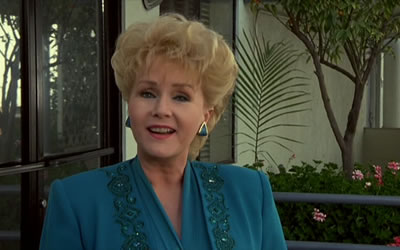
No one evoked Old Hollywood nostalgia like Tammy herself, Debbie Reynolds
Do I like it? I found some of it morbidly fascinating.
What do I remember most? Evokes what a weird time 1968 was as well as recalling what is now very much a lost world, one that I have some memories of though from my childhood. The white family makes its comfortable living by owning a suburban department store of a type that I do remember hanging on as late as the 70s at least. The repeated attempts of Beau Bridges and his sister (the young people) to talk to Sidney Poitier in some kind of jive is equal parts painful and bizarre, but it doesn't seem to be intended as particularly satirical and emphasizes how the average sheltered white person evidently had no idea how to go about talking to black people in any kind of regular way at that time. Lauri Peters, who plays the sister, did not go on to have much of a film career but her look, clothes, voice, etc, were quite striking to me in this as being a perfect 1968 suburban babe. I was quite taken with her. All of the period touches. The loud trucks, the gas guzzling cars, the pollution, the lounge lizard inspired basements, the New York skyline looking rather grimy and shabby in an orange-ish light. I have to confess, the romance between Sidney Poitier and Ivy, Carroll O'Connor's family's black maid, which is ostensibly the point of the movie, did not excite me that much.
Associated in my mind with--Diary of a Mad Housewife. It is similar in its unintentional late 60s-early 70s weirdness.
Yes, posting a picture of the white girl is too predictable, but this chick is such a quintessential 60s babe I could not resist.
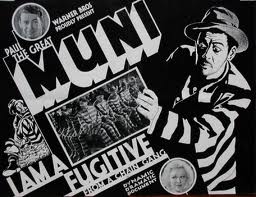
I Am a Fugitive From a Chain Gang (1932)
Director: Mervyn Leroy
Notable Stars: Paul Muni. A highly respected actor of the 30s, I think this is the first movie of his I've ever seen.
Do I like it? Yes, it's great.
What do I remember most? As I frequently note, classics from the 30s, particularly the early 30s, have the most extreme variation with me with regard to holding up across the years or communicating in a cultural idiom which has become completely incomprehensible. This is an example of the former, as the major themes in it, corruption and injustice in the legal system and the brutal indifference of the greater society, are equally pressing problems today. But even aside from this realism the tone and psychological approach to the material seem much more modern than what is usual in that time. It's an unnerving movie.
Associated in my mind with: The Bicycle Thief.
It's All True (1942--released 1993)
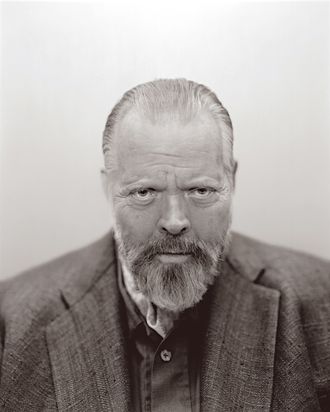
Director: Orson Welles, primarily
Notable Stars: Welles, I guess
Do I like it? It's an unfinished documentary. The footage is interesting.
What do I remember most? Not very much. It's Orson Welles set loose in Brazil with a camera. There is a carnival, old time South American beach scenes, fishermen. The impetus behind the movie was that it was going to contribute to the war effort, Brazil being one of the Allies. I'd like to see it in a theater. It is worth seeing, but at home I found it to be somewhat sleep-inducing.
Associated in my mind with: Mutiny on the Bounty, Cruise of the Zaca.
Here Comes Mr. Jordan (1941)
Director: Alexander Hall
Notable Stars: Claude Rains
Do I like it? I found it disappointing. Given the era in which it was made, the presence of Claude Rains, and its status as a classic, I was especially looking forward to seeing it, but I couldn't get into it.
What do I remember most? This disparate ingredients of it failed to coalesce for me. I never understood whatever it was I was supposed to be getting. Maybe I'm too eternally tired to do this anymore.
Associated in my mind with: Carousel
L'Argent (1983)
Director: Robert Bresson
Notable Stars: No one I am very familiar with.
Do I like it? Yes. This was the third time I have seen it. I did not get much out of it the first time, but on both the second and third viewings I have been able to appreciate more and more how good it is.
What do I remember most? Though not exactly what the movie is about, it is always great to see Paris in the early 1980s, which is very much the city I encountered when I first went there in 1990, and which I suspect is not very much at all the city that one encounters today. There was an excellent little extra on the Criterion DVD called "Bresson A to Z" which elaborates on a number of common themes in his work, as well as a lively Q & A session from Cannes. The darkness, for lack of a better word, since Bresson would probably argue that the truths portrayed in the movie are just truths that are morally ambiguous, weighs more on me with each viewing.
Associated in my mind with: Sauve Qui Peut (La Vie), French in Action TV Show.
As increasingly happens to me with books, I have hit a snag with regard to my movie watching where I haven't been enjoying it as much lately as I did before. Part of this is that there are always too many other things going on, and I don't have, or don't feel that I have, even an hour in a day that I can take to watch a film or write or do anything I want to do without getting distracted or jittery. The other part is that I have been seeing almost all modern things, modern for me being anything after about 1970, which I rarely like. So having finally gotten back again towards the time period and the accompanying sensibility that I like, and with the next three pictures up on my list iconic and all time popular classics, I had hope that I would get swept up in the spirit of the project again, as seems to have been the case with my reading when I began sprinkling in again novels and plays of the sort that I like, intelligent and funny without being at every instant a test or indictment of my intelligence or other development, among the heavier material that I find I am no longer able to read with any sense of accomplishment or enjoyment. This partially happened. I did feel, in one instance especially and in parts of the other two, that I was experiencing great and significant work, and I could see where at another time and in another psychological state of mind I would have taken to them with real enthusiasm. At the same time I feel at this point so remote from the artistic process and the state of mind in which it flourishes and which is the basis of what most great artworks are about, maybe more so than at any time in my life, that it is hard for me to take up anything that does not belong to the truly remote past, before the adult memory of almost any living person, without feeling sheepish or embarrassed before it. Also at least two of these movies were very long, so that I had to watch them over several nights, and in my current agitated state I was never really being able to settle in to the world which the film inhabited, which is especially important to do with epics.
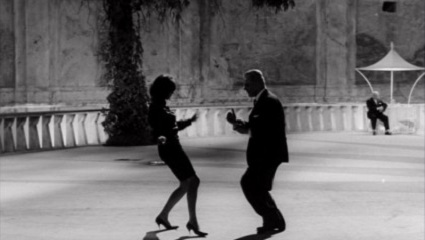
8 1/2 (1963)
I may have the mind and perception of a child, but I have enough sense to know that this has greatness imprinted on it in just about every frame. This does not require a keen insight, as the movie's status as one of the immortal monuments of the postwar international art cinema
has been established almost from the day it came out. It is hard for me to project seriousness, but I do mean it, it's an impressive work. Fellini was a true badness, and this movie is a two hour and eighteen minute. masterfully stylized demonstration
of what being that kind of artist consists of. The scene (I was going to say the famous scene, but almost every scene in this is famous) where Mastroianni, who seems to have been a badass of acting in his own right, in his dream, has gathered all of the important women in his life, wives, mistresses, prostitutes, childhood fascinations, actresses and so on, in his childhood home where they cook dinner and bathe him and wrap him up in blankets before they begin to snipe and make accusations and demands, at which he has to drive them back with a whip is one of the most memorable depictions of a properly flourishing male ego that I have seen. But then the set of the spa, both by day and night, where Mastroianni and his entourage have come, nominally to begin work on his next movie, the nightmare of the traffic jam, the dingy railway hotel where he stashes his mistress--these are all wonderful enhancements and understandings of the possibilities of life also. But you knew all that.
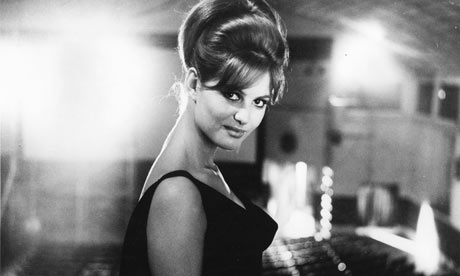
It is a sign however of how off I am at the moment that I did not feel much personal emotion or thrill, even of the quieter sort, while watching this, which I usually do when encountering artworks of this stature and caliber. As enumerated above, this has much to stir and raise even the most dormant spirit, but mine does not seem to be capable of being stirred by anything. It even has Claudia Cardinale in 1963 for goodness's sake-- her 1963 is one of those singular years in the history of movies, or anything else, where a woman attains a unique and frankly awesome state of near perfection that is too fragile to hold for more than a few months (Grace Kelly around 1954 comes to me as another example of this phenomenon; no one else is coming immediately to mind in this same way at the moment). But I can't feel that any of this has anything to do with me anymore, and such a thing is to me a kind of indictment or accusation for the obvious reasons that we don't need to go over again. But I hope our culture can continue to produce enough people who possess enough intelligence and spirit to enable the film to survive, that it may speak to people even many generations from now and the names and personae of Fellini and Mastroianni and Cardinale and Italy and even Europe will still resonate and have meaning for them. I don't think it is a certainty that they will by any means.
Psycho (1960)
To be honest, I find the story here to be unsatisfying. It doesn't hold together. The characters aren't strong enough. From the 21st century point of view it is wholly implausible that the Bates Motel would not be under 24 hour police surveillance just on principle, though implausibility in itself is not enough to mar an otherwise fascinating tale. There isn't really enough tension or motivation here to interest me.
That said, I find it very watchable. The world of the old U.S. highways with their oddly designed turns and exits, lined by empty spaces or local nature that looks more organic than that along most of the interstates with the occasional sketchy hotel or odd, out of place looking Victorian mansion has largely disappeared in much of the country, namely the more populated parts of it, but where I live the roads are largely still like this. The film was shot on the same lot as Hitchcock's TV series was, and it has the look and feel of television productions from that time, which effect however I like (Inherit the Wind was also filmed on a TV lot around this time, and I noted that I liked this aspect about that movie too). Janet Leigh's muscular, almost strapping, physique caught my attention--it is not a type I associate with this time period. As I begin to move beyond the time of life where I can even pretend that varied experiences of the sensual kind are still realistic possibilities, I have taken more of an interest in the variety of physical body types and attributes than I was want to do in my desperate youth, when I wrote off everything beyond finding someone who was identifiably female from ten feet away and would not be too harsh for my fragile personality to be capable of contending with as luxuries I could not afford. I also like the quiet, slow pace of this movie; it is not that I don't like the frenetic, anything can happen style of Fellini and other artists of his type, but as hardly a day of my life has ever assumed that form, it is always an alien experience for me to try to comprehend. The tone of my day to day life is, unfortunately, a hell of a lot closer to Norman Bates's than it is to that of any character in a Fellini movie. Anyway, the main thrust is there are many things about Psycho that I like, I just think the plot misses in some way. I missed the Hitchcock cameo as I always do. I haven't bothered to look up where it was--what's the point of that? The game is to find it on your own.
Ben-Hur (1959)
I was a little piqued when this came up. It is certainly legendary, and won a chariotful of Oscars, which kinds of movies I find I usually enjoy, provided they are old enough. I also had not seen anything of this kind, namely an old Hollywood studio epic set in ancient times, in a while, and I thought that might be something that could revive my sense of enjoyment of life, which effect watching and reading depictions of Roman-era fighting, torture, injustice and so on often inspires in me.
I had seen it. or some of it at least, when I was around eleven, and while various of the more vivid scenes, i.e. the slave galley and the chariot race, had imprinted themselves on my memory, my ability to follow the story had been hindered by my complete lack at that time of any background in either religion or ancient history. I may have recognized that the unnamed man who gives Ben Hur water when the slave caravan passes through his village is supposed to be Jesus, but how that otherwise fit into the story would have been beyond me. The emphasis on Ben Hur's being a Jew would also have meant little to me at that time other than as a signal that he was probably going to be treated unfairly (i.e., I don't think I was clear at the time what 'being Jewish' meant either in a religious or racial sense). Other aspects of the plot had been confusing to me as well. Seeing as my understanding of some of this background matter has improved somewhat in the ensuing 34 years, I anticipated a much heightened viewing of the movie this time around.
Ben-Hur has its moments, though the three hour and forty-two minute running time is a bit excessive, given that the major episodes in the plot, extended though some of them are, are really not that numerous. There is a lot of dead time waiting around for the highlights. After the chariot race there are still forty or so minutes left, which are given over mainly to Ben Hur's finding his mother and sister in the leper colony and the last days and passion of Jesus Christ. It may have been good, but by that point in the movie my concentration was gone. I assume Ben-Hur must have converted to Christianity at the end, but I do not remember the scene or announcement when he did this, which is kind of embarrassing.
The logistics of showing this in the theater in some noweheresville American town, or even a place like Brattleboro or Concord, in 1959 are of interest to me. Unemployment in those days was like 2% and nothing stays open past 10pm even now so during the week they must have had to start the show around 6pm sharp, and with intermission they'd be lucky to be done by ten o'clock. It was a full night's outing, or afternoon if you went to the matinee. I suppose I only find it fascinating because I feel like I haven't had an evening, or a four hour block of time in which to do anything, sit in a beer garden or whatever, in years, and so I assume no one does such things anymore.
Burt Lancaster (as well as Marlon Brando) was offered the role of Ben Hur before it descended upon Charlton Heston, which only strengthens my theory that you could not keep Burt Lancaster out of classic movies in the late 50s and early 60s, unless he kept himself out of them.
Ben Hur's sister was played by Cathy O'Donnell, who was Wilma, the girlfriend/wife of the amputee in The Best Years of Our Lives, which was also directed by William Wyler. I had never seen her, or noticed her, in any other part. Ben-Hur turned out to be her last film.
I have to admit that I kind of like Charlton Heston. He was really a man of his generation, which is pretty much gone for good now, including him, though he was active in an often outrageous, frequently hilarious and to me somewhat endearing way up to the early 2000s. Of course as one of the last visible and combative elders of the World War II generation the ever obnoxious baby boomers were sniping at him to the very end, at which point he had alzheimer's and probably didn't know what he was saying half the time. I'm sure he was a more genial man to talk to in person than most baby boomers of similar stature would be. Though he became famous late in his life as a right wing caricature, he did not vote for a Republican presidential candidate until Nixon in 1972 when he was nearly fifty years old, which was an election when a lot of people of roughly his age decided things had gone a bit far and switched side. He did not officially register as a Republican and become the activist on their behalf that he is thought of as now until he was in his 60s. I suspect that in the 2030s, when I am 64 or so, I will appear to younger people to be the embodiment of a conservative reactionary, they'll regard me as Samuel Johnson regarded the old Puritans who were still hanging around scowling at everybody when he was a boy. I hope it doesn't happen, but we've all seen that old men, especially if things have always gone along pretty well for them in life, don't as a group take much to change, which eventually comes to some point that they just can't go across.
The next five star movie on the list is the cartoon Aladdin, which I am not going to watch. It is not a favorite of my children, though they saw it once, or the older ones did, a few years back, and what I saw of it I didn't like. So I am recording it as done here.
The incident from Ben-Hur that made the greatest impression on me was the part during the chariot race when Messala, who has by that point long established himself as the embodiment of Roman tyranny and cruelty for the sake of cruelty, lays off from lashing his horses for a moment and in a furious rage begins to lash Ben Hur, his childhood best friend whom he has already sent to the galleys for three years, with the intention that he never return. I was struck by the capacity that Messala had to hate another man that much for what appeared to me at the time no apparent reason, because I did not understand the exchange in the beginning when Ben-Hur refuses to sell out his people to give smoother sailing to Messala's political ambitions. It seemed something worth noting to me.
These came up on my list but I had already seen them before, in some cases several times. One of them I did not even bother to watch again, due to time constraints and a second I only watched with the commentary on as a refresher. But I want to keep a full record here so I will leave a few brief notes.
Sense and Sensibility (1995)
This is the one I watched with the commentary on. It is one of those films that makes me wish I had more of the native instinct for ferocity and scorn. It is perfectly adequate of course, especially for the likes of me, and the cast is almost a who's who of fully developed and humblingly literate British acting talent. But I suspect there is more than enough room for it to be knocked down a peg or two, if you have it in you to persuasively assert that it is smug, lacks warmth, lets the actors show off too much, and all of the other things I find in it in the frame of mind I inhabit now. There were instances where the lines seemed and objectively were funny, but I did not feel entirely free or eager to laugh, and twisted my mouth into a grim smile instead. It was as if I were hesitant that doing so would give satisfaction in a quarter such as would be especially distasteful to me.
Sense & Sensibility is probably my least favorite Jane Austen book (I won't count Northanger Abbey). That is not to say it isn't better than ninety percent of even well-regarded novels, but I find the particular characters and the general situation of this one the least compelling (I've always been a big Mansfield Park fan, which I feel is underrated among us because the main female character is less feisty and more deferent to societal expectations than the other Austen heroines). Among the Jane Austen film adaptations I do like the 1992 six hour Pride & Prejudice, which does a better job it seems to me of inhabiting the story as Jane Austen would have regarded it. It feels like a younger person's movie in general. There was a BBCish version of Mansfield Park, very low budget and pretty conservative (compared to the 2000s version that featured explicit incest and lesbianism anyway), that came out in the 80s that I also liked because it had that ruling spirit of youthfulness about it. I think that must be important to the Jane Austen formula.
Roman Holiday (1953)
I have this listed on my profile page as one of my favorite movies. The other time I saw it was before I took a trip to Rome in 2001, so that predisposition towards excitement and the power of the association ever since have doubtless influenced my idea about it ever since. Did I like it as much after the thirteen year interval? Probably not but how could I? I don't feel about anything anymore the way I used to feel about them. I fear that if were to read War & Peace or the Pickwick Papers again I would not find that they moved me as they once did, and I should agree with modern people that long form novels and the whole idea of great books are a relic from a age comparatively starved for information and novelty, and that tech innovators and economists discover and accomplish things every few weeks of more probity and import than Dostoevsky did in the whole of his life. (Interlude--I managed to begin this posting in the morning, and sneaked in about an hour of writing. Now I have to stop, and the rest of this will probably have to be finished late at night. Note how the quality both of my mood and my coherence of thought will slip from this point forward).
(Starting again, about a week later...)
I had forgotten that the first half hour is a little slow going. However, once they get out on the streets of Rome that part really is, and probably always will be, still great. This was, famously, Audrey Hepburn's first movie, and it is one of the great debuts of all time, a stroke of great luck not only for her, but for the movie itself, for as it was pointed out in the little documentary that came with the DVD, if she had already been an established star, the film almost certainly would have been made in technicolor, had a much bigger budget, been much more serious, and not as good. All of these legendary film stars and directors and producers and writers, we are told, had dark sides that would make the average earnest workaday type of fellow shudder to encounter face to face. It is hard to imagine Audrey Hepburn, at least at the time this was made, having such an unfathomable dark side. I only mention this because I was looking for signs of it both in the movie and in the other materials, but I didn't really see anything.
It would be easy to be envious of the cheap expat life in the great capitals of Europe that was available to Americans in the 50s (though the Gregory Peck character and his friend are supposed to be behind on their rent and scrounging up money to order coffee). However this is one thing I cannot really lament this, because I was able to replicate this to a very great extent in Prague in the 90s, which I think is not possible anymore for people who are bringing the amount of money to the party that I was at the time. I have to confess I have been lucky in my timing in several of these life experiences, in fact. I only regret that I could not have made more of the opportunities, the comparative rarity of which for people in my condition I now realize.
So, is Roman Holiday still one of my all time favorite movies? About half of it definitely is, yes. I am not dissuaded enough to take it off the list and replace it with anything else.
The Wizard of Oz (1939)
This is the one that I did not bother to watch again because I have seen it often enough and I just don't have the time. I watched it every year as a child when it came on television and I looked forward to it, though I was always more of a fan of the books, and as the movie departed massively from the book in pretty much every way (to my literal 9 year old brain) I never quite embraced it whole-heartedly. Of course at that time I was not in the Judy Garland cult either. This is probably her signature role in most people's minds, though I have always tended to view it as something separate from the rest of her career, because it does not seem to me to fit in with those other movies. I met Margaret Hamilton, who played the witch, at the annual Munchkin Convention (for East Coast Oz Club members--the Munchkin Country was the eastern part of Oz in the books) in Cherry Hill, New Jersey when I was nine or ten. She seemed to me a regular little old lady. She did not break into character at any point, that I can remember. We have a tape of this and my own children watch it sometimes. They don't seem to be afraid of the witch the way I and most other older people remember being afraid of her. Modern kids not terrified by witch. I don't whether the proper question is why they have no terror of this character or why older generations did have it? Obviously there was some threat hinted at in the witch character that had a reality for us that it does not have for my children. Indeed, my children do not seem to have much sense of anything more unsettling than that someone may restrain their ability to express their anger to its absolute fullest extent.
I have come, in my periodic glimpses of the movie when it is playing in the house, to appreciate the MGM production values in the black and white, really sepia-toned, scenes in Kansas. This is probably my favorite part of the film at this time. The songs are (mostly) good, and the scenes where the Wizard is exposed and then departs have a certain undeniable poignancy. It's more that I had not noticed the vintage 1939 beauty of the Kansas part earlier in my life the way that I do now.
The Magnificent Ambersons (1942)
I had seen this ten or fifteen years ago. It did not seem as good to me as I had remembered. It is very talky, and not in the way that moves the story along. It is also darker (as in shadowy), quieter--there is no music in large parts of it, if there is any at all-- and more claustrophobic than I had remembered. Also the circumstance that the film ends abruptly in the middle of the story, given that it does have a story, and that the story is not incidental to its execution, is a problem that I cannot seem to wave off as easily as I must have before. It still might have been one of the all time greats if it had been completed, though it would have been awfully long and ponderous. I am not as high on it as I used to be however.
How Green Was My Valley (1941)
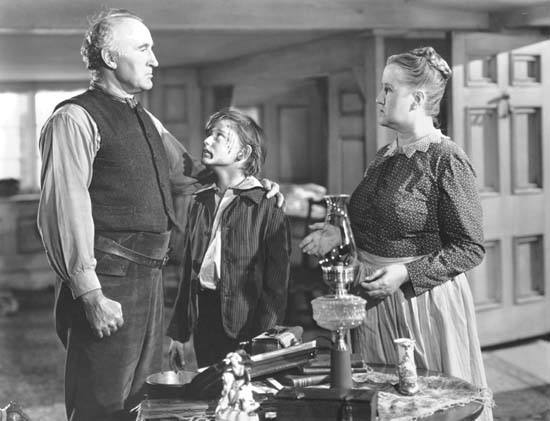
Celebrated John Ford tearjerker that won the Best Picture Oscar over Citizen Kane but was so great in its own right that cinephiles do not complain much about this decision. I had never seen it before. I like it, it's very good, and several times it came close to causing the swell in my bosom and welling up in my eye that I had feared. As I often find to be the case with John Ford however, perhaps because the expectations for his films have been raised so high, I found myself thinking that as good and well laid out as the movie was, that it could have been still better, or at least could have gone for the full pathos or sentimental effect, and did not. The opening scene, for example, I felt would have made more of an impact incorporated into the ending. At other times he went for humor instead of pathos, which humor hasn't really aged well. This is my take as someone who was especially looking forward to seeing this and eager to like it. I do like it, but not as much as other people do.
It has been noted by most astute commentators that even though the characters are nominally Welsh, Ford essentially depicts them as if they are Irish, which he was by ancestry, and his parents by birth. The repressed love between Maureen O'Hara and the priest even when she was being courted by the son of the factory owner was a pleasing example of the Irish romantic sensibility. Marrying for wealth, or the potential of wealth, does not seem to be as developed an instinct among Irish girls, even pretty ones, as it is among women of other nationalities. The immortal quote "I'd rather cry in the back of a Mercedes than laugh on the back of a bicycle" that appeared in the New York Times report on the dating situation in China a few years back is not a sentiment that seems to be as widely held among Irish women. Even after marrying the wealthy man she did not love and moving into the mansion and having a taste of life with servants and other luxuries the beautiful Angharad (Maureen) is still pining for the priest, who is a good man, but is not exactly a fiery take-charge type, unless prompted heavily. Not to mention that he lives in the dingy rooms appropriate to his station. But for all that I didn't think it was an unrealistic portrayal.
How Green Was My Valley, like a lot of classic films from this time, was based upon a book that was a huge bestseller in its day that has been forgotten. This one even won the (U.S.) National Book Award in 1940. The author was Richard Llewellyn, whom I had never heard of before this. I suspect the book is not half bad, and probably better than the movie in some ways.
The Letter (1940)
William Wyler directed movie starring Bette Davis based on a story by Somerset Maugham and set in colonial era Singapore. These are all points in its favor. It's the most smoothly classical of the classic Hollywood films in this group, or at least it has the most sophisticated veneer. Murder, adultery, expat Brits, cynical, plotting natives, fairly crisp, literary dialogue, The plot is nothing spectacular but the Maughamian atmosphere is conveyed well enough to hold one's interest, the acting and direction are first-rate, and Bette Davis, who is still young here (she would have been 31 or 32) does have a kind of mesmerizing quality, especially when considering that she is playing a stone-cold murderess in this movie. She looks to have been rather small, as actresses. I had not known either that she was a New Englander (Massachusetts). She described herself as her first screen test, when fifteen men had to lie on top of her and give her a passionate kiss, as the 'most yankee-est, most modest virgin who ever walked the earth" (Wikipedia). It sounds like she was able to overcome this Yankee prudery as her career progressed however.
Take Me Back to Oklahoma (1940)
This is what I would assume is a B-movie, Saturday afternoon matinee, what have you. The production values are a shock after seeing the three above films. It is like being dragged back to the early silent period. I wanted to get into the spirit of this, which features the singing cowboy Tex Ritter, his sidekick Arkansas Slim, a singing group called the Texas Playboys who are not unversed in the use of firearms either, and some non-musical bad guys who want to take over, preferably by violent means, the only on the level coach line left in the west. It was just a little too goofy and raw for me however. It is only 60 minutes long.
Destry Rides Again (1939)
Another odd western, starring Jimmy Stewart and Marlene Dietrich, who is the current old star that is all of the sudden turning up all over the place on my list. It's got some entertaining parts to it, and I thought it was mildly interesting for a while, but it kind of lost me towards the end. I think I was tired, and maybe I should have tried to watch the ending a second time. Marlene Dietrich's character, I have to confess, was more trashy than I really have a taste for, especially at this point of my life, and while I like the idea of Jimmy Stewart as an even-keeled, law-revering, use the guns only as a last resort sheriff in the midst of a world wholly composed of morally corrosive hotheads, it doesn't strike me as very plausible. The lawlessness of the town at the beginning of the movie was one of the most extreme examples of what that would mean that I have seen in a film. That was one superlative thing about it.
Saturday, November 07, 2009
Counsellor at Law
I saw this swell movie the other day and thought I would put in a word for it on the internet. It's a fairly early (1933) work of the director William Wyler, who is evidently one of my favorite directors as I have several of his films on my favorites list, though I was not aware of this until I was looking into the matter just the other day. This guy directed an unbelievable number of blockbusters and movies that are beloved of middlingly sophisticated cinephiles such as myself--the Laurence Olivier WutheringHeights, Jezebel, Mrs Miniver, The Best Years of Our Lives, Roman Holiday, Ben-Hur, just for an initial sampling--while the critical elite tends to be considerably less enthusiastic. Even among these however this film, I suspect because it is comparatively uncelebrated, has lesser known stars, is modest in scale and pretension and so on, tends to be favorably regarded, and deservedly so.
The screenplay was written by Elmer Rice, a major playwright of the time whose work I am not otherwise familiar with, and adapted from his own play. It has that quality I often praise in old movies of using energetic dialogue almost without breaks to propel the story forward. This movie with its office setting also uses it quite impressively as a means of establishing an atmosphere of bustle and heady activity. The woman who plays the switchboard operator for example is not central to the main action of the plot, but her manner of chirping and rapid-fire patter in the center of the office while the other characters come and go on their ways around her is an excellent effect. The liveliness of the law office depicted in this movie, with its dramatic situations, colorful characters continually passing through the office, grovelling underlings and clients and attractive and worshipful secretaries actually had me thinking it wasn't too late to go to law school after all for a hour or two afterwards, though after I had sobered up I considered that this was probably not what being a lawyer on a day-in day-out basis was really like, and that even if it was, I wouldn't have the energy of the lead character/star attorney in the film to make it happen myself.
This movie had a great cast, though I had never seen any of the principals before: John Barrymore, who is kind of famous, and Bebe Daniels were the two main stars, but there were a lot of minor roles that I thought were outstandingly played, the receptionist being one, the brilliantly credentialed but socially inept young lawyer Weintraub (I think that was the name) who keeps unsuccessfully asking out the Bebe Daniels character, the other young guy who is some kind of intern and has to fill in for the women when they eat lunch and so forth. The accounts of the filming of this movie ironically depict Barrymore as frequent drunk and unable to remember his lines and Wyler as unpleasant and borderline abusive to the minor cast members, which is not anything like the feeling one gets from the finished product. But such is the case, it seems, with a lot of quality art.
There was a very good dialogue that I wish were available on Youtube between the great lawyer and an unrepentant young communist agitator whom the lawyer has agreed to help for the sake of the man's mother. The communist goes on a rampage against the rich and privileged, to which the lawyer responds forcefully that he came to this country in steerage himself and scraped and clawed his way to the top and that anyone else had the opportunity to do the same, at which the communist was not cowed but went on to denounce him as a class traitor, all through which, and this is what I found most interesting, the lawyer made no attempt to cut him off or throw him out of the office or personally denigrate his accuser, but let him have his say, without, however, backing down from his own point of view. There was no attempt to resolve the question one way or another. Similarly the lawyer himself was presented as being rather morally ambiguous in his myriad business, but sympathetic and attractive nonetheless because of his great appetite for work, his personal attitudes towards people in accordance with each's authentic merits, and so on. Seeing this movie, in concordance with watching the World Series and reading the New York Times coverage of it and other events, reiterated one of the fundamental tenets of American life which was not properly conveyed to me as a young man, which is that if you haven't made something of yourself in New York (or maybe California), you really don't matter, at least as far as any kind of publicity or literary assessment of you is concerned. Do not get me wrong. I love New York. I am resentful every day toward my immigrant ancestors who were evidently intimidated by all the cool and ambitious people getting on the New York boats and shambled off to the safer and less threatening Philadelphia boat instead, dooming their descendant to grown up in a realm where apparently nothing rising to the level of culture significance ever transpires, or ever can transpire. It was idiotic of me, as it would be of any young person of my particular interests, not to have done anything to try to live there and make a go of something when I was young. That said, the self-congratulation of the current crop of New Yorkers and New York writers and other public figures mainly for being New Yorkers and New York writers irrespective of the ultimate quality of their work or being in any other way especially interesting is getting to be a little tough to take. I know this happens because NY people are, in their daily relations with other NY people who outrank them, envious, insecure and perhaps often unhappy, so they make themselves feel better by imagining that, say, Philadelphia is populated more or less exclusively by knuckle-dragging cretins, and that if said commentator were to move there himself he would stand out almost grotesquely as by far the smartest, most sophisticated and socially dominant person in the whole city (a prospect of personal greatness which is surprisingly quite terrifying to most people), and I have to remind myself of this.
"I comprehended...how an ardent, serious, inquiring mind, struggling into passion under the load of knowledge, had, with that stimulus sadly and abruptly withdrawn, sunk into the quiet of passive, aimless study." Bulwer-Lytton, "The Caxtons: A Family Picture"