Judgment at Nuremberg (1961)
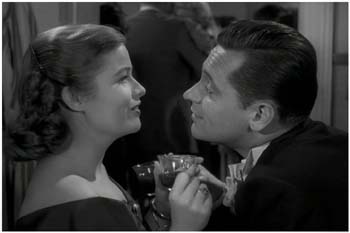
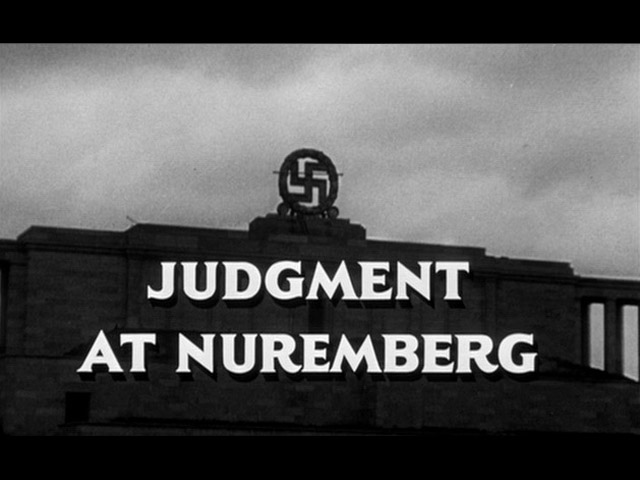
I was not too excited at the prospect of another courtroom drama, more than three hours long, directed by Stanley Kramer, Hollywood's most earnest and socially committed liberal of the early 60s (whose films have been turning up in my program at a prodigious rate over the last year), and featuring a cast loaded with superstars signed up for a film which already promised to be more self-consciously important than most people raised in this cynical generation can stomach. In spite of a lot of what one would instinctively dread about this movie being in fact true--it does take itself very seriously, it is grandiose (it opens with a five minute "overture" during which Nazi music plays over a black screen with the word "Overture" spelled out in white), some of the big name stars are a bit too big for the roles they are asked to play, and overdo them--its sincerity and confidence in its importance, and maybe the importance of human existence, are genuine enough, and strong enough, to relegate these potential flaws to a rather minor status.
Stanley Kramer is not a master of subtlety or the small but telling detail, but he seems to have been one of the more sincere directors, and strongest in his beliefs, who ever worked in this country. This is no doubt his magnum opus. Inherit the Wind, which came out the previous year and which I found myself grudgingly admiring in many of its aspects, was a good warmup for this, as there are obvious similarities between the two. Nuremberg has more plotlines and characters and covers quite a lot of ground. One of the most important, and, relating to Kramer, characteristic parts of the movie is the ten minute interlude near the middle where he simply shows the actual documentary footage from the concentration camps, which evidently in 1961 had never been seen by the general public before, at least in the United States. I appreciate the way that it was done. It is not thrust or flung out at the audience demanding that it take in and acknowledge at once all the pertinent facts of the case, and feel viscerally a certain response that the artist or historian thinks you ought to feel but has not adequately prepared you to feel. Kramer is very strong on this preparation, and did not break out the footage until a critical moment arrives in the trial, when its impact will have some weight behind it, and not immediately invoke a purely shocking or emotional response. The effect is more "Can you believe this happened?" rather than "You didn't know this thing I have shown you was going on, well, now you can't plead ignorance anymore, so what do you intend to do, or at least emote, about it? Also feel free to squirm under my moral superiority," which is how I often experience the presentation of atrocities or injustices in films and other public forums.
Burt Lancaster is one of the many big names in this. There was a time, especially in the early 60s, when you could not keep him out of a classic film. I think this is the fifth time I have seen him, with 3 being in the '61-'64 period (the other two being The Leopard and The Train). I didn't recognize him until the movie was practically over, so believable was he as a dignified German. I guess that means he did a good job. Marlene Dietrich was back again,and gave the picture something it wouldn't have had otherwise. Maximilian Schell won the Oscar--he is notable to me as Maria Schell's brother anyway. They were Austrian. Austrians, as actors, directors, composers, etc., I probably don't need to tell you, were prominent, and very able, at all levels of Hollywood in the middle of the last century. The Austrians who came of age in the years just before World War I were one of the more artistically accomplished cohorts in the history of the world. And now they are extinct.
I am falling asleep--but I must finish this post tonight.
Judy Garland was in this, at age 39. She is not terrible in it, as some have written, but they really could have gotten someone else to play the part--they didn't need Judy Garland for it. I also think they may have given her an Oscar for this, which was ridiculous. I feel similarly about Montgomery Clift's appearance to what I do about Judy Garland's. He's not giving you anything you would not have gotten from a relative unknown. Spencer Tracy is the star, which I had not realized beforehand. I won't say that he was miscast, but that his persona seems strange in this setting. He plays his usual upstanding adult middle American role here, fundamentally decent, incorruptible, adhering to common sense and measured, all of which is good and well, but we're trying Nazis here, very brilliant and in many cases intimidatingly accomplished ones. Were amiable provincial judges like Spencer Tracy really who we sent to deal with these guys?
For all this, the movie does work. I think it is because it doesn't just care that the Nazis killed millions of people and got (sort of) punished for it, but it cares about the way that they were able to do it, by perverting the laws and all of the other institutions of society that might have been able to oppose it. And yes, we all sort of know this, but we probably don't spend as much time thinking coherently about it as we should, and the point that Stanley Kramer would make is that if we have any part of a working brain, we are responsible, even if we consider ourselves to be powerless nobodies without proper credentials for critique, for the perversion of these institutions and bulwarks of civilization in our own society; and I actually still believe this to be true, which probably accounts for why I am unable to be happy about anything going on in contemporary life.
Odd Man Out (1947)
This is a good movie, but I am on the clock, so my review is going to be choppy, and brief.
Postwar Britain--set in Northern Ireland, but I assume it was filmed in one of the London studios. Directed by Carol Reed, in one of his warmups for The Third Man, which came out two years afterwards. That time, for me, has in general an atmosphere that I find strongly appealing, at least for the purpose of watching movies, but the atmosphere in this--the relentlessly dreary weather, the darkness, the cold, the dingy houses and apartments and pubs--is really what makes the film. The plot is improbable, but it does not strike me as particularly important. Politics also,surprisingly, don't seem important. The main character, who is played by James Mason, is an IRA type, and the viewer, as well as many of the minor characters whom he encounters in the film, are sympathetic to him, and the police are undoubtedly the villians, but I certainly did not feel that the movie contained any kind of blatant pro-IRA message, nor can I believe any suggestion of one would have been permitted in 1947, the censors in Britain at that time being even more severe than they were in America. The IRA aspect provides a subject and a framework for the director and his assistants to undertake an artistic exercise. Later in life, James Mason apparently said that this was favorite among the films he had been in. I wonder why, given that in most of the movie he doesn't say or do much, drifting in and out of consciousness due to having been shot in the arm and at his most vigorous dragging himself from one hiding spot to another, usually wordless. That is what he felt however.
I watched this on VHS, though the place I ordered it from sent me a burned DVD of the movie as well. I enjoyed viewing it on tape. I cannot remember why. It does fill up the whole screen, or more of it, than most DVDs do.
Showing posts with label stanley kramer. Show all posts
Saturday, November 02, 2013
Saturday, June 01, 2013
Classic Movies 1950-1960
These are all well-established classics that a certain class of mind is supposed to like. There is another class of mind, that consisting of independent spirit or intelligence, which would probably not deign to bother with them, except to pick out their inanities. I do not belong to that class however.
I had seen all three of these before now, but only once, maybe twice in one instance, and all a long time ago.
Inherit the Wind (1960)
I don't love this movie, but I kept getting the nagging suspicion that it was better than I was giving it credit for. For one thing, I think I was letting myself be deceived by the circumstance that its sets reminded me of a television show of its period. Here are some of what I thought was good about it:
The screenplay is very good, despite being apparently didactic. It is an adaptation from a well-regarded play of the time, which (the time) had a definite strain of earnest concern for social justice and liberty about it. It is frequently intelligent, and thorough, while being lively enough to move the story along and keep the attention of viewers like myself, who like mild stimulation but are generally too tired/out of practice to give much mental exertion.
I saw Spencer Tracy again, and was more impressed with him than I was in Father of the Bride, which I had just seen a week or two before, because I thought he was more or less playing himself in that other movie, and would effectually be the same guy here; but he played a quite different guy, and rather subtly, such that I don't have any sense that one of these characters is more indicative of who he is than another.
It probably does not have to be noted, but Spencer Tracy's physique and overall look, for somebody who was a major star for three decades, is pretty amazing. The guy's upper body was mashed potatoes, and he always looked 10 or 15 years older than he actually was. When he did Father of the Bride, he was 50, about the same age as Brad Pitt and George Clooney are today (or, to make a more contemporary comparison, as Cary Grant was circa To Catch a Thief. On the other hand, Wilfred Brimley was an even older-looking 50 at the time of his career-making performance in Cocoon). He is 60 in this one. I used to thnk of 60 as old, but many 60 year olds nowadays prefer training for and running marathons to loading up on steak and martinis (Tracy is what 60 looks like when you focus on the latter). Even Philip Seymour Hoffman probably employs a personal trainer and dietician.
The great Frederic March played the William Jennings Bryan character, I suppose well. He is at least quite unrecognizable to me as Frederic March in his costume, the bald head especially.
Things that irritate me about this movie:
I have no particular love for Bible-thunping rural white southerners, but I thought the rather raw contempt poured out on them in this movie did not really do the filmakers much credit--it certainly did not add anything to the quality of the film. I realize that this came out as the civil rights era was starting to gain heat, and though there is no direct racial dimension in it, anti-southern sentiment among the mosr progressive social justice liberals--and Stanley Kramer was perhaps the most avowedly politically motivated major studio director of this time--was running high. Nonetheless, given the star power on display in the movie, and the extras showing the film being feted at gala celebrations in Berlin and Cannes, my class instincts kicked in with the feeling that this was not quite a fair fight, and while maybe at some level it was an honest representation of the reality on the ground, it was not an artistically worthy or fair one.
Gene Kelly--yes, the dancer, though at least they don't have him break into any numbers here--is not well cast as a cynical newspaper reporter who I believe is supposed to be H L Mencken. Having read even a little H L Mencken, I cannot imagine he was anything like the character depicted here, though one would assume most of the brain trust involved in the making of the movie would have been more familiar with his works than I am, or even known the man personally. My impression of Mencken is that he was a rather pitiless person towards people he considered inferior (pretty much everybody), who never smiled, and only laughed with people who had demonstrated some worth. Kelly plays the role as a kind of nihilistic, wisecracking, light person, which does not ring true to me.
Donna Anderson (this is not in the category of things that irritated me) is the token babe in this, and she has an appealing 1960 look, which is why I mention her. She went on to have a modest career in television, though not in any shows that I ever watched.
Paths of Glory (1957)
This was a St John's favorite. I think they showed it twice there, once as the regular Saturday night classic, and a couple of years afterwards as part of the Wednesday Kubrick series. It has a sensibility that fits comfortably there. Its time is close to the heyday of the College's modern era--I believe Jacob Klein himself was still the dean in 1957. It has a kind of classical spareness both of plot construction and in its sets and general style. Its themes are the sorts of things you can talk about at the bar afterwards without straining yourself or falling asleep, so that you feel you taking part in mental life to some degree. So needless to say my viewing, after about a 20 year interval, was heavily colored by these associations.
I had forgotten that one of the guys was chosen to be the sacrificial lamb from his platoon because, among other reasons, he was a 'social undesirable'. At times I feel like there are some people nowadays--perhaps even myself--could stand to gain by the sort of concentration upon self-improvement that the threat of being sentenced to execution because you are so repulsive to people might inspire.
An Adolphe Menjou sighting! He is in the cast as a cynical, weaselly, sybaritic French general (I think there are several redundancies).
I still don't really understand the part at the end where a terrified German girl is put in front of a pack of ravenous, wolf-whistling French soldiers and manages to subdue their raging boorishness by singing a melancholy song.
Conscripting armies to fight wars, especially wars like this where 75-90% of a birth cohort is killed, and the military leadership considers itself justified to make an example of conscript citizen-soldiers it considers not to be fighting with enough zeal by shooting them, is almost unthhinkable in the current state of society, on the mass scale of the 2 world wars especially. Aside from reticence about possibly being killed, huge segments of the present population simply don't regard the state as having authority over them to that degree. Power, yes, but power to which they are in a state of antagonism, not something to which they see themselves as owing a duty.
Sunset Boulevard (1950)
This is even more firmly ensconced in the Pantheon than the other two, so much so that many of the more highbrow or edgier iconoclasts on the internet take glee in knocking it down as much as they can, along with its similarly popular and acclaimed director, the great Billy Wilder, by whose creations they are decidedly unimpressed. I actually worship these people in a way, at least when they are obviously the sort of people who are cool and are successful with women, or are themselves desirable women hopelessly beyond my social reach, but unfortunately even when I am able to share their tastes I am unable to partake of what must be the exhilirating sharpness with which they savor their particular likes and especially their dislikes. Needless to say, I am a fan of Sunset Boulevard. Like other Billy Wilder films, it is fantastic (in the sense of being over the top in its storytelling and characterizations) and yet seems to me more like real life than a hundred other movies, and good ones too..
Quickly, some favorite dialogue bits:
JOE (upon Norma's declaring that he needs some new clothes): What's wrong with this shirt?
NORMA: Nothing, I suppose. If you work in a filling station.
That line kills me for some reason.
Near the end when Betty Schaffer comes to the house and discovers the truth about Joe:
BETTY: No, no. I haven't heard any of this. I never got those telephone calls. I've never been in this house...Get your things together. Let's get out of here.
JOE: All my things? All the eighteen suits, all the custom-made shoes and the eighteen dozen shirts, and the cuff-links and the platinum key-chains, and the cigarette cases?
I've never had nice clothes or accessories, and rarely think about wanting them, but I want them when I see them.
The Oscar for best actor in 1950 went to Jose Ferrer for Cyrano de Bergerac. I haven't seen that, so maybe it was the clear cut winner, but as, similar to Brando the next year in A Streetcar Named Desire, if not quite so dramatically, William Holden's role and presence is one of the more memorable performances in the history of the movies, I am thinking he probably would have been a deserving winner. Incidentally, Spencer Tracy was also nominated that year for Father in the Bride, another iconic role, but not I don't think in the same class as Joe Gillis. I like William Holden as a actor. He had that All-American midwestern charm combined with an unassuming studliness, a type which seems to have disappeared from the national scene in the last generation. He was apparently very good friends with Billy Wilder. This is noteworthy to me because Billy Wilder is one of the all time giants in his field and it is curious to know what kind of friends and intimates such people have. William Holden had some problems with alcohol such as we tend to frown on nowadays, most notably killing a person in a car accident while driving drunk. He also died at the age of 63 by falling onto the edge of a table while intoxicated in his apartment and bleeding to death, which is sad, really, but he had a little bit of an artistic flair about him, enough to be likable, and the possession of a restless and regularly unsatisfied soul often seems to be a prerequisite for attaining to this state.
Nancy Olson, who plays the fresh-faced aspiring screenwriter Betty Schaefer and represents to Joe the illusion of escape from the deformation of his soul that has been expedited by his taking up with Norma Desmond, was know as "Wholesome Olsen" in her high school days. That was in Wisconsin; in the 40s. That's pretty wholesome.
Doubtless this has been remarked upon before, but Norma Desmond is basically Don Quixote in drag and possessed of a massive fortune. The scene where she goes to the studio and is not able to be disabused of the conceit that she is still the greatest star in the world is reminiscent of various Don Quixote episodes, especially those in the second part where people begin to humor him by acting as if he were really the knight he claims to be.
Given Buster Keaton's current status in the very first rank of the Pantheon of the all-time greatest movie directors and actors, it never ceases to astound to see his cameo appearance with fellow washed-up, and at the time forgotten, silent film stars essentially playing themselves as Norma Desmond's old friends. In 1950 though the means of delivering old movies, to the extent people were even interested in seeing them, especially silent ones, was pretty limited, and film history as constituting some part of one's artistic education had not yet entered the general consciousness; which pretty much left Buster Keaton on the outside looking in, though he remained active and made guest appearances on venues like The Donna Reed Show, which would sort of be like Woody Allen appearing in a bit part on The Big Bang Theory, except that Keaton is normally considered now to be a major modernist artist, admired by Samuel Beckett and other cultural titans of the 20th century.
Contemporary Bonus: I watched Silver Linings Playbook because besides being much touted I knew it took place in Philadelphia and mildly deranged Eagles fans constituted a major part of the plot, and a decent Philadelphia-themed movie is pretty once in a generation event. I have to say it was very entertaining, though I would have liked more Inside Philly stuff and I think at some level the movie would have to be considered a failure because it purportedly is about rather dark subject matter, but I, and probably a lot of other people, came away from it thinking that maybe getting arrested and committed to a mental institution, taking a few years off to hang out at somebody else's parents' house (I don't want to live with my own parents), jogging, reading books, watching football games, visiting my zany Indian psychiatrist who really cares about me, and practicing dancing with a 23 year old babe who is also a mental health patient while I recover might be just what I need in my life at this time.
Regarding such Philly stuff as there was: They started strong by having the Bradley Cooper character carrying something around in an empty jar of Hellman's Mayonnaise, and I thought, this is going to be good, because Philadelphia people, for reasons which I have never understood though I too suffer from the affliction, cannot endure any other mayonnaise than Hellman's. I cannot bring myself to purchase another brand. I had to do the shopping for my son's camping trip with the scouts and they told me, 'just buy the store brand of everything' but I couldn't bring myself to put another brand of mayonnaise in the cart. The really odd thing about this is that most sophisticated people outside of the 215 think it is an absolutely terrible variation on mayonnaise. My wife thinks it is nasty stuff, but she has been to Philadelphia enough times to know that what I am talking about is real, and something deeper than taste. Apparently French mayonnaise is so incredible that normal people after having one bite are never able to stand the taste of Hellman's again. But this doesn't apply to people from Philadelphia.
I thought they got the Christmas scene at the house with the lights, the kind of food, the Frank Sinatra Christmas song in the background, pretty accurately. When you are a kid you assume everybody everywhere listens to Frank Sinatra Christmas albums, and Johnny Mathis and Nat King Cole and Perry Como and other people like that, but people in New Hampshire, for example, really don't. In general people in New England after they are about 25 don't seem to have popular music records or radio on obsessively in the background all the time, and especially at parties, like everybody I know did growing up. Sometimes my wife will let me put a record on when we have a birthday party or family guests, but the sound is put low and we always turn it off when it is time to eat or serve cake. The music in this movie was good in general. There was nothing in, other than the Sinatra, that was specific to Philadelphia life, but it was all things people would be into if it came on.
Things that were wrong: The most egregious error was when the Jennifer Lawrence character talked about a car broken down, 'on 76, near the King of Prussia Mall'. Though I-76 is the main east-west highway running out of Philadelphia, I have never heard anyone refer to it by its number. In town out to Valley Forge the road is always called the Schuylkill Expressway, after the river it runs alongside, at which point it joins with the Turnpike. Both the Expressway and the Turnpike predate the numbered Interstate highway system and everybody still refers to them by the old names. Most other state and U.S. roads are also called by their local names. I-95 is referred to by its number. This is nit-picking, but when somebody in a movie refers to something you have been on or heard spoken about a thousand times using a term for it you have never heard anyone use in real life, it is rather jarring. New Yorkers certainly wouldn't stand for it.
Also a real die-hard Eagles fan could never be friends with a Dallas Cowboy fan. The mindset and life experiences are too disparate for any real bond of intimacy to develop. I don't even think I could be in love with a woman who was in any way a serious Dallas Cowboy fan. This is extreme, because sometime in the early 90s I remember watching a TV show--I think it was Beverly Hills 90210--where one of the guy characters had to dump a gorgeous blue-eyed Aryan goddess he was dating because she revealed racist tendencies, and of course my reaction was, "Who cares?" If anything, I thought a girl who sincerely disliked blacks or Arabs or whomever could probably be counted on not to run off with one under my nose, and that seemed at the time not an unappealing thought to me. But a Dallas Cowboy fan, you know it would be doomed from the start.
I like the high school reading list he does, though he continually is frustrated by the endings of the books and hurls them through the window. A lot of the books he reads I never read either in high school or afterwards--Lord of the Flies, The Grapes of Wrath, whichever of the two early Hemingways he reads. I don't remember much which novels I read in school. A Separate Peace, I remember, and Great Expectations. David Copperfield had been the Dickens novel they had read at my school up to about 1980, when they changed it because David was too long. I'm guessing by now Dickens has been dropped from the curriculum altogether.
I've got to finish this post tonight, so my last points will be quick and un-expanded upon.
So let me get this straight. You go home and catch another man having sex with your wife in the shower and you beat him up, you get arrested? That doesn't sound very American to me.
Jennifer Lawrence does strike me as embodying some especially characteristic strain of this new generation of women (the millenials) that we are getting. It would take me at least an hour though to tease out what I mean by that, so I will leave it for another time.
Like many movies that crave mainstream approval nowadays, there are a lot of extraneous multicultural characters thrown in whose characters nor multicultural qualities are essential to the plot. The materialistic wife of Bradley Cooper's vaguely ethnic (Hispanic?) friend who was being driven to an early grave by stress had some reality as a character, but was completely extraneous to any story (then again, the story itself is largely extraneous to what is interesting about the movie). The Indian psychiatrist who turns into a face painting, insane Eagles fan on fall Sundays is a nice try, but a bit of a stretch, I think. It's clear they had no idea what to do with the black guy.
Tuesday, May 15, 2012
Movies of the Pontificate of John XXIII (1958-63)
The pictures came up on the new format in the opposite order from that I was planning to write about the movies in. That is my problem, but it is a relevant one. Still getting used to the new Blogger. I know I should change to Tumblr or something more up to date but as yet I don't want to lose the continuity.
It's too soon for another movie post, but I'll forget everything about all of these if I don't put it down now.
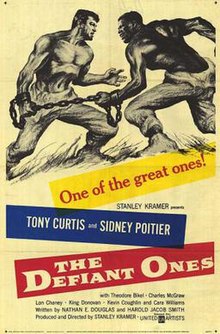
The Defiant Ones (1958)
An earnest, liberal-intended, clunky social message films of the 50s and 60s. Stanley Kramer, as far as I can make out, was the chief practitioner of this school of filmmaking, the particular methods of which are very much out of fashion these days, even with me, though certainly our day has its own didactic tendencies where its most treasured causes are concerned. I don't mind watching these movies on occasion as historical artifacts--and this one is at least less wince-inducing to sit through now than the later Kramer-Sidney Poitier collaboration Guess Who's Coming to Dinner--but there is nothing much inspired in them such as I am wont to look for.
I am considering officially adopting the opinion, based still on fairly scant experience and research, that the years 1955-1959, if not certain other ones on the fringes of these dates also frequently proposed as candidates, really were a down period for Hollywood. Going back through my essays here and recalling my previous filmwatching history, I cannot think of anything I have seen from this five year period (from Hollywood) that I either think of as really first-rate, or that made any significant emotional impact on me. I will probably now see two or three such movies in the next couple of months that give the lie to this assessment, but that is what I see at the moment.
Something that always strikes me about the films of this period compared to those of other periods, the pre-1950 era in particular, is how the world in which they take place, the sets and scenes, seems so uncrowded, uncluttered, quiet, devoid of activity and isolated. It is so noticeable to me that I have to attribute it to something affecting the collective psychology of the time, in which the very idea of a city street, a bedroom, a Sunday dinner, a dance hall, a train station, and all that one might expect to encounter there, suddenly became different from what these had been up to the 1950s. This movie completely partakes of this isolated, anomic, Twilight-Zonesque (to reference another characteristic entertainment of the period) atmosphere.
One aspect of the film I thought was good are the intermittent cuts from one of Sidney Poitier and Tony Curtis's subdued and overwrought philosophical dialogues, by the end of which I was usually drifting off to sleep, to the comparatively lively (though ultimately still lackadaisical) police manhunt (the two stars are escaped convicts, one black, one white, who are chained together) usually accompanied by some groovy guitar music that one of the searchers was playing on a transistor radio.
The section with the character of the woman played by Cara Williams was ludicrous, but she herself was sturdy, handsome, loquacious, was really working the southern accent, or the imitation of one, and secretly desperate. All of which I was well in the mood for.
Tony Curtis is one of those people, whose number for me is now dwindling, but who are ubiquitous when you are a kid, who has been presented by the media as a big celebrity my entire life though his career was effectively over before I was born. Jerry Lewis is another guy in that category for me, as is George Hamilton, the guy with the tan (seriously though, what money is that cat living off of? Other than acting in a TV series that ended around 1965, what has he ever done? He's the equivalent of Gay Talese maintaining a reputation, an East Side townhouse and the most envied wardrobe in Manhattan on the strength of some magazine articles written in the 1970s). Anyway, this was the first time I had ever seen Tony Curtis, whom I have always known as fat, rather blatantly flaming in spite of having a well known wife and daughter, and prone to droning on ridiculously about his youthful beauty. He wasn't much of an actor. Sidney Poitier is better, even with the lackluster material--he at least has a presence on the screen, which, yes, besides being the only black star in Hollywood for about 15 years, is probably why he remains a somewhat memorable and symbolic figure in movie history in spite of the dated and mediocre quality of all of his movies that I have seen.
The race relations aspect of this movie, which at the time it was made was both the point and one supposes the most striking thing about it, probably will not make much of an impression among most modern viewers--while I did not forget about it in the course of watching the film, there is little about it that will be novel to most adults in 2012, who will probably find the depiction of white racism too generously understated for a movie from the 1950s.
Look Back in Anger (1959)
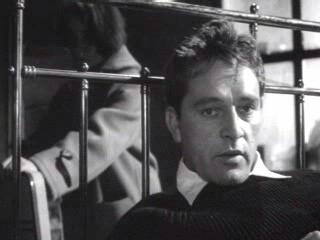
The especial brilliance of the Jimmy Porter character (played by Richard Burton in the movie, I thought pretty distinctively, though critical opinion as well as Burton's own apparently consider the matter otherwise) is in the depiction of how relentless the pressure and stress he inflicts on the people around him are, especially the women; he is so overwhelming that whatever they think about him is reduced to irrelevance. He becomes the only plausible sexual option because everyone else is so lifeless by comparison. He is not a suave or especially charming or likable character, but he is a force of nature, a term which in recent times seems to be exclusively applied to women; men used to be forces of nature too however. I have not come across a lot of literary characters where this relentlessness of personality has been so consistently depicted and maintained. It is an accomplishment.
One of the themes of these movies of course is that the young people in them are stuck in these dreary, hopeless lives working in a factory or something and chained for eternity to a spouse they have discovered they don't like all that much. Of course someone entering adulthood in 1960 would just have retired within the last decade or so at the earliest, and things have changed a lot--granted, instead of giving their lives to the assembly line, the pub, and unhappy marriages, the British working classes seemed to have transitioned to the dole, binge drinking, chavism and American style obesity, but still, things must have gotten brighter for some people, perhaps especially the ones who really cared about the unpleasant direction their lives seemed to be heading in.
The Virgin Spring (1960)
I am considering officially adopting the opinion, based still on fairly scant experience and research, that the years 1955-1959, if not certain other ones on the fringes of these dates also frequently proposed as candidates, really were a down period for Hollywood. Going back through my essays here and recalling my previous filmwatching history, I cannot think of anything I have seen from this five year period (from Hollywood) that I either think of as really first-rate, or that made any significant emotional impact on me. I will probably now see two or three such movies in the next couple of months that give the lie to this assessment, but that is what I see at the moment.
Something that always strikes me about the films of this period compared to those of other periods, the pre-1950 era in particular, is how the world in which they take place, the sets and scenes, seems so uncrowded, uncluttered, quiet, devoid of activity and isolated. It is so noticeable to me that I have to attribute it to something affecting the collective psychology of the time, in which the very idea of a city street, a bedroom, a Sunday dinner, a dance hall, a train station, and all that one might expect to encounter there, suddenly became different from what these had been up to the 1950s. This movie completely partakes of this isolated, anomic, Twilight-Zonesque (to reference another characteristic entertainment of the period) atmosphere.
One aspect of the film I thought was good are the intermittent cuts from one of Sidney Poitier and Tony Curtis's subdued and overwrought philosophical dialogues, by the end of which I was usually drifting off to sleep, to the comparatively lively (though ultimately still lackadaisical) police manhunt (the two stars are escaped convicts, one black, one white, who are chained together) usually accompanied by some groovy guitar music that one of the searchers was playing on a transistor radio.
The section with the character of the woman played by Cara Williams was ludicrous, but she herself was sturdy, handsome, loquacious, was really working the southern accent, or the imitation of one, and secretly desperate. All of which I was well in the mood for.
Tony Curtis is one of those people, whose number for me is now dwindling, but who are ubiquitous when you are a kid, who has been presented by the media as a big celebrity my entire life though his career was effectively over before I was born. Jerry Lewis is another guy in that category for me, as is George Hamilton, the guy with the tan (seriously though, what money is that cat living off of? Other than acting in a TV series that ended around 1965, what has he ever done? He's the equivalent of Gay Talese maintaining a reputation, an East Side townhouse and the most envied wardrobe in Manhattan on the strength of some magazine articles written in the 1970s). Anyway, this was the first time I had ever seen Tony Curtis, whom I have always known as fat, rather blatantly flaming in spite of having a well known wife and daughter, and prone to droning on ridiculously about his youthful beauty. He wasn't much of an actor. Sidney Poitier is better, even with the lackluster material--he at least has a presence on the screen, which, yes, besides being the only black star in Hollywood for about 15 years, is probably why he remains a somewhat memorable and symbolic figure in movie history in spite of the dated and mediocre quality of all of his movies that I have seen.
The race relations aspect of this movie, which at the time it was made was both the point and one supposes the most striking thing about it, probably will not make much of an impression among most modern viewers--while I did not forget about it in the course of watching the film, there is little about it that will be novel to most adults in 2012, who will probably find the depiction of white racism too generously understated for a movie from the 1950s.
Look Back in Anger (1959)
I also read the original John Osborne play sometime within the last year (actually April 18, 2011, to be exact), one of about fifteen plays I read at that time which I will probably never get around to writing up my notes on here--not that this is any great loss to the public, but I believe that it sometimes provides modest benefits to myself. The dialogue is a little overwritten and awkward in the way it handles some of the scenes with the women but it knows what it is about more than most things I come across nowadays, and Jimmy Porter is really a good character, even admitting this tendency towards his being at times overwritten. I take to the films of this "Kitchen Sink" era very strongly, anyway. I feel as if the characters in them, even a nasty bastard like Jimmy, were missing friends of mine; that the way they dress, the way they drink at the pub, the way they read the newspaper or take a walk on a windy day, the way the girls look when they are sleeping, or kissing, or even the particular nature of their beauty (and the two female leads in this, Mary Ure and Claire Bloom, strike me as especially beautiful as a consequence of this), resemble what I have always perceived to be for me the most realistic, and therefore in some way most beautiful, or most poignant, manifestations of all these things more than I have found elsewhere. What does this say about me? Probably that I have more of a working class, or at least a mid-century working class mindset in me than I usually have the opportunity to fully indulge in. Am I an 'angry young man'? Perhaps in a latent sense. I find I am sympathetic to the attitude.
The especial brilliance of the Jimmy Porter character (played by Richard Burton in the movie, I thought pretty distinctively, though critical opinion as well as Burton's own apparently consider the matter otherwise) is in the depiction of how relentless the pressure and stress he inflicts on the people around him are, especially the women; he is so overwhelming that whatever they think about him is reduced to irrelevance. He becomes the only plausible sexual option because everyone else is so lifeless by comparison. He is not a suave or especially charming or likable character, but he is a force of nature, a term which in recent times seems to be exclusively applied to women; men used to be forces of nature too however. I have not come across a lot of literary characters where this relentlessness of personality has been so consistently depicted and maintained. It is an accomplishment.
One of the themes of these movies of course is that the young people in them are stuck in these dreary, hopeless lives working in a factory or something and chained for eternity to a spouse they have discovered they don't like all that much. Of course someone entering adulthood in 1960 would just have retired within the last decade or so at the earliest, and things have changed a lot--granted, instead of giving their lives to the assembly line, the pub, and unhappy marriages, the British working classes seemed to have transitioned to the dole, binge drinking, chavism and American style obesity, but still, things must have gotten brighter for some people, perhaps especially the ones who really cared about the unpleasant direction their lives seemed to be heading in.
The Virgin Spring (1960)
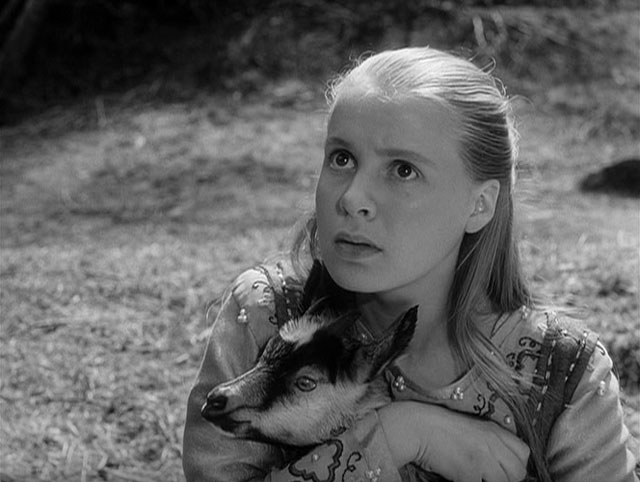
Ingmar Bergman movie centered around the rape and murder of a very young girl in medieval Sweden, based on an indigenous legend of that far off period. Although I am something of a Bergman fan, my instinct, or preference, in the past has been to avoid this kind of blatantly dark and unrelenting subject matter. So I have mainly only seen his comparatively happier films. Bergman was a real artist--as were a great many of the people he worked with, obviously, but his was evidently the dominant vision--and this was an important transitional movie in his progression, the style and look still retaining something of the cleaner, more youthful air of his 50s films, with the very direct confrontation with the grim and dirty realities of existence pointing ahead to the second, and in most serious critics' opinions, greater half of his career. As alluded to earlier, Bergman was always a working artist who had many projects going on in the course of a year, and the script and the way some of the themes and ideas of this movie are explored reflect that. I would not call it a wholly successful work--I certainly cannot say that I enjoyed it, if you believe that pleasure counts for anything--but it has very beautiful, memorable images, and it is frequently smart, or at least feels smart in the late Modernist, mid-century way which is my idea of feeling smart.
Though widely panned in Europe--the French I believe declared that they were finished with Bergman when this film was released--Bergman was still something of a novelty in America among the art house crowd at the time, and Virgin Spring even won the Oscar for best foreign film in its year. I know or have read of several people who were college age or just after at the time who have memories of seeing this and of its being a big deal at the time. Again, enjoying it or even having an opinion on whether it was good or not seems to have been less of a consideration than that it was just so different from what everybody here was used to as to be exciting. I like to think I would have fit in well in that milieu where young people found Bergman movies exciting, but I doubtless would not have gotten them and would have found them threatening and indecent had I actually been young at the time.
One Swedish reviewer at the time chastised Bergman for presenting an image of their country to the world as a "gloomy, introverted culture full of angst and despair." I love that quote.
The Leopard (1963)
This is going to be a speed review, as I am determined to finish this tonight. If I sense that there is any public demand for an expansion, I will try to satisfy it.The book is one of the best books of all time, and is much beloved by serious people, so I think you have to consider the movie as a movie, and separate from the book. The movie does have some worthwhile attributes. It has a major director (Visconti) who does some interesting things. I like the long, leisurely pace of the scenes, and all the usual reminders of the old lost Europe, which was one of Visconti's specialties. I was reminded that I would still like to go to Sicily sometime, and wondered anew if I ever will get there, or will ever see Italy again at all. I thought Burt Lancaster was pretty good as the Prince, Alain Delon...
My time is up. I didn't even get to talk about the bombshell Claudia Cardinale, who however I must confess finishes behind the two British girls and maybe even Cara Williams in my affections out of this group, though I know she is one of the most scintillating, take me on the floor right now babes ever to grace a movie screen.
My writing just is not likable no matter how conscientious I am about it. I hope my children turn out more likable people than I am
Subscribe to:
Posts (Atom)