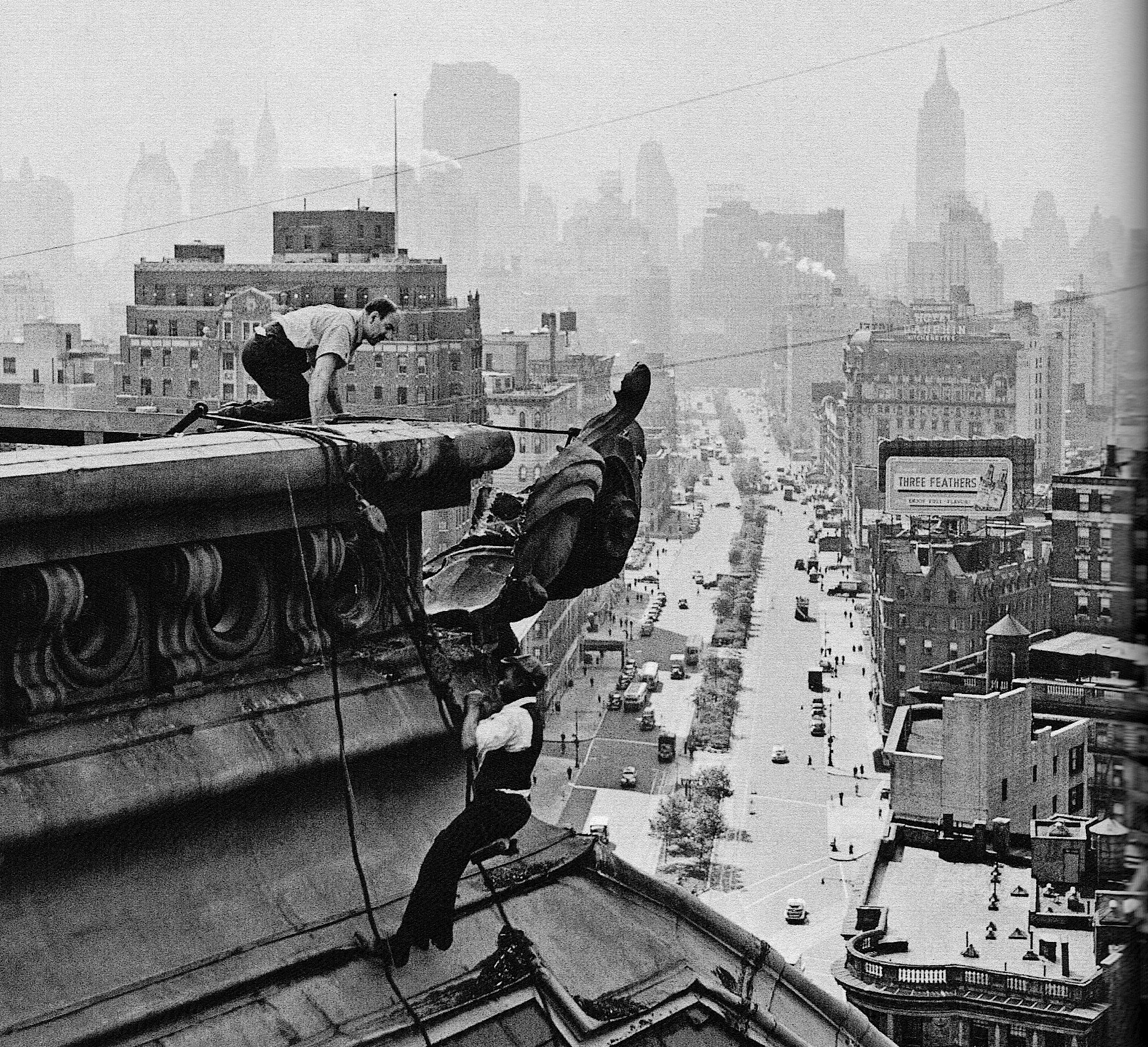
Showing posts with label the urban glamour-life. Show all posts

Saturday, May 30, 2015

Videos from the Czech Republic

Monday evening--I had a good weekend, but now I am back in an old end-of-holiday, remembering-all-that-I-have-lost kind of melancholy mood, and wishing I were back in Prague eating goulash and dumplings and drinking beer, afterwards going out onto the dark, cold hush of the Sunday night streets there on the way back to the train, or perhaps to one of the special mysterious cigarette kiosks that were only open from 10pm to midnight on Sunday... 

Tuesday Evening--Everybody wanted to be City in those days. Everybody who mattered to me anyway. Even though in the 80s and early 90s, American cities, or at least the ones in the Northeast where I lived, were, especially in retrospect, not I think what most people really wished them to be. People affected to love the edginess and the constant threat of crime, which I think in many cases they mistook for part of the innate character of urban living; this is perhaps true to a certain extent, but not to the extent that prevailed in most northern cities by 1990. I read a query on the internet written by a younger person the other day asking why in the world people endured the now infamous inconveniences imposed by the circumstances of the at the time apparently permanent crime wave of the post 1965 era, such as not walking around after dark, barricading oneself in his or her apartment, being resigned to periodic robberies of your car or your person, and so on. In the first place, popular opinion at the time held that nothing really could be done about it, short of implementing the kinds of extreme policies regarding policing and imprisonment that finally have been implemented in our time, which was a path many people, myself included, were reluctant to go down then even in the face of massive violent crime rates. For once such large systems are in place as sources of employment or other forms of wealth acquisition, they are difficult to dismantle, and as they also face constant pressure to maintain and even grow the revenue flowing into them, they will inevitably turn their energies in directions that would have been considered intrusive and totalitarian at one time. But in the second place the love that many people have for great cities, or some idea of them, and the desire to live in one if it is at all possible for them to do so will inspire them to put up with a lot for the privilege, even when the conditions and atmosphere presently ascendant are not those of our literary or artistically informed imagination. And besides, in my day, especially if you were a man, having grown up anywhere within the limits of a great city--and it seemed the more notorious for crime and violence the better, in most instances-- made you conspicuously cool in any environment, such as college, or an ex-pat setting, that primarily consisted of the suburban-bred, the contrast with the males of whom in verve, dash, mental quickness and lightness, style of dress, and so on was so pronounced that after a few minutes in such company, any bland or timid suburban boy who still imagined he would be the recipient of any willing, free female love in the immediate future in that social circle was only embarrassing himself and establishing his inferiority further by the demonstration of such delusion...

Wednesday Evening--What I mean to say is that many intelligent but not phenomenally well-connected or wealthy people had desires for a particular kind of city lifestyle that American cities thirty years ago were not really equipped to deliver in any kind of broad way. It was necessary, in a sense, to be cooler (or at least wealthier) to get what good things there were to get out of them than it should have been. I don't know whether this state of affairs has improved in the interval or not. Most people who were not devastatingly cool in this way developed the habit of looking at the cities of old Europe and finding a model of urban living that appealed more to their aesthetic and self-image. This was certainly the case with me, especially with regard to the more egalitarian and less international corporate-finance oriented (i.e. cheaper) cities on the continent. Perhaps the amenities and cultural entertainments--restaurants, concerts, nightclubs, operas, festivals, transit, museums, bookstores, intellectual societies, etc--in a place like Prague are second-rate overall, but one can, or at least could, live a ten minute subway ride from and partake of all of these activities on a regular basis, and feel like one is living a version of a cultured urban life, which seems to be difficult for the person at a certain level to realize in America without a fortunate confluence of circumstances...     

Thursday Evening--I saw a post on a Very Concerned Traditional Serious Christian blog in the wake of the Irish gay marriage vote last night in which an apparently respectable source was quoted with the hint of a shrug that the game had been up in that country for a while; that indeed, when he had spent some time there in 1990, young Irish girls were more than willing to fornicate with American tourists. Oh my God! Why are these glorious aspects of the world never revealed to me, who has no sense of sexual morality and for whom the whole trajectory of life, had I been able to enter this world of willing Irish girls in 1990, would have been different, I cannot help but assume in a positive way. Meanwhile these poor male Christian writers, who want nothing more than to be chaste and virtuous, and to promote the same qualities in women, cannot seem to avoid coming into contact with an endless parade of horny girls signaling carnal interests to them (to say nothing of the scourge of pornography that has already gutted the souls and ability to form mature relationships of a substantial portion of what was formerly Christendom). These poor guys should have traveled with me when I was young. I probably could have backpacked around all of the most celebrated tourist destinations in Europe and the rest of the world for the entirety of my twenties without encountering a single wild party or nightclub or stray woman in a park desirous to cajole me or be cajoled by me into an immoral relation with her (for free, that is), even though that would have been all I was really looking for the whole time. But I guess the problem is that these Christians and preachers are somehow sexy guys. When you are a sexy guy temptations and offers to betray your moral system will inevitably make their way to you no matter how powerfully or authoritatively assert your antipathy to them. When you aren't a sexy guy you can leave the house every day open to engaging in any indecency attractive to you that opportunity may present but, almost as if God were shielding you from being able to commit the sins you have not got the moral sense to be repulsed at the prospect of, the opportunities never do present...

Friday Morning--As any dedicated reader of mine knows, I have been struggling over the past few years to feel the excitement and righteousness in the ongoing gay rights ascendancy that seems to come so naturally to everybody else, so the Irish vote promised to be a good test of my development in this area. When the results came in and the forces of Good had carried the day, my response was...ehhch. I must confess, my heart sank a little, in anticipation of all the triumphant braying that it was inevitable must ensue. I had obviously been holding out hope that some large body politic somewhere that included some cool people might say 'Um, no. I love you brother, but be serious now, two men doth not a marriage make'. But evidently this is not going to happen. People will doubtless think, 'What is wrong with this guy? What's it to him if I want to marry someone who doesn't meet some antiquated heteronormative standard?'...It should be nothing to me, I agree, and if I could be excused from being expected to take it seriously as marriage and didn't have to be subjected to quite so much pro-gay sarcasm and moral instruction (which is at least every bit as grating and obnoxious as that coming from religious conservatives) I would probably be more broadly sympathetic on all of these issues. At bottom, I know that for me this is all really a struggle over who is going to lead and hold authority in public life with regard to tone of discourse and standards of behavior and whose interests are prioritized and whose aren't and I am obviously not really happy that a kind of aggressively overt homosexuality has become the distinct force in these areas that it has...  

Czech version of "Where Have All the Flowers Gone" from a to me interesting-looking movie called Rebelove that featured Czech versions of a number of 1960s American pop hits. As far as I can tell, this scene appears to feature people leaving the country in the aftermath of the 1968 Soviet crackdown. Since many people did this, and at the time it seemed likely they would never be able to return, it is kind of a poignant scene.


Tramvaje circa 1995. I don't expect you to watch this.


Pankrac Metro! My old station! The underground part actually looks exactly the same. It looks like they have built a kind of modern shopping mall with fountains and all on the street level above the station. In my time there were merely a bunch of motley stalls set up selling fruit, cheap clothing, flowers and suchlike, a throwback to the Communist era.


Goofy Czech version of "King of the Road" from 1970.


Friday Evening: I have a very memory from when I was in Florence, which would have been in 1997. I was at one of the famous sites there, and I remember this middle-aged American man who was standing near me, very affluent-looking, distinctly well-dressed, and as I was lingering near him his two extremely beautiful, expensively-dressed and doubtless expensively educated daughters came up to meet him, and they struck me, who devoted very little energy to thoughts of either domesticity or the future at that time, as the kind of family that was actually worth the trouble, and thought the man must in that moment at least be very happy. I always had an idea from that time that if I had children they must be at least as good-looking and smart as this man's daughters and that we must meet together when they are twenty-three or so in some grand place and that that would be something that would make me happy. I feel in some sense that this is a terrible desire to have, because it puts some kind of pressure on my children to be a certain way that they might not want or be able to be, and that also might be superficial, which would both be wrong. At the same time I feel that this idea I have could actually come true, that we will be able to meet in Florence or Granada or New York or walk the Camino de Santiago and I will be able to do certain things I have always wanted to do and be happy doing them just as I have always imagined...

I noted the days and times when I wrote all of these things because I am frustrated and embarrassed by how infrequently I am able to put up postings. Each dated item represents about a full hour of attempted writing.  

Thursday, October 09, 2014

Were Freaks Really What Made New York City Great?

I have links to a few other blogs in the right hand column of this page, but this has been a rather desultory process. Some of these have not published new material in upwards of a year, and the quality of some of the others, after my initially finding something in them that piqued me, has not remained consistently engaging. I suppose I will keep adding to the list whenever I find something that both publishes relatively regularly and has the sort of intelligence or humor or interests that I like. I come across very little that fits this description however, though I am sure there is a lot I would like out there, if I could manage to find it. I have not exactly cast any very large nets in this regard; it is more that I have turned over a few things that happen to have washed up on my little shore and seen something that made me want to put them on the shelf for a time. The links have never been a strength of the page and I almost never refer to them in my posts.


Today however I am going to refer to the 'Vanishing New York" blog, which is written by a guy named Jeremiah Moss, some of whose work has actually been published in real newspapers and magazines, including the New York Times. For those who are unfamiliar, the blog chronicles old-style Manhattan places, mostly restaurants and other small businesses such as barber shops and newstands, that are being/have been steamrolled by the ongoing gentrification and transformation of that island to its new identity as a luxury playground for the global elite. Moss deplores these changes. I find the economic forces at play in them unsettling, and as my affections for the city are mainly directed by a kind of patriotic nostalgia, change of the sort that is happening now threatens to make me feel even less at home and happy there than I have always been (and actually I almost never go there in real life. Still, I imagine there will be a time when my children are not little or I will have enough money and time to be able to go down for a few days a couple of times a year and go out to dinner and do other things I have always imagined I wanted to do there, though probably this will never be the case). I will admit to being impressed on recent visits with how clean the steets and parks are compared to the 80s and early 90s (let alone the infamous 70s), when one of my main impressions, doubtless from the circumstance that on those visits I didn't have anywhere to stay or any money to spend and therefore spent about eighteen hours a day walking everywhere in between catching the occasional nap on a park bench, was of the overwhelming amount of garbage and filth and the seeming physical impossibility that it could ever be eradicated. But Moss seemingly cannot bring himself to find much cheer or romance even in the lovely prospects that the restoration and brightening-up of older and architecturally preserved streets and landmarks offer, because he is too conscious of the costs, mainly in accessibility and character, that have made it possible.


One of Moss's primary laments is how the forces of ruthless wealth on such a scale that for a normal person to try to contend against it is the economic equivalent of trying to fight a tank attack and aerial bombardment with a bicycle corps, and the development that accompanies it, are clearing the city of freaks and any other free-thinking and challenging people with an eye toward making it attractive to tourists and other people devoid of personality who are more conducive to following the cues the corporate interests set out for them and expediting the processes of money-making.* He longs (along with many, many other people) for the days when the freaks were setting the tone in certain parts of New York City and keeping the kind of people who didn't get them, tourists and otherwise, where they belonged, which was decidedly not there. I have friends who had a similar attitude. If they walked into a diner or bar and there were a few transvestites sitting at the counter it was a great joy to them, a reassurance that they had found a place that was all right, and real. I never felt this exhilaration, I had good 1960ish liberal values, that tolerance was necessary and people should be free to be themselves and not persecuted, and I even had some sense that this was a part of why New York had become and was so great--but still, on a personal level, I found most of the extreme freakishness unattractive and not especially fascinating. Certainly they did not make New York. In the dream New York of my imagination, which is pretty much the 1920-1965 era, the lifeblood of the city are really normal people, some of whom end up doing great things, but most of whom are regular workaday family type people, who are maybe, stimulated by the environment and the institutions and their daily interactions with each other, just a little smarter, a little funnier, and a little more energetic than a similar collection of people would manage to be somewhere else, the cumulative effect producing the possibility that we identify as our own personal dream. I suppose we are all inclined to regard scenarios where people most like ourselves seem to have the most favorable circumstances for professional and social relevance and success, romance of our preferred type, etc, as the ideal, not merely for ourselves but for society as a whole. As indeed it is, from our own point of view.


*Complaining endlessly about tourists is of course a favorite pastime of a certain kind of New York City person, usually one who did not actually grow up there themselves, and whose personal contribution to the city's economic strength or cultural vitality and prowess seems as if it is not above questioning, if they are going to insist upon holding such attitudes. I say this as a person who has been largely relegated to dreaming even about going there as a tourist at this point. All this aside, I have never felt the presence of people who were obviously tourists to be anywhere near as overwhelming as it is in any of the famous cities of Europe. Maybe in the new post-2000 Times Square, but even there it was neither as crowded or as obvious as it is in most popular travel destinations. Even when I went to the Statue of Liberty about 80-90% of the other people on the boat were either orthodox Jews or very diverse school groups who seemed to be from pretty close by, if not perhaps Manhattan itself. And I did not see a single middle-aged fat couple from Iowa. I guess one of the complaints is that the tourists, who are extremely numerous, love chains and bad food generally which drives independent places out of business and causes the most popular areas to proliferate with characterless restaurants serving garbage. I don't think it is quite that simple. I believe most people, tourists or otherwise, want to have meals and experiences, especially in places like New York or Paris or Italy, that make them feel they are living a higher kind of life than they or almost anyone else is accustomed to, as often as they can. Most people have to eat several times a day, and if they have to work, or are on a tight schedule, or have children with them, or, as often happens in great cities, are timid about whether they will be welcomed at a place that looks to be of some quality or even that is populated by cool-looking people, they will probably, statistically, on average (i.e., not you, the way above average, sophisticated reader of exquisite taste) at some point in their life or vacation will for convenience's sake settle for a meal or two at the kind of establishment designed to accomodate this particular reality. Maybe you are pretty good, and you only go to the brand name places (I will include coffee shops in this as well) 3 out of 10 times. But of course if this ratio is repeated among 100,000 tourists, in the aggregate the individual chain locations will do much more business than the scattered and more individually numerous authentic/human places.


Monday, December 26, 2011

Post-Mortems

Christopher Hitchens: I used to read him and listen to him on television quite a bit around the time of the buildup to the Iraq war, of which he was of course greatly in favor. Since he was the most forceful and apparently most intelligent advocate among the prominent pro-war government or media figures, as well as the only representative of that type whose enthusiasm was not compromised to my sense by blatant self-interest. My thought at the time was that the whole episode was a great test of the ability of the people, or that significant portion of them who were opposed to George Bush and the agenda of his administration, to resist, not just politically but intellectually, this course of action, in which, needless to add, said people--or at least their ideas concerning right policy--were routed, humiliated and exposed as impotent and insignificant in the current configuration of society. As such I was quite anxious at the time about the outcome of the controversy. Hitchens was very convincing not only that he understood the case thoroughly and that military action was necessary beyond all reasonable doubt, but that anybody who did not arrive at the same conclusion was likely stupid, certainly cowardly, morally bankrupt, obtrusive to the progess of history, had completely missed the important lessons of the whole of western civilization in school, and other imprecations besides which such a hapless reader as myself was hardly going to be able to offer much of a defense against in his own behalf. At one point I actually considered writing him a personal letter in which I would try to explain reasonably the various objections to the war which I seemed constitutionally incapable of overcoming, well aware of the constant drumbeat from half of society, and apparently the more vigorous half, that anybody who had any objections to the main points in the case had something severely wrong with either his mind or his spirit, because for some reason--probably because he had a good literary education and sensibility--I did regard him as the sort of reasonable person who would be able to recognize that surely there were grounds on which another reasonable person could be skeptical of the war. But I got over that idea pretty quickly.

After a while I stopped reading him regularly because however clever he was, his main interest seemed to me to be to demonstrate on nearly every occasion that he was right on some matter relating either to literary interpretation and world affairs while various other people were wrong, and not merely wrong, but wrong in such a way as to render them stupid or contemptible, usually both; which perhaps they were but I came to find it tiresome after a while.

In spite of a few detractors I have come across who claim to be unimpressed by his literary education, I'm sure he had a pretty good one, certainly by any standard that prevails in the present English-speaking world. While the large range of his reading and the extent of it he committed to memory have been frequently attested to as well as demonstrated, it was his success in incorporating this knowledge into both his professional life as well as his social persona such that it seemed an inherent part of his character that served to inform and enhance it at all times that made the greatest impression, as this effect is something a great many people would like to project themselves, but very few, especially perhaps Americans, ever seem to be able to no matter how many years they devote to reading. Of course the formal education of the Hitchens-like people is perhaps a little broader than the typical American English student, such as to include history, with a strong emphasis on political and military affairs, elocution, probably some philosophy and European belles-lettres, as well as carries a greater expectation that the student will attain a serious proficiency in these areas useful for adult thinking, which is a very rare expectation to be found among American professors...I could go on about what appear to me the myriad glories of Hitchens's social life, especially the carefree and evidently brilliant London set he ran with in his early 70s youth, which included Martin Amis, at that time handsome and irresistible to women of an intellectual bent in a way that seems to have no parallel in our own age (at least that we know of yet), but I have already written more about him than most of his actual friends did.

Vaclav Havel. I had the impression when I was in his country--he was still the president at the time, though that office was considered to be politically largely ceremonial--that most people trusted him and respected him enough to consider whatever he had to say worth listening to even if they disagreed with him. There was not to my knowledge a substantial portion of the population which absolutely hated him on either personal or political grounds, which needless to say would be almost unthinkable for either a politician or a substantial literary figure in this country. At the same time Havel's image in the Western mind, so far as one exists, probably has more of a heroic, and certainly a more romantic, tinge than that which his own countrymen have of him. Being a small nation speaking an obscure language and without even any delusions of grandeur on a global scale, the Czech conception of a hero, if they would even call it that, is a lot more subdued than certainly Americans would be accustomed to thinking of it. His signature qualities as an author were a concern with the manipulation and corruption of language an advanced and particularly subtle sense of the myriad ways in which human existence, when subjected to pointed consideration, does not make any sense (I would have said absurd, but that word in English has connotations of lightness which do not always capture the sense intended). He struck me as having a mind that was not necessarily spectacular and was certainly not bombastic, but was well-organized and uncluttered by the excessive nonsense that has been the intellectual Achilles heel of the English-speaking world probably since the Restoration. Of course the price of that mind was having to grow up under oppressed circumstances, such that he himself would argue it was not worth it, though the writings and other artistic products of the people who had them contributed particular insight and beauty and seriousness to 20th century culture that was absent from their counterparts in the free West which I consider important.

Kim Jong Il. I know these guys are pound for pound maybe the worst people in the world. I of course find their country fascinating, because unlike a place like Afghanistan, where the whole mode of existence is somehow mentally inaccessible, a lot of aspects of North Korean life are superficially similiar to that in Western countries, or Western countries fifty or seventy-five years ago anyway, albeit in a kind of fake way, as if the whole society is a kind of giant model train set. Of course like most people who do not know how to hold bad opinions and still be cool and the object of fascination by women, without which qualities such opinions really are not worth having, I sincerely want the regime to fall and for North Korea to become a regular country with global banks and cell phones and a modern airport and all the rest of it, because I know the people are suffering terribly and unfairly. The more the rest of the world becomes more tied together and alike in its social and economic values however, the more interesting North Korea will continue to become to people who desire a respite from all of this modernity.