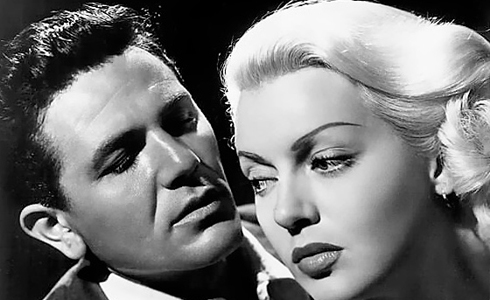
Director: G.W. Pabst
Notable Stars: I have the impression that Lotte Lenya is something of a name. Doubtless several of the other actors are substantial figures in German cinematic history but none of them are as yet familiar to me.
Did I like it? I found it difficult to self-generate any kind of response to it, positive or negative.
What I remember: All of these Weimar Republic era movies, especially the very late ones, are almost impossible to have any thoughts about without reference to the period that followed. This has the oppressive atmosphere, the hard characters and the air of cynicism that I associate with this family of movies, though I was unable to break through this impression to detect anything I thought was grand. Based on the 18th century John Gay play The Beggar's Opera, it is nominally set in London, but there is nothing about it that evokes any sense of London in any period whatsoever. While this may be an unimportant detail, it is nonetheless strange.
What I associate it with: M
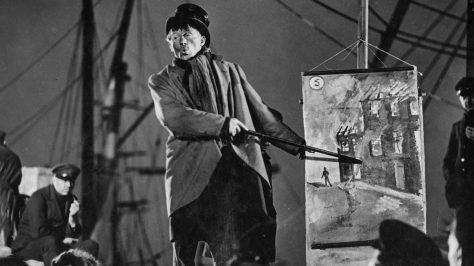
Immortal (2004)
Director: Enki Bilal
Notable Stars: Charlotte Rampling
Did I like it? No
What I remember: It's set in 2095, when my daughters will be 80 and 84, and my sons, if any of them are still around, 86, 89, 92 & 93. The future, as always, appears to be even more seriously horrible than the present. There's no romance, no fun music, no sunshine actually--is that a side effect of climate change? People are killed a lot. Some of them are genetically enhanced, which seems to make them more coldly rational and heartless. It's based on a comic book/graphic novel. I don't care about it.
What I associate it with: Avatar? I don't know, I don't watch these kinds of movies for the most part.

The art of the modern world is absolutely killing me.
About Time (2013)
Director: Richard Curtis
Notable Stars: Rachel McAdams, Bill Nighy, the guy who played Levin in Anna Karenina.
Did I like it? I am ashamed to admit it, but at the time, yes. The explanation in the next section will hopefully put this in some context.
What I remember: This was not on any of my lists. My wife had seen it on an airplane, and when I had my kidney stone last December at this very time and was laid up in bed for a week and had a catheter in and was feeling like my life was essentially over she made me watch this ridiculous English movie (from the same team that foisted the gross Love, Actually, which I genuinely detest, on the world) about a young man of the geeky type who has the ability to travel in time, though generally only in short distances, because when you go back too far the consequences of changing your past have too many other effects, including altering the genes of people not yet born, etc. However if you make a false step in talking to a girl or not being aggressive enough in bed or whatever, you can keep going back 5 minutes or a half an hour and try something else until you get a more satisfactory outcome. Rachel McAdams is a sweet-faced Canadian. She is also renowned as a activist for environmentalism and other left-wing causes, I am not sure how ferociously. Apparently Zooey Deschanel was originally supposed to have her role and she probably would have carried it off well enough too, but it would have been more playing to type for her, and I liked Rachel McAdams' presentation of the character. After being shell-shocked from all of the nihilistic modern movies full of mumbling dialogue, I was softened up enough to find the Bill Nighy (an actor I usually find annoying) character's propensity for quoting Dickens and finding consolation in the civilized pleasures of life a welcome diversion. If one were more critical one could take issue with the family's self-satisfied bourgeois smugness and apparently unassailable comfort and financial security--I believe they are all academics and lawyers in the most respectable tracks of those professions--but obviously I would like nothing more at this point than to have those comforts myself, my desire for which is much stronger than any I have to man the barricades (which desire Rachel McAdams, a participant in the "Occupy" movement, ironically does have). The occasion on which the Levin actor met Rachel, his love interest, for the 1st time, took place on a blind date type event in London in which the various opposed types--this is the kind of movie that wants to present itself as believing that same sex and other non-heterosexual orientations and couplings are completely socially mainstream--go separately into a basement restaurant in complete darkness where they are seated at a table with possible dating partners who they are supposed to talk to while being served a meal by blind waiters. It struck me as a quintessentially ridiculous 21st century ultra first world rich city idea while also making me kind of wistful at having both aged out of and been largely priced out of taking part in such scenes. The mere thought of having to sit alert for two hours and try to eat a meal and try hopelessly to make out what any women I might be talking to looked like in complete darkness caused my eyes to be possessed by a kind of panic though.
I associate this with: Four Weddings and a Funeral, which is the only other modern British movie of this type (romance among young professionals) that I can bear.

The Man With the Golden Arm (1955)
Director: Otto Preminger
Notable Stars: Frank Sinatra, Kim Novak, Eleanor Parker.
Did I like it? Yes. I love the down and out 1950s (cinematic version) pretty much everywhere it turns up.
What I remember: Great jazz soundtrack by Elmer Bernstein (we'll see him again later). I've always thought Frank Sinatra was quite good as an actor. He did not, prior to 1960 or so at least, often play Himself, or the popular image of Himself, that has come down to us. He frequently played a scrappy underdog or deeply troubled type of character, and played them endearingly. The atmosphere of the dingy bars and apartments of this era in glorious black and white. Eleanor Parker's hair and skin tone. Kim Novak's hair and skin tone. Connection with late 40s/50s literary scene through the novel on which the movie is based, which I haven't read however.
Associated in my mind with: On the Waterfront, Edge of the City


Far From Heaven (2002)
Director: Todd Haynes
Notable Stars: Julianne Moore, Dennis Quaid, Patricia Clarkson. I'm not a great fan of any of these people, but I can't pretend to not know who they are.
Did I like it? I have to admit I do like it. The story was not anything I thought great, but it is a gorgeous movie, and as a visual homage to the Sirk pictures of the 50s and the general nostalgic fantasies that have grown up around that period it strikes the right note a lot.
What I remember: While I don't have any better suggestions for what might have been done with the plot other than having more original treatments of the two major themes of repressed (though by the end not very) homosexuality and vile racism against the backdrop of evil 1950s society. The black character who befriends Julianne Moore checks off every box in the educated white liberal imagination: he is dignified, cultured, hardworking, entrepreneurial, an expert botanist, (tragically) a widower who is devoted to his daughter as well as an aging parent, he is constantly harassed and condescended to by moronic whites who don't have a tenth part of his intellect, grace, or character. Not that a person like this couldn't have existed, of course, but all of these qualities existing in the same person while suffering from oppression seems a little heavy-handed. Dennis Quaid's secretly gay corporate 50s man in the gray flannel suit on the other hand is so physically overwhelmed by the pull of his true orientation that everything else in his life has to be cast to the winds so that he can indulge whole hog in the love he craves. That aside I do love this particular recreation of 1957 Connecticut, though it is over the top in its preciousness as well, down to the dreamy blue title letters and the soundtrack by authentic 50s composer Elmer Bernstein, the same guy who wrote the music 47 years earlier for the just catalogued Man With the Golden Arm. He died in 2004 at the age of 82.
I associate this with: What you would expect. The authentic 50s movies, Sirk, et al, plus the more recent Mad Men type stabs at the era. But no direct companion stands out.

Trainspotting (1996)
Director: Danny Boyle
Notable Stars: Robert Carlyle became kind of famous, and Ewan McGregor I think became even more famous, though he isn't someone I usually take note of even when I see something he is in.
Did I like it? Yes, it is really good. I actually saw this in a theater in Prague when it initially came out, and I'm sure I thought it was good then, but when it came up now I had my doubts as to how well it would hold up, but upon seeing it again I was really impressed by how good it is, it's fantastic even. It's hard now at a remove of some months to exactly explain why this is so, but it gets so many things right, pace, energy, mood, the various scenes feel authentic but also feel like something actually important is at stake, which is remarkable for a movie about a bunch of heroin addicts and thugs in Scotland whose lives in conventional terms "aren't going anywhere." It is inventive in a genuinely interesting way. It never feels dated or obsolete even though it obviously takes place in a different time and predates the internet and other systems and attitudes characteristic of the present.
What I remember: I kind of summed up my impression above, but I still haven't put my finger on what is so effective about this movie. It is very good at inducing a sense of longing, for love or some approximation of it, or comfort, or joy or some thrill, and occasionally something like these desires actually come to fruition, but very fleetingly, a matter of seconds or minutes at best. I suppose the whole pattern of life is very much like this, which is why the movie works so well.
I associate this with: I don't know. Itself? It seems like there must be other movies like this, but they are all kind of rip-offs of this in one way or another.
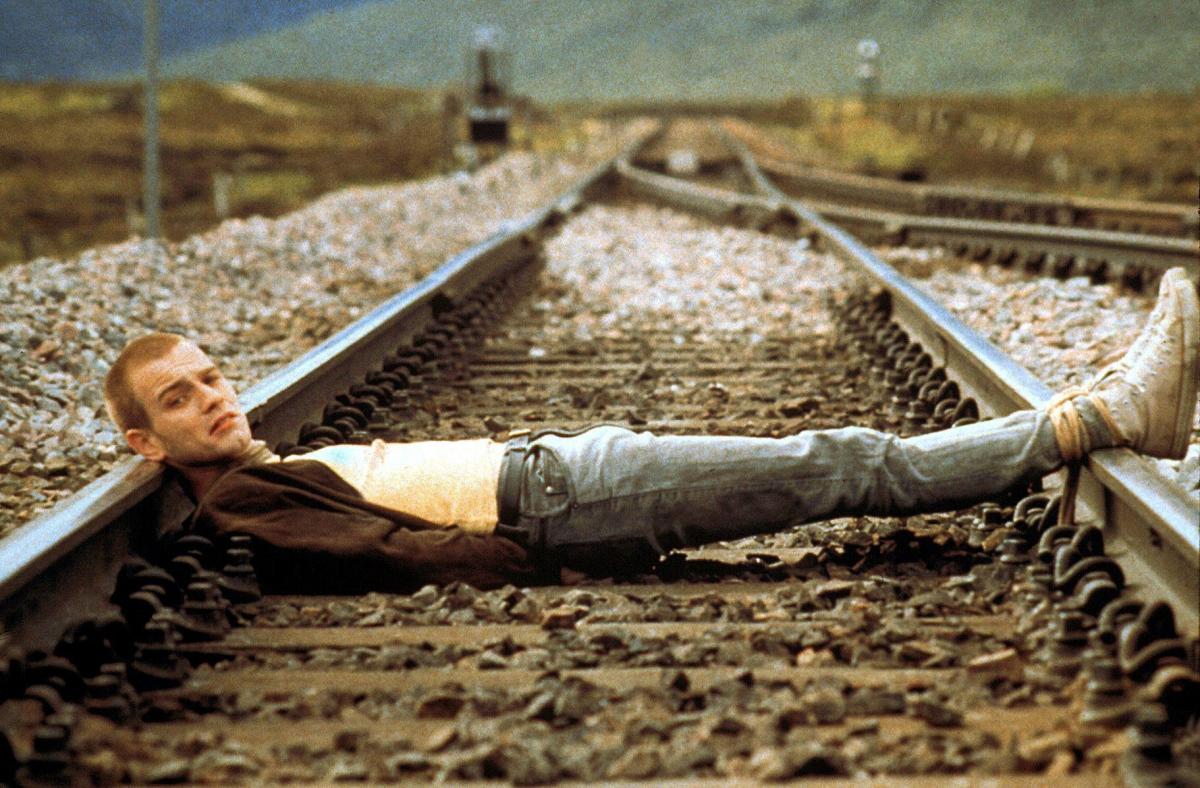
Throne of Blood (1957)
Director: Akira Kurosawa
Notable Stars: Toshiro Mifune. Isuzu Yamada is a legend among film snobs but this is the only thing I've seen her in so far.
Did I like it? I know it's a classic. I sometimes have trouble connecting with Kurosawa's samurai pictures (my favorite movie of his is The Idiot, which I love). I would love, at least in theory, to join some kind of film club that showed these films on a big screen and had some kind of drinks and hors d'oeuvres reception afterwards with light but intelligent discussion. However whenever you go to one of those things, at least if you are me, the people are never the crowd you were looking for.
Yes, this has come up here previously. This is another title that I watched on VHS while the DVD languished in the Netflix "unavailable" purgatory for eight years or so before suddenly appearing in my mailbox.
What I remember: I know it's Macbeth translated to a medieval Japanese setting. I remember a lot of scenes in the rain. The woods of Dunsinane scene was very well done. The madness of the two lead characters was by Western standards highly exaggerated but I guess it is characteristic of the Japanese tradition.
I associate this with: the 1950s Kurosawa canon
This stretch ended with quite a few good movies in a row. Our luck will not hold out (entirely) into the next set.