Saturday, June 01, 2013
Classic Movies 1950-1960
These are all well-established classics that a certain class of mind is supposed to like. There is another class of mind, that consisting of independent spirit or intelligence, which would probably not deign to bother with them, except to pick out their inanities. I do not belong to that class however.
I had seen all three of these before now, but only once, maybe twice in one instance, and all a long time ago.
Inherit the Wind (1960)
I don't love this movie, but I kept getting the nagging suspicion that it was better than I was giving it credit for. For one thing, I think I was letting myself be deceived by the circumstance that its sets reminded me of a television show of its period. Here are some of what I thought was good about it:
The screenplay is very good, despite being apparently didactic. It is an adaptation from a well-regarded play of the time, which (the time) had a definite strain of earnest concern for social justice and liberty about it. It is frequently intelligent, and thorough, while being lively enough to move the story along and keep the attention of viewers like myself, who like mild stimulation but are generally too tired/out of practice to give much mental exertion.
I saw Spencer Tracy again, and was more impressed with him than I was in Father of the Bride, which I had just seen a week or two before, because I thought he was more or less playing himself in that other movie, and would effectually be the same guy here; but he played a quite different guy, and rather subtly, such that I don't have any sense that one of these characters is more indicative of who he is than another.
It probably does not have to be noted, but Spencer Tracy's physique and overall look, for somebody who was a major star for three decades, is pretty amazing. The guy's upper body was mashed potatoes, and he always looked 10 or 15 years older than he actually was. When he did Father of the Bride, he was 50, about the same age as Brad Pitt and George Clooney are today (or, to make a more contemporary comparison, as Cary Grant was circa To Catch a Thief. On the other hand, Wilfred Brimley was an even older-looking 50 at the time of his career-making performance in Cocoon). He is 60 in this one. I used to thnk of 60 as old, but many 60 year olds nowadays prefer training for and running marathons to loading up on steak and martinis (Tracy is what 60 looks like when you focus on the latter). Even Philip Seymour Hoffman probably employs a personal trainer and dietician.
The great Frederic March played the William Jennings Bryan character, I suppose well. He is at least quite unrecognizable to me as Frederic March in his costume, the bald head especially.
Things that irritate me about this movie:
I have no particular love for Bible-thunping rural white southerners, but I thought the rather raw contempt poured out on them in this movie did not really do the filmakers much credit--it certainly did not add anything to the quality of the film. I realize that this came out as the civil rights era was starting to gain heat, and though there is no direct racial dimension in it, anti-southern sentiment among the mosr progressive social justice liberals--and Stanley Kramer was perhaps the most avowedly politically motivated major studio director of this time--was running high. Nonetheless, given the star power on display in the movie, and the extras showing the film being feted at gala celebrations in Berlin and Cannes, my class instincts kicked in with the feeling that this was not quite a fair fight, and while maybe at some level it was an honest representation of the reality on the ground, it was not an artistically worthy or fair one.
Gene Kelly--yes, the dancer, though at least they don't have him break into any numbers here--is not well cast as a cynical newspaper reporter who I believe is supposed to be H L Mencken. Having read even a little H L Mencken, I cannot imagine he was anything like the character depicted here, though one would assume most of the brain trust involved in the making of the movie would have been more familiar with his works than I am, or even known the man personally. My impression of Mencken is that he was a rather pitiless person towards people he considered inferior (pretty much everybody), who never smiled, and only laughed with people who had demonstrated some worth. Kelly plays the role as a kind of nihilistic, wisecracking, light person, which does not ring true to me.
Donna Anderson (this is not in the category of things that irritated me) is the token babe in this, and she has an appealing 1960 look, which is why I mention her. She went on to have a modest career in television, though not in any shows that I ever watched.
Paths of Glory (1957)
This was a St John's favorite. I think they showed it twice there, once as the regular Saturday night classic, and a couple of years afterwards as part of the Wednesday Kubrick series. It has a sensibility that fits comfortably there. Its time is close to the heyday of the College's modern era--I believe Jacob Klein himself was still the dean in 1957. It has a kind of classical spareness both of plot construction and in its sets and general style. Its themes are the sorts of things you can talk about at the bar afterwards without straining yourself or falling asleep, so that you feel you taking part in mental life to some degree. So needless to say my viewing, after about a 20 year interval, was heavily colored by these associations.
I had forgotten that one of the guys was chosen to be the sacrificial lamb from his platoon because, among other reasons, he was a 'social undesirable'. At times I feel like there are some people nowadays--perhaps even myself--could stand to gain by the sort of concentration upon self-improvement that the threat of being sentenced to execution because you are so repulsive to people might inspire.
An Adolphe Menjou sighting! He is in the cast as a cynical, weaselly, sybaritic French general (I think there are several redundancies).
I still don't really understand the part at the end where a terrified German girl is put in front of a pack of ravenous, wolf-whistling French soldiers and manages to subdue their raging boorishness by singing a melancholy song.
Conscripting armies to fight wars, especially wars like this where 75-90% of a birth cohort is killed, and the military leadership considers itself justified to make an example of conscript citizen-soldiers it considers not to be fighting with enough zeal by shooting them, is almost unthhinkable in the current state of society, on the mass scale of the 2 world wars especially. Aside from reticence about possibly being killed, huge segments of the present population simply don't regard the state as having authority over them to that degree. Power, yes, but power to which they are in a state of antagonism, not something to which they see themselves as owing a duty.
Sunset Boulevard (1950)
This is even more firmly ensconced in the Pantheon than the other two, so much so that many of the more highbrow or edgier iconoclasts on the internet take glee in knocking it down as much as they can, along with its similarly popular and acclaimed director, the great Billy Wilder, by whose creations they are decidedly unimpressed. I actually worship these people in a way, at least when they are obviously the sort of people who are cool and are successful with women, or are themselves desirable women hopelessly beyond my social reach, but unfortunately even when I am able to share their tastes I am unable to partake of what must be the exhilirating sharpness with which they savor their particular likes and especially their dislikes. Needless to say, I am a fan of Sunset Boulevard. Like other Billy Wilder films, it is fantastic (in the sense of being over the top in its storytelling and characterizations) and yet seems to me more like real life than a hundred other movies, and good ones too..
Quickly, some favorite dialogue bits:
JOE (upon Norma's declaring that he needs some new clothes): What's wrong with this shirt?
NORMA: Nothing, I suppose. If you work in a filling station.
That line kills me for some reason.
Near the end when Betty Schaffer comes to the house and discovers the truth about Joe:
BETTY: No, no. I haven't heard any of this. I never got those telephone calls. I've never been in this house...Get your things together. Let's get out of here.
JOE: All my things? All the eighteen suits, all the custom-made shoes and the eighteen dozen shirts, and the cuff-links and the platinum key-chains, and the cigarette cases?
I've never had nice clothes or accessories, and rarely think about wanting them, but I want them when I see them.
The Oscar for best actor in 1950 went to Jose Ferrer for Cyrano de Bergerac. I haven't seen that, so maybe it was the clear cut winner, but as, similar to Brando the next year in A Streetcar Named Desire, if not quite so dramatically, William Holden's role and presence is one of the more memorable performances in the history of the movies, I am thinking he probably would have been a deserving winner. Incidentally, Spencer Tracy was also nominated that year for Father in the Bride, another iconic role, but not I don't think in the same class as Joe Gillis. I like William Holden as a actor. He had that All-American midwestern charm combined with an unassuming studliness, a type which seems to have disappeared from the national scene in the last generation. He was apparently very good friends with Billy Wilder. This is noteworthy to me because Billy Wilder is one of the all time giants in his field and it is curious to know what kind of friends and intimates such people have. William Holden had some problems with alcohol such as we tend to frown on nowadays, most notably killing a person in a car accident while driving drunk. He also died at the age of 63 by falling onto the edge of a table while intoxicated in his apartment and bleeding to death, which is sad, really, but he had a little bit of an artistic flair about him, enough to be likable, and the possession of a restless and regularly unsatisfied soul often seems to be a prerequisite for attaining to this state.
Nancy Olson, who plays the fresh-faced aspiring screenwriter Betty Schaefer and represents to Joe the illusion of escape from the deformation of his soul that has been expedited by his taking up with Norma Desmond, was know as "Wholesome Olsen" in her high school days. That was in Wisconsin; in the 40s. That's pretty wholesome.
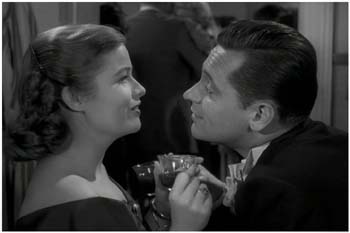
Doubtless this has been remarked upon before, but Norma Desmond is basically Don Quixote in drag and possessed of a massive fortune. The scene where she goes to the studio and is not able to be disabused of the conceit that she is still the greatest star in the world is reminiscent of various Don Quixote episodes, especially those in the second part where people begin to humor him by acting as if he were really the knight he claims to be.
Given Buster Keaton's current status in the very first rank of the Pantheon of the all-time greatest movie directors and actors, it never ceases to astound to see his cameo appearance with fellow washed-up, and at the time forgotten, silent film stars essentially playing themselves as Norma Desmond's old friends. In 1950 though the means of delivering old movies, to the extent people were even interested in seeing them, especially silent ones, was pretty limited, and film history as constituting some part of one's artistic education had not yet entered the general consciousness; which pretty much left Buster Keaton on the outside looking in, though he remained active and made guest appearances on venues like The Donna Reed Show, which would sort of be like Woody Allen appearing in a bit part on The Big Bang Theory, except that Keaton is normally considered now to be a major modernist artist, admired by Samuel Beckett and other cultural titans of the 20th century.
Contemporary Bonus: I watched Silver Linings Playbook because besides being much touted I knew it took place in Philadelphia and mildly deranged Eagles fans constituted a major part of the plot, and a decent Philadelphia-themed movie is pretty once in a generation event. I have to say it was very entertaining, though I would have liked more Inside Philly stuff and I think at some level the movie would have to be considered a failure because it purportedly is about rather dark subject matter, but I, and probably a lot of other people, came away from it thinking that maybe getting arrested and committed to a mental institution, taking a few years off to hang out at somebody else's parents' house (I don't want to live with my own parents), jogging, reading books, watching football games, visiting my zany Indian psychiatrist who really cares about me, and practicing dancing with a 23 year old babe who is also a mental health patient while I recover might be just what I need in my life at this time.
Regarding such Philly stuff as there was: They started strong by having the Bradley Cooper character carrying something around in an empty jar of Hellman's Mayonnaise, and I thought, this is going to be good, because Philadelphia people, for reasons which I have never understood though I too suffer from the affliction, cannot endure any other mayonnaise than Hellman's. I cannot bring myself to purchase another brand. I had to do the shopping for my son's camping trip with the scouts and they told me, 'just buy the store brand of everything' but I couldn't bring myself to put another brand of mayonnaise in the cart. The really odd thing about this is that most sophisticated people outside of the 215 think it is an absolutely terrible variation on mayonnaise. My wife thinks it is nasty stuff, but she has been to Philadelphia enough times to know that what I am talking about is real, and something deeper than taste. Apparently French mayonnaise is so incredible that normal people after having one bite are never able to stand the taste of Hellman's again. But this doesn't apply to people from Philadelphia.
I thought they got the Christmas scene at the house with the lights, the kind of food, the Frank Sinatra Christmas song in the background, pretty accurately. When you are a kid you assume everybody everywhere listens to Frank Sinatra Christmas albums, and Johnny Mathis and Nat King Cole and Perry Como and other people like that, but people in New Hampshire, for example, really don't. In general people in New England after they are about 25 don't seem to have popular music records or radio on obsessively in the background all the time, and especially at parties, like everybody I know did growing up. Sometimes my wife will let me put a record on when we have a birthday party or family guests, but the sound is put low and we always turn it off when it is time to eat or serve cake. The music in this movie was good in general. There was nothing in, other than the Sinatra, that was specific to Philadelphia life, but it was all things people would be into if it came on.
Things that were wrong: The most egregious error was when the Jennifer Lawrence character talked about a car broken down, 'on 76, near the King of Prussia Mall'. Though I-76 is the main east-west highway running out of Philadelphia, I have never heard anyone refer to it by its number. In town out to Valley Forge the road is always called the Schuylkill Expressway, after the river it runs alongside, at which point it joins with the Turnpike. Both the Expressway and the Turnpike predate the numbered Interstate highway system and everybody still refers to them by the old names. Most other state and U.S. roads are also called by their local names. I-95 is referred to by its number. This is nit-picking, but when somebody in a movie refers to something you have been on or heard spoken about a thousand times using a term for it you have never heard anyone use in real life, it is rather jarring. New Yorkers certainly wouldn't stand for it.
Also a real die-hard Eagles fan could never be friends with a Dallas Cowboy fan. The mindset and life experiences are too disparate for any real bond of intimacy to develop. I don't even think I could be in love with a woman who was in any way a serious Dallas Cowboy fan. This is extreme, because sometime in the early 90s I remember watching a TV show--I think it was Beverly Hills 90210--where one of the guy characters had to dump a gorgeous blue-eyed Aryan goddess he was dating because she revealed racist tendencies, and of course my reaction was, "Who cares?" If anything, I thought a girl who sincerely disliked blacks or Arabs or whomever could probably be counted on not to run off with one under my nose, and that seemed at the time not an unappealing thought to me. But a Dallas Cowboy fan, you know it would be doomed from the start.
I like the high school reading list he does, though he continually is frustrated by the endings of the books and hurls them through the window. A lot of the books he reads I never read either in high school or afterwards--Lord of the Flies, The Grapes of Wrath, whichever of the two early Hemingways he reads. I don't remember much which novels I read in school. A Separate Peace, I remember, and Great Expectations. David Copperfield had been the Dickens novel they had read at my school up to about 1980, when they changed it because David was too long. I'm guessing by now Dickens has been dropped from the curriculum altogether.
I've got to finish this post tonight, so my last points will be quick and un-expanded upon.
So let me get this straight. You go home and catch another man having sex with your wife in the shower and you beat him up, you get arrested? That doesn't sound very American to me.
Jennifer Lawrence does strike me as embodying some especially characteristic strain of this new generation of women (the millenials) that we are getting. It would take me at least an hour though to tease out what I mean by that, so I will leave it for another time.
Like many movies that crave mainstream approval nowadays, there are a lot of extraneous multicultural characters thrown in whose characters nor multicultural qualities are essential to the plot. The materialistic wife of Bradley Cooper's vaguely ethnic (Hispanic?) friend who was being driven to an early grave by stress had some reality as a character, but was completely extraneous to any story (then again, the story itself is largely extraneous to what is interesting about the movie). The Indian psychiatrist who turns into a face painting, insane Eagles fan on fall Sundays is a nice try, but a bit of a stretch, I think. It's clear they had no idea what to do with the black guy.
Tuesday, December 18, 2012
Getting Back to the Good Stuff
For a little while anyway.
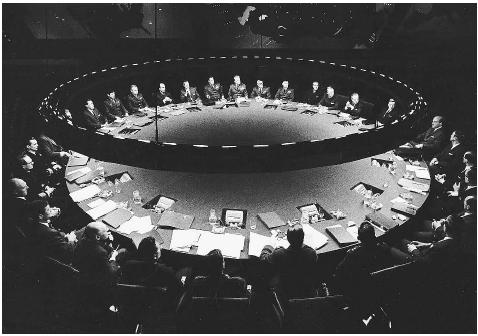
Dr Strangelove (1964)
I had seen this I believe twice before, but it had been ten years at least since the last viewing, I hadn't made any record of it here, and I am fond of the movie, so I decided to see it again.
Many commentators note that a lot of the jokes, especially the more famous ones, lose impact on repeated viewings. I did notice something of this--perhaps age has something to do with it also--but it isn't like my affection for the movie was ever based on a selection of quotable but evidently insubstantial and transient lines.
I do suspect that the main appeal of this for me now, as it is with most of these old films that I like, is as a nostalgia piece, of which Dr Strangelove is an especially potent artifact for me. While it is true that film dates from six years before I was born, the world it depicts, its images, many of its attitudes, are more familiar to me, or at least resonate more with me, than almost everything about current existence, in which I almost never feel really at home. I will try to express what I mean by this below.
I wrote recently that my ten year old wanted a typewriter for Christmas. After poking around online I found someone near me who was selling a pale blue 1970s vintage Smith-Corona Coronet for $40, which is a good price for a working typewriter. It seemed beautiful to me when I beheld it, and even though I had not banged on this kind of machine for 25 years certain of the various idiosyncrasies of handling it that have been lying utterly dormant during the whole of that time returned to me within a few moments. In brief, given this antique instrument to play with, I had the opportunity to feel almost competent to perform some adult activity for a few moments. Movies from the 1960s especially often have a similar effect on me because the details and objects and even the geography in them are within the range of my knowledge and sense of what the world is properly like. I have noted elsewhere that even 1960s depictions of sex seem more natural and to make more sense to me than most of what has developed in that realm--both in films and real life--since. Dr Strangelove is full of both little and big instances like this. To begin with the whole struggle of the Cold War, with the United States and Soviet Union as mortal enemies and the threat of nuclear annihilation always hovering somewhere in the back of one's consciousness was a dominant fact of the first 20 years of my life that suddenly evaporated into nothing. It is odd to say that returning to days when that state of mind prevailed as a cinematic tourist is comforting, and I don't think that is the right word anyway; but it does seem normal. The movie also conveys an idea of the physical earth, as least in the northern hemisphere, as vast, cold, mostly barren, alien to refined human sensibility but also exciting in a masculine measuring-oneself-against-nature kind of way that I am in tune with, an idea that also had strong roots in the far flung military activities required by the Cold War and also with the Space Age. Even though outrageous, the characters as human types do not seem to me as remote as almost anyone either in or portrayed by media or the arts today. This has to be illusory, and the result of my just not feeling able to trust anyone in contemporary society, or always being wary of whatever agenda it is they want to push. The agendas of people who are dead or superannuated are less threatening to me, not least perhaps because enough time has passed to identify anything that would strike me as really insincere or incoherent or sinister about them, which I cannot seem to effectively do with contemporaries...
Yes, so I hope you get the idea. I didn't pick up much insight from the bonus materials. There were two tidbits I found of mild interest. The first is mainly for those who are obsessed by dates. Dr Strangelove was supposed to be released on November 22, 1963, but the date was moved back to January of '64 due to the Kennedy assassination. The second was a story, probably apocryphal, that when Ronald Reagan arrived at the White House upon his inauguration as President, he inquired of various aides where the War Room was, having apparently gotten the idea from this movie that such a place actually existed, which, however, is not the case.
Along this same general theme of nostalgia and my mental image of what the universe is like, the opening sequence remains one of my favorites of all time.
Shane (1952)
Most of the reference books have it listed as 1953, though the copyright date on the movie itself is '52, which is why I am going with that.
I never watched Westerns as a young person. I don't know why, I suppose somewhere along the line I got the idea that they weren't very interesting. As a result just about the entire genre is unknown to me. But maybe I am ready for it now, or at least for the better specimens of it, because I liked this. It is emotionally appealing. While it is a cliche to say that Westerns have classic story structures, in the case of Shane at least there is more than a little truth in it. In the execution of the key scenes there is a deliberation that allows the viewer to ponder the particular drama that is unfolding and to savor it, without being gratuitous. The director was George Stevens, who had had another triumph the previous year with A Place in the Sun, which I wrote about here a couple of years ago, as well as several other well-regarded films. I would rate Shane above A Place in the Sun, which I also like, but not as much--Shane hits a number of high points and seems to me to attain nearer to perfection with regard to what it is trying to do. I don't think it is inherently a great story in bare form, but there was a meaningful story in it that the filmmakers hit upon and were able to bring out.
The cast featured several name actors in prominent roles whom I had not, however, seen before. Alan Ladd and Jean Arthur especially, but also Jack Palance, who was kind of a kooky but somewhat engaging old guy who was always on television when I was a kid, as a young man. All of these people have a certain appeal to them that I think was used to good advantage in the movie.
The Quiet Man (1952)
All right, this movie. Where to begin? I saw it some years ago and, like a lot of people, did not get why it would ever be supposed objectively great. I still think that absent the considerable backstory and the magnitude of the beloved personalities involved in the production that this would not have attained to classic status; and while I think it perhaps can pass as a work of art of a kind, I do not think it is of any very profound kind. That asserted, I do have some greater appreciation of the fact that in this instance the magnitude of the personalities is indeed important, that the film does have a beauty and energy about it that is decidedly unique, and that, especially as I enter the nostalgia phase of my life, it is highly charming.
The movie was a pet project of John Ford, the legendary director whom my various inquiries into the matter have begun to persuade is more widely considered the greatest American director of all time than anybody else. I was astonished to find out that he grew up on turf with which I am very familiar, being born in Cape Elizabeth, Maine and growing up on Munjoy Hill in Portland. He graduated from Portland High School (this was the other public high school in Portland, and the mortal enemy of my school), yet at least from 1986-89 when I lived there he seemed to be forgotten in his hometown, for I never had any idea that he was from there until this past year. At far as Portland celebrities go, he is really at least as big as Longfellow and Robert Peary, and much bigger than Judd Nelson, Linda Lavin, Annie Proulx and whoever else we can lay claim to. This guy is a titan in the history of cinema. He is our Fellini or Kurasawa.
I had the impression from somewhere that one of the reasons usually given for John Ford's successful development into a significant artist compared against the pygmies of the present day is that instead of watching television and throwing away years of his life going to college he obtained a varied experience of life and people while working on ships and construction sites and getting into bar fights and having affairs with girls from the wrong side of the tracks and that sort of thing, but the reality is much more prosaic and logical; he moved to Hollywood, where his older brother already was established in the fledgling movie industry, when he was 20, and began working on film sets, spending those crucial years of one's early twenties, when no process seems overly daunting given a thorough enough immersion in its operation, learning about how movies were made. In those heady days when demand for film production was increasing exponentially and technical skill in the art was largely the province of the young and rambunctious generation, Ford was made a director of quickie silent films (most of which , however, are are lost--only 10 of the estimated 60 silent movies Ford made survive today) at the age of 23. None of this is giving any particular insight about John Ford yet, but I am still in the process of gathering my impressions about him; perhaps by the 7th or 8th film I will have some insight into what is really going on with him.
The Quiet Man is also famous for John Wayne's branching out from his standard cowboy/war hero role to a more domestic part. We haven't seen much of John Wayne on this list. I am not sure what my opinion of him is yet. His persona obviously is his most important quality as a star but does he really earn it, really carry it off? I'm not convinced. He seems to take himself, or his image of himself, awfully seriously, more than I am used to at this point. He's also almost utterly humorless. I realize he was embodying an image of manhood that was much admired and aspired to at the time, and it was almost certainly a better model than whatever sad examples we are expected to emulate, but at this particular point in time there is something really foreign about it...
John Wayne is one of the three great celebrities of the 1940s and 50s whose body type and history pretty much mirrors mine from age 20 to 42 certainly, and is probably predictive of it going forward, the other two being Ted Williams and Charles de Gaulle. Modern day big shots have personal trainers and dieticians--or are otherwise extremely disciplined--all of which largely prevents their physiques from developing in a manner parallel to my own.
Maureen O'Hara, a healthy looking redhead, and native of Ireland, who frequently worked with John Wayne and John Ford, is the female lead here. Her character requires some mild Taming of the Shrew type treatment due to her predictable temper, but John Wayne obviously is up to that challenge. There was an interview with Maureen O'Hara in the extra materials in which she stressed the serious old-world training in the art of acting she received at the Abbey Theatre school, adding that no European movie actress got her start by being spotted sitting at a lunch counter. I wonder who that barb was aimed at.
I think the over the top Irish stereotypes that fill the movie are entertaining, silly as they are, because they are the kinds of things that a conscientious artist or intellectual would be so concerned about avoiding today. That sort of thing was of course rampant at the time, and it turns up again in another movie more or less contemporary which will be discussed in the next set, where I plan to go into it with more detail.
A woman I went to college with claimed that her grandfather had been the inspiration for the character of the Quiet Man. I have no idea whether this is true or not, but there is no obvious reason to believe it was not at least a family legend, since I doubt many people even at our school were familiar with either the story or the film. I certainly wasn't.
You could hardly have made an Irish movie from 1940-1955 without having a part for Barry Fitzgerald, who appears in his third picture, and really his first in a supporting role, of those I have written about on the site--the others were And Then There Were None and The Naked City, and this gets him into the first tier of the Bourgeois Surrender Movie Star Hall of Fame. Sterling Hayden (The Asphalt Jungle, The Godfather, and Dr Strangelove, also secured his spot with today's reviews.
I will do a brief post next on a couple of leftover matters not related to movies that I was going to stick in here.
Friday, May 23, 2008
I do not write much about the unpromising-looking global economic situation because the subject is so thoroughly covered elsewhere, but I have started to notice some unsettling signs, the most telling one being that I spotted Mad Dog 20/20 and Wild Irish Rose on the shelves of the wine section in the upwardly mobile grocery store I have been going to for the last ten years for the first time ever today--and there was only one bottle of Mad Dog ($1.49) left in stock. I held off on getting it for now however.
On to real estate. This item is a month old, and may only be of interest to me, but I thought it was worth passing on to any interested buyers that Evelyn Waugh's house--which is still owned by the family--is on sale for 2.25 million pounds. This looks liked a pretty good price to me, at least compared to say, Ray Lewis's or Shaquille O'Neal's houses as they appeared on Cribs, both of which cost considerably more.
This book, which gets a very good review in the Atlantic, looks like it might be worth checking out just for the photographs. My fascination with this not usually too fondly remembered (in England) time period is kind of a recurring theme on the blog. I certainly have a decided affection for many of the familiar images of it, the dinginess, the cold, the bad potato-based meals, the warm beer, the dark, greasy, steam-windowed pubs (quite a few of which, at least as late as the mid-90s, remained in apparently unaltered condition from that era, among the few living relics of that time) the spare, direct style of both the prose and poetry of the period, which I think of as having a kind of rail station elegance about it. The strong consensus now seems to be that one ought not to romanticize this era, especially from the vantage point of modern comfort and prosperity, for the Austerity age was marked by inconveniences almost unfathomable to us now--for one example the number of British households with indoor plumbing did not climb above 50% until well into the 1950s--and we should not imagine that we would ever find anything enjoyable in that similar circumstances. The photographs however do act forcefully on the mind. The impression is of a world in which a person with a decently-developed mind would have much opportunity to think--life did not appear to move with much speed or urgency in these years--and much matter to think upon (people in this era, especially educated ones, it must be pointed out in fairness, also seemed to drink far more than their counterparts do today). The other main factor in this attraction, which just came to me the other night, was that of course from 1945-1951 Britain had a socialist government, almost certainly the most stridently socialist government in its history; and I have always had a perverse, but nonetheless consistent attraction to societies in the throes of a socialist experiment, especially in its earliest phases.
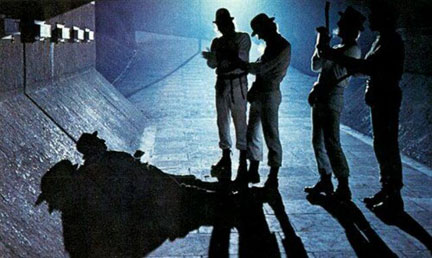
My socialist sympathies go back a very long way, and no doubt have their origins in the social frustrations that have crowded out most other memories of my youth. By high school, when so many of the most desirable students, the girls in particular, were availing themselves of social options not available to me--going to dances and sporting events and concerts at other schools, or cities, or colleges, and so on, that were more exciting than what was available in our school and our neighborhood--I used to fantasize that somehow these interesting and successful kids could be trapped and forced to go to the same hangouts and social events that I went to. This is very much, I think the attitude of a socialist, especially when found in intellectuals; it is a fear of being totally abandoned and left far behind by all the best and smartest people, so that the latter practically are gone from all view. This certainly does happen. When I would be sitting in class, instead of paying attention to the lesson I would concoct ridiculous scenarios--which I am sure are not that uncommon--in which some unpredictable and sudden disaster, such as an earthquake or an aerial bombardment, would bury the school under mounds of rubble, but with me and some reasonably good-looking girl--I was not terribly picky as to whom, indeed the idea of randomness was one the more exciting aspects of the whole possibility--trapped alone, but alive, in the basement, in which the electricity and the plumbing would still be functioning, and there would also be a food supply--the home ec rooms were down there, after all, as well as a couple of vending machines. I had no illusions that the girl would let me do anything to her that I would have wished to do while there remained any hope of rescue. I figured we would have to be down there for five to ten days before she would come to the realization that I was going to be the only truelove she was ever going to have in this world, at least from this point on, and submit to me. I must say, that as a teenager the obvious option, forcible coercion, never entered my mind; I wanted my prisoner, or fellow prisoner, as it were, to fall in love with me, rather like in the story of the Beauty and the Beast, and I did not think that a clumsy attempt at violent assault was the way to bring that happy ending about. This mindset also explains I am sure my youthful nostalgia for my parents' Catholic upbringing. The most able people in this group, who were most aware of the existence of wider options, naturally found this world impossibly stifling, and when they were able to throw it off and assume important positions in society emphasized this idea of repression so much that many have come to regard "Catholic upbringing" and "repression" as synonymous. To someone who wasn't going to be doing anything that required to be repressed anyway however, the requirements of that kind of community would have served to keep some smart, exciting people close to hand at all time, people who had far more ability to make something tolerable and memorable out of a situation they had unwillingly to endure than the average person did; in the event too raising the self-worth of the other members of the group as feeling themselves members of a community with some vibrancy instead of one that shuffled about in endless and insuperable lifelessness. This at least is how it worked in my imagination.As to my movie watching, recent weeks have seen me undergo a heavy dose of Malcolm McDowell. It was only two movies, O Lucky Man and A Clockwork Orange, but as they time out combined at over five hours, both offer variously unhinged and unpleasant visions of early 1970s England, and both indulge luxuriantly and exclusively on the character played by the star, the effect of watching them back to back is that one feels that he has covered this particular epoch (British film 1971-73, approx) and star pretty solidly and can color them in on his map of cultural knowledge, if you will. O Lucky Man is not, that I can see, the great work some cinephiles claim it is, though since I had never heard of it before it offered a certain degree of unanticipated interest, which is always pleasant. It is dated, sometimes in an interesting, sometimes in a distracting way. The animating premise, widely held at the time, seems to be that society is about equal parts absurd and wicked, and even anything delightful is a surface illusion thinly covering an appalling foundation. I like the device of the road trip all around the provinces and various economic and cultural pursuits of Britain. This was a popular device in the 18th and early 19th centuries in that nation but I hadn't seen a modern update that came immediately to mind. Malcolm McDowell I must admit I kind of like, although he is exactly the type of person whose own animating premise, or one of them, seems to have been unveiled antagonism and contempt towards people like me (dull, ultimately complacent bourgeois). This is why of course he was so good for these types of movies, and why he became famous and popular in his own time He would be one of the exciting people--clever, charming, good-looking, not ridiculously so but enough to distinguish him from almost everybody else while being at the same time enough like everybody else that they could easily identify with him--that I referred to earlier in the section on socialism.

I had seen A Clockwork Orange--or at least the first hour of it, for I had not remembered anything that happened after that point--some years ago, probably when I was in college. I hadn't "gotten" it at the time; I certainly could not adequately explain what its purpose as entertainment might be. I considered myself at the time, and still do, a fan of Stanley Kubrick's movies--they are very entertaining for people who have a sort of general, haphazard, largely autodidactic, reference-book informed education such as I do. Kubrick himself was a high school dropout but seems to have read a lot of library books, looked at pictures and objects in museums, and listened to musical recordings, and interpreted them not with the privilege and authority of the scholar/expert but with that of the bohemian/artist. A Clockwork Orange is not, I am guessing, a movie of the sort that this director imagined in 1960 he would ever be making; that is one regard in which it is interesting, for I suspect most people in the arts have some vision of what forms their life's work is likely to take, ten years into the future anyway, and of very specific projects that they hope to complete. There are numerous demonstrations of course of filmmaking prowess that even I could appreciate. Having so many scenes of shocking violence and depravity follow in rapid succession right at the beginning, to be the narrative rather than the point to which the narrative was moving was a very effective technique, as these are the most memorable scenes in the film. I have not read the book, so I don't know whether that is how the plot unfolds there too. Not having any of his characters talk like a normal person, or even like ordinary affected actors, is something of a Kubrick tradmark which I am sure has been commented upon elsewhere. It is one of the secrets of his success I think, in tandem with other things, but the constant exaggeration and distortion of human speech serves to draw one into the psychic atmosphere of the movie and out of that of life. The depictions of sexual violence and rape offer a number of quite disturbing challenges to me. One of the effects of them is to be reminded of classical paintings and sculptures, of the rape of the Sabines, or of Europa, which Stanley Kubrick doubtless saw in many variations in museums and books, translated to modernity and its action developed in celluloid instead of the imagination inspired by marble. The second is to be reminded how relentless sexual pressure is on desirable young women as to constitute in many instances the primary issue of their lives, (and how in my own life I have applied approximately none of it) and how much indeed of the story of the whole world revolves around this kind of rape and violence which to others--to me--is just wholly foreign. I can't imagine what else he is trying to get at by showing it as he does.
When I finished this movie, which so reveled in its relentless depravity, and the Gene Kelly version of "Singing in the Rain" came on over the final credits I was once again impressed by the slickness of the director--if I am sitting in the theater I am thinking I guess I don't want to throw myself off a rooftop now--artifacts of optimism and innocent gaiety still exist--or am I supposed to be laughing wickedly while looking for some weakling to kick in the teeth? Are we supposed to be happy that the world turned in such a strange direction that this movie could come into existence, or oughtn't we to be happy? Does Stanley Kubrick believe in moral value, or only artistic value? Do I?