Showing posts with label cleopatra. Show all posts

Saturday, June 20, 2009

John Dryden--All For Love (or, The World Well Lost) (1678)

This is the last of the Cleopatra plays. As I had read this one not too many years earlier I just skimmed over it, and did not take a lot of notes. The first time I had read it, I had liked it quite a bit, thought it reminiscent of Shakespeare, on whose own Cleopatra play it was modeled, perhaps even a sparer, cleaner version of it, or, at least, was my impression. Looking over it again just after having read the Shakespeare though, as well as the Daniel and the Shaw, I did not like it quite as much. For one thing his Antony struck me as perhaps overly romantic ("One look of hers should thaw me into tears,/And I should melt, till I were lost again...If I should hear she took another love,/The news would break my heart--now I must go;/For every time I have returned, I feel/My soul more tender..."). Shakespeare's Antony, it goes without saying, is much manlier than this. For that matter, his Lepidus is manlier than this too.

The poetry of the speeches I have marked in several places as "so-so" ("And while she speaks, night steals upon the day/Unmarked of those that hear: Then she's so charming/Age buds at sight of her, and swells to youth...), "humorous" ("Even I, who hate her/With a malignant joy behold such beauty/And, while I curse, desire it") and "kind of silly" ("And then he grew familiar with her hand/Squeezed it, and worried it with ravenous kisses") .

There is some bawdiness thrown in for the Restoration crowd ("Your Cleopatra/Dolabella's Cleopatra; every man's Cleopatra...You know she's not much used to lonely nights...ANTONY: Though heaven and earth should witness it/I'll not believe her tainted. VENTIDIUS: I'll bring you then, a witness/From hell, to prove her so...")

Octavia (Antony's wife)'s pain gets more play in this version of the story than it usually does, though there still isn't a lot of sympathy for her.

"Sure that face/Was meant for honesty; but Heaven mismatched it/And furnished treason out with nature's pomp/To make its work more easy." This makes little sense, on the part of Heaven.

Antony does show stirrings of being a genuine man later on though, when he declares "I do not know how long I can be tame" and "my justice and revenge/Will cry so loud within me, that my pity/Will not be heard for either."

Overall not as impressive as I remembered; characters are not grand or even particularly interesting. Mirrors the age I suppose. Much too soppy-romantic. Images, poetic tension better elsewhere.

Of all the figures in English literary history who have been the dominant force in their own epoch, as Dryden was in the 1670s and 80s, he is really the only one whose works don't arouse much excitement in anybody nowadays. Pope doesn't seem to be read all that much, but most of his work is at least in print, while of the twenty or so plays Dryden wrote it is difficult to find more than 2 or 3 in a common edition (Pope is also still broadly considered to be a very good poet, I think). I am also not aware of any of these plays being revived theatrically, if ever. Dryden does not, compared to the other authors of this class, including his own rough contemporary Milton, seem to have either the same quality of ideas, or the same control over such ideas and other material he does have. He was a very shaky literary dictator, often in a defensive mode in his public political and philosophical disputes, and was even suffered to be beaten up in the street by thugs on account of a book review, all of which it is hard to imagine happening, or being allowed to happen to, the likes of Milton or Samuel Johnson or Dickens.

Sunday, June 14, 2009

Caesar and Cleopatra--Part 3

After the play ends there are ten pages of Shaw's own "notes" which attempt to address predictable stupid questions and misunderstandings provoked by the play directly, one presumes to avoid the agony of having to read discussions of them in every paper. These explanations are full of statements like "it will strike us at once as an unaccountable fact that the world, instead of having been improved in 67 generations out of all recognition, presents, on the whole, a rather less dignified appearance in Ibsen's Enemy of the People than in Plato's Republic." Well, the world has a less dignified appearance in so far as the arts and literature have become, over time and the extension of their study and practice into ever wider and less exclusive swathes of society, less generally dignified endeavors.

This is nothing really to the point, but my wife found the film versions of Major Barbara and especially Pygmalion highly entertaining, and her views on the relative value and significance of the overall human condition in relation to everything else that exists aren't actually that much different from Shaw's own. Nonetheless she is not to be put on record as any kind of GBS fan. He throws out too many lines disparaging of the capacities of women that are not to be forgiven. Shaw was of the opinion, contrary to Plutarch and therefore most English writers on the subject, that "Cleopatra was a queen, and was therefore not the typical Greek-cultured, educated Egyptian lady of her time...I do not feel bound to believe that Cleopatra was well educated. Her father...was not at all a parent of the Oxford professor type." I suspect this is an example of him trying to unsettle the middle class playgoer's comfort zone with regard to the latter's own learning by suggesting that his ambered received wisdom may not contain a shred of truth. At a certain point of course, if Cleopatra is neither really beautiful, nor educated, nor cultured comparative to the majority of humanity--someone has probably put forth that she was a total moron to boot, though I am not familiar with him--the legend ceases to offer much possibility of dramatic interest, and the personal aspects of its historical interest are greatly diminished. I don't feel bound to accept this view of the matter.

Shaw compares Caesar to Charles XII, Nelson, Joan of Arc, and modern self-millionaires, which latter group consists of "half-witted geniuses, enjoying the worship accorded by all races to certain forms of insanity.

"...in civil life mere capacity of work...enables men...to distance all competitors in the strife of civil ambition. It was this power of work that astonished Cicero as the most prodigious of Caesar's gifts, as it astonished later observers in Napoleon before it wore him out...a prodigy of vitality." I touch on this subject frequently in these pages.


There is a long paragraph in which Shaw explains that in contrast to most historical figures whom he deservedly makes fun of, he believes that Caesar was genuinely Great, and the source of this legitimate Greatness lay in his being Original. "Originality gives a man an air of frankness, generosity, and magnanimity by enabling him to estimate the value of truth, money, or success in any particular instance quite independently of convention and moral generalization...His lies are not found out: they pass for candors...He knows that the real moment of success is not the moment apparent to the crowd...Having virtue, he has no need of goodness." I found many of these points to ring true.

"Indeed it is clear from his whole history that what has been called his ambition was an instinct for exploration. He had much more of Columbus and Franklin in him than of Henry V." The second sentence is another taunt meant to confuse the earnest masses, probably, but I included it as I love to pepper my posts with famous names wherever I can. The point is that it is true that the whole biography of Caesar is quite uniquely interesting from many aspects; I still find it hard to get a sense of what he was like temperamentally; for if he was a man of the sort I imagine him to be, brilliant and perceptive mixed with hard and pitiless and violent, this is not a kind of guy most people have much direct familiarity with anymore.

Are there any "great men" in the Shavian sense living among us today? I can't think of who he might be, unless there is a warload somewhere in Africa with a perfectly clear perception, a biting wit and a better education than all of the journalists who will fail to properly understand him. But I don't think there is, and such a character would be rather insignificant in the global picture anyway.
The edition of this I have was published in 1966 and belongs to a series called "Airmont Classics" ranging in price from The Call of the Wild at $0.40 to The Portrait of a Lady at $0.95 (Caesar and Cleopatra was $0.50). There are 116 titles in the series, of which I have read 36. This isn't bad, though when you figure every single book in the series is something everyone has heard of, it gives you a good demonstration of how much reading it takes to put a dent even in a list of long-established classics. The first five books in this set that I haven't read for example are Treasure Island, Tom Sawyer, Oliver Twist, Kidnapped, and 20,000 Leagues Under the Sea, all of which are pretty standard favorites, as are pretty much all of the other 75 I haven't gotten around to yet. (By the way, R.L. Stevenson, Jules Verne and Jack London--all 0-fers).

I was going to link to clips of some of the movie versions, though none of them look too good. There is a '76 TV version starring Alec Guinness, who I believe has been in at least one version of every work of British literature adapted for a screen, as Caesar, and some woman who doesn't seem to get Shaw as Cleopatra (Where are you Wendy Hiller!). Here is the trailer for the '45 movie starring Vivien Leigh at least, which is slightly amusing. Fans of the TV show Rome seem to like the part where Cleopatra seduces Caesar, but I couldn't get through it.

Monday, June 01, 2009

George Bernard Shaw--Caesar and Cleopatra--Part 1 (1907)

I had a dream the other night that my wife had decided that our lives had grown stale and that we had consequently moved to Los Angeles (the chance of this happening in real life is zero). This Los Angeles was more like a wine-growing country or at least the back lot towns and villages in movies from Charlie Chaplin's era than anything like Los Angeles is supposed to be now. Being me, I naturally went straight to a TV studio to look for work (I apparently arrived in town unemployed), and all the employees talked in the exaggerated style of commercials and game show hosts. And I loved it. I was quite confident I was going to be offered a good position in the industry too--perhaps acting like a person on television?--based on these positive first impressions. I was thinking this was really a brilliant and invigorating midlife move, just what I needed. My wife seemed happy to be in California too. In reality of course I have never been to California. I would still like to go someday, but it strikes as a place you can't really go to on vacation and get much out of it, unless it's for six weeks at least. Probably you really have to live there for a time, and trying to achieve something that you haven't achieved before and can't achieve in the same way anywhere else. That is what people do there. You have to have some purpose.

George Bernard Shaw is a funny kind of writer to read today, about a hundred years after his heyday. It is easy to tear apart his political and social opinions, declare their fallacies and feel generally superior about oneself from the internet commentator understanding of the world, but from the literary point of view he was really quite brilliant. His plots and situations are truly funny and ingenious compared to almost all other writers. He was a great iconoclast, in a time when the whole of cultural life was dominated by icons and idols in which people had a lot invested, and it is this that I take to be the main object and value of his assertions. I think you have to be wary of taking much of what he says literally and seriously. I can pretty much be brought to believe in anything if it is presented well enough, but there are always several occasions in any Shaw play where I find myself writing "This guy is totally full of shit" or something to that effect. That, and all the doubts one has about this author's sincerity, decency, courage, that you either detect from the writing or see hinted at in the commentaries of other authors, aside, Caesar and Cleopatra is a highly entertaining--not to mention short--piece of literature. Take it to the beach even, if you go to a beach where it would not be wholly unreasonable to whip out a copy of G.B. Shaw. I think you could do this at East Hampton town beach in NY, Ipswich in MA, Rye and nearby state beaches in NH, York (Long Sands), Ogunquit and Kennebunk in ME, among doubtless many others. It's a very smart play, even if half the opinions or more expressed in it are dubious; indeed, it even causes one to question the importance of having correct opinions, or if these are actually possible given the absurd state of human existence.

My Model Hasn't Figured How to Pose the Cover of the Book For the Camera Yet. Which is why you see a struggle taking place for the positioning of the book. Act I begins with more irreverent stage directions than are customary. Examples: "Below...are two notable drawbacks of civilization: a palace, and soldiers." "The palace...is not so ugly as Buckingham Palace." "(Belzanor, a warrior) Is rather to be pitied just now in view of the fact that Julius Caesar is invading his country." It is thus established right way that one must be wary of taking anything seriously with George Bernard Shaw.

A soldier entering the camp in flight from a battle with the Romans ("I am Bel Affris, descended from the gods." (Auditors) "Hail, cousin!" states that their javelins "drove through my shield as through a papyrus." I thought that was funny.

The Romans seem, after some degree of consideration, to be an exteme case of a race of men that is more exciting to read about than to experience first hand.

There is an absurd exchange among the besieged Egyptians regarding whether they should kill the women to protect them from the Romans. At length it is decided that it would be cheaper to let the Romans kill them, because they would have to pay blood money if they did it themselves.

This Was a Picture of the Box of a Caesar and Cleopatra Card Game. I am surprised they do not allow it to be shown, as it would be good advertising for them. Who is more likely to buy this kind of game than the kind of person who would find this site distracting?
The stage directions for Act II, ostensibly laying out for us the scene at Cleopatra's palace, include one of George Bernard Shaw's most cherished hobby horses, a direct dig at the English bourgeoisie ("The clean lofty walls...absence of mirrors, sham perspectives, stuffy upholsteries and textiles, make the place handsome, wholesome, simple and cool, or, as a rich English manufacturer would express it, poor, bare, ridiculous and unhomely"). Bourgeois sensibilities never change of course, because such people, I gather from my reading, have no other distinguishing personal characteristics than what can be glossed from their possessions and their manner of ornament, so the observation can more or less be applied to the same crew in our own time and nation.

The part where Caesar's aide-de-camp Rufio "with Roman resourcefulness and indifference to foreign superstitions" dismantles the tripod where incense was burning upon entering the palace because it was in Caesar's way I thought was presented amusingly.

Cleopatra is 16 in this play, and Shaw writes her as a silly and totally naive (though intelligent) schoolgirl ("Mark Antony, Mark Antony, Mark Antony! What a beautiful name!"). I don't know how accurate this take is--my impression is that 16-year old girls from educated backgrounds in the Victorian and Edwardian eras were more sheltered from the sordidities of worldly social life than has been common historically--but it does add a degree of charm to the play.

At one point in Act II the famous library of Alexandria catches on fire (though something like this does seem to have happened during Caesar's invasion, the big and final destruction especially lamented by scholars, historians, book lovers, etc. occurred several centuries afterwards). Shaw presents the occasion as the notorious fire however, or at least implies it, and naturally uses the opportunity to skewer anyone who might be inclined to regard the event as some kind of tragedy:

CAESAR (on hearing from an hysterical scholarly type that the library is in flames): Is that all?
THEODOTUS (the hysterical scholar) (S.D. unable to believe his senses): All! Caesar: will you go down to posterity as a barbarous soldier too ignorant to know the value of books?
CAESAR: Theodotus: I am an author myself; and I tell you it is better that the Egyptians should live their lives than dream them away with the help of books.
THEODOTUS (kneeling, with genuine literary emotion: the passion of the pedant): Caesar: once in ten generations of men, the world gains an immortal book.
CAESAR (inflexible): If it did not flatter mankind, the common executioner would burn it.
THEODOTUS: Without history, death would lay you beside your meanest soldier.
CAESAR: Death will do that in any case. I ask no better grave.

While Shaw may have (sort of) believed all of these things about books, I find it highly improbable that Julius Caesar would have been in quite as close agreement with his sentiments on the matter as this play would suggest. Do I agree with any of it? I agree that books and other entertainments--and if you are of a pedantic nature, even a work of incomprehensible philosophy can still serve as an entertainment for you in the contemplation of reading/understanding it, etc--often have the unfortunate effect of substituting for any other engagement in life. It is not clear to me that removing the books will necessarily force an improvement in the typical faux-intellectual's level of engagement with life however.
Reading much Shaw at any one time can quickly become exasperating however, and leads one to ask the question, O.K., so what did Shaw like? I was able to come up with three possible things that he seems not at least to have openly detested. 1. I remember reading somewhere that he liked Wendy Hiller , who acted in a lot of his plays, and was the female lead in the outstanding movie versions of Major Barbara and Pygmalion. She was very good at playing the humor, which she clearly "got", and without which watching a production of Shaw would be excruciating. 2. Music? His mother was one of those fanatical Dublin singers and music aficiondos whose passion led so far as to bring trouble to her domestic life, and Shaw's early writing career consisted largely of music criticism, so it was at least central to his view of life. He probably would not have liked this though. 3. Caesar, evidently, at least in that he writes his character as being a great deal like George Bernard Shaw himself, which is a high compliment from the pen of this author.

Shaw loves to teach lessons and set people straight. Nowadays he would probably be the host of a talk radio program.

CLEOPATRA: "Those Roman helmets are so becoming." This is followed by a discussion of Caesar's baldness, which of course only someone with the mentality of a teenage girl would think important. Rules of playwriting for the entertainment of a bourgeois audience #1: Exploit any popular and easily recognized cliches your subject offers to the full (See Amadeus or any other popular biographical drama of a Great historical figure).

Wednesday, May 27, 2009

Samuel Daniel--Part IV

(V. ii, 1428-1432) NUNTIUS (a messenger, exhorting the chorus to procure some asps for Cleopatra):

"And looke so long as Cleopatra shall
In after ages live in memory,
So long shall thy cleere fame endure withall,
And therefore though must not my sute denie
Nor contradict my will..."

The loyalty of servants onto death is a common theme in this play.

Hey! Some university in Australia has put out a selection of Samuel Daniel's poems.


(V. ii 1520-5) NUNTIUS (on the asp):

"Well did our Priests discerne something divine
Shadow'd in thee, and therefore first they did
Offrings and worships due to thee assigne,
In whom they found such mysteries were hid,
Comparing thy swift motion to the Sunne,
That mov'st without the instruments that move..."

I think this is quite good poetry. So unburdened and unstrained in its effect! The idea of the world it depicts is at such a great remove from the ordinary scenes and conceptions of my life that I must be scarcely receptive to it most of the time. However modest its power, there is a becalming, organic wholeness in the order it creates from its language that I have never been able to form out of the materials which have informed my own existence.

Another obvious point about this play not being intended to be performed is that there is not actually any, or at least not very much, action in it. The characters mostly just recite long speeches in verse.

Acting is another of those skills/experiences that as I get older I regret not having tried at some point in my development. I never thought much of it as, unless you move in (and are accepted as one of) a circle of fairly serious artistic people, it is not seen as having much value for young people as a pursuit, indeed if anything it is seen as frivolous. This tradition of course goes back a long way--in Mansfield Park for example the young people attempt to amuse themselves by staging a play only to have the master of the house come home unexpectedly and forbid the thing in horror. Now I am kind of fascinated by its possibilities and think it must have beneficial effects on one's social interactions and personality if nothing else. I look at some of the clips, especially of these old stage actors like Olivier on Youtube, here he is Hamlet, here Henry V, now Richard III, now he puts on the blackface and he is Othello, now he is Archie Rice--there must be a kind of refreshment in continually becoming someone else, someone usually greater than oneself but whose embodied greatness also depends in the instant upon your skill in infusing it with corporeal vigor.

Memorial to Samuel Daniel in the church at Beckington, Somersetshire. He is buried in the churchyard. I have not been to this place, though it is the kind of place I would go. I stole the picture off the internet.


The play closes with the chorus chanting a long bit about the Nile and death and the sun and the moon and the desert and the natural and eternal elements of the universe. I like this naturalism. It is highly satisfying to us to put and see put our language to such good use. It may not be why we invented it, but it is a craving that its existence has elicited in some of us. Here is some of the bit about the Nile, whose source was famously unknown throughout most of literary history (V. ii, 1702-11):

"And turn thy courses so,
That sandy Desarts dead,
(The world of dust that craves
to swallow thee up all)
May drinke so much as shall
Revive from vastie graves
A living greene which spred
Far florishing, may gro
On that wide face of Death,
Where nothing now drawes breath."

Eventually I am going to have to admit that my writing and insights are not as good as other people's are because they are just better and more intelligent than I am, but I am as yet still clinging to the hope that the circumstances of my life at the moment are handicapping me in such a way that someday when I am freed from them will bring me back to some parity with other people. My daily time for reading or writing or watching movies or whatever comes in extremely small increments, often late at night when I am really too tired to concentrate you know. Going to the bathroom is a opportunity to maybe read 7 pages or so of something (a goal nonethelessly frequently interrupted before it is accomplished. Here is another time where I can possibly watch 43 minutes of a movie. Oh, bother, there are no excuses. There are no excuses. There are no excuses. We are exactly what we are and if we really were what we want people to think of us as we would be those things too.


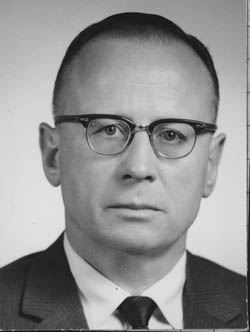
If you do a search for Cecil Seronsy, who wrote a book about Daniel that I checked out of the library and referred to in an earlier post, this blog is the #8 item--perhaps it will be higher after this post. Here is the #1 item; the contents of five boxes containing the academic and personal effects of the man's life. I like the photograph. This country was once full of people who were carrying that same basic style, for better or for worse. They're all pretty much gone now. The Daniel book was the only one Seronsy finished, at age 59. The flap on the back of it states that the professor is at present engaged in preparing a book on Shakespeare, but evidently this was never completed. He wrote his PhD thesis on Daniel also. Maybe scholars do look over this guy's class notes from 1962 or his masters-degree course papers from the 1930s. It isn't really sad in itself any more than life is sad. I think it is nice that all this stuff was preserved. I bet they threw him a swell party in '73 when he retired, with lots of drinking and smoking and literary references, who knows, maybe a few pretty English major girls in bell bottoms were there too. Who could ask for anything more?

Saturday, May 23, 2009

Samuel Daniel's Cleopatra--Part III

I noted that the incident with Cleopatra's hoarding of the jewels and Seleucus's revelation of this to Caesar was imitated in Shakespeare, but the scholarly materials note that the episode was taken straight out of Plutarch, which I had not remembered.

(III. ii, 781-7) Some good lines by the chorus:

"But is it Justice that all wee
The innocent poore multitude,
For great men's faults should punisht be,
And to destruction thus pursude?
O why should th'heavens us include,
Within the compasse of their fall,
Who of themselves procured all?"

The murder of Caesarion, Cleopatra's teenage son by Julius Caesar, by his nominal cousin Augustus, or his men, is often left out of these Cleopatra dramatizations, but it is included here, where it is claimed that the servants betrayed him.
I note again here that Daniel's (or 'this guy's, as I was still calling him) lines are pretty darn good. Self-contained, easy familiarity with and mastery over the language and so on. He was a real natural.

The speech of Caesarion related by Rodon (his tudor) in Act IV attempting to console Cleopatra, as well, doubtless, as himself, on the loss of their kingdom with a reasoned argument about the insignificance of human troubles and the indifference of both Gods and fates to all anxieties, I actually found affecting(. ll.1040-1):

The justice of the heavens revenging thus,
Doth onely satisfie it selfe, not us..."

Though the dialogue in this play consists primarily of characters alternating long speeches, it is still much shorter than anything Shakespeare has. I am listing this as a virtue, but apparently it interested me at the time.

(IV 1142-5) Though she is nearing her own end, Cleopatra has not softened her position regarding base men:

"Words are for them that can complaine and live,
Whose melting hearts composd of baser frame,
Can to their sorrowes, time and leasure give,
But Cleopatra may not do the same..."
This same soliloquoy I think is a bit overlong however. Wishing for death. Lamenting over the means to do it. We've all read it before. The point was made.

Not to dwell on negativity however, I like the chorus. It reminded me of my old school at the time, in a haunting sort of way that I guess I liked being reminded of, though the vision I have in my mind now is of night there, which is sometimes beautiful and reassuring but is just as frequently eery and even atonal. I thought it would be interesting if they would do this play outdoors on the quad, which they sometimes act plays there, either under the reassuring or the eery sky.

(V, i, 1350-4) DOLABELLA:

"And O, if now she could but bring a view
Of that fresh beauty she in youth possest,
(The argument wherewith she overthrew
The wit of Julius Caesar, and the rest,)
Then happily Augustus might relent..."

This isn't much of a post, but I am going to pull out the exhaustion excuse for the 3rd time this week. I am just jittery and I lack concentration. The computers and the whole modern system, I think, have finally broken down my mind completely. We're getting very close to Berlin in '45 territory now. My wits have been pretty much bombed flat, the walls of my cranium are about to be caved in by tanks and all that remains is for me to just submit the whole accumulated mess to the care of the invading armies and remake my entire being in their image.

Tuesday, May 19, 2009

Daniel's Cleopatra Part II

My first note is unintelligible now so I hope it wasn't good.

The structure of this work, which it seems was never intended to be performed as a drama, is that the different characters alternate long soliloquies, often alone, with the commentary of a chorus wrapping up each act. One interesting choice in light of the many interpretations of the story that followed is that the action begins when Antony is already dead and Cleopatra's cause already lost. This means there is a great emphasis in the play on her acknowledging and confessing the faults that led to her downfall.

Some sample lines (Act I, 105-112):

"Luxuriousnesse in me should raise the rate
Of loose and ill-dispensed libertie.
If it be so, then what neede these delaies?
Since I was made the meanes of miserie:
Why should I strive but to make death my praise,
That had my life but for my infamie?
And let me write in letters of my bloud
A fit memoriall for the times to come..."

As we can see, early in the play Cleopatra is still aiming low. The poetry is certainly more than passable, it strikes me. Besides the technical proficiency of the meter and word choices there is a very nice expression of character embedded in these eight lines, as the speaker starts on the subject of her own extravagance, in the middle seems to seek to adopt a more moderate plan of action, and then swings back to extravagance at the end.

(I, 163-4) Cleopatra's lust played up:

"My vagabond desires no limites found,
For lust is endlesse, pleasure hath no bound."

The implication in this play is that Cleopatra did not really *love* Antony, certainly not in the ideal sort of way in which love is defined in pastorals and other "romances". Much is made of the heroine's age as well, as if she were one of the "cougars" so infamous in our own time, preying on a hapless victim, though in reality he was around 14 years older than she was and she was around 28 when they first became involved with each other. (II, 262-8) (Octavius) CAESAR:

"Free is the heart, the temple of the minde,
The Sanctuarie sacred from above,
Where nature keeps the keies that loose and bind.
No mortall hand force open can that doore,
So close shut up, and lockt to all mankind:
I see mens bodies onely ours, no more,
The rest, anothers right, that rules the minde."

I thought the temple image was well-expressed, and shed some clarity to me as well on the psychological importance of sacred places to men.

(II, 331-4) PROCULEIUS (a messenger quoting Cleopatra to Caesar, regarding the latter's all-conquering instrusiveness):

"What, must he stretch foorth his ambitious hand
Into the right of Death, and force us heere?
Hath Miserie no covert where to stand
Free from the storme of Pride, is't safe no where?"

Caesar credits her refusal to surrender her person to him, a point of emphasis in all the older versions of the story, to the influence of her noble blood, and after admonishing his lackey not to try to fathom the hearts of princes, explains (II, 390-4):

"Princes (like Lions) never will be tam'd.
A private man may yeelde and care not how,
But greater hearts will breake before they bow.
And sure I thinke sh'will never condiscend,
To live to grace our spoiles with her disgrace..."

Act III features a dialogue between two philosophers, Philostratus and Arius, remarking on the various human frailties that have brought the situation depicted in the play to such a dire pass. Philostratus finds the failure to face the reality of death and the overvaluing of life and its illusionary pleasures to be at the heart of the matter, and he is certainly not alone among commentators on the life of Cleopatra. He does get off one of my favorite Britishisms though in line 485, "And yet what blasts of words hath Learning found/To blowe against the fear of death and dying." I love that expression, "blasts of words". He goes on to add, in lines 499-500, perhaps obviously but disapprovingly nonetheless, "Who doth not toile and labour to adjourne/The day of death, by any meanes he can?"

(III 514, 519-20) Arius takes over:

"What feeble footing pride and greatnesse hath...
How nothing with our eie but horror meetes,
Our state, our wealth, our pride and all confounded."

The syntax here is very reminiscent of Shakespeare.

(III 545-6; 49-54) Some lines on one of my favorite topics, the rise and fall of nations:

"That no state can in height of happinesse,
In th'exaltation of their glory stand...
Thus doth the ever-changing course of things
Runne a perpetuall circle, ever turning:
And that same day that hiest glory brings,
Brings us unto the poynt of back-returning
For sencelesse sensualitie, doth ever
Accompany felicitie and greatnesse."

There is a second scene in the third act where Augustus Caesar and Cleopatra have a face to face confrontation, at which time Caesar refers to Cleopatra's people--whether he means the Greeks or the Egyptians is not made clear--as having long harbored enmity towards the Romans, which they are reaping the reward of now. Well, here is the quote (III. ii 629-30):

"Love? alas no, it was th'innated hatred
That thou and thine hast ever borne our people..."

I had never much considered that such a degree of enmity--and innate enmity at that--existed between these particular peoples; at least in the literature I have read one doesn't get the same feel for it as that between, say, the Romans and the Carthaginians, or the Celts, or the Veians, or between the Sicilian Greeks and the Carthaginians/Phoenicians, everybody and the Persians, etc. I wonder if this emotion is something Daniel gleaned from his deeper studies in these matters, or if he was trying to embellish the always elusive character of Augustus Caesar.

Monday, May 11, 2009

Cleopatra--Samuel Daniel (1594)
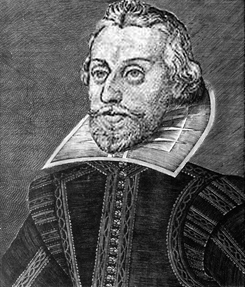
This is a closet drama in verse. Samuel Daniel (1562-1619) was considered an important poet in his time, which was not a weak one for poetry. He was right in the thick of the literary scene/cultural dialogue, what have you, that included Spenser, Sidney, Ralegh, Marlowe and Shakespeare, and he had the patronage of the queen. There is even a "tradition" that he was named Laureate, which in those days was a sinecure hotly contested among good poets for the income that came with it, upon the death of Spenser in 1599, though his monographer Cecil Seronsy (professor at Bloomsburg [Pa] State College [now University] 1967) says this is "extremely doubtful"; the position went to Ben Jonson instead. His biography makes for a somewhat interesting comparison point with that of Shakespeare, who was his exact contemporary. Of his boyhood, "nothing is known". There was a rumor that his father was a music master, though "no evidence has been found to support" this claim. Once he turns up at Oxford he begins to leave more of the paper trail that Shakespeare did not, mainly through publications of his poetry. It also appears that, like Spenser and other poets, he was received by and moved comfortably among people of rank and wealth, though he does not appear to have had much cash of his own. There is a letter to him from an unknown correspondent from 1582 that makes note of his retiring personality, which is the sort of thing we so desperately want to find about Shakespeare or his puppeteer. It is known that he went to France and Italy for five years and delivered dispatches from the ambassador to Paris at Windsor Castle. Skimming ahead there is an impressive amount of contemporary information available about the progession of his literary career, though his family circumstances and background are never made clear. As noted earlier, he appeared to spend much time as a guest at various wealthy people's estates, which sounds like nice work if you can get it, especially as he does not appear to have been particularly socially entertaining. Daniel had quite a bit of early success before the Shakespeare juggernaut got really rolling so that although he is only two years older than Will he often seems to be categorized as a predecessor to him as much as a contemporary, particularly as his Cleopatra is mostly thought of now as one of the source materials that influenced the later Antony and Cleopatra. Interestingly Daniel made a revision of his play in 1607 after Shakespeare's had appeared which Professor Seronsy speculates was "possibly under the influence" of the later and superior version.

This Cleopatra, a verse tragedy in which the characters make alternating long expository speeches, is pretty good read as a long poem. We think--or maybe it is just I who tend to think this--that the quantity of really good-quality English verse produced over the last 700 years is shockingly small, but a lot of these old forgotten poets who wrote thousands of lines and told all manner of accounts through the poetic medium are not bad, though obviously they lack the power and consistent metaphorical brilliance of Shakespeare and other major poets. I doubt that many people outside of graduate school can have read this, given the effort I had to go to to obtain a single copy of it. As I will be one of the few people on the internet to have written anything about it at some length, I want to do it as much justice as I can, as it is a worthy piece of literature. Scholars seem to like him. Professor Seronsy's book has a six page bibliography, though the most recent edition of Daniel's actual collected works (5 vols.) is listed as 1896, and the text is "frequently untrustworthy". The University of Louvain published an edition of Cleopatra alone in 1911, which apparently was unobjectionable. In any case I couldn't find any of these editions, or any other ones, available either for sale or in a library that I had access to. Thanks to the wonders of the Google book project however I discovered that this play was printed in full in Volume V of the 1964 King's College of London compendium of the Narrative and Dramatic Sources of Shakespeare. Though I could have then read the play on the computer if all else failed, I haven't taught myself to like doing that yet, and I found someone who was actually selling a copy of this book, which is most handsome and impressive in that very self-important 1950s and 1960s university press way, as you can see below:

This series has seven volumes in all, "in which the major sources and analogues of Shakespeare's plays will be reprinted, with discussions on the way he used them." And you thought my blog was a labor out of all proportion to any readership on which it might ever produce a significant effect. Volume V is dedicated to the Roman Plays. Among the materials included are 6 of Plutarch's lives (in the North translation), Pescetti's Il Cesare, Cinthio's Cleopatra, the anonymous Caesar's Revenge, and the Countess of Pembroke's Antonie, along with Daniel and many smaller excerpts from Roman, medieval and Renaissance authors.

Having gone on so long with my introductions, I think I will hold off on my notes on the actual play until the next post(s).

Some might be curious about the St John's College paperweight shown in this photo. It was a graduation gift from a family member who obviously did not foresee the coming digital revolution and obsolescence of books and paper any more than I did. I actually got two St John's College paperweights as gifts, the other one was a glass star with the seal of the college cut into it. I don't know where that one is now.

Sunday, April 12, 2009

Antony & Cleopatra Part 2

I have a poor edition of the collected works of Shakespeare for someone who tries to present himself as whatever it is I hope to present myself as, something called the Cambridge Edition Text of 1936, with "The Temple Notes" which are quite the most useless notes I have ever encountered, and illustrations by the 1930s Socialist-Realist artist Rockwell Kent. I actually don't mind Kent, but I have been present when others of great knowledge and strong opinions regarding art and the world in general have sneered at the drawings and critical writings of this artist, and thus suspect that any project which had an association with him must smack of second-rateness through and through. This edition doesn't even seem to agree in its scene breaks with most of the ones in common use, Act III of Antony and Cleopatra for example having 13 scenes in this book, which does not appear to be the case elsewhere. I really ought to get something better, at the very least something more attractive, or less cumbersome, or with easier to read print (this book having the dreaded old-fashioned small print double-column type). Currently I am not getting even a modest visceral thrill from pulling down and fondling the family volume of Shakespeare, something of which sort I think should be the case to some degree in the life of a person such as I am.

Act III Scene xiii: ANTONY: "I found you as a morsel cold upon
Dead Caesar's trencher; nay, you were a fragment
Of Cneius Pompey's; besides what hotter hours,
Unregister'd in vulgar fame, you have
Luxuriously pick'd out..."
These are some cold words. Wherever we love with any especial fervency or significance to ourselves, we can never forgive the object of our passion for coming to us in any but a completely undefiled state. So long as our beloved is wholeheartedly engaged in attending to our happiness, and ignoring all else, we can forget these harder sentiments, but they must ever rear themselves at the slightest neglect or other disappointment.

Act IV Scene iv: Beautiful line:
ANTONY: "This morning, like the spirit of a youth
That means to be of note, begins betimes."

Artist's Conception of What Cleopatra May Have Looked Like. That's what it says anyway. Obviously I would be content enough to imagine it were so. Antony does not really come off too good to me in this play, either. I guess I just can't warm up to him. His character is kind of an arrogant jerk, all the while he's getting worked over by both Cleopatra and Octavian. This play is usually listed with the tragedies, so I assume the title characters are supposed to have tragic flaws. Cleopatra is pretty much synonymous, fairly or not, with sensualism and vanity, and I can't see that Antony's downfall is morally the result of anything more direct than that. Being more obtuse than the people one is contending with does not seem to qualify one as a tragic figure.

ACT IV SCENE xv, CLEOPATRA: "...then is it sin
To rush into the secret house of death,
Ere death dare come to us?..."

A lot of legendary Romans fell on their swords, or had swords thrust into them by others, in a comparatively short period of time, as noted above: Pompey the Great, Caesar, Cicero, Cato, Antony, Brutus. Whatever one thinks of these people, that was by our standards a considerable collection of intellect, energy and talent to be consumed in internecine struggle, though of course their involvement in that struggle was in most cases what caused their great abilities to attract so much attention and renown. Still, the general attitude of Roman society at that time certainly was not that talented people were such precious resources as to be unexpendable. Indeed, the greater ability you showed in some instances, the more likely you were to pass a significant portion of your life with that life imperiled. This seems to be a common trait among well-developed aristocratic castes, the to bourgeois sensibilities shocking indifference to exposing the most brilliant, capable and highly refined young men to a casual death, the willingness to do which, is, I suppose, expresses in the plainest manner what is known as a sense of tragedy, which most intellectuals seem to consider a very desirable thing to possess in one's person.

Millenial Generation Antony and Cleopatra, I Presume. Chicks like this, you can argue, aren't worth getting worked up about, but I have always sensed that figuring out how to get in favor with this general type would have been the key for me, given the era in which I lived, social environment I had some possibility of hovering around, etc, to have had a more satisfying social and romantic life in my youth. Of course I never came close to figuring it out, and women like this, who would seem to be the nearest thing I have to a natural reasonably attractive, opposite-sex peer group, always held me off at such a great distance that I am not sure I managed to get the ball even past midfield in my entire youthful career.

ACT V SCENE ii, CLEOPATRA: (Good example of poetic power) "...If your master
Would have a queen his beggar, you must tell him,
That majesty, to keep decorum, must
No less beg than a kingdom: if he please
To give me conquer'd Egypt for my son,
He gives me so much of mine own as I
Will kneel to him with thanks."

Later in the same scene, more good lines, also from Cleopatra:

"...saucy lictors
Will catch at us like strumpets , and scald rhymers
Ballad us out o' tune: the quick comedians
Extemporally will stage us and present
Our Alexandrian revels; Antony
Shall be brought drunken forth, and I shall see
Some squeaking Cleopatra boy my greatness
I' the posture of a whore."

I am guessing that Shakespeare, being an actor and writer of dialogue, would have spoken in a somewhat similar manner to that in which he wrote. One of my great mistakes in undertaking to be a writer was to completely discount the relation between one's talking, in which area by the way I am wholly incapable, and one's writing. Given enough time--weeks, months--one can untangle and hammer out one's impressions and thoughts enough on the page to make a somehwat coherent idea, but the problem of course is that the person in the real time of life who requires such an amount of time to make any sense of the impressions he has and the people who speak with him is simply going to have a very constricted experience of life and other men, and certainly cannot be a novelist, which requires its practitioners to comprehend and record the world at a rate somewhat akin to the pace at which it actually happens. The person such as myself who carries single assertion or exchanges from much larger and forgotten conversations about in his mind such as I do, and in some instances comes upon a potential response to an assertion made by the other 20 years--20 years!--after the actual assertion was made in real time is going to be at a real handicap in trying to create a fictional world that has enough life and fullness in it to be interesting to any reader.

Thursday, April 02, 2009

Shakespeare--Antony and Cleopatra (Part 1)

I was always partial to the Roman plays. Not that everyone else isn't, or that I hold the other ones in any lesser esteem, but these have always been especial favorites of mine, along with the Henrys. Possessiveness, jealousy, haughtiness, exclusivity, and the like, are conditions to which many are susceptible where Shakespeare is concerned, and as these are attitudes which I am particularly ill-suited to carry off well, I try to keep a certain emotional distance from most of the more beloved and contended-for plays, feeling, I suppose, that they can never really be mine anyway. The Roman plays, such as this one and Coriolanus, even Julius Caesar, seem comparatively to inspire a lower level of general intensity and rapture. If the Bardosphere could be conceived as a beer garden, I would likely be sitting at one of these stately but relatively sedate tables--perhaps alongside a Victorian era faux-ruin of some Roman gate or other--at a safe remove from the tumult, high-spiritedness and glamour of those devoted to the Dane, the Star Crossed Lovers, the Crookbacked Usurper or other of the grittier and more naturalistic heroes of the repertoire.

When I first looked into it some years ago, I thought Antony and Cleopatra just as good as any of the other major tragedies, with the exception perhaps of Hamlet, which doesn't resemble the other plays in the same ways that most of them do each other, and that opinion was not shattered, and was if anything enforced, by this latest misreading. The writing, the construction, the economy, the characterization, is so very expert and smooth, that one almost has the impression that the author's mastery of this particular form, and way of understanding the great issues of man's existence, is so thorough, that he is not properly challenging himself, or the audience, by insisting on pressing on to a more dangerous and scary level, which, if we have been properly bred up as thinkers, is what we crave most.


What would become of a person like Shakespeare today? Who would he hang out with? In what form would our noticing them, assuming such could even exist, consist of? Surely poetry in the contemporary world would strike a man of such dominating talents as too sluggish, effeminate, devoid of genius and culturally irrelevant a pursuit to be worth taking up; he would naturally want to direct those talents to some contemporary arena that was worth dominating. Would he find one though? Some have suggested that this class of person manages hedge funds or directs scientific research now, as if genius were of such a general and unsuppressible quality that anyone who possesses it must be apparent, and easily direct and establish itself it whatever area of activity currently most requires and rewards it. This reminds me a little of the American sports commentators who used to opine that if Allen Iverson and Michael Vick had been adopted or kidnapped as infants and raised in France they would be the greatest soccer players in the world because of their innate athleticism. I used to wonder if there was not something in this, that business and technology were dynamic, and the literary and teaching professions moribund because the former had siphoned off all the exciting talent that used to fill prep school faculties and the great urban literary scenes of the past. I was even convinced for a time that the qualities of mental talent, energy, and personality in the truly successful author were generally the same as those in any successful man of affairs, and if such men were to direct their fervor and appetites and primary means of understanding the world towards literature rather than commerce, etc, that humanistic studies and accomplishments would be flourishing again, and the masses as eager to idolize and follow the lead and outlook of these great men in matters of learning as they are in matters of economics. But obviously there is something more to it than just that. I will go more into that another time.

My commentary the other day on Mark Antony was of course preposterous. I am casting grand judgements on his abilities and character as if I were the one who was one of the great figures of my generation, and he the typical slavish sort of fellow. That is part of this game of pursuing literature that people like me play, the reader little less than the writer to a certain extent has to imagine himself raised to a level of equality, in some instances even superiority, to the subject under contemplation, however comparatively exalted. Success in writing or any art is to a great degree success in pulling off this conceit of elevation, making some ill-fed debtor scribbling lines in a garrett possess a historical stature equal to or greater than that of an emperor. If Antony was lacking of the finest qualities, what does one say of Lepidus then? You will remember he was the unfortunate third member of the triumvirate along with Antony and Octavian, who was snuffed out rather quickly with apparently little exertion and without arousing any protest from a potent camp. Shakespeare presents him as a loser and weakling whom the other prominent Romans are comfortable insulting to his face and making plans to dispose of as casually as they would make plans for their next orgy. We all know and many accept that if the comparatively weak put themselves in the way of the strong and don't recognize their inability to contend and attempt to resist, it is going to end badly and humiliatingly for them. I think people with any kind of well-developed spirit like it in high art productions when weakness and inferiority in men are not tolerated and punished severely. It is fearful, but also genuinely exhilirating to know that real demands might be made of your brain and character, failure to live up to which will cost you not merely your life, but any illusion of respect from your countrymen, your friends, and your foes.

This play does have two of my favorite classic Shakespeare quotations, the "infinite variety" speech, which is of course about Cleopatra, and the "O happy horse, to bear the weight of Antony!" tribute to his godlike appearance and bearing.

Though I was trying to read this more closely and seriously so as to glean some insight as to what our author is really saying, I still came to the conclusion that he was in fact emphasizing the sexy parts at the expense of more serious geo-political analysis, and that that was actually the stuff he liked the most about the story. It can't possibly be true, but it was what I kept thinking, after my ever too easily entertained misled manner.

Octavius Caesar I thought comes of rather badly in this play compared with his depiction in Plutarch (who always refers to him as young Caesar), where it is difficult, given the pre-occupations of that author, not to feel some admiration for him. In that book his extreme youth--he seems to have been in his early twenties at most--lack of military credentials compared to all his rivals, and the manner in which most of those same did not take him very seriously when this crisis broke out are much more palpably felt. Yet he ended up the last man standing atop a large mound of very famous corpses and ruled the Roman Empire pretty much unmolested for the remaining 40 years of his life. In Plutarch he is presented as calm, prudent, possessed of self-control, steely of purpose without being given over to the bombast and grand gestures of the previous generation. Obviously much is left out of the Plutarch account, such as who/what sort of men formed this young man's army/base and how did he win their support? but I am simply noting an impression. Being a dramatist and a man of the hottest spirits both of body and mind, Shakespeare most likely found his dry, only too successful pragmatism and efficiency boring and cold. Overall the reign of Augustus has not offered much batter that writers wanted to make confections of compared either to his predecessors or successors.

Cleopatra is called a whore on several occasions in the play, and not in a means meant to induce sympathy. (Caesar: "...He hath given his empire up to a whore...", etc). Whether the result of this affair was a real, and if so staggering shift in the whole course of human history, or its significance has been overblown by art, how could Antony have flown the battle and given up all, including in some sense a last remnant of the spirit of the old Rome which in literary accounts he is often made to embody, for a woman? Yes, I would probably do the same, but even I would know it was a stupid thing to do. I wrote at the end of Act III, 'a sad juncture of the story. Antony (& C) are diminishing to ever more human dimensions, as is the essence of tragedy though in S. 'human' is invested with grander meaning than usual. Enobarbus only voice of accurate perception,' etc.

Some other notes:

On Antony, "that would make his will Lord of his reason" I wrote 'contrast with Iago.' Apparently I took the latter as taking the opposite approach.

I noted again that the 'language in this one superlative' next to "The itch of his affection should not then have nick'd his captainship...half to half the world opposed...leave his navy gazing."

Antony 'always underestimating young C' next to "...he wears the rose of youth upon him, from which the world should note...his coin, ships, legions, may be a coward's, whose ministers would prevail under the service of a child as soon as i' the command of Caesar..."

I'll have to do a short second post on this.

Friday, March 27, 2009

Mark Antony ConsideredOf all the Great Romans of his time whose exploits and persons are written about in Plutarch and other ancient authors, Julius Caesar, Cicero, Cato the Younger, Pompey the Great, even the arrogant and ill-fated Crassus, Mark Antony was always the one I found least impressive. My favorite was Pompey the Great, who in his youth and early manhood was the golden boy of this generation, and had the misfortune, as it were, to live too long. Cicero came off as an intellectual who foolishly got mixed up in disputes with the wrong crowd without having anybody at his own back; in his natural sphere of action he was a singular talent, however. Cato had one of the most remarkably developed, and disciplined, consciences of all time, wholly free from any taint, so far, it seems, as he could make out according to his own rigorous processes, either of impure motive or illusion. He went to his death, the books say, with the edifice of his mind unbroken in all its parts, and raised even then to the most complete and superior state it had ever to point attained. Antony, on the other hand, seemed to lack any particularly distinguishing spark of mind, an able, perhaps even likable, second banana, and manager of campaigns, enterprises, etc, in cooperation with or under the direction of men of greater talents, but intellectually rather out of his league at the extreme levels of society, culture and politics where he ultimately found himself. His end, at least as it has been traditionally conveyed, was pitiable. To fall under the spell of sensualism so recklessly! I do not begrudge indulgences in such exertions if one is of an irresistibly lusty constitution, indeed I stand in awe of them, so long as the sensualist does not deplete his strength, that quality which is the source of his greatness, in his debaucheries. The first Caesar, if legend is to be believed, came upon the teenaged Cleopatra, infused her with his love, and progeny, and one imagines contributed to the formation of her ultimate character that was found so marvelous and attractive, and returned to the arenas of war and politics twice as robust, which lends credence to the theory that such kinds of sexual affairs, where a man acts as a sensual and worldly teacher to a young girl/woman, are generally invigorating to men of parts at least and a spur to dynamic actions and achievements in the public sphere. Antony meanwhile found himself infatuated with a woman whose character and intellect were already as it were formed beyond anything he could contribute further, and his hopeless determination to defy this limitation drained him of all his force and heat. Mark Antony himself does not stir up much more feeling in my imagination, so I will write something of my feelings about the Roman world generally. Because this blog is not about thought of course, but is about the struggle to give feelings something of the form of thought.

On the rare occasions when I dare to peek at the writings of modern scholars with a serious background in Greek or Roman studies, I usually become depressed within a few sentences, so great, I discover, is the gulf between any real knowledge of those times and peoples, and what the general mass of the public has been told about them. As seems to be the case in most areas of study in our times also, at the same time that the knowledge and work of a tiny cadre of experts is vastly superior to that of generations of predecessors and amateurs in their fields, the level of accurate, semi-thorough basic knowledge in these areas among the ranks of the nominally educated but non-expert seems to be dropping. Hence the scholarly understanding of say, the Latin language, its origins, the translations of its literature, etc, are heaps more accurate, supposedly, than they were in 1750, despite the circumstance that a more than working knowledge of Latin was taken for granted in all writings aimed at educated people at that former period, and hardly anyone who is not a specialist could decipher so much as the Vulgate Bible in it today. When John Stuart Mill's father set out to teach him Greek at the age of three, there was not even any such thing as a Greek-English lexicon (that did not appear until the 1840s or 50s), the father himself had to serve as his own lexicon, with reference to a Latin-Greek dictionary if he happened to forget the meaning of one of the words in Homer or elsewhere that only has one or two known appearances in the whole of Greek literature. With such handicaps it is doubtless certain that Mill and his father knew much less about the real nature of Greek history and culture than modern research reveals to us. The question of course is why the general dissemination of knowledge such as the Greek language, which would appear to be so much easier to teach to a far wider range of learners now, and would seem to be no less useful a foundation for acquiring all sorts of other knowledges and cognitive skills than it ever was, appears to have actually declined among the identifiably bright? Surely it is not taught well enough in most instances, perhaps not infused enough with the right spirit/conviction when it is competently taught? I suspect that if one really learned the languages, and really read the literature, all of the things--music, economics, women's status, history--it is argued, that an education based solely on reading, leaves out, you would find yourself as immersed in the actual nature of these subjects about as accurately as it is possible to get. The more knowledge you have, the more facts you know, the more other knowledges you will find yourself coming into contact with, the more insights are likely to come to you. Far from ignoring or closing off aspects of Greek life or the Greek mind that lay outside the acceptable narrative of Greatness!, Greatness!, Greatness! the interpretations and conclusions of former scholars, their understanding regarding these matters concerning the whole of Greek or Roman society I suspect are underestimated, because they understood certain aspects of life differently than we do, and took others for granted that we don't. We, or I should say many modern scholars, seem to make it a point of honor not to allow themselves to take this into consideration.

This reminds me of the 13 volume set of Will Durant's history of civilization, which we used to have in our house, I must confess, and which books I have the general impression are laughed at by serious people, the truly intelligent, and that whole crowd, you may or may not know who they are. Anyway, it always seemed to me that if one actually read all the books, whatever the interpretations of the writers, exposure to the facts alone, which for the most part I would think are not controversial, would still make one more knowledgeable about history than probably 99% of the population--even if only 97 or 98 that is still a decent start--but I guess the argument is, everyone who is actually intelligent knew everything in the Will Durant book when he was 12, and understood it better than Will did, so the idea that sitting in your veneer-paneled basement thumbing through such books is going to do anything meaningful for your intellect is a cruel, even borderline sadistic joke to be perpetrating on the earnest American masses.

If I still had those Will Durant books I would have looked up what he said about Mark Antony and Cleopatra for you, but I don't have them.

Friday, March 20, 2009

Cleopatra Overview

If you still lie awake at night thinking about the series I did a couple of years back on the legend and literary legacy of Joan of Arc (Part 1, Part 2, and Part 3), you are in luck, for now I am going to take on, only with that much more blogging experience, her primary feminine rival for supremacy in the Western artistic imagination, the fantastic and doomed last queen of Ptolemiac Egypt.

I have started this paragraph four or five times and each time completely contradicted one of the assertions I had made in the draft before. As far as posterity is concerned Cleopatra of course is all about one thing--i.e., not her ideas about effective governance--that I am clear on, though where to go with my story once I have satisfied myself on that matter I am finding more difficult to do than it is with the likes of Joan of Arc. Joan talked to God, and took on the persona of a divinely inspired figure, which is easy to prattle on about. One may not understand it, but one has an idea of what its form would probably be like if he did understand it, and that without a heavy blow to one's self-esteem. Cleopatra, in her finest manifestation, took on the persona of an actual goddess with no pretension to any other but earthly concerns, and in a convincing and seductive manner. This should be a much more recognizable and readily comprehended human experience, even in our much-sanitized modern version of life. I am only comfortable trafficking in abstractions however. Coming thus near to such circumstances of real existence that call out for acknowledgement only causes my mind to tremble.

I have the fortune, good I think, to have not seen any Cleopatra movies such as may have influenced my impressions of her too strongly before reading the more classical literary material. The most salient impressions made upon me from the literary accounts are her intellectual superiority--in modern terms we are talking multiple Rhodes/Fulbright scholarship material, worshipped by all her professors as the penultimate dream student of their career; her apparently total comfort with employing sex full-on as a weapon in her political and social maneuvering (maneuver, by the way, is on my list of the hardest common words to remember the spelling of in the English language; I have to look it up every time), her hasty flight in the decisive battle of Actium, which incredibly drove Antony after her, abandoning the entire Roman Empire to the unflappable young Octavian (whom Cleopatra could not stir to wild desire--my theory is that, Octavian being younger, and of a more ruthlessly pragmatic generation besides--generations decidedly having temperaments--the magic of her wiles had prematurely run their course), and in the end her ultrafeminine Madame Bovary-like determination to commit suicide in as painless and unbloody and undisfiguring a manner as possible. I will elaborate on some of these points below.

1. The main account I am aware of of how brilliant she was, in the true tradition of the heir of a great high culture in its mature and declining stages (in her case, Greek), which produces a staggering overall sophistication of both mind and person, as well as sensual awareness, comfort, and ultimately, heedlessness, in anyone who is raised in such, is from Plutarch: "...her actual beauty, it is said, was not in itself so remarkable that none could be compared with her, or that no one could see her without being struck by it, but the contact of her presence, if you lived with her, was irresistible; the attraction of her person, joining with the charm of her conversation, and the character that attended all she said or did, was something bewitching. It was a pleasure merely to hear the sound of her voice, with which, like an instrument of many strings, she could pass from one language to another; so that there were few of the barbarian nations that she answered by an interepreter; to most of them she spoke herself, as to the Aethiopians, Troglodytes, Hebrews, Arabians, Syrians, Medes, Parthians, and many others, whose language she had learnt..." (Life of Antony).

2. Her arrival in a barge in the person of Venus to meet Antony, and the spectacular contrivances of lights and settings for his entertainment was one of the top 100--perhaps even top 50, or top 25, if episodes from the Bible are not included--magical moments of all antiquity for sensitive and imaginative types in all ages and in all countries. After this, Antony, Plutarch noted, "...was very desirous to outdo her as well in magnificence as contrivance; but he found he was altogether beaten in both, and was so well convinced of it that he was himself the first to jest and mock at his poverty of wit and his rustic awkwardness." Whether Cleopatra was "beautiful" or not is one of the silliest debates that has ever existed in the history of knowledge. If the stories as they have been passed down through history have any truth at all in them, then unless we are talking about people who know nothing of what makes men fall into sexual infatuation with women, which is that some quality in the woman is strongly persuading them that they are detecting some beauty so rare and extraordinary in the object of their desire that it will be as death to them, render their entire lives pointless not to possess it, it is fairly obvious that she was beautiful, and an analysis of the particular fineness of her features, skin texture, etc, is not relevant. I think there is a tendency in our time to imagine that men, especially powerful ones, in the distant past, were able to take advantage of women beneath them in rank whenever they felt like it, and that therefore the type of love-infatuation that we associate mainly with desperation, men who cannot get a woman to come within twenty feet of them and so forth, could not have been possible. Caesar and Antony had legions of slaves and conquered women and eager and willing daughters of the higher ranks of the plebians available at the twitch of a finger. Why would they waste valuable months to loll in bed with Cleopatra, if not for some geopolitical, or economic motive, which is our default real explanation for everything important that has ever occurred in human history? Egypt was not geopolitically insignificant, and yes, Rome was interested in taking it over--at that point they had just taken over a hunk of Britain that was thousands of miles from Rome and populated by what were by the standards of the day quasi-savages, so what weren't they interested in taking over? And yes, I know there were large deposits of tin there--but that it happened to be (literally) where the action was for numerous members of the Roman elite between around 50 and 30 B.C. seems to have been largely attributable to Cleopatra. Once she died the vacations and length of visits to Alexandria by emperors and leading generals seem to have dropped off dramatically, though the city still remained a dynamic intellectual center, particularly in mathematics and astronomy, and one assumes still housed a decent population of sophisticated, beautiful, culturally Grecian babes.

3. Even the horrors of battle in World Wars I and II somehow do not quite compare in the reading to accounts of ancient Greek and Roman warfare. Perhaps this is because the ancients were more effective writers, but I think too that the purer impression of the brutality of nature that is in them--the more personalized slaughter, the circling vultures, the swirling dust, the images of steel turning in a hapless body, the vastness of the plains and seas and the comparative...scale of human population and enterprise--may act upon the imagination more vividly than the often numbing and rootless, disembodied and anonymous descriptions of modern mechanized carnage. In any case it is not hard to imagine that a woman so highly refined as Cleopatra might not have much appetite for an all out Roman-style bloodbath, hence her hasty Flight from the decisive fight at Actium. It is reiterated in all the sources that her greatest dread, (and on the other side, the fervent desire of Young Caesar, i.e., Octavian) was to be taken alive and paraded in triumph through the streets of Rome. I suppose it is an indication of how thoroughly developed her nobility was that such an indignity was truly intolerable, and death welcomed, however reluctantly. Reading through Plutarch, and to a lesser extent Diodorus Siculus (whose sections dealing with this era of Roman history were largely lost), many triumphs are recounted, but it was a very rare occasion that any conquered monarch was captured and paraded alive through Rome. I can only recall one major one, the king of Macedonia when that once-vital nation collapsed before the Roman onslaught in 146 B.C. I believe his name was Perseus. Needless to say, most of his commentators were astounded that he neglected to fall on his sword and submitted to this ultimate disgrace. The account of his demeanor both in his defense of his country, his capture and his parade through the streets of Rome depicted a very indifferent, almost obtuse man who spoke little, ate such meals as were provided him as if there were nothing remarkable about his situation, and otherwise gave little impression of being terribly upset about the fate of his country, certainly, and even, by normal human standards, himself.

4. Cleopatra's suicide by immuring herself in a tower with a smuggled basket of poisonous asps was a stroke of absolute genius for her future life as one of history's legendary women. I find myself looking forward to seeing how the writer/artist/filmmaker presents that scene in every interpretation that comes up. What a way to go, and what a statement about the madness of this particular existence that is a human's lot.

The search for Antony and Cleopatra's tomb, which it is apparently believed by some respectable scholars is still lying out there somewhere in a state to be found and identified, is one of the major ongoing quests in the ranks of big time archaeology. Actually there was some excitement on that front recently, but given that the story seems to have died--I would think it would have been a bigger story than this if it had really turned out to be the tomb--I am guessing that there must have been some conclusive evidence that it was not the tomb. Hopefully, the search will go on.

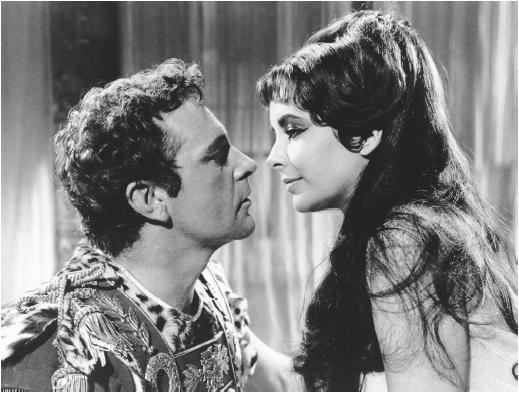
I am not ordinarily a great fan of the legendary celebrity and beauty Elizabeth Taylor, whose picture I have obviously put up at the top of this page, but I liked the look she has going on with her hair, which was a very common way for women to wear their hair when being photographed in the 1960s--frequently in Playboy type publications, it is true, but the French went in for this style, Brigitte Bardot, et al, and my own mother used to wear her hair like this too in her salad days. You hardly ever see anyone wearing their hair like this anymore. Alpha men love it. All those macho film directors and rock stars and cult writers of the 60s, who knew how to handle and turn on beautiful women in ways we don't even believe exist anymore had girlfriends with hair like this. It was the way to be sexy then, and I must say, there was something in it.