Showing posts with label documentaries. Show all posts

Wednesday, January 27, 2021

1965-2016

I need to catch up on a little on my movie posts. As I went through a period where I was watching several extended TV series, I am not that behind (about 18 entries to do)

Bleak House (TV-1985)

Standard 1980s BBC literary adaptation, 8 hour long episodes. This one features the late Diana Rigg as Lady Dedlock and the warhorse English character actor Denholm Elliott as Mr. Jarndyce. It's pleasant enough to watch in the evening if one is too tired to read, especially the parts when they go out to the countryside. This one especially though you should just read the book. There is not much humor in this production at all, while much of the book is a veritable laugh riot, though of a kind that I guess is especially dependent on the author's delivery, which can be difficult to translate to the screen. I was disappointed that the Caddy Jellyby character, one of my favorites in the story, was cut out of this version entirely.


I was struck here, as happens sometimes in pre-1990s films or TV shows with entirely English casts, by how much all of the people on the screen broadly resemble each other in mien, as though the whole country prior to recent times was somewhat closely inbred, as perhaps it was. The strongest sense of this I ever had was when I visited the cathedral town of Lichfield in Staffordshire in 2001, and the faces of practically every person walking through the streets of the town bore a family resemblance to everyone else to an extent which I have never experienced in the United States apart from perhaps a few very isolated towns in the northern parts of Maine or Vermont. Anyway, I felt something of that in watching this movie. Nowadays of course it is fashionable to have diverse casts even in period pieces that are perhaps somewhat traditionally identified with a specific ethnicity. I understand the purpose in doing this, especially in the current climate where a lot of people without long roots in England feel excluded from much in the traditional culture, while the higher points at least of that culture are as yet too significant to just entirely chuck away, though I haven't as yet seen anything in this line that has struck the true tone, in the way that something like the Hamilton play seems to have in this country.

Blind Spot: Hitler's Secretary (2002)

Documentary, really just a series of interviews with an old woman who was, indeed, Hitler's secretary during the last couple of years in the war and was even in the bunker with Hitler and Eva Braun and Goebbels and the whole gang. At first I really did not like this, the subject was an ordinary, not especially brilliant or interesting old lady telling anecdotes about taking dictation from and having lunch with Hitler, and it didn't seem worth doing. It is an Austrian production so I trust their motivation for making it being perhaps more serious than if some adventurous or provocative American or Brit had undertaken the project, though the subject is not that exciting. Some of the recollections of the final days in the bunker when the end was truly at hand do admittedly hold a certain fascination. The secretary (whose name was Gertraud Junge, which I mention because I feel like my comment, while short, is too long now not to) was arrested and held briefly for questioning by both the Soviets and the Americans after the war but was let go to live out her life. She does not appear to have ever married or had children. Unless you have an especial interest in the mundane details of life in Hitler's inner circle, I think this can be skipped. 

The Village (2004)

I did like the aesthetic of this. It is set in a retro Amish-like village in Pennsylvania surrounded by woods, everyone dresses like it's 1850, and the pretty girls in it are all of the pale, blue-eyed, reddish blonde type that I am not going to pretend I don't like. It's an M. Night Shyamalan movie, which means it has a rather stodgy plot with a twist ending that seems like it maybe could have had more of an emotional punch to it but is missing something. I do like that he sets most of his movies in the Philadelphia area, being from that part of the world myself, and I remember thinking at the time--it's been a while since I've seen it--that this film had a very appealing and in some ways gentle atmosphere, though there is also a decent amount of blood and violence in it, and I neglected to write down any specific examples and now I can't remember any. So I kind of liked it, and this even though William Hurt (again!), who is something of a bete noire of mine, was in it, though he is not quite as annoying as an older actor (he was around 53 when this was made) as he was when he was in his 30s and 40s. 

Juliet of the Spirits (1965)


High period Fellini movie, his first in color if I remember correctly. When I watched this (on August 26th!) I paused it in the middle to tweet out "So I am watching Juliet of the Spirits tonight. It is of course end to end weird Fellini stuff, which I like. I've gotten to the point in recent years where I'll be watching one of these movies and I will suddenly be struck with some idea of what it is actually about, but I am 90 minutes into this one, and I am still drawing a complete blank." (this tweet received 66 impressions, whatever that means). I have to admit that the moment of deeper revelation never came, but still, by the mid-60s we're in the heroic era of the postwar European cinema, and the whole effect from the clothes and the camera work and the artistry (there is a flashback to a school play in which the young Giuletta gets burned at the stake by an amazing fire made out of bed sheets blown by fans or something of that sort) is kind of an awesome spectacle in itself. It took me three viewings to get anything out of 8 1/2. I do remember liking the later Amarcord, which must be a little more  straightforward, on a first viewing, as well as La Dolce Vita, though my impression is that the latter film is mostly liked by people who have no first hand experience of partying with beautiful people in Rome or anywhere else and imagine it is artistically meaningful in itself. The 50s films, La Strada and Nights of Cabiria, were less extravagant and had something of the emotional appeal of the neo-realist movies, I think. I should revisit them. Some years back, when my wife used to watch movies with me (she still does once in a while, though none of these, which is unfortunate, because she has a lot of sharp insights),  we started to watch Fellini Satyricon, in which multiple disgusting things happened within the first five minutes, after which she was like "no way", and I was feeling rather sheepish myself, so I don't know whether I have the stomach for that one even if it comes up on my list again.

"Gossip Girl" (Season 1-2007)

When this came up in my game by which I pick which movies I am going to watch, I was not quite sure how to proceed, since the entire 6-season run of the TV show seemed to be specified, which could easily have taken up a year or more of my life to no obvious purpose. As it was, I decided that I would just watch the first season, and that in itself took up a ridiculous amount of time that I really don't have. I don't know now why I didn't just stop watching it. Part of it is that the kinds of things I like and am inclined to watch fall within a pretty narrow category and I feel like I have to endure other things both to be more aware of the world around me and in order to "deserve" an occasional treat of something I like, or think I like, usually for some nostalgic or sentimental reason. I also just have a hard time breaking off watching shows once I have started them unless they make me physically uncomfortable or I get completely lost trying to follow them, which was at least not the case with this. I also kept hanging in I suspect because there is a ton of hauteur with regard to money and education (not that anyone exactly seems that superiorly educated) and the characters carry themselves under the assumption that they own New York City, all of which is calculated to appeal to me. The show is well-cast, I guess. The characters entirely lack physical flaws and empathy for other people, so that it is pretty much impossible for a regular person to imagine himself being friends or have a romantic interest with any of them, which I think might be the point of the show. As if any more proof of the failure of my education were needed, I often imagined in the course of the program that it would be nice if, when I died, rather than going straight to the presence of God to contemplate His Holy Presence forever (as a result of my good behavior), I could be permitted to experience a couple of years of life in the manner of Chuck Bass, the dissolute, amoral, cruel scion of a billionaire who lives in the penthouse of his father's hotel and regularly enjoys threesomes with the property's female employees. I did tweak my system after this to try to address the problem of too many long seasons of TV shows getting onto my list. 
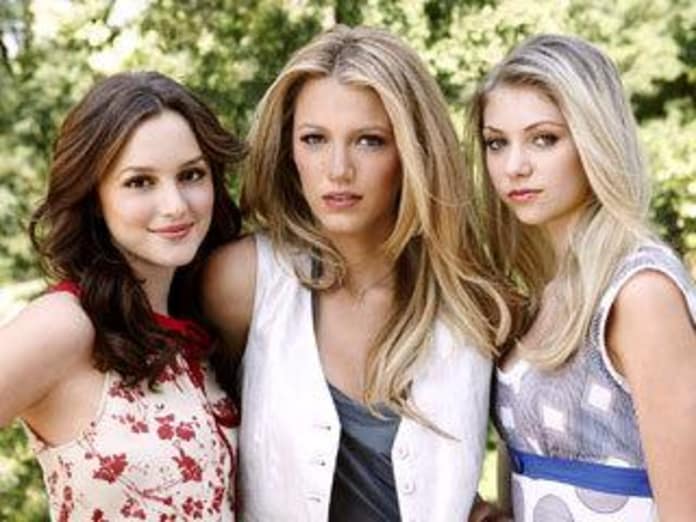

To think that there were 5 more seasons after this.

I am cutting my "Gossip Girl" review short but if anyone wants to have a more in-depth exchange about this program please don't hesitate to reach out. 

The Night of (2016)

One of those modern limited TV series that everyone binge watches nowadays (this was an HBO production) this also takes place in New York, though a completely alternative vision of it from that depicted in "Gossip Girl" and perhaps in some ways just as sensational. This was written by the fairly well known novelist Richard Price, once memorably (to me) described in one of the book reviews as "self-consciously hard" which image has always stuck with me. For the first couple of episodes I actually had confused Richard Price with the Pynchonesque highbrow writer Richard Powers, and was thinking, this is kind of a departure for him, isn't it? but eventually I realized that it was actually this other guy. This is psychologically unpleasant to watch much of the time, as most of it takes place in police precincts and in prison, but it is extremely well made and has a ton of detail. I actually started taking notes on it on my phone while I was watching it, but then I stopped, I don't remember why. Sometimes I am suddenly struck by the urge to do this, and then I am not. Here are a few thoughts that floated through my normally airy brain while I was watching this:

There is a tremendous amount of effort put into these relentlessly distressing, joyless modern TV shows. Traditional literature not like this (ed--I should say that it doesn't feel like this. And even in Greek or Shakespearean tragedy the idea is that the unpleasant events are necessary for the fulfillment of divine or universal justice, and to open up the possibility at the end of cleansing or rebirth, right?) There are interludes (in traditional literature) of humor, joy, and other emotions. Do modern artists feel more oppressed and suffocated than their predecessors?

Show excels in gritty realism. But how realistic is the crime itself?


There are no white people in this version of Riker's prison (though my wife was watching a show some time after I finished this where Hugh Grant of all people was incarcerated there--they must have used some of the same sets, including the one for the waiting room, it looked just like it did in this movie). The intended effect on your college-educated white audience, which I assume is the primary consumer of this particular type of program, I would imagine is to remind them, or at least those that are mildly interested in such things, that there are entire worlds and ecosystems right under their noses, of which they know nothing, more brutal and elemental and dynamic than anything they have or ever will have a part in.  

Some of the characters in "Gossip Girl" were supposed to be facing jail time themselves, but they of course were able to meet bail or flee the country via private plane.

Judge to a black convict complaining about the much lighter sentence meted out to a Jewish businessman who had committed some white collar offense: "You want Jew time? Do a Jew crime." Great line. Would they really say this?

Is this what we want our police to be? It's too much. (referring to the unbelievably thorough gathering of evidence and information via surveillance, acquisition of phone/GPS/financial records, DNA testing of everything, etc.)

The fact that none of the crimes, including murder, that take place in prison are very aggressively pursued, contrasts with the total surveillance state of the outside "free" society.  

I wonder if Richard Price came across the Tavon White story--he was the inmate who took over a prison in Baltimore, got four of his nominal guards pregnant, and orchestrated a steady stream of lobster, steaks, drugs, phones, and all kinds of other goodies to flow into the jail--and used it as inspiration for the ruler of the prison in this. It was a fascinating story, though maybe a common one to people who know more about the world of prisons. It was the first thing that came to my mind however.

I want to wrap this up now. There are a lot of things about this I do like. It would be great to see a New York based series about this same gritty world of immigrants and small time lawyers and hole in the wall businesses and all of these kind of urban non-bourgeois characters without the murder and prison and police, or at least without so much of it, with this same sensibility. I'm not going to have time to say what I wanted about the ending, or about what this show is trying to say about prisons, which is less a question of their being good or bad as that it is a fact with an immense influence on the kind of society we have--but I have to stop now, I am imposing a deadline on this posting. 


Friday, July 26, 2019

July 23 Post (Latest Movies--Almost Caught Up!)

This is a pretty good group, though noticeably lacking in anything recent, which is probably why I like it. Of course I consider 2008 to be contemporary, but can you imagine a filmgoer--even an aged one--in 1970 or 1981 or even 1992 regarding something eleven years old as up-to-date?


Taxi Blues (1990)


This is a Russian movie, made during the truly waning hours of the Soviet Union, and as such it looks like what I think most people my age and older still imagine that part of the world looks like, though in seeing some clips from more recent movies made there, in the cities at least stores, kitchens, computers, living rooms, etc, look like what you would see in the modern United States! At the time I saw this, which is quite a while ago now, I thought it was at least interesting, however I don't remember much about it now other than the dingy atmosphere and the seeming aimlessness of the lives of the characters, who were well into middle age. I think its relatively modest themes may have been for the present-day viewer superseded by the knowledge of the immense changes in the experience of life and perhaps consciousness itself under the new order. It is worth seeing for the end-of-the-communist-era aesthetic if nothing else.


Rebel Without a Cause (1955)


One of the all time iconic Hollywood movies of course, especially of the decade of the 50s, and as such I cannot help but to take some enjoyment in it, though I've never been able to see that it was particularly great. The plot and dialogue are more lumbering than even I usually like, the various messages seem heavy-handed, James Dean looks great of course but as much as I want to get into his acting I just can't do it--I really don't know what he is trying to say with this performance beyond the obvious, life-is-a-grand-disappointment-and-it-should-be-a-hell-of-a-lot-more-than-it-is kind of stuff. All that granted, every chance I get to see a young people type American movie from the 50s--and my system doesn't seem to generate very many of them for me to watch--I wish I could figure out a way to tweak it so I could see more, not that a lot of the sorts of things I would like would be available anyway, odd as that sounds.


Dear Zachary: A Letter to a Son About His Father (2008)


A documentary that I stumbled upon kind of randomly about the case of a male medical student named Andrew Bagby who was murdered by an unstable woman whom he had been involved with and gotten pregnant, the woman's flight from the United States to Newfoundland, the attempts of Bagby's parents both to have the woman extradited back to the United States and to get custody of their grandchild, and other sundry developments, made by one of Bagby's childhood friends. This is not usually the kind of thing I go in for, but I developed a certain affection for Bagby, video of whom as a somewhat goofball teenager, college student and 20-something appeared throughout the movie. He was around my age, and seemed like someone who could have been a friend of mine if I had known him, a genuinely nice guy, intelligent enough obviously to get into medical school, although he did have to go to Newfoundland for that, liked to have fun and was clearly beloved by his family (he was an only child) and his male friends. He seemed to have had some trouble connecting with women--you can see in some of the videos where he is dancing or making an over the top speech at a wedding reception that the women at the party are not really into his schtick. He had one girlfriend in medical school who seemed to be the kind of person guys like him (us?) spend most of their youth hoping they might be able to get someday, but she dumped him and ended up marrying someone else pretty soon thereafter, which led to Andrew's becoming depressed and probably to his unfortunately getting involved, however half-heartedly on his part, with the mentally ill woman who would turn out to be his murderer. As you can see the story of Bagby himself, ordinary as it was in many ways, quite interested me on a one-time basis, and he lived in a number of places, such as Latrobe, Pennsylvania and St John's, Newfoundland, that I have never seen in a movie before and have picturesque qualities. Whenever the documentary went away from him and focused on his parents or the deranged girlfriend I didn't find it as compelling.


Andrew with, I think, the girlfriend everybody liked who broke up with him

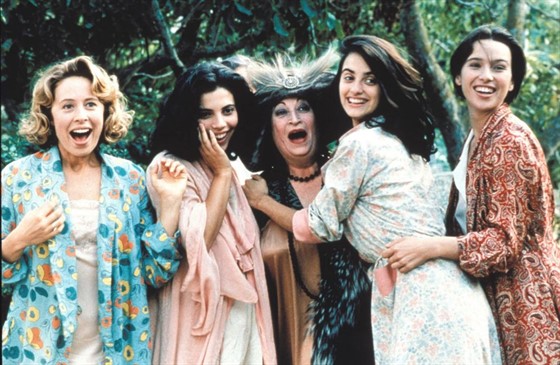
Belle Epoque (1992)


A Spanish movie that won the Foreign Picture Oscar in its year, I am not sure how I missed this when it came out, since it is exactly in the mainstream of early 90s American arthouse-friendly European imports that I regularly devoured at the Ritz 5 theater in Philadelphia and wherever else this class of movie was shown during that 1990-94 period. Since I hadn't seen one of these films in quite a while it awakened all sorts of memories and emotions in me while I was watching it and I frequently paused it to take down notes (on my phone!) for this review, which I probably should do for every movie that shows up here, though in most instances I am not inspired to say much about them. Here are some of my in-the-moment thoughts about Belle Epoque:


Early 90s art house world/era looks ever better.


Atmosphere great, fun, like the characters.


Usually I hate the guys who are being chased by beautiful women but I like this guy (in the movie a handsome young deserter from the Spanish Civil War takes refuge in the decaying mansion of a lapsed painter with four beautiful daughters, all of whom he has sex with--I don't consider this a spoiler since it is obvious this is what is going to happen the minute they arrive at the house--the question is what it is all supposed to mean).


Little touches, lovely things I haven't thought about in years, the night air (I almost never spend time outside late at night anymore), an outdoor party with cigarettes and dancing, beds in attics. It does make me want to be young again in a particular way that I have not felt in years. It reminds you what was fun about it.


Lot of SJC feeling. Early 90s, the old, deep Europe, an artistic family with books, etc.


It's one of those magic realism type movies, and has kind of a sad ending--the old European dream that the main body of the movie takes place in dies or fades out at the end and the young characters turn their faces, grimly in my view, to the modern world and the future, represented at that time by the United States.


While this is probably not a great movie, if you are my age and the kinds of sentiments and themes that I have mentioned here speak to you at all, I think you will find it emotionally rewarding if nothing else. But there seem to be fewer and fewer people who share my sentiments and reactions to anything as the years go by.


Belle de Jour (1967)


While very celebrated to the point that even people like me are familiar with its iconography, this is obviously an all-time classic, and I am becoming increasingly persuaded that Luis Bunuel is the greatest directing talent of the sound era at least, though like many directors who worked into the 60s and 70s I believe he may have started in film during the silent period, or close enough to it that his early attempts were informed by its peculiar requirements. Paris in the 60s, especially by '66-'68 when almost everyone was filming it in sumptuous color, always looks so perfect in movies. Ironically these were the last years just before a massive societal upheaval. One is reminded that the Paris/Europe of 1788 loomed as the lost Eden to many reactionaries through the first half of the 19th century at least. And of course perfect though it all looks, much of this film is set in a brothel, though certainly a clean and comparatively attractive one, is about characters who dress well but whose minds are (primarily) fairly vapid, who have little connection to each other. The only child I recall in the movie is the daughter of the brothel's housekeeper, about whose grades all of the prostitutes and even some of the regular customers seem solicitous. The later Bunuel movies that I can recall rarely feature any children, which I think is worth noting. The character of Henri played by the famous actor Michel Piccoli as a kind of prototype of the (compared to us) sophisticated adult French male with an assertive and unapologetic heterosexuality especially stood out to me. Remarkably, Piccoli is still alive at age 93, which means he would have been about 40 when this was filmed, a decade younger than I am now. I regarded his character as being at a stage of mental life much beyond my own, to which I had not yet attained. In truth however I missed that stage of life altogether and am probably never going to attain it. As to taking up going to brothels or propositioning the wives of acquaintances and engaging in role-playing and real sexual behavior in general, depraved or otherwise, with actual live women--that sort of thing is truly unthinkable. 


Ragtime (1981)


One of the more trite of the many trite comments that people make about older movies is to observe that "they don't make them like this anymore". Consequently I don't just try to avoid saying it, I try to avoid even having the thought as much as possible. However, in the midst of watching Ragtime, which was made during the period of my youth and which resembles in form and character a kind of movie that was common in that era, the thought kept recurring to me that, you know, they really don't make movies like this anymore. I'm not exactly sure what I mean by "like this". I liked the pacing of it, which seemed to suit the time period in which it was set, which had an decided energy, but not "energy" in the speed and volume and flashing pixels way that that word seems to be understood now. The shifting between multiple stories I thought was well done in giving some picture of America circa 1904, which comports somewhat with the idea that I and probably many people of my upbringing have always had of it (interestingly it was directed by the Czech émigré Milos Forman). Nowadays the idea of a feature film aimed broadly at adults is itself a novelty, I suppose. I haven't read the book, and the meaning of the various plot resolutions beyond the obvious racism-is-foundational-to-America-and-the-rich-always-triumph themes didn't make much of an impression on me. But the possibilities just beginning to be felt and hinted at in this country at the turn of the last century are suggested appealingly throughout this movie.


I don't like to be a cast nerd in these reviews--I've held back from going too deep in that vein on some of the other movies in this very post--but this one has too many notable people to omit mentioning them. First of all, of course, Forman persuaded the aged Jimmy Cagney (!) to come out of a 20-year retirement. The medium is so much more comparatively mature and the exposure of celebrities so massive now that this effect of bringing back an old star would be impossible to duplicate today. Jimmy Cagney dated back to the very beginning of sound movies, he was a real *movie star* with a public persona largely bound within those limits and then he effectively dropped off the face of the earth, and came back for one last hurrah. I like it. There is also Elizabeth McGovern (naked too!) as Evelyn Nesbit--and she is Evelyn Nesbit, who admittedly doesn't seem to have been a terribly deep person to try to portray--and I have always liked her more than the usual. She must be my type. Norman Mailer (!) has a small role as the celebrated architect Stanford White, there was Brad Dourif, the stuttering guy in One Flew Over the Cuckoo's Nest, who plays another weird guy here, there was Mandy Patinkin, who I read about for years in the New York Times theater coverage when I used to subscribe to it but never had any idea who he is, though I must have seen him somewhere. Howard Rollins, Jr, who I see died some years back at just 46, gave a famously strong performance. Pretty eclectic group.


Bend it Like Beckham (2002)


I thought this would be the weak link in the group, and while it was, it was not actually as bad as I thought it was going to be, and it probably succeeds on the terms it was seeking, which was to be a feel-movie for teenagers. To be honest I am surprised there are not more movies of this type. I also had some idea that this was fairly recent, but as you can see, it is not. I don't know how much more London has changed in the nearly 20 year interval since this was made. At that time at least, despite all of the ugly modern architecture and signs of cultural degeneration, there was still something beautiful about it, even just in the sky sometimes. It's a hallowed place in the psyche of many people, such as me, who can trace large portions of their mental formation to its environs. The director (Gurinder Chadha) noted in one of the extras that much of the shooting had taken place during a heat wave in the summer of 2001, and I was actually there during that heat wave, the last time I was there, in fact, so perhaps that association had an effect on my response.


I believe at the time the depiction of Indian culture in a mainstream film in Britain was still something of a novelty--the director Chadha presents it it seems to me as a fairly broad caricature, though not as bad as the caricature of the "traditional" (white) British family--Satyajit Ray she is not. At least as recorded by the right wingish internet, the old Britain went through a period of cultural squalor about a decade ago marked by extreme female promiscuity, public drunkenness (and I was thinking, oh if I could only be there!), educational decline and the like, media coverage of which at least seems to have abated in the most recent years. I haven't kept up much with what the British Indian community is doing, though I suspect they are doing fairly well, and their culture must be beginning to have some influence on the traditional British institutions which must be resulting in some conflicts, since it seems to me really different from the West and unlikely to hold much appeal to most people with any grounding in that tradition. But if our modern age has taught me anything, it is that I know nothing of the minds of other people and that almost every intuition I have about the current state of society could not be more misguided. So I will leave that here for now.


The real Evelyn Nesbit was a babe too.

Wednesday, October 31, 2018

Going to do a Few Movie Posts Now

I'm still about 31 behind even though I haven't seen too many in the past few months. Needless to say I don't remember most of these very well now. I will do these accounts in a formulaic fashion and see if anything comes of them:


The Westerner (1940)


Director--William Wyler


Notable star(s) (to me; every character actor in old Hollywood has his own cult on the internet): Gary Cooper. Dana Andrews apparently had a small role in this but I don't remember him
.
Did I like it? Yes. I didn't love it, but it's a Golden Age Hollywood Western, it's William Wyler, I have been weaning myself away from so many old movies because they are too comforting so any time one comes up now it is a great treat.


What do I remember most about this? The bar at the saloon and the bedroom off of it which I believe they have to shoot themselves out of at one point.'


Associated in my mind with: The Gunfighter; Destry Rides Again.


That's Entertainment III (1994)


Director--Bud Friedgen and Michael J Sheridan


Notable Stars--Many fixtures of MGM musicals. A lot of Cyd Charisse, Lena Horne, Ann Miller, etc


Do I like it? Yes. As the third installment of reminiscences about the glory days of MGM, my impression is that That's Entertainment I and II covered most of the true watershed moments in the studio's history and that this one is mopping up with its coverage of the June Allyson era and other now lesser known films. I was (am) supposed to be seeing the first two compilations as well, but they haven't come up available in my Netflix queue yet (yes, I still get DVDs mailed to me), which is what I have been working off of exclusively for about a year now, with a long backlist of stuff, mostly old, that they don't have.


What do I remember most about this? It's got a decent amount of old Hollywood "movieness" about it if you are the kind of person who has romantic ideas about Grauman's Chinese Theater and Schwab's Drug Store. At the time that they made it in the 90s a lot of the old stars of the 40s and 50s were still alive and were able to be interviewed, almost, in fact probably all, of whom have since died.


Associated in my mind with--The Band Wagon; On the Town.


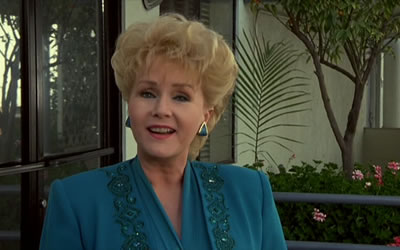
No one evoked Old Hollywood nostalgia like Tammy herself, Debbie Reynolds


For Love of Ivy (1968)


Director--Daniel Mann


Notable Stars--Sidney Poitier, Carroll O'Connor, Beau Bridges


Do I like it? I found some of it morbidly fascinating.


What do I remember most? Evokes what a weird time 1968 was as well as recalling what is now very much a lost world, one that I have some memories of though from my childhood. The white family makes its comfortable living by owning a suburban department store of a type that I do remember hanging on as late as the 70s at least. The repeated attempts of Beau Bridges and his sister (the young people) to talk to Sidney Poitier in some kind of jive is equal parts painful and bizarre, but it doesn't seem to be intended as particularly satirical and emphasizes how the average sheltered white person evidently had no idea how to go about talking to black people in any kind of regular way at that time. Lauri Peters, who plays the sister, did not go on to have much of a film career but her look, clothes, voice, etc, were quite striking to me in this as being a perfect 1968 suburban babe. I was quite taken with her. All of the period touches. The loud trucks, the gas guzzling cars, the pollution, the lounge lizard inspired basements, the New York skyline looking rather grimy and shabby in an orange-ish light. I have to confess, the romance between Sidney Poitier and Ivy, Carroll O'Connor's family's black maid, which is ostensibly the point of the movie, did not excite me that much.


Associated in my mind with--Diary of a Mad Housewife. It is similar in its unintentional late 60s-early 70s weirdness.


Yes, posting a picture of the white girl is too predictable, but this chick is such a quintessential 60s babe I could not resist.


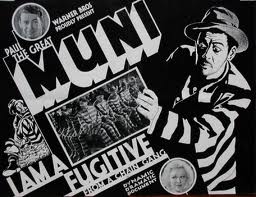
I Am a Fugitive From a Chain Gang (1932)


Director: Mervyn Leroy


Notable Stars: Paul Muni. A highly respected actor of the 30s, I think this is the first movie of his I've ever seen.


Do I like it? Yes, it's great.


What do I remember most? As I frequently note, classics from the 30s, particularly the early 30s, have the most extreme variation with me with regard to holding up across the years or communicating in a cultural idiom which has become completely incomprehensible. This is an example of the former, as the major themes in it, corruption and injustice in the legal system and the brutal indifference of the greater society, are equally pressing problems today. But even aside from this realism the tone and psychological approach to the material seem much more modern than what is usual in that time. It's an unnerving movie.


Associated in my mind with: The Bicycle Thief.


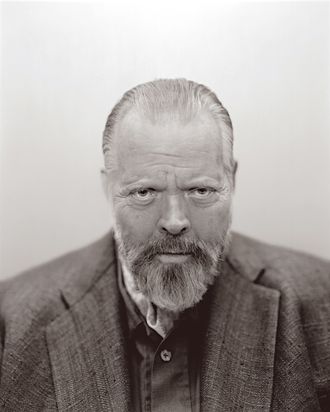
It's All True (1942--released 1993)


Director: Orson Welles, primarily


Notable Stars: Welles, I guess


Do I like it? It's an unfinished documentary. The footage is interesting.


What do I remember most? Not very much. It's Orson Welles set loose in Brazil with a camera. There is a carnival, old time South American beach scenes, fishermen. The impetus behind the movie was that it was going to contribute to the war effort, Brazil being one of the Allies. I'd like to see it in a theater. It is worth seeing, but at home I found it to be somewhat sleep-inducing.


Associated in my mind with: Mutiny on the Bounty, Cruise of the Zaca.


Here Comes Mr. Jordan (1941)


Director: Alexander Hall


Notable Stars: Claude Rains


Do I like it? I found it disappointing. Given the era in which it was made, the presence of Claude Rains, and its status as a classic, I was especially looking forward to seeing it, but I couldn't get into it.


What do I remember most? This disparate ingredients of it failed to coalesce for me. I never understood whatever it was I was supposed to be getting. Maybe I'm too eternally tired to do this anymore.


Associated in my mind with: Carousel


L'Argent (1983)


Director: Robert Bresson


Notable Stars: No one I am very familiar with.


Do I like it? Yes. This was the third time I have seen it. I did not get much out of it the first time, but on both the second and third viewings I have been able to appreciate more and more how good it is.


What do I remember most? Though not exactly what the movie is about, it is always great to see Paris in the early 1980s, which is very much the city I encountered when I first went there in 1990, and which I suspect is not very much at all the city that one encounters today. There was an excellent little extra on the Criterion DVD called "Bresson A to Z" which elaborates on a number of common themes in his work, as well as a lively Q & A session from Cannes. The darkness, for lack of a better word, since Bresson would probably argue that the truths portrayed in the movie are just truths that are morally ambiguous, weighs more on me with each viewing.


Associated in my mind with: Sauve Qui Peut (La Vie), French in Action TV Show.


Sunday, July 27, 2014

Two Recent Werner Herzog Movies

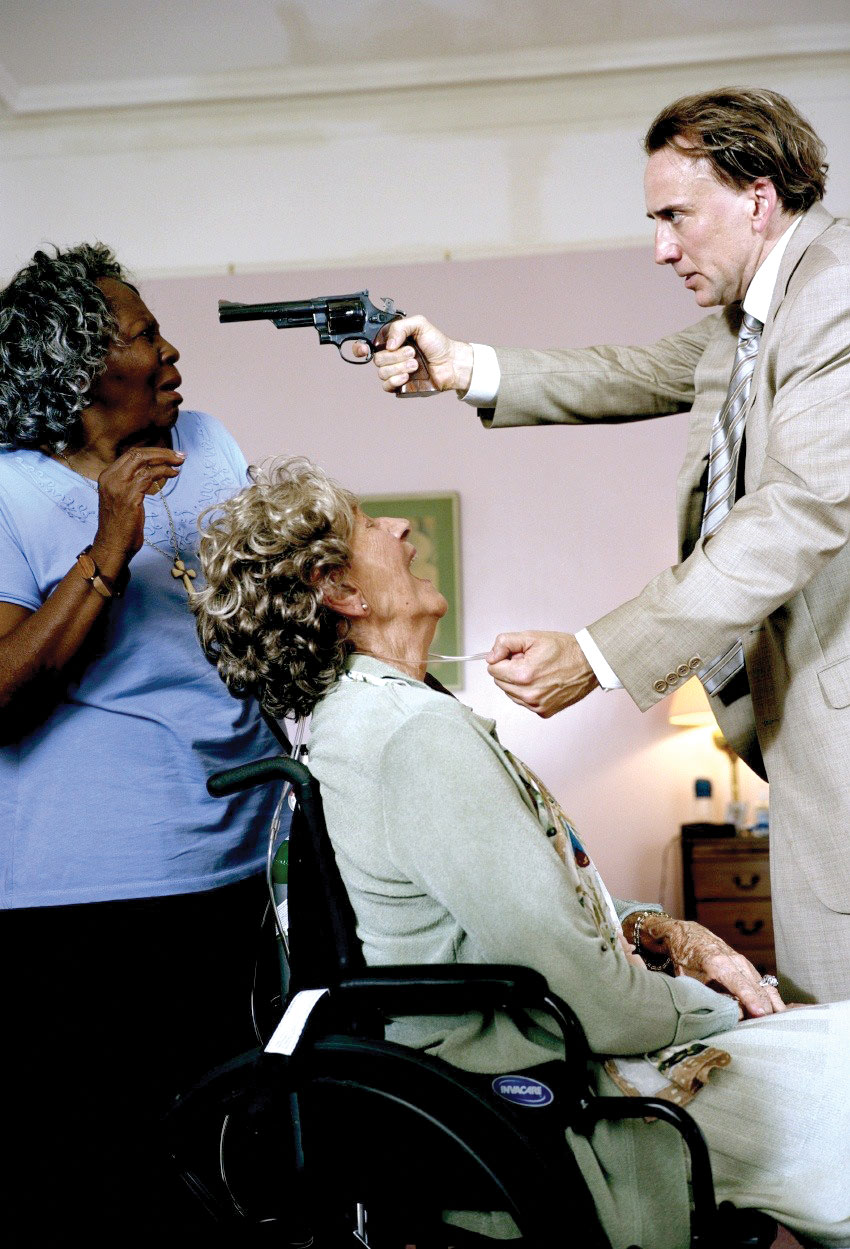
Bad Lieutenant: Port of Call New Orleans (2009)

While hopefully not a too realistic depiction of the law enforcement profession in one of our more mythologized Southern cities (to which I have still never been), this was pretty entertaining. Some of my acquaintance are of the opinion that Nicolas Cage is perhaps the worst technical actor currently active, and I suppose I can see how he might not be too good at live classical theater, but in this over the top, rather parodic (and subtly artful) take on the Hollywood big city cop film, he is the right man for the job. He inhabits and sells the role to the extent that it is almost believable, at least more than anyone else in the movie. The character of the bad lieutenant of course is quite wretched, as well as frequently indifferent to moral considerations in a way that is viscerally off-putting to obedient bourgeois people, but in contrast to (and to the deep envy of) most such people,  things happen in his life, even if as is the case here, most of them are almost suicidally destructive. He is still a sexual factor in the world as well, which always makes an impression on me, even if physically he is often not in prime condition to finish the job.


The only Werner Herzog movies I had seen up to now were his German New Wave classics Kaspar Hauser and Fitzcarraldo from over thirty years ago. For some years now he has evidently primarily been working in the U.S. and in English. Because he has continued to be so prolific and so consistently strong and probing and unique in his outlook in his movies, and is still at age 72 quite vigorous and seemingly plugged into what is going on in contemporary life rather than a sad, moldy relic from the 70s, he is a figure of almost universal awe in both the film and film criticism worlds, one of the living gods of the medium.
What he has mainly done here is taken the elements of the standard humorless and unengaging police movie and tweaked the more hackneyed aspects of them so as to make them palatable to film buffs and people of above average verbal intelligence. The world of the movie has life in it, and while I might not wish to wake up and find myself in it on a day in and day out basis, I was interested to see what it had in store for Nicolas Cage.

Encounters at the End of the World--(2007)


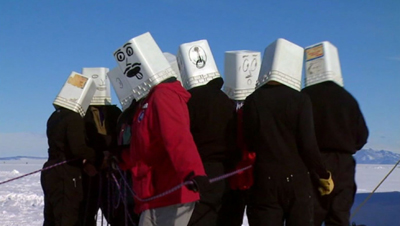
A documentary in which Herzog goes to Antarctica, interviews various people, some scientists, some skilled craftsman, some support staff, at the American base (one of the American bases?) there, as well as goes on a few excursions out into the southern polar wild. It wasn't bad, but in my view I don't think he quite got what he was looking for out of the project. It would seem that if there was any artistic filmmaker who was smart enough, odd enough, inquisitive enough, and so on, to connect with scientists and draw them out enough to get into the spirit needed to make a really good movie, Herzog would be the guy to do it. But most of them are not really responsive to him, they act as if his questions and observations are odd, that he doesn't really understand and can't understand what they are doing--I suppose you could say that they don't understand what he is doing either, but they seem to me oddly uninterested in the circumstance that one of the top living filmmakers in the world has shown up on the base to make a documentary. So I find that the finished movie lacks the kind of unity and driving purpose that is characteristic of Herzog's fictional films that I have seen. It's still worth seeing, and other writers and film people do consider it another major triumph for the great director.

Wednesday, October 16, 2013

Got To Keep Up With the Movie Posts


I have lots of great essays on general and pertinent topics coming.

The Journey of Natty Gann (1985)


Disney movie, not really for little children so much as for the 10-14 range I would think, that one of my ratings guides (my favorite one, actually) really liked. I don't think they make this kind of movie much anymore. The modern child would doubtless find its pace and method of storytelling hopelessly old-fashioned and ponderous. Not my children perhaps, or at least some of them, but we seem to be well out of the main currents of contemporary life. I already feel my sons' pain when they will arrive at college and be surrounded by boys who have long had the text message booty call (or whatever its 2020s equivalent will be) down cold; because they probably won't. I didn't like the movie quite that much, though I'm not going to rip it either. It is set in the 30s, a time period which often works well in cinematic renderings, and is probably popular for that reason. Comparatively speaking, movies from the 20s are much rarer, and usually feel off besides; and the 1910s are essentially a decade forgotten by everyone at this point, in part because nobody has a good feel, or much interest, in how to make visually compelling movies about them. But filmmakers seem to have some sense of the aesthetic of the 30s, what they felt like visually if nothing else, that is more accurate than that which they have for other periods.

The star of the movie was the great Meredith Salenger, who is two months younger than I am. Who didn't want a piece of  like her back in the 80s? Nobody, I think. She only appeared in five films before retiring to go to Harvard and Pepperdine Law School, and I think I only saw part of one of them (though she appears to have returned to acting in recent years). Obviously, it was enough.

Reminder of What the 80s Could Have Been Like (if it had only been given to one to be a winner)


I have assumed in past posts (Vanessa Paradis, Jennifer Connelly) the privilege of being allowed to express my teen-aged thoughts about teen-aged girls who were teenagers at the same time I was. Is it not more wistful in that sense than perverse, to recall that lost but in retrospect beautiful summer of 1985, when Meredith and I were both 15, and I was walking up the Easton Road or across some parched empty ball field on a 93 degree day, and she was out there, in Hollywood hanging out with the Corey Feldmans of the world, our paths decidedly not doomed to cross...I have always liked the name Meredith, since about 1985 in fact, enough that usually the mere hint that one bearing that name might be in the vicinity has always had the effect of piquing my consciousness and arousing some heat to flow into the old joints in anticipation of pleasurable experience. The name calls to mind the girl one knew at summer camp (I never went to summer camp), standing on the dock, framed by the encompassing silhouette made by countless and endless pine trees, her wet shoulder length hair and field hockey player's taut calves and arms glistening in the half moon, and you soon to know to partake of the pleasure contained in this for the first time...For those of us who never got to be young in this way, there is a kind of therapy in pretending we once were.


I once knew a bartender named Meredith who was kind of a loudmouthed party girl, but I liked her personality. She had a slight belly, but she had beautiful arms, and beautiful teeth, both of which stood out especially, as well as blue eyes and shoulder length black hair which had, or which she had given, the aspect of being animated. She had no use for me at all, but how could she? I have no personality, have nothing to say that will interest them, to 999 out of every 1,000 women I encounter.

I could look at pictures of Meredith Salenger, if not quite all day, for a while. I had forgotten about her. Probably this was for the best.

Meredith Salenger Today.


And Another One. Hey, Why Not?


To Die in Madrid (1963)


This could go on the list of supposedly great movies that are not readily available in this country. I did watch it on the internet, however I could not find any uploads (?) of it with English subtitles. It is in French, and while I can understand more French than I can any other language, I don't understand it well enough to really follow the narration in its finer points. The movie is a documentary about the Spanish Civil War. Whether all of the footage was historical or if there were some parts (the non-battle, non-mass crowds under wartime condition parts obviously), mainly of traditional or pastoral settings, that were filmed contemporaneously by the (a?) director. The Spanish Civil War of course has always spoken to intellectuals and artists. Apart from the most superficial facts and analyses of it I don't know very much about it, as least not what inspires such deep responses to it by astute and gifted people; though perhaps it is nothing more than the sense of the unique and antiquated beauty of the Spanish country and culture that seems viscerally to contain a depth and nobility that is inaccessible to people living in modern societies. I don't know how much this movie would have taught me, as I got the impression from the narrator's tone of voice, what I could make out of the French, and the types of footage that were emphasized, that the filmmakers were of the strident, highly indignant school and that the view of the war that they were pressing, while it might have explained a great deal, might also have explained nothing useful to me. Nonetheless, the film was strong on this antiquated Spanish beauty and atmosphere--is it a lie, or a distraction from facing very unpleasant facts about a culture (or the several cultures who co-exist to however much of an extent in the territory known as Spain) and the people who make it up? I don't think so, simply because the atmosphere is so seductive and is the main reason many people care so much about the war that took place there in the 1930s. I have very much wanted to go to Spain over the last couple of years, as if doing so would clear my head and restore my lost equilibrium in some way, as if all of the elements that I am missing and which are essential to living a fully human life, or at least a Western idea of a human life, could still be found there.  


Witness For the Prosecution (1957)


As I have noted often, courtroom movies are not the kind of thing I usually get excited about. I was a little more open to seeing this one than the run of pictures of this type, because it was directed by Billy Wilder and had Charles Laughton as one of its stars. Wilder is probably in the top five of my all time favorite directors at this point, and while I have not seen a lot of Charles Laughton, I already have the idea that he always delivers. And Laughton does deliver here. He is great, the movie is worth watching for him alone. It is not that Billy Wilder doesn't deliver--the movie is eminently watchable, and makes for good entertainment--it does not exactly feel like a Billy Wilder movie however. This is probably because it is based on an Agatha Christie story and is set in the Inns of Court in London. I have never read any Agatha Christie, but this is the 2nd movie (And Then There Were None was the other) based on one of her stories that I have seen; evidently her trademark was the multiple twist ending. These are clever, but they are not, at this stage of my development, what I am going to remember, or even be particularly interested in, about either of these films. Among the other stars in this movie worth noting are Marlene Dietrich, whom I had never seen before, and who I thought had retired after the 30s. She is about 55 in this and looks quite remarkable. Combined with her German attitude this is at times a genuinely scary combination. Elsa Lanchester, a great beauty in the 30s (Rembrandt) and the wife of Charles Laughton, looks more her age, which is the same as Marlene Dietrich's, in a deliberately somewhat dowdy role here, though it is still evident that she had been a beautiful young woman. Charles Laughton himself was always one of those jowly, enormous-headed, highly competent and well-trained, brandy-drinking, decidedly non-metrosexual British men of the Brideshead generation (what happened to this stock?). Tyrone Power, an American who was a fairly big star for a brief period in the 50s (he died of a heart attack at age 44 the year after this came out) was in this as well. I haven't seen him before; he wasn't very impressive--or at least he seems out of place--when contrasted against all of the other talent here.*

I would give this movie 3 1/2 stars out of five, maybe push it to four on the basis of Laughton's performance alone. Otherwise my prejudice against courtroom movies is too much to overcome for me to truly love it, and the cleverness of the twists at the end after being led so diligently for the better part of two hours to another specific and pat conclusion does not provide enough satisfaction. It is much better to have a sense of myriad possibilities for an ending and anticipate which direction the story will end up taking than to be persuaded throughout that the story and the characters are of such and such a type, only to have the switch at the end that tells you, no, no, it is all completely the opposite of what the entirety of our previous storytelling would have permitted you to believe, which latter I obviously do not like as a technique.

*I have since discovered that Tyrone Power was actually quite a big star in the 1930s and 40s. However he must be largely forgotten today, as I had scarcely heard of him and had never seen him in a movie until this.

Tuesday, March 19, 2013

Movies (Most Common Themes: Homosexuality in the 90s? Professionalism)

life bestowed him little

As Bad As It Gets (1997)


This movie, for reasons that remain elusive to me, was a hit with a substantial number of film critics and members of the general public whom you could probably stand to have as your neighbors, and apparently continues to be so to this day. I thought it was pretty ordinary, and did not strike a congruous note with regard either to art or reason. The movie of course stars Jack Nicholson. His character is in his 60s, appears to have some form of Asperger's Syndrome which makes him speak to people in a more than usually cruel and obnoxious manner, and he appears to be a lifelong bachelor who has no friends. Naturally he is the romantic lead. The female romantic interest is played by the frigid (and at least 25 years younger) Helen Hunt, perhaps the most annoying actress of her (my?) generation. Meryl Streep comes off as cuddly in comparison. As we are often reminded, Helen Hunt is a consummate professional--there is little praise higher in this cultural era in which we live, which really began to blossom around the time that this movie came out. For me this quality does not compensate for her being almost inveterately unlikeable, but I suppose she has her fans. Both of these stars won best acting honors at that years' Oscars, and one senses it was only the unstoppable presence in that season of the colossus Titanic (which, I may as well note, I have managed as yet to avoid seeing) that prevented it from taking home the Best Picture trophy as well. There is  a messy and not especially interesting subplot featuring a gay artist, his dog, his black agent, some other minor characters, an assault, and medical bills. Medical bills are a common theme throughout the movie, in fact, though they mainly afflict the younger characters. The movie is usually billed as a comedy, but I don't recall anything funny that happened in it.

The commentary employs the method favored for contemporary Hollywood films of having the actors, producer, writers and so on involved in the picture shill for the awesomeness of the movie. If you take the word of the commentary, everyone was incredible to work with, the screenplay was a masterpiece, every scene features brilliant acting and direction that the layman would be unlikely to pick up on. They even got Jack Nicholson to take part (a little). Helen Hunt, too, of course--she probably looked at it as a professional duty. I have elsewhere come across the idea that the screenplay is somehow exceptionally outstanding, which is absurd. I thought it was markedly labored, overlong (over 2 1/2 hours), full of clunky scenes and entire subplots that neither run smoothly in themselves nor fit smoothly with the rest of the movie, and there are numerous extraneous characters whose purpose as far as the core thrust of the story goes is not clear. I suppose you could say the movie holds together, in the way that one of those old sheds welded out of disparate sheets of metal holds together. But there is no sensation of true unity either in parts or the whole, which in most instances is the holy grail for a would be work of art.

I also found that my mood was deflated by being set back in the world of the late 90s. I had not anticipated this, for as you know I am I generally given to nostalgia, and I usually like revisiting the world of the 80s and early 90s even when the movie is so-so. But evidenly I am not nostalgic for the period starting from around '97. My feeling in watching the movie was that these were years when I should have been the most deeply engaged in the life of the time, and emerging in some way as an actor on the stage of life that never managed to happen (I was age 25 to 29 in these years) so seeing various motifs of that time I feel oddly disconnected from it, as I do from nearly everything since then.

Ballot Measure 9 (1995)


This is a documentary about the campaign to pass an anti-gay referendum in Oregon in 1992 and the resistance against it. The measure was defeated by a statewide vote, though only by about 56-44%. Had it passed, discrimination based on sexual orientation would have been legally allowed, and there were also several clauses that would have defined homosexuality as a deviancy, and required schools and other arms of government to regard it as such in the carrying out of their functions.

Well, I am glad it didn't pass. I cannot believe that the measure as written could ever have been enshrined as state law anyway, though maybe it could have, and I doubt that was really the point of the movie anyway, that being to show the frightening extent of the hate out there. According to the film there was an unbelievable amount of property violence against homosexuals and activists during the campaign, and even an murder, all of which crimes the movie gives the impression went utterly unsolved or were not in some cases perhaps even seriously investigated. From today's standpoint I would be inclined to question some of this but 20 years ago there weren't cameras everywhere, GPS systems installed in cars and phones and so on, and it is easy to forget the amount of vandalism and robbery and assault that went unsolved. The movie is obviously heavily biased in favor of the pro-gay rights contigent--which is fine for its purpose--though for the film viewer who is not especially inflamed by the cause some of the drama queen hysterics , the relentless and uniform stupidity and evil of the opposition, the incredible wisdom and sense and moral authority emanating from the representatives of the gay community and other oppressed peoples can be a little wearying. Most evolved people, of whom I wish I were one most of the time anymore, I assume will have a more visceral response, partaking equally of compassion, desire for justice, deep disturbance, and ferocious outrage, directed to the appropriate quarters.

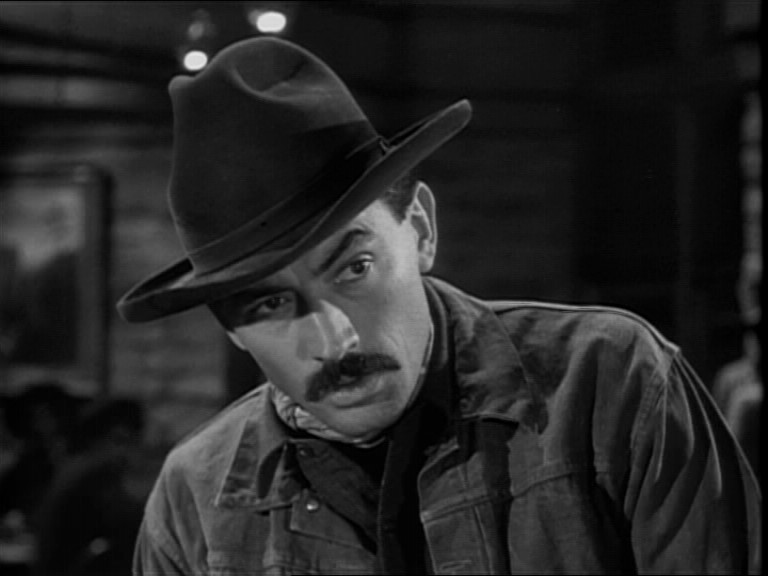
The Gunfighter (1950)


This is a western that does not seem to be very widely celebrated, but it is quite good, at least up to the ending, which I thought was hurried and lacked the drama that the buildup of the plot up to that point promised it should have. It operates on what I consider to be the most classic Hollywood model. It does its work in 85 minutes, the plot being moved almost entirely by constant rapid-fire dialogue that is not however exhausting to follow. Apart from the first ten and last ten minutes there is surprisingly little action and the scene is limited to the saloon and the main street and a couple of the buildings in full sight of it opposite. The director was Henry King, a Hollywood dinosaur who had directed his first movie in 1916, and who would keep going for another decade, including being the helmsman on Carousel, which I wrote about recently on here in 1956 (though according to the commentary he did not personally direct the ballet scene). I am guessing that King would be generally considered less an artiste than a competent, experienced professional manufacturer of film product (wait, did I say professional? That makes it sound like Helen Hunt could have starred in this--actually she probably would have been good in this as the love interest [played by Helen Westcott, who was almost as frigid, and more dour, than Helen Hunt herself; I think Helen Hunt would benefit from the faster pace of dialogue too]--Still, I have an instinctive distrust of people whose professionalism seems to be their defining characteristic; I am not sure whether this was the case with Henry King or not). The strength of this movie upon a first viewing does seem to be the screenplay, but the staging I thought was good, as well as the economy of scenes and the use of very brief visual cues to subtly but clearly indicate transitions, a common skill among the old filmmakers that is underutilized nowadays.

Gregory Peck (who for the record, is probably among my ten or so favorite male Hollywood actors) is the star of the movie, and among the other actors is Karl Malden. I did not previously much associate either of these guys with the western genre, though in Peck's case this is rather silly because he was in a lot of them, though until now I had not seen any of them.

Netflix does not have this movie available so I had to get an old VHS tape to watch it. Hence no commentaries, extras, etc.