Showing posts with label novels--england 18th c.. Show all posts

Monday, March 15, 2010

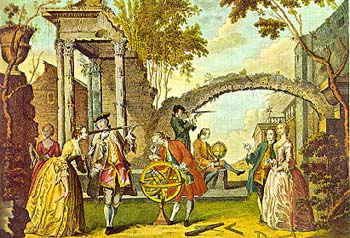
A Short Post on Tristram Shandy(This guy actually looks a little like what I imagine the young Tristram, who is about this age for a good portion of the book once he manages to introduce himself into the story, looked like. In any event he definitely has more of an 18th-century appearance about him than most of the other kids nowadays).

I have been meaning to do a post on this for a few months. I actually read the book back in June of '03 (which lapse of time astonishes me; I thought it had been much more recently), but, I saw the recent movie which took it up as its organizing inspiration sometime last fall, around which time I also saw the book referred to in several other places in ways which for one reason or another bothered me; so I thought I should write something about it from my perspective, for I guess I don't like what I perceive most of its readers to be primarily choosing to take from it. Why would I even care? Well, I don't care that much, but it is, or ought to be, one of the greatest of all books in English, and there is a certain quality in it that I seem to strongly desire to feel that other people share my particular enthusiasm for, which I somehow consider never quite to be the case.


Though I will probably overwrite here, my points are but simple ones, and are not intended to dismiss several centuries worth of deep scholarship and analysis. This analysis is not on the whole what is interesting and noteworthy to me about the book however.

I didn't much care for the movie. I didn't have any problem with what was done with it, the not making a regular straightforward narrative adaptation and so on (the idea was that the movie was about making a movie about Tristram Shandy, and the difficulties and mental processes that entails). It didn't work for me however. The parts set in the present, the contemporary characters and so on, were too coarse and uninteresting when set against the various scenes from the book which did manage to be filmed, which by comparison actually had something of the elusive, almost magical quality of the book. This may seem an obvious observation, but in it lies something of the key to my strong feelings in this instance. The book of course is exceedingly, famously clever, and witty, and subversive, and original, qualities which educated modern people value highly, and seemingly even the more highly the higher up the elite scale one goes. These therefore are the qualities for which the book is primarily honored today. But without the 'magical' qualities of the basic literary art and sensibility underlying all of this sophistication, you are left with the rather sarcastic, chilly, joyless wit and attitude of the modern Britons inhabiting the part of the film set in the present day, which is just as much, in my opinion, to miss the essence of Tristram Shandy as to be unattuned to the jests and subversions and Borgesian knowingness that make the book so attractive to the type of thinker, common in our age, who is not inclined to believe that anything significant in the universe can appear to the human intellect in its ordinary mode.

It would be ridiculous for me not to try to explain what I mean when I refer to the book's having 'magical' qualities. This is really just the writing, which is as utterly natural and clear and precise as any imaginative work in the language while at the same time the sensibility and approach to the narrative are equally unique. It is pretty much unlike anything else that exists in literature, nearly every little chapter a singularly finely cut and polished jewel, but with a skill in characterization, setting and dialogue that is Dickensian, even surpassing Dickensian; for while most of the dialogue and activity and thought in naturalistic terms amount to quite a bit of nonsense, rarely have more complete and vivid depictions of individual fictional intellects and personalities emerged out of the arrangement of words on a page. What is more, his technique is apparently virtually inimitable, for I have to think far more people would write in this manner, which is both fresh and immediately effective, if they were at all able. The only reason I can think of for its not being more highly loved than it is among people who are not in some way professional literary critics is that it is easy to be sure one doesn't understand it the way one is supposed to, which makes one hesitant to talk about it and therefore to be able regard it as an influence or model. But this is all I will try to say about it for the time being.
The timeline of Laurence Sterne's life in the Everyman's Library edition--most of which timelines are stuffed with a steady stream of publications, travels, affairs, political imbroglios, and so on, usually starting at the latest around the author's late twenties--is one of the few still out there that can give any hope to the person whose C.V. at age 40 remains rather thin. He got his B.A. at 24, was ordained vicar in the northern hamlet of somewhere-upon-Forest at 25, married and became a prebend at 28, got another parish at 30, had a daughter at 34, and then twelve long years of blank white space before finally, at 46, the first 2 (of 9) editions of Tristram Shandy, and self-published at that, are released (he also had an affair that year). At 47 he got a publisher in London, at 49 and 52 he traveled in France, at 51 he sat for a portrait by Reynolds, at 54 he finished the last edition of T.S., and fell in love with another woman, and at 55 had perhaps his most eventful year, publishing his other book, A Sentimental Journey, which is also supposed to be good, separating from his wife, and on March 18, before winter was even out, dying of a cause that was not disclosed on the timeline. I would still need to pick it up more than is probably achievable at this point however if I want to salvage something of my life in terms of serious writing and thought. I feel my brain has been coming back a little to some form of coherence from where it was a couple of months ago, but there is no reason to believe any kind of permanent breakthrough improvement is imminent.

Monday, March 08, 2010

Daniel Defoe--Moll Flanders (1722) Though published eighteen years before Pamela officially got the era of the novel underway in English, this is certainly a very near ancestor of that beast, if not a full-blooded member of the family. Like many old ur-novels of this type, including Don Quixote, it starts off quite rough, but eventually finds a kind of rhythm that hurtles it forward. A modern writer would have gone back and corrected the beginning once he found his bearings, incorporated more smoothly into the rest of the book, but this was apparently not thought important in 1720; the origins of the genre, we are told, being humble, and it being held in low esteem by the real literati of the day, no doubt accounts for this neglect. The evocation of atmosphere, details and other textures--houses, sense of place, possessions, all the things that I like, are also rather spare by more recent standards. Everything is in the service of relating the story in as straightforward a manner as possible. As far as there is any literary decoration, it would be the good number of sly observations on human nature and society that are dropped in from time to time among the narrative.

That was about all I could muster to say about the book at the time I read it. It marks a significant development in English literary history and I am glad to have gone through it and become familiar with it, but on the whole I found Moll and her world to be only very faintly perceptible, three-dimensional, whole, alive, what you please, to me. There was nothing in it that was really fascinating to me.

Great Picture Here of the Modern Imagination Firing on Autopilot. There appear to be at least four or five film or television adaptations of the novel, though none as far as I can tell is rated as especially fine. Obviously the elements of the story would have cinematic appeal, though in what form is not something that shines through in the book itself. I would imagine that the interpretations are wildly varying and perhaps even outrageous.


People familiar with the story may recall that after being orphaned, Moll managed to be taken into the house of some gentlepeople where she claims to have had a proper upbringing, dancing, French lessons, refined manners, only to get into trouble when she allows herself to be seduced by the family's eldest son. I used to think that the tone of the narrative in most of the rest of the book was not consistent with this education, but I have since come to understand that it is difficult to keep up certain postures if one falls out of regular contact with the circles where one acquired those postures.

There was a point around a third of the way into the book, when Moll is working on about her third husband, in addition to several other past lovers, when the demands of chastity in a new ongoing situation became ridiculous, and despite some great arguments regarding the matter, the struggle wearied me.

The cleverest episode in the book was the one where Moll and a male counterpart mutually deceive themselves into marriage, she by intimating that she possesses a fortune, he by posing as the owner of a large estate in Ireland. When the deceptions are found out (the man opens his letter of confession to her "My dear--I am a dog"), though they have grown fond of each other, they call the marriage off anyway to better pursue their respective self-interests.

One of the favorite pastimes of contemporary critics is to complain that modern literary novelists don't pay any attention to the primal struggles and machinations of ambitious people in the pursuit of wealth, which is after all perhaps the driving narrative of all human existence, especially at this point in history. I doubt in the long run this that this will seem true of our era, but certainly there are plenty of people in the MFA/writers' workshop/conference circuits seem to exist in a world of rather languid plenty. Given that many of them procure a sizable income themselves and follow the modern upscale lifestyle of exercise, healthy eating, 3.6 university degrees and 2.2 fellowships per person, it is obvious that they do not suffer from too great a deficiency of energy in ordinary life, it is only in their literary (and perhaps sexual) activity that they become sapped of vigor. Not having any of the difficulties, with the possible exception of sexual/romantic ones, which dog ordinary people--money, school, oppression, lack of self-control, the police, the legal system, macro-inferiority complexes--finding any drama in life becomes a struggle. Hence we have a deluge of books by people with glittering academic and professional credentials who apparently find taking care of a baby completely overwhelming. There is a kind of artist's poverty, a combination of sporadic or under-employment, debt, a certain level of squalor and discomfort which is marked by sparseness rather than grossness, leavened with regular exposure to interesting and lively people and ideas, that seems to be optimal for the imaginative faculties but also seems very hard to re-create in society as currently constituted in the necessary form.

Robin Wright as Moll in Another Adaptation. Evidently she was not good in this.

p.180--A breakdown of Moll's history, which is impressive: "...how is this innocent gentleman going to be abused by me! How little does he think, that having divorced a whore, he is throwing himself into the arms of another! that he is going to marry one that has lain with two brothers, and has had three children by her own brother!...one that has lain with thirteen men, and has had a child since he saw me! Poor gentleman!"

This reminds me of how powerful the effects of the electronic revoluton, cameras, cell phones, lack of necessity of carrying cash, etc, on street crime, robbery and so on, the nature of which hadn't changed much between 1700 and the mid 1990s, have been in the fifteen years since then. You don't seem to read much about people getting mugged or robbed on the street anymore compared to when I was a kid, or maybe I just am not paying attention.

Like many older (pre-1900) as opposed to newer novels, this one did pick up the longer it went. The technique of accumulating characters and incidences which build on their own momentum in the service of the story and don't whirl out in a variety of directions is evidently more difficult to master than it looks

My edition--the Heritage Press, 1942--is illustrated by probably a hundred pen and ink sketches executed in lines and curves and other flourishes. I don't know what the technique is called, but the effect is more like cartoons than exact representation. I didn't like them so much at first but they grew on me. I should have scanned one for display here. There don't seem to be any of them posted elsewhere on the internet.

Moll sails to Virginia at the end, noting that they entered "the great river of Potomac". Unlike the ancient rivers of Europe and Asia and Africa and some of our celebrated western rivers in North America, one doesn't often see or think of our eastern rivers celebrated as 'great' either in literature or song or art, with perhaps the Hudson as an exception, but quite a few of them certainly are, the Delaware, the St Lawrence, the Connecticut.

More on Virginia, it was noted that it "did not yield any great plenty of wives". They aren't lying there (I never had any very good luck with the ladies from that rich and stately commonwealth). I also noted that Moll Flanders managed to journey to America twice in her life (and once back to England) despite not living in an era of cheap airfares, so maybe there is some hope that when Peak Oil, the Global economic meltdown, etc, comes to pass, that the majority of us will not all be trapped wherever we happen to be for all time afterward as some predict, but that some limited brand of movement will be on offer.

There is maybe more in the book than I am giving it credit for. There are better 18th century novels, and I am sure at the time I was comparing it to those and finding it lacking, but it has endured better than almost anything else from its time, and is still in print from a major house as I speak.

Tuesday, May 22, 2007

Clarissa Part 4

Hopefully this will be the last Clarissa post.

I wrote at one point, evidently in a momentary lapse of despair, that what had been done to Clarissa was similar to what had been done to my writing. This was a statement of emotion rather than reason, of course. One`s writing, at the low amateur level, is not really capable of being ruined by outside agency.

Quotation p.1114. "Oh my dear, how many things happen in this life to give us displeasure! how few to give us joy!"

p.1194 Richardson's subconscious confession (through the agency of Clarissa) of his own feelings about the book?: "I am very much tired and fatigued--with--I don't know what--with writing, I think--but most with myself, and with a situation I cannot help aspiring to get out of and above."

Lovelace's repeated taunting and condescension of the bourgeois is effectively done. In fact, all the parts where Lovelace is being a horrible bully and daring anybody to do anything about it are the best-written in the book. Such scenes of browbeating and cruelty in all his works are Richardson`s specialty for the student and connoisseur of literary skill.

This was certainly a race of men attuned to the reality of death and the processes of the common (collective) human soul with regard to it.

No one in literature can single-mindedly draw out death like our author. There is a character in The Idiot who is hundreds of pages in dying of consumption, but the story leaves his deathbed alone for the most part and concerns itself with somewhat more vigorous actions and characters.

The scene where Clarissa, who is starving herself to death, orders her coffin, decorated with inscriptions from Job and other relevant texts, and has it delivered to her sickroom in order to save those who will survive her from the expense and trouble of arranging for it, is really hilarious, though of course it is not intended to be. The last 200 pages, in which Clarissa`s virtue and the exemplary attitude with which she approached the grave are delineated ad nauseum, are really treacly.

The latest Penguin classic edition sells for $24.95 in the U.S., which, given how long it takes to read it, comes out to a bargain of $7.20 per month book bill during the duration of the reading. The listed price for the U.K. is 25 pounds. At the current exchange rate, this is a $51 paperback novel.

Several of the characters who assisted in Clarissa's torments suffer immediate and painful deaths shortly after hers is achieved, their mode of departing this world in decided contrast to her model, the approach of hell being actively apprehended to the terror of the mind encountering it. I am too bourgeois of course to even conceive of hard or eternal punishment of any kind. The actions of men do not, in imagining such a system, seem important enough, nor for the most part their minds intelligent enough, for their souls to merit such intense usage in the afterlife. Obviously this exposes me as someone in whom the idea of any serious human grandeur has died utterly. This of course was a common attitude among the serious thinkers of the 20th century, but the fact that the strong sense of it has trickled down to the likes of me indicates that the strong mind now is the one that is either so far beyond this (i.e. in the realm of high science) as to no longer be able to perceive this loss as a serious problem, or is moving back in the opposite direction, with the ability to make sense of the noble ideas and mindset regarding the human race of those forebears whose achievements represent to the attentive mind what is generally thought of as civilization.

Whenever I come across the idea in a novel or poem that the sensual temptations some character is facing is due to the active agency of the devil I can not help but to ask why he never tries to tempt me with the same. The only answer I can come up with is that he must have found my soul easy enough to secure by cheaper and to me less pleasurable means that there was never any need to resort to throwing a lot of beautiful and willing women into my path.


I mentioned earlier that I read what I do read--long, largely dull 18th century novels, dozens of Restoration comedies, 10,000 line blank verse poems from the graveyard school of the 1740s--as a form of intellectual penance. This has become too very therapeutic to me, and I have come through dogged habit to actually enjoy becoming acquainted with all of these historic pieces, even though the literary value of many of them is dubious to say the least. I take the idea of penance seriously however. I failed to develop my intellect, personality or body adequately in youth to be able to participate fully and productively as a student and later as a twenty-something and thirty-something man when those times came, and I must never forget this while I live. How does reading Restoration comedies serve this purpose? I am too tired to answer this today. It will come up again, it is an important point, it informs almost everything I do. I just need time to compose the explanation of it.


Monday, May 21, 2007

Clarissa Part 3

I reason somewhere around page 850 that if the book did not ring somewhat true, it could not be so disturbing as parts of it are.

Of the incident where Lovelace has the fallen women (fallen by his machinations) impersonating his noble relations wait upon Clarissa I thought that a more athletic author like Fielding would have seized on the opportunity to introduce some humor and had the real people being impersonated happen to show up at the same time. There are several situations in the book which cry out for this kind of plot device, which probably explains Richardson`s being such an inviting target for parodists.

After endless wearying pages of Lovelace in obsessive and repeated detail arguing in defense of rape and subduing women by force ("the haughty beauty will not refuse me, when her pride of being corporally inviolate is brought down"), I began to think the author might actually have been afflicted with some disturbance of insuperable attraction in his mind at the contemplation of these subjects.

On a lighter note, whenever I am reading a lot of 18th-century material, some of the goofy slang of the period naturally gets into my head and I take to addressing Mrs Bourgeois Surrender as "My ownest", "My dearest life", etc. This does not go over big with the object of these effusive sobriquets.

It took me about 900 pages to realize how serious our author and his heroine were about the proper preparation of the soul for the world after this. Pretty much the entire last third of the book (Clarissa is actively dying due to the loss of her honor for 300 or 400 pages at least) is given over to the excruciating details of this preparation.

I know this was one of the first novels, and that therefore the whole thing is kind of an experiment, but whereas in a normal book where a person is confined against her will in a locked room one or perhaps two hopeless attempts at escaping will be described, Richardson gives us ten or fifteen. Does it work? As far as inducing a feeling of claustrophobia and hopelessness of delivery on the part of the reader I suppose it does, though readers being free agents it is not certain why any would choose to submit to this (I view much of my own habit as a form of penance, but I will elaborate on that later.)

The time--not just a few days--that Lovelace gives up hanging out with the guys or basically doing anything to single-mindedly pursue this seduction does not convince as consistent with his character.

A major theme of the book is that once one enters on a bad course, it is hard to turn back and escape serious damage. What, you weren`t looking for something comforting, were you?

The relentless pressure and deceptions of Lovelace, aided by a large cast of hellhounds under his direction and employed upon one single person, is actually very reminiscent of the (more pretentious of course) `godgame` in The Magus.

This book arouses no desire whatsoever to spend so much as an hour living in this time period, which other authors such as Johnson, Sterne, Fielding, on and on, make appear at times at least to be a good deal of fun.

Illustration: Samuel Richardson, Surrounded By His Second Family, by Francis Hayman

With all the declamations and hysterics about Clarissa`s honor I cannot help but think of the scene in Crime and Punishment where Sonya`s (is that the right name?) mother is about to send her out to be a prostitute and ridicules her for her delicacy and pride when she recoils.

Other characters such as Lord M and the vicious members of the Harlowe family were interesting and would have helped the book considerably by being utilized more, instead of completely disappearing for 800 pages at a time.

Clarissa is imprisoned either by her relatives or by Lovelace for almost the entire novel, until she takes it upon herself to die.

Why shouldn t I believe the world is generally as wicked as it is made out to be in this book? Do I not myself hate and rave inwardly against pretty much all of the people in it?

A custom from the Isle of Man described: -If a single woman there prosecutes a single man for a rape, the ecclesiastical judges impanel a jury; and, if this jury finds him guilty, he is returned guilty to the temporal courts: where, if he be convicted, the deemster, or judge, delivers to the woman a rope, a sword, and a ring; and she has it in her choice to have him hanged, beheaded, or to marry him.- The writer of this letter, Clarissa`s sauce-box friend Miss Howe, goes on to add that -One of the two former, I think, should always be her option.-

I think I had better stop here and do one more post on this.

Sunday, May 20, 2007

Clarissa Part 2

As this is only a blog that no one reads, and not a commissioned essay for the Times Literary Supplement, I am just going to post my observations singly and not try to compose them into a comprehensive piece. The theme of female obedience is a dominant one in the early part of the book. To those of us in the modern age for whom the idea of compelling any woman to do anything we should bid is beyond the scope of plausible reality, this model of society under which our ancestors operated, seemingly comfortably and confidently, for so many generations, cannot help but be a source of some fascination. Clarissa demonstrates however, albeit with its usual overkill, that this obedience did not actually proceed as the course of nature unimpeded by modern ideologies(though it was proclaimed as such), but that its inculcation was an unrelenting project undertaken by every responsible member of the society, constituting almost the entirety of the genteel and aspiring genteel young woman's upbringing and education. In cases where women are headstrong and of high intelligence, it is always taken for granted in books of these types that she must find a man worthy of her submitting to the control of, or misery and disaster must inevitably follow. The progressive writers of this era were the ones who acknowledged that it was cruel to expect a woman who was superior in spirit and intellect to her husband to submit to his tyranny. Their solution however was to secure more appropriate matches for these viragos; allowing them to run their own lives under any circumstances was the last thing to be desired.


The rapist and all-around bad guy Lovelace emphasizes repeatedly that women are especially easy to control by fear if treated and threatened with brutality, which he possesses the temperament and the will to effect to achieve his ends. This aspect of his character is convincingly and repulsively drawn, for he really is relentless in his energy and brutality, drawing women into his power, isolating and forcing constant pressures upon them that it is beyond their capacities to resist alone (for he has enslaved/bribed many minions into his service in his seductions). This energy of ruling by fear is still the primary condition of life in most economically and educationally deprived societies. In such areas as this (i.e. poor parts of the West) where the bulk of poor and uneducated men lack the ability as well as the backing of society to have authority over a home or an extended family or a community the traditional structures of child rearing/family life/community have collapsed noticeably. This is not really related to the book any longer though. Lovelace s particular misogyny is actually quite strange and perverted. It serves no purpose other than his individual pleasure, to which extremes it really seems unnecessary for him to go, being acknowledged by as handsome, intelligent, witty, rich, etc.

The narrative of the book lacks any kind of flow. I have a note that says compare with Proust but I forget now what point I intended to make about Proust.

When Lovelace is with women he is really a tiresome and repulsive character. His boasts too much and is witty too little of the time in these chapters. His elaborate contrivances are also too much to be credible. He writes and dispatches false letters, he arranges false actions and introduces false people to deceive Clarissa, involving dozens of people, all of whose actions and conversations he controls, none of whom ever stand up to him or refuse him. It is too much. Economists would be aghast at the waste of human industry devoted to these shenanigans.

When I was on page 400 I was curious to see what the abridgements were like. I am not any longer.

At some point when I was reading this the NYT ran an article on how the invention of cell phones had rendered so many devices and dilemmas of classic novels obsolete. Certainly Clarissa s physical entrapment and isolation from the outside world would seem impossible now.

There are about twenty or thirty characters in the book more evil than anyone in Fielding or Sterne. The most similar 18th century book to this I have read is William Godwin s Caleb Williams, which is about a servant falsely accused of stealing from his master and the relentless persecution he undergoes from society. It is likewise dark and oddly devoid of a sense of atmoshere or of any life outside the principal characters and settings of the story. There is a vivid part when he is prison where his drinking water is fetched out of a muddy ditch.

I will post and do a part 3 tomorrow.

Thursday, May 17, 2007

Clarissa (1747-8)--Part 1

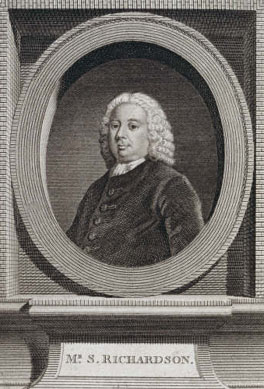
Illustration: Samuel Richardson (1689-1761)For anyone who was wondering why there haven t been any of my periodical essays about my reading for a while, it is because I was tied down for 3 1/2 months with Clarissa, Samuel Richardson's small-type, 1,499 page epistolary novel that was among the first, and is still among the longest, works of fiction in the English language. It took me 104 days to finish it, a seemingly unimpressive clip of 14.41 pages per day, but I could hardly have gone much faster. Though (remarkably) this book remains in print in a gigantic unabridged Penguin edition, and can be found right on the shelf at Borders taking up space that could hold half a dozen or more contemporary novels, by page 400 I was certain no one living in modern society who was not being paid to do so could, or would, possibly finish the entire book. I was not certain I was going to be able to finish it myself, and I am an automaton where fulfilling the duties of my various lists are concerned. Somewhere in the middle wilderness of this endless and remote pine forest of words, in desperate search of any possible camaraderie, I went onto the Amazon.com site and found that 41 people had reviewed the book, which is an above average number, and an astounding one to me for this particular book. One person claimed to have read the whole thing in 8 days (187.38 pages per day, even at ten hours a day almost 19 pages an hour--I don't believe it). A good portion of the reviews came from England, where apparently a certain taste for the old warhorses of the national literature has yet to die out completely. Most were positive in some manner and I would say that half were downright enthusiastic. I cannot say whether these are people I would want to be good friends with or not but I am certainly curious about them. The blurbs on the cover and first page of the book proclaim it several times to be one of the greatest of European novels. That is misleading at the least, if not technically a lie. Within the subcategory of great novels, or famous works of prose literature, there are many more books noticeably superior than inferior to it.


While most modern students of literature are overcome with a sense of dread even at the prospect of reading a Richardson book, I was caught off guard on this occasion, having taken up Pamela a few years ago and, while agreeing that at least two hundred pages of moral instruction (not that I don t need it) could happily have been edited, been otherwise deeply impressed by it. It is a dark book--Richardson I am quite certain had the overall darkest worldview of any English author of his age, almost so that one begins to feel bad for him--but the dark parts were written with such an evident urgency and agitation in the authors mind as made them absolutely believable. I do not, as many people always seem wont to do, understand this to mean that the nasty and depraved side of human behavior is the one in the most, or perhaps the only important truth, is ever to be found. Tristram Shandy, despite appearing to be full of outrageous and nonsensical episodes and conversations, is executed in such a way, so deftly in its details, as makes it seem to have really existed, as well as to relate a story well worth relating on the basis of the very specific and peculiar charms of its narrator s and other character s minds. Clarissa being considered Richardson s real, if neglected masterpiece by seemingly most of the experts, my anticipation was of a slog, but a slog that would give me in places a vision of life that would meaningfully expand my understanding of its possibilities and myriad truths. What I found was a book that I think induced a modest depression in me, to which I am already highly susceptible, over a period of several months

The massive popularity of the book on its publication indicates to me the extent of the hunger bourgeois society evidently felt for works of fiction in those days. Though there are several episodes in the story where it appears events and plotlines are building up for a grand crisis where action follows swiftly upon action, as in, say Tom Jones, this never happens. When Clarissa is locked in a room and threatened with all sorts of imminent danger, 400 pages go by before anything happens. Colonel Morden s return to England, at which event it is indicated, things will be shaken up, is anticipated and alluded for well over a thousand pages before the man actually appears, having missed everything that his possible presence threatened on so many occasions to make interesting. Coleridge s famous observation that reading Fielding after Richardson was like emerging from a damp sickroom into a sunny spring afternoon is, especially with regard to Clarissa, most astute. I was reading another book the other day where a character was walking on a dirt road and had to sit down on a rock to take a pebble out of his shoe. This was a fairly nondescript little detail, but it leapt out at me because not one instance of this sort had happened in Clarissa in 1500 pages. The book is claustrophobic, because there is no air, no atmosphere in its world. Characters spend hundreds of pages in rooms that present themselves to the imagination as blank places, so devoid is our author of any kind of telling description. Likewise carriage rides take place in the readers mind as if there is nothing outside the windows, or if a white curtain has been drawn over it as the Soviets used to do on their trains before passing a munitions factory. The book being told by a series of lengthy letters (535 in all) the characters must needs spend a great part of their time writing, even to the detriment of their sleep, which in their health both Clarissa and her persecutor Lovelace rarely indulge in for more than one or two hours a night! Richardson s whole approach to the subject of death is extremely bizarre even among the authors of his age though I suspect it was more representative of the general population than we usually say. I will expand on this later in the other posts.

I do not know much about the Clarissa BBC movie that I have a picture from here. I don`t know that it ever appeared on TV in the U.S. Certainly they must be running out of classic novels to adapt if somebody thought this one a good candidate for the Masterpiece Theatre treatment. Unlike the aforementioned Tristram Shandy, which despite its reputation for being unfilmable, actually has a good number of sections that would make interesting scenes in a series, the possibilities suggested by Clarissa are not really very exciting, being of the standard classic-European novel variety--duels, balls, grounds of country estates, devious servants, etc--better illustrations of which are available elsewhere. This Saskia Wickham looks kind of pretty though, in the great tradition of lovely actresses who appear in some BBC serialization of a classic novel and are never seen again. Jennifer Ehle, who played Elizabeth in Pride and Prejudice, is a past favorite of this type, and I have to confess that I found Sarah Pickering, the mousy, tiny, almost childlike star of the Little Dorrit movie, to be rather adorable in that role. They are all probably around my age too. Where are they now?