Showing posts with label hollywood-1980s. Show all posts

Friday, October 08, 2021

4 Movie Reviews (1962-2012--Louise Gluck Commemorative Post?)

Working Girl (1988)

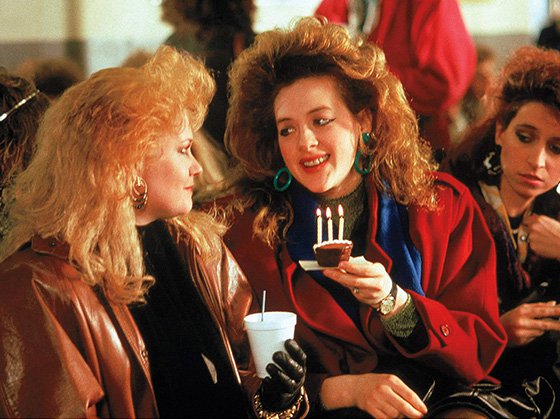
Hit movie of the late 80s featuring a lot of big names (Mike Nichols, Harrison Ford, Sigourney Weaver, Melanie Griffith, even Alec Baldwin and Kevin Spacey appear in minor roles). I didn't see it at the time, probably because I could tell it was about yuppie baby boomers, a class of movie that I really could not abide at the time, and do not exactly love now. It is about class differences, though in a rather crude way, and I don't identify much with either of the classes represented here. Some people think highly of this though, and it made quite a bit of money. Perhaps there is a generational aspect. While I do always recoil at particularly baby boomer-ish movies, I do like some of the quirky Generation X 90s films in the Party Girl vein that people who were young in other times probably find unbearable. I did like seeing the cityscapes, cars, restaurants, etc, of late 80s New York (and Staten Island too).       

 The Exterminating Angel (1962)

I was thinking just the other day that it felt like I hadn't seen anything by Bunuel for a while. I didn't write down the date when I saw this, but it was in this calendar year, I'm sure. This is definitely the last older foreign film I've seen, which especially at my time of life is too long of an interval, but it is funny that I thought specifically of Bunuel as someone I had been missing, when I have been away from all the other greats of classic international cinema even longer.


I had seen this at least a couple of times before, but it had been 10-15 years since the last time. This may be my favorite Bunuel movie, maybe it is Viridiana, maybe someday it will be Discreet Charm of the Bourgeoisie. I can never remember what Viridiana is about two days after seeing it, but certain images and associations from it come to mind out of nowhere, cows and sideboards and bell towers and straw covered floors. The Exterminating Angel is, as everyone knows, a fantastical meditation on the absurdity of life as perceived through the lens of an almost uncorrupted artistic consciousness. One feels satiated by the directness and purity of the vision.  

Burning Hot Summer (2011)

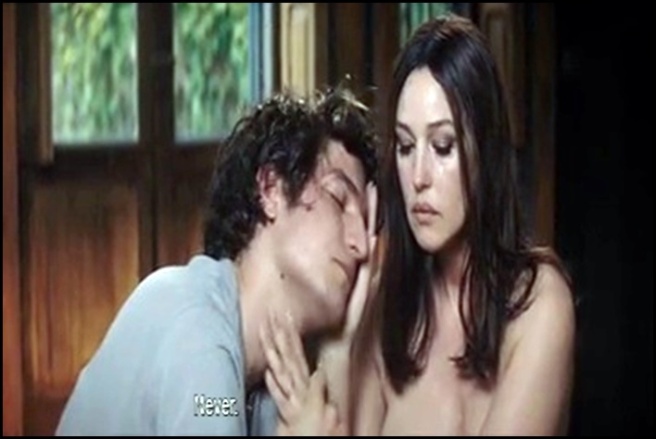
This modern European (French/Italian/Swiss--everything seems to be a collaboration now) domestic drama is the kind of thing I wish would turn up more on my lists under this new system. Actually I do think some contemporary foreign films have made it, they just haven't to date been easily available for me to see. I noted while watching this that "I like it, because it's how I imagine real people live (i.e. European art people and their complicated sex lives) but it's about people who are too cool for this world (literally too cool, not Jim Jarmusch style eccentric cool), so it is ultimately kind of depressing. No one has any phones or anything, so people can still go to hotels with their lovers in the middle of the day without anybody bothering them." With regard to this last point I formed a theory that the director/writer was probably someone around my age who had grown up wanting to make 1960s and 70s style French art films and determined that he not going to let technological advancements deter him from pursuing that vision, though in this I was wrong, as the director was a filmmaker named Phillippe Garrel, who was born in 1948 and has made about thirty pictures, though I don't recall seeing any of these others. This stars the celebrated Italian sex siren Monica Bellucci, who was about 46 at the time and acting alongside co-stars ten to fifteen years her junior but who still managed to produce the majority of the heat and loss of (male) sanity referenced in the film's title. 

 Les Miserables (2012)

This is the star-studded musical version, albeit mostly with Hollywood figures not noted for their singing prowess, which undoubtedly prevented a lot of people from being able to enjoy it, but I quite liked it, perhaps even mildly loved it, in spite of the inferior versions of the songs. When I saw this (back in March!), I tweeted that "the story has an emotional extravagance that I miss in this bloodless, oppressive, over measured, over controlled, emotionally dead cultural environment we seem to be trapped in now", and asked whether anybody else liked it. I felt like it got the romance that is the source of the story's claim to immortality, which surprised me, because I don't expect people in my life time to have, let alone embrace, the kinds of feelings which the story requires. The story is, or can be, so stirring. I am not an especial fan of musicals, especially modern (post-60s) ones, but I have always liked the songs from this. It is undoubtedly one of my favorites in this category.  

As I get older I am cutting down (I think), on my actress shout outs from the deep wilderness, but I have to say I loved Samantha Barks as the plucky Eponine, who was the one major performer who was brought over from the stage production. Great radiance. Eponine's happier rival in love, Cosette, was played by Amanda Seyfried, who I often think I see everywhere, especially in these literary adaptations, but I often confuse her with Rosamund Pike and Alicia Vikander, who also make frequent appearances in these types of movies going back 10-15 years. I suppose you can throw Margot Robbie in with this group of blonde, able-to-project-high-social-status actresses as well, though I can usually tell her apart from these other three. 


Tell me about it. 

I do have something of a Les Miserables origin story to tell, which perhaps influenced my experience of the movie as well. When I moved to Maine as a teenager, the stage version had just recently debuted in the United States. I had not even been aware that such a musical existed, though for some reason I had already read the book--despite being well over a 1,000 pages and dating from the middle of the 19th century, it is not difficult even for a modern teen to understand. I had a job working at a restaurant in Kennebunkport for a while, and they employed a pianist, as restaurants often did then, and perhaps nicer ones still do, though I have not been to one that does in many years. This pianist was from Brazil, and by the standards that I was accustomed to, played well the character of a suave, artistic, middle aged South American gentleman, which was an unusual sort of person to come upon in Maine at that time especially. I wonder whether he was not gay. Kennebunkport and especially the nearby town of Ogunquit having sizable gay communities, but though I was vaguely aware of that at the time, it never occurred to me to think that anybody was of that persuasion unless they screamed it out loudly to everyone they came across. I had the idea that he had a family back in Brazil, and perhaps he did, or perhaps that is what he told people, anyway, the point of the story is that this guy really liked the Les Miserables soundtrack and played a number of the songs as part of his repertoire. As I didn't know what they were but found some of the tunes to have insinuated themselves into my brain and begun to induce melancholic and other sorts of emotions I asked him one day what some of the songs were and then the next time I saw him he had made me a cassette of the entire soundtrack album. And there were several months over the fall and winter of my junior year of high school where I listened to this tape in my bedroom quite frequently, and then, I never really listened to it again. But the songs all came right back to me when I saw the movie.  

I was going to do three more movies but I think from now I am just going to make each movie have its own post. There will therefore be more of them, and I am worried that some of them will be too short. I suppose if I have nothing to say at all about something I can just leave it out. But this method isn't working for me so well. 

Thursday, April 15, 2021

1936-1985 (Rodolfo Nieto Commemorative Movie Post)

There were a lot of old ones in this group, so it should have been a good set for me, but it was just kind of so-so. 

Mildred Pierce (1945)

Well-regarded, noir-ish picture directed by Michael Curtiz, also notable for being one of the better known roles--she won an Oscar for it--of the legendary star Joan Crawford, who remains an object of some fascination in our time seemingly as much for her reputation for being a colossal pain in the ass as for her acting career, as her heyday as a star--and she truly was huge in her time--was the early 1930s, and other than Grand Hotel, most of her big starring vehicles are not widely known today. I was a little disappointed by this on the first viewing. Being right in my favorite era of Hollywood movies as well as knowing the regard a lot of film buffs had for it, I was expecting it to make more of an impression, but I don't remember much about it, and I didn't think much about it even after I had just seen it. Mildred Pierce is a single mother who becomes a tough and very successful restaurant owner. Her daughter is resentful of her social origins and is one of the most notorious villains of the noir period. Has some different themes. Maybe I'll see again another time in a more receptive mood.  

Julius Caesar (1953)

All-star black and white production of the Shakespeare play directed by Joseph Mankewicz and featuring Marlon Brando as Mark Antony, James Mason as Brutus, and John Gielgud (in his pre-Sir days, I believe) as Cassius. The whole presentation is very much in keeping with the earnest Great Books/mass college/theater as a fine art aesthetic of that postwar period, which is the background I come out of, so to me this is very much how I imagine the play should look and be acted according to my understanding of that time. According to Wikipedia MGM wanted to make the movie in color but the filmmakers (Mankewicz and the producer, John Houseman, who, yes, is also the famous actor) didn't want to make a spectacle, and also wanted audiences to infer a parallel with the recent Fascist movements, in particular the newsreels. As usual it was a good decision, especially in light of the ever shrinking provenance of the black and white era in the history of cinema. As often seems to be the case, there was a lot of fighting among the stars (in contrast to today of course, where everyone is always claiming to get along swimmingly and to love their fellow cast members). I never know how much I should care about those things or whether they are particularly relevant when watching a movie. This is as good of a mainstream version of one of the more watchable and accessible Shakespeare plays I think you are going to get.     

Gotcha! (1985)


Mid-80s young person comedy with a Cold War twist featuring the same director (Jeff Kanew) and one of the stars (Anthony Edwards) that had given the world Revenge of the Nerds the previous year. I don't remember this coming out, though I went to the movies often at this time, as well as heard about all the movies other people went to see that I missed. I was hoping that at the very least it would provide some unlooked-for morsels of 80s nostalgia, but it really didn't have anything I liked. It is unbelievable now that East Berlin and the rest of the Iron Curtain countries were closed off until after I was out of high school. The (very) little taste we get of Communist East Germany is the most interesting part of the movie to me, though this is the kind of film that can only depict the world behind the Wall (and most of that on our side of it, to be honest) in completely cartoonish terms. As in many Hollywood efforts of that era, there is a "Czechoslovakian" spy whose presumed nationality itself is taken to be a source of hilarity, and the character is given a Russian name that no Czech person actually has. This happened frequently enough that I almost want to assume it was done on purpose. A pretty lame movie all around. Even the mid-80s soundtrack was a miss, at least as far as original songs went. 

Night of the Hunter (1955)


Hailed by many critics as one of the very greatest films (as in top 50) of all time, I don't like it that much. It is artistic, and it is unsettling, and it is unique for its era, and I can kind of see what hardcore movie people love about it, and maybe if it hadn't been hyped so much its quality might have taken me by surprise. But I have to say, there was nothing about it that I particularly enjoyed, and since it ended I have not been overcome by any great desire to see any part of it again. It is famed for being the only directorial effort of the beloved Charles Laughton, a truly great actor and formidable all around artistic presence in his lifetime. He is the kind of towering figure from the past whose presence is, I sense, perhaps most strikingly missed in the present cultural environment. Anyway, he is lavishly praised for this movie.

Night of the Living Dead (1968)


I have no background in "horror" movies. I had no interest in them as an adolescent. I don't have any interest in them as a genre now, and even if some of them can be said to have genuine artistic quality or entertainment value, my true feelings would be to wish that the talent involved could have been deployed in a different kind of movie. That being said, I went into this cult classic with no pre-existing idea whatsoever of what it was going to be like, expecting to suffer dutifully through a half hour or so of gratuitous gore before giving it up, but to my surprise it had a lot to hold my interest. I still don't care for the overall premise too much, but the storytelling isn't bad, and a late 60s, black and white low budget indie film shot in Western Pennsylvania without special effects or other high-tech tricks where all of the clothes, cars, appliances, furniture, and so on are immediately recognizable to me from my earliest childhood is pretty captivating. At one point in the commentary when the victims are frantically boarding up the windows of the farmhouse (which looks a lot like the house I live in now) one of the speakers jokingly asked "Who has this many boards lying around their house?" But I actually do have that many. I thought the set-up of this movie was better than the resolution. They were probably running seriously low on money by the end of filming. 

The Milky Way (1936)


These last two movies were contained on the same DVD. By the time it arrived I had forgotten which was the one I was supposed to watch so I watched them both, especially seeing as neither one was much longer than an hour. They are very loosely connected in that both involve boxing, or at least have a plot that leads up to a boxing match. The Milky Way is supposed to be the better film, I think--it features Harold Lloyd in one of his more successful talking roles--but its particular humor, pretty much all of it, in fact, and this is the case with a lot of 30s movies, was lost on me. I did like Harold Lloyd's silent classic The Freshman from 1925, which has a ton of style and pointedly mocks some of the stereotypes and absurdities of college life, though with a romantic underpinning which makes it a lot of fun. The focus in this one is not as sharp, and the dynamics of boxing and street brawling and shady underworld characters are perhaps not as inherently amusing to us as they seem to have been to audiences in the 1930s, the films of which era frequently feature mild-mannered characters who find themselves in dilemmas where violence is not merely an option but the dominant way of life, so to speak, the social currency. Oh yeah, Adolphe Menjou is in this too.   

Kid Dynamite (1943)  


This was even more of a throwaway movie, the equivalent of a TV show really. Nonetheless I really liked it, because it's about teenagers set in 1940s New York City, and I have always loved those kinds of movies. This was part of an unbelievably long series of films (around 78 in total) featuring much of the same core of actors about a gang of kids, and presumably, as the series went on, young men, that ran under various incarnations, such as the Dead End Kids, the East End Kids, and the Bowery Boys, from the mid-30s until 1958 (!). Kid Dynamite was made during the East End Kids period, which ran from 1940 to 1945. The main character and leader of the gang, Muggs McGinnis (played by Leo Gorcey through almost the entirety of the series), is supposed, I think, to be a lovable Irish rogue type, but in truth he's really a pretty violent thug. Some of the other characters have a modicum of manners and are a little more endearing. I like the parts where the guys hang around the clubhouse and shoot pool and the girls dance to records. There's also a nice scene at a community dance hall. The girls are very pretty and sweet, even the ones who are supposed to be (mildly) "bad". At the end of the movie, it being wartime, three of the older boys, including Muggs, enlist in the Navy, and appear in uniform in the final scene. This part is heavy-handed and crudely jingoistic on a level that the classics of this era which people are mostly familiar with today, which are often considered jingoistic enough themselves, do not begin to approach. This class of film is definitely not going to be for everybody, but perhaps since they were not heretofore part of my consciousness combined with my general love for almost everything from this era, I kind of got a kick out of it, and was glad I saw it.

I was going to write here about my recent sluggishness and lack of interest in anything, including writing, including reading, including movies, including anything else, and wondering what I was supposed to do to revive interest in my life. But I feel better today so maybe I will put that essay off for now.  

Friday, August 07, 2020

The Fantasy of Popularity

I've always wanted to use this title. I imagined it would resonate with the public. However, the material to go with it never materialized, yet it maintains an odd presence in my daily imaginative life. So I am wondering if finally using it will kill it off.

I know it has been two months since I have gotten a post up on this site. I am just going to pretend it has only been a couple of days. I am catching up on my movie reviews.

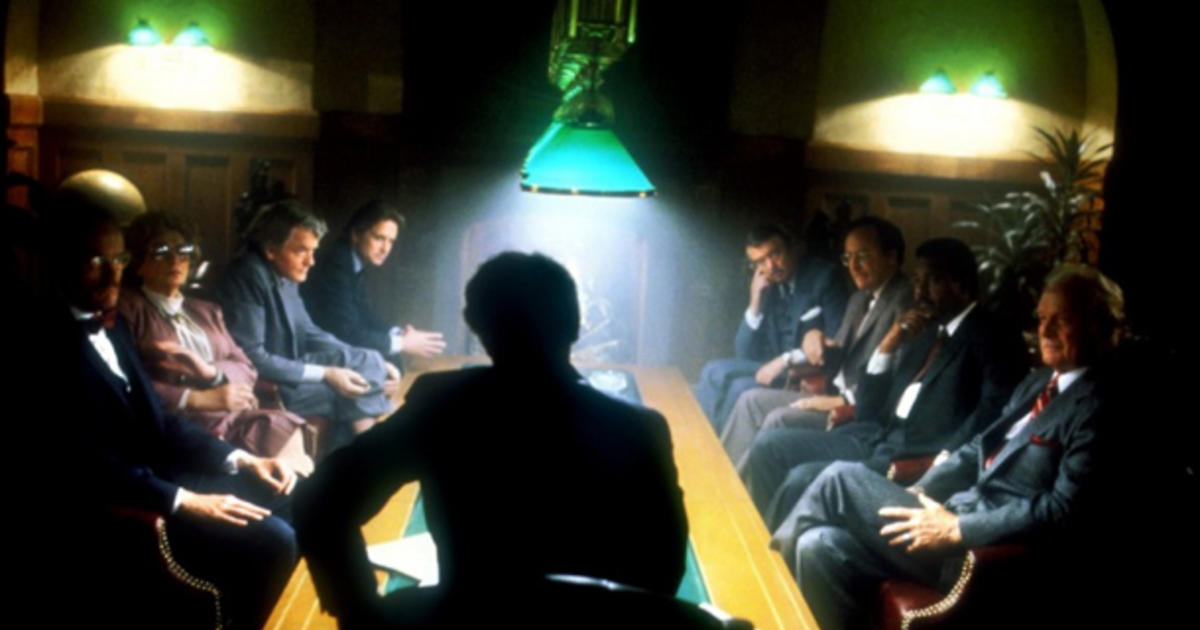
The Star Chamber (1983)

This is not the sort of thing I am generally interested in (it's about lawyers, who also operate a secret vigilante society on the side), but it is pretty well-made and well-scripted, and retains something of the distinctive qualities of the 1970s, pre home-video style of filmmaking. The settings and the acting feel a little less superficial and corporate product-like than what was soon to come, the pace is less frenetic, the story, which could be confusing, is laid out clearly and with deliberation. That said, coming from a background of literature and traditional plays, these kinds of Hollywood stories about competitive, cynical lawyers, with a lot of gun and explosion generated violence and death, I have a hard time getting into, and always have.


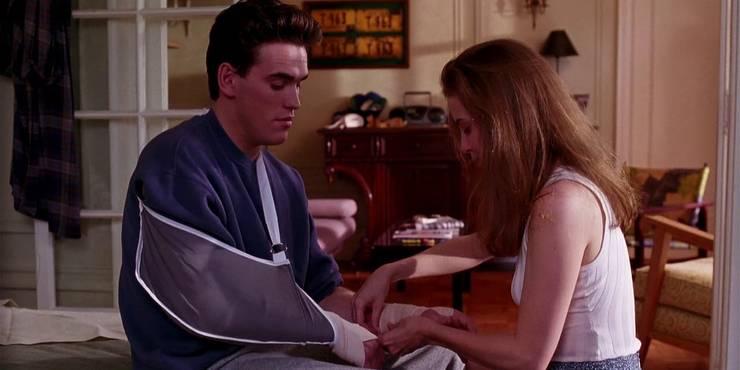
Mr Wonderful (1993)

This kept turning up in my game that I use to pick movies, so I thought I would try it. It's a romantic comedy from the early 90s, which was kind of my time, though it's more about late baby boomer people than people my age. I thought that maybe there would be something about it I'd like, but it was pretty bad all around. The script is weak, and it is exacerbated by unfortunate casting. The married middle-aged English professor having an affair with a grad student is a motif I can sometimes be persuaded to like, but unhappily the professor here is played by William Hurt in the full realization of his inimitable smarminess. (Ugh) Matt Dillon and Annabella Sciorra are the leads around whom the plot centers, and there is no chemistry between them at all. Annabella Sciorra didn't have any chemistry with William Hurt when she was his mistress either, so she really did not have a good movie. I remember sort of thinking Matt Dillon was all right in something at some point in the 90s, but I can't remember what it was now, and it seems hard to imagine after seeing this. The part of the plot where Matt Dillon and his electrician buddies are looking to get out of their (presumably) pretty well-compensated union jobs to pursue the dream of restoring and re-opening a dilapidated bowling alley in what looks like Lower Manhattan was painful to watch from the vantage of having lived through the past twenty years.

The actress Mary Louise Parker was appealing in this, though mainly because she reminds me of a type of early 90s girlfriend/love interest that never quite materialized. Maybe I'm not ready to revisit  any Hollywood movies from this era yet even for nostalgia purposes, regardless of their quality. There is still too much that causes me pain to remember. I like the European films from this time though, those make me happy. I suppose because I can identify them with my more pleasant dreams at the time, and not with the painful truth of my actual social existence.

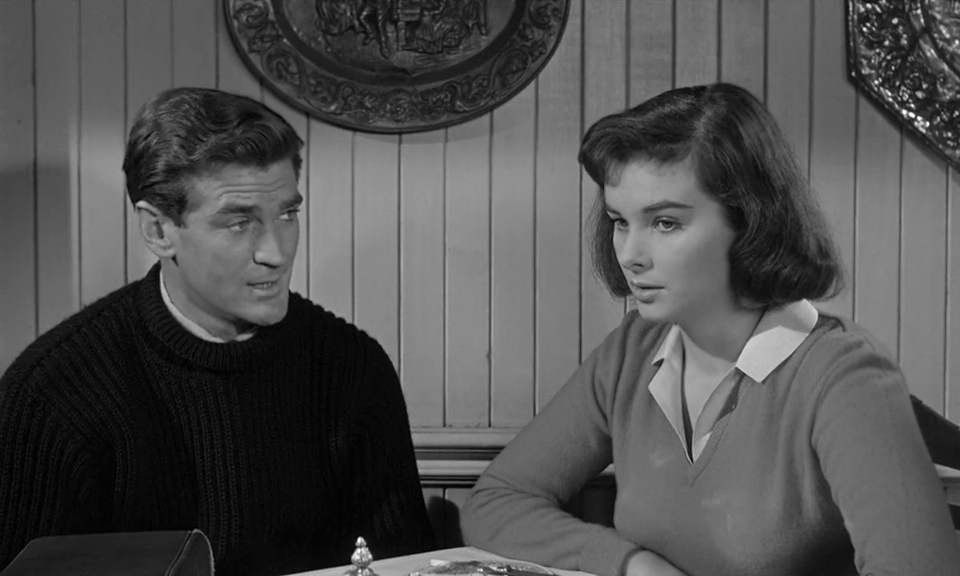
Goodbye, Columbus (1969)


I read this book some years back (and liked it), and I thought this was a good adaptation, as did most critics and even moviegoers at the time, as it was a decent hit at the box office. It accurately identified, I think, what were the best and most interesting parts of the book, and made those particular dynamics the points of emphasis in the movie, which I find to be the case with most of the better film adaptations of literature. This is obviously the kind of movie I am inclined to like, romance between collegiate English major type people, 1960s America--and, pretty rare for the 60s, a Mid-Atlantic setting outside of Manhattan Island--characters, attitudes, rooms, dinners, activities, and so on that are recognizable to me from my childhood but that have increasingly gone out of the world. Many contemporary commentators note that this reminds them of The Graduate, and they are kind of similar in structure and general mood, I guess; I would think of them as belonging to the same family, but the things that work in this are not the same things that work in The Graduate, or at least that it is famous for. The soundtrack by the rock band The Association, for an obvious example, was a complete flop compared to the classic Simon and Garfunkel songs in the other film, and the pool scenes and cocktail parties, despite taking place at a country club, come off as shabbier and less assured. Goodbye, Columbus struck me as perhaps more humane. I had not really understood the ending when I read the book, in the sense of what was the real point, and when the same dilemma come up again in the movie some idea did occur to me which I wish I had written down because I can't remember what it was now. It had to do of course with Brenda being guided inwardly by what her parents would have wanted, but also with why she had even gone out with the guy in the first place, which seems like the real question...but I can't remember what it was now. 

I was going to write up six or seven movies here but time has defeated me this week, so I think I will just post these three. Goodbye, Columbus is an interesting movie from its time if you have somehow missed it. The book was published in 1959 but the film is clearly set in the late 60s and it works just as well. The star of the movie, Richard Benjamin, whom I don't remember seeing before though I guess he was something of a name for a while in this era, starred a few years later in an adaptation of Portnoy's Complaint which seems to have been a bomb. 

I'm not sure why this picture is at the bottom. The new Blogger format is throwing me off here.

Friday, July 26, 2019

July 23 Post (Latest Movies--Almost Caught Up!)

This is a pretty good group, though noticeably lacking in anything recent, which is probably why I like it. Of course I consider 2008 to be contemporary, but can you imagine a filmgoer--even an aged one--in 1970 or 1981 or even 1992 regarding something eleven years old as up-to-date?


Taxi Blues (1990)


This is a Russian movie, made during the truly waning hours of the Soviet Union, and as such it looks like what I think most people my age and older still imagine that part of the world looks like, though in seeing some clips from more recent movies made there, in the cities at least stores, kitchens, computers, living rooms, etc, look like what you would see in the modern United States! At the time I saw this, which is quite a while ago now, I thought it was at least interesting, however I don't remember much about it now other than the dingy atmosphere and the seeming aimlessness of the lives of the characters, who were well into middle age. I think its relatively modest themes may have been for the present-day viewer superseded by the knowledge of the immense changes in the experience of life and perhaps consciousness itself under the new order. It is worth seeing for the end-of-the-communist-era aesthetic if nothing else.


Rebel Without a Cause (1955)


One of the all time iconic Hollywood movies of course, especially of the decade of the 50s, and as such I cannot help but to take some enjoyment in it, though I've never been able to see that it was particularly great. The plot and dialogue are more lumbering than even I usually like, the various messages seem heavy-handed, James Dean looks great of course but as much as I want to get into his acting I just can't do it--I really don't know what he is trying to say with this performance beyond the obvious, life-is-a-grand-disappointment-and-it-should-be-a-hell-of-a-lot-more-than-it-is kind of stuff. All that granted, every chance I get to see a young people type American movie from the 50s--and my system doesn't seem to generate very many of them for me to watch--I wish I could figure out a way to tweak it so I could see more, not that a lot of the sorts of things I would like would be available anyway, odd as that sounds.


Dear Zachary: A Letter to a Son About His Father (2008)


A documentary that I stumbled upon kind of randomly about the case of a male medical student named Andrew Bagby who was murdered by an unstable woman whom he had been involved with and gotten pregnant, the woman's flight from the United States to Newfoundland, the attempts of Bagby's parents both to have the woman extradited back to the United States and to get custody of their grandchild, and other sundry developments, made by one of Bagby's childhood friends. This is not usually the kind of thing I go in for, but I developed a certain affection for Bagby, video of whom as a somewhat goofball teenager, college student and 20-something appeared throughout the movie. He was around my age, and seemed like someone who could have been a friend of mine if I had known him, a genuinely nice guy, intelligent enough obviously to get into medical school, although he did have to go to Newfoundland for that, liked to have fun and was clearly beloved by his family (he was an only child) and his male friends. He seemed to have had some trouble connecting with women--you can see in some of the videos where he is dancing or making an over the top speech at a wedding reception that the women at the party are not really into his schtick. He had one girlfriend in medical school who seemed to be the kind of person guys like him (us?) spend most of their youth hoping they might be able to get someday, but she dumped him and ended up marrying someone else pretty soon thereafter, which led to Andrew's becoming depressed and probably to his unfortunately getting involved, however half-heartedly on his part, with the mentally ill woman who would turn out to be his murderer. As you can see the story of Bagby himself, ordinary as it was in many ways, quite interested me on a one-time basis, and he lived in a number of places, such as Latrobe, Pennsylvania and St John's, Newfoundland, that I have never seen in a movie before and have picturesque qualities. Whenever the documentary went away from him and focused on his parents or the deranged girlfriend I didn't find it as compelling.


Andrew with, I think, the girlfriend everybody liked who broke up with him

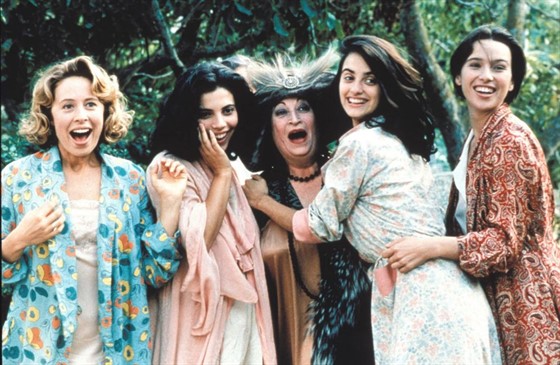
Belle Epoque (1992)


A Spanish movie that won the Foreign Picture Oscar in its year, I am not sure how I missed this when it came out, since it is exactly in the mainstream of early 90s American arthouse-friendly European imports that I regularly devoured at the Ritz 5 theater in Philadelphia and wherever else this class of movie was shown during that 1990-94 period. Since I hadn't seen one of these films in quite a while it awakened all sorts of memories and emotions in me while I was watching it and I frequently paused it to take down notes (on my phone!) for this review, which I probably should do for every movie that shows up here, though in most instances I am not inspired to say much about them. Here are some of my in-the-moment thoughts about Belle Epoque:


Early 90s art house world/era looks ever better.


Atmosphere great, fun, like the characters.


Usually I hate the guys who are being chased by beautiful women but I like this guy (in the movie a handsome young deserter from the Spanish Civil War takes refuge in the decaying mansion of a lapsed painter with four beautiful daughters, all of whom he has sex with--I don't consider this a spoiler since it is obvious this is what is going to happen the minute they arrive at the house--the question is what it is all supposed to mean).


Little touches, lovely things I haven't thought about in years, the night air (I almost never spend time outside late at night anymore), an outdoor party with cigarettes and dancing, beds in attics. It does make me want to be young again in a particular way that I have not felt in years. It reminds you what was fun about it.


Lot of SJC feeling. Early 90s, the old, deep Europe, an artistic family with books, etc.


It's one of those magic realism type movies, and has kind of a sad ending--the old European dream that the main body of the movie takes place in dies or fades out at the end and the young characters turn their faces, grimly in my view, to the modern world and the future, represented at that time by the United States.


While this is probably not a great movie, if you are my age and the kinds of sentiments and themes that I have mentioned here speak to you at all, I think you will find it emotionally rewarding if nothing else. But there seem to be fewer and fewer people who share my sentiments and reactions to anything as the years go by.


Belle de Jour (1967)


While very celebrated to the point that even people like me are familiar with its iconography, this is obviously an all-time classic, and I am becoming increasingly persuaded that Luis Bunuel is the greatest directing talent of the sound era at least, though like many directors who worked into the 60s and 70s I believe he may have started in film during the silent period, or close enough to it that his early attempts were informed by its peculiar requirements. Paris in the 60s, especially by '66-'68 when almost everyone was filming it in sumptuous color, always looks so perfect in movies. Ironically these were the last years just before a massive societal upheaval. One is reminded that the Paris/Europe of 1788 loomed as the lost Eden to many reactionaries through the first half of the 19th century at least. And of course perfect though it all looks, much of this film is set in a brothel, though certainly a clean and comparatively attractive one, is about characters who dress well but whose minds are (primarily) fairly vapid, who have little connection to each other. The only child I recall in the movie is the daughter of the brothel's housekeeper, about whose grades all of the prostitutes and even some of the regular customers seem solicitous. The later Bunuel movies that I can recall rarely feature any children, which I think is worth noting. The character of Henri played by the famous actor Michel Piccoli as a kind of prototype of the (compared to us) sophisticated adult French male with an assertive and unapologetic heterosexuality especially stood out to me. Remarkably, Piccoli is still alive at age 93, which means he would have been about 40 when this was filmed, a decade younger than I am now. I regarded his character as being at a stage of mental life much beyond my own, to which I had not yet attained. In truth however I missed that stage of life altogether and am probably never going to attain it. As to taking up going to brothels or propositioning the wives of acquaintances and engaging in role-playing and real sexual behavior in general, depraved or otherwise, with actual live women--that sort of thing is truly unthinkable. 


Ragtime (1981)


One of the more trite of the many trite comments that people make about older movies is to observe that "they don't make them like this anymore". Consequently I don't just try to avoid saying it, I try to avoid even having the thought as much as possible. However, in the midst of watching Ragtime, which was made during the period of my youth and which resembles in form and character a kind of movie that was common in that era, the thought kept recurring to me that, you know, they really don't make movies like this anymore. I'm not exactly sure what I mean by "like this". I liked the pacing of it, which seemed to suit the time period in which it was set, which had an decided energy, but not "energy" in the speed and volume and flashing pixels way that that word seems to be understood now. The shifting between multiple stories I thought was well done in giving some picture of America circa 1904, which comports somewhat with the idea that I and probably many people of my upbringing have always had of it (interestingly it was directed by the Czech émigré Milos Forman). Nowadays the idea of a feature film aimed broadly at adults is itself a novelty, I suppose. I haven't read the book, and the meaning of the various plot resolutions beyond the obvious racism-is-foundational-to-America-and-the-rich-always-triumph themes didn't make much of an impression on me. But the possibilities just beginning to be felt and hinted at in this country at the turn of the last century are suggested appealingly throughout this movie.


I don't like to be a cast nerd in these reviews--I've held back from going too deep in that vein on some of the other movies in this very post--but this one has too many notable people to omit mentioning them. First of all, of course, Forman persuaded the aged Jimmy Cagney (!) to come out of a 20-year retirement. The medium is so much more comparatively mature and the exposure of celebrities so massive now that this effect of bringing back an old star would be impossible to duplicate today. Jimmy Cagney dated back to the very beginning of sound movies, he was a real *movie star* with a public persona largely bound within those limits and then he effectively dropped off the face of the earth, and came back for one last hurrah. I like it. There is also Elizabeth McGovern (naked too!) as Evelyn Nesbit--and she is Evelyn Nesbit, who admittedly doesn't seem to have been a terribly deep person to try to portray--and I have always liked her more than the usual. She must be my type. Norman Mailer (!) has a small role as the celebrated architect Stanford White, there was Brad Dourif, the stuttering guy in One Flew Over the Cuckoo's Nest, who plays another weird guy here, there was Mandy Patinkin, who I read about for years in the New York Times theater coverage when I used to subscribe to it but never had any idea who he is, though I must have seen him somewhere. Howard Rollins, Jr, who I see died some years back at just 46, gave a famously strong performance. Pretty eclectic group.


Bend it Like Beckham (2002)


I thought this would be the weak link in the group, and while it was, it was not actually as bad as I thought it was going to be, and it probably succeeds on the terms it was seeking, which was to be a feel-movie for teenagers. To be honest I am surprised there are not more movies of this type. I also had some idea that this was fairly recent, but as you can see, it is not. I don't know how much more London has changed in the nearly 20 year interval since this was made. At that time at least, despite all of the ugly modern architecture and signs of cultural degeneration, there was still something beautiful about it, even just in the sky sometimes. It's a hallowed place in the psyche of many people, such as me, who can trace large portions of their mental formation to its environs. The director (Gurinder Chadha) noted in one of the extras that much of the shooting had taken place during a heat wave in the summer of 2001, and I was actually there during that heat wave, the last time I was there, in fact, so perhaps that association had an effect on my response.


I believe at the time the depiction of Indian culture in a mainstream film in Britain was still something of a novelty--the director Chadha presents it it seems to me as a fairly broad caricature, though not as bad as the caricature of the "traditional" (white) British family--Satyajit Ray she is not. At least as recorded by the right wingish internet, the old Britain went through a period of cultural squalor about a decade ago marked by extreme female promiscuity, public drunkenness (and I was thinking, oh if I could only be there!), educational decline and the like, media coverage of which at least seems to have abated in the most recent years. I haven't kept up much with what the British Indian community is doing, though I suspect they are doing fairly well, and their culture must be beginning to have some influence on the traditional British institutions which must be resulting in some conflicts, since it seems to me really different from the West and unlikely to hold much appeal to most people with any grounding in that tradition. But if our modern age has taught me anything, it is that I know nothing of the minds of other people and that almost every intuition I have about the current state of society could not be more misguided. So I will leave that here for now.


The real Evelyn Nesbit was a babe too.

Friday, June 21, 2019

June 3, 2019 Movie Log

Separate Tables (1958)


This is one I saw on a VHS tape about five years back. After having sat in the "availability unknown" section of my Netflix queue for seven years or so, it finally turned up in the mail one day so I watched it again. I wrote quite a lot about it on that earlier occasion. I sounded like I was more sure of myself than I probably would be now, though I don't have any much stronger takes than I had on the earlier occasion. I evidently thought Burt Lancaster was out of place in this film on the earlier viewing, which I was not struck by this time, I thought his presence was good. I also wrote that the while the author of the play, Terence Rattigan, was gay, that any suggestion of homosexual themes were "nowhere in evidence." I feel like this isn't quite true. It isn't explicit, of course, but a number of the more repressed characters, those played by Wendy Hiller and David Niven especially, and maybe even Deborah Kerr's, seem like the explanation of some of their issues could lie in that direction. Most of the other comments I made I pretty much feel the same. One thing I noted on this occasion was the portrait of Queen Elizabeth, at that time still a very young woman, hanging in the hallway. I don't know what to say about that other than, it's been a long reign.


In looking over my movie books I discovered that this film I have watched twice now is not even the version of this play that I was supposed to watch for the list. There was a 1983 version directed by John Schlesinger and which starred Alan Bates and Julie Christie which was the one that earned 5 stars in my book. Copies of that version appear to be even more difficult to come by than the 1958 one however.


Scent of a Woman (1992)


I don't like the title and I don't like the ending. Some of the other parts of it were all right. I had no idea what this was about. I was surprised that prep school was involved, as well as a weekend jaunt to a New York City that was still somewhat recognizable to me. In general I like re-visiting the early 90s, it's a time in my life that I am fond of even if it was otherwise not the most exciting period, and in fact comes off at times as the last dull years before the explosion of technology and globalization that has really marked the adult phase of my life. Al Pacino won the Oscar for this, widely regarded by experts as a lifetime achievement award, as he had not won one previously. I would agree that while his role here was not wholly uninteresting, it was not a great one. I thought overall that this movie was not that bad at the time, but not much of it has stayed with me. There is a somewhat famous scene where Al Pacino's character (who is blind) expertly dances a tango with a young woman of my generation who, it is supposed, had never had the opportunity to dance with anyone skilled in the art before, but the scene is memorable mainly because the lady was so gorgeous (Gabrielle Anwar, born 1970, about a month younger than I am, in Laleham, Surrey, England, which is also the hometown of Matthew Arnold).


One minor pet peeve I had about this movie which is not a big deal unless you happen to live here is that the boarding school is supposed to be in New Hampshire and the story to take place over Thanksgiving weekend, but the weather is about six-seven weeks off, the fall foliage is still in its robust fullness and the students are still walking around in light jackets, which is a season that is over by the middle of October. Thanksgiving is pretty much winter, it's not getting above 40 degress and about a third of the time, including last year, there is already snow on the ground. So after going through 20 Thanksgivings in this climate the picture presented of it on the screen is not congruent with experience.


Medium Cool (1969)


Another one that I had already seen and that then suddenly showed up after languishing for years in the Netflix queue. It had held my interest when I saw it before so I watched it again. It throws a lot of zeitgeisty type things of its time at the viewer, most prominently the manner in which the modern media, especially visual media and television, frames and manipulates news and information and so forth, but also black empowerment, discontent over the Vietnam War, the assassination of Robert F Kennedy, middle class fear of crime and disorder, the war on poverty, drug psychedelic culture. The various issues are presented episodically, though there are a couple of main characters (a television journalist and a pretty young single mother who has moved from Appalachia to a poor part of Chicago) who re-appear throughout the story. While there is I guess some actual footage from the 1968 Democratic convention in Chicago, almost all of the movie is scripted and uses actors. The first time I saw it I was under the impression, I'm not sure why, that more of it was a documentary. It's different. Most of the themes raised in it are things I feel like everyone has been railing on my whole life without ever resolving to any serious person's satisfaction so I'm not sure in the end I took away much from this film even on the second viewing other than a sense of where certain observers thought society was headed in 1968/69.


Schindler's List (1993)


I remember when this came out it was a very big deal, or least to me as a 23 year old it felt like it was, that if one was any kind of regular moviegoer at least you were supposed to see/pay homage to it, the great, or at least colossally successful, Steven Spielberg's acknowledged magnum opus, at some point. The Best Picture Oscar was a foregone conclusion, the only year I can remember where there was not even a contrarian attempt at debate. It placed 9th in the AFI's by-the-book 1998 rankings of the one hundred greatest American movies of all time--the only post-1980 offering to crack the top 50. Yet for all this hoopla I don't remember any of the real giants of either the movie industry or among critics and historians making a passionate case for its being a film of this level of greatness. I did my duty and went to see it in '93 and I thought it was kind of what you knew it was going to be, a catalog of senseless atrocities and murders against the gloomy, dead, black and white backdrop of the Eastern European hellscape. I went with some intelligent friends of mine from school and their comments upon leaving the theater were pretty much of the shrugging "what can you say?" type. While it is very detailed and large in its scope, unless you went in knowing nothing, or at least not very much, about the Holocaust, it didn't feel like there was anything new to really chew over. It follows the Hollywood tendency to keep the focus on the most inarguable manifestations of evil and sensations of terror. Some of the better European films on the subject, such as the 1965 Czechoslovakian Oscar winner The Shop on Main Street, have always struck me as perhaps being a more accurate depiction, at least in some places, of what World War II in occupied Europe was probably actually like, a lot of people who were not especially smart nor brave nor, when their own hides were on the line, inclined to care much about the fate of anyone else, caught up in an enormous world historical event that nothing in their previous lives had begun to prepare them to navigate admirably. And yes, in these other films you get the snarling dogs and relentless searchlights and preening vulgar Nazis, but there was a lot more involved in the whole mess that Hollywood tends to leave out.


So, 26 years later this movie comes up on my very complicated selection system to see again. In the interim I had not thought much about it nor seen it referred to in the kind of movie writing that I read when compared with things like Fight Club and Office Space. Seeing it again, I do have respect for it as a production. It is well-made, even lush in its attention to detail and objects. I noticed more how stupid all of the German characters are depicted as being, and how foolish in believing themselves to be cultured. Even Schindler, who comes out in the end certainly as a kind of hero, is portrayed as somewhat lazy and not on the same level of shrewdness as the smarter Jewish characters. It's a stupid thing to notice I suppose but if you're putting it in the movie fairly unsubtly, especially in this day and age, of course people are going to pick up on it. It does still have something of a flat effect about it--it really is more like a monument in some ways than a work of art--that causes me to resist embracing it as the great movie it wants to be. Those are my main thoughts about it at this time.


I remember there was a guy at our college when this came out, not the smoothest operator, who after plotting for months to ask out a particular girl, when she accepted his request for a date, took her to see this. I don't think they went out again (this guy was not me by the way--my folly would have been taking somebody who was deadly serious and mature to something like a Jerry Lewis movie).


The word "taxi" came up in one of my internet search games that determines some of the things I do, so I ended up having a spate of taxi movies to watch. The next two both garnered "turkey" ratings, which is lower than even one star, in the most of the ratings guides I have, so I was a little disturbed that I kind of liked both of them.

Taxi (2004)


The--I don't want to say all-star but recognizable personality--cast includes Queen Latifah, Jimmy Fallon, Ann-Margret, Gisele Bundchen and someone named Jennifer Esposito whom I did not recognize but who is attractive. Except for Ann-Marget all of these people are around my age. This movie involves a lot of wild driving around New York City, especially in pursuit of Gisele and the gang of supermodel-gun-toting-bank robbers that she is the leader of. The premise is not really the attraction. That, I guess, would be the efforts of Queen Latifah and Jimmy Fallon especially to good-naturedly re-create some of the spirit of the more middle class New York City of my generation's teenage years and young adulthood, which was already waning by the early 2000s.  Gisele Bundchen is not the most accomplished actress, though she manages to smirk attractively a few times. In general I am not a big supermodel lover, in the sense of rating them so far above other attractive women. I often think that this is a somewhat artificial distinction promoted by wealthy and powerful men who need others to be convinced that their wives have as many times the value of lesser men's wives as they themselves do in their achievements/financial success, etc, over their lesser fellow creatures. But that's enough to say about this movie.  


D.C. Cab (1983)


This one I really was not expecting to last beyond a few minutes, especially when I saw it was directed by Joel Schumacher, whom I have always found to be perhaps the most execrable director in Hollywood who seems to have some idea that he is trying to be good. However the downtrodden characters had a camaraderie that was kind of infectious, maybe because it is something that you almost never see anymore, at least genuinely. It also has a goofy humor that is none the less engaging as well. Now, while it may be Joel Schumacher's personal masterpiece, I am not claiming that it is really a good movie. However, like the other Taxi movie, it reminded me of some things from my youth that I guess I missed without realizing them.


This picture is not from this movie but this girl (Jill Schoelen) was adorable.


Taxicab Confessions--New York City (2006?)


The sleeve this came in gave a date sometime in the 90s but the people in it speak of 9/11 as already several years in the past; at the same time no one has a smart phone yet so it can't be too many years afterwards. This is just a reality show where people riding in a taxi reveal things about themselves. Apparently there were episodes in other cities and so on. Again, there is nothing of greatness in it, but to me it is an interesting slice of life type of thing to look at for an hour because, especially since I have had children, I haven't really done anything else. I haven't gone out at night, I haven't ridden in a taxi in New York, no women have flirted with me, I haven't had conversations with smart people. I've been kind of dead to the greater world. So these sorts of shows which even suggest the possibility of nightlife or adventure hold more fascination for me than they really merit.


Friday, July 13, 2018

Some Very Brief Movie Reviews

I am still months behind on recording the movies I've seen, though for the time being at least I have largely stopped watching any new ones, maybe one or two a month. There are a myriad of reasons for this. 1) A genuine, if ridiculous, desire to come current with my reactions on the blog before it becomes impossible to catch up, if it hasn't already. 2) I tweaked my selection system so as to bring more recent movies on the list to balance the classics that I would probably be happy enough to watch exclusively. But as I generally don't like these newer movies as much even when objectively I suppose they are very good, I am not as dedicated to watching them in a timely matter. My interest in this particular project is also not what was a few years ago. And then 3) similar to the problem that has affected my reading, as I get older (and seemingly ever busier) I find I am too tired in the evening even to watch most movies to which one might desire to apply some thought. All of this has been steadily been pushing me away from regular movie watching over the past year. Nevertheless I still have an incredible thirty-five titles to comment on, seven of which I will take on here.


At First Sight (1999)


One thing I will say about this is that it was not as thoroughly terrible as I thought it was going to be. Of course it is pretty blah, but it does have Mira Sorvino in it, whom I guess I knew I liked, but I guess I liked her better than I knew. She's one of the actresses about my age who is supposed to be quite smart too, as in, has an actual high IQ, which is not an inconsiderate matter to me. The movie is set on the east coast, New York but also some of the towns in the Catskill/Hudson river area of a type that would be familiar to me, and there is some material for 90s nostalgia as well, my being the same age approximately as the characters in the movie and having somewhat experienced the already long lost world they inhabit, in what would have been some of the prime years of my life.


Mira Sorvino really was a cutie. Contrary to what it may appear from my writings, there aren't that many actresses whom I like enough to sit contentedly through an otherwise lame movie to see, but for the moment at least she seems to be one of them. She has been making something of a public comeback lately as a prominent voice denouncing Harvey Weinstein and Trump, and perhaps others as well, and it's great to see her again even when she is angry.


Laura (1944)

While the older movies I love have not been turning up on my lists much lately, if I go back this far there are still a few I have to write about. I don't have a lot to say about Laura, though I remember liking its style and language and its overall essence. As is often the case in old movies where murders or mysterious deaths are involved, I didn't think the central plot was very convincing, but I don't care that much. This is supposed to be the movie where Gene Tierney achieves her peak of beauty, which is saying something, for she was unusually renowned in that department. Dana Andrews, who appears frequently is movies around this time, was also in this. The director was Otto Preminger, and this seems more often than not to be considered the best movie of his very long, up-and-down, never quite great career. Probably one I should see again.
West Side Story (1961)

Classic of a sort though it undoubtedly is, I had never seen this before, and my expectations were muted, because it has not been written about very much in glowing terms by the know it all types for pretty much my entire life. So I was surprised at how much I was able to enjoy it. All of the songs I have known all my life without particularly liking any of them, but they all work and seem to sound much better within the context of the movie. There is a lot of good energy in this, and, as many commentators have acknowledged, the design, the costumes, titles, colors, etc are somewhat surprisingly spritzy. This is another one I would probably have to see again to get a sense of how good it really is; on this first viewing I was reacting against what I had anticipated, which was something much more dated and limp and middle American, which, despite its erstwhile popularity there, it really is not. The gang of switchblade wielding blond street thugs that is supposed to be terrorizing New York cannot come off now as anything other than absurd, of course. There's nothing to be done about that.

Footloose (1984)

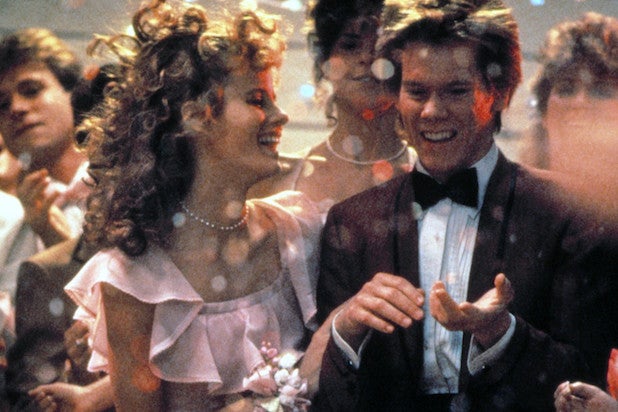
Footloose was a big hit among mainstream younger people without a ton of exposure to anything more interesting when I was fourteen, and as I was naturally such a person, I do remember going to see it in the theater at the time. I didn't like it that much then compared to other things, not because my taste was so advanced as much as that I wasn't much interested in the main romantic strain in the plot--the female lead was rather gangly as well as crude, which I guess is not my type. Also being from east coast suburbia and not knowing anyone who could be considered remotely religious, the bible-thumping adults who were terrified by rock and roll and the idea of teenagers dancing in 1984 seemed a bit far-fetched. I also didn't particularly care for any of the songs at the time, though I didn't mind hearing them now, probably because despite quite a few of them having been pretty big hits, I hadn't heard most of them in decades, and I identify them, even more than other songs that came out at the same time that you still hear constantly, with that summer before my freshman year of high school, which is a time I remember fondly. You are all potential at that age, people have some hopes for you if you have anything going for you, even if you haven't had any notable success with girls yet it is not the existential crisis it becomes when you are eighteen, nineteen, twenty. But now I am getting away from the movie...

Around the time I saw this my wife and older sons were watching the TV show Stranger Things, which is set in 1984 and indulges heavily in 80s nostalgia even down to featuring Winona Ryder in a starring role. I watched a couple of episodes though I can't commit to watching entire 50-episode TV series at this time, and I did find some of the 80s vibe, I don't know the word I am looking for, not endearing, or comforting, exactly, but something in that vein. The town and the high school were reminiscent of the ones in Footloose and John Cougar Mellencamp type songs, though my own high school wasn't like that, or any other 1980s movie high school (it reminded me more of the high school in Grease than anything else, now that I think about it. It is supposedly 30% Muslim now, mainly Somali, so I suspect that vibe has changed). The nostalgia of Stranger Things I thought had a  strikingly and self-consciously white quality about it, even more than what is usually the case, which I thought internet critics would pick up on and rip to shreds, and a few did, but not that many. It struck me as unusually (for the present day) matter of fact and unconcerned with explaining or defending itself, which is kind of what stands out to the contemporary eye about the atmosphere of Footloose. Every single person in the movie is white, and no one is particularly conscious of this or thinks it is remarkable, which is how it really was in a lot of places even in the 80s. There was a remake of Footloose in 2011 with presumably some more up to date diversity which I don't remember hearing about at all though it seems to have made a modest profit.


Hyde Park on Hudson (2012)

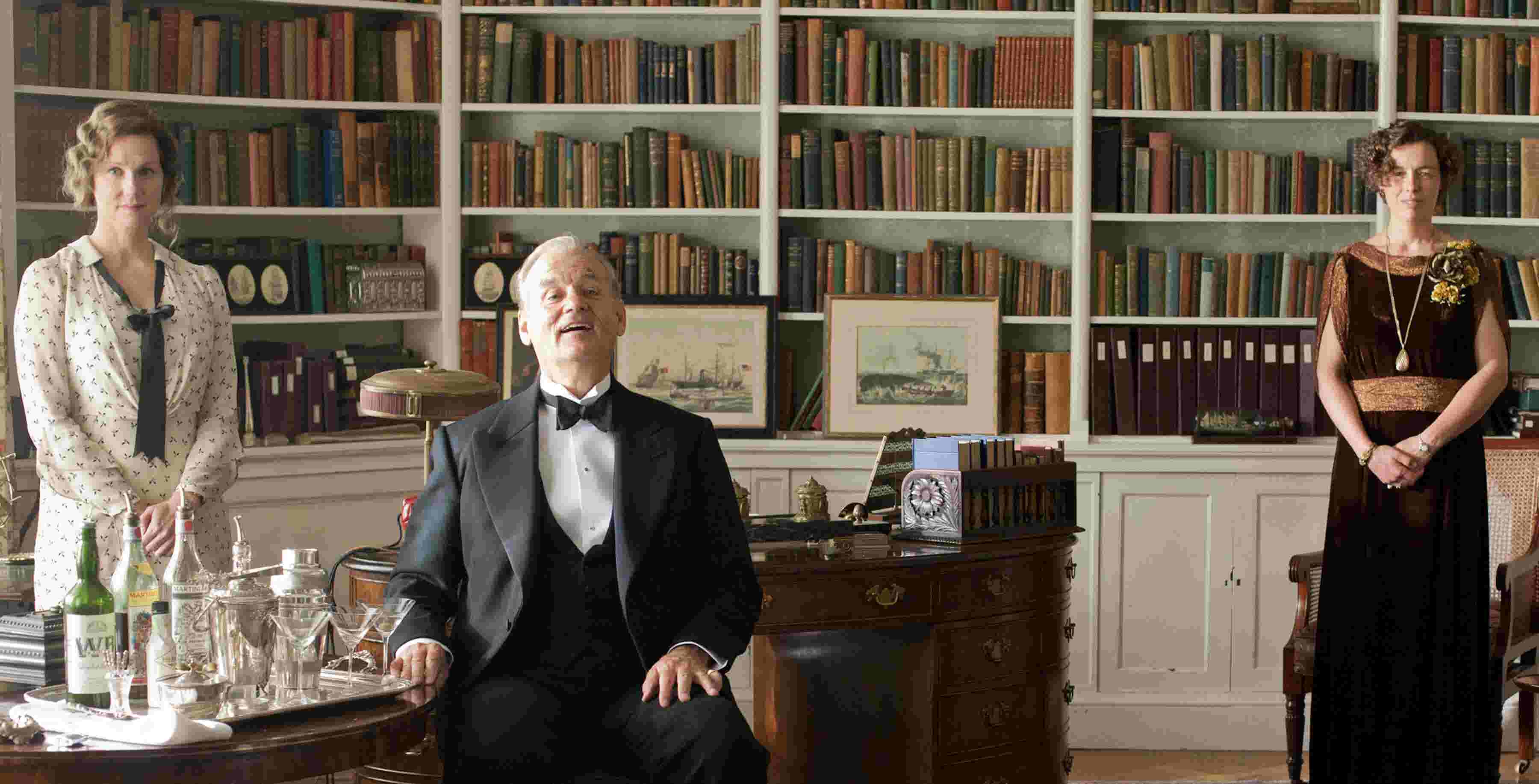
I think this is what they call a small movie about Franklin Roosevelt's girlfriend and what is portrayed as the desperate visit of the King and Queen of England on the brink of World War II during which they have to submit to the humiliation of eating hot dogs. There were some things about it I liked. As anyone who reads this page knows I am a fan of this time in America, so I like all of the period touches, the cars, the clothes, the furnishings. Many of the well-known and happy songs of the time make an appearance in the soundtrack. Bill Murray's turn as F.D.R. I found to be a welcome departure from his usual post-Rushmore screen persona as the curmudgeonly old guy who turns out not in fact to be a complete jerk and can be counted to do the right thing in the end. I have long suspected that Bill Murray is conflicted in his feelings about social life and order at present similar to the way I am, and playing these kinds of roles where he can appear (for a time) to still retain some asshole-ish characteristics are the way he deals with this in his professional life. Not that he exactly hates people or loves the Trump movement--I actually have no idea whether he has expressed any position on the subject publically--but I get the feeling whenever I see him now that he must be thinking back on his more youthful days and finding contemporary life rather weak in comparison, while being aware that bringing back many, if not most of the circumstances that contributed to the raucousness of that earlier era are either impossible or unacceptable. So I find him, more than most other famous actors/personalities at least, to be a somewhat interesting man out of time type figure. I wonder if it was not a relief to him to play someone from the past.

The film's modern take on the late 1930s political situation has been negatively assessed in most of the online reviews I have looked at. I did not have any strong opinion of it at the time that I remember.


It's Alive (1974)

Horror films, which I have for the most part assiduously avoided up to this point in my life, have of late begun to creep onto my film lists, particularly with the new system. I did watch this, but I don't remember much of it, and it had no appeal for me. I have developed a taste as I've gotten older for the sexier Warren Beatty/Jack Nicholson type of classic 70s films and imagining that they reminded me of the world of my very early childhood. This movie, with presumably a bargain basement budget, depicts that time in its more hideous aspect, though more extremely grotesque fortunately than I have any memory of. But as I said, these kinds of pictures do not speak to me in my current stage of life.


No, this is not from the movie. It is from 1974 however.

The Other Sister (1999)

Has there ever been anyone who liked this? Everything about it projects horridness to anyone the least bit sentient. Artworks about mentally handicapped people as a rule I find to be tedious. This movie also throws in Diane Keaton (though she at least is not playing a mentally handicapped character), who was annoying to me in Woody Allen phase of her career, and whom I find unbearable in that part of it that came after. This is because she looks like my mother, is about the same age, and has almost identical annoying mannerisms, both facial and in her achingly non-vibrant movements. Then there is the extremely rich but eternally dissatisfied late-90s aging yuppie/baby boomer milieu...perhaps this was the imagined audience for this painful movie.
If there was any point of interest for me in this it was that much of it appears to have been filmed in San Francisco, a city about which I apparently know nothing--I haven't even seen many of the numerous classic movies set there--but the cityscapes they used in this make it look extremely attractive, or at least as it was in the 90s.


I can see myself at some point in the near future limiting myself to some kind of pre-1980 (maybe pre-1990 for foreign films) classic film program, in part because there are so many all-time great movies that I still haven't seen and I'm starting to get old, and in part because I don't like enough newer works, and haven't found a reliable system by which to pick those newer works that I might be more inclined to like.

Wednesday, April 04, 2018

Movies--Many Movies

I've fallen way behind on my movie notes. I have a list of thirty-seven that I haven't recorded here yet! I hardly remember a lot of them, naturally. I will go seven at a time, and put down any impressions that have stayed with me. I should also note that around the time these new lists start I tweaked my system to allow more recent movies to be included, since the main book I was relying on ceased publication in 2007. I don't generally like the more recent movies but I'm not quite ready yet to give up everything current and escape into the past at every possible chance. I am now extra excited when an oldie comes up though.


Ironweed (1987)


I wouldn't have chosen to see this if it hadn't come up via the System, mostly because it stars 80s era Jack Nicholson and Meryl Streep as alcoholic vagrants in depression era Albany, the idea of which, probably because of my age relative to them, has not traditionally appealed to me. It wasn't bad I guess, though it wasn't great either. Its depiction of how dreary being homeless in the long, dark, cold nights of the American Northeast would be was pretty accurate. Jack Nicholson, whom I found annoying most of my life, inhabits the role here well, I think. We all know about Meryl Streep and how remarkable she is. Her character dies in this (spoiler alert, sorry) and she has to play dead on screen for around five minutes, and I don't know that I have ever seen a more convincing portrayal of a dead person. It also illustrates an observation I have made elsewhere, the uncanny ability Meryl Streep has to always command your attention upon whatever awesome thing she is doing. Here she is just lying down, on a carpet I think playing dead, and all I can think about is her technique in portraying this dead person, whose character however I had forgotten about.


Tom Waits was in this too, perhaps not surprisingly as a fellow vagrant. I had not thought about him in years, though in this era he was something of a cultural touchstone, making several forays into acting. I found him mildly annoying at the time too because he was supposed to be cool, though you would only get that if you were a certain kind of person, which I was not. But now that he's been kind of forgotten and no one talks about him anymore I like him. He takes me back to that era.


Serpico (1973)


I had never seen this before--again, in my youth the themes would not have appealed--and while it has always had a decent reputation, I think seeing it now that it holds up really well. It has the whole gritty-New-York-in-the-70s vibe that was scary to live through but looks great on television 45 years later, but the story, about a policeman with a conscience taking on corruption in the NYPD that was apparently based on a true story that did not resolve in the exaltation of the honest cop and the disgrace of the crooked, seems daring to me. I don't feel like I have seen anything recent where some evil force in society that has not as yet been taken down has been confronted so directly and the exact nature of their crimes identified and demonstrated so clearly. This was directed by Sidney Lumet, who did not necessarily make the most lovable movies, but whose work I usually find to contain admirable aspects, even if I do so grudgingly.


There is a great scene shot on a hill overlooking the old Yankee Stadium from beyond center field, where the train tracks are. If you follow baseball at all of course you've seen the view looking out that direction from the stadium, but I had never seen it from that outside vantage, where in 1972-3 at least there was still a decent amount going on as far as traffic and street life. This would have been filmed before the 1974-75 renovation of the classic stadium too, which we still see intact.


Al Pacino's look in this was very early Springsteen-esque, which I have to assume was characteristic of the time. I at least don't see many people who look like that anymore. When I was a child I thought the era I lived in (this one) was nasty and terrible, and longed even then for some unknown past, but now of course I find I miss some of what has been lost since then--animated conversation, normal people and what seem to me normal business enterprises in cities come immediately to mind as examples from this movie.


Around the World in Eighty Days (2004)

This version starring Jackie Chan in the Passepartout role came up in my revised system because I had read the book (which I enjoyed), though the 1956 version, itself often maligned though it did win the Oscar for best picture, did not. This illustrates the risks of the open system, since I don't remember anything about that that was worth seeing. I had the impression that Jackie Chan was a mixture of comedian and action hero, but not here. Dreadful. Waste of money.


Read the book.

Fantastic Beasts and Where to Find Them (2016)

Written by Harry Potter author J. K. Rowling and set in a 1930s New York version of the same magic universe--there is a hoity-toity American counterpart to Hogwarts, naturally--I actually liked this better than the Harry Potter movies I have seen. I'm sure this is because of the highly stylized retro setting, which apparently is supposed to be 1926, but it looked and felt more like the 30s to me. I remember thinking the women actresses in it were pleasantly attractive enough without being gratuitously 'hot', though you probably aren't supposed to remark on that. The plots of all these fantasy movies with their incredibly violent final battles don't make much of an impression on me, but this was engaging enough as a nostalgia piece.


L'Auberge Espanole (2002)

A French-Spanish joint production made during the heady days just after the introduction of the Euro and the true realization of the dream of the free movement of Europeans, especially young and relatively good-looking and educated ones, throughout the zone. The title refers to an apartment in Barcelona that is shared by about eight different post-graduate 20-somethings, all from different (Western) European countries. Seriously, there is a Frenchman, an English girl, a Dane, an Italian, a Spanish woman, probably a German. I didn't particularly like any of the characters in the house, all of whom spoke English with the arrogance peculiar to their particular nationality, but I enjoyed the movie because it was made not long after my own time being there and it was familiar to me. If I were dropped into this movie I would be able to function and get along very well right away. My children like to watch the TV show The Amazing Race and when the contestants are in these foreign cities everything seems so different now. People are doing everything with their phones of course, even buying metro tickets, and everything everywhere looks so crowded and expensive. In this movie eight people in an apartment are still sharing one telephone hung on a wall, and this is only sixteen years ago! (though I feel like some of the characters had cell phones). Third world immigrants are barely a presence at all in this film, apart from Africans getting Phds in economics. There are no Muslims at all, nor does there seem to be much consciousness of them. Relatively average looking young people are still a real threat to have sex, or try to have sex, if they have too much to drink or otherwise find themselves in a bawdy mood, which is an element that seems to be missing from more recent movies, where everyone is too interested in maintaining control, or at least the appearance of it. The movie spawned two sequels featuring several of the same characters, Russian Dolls (2005) and Chinese Puzzle (2013), which I have not seen, though I would be interested to see how they have incorporated the changes in the European scene into the newer films, since the early 2000s time capsule quality of the original is the most interesting thing about it to me.


I liked this chick the best. She didn't live in the house.

Arsenic and Old Lace (1944)

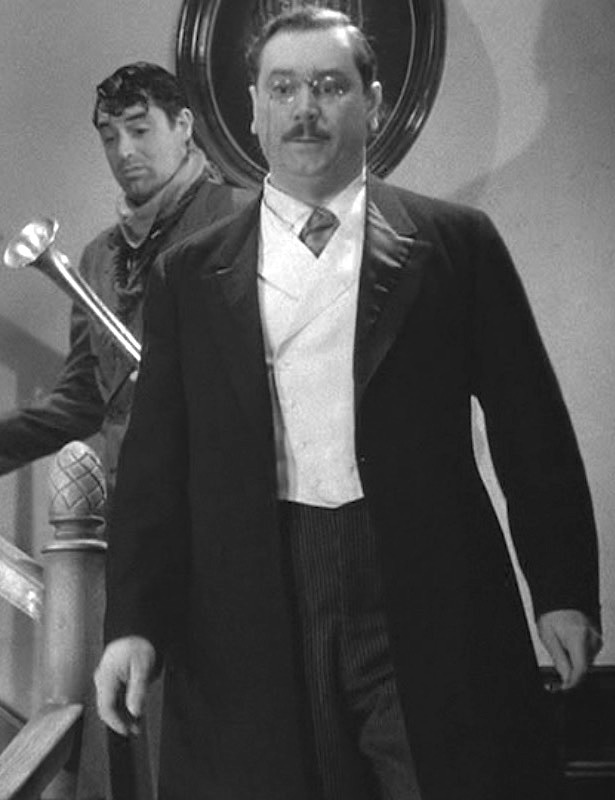
We do make it back in this set to a couple of old classics. Here of course we have the impressive lineup of Frank Capra directing and Cary Grant and Peter Lorre among others, including Raymond Massey. The story is implausible to say the least--the implausibility level is about the same as something like I Married a Witch, actually, but as you know I almost never watch movies for the story anymore. According to Wikipedia this was filmed way back in 1941, but was held back from release until the popular stage show from which it was adapted finished its run. Either way it has a good 40s ambience, good sets, etc. I like both the indoor and outdoor scenes, which are supposed to being taking place in Brooklyn, but which look like they belong in Connecticut, though the outdoor scenes have what is supposed to be the Manhattan skyline in the background. Somehow it works though. It's a nice little movie if you are into that kind of thing (basically a 1940s mainstream American idea of wackiness).


Hey Priscilla Lane. I liked her in this (romantically). Haven't seen her in much else.

I Love You Again (1940)

The first half hour of this screwball-esque comedy starring the classic Thin Man duo of William Powell and the ubiquitous Myrna Loy I thought was great, the best movie I had seen since maybe Rebecca. It couldn't keep up that torrid early pace, which was disappointing, but I still think it merits a high rating. The subject is one that I have seen in other old movies and that never fails to hold my attention, doubtless because I often fantasize about something of the sort happening to myself. A sententious, risk-averse, teetotaling prig, played by Powell, receives a blow to the head while on a cruise ship and wakes up with a completely different personality, roguish, witty, vigorous, and so on. His wife Myrna Loy, here still in her sexy 30-something persona, to be distinguished from the handsome, dignified, almost arch 40-something persona which she later inhabited, was bored out of her mind and in the process of drawing up the divorce papers before the accident, but needless to say gradually backed off from these legal activities as her husband's transformation into a completely irresponsible and even amoral person began to become apparent. In the end a minor favorite, especially in its genre.