Showing posts with label hollywood--40s. Show all posts

Thursday, April 15, 2021

1936-1985 (Rodolfo Nieto Commemorative Movie Post)

There were a lot of old ones in this group, so it should have been a good set for me, but it was just kind of so-so. 

Mildred Pierce (1945)

Well-regarded, noir-ish picture directed by Michael Curtiz, also notable for being one of the better known roles--she won an Oscar for it--of the legendary star Joan Crawford, who remains an object of some fascination in our time seemingly as much for her reputation for being a colossal pain in the ass as for her acting career, as her heyday as a star--and she truly was huge in her time--was the early 1930s, and other than Grand Hotel, most of her big starring vehicles are not widely known today. I was a little disappointed by this on the first viewing. Being right in my favorite era of Hollywood movies as well as knowing the regard a lot of film buffs had for it, I was expecting it to make more of an impression, but I don't remember much about it, and I didn't think much about it even after I had just seen it. Mildred Pierce is a single mother who becomes a tough and very successful restaurant owner. Her daughter is resentful of her social origins and is one of the most notorious villains of the noir period. Has some different themes. Maybe I'll see again another time in a more receptive mood.  

Julius Caesar (1953)

All-star black and white production of the Shakespeare play directed by Joseph Mankewicz and featuring Marlon Brando as Mark Antony, James Mason as Brutus, and John Gielgud (in his pre-Sir days, I believe) as Cassius. The whole presentation is very much in keeping with the earnest Great Books/mass college/theater as a fine art aesthetic of that postwar period, which is the background I come out of, so to me this is very much how I imagine the play should look and be acted according to my understanding of that time. According to Wikipedia MGM wanted to make the movie in color but the filmmakers (Mankewicz and the producer, John Houseman, who, yes, is also the famous actor) didn't want to make a spectacle, and also wanted audiences to infer a parallel with the recent Fascist movements, in particular the newsreels. As usual it was a good decision, especially in light of the ever shrinking provenance of the black and white era in the history of cinema. As often seems to be the case, there was a lot of fighting among the stars (in contrast to today of course, where everyone is always claiming to get along swimmingly and to love their fellow cast members). I never know how much I should care about those things or whether they are particularly relevant when watching a movie. This is as good of a mainstream version of one of the more watchable and accessible Shakespeare plays I think you are going to get.     

Gotcha! (1985)


Mid-80s young person comedy with a Cold War twist featuring the same director (Jeff Kanew) and one of the stars (Anthony Edwards) that had given the world Revenge of the Nerds the previous year. I don't remember this coming out, though I went to the movies often at this time, as well as heard about all the movies other people went to see that I missed. I was hoping that at the very least it would provide some unlooked-for morsels of 80s nostalgia, but it really didn't have anything I liked. It is unbelievable now that East Berlin and the rest of the Iron Curtain countries were closed off until after I was out of high school. The (very) little taste we get of Communist East Germany is the most interesting part of the movie to me, though this is the kind of film that can only depict the world behind the Wall (and most of that on our side of it, to be honest) in completely cartoonish terms. As in many Hollywood efforts of that era, there is a "Czechoslovakian" spy whose presumed nationality itself is taken to be a source of hilarity, and the character is given a Russian name that no Czech person actually has. This happened frequently enough that I almost want to assume it was done on purpose. A pretty lame movie all around. Even the mid-80s soundtrack was a miss, at least as far as original songs went. 

Night of the Hunter (1955)


Hailed by many critics as one of the very greatest films (as in top 50) of all time, I don't like it that much. It is artistic, and it is unsettling, and it is unique for its era, and I can kind of see what hardcore movie people love about it, and maybe if it hadn't been hyped so much its quality might have taken me by surprise. But I have to say, there was nothing about it that I particularly enjoyed, and since it ended I have not been overcome by any great desire to see any part of it again. It is famed for being the only directorial effort of the beloved Charles Laughton, a truly great actor and formidable all around artistic presence in his lifetime. He is the kind of towering figure from the past whose presence is, I sense, perhaps most strikingly missed in the present cultural environment. Anyway, he is lavishly praised for this movie.

Night of the Living Dead (1968)


I have no background in "horror" movies. I had no interest in them as an adolescent. I don't have any interest in them as a genre now, and even if some of them can be said to have genuine artistic quality or entertainment value, my true feelings would be to wish that the talent involved could have been deployed in a different kind of movie. That being said, I went into this cult classic with no pre-existing idea whatsoever of what it was going to be like, expecting to suffer dutifully through a half hour or so of gratuitous gore before giving it up, but to my surprise it had a lot to hold my interest. I still don't care for the overall premise too much, but the storytelling isn't bad, and a late 60s, black and white low budget indie film shot in Western Pennsylvania without special effects or other high-tech tricks where all of the clothes, cars, appliances, furniture, and so on are immediately recognizable to me from my earliest childhood is pretty captivating. At one point in the commentary when the victims are frantically boarding up the windows of the farmhouse (which looks a lot like the house I live in now) one of the speakers jokingly asked "Who has this many boards lying around their house?" But I actually do have that many. I thought the set-up of this movie was better than the resolution. They were probably running seriously low on money by the end of filming. 

The Milky Way (1936)


These last two movies were contained on the same DVD. By the time it arrived I had forgotten which was the one I was supposed to watch so I watched them both, especially seeing as neither one was much longer than an hour. They are very loosely connected in that both involve boxing, or at least have a plot that leads up to a boxing match. The Milky Way is supposed to be the better film, I think--it features Harold Lloyd in one of his more successful talking roles--but its particular humor, pretty much all of it, in fact, and this is the case with a lot of 30s movies, was lost on me. I did like Harold Lloyd's silent classic The Freshman from 1925, which has a ton of style and pointedly mocks some of the stereotypes and absurdities of college life, though with a romantic underpinning which makes it a lot of fun. The focus in this one is not as sharp, and the dynamics of boxing and street brawling and shady underworld characters are perhaps not as inherently amusing to us as they seem to have been to audiences in the 1930s, the films of which era frequently feature mild-mannered characters who find themselves in dilemmas where violence is not merely an option but the dominant way of life, so to speak, the social currency. Oh yeah, Adolphe Menjou is in this too.   

Kid Dynamite (1943)  


This was even more of a throwaway movie, the equivalent of a TV show really. Nonetheless I really liked it, because it's about teenagers set in 1940s New York City, and I have always loved those kinds of movies. This was part of an unbelievably long series of films (around 78 in total) featuring much of the same core of actors about a gang of kids, and presumably, as the series went on, young men, that ran under various incarnations, such as the Dead End Kids, the East End Kids, and the Bowery Boys, from the mid-30s until 1958 (!). Kid Dynamite was made during the East End Kids period, which ran from 1940 to 1945. The main character and leader of the gang, Muggs McGinnis (played by Leo Gorcey through almost the entirety of the series), is supposed, I think, to be a lovable Irish rogue type, but in truth he's really a pretty violent thug. Some of the other characters have a modicum of manners and are a little more endearing. I like the parts where the guys hang around the clubhouse and shoot pool and the girls dance to records. There's also a nice scene at a community dance hall. The girls are very pretty and sweet, even the ones who are supposed to be (mildly) "bad". At the end of the movie, it being wartime, three of the older boys, including Muggs, enlist in the Navy, and appear in uniform in the final scene. This part is heavy-handed and crudely jingoistic on a level that the classics of this era which people are mostly familiar with today, which are often considered jingoistic enough themselves, do not begin to approach. This class of film is definitely not going to be for everybody, but perhaps since they were not heretofore part of my consciousness combined with my general love for almost everything from this era, I kind of got a kick out of it, and was glad I saw it.

I was going to write here about my recent sluggishness and lack of interest in anything, including writing, including reading, including movies, including anything else, and wondering what I was supposed to do to revive interest in my life. But I feel better today so maybe I will put that essay off for now.  

Friday, September 04, 2020

"You Will Get Nothing"

The title is another phrase that plays on constant replay in my mind, usually whenever I think of something that I would like to be able to have but am certainly not going to get. Writing the other little catchphrases out as blog post titles does seem to have done some good as far as not having them repeating in my (mind) ad nauseam after I did it, so maybe I will have a similar result with this one.  

Birds of Prey (1973)

Another weird selection, this is a made-for-TV movie from 1973 that somehow got on my list and that I could never find a copy of. One night when I didn't have any DVDs, due to a delay in the mail probably, I was searching through the fairly large group of movies on my list that have never been available to see if any of them happened to be streaming for free on Amazon, and this one came up. It had not been re-mastered or anything, so the quality was reminiscent of watching an educational movie on a reel-to-reel projector in school in 1978. It was only about 70 minutes long, but I fell asleep about 20 minutes in, and while I would occasionally revive myself, I could never do so enough to concentrate long on what was happening. I saw enough that I didn't feel the need to try to watch it again on a night when I was better rested. The premise, about a middle-aged World War II pilot who was working as a helicopter traffic reporter on the radio in Denver* who has to assist the police in chasing down (through the air) some people who have committed some kind of major crime and escaped via a helicopter of their own, was not uninteresting, but the whole movie was too subdued and yellow-hued to keep me awake. 


In my memory Denver was kind of a trendy, up and coming place in the 1970s, but it has faded in the national consciousness in our day compared to places like Seattle and Portland. I never think of it or have any sense of what kind of people live there now.

The Sea Hawk (1940)

Swashbuckling, big budget (for the time) Errol Flynn vehicle, in which Flynn was reunited with his frequent collaborators, director Michael Curtiz and co-stars Claude Rains and Alan Hale, Sr (but not, alas, Basil Rathbone and Olivia de Havilland). I was probably influenced by the general deprivation of late of golden age Hollywood movies that I have inflicted upon myself (lest I never bother to explore anything else) but this was real excitement for me. I love the dialogue in these movies, the espirit du corps, the usually outrageous but highly entertaining interpretation of history. I almost never like post-1965 male movie stars, especially if they are considered good-looking, but Errol Flynn--safely long dead and not any kind of immediate personal threat to one's self, to be sure--I always find eminently likable in his film roles. He is always believable as a man that other men would trust and gladly follow even in the most dangerous or hopeless situations, and it is certain that such men have existed at such times in the world and accomplished astonishing feats, though we do not see this depicted or celebrated much it seems to me in our time, at least in such an appealing way. 

This movie is set in the time of Elizabeth I and the Spanish Armada by the way, with all of the accompanying madcap tomfoolery in the depiction of the arrogant Spanish ruling class that might be expected. Flynn's daring sea captain is pretty obviously based on the career of Sir Francis Drake, though he is not named as such. Made during the early part of World War II before the entrance of the United States into the conflict, the parallels between the contemporary English position and the historical period of the movie probably don't need to be spelled out. 

A Civil Action (1998)

I admit I groaned when this came up on the program. Apart from being about lawyers, it has a very off putting promotional poster featuring an unbearably smug-looking John Travolta adjusting his cufflinks. I also had an idea that it was based on a John Grisham book, which kind of put me off as well. Not that I have anything particularly against John Grisham, but I think of him as representative of the rather bloodless, data-driven New Class of the 90s that has kind of ruined everything that I used to like in American public and cultural life. However, this was not based on a John Grisham book--it was in fact based on an actual case that was already fairly famous--and it was not that bad, as far as such things go though it isn't like I enjoyed it or anything. I had a few disparate thoughts while watching it that I will try to remember, since I neglected to write them down.

1. It is set and filmed in and around Boston, in largely unglamorous parts of it, especially in suburban Massachusetts, which being a longtime resident of this region, I get some pleasure out of seeing on film. When I was younger, it felt like nothing was ever filmed in New England--even if a movie was supposed to be set there, they would still shoot it in California. But over the last twenty years I note a great many more films being shot around here, in Boston and its environs especially. One oddity is that while most of the outdoor scenes seemed to be filmed during the grittier and most unattractive parts of the year, when the trees are bare, the sky is gray, and the snow is dirty, Robert Duvall's Harvard professor/corporate superlawyer character is always listening to the Red Sox game on the radio whenever he appears (of course there are rarely games played in the middle of the afternoon except on Sunday either, when I would not expect even top law offices to be operating at full capacity, but this is nitpicking).


2. Not having studied up on the case beforehand, I naturally expected a typical Hollywood resolution ending in John Travolta attaining a complete triumph for the average schmo over Harvard and corporate America, so when this did not happen I don't know exactly what I thought, because I approached this movie with deliberate detachment, but I suppose I felt some credit was due. From the vantage of the present day I found it quaint that the complainants in the case were insistent that they did not want money but an apology and admission of wrongdoing (which needless to say they didn't get) from the corporations. 

3. I guess you would say that this movie is a well-made generic late 90s Hollywood product, completely bloodless, full of famous and highly competent actors, glossy. The stars are maybe too big for their parts. They all come off as if they visiting the world of this movie in their Hollywood personae rather than inhabiting it in for some kind of artistic. One imagines John Travolta and Robert Duvall are on the plane heading back to Los Angeles even before the closing credits have started to roll.

Play It Again, Sam (1972)

Written by and starring (though not directed by) Woody Allen in his early period, this movie is, to be honest, kind of a mess, and it may even be inappropriate for anyone with no memory of the 1970s to put what they are seeing into some context (I was only two years old in 1972, but I remember the second half of that decade very well). It really isn't very good, and I didn't even find it to be all that funny, which was disappointing since it deals with all of the great early Woody Allen themes ("Why can't I be cool?") which I usually find hilarious. It is, however, still interesting, mainly for being smack dab in the middle of that insane era (the Woody Allen character's main goal for most of this movie, to which the viewer is supposed to be sympathetic and to bring about which the spirit of Humphrey Bogart has been summoned up for assistance, is to bed his best friend's wife) which was comparatively such a departure, both artistically and socially, from what has traditionally prevailed in this country (and which I thought of, coming into my first consciousness of the world, as the normal state of affairs, or at least what would be the normal state of affairs henceforth. We get a little glimpse into the 1970s cinephile scene, which I would have been into for the babes alone, but I also miss watching the kinds of movies I like on a big screen in a public theater or auditorium. I hadn't realized Diane Keaton, who I really do not like, was on the scene this early. The guy who always played Woody Allen's more successful and worldly friend in the 70s and 80s, whose name is Tony Roberts, is in this as well. I find it somewhat of interest that all three of these people are still alive, since watching this movie now feels like coming upon an artifact not much less remote, and in some ways even more strange, than something from the era of Beowulf. 


I am aware that this film as a stand alone work of cinema has its fans, and I mean to make a point of seeking out some of that commentary after I make a record of my personal reaction, since I am interested in seeing what others of a sharper or more penetrating eye may have seen in it.  

Sleepless in Seattle (1993)    

Yes, even though it was, and still remains popular, I knew this was going to be bad going in. I was even prepared for it--one gets these kinds of creeping feelings about certain things--to be one of the worst movies I have ever had to watch for this blog; and despite all of this advanced preparation it still managed to be brutal beyond what I was already resigned to. Was anyone involved in this seriously trying to make something good? It is hard to see any evidence of it in what made it to the screen. Supposedly this is one of the key roles that cemented Tom Hanks's superstardom and status as his generation's Jimmy Stewart. Huh? What is the role? What is the character? It's all a big bucket of slop and nothing. The plot is stupid, the screenplay is completely unfunny and unendearing. I know that you, (my idealized reader), know all of this without having had to actually watch the movie. Still, most things that are genuinely popular even when I know they are no good I can usually understand why people like them. But I am baffled by this one. The only remotely saving grace of the whole thing, and even it is a minor one, because I don't really like her either (though I would have happily gone dancing with her, don't get me wrong) is that Meg Ryan is confessedly very pretty and has beautiful hair. Her character is ridiculous however.


A few more brief notes on this. I was in college at the time this came out, though like most mainstream Hollywood rom-coms at that time, it was about the later baby boomers, who are only about ten years older than I am, though I think of them as having belonged to a completely different world, as one does. In the early 90s, Seattle--which, I might note, I have never been to--was widely seen as being perhaps the coolest place in the country, certainly among the more up-and-coming cities. I thought of it as being especially identified with the alienated Generation X grunge people, though that is certainly not the "Seattle" that is depicted in this movie. Granted, "Seattle" is not depicted in this at all, other than as somewhere with yuppie restaurants where one can live on the water if one makes the kind of income a person should, though I had assumed that they had the character live there rather than Cincinnati or Binghamton because it was currently fashionable...

I would have organized this last section better but I want to post this as I have to leave the computer for three days now...      

Wednesday, March 04, 2020

Periodic Movie Post

I have not watched many movies in recent months, but as my list seems to be coming back around more to the sorts of things I like, perhaps I will get back into something of a routine.


The Birds (1963)


The well-known Hitchcock movie that I had never seen before. It is above all great-looking and in places nostalgia-invoking, and these are the parts of it that I liked best. The actual characters and dialogue are rather starchier and blander than I currently have a taste for. I find I have very little to say about this, though at the time I enjoyed watching it, mostly just because it is from the classic period. I am going to try to remember things about it that made an impression on me.


1. The quaintness of the town of Bodega Bay and apparent unspoiled beauty of the California coast in the area in general. It is still like that? One could imagine it being so expensive that it has been able to preserve something of its character. There were, at least until recently (I haven't been exploring in remote corners much over the past few years) still some lost-in-time places like this in Maine and even to some extent on the north shore of Massachusetts.


2. The furnishings in the house in Bodega Bay where the main family lived, because it reminds me of my grandparents' basement.


3. Tippi Hedren's car and clothes.


4. The schoolhouse against the background of the deep blue sky.


I am bored of this exercise.


Black Beauty (1994)


A pretty faithful adaptation of the (once?) classic book, and probably even a little instructive, if, like me, one hasn't spent much time in life thinking about or looking at horses, but its most salient characteristic is that having been made as it was at the tail end of the pre-internet era it comes across as DOA as far as making any kind of impact, an instant antique. I don't think my children, or any modern children, could watch this. There is nothing about it that grabs the attention, that is necessary. Perhaps if you have read the book, which I had recently, and have a curiosity to see a cinematic depiction, you might have enough interest to get through it, as I did, but even there the movie does not differ greatly from what a normal reader will have pictured in his imagination. So I don't have a lot to say about this either.


The Ghost and Mrs Muir (1947)


Gene Tierney is starting to become for me like that girl you went to school with who was so good-looking that you weren't even going to bother spending any time thinking about her (because it would have been pointless), but then she turns out to be in a bunch of your classes so that, inexplicably given the ordinary laws of the universe, you actually end up getting to spend a significant amount of ordinary, relaxed time in her proximity, which has a salutary effect, on you at least. I say this because Gene Tierney has now turned up in a number of movies that have come up on here in recent years, all of which have been rather good, though not, as far as I could tell, especially spectacular or famous. For the record these others were Leave Her to Heaven and Laura. A Bell for Adano, which looks to be in a similar vein of quality as these others, has also come up on the list, though I have not been able to find a way to see that one yet. All of these movies are from the years 1944-1947, which besides being the brief but memorable peak of Gene Tierney's career, you know is well within the range my top five, probably top three favorite cinematic periods of all time. Given the fairly random nature of my system I could easily have missed them all, as I doubtless have to this point managed to miss out on the essential oeuvre of some director or star whom it is very likely I would find to my taste. But as I have noted in the past where I have had little runs heavy on particular stars (Toshiro Mifune, Burt Lancaster, Cary Grant) in this little stretch of years it happens to have been Gene Tierney of all people that I have gotten to know a little more than I would have otherwise imagined I would.


The Ghost and Mrs Muir seems, upon modest researches, to be a little more widely known and regarded than I would have thought, many people, both internet critics and professionals, listing it among their all time favorite movies. I wouldn't rate it quite that highly, though I liked it well enough, and it belongs to a class of film to which I am decidedly partial, the unbusy, rather somber, calmly romantic picture of the mid to late 1940s. It does feature a lot of big names who have appeared in my reports on numerous occasions, Joseph Mankiewicz the director, Rex Harrison, Natalie Wood (as a child), even George Sanders, who is a popular figure among cinephiles, though I cannot say I have ever really loved him in anything to date. And while I have warmed up to Gene Tierney a little bit, as noted above, she is still not what I would consider a great actress who excites much in the way of emotion or pathos. I don't find the idea of ghosts, except when they are used for comic or absurd effect, to be very interesting, and overall I thought the plot was a little thin. These are my reasons for not finding it great. On the whole I liked it, and it is very strong in its particular 1940s movie escapist type qualities, and many others like it much more than this.


Thursday, December 12, 2019

Two Movies Named After 20th Century World Leaders

Now that I have caught up on making a record all of the movies I've seen I can see that I'm down to seeing about one a month. I'm going through a stretch now of seeing a few from the periods and categories that I have always liked. I am sure that there are probably a lot of movies from this century that I would like, but I haven't devised a system yet to consistently lead me to them (and I love operating off of systems), so for the time being I still get much more enjoyment out of what I am accustomed to. In any event the idea of generally preferring novel things, or that would even be able to make much of an impression on me, seems more and more strange to me as I get older.  I grasp the argument that one must grow tired of endlessly revisiting familiar things, but I guess I have not experienced in person enough of the tired images and activities and encounters that crowd my imagination to have had my fill of them such as to be always craving novelty. This will be the subject of some upcoming posts.


Tito and Me  (1992)


Another movie in that early-90s European arthouse vein that I have discovered of late enough positive associations that I have grown fond of it. This is a somewhat light-hearted Yugoslavian film about a chunky 10 year old set in 1954 that was made during the period when that country was in the act of violently breaking apart. The description on the DVD box that I bought it in order to watch it, since it isn't streaming anywhere, identifies it as being in the tradition of other wistful European films about childhood such as My Life as a Dog, Small Change, and a third one I had not heard of before the name of which escapes me. The appeal of this to me, and I did largely like it, lies in the details of its depiction of what looks like a fairly tranquil childhood in a minor European capital in a minor and I suppose even backwater European country under communism. The adults, especially those in their prime years, are all pointedly living in despair, from the two married couples and two children and one grandmother living together in a single one bathroom flat, to the artistic parents who frequently have to perform for party officials, to the teacher who writes on the chalkboard with great violence and flings the chalk on the floor afterwards, to the miserable leader of the student pilgrimage to the various sites around the country associated with Tito. The boy who is the main character I would not say loves Tito but develops an oddly vapid fascination for him that leads to his inadvertently winning an essay contest, the prize for which was to be a pilgrim on the aforementioned trip. I think this is supposed to be a metaphor for the absurdity of leader-worshipping political systems. There is a subplot involving a gangly girl from an orphanage who is the object of the protagonist's fledgling attempts at romance that I found oddly endearing. Having had a little glimpse of some of the less threatening remnants of that communist world when I lived in Prague I liked all of the parts that reminded me of that, such as when the student travelers camped out in the main hall of an old mansion on their trip (we did things like that!) or the easier familiarity of people who seem socially accessible to me with the worlds of arts and humanistic learning in general.  Also like many of the European films I am discovering from this time its way of understanding and engaging with the greater world whether via school or walking or traveling or the arts are just familiar to me in a way that I have had great difficulty finding anywhere in contemporary life.


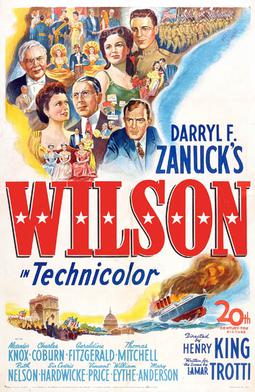
Wilson (1944)


Big budget biopic of the now seriously downgraded 28th President of the United States, who is presented here as the near heroic but ultimately tragically over-idealistic figure that the popular histories of my youth still depicted him as. This flopped at the box office upon its initial release and I had never heard of it nor seen it come up in any discussion of Golden Age Hollywood, though it did get 10 Oscar nominations, including best picture, and won 5. I found it interesting and liked it, even though as a narrative it hits on all the points of the standard story of Wilson. There is Princeton, there is the governorship of New Jersey, the 1st Presidential campaign, the early progressive legislative successes, the contention with the Republican faction led by Henry Cabot Lodge, the death of his first wife, the courting of his second wife, the narrow re-election, America's entry into World War I, the Fourteen Points, the Versailles Peace Conference, the frantic tour around America to win support for the Treaty, the final collapse and debilitating stroke that left him bedridden for the final year of his Presidency. Filmed in technicolor with fairly loose restraint on expenses, it's a great-looking movie, almost worth seeing for the sets alone, and it has a cast full of very distinguished-looking though not especially well-remembered actors--the most recognizable to modern audiences (or at least audiences of my raised-on-TV 70s and 80s generation) would likely be Thomas Mitchell and Vincent Price, who appear here in minor roles. Wilson himself was played by Alexander Knox, a Canadian-born actor, in what appears to be by far his most prominent film role. Geraldine Fitzgerald, a very handsome Irish actress who had a solid career in the 30s and 40s, appearing frequently in adaptions of literary classics, portrayed the 2nd wife of the President. The 3 Wilson daughters were played by the kind of wholesome looking 1940s all-American girls I like, and the English actor Sir Cedric Hardwicke, who was pretty celebrated in his day, was striking as Henry Cabot Lodge. The notable French actor Marcel Dalio, who appeared in several of Jean Renoir's 30s classics, appeared as Clemenceau, along with Henry Cabot Lodge the traditional villain foiling Wilson's noble plans. It was directed by the longtime Hollywood stalwart Henry King, several of whose pictures I have written about here, mostly positively.


As someone who is generally a fan of the aesthetics of the periods of American history covered in this movie (those being the 1910s as they were remembered in the 1940s) I was able to get a lot of pleasure from being able to revisit that alone. The beautiful fashions and hairstyles and rooms of the time, the confident energy of the still-rising American nation. There is a scene where the student body of Princeton (all-male at that time of course) serenades Wilson outside his house on the night of his election to the presidency which I suppose would be regarded by most sentient people as corny but which always evokes to me something attractive about the spirit of that time. I liked the football game scene and the golfing scenes as well.


Given the recent controversies surrounding Wilson's evidently severe racism and the demands that places that still publicly honor him, at Princeton and elsewhere, stop doing so, there is an amusing scene at the end of the movie when the ailing Wilson laments to his wife that his grandchildren and the generations of the future will judge him hardly for his failures at achieving disarmament and getting the United States to join the League of Nations and so forth. That 100 years after his Presidency the most salient aspect of him to these people of the future, and one that was essentially universally regarded as negative, would be that he was an enthusiastic supporter of segregation and other appalling racial attitudes, probably never occurred to him. It certainly doesn't seem to have occurred to the script writers of the 1940s or most critics up to modern times who disliked the film for other reasons either.
  

Wednesday, October 31, 2018

Going to do a Few Movie Posts Now

I'm still about 31 behind even though I haven't seen too many in the past few months. Needless to say I don't remember most of these very well now. I will do these accounts in a formulaic fashion and see if anything comes of them:


The Westerner (1940)


Director--William Wyler


Notable star(s) (to me; every character actor in old Hollywood has his own cult on the internet): Gary Cooper. Dana Andrews apparently had a small role in this but I don't remember him
.
Did I like it? Yes. I didn't love it, but it's a Golden Age Hollywood Western, it's William Wyler, I have been weaning myself away from so many old movies because they are too comforting so any time one comes up now it is a great treat.


What do I remember most about this? The bar at the saloon and the bedroom off of it which I believe they have to shoot themselves out of at one point.'


Associated in my mind with: The Gunfighter; Destry Rides Again.


That's Entertainment III (1994)


Director--Bud Friedgen and Michael J Sheridan


Notable Stars--Many fixtures of MGM musicals. A lot of Cyd Charisse, Lena Horne, Ann Miller, etc


Do I like it? Yes. As the third installment of reminiscences about the glory days of MGM, my impression is that That's Entertainment I and II covered most of the true watershed moments in the studio's history and that this one is mopping up with its coverage of the June Allyson era and other now lesser known films. I was (am) supposed to be seeing the first two compilations as well, but they haven't come up available in my Netflix queue yet (yes, I still get DVDs mailed to me), which is what I have been working off of exclusively for about a year now, with a long backlist of stuff, mostly old, that they don't have.


What do I remember most about this? It's got a decent amount of old Hollywood "movieness" about it if you are the kind of person who has romantic ideas about Grauman's Chinese Theater and Schwab's Drug Store. At the time that they made it in the 90s a lot of the old stars of the 40s and 50s were still alive and were able to be interviewed, almost, in fact probably all, of whom have since died.


Associated in my mind with--The Band Wagon; On the Town.


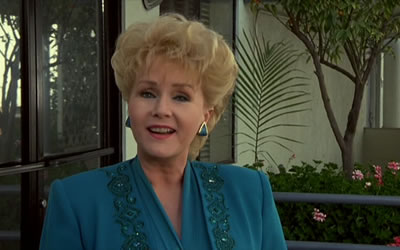
No one evoked Old Hollywood nostalgia like Tammy herself, Debbie Reynolds


For Love of Ivy (1968)


Director--Daniel Mann


Notable Stars--Sidney Poitier, Carroll O'Connor, Beau Bridges


Do I like it? I found some of it morbidly fascinating.


What do I remember most? Evokes what a weird time 1968 was as well as recalling what is now very much a lost world, one that I have some memories of though from my childhood. The white family makes its comfortable living by owning a suburban department store of a type that I do remember hanging on as late as the 70s at least. The repeated attempts of Beau Bridges and his sister (the young people) to talk to Sidney Poitier in some kind of jive is equal parts painful and bizarre, but it doesn't seem to be intended as particularly satirical and emphasizes how the average sheltered white person evidently had no idea how to go about talking to black people in any kind of regular way at that time. Lauri Peters, who plays the sister, did not go on to have much of a film career but her look, clothes, voice, etc, were quite striking to me in this as being a perfect 1968 suburban babe. I was quite taken with her. All of the period touches. The loud trucks, the gas guzzling cars, the pollution, the lounge lizard inspired basements, the New York skyline looking rather grimy and shabby in an orange-ish light. I have to confess, the romance between Sidney Poitier and Ivy, Carroll O'Connor's family's black maid, which is ostensibly the point of the movie, did not excite me that much.


Associated in my mind with--Diary of a Mad Housewife. It is similar in its unintentional late 60s-early 70s weirdness.


Yes, posting a picture of the white girl is too predictable, but this chick is such a quintessential 60s babe I could not resist.


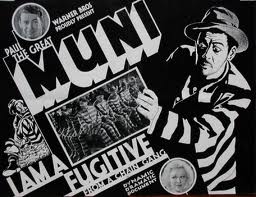
I Am a Fugitive From a Chain Gang (1932)


Director: Mervyn Leroy


Notable Stars: Paul Muni. A highly respected actor of the 30s, I think this is the first movie of his I've ever seen.


Do I like it? Yes, it's great.


What do I remember most? As I frequently note, classics from the 30s, particularly the early 30s, have the most extreme variation with me with regard to holding up across the years or communicating in a cultural idiom which has become completely incomprehensible. This is an example of the former, as the major themes in it, corruption and injustice in the legal system and the brutal indifference of the greater society, are equally pressing problems today. But even aside from this realism the tone and psychological approach to the material seem much more modern than what is usual in that time. It's an unnerving movie.


Associated in my mind with: The Bicycle Thief.


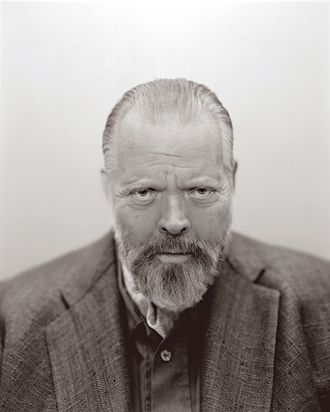
It's All True (1942--released 1993)


Director: Orson Welles, primarily


Notable Stars: Welles, I guess


Do I like it? It's an unfinished documentary. The footage is interesting.


What do I remember most? Not very much. It's Orson Welles set loose in Brazil with a camera. There is a carnival, old time South American beach scenes, fishermen. The impetus behind the movie was that it was going to contribute to the war effort, Brazil being one of the Allies. I'd like to see it in a theater. It is worth seeing, but at home I found it to be somewhat sleep-inducing.


Associated in my mind with: Mutiny on the Bounty, Cruise of the Zaca.


Here Comes Mr. Jordan (1941)


Director: Alexander Hall


Notable Stars: Claude Rains


Do I like it? I found it disappointing. Given the era in which it was made, the presence of Claude Rains, and its status as a classic, I was especially looking forward to seeing it, but I couldn't get into it.


What do I remember most? This disparate ingredients of it failed to coalesce for me. I never understood whatever it was I was supposed to be getting. Maybe I'm too eternally tired to do this anymore.


Associated in my mind with: Carousel


L'Argent (1983)


Director: Robert Bresson


Notable Stars: No one I am very familiar with.


Do I like it? Yes. This was the third time I have seen it. I did not get much out of it the first time, but on both the second and third viewings I have been able to appreciate more and more how good it is.


What do I remember most? Though not exactly what the movie is about, it is always great to see Paris in the early 1980s, which is very much the city I encountered when I first went there in 1990, and which I suspect is not very much at all the city that one encounters today. There was an excellent little extra on the Criterion DVD called "Bresson A to Z" which elaborates on a number of common themes in his work, as well as a lively Q & A session from Cannes. The darkness, for lack of a better word, since Bresson would probably argue that the truths portrayed in the movie are just truths that are morally ambiguous, weighs more on me with each viewing.


Associated in my mind with: Sauve Qui Peut (La Vie), French in Action TV Show.


Friday, July 13, 2018

Some Very Brief Movie Reviews

I am still months behind on recording the movies I've seen, though for the time being at least I have largely stopped watching any new ones, maybe one or two a month. There are a myriad of reasons for this. 1) A genuine, if ridiculous, desire to come current with my reactions on the blog before it becomes impossible to catch up, if it hasn't already. 2) I tweaked my selection system so as to bring more recent movies on the list to balance the classics that I would probably be happy enough to watch exclusively. But as I generally don't like these newer movies as much even when objectively I suppose they are very good, I am not as dedicated to watching them in a timely matter. My interest in this particular project is also not what was a few years ago. And then 3) similar to the problem that has affected my reading, as I get older (and seemingly ever busier) I find I am too tired in the evening even to watch most movies to which one might desire to apply some thought. All of this has been steadily been pushing me away from regular movie watching over the past year. Nevertheless I still have an incredible thirty-five titles to comment on, seven of which I will take on here.


At First Sight (1999)


One thing I will say about this is that it was not as thoroughly terrible as I thought it was going to be. Of course it is pretty blah, but it does have Mira Sorvino in it, whom I guess I knew I liked, but I guess I liked her better than I knew. She's one of the actresses about my age who is supposed to be quite smart too, as in, has an actual high IQ, which is not an inconsiderate matter to me. The movie is set on the east coast, New York but also some of the towns in the Catskill/Hudson river area of a type that would be familiar to me, and there is some material for 90s nostalgia as well, my being the same age approximately as the characters in the movie and having somewhat experienced the already long lost world they inhabit, in what would have been some of the prime years of my life.


Mira Sorvino really was a cutie. Contrary to what it may appear from my writings, there aren't that many actresses whom I like enough to sit contentedly through an otherwise lame movie to see, but for the moment at least she seems to be one of them. She has been making something of a public comeback lately as a prominent voice denouncing Harvey Weinstein and Trump, and perhaps others as well, and it's great to see her again even when she is angry.


Laura (1944)

While the older movies I love have not been turning up on my lists much lately, if I go back this far there are still a few I have to write about. I don't have a lot to say about Laura, though I remember liking its style and language and its overall essence. As is often the case in old movies where murders or mysterious deaths are involved, I didn't think the central plot was very convincing, but I don't care that much. This is supposed to be the movie where Gene Tierney achieves her peak of beauty, which is saying something, for she was unusually renowned in that department. Dana Andrews, who appears frequently is movies around this time, was also in this. The director was Otto Preminger, and this seems more often than not to be considered the best movie of his very long, up-and-down, never quite great career. Probably one I should see again.
West Side Story (1961)

Classic of a sort though it undoubtedly is, I had never seen this before, and my expectations were muted, because it has not been written about very much in glowing terms by the know it all types for pretty much my entire life. So I was surprised at how much I was able to enjoy it. All of the songs I have known all my life without particularly liking any of them, but they all work and seem to sound much better within the context of the movie. There is a lot of good energy in this, and, as many commentators have acknowledged, the design, the costumes, titles, colors, etc are somewhat surprisingly spritzy. This is another one I would probably have to see again to get a sense of how good it really is; on this first viewing I was reacting against what I had anticipated, which was something much more dated and limp and middle American, which, despite its erstwhile popularity there, it really is not. The gang of switchblade wielding blond street thugs that is supposed to be terrorizing New York cannot come off now as anything other than absurd, of course. There's nothing to be done about that.

Footloose (1984)

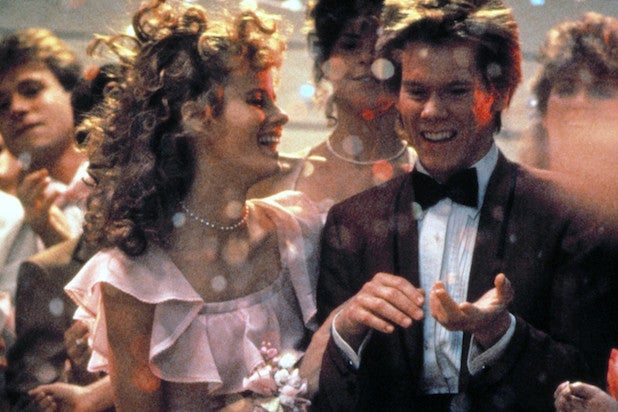
Footloose was a big hit among mainstream younger people without a ton of exposure to anything more interesting when I was fourteen, and as I was naturally such a person, I do remember going to see it in the theater at the time. I didn't like it that much then compared to other things, not because my taste was so advanced as much as that I wasn't much interested in the main romantic strain in the plot--the female lead was rather gangly as well as crude, which I guess is not my type. Also being from east coast suburbia and not knowing anyone who could be considered remotely religious, the bible-thumping adults who were terrified by rock and roll and the idea of teenagers dancing in 1984 seemed a bit far-fetched. I also didn't particularly care for any of the songs at the time, though I didn't mind hearing them now, probably because despite quite a few of them having been pretty big hits, I hadn't heard most of them in decades, and I identify them, even more than other songs that came out at the same time that you still hear constantly, with that summer before my freshman year of high school, which is a time I remember fondly. You are all potential at that age, people have some hopes for you if you have anything going for you, even if you haven't had any notable success with girls yet it is not the existential crisis it becomes when you are eighteen, nineteen, twenty. But now I am getting away from the movie...

Around the time I saw this my wife and older sons were watching the TV show Stranger Things, which is set in 1984 and indulges heavily in 80s nostalgia even down to featuring Winona Ryder in a starring role. I watched a couple of episodes though I can't commit to watching entire 50-episode TV series at this time, and I did find some of the 80s vibe, I don't know the word I am looking for, not endearing, or comforting, exactly, but something in that vein. The town and the high school were reminiscent of the ones in Footloose and John Cougar Mellencamp type songs, though my own high school wasn't like that, or any other 1980s movie high school (it reminded me more of the high school in Grease than anything else, now that I think about it. It is supposedly 30% Muslim now, mainly Somali, so I suspect that vibe has changed). The nostalgia of Stranger Things I thought had a  strikingly and self-consciously white quality about it, even more than what is usually the case, which I thought internet critics would pick up on and rip to shreds, and a few did, but not that many. It struck me as unusually (for the present day) matter of fact and unconcerned with explaining or defending itself, which is kind of what stands out to the contemporary eye about the atmosphere of Footloose. Every single person in the movie is white, and no one is particularly conscious of this or thinks it is remarkable, which is how it really was in a lot of places even in the 80s. There was a remake of Footloose in 2011 with presumably some more up to date diversity which I don't remember hearing about at all though it seems to have made a modest profit.


Hyde Park on Hudson (2012)

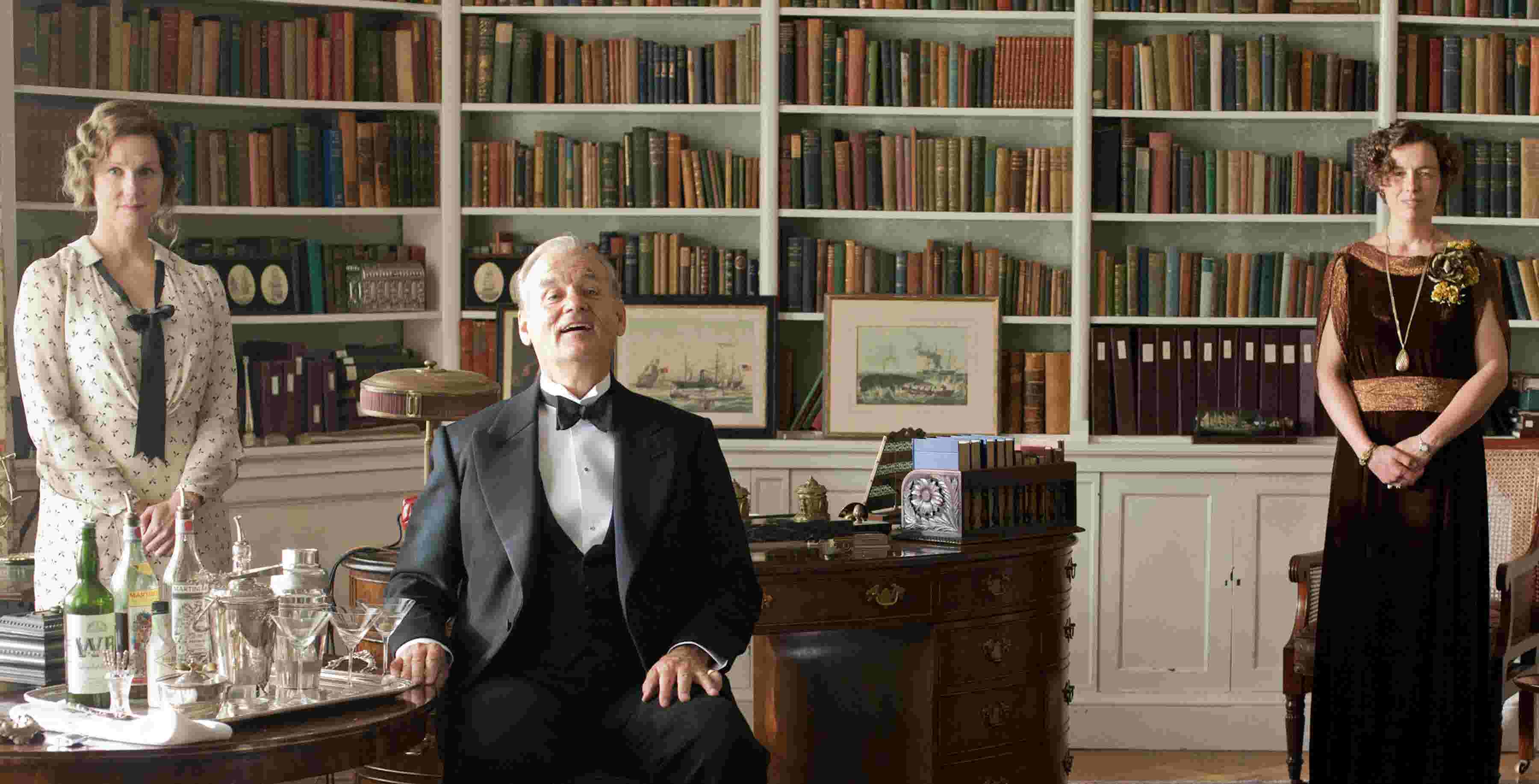
I think this is what they call a small movie about Franklin Roosevelt's girlfriend and what is portrayed as the desperate visit of the King and Queen of England on the brink of World War II during which they have to submit to the humiliation of eating hot dogs. There were some things about it I liked. As anyone who reads this page knows I am a fan of this time in America, so I like all of the period touches, the cars, the clothes, the furnishings. Many of the well-known and happy songs of the time make an appearance in the soundtrack. Bill Murray's turn as F.D.R. I found to be a welcome departure from his usual post-Rushmore screen persona as the curmudgeonly old guy who turns out not in fact to be a complete jerk and can be counted to do the right thing in the end. I have long suspected that Bill Murray is conflicted in his feelings about social life and order at present similar to the way I am, and playing these kinds of roles where he can appear (for a time) to still retain some asshole-ish characteristics are the way he deals with this in his professional life. Not that he exactly hates people or loves the Trump movement--I actually have no idea whether he has expressed any position on the subject publically--but I get the feeling whenever I see him now that he must be thinking back on his more youthful days and finding contemporary life rather weak in comparison, while being aware that bringing back many, if not most of the circumstances that contributed to the raucousness of that earlier era are either impossible or unacceptable. So I find him, more than most other famous actors/personalities at least, to be a somewhat interesting man out of time type figure. I wonder if it was not a relief to him to play someone from the past.

The film's modern take on the late 1930s political situation has been negatively assessed in most of the online reviews I have looked at. I did not have any strong opinion of it at the time that I remember.


It's Alive (1974)

Horror films, which I have for the most part assiduously avoided up to this point in my life, have of late begun to creep onto my film lists, particularly with the new system. I did watch this, but I don't remember much of it, and it had no appeal for me. I have developed a taste as I've gotten older for the sexier Warren Beatty/Jack Nicholson type of classic 70s films and imagining that they reminded me of the world of my very early childhood. This movie, with presumably a bargain basement budget, depicts that time in its more hideous aspect, though more extremely grotesque fortunately than I have any memory of. But as I said, these kinds of pictures do not speak to me in my current stage of life.


No, this is not from the movie. It is from 1974 however.

The Other Sister (1999)

Has there ever been anyone who liked this? Everything about it projects horridness to anyone the least bit sentient. Artworks about mentally handicapped people as a rule I find to be tedious. This movie also throws in Diane Keaton (though she at least is not playing a mentally handicapped character), who was annoying to me in Woody Allen phase of her career, and whom I find unbearable in that part of it that came after. This is because she looks like my mother, is about the same age, and has almost identical annoying mannerisms, both facial and in her achingly non-vibrant movements. Then there is the extremely rich but eternally dissatisfied late-90s aging yuppie/baby boomer milieu...perhaps this was the imagined audience for this painful movie.
If there was any point of interest for me in this it was that much of it appears to have been filmed in San Francisco, a city about which I apparently know nothing--I haven't even seen many of the numerous classic movies set there--but the cityscapes they used in this make it look extremely attractive, or at least as it was in the 90s.


I can see myself at some point in the near future limiting myself to some kind of pre-1980 (maybe pre-1990 for foreign films) classic film program, in part because there are so many all-time great movies that I still haven't seen and I'm starting to get old, and in part because I don't like enough newer works, and haven't found a reliable system by which to pick those newer works that I might be more inclined to like.

Wednesday, April 04, 2018

Movies--Many Movies

I've fallen way behind on my movie notes. I have a list of thirty-seven that I haven't recorded here yet! I hardly remember a lot of them, naturally. I will go seven at a time, and put down any impressions that have stayed with me. I should also note that around the time these new lists start I tweaked my system to allow more recent movies to be included, since the main book I was relying on ceased publication in 2007. I don't generally like the more recent movies but I'm not quite ready yet to give up everything current and escape into the past at every possible chance. I am now extra excited when an oldie comes up though.


Ironweed (1987)


I wouldn't have chosen to see this if it hadn't come up via the System, mostly because it stars 80s era Jack Nicholson and Meryl Streep as alcoholic vagrants in depression era Albany, the idea of which, probably because of my age relative to them, has not traditionally appealed to me. It wasn't bad I guess, though it wasn't great either. Its depiction of how dreary being homeless in the long, dark, cold nights of the American Northeast would be was pretty accurate. Jack Nicholson, whom I found annoying most of my life, inhabits the role here well, I think. We all know about Meryl Streep and how remarkable she is. Her character dies in this (spoiler alert, sorry) and she has to play dead on screen for around five minutes, and I don't know that I have ever seen a more convincing portrayal of a dead person. It also illustrates an observation I have made elsewhere, the uncanny ability Meryl Streep has to always command your attention upon whatever awesome thing she is doing. Here she is just lying down, on a carpet I think playing dead, and all I can think about is her technique in portraying this dead person, whose character however I had forgotten about.


Tom Waits was in this too, perhaps not surprisingly as a fellow vagrant. I had not thought about him in years, though in this era he was something of a cultural touchstone, making several forays into acting. I found him mildly annoying at the time too because he was supposed to be cool, though you would only get that if you were a certain kind of person, which I was not. But now that he's been kind of forgotten and no one talks about him anymore I like him. He takes me back to that era.


Serpico (1973)


I had never seen this before--again, in my youth the themes would not have appealed--and while it has always had a decent reputation, I think seeing it now that it holds up really well. It has the whole gritty-New-York-in-the-70s vibe that was scary to live through but looks great on television 45 years later, but the story, about a policeman with a conscience taking on corruption in the NYPD that was apparently based on a true story that did not resolve in the exaltation of the honest cop and the disgrace of the crooked, seems daring to me. I don't feel like I have seen anything recent where some evil force in society that has not as yet been taken down has been confronted so directly and the exact nature of their crimes identified and demonstrated so clearly. This was directed by Sidney Lumet, who did not necessarily make the most lovable movies, but whose work I usually find to contain admirable aspects, even if I do so grudgingly.


There is a great scene shot on a hill overlooking the old Yankee Stadium from beyond center field, where the train tracks are. If you follow baseball at all of course you've seen the view looking out that direction from the stadium, but I had never seen it from that outside vantage, where in 1972-3 at least there was still a decent amount going on as far as traffic and street life. This would have been filmed before the 1974-75 renovation of the classic stadium too, which we still see intact.


Al Pacino's look in this was very early Springsteen-esque, which I have to assume was characteristic of the time. I at least don't see many people who look like that anymore. When I was a child I thought the era I lived in (this one) was nasty and terrible, and longed even then for some unknown past, but now of course I find I miss some of what has been lost since then--animated conversation, normal people and what seem to me normal business enterprises in cities come immediately to mind as examples from this movie.


Around the World in Eighty Days (2004)

This version starring Jackie Chan in the Passepartout role came up in my revised system because I had read the book (which I enjoyed), though the 1956 version, itself often maligned though it did win the Oscar for best picture, did not. This illustrates the risks of the open system, since I don't remember anything about that that was worth seeing. I had the impression that Jackie Chan was a mixture of comedian and action hero, but not here. Dreadful. Waste of money.


Read the book.

Fantastic Beasts and Where to Find Them (2016)

Written by Harry Potter author J. K. Rowling and set in a 1930s New York version of the same magic universe--there is a hoity-toity American counterpart to Hogwarts, naturally--I actually liked this better than the Harry Potter movies I have seen. I'm sure this is because of the highly stylized retro setting, which apparently is supposed to be 1926, but it looked and felt more like the 30s to me. I remember thinking the women actresses in it were pleasantly attractive enough without being gratuitously 'hot', though you probably aren't supposed to remark on that. The plots of all these fantasy movies with their incredibly violent final battles don't make much of an impression on me, but this was engaging enough as a nostalgia piece.


L'Auberge Espanole (2002)

A French-Spanish joint production made during the heady days just after the introduction of the Euro and the true realization of the dream of the free movement of Europeans, especially young and relatively good-looking and educated ones, throughout the zone. The title refers to an apartment in Barcelona that is shared by about eight different post-graduate 20-somethings, all from different (Western) European countries. Seriously, there is a Frenchman, an English girl, a Dane, an Italian, a Spanish woman, probably a German. I didn't particularly like any of the characters in the house, all of whom spoke English with the arrogance peculiar to their particular nationality, but I enjoyed the movie because it was made not long after my own time being there and it was familiar to me. If I were dropped into this movie I would be able to function and get along very well right away. My children like to watch the TV show The Amazing Race and when the contestants are in these foreign cities everything seems so different now. People are doing everything with their phones of course, even buying metro tickets, and everything everywhere looks so crowded and expensive. In this movie eight people in an apartment are still sharing one telephone hung on a wall, and this is only sixteen years ago! (though I feel like some of the characters had cell phones). Third world immigrants are barely a presence at all in this film, apart from Africans getting Phds in economics. There are no Muslims at all, nor does there seem to be much consciousness of them. Relatively average looking young people are still a real threat to have sex, or try to have sex, if they have too much to drink or otherwise find themselves in a bawdy mood, which is an element that seems to be missing from more recent movies, where everyone is too interested in maintaining control, or at least the appearance of it. The movie spawned two sequels featuring several of the same characters, Russian Dolls (2005) and Chinese Puzzle (2013), which I have not seen, though I would be interested to see how they have incorporated the changes in the European scene into the newer films, since the early 2000s time capsule quality of the original is the most interesting thing about it to me.


I liked this chick the best. She didn't live in the house.

Arsenic and Old Lace (1944)

We do make it back in this set to a couple of old classics. Here of course we have the impressive lineup of Frank Capra directing and Cary Grant and Peter Lorre among others, including Raymond Massey. The story is implausible to say the least--the implausibility level is about the same as something like I Married a Witch, actually, but as you know I almost never watch movies for the story anymore. According to Wikipedia this was filmed way back in 1941, but was held back from release until the popular stage show from which it was adapted finished its run. Either way it has a good 40s ambience, good sets, etc. I like both the indoor and outdoor scenes, which are supposed to being taking place in Brooklyn, but which look like they belong in Connecticut, though the outdoor scenes have what is supposed to be the Manhattan skyline in the background. Somehow it works though. It's a nice little movie if you are into that kind of thing (basically a 1940s mainstream American idea of wackiness).


Hey Priscilla Lane. I liked her in this (romantically). Haven't seen her in much else.

I Love You Again (1940)

The first half hour of this screwball-esque comedy starring the classic Thin Man duo of William Powell and the ubiquitous Myrna Loy I thought was great, the best movie I had seen since maybe Rebecca. It couldn't keep up that torrid early pace, which was disappointing, but I still think it merits a high rating. The subject is one that I have seen in other old movies and that never fails to hold my attention, doubtless because I often fantasize about something of the sort happening to myself. A sententious, risk-averse, teetotaling prig, played by Powell, receives a blow to the head while on a cruise ship and wakes up with a completely different personality, roguish, witty, vigorous, and so on. His wife Myrna Loy, here still in her sexy 30-something persona, to be distinguished from the handsome, dignified, almost arch 40-something persona which she later inhabited, was bored out of her mind and in the process of drawing up the divorce papers before the accident, but needless to say gradually backed off from these legal activities as her husband's transformation into a completely irresponsible and even amoral person began to become apparent. In the end a minor favorite, especially in its genre.


Friday, September 29, 2017

Playing Some Catch Up

Needless to say I've fallen way behind on recording the movies I've seen. Some of these go back to the beginning of the year. I've got twenty-five of them that I haven't written about. I'll be keeping these very short, hopefully honest, which shouldn't  much of a challenge since I won't have remembered many details by this time.


The Last Days of Pompeii (1935)

I am prejudiced in favor of almost anything halfway decent from this time, so I enjoyed it as far as that goes. It was produced by Merian Cooper of King Kong fame. Cooper was a dynamic man of action more than an aesthete, and the film takes on this general character. In the credits it claims to be "inspired by" the famous Bulwer-Lytton novel, which I have not read, though apparently it has a completely different plot. While I believe the book features some early Christians as major characters, this movie is set mostly during the time of Christ, which of course pre-dated the famous Vesuvius eruption by about 50 years, tying the stories together by having a man who encountered Jesus while young be settled as a rich old man in Pompeii at the time of the disaster. As a production the movie is a little clunky and forced anyway, and all of this rather fantastic far-fetchedness is not done in a way that holds together. The always entertaining Basil Rathbone appears here as Pontius Pilate.
Good enough for fans of 1930s Hollywood, but I would not call it a classic.


Rebecca (1940)


It won the Oscar for best picture, the only movie directed by Alf Hitchcock (in I believe his first Hollywood effort) to do so, featuring a comparatively young Laurence Olivier and Joan Fontaine, though all of this is incidental. It is famously not a typical Hitchcock picture--he was under some restraint by the studio at this time--and while a well-regarded classic, it seems to be ranked outside his most essential films by the experts, and the same critique is often applied to Olivier too. I had never seen it before, but it has all of the kinds of things I like with regard to dialogue, setting, faces, sensibility, general intelligence, etc, which I recognized within about five minutes. It's easily my favorite movie since Stolen Kisses.


Raging Bull (1980)


I had seen this a couple of times before, though I'm pretty sure the last time was when I was in college, which was a long time ago, so it seemed like a good opportunity to revisit it when it came up. I'm not a huge Scorcese fan, mainly for reasons that have little to do with the quality of his movies, the better of which I usually concede are decent enough. His characters tend to be completely unrelatable to me, to the point of striking me as probably having advanced forms of various mental illnesses, a pattern which runs through movie after movie after movie. The other reason is that he turns up on a lot of these DVDs I get on the commentary track or some other of the special features, and I don't enjoy him or find what he has to say particularly interesting. He goes on too much for my taste about the lens being used or the panning and so on, a little bit of which is informative, but there is no humor or sense of mischief such as I like to leaven the technical presentation.


But this has nothing to do specifically with Raging Bull, which I think holds up pretty well as a work of cinema art. As far as deriving a thought exercise from the movie, I suppose the obvious question is, What are we supposed to think of LaMotta? He is possessed of a kind of demonic force that is relatively rare even among the more violent subcultures in America, which is the entire source of interest in him. Early on he is able to at least temporarily impose enough discipline on himself to become a top ranked prizefighter, yet he seems to give up even on this as he gets older, and has more need of it. He demonstrates an obnoxiously low level of intelligence, however I think we are supposed to feel a little sorry for him for this as such things are not ultimately one's one fault. He causes an awful lot of havoc however, and the people around him don't really seem to get much in return.


California Solo (2012)


I've adopted a new system for picking movies which is not completely an improvement, though it allows more opportunity for more recent films and others that may not have attained the highest rankings. For every title generated by the new system, which is a much more random process, I match it with one attained via the old system, to ensure that I still have a steady supply of the classics that I like.


California Solo, a recent production of modest distinction, is thus one of the first movies of this "new" type to appear in my lists. It features the actor Robert Carlyle, who appeared in the late 90s indie hits Trainspotting and The Full Monty. Here he is playing a former minor member of a moderately acclaimed 80s era British rock band who now lives in California doing agricultural labor, making music-related podcasts, and drinking a lot. He's also divorced and has a teenage American daughter whom he barely knows; and he is also facing deportation back to the U.K. because he gets arrested for drunk driving. While he has a certain amount of British rocker charm, his life is in the mess it's in because he drinks so much that no one can really help him. I suppose that is the most interesting part of the movie, I have rarely seen a depiction of alcoholism that is so thorough and illustrative of the pitiful state that it reduces a man to. A lot of movies that are supposed to feature the bleak side of alcoholism still induce me to want to join in and imagine that I could carry off that lifestyle if I put my mind to it. But this character I knew was beyond anything I would be able to pull off at this point of my life. I can't go that far, not that I want to obviously, but some people have compulsions to be so extreme in everything, their souls are so volatile. My soul seems to be entirely bland in that regard.
I think there was supposed to be a message for us about immigrants here because it's a fairly relatable Scotsman who is being put through the grinder with police, lawyers, and all the rest of it, and perhaps we'll be sympathetic to his desire to stay and equate that with the plights of people who aren't white and/or English-speaking and move or fortify our personal take on this issue. I tend to be of the mindset that seemed to me to be prevalent when I was growing up that if any individual country decided that they didn't want any particular foreign national camping out on their territory indefinitely that there was always a risk of deportation. Obviously the sentient part of the world has moved on from this way of thinking about the matter.


The Tree of the Wooden Clogs (1978)


Italian epic from the heroic era of European filmmaking. I had seen this a few years back on a poor quality VHS tape and written a post about it. In addition to the dark print on the much smaller television I had at that time, I seem to have been distracted on that occasion and not taken much away from the viewing. In the meantime I kept the movie saved in my Netflix queue along with about thirty other DVDs whose statuses are perpetually "availability unknown". However, as occasionally happens, one of these elusive discs will suddenly become available and turn up in my mailbox, in this instance the Criterion Collection release. So I had to see it again.


Of course my experience was much better this second time. I was evidently in a more relaxed state of mind, which helped, and the bigger screen and clearer print brought out much more of its grandeur and depth than I had been able to perceive the first time. There is a very well known scene in which a pig is slaughtered, and there was another episode again involving an animal, a diseased cow that has to be put down. As this cow is the only one that the family, who was exceptionally poor, owned, and they cannot sell the meat or anything due to its being diseased, it represents years worth of financial devastation. It would be hard to concoct a "pitch" of this movie describing what it's about, it's an accumulation of small incidents or strokes of ill or good luck that given the narrowness and rigidity of this world determine the courses or nature of people's lives. One boy is identified by the local priest as intelligent and is given the opportunity to go to school. A woman's husband dies and she has to take in laundry to support herself. Meanwhile the local lord of course has access to books and newspapers and even a record player on which he listens to recordings of Caruso while his peasants lead the same lives their forbears have led for hundreds of years, and this all taking place, as I noted in the earlier post, perhaps within the lifetime of the filmmakers themselves, or at least their parents, as the director (Ermanno Olmi) was born in 1931. He is still alive, by the way.


The Red Shoes (1948)
Much-loved Powell and Pressburger film about a ballet troupe and the artistic process intended as an infusion of beauty and color into a still dreary postwar England. There is a lot about it that I like, though I did not have the same response to it as I did to the earlier The Life and Death of Colonel Blimp by the same duo, which I thought was pretty much a masterpiece. However this does star favorite of this blog (and of Powell and Pressburger) Anton Walbrook as the ultra sophisticated and exacting director of the ballet company, and an English redhead (seemingly another P & P staple), Moira Shearer, who, I had not realized, was a real ballerina of some renown, as the unknown dancer who persuades the master Walbrook that she has what it take to dance the lead in his company. There are some pretty hard observations on the demands and sacrifices necessary to lead the life of the true artist, though these probably apply almost equally to being a true businessman, or a true scientist, or true tech innovator, or ace high school student, or almost anything requiring true excellence. Whether true art still occupies an elevated position relative to these in anyone's mind I am not sure.


There is of course the incongruity of the brilliant young composer and the brilliant young dancer in the film both being standard issue born and bred English people, given that these are arts in the English are not traditionally recognized as having a culture of greatness in, and even the English composers who have achieved some degree of fame (Britten, Vaughn Williams, Walton) I tend to think of as somewhat stodgy, respectable establishment types--sort of like the professor at the beginning of the Red Shoes who cribs from his student's work for his new composition--rather than the more fiery, intense younger men identified with this art on the continent. However, I find the optimism expressed by attributing the possibility of attaining great and noble heights where they have not traditionally been considered to have been reached to one's own people, as the phrase goes, to be admirable. This particular sort of confidence is not consistent with most peoples across the ages.


Iron Man 3 (2013)


Another selection by my new system, I figured that these movies were hits so they must have some kind of appeal, or fun to them, so I wasn't opposed to seeing it. I couldn't understand this at all, it made absolutely no sense to me. All the technology and machines that were constantly introduced were way over my head, explained in an impenetrable foreign language. I lost the plot about fifteen minutes in, around the point at which any resemblance to life on Planet Earth as I have always experienced it departed from the movie. If this is at all representative the mental world the mass of the population comfortably inhabits nowadays it no wonder I am so isolated and incapable of understanding anybody. Good God. Look at the cast they got for this thing. Gwyneth Paltrow? Not that I ever liked her particularly, but I thought she wanted to be a snob. Don Cheadle is in this too. I know, money, money, money. Not too many people in America can win a real following doing the kinds of movies I like, But some can.