Showing posts with label cinema--italy. Show all posts

Wednesday, January 27, 2021

1965-2016

I need to catch up on a little on my movie posts. As I went through a period where I was watching several extended TV series, I am not that behind (about 18 entries to do)

Bleak House (TV-1985)

Standard 1980s BBC literary adaptation, 8 hour long episodes. This one features the late Diana Rigg as Lady Dedlock and the warhorse English character actor Denholm Elliott as Mr. Jarndyce. It's pleasant enough to watch in the evening if one is too tired to read, especially the parts when they go out to the countryside. This one especially though you should just read the book. There is not much humor in this production at all, while much of the book is a veritable laugh riot, though of a kind that I guess is especially dependent on the author's delivery, which can be difficult to translate to the screen. I was disappointed that the Caddy Jellyby character, one of my favorites in the story, was cut out of this version entirely.


I was struck here, as happens sometimes in pre-1990s films or TV shows with entirely English casts, by how much all of the people on the screen broadly resemble each other in mien, as though the whole country prior to recent times was somewhat closely inbred, as perhaps it was. The strongest sense of this I ever had was when I visited the cathedral town of Lichfield in Staffordshire in 2001, and the faces of practically every person walking through the streets of the town bore a family resemblance to everyone else to an extent which I have never experienced in the United States apart from perhaps a few very isolated towns in the northern parts of Maine or Vermont. Anyway, I felt something of that in watching this movie. Nowadays of course it is fashionable to have diverse casts even in period pieces that are perhaps somewhat traditionally identified with a specific ethnicity. I understand the purpose in doing this, especially in the current climate where a lot of people without long roots in England feel excluded from much in the traditional culture, while the higher points at least of that culture are as yet too significant to just entirely chuck away, though I haven't as yet seen anything in this line that has struck the true tone, in the way that something like the Hamilton play seems to have in this country.

Blind Spot: Hitler's Secretary (2002)

Documentary, really just a series of interviews with an old woman who was, indeed, Hitler's secretary during the last couple of years in the war and was even in the bunker with Hitler and Eva Braun and Goebbels and the whole gang. At first I really did not like this, the subject was an ordinary, not especially brilliant or interesting old lady telling anecdotes about taking dictation from and having lunch with Hitler, and it didn't seem worth doing. It is an Austrian production so I trust their motivation for making it being perhaps more serious than if some adventurous or provocative American or Brit had undertaken the project, though the subject is not that exciting. Some of the recollections of the final days in the bunker when the end was truly at hand do admittedly hold a certain fascination. The secretary (whose name was Gertraud Junge, which I mention because I feel like my comment, while short, is too long now not to) was arrested and held briefly for questioning by both the Soviets and the Americans after the war but was let go to live out her life. She does not appear to have ever married or had children. Unless you have an especial interest in the mundane details of life in Hitler's inner circle, I think this can be skipped. 

The Village (2004)

I did like the aesthetic of this. It is set in a retro Amish-like village in Pennsylvania surrounded by woods, everyone dresses like it's 1850, and the pretty girls in it are all of the pale, blue-eyed, reddish blonde type that I am not going to pretend I don't like. It's an M. Night Shyamalan movie, which means it has a rather stodgy plot with a twist ending that seems like it maybe could have had more of an emotional punch to it but is missing something. I do like that he sets most of his movies in the Philadelphia area, being from that part of the world myself, and I remember thinking at the time--it's been a while since I've seen it--that this film had a very appealing and in some ways gentle atmosphere, though there is also a decent amount of blood and violence in it, and I neglected to write down any specific examples and now I can't remember any. So I kind of liked it, and this even though William Hurt (again!), who is something of a bete noire of mine, was in it, though he is not quite as annoying as an older actor (he was around 53 when this was made) as he was when he was in his 30s and 40s. 

Juliet of the Spirits (1965)
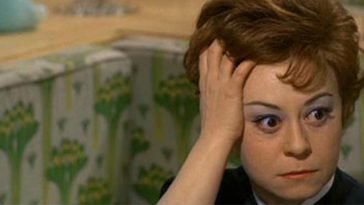

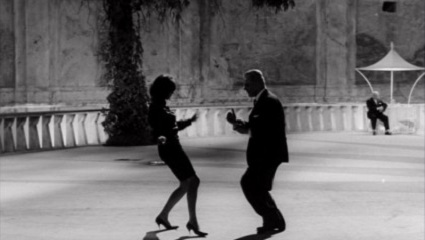
High period Fellini movie, his first in color if I remember correctly. When I watched this (on August 26th!) I paused it in the middle to tweet out "So I am watching Juliet of the Spirits tonight. It is of course end to end weird Fellini stuff, which I like. I've gotten to the point in recent years where I'll be watching one of these movies and I will suddenly be struck with some idea of what it is actually about, but I am 90 minutes into this one, and I am still drawing a complete blank." (this tweet received 66 impressions, whatever that means). I have to admit that the moment of deeper revelation never came, but still, by the mid-60s we're in the heroic era of the postwar European cinema, and the whole effect from the clothes and the camera work and the artistry (there is a flashback to a school play in which the young Giuletta gets burned at the stake by an amazing fire made out of bed sheets blown by fans or something of that sort) is kind of an awesome spectacle in itself. It took me three viewings to get anything out of 8 1/2. I do remember liking the later Amarcord, which must be a little more  straightforward, on a first viewing, as well as La Dolce Vita, though my impression is that the latter film is mostly liked by people who have no first hand experience of partying with beautiful people in Rome or anywhere else and imagine it is artistically meaningful in itself. The 50s films, La Strada and Nights of Cabiria, were less extravagant and had something of the emotional appeal of the neo-realist movies, I think. I should revisit them. Some years back, when my wife used to watch movies with me (she still does once in a while, though none of these, which is unfortunate, because she has a lot of sharp insights),  we started to watch Fellini Satyricon, in which multiple disgusting things happened within the first five minutes, after which she was like "no way", and I was feeling rather sheepish myself, so I don't know whether I have the stomach for that one even if it comes up on my list again.

"Gossip Girl" (Season 1-2007)

When this came up in my game by which I pick which movies I am going to watch, I was not quite sure how to proceed, since the entire 6-season run of the TV show seemed to be specified, which could easily have taken up a year or more of my life to no obvious purpose. As it was, I decided that I would just watch the first season, and that in itself took up a ridiculous amount of time that I really don't have. I don't know now why I didn't just stop watching it. Part of it is that the kinds of things I like and am inclined to watch fall within a pretty narrow category and I feel like I have to endure other things both to be more aware of the world around me and in order to "deserve" an occasional treat of something I like, or think I like, usually for some nostalgic or sentimental reason. I also just have a hard time breaking off watching shows once I have started them unless they make me physically uncomfortable or I get completely lost trying to follow them, which was at least not the case with this. I also kept hanging in I suspect because there is a ton of hauteur with regard to money and education (not that anyone exactly seems that superiorly educated) and the characters carry themselves under the assumption that they own New York City, all of which is calculated to appeal to me. The show is well-cast, I guess. The characters entirely lack physical flaws and empathy for other people, so that it is pretty much impossible for a regular person to imagine himself being friends or have a romantic interest with any of them, which I think might be the point of the show. As if any more proof of the failure of my education were needed, I often imagined in the course of the program that it would be nice if, when I died, rather than going straight to the presence of God to contemplate His Holy Presence forever (as a result of my good behavior), I could be permitted to experience a couple of years of life in the manner of Chuck Bass, the dissolute, amoral, cruel scion of a billionaire who lives in the penthouse of his father's hotel and regularly enjoys threesomes with the property's female employees. I did tweak my system after this to try to address the problem of too many long seasons of TV shows getting onto my list. 
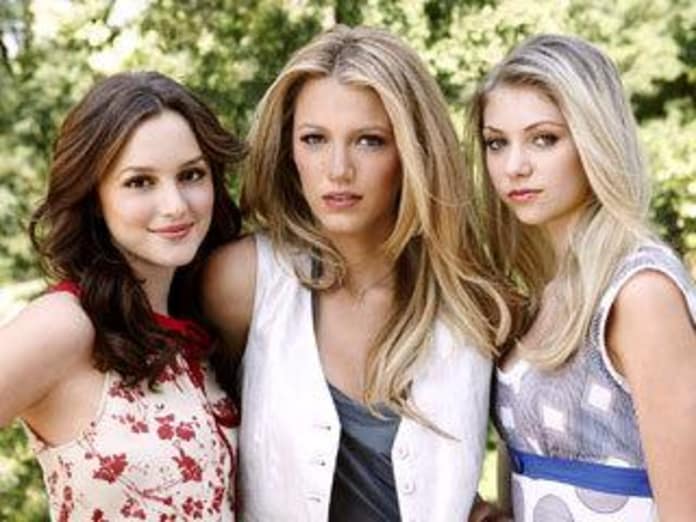

To think that there were 5 more seasons after this.

I am cutting my "Gossip Girl" review short but if anyone wants to have a more in-depth exchange about this program please don't hesitate to reach out. 

The Night of (2016)

One of those modern limited TV series that everyone binge watches nowadays (this was an HBO production) this also takes place in New York, though a completely alternative vision of it from that depicted in "Gossip Girl" and perhaps in some ways just as sensational. This was written by the fairly well known novelist Richard Price, once memorably (to me) described in one of the book reviews as "self-consciously hard" which image has always stuck with me. For the first couple of episodes I actually had confused Richard Price with the Pynchonesque highbrow writer Richard Powers, and was thinking, this is kind of a departure for him, isn't it? but eventually I realized that it was actually this other guy. This is psychologically unpleasant to watch much of the time, as most of it takes place in police precincts and in prison, but it is extremely well made and has a ton of detail. I actually started taking notes on it on my phone while I was watching it, but then I stopped, I don't remember why. Sometimes I am suddenly struck by the urge to do this, and then I am not. Here are a few thoughts that floated through my normally airy brain while I was watching this:

There is a tremendous amount of effort put into these relentlessly distressing, joyless modern TV shows. Traditional literature not like this (ed--I should say that it doesn't feel like this. And even in Greek or Shakespearean tragedy the idea is that the unpleasant events are necessary for the fulfillment of divine or universal justice, and to open up the possibility at the end of cleansing or rebirth, right?) There are interludes (in traditional literature) of humor, joy, and other emotions. Do modern artists feel more oppressed and suffocated than their predecessors?

Show excels in gritty realism. But how realistic is the crime itself?


There are no white people in this version of Riker's prison (though my wife was watching a show some time after I finished this where Hugh Grant of all people was incarcerated there--they must have used some of the same sets, including the one for the waiting room, it looked just like it did in this movie). The intended effect on your college-educated white audience, which I assume is the primary consumer of this particular type of program, I would imagine is to remind them, or at least those that are mildly interested in such things, that there are entire worlds and ecosystems right under their noses, of which they know nothing, more brutal and elemental and dynamic than anything they have or ever will have a part in.  

Some of the characters in "Gossip Girl" were supposed to be facing jail time themselves, but they of course were able to meet bail or flee the country via private plane.

Judge to a black convict complaining about the much lighter sentence meted out to a Jewish businessman who had committed some white collar offense: "You want Jew time? Do a Jew crime." Great line. Would they really say this?

Is this what we want our police to be? It's too much. (referring to the unbelievably thorough gathering of evidence and information via surveillance, acquisition of phone/GPS/financial records, DNA testing of everything, etc.)

The fact that none of the crimes, including murder, that take place in prison are very aggressively pursued, contrasts with the total surveillance state of the outside "free" society.  

I wonder if Richard Price came across the Tavon White story--he was the inmate who took over a prison in Baltimore, got four of his nominal guards pregnant, and orchestrated a steady stream of lobster, steaks, drugs, phones, and all kinds of other goodies to flow into the jail--and used it as inspiration for the ruler of the prison in this. It was a fascinating story, though maybe a common one to people who know more about the world of prisons. It was the first thing that came to my mind however.

I want to wrap this up now. There are a lot of things about this I do like. It would be great to see a New York based series about this same gritty world of immigrants and small time lawyers and hole in the wall businesses and all of these kind of urban non-bourgeois characters without the murder and prison and police, or at least without so much of it, with this same sensibility. I'm not going to have time to say what I wanted about the ending, or about what this show is trying to say about prisons, which is less a question of their being good or bad as that it is a fact with an immense influence on the kind of society we have--but I have to stop now, I am imposing a deadline on this posting. 


Friday, September 29, 2017

Playing Some Catch Up

Needless to say I've fallen way behind on recording the movies I've seen. Some of these go back to the beginning of the year. I've got twenty-five of them that I haven't written about. I'll be keeping these very short, hopefully honest, which shouldn't  much of a challenge since I won't have remembered many details by this time.


The Last Days of Pompeii (1935)

I am prejudiced in favor of almost anything halfway decent from this time, so I enjoyed it as far as that goes. It was produced by Merian Cooper of King Kong fame. Cooper was a dynamic man of action more than an aesthete, and the film takes on this general character. In the credits it claims to be "inspired by" the famous Bulwer-Lytton novel, which I have not read, though apparently it has a completely different plot. While I believe the book features some early Christians as major characters, this movie is set mostly during the time of Christ, which of course pre-dated the famous Vesuvius eruption by about 50 years, tying the stories together by having a man who encountered Jesus while young be settled as a rich old man in Pompeii at the time of the disaster. As a production the movie is a little clunky and forced anyway, and all of this rather fantastic far-fetchedness is not done in a way that holds together. The always entertaining Basil Rathbone appears here as Pontius Pilate.
Good enough for fans of 1930s Hollywood, but I would not call it a classic.


Rebecca (1940)


It won the Oscar for best picture, the only movie directed by Alf Hitchcock (in I believe his first Hollywood effort) to do so, featuring a comparatively young Laurence Olivier and Joan Fontaine, though all of this is incidental. It is famously not a typical Hitchcock picture--he was under some restraint by the studio at this time--and while a well-regarded classic, it seems to be ranked outside his most essential films by the experts, and the same critique is often applied to Olivier too. I had never seen it before, but it has all of the kinds of things I like with regard to dialogue, setting, faces, sensibility, general intelligence, etc, which I recognized within about five minutes. It's easily my favorite movie since Stolen Kisses.


Raging Bull (1980)


I had seen this a couple of times before, though I'm pretty sure the last time was when I was in college, which was a long time ago, so it seemed like a good opportunity to revisit it when it came up. I'm not a huge Scorcese fan, mainly for reasons that have little to do with the quality of his movies, the better of which I usually concede are decent enough. His characters tend to be completely unrelatable to me, to the point of striking me as probably having advanced forms of various mental illnesses, a pattern which runs through movie after movie after movie. The other reason is that he turns up on a lot of these DVDs I get on the commentary track or some other of the special features, and I don't enjoy him or find what he has to say particularly interesting. He goes on too much for my taste about the lens being used or the panning and so on, a little bit of which is informative, but there is no humor or sense of mischief such as I like to leaven the technical presentation.


But this has nothing to do specifically with Raging Bull, which I think holds up pretty well as a work of cinema art. As far as deriving a thought exercise from the movie, I suppose the obvious question is, What are we supposed to think of LaMotta? He is possessed of a kind of demonic force that is relatively rare even among the more violent subcultures in America, which is the entire source of interest in him. Early on he is able to at least temporarily impose enough discipline on himself to become a top ranked prizefighter, yet he seems to give up even on this as he gets older, and has more need of it. He demonstrates an obnoxiously low level of intelligence, however I think we are supposed to feel a little sorry for him for this as such things are not ultimately one's one fault. He causes an awful lot of havoc however, and the people around him don't really seem to get much in return.


California Solo (2012)


I've adopted a new system for picking movies which is not completely an improvement, though it allows more opportunity for more recent films and others that may not have attained the highest rankings. For every title generated by the new system, which is a much more random process, I match it with one attained via the old system, to ensure that I still have a steady supply of the classics that I like.


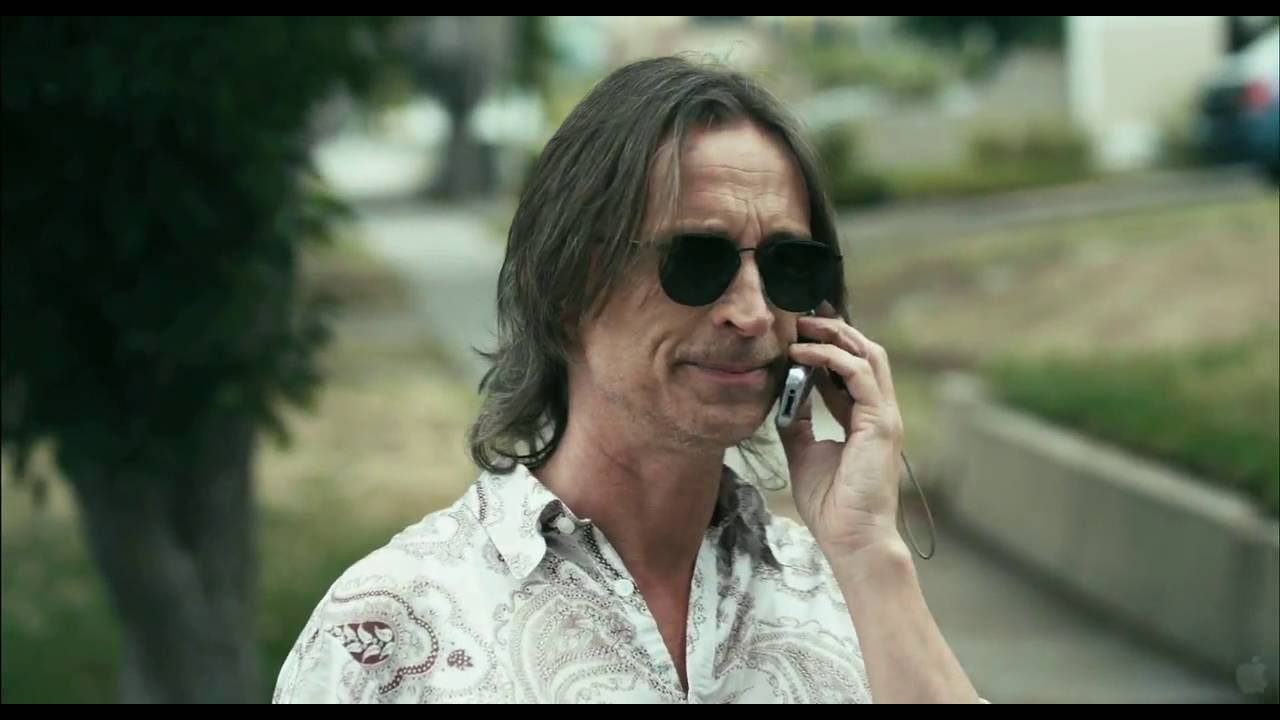
California Solo, a recent production of modest distinction, is thus one of the first movies of this "new" type to appear in my lists. It features the actor Robert Carlyle, who appeared in the late 90s indie hits Trainspotting and The Full Monty. Here he is playing a former minor member of a moderately acclaimed 80s era British rock band who now lives in California doing agricultural labor, making music-related podcasts, and drinking a lot. He's also divorced and has a teenage American daughter whom he barely knows; and he is also facing deportation back to the U.K. because he gets arrested for drunk driving. While he has a certain amount of British rocker charm, his life is in the mess it's in because he drinks so much that no one can really help him. I suppose that is the most interesting part of the movie, I have rarely seen a depiction of alcoholism that is so thorough and illustrative of the pitiful state that it reduces a man to. A lot of movies that are supposed to feature the bleak side of alcoholism still induce me to want to join in and imagine that I could carry off that lifestyle if I put my mind to it. But this character I knew was beyond anything I would be able to pull off at this point of my life. I can't go that far, not that I want to obviously, but some people have compulsions to be so extreme in everything, their souls are so volatile. My soul seems to be entirely bland in that regard.
I think there was supposed to be a message for us about immigrants here because it's a fairly relatable Scotsman who is being put through the grinder with police, lawyers, and all the rest of it, and perhaps we'll be sympathetic to his desire to stay and equate that with the plights of people who aren't white and/or English-speaking and move or fortify our personal take on this issue. I tend to be of the mindset that seemed to me to be prevalent when I was growing up that if any individual country decided that they didn't want any particular foreign national camping out on their territory indefinitely that there was always a risk of deportation. Obviously the sentient part of the world has moved on from this way of thinking about the matter.


The Tree of the Wooden Clogs (1978)


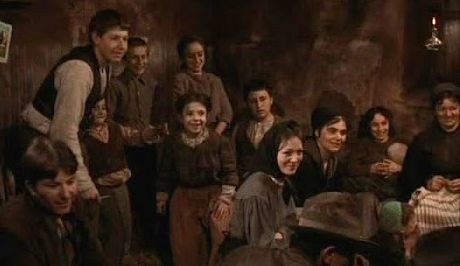
Italian epic from the heroic era of European filmmaking. I had seen this a few years back on a poor quality VHS tape and written a post about it. In addition to the dark print on the much smaller television I had at that time, I seem to have been distracted on that occasion and not taken much away from the viewing. In the meantime I kept the movie saved in my Netflix queue along with about thirty other DVDs whose statuses are perpetually "availability unknown". However, as occasionally happens, one of these elusive discs will suddenly become available and turn up in my mailbox, in this instance the Criterion Collection release. So I had to see it again.


Of course my experience was much better this second time. I was evidently in a more relaxed state of mind, which helped, and the bigger screen and clearer print brought out much more of its grandeur and depth than I had been able to perceive the first time. There is a very well known scene in which a pig is slaughtered, and there was another episode again involving an animal, a diseased cow that has to be put down. As this cow is the only one that the family, who was exceptionally poor, owned, and they cannot sell the meat or anything due to its being diseased, it represents years worth of financial devastation. It would be hard to concoct a "pitch" of this movie describing what it's about, it's an accumulation of small incidents or strokes of ill or good luck that given the narrowness and rigidity of this world determine the courses or nature of people's lives. One boy is identified by the local priest as intelligent and is given the opportunity to go to school. A woman's husband dies and she has to take in laundry to support herself. Meanwhile the local lord of course has access to books and newspapers and even a record player on which he listens to recordings of Caruso while his peasants lead the same lives their forbears have led for hundreds of years, and this all taking place, as I noted in the earlier post, perhaps within the lifetime of the filmmakers themselves, or at least their parents, as the director (Ermanno Olmi) was born in 1931. He is still alive, by the way.


The Red Shoes (1948)
Much-loved Powell and Pressburger film about a ballet troupe and the artistic process intended as an infusion of beauty and color into a still dreary postwar England. There is a lot about it that I like, though I did not have the same response to it as I did to the earlier The Life and Death of Colonel Blimp by the same duo, which I thought was pretty much a masterpiece. However this does star favorite of this blog (and of Powell and Pressburger) Anton Walbrook as the ultra sophisticated and exacting director of the ballet company, and an English redhead (seemingly another P & P staple), Moira Shearer, who, I had not realized, was a real ballerina of some renown, as the unknown dancer who persuades the master Walbrook that she has what it take to dance the lead in his company. There are some pretty hard observations on the demands and sacrifices necessary to lead the life of the true artist, though these probably apply almost equally to being a true businessman, or a true scientist, or true tech innovator, or ace high school student, or almost anything requiring true excellence. Whether true art still occupies an elevated position relative to these in anyone's mind I am not sure.


There is of course the incongruity of the brilliant young composer and the brilliant young dancer in the film both being standard issue born and bred English people, given that these are arts in the English are not traditionally recognized as having a culture of greatness in, and even the English composers who have achieved some degree of fame (Britten, Vaughn Williams, Walton) I tend to think of as somewhat stodgy, respectable establishment types--sort of like the professor at the beginning of the Red Shoes who cribs from his student's work for his new composition--rather than the more fiery, intense younger men identified with this art on the continent. However, I find the optimism expressed by attributing the possibility of attaining great and noble heights where they have not traditionally been considered to have been reached to one's own people, as the phrase goes, to be admirable. This particular sort of confidence is not consistent with most peoples across the ages.


Iron Man 3 (2013)


Another selection by my new system, I figured that these movies were hits so they must have some kind of appeal, or fun to them, so I wasn't opposed to seeing it. I couldn't understand this at all, it made absolutely no sense to me. All the technology and machines that were constantly introduced were way over my head, explained in an impenetrable foreign language. I lost the plot about fifteen minutes in, around the point at which any resemblance to life on Planet Earth as I have always experienced it departed from the movie. If this is at all representative the mental world the mass of the population comfortably inhabits nowadays it no wonder I am so isolated and incapable of understanding anybody. Good God. Look at the cast they got for this thing. Gwyneth Paltrow? Not that I ever liked her particularly, but I thought she wanted to be a snob. Don Cheadle is in this too. I know, money, money, money. Not too many people in America can win a real following doing the kinds of movies I like, But some can.


Wednesday, April 20, 2016

6 Movie Reports

Midnight in Paris (2011)


F Scott Fitzgerald partying

This is the recent Woody Allen movie in which a blond Woody Allen stand-in is able at the stroke of midnight to go to the 1920s (and even beyond) where he hangs out with Hemingway and Fitzgerald and Picasso and other famous people from that time. I am in the camp that liked this. I thought it was fun. A lot of people, who obviously did not think it was fun, despised it. (This guy, for example, appeared to have been seething with contempt the entire time). It is pointed out by most of the more intensely intelligent viewers of the movie that the jokes, the music, the personas and conversation of the famous historical people, Woody Allen's idea of Paris itself, rely on the most hackneyed, shallow and cliched tropes in which all of these things have become packaged for mass consumption. It is not that I did not notice all of this, or imagined that Hemingway and all these other people were friendly, good people--though they may well have been fun people--the Paris in the 20s era is attractive to people in large part after all because it seems like it was a good time, even at the dumbed down intellectual level necessary for the general public to conceive some idea of it; but it did not upset me. I am at an age, and perhaps even Woody Allen is too, where I have probably given up on the idea that I will ever experience Paris, or anything else, on the terms that constitute its real interest and greatness. The blogger linked to above talks contemptuously about the philistines who want to seem sophisticated without sacrificing their familiar comforts or facing their limitations. I don't know, it is true I have not been properly pushed to do these things to the extent which seems to be required now for many years, and I have generally avoided intellectual conflict both on the internet and in person because I don't have the ready-made foundation to draw on that I would need to endure and struggle through them, or the time to meticulously respond to all of the tough invective and cross-examining that serious assertion requires to be backed up. Yet I have devoted a lot of time to reading and study, certainly to an extent that seems to lead places and produces palpable results and abilities in other people. I have made some sacrifices in doing this as far as not following other pursuits which might have been more suitable for me goes, though whether any such pursuits exist has never been demonstrated. As to facing limitations, the levels at which I run up against these would preclude even residual participation in any of the attractive or serious areas of life at all if I were to submit to the most exacting standards, and I have decided that in the absence of anything more desirable to me being available, that I don't want to do that.

I even watched this a second time, and thought it, even acknowledging the clunky and even bad writing and characterization in the modern segments of the movie, just about as fun--though I've been known to watch reruns of Rick Steves' cosmopolitan-aspirant travel shows multiple times if they are about a place I like, or imagine I would like.

I thought fleetingly while watching this that it was an old-man work, analogous to the late Graham Greene novel Monsignor Quixote. This may be because the references and shape of the story seemed purposely to have been not been overly daunting or obscure, and reflected some of the artists' standard tastes, interests, what have you. But I did not dig into it any more than that.

Off the cuff top 10 Paris movies. I know I haven't seen that many of them, and I'm sure I'm forgetting something I have seen.

1. Les Enfants du Paradis
2. Stolen Kisses
3. The 400 Blows
4. A Bout de Souffle
5. Boudu Saved From Drowning
6. Celine and Julie Go Boating
7. L'Argent
8. Midnight in Paris
9. An American in Paris
10. Window to Paris 


All we ever asked for was that romantic walk along the Seine (maybe not all, but that was included in the desired overall package)

A Fatal Inversion (1991--incomplete)

This was a British TV production, about three hours long. It is about a couple of college friends who had spent the lazy, glorious summer of 1979 hosting parties and eccentric visitors at the Georgian mansion in Suffolk that one of them had inherited. Ten years later the friends have moved on to careers and wives and children and live in the suburbs. The summer in Suffolk seems to be forgotten until a dead body is found in the woods near the mansion house that seems to have been buried for about a decade. When the police come around to ask the former owner of the house--he sold it shortly after the summer ended--some general questions about his time there, he appears to be nervous...very nervous...I watched the first 1:46:02 on Youtube, which was the only place I could find it. It was very good, a thorough English police mystery type of thing, though I dragged my feet on watching the end because I thought I could see where it was going and I was not very enthralled about arriving there. I waited so long in fact to finish the program that when I did go back it had been taken down and I couldn't find it anywhere else. So I don't know what happens. 

Seeing movies from the early nineties are so very odd to me, because it is a familiar world that one lived in one's self, where young people read newspapers and don't have tattoos and of course the old telephones and cars and all of that, but also the people's bodies. All of the people in this movie have distinctly 1990-95 era bodies that have a quality you recognize instantly if you were alive at the time, that is different from what people look like now. It must have to do with the composition of musculature, fat, presence or non-presence of drugs and other stimulants (and the same holds true for 1970s bodies also, prime examples of which are to be seen in Village People and Jesus Christ Superstar videos).

The Autobiography of Miss Jane Pittman (1974)

TV movie about the life of a (fictional) woman who was born a slave and lived to be 110, which brought her into the civil rights era. It won a lot of Emmy awards, including best actress for Cicely Tyson, which I thought mildly interesting in light of the recent brouhaha over the traditional lack of Oscar recognition for black performers, as this movie and the accolades it got seems to have been largely forgotten. It was based on a book of the same name by a writer named Ernest J Gaines which somehow I had never heard of either though at one time at least it seems to have been quite celebrated and frequently taught in schools. This movie is of that school whose virtues, such as they are, are more in the educational than entertaining line. A litany of the expected atrocities and injustices runs through the course of the narrative, nothing either new in the way of incident or that adds to the understanding. Depictions of life in the old south I often find interesting, though that is, I hate to say, because the presence, in a fairly nearby part of our own country, of a feudal and near-feudal culture up to a time not very far in the past, and probably all of the associated violence in the background, though I am not directly attracted to that as a matter of study, is largely what makes it interesting.


Black Sunday, or The Mask of Satan (1960)

Somewhat pioneering horror movie, made in Italy and based on a story by Gogol (!), the DVD version is dubbed into English. Stars cult legend Barbara Steele (described by the Film Snob's Dictionary as a "wild-eyed, witchie-poo B-movie actress equally at home playing seminude seductresses and scarifying goth girls in horror movies of the 1960s and 70s"). I found it mildly diverting. Such gore as is in it, while envelope-pushing for its time, is not overwhelming, and the atmosphere is gothic in a cheery Addams Family-esque way, as long as people aren't being trapped in dank cellars and in the grasp of determined and thirsty vampires. I have mostly forgotten it though.


I kind of like the idea of vampires being a running theme through the culture, since I mostly associate them as occupying milieus at high levels of taste, cultivation and what have you, but I can never really remember what the meaning of them is supposed to be. I know that you can ward them off with a cross and kill them by driving a stake through their heart, but whatever is signified by this does not strike me as anything that has a deep meaning for most of the people who make these kinds of films.

The Yearling (1946)

The Yearling seems like something I would have responded to more strongly than I did. It was made in the middle of my usual favorite period, is based on a classic, if now somewhat fading, American story, shot in lavish technicolor, and features stars towards whom I have been favorably inclined in the past. These things remain positives in the movie too. There is some kind of spark or underlying energy missing in the execution. It is a handsome and technically fine production, but it felt dull and rather joyless much of the time. Nothing happens in it that particularly charmed or interested me or drew me into the world, imagined or otherwise, of the movie. But I still think it is worth seeing for the student of this time period, or older technicolor movies, or older adaptations of literary classics, if for no other reason to get a better sense of why the better movies of this type work.


Alice Adams (1935)

I thought this was a very good adaptation right up until the end, which unfortunately was completely changed from what it was in the book (which I am an admirer of) in the cause of happiness. I would not have minded it being longer and including more episodes from the story, which is something I rarely say about movies. The young Katharine Hepburn not only does her expected fine performing, but is actually pretty believable as the hopelessly striving, borderline middle class Alice. George Stevens, who would go on to make many notable films, Gunga Din, A Place in the Sun, Shane, etc, etc. was the director. The book came out around 1921 and there was an earlier silent version of it, but this version is close enough to it that it seems contemporary and comprehends the general spirit with which it is animated. The Adams family's economic problems are experienced by them as more of a social/individual nature than the result of a general depression, which latter would have been so immediate to audiences in 1935 of course, but 30s movies excelled in depictions of social rejection and cruelty, much more so than I find to be the case in our own time--at some point I hope to be able to expand on why I think this was the case--so the onset of the Great Depression---I don't know what I am getting at here. I saw the movie a while ago. I enjoyed it, except that for the different ending, both with regard to Alice's love life and her father's career, which obviously play out completely differently in the book.


Pretty sad for a post 3 weeks in the making.

Thursday, January 22, 2015

Movies 1959-1963 (Legendary Ones Too!)

As increasingly happens to me with books, I have hit a snag with regard to my movie watching where I haven't been enjoying it as much lately as I did before. Part of this is that there are always too many other things going on, and I don't have, or don't feel that I have, even an hour in a day that I can take to watch a film or write or do anything I want to do without getting distracted or jittery. The other part is that I have been seeing almost all modern things, modern for me being anything after about 1970, which I rarely like. So having finally gotten back again towards the time period and the accompanying sensibility that I like, and with the next three pictures up on my list iconic and all time popular classics, I had hope that I would get swept up in the spirit of the project again, as seems to have been the case with my reading when I began sprinkling in again novels and plays of the sort that I like, intelligent and funny without being at every instant a test or indictment of my intelligence or other development, among the heavier material that I find I am no longer able to read with any sense of accomplishment or enjoyment. This partially happened. I did feel, in one instance especially and in parts of the other two, that I was experiencing great and significant work, and I could see where at another time and in another psychological state of mind I would have taken to them with real enthusiasm. At the same time I feel at this point so remote from the artistic process and the state of mind in which it flourishes and which is the basis of what most great artworks are about, maybe more so than at any time in my life, that it is hard for me to take up anything that does not belong to the truly remote past, before the adult memory of almost any living person, without feeling sheepish or embarrassed before it. Also at least two of these movies were very long, so that I had to watch them over several nights, and in my current agitated state I was never really being able to settle in to the world which the film inhabited, which is especially important to do with epics.

8 1/2 (1963)


I may have the mind and perception of a child, but I have enough sense to know that this has greatness imprinted on it in just about every frame. This does not require a keen insight, as the movie's status as one of the immortal monuments of the postwar international art cinema has been established almost from the day it came out. It is hard for me to project seriousness, but I do mean it, it's an impressive work. Fellini was a true badness, and this movie is a two hour and eighteen minute. masterfully stylized demonstration of what being that kind of artist consists of. The scene (I was going to say the famous scene, but almost every scene in this is famous) where Mastroianni, who seems to have been a badass of acting in his own right, in his dream, has gathered all of the important women in his life, wives, mistresses, prostitutes, childhood fascinations, actresses and so on, in his childhood home where they cook dinner and bathe him and wrap him up in blankets before they begin to snipe and make accusations and demands, at which he has to drive them back with a whip is one of the most memorable depictions of a properly flourishing male ego that I have seen. But then the set of the spa, both by day and night, where Mastroianni and his entourage have come, nominally to begin work on his next movie, the nightmare of the traffic jam, the dingy railway hotel where he stashes his mistress--these are all wonderful enhancements and understandings of the possibilities of life also. But you knew all that.

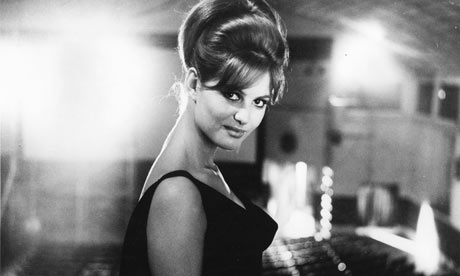
It is a sign however of how off I am at the moment that I did not feel much personal emotion or thrill, even of the quieter sort, while watching this, which I usually do when encountering artworks of this stature and caliber. As enumerated above, this has much to stir and raise even the most dormant spirit, but mine does not seem to be capable of being stirred by anything. It even has Claudia Cardinale in 1963 for goodness's sake-- her 1963 is one of those singular years in the history of movies, or anything else, where a woman attains a unique and frankly awesome state of near perfection that is too fragile to hold for more than a few months (Grace Kelly around 1954 comes to me as another example of this phenomenon; no one else is coming immediately to mind in this same way at the moment). But I can't feel that any of this has anything to do with me anymore, and such a thing is to me a kind of indictment or accusation for the obvious reasons that we don't need to go over again. But I hope our culture can continue to produce enough people who possess enough intelligence and spirit to enable the film to survive, that it may speak to people even many generations from now and the names and personae of Fellini and Mastroianni and Cardinale and Italy and even Europe will still resonate and have meaning for them. I don't think it is a certainty that they will by any means.


Psycho (1960)

To be honest, I find the story here to be unsatisfying. It doesn't hold together. The characters aren't strong enough. From the 21st century point of view it is wholly implausible that the Bates Motel would not be under 24 hour police surveillance just on principle, though implausibility in itself is not enough to mar an otherwise fascinating tale. There isn't really enough tension or motivation here to interest me.


That said, I find it very watchable. The world of the old U.S. highways with their oddly designed turns and exits, lined by empty spaces or local nature that looks more organic than that along most of the interstates with the occasional sketchy hotel or odd, out of place looking Victorian mansion has largely disappeared in much of the country, namely the more populated parts of it, but where I live the roads are largely still like this. The film was shot on the same lot as Hitchcock's TV series was, and it has the look and feel of television productions from that time, which effect however I like (Inherit the Wind was also filmed on a TV lot around this time, and I noted that I liked this aspect about that movie too). Janet Leigh's muscular, almost strapping, physique caught my attention--it is not a type I associate with this time period. As I begin to move beyond the time of life where I can even pretend that varied experiences of the sensual kind are still realistic possibilities, I have taken more of an interest in the variety of physical body types and attributes than I was want to do in my desperate youth, when I wrote off everything beyond finding someone who was identifiably female from ten feet away and would not be too harsh for my fragile personality to be capable of contending with as luxuries I could not afford. I also like the quiet, slow pace of this movie; it is not that I don't like the frenetic, anything can happen style of Fellini and other artists of his type, but as hardly a day of my life has ever assumed that form, it is always an alien experience for me to try to comprehend. The tone of my day to day life is, unfortunately, a hell of a lot closer to Norman Bates's than it is to that of any character in a Fellini movie. Anyway, the main thrust is there are many things about Psycho that I like, I just think the plot misses in some way. I missed the Hitchcock cameo as I always do. I haven't bothered to look up where it was--what's the point of that? The game is to find it on your own.


Ben-Hur (1959)

I was a little piqued when this came up. It is certainly legendary, and won a chariotful of Oscars, which kinds of movies I find I usually enjoy, provided they are old enough. I also had not seen anything of this kind, namely an old Hollywood studio epic set in ancient times, in a while, and I thought that might be something that could revive my sense of enjoyment of life, which effect watching and reading depictions of Roman-era fighting, torture, injustice and so on often inspires in me.


I had seen it. or some of it at least, when I was around eleven, and while various of the more vivid scenes, i.e. the slave galley and the chariot race, had imprinted themselves on my memory, my ability to follow the story had been hindered by my complete lack at that time of any background in either religion or ancient history. I may have recognized that the unnamed man who gives Ben Hur water when the slave caravan passes through his village is supposed to be Jesus, but how that otherwise fit into the story would have been beyond me. The emphasis on Ben Hur's being a Jew would also have meant little to me at that time other than as a signal that he was probably going to be treated unfairly (i.e., I don't think I was clear at the time what 'being Jewish' meant either in a religious or racial sense). Other aspects of the plot had been confusing to me as well. Seeing as my understanding of some of this background matter has improved somewhat in the ensuing 34 years, I anticipated a much heightened viewing of the movie this time around.

Ben-Hur has its moments, though the three hour and forty-two minute running time is a bit excessive, given that the major episodes in the plot, extended though some of them are, are really not that numerous. There is a lot of dead time waiting around for the highlights. After the chariot race there are still forty or so minutes left, which are given over mainly to Ben Hur's finding his mother and sister in the leper colony and the last days and passion of Jesus Christ. It may have been good, but by that point in the movie my concentration was gone. I assume Ben-Hur must have converted to Christianity at the end, but I do not remember the scene or announcement when he did this, which is kind of embarrassing.


The logistics of showing this in the theater in some noweheresville American town, or even a place like Brattleboro or Concord, in 1959 are of interest to me. Unemployment in those days was like 2% and nothing stays open past 10pm even now so during the week they must have had to start the show around 6pm sharp, and with intermission they'd be lucky to be done by ten o'clock. It was a full night's outing, or afternoon if you went to the matinee. I suppose I only find it fascinating because I feel like I haven't had an evening, or a four hour block of time in which to do anything, sit in a beer garden or whatever, in years, and so I assume no one does such things anymore.

Burt Lancaster (as well as Marlon Brando) was offered the role of Ben Hur before it descended upon Charlton Heston, which only strengthens my theory that you could not keep Burt Lancaster out of classic movies in the late 50s and early 60s, unless he kept himself out of them.

Ben Hur's sister was played by Cathy O'Donnell, who was Wilma, the girlfriend/wife of the amputee in The Best Years of Our Lives, which was also directed by William Wyler. I had never seen her, or noticed her, in any other part. Ben-Hur turned out to be her last film.

I have to admit that I kind of like Charlton Heston. He was really a man of his generation, which is pretty much gone for good now, including him, though he was active in an often outrageous, frequently hilarious and to me somewhat endearing way up to the early 2000s. Of course as one of the last visible and combative elders of the World War II generation the ever obnoxious baby boomers were sniping at him to the very end, at which point he had alzheimer's and probably didn't know what he was saying half the time. I'm sure he was a more genial man to talk to in person than most baby boomers of similar stature would be. Though he became famous late in his life as a right wing caricature, he did not vote for a Republican presidential candidate until Nixon in 1972 when he was nearly fifty years old, which was an election when a lot of people of roughly his age decided things had gone a bit far and switched side. He did not officially register as a Republican and become the activist on their behalf that he is thought of as now until he was in his 60s. I suspect that in the 2030s, when I am 64 or so, I will appear to younger people to be the embodiment of a conservative reactionary, they'll regard me as Samuel Johnson regarded the old Puritans who were still hanging around scowling at everybody when he was a boy. I hope it doesn't happen, but we've all seen that old men, especially if things have always gone along pretty well for them in life, don't as a group take much to change, which eventually comes to some point that they just can't go across.    


The next five star movie on the list is the cartoon Aladdin, which I am not going to watch. It is not a favorite of my children, though they saw it once, or the older ones did, a few years back, and what I saw of it I didn't like. So I am recording it as done here.

The incident from Ben-Hur that made the greatest impression on me was the part during the chariot race when Messala, who has by that point long established himself as the embodiment of Roman tyranny and cruelty for the sake of cruelty, lays off from lashing his horses for a moment and in a furious rage begins to lash Ben Hur, his childhood best friend whom he has already sent to the galleys for three years, with the intention that he never return. I was struck by the capacity that Messala had to hate another man that much for what appeared to me at the time no apparent reason, because I did not understand the exchange in the beginning when Ben-Hur refuses to sell out his people to give smoother sailing to Messala's political ambitions. It seemed something worth noting to me.

Tuesday, December 23, 2014

Three Movies From the Seventies

The Tree of the Wooden Clogs (1978)

Three-hour plus Italian epic about peasants circa 1900 in the sweeping, novelistic style that was popular from 1975-82 or so, especially in Europe, but was also visible in things like Acopalypse Now, The Deer Hunter, Kagemusha and other films of the period that took it for granted that there existed a critical mass of moviegoers who would go to the theater, and sit through long, dense, meticulously detailed serious movies, especially if they were the work of important directors. I suspect that this is actually very good, but I was unable to get into it at this particular time. My mind kept drifting away from whatever was going on in the movie to focus on my own personal existential crises. But I will try it again someday. It verily is about the extremely humble and limited lives of rural peasants, I believe in the northern part of Italy, in a period probably within the lifetimes of the director's parents, their childhoods at least, a life that most Italians by the 1970s had, with evidently mixed feelings however, ceased to lead. I was not struck on this initial viewing with what was most important about it.


One probable reason for why I had trouble getting into the movie (besides the fact that I am too exhausted in the evening anymore to really concentrate on anything) is that I watched it on a faded VHS copy in which the indoor and nighttime scenes especially were so dark that I imagined they could not have been thus on a good print. Netflix doesn't have it. In truth, they don't have a lot of what I want these days. Here is my current list of 'Saved Titles: Availability Unknown' with that service:

1. Alice Adams
2. Follow the Fleet
3. Giant
4. Giant: Bonus Material
5. Odd Man Out
6. Separate Tables
7. Soldier of Orange
8. Stella Dallas
9. Harold Lloyd Collection, Vol 1: Disc 1
10. Man With the Golden Arm
11. The Tree of the Wooden Clogs
12. Three Brothers

Obviously I have found old VHS tapes for a few of these and watched them, but it seems like that ought to be an unnecessary hassle, especially as none of the movies in the above group are obscure in the least, and all of them, except maybe The Tree of the Wooden Clogs, have easily recognizable stars. I guess I imagined Netflix as bascially a subscription library that would have anything that has ever been released on DVD readily available. Actually, of course it is an ambitious, scheming, 21st century internet business that wants to make billions of dollars, and that apparently doesn't involve investing in enough copies of Odd Man Out to make people like me happy. I have read that they are making fewer DVDs available because they want to phase out the mail order part of their business, which costs them a lot of money, and push everybody onto streaming. I don't have my television set up to receive streaming, which probably isn't that hard, but it seems like it might be a minor pain in the neck at the very least. And then it isn't clear that the things I want to see are even going to be available anyway.

Silver Streak (1976)

Sometimes a pointedly humorous book or other entertainment causes me to ask myself, what is that I want from a comedy anyway? The truly successful comedy in any art is a rare achievement. The work that is not primarily intended as comic but is punctuated with frequent humor or wit is often better received and gives more pleasure. The straight comedy, it seems to me, comes laden with an expectation that is usually impossible to live up to. Long form works especially depend on certain jokes, or persons, or situations, being so conceived as to maintain their ability to amuse throughout the length of the story, and feeding off of and into other jokes.

Silver Streak is not altogether unsuccessful--there are a few modest laughs in it, the premise and characters give it at all times the potential that something very funny might happen, and it has some sociological interest as a relic of its time--but in the end I didn't get enough fun out of it to be satisfied. I did make a few mental notes re certain things that struck me:

I was always under the impression that the early to mid 70s were the nadir of passenger rail travel in the United States, the last of the dinosaur private companies going out of business at the beginning of the decade and the early years of Amtrak which followed being universally mocked as a disaster, so that making a movie about a train trip at this time was akin to making one now about people who read physical books and newspapers or something like that.


Gene Wilder is an odd leading man. It is not merely his hair, though that probably does influence me a little, but the way he moves and his expressions, he does not give off the air of a guy really inhabiting a character or carrying a movie. Often it seems as if his mind is remaining archly aloof from the film while he physically moves through and mouths his part. This kind of thing was appreciated at the time. By the time I became conscious of the movie landscape, around 1980, Wilder was still a big name though most of his big roles were behind him by then and his star was, however imperceptible it probably was even to him, going into decline.

Very 1976 how Gene Wilder manages to get laid by a complete stranger within an hour of getting on the train; which turned out to be extra fortunate, because all of the mayhem that broke out on the train immediately after the successful consummation of this tryst would probably have forestalled it if they had waited a second hour. Maybe it would be a good thing if the crime rate really went back up again after all.

Jill Clayburgh. To paraphrase Ben Jonson, she was evidently not for all time but for an age, that age being approximately from 1975-1980. She was always a name from my childhood, but I had never seen her before. She reminds me of somebody's mother--the mother who is not really very nice and is in fact judgmental and a bit of a snob.

The Conversation (1974)

Interesting movie in terms of visuals and sounds, which depict pretty well what the sensory impression of existing in America in 1974 felt like (this was the first year that I have any real memory of at all). The fact that it was made at all is a testament that it was also at the peak of the power of the more humanistic and art-focused New Hollywood movement, the snuffing out of which, we are told, would begin in earnest in the following year with the colossal success of Jaws. But in '74 things still appeared to be solidly moving in the less bombastic and more subtly alert direction of which this movie is a good illustration.

There are a lot of the kinds of little artistic touches in this that elude most filmmakers but please the viewer and keep drawing him back into the story, especially in the first half. The choice of jazz music works very well here, and also calls back the popular pastime of sitting in a room playing longform records out loud, which I don't think is something people do much any more. The old reel to reel tape machines and the other for the time sophisticated recording equipment possess a kind of mesmerizing beauty--maybe this did not strike people as so in the 1970s. Most of the characters in this wear eyeglasses, and by the standards of the present these glasses are almost gaudy ornaments on the face--again, this may be a happy coincidence with the fashion of the time, but I found I was frequently drawn to contemplate the fact and nature of this eyewear. The party at the shop after the surveillance convention with its instant bar of hard liquor bottles and the seedy, quietly desperate quality of the guests and conversation, also strikes me as reminiscent of its time. These things all work well. That said, the actual plot itself, while well-written and quite clever even, I don't find as compelling. The narrative, for me, does not go hand in hand with what else is interesting in the movie.


The disc came with multiple commentaries, including one by Francis Ford Coppola himself. I listened to about twenty minutes of it. I have not gotten into any commentaries in a while. The 70s guys will talk all about the film and what they are doing but I find it in their case more interesting to just watch the movie and find out what works for me on my own. The 70s are still near enough, to me anyway, that explanation is either overkill or pointless. You need to get to it on your own or it doesn't do you any good. Now going farther back in time, though maybe all the way to the 50s or even the 40s, I find a good commentary can be helpful, or at least enjoyable, because you are dealing with things that you are not directly connected to in time or sometimes place. But with newer things, if you don't understand them even somewhat intuitively, then they are not meant for you anyway I suspect.  

Good role in this for Harrison Ford. One gets the feeling too that the character he plays in this is what he is really like.

I remember as a child always thinking minor 70s icon Cindy Williams was *pretty* in her famous roles in "Laverne & Shirley" and American Graffiti, but as an adult (me) she too seems to possess some kind of generic 70s quality that I am kind of repelled by. Maybe it is that these people are all about the age of my mother and I must have seen them, or their type, on television a million times and identified them vaguely as some kind of alternative mother or mother-aged female figure and that is all playing into my response to them now. Who knows.

Saturday, February 08, 2014

Seven Beauties

Seven Beauties is an Italian movie from 1975 with which I was heretofore unfamiliar. It was directed by Lina Wertmuller, of whom I guess I had heard, but I did not know anything about her. I had assumed she was German, to begin with (she is of aristocratic Swiss descent, but was born, and as far as I can tell primarily grew up, in Rome). Since she seemed to be admired exclusively by either self-serious intellectuals or the most impossibly with-it people, while I was aware of no humbler or duller person who had any familiarity with her work, I had a vague idea that she operated as a director on the more difficult and inaccessible end of the German New Wave. This did not deter my excitement to try to take it on, for I often like movies of this type, though I harbored little realistic hope that I would be able to understand most of what was important about it. And while my taste very often does not agree with what hip and edgy people find worth their time, I usually can find something that is appealing to me in things that real intellectuals like, even if I don't understand them. This may appear a paradox or impossibility, and I suppose it is if one admits that nothing has reality that fails to meet the most basic laws of logic; however it is clear much of conscious life, both of the social and inner varieties, takes place outside of these narrow bounds.


Seemingly everyone who writes about Seven Beauties concurs that it is outstanding, a film of the very first rank all around. I will only join in with this chorus because I do not think this enthusiasm and high opinion have penetrated very far even among the general intelligent cinephile public. In the course of this movie several hundred people are killed by firing squads, the body of a murdered man is chopped up and packed into three separate suitcases and put on three separate trains, a man in a concentration camp contrives his end by diving into a sewage pit and refusing to come up again (though the guards unload a few dozen rounds of machine gun fire into the pit just to be sure), there are a sex scene involving a sadistic 250 pound female prison guard in an office whose furnishings include a swastika rug and an enormous photograph of Hitler, a rape of a woman tied up in a bed in an insane asylum, and some of the ugliest women (contra the title) ever seen in any movie anywhere, as well as one of the clearer representations of the kinds of things a person in a concentration camp could be brought to do that I have seen, at least in a long time. Yet it is in many instances comic, at least in an absurd way. It is also serious, but the interjections of comedy and absurdity insist that this seriousness is no way the result of straining or conscientiousness. The tone and the balance of this mass of horrors juxtaposed with the underlying absurdity and the occasional flash of intelligent or pertinent observation ('How did the world get like this?") is achieved about as perfectly as could have been expected (and it had to be). It is the signature accomplishment here.


Fernando Rey is in this. It is always a delight to see him, even though here it is as a prisoner in a concentration camp. His presence had not been advertised in the brief promotional and critical summaries I had come across, and it is a rather small role. However his whole persona as an actor, especially in this period, is largely of the same animating spirit as that prevalent throughout this movie, so it is almost as if he is there for emphasis (Look! It's Fernando Rey! And he is in a striped concentration camp outfit! And he is still suave and witty and contemptuous! And you love it!)

The star was Giancarlo Giannini, whom I have not seen before. He is most famous for his parts in Lina Wertmuller movies. His performance stands out, enough that he was nominated for the regular best actor Oscar for the 1976 awards despite his movie's obviously being in a foreign language (which is not as rare of an occurrence as I thought, however). Lina Wertmuller was nominated for best director as well, which indicates to me that the film made a splash of some kind at the time. I wonder why it has become relatively forgotten. Besides still being very good, the basic story is not difficult to follow and while entertaining is not exactly the word I would use to describe it because of the nature of the content, its construction and the way it unfolds is in what I would call the entertaining style (that is, the story is always active, each little section builds up to a climax, these occur at intervals that are not too far apart, and the result hurtles you forcefully into the next scene).


Lina Wertmuller's Oscar nomination for this was the first ever for a female director. I feel like I am supposed to be overcome by trepidation and discomfort as a result of this, but as long as the direction isn't cloying or reveling in opposition to everything our male-centric traditions and civilization hold dear, which is not blatantly the case here, I don't see why I would be. Wertmuller looks to be one of those old European artist-intellectual types who always hung with the big brain boys and knows, and mainly cares about, what is and has been in the past strong and worthy in the arts and thought, who is not motivated by personal animosities or resentments or extreme self-absorption, and who finds interesting stories and things to think and write about outside of this, which is always a rare ability no matter who the group is made up of.


The opening sequence included some film footage of Hitler and Mussolini. We all know what Hitler looks like, but I had never seen much tape on Mussolini. He was really absurd.

There was an interview with Lina Wertmuller in the extras that came with the movie. It was over an hour long so I did not watch much of it, but there was one minor, prosaic item in it that caught my attention. Wertmuller's father was an important lawyer in Rome, and his idea, which he did not neglect to plant in her head, had been that she would be one too. This made an impression on me because I have noticed people are starting to ask my older two sons what they want to be when they grow up, and invariably they say "I don't know". I am sure this is an honest reply, and that they have no idea what they would like to do, because the serious work world that the people who are asking these questions have in mind can hardly have much reality for my children, mainly because it is does not have much for me. There is an immortal line in the old movie Dead Poet's Society where a heartless father barks to his son, who is overindulging in the romantic side of his personality at his exclusive boarding school, "You're going to Harvard, and you're going to be a doctor". This line has always stuck with me, because it not only sets a clear bar of what is the minimum that will be acceptable for the child going forward, but that the parent knows absolutely what he is saying, and that it is easily within his power to bring about the desired result if the child has the least capacity and will to attain it. A more humbly placed family cannot in most instances insist that their children get into and attend elite colleges and become doctors, because they simply don't have the knowledge of what is actually required to achieve those goals. Of course lower class families have pride and set bars as well--even at the bottom, Chris Rock's famous joke about keeping your daughter off the pole applies--but in the case of Lina Wertmuller and many other writers and other creative people that one reads about, even if there is some flexibility with regard to the ultimate occupation, the message was clear that anything below the education level and respectability of 'lawyer' was essentially the equivalent of 'the pole', and was not to be considered as acceptable, ever. People who come from this kind of background of expected success are not wholly conscious of this, because it is the very atmosphere they breathe; but it is real, and powerful.

But to return to my children: Where we live there are a lot of Libertarian types, people who hate taxes and worship capitalism, and due to choices we have made with regard to schools and activities in addition to the relative density of their numbers locally, we are coming into contact with them with increasing frequency. These people don't quite know what to make of me, which is understandable, as I don't know what to make of myself, but they see that my wife is an energetic and extremely resourceful person who never whines about fate or limitations or not being able to do something she wants to do, but immediately and constantly sets to making plans for how her various desires might be brought about (I would tell you some of these successful and to me marvelous schemes, but I don't think she would like being brought alive as a character in this blog to that extent) and that my sons are not complete blockheads either in academics or in practical matters, and seem to be doing at least as well as their own children, in spite of their comparatively lackluster paternal guidance and example. I have noticed a couple of times now people not only asking the two older ones what they wanted to be when they grew up, but whether they had chores at home or not, and indeed one person asked them whether they were aware that they would have to have a job someday (thankfully they answered yes to that one). I remember on several occasions when I was an adolescent adult men trying to strike up conversations with me about matters on responsible adulthood as if they suspected my father of being deficient in these areas (perhaps he was, but as he seemed to me, and still does, much more intelligent and vital than most of these other people, their efforts did not leave much of an impression on me). Some of the upright blue collar types (policemen, independent contractors, etc) who populated our neighborhood (and who really disliked my father) took it upon themselves to talk to me about the necessity of morality and work ethic and proper decency in social intercourse, which I naturally resented, enough that this in part prompted me to move to Maine (where my father actually was). When I was there I remember the father of one of my friends, who was a lawyer, and didn't know my father, but had seen enough of me to not like the impression, giving me a harangue one evening at their dinner table about how I needed to be productive in my life, and how I was not productive. Anyway I wonder if something like that is going on now with my children. Still, I think because of my wife that the bar of acceptability may be already, and for the most part unconsciously on her part, set higher than I suspect it is. I believe that certain failures of will or talent or fortune that cannot be overcome are possibilities that I do not think she believes are possibilities, because they are not an imbued part of her experience. I certainly hope that this is the dominant impression that the children will receive in these instances.

The Hunchback of Notre Dame (1997)                  

This is the Disney cartoon version. I want to record and leave at least a brief note on all of the highly rated movies I see. Going on twelve years of having small children, a cartoon has to have something really, really unique and appealing about it for me to take much of an interest in it. That was not the case here, though I acknowledge the greatness of the story, the elements of which were ready-made to be classic, and were only waiting to be combined into a narrative. I don't know if the execution ever lives up to the promise offered by the scenario, as I have neither read the book nor seen any of the other numerous movie versions, several of which are considered classics in their own right. All of these I am pretty sure will turn up on one or another of my various lists at some point (if I live long enough, henceforth shortened to the internet word IILLE).


Sometimes I do searches on this blog to see if I have ever, in seven and a half years, used certain words. Today I discovered that I have never used the word "spreading" in this blog (Until now).

When I was really little I thought The Hunchback of Notre Dame was a true story about football.

Tuesday, December 03, 2013

Three Brothers (1980)


Do you like this movie? Yes.

What Do You Like About It? It has the expansive, deliberate, unfrenetic, realist, novelistic style that reached its zenith in the 1970s, particularly in Europe. This depiction of consciousness, character, etc, was akin to how I used to experience life myself until I was around twenty-seven or so.

What Do You Dislike About It? Nothing stands out. It is a little unusual in that it sets out a group of characters with very serious problems or crises happening in their lives and kind of leaves it at that, as if to say, these are the pertinent facts of life, and there is no resolution for them, until you grow old and die (or are killed). But when you think about it you realize how foolish you are, not so much to want, but to expect a resolution such that a character will never be troubled by his great problem ever again.

What Do You Love About it? Nothing to that extreme. I like seeing something of the Europe of my childhood and youth that I could still get a little sense of in 1990, but as one of the themes is about how soul-crushing the modern urban lifestyle and economy were even at that time, I was not indulging in the nostalgia too much.

Who is the director? Francesco Rosi. This is the first of his films I have seen. I would say that on the whole he definitely belongs to the old camp (he was born in 1922, and began directing on his own in the 50s) that reached a kind of maturity by the late 60s and 70s. The films of this school are extremely well-made, both technically and in terms the overall coherence of story or theme. They know what they mean to say and want to show, and how they want to say and show it.

What is important about this movie? This movie is interesting because it comes near the end of an era that, unlike similar transitional periods, I don't think as many people on the creative side of the field realized was the end of an era. Or even if they had some sense of this, I don't think they grasped how different even intelligent people's attitudes towards art and artworks, and the manner by which they consumed and related to them would become. For it seems to me in this regard we are a long way from 1980. In Italian film no less than the other major national cinemas the period beginning around 1980 was a watershed time, as the older masters (Fellini, De Sica, Visconti, etc) retired, and the generation that only knew the postwar world rose to prominence. Rosi does address the theme, so prominent especially in this more recent generation, of the native but poor village one has had to leave behind to contribute economically and socially in the modern world, feeble as that contribution is. He does not fully romanticize it, and it is clear that for the most part it is hopeless for any young person to try to make a life there in 1980, but it is also clear that something serious has been lost with this breaking from tradition.

Anything Else. The sophisticated Euro-sex is kept pretty much to a minimum. There is only one of the brothers who is a threat to get it on with anybody. He does, mysteriously to me, have sex with his rather cold ex-wife (though I thought her attractive enough) after a conversation in which I could not detect any hint that she felt anything towards him other than contempt and security in her total superiority. I don't get how we are supposed to know that she still wanted it, or at least was willing to have it. And the beauty of it is, I never will. But you know why, superior reader. You have been there. And you will never forget it.

A Confession. When I was in college I would get a letter every year, or at least twice I got one, from the financial aid office or admissions office or alumni office or some other office informing me that my aid that year was in some part made possible by a very generous gift to the College from a Mr Whitebread Mayonnaise or other from the class of 1929, who was at the time still living in Baltimore, and that it would be appreciated if I would write him a letter of thanks and say something about my studies and my plans for the future and so on. Needless to say I never got around to writing any of these letters. At the time I no doubt forgot about them within fifteen minutes of leaving the mailbox, and I had thought about it once in all of the years since then, until a few weeks ago, when I remembered that I had been asked to do this one polite little thing in return for ten of thousands of money I was being given, and I had completely ignored it, as if it were beneath my contempt even to acknowledge it all. It's something I should have done, and emblematic of all the reasons why my life relative to the greater world amounted to so little as it did.

My wife has a blog now. She is a natural. Her site is for her Greek and Latin classes (substantial and purposeful) and is wholly devoid of narcissism. I can only marvel at the seriousness and restraint, two qualities I have always longed for and never come close to attaining.

No picture with tonight's posting because my computer situation is still a joke. I have two in the room, one of which is crashing every time I log onto the site, the other of which is loading pictures at 1998 speed. I will probably edit one in in a few days, when I can get something working again.

Tuesday, May 15, 2012

Movies of the Pontificate of John XXIII (1958-63)


The pictures came up on the new format in the opposite order from that I was planning to write about the movies in. That is my problem, but it is a relevant one. Still getting used to the new Blogger. I know I should change to Tumblr or something more up to date but as yet I don't want to lose the continuity.
It's too soon for another movie post, but I'll forget everything about all of these if I don't put it down now.

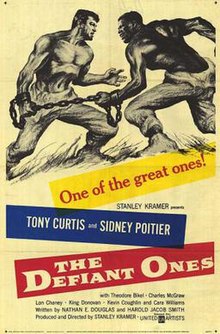
The Defiant Ones (1958)

  
An earnest, liberal-intended, clunky social message films of the 50s and 60s. Stanley Kramer, as far as I can make out, was the chief practitioner of this school of filmmaking, the particular methods of which are very much out of fashion these days, even with me, though certainly our day has its own didactic tendencies where its most treasured causes are concerned. I don't mind watching these movies on occasion as historical artifacts--and this one is at least less wince-inducing to sit through now than the later Kramer-Sidney Poitier collaboration Guess Who's Coming to Dinner--but there is nothing much inspired in them such as I am wont to look for.

I am considering officially adopting the opinion, based still on fairly scant experience and research, that the years 1955-1959, if not certain other ones on the fringes of these dates also frequently proposed as candidates, really were a down period for Hollywood. Going back through my essays here and recalling my previous filmwatching history, I cannot think of anything I have seen from this five year period (from Hollywood) that I either think of as really first-rate, or that made any significant emotional impact on me. I will probably now see two or three such movies in the next couple of months that give the lie to this assessment, but that is what I see at the moment.

Something that always strikes me about the films of this period compared to those of other periods, the pre-1950 era in particular, is how the world in which they take place, the sets and scenes, seems so uncrowded, uncluttered, quiet, devoid of activity and isolated. It is so noticeable to me that I have to attribute it to something affecting the collective psychology of the time, in which the very idea of a city street, a bedroom, a Sunday dinner, a dance hall, a train station, and all that one might expect to encounter there, suddenly became different from what these had been up to the 1950s. This movie completely partakes of this isolated, anomic, Twilight-Zonesque (to reference another characteristic entertainment of the period) atmosphere.
One aspect of the film I thought was good are the intermittent cuts from one of Sidney Poitier and Tony Curtis's subdued and overwrought philosophical dialogues, by the end of which I was usually drifting off to sleep, to the comparatively lively (though ultimately still lackadaisical) police manhunt (the two stars are escaped convicts, one black, one white, who are chained together) usually accompanied by some groovy guitar music that one of the searchers was playing on a transistor radio.

The section with the character of the woman played by Cara Williams was ludicrous, but she herself was sturdy, handsome, loquacious, was really working the southern accent, or the imitation of one, and secretly desperate. All of which I was well in the mood for.

Tony Curtis is one of those people, whose number for me is now dwindling, but who are ubiquitous when you are a kid, who has been presented by the media as a big celebrity my entire life though his career was effectively over before I was born. Jerry Lewis is another guy in that category for me, as is George Hamilton, the guy with the tan (seriously though, what money is that cat living off of? Other than acting in a TV series that ended around 1965, what has he ever done? He's the equivalent of Gay Talese maintaining a reputation, an East Side townhouse and the most envied wardrobe in Manhattan on the strength of some magazine articles written in the 1970s). Anyway, this was the first time I had ever seen Tony Curtis, whom I have always known as fat, rather blatantly flaming in spite of having a well known wife and daughter, and prone to droning on ridiculously about his  youthful beauty. He wasn't much of an actor. Sidney Poitier is better, even with the lackluster material--he at least has a presence on the screen, which, yes, besides being the only black star in Hollywood for about 15 years, is probably why he remains a somewhat memorable and symbolic figure in movie history in spite of the dated and mediocre quality of all of his movies that I have seen.

The race relations aspect of this movie, which at the time it was made was both the point and one supposes the most striking thing about it, probably will not make much of an impression among most modern viewers--while I did not forget about it in the course of watching the film, there is little about it that will be novel to most adults in 2012, who will probably find the depiction of white racism too generously understated for a movie from the 1950s.

Look Back in Anger (1959) 


I also read the original John Osborne play sometime within the last year (actually April 18, 2011, to be exact), one of about  fifteen plays I read at that time which I will probably never get around to writing up my notes on here--not that this is any great loss to the public, but I believe that it sometimes provides modest benefits to myself. The dialogue is a little overwritten and awkward in the way it handles some of the scenes with the women but it knows what it is about more than most things I come across nowadays, and Jimmy Porter is really a good character, even admitting this tendency towards his being at times overwritten. I take to the films of this "Kitchen Sink" era very strongly, anyway. I feel as if the characters in them, even a nasty bastard like Jimmy, were missing friends of mine; that the way they dress, the way they drink at the pub, the way they read the newspaper or take a walk on a windy day, the way the girls look when they are sleeping, or kissing, or even the particular nature of their beauty (and the two female leads in this, Mary Ure and Claire Bloom, strike me as especially beautiful as a consequence of this), resemble what I have always perceived to be for me the most realistic, and therefore in some way most beautiful, or most poignant, manifestations of all these things more than I have found elsewhere. What does this say about me? Probably that I have more of a working class, or at least a mid-century working class mindset in me than I usually have the opportunity to fully indulge in. Am I an 'angry young man'? Perhaps in a latent sense. I find I am sympathetic to the attitude. 

The especial brilliance of the Jimmy Porter character (played by Richard Burton in the movie, I thought pretty distinctively, though critical opinion as well as Burton's own apparently consider the matter otherwise) is in the depiction of how relentless the pressure and stress he inflicts on the people around him are, especially the women; he is so overwhelming that whatever they think about him is reduced to irrelevance. He becomes the only plausible sexual option because everyone else is so lifeless by comparison. He is not a suave or especially charming or likable character, but he is a force of nature, a term which in recent times seems to be exclusively applied to women; men used to be forces of nature too however. I have not come across a lot of literary characters where this relentlessness of personality has been so consistently depicted and maintained. It is an accomplishment.

One of the themes of these movies of course is that the young people in them are stuck in these dreary, hopeless lives working in a factory or something and chained for eternity to a spouse they have discovered they don't like all that much. Of course someone entering adulthood in 1960 would just have retired within the last decade or so at the earliest, and things have changed a lot--granted, instead of giving their lives to the assembly line, the pub, and unhappy marriages, the British working classes seemed to have transitioned to the dole, binge drinking, chavism and American style obesity, but still, things must have gotten brighter for some people, perhaps especially the ones who really cared about the unpleasant direction their lives seemed to be heading in.     

The Virgin Spring (1960)


Ingmar Bergman movie centered around the rape and murder of a very young girl in medieval Sweden, based on an indigenous legend of that far off period. Although I am something of a Bergman fan, my instinct, or preference, in the past has been to avoid this kind of blatantly dark and unrelenting subject matter. So I have mainly only seen his comparatively happier films. Bergman was a real artist--as were a great many of the people he worked with, obviously, but his was evidently the dominant vision--and this was an important transitional movie in his progression, the style and look still retaining something of the cleaner, more youthful air of his 50s films, with the very direct confrontation with the grim and dirty realities of existence pointing ahead to the second, and in most serious critics' opinions, greater half of his career. As alluded to earlier, Bergman was always a working artist who had many projects going on in the course of a year, and the script and the way some of the themes and ideas of this movie are explored reflect that. I would not call it a wholly successful work--I certainly cannot say that I enjoyed it, if you believe that pleasure counts for anything--but it has very beautiful, memorable images, and it is frequently smart, or at least feels smart in the late Modernist, mid-century way which is my idea of feeling smart.

Though widely panned in Europe--the French I believe declared that they were finished with Bergman when this film was released--Bergman was still something of a novelty in America among the art house crowd at the time, and Virgin Spring even won the Oscar for best foreign film in its year. I know or have read of several people who were college age or just after at the time who have memories of seeing this and of its being a big deal at the time. Again, enjoying it or even having an opinion on whether it was good or not seems to have been less of a consideration than that it was just so different from what everybody here was used to as to be exciting. I like to think I would have fit in well in that milieu where young people found Bergman movies exciting, but I doubtless would not have gotten them and would have found them threatening and indecent had I actually been young at the time.

One Swedish reviewer at the time chastised Bergman for presenting an image of their country to the world as a "gloomy, introverted culture full of angst and despair." I love that quote.  

The Leopard (1963)   
  
This is going to be a speed review, as I am determined to finish this tonight. If I sense that there is any public demand for an expansion, I will try to satisfy it.

The book is one of the best books of all time, and is much beloved by serious people, so I think you have to consider the movie as a movie, and separate from the book. The movie does have some worthwhile attributes. It has a major director (Visconti) who does some interesting things. I like the long, leisurely pace of the scenes, and all the usual reminders of the old lost Europe, which was one of Visconti's specialties. I was reminded that I would still like to go to Sicily sometime, and wondered anew if I ever will get there, or will ever see Italy again at all. I thought Burt Lancaster was pretty good as the Prince, Alain Delon...

My time is up. I didn't even get to talk about the bombshell Claudia Cardinale, who however I must confess finishes behind the two British girls and maybe even Cara Williams in my affections out of this group, though I know she is one of the most scintillating, take me on the floor right now babes ever to grace a movie screen.

My writing just is not likable no matter how conscientious I am about it. I hope my children turn out more likable people than I am