Showing posts with label buster keaton. Show all posts

Tuesday, January 15, 2019

I Guess I'll Continue on With More Movie Reviews (Almost Caught Up!)

Willard (2003)


Remake of a 1971 movie, starring professional eccentric Crispin Glover as a sort of proto-incel who lives in a nice Victorian house he has, at least temporarily, inherited from his parents which gets taken over by especially vindictive rats. It's pretty terrible and disgusting. The non-rat parts of it, the character's inability to function in the workplace or the modern world in general, and his anachronistic house, held my interest briefly, but they were minor aspects of the plot. At the end of this movie I determined that it wasn't necessary for me to watch anything that wasn't a widely renowned classic all the way through any more if I didn't want to. Some stuff is really irredeemable, but it took me a long time to come to the point where I felt myself entitled/qualified to say so.


Casino (1995)


Famously interminable Scorcese movie about the mob in Las Vegas. Everything that happens in this is completely morally repugnant, with no redeeming qualities. You probably knew that, but there are films with similar overarching themes that manage to be more interesting. Sharon Stone's performance in this was pilloried at the time and marked at least the beginning of the end for her as a headlining star, but I have to say her acting did not stand out to me as any worse than anyone else's did. I know I am not differing much from consensus opinion on this movie. My recent belief, or at least curiosity, garnered mainly from reading the movie blogs of very clever film fans, is that there are infinite delights to be mined from films that are comparatively uncelebrated by the critical consensus. Doubtless there are many instances where this is the case, however my somewhat random approach to trying to find examples has hit a cold streak lately.


Vampyr (1932)


The first sound movie from the great Danish-born, but really pan-European director Carl Theodor Dreyer, made in France but with dialogue primarily in German. The style decidedly shares characteristics with the scary German expressionist movement that was coming to its final culmination at the time. With this at least I had the comfort of knowing I was watching a real European classic of impressive age from a master artist. The dialogue, such as it is, is minimal, and it is a little difficult to follow and sleep-inducing to watch at home. The most memorable scene is shot from the point of view of a corpse looking out through the window of his coffin at the sky, branches, steeples, etc, as he is being carried to his burial. That is what stands out to me about this film.


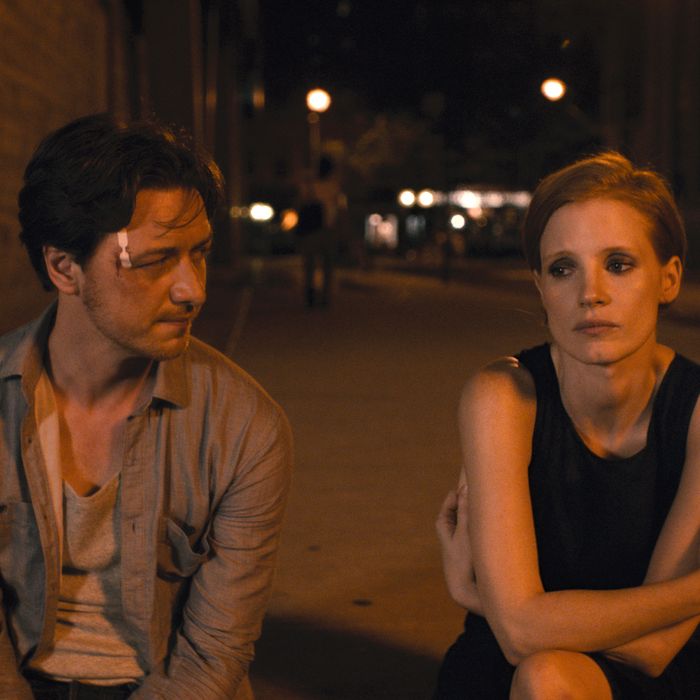
The Disappearance of Eleanor Rigby (2013)


For reasons that I am still trying to tease out, because the plot and the characters don't have any particularly outstanding appeal in themselves, and in fact are rather depressing, I quite liked this at the time that I saw it. Annoying and neurotic and over-privileged as most of the characters are, the general level of intelligence, cultural references, topics of conversation and so on which permeates the atmosphere of the picture is in the range where it holds my interest, which is something you know is increasingly lacking in my regular life. Most of the people in this movie belong to the higher end of the academic/well-traveled/urban liberal class, which is the class I certainly for better or for worse identify with, mainly because my IQ and general education level are commensurate with the average for this group I think, though I don't really belong to it, especially in the judgment of its actual members. Of course that none of these people are happy, their relationships are all disasters and they are inevitably professionally unfulfilled and disappointed, albeit their failures occur at a higher level than mine do. This is all true. There is nonetheless a relief in being in the company of people with mental outlooks and experiences that one can somewhat relate to.


The Vanishing (1988)


Oh boy. They (actually, my wife) told me not to watch it, but naturally I said, 'it's a 5-star movie. I have to watch it.' I'm not sorry I watched it--the chance to revisit the scenes and pastimes of late 80s France alone make it worthwhile for me (this is the Dutch version, not the Hollywood remake that came out a few years later and apparently was not very good)--but the ending is definitely a downer. While I realize now that the movie is full of all kinds of creepy foreshadowing, it has the kind of languid pace and pointed, unfrenetic construction that I like when I see it, though if too many movies were made in that way I would grow tired of it. And as noted above, the atmosphere is congenial to me.
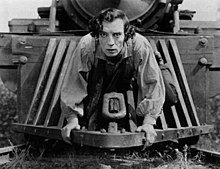
The General (1926)


As someone who at least went through a phase a few years back where I really went in for silent movies, with the works of Buster Keaton (naturally) prominent among my favorites from that period, I was anticipating this, considered by many to be his masterpiece and which I had never seen before, with considerable excitement; however my attempts--for I made two--to watch this and absorb something of the frisson that often accompanies a viewing of such a universally-acclaimed classic, were failures on this occasion. As with so many similar experiences of late, I am chalking it up in part to where I am currently in life, in which my constitution as well as my brain are undergoing another transitional period with regard to how they process and respond to things like art. I have at present no other time to see movies but in the evening--my family doesn't allow me to get through so much as a football game when they are awake--and I simply cannot stay awake, at home anyway, for something like this at that hour, with the only sound being repetitive silent movie music. Besides this though, any resemblance of the old thrill that I would at times feel when confronted with a film of this class and stature was lacking entirely. At no point was I pulled in in any aspect. Perhaps (hopefully) this phase of my sensibility will pass and a future version of myself will be able to encounter this again and be moved by it in the way that its acclaim promises is possible. It has happened before.
Far and Away (1992)


I have not been averse to certain of Ron Howard's crowd-pleasing films, namely Cocoon and A Beautiful Mind, and thought at the least that this mini-saga about Irish immigrants in America might share some similarly comforting qualities, but I found it to be emotionally flat and distant on top of a story that was oddly un-engaging and pedestrian. I've never been enamored of Tom Cruise in any movie that I've seen; his longtime stardom, even accounting for his handsomeness, is a mystery to me. Nicole Kidman I never generally liked either, though once she stopped appearing in so many movies with Tom Cruise and occasionally wore her hair in an appealing style, she grew on me, a little. My opinion of this duo has further doubtless been colored by a wild story about them told to me by a woman I worked with back in the 90s who had gone on a vacation to a resort where, she said, Tom Cruise and Nicole Kidman were also staying and that it was "known to all the other guests" that Nicole went to bed every night in her trainer's room while Tom was shacking up with a younger gentleman friend. Of course I completely believe this. Anyway this movie was a dud. It had top end Hollywood production values and a reasonably competent team working on it, but it never picked up or came alive.

Saturday, June 01, 2013

Classic Movies 1950-1960


These are all well-established classics that a certain class of mind is supposed to like. There is another class of mind, that consisting of independent spirit or intelligence, which would probably not deign to bother with them, except to pick out their inanities. I do not belong to that class however.

I had seen all three of these before now, but only once, maybe twice in one instance, and all a long time ago.

Inherit the Wind (1960)


I don't love this movie, but I kept getting the nagging suspicion that it was better than I was giving it credit for. For one thing, I think I was letting myself be deceived by the circumstance that its sets reminded me of a television show of its period. Here are some of what I thought was good about it:

The screenplay is very good, despite being apparently didactic. It is an adaptation from a well-regarded play of the time, which (the time) had a definite strain of earnest concern for social justice and liberty about it. It is frequently intelligent, and thorough, while being lively enough to move the story along and keep the attention of viewers like myself, who like mild stimulation but are generally too tired/out of practice to give much mental exertion.

I saw Spencer Tracy again, and was more impressed with him than I was in Father of the Bride, which I had just seen a week or two before, because I thought he was more or less playing himself in that other movie, and would effectually be the same guy here; but he played a quite different guy, and rather subtly, such that I don't have any sense that one of these characters is more indicative of who he is than another.

It probably does not have to be noted, but Spencer Tracy's physique and overall look, for somebody who was a major star for three decades, is pretty amazing. The guy's upper body was mashed potatoes, and he always looked 10 or 15 years older than he actually was. When he did Father of the Bride, he was 50, about the same age as Brad Pitt and George Clooney are today (or, to make a more contemporary comparison, as Cary Grant was circa To Catch a Thief. On the other hand, Wilfred Brimley was an even older-looking 50 at the time of his career-making performance in Cocoon). He is 60 in this one. I used to thnk of 60 as old, but many 60 year olds nowadays prefer training for and running marathons to loading up on steak and martinis (Tracy is what 60 looks like when you focus on the latter). Even Philip Seymour Hoffman probably employs a personal trainer and dietician.

The great Frederic March played the William Jennings Bryan character, I suppose well. He is at least quite unrecognizable to me as Frederic March in his costume, the bald head especially.

Things that irritate me about this movie:

I have no particular love for Bible-thunping rural white southerners, but I thought the rather raw contempt poured out on them in this movie did not really do the filmakers much credit--it certainly did not add anything to the quality of the film. I realize that this came out as the civil rights era was starting to gain heat, and though there is no direct racial dimension in it, anti-southern sentiment among the mosr progressive social justice liberals--and Stanley Kramer was perhaps the most avowedly politically motivated major studio director of this time--was running high. Nonetheless, given the star power on display in the movie, and the extras showing the film being feted at gala celebrations in Berlin and Cannes, my class instincts kicked in with the feeling that this was not quite a fair fight, and while maybe at some level it was an honest representation of the reality on the ground, it was not an artistically worthy or fair one.

Gene Kelly--yes, the dancer, though at least they don't have him break into any numbers here--is not well cast as a cynical newspaper reporter who I believe is supposed to be H L Mencken. Having read even a little H L Mencken, I cannot imagine he was anything like the character depicted here, though one would assume most of the brain trust involved in the making of the movie would have been more familiar with his works than I am, or even known the man personally. My impression of Mencken is that he was a rather pitiless person towards people he considered inferior (pretty much everybody), who never smiled, and only laughed with people who had demonstrated some worth. Kelly plays the role as a kind of nihilistic, wisecracking, light person, which does not ring true to me.

Donna Anderson (this is not in the category of things that irritated me) is the token babe in this, and she has an appealing 1960 look, which is why I mention her. She went on to have a modest career in television, though not in any shows that I ever watched.

Paths of Glory (1957)


This was a St John's favorite. I think they showed it twice there, once as the regular Saturday night classic, and a couple of years afterwards as part of the Wednesday Kubrick series. It has a sensibility that fits comfortably there. Its time is close to the heyday of the College's modern era--I believe Jacob Klein himself was still the dean in 1957. It has a kind of classical spareness both of plot construction and in its sets and general style. Its themes are the sorts of things you can talk about at the bar afterwards without straining yourself or falling asleep, so that you feel you taking part in mental life to some degree. So needless to say my viewing, after about a 20 year interval, was heavily colored by these associations.

I had forgotten that one of the guys was chosen to be the sacrificial lamb from his platoon because, among other reasons, he was a 'social undesirable'. At times I feel like there are some people nowadays--perhaps even myself--could stand to gain by the sort of concentration upon self-improvement that the threat of being sentenced to execution because you are so repulsive to people might inspire.

An Adolphe Menjou sighting! He is in the cast as a cynical, weaselly, sybaritic French general (I think there are several redundancies).

I still don't really understand the part at the end where a terrified German girl is put in front of a pack of ravenous, wolf-whistling French soldiers and manages to subdue their raging boorishness by singing a melancholy song.

Conscripting armies to fight wars, especially wars like this where 75-90% of a birth cohort is killed, and the military leadership considers itself justified to make an example of conscript citizen-soldiers it considers not to be fighting with enough zeal by shooting them, is almost unthhinkable in the current state of society, on the mass scale of the 2 world wars especially. Aside from reticence about possibly being killed, huge segments of the present population simply don't regard the state as having authority over them to that degree. Power, yes, but power to which they are in a state of antagonism, not something to which they see themselves as owing a duty.

Sunset Boulevard (1950)


This is even more firmly ensconced in the Pantheon than the other two, so much so that many of the more highbrow or edgier iconoclasts on the internet take glee in knocking it down as much as they can, along with its similarly popular and acclaimed director, the great Billy Wilder, by whose creations they are decidedly unimpressed. I actually worship these people in a way, at least when they are obviously the sort of people who are cool and are successful with women, or are themselves desirable women hopelessly beyond my social reach, but unfortunately even when I am able to share their tastes I am unable to partake of what must be the exhilirating sharpness with which they savor their particular likes and especially their dislikes. Needless to say, I am a fan of Sunset Boulevard. Like other Billy Wilder films, it is fantastic (in the sense of being over the top in its storytelling and characterizations) and yet seems to me more like real life than a hundred other movies, and good ones too..

Quickly, some favorite dialogue bits:

JOE (upon Norma's declaring that he needs some new clothes): What's wrong with this shirt?

NORMA: Nothing, I suppose. If you work in a filling station.

That line kills me for some reason.

Near the end when Betty Schaffer comes to the house and discovers the truth about Joe:

BETTY: No, no. I haven't heard any of this. I never got those telephone calls. I've never been in this house...Get your things together. Let's get out of here.

JOE: All my things? All the eighteen suits, all the custom-made shoes and the eighteen dozen shirts, and the cuff-links and the platinum key-chains, and the cigarette cases?

I've never had nice clothes or accessories, and rarely think about wanting them, but I want them when I see them.

The Oscar for best actor in 1950 went to Jose Ferrer for Cyrano de Bergerac. I haven't seen that, so maybe it was the clear cut winner, but as, similar to Brando the next year in A Streetcar Named Desire, if not quite so dramatically, William Holden's role and presence is one of the more memorable performances in the history of the movies, I am thinking he probably would have been a deserving winner. Incidentally, Spencer Tracy was also nominated that year for Father in the Bride, another iconic role, but not I don't think in the same class as Joe Gillis. I like William Holden as a actor. He had that All-American midwestern charm combined with an unassuming studliness, a type which seems to have disappeared from the national scene in the last generation. He was apparently very good friends with Billy Wilder. This is noteworthy to me because Billy Wilder is one of the all time giants in his field and it is curious to know what kind of friends and intimates such people have. William Holden had some problems with alcohol such as we tend to frown on nowadays, most notably killing a person in a car accident while driving drunk. He also died at the age of 63 by falling onto the edge of a table while intoxicated in his apartment and bleeding to death, which is sad, really, but he had a little bit of an artistic flair about him, enough to be likable, and the possession of a restless and regularly unsatisfied soul often seems to be a prerequisite for attaining to this state.

Nancy Olson, who plays the fresh-faced aspiring screenwriter Betty Schaefer and represents to Joe the illusion of escape from the deformation of his soul that has been expedited by his taking up with Norma Desmond, was know as "Wholesome Olsen" in her high school days. That was in Wisconsin; in the 40s. That's pretty wholesome.


Doubtless this has been remarked upon before, but Norma Desmond is basically Don Quixote in drag and possessed of a massive fortune. The scene where she goes to the studio and is not able to be disabused of the conceit that she is still the greatest star in the world is reminiscent of various Don Quixote episodes, especially those in the second part where people begin to humor him by acting as if he were really the knight he claims to be.

Given Buster Keaton's current status in the very first rank of the Pantheon of the all-time greatest movie directors and actors, it never ceases to astound to see his cameo appearance with fellow washed-up, and at the time forgotten, silent film stars essentially playing themselves as Norma Desmond's old friends. In 1950 though the means of delivering old movies, to the extent people were even interested in seeing them, especially silent ones, was pretty limited, and film history as constituting some part of one's artistic education had not yet entered the general consciousness; which pretty much left Buster Keaton on the outside looking in, though he remained active and made guest appearances on venues like The Donna Reed Show, which would sort of be like Woody Allen appearing in a bit part on The Big Bang Theory, except that Keaton is normally considered now to be a major modernist artist, admired by Samuel Beckett and other cultural titans of the 20th century.

Contemporary Bonus: I watched Silver Linings Playbook because besides being much touted I knew it took place in Philadelphia and mildly deranged Eagles fans constituted a major part of the plot, and a decent Philadelphia-themed movie is pretty once in a generation event. I have to say it was very entertaining, though I would have liked more Inside Philly stuff and I think at some level the movie would have to be considered a failure because it purportedly is about rather dark subject matter, but I, and probably a lot of other people, came away from it thinking that maybe getting arrested and committed to a mental institution, taking a few years off to hang out at somebody else's parents' house (I don't want to live with my own parents), jogging, reading books, watching football games, visiting my zany Indian psychiatrist who really cares about me, and practicing dancing with a 23 year old babe who is also a mental health patient while I recover might be just what I need in my life at this time.

Regarding such Philly stuff as there was: They started strong by having the Bradley Cooper character carrying something around in an empty jar of Hellman's Mayonnaise, and I thought, this is going to be good, because Philadelphia people, for reasons which I have never understood though I too suffer from the affliction, cannot endure any other mayonnaise than Hellman's. I cannot bring myself to purchase another brand. I had to do the shopping for my son's camping trip with the scouts and they told me, 'just buy the store brand of everything' but I couldn't bring myself to put another brand of mayonnaise in the cart. The really odd thing about this is that most sophisticated people outside of the 215 think it is an absolutely terrible variation on mayonnaise. My wife thinks it is nasty stuff, but she has been to Philadelphia enough times to know that what I am talking about is real, and something deeper than taste. Apparently French mayonnaise is so incredible that normal people after having one bite are never able to stand the taste of Hellman's again. But this doesn't apply to people from Philadelphia.

I thought they got the Christmas scene at the house with the lights, the kind of food, the Frank Sinatra Christmas song in the background, pretty accurately. When you are a kid you assume everybody everywhere listens to Frank Sinatra Christmas albums, and Johnny Mathis and Nat King Cole and Perry Como and other people like that, but people in New Hampshire, for example, really don't. In general people in New England after they are about 25 don't seem to have popular music records or radio on obsessively in the background all the time, and especially at parties, like everybody I know did growing up. Sometimes my wife will let me put a record on when we have a birthday party or family guests, but the sound is put low and we always turn it off when it is time to eat or serve cake. The music in this movie was good in general. There was nothing in, other than the Sinatra, that was specific to Philadelphia life, but it was all things people would be into if it came on.

Things that were wrong: The most egregious error was when the Jennifer Lawrence character talked about a car broken down, 'on 76, near the King of Prussia Mall'. Though I-76 is the main east-west highway running out of Philadelphia, I have never heard anyone refer to it by its number. In town out to Valley Forge the road is always called the Schuylkill Expressway, after the river it runs alongside, at which point it joins with the Turnpike. Both the Expressway and the Turnpike predate the numbered Interstate highway system and everybody still refers to them by the old names. Most other state and U.S. roads are also called by their local names. I-95 is referred to by its number. This is nit-picking, but when somebody in a movie refers to something you have been on or heard spoken about a thousand times using a term for it you have never heard anyone use in real life, it is rather jarring. New Yorkers certainly wouldn't stand for it.

Also a real die-hard Eagles fan could never be friends with a Dallas Cowboy fan. The mindset and life experiences are too disparate for any real bond of intimacy to develop. I don't even think I could be in love with a woman who was in any way a serious Dallas Cowboy fan. This is extreme, because sometime in the early 90s I remember watching a TV show--I think it was Beverly Hills 90210--where one of the guy characters had to dump a gorgeous blue-eyed Aryan goddess he was dating because she revealed racist tendencies, and of course my reaction was, "Who cares?" If anything, I thought a girl who sincerely disliked blacks or Arabs or whomever could probably be counted on not to run off with one under my nose, and that seemed at the time not an unappealing thought to me. But a Dallas Cowboy fan, you know it would be doomed from the start.

I like the high school reading list he does, though he continually is frustrated by the endings of the books and hurls them through the window. A lot of the books he reads I never read either in high school or afterwards--Lord of the Flies, The Grapes of Wrath, whichever of the two early Hemingways he reads. I don't remember much which novels I read in school. A Separate Peace, I remember, and Great Expectations. David Copperfield had been the Dickens novel they had read at my school up to about 1980, when they changed it because David was too long. I'm guessing by now Dickens has been dropped from the curriculum altogether.

I've got to finish this post tonight, so my last points will be quick and un-expanded upon.

So let me get this straight. You go home and catch another man having sex with your wife in the shower and you beat him up, you get arrested? That doesn't sound very American to me.

Jennifer Lawrence does strike me as embodying some especially characteristic strain of this new generation of women (the millenials) that we are getting. It would take me at least an hour though to tease out what I mean by that, so I will leave it for another time.

Like many movies that crave mainstream approval nowadays, there are a lot of extraneous multicultural characters thrown in whose characters nor multicultural qualities are essential to the plot. The materialistic wife of Bradley Cooper's vaguely ethnic (Hispanic?) friend who was being driven to an early grave by stress had some reality as a character, but was completely extraneous to any story (then again, the story itself is largely extraneous to what is interesting about the movie). The Indian psychiatrist who turns into a face painting, insane Eagles fan on fall Sundays is a nice try, but a bit of a stretch, I think. It's clear they had no idea what to do with the black guy.

Thursday, April 08, 2010

The Navigator (1924)Buster Keaton was among the foremost of that race of performers, who flourished especially in the early days of Hollywood, who possessed such a singular collection of talents that his films are necessarily organized around their display, and are not conceivable without him in the lead role. Charlie Chaplin, Fred Astaire, the Marx Brothers and Judy Garland are other people who fit this type of the indispensible star, which is one that doesn't really seem to exist anymore; movies featuring rock stars as themselves I suppose are a relation to these types of movies, but even these are more reliant on the stars' pre-existing celebrity cult than any unique talents employed in the movie. There are of course famous acting performances without which it is difficult to imagine the movies having the impact they have on people--Brando in Streetcar, James Dean's movies, many of Jimmy Stewart's celebrated roles, Schwarzenegger in Conan the Barbarian--but all of these films, even Conan, would still have been written and made even without the stars with whom they are so closely identified. Buster Keaton movies do not exist, and are probably not conceived of as existing, without Buster Keaton. When one considers how repetitive and done to death most things in the arts are, the remarkable thing about the Keaton movies 85 years on is that even when you have something kind of like it, and you sort of know what is coming, you still have not quite seen anything exactly like it, that is exactly as satisfying, which is why he continues to have an impressively wide appeal among serious people and naifs alike even in our time.

I did not enjoy The Navigator quite as much as I did College, which is the only other Buster Keaton movie I have seen to date. I think this is due in part to the circumstance that I have a terror of boats and water generally, so the comic possibilities of drowning or being adrift at sea which the movie has to play upon come off to me perhaps somewhat darker than they do other people. Of course where I live there are ponds and lakes and rivers everywhere, often coming very close up by the road, especially during the rainy seasons such as now and in late fall, where there are also often no guardrails, so I have frequent occasion for Ted Kennedy-style flashbacks and apprehensions. I am a little better on ferries, which I sort of like to take, though I still worry slightly when I am on deck about myself or one of the children falling overboard. The film starts off with two inspired jokes right off the bat, the line where he turns to his valet and says "Wilson (or whatever), I've decided I want to get married. (pause). Today." Of course he has no girlfriend but he has someone in mind to propose to, so he calls for the car, which pulling up to the curb, he gets into it with great ceremony, at which the car pulls out, does a U-turn in the middle of the blissfully empty Los Angeles street (internet photos reveal that the street and the house are still there today, but traffic is much heavier, and pulls up in front of the house directly across the street. At this point I was thinking, this is going to be really great. And it is good, but the various gags on the ship, while often ingenious, don't always strike me as being as funny as other situations do.

To this point also I have to say I am more of a Chaplin than a Keaton fan--these two camps forming one of those strange divisions of life across which there seems to be little commonality or fraternization. Chaplin to me is the fuller human, and brings more of it really is like to be a person into his movies. Keaton may better represent some vision of modernity though. I know he was admired by Samuel Beckett, as well as other modernist intellectual types. His face really was striking, and a work of art in itself, which I don't have to tell you is rare, though it is a quality one notices in celebrated actors. Laurence Olivier's face made something of a similar impression, that of having been deliberately worked by the mind above all into the rather extraordinary and specific appearance it made on the screen.

The tape I had of this movie also included two shorts that kept with the maritime theme, The Boat and The Love Nest. The Boat is about a husband, a wife and their two sons who are a boat that springs a leak in the middle of the night during a tempest. It is actually kind of scary. The Love Nest is set on some kind of cargo ship. The captain is a tyrant who grabs people by the collar and tosses them overboard for things like spilling coffee while pouring it. Which is actually kind of funny.

I often think when watching these old films that my wife missed her true calling, which was to be a 1920s silent film actress, since about half the starlets of this time are of a similar height and body type, and have similar hairstyle and facial structures, which for the most part you don't see so much on television today. Now I don't want to come off as being like either one of those born-again Christians or nerds with a mail order bride from the third world that everyone makes fun of, the guys who are always proclaiming on the internet how hot and incredible their wives are and thanking Jesus for sending them an angel from heaven and so on. As was said of Samuel Johnson's mother, "she knew her son's value" but apparently did not talk about it much. And besides, perhaps not everyone will think it a wonderful thing to look like a 1920s movie star, though I will admit I do think it so. Now among the actresses I have seen lately that reinforced this impression that was made on me some time ago, Lya Da Putti looks like Mrs Bourgeois Surrender/Sabrina/Sarah whatever you want to call her while moving about and doing things in Variete, though not so much in the stills, but the dear one's real doppelganger is the lady who plays the wife in The Boat and several other Buster Keaton classics, the beautiful Sybil Seely, whom one internet commentator I have read considers to be "a whole world of hot" even today. In the film, and other clips available on the internet the resemblance sometimes is really uncanny. I realize this is of little interest to the general public, but some may like the comparison of the pictures. So first we have Sybil Seely, circa 1920:

Mrs Bourgeois Surrender circa 1994:


People love Buster Keaton. Lots of videos made to his work, which does lend itself to this kind of montage very well. I don't have time to watch through all of them. This one looks pretty good.


Thursday, March 11, 2010

Rock Over London

I figured everyone would want to see Defoe's grave. These are from way back in '96. I was alone on this particular occasion and I didn't make any friends so, no people in the photos, breaking the first rule of tourist photography. I should have taken the opportunity to figure out how to use the camera. I was reading that the first time Buster Keaton was shown a movie camera he took it apart and examined all the things that could be done with it. It fired his imagination. Meanwhile I stumbled about looking unsuccessfully for artistic shots. 1. Defoe was buried in the Bunhill Fields, a very small cemetery in Finsbury, just east of the City, near the Angel and Moorgate subway stations. I suspect a good many of the tombs have been plowed under over the years. The famous guys, besides Defoe including Bunyan, Blake, and the poet Isaac Watts, who wrote the lyrics to a sizable chunk of the standard Episcopalian Hymnal, have had their monuments gathered in the center of this little ground for the pilgrim's convenience. The rest of the remaining graves are enclosed within fences and are not open to be wandered among. Blake died in 1827, and there doesn't seem to have been many new residents added since about that time. Thus you have a very, very small, semi-preserved corner of old London here, though the modern city still pretty much rises and buzzes around you the whole time.
2. If you want to read the incscription on the tomb, which is dated 1870, 139 years after Defore actually died. I forget what happened to the old tomb, or if simply wasn't grand enough for the sensibility of the times.
3. I don't want to burn through all my London pictures in one go. Here is my attempt at an artistic, inside-the-subway-station shot. With no people, of course.
4. Gratuitous picture of St. Paul's, breaking probably the #2 rule of tourist photography. I think it's a pretty good picture though. I like the sky, and I think the character and antiquity of the old cathedral is revealed to a certain extent.

Tuesday, July 03, 2007

Ideas That Have Vanished Entirely Within My Own Lifetime #1: The Amateur Ideal In Sports

I have referred previously to the set of 1966 juvenile encyclopedias I have had since I was young, and which even at that time--1981 or so--seemed to me to represent a world, or a vision of it anyway, that had been lost. Doubtless a great part of this effect was that I had no immediate personal experience of the world of 1966--certainly the world has changed at least as much from 1981 to the present as it did in the 15 years previous to it, yet since I have been alive through the whole period and had some personal connection to anything that was lost during that time, the changes do not seem so significant. Such things as are lost before one had a chance to have any part in them, when they are perceived to have contained anything better than what replaced them, always have a tendency to nag a little.

The other night, having taken Volume 18 (SEV-TAP) with me into the reading room with the idea of indulging in some Tourist Board photographs from Franco's Spain (I fear that one of my reactions to hyperglobalization is a growing fascination with stagnant, insular, deliberately anachronistic societies. However awful it would be to live in one, anything inevitably becomes interesting when it is in such opposition to the dominant and seemingly unstoppable trends of the present), I came across, in flipping through the later pages, a whole half-page devoted to listing all the winners of the Sullivan Trophy, awarded each year to the outstanding amateur athlete in the United States, up to 1965 (the winner that year: Bill Bradley, basketball). I am old enough to remember the newspaper sports pages reporting the winner of the Sullivan Trophy around Christmastime in the years when I was just starting to read them, around 1978-82 or so, and it was still considered important enough at that time that a writer would occasionally devote some space to commend or gripe about the selection. However, as I could not remember reading or hearing anything--anything--about this award since the mid-80s, and especially since there were scarcely any serious athletes left who could plausibly be called amateurs, my immediate reaction was to wonder if the trophy had actually been retired. It has not, and is still awarded every year. While last year's winner was a teenage paralympic swimmer, most recent awardees however would be well known to the average sports fan, mostly college basketball players and Olympians. The amateurism of most of these latter especially is highly suspect. I find it difficult to believe that the great runner and1996 winner Michael Johnson, to pick one example, who was 28 or so at the time and not to my knowledge otherwise employed, did not receive any renumeration as a result of his athletic achievements, nor did not view his track career in professional terms. This is not intended as a knock on Johnson. True amateurs such as the 1920s or 1950s ideal would dictate have, of course, little hope of competing at a world class level in any sport in 2007, and I suspect that if anybody of prominence seriously tried to promote that ideal in the present they would be stared at as if they had commended command economies or psychoanalysis. Still, the question for me is not so much why the ideal collapsed, but why it collapsed so utterly, given that there is a reasonable amount of good sense and merit in it, as well as genteel attractiveness, which is supposed to be irresistible to a sizable and highly gullible segment of the population.

The American notion of athletic amateurism, such as it was, as well as that of much of the sporting world, was a product of British public school culture, which fact in itself is in the current ideological climate probably reason enough to set many people adamantly against it whatever its merits may have been. According to this model, winning and excellence naturally were important, and sometimes demanded, but being a gentleman, or at least honoring its forms, was even more important than winning. Indeed it was a prerequisite for winning, since competitors who shunned to pay homage to its code were considered illegitimate and banned from participating in any games run by the establishments that adhered to it, which were in many sports the most glamorous and prestigious competitions held. This attitude was not democratic, and those who did not wish to conform to it or thought it ridiculous railed against the exclusivity, classism, racism, Euro or Anglocentricism (the Anglo- might even be worse than the Euro-), and exploitation of athletes that they considered to be embedded in it. As with so many traditions, these cruel things were, or at least became embedded in it to a certain extent, which in recent years has tended to overshadow the admirable purposes for which it was originally conceived. This was the idea that competitive athletics ought to be joyful and inspiring occasions, which would occur most properly when the competitors were in the height of their youthful beauty and enthusiasm--25 being about the upper age limit--and were preparing and developing at the same time, optimally through education, the characters and skills to assume serious roles in the adult life of their nations worthy of an athletic champion. Roger Bannister, the Briton who was the first man to officially break the 4-minute mile in 1954, was one of the greatest embodiments of this ideal. A medical student, Bannister rose early the day he set his record in order to do hospital rounds before going to the track. Already 25, and having gone to the Olympics two years earlier (he failed to place), the summer of `54 was going to be his last opportunity to pursue the quest to break four minutes, and even that was bordering on the quixotic given the mores of the society in which he moved. There was no question, at such an advanced age, of hanging around two more years for the next Olympics. It was time for getting on with one's real (adult) life. Indeed, after running in a couple of races that summer against his two top international rivals, Bannister quit competitive running forever. Though he would always be famous as an athlete, no one expected a man to live, in intellect and spirit as much as financially, off of athletic achievements for the remaining fifty years of his life. It is this last attitude, the sense among young athletes that there is a much wider world, or any world at all, outside the game that has become quite disturbingly lost in recent years. Obviously there are exceptions, but athletes--and not merely athletes but I am picking on athletes today--lack personalities, almost lack discernible selves, when their athletic pursuits are all-encompassing, and allowed to become divorced from any semblance of a humanistic education, which young people generally, and young people who are likely to attain prominence especially, ought to have.

In the Olympic sports anyway, the greatest assaults on the amateur ideal did not initially come from the inexorable demands of democracy and the free market, but the ruthless success of the Soviet Union in producing champions. After sitting out the 1948 and 1952 games--probably the 'purest' in Olympic history, the competitors being almost uniformly young (the decathlon winner in both, Bob Mathias, was 17 the first time, to name one example) and, having grown up during World War II, the Europeans especially, having hardly devoted their childhoods exclusively to succeeding in a sport--the USSR was coaxed into participating in Melbourne in '56 as a gesture of goodwill, where their athletes, especially the women, not merely defeated but crushed the flower of the West's offerings across the board. Right from the start critics indignantly suspected that the Reds were not engaging in fair play as defined by the codes of the finest British public schools, and I do not refer to drugs, which were not seen as the major problem until later. In the old days the outrage was that the Russkies were removing young children from ordinary society and even their homes and training them in special sports schools for years and years with the express goal of winning Olympic medals. Indeed, in the USSR and East Germany athletes who were not expected to be competitive for medals were left at home even if they were qualified to participate under I.O.C. rules. This was not in the spirit of the games either, which were supposed to be a kind of jamboree of gilded young people, future leaders of their respective nations by virtue of their superior persons, which transcended mere politics and ideology. By the 70s the U.S. public had largely grown accustomed to watching technically flawless, unflappable and seemingly joyless Communists make mincemeat of its nice young men and women in the Olympics (which the U.S. had dominated in the real glory years of the festival), increasingly consoling itself by the reflection that the borscht-swillers were sending professionals who knew nothing of life but practice for sports and would be tossed to the side of the road at the first sign of weakness, to compete against college kids. I was a kid myself at the time and among the accusations against the Soviet system was that it encouraged children to become consumed with sports (or ballet, or science), which, whatever people in this country want to claim about their own upbringing and secrets of success now, was generally thought to be unhealthy in those days even if one had legitimate talent. Ironically it was not until the Soviet Union collapsed that we really began to adopt their methods and attitudes towards sports and other endeavors with the fervency we see now.

College sports in the U.S., though I have been a fan of them and still follow football scores and who goes to the final four, have nonetheless always been something of a minor national disgrace and a blight on just about every university that has them. At the big-time level the pretension that football and basketball players even ought, in some ideal universe, to be real students seems to have been abandoned now, except at a few places like Notre Dame, where they occasionally make a great show of rejecting a top recruit whose criminal record suggests he might be just too frightening to let loose among their regular students. There was a recent book published by a former football player at the University of Houston, I believe, who had actually been expecting to take real classes, and tried to register for them, only to find that the athletic department arranged all the courses for football players beforehand, reminding the player rather heavyhandedly that he was on scholarship to play football, not be a student. Indeed, the more vehement proponents of the movement to pay athletes on college teams seem to consider the scholarships worthless and exploitative, even insulting; positions which are not rebuffed very convincingly by the actions taken and arguments made by the universities, which seem to have no serious governing principles about the relation of their athletic programs in themselves (apart from the money and notoriety they raise) to the education, the elevation of the life of mind, of young people. Personally I do not believe that it is proper for people whose minds are still in a formative stage, especially in a university environment(!) to devote 30-40 or more hours a week to athletics, especially if one of the consequences is to be a neglect of education. This bothers me more the older I get, and seems a colossally foolish error on the part of the whole society.

Reading over this I see that this was a pointless, failed attempt at exposition by a mind that cannot be simply struck by an obvious thought and leave it as it is but must get itself tangled up in minutiae that are only tangentially related to and give no gloss to its idea. But I will publish it because it this is after all more a diary than anything else, and diaries are the place to rave about ones failures and disappointments.

The latter section of this piece brought to my mind the 1920s Buster Keaton movie College, which among other qualities demonstrates that the mindset I lament above has been perceived as tainting the educational system even in what seem to us now almost idyllic and innocent times. In the film the hero, an earnest student, goes off to college only to find that everyone on campus spends all their time practising sports and that the brainy girl he loves has fallen for the biggest and most obnoxious jock in the whole place. A lot of slapstick routines follow in which Keaton, attempting to join a team in order to win back his girl, makes a mockery of various sports, drawing the ire of the other players upon him (one humorous part of this film is that although the campus otherwise appears to be a small liberal arts type place, they have a 50,000 seat football stadium). In the final scene however we for once see some practical uses for things like pole vaulting and other athletic techniques. It is all rather absurd of course however.

William Ellery Leonard`s 1913 sonnet sequence about his wife`s mental illness and suicide Two Lives (which I am a admirer of by the way) includes a sonnet about a University of Wisconsin football game. Leonard was a professor there, I believe of English. I think it ought to be included here:

Part III Sonnet XV

I sat in sweater with the college boys,

In crisp October on the sun-bright stand,

Around my arm Wissota`s crimson band,--

My arm, with thousands, lifting in the noise

The lettered pennant: down the numbered field,

Down the green field, crossed by the strips of white,

The lines re-formed--Menasha, will she yield?--

Score six to six--two minutes still to play--

Third down--third down--their goal ten yards away!

``Fight--fellows--fight--fight--fight--

We`ll win--this--game``;--and round their right

Our left-end dashes, and the thing is done.--

Young victors, I was with you on that day

From whistle unto whistle, every one!