Showing posts with label dante. Show all posts

Sunday, January 15, 2012

Anatomy of Melancholy V

As I slink wearily over the keyword to produce this post,
With nary a spark of the human vigor of our Enlightenment forefathers,
My mind a broken shadow of a machine, vaguely recollecting images of coherent ideas now shattered.
I dreamt in confusion of old breasts and stale Christmas candies,
I gave a go at subconscious self-abandon, but my brain and vital power were not in it.
To sleep, to wallow, to procure an abacus and tally the days till death,
Is the only remaining instinct.
There are no prospects for productive action,
No universes, no signifiers to be revealed.
I am perhaps dangerous, but only to myself, and only in an absurdist state of existence,
Which we may however inhabit.
Don't tempt me, don't tempt me, don't tempt me.
But of course you won't.
Miami, Los Angeles, Las Vegas, Cancun, Ibiza, Johannesburg, Bombay, St Petersburg, Beograd.
Albany, Winnipeg, Pittsburgh, St Louis, Newcastle, Glasgow, Gdansk, Kaunas, Vichy.
All offer the equivalent life, the equivalent temptations to me.
I overheard a woman say she wanted to quit her job and go to the Burning Man Festival.
If I quit my own job and went to the Burning Man Festival I would not even have any fun there.
If I checked into a Super 8 in Rochester and pulled the curtains tight with the goal of sleeping in I would be stone awake at 7:30am with nothing to do.
Whether I pay for bottle service on 5th Avenue or go to $3 Pabst Blue Ribbon night in Crown Point,
Whether I go to the concert or the exhibition or the film festival of the Earnest and the Trite,
My own proper crowd, with our shared secret knowledges and confidential intrigues, is never to be found there.
It doesn't exist.


Now that I have had my little amusement let us move onto Burton:

"...it is better to sharpen toothpicks than to beg the favour of the great with literary productions." This is true.

On the neglect of learning by the contemporary European aristocracy: "Thus they reason, and are not ashamed to let mariners, prentices, and the basest servants be better qualified than themselves. In former times, kings, princes, and emperors were the only scholars, excellent in all faculties...Julius Caesar mended the year, and writ his own Commentaries: '(from Latin--Lucan) In the midst of warfare he found time to study the stars, the heavens, and the upper world.' I would write out the Latin if I felt I understood it and had some sense of the literary quality of the passage. In most instances however, I do not.

A ten year's lawsuit, inevitably unhappy for the personage referenced by Burton, is described as "as long as Troy's siege".

There is a whole section devoted to Bad Nurses, the premise, on the authority of "Favorinus, that eloquent philosopher", being "that there is the same property in milk as in the seed", which provides several good anecdotes. Cato, for instance, "...for some such reason would make his servants' children suck upon his wife's breast, because by that means they would love him and his the better, and in all likelihood agree with them." There is also an unnamed "...Queen of France, a Spaniard by birth (I don't recognize this person offhand), that was so precise and zealous in this behalf (viz., that a mother should suckle her own baby), that when in her absence a strange nurse had suckled her child, she was never quiet till she had made the infant vomit it up again".

Burton is those authors who is fond of making a very long argument on behalf of some point, to which the average reader will long have submitted, and then switching and making an equally long and persuasive argument against it.

Burton seems fascinated by the idea of Iceland. He refers to it a lot.

"...milk in gold cups, wine in silver, beautiful maidens at his beck..." When the rich man goes a-visiting.

On the learned and noble but impecunious man: "'If he speak, what babbler is this?', his nobility without wealth is more worthless than the seaweed on the beach, and he not esteemed." The expression and the expansive understanding of man's unhappy lot--not much is neglected--is what makes for the appeal of these otherwise long-acknowledged truths.

There is much that is wise in the depiction of the lives of slaves and servants, but I am going to pass over it because taken out of context the examples come over as crass and gratuitous, I think.

"A Sybarite of old, as I find it registered in Athenaeous, supping at the public tables in Sparta, and observing their hard fare, said it was no marvel if the Lacedaemonians were valiant men; 'for his part, he would rather run upon a sword-point (and so would any man in his wits) than live with such base diet, or lead so wretched a life'."

"If we may give credit to Munster, amongst us Christians in Lithuania they voluntarily mancipate and sell themselves, their wives and children to rich men, to avoid hunger and beggary; many make away themselves in this extremity". My people.


These last few examples are all from the section "Poverty and Want". Continuing in that vein:


"Dante, that famous Italian poet, by reason his clothes were but mean, could not be admitted to sit down at a feast." The citation for this is Gomesius (no, I haven't heard of him either; he does turn up on internet searches on pages that are basically catalogues of antique books, but I don't see any casual information about him). This (Dante) besides being perhaps the greatest Western poet of all time other than Homer, is the personage Ruskin called "the central man of the world". Yet even he was unrecognizable as such in inferior clothes, which is to me really a major point to be grasped here.


I don't like to recount atrocities, which sorts of things people know to happen even if they usually suppress that knowledge in their conscious daily life. But I suppose I need to remind myself of what people can really be like more frequently than I do. Because even if Burton's anecdotes are not completely accurate, one knows similar actions of the sort happened sometime.


"Alexander commanded the battlements of houses to be pulled down, mules and horses to have their manes shorn off, and many common soldiers to be slain, to accompany his dear Hephaestion's death; which is now practised amongst the Tartars, when a great Cham dieth, ten or twelve thousand must be slain, men and horses, all they meet..." This is from the section "Loss of Friends".


"Conradus the emperor would not touch his new bride till an astrologer had told him a masculine hour".

Sunday, September 25, 2011

The Game of Art APPENDIX B(?): Household Art Edition

What do the art displays of disaffected provincial petit-bourgeois bloggers tell us? Today we are going to explore that very question.

Picture #1: Title unknown. Artist is the father of an acquaintance.


One of the few actual paintings in this collection, the small canvas hangs in the attic on some paneling near a chimney, and the whole arrangement gives that softly lit part of the room a cheerier appearance. It has been up there ever since I moved into the house, and for all these years I thought it had been left behind by some former tenant, an anonymous work, but now that I have been discovered/caught snapping photos of all the pictures in the house, the true identity of the artist has been revealed to me.

I assume that the painting depicts a New Hampshire scene. The rust on the roofs of the barn is the most intimate detail of place. The seasonal appearances of the natural elements--sky, grass, trees, light--strike me as perhaps more incongruent than one would like. Still, I find something in the picture reassuring. It projects an idea of existence as more or less benign, which is a sentiment I confess to being open to.

2. Renoir--Flowers in a Vase

I am not making up the title. On the pouring shelf in the refrigerator/pantry area, formerly known as the interrogation room for its charmlessness, lack of windows, and single severe lightbulb dangling from the ceiling. The fingerprints and other smudges on the glass make for a nice symbol of our current familial relation to the fine arts. Almost all of the pictures here are not mine, either by original ownership or inspiration by the way. I do not know what the origin of this particular print was, though the original is supposed to be in the National Gallery in Washington so perhaps it is a souvenir of a visit there. If I were decorating myself I would almost certainly have neglected any flower pictures and wondered what touch of delicacy or other the establishment was missing.

3. Gustave Dore, Illustration from the Inferno, Canto XIII (about the suicides)


In the upstairs "office", where I spend less and less time as the years go on. We had to pay some homage to the Great Books, I guess--it's a part of the household narrative. Back in the late 90s a used book store in our town that has long since gone out of business had an art section from which they sold color plates and illustrations that had been torn from or removed from books singly, almost as prints. These Dante pictures were from that stash. I recall at the time that we got and framed four of them. There is a second one further down on this page but I don't know what happened to the other two.

4. Harald Sahlberg--From Roros (Side Street)


Souvenir from our trip to Norway in 2000. We did not go to the actual town of Roros, famed for its copper mines, which is quite far north. Norway was a fairly poor country and was not even independent until late in the 19th century, so its art museums do not have much in the way of major foreign collections and are heavily domestic in orientation. This was good, as besides the considerable amount of Munch there was to see, I liked their old pre-World War I realist/academy school well enough at the time.


5. Vermeer, Milkmaid


Poster from an exhibit that we actually saw in London in 2001 (this painting is normally in Amsterdam, which I have never been to, though I once stood in a train station in Paris contemplating buying a ticket there and possibly seeking out a Dutch girl I had been pen pals with. It was only a couple of hours away. But, of course, I allowed the costs and practical difficulties for which I had not planned deter me from this romantic and possibly--why not?--fruitful plan). This is in the refrigerator room, on the wall opposite the Monet flower picture. I'm kind of surprised it's still up, though I guess it does have a kind of kitchen theme and it is a reminder that even I once had a different life before I had to fill out paperwork for kindergarten assuring my kid's 25 year-old teacher, that Yes, we have books in our home.


6. Alfons Mucha, Poster for Sokol Festival, which is a Czech Gymnastics-Calisthenic type thing.


Not one of my favorite efforts by this painter, whom I wrote about in one of my old "Favorite Women of Art" posts (#6 or 8, if I remember correctly). This poster had a companion, which was the illustration I used for that other post, but that picture was put away some years ago and I don't know where it is at present. This one is hanging up in the downstairs bathroom, or powder room, as we used to call it in Philadelphia (that would be the old Philadelphia). That wallpaper dates from the 1940s or 50s and is peeling badly in places, but I am going to cling to it as long as possible because whatever replaces it will never be as cool.


7. 1980s Tourism Poster, Limousin, France


This probably shouldn't count as 'art', but I tend to regard it as part of the visual collection. This is also in the attic, just below painting #1 and, as you can see, approaching the floor, or at least the top of whatever pile is stacked against this wall. As noted elsewhere, I am a bit of a nostalgist for the days when countries were a bit more a world onto themselves, less globalized, slightly fewer people speaking English and walking around with degrees from American and other great universities that get indigestion at the mere thought of people like me setting foot on their campuses even as a tourist. I regard France in this light maybe more than anywhere else. It had a lot of glamour and romance to lose by adapting more efficient and convenient modern habits, as well as becoming generally more accessible and accomodating to the global economy, and to my imagination it has lost a bit of it, but then again how reliable of a source am I on these sorts of things? The attic is a very suitable place for the poster.


8. The World of Mother Goose.


This is a print of one of my father's illustrations. Naturally it is in the children's room. This artist is not afraid of producing a busy composition, as you can see. I suppose I have inherited something of this same quality in my own outlook--my instinct is to pile up facts or names or other people's ideas and mistake them for detail. Detail is more akin to penetration. It is honing in on what is most significant, and that is why it is considered an important property of high art.


9. Gustav Wentzel, Sjaakspillere


Yes, I believe the title in English is "Chess Players". Unfortunately I could not get a good picture of this. If I turned the flash off it was too dark. Bear in mind I had a break of about 10 minutes in which to go around the house and take all these pictures or I probably could have figured it out. Here is a link to the picture as it is supposed to look. The flash notably obscures the tasty-looking mug of beer set beside the board.


This is the other print brought back from the Norway trip. Its appeal, formerly its air of a kind of gentlemanly bohemianism, is now augmented by that of leisure and relaxation, but still in a cultivated context, all of which is largely inaccessible to me at the moment. The picture's placement contains one interesting coincidence, in that as you can see our own chessboard is stored right beside it--and it does get a good amount of use, though as yet our games are not very relaxed affairs--and one irony, in that the major item of furniture beneath it, atop which all of these miscellaneous items are sitting, is an antique piano, which however, no one in our house knows how to play, and which is so badly out of tune that even people who come over to the house who can play cannot play it, because the sound is too painful to them.


10. The other extant Dante illustration, from Inferno XIX


The simonists. Those guys get it good and hard in hell. Also in the office. Everything framed in that room is small in size, no larger than a standard sheet of typing paper. There are also barometers and such kinds of things as people like to look at and be surrounded by when they are taking refuge from their actual lives.


11. Covered Bridge, Somewhere in Pennsylvania.


This is one of my father's early pictures from the 60s, when he was taking after the style of Andrew Wyeth. I am about to contradict what I wrote in my last entry, in that this picture is also in the office but is somewhat bigger than an ordinary leaf of paper. However it is set atop an enormous and nearly immovable wardrobe that is in the corner of the room, so that if one is sitting down in the room he does not notice it too readily.


This picture was around during my childhood, and then it came into my possession after an interval of some 10-15 years through a third party whose hands it had fallen into. I don't know what it represents to me, other than a time--which the tendency is to imagine as a happy one though in reality it was no more or less happy than any other time--before I was born to which I have some relation. My father is not like me where his painting is concerned, angst-ridden and constantly suffering from crises of confidence and inferiority complexes. He paints not in a desperate attempt to become vital but because he is actually is vital, and as a celebration of that vitality. Obviously I can't really relate to that mindset.


12. Constable, Dedham Mill, Essex


Doesn't this remind you of the painting in Mr. Rogers's kitchen? This, along with at least one other picture in the same style, decorated the paneling in my grandparents' basement for around 35 years. Now we have it up in the children's playroom. I don't know what happened to the rest of the set.


I have written elsewhere about my affection for this school of painting. It shares an attitude in common with other things I like, which is a kind of hopefulness or even optimism judiciously larded with a sense of authentic melancholy. As ways to understand existence go this seems to me a reasonable and comforting one, especially if a grander understanding is inaccessible due to limitations of the intellect or spirit which prove impossible to overcome.


13. A print, but who the artist is or anything else I do not know.


The figure in this picture bears some resemblance to Mrs Bourgeois Surrender. It was given to us as a gift for that reason. It currently hangs in one of the niches of the dining room, above a couple of items I did not include in this survey, one a framed, waterstained tableau of some antiquity featuring a black and white image of some woods with the oft-maligned Joyce Kilmer poem "Trees" incscribed beneath them, the second a poster of Neuschwanstein Castle, which I have never been to, but which the children like. If it helps them develop an interest in learning about/traveling to Europe someday--apparently nowadays getting boys especially interested in anything traditionally associated with learning or culture has become a Herculean labor--then it will have served us well.


14. Postcard of our house, circa 1905


It is largely obscured by the elm trees, which unfortunately of course all died in the great elm blight of the 60s which devastated this quintessential New England tree (it is still the state tree in Massachusetts) all over the region. We have planted one. It remains rather frail-looking even after a couple of years, but it is still alive.


A curious note for baseball fans, the house next door to us on the left, which is not visible in this postcard, was, I have been told, the boyhood home of Red Rolfe, who was the 3rd baseman for the Yankees from 1934-42, played on five championship teams, had several outstanding years, especially 1939 when he led the leagues in hits, runs scored and either doubles or triples, and was arguably the best player at his position in the history of that storied franchise (though granted, he would have batted 8th in the lineup of that all-time team) until the arrival of Alex Rodriguez.


This item hangs in the dining room above the china cabinet.


15. Degas, Portrait of the Belilli Family


The bourgeois family extraordinaire. To be honest, I flatter myself by insuinating that I am bourgeois. Real bourgeois are actually quite rich by the standards of the median income or wealth. Five years ago when I began this page my ego, believe it or not, was still nowhere near deflated to a level correspondent to the truth; it still is not all the way there, nor am I ready for it to arrive at that point, though it continues to make a slow and grinding progress. Anyway, I thought at the time that by being bothered with conventional things like jobs and children meant that one was bourgeois, which seemed bad enough. That the truth is, in fact, probably even worse is something that will take a further number of years to come to terms with.


This picture is big and used to hang on the large wall in the staircase. It has since been replaced by photographs of the children and has been retired to the attic.


The public library in our town used to have a collection of framed copies of famous artworks they would allow you to check out for 28 days. Sometime in the early 2000s they ended this service and had a sale of the pictures. This is one of them. There is another directly below.


16. Henri Rousseau, Family Outing


This is the other picture from the library fire sale. This is the 3rd picture in the very artsy refrigerator room, above the Vermeer.


I admit I was not a particular fan of Henri Rousseau, but my wife finds a lot of joy and life in his paintings, especially this one, and she is not somebody who goes around liberally declaring enthusiasm for artworks.


17. "Travel"


One of my father's prints--such money as there is in this type of art is the ability to sell prints. I have a reputation for being fond of travel, so I received one of these as a present. It is true, I have never been much of a homebody. I like to get out of the house, especially if I am not going to be able to read or write. This is probably the main reason I always envisioned myself living in a big city and renting, so I wouldn't have to be bothered with the responsibility of upkeep on a house, for which so many other people seemed to me so much better suited than myself, while I seemed so well suited for bohemianism and reflection and sensualism and all that.


18. The Prophet Jeremiah from the Sistine Chapel Ceiling.


In the dining room. I like it, though it does not really fit in with the rest of the collection.


19. Postcard of the Former Union Station, Portland, ME


I doubt I need to tell you what my opinion of the destruction of so many of America's great railroad stations is. A few years ago I saw a calendar/postcard type book featuring pictures of various stations in New Hampshire alone that were no more...but time is up. I will save my ruminations on America's lost train culture and how that may or may not have negatively affected my life in another post. It is 9 days since I started this, and it is time to move on.

Tuesday, November 23, 2010

The Rest of the Paradise Lost NotesOld notes--hell, nobody's looking, why not call them pensees?--from May of 1995, when I had an energy for and touching faith in the deep and life-enhancing importance of such efforts. They make for pretty but illusory reading now, typical of all doomed youth.

--Trouble has its origins in the imagination--

--'Pleasant' in Milton normally indicates (something) bad--

--Each of these truths ("pleasing light", "nature's desire", "all things joy, with ravishment") craftily diverts the mind from the holy, whence springs the font of trouble--

--Why can the innocent not recognize evil?--

--It seems and yet not seems man's place. However God's wishes are much clearer to them than to a modern; yet Satan can overpower them. What chance do we have?--

--I am jealous of Satan's sensuality--

--She is highly confused about her passions, which makes a girl impious--

--It is bizarre that man, who can conceive of music, harmony and order, is the only being capable of destroying them--

--Our hero is being so overwhelmed by immortals how can he have confidence in his free will?


--True goodness and happiness could never be exhausted--


--This is quite a preparation: indicative in so many lines of the work required to lead the good life--


--I find this ('Eve undecked') rather titillating, and I sense the author does too--


--Eve will beget something more numerous than God has done? ('shall fill the world more numerous with thy sons/Than with the various fruits the trees of God/Have heaped this table')--


--Eve is too pleasing and her nudity too sensual for an 'innocent' holy portrait--


--They are pressured from the thoughts I and John (Milton) must have--


--This sums up much of Western Civilization in three lines ('though what if earth/Be but the shadow of heav'n, and things therein/Each to each other like, more than on earth is thought?')--


--Is not every day a holy day in heaven?--


--Idea of music connected to the stars; I marvel that no one brings this to our attention any more (I assume I meant that it was not a commonplace way of thinking about the matter; obviously the connection still pops up often enough if one is paying attention)--


--Satan is unable to adapt to change, as immortals would be--


--Jesus and Satan seem like brothers in Milton--


--Omnipotence is hard to describe but (it is here) done subtly and continually ('Innmerable as the satrs of night/Or stars of morning, dewdrops, which the sun/Impearls on every leaf and every flower")--


--The jealous has to imitate the genuine--


--There is a need to preserve free will, if one has it; clearly this is where grace is os important, in the direction and capacity for any contentment in the will--


--There is a question of whether the angels need Christ if He was not there before--


--This, without divine authority, is probably true ('Flatly unjust, to bind with laws the free/And equal over equals to let reign')--


--Why is God not as real to us as to these men?! (I actually did write this--at age 25!--but I might have done so in the spirit of 'how could these geniuses'--and literary genius is a genuine, and perhaps especially rare, genius--'of the past have felt the powers of these stories so intensely?')--


--The pious always do sound like wimps in Christian books--


--Satan does not see Jesus, obviously, as a guy he needs to respect--


--Dogmatic bullying; it makes sense to us but a 17th century man would immediately see the fallacies and shallowness of the argument (re Satan's repudiation of the angel Abdiel's assertion of the familiar creation story, i.e., that God made everything)--


--Satan is Godlike in his knowledge and he does control the Third part of the angels--


--He shall be humble and let God handle this--


--Faithfulness is a quality that is 'found' or 'discovered'--


What really could ever have been done with me? It is becoming increasingly popular to suggest that people like me who are evidently not cut out for serious academic work should be trained, or re-trained, in the honest trades, as mechanics, electricians, plumbers, and the like, the perception being at present that there is a great shortage of these skills (though like everything else this perception is also the result of a decline in the rigor of such training for these professions as still exists compared to fifty years ago; but this is a whole other argument). I can't see myself having ever become the kind of plumber these advocates seem to be looking for either. The talents and potential of vast swathes of male humanity is either in a state of serious decline, or the standards of adequacy have now been raised to a point that is impossible for at least 50% of men to reach even giving the best that is in them to the effort. Neither of these possibilities seems exactly accurate to me, though the disappointment and disgust the able increasingly express with regard to the unable seems genuinely heartfelt and real, almost even to a boiling point. The issue I think is really one of work ethic. If the failing people were perceived to be working extremely hard and expending nearly all their reserves of energy in the service of their employers/teachers/commanders/societal leaders or in self-improvement with an eye towards pleasing the same I suspect their shortcomings of capacity would be more easily forgiven. But they are not perceived as doing this, and in reality most are not doing this.


At several points in my notes I compared Milton's vision of heaven with that of Dante's Paradiso, which I had evidently also read recently at that time, these being the early days of my reading list when I was clearing most of the super-classics out of the way. I felt that Milton had made a mistake by having God adopt any persona, and that here was where the Florentine most clearly mastered him. Of course I was imagining this mastery, because my reading of Dante was in a prose English translation, albeit one that at least had the original, or those accepted as the authentic, lines on the opposite page and encouraged a strong application of the imagination. But he is rapidly becoming another great lost poet (and a really great one at that), because people like me, who could have actually understood religion and art and poetry and love and beauty and evil and sin, are no longer being developed so as to read him properly.


Of course I am kidding. I know that people like me were never vital, nor anything but a hindrance, to cultural life or its progress. I am exercising my fantastical faculties here, for purposes of my own pleasure. And I know that there are thousands of people alive who appreciate and have absorbed the significance of the genius of Dante in a perfectly adequate degree, and live in consequence that much more beautifully and intelligently than I am able to do. I live to pretend to be a person of this kind of class, which is quite sick really. I should not indulge this urge, though I am getting better at it, I think, as I grow older. Obviously the discussion of Milton and Dante together was too much, and aroused the nostalgia of my former pretensions. I put them away now.

Wednesday, November 26, 2008

Ruskin--Part XVII
I updated the layout of the blog in another attempt to embed some kind of visitor-tracking device in the sidebar, but once again it didn't work.

I am aware that this is the 18th post on Ruskin. There is a purpose, a grand project, an ambition of sorts at work in all of this that I believe is eventually become apparent to me, the resolving of which matter I am convinced will be the most important event to occur in my mental life in many, many years.

There is an interesting little section alluding to the associations and meanings excited by the words "Venice" and "Byron" in conjunction. Ruskin writes first that "the reader will find the influence of (the Bridge of Sighs) on the public mind ascribed chiefly to the 'ignorant sentimentalism of Byron'", and "that (Byron's) feelings about Venice had been founded on an extremely narrow acquaintance with her history," but then saves himself from too insufferable priggishness by admitting that, on his earlier visits anyway, "in spite of all my carefully collected knowledge, I still felt exactly as Byron did, in every particular...I had formed my own precious 'style' by perpetual reading of him, and imitation of him in various alliterative and despairing poems...for the love of Byron, I had run the risk of a fever in drawing the under-canal vaults, and the desolate and mud-buried portico of the ruined Casa Foscari." The argument however is that while Byron rather remarkably tapped into and brought into existence a whole cornucopia of exciting feelings and perceptions about Venice that appealed to the contemporary imagination, his seductive depiction of these perceptions and feelings was not merely inaccurate as to the Truth of the essences of these perceptions, but far inferior to them and infinity less whole, as we would realize had we still the capacity to understand the kind of mindset that informed their creation.

Later in the same chapter, Ruskin offers a course syllabus to an imaginary questioner who asks "But if I'm really good, and mean to try to see it (Tintoret's Paradise, in the Ducal Palace), what's to be done?":

"Well, you've got to read Homer all through, first, very carefully; then, with increasing care, the Prophet Ezekiel; then, also with always increasing care, the Gospel of St John, and then the Apocalypse..." These read over a thousand times or so and got pretty much by heart, "...they will lead you as far as, I will not say Tintoret, for you would have to spend another college-residence in actual painter's work before you could make much of him; but as far as Gentile Bellini and Giorgione, and the rest is according to the time and faculty you can dispose of..." It is somewhat rare that people give such specific direction as to what one needs to know utterly before it can even begin to be discussed whether he understands anything or not, so I always include such instances in my posts.

Picture 1--The Palazzo Contarini Fasan. There is a note on this further down the page. Once again I can get no control over the order in which the pictures arrange themselves.
"...the greatest pictures represent men and women in peace, clouds and mountains beautiful. Never in the moral or the material universe does the great art of man acknowledge guilt, grief, change, or fear." This is a lead-in to a discussion of such a picture, the Castel-Franco altar, which I was going to put among the pictures on this post but it transferred as rather absurdly gigantic. The statement quoted is not something of the sort you usually hear anyone, other than perhaps Thomas Kinkade, asserting nowadays, and I suspect it would not be considered a morally acceptable viewpoint by many well-developed modern minds even if they were able to grant that in a certain historical or religious context it might have legitimacy. However, if the greatness of human art consists in grandeur of conception united with grandeur of execution, which certainly seems reasonable, it is likely that the art an age which does not conceive man, or existence generally, in some fairly intense degree of awe, will be ultimately impoverished.

He adds, "And the strength and joy, and height of achievement, of any group or race of mankind has, from the day of Christ's nativity to this hour, been in exact proportion to their power of apprehending, and honesty in obeying the truth of His Gospel." I thought this should be noted. I don't have anything to say about it. I don't pretend to have such developed apprehension, and I am not convinced that Ruskin had it in any such degree as he was striving for, but I certainly believe it is a real phenomenom that gives such people as have it real power.

Picture 2--Byron on an adventure, accompanied by the wit, the fun, the bravado, the sex, the title, and the associates that have given generations of phlegmatic library-bound drips far more enjoyment and consolation to read about than he had in the doing.
My impression at the time apparently however was that 'He is in the end not really in touch with reality.'

I also noted that 'The base mind has no conception of sin, no capacity for beauty.' I don't know whether Ruskin stated this, or I came upon it by deduction. Probably the former, as it is too neat a maxim for me to have come up with on my own.

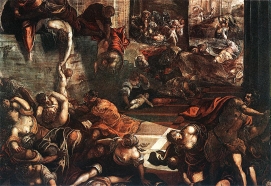
Picture 3--Tintoretto's Slaughter of the Innocents. Referred to below.
Good news! We have now finished the book proper and are now in Appendix 1 ("Grotesque Renaissance").

There is a three page footnote in this section about the arrogance of Germans and their lack of any feel for as well as understanding of painting which must almost warm the heart of anyone who has had, as Ruskin himself presumably did, to suffer a representative of this people's pronouncing upon the value, or truth, or nature of any aspect of existence as if were the only and absolute word on the matter for all times and all peoples. I am sure however that his criticism and ridicule of the German mentality and approach to art would be dismissed by its intended targets as containing nothing of substance or concern in it. It would not sting them in the least; they would not understand what in it could possibly be supposed to. I will quote part of the section anyway, though, as it gets somewhat close to feelings I often have towards people generally, though this group includes more than a few Germans.

First he writes about the philosophical system of a German painting: "...its objective side, and subjective side; and mythological division, and symbolical division, and human and Divine division; its allegorical sense, and literal sense; and ideal point of view, and intellectual point of view; its heroism of graceful attitude and braided hair; its inwoven web of sentiment, and piety, and philosophy, and anatomy, and history, all profound: and twenty innocent dashes of the hand of one God-made painter, poor old Bassano or Bonifazio, were worth it all, and worth it ten thousand times over."--I am just setting up the rest of the quote here. If ever met an artist or intellectual with this precise a breakdown of his thought and work processes, I would doubtless be so overawed by the organization that I would scarcely be able to question whether whatever he did was really any good or not--such a distinction would not be for the likes of me to make--"...the worst result of the system is the intense conceit into which it cultivates a weak mind. Nothing is so hopeless, so intolerable, as the pride of a foolish man who has passed through a process of thinking, so as actually to have found something out. He believes there is nothing else to be found out in the universe. Whereas the truly great man, on whom the revelations rain till they bear him to the earth with their weight, lays his head in the dust, and speaks thence--often in broken syllables...I was once introduced to a German philosopher-painter before Tintoret's "Massacre of the Innocents." He looked at it superciliously, and said it 'wanted to be restored.' He had been himself employed several years in painting a 'Faust' in a red jerkin and blue fire; which made Tintoret appear somewhat dull to him." There is of course some truth in it; you are generally safe in assuming that most efforts, most people, amount to nothing much, either where you or the credit of the human race is concerned, though I must say I think this is not how the most truly brilliant and imaginative people view the world. I am not sure that Ruskin himself is that much more insightful than the people he is continually trashing. He pays a closer attention to certain things that are matters of interest to people of above average education and social stature--that is his most valuable quality--but his grasp of the larger part of Man, or Life, that is the portion of the great artist, is not, I think, very strong.

"I think that the central man of all the world, as representing in perfect balance the imaginative, moral, and intellectual faculties, all at their highest, is Dante; and in him the grotesque reaches at once the most distinct and the most noble development to which it was ever brought in the human mind." (In his youth Ruskin denoted Michelangelo and Tintoretto as the second and third greatest men Italy had ever produced, though in later years he denounced "the false reverence for Michael Angelo in which I had been brought up"). At the very top of such rankings all the contenders are so well-developed and excellent in so many facets of mental life that it seems rather nit-picking to me--to me--to determine that Dante is more supreme than Homer, or Socrates or Moses (I assume this is due mainly to his having been denied revelation of the Christian faith), or Thomas More or Samuel Beckett in any way that has any relevance to a minor person, but the sentiment of why anyone would be so designated is very well-expressed. Most people instinctively believe there is a proper, much higher, if not absolutely ideal, form of humanity towards which they ought to be ever striving, which would in turn suggests that human existence has a more ultimate purpose beyond its purely animal aspect, however unlikely a prospect that may appear to the rational mind. It is the great challenge and purpose of civilizations and cultures to define what these purposes are by the clearest and vivid, and in the way most harmonious to the soul, means possible.
I wanted to take a little more time on the thought and writing in my posts, which have become sloppy and displeasing to me of late, but I also don't want to spend 30 hours writing up a sheet of little comments summarizing my deadbrain reactions to what are supposed to be provocative ideas.

Now we are in Appendix II ("Venetian Index").

The Palazzo Contarini Fasan (picture #1 this page) was, according to Ruskin, foolishly criticized in English accounts of foreign buildings for being ill-proportioned, "the simple fact being, that there was no room in this part of the canal for a wider house, and that its builder made its rooms as comfortable as he could, and its windows and balconies of a convenient size for those who were to see through them, and stand on them, and left the 'proportions' outside to take care of themselves..."

My observation was that the builder of this house was perhaps not a renowned genius architect, but a practical craftsman with enough absorbed culture from the surrounding environment to be able to produce beauty. I was thinking of this at the time because I had recently been to Woodstock, Vermont, which is a very posh town nowadays, in part because its center has some of the most architecturally renowned colonial-era houses in the United States. None of these houses were built by professional architects, but by regular citizen-amateurs of the village who had good groundings in geometry, Latin literature and philosophy, and the confidence that (along with obviously a general knowledge of the fundamentals of building construction) they were adequate to the task of not only building their own dwellings, but doing so in a manner that demonstrated a high degree of "civilization".

On Tintoretto's Paradise, which has already been reproduced and remarked upon in an earlier section: "The picture is on the whole wonderfully preserved, and the most precious thing that Venice possesses. She will not possess it long; for the Venetian Academicians, finding it exceedingly unlike their own works, declare it to want harmony, and are going to retouch it to their own ideas of perfection."