Showing posts with label 50s pop music. Show all posts

Wednesday, August 19, 2020

"Life is a Struggle For Me"

The title is another one of my catchphrases. It's my go to expression to myself to cope every time I walk past or espy an especially attractive group of people who are socializing and appear to be really enjoying the experience. Of course it is ridiculous, I have never struggled any near to the extent that I ought to have, and that would have been good for me, but like many pampered modern people who are occasionally unable to get everything they want on demand, I like to think of myself as a social victim and the idea has always had a very prominent place in my conscious thought. 

I haven't done a post of videos in a while. The imbeds do not generally last, so these posts age especially poorly. However, it is another record of where my mind is at particular points in time, so I like to do them occasionally. This is a sample of what I have been looking at lately. I am probably missing something that was actually really good, but if it isn't coming to me it isn't coming to me.

Jo A Ram--Ob-La-Di, Ob-La-Da


One of those things that is kind of infectious, at first anyway. And what can I say, she is very cute. She has many videos, but this is the best one I have found. 

The Dream Academy--Life in a Northern Town


Somehow I missed ever seeing this back in the 80s. Wherever they filmed this is amazing. It doesn't look quite like where I live now, though it has similar weather, but it does remind me a little of some of those hilly towns in the interior of Pennsylvania, Pottsville or Hazleton or Wilkes-Barre and places like that, which are quite dreary in the winter, though poignant.

Texas Real Estate Lady


I don't know how I came upon this, but something about it held my attention. My northeast bias is really going to come out strong here, but I cannot imagine living in a place like this (even though it is apparently in the very desirable Austin area). That kind of landscape and climate is more alienating to me than almost anything else I have seen in the United States. I would feel more at home in the town in the last video. However, maybe if I went there I would feel differently. I used to have a revulsion towards Florida and the south before I went to see it for myself, and I enjoyed my visits, though I still think I would be depressed if I had to live there.

Wolters' World 


I've been watching a lot of travel videos lately--I was already in of those states where I was fixated on when I was ever going to be able to fly somewhere glamorous and cosmopolitan again before the current situation in which many commentators are giddily speculating that most regular people won't be doing much traveling in the future even if the pandemic ever does end. I still like Rick Steves's shows, not going too upscale, but still having a nice view and getting to linger over dinner and drinks in an atmospheric setting, and I found this guy, Mark Wolters, a university lecturer from Illinois who has a very affable personality and is very positive, qualities that I admire but sadly have never been able to attain. Most of his videos are just him standing in some picturesque location talking about various aspects of travel, but his presentation of his experiences I often find to be interesting. His videos seem to me to have gotten better over time as he has gotten more practice. He seems to be about seven years younger than I am and in light of my own recent experience he strikes me as a heart attack waiting to happen within a few years, so I hope he will be all right. These things sneak up on you as get towards fifty.
 
Jo Stafford--You Belong to Me


I come back to Jo Stafford at various intervals. I had one of her records when I was in college that I did not play all the time, but on certain occasions and times of year that seemed extra-significant or prescient of a change or transition of some kind, this always seemed to fit my particular emotions at such hours. Her voice always reminds me of ice cream.

The Sundays--You're Not the Only One I Know


The epitome of ca. 1990 wimp rock, no doubt--the Megadeth fans at my high school would have wanted to beat the brains in of any male who expressed the slightest affinity for this stuff, to what end it is not exactly clear to me but the emotion behind this desire I believe was genuine. I like this song though, I find it resonant and nostalgically wistful in my advancing age, and this video is one of the best in the pop-song-meets-classic-movie genre that I have seen. Everything about it screams out "Where my youth go? Where did our youth go? Where did our art go?" emotions which are very cathartic and congenial to me.

New Edition--If It Isn't Love


I heard this on Rite-Aid radio, which has been a surprising source of forgotten hits for this page over the years. I don't think I had heard this in decades, and couldn't remember the title or who sang it, I had to try to call up some of the lyrics from the darkest depths of my memory. This is pure me-wandering-around-suburban-Philadelphia-in-the-summer-of-'85-waiting-for-something-exciting-to-happen stuff here. Nothing particularly exciting ever did happen, which may be for the best, because if anything had, it would have been so monumentally great that perhaps the rest of my life could not have lived up to that memory. Or perhaps I would have been launched on a lifetime of building on my early positive experiences to generating ever-better ones by habit and expectation. One never knows. 

Nothing else is coming to me tonight.  

Thursday, January 18, 2018

Some Songs

I haven't done a song post in a while. "Lacking wit or originality" anymore as the expression goes, I offer with complete earnestness some of the tunes I have been firing up of late in idle moments.


Vance Joy--"Riptide"


I'll even start with a relatively contemporary one (2013). My eight year old son started taking guitar lessons last year, and this was the first song he learned to play that was recognizable. He has moved on from this and is actually pretty good for his age, but I have developed a fondness for this song whenever I hear it in the grocery store or wherever. Indeed I have come to think it's a great pop song, and I hear very little recent music that appeals at all. I like the retro style of the video as well.


Hugo Winterhalter--"Canadian Sunset"


Having paid some tribute to the current decade though, I have to retreat right away all the way back to 1954. The much-loved radio station I used to listen to on my drives around the old and lonely roads of New Hampshire before the entirety of its listenership with the exception of me finally died off was very strong in the neglected area of popular 50s era instrumentals, none of which I ever managed to learn the names of apart from a few movie themes. Even on satellite radio I cannot find a station that reliably plays these numbers. This one overall being my favorite I was able to track it down on the internet despite not knowing the title by trial and error. It evokes numerous images and memories for me, including my grandparents, lunch at old-fashioned roadside inns, the day after a snowstorm when the sun shines so brilliantly, the days when my oldest boys were little before they went to school and we went on day trips all over our area. A highly sentimental song.


Pat Boone--"Moody River"


Pat is a smarmy dork, but along with "Love Letters in the Sand", this belongs to my personal List of Shame, consisting of songs by crummy singers that I have always liked, though in the instance of the two Boone songs and the next one, I genuinely did not realize that the songs were performed by these inferior artists until I was past 40 years old! This also reminds me a lot of my grandparents, mainly of their dining room, into which the flicker and sounds of their television, which was always on, would eternally faintly penetrate from the adjacent living room with the sounds of programming such as this.


The Monkees--"A Little Bit You, A Little Bit Me"


Written by Neil Diamond as well for bonus schmaltz points, but a very catchy song. The Monkees in my childhood were one of those seemingly random phenomena that my father despised so vehemently that there was no question of ever admitting any aspect of their existence to have any possible redeeming quality whatsoever. This particular song somehow escaped my attention as being theirs until it turned up as part of the soundtrack on the video yearbook one of my children's classes put out.


Billy Joel--"Rosalinda's Eyes"


This one I knew all along was a Billy Joel song, so I have no excuse. I heard it at Rite Aid one afternoon when it was pitch dark at 4:30 and thought, this isn't that bad of a song, really. And this video is pretty cheerful.


Buddy Holly--"True Love Ways"


My current favorite Buddy Holly song. Wistful late 50s vintage Americana. Makes me think of leaning against a kitchen sink in front of a closed blind drinking a class of milk late at night after getting home from my last date with Phyllis before she called it off. Deep stuff.


Bob Welch--"Ebony Eyes"


Another forgotten song that seemed pretty great to me when I listened to it again, at least the first few times. Our society doesn't seem to be producing a lot of guys like Bob Welch, whether for good or ill. I would wager that he committed what would now be considered sexual harassment at some point in his life, though blissfully unaware of the fact, and thought of his actions as a "move" or something of that sort. The quality of the video is not great, but I recognize some of those late 70s type women whose mantra was something like "live fully in the moment now, become angry later". I don't know, the party looks fun comparative to what we can hope for in the present.


Jo Stafford--"Try to Remember the Kind of September"


Tribute video featuring the truly delectable Jeanne Crain and many of her wonderful underrated movies (Margie is an especial favorite). I don't necessarily want to be taken back, but I don't want to be taken completely away either.


Andy Williams--"Can't Get Used to Losing You"


Just because...To be honest there will be probably never be a hit song like this again.


Wednesday, February 18, 2015

Mid-Winter Music & Video Post

Consistent with the theme that has predominated with me of late, I haven't been enjoying much in the way of music recently, even any of the usually reliable awful stuff. My schedule tells me it is time to do a music post however, so I am going to try to remember a few things I have clumsily groped with over the past few months.


Dance contest to the Jackson 5 on Top of the Pops from 1970. I like the enthusiasm of the English girls in this period. Yes, they were reaping the great fun that the atmosphere of the age promised and provided, but they were also instrumental in the generation and diffusion of it as well. There was almost a virtuous cycle of fun, with boys and girls equally capable, it seems, of giving the opposite sex something of what it wanted, for a brief period there.


Here's another episode from the same time. The girls are even better in this one. I think the song is quite good, too. I had never paid close attention to it before. It possesses the realized form as well as interior fullness that is the first source of success in all human endeavor, whatever the scale.


For a while they were playing this song a lot on the golden oldies radio station I usually have on in the car, and it kind of grew on me, though of late it has been growing away from me again. Several of the comments on the video posit that it may be the worst music video of all time. I think it is a contender. Very creepy, full of static, odd-looking people and repetitive camera shots; even the cuteness of the waitress can't redeem it.


This is my favorite Carpenters song.


All right, it is the epitome of a bland white-guy pop song. It does have the kind of sound that is comforting when it comes on in an empty Rite-Aid on a gloomy winter afternoon in a remote corner of the country. Granted, something Greater would doubtless be even more comforting, but they probably aren't going to play that.

There were about a million guys in 1978 who looked approximately like this singer (and about half of them were named Steve, too). It was the generic white guy look at the time. Today the default for this demographic is to look roughly like Louis C K, which seems a strange direction in which to have evolved. It also seems strange, or at least counterintuitive to me both that people in the same generation should physically have certain broadly shared characteristics, and that these do not carry over to immediately succeeding generations. Yet the phenomenon is observed by almost everyone.


Towards the middle of this one there are a bunch of old men who, the minute you see them, you are reminded that that was what lots of old men looked like in the 1970s, their faces, hair, wrinkles and so on. I see hardly any old men who look like that now.


I am not a James Taylor fan at all, though I do kind of like this song and this little video, both of which are kind of New Englandy. James Taylor is rather famously from New England--granted, that part of New England that goes to boarding school and summers on the Cape, but then that is the part that most of the outside world thinks of when they think of New England. Indeed, it is the part I think of as representing the real New England when I am not bogged down in the boring details of day to day life. Anyway, there are a lot of obviously New England towns featured in this wistful and nostalgia-inducing video, several of which I am sure I have probably been to, but cannot exactly place because I was probably only there once. The only one I am fairly sure of is that the town around 2:40 is Portsmouth, New Hampshire.


I heard this on the radio the other day and remembered that I hadn't listened to any Jo Stafford for a while. It's important that I revisit her from time to time.


I have been going through one of my periodic (every 2-3 years maybe?) spells of Paris nostalgia. I couldn't find any music videos that really captured my mood. There is however, frozen forever in the late 80s period approximate to the first time I went there (1990), the good old 'French in Action' TV series, starring the incomparable Mirielle (Valerie Allein), Pierre Capretz as the excitable Gallic teacher, and Robert the American sporting around Paris with his Yale t-shirt under a blazer. I like Robert's character too. He seems practically laid back, unobsessive about burnishing his resume and modest about his intellectual prowess to be a candidate for the Ivy League nowadays, but I suppose the pushing fifty version of the character might have snapped to attention when this new zeitgeist came in around 1992-95 and allowed these aspects of his persona more play. The city I suspect is radically changed from what it was even when I was last there, which was in 1999. Paris is the city above all others (well, Paris & maybe Prague) that I have the most attachment to in the particular version in which it existed in my youth. My love for it, even stripped of and beyond the idea of it, or ideas in general, is one of the few things I feel to be real in the whole of my existence.

I had one of those intense dreams the other night that I was there, though I was actually only in the conference room of a mid-level American chain hotel eating breakfast. There was a black preacher running a service for a largely black congregation at this breakfast, during which however I was drinking and, most uncharacteristically, laughing giddily and otherwise acting out, much to the consternation of everyone present, so that my wife, who had not been there previously, had to come in and get me and lead me out of the room and down something like an airport corridor and then suddenly back to our own kitchen. I had been whisked straight back from Paris before I had seen anything, before I had even gotten out on the street. My wife told me I could fly back later on in the day or week, but you know the dream never got to that point.


Well, there is always this, too.

Saturday, March 17, 2012

Movies 1974-2004 (Common Thread: Pop Culture Icons of the 50s and 60s Who Are Possibly Slightly Overrated)

I am embarrassed that this is what my readers will have been waiting for after my Friday night appeal to their patience may have led them to expect something worth their time.

Life and Nothing But (La Vie et Rien d'Autre)--1989


This one was added late. Originally I was only going to do 3 movies for this edition but as usual I ended up taking so long that I saw a fourth in the meantime.


This is a French picture set in the area around Verdun in the aftermath of World War I. I have no memory of its original appearance, and before this recent awareness I had never heard of it. According to the movie, around 300,000 men just on the French side were still classified as 'missing'--i.e., no corpse had as yet been identified as theirs--more than a year after the war ended. The work of this identification forms the framework within which the action of the movie takes place. Being French and completely of its time in that culture, it is doubtless not just incidentally but deliberately really about the more abstract ideas that the circumstances of the plot suggest. I don't pretend to know what they are, but I presume death as it relates to time and nations and love and human geography and so on is one, or I suppose several, of them. There is some exploration of the gross immorality of the war, and references to the especial culpability of the upper class in this, but I cannot say I picked up any great insight into the nature of this on this initial viewing. The movie is interesting, albeit in a distant, formal way. What would have been to me the most interesting revelation, which is what the whole catastrophe of World War I means to people who identify as deeply French, not at the time, perhaps, but 70 years on anyway, seems to me to have either been kept at arm's length or not powerfully enough worked out. The movie has not insinuated itself into my active imagination very much.


One impression this, and other French films of any era, this time of my youth included, do make on the American viewer, is that French people seem to be comparatively very well trained both in how to occupy an identifiable station in society as well as how to conduct relations with people in other identifiable stations. Men and women, aristocrats and peasants, innkeepers and taxicab drivers, even wives and mistresses sharing the love of a single man, there are templates for how these various counterparts are supposed to interact with each other, and most people appear to be on solid ground where these are concerned. I also believe that there is a higher level of trust in and respect for the various systems for formal training existing in that country, with regard to expected degrees of competency, character types, such that when a person has spent a certain number of years in the prime of youth in the study or practice of a discipline. my impression is that is that there is a little more acceptance that this has some meaning in itself in determining what kind of a person somebody is, and should be taken into consideration in social situations. I may be exaggerating the consistency of this sentiment throughout the whole of the culture, but in the circles I have been exposed to there it is certainly more prevalent than in those I know in the United States, where nobody is interested in what kind of education you had, or considers it legitimate, apart from whatever component of it you have managed to derive an income from.


To devoted, and would-have-been devoted, art-house haunters of the late 80s and early 90s there could scarcely have been, apart from Gerard Depardieu, a more instantly recognizable male European star than the famously hangdog-visaged Phillipe Noiret, who played the lead in the beloved, sentimental, middlebrow and emotionally manipulative but nonetheless charming Italian hits Cinema Paradiso and The Postman. After the second film especially some among the sniffy crowd felt compelled to remind us naifs that Noiret was of course actually French, and a figure of no small distinction in that tradition. Hardly anyone can carry out the part of the guy who never quite knows the right stuff as expertly as I can, however, and thus I had not seen him in a French movie until now. This is apropos of nothing, only to reminisce about those old days when those Italian movies were hits. Even many of the arthouse cinema fans who usually favored more difficult and obscure fare allowed their brains a night of relaxation to see what they were all about. I'm sure not a few people thought they might have a chance to experience some romantic tension on these occasions of heightened excitement. You know I did. After the Postman I ended up going to Pizza Hut and eating an entire ham pizza (I was really skinny at the time, so it didn't matter), and then hit the bars--alone--while wondering if there would ever be another arthouse hit on that scale while I was still hovering around the scene. There would not be, as it turned out.


Though the film is supposed to take place in a state of wartime-induced austerity, the sight of even the simplest French table with its wine and its loaf of bread alone is enough to make one salivate. They are the masters of food.


Ray (2004)
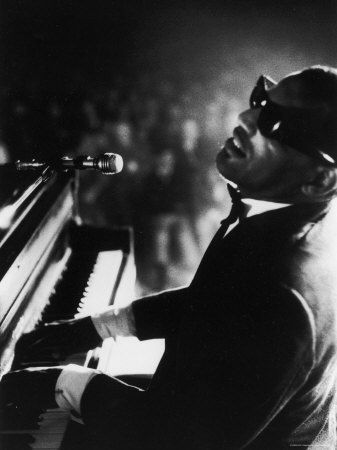


Ray Charles (Jim Morrison/Johnny Cash/Sid Vicious/Cole Porter/Wolfgang Amadeus Mozart/Muhammed Ali, etc) is born in obscurity, but through a combination of talent, charisma and being in the right place at the right time he is enabled to attain celebrity status while still a young man. This gives him access to a continuous stream of groupies, which privilege he continues to take advantage of even after he gets married, which behavior usually does not bother his wife enough that she ever gets around to leaving him. He also develops a hardcore drug and alcohol habit, which brings him to the low point of his career, at which juncture he either dies or does a stint in prison. If he lives he usually cleans up somewhat, goes back out on the road and maybe puts together one last big comeback album before gradually fading into an honored dotage (the life of James Brown I don't believe has been committed to celluloid yet). If you are Ray Charles the government of your home state, which persecuted you through the first half of your life as official policy, makes one of your biggest hits the official state song and holds a day of honor where admiration and a kind of love are officially bestowed upon you.


This is not to say I did not enjoy the movie after a fashion; however it is not much of a departure from the standard entry in this genre of biography. It is a professional, glossy Hollywood production, and since it was supposed to be so good according to several sources, I was not once agitated about my precious time being wasted. One area in which it failed for me was that I never got a sense of what was really great about Ray Charles's music, which a good many people who know what they are about consider to be very great indeed. In a film about a musician one would hope that the music will lodge itself on the brain and be inspiriting for several days afterwards. The recent cinematic take on Cole Porter's life, for example, was not particularly distinguished, but one at least came away from it reminded that the man really did write a lot of great songs. My impression of the career of Ray Charles from this movie is that he was an unusually gifted roadhouse piano player who made some interesting records with Atlantic* in the 1950s--the impact of how many, and how good, these records were was not fully conveyed in the movie however--got a huge deal to sign with ABC in 1960 where he turned out most of his familiar mainstream hits, which however come across in the movie as schmaltzy and selling out compared with his prior quality. The movie attempts to explain, if not wholly excuse, this by reminding us that Ray Charles, as a blind black man in an America before disability payments and affirmative action and anything else, was naturally obsessed with being able to take care of himself first and foremost, and that aspect of the story, how he was able to do this (in his early years he would only accept payment in one dollar bills), is pretty remarkable to contemplate. I did not come away particularly inspired to dig deeper into Ray Charles's musical archives however. It is not that I don't want to, but given the time constraints I am under it is not at the top of my list of things to look up when I have a free 20 minutes or whatever.


*Atlantic Records CEO and St John's College alum Ahmet Ertegun is a significant character in the movie. As was the case when another SJC alum (Charles Van Doren in Quiz Show) got the Hollywood treatment, the Ertegun character speaks in a rather odd--some might say hypercorrect or hyperwhite (though Ertegun was actually Turkish)--manner pointedly different from that of the other characters. Whether this is the inevitable outward result of indoctrination in the Great Books I don't know--the origins of both of these men were very near the top of the social scale in their respective nations and also both graduated over 60 years ago. However, when I first began my current job, over fourteen years ago now, I apparently had a somewhat affected manner of speaking that a few people made fun of. There was one guy (who was very popular with women) who was fond of mock-effacing himself before the ladies by saying he was not debonaire the way I was. This impression seems to have faded over time with my increasing distance from any kind of pretentious society, as no one has made any comment in this vein in many years.


Hannah and Her Sisters (1986)

As is often the case with Woody Allen movies, I was taken in by this in the moment despite the storyline's not being particularly good, nor the insights brought to the usual great themes of existence being anything special (or especial), though I appreciate that he tries to acknowledge that he is aware of them as much as he can. That it is in some sense successful without being objectively good I think can be attributed to several characteristics that for whatever reason are fairly unique to Woody Allen movies:

1. He Presents a Certain Variation of the New York Dream Better Than Any Other Filmmaker. He is a little like Salinger in this regard, and unlike Salinger the effect I am sure is mostly intended. It doesn't work on everybody, of course (when I proposed this theory to my wife, who does not carry around a New York Dream within her, her response, apropos of this film was "Dream? Seems more like a nightmare to me"), but if you have ever been afflicted with the longing for an apartment on either of the Upper Sides, employment in an arts-related profession that does not make unreasonable demands on your time but gives you ample enough income to dine out frequently at good restaurants and pursue romantic affairs, and having a social acquaintance that consists entirely of what would anywhere else be considered pretentious people who name-drop old artists and painters and philosphers and musicians and filmmakers into casual day-to-day conversations as if it were the most natural thing in the world--and clearly a lot of people who know nothing like this style of life are--the presentation is unfailingly enticing, even when both you and Woody Allen know that it is shallow.

I have not seen much of his recent (post-1990) oeuvre, so I don't know how well this version of the dream is holding up, as it is my impression the economics and social dynamics of the city have changed considerably since the mid-90s, and I can't see Woody Allen characters thriving among the Wall Street/corporate titan crowd and their hangers-on. The Dream never dies though, however much the zeitgeist seems to change.

2. He Has Been Very Good at Keeping Up the Schtick of Being the Guy Who Just Is Not Quite Good Enough At the Most Crucial Times. I assume this is how most of his fans see their own lives as having predominantly played out. There is a certain amount of pressure, at least among serious adults, to mature and move beyond this way of looking at the world, but Woody Allen understands that a lot of people never get over failing at some important or desired thing in their youth, and that nothing that happens thereafter can make up for any sense of that particular sweetness that was missed or denied. Ironically this mindset probably held him back from attaining some of the heights of achievement he would have liked to reach as a filmmaker, though I do think it is one of his strengths as he is. This also probably correlates to...

3. He Is Never Really Capable, Deep Down, of Really Enjoying Anything Unabashed and Without Some Corresponding Quiver of Unhappiness or Dissatisfaction. This is also a condition that afflicts a lot of people, including me, and which is not usually addressed in any kind of redeeming way in movies. Something that is often lost upon people who have to deal with a Woody Allen type person is that he or she has a high capacity for appreciation and even love of beauty or good fortune or whatever, but because they are incapable of ever feeling that they have really possessed them, they are never able to be enjoy themselves completely in the moment the way that a Warren Beatty type-person seems to be able to, or at least feel that as masters after a sort of human experience that all of the highest manifestations of that experience properly belong to their domain, which I take to be the attitude of the typical quasi-deified European artist.

4. He Is Still Compared to Pretty Much Everybody Else a Very Talented Comic Writer and Comedian. This movie is not a laugh riot by any stretch of the imagination but there still probably ten lines in it which were pretty good, enough to at least prick my long-slumbering funny bone, which is nine or even ten more than you find in most movies (most competent screenwriters can come up with one decent joke even by accident in the course of a two hour film.

Other quick notes on this:

There was a minor subplot involving the then fairly novel phenomenon of sperm donation and artificial insemenation, in which the Woody Allen character's wife has a kid with one of his friends with desirable genes--it is emphasized that they would not need to have sex to accomplish this--because he was supposedly sterile. When you have the idea of life that Woody Allen or I have, that working up to the point where women will even begin to consider having sex with you is the only reason for at least 90% of all exertion therein, the idea of the sperm bank child from the male point of view does not really make any sense at all.

In one review I saw of Woody Allen's latest movie, the one set in Paris, the writer joked that the demographics of his Paris were just like that of his New York, 95% white with the rest mostly stylish black people. The percentage of nonwhite people in this movie is probably even lower than that. Of course in 1940, when Woody Allen was a child, the population of New York City really was around 94% white, and as his obsessions form most of the material, as well as interest, in the films, it is not surprising that his cinematic New York has a population more similar to the kinds of people he was interacting with in 1954 than what we would expect to find there today.

Dianne Wiest--whom I don't think I have ever seen outside of a Woody Allen movie--is looking pretty good here. She would have been 37 or 38 at the time (though I assume playing someone a little younger) which means she is eligible for Social Security now. I was in high school when this came out, and it doesn't seem that long ago,

Lenny (1974)

As usual the 4th movie will get the shaft as far as my insights go, though I didn't have too much to say about it.

This is a biopic of a kind of the legendary comedian Lenny Bruce, whose once groundbreaking act does not strike one as terrible funny or provocative any more in itself. There is even some doubt afoot in the culture as to whether subversive speech is any more protected now, or will be in the near future, than it was when Lenny Bruce burst on the scene. Is it me, or has this film totally dropped out of the mainstream consciousness? I had never heard of it before, and God knows the important films of the 70s are talked about and celebrated ad nauseam. This was very well-received at the time, getting 6 Oscar nominations, including in all the main categories (though it did not win any of them)--Best Picture, Best Director (Bob Fosse, a pretty big name), Best Actor (Dustin Hoffman, a really big name) and Best Actress (Valerie Perrine, not so big a name among people who weren't there at the time, but well regarded among the down and dirty 70s crowd. Espeically when she spoke she made me think of a bigger-breasted Sally Field, which is not all bad, because I actually secretly like Sally Field). It is another movie that I got on VHS tape.

It's in black and white and has in its best parts a European art house tone about it. There are a lot of dingy clubs, dingy apartments, dingy hallways, car rides on rainy nights, claustrophobic telephone conversations where the speakers seem incapable of stepping an inch away from the handset; the movie is very good at creating this sensation of claustrophobia and dinginess and tightness, from which the Lenny Bruce character manages to cause stirs from time to time but never really escapes. There are drugs of course, and he seduces the pretty nurse whom he should not have been able to seduce--such a seduction makes the whole difference between an A-level life and a B-level one; or at least a B-level and a C, for sure. I never like courtroom scenes. The frame of the movie takes place after he's died, and the people who were nominally closest to him--his wife, his mother, his manager--are relating the story in flashbacks, but the sense is that they don't have any idea why he was the way he was, or why it mattered. The technique and style were interesting though, such as I wish we had more of in American movies. I give it a good mark for that alone.

Wednesday, June 15, 2011

A Few Songs to Cover the Gap

Maybe it is better to be honest about our habits and try to work through them than to keep them hidden.

"I've Told Every Little Star" (1961, Linda Scott). It was evidently featured in a David Lynch movie (Mulholland Falls) and is accompanied by clips from his various films.
One thing I will say about David Lynch, unlike many people in the visual entertainment field over the last 20-25 years, he has an eye for good-looking white girls, and a sense for how to bring out some of the latent and sadly underutilized appeal that a lot of us have been missing during that time.

My Lennon Sisters fetish is perhaps getting clinical. I'm going to have to bleed my sentiments until I am purged. Now I've stumbled upon a treasure trove of their really old Laurence Welk appearances from the 50s and early 60s, when they were just little girls and teenagers. The arrangements are better and the performances more poignant than those I've been putting up from the mid to late 60s, when the show began to get really corny and the girls' genuine wholesome good looks and assuring poise were about the only things it had left going for it.

In their early years on the show the girls mostly just stood in a little group on the stage in tasteful but unspectacular dresses and sang, no ridiculous costumes or props or little skits. To be honest the skits from the 50s were not even that bad, were in fact often in keeping with the times, and the program does not appear to have started becoming the paragon of bad taste and total uncoolness that it is famed as now until sometime in the early 60s. This one below for example, from 1959, would not have been far out of place on any music-themed show of the era. (The three older Lennon Sisters only provide backup in this one but at ages 16, 18 & 19 they display the mainstream teen-age girl styles of the day in all their considerable glory).


Linda Scott was good-looking in the matronly way young women sometimes have, where they are twenty-two and good-natured but already have the features and movements of a fifty year-old. I've known a couple of women like that and I remember thinking, not so much at the time but an hour later, or the next day, or the next week, that gosh, that girl was really sexy (followed by, why was/am I so unresponsive to my own instincts in real time?).

Wednesday, March 23, 2011

We Need a Break After Thomas Browne
Time to rock out, Bourgeois Surrender-style.


Pat Boone of course is the Goldstein of popular music. Producing his image, either in audio or video form, though especially the latter, without fail sets off a two-minutes-of-hate style frenzy, the most vociferous haters usually being, if not exactly self-loathing, generic whiteness-loathing white people, which cursed existence they have themselves presumably and miraculously managed to avoid. The comments on this at the Youtube page are predictably over the top. "Just makes whites look so sad," "shocking lack of rhythm", "embarrassment to the whole Caucasian race", "White people have no rhythm...Why is this?" I get that it is funny and at the time there was the insult that real artists were being relegated to obscurity and denied credit by the likes of this guy and Lawrence Welk and so on, but methinks there are a lot of things that make white people look sadder than this issue many of us have with the more sensual kind of modern rhythms and expression. I'm not any big fan of Pat Boone, but at least he took care of himself and dressed well, and while his delivery was a little stiff he could carry a tune decently compared to most people one hears today. If one has to hang out with uncool white people--and some of us haven't got much choice--I'd much rather take the hopelessly whitebread but well-groomed and willing to dance and generally feign enthusiasm for something 50s crowd than The People of Wal-Mart, which is increasingly what is left to us now.

Monday, December 20, 2010

Annual Holiday (Bad) Music Post: Old Girl Singer Special

I received my college alumni magazine in the mail today, a quarterly reminder of my neverending failure to live up to the college ideal, with regard to seriousness of any kind especially, but also in the total failure to absorb any of the life skills you are evidently supposed to learn there, which all of the successful alumni put to work in the realms of high-level business, scholarship and international relations every day. I had already started this frivolous post when this low-gloss rebuke (black and white photography only) arrived, so I anticipate I will continue on in a chastened tone.

I won't be able to set a new posting record this year, nor even get to 100 posts. Perhaps the blog is beginning to gradually wind down, and within two to three years might be expected even to finally die altogether. When you study the lives of successful people in arts and letters one of the most striking patterns in many instances is how quickly they move on not merely from particular projects and organs but from entire major phases of their careers in order to be constantly tackling new ground. No blog should last longer than 18 months probably, let alone five years.

I am only in love with about half the singers featured here. It was the atmosphere--of slightly melancholy or slightly embittered sweetness--that I sought.

The Poni-Tails "Born Too Late".

I heard this on the radio about two weeks ago pulling away from the drive through window at Dunkin' Donuts and thought it had a poignancy on several levels that transcended its simple message and orchestration. Clearly I was influenced by the uninspired nature of the setting. I couldn't find any movie footage of the girls. I put in the video of the record cover because they all look relatively adorable, especially the one on the bottom, who I think qualifies as dreamy.

Contrary to what appearances may suggest, I do not wish that the 50s had continued on forever. That would have been intolerable even to me, though I probably would have been willing to cling to it a little longer than most others. I do believe a lot of things would have been more enjoyable to do in that era that perhaps they are now--playing organized sports and living in Paris are two that come immediately to mind--and that many of the new directions that society chose to go in were obviously not great improvements on what had been before--but I do not wish that time had stopped, rather that its changes had been managed and implemented in a different and perhaps less wholly destructive and more deeply vivifying spirit .


Shelley Fabares--"Johnny Angel".

Glancing over the comment sections of Youtube music videos one cannot help noticing the varying characters of the commenting bodies which congregate around different artists. Opera and jazz are especially fertile ground for the snobs, many of whom I find enviable in their ferocity and contempt. Notable performers and interpreters of others' works, or in the case of many rock guitar legends, their own largely obscure catalogues, naturally provoke heated arguments about technique. International pop superstars inspire thousands of inane comments, largely from people in countries where English is not widely understood. A few groups like The Who seem to have hit the sweet spot of fandom; their commenters are funny, positive, apparently freed from the burden of snobbery. Smiths/Morrissey commenters try to take after this school, but most are unfortunately incapable of keeping the pitiful memories of their lonely, unloved youths to themselves.

Shelley Fabares is a figure not of artistic interest so much as romantic projection. All the males want to marry her, and a significant number of the females sound as if they would like to see her eyes clawed out. This indicates that she possesses some quality that touches a tender spot in the general masculine breast, and a sore one in its feminine counterpart. One may observe in these fora that is acceptable for men to declare the perfection of other feminine celebrities such Grace Kelly or Audrey Hepburn, presumably as any ordinary man is unlikely to have much contact with anyone remotely like them, let alone marry such a person. They are harmless in that instance, and besides embody many qualities that contemporary women either see themselves as either already possessing to some extent or that are at least acceptable to aspire to. None of this applies to Shelley Fabares, a sweet-natured cutie pie teenager who is the kind of girlfriend the average long term virginal middle class boy dreams of having from age 15 until he achieves some sense of full initiation as a sexual being, which in some instances can last forever, and whose type, presumably, continues to symbolize an active and real as opposed to theoretical ideal in the unenlightened male mind. This must be criticized and exposed to shame and approbation, and the disapproval of it expressed, I suppose, though it will do no good.

I occasionally used to watch the reruns of the Donna Reed show myself for a short period when I was in 8th/ 9th/10th grade, during some idle period between sports seasons or during the summer, wasting time that could have been employed to many better purposes. I was exceedingly weak emotionally however and had, if not an insatiable, a least a need every day or two, for a dose of romance, meaning at that time a vision of pretty girls. Sometimes television would be the only way to get it.


Lesley Gore--"You Don't Own Me"

The onetime "Cutie-Pie From Tenafly"--not too surprising really when you look at this video--came out as a lesbian in 2005. This is nothing to the point, other than to note that if I gone to school with somebody like this, kind of sad and not glamorously pretty, though not aggressively unfeminine either, I would have assumed the cause was her inability to get the kind of boyfriend she wanted. This is how I interpreted the world at that time. I suppose I know better now, if only tangentially. I like the naturalism of this clip. Is it me, or do people in documentary footage from the 1960s and 70s look more like actual human beings than people ever seem to now?


Brenda Lee--"I Want to Be Wanted"

"Little Miss Dynamite". Maybe they haven't stopped giving singers catchy nicknames. Maybe I'm just not keeping up.

This is one of my favorite songs of the 60s.


Dianne Lennon--"What Are You Doing New Year's Eve?"

In which the equal parts lovely and quietly severe Dianne gets stood up by her date for the big night only to be rescued from a night wallowing in self-pity at home by the smartly-uniformed Western Union boy. The thought that this might ever have been even a remotely plausible fantasy demonstrates how dramatically social life has changed in the last 40 years or so.

I never had much fun on New Year's Eve. It's a badly conceived evening, in that its focus is around a point of time which seems to distract everyone from the usual progression of a festive evening. I wonder if there oughn't to be a new tradition, make it a night to go on a date, preferably with someone you've never been on a date with before but always wanted to go out with. That would be a lot more fun for most people than what happens now anyway. Maybe they could bring back old-fashioned dances too. The cultural shift from well-organized dances with dance cards and at least somewhat less worry that all the girls you like are in danger of being carried off by some studly rival for a session of ravishing at any time to the current scene where dancing with a girl means having to gyrate around in her general area and hope that she doesn't immediately leave the floor, while perhaps more efficient, was especially brutal for people like me in their formative years.


Madonna--"True Blue"

Best Madonna song ever.


Tuesday, January 26, 2010

My Son Georgie Loves This Song

If I'm going to equal my 113 posts of 2009 I'm going to have to have a few cheapies in there.


96.7 FM in Brattleboro has a geezer hour on Sunday mornings where some ancient guy spins the forgotten and much-maligned popular hits from approximately the '46-'54 era. Most of the songs are truly terrible, though "Buttons and Bows" is I think a rare winner from the period. The DJ put this on last Sunday and then about 20 seconds in had a change of heart and decided he wanted to listen to something else, which choice did not sit well with my 3 year old son, who repeated "I want that song back!" about fifty times, and was not appeased by any of the later selections. I wanted to call the station and put him on to discuss his dissatisfaction with the host personally, which would have been a good encounter. On a side note, these Paleface movies look really bad. I'm not going to claim that I wouldn't have wanted to have sex with Jane Russell, but her film persona is more of the more absurd I have ever seen. One of these big-breasted bombshells that came in after the war was supposed to have an IQ of 175 or something. It may have been Jane Russell, although she doesn't look particularly intellectual in these snippets here.

My father was apparently a fan of Bob Hope, which is inexplicable to me given what I know of both of them, but someone gave him tickets to one of Bob Hope's live comedy shows in Philadelphia sometime in the 60s, and my father said he was really, really funny in that setting. I trust his judgement in matters of humor, so I'll take his word for it.

Friday, September 19, 2008

Friday Party Post

Deborah Walley, I think it is clear, was by far the hottest Gidget.


Now a lot of cool people in my generation would say that all this 50s-early 60s beach stuff looks like no fun at all. Really? I don't know, from my vantage point this culture of 18 cent-per-gallon gas, commercially undeveloped, traffic free cruises to the coastline, snappy, optimistic music, cute girls, and men who have yet to discover the joys of steroids or 40 hours a week in the weight room looks like it would be a pretty good time to me. Ultimately I'm sure they all got it on as much as and even more than most of us did anyway.