I have not watched many movies in recent months, but as my list seems to be coming back around more to the sorts of things I like, perhaps I will get back into something of a routine.
The Birds (1963)
The well-known Hitchcock movie that I had never seen before. It is above all great-looking and in places nostalgia-invoking, and these are the parts of it that I liked best. The actual characters and dialogue are rather starchier and blander than I currently have a taste for. I find I have very little to say about this, though at the time I enjoyed watching it, mostly just because it is from the classic period. I am going to try to remember things about it that made an impression on me.
1. The quaintness of the town of Bodega Bay and apparent unspoiled beauty of the California coast in the area in general. It is still like that? One could imagine it being so expensive that it has been able to preserve something of its character. There were, at least until recently (I haven't been exploring in remote corners much over the past few years) still some lost-in-time places like this in Maine and even to some extent on the north shore of Massachusetts.
2. The furnishings in the house in Bodega Bay where the main family lived, because it reminds me of my grandparents' basement.
3. Tippi Hedren's car and clothes.
4. The schoolhouse against the background of the deep blue sky.
I am bored of this exercise.
Black Beauty (1994)
A pretty faithful adaptation of the (once?) classic book, and probably even a little instructive, if, like me, one hasn't spent much time in life thinking about or looking at horses, but its most salient characteristic is that having been made as it was at the tail end of the pre-internet era it comes across as DOA as far as making any kind of impact, an instant antique. I don't think my children, or any modern children, could watch this. There is nothing about it that grabs the attention, that is necessary. Perhaps if you have read the book, which I had recently, and have a curiosity to see a cinematic depiction, you might have enough interest to get through it, as I did, but even there the movie does not differ greatly from what a normal reader will have pictured in his imagination. So I don't have a lot to say about this either.
The Ghost and Mrs Muir (1947)
Gene Tierney is starting to become for me like that girl you went to school with who was so good-looking that you weren't even going to bother spending any time thinking about her (because it would have been pointless), but then she turns out to be in a bunch of your classes so that, inexplicably given the ordinary laws of the universe, you actually end up getting to spend a significant amount of ordinary, relaxed time in her proximity, which has a salutary effect, on you at least. I say this because Gene Tierney has now turned up in a number of movies that have come up on here in recent years, all of which have been rather good, though not, as far as I could tell, especially spectacular or famous. For the record these others were Leave Her to Heaven and Laura. A Bell for Adano, which looks to be in a similar vein of quality as these others, has also come up on the list, though I have not been able to find a way to see that one yet. All of these movies are from the years 1944-1947, which besides being the brief but memorable peak of Gene Tierney's career, you know is well within the range my top five, probably top three favorite cinematic periods of all time. Given the fairly random nature of my system I could easily have missed them all, as I doubtless have to this point managed to miss out on the essential oeuvre of some director or star whom it is very likely I would find to my taste. But as I have noted in the past where I have had little runs heavy on particular stars (Toshiro Mifune, Burt Lancaster, Cary Grant) in this little stretch of years it happens to have been Gene Tierney of all people that I have gotten to know a little more than I would have otherwise imagined I would.
The Ghost and Mrs Muir seems, upon modest researches, to be a little more widely known and regarded than I would have thought, many people, both internet critics and professionals, listing it among their all time favorite movies. I wouldn't rate it quite that highly, though I liked it well enough, and it belongs to a class of film to which I am decidedly partial, the unbusy, rather somber, calmly romantic picture of the mid to late 1940s. It does feature a lot of big names who have appeared in my reports on numerous occasions, Joseph Mankiewicz the director, Rex Harrison, Natalie Wood (as a child), even George Sanders, who is a popular figure among cinephiles, though I cannot say I have ever really loved him in anything to date. And while I have warmed up to Gene Tierney a little bit, as noted above, she is still not what I would consider a great actress who excites much in the way of emotion or pathos. I don't find the idea of ghosts, except when they are used for comic or absurd effect, to be very interesting, and overall I thought the plot was a little thin. These are my reasons for not finding it great. On the whole I liked it, and it is very strong in its particular 1940s movie escapist type qualities, and many others like it much more than this.
Needless to say I've fallen way behind on recording the movies I've seen. Some of these go back to the beginning of the year. I've got twenty-five of them that I haven't written about. I'll be keeping these very short, hopefully honest, which shouldn't much of a challenge since I won't have remembered many details by this time.
The Last Days of Pompeii (1935)
I am prejudiced in favor of almost anything halfway decent from this time, so I enjoyed it as far as that goes. It was produced by Merian Cooper of King Kong fame. Cooper was a dynamic man of action more than an aesthete, and the film takes on this general character. In the credits it claims to be "inspired by" the famous Bulwer-Lytton novel, which I have not read, though apparently it has a completely different plot. While I believe the book features some early Christians as major characters, this movie is set mostly during the time of Christ, which of course pre-dated the famous Vesuvius eruption by about 50 years, tying the stories together by having a man who encountered Jesus while young be settled as a rich old man in Pompeii at the time of the disaster. As a production the movie is a little clunky and forced anyway, and all of this rather fantastic far-fetchedness is not done in a way that holds together. The always entertaining Basil Rathbone appears here as Pontius Pilate.
Good enough for fans of 1930s Hollywood, but I would not call it a classic.
Rebecca (1940)
It won the Oscar for best picture, the only movie directed by Alf Hitchcock (in I believe his first Hollywood effort) to do so, featuring a comparatively young Laurence Olivier and Joan Fontaine, though all of this is incidental. It is famously not a typical Hitchcock picture--he was under some restraint by the studio at this time--and while a well-regarded classic, it seems to be ranked outside his most essential films by the experts, and the same critique is often applied to Olivier too. I had never seen it before, but it has all of the kinds of things I like with regard to dialogue, setting, faces, sensibility, general intelligence, etc, which I recognized within about five minutes. It's easily my favorite movie since Stolen Kisses.
Raging Bull (1980)
I had seen this a couple of times before, though I'm pretty sure the last time was when I was in college, which was a long time ago, so it seemed like a good opportunity to revisit it when it came up. I'm not a huge Scorcese fan, mainly for reasons that have little to do with the quality of his movies, the better of which I usually concede are decent enough. His characters tend to be completely unrelatable to me, to the point of striking me as probably having advanced forms of various mental illnesses, a pattern which runs through movie after movie after movie. The other reason is that he turns up on a lot of these DVDs I get on the commentary track or some other of the special features, and I don't enjoy him or find what he has to say particularly interesting. He goes on too much for my taste about the lens being used or the panning and so on, a little bit of which is informative, but there is no humor or sense of mischief such as I like to leaven the technical presentation.
But this has nothing to do specifically with Raging Bull, which I think holds up pretty well as a work of cinema art. As far as deriving a thought exercise from the movie, I suppose the obvious question is, What are we supposed to think of LaMotta? He is possessed of a kind of demonic force that is relatively rare even among the more violent subcultures in America, which is the entire source of interest in him. Early on he is able to at least temporarily impose enough discipline on himself to become a top ranked prizefighter, yet he seems to give up even on this as he gets older, and has more need of it. He demonstrates an obnoxiously low level of intelligence, however I think we are supposed to feel a little sorry for him for this as such things are not ultimately one's one fault. He causes an awful lot of havoc however, and the people around him don't really seem to get much in return.
California Solo (2012)
I've adopted a new system for picking movies which is not completely an improvement, though it allows more opportunity for more recent films and others that may not have attained the highest rankings. For every title generated by the new system, which is a much more random process, I match it with one attained via the old system, to ensure that I still have a steady supply of the classics that I like.
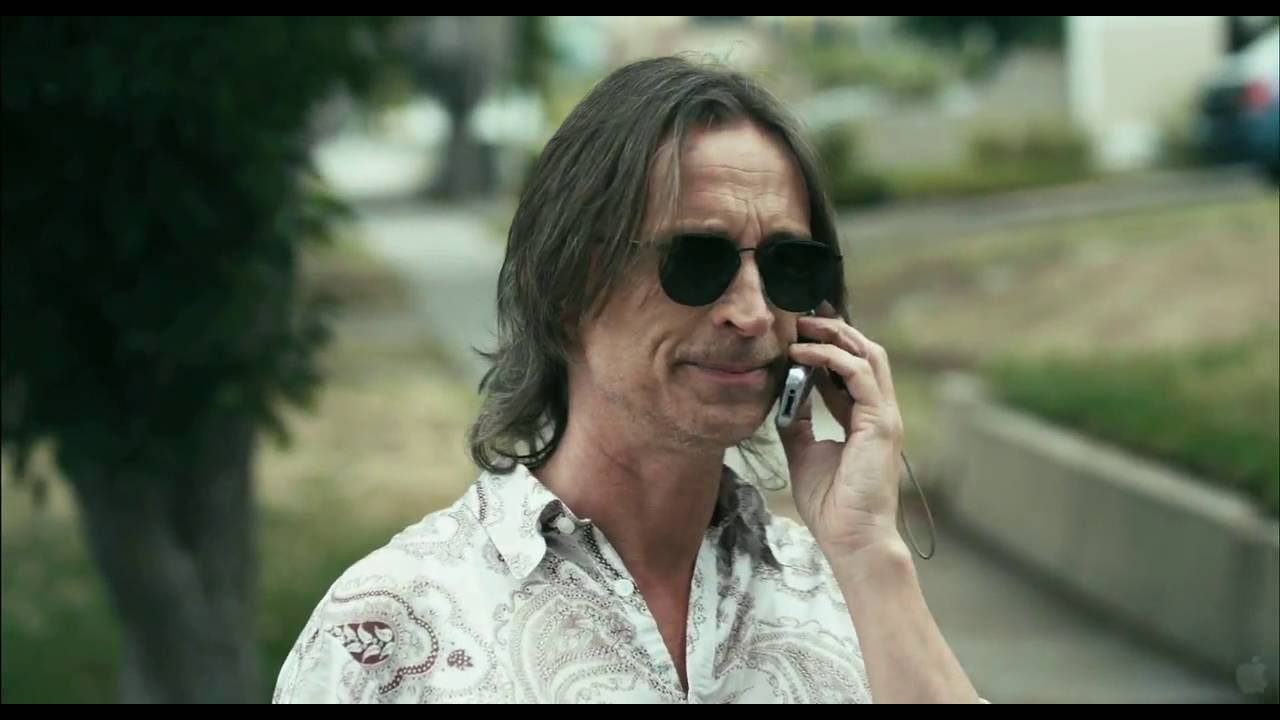
California Solo, a recent production of modest distinction, is thus one of the first movies of this "new" type to appear in my lists. It features the actor Robert Carlyle, who appeared in the late 90s indie hits Trainspotting and The Full Monty. Here he is playing a former minor member of a moderately acclaimed 80s era British rock band who now lives in California doing agricultural labor, making music-related podcasts, and drinking a lot. He's also divorced and has a teenage American daughter whom he barely knows; and he is also facing deportation back to the U.K. because he gets arrested for drunk driving. While he has a certain amount of British rocker charm, his life is in the mess it's in because he drinks so much that no one can really help him. I suppose that is the most interesting part of the movie, I have rarely seen a depiction of alcoholism that is so thorough and illustrative of the pitiful state that it reduces a man to. A lot of movies that are supposed to feature the bleak side of alcoholism still induce me to want to join in and imagine that I could carry off that lifestyle if I put my mind to it. But this character I knew was beyond anything I would be able to pull off at this point of my life. I can't go that far, not that I want to obviously, but some people have compulsions to be so extreme in everything, their souls are so volatile. My soul seems to be entirely bland in that regard.
I think there was supposed to be a message for us about immigrants here because it's a fairly relatable Scotsman who is being put through the grinder with police, lawyers, and all the rest of it, and perhaps we'll be sympathetic to his desire to stay and equate that with the plights of people who aren't white and/or English-speaking and move or fortify our personal take on this issue. I tend to be of the mindset that seemed to me to be prevalent when I was growing up that if any individual country decided that they didn't want any particular foreign national camping out on their territory indefinitely that there was always a risk of deportation. Obviously the sentient part of the world has moved on from this way of thinking about the matter.
The Tree of the Wooden Clogs (1978)
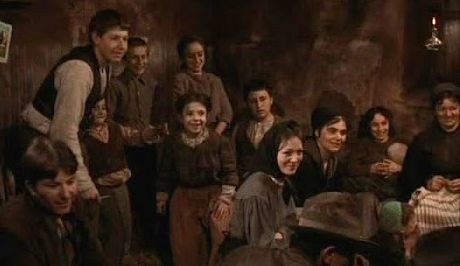
Italian epic from the heroic era of European filmmaking. I had seen this a few years back on a poor quality VHS tape and written a post about it. In addition to the dark print on the much smaller television I had at that time, I seem to have been distracted on that occasion and not taken much away from the viewing. In the meantime I kept the movie saved in my Netflix queue along with about thirty other DVDs whose statuses are perpetually "availability unknown". However, as occasionally happens, one of these elusive discs will suddenly become available and turn up in my mailbox, in this instance the Criterion Collection release. So I had to see it again.
Of course my experience was much better this second time. I was evidently in a more relaxed state of mind, which helped, and the bigger screen and clearer print brought out much more of its grandeur and depth than I had been able to perceive the first time. There is a very well known scene in which a pig is slaughtered, and there was another episode again involving an animal, a diseased cow that has to be put down. As this cow is the only one that the family, who was exceptionally poor, owned, and they cannot sell the meat or anything due to its being diseased, it represents years worth of financial devastation. It would be hard to concoct a "pitch" of this movie describing what it's about, it's an accumulation of small incidents or strokes of ill or good luck that given the narrowness and rigidity of this world determine the courses or nature of people's lives. One boy is identified by the local priest as intelligent and is given the opportunity to go to school. A woman's husband dies and she has to take in laundry to support herself. Meanwhile the local lord of course has access to books and newspapers and even a record player on which he listens to recordings of Caruso while his peasants lead the same lives their forbears have led for hundreds of years, and this all taking place, as I noted in the earlier post, perhaps within the lifetime of the filmmakers themselves, or at least their parents, as the director (Ermanno Olmi) was born in 1931. He is still alive, by the way.
The Red Shoes (1948)
Much-loved Powell and Pressburger film about a ballet troupe and the artistic process intended as an infusion of beauty and color into a still dreary postwar England. There is a lot about it that I like, though I did not have the same response to it as I did to the earlier The Life and Death of Colonel Blimp by the same duo, which I thought was pretty much a masterpiece. However this does star favorite of this blog (and of Powell and Pressburger) Anton Walbrook as the ultra sophisticated and exacting director of the ballet company, and an English redhead (seemingly another P & P staple), Moira Shearer, who, I had not realized, was a real ballerina of some renown, as the unknown dancer who persuades the master Walbrook that she has what it take to dance the lead in his company. There are some pretty hard observations on the demands and sacrifices necessary to lead the life of the true artist, though these probably apply almost equally to being a true businessman, or a true scientist, or true tech innovator, or ace high school student, or almost anything requiring true excellence. Whether true art still occupies an elevated position relative to these in anyone's mind I am not sure.
There is of course the incongruity of the brilliant young composer and the brilliant young dancer in the film both being standard issue born and bred English people, given that these are arts in the English are not traditionally recognized as having a culture of greatness in, and even the English composers who have achieved some degree of fame (Britten, Vaughn Williams, Walton) I tend to think of as somewhat stodgy, respectable establishment types--sort of like the professor at the beginning of the Red Shoes who cribs from his student's work for his new composition--rather than the more fiery, intense younger men identified with this art on the continent. However, I find the optimism expressed by attributing the possibility of attaining great and noble heights where they have not traditionally been considered to have been reached to one's own people, as the phrase goes, to be admirable. This particular sort of confidence is not consistent with most peoples across the ages.
Iron Man 3 (2013)
Another selection by my new system, I figured that these movies were hits so they must have some kind of appeal, or fun to them, so I wasn't opposed to seeing it. I couldn't understand this at all, it made absolutely no sense to me. All the technology and machines that were constantly introduced were way over my head, explained in an impenetrable foreign language. I lost the plot about fifteen minutes in, around the point at which any resemblance to life on Planet Earth as I have always experienced it departed from the movie. If this is at all representative the mental world the mass of the population comfortably inhabits nowadays it no wonder I am so isolated and incapable of understanding anybody. Good God. Look at the cast they got for this thing. Gwyneth Paltrow? Not that I ever liked her particularly, but I thought she wanted to be a snob. Don Cheadle is in this too. I know, money, money, money. Not too many people in America can win a real following doing the kinds of movies I like, But some can.
I will get to those election and election-issue related essays. Especially those of us whose overall righteousness was subject to question anyway are being called to account for themselves in the wake of this ongoing debacle that has revealed the presence of so much rancidness in the body politic. But I have to make quick notes on all these movies and then I should be set on that for a little while.
Julia (2009)
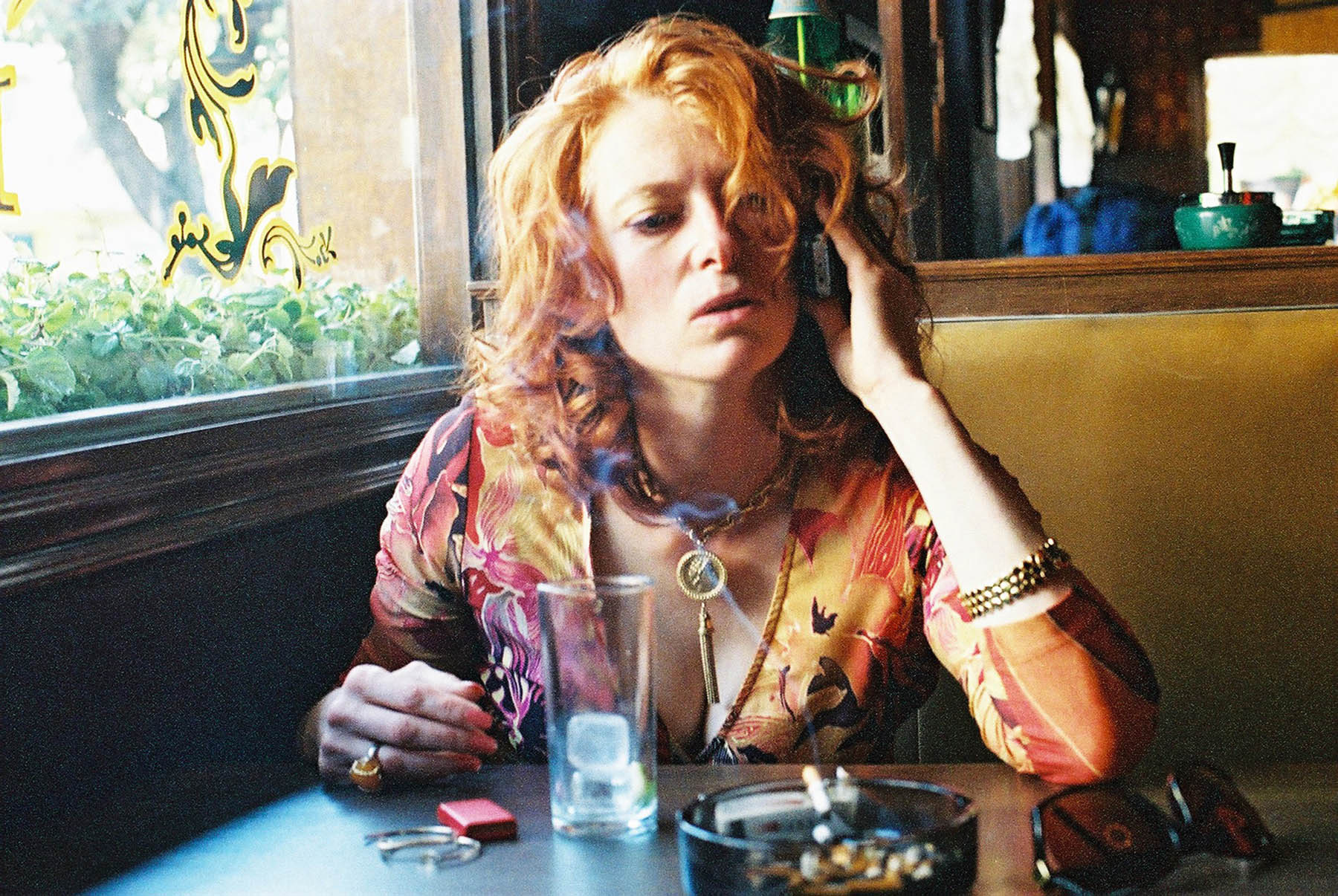
This was pretty good, it had a plot that was both different and edgy (by bourgeois standards), professional grown up acting, much of it takes place in Mexico, which seems on film like a more free flowing and natural, and therefore in many ways more alive, place than the U.S. at this point. I thought the ending was anticlimactic, if perhaps the most 'realistic', though the film had not been particularly realistic up to that point. Tilda Swinton is the star, and I must say she is quite aggressively good as an abrasive, middle-aged alcoholic wastrel with no evident family, or career, or interests outside of drinking. Most of the characters in this movie come from this down and out milieu, or are professional criminals. The main plot involves Julia's kidnapping a child, the grandson of a well-known millionaire, with some vague idea of collecting a ransom. It held my interest.
Traffic (2000)
Before the Fall
This won the Best Picture Oscar in its year, which I still think of as recent, though in fact it was over a third of my life ago. It takes on the cross-border drug trade, and also has a good portion of it set in Mexico. It has some entertaining aspects, though a bit over the top, particularly the storyline where Michael Douglas's daughter goes from being an Ivy League-bound straight A student at her prep school to whoring herself out to vicious drug dealers in the hood to support her coke habit. Maybe this really happens a lot, but to me it is a sign of how the times have changed just since 2000. There kind of was a perception, certainly in the 90s, that hard drug use tended to be concentrated among spoiled upper middle class brat types and was something of a problem. But I don't perceive this to be the case now, while of course in poorer rural areas the rates of drug addiction and even drug-related death have soared to levels that I think would have been shocking in 2000. So the movie also is dated in the sense that the serious problem it was trying to address seems only to have gotten gradually worse, at least up to this time.
Rear Window (1954)
More my scene
This is, thus far, my favorite of Alfred Hitchcock's later (post-1950) movies. Sitting at a window in a big important city looking out at people, with my beautiful girlfriend attending me and engaging with me in ongoing commentary, appeals to my sensibility anyway, and then there are the various fascinations that whatever version of the past I am watching hold for me. So this one is very easy for me to get into. The plots of most of these Hitchcock films, and especially their resolutions, always seem rather simple and almost primitive to me, but of course the style and composition and the intelligence and wit of the dialogue are where their main value lies for me. I know there are endless critical studies that explain the intricacies and hidden depths of these movies in excessive detail, and I have read some of them, but I am rarely struck by anything in them that seems important. What is important here are the simple activities of seeing, and thinking, and talking, and noticing, and offering something for others to notice.
I missed the Hitchcock cameo in this. I have to assume he was at one of the songwriter's parties, or passed by the alley.
Since Donald Trump has now unleashed a scarcely precedented outpouring of feminine rage in this past week, which is probably not going to abate until at least after the election, if even then, I did take note of the especially egregious sexism of Jimmy Stewart's war buddy the detective in his dismissive analysis of the workings of the feminine mind. The popular entertainment of the 50s and 60s, for reasons I have explored elsewhere in my writings, seem to be the most offensive to our sensibilities in this regard. In my opinion the condescension and general assurance of male competence was not as pronounced in the 20s, 30s and even early 40s. The combination of success in the war and the male-centric prosperity that arose after it made American men feel perhaps a little overly good about themselves, at least as vis-a-vis women.
In addition to her other attractions, Grace Kelly is probably the most famous figure to emerge from Philadelphia's Irish Catholic community, with which I have familial connections as well. In other words I am kind of claiming an especial closeness to her.
The Bank Dick (1940)
A W.C. Fields comedy that seems to have claimed the mantle among modern critics as the Most Essential of his titles. I didn't really get it. I thought it was silly, slow, cheap-looking, and not remotely funny. Of course the experts can't be that wrong, so I will assume I am missing something. I had never actually seen a W.C. Fields movie, so I was expecting him to be a lot different, namely a more slashing wit and the kind of, if not manic, certainly aggressive energy that I associate with more modern comedians. None of this is in evidence here,in which the humor, or attempts at it, take fairly mild and languid forms. Not one of my favorites.
Grand Illusion (1937)
Regularly celebrated as one of the greatest movies of all time, and among the most poignant. If one of the themes of the film is the passing of the aristocratic ethos of old Europe as a result of World War I, it is experienced by us as being made with a particularly old European, and especially old French, sensibility of its own that was itself about to pass away forever. I had seen this a very long time ago, and I'm sure I liked it, or the atmosphere of it but I had not remembered it all that well, and doubtless almost all of the class and historical symbolism must have gone over my head. But I was more attuned to that this time. I should note, it also helps that I have a new television that is about five times as big as the one I used to have, so watching movies now is much more like a theatrical experience. Jean Gabin made the strongest impression on me that he ever has (I assume I must have seen him before in something besides this; on the other hand, after perusing his 'filmography', perhaps I haven't). He has a great star presence. The role of the enigmatic von Stroheim of course is also legendary, but it is borne out in the viewing, his signature and unusual combination of haughtiness and deep melancholy is very affecting. I had not recognized Pierre Fresnay, whose work as Marius in the Fanny trilogy I remember praising, as Captain Boldieu, nor Dito Parlo, the German farm widow, as the newlywed from L'Atalante. I note these trivialities because all of these movies represent something important to me--indeed, in some ways the entire purpose of this whole project is as an excuse to see certain films without appearing to unduly favor them--and I like to be conscious of the relation and continuity of the artistic people involved in them.
While I am willing to believe this may be one of the twenty or so greatest films ever, I cannot with honesty rank it there on my own list, because for all of its depth of character and generosity of spirit I have not been able to reach the point with it where it has resonated with me emotionally, in terms of true love. But I do admire it.
The Awful Truth (1937)
Even though I do my best when finding a movie to put on my list to have as random and eclectic a selection as possible, there are periods when by whatever coincidence certain actors seem to turn up multiple times within a very short space. I have gone through a Toshiro Mifune period, a Burt Lancaster period, even a mini-Fernando Rey period. For the last year or so I feel like I have entered a heavy Cary Grant period, after almost never encountering the man over the first forty-five years of my existence. To my mind he has not aged as well as a movie star as some of the other golden age titans like Spencer Tracy or Jimmy Stewart or Bogart, because he is either strangely impersonal (queue the famous Mel Brooks monologue about going out to lunch with Cary Grant) or because his persona is not really like that of anyone nowadays not only in show business but in life itself. My wife likes him however, and in addition to the movies I write about here we have seen quite a few of his other ones with the children (whom we periodically subject to oldies as a supplement to whatever other education they might have picked up over the years), such as Arsenic and Old Lace, Room For One More, etc. And of course a lot of his movies are pretty good or otherwise have some interest about them, but him personally I don't really find appealing at all. Something about him makes me uncomfortable. Not like Jean Gabin or Erich von Stroheim. I'm very comfortable around them.
Getting back to the subject at hand, The Awful Truth is I guess one of the more celebrated of the 30s screwball comedies, in which genre Grant was one of the true mainstays. His foil in this one is Irene Dunne, whom we have also been seeing a lot of lately (Anna and the King of Siam; Life With Father), though about ten years younger than she was in these other roles. I like it--I don't love it, the screwball comedy not being a genre I have fully taken to (yet). Maybe I will watch this again soon, as part of the children's classics series. I am not sure if my wife has ever seen it, and she often has very original insights about things, because she is intelligent but is not mentally in the same rut as everyone else because she reads very little contemporary media, criticism, and social commentary. One thing I have to admit is that, as much as I love a lot of 1930s Hollywood product, the over the top depiction of wealthy characters that flourished in this era I often find to be wearying. All the furs and jewelry, the enormous doors and dining rooms, the silver table settings, the silk bathrobes and the top hats, the dogs of the ladies, when there is one. I don't find it attractive, I suppose.
The Crowd (1928)
Hitting a little too close to home at times
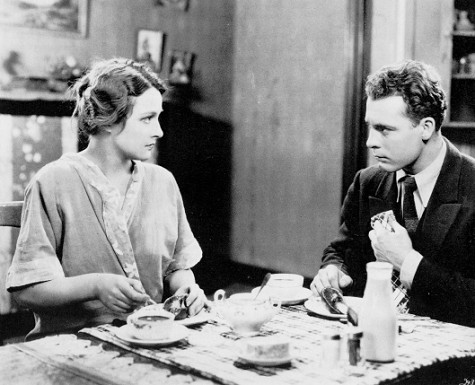
Great late silent movie about mediocrity in a mass society and its feeble consolations that is surprisingly modern and still packs a considerable emotional punch almost 90 years later. It isn't available on DVD for some reason (it was one of the first 25 movies designated for preservation by the Library of Congress, so it's not like it is that obscure) so I sprung for a VHS copy. I can't recommend it enough, though it is a little depressing. My wife found out that a child dies in it and refuses to watch it on that account, which is unfortunate, since I would have valued her observations and perhaps reassurance about the film, since the two lead characters are quite similar to us, the man being delusional and lacking the drive to advance in life, eventually becoming an unemployed and unemployable loser, the woman (played by notable silent star Eleanor Boardman) being supposedly ordinary but appearing to her husband of course as the most beautiful girl in the world, which she in fact is close to being, more responsible and harder-working but too indulgent of her husband's flaws and, the movie suggests, culpable in their situation by not taking a more hard-headed stand against his frittering away of money on entertainments and other frivolities. There are just so many famous scenes that are painful to watch, because the director is not wholly sympathetic to his subjects; he is a little, and they are to some extent victims of circumstance, but they also walk blithely into every trap the world has set for them, and we can't really admire that, can we? It is an all-time great movie though, and in its time very innovative.
As increasingly happens to me with books, I have hit a snag with regard to my movie watching where I haven't been enjoying it as much lately as I did before. Part of this is that there are always too many other things going on, and I don't have, or don't feel that I have, even an hour in a day that I can take to watch a film or write or do anything I want to do without getting distracted or jittery. The other part is that I have been seeing almost all modern things, modern for me being anything after about 1970, which I rarely like. So having finally gotten back again towards the time period and the accompanying sensibility that I like, and with the next three pictures up on my list iconic and all time popular classics, I had hope that I would get swept up in the spirit of the project again, as seems to have been the case with my reading when I began sprinkling in again novels and plays of the sort that I like, intelligent and funny without being at every instant a test or indictment of my intelligence or other development, among the heavier material that I find I am no longer able to read with any sense of accomplishment or enjoyment. This partially happened. I did feel, in one instance especially and in parts of the other two, that I was experiencing great and significant work, and I could see where at another time and in another psychological state of mind I would have taken to them with real enthusiasm. At the same time I feel at this point so remote from the artistic process and the state of mind in which it flourishes and which is the basis of what most great artworks are about, maybe more so than at any time in my life, that it is hard for me to take up anything that does not belong to the truly remote past, before the adult memory of almost any living person, without feeling sheepish or embarrassed before it. Also at least two of these movies were very long, so that I had to watch them over several nights, and in my current agitated state I was never really being able to settle in to the world which the film inhabited, which is especially important to do with epics.
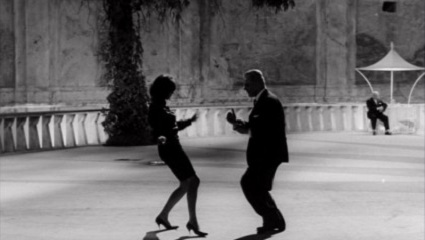
8 1/2 (1963)
I may have the mind and perception of a child, but I have enough sense to know that this has greatness imprinted on it in just about every frame. This does not require a keen insight, as the movie's status as one of the immortal monuments of the postwar international art cinema
has been established almost from the day it came out. It is hard for me to project seriousness, but I do mean it, it's an impressive work. Fellini was a true badness, and this movie is a two hour and eighteen minute. masterfully stylized demonstration
of what being that kind of artist consists of. The scene (I was going to say the famous scene, but almost every scene in this is famous) where Mastroianni, who seems to have been a badass of acting in his own right, in his dream, has gathered all of the important women in his life, wives, mistresses, prostitutes, childhood fascinations, actresses and so on, in his childhood home where they cook dinner and bathe him and wrap him up in blankets before they begin to snipe and make accusations and demands, at which he has to drive them back with a whip is one of the most memorable depictions of a properly flourishing male ego that I have seen. But then the set of the spa, both by day and night, where Mastroianni and his entourage have come, nominally to begin work on his next movie, the nightmare of the traffic jam, the dingy railway hotel where he stashes his mistress--these are all wonderful enhancements and understandings of the possibilities of life also. But you knew all that.
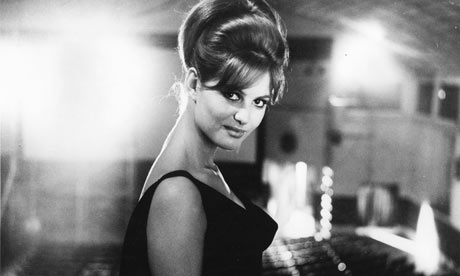
It is a sign however of how off I am at the moment that I did not feel much personal emotion or thrill, even of the quieter sort, while watching this, which I usually do when encountering artworks of this stature and caliber. As enumerated above, this has much to stir and raise even the most dormant spirit, but mine does not seem to be capable of being stirred by anything. It even has Claudia Cardinale in 1963 for goodness's sake-- her 1963 is one of those singular years in the history of movies, or anything else, where a woman attains a unique and frankly awesome state of near perfection that is too fragile to hold for more than a few months (Grace Kelly around 1954 comes to me as another example of this phenomenon; no one else is coming immediately to mind in this same way at the moment). But I can't feel that any of this has anything to do with me anymore, and such a thing is to me a kind of indictment or accusation for the obvious reasons that we don't need to go over again. But I hope our culture can continue to produce enough people who possess enough intelligence and spirit to enable the film to survive, that it may speak to people even many generations from now and the names and personae of Fellini and Mastroianni and Cardinale and Italy and even Europe will still resonate and have meaning for them. I don't think it is a certainty that they will by any means.
Psycho (1960)
To be honest, I find the story here to be unsatisfying. It doesn't hold together. The characters aren't strong enough. From the 21st century point of view it is wholly implausible that the Bates Motel would not be under 24 hour police surveillance just on principle, though implausibility in itself is not enough to mar an otherwise fascinating tale. There isn't really enough tension or motivation here to interest me.
That said, I find it very watchable. The world of the old U.S. highways with their oddly designed turns and exits, lined by empty spaces or local nature that looks more organic than that along most of the interstates with the occasional sketchy hotel or odd, out of place looking Victorian mansion has largely disappeared in much of the country, namely the more populated parts of it, but where I live the roads are largely still like this. The film was shot on the same lot as Hitchcock's TV series was, and it has the look and feel of television productions from that time, which effect however I like (Inherit the Wind was also filmed on a TV lot around this time, and I noted that I liked this aspect about that movie too). Janet Leigh's muscular, almost strapping, physique caught my attention--it is not a type I associate with this time period. As I begin to move beyond the time of life where I can even pretend that varied experiences of the sensual kind are still realistic possibilities, I have taken more of an interest in the variety of physical body types and attributes than I was want to do in my desperate youth, when I wrote off everything beyond finding someone who was identifiably female from ten feet away and would not be too harsh for my fragile personality to be capable of contending with as luxuries I could not afford. I also like the quiet, slow pace of this movie; it is not that I don't like the frenetic, anything can happen style of Fellini and other artists of his type, but as hardly a day of my life has ever assumed that form, it is always an alien experience for me to try to comprehend. The tone of my day to day life is, unfortunately, a hell of a lot closer to Norman Bates's than it is to that of any character in a Fellini movie. Anyway, the main thrust is there are many things about Psycho that I like, I just think the plot misses in some way. I missed the Hitchcock cameo as I always do. I haven't bothered to look up where it was--what's the point of that? The game is to find it on your own.
Ben-Hur (1959)
I was a little piqued when this came up. It is certainly legendary, and won a chariotful of Oscars, which kinds of movies I find I usually enjoy, provided they are old enough. I also had not seen anything of this kind, namely an old Hollywood studio epic set in ancient times, in a while, and I thought that might be something that could revive my sense of enjoyment of life, which effect watching and reading depictions of Roman-era fighting, torture, injustice and so on often inspires in me.
I had seen it. or some of it at least, when I was around eleven, and while various of the more vivid scenes, i.e. the slave galley and the chariot race, had imprinted themselves on my memory, my ability to follow the story had been hindered by my complete lack at that time of any background in either religion or ancient history. I may have recognized that the unnamed man who gives Ben Hur water when the slave caravan passes through his village is supposed to be Jesus, but how that otherwise fit into the story would have been beyond me. The emphasis on Ben Hur's being a Jew would also have meant little to me at that time other than as a signal that he was probably going to be treated unfairly (i.e., I don't think I was clear at the time what 'being Jewish' meant either in a religious or racial sense). Other aspects of the plot had been confusing to me as well. Seeing as my understanding of some of this background matter has improved somewhat in the ensuing 34 years, I anticipated a much heightened viewing of the movie this time around.
Ben-Hur has its moments, though the three hour and forty-two minute running time is a bit excessive, given that the major episodes in the plot, extended though some of them are, are really not that numerous. There is a lot of dead time waiting around for the highlights. After the chariot race there are still forty or so minutes left, which are given over mainly to Ben Hur's finding his mother and sister in the leper colony and the last days and passion of Jesus Christ. It may have been good, but by that point in the movie my concentration was gone. I assume Ben-Hur must have converted to Christianity at the end, but I do not remember the scene or announcement when he did this, which is kind of embarrassing.
The logistics of showing this in the theater in some noweheresville American town, or even a place like Brattleboro or Concord, in 1959 are of interest to me. Unemployment in those days was like 2% and nothing stays open past 10pm even now so during the week they must have had to start the show around 6pm sharp, and with intermission they'd be lucky to be done by ten o'clock. It was a full night's outing, or afternoon if you went to the matinee. I suppose I only find it fascinating because I feel like I haven't had an evening, or a four hour block of time in which to do anything, sit in a beer garden or whatever, in years, and so I assume no one does such things anymore.
Burt Lancaster (as well as Marlon Brando) was offered the role of Ben Hur before it descended upon Charlton Heston, which only strengthens my theory that you could not keep Burt Lancaster out of classic movies in the late 50s and early 60s, unless he kept himself out of them.
Ben Hur's sister was played by Cathy O'Donnell, who was Wilma, the girlfriend/wife of the amputee in The Best Years of Our Lives, which was also directed by William Wyler. I had never seen her, or noticed her, in any other part. Ben-Hur turned out to be her last film.
I have to admit that I kind of like Charlton Heston. He was really a man of his generation, which is pretty much gone for good now, including him, though he was active in an often outrageous, frequently hilarious and to me somewhat endearing way up to the early 2000s. Of course as one of the last visible and combative elders of the World War II generation the ever obnoxious baby boomers were sniping at him to the very end, at which point he had alzheimer's and probably didn't know what he was saying half the time. I'm sure he was a more genial man to talk to in person than most baby boomers of similar stature would be. Though he became famous late in his life as a right wing caricature, he did not vote for a Republican presidential candidate until Nixon in 1972 when he was nearly fifty years old, which was an election when a lot of people of roughly his age decided things had gone a bit far and switched side. He did not officially register as a Republican and become the activist on their behalf that he is thought of as now until he was in his 60s. I suspect that in the 2030s, when I am 64 or so, I will appear to younger people to be the embodiment of a conservative reactionary, they'll regard me as Samuel Johnson regarded the old Puritans who were still hanging around scowling at everybody when he was a boy. I hope it doesn't happen, but we've all seen that old men, especially if things have always gone along pretty well for them in life, don't as a group take much to change, which eventually comes to some point that they just can't go across.
The next five star movie on the list is the cartoon Aladdin, which I am not going to watch. It is not a favorite of my children, though they saw it once, or the older ones did, a few years back, and what I saw of it I didn't like. So I am recording it as done here.
The incident from Ben-Hur that made the greatest impression on me was the part during the chariot race when Messala, who has by that point long established himself as the embodiment of Roman tyranny and cruelty for the sake of cruelty, lays off from lashing his horses for a moment and in a furious rage begins to lash Ben Hur, his childhood best friend whom he has already sent to the galleys for three years, with the intention that he never return. I was struck by the capacity that Messala had to hate another man that much for what appeared to me at the time no apparent reason, because I did not understand the exchange in the beginning when Ben-Hur refuses to sell out his people to give smoother sailing to Messala's political ambitions. It seemed something worth noting to me.
Tuesday, September 22, 2009
Movie Music Video of the Week
This week's classic film was the 1938 Hitchcock (British period) effort "The Lady Vanishes". I hadn't seen it before. Surprisingly I had never seen any Hitchcock movies until I undertook this educational program within the last couple of years. Their reputation, such as it was, for being good, but not in the ways bourgeois audiences thought they were good, I suspect psyched me out when I was younger. I had no interest in seeing them.
I still haven't seen that many to this point. Psycho seems to me to be overrated. StrangersonaTrain was a very cool and good-looking movie to watch but I didn't think the plot was particularly brilliant in that either. I liked this one. The plot is pretty silly of course but the wit and humor throughout more than redeem this. I thought the climactic scene with all the jokes as the British vacationers have a shootout with the demented Germanic contigent was brilliant. I hadn't seen Margaret Lockwood, the derigeuer Hitchcock "girl" of this movie, before, and I like her a lot. She looks really intelligent; the 1930s British form that intelligence took of course detracts nothing from the effect upon the imagination.. I don't know if it is that I like this generation of women better than the 50s and 60s generation, or Hitchcock had better taste as a younger man, but the type of girls he casts in these earlier films are much more interesting to me than those who came later. Five years after this movie we got the much-celebrated (on this blog anyway) Teresa Wright, who was also intelligent after the manner I like, in ShadowofaDoubt, which has a similar overriding theme, that is to buck up the prettiest girls and the boys who love them for a big fight in which Western Civilization itself hangs in the forest. I suppose you can't really go wrong with Grace Kelly, but Janet Leigh and people of that ilk didn't bring much to the entertainments that couldn't have been much more than a simple line of dialogue, a single movement, to begin with.
"I comprehended...how an ardent, serious, inquiring mind, struggling into passion under the load of knowledge, had, with that stimulus sadly and abruptly withdrawn, sunk into the quiet of passive, aimless study." Bulwer-Lytton, "The Caxtons: A Family Picture"

/arc-anglerfish-arc2-prod-dmn.s3.amazonaws.com/public/YTFAYDV6AK2FKKVNIXS73OZPHU.jpg)