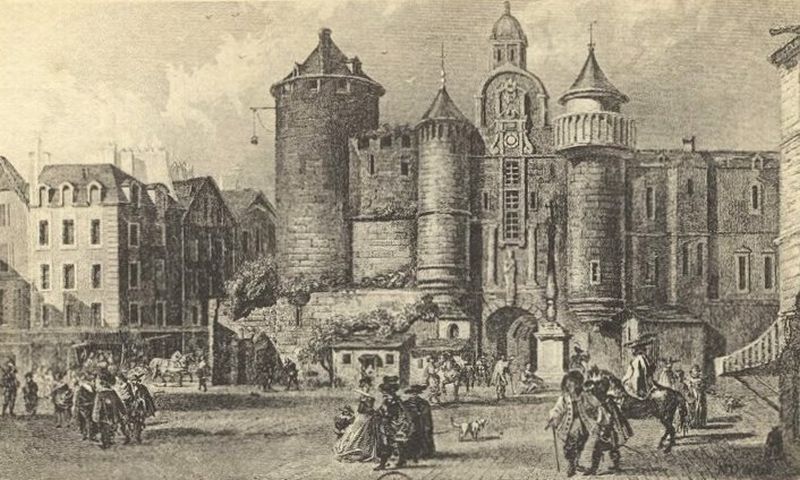
Hopefully this will go quickly, as I am not as fired up to write about this book as I was last week. On the other hand, I have been having a lot of problems with computer 'errors' and so on in the field where you write these posts which is hindering my effort so far this week.
I am going to skip over a bunch of passages regarding architectural details of the tower, the inscriptions left on the walls by numerous of its doomed inmates, including the Duke of Northumberland, many of which can still be seen today, and numerous poignant thoughts that might effect a sensitive tourist while wondering the grounds, particularly at certain times of the day. I found them to be not unenjoyable, however.
On Lady Jane, preparing her soul for her imminent execution: "...anxious as she was to obtain the queen's forgiveness, she could not purchase it at the price of her salvation...", i.e., by renouncing Anglicanism for Rome. Not that it does not make perfect sense that the Church of England is the surest way to the Christian Heaven while there is no greater abomination to the same than professing adherence to the teaching of Catholicism.

p. 208, a prisoner thrown into a pit is devoured by rats in an especially gruesome scene. When I was in New York City in April, my unfortunate wife had a large and muscular rat brush against her leg as it rushed past while sitting on a bench in Central Park. It was, I gather, a feeling equally gross and disturbing, and I think it put a damper on the trip for her.
"Ever brooding upon the atrocious action he was about to commit, he succeeded in persuading himself, by that pernicious process of reasoning by which religious enthusiasts so often delude themselves into the commission of crime, that it was not only justifiable, but meritorious." Refers to a character who attempted to assassinate Queen Mary.
While Ainsworth was, at least as far as the most serious people are concerned, a failed author, he seems not to have been a failed person. The persona and mind that he reveals in his book are, if not unique or great, at least seem capable and worthy of participating in and appreciating many of the better aspects of human existence. Most people cannot even get to that level.
"In swordsmanship, horsemanship, and all matters connected with the business of war, he was, as may be supposed, eminently skilful." Sir Thomas Wyat of Allingham Castle in Kent, the son of the poet. A man worthy of emulation, by all appearances.
p. 282 "But that which imparted the almost angelic character to her features, was their expression of perfect purity, unalloyed by any taint of earth. What with her devotional observances, and her intellectual employments, the mind had completely asserted its dominion over the body; and her seraphic looks and beauty almost realised the Catholic notion of a saint." I was momentarily carried away with emotion, and scribbled in the margin: "Oh Lady Jane! How we wanted you at SJC and shall never get your like!"
The manipulations of manifold insidious Catholics were skillfully written, enough to make me hate them too.
"I know Elizabeth too well to believe for a moment she could abandon her faith". Lady Jane is beginning to resemble my wife in the extent of her dedication to defying popery.
"'My project once carried, and Philip united to Mary,' he muttered to himself, 'we will speedily cudgel these stubborn English bull-dogs into obedience.'" Sinister Renard!

The importance of romance in political affairs during aristocratic eras is beneficial for artistic plotting and themes.
On a related note, I always love it in this class of novels when people step out from behind the arras after eavesdropping on a secret and vital conversation. This trick is used on several occasions in this book. It provides some kind of dopamine rush, replenishing our sense that we are engaging with the mainstream of old European literature and history, which we like, and I suspect the author had enough sense to know this. This is why it is for me not bad to read such books as this on occasion.
"Her courage never for one instant forsook her, and her spirit and resolution sustained the wavering minds of her adherents." Queen Mary. This guy does like to suck up to royalty.
The scene where the giants/rebels are throwing their enemies off bridges and parading around with heads on stakes was rather gruesome.
It is all fun because we are so knowing where religion is concerned. And I am in that knowing group, whether I really want to be or not.
I'll have to check out making a visit to Oxburgh Hall in Norfolk, which received an odd personal plug in the middle of the headlong rush to the climax ("...still in the possession of his lineal descendant, the present Sir Henry Bedingfield, and one of the noblest mansions in the county"). I wonder what homage Ainsworth owed Sir Henry.
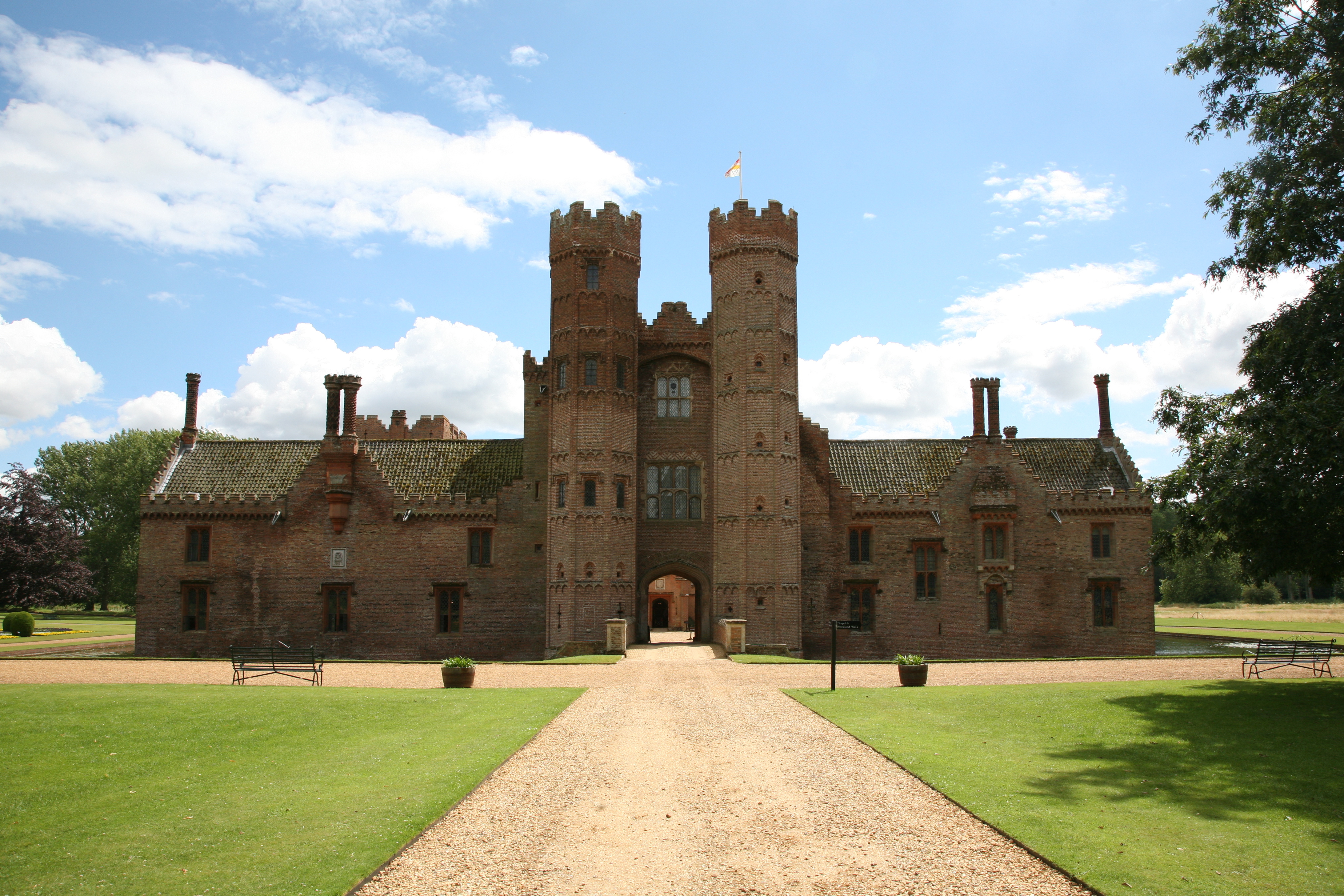
Oxburgh Hall is currently a National Trust affiliated property.
"Renard followed, and beheld the fugitive speeding across the nave of Saint John's Chapel, and without regarding Wolfytt, who was lying on the floor, bleeding profusely, he continued the pursuit." Renard himself had set Wolfytt on the fugitive. Needless to say, Renard is the best character in the book.
"Here, besides the ill-fated and illustrious lady whose history forms the subject of this chronicle, was confined the lovely and, perhaps guiltless, Anne Boleyn." I like the "perhaps".

"'Do not question the purposes of the Unquestionable, Angela,' replied Jane, severely." I have to admit I have never liked this literary custom of chastising people who express sorrow over your imminent death for ostensibly religious reasons, especially when the person you are addressing is obviously simple-minded. If you are surrounded by your supposed philosopher friends, whom you have put to many rigorous tests for the purpose of rooting out mush-headedness over the years, a la Socrates, maybe that is a different story.
Though a less than stellar novel, it is still one of those books where it was a little sad when the characters' stories began to be wrapped up. Every somewhat personable book finished past a certain age--around 33 in my case--takes on the character of a bunch of mini-deaths, especially when you know you will never read them again. Of course this relates to all manner of other things, cities, restaurants, activities, as one's experiences with them clearly begin to wind down or perhaps are a one time occasion. I did not feel this way about things when I was in my 20s. I knew when I graduated from a school or had to return home from overseas that a certain part of my life was coming to an end, but I expected that other things equally important, and in which I would be more important than I had been theretofore, still awaited me. Needless to say I do not feel this anymore.
I end by giving you an excerpt from the charming song that the executioner sings:
"Queen Catherine Howard gave me a fee,--
A chain of gold--to die easily:
And her costly present she did not rue,
For I touched her head, and away it flew!"
Even though I have been to London 3 times in my hilarious life, I have never visited the Tower, which has a fearsome reputation for being expensive, crowded, and woefully uncool to boot, but I think if I ever go back I will have to confess my colossal unimaginativeness to the world and go see it.