Showing posts with label washington dc. Show all posts

Tuesday, October 23, 2012

Survey of Cities I Will Likely Never Visit


Sometimes when I have exhausted, or been exhausted by, my usual rounds of internet reading and cannot think of any other search possibilities that are likely to turn up anything that will excite me, I cast about for blogs by old graduates of my alma mater, not because there will almost always be a sympathy there--in fact this is almost never the case--but because the likelihood of finding one is still much greater than it is around any other association. With me it is perhaps a sympathy rooted in the sadness of having entrusted one's impressionable mind and youthful enthusiasm and affections to the influence of a cult whose relation to the outside world, insofar as it can be positive, was however always well beyond the capacity of one's understanding. Still, a sympathy is a sympathy. Anyway, such sites as I am referring to in this roundabout way are naturally scarce. The most common type of St John's blogger seems to be an ecclesiastic of some kind whose deepest concerns are with arcana of biblical scholarship and religious doctrine such as would not have been out of place in the 17th century (minus the enthusiasm, expressed at least, for having their theological adversaries put to the torch). There are comparatively few post-Great Books lifestyle bloggers such as myself. One I have found that was pretty good, though the site appears to be defunct now, is the Carfree Family blog, which was about a pretty diehard St John's couple with children who lived in Santa Fe for seven years without a car. Recent circumstances seem to have forced them to reluctantly rejoin automobile culture, which transition also has had the effect of ending the blog by stripping it of its governing theme. I do not know these people, as they are a few years older than I am--3 or 4, it looks like--and they went to the Western campus. Their environmental consciousness and dedication to an anti-corporate diet and overall lifestyle are a lot more thorough and strident than I would probably be able to endure, even if my wife had turned out to be the kind of person who demands such things, which one never thinks about as a desperate 20 year-old; but still, if I strain my antennae for the identification of fellow members of the brotherhood, there is a recognition of some faint and highly subtle--highly--kind, whether of taste, or thought process, or comparative restraint/ underdevelopment of the ego, that suggests a relation.

The object of this extravagant introduction is a rather minor observation that this writer made about being forty-five and therefore considering himself to be at about the midpoint of his life. This struck me as remarkably optimistic. It is impossible for me to imagine myself living to anywhere near the age of 90, and even 80 seems a stretch. It is not that I am particularly unhealthy, but I am a large-framed person who probably has a larger than average heart (this was true even when I weighed 160 pounds) and men like that often drop at some point before their mid-70s, and I don't think I have ever seen a 90-year old with my body type. And even if I were to live until 90, I know of very few people who have been able to live either physically or mentally in a manner that I would find at all tolerable much past 75, and almost all of those people were 1) considerably wealthier than I am, and 2) very intelligent, and very educated, in both cases much more than I am. I am sure there are exceptions, but one cannot count on the likelihood of his being an exception in any situation where that is what will be required of him to attain it.

Obviously then, I consider myself to be well past the midpoint of my own life, and as such, reveling as I do in a state of endless anhedonia, I often muse on the rapidly-dwindling number of days that remain to me and the various that it is increasingly likely I will never do and never will have done. For example I have begun of late to think on all of the famous cities I will probably never see, as well as those I have seen but likely won't see again. I decided to make a post estimating my chances where various of these are concerned. I have not taken the time to develop or research a formula that would provide more statistically accurate figures, so if you are wondering how I came up with a probability of 30% for such and such a place, that is based on nothing but a comparison with other cities and my perception of the ease and expense of getting there and indulging in tourism there. Below the 50% threshold I suspect my numbers here are much higher than a professional statistician would determine them to me.

99%+--Boston

Unless I am killed in a car crash or murdered or drop dead of a heart attack within the next couple of weeks, I will probably make it to Boston again, as it is only an hour and a half away, and I even often have a practical excuse or even necessity to go there, though the advent of online shopping has certainly curtailed these occasions from what they once were too. Indeed my son just went there today with his school on a field trip. So assuming I live a normal life span, I should still have many trips to Boston left me. Perhaps one of my children will even go to college or live there at some point, which thought actually cheers me up a little bit, though perhaps this is a pipe dream in the new economic reality--between the relentless bad news on that front and the New York society papers I have started to become resigned to the idea that my children will likely flunk out of community college, never leave home or have a career and take crystal meth all the time; but even in the harshest foreseeable reality that probably won't be the case for at least a couple of them, right?

97%--New York 

I usually drive through several times a year, though of late I have had intervals of 3-4 years without making it out onto the streets. I always plan at least one annual multi-night trip, even if I don't make, and really I should go down 3 or 4 times a years. It is kind of a disgrace to live this close to one of the super cities of the planet and have been in it as little as I have over the years. I have often lamented that when I have gone there that I have never quite found, I wouldn't call it peace, but a sense of contentment at being in the moment. I have not connected with the great New York themes and experiences. Something has always thrown me off just a little. I have never felt that I had enough time, or enough money, or found a hotel, a neighborhood, a bar, a restaurant, a theater, or any kind of scene where I have been able to feel like I was fully involved or taking part in the life going on around me, which is a level I feel I have gotten to in some other relatively cosmopolitan places. All this said, the likelihood that I will be back at least one more time is overwhelming, though I am getting to the stage of life where taking two or three year intervals between visits begins to become a real risk.

92%--Washington, DC

The frequency of my visits here is dwindling with every decade, but I still make it down to the area every couple of years. It's near where I went to school, and I am familiar enough with it that it's more likely than with some place I've never been to that I will make a pointed effort to get there sometime in the next few years to show my older children the monuments before they are out of high school. The last couple of times I have been there, during which I spent a combined time of about four hours, I have not been able to escape without receiving expensive and to my mind dubious traffic citations in the $200-300 range. One was for parking on the street near the mall in a space which was marked "2 hour parking 8AM to 4PM". In most of the rest of the country, this would indicate that the parking hours were unlimited outside of those hours unless specified but in Washington apparently this can mean that there is no parking after 4pm. Since every car parked on the street at ten minutes past four had a ticket on it and the towing was commencing apace--I was lucky in this that I happened to have parked in the middle and they hadn't gotten to me yet--I am confident that the signs were deliberately deceptive, which is very low policy, and whoever's idea it was to implement it  ought to be ashamed of him or her self. On the second occasion I made the foolish decision to cut through town on 295 on my way to Florida to enliven the journey a little--about a 20 minute detour--and about a month afterwards received a notice that my car had been recorded traveling 68 miles per hour or some such speed by a camera that is doubtless expertly positioned to catch speeding violators. I find this to be a very dark and bad practice. Part of being a civilized society is to recognize that in certain matters having the ability to do certain things does not mean that we ought to do them, and I think it is very telling that it is in our capital cities, where, supposedly, the very smartest and most qualified to wield power of the entire nation are concentrated, that these types of oppressive technologies seem to be most enthusiastically utilized.

89%--Montreal

I haven't been now for three or four years. I have the impression that the whole family, including the children, need passports to drive into Canada now, though I haven't bothered to take the time to investigate the matter thoroughly. My older boys who fondly remember our former visits there ask from time to time if we are ever going to go back. We used to stay in the "family room" at the youth hostel there, which is a very nice one, with a excellent cafe (craft beer on tap!) and lounge/game room. I fear I am starting to get old for youth hostel bedding, but the atmosphere at this particular place is pretty cosmopolitan, which I like the children to be exposed to.

75%--London

Maybe I am being overly optimistic, but as it is still quite easy and relatively inexpensive to get to from where I live, and the odds are that if I ever go anywhere overseas again, this is likely to be the first or second stop.

73%--Chicago

No reason, other than that it is big, not terribly far away, and seems not implausible that if I live another 30 years I might at some point have a reason to go there.

72%--Paris

Maybe a few points high, considering that I have only managed to get there twice, and one of those occasions only being for a day and a half, in 42 years, but like New York, I have only had a handful of in-the-moment Paris epiphany type moments, though the source of my dissatisfaction with these, which all came on my second visit, is that my time there was necessarily so brief and harried. I was I think starting to tap into some real Paris type thought and sensory reception motifs, but I could never linger over them as I would have liked. And my poor first visit when I was twenty was just sad (that is to say I was even a sadder excuse for a person at the time than I am now, and Paris dealt with me as such).

66%--Prague

Also probably too high, but it still does not seem real to me that I would never go back again.

60%--Rome

I'm pretty optimistic about making it back to Rome, as it is a (probably deceptively) agreeable and easy place to visit. Because of the age and layout of the fairly large tourist area, and the apparent lack of a charmless and overwhelming area dedicated to mega-business in the same, the city seems smaller and its pleasures more accessible than they probably are. Plus I threw a coin in the Fountain when I was there before on a suitably romantic and beautifully unhurried evening, so I have to make it back, don't I?

55%--Venice/Florence

If I can make it to Rome, there is no reason I can't make it back to these places again. I am rating my chances of returning to cities I have already been to higher because I am already familiar with the logistics of getting to and moving about in them, so it is easy to imagine getting back to them. I have not been to Spain, for example, so all the warnings about language barriers and gypsy thieves and the need to be assertive with waiters and hoteliers that the guidebooks are full of tend to be, not daunting to me, but a cause for mild consternation; however the same books give similar warnings with regard to Italy and France and other countries I have been to and I have generally found myself able to cope with such situations as have arisen; and if I can cope with something, you can be assured it must not be any very serious matter to begin with.

43%--New Orleans

I don't know why. I feel like I keep getting closer to it, and someday I am just going to take the final plunge and go there. It doesn't sound like a place where I would have very much fun, as I am generally an inhibited person who is uncomfortable around gregarious 'character'-type people--in other words, I am unfriendly--and I don't know how much I would be able to partake in and appreciate the food and other aspects of sensual culture, which seems to be essential to the experience. But I think it is possible I could enjoy myself if  my time there progressed in a certain course amenable to my being able to relax some of my learned habits of despair and hopelessness and the like in the face of other people engaging enjoyably in life.

38%--San Francisco/Los Angeles

I find it hard to believe I will never go to California, but the years keep passing, and eventually they will run out. It is plausible one of my children could live there at some point, which could provide the impetus for me to go out there; at the same time if they are successful, or trying to be, they might be adamant about cutting off all contact with me, I might be too low to move in such circles as they will have ascended to, and so forth. I understand how such things work, and that it might be necessary. I won't complain endlessly like my mother's old neighbors who slaved to put their daughter through Princeton and which daughter now won't call or allow them to visit her in Manhattan or wherever she lives. 

32%--Las Vegas

I would still love to go and partake in the nihilistic partying even at my decrepit age, though I would probably not be able to find my scene. If I do ever go there, it will likely be a very short stop while passing through to get to somewhere else. It is almost assured that nothing will take place that will have to stay there.


30%--Athens/Edinburgh/Vienna/Madrid

I would put the chance of my going to at least one of these places at over 50%. These strike me as the easiest places to get to among the cities I have never been to. Maybe the figure for Athens is overly optimistic.

28%--Naples/Berlin

Similar to the group just above but a notch below in burning desire to get there (at present; desires change frequently).

27%--Munich/Amsterdam

The third tier of this general group.

22%--Budapest/Krakow

Of the places I have been, these strike me as the least likely I will ever return to, though I hope that isn't the case.

21%--Seattle/Vancouver

Again I am ranking high because of the eventual possibility of child relocation. I'd like to see these places, but it is much less clear to me what there is for adults to do as tourists in American cities than in Europe, where the path to an enjoyable day or evening with some sense of flow to it is laid out somewhat more obviously.

18%--Copenhagen

I would like to go here, but as it is very expensive, not essential, and a little out of the way, it is bumped lower down than some of the other cities.

14%--Lisbon/Barcelona

Lisbon suffers from a similar problem to Copenhagen. Barcelona is probably the great European tourist city I am least keen on visiting. I think this is because it is promoted as being a vibrant modern kind of place, with hip attractions and street life and all the kinds of things that are directly opposed to the kind of guy I am. London also tries to do this, but I know what and where all the old stuff is there, so I am usually not unduly affected by it. But especially in Spain I would be there to take consolation in the picturesque relics of a dead world. I may secretly wish to be capable of enjoying and interacting constructively with cutting edge pan-European architecture and international class fusion cuisine; but the truth is, I probably am not.

11%--Moscow/St Petersburg

Not looking good now for me to ever get to Russia.

10%--Istanbul/Jerusalem

My problem at the moment is not so much money (though I don't have enough certainly to drag all of my children around to the great cities of the world for months and years on end), as time. I do not have any in the present, and I am running out of it in the future. That is the only reason at present for my not having been to these cities.

8%--Cairo 

Number too high, but I want to stretch out the list. Tourism to Egypt has apparently withered to almost nothing since the recent revolution and continued troubles there. The place has been a mecca for visiting European types since Herodotus, so it is hard to imagine it will continue as a rarely-visited destination in the future. The demographic, political and economic situation there presently is so explosive however that it very well may for a while.

7%--Honolulu

I can't imagine I will ever actually get here--tiny tropical islands thousands of miles distant from any continent rank among the locales that hold the least general appeal to me. However, it is part of our country, I'm not opposed to going there, and perhaps someday the opportunity will present itself.

6%--Mexico City/Melbourne/Sydney/Buenos Aires

Of course I would like to go to all these places, though I don't know much about them, other than that in Buenos Aires they eat lots of steak and it is supposed to be like a cheaper mini-Paris. Psychologically they are, at the moment, very remote. My world, sadly, has become very constricted, and I am not sure how to expand it again.

5%--Rio de Janiero/Tokyo/Kyoto/Beijing/Mumbai

Same as the last group, only even less psychologically accessible.

4.5%--Shanghai/Calcutta

In my perception, the backup cities of China and India.

4%--Hong Kong/Delhi

And here the number 3s.

3%--Seoul/Marrakesh/Teheran

There just isn't enough time, unless I can rapidly figure out how to triple my income while working 3 fewer months a year. If I were to spend just three nights in every city above these in the list, that would take up 147 days. How many days do I have remaining to me, while in a reasonable state of health, for traveling of any kind? 400 maximum? The real probabilities here for everything below Las Vegas are about a tenth of what I've listed, i.e. the actual number for Teheran is more like 0.3%.

2%--Dubai/Macau/Bangkok/Perth/Singapore/Cape Town

1%--Sao Paolo/Lima/Osaka/Tianjin

Less than 1%--Lagos /Jakarta/ Manila/ Karachi/ Dhaka/ Kuala Lampur

Southeast Asia is the area of the world that I have always had the least interest in visiting. I know it is supposed to be spectacular and it is likely that if I went there, as long as nothing terrible happened to me, I would probably think it was great. My romantic imagination is not captivated by it in the same way it is by other places. The southeast Asian jungle and vegetation, I must admit, strike me as the ugliest and most unpleasant earthly landscape there is, and the climate is highly unappealing as well. I don't even want to think about what the insects must be like (in New England our modest and harmless bugs are all going away right about now and we won't see them again until April or May, which is fine with me). But none of this is to say that I would not go there, or that I would be miserable, or at least no more miserable than I am generally.


Saturday, August 07, 2010

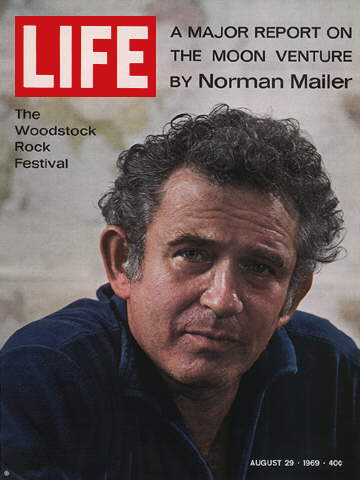
Armies of the Night 4

p.127--"Mailer had then that superimposition of vision which makes descriptions of combat so contradictory when one compares eyewitness reports." Remember the hubbub during the last election about Hilary Clinton's false memory of being fired on by snipers during a trip to Bosnia?

p.138 A Fran Tarkenton reference--we always like those. The arresting marshal is described, when his rage has subsuded, as having "an intelligent, clean-featured American face, not...unlike the pleasant modest appearance of Mr. Fran Tarkenton, quarterback for the New York Giants." I only remember him at the tail end of his career with the Vikings, '76, '77 when he broke his leg late in the season and everybody figured he was finished, and the last year in '78, when the expanded schedule and a number of rule changes seemed to my young eyes to dramatically alter the league almost overnight. The Vikings of that time were very representative of the old league that was being superseded, as they had lots of really old players, an old school but conscipuously intelligent-seeming coach (Bud Grant), they played in a decrepit stadium where it was snowing and below 10 degrees for about half the season, and they were very good but always got upended by some speedier or flashier or just plain better team in the end. Naturally I liked them a great deal.

p. 139--while being transported to jail. This is a good description of how I feel (on the increasingly rare occasions) when I wake up unprompted in an immediate stillness: "...seeing objects now with the kind of filtered vision which sometimes comes to a man on drugs in the bleak hour when he is coming down--a glimpse is had of everyday things in their negative aspect, the truth of the object...stripped of all love, sentiment, or libido."

Mailer reports, after triumphing in an eye-staring contest with a Nazi, that he regularly got into such confrontations "and rarely lost them". Like much else in this writer, the line between silliness and vitality is probably crossed for the worst here. Not that Hemingway or someone else would not have written about this type of encounter, but they would have been able to load its occurrence and outcome with more literary significance than seems worth the while here.


"As the power of communication grew larger, so the responsibility to educate a nation lapped at the feet...a new responsibility...one had become a writer after all to find a warm place where one was safe--responsibility was for the pompous...writers were born to discover wine." The ability to genuinely educate a nation as a writer is a rare ability, and probably one that cannot be consciously cultivated any more than writing about wine or suburban angst in ways that will be meaningful and uplifting to a good cross-section of intelligent people are, to name two other examples of things many people would like to be able to do well, but few succeed in accomplishing. Good books are never, I don't think, the result of someone consciously fulfilling a perceived responsibility to educate or repudiate the mass public. They tend, if anything, to be an expression of their times' most ascendant spirits and characteristics in a form that gives them a relation to the beautiful, the eternal, the true that will crystalize the questions under consideration for a contemporary, and that a reader in a later age will be able to recognize as meaningful at whatever point in history he takes it up. If the masses don't read/relate to the world through reading in this way, I am not sure that beyond introducing the subjects in a reasonable degree during formal schooling that there is any greater responsibility to make them do so.

I have already said something of my own memories of Northern Virginia in this general period. It was very slow outside of Monday to Friday working hours, very quiet, little traffic. Government employees, much less numerous in those days then they are now, had a well-deserved reputation for being boring. Even in the 70s the D.C. area had not yet become a place where many young people came looking to do anything besides work--people in search of an exciting lifestyle were heading west in those days, especially to California and Colorado (New York was generally considered a nightmare by bourgeois people when I was a child, and I didn't know anybody who moved there in that period, though now lots of people who were young and cool and survived it consider 70s New York to have been a glorious time. But any time you are young and cool and you actually find other people who you think are young and cool to share your youth and coolness with it is going to seem glorious). My parents had friends who had an apartment somewhere very near in, Alexandria or Arlington maybe, and my parents being quite young none of these people they knew ever had any children and were still into smoking pot and so on, all of which however is quite boring for a four or five year old (there were never any toys at these places and apparently it didn't occur to my parents to bring any of ours with them) so I used to entertain myself by staring out the window of the high apartment building and counting the cars that passed through the traffic light at the intersection below. On a Saturday or Sunday afternoon you could easily count every car that passed through. Maybe it's the same now, but I get a different feeling when I am back there; it was always a depressing and psychically unhealthy place but now there is a lot of bustle and aggression and encouragement of stress whereas before it was just dead and devoid of any sense of community or culture. It was in contrast with today shockingly uncosmopolitan, certainly beneath the highest levels of the governing classes. It is actually much preferable now to what it was before, questions of whether the incredible increase in the size of the government over the last 40 years is desirable or not aside.

It doesn't require much genius these days to lay out a list of reasons why the Vietnam war was bad, as it doubtless won't require much genius 40 years from now to explain why fighting for 9+ years in Iraq and Afghanistan was a poor idea, but at the time it does take a strong amount of moral conviction to even propose that the war should not be carried on, and have anyone take it seriously. I won't lay out Mailer's case against the Vietnam conflict but I thought many of his points very good, fairly and clearly explained.

p. 186--Karl Marx's mind is described as "perhaps the greatest single tool for cerebration Western man had ever produced". Karl Marx was a legitimately interesting writer, and I have no doubt he was a remarkable man who would have made his mark somewhere under almost any circumstances. I don't have a good sense however of where he would exactly rank in the annals of the very greatest thinkers of all time.


Mailer didn't want to plead Nolo Contendere to the charges on which he had been arrested becuase it seemed squishy and defeated the purpose of the gesture but the "Legal Defense Committee" talked him out of it easily enough as he didn't feel like spending more time in jail. The lawyers always want you to plead Nolo Contendere. The right wing moralists are always exhorting people to show some magnanimity and accept full responsibility for their actions, but unfortunately the public has figured out that that just gets you slammed in court, and being squirrelly is the prudent alternative. This actually made me feel better, since Great Men and Women of the past such as Socrates, Jesus, Joan of Arc, Ben Franklin, Samuel Johnson, etc, (as well as many wicked ones such as numerous of the Nazis at the Nuremberg trials), even if, as usually happened, their case went against them, were always able to run mental circles around the professional legal class whenever they had to deal with them and expose them as having the weaker minds. But no layman in modern times that I have found has proven able to swat them down in any substantial manner.
There was a point about the prison wardens re-enacting their poor southern childhoods in their jobs that I thought was interesting. I like psychological analysis as a tool of understanding. There is art and real life in its best insights, which unfortunately most working practitioners don't seem to have the right mental instincts to recognize. I certainly seem to be perpetually re-enacting various aspects of my own childhood, namely my relations with my father and school, in both of which areas my standing was so inferior that I have never proven able to move beyond them into the life of a highly functioning and serious adult.

p 202--in jail: "They spent time idly, pitching pennies to a line in the composition floor." They take all your money from you now.

Mailer really has the habit of describing people according to what their role/type would be in television or pro football. He is more into that than comparable (i.e. other famous literary-approved) writers of his time would be. Thomas Pynchon does things like that, but it always comes across as joking, as pointing out how absurd someone or some aspect of life is.


p. 216 "He wrote of necessity at a rate faster than he had ever written before, as if the accelerating history of the country forbade deliberation." I've tried this in the past (writing quickly and without deliberation) but the results were not good. It must be a wonderful sensation to write thus and have something reasonably pleasurable and intelligent as the result.

That was the end of the "History as a Novel" section, which was the better part of the book. Now we are in the part taking the opposite tack.

p. 233 "Without one such fierce element of the fantastic, middle class life is insupportable. The same may be said of the old Left Wing life." This may be true.

p. 227 "...by no measure can anyone claim that the taxpayer's money is being wasted for extravagant interior decoration in the Pentagon."

Wednesday, July 21, 2010

Armies of the Night 3

"...his New York fever, that ferocious inflammation which New York always seemed to encourage: envy, greed, claustrophobia, excitement, bourbon, broads, action, ego, jousts, cruelty and too-rich food in expensive hateful restaurants." When I was on the 8th grade basketball team, I never got into games except at garbage time--even at that I may have gotten into 4 of the 10 games we played. Our team was involved in one very intense game, on the road, against a school from a relatively poor town which famously hated all the other schools in the league and took sports very seriously. The crowd was raucous and hostile, and there were several near fights due to rough play on the court. In spite of all this our team pulled away in the last few minutes and won the game by 10 or 12 points because we were considerably better than they were. The next day several of my more important teammates and various other people, including cheerleaders, were discussing the details of the game with one of our more jockish male teachers, and being always on the alert for a social in I placed myself near the edge of this discussion and, though I had not played a minute in the game, hoped that this fact would somehow be overlooked by the company and I would somehow appear as one of the actors in this drama that was being so eagerly rehashed. As this did not happen I said something, doubtless inane, at which of all people the teacher cut right to the chase and said, rather harshly, though with what I believe was intended as jesting laughter, "(Surrender), you didn't want to be anywhere near that court." This was not true. Now it is true that I would likely have failed miserably and looked ridiculous had I been inserted into the game, but to say that I did not want to be in the game was denying me any kind of ambition or interest in life at all. Yet people say such things all the time to show you that they think you are nothing. What then do I want, if not life? If not to be just like you?

The leaders among the radical protestors of the 60s were somewhat different from the way one thinks of that type of person today. many of the men were brash, cool, confident with chicks, etc. They did talk about the government as if were a faceless, soulless, practically all-powerful entity to be fearful of, but this attitude had not been internalized the way it is today, where people seem to be much more resigned to their own futility and afraid of the consequences of really angering the ruling powers than they were in the 60s. The motifs of things like mass-produced white bread being the embodiment of evil, the "infiltrated enemy who had a grip on them everywhere" were already present, though Mailer seemed to find amusement and possibility in this attitude.

"Lowell made a face. He had an expression which only a fellow writer could comprehend..." It goes without saying that one wonders at what point a person becomes considered a fellow writers. "One could not communicate the horror to anyone who did not write well." Newspaper writers would seem not to qualify, as they are being castigated here for building an ever larger wall of distortion between real writers and the uneducated public, and cultivating terrible habits in the latter. Something of the same effect seems to take place in courts of law, where the unitiated public is strongly dissuaded from trying to actively participate in the refined proceedings, and is not infrequently punished for such breaches of etiquette as not hiring a proper attorney even for minor cases such as traffic court. It is the inattention to the proper subtleties that always reveals the untrained mental type, and to the expert practitioner, this is where all the substance is.

"The thousand days of John Kennedy had done much to change the style of America; nowhere perhaps more than to the sartorial sense of the liberal and Left Wing intellectuals now gathering for breakfast--some drabness had quit them since the fifties...a hint of elegance." I think it is agreed that this era, if it ever in fact existed (though I do think it did, from about 1961-'67, right when this book was written), was extremely short lived. "The whores were out: not a common sight in Washington. The Capitol was usually about as lively at 1 a.m. as the center of Cincinnati late at night..." I have memories of the Washington area just a few years after this time (the mid to late 70s), and it was just starting at that time to become less sleepy and resemble the metropolis it has since become in terms of energy, youth, wealth, and so on. At that time even coming from Philadelphia it seemed a very sedate and minor legaue place--much of the 'talent' that came to work for (or against) the government, which was far fewer people at that time than at present, remained in the area only for a few years and then when the administration changed or whatever would return to where they came from. Every time I go down there nowadays I am astounded at how much huger, richer, more crowded, more attractive to cosmopolites it has become (as well as how huge the government is). Philadelphia by comparision, or at least the parts of it I am most familiar with, though it has of course changed some and had a decent influx both of hipsters and immigrants, the latter mainly Korean and Indian (the Hispanic population in Philadelphia remains very small), is not in the same degree unrecognizable from what it was 30 years ago. Another incredible thing when one regards the state of things today is that in northern Virginia many of the schools (and presumably other public institutions) only desegregated in 1968, one of the last places in the country where this happened, and after the events of this book took place. I know this was the case in Manassas, because one of my uncles lived there for a time and married a woman from there, and also in Alexandria (Remember the Titans!), which my impression is that it is now one of the tonier and more progressive suburbs of the capitol.

"A generation of the American young had come along different from five previous generations of the middle class. The new generation believed in technology more than any before it, but the generation also believed in LSD, in witches, in tribal knowledge, in orgy, and revolution." The scary thing is, most of these people are still very much alive and many are continuing to wreak endless havoc as we tap.

"...the walking American lobotomy: the corporation office worker and his high school son." I think they're talking about me again...

I like his Cuban revolutionary theory, which is that you create the revolution first and then worry about what it is actually about, i.e. "...the revolution existed in the nerves and cells of the people who created it and lived with it, rather than in the sanctity of the original idea." This is actually common sense. Real revolutions take on lives of their own pretty quickly, and most of them, especially during the last 100 years, have reputations for turning out very badly, but this latter is not inevitable, while from time to time revolutions of a kind probably are, which is why it is always wise to try to cultivate a certain degree of civilization and humanity in the populace so as to limit the catastrophe when these convulsions occur.


Several film references were made with regard to the hippies' clothes. Have Gun, Will Travel? (This apparently was a TV show). Claude Rains in Invisible Man? Mailer was, again, quite taken by the stridency of the young people, and compared them to Crusaders, which quality they did seem to have something of, and which perhaps in the absence of material and sensual diversions and pursuits might have manifested itself even more completely.

"Mediocrities flock to any movement which will indulge their self-pity and their self-righteousness, for without a Movement the mediocrity is on the slide into terminal melancholia." There is some truth in this. I have actually been looking for such a movement for some time but unfortunately (and predictably) all the movements which might fit this description for me tend to be full of losers and lack attractive leadership. This means on the other hand that there may be good opportunities for a person or persons of real ability to do what the America intelligentsia and power elite have often expressed fears of, rouse up the demoralized and humiliated masses into a powerful following that will stifle and possibly tear apart the culture and the nation.

On his having gone for a stroll and missed Martin Luther King's "I have a dream" speech in 1963: " Mailer--trusting no one else in these matters, certainly not the columnists and the commentators--would never know whether the Reverend King had given a great speech that day, or revealed an inch of his hambone." I guess I thought the hambone bit was too funny in the moment.

Dr Spock was another celebrity protestor at the march. Mailer however "had an animus against" him, for "three of Mailer's...wives had used Spock's book on infant and baby care as their bible."

Mailer's admission of modeling his attitude at various moments after Marlon Brando in The Wild One is almost too obvious (this movie, which I have never seen, looks tremendous by the way).


I wonder if the famous episode of Ed Sanders, poet, vocalist of the Fugs and publisher of the unfortunately now-defunct Fuck You magazine, exorcising the Pentagon, remains celebrated because of this book. I had never heard of this guy. Maybe he stinks but he's a real make it happen New York kind of guy and he produces a lot of art, including, recently, 2,000 pages worth of verse constituting a history of the United States during the 20th century (I wonder if a lot of people have read that). These are exactly the kind of people I needed to know about as a young man, and for whatever reason did not. I listened to some his groups' songs; it isn't really my kind of stuff, but apparently it impressed some people worth impressing.

All the mystical gods/spirits/paganism 60s stuff, especially the various elements of it which involved naked young girls dancing and otherwise enjoying nature, does, I have to admit, seem like it was probably great fun at the time. It's no wonder that a lot of intelligent and now completely boring people have fond memories of it.

p.126--a reference to Matthew Brady's Civil War photos, which were apparently very popular at this time. I can definitely remember my father being into these, having several books on the subject, and often referring to them in his casual conversations about history or whatever with his friends as if he assumed they would be something familiar to everyone. Then suddenly Matthew Brady just totally dropped out of the public consciousness. I don't think I had heard or thought of his name in the last 25 years or so.

Wednesday, June 30, 2010

Armies of the Night (2)

Yes, my production has (once again) slowed considerably of late. Obviously I should really let the site go, but the compulsion to keep the charade going, to myself if no one else, that I lead some kind of 'life of the mind', while weaker than it has been at almost an point in the last twenty-five years, is not quite extinguished wholly yet. With my new found free time I could get to know my neighbors, mentor youth (in what exactly?), volunteer in community beautification efforts and whatever else it is ordinary dull-witted but good and honest citizens are supposed to do. Eventually I assume this ongoing identity crisis will have to resolve itself and I will become fully conscious at long last of who I actually am, what I can do, and what I really want to do, and have always wanted to do. Actually I assume nothing of the sort, and expect to go on as I am now forever, such being the postmodern condition. But no one wants to hear that. "...(Mailer) had learned from years of speaking in public that an entertainer's first duty was to deliver himself to the stage with the maximum of energy, high focus, and wit--a good heavy dinner on half a pint of bourbon was likely to produce torpor, undue search for the functional phrase..." Perhaps this was my problem. I always ate before parties.

"He was shrewd enough to know that (Robert) Lowell, like many another aristocrat before him, respected abrupt departures." We all can't be aristocrats, but it would have been nice to have been schooled in (or picked up on) a few moderately attractive or interest-piquing habits at some point in one's youth. What a disaster social life is for the majority of men.

Mailer writes about sex a lot, of course. Evidently what, or the way, he writes about it, though superficially not uninteresting, kills any enthusiasm I have for continuing on the subject myself. "...sex to Mailer's idea of it was better off dirty, damned, even slavish! than clean, and without guilt...Without guilt, sex was meaningless...Onanism and homosexuality were not, to Mailer, light vices--to him it sometimes seemed that much of life and most of society were designed precisely to drive men deep into onanism and homosexuality...Just as professional football players love sex because it is so close to football..."

There was an article making the rounds of the blogosphere last week by Camille Paglia lamenting the sexlessness of contemporary bourgeois life and culture. While I have previously identified Camille Paglia as one of that venerable school of writers who almost touchingly believes that the time and place where she herself happened to be between ages 18 and 25 or so was the last vital age of culture, learning, eros, etc, and while I thought most of her specific points in the article were rather silly, the main premise obviously is true. I have no memory of the 60s, but I do have a memory of the late 70s and 80s, and the comparison of the active virility and confidence, sexual and otherwise, of the run of 35-45 year old men of that era--who at the time were considered themselves to be rather weak compared to their own fathers and grandfathers--to those of my generation is to further emphasize just how pitiful and irrelevant most of the men my age have become. It is never entirely safe to use one's own relatives as the example, but my father was a high school teacher, as were many of his friends at the time, and while I won't say it was completely open season on female students and babysitters, to say nothing of adult women, for these guys, it was definitely not closed season, such as it is now, by any stretch of the imagination. One of my father's friends whose house we used to go to had a young female neighbor, probably 17-19 years old, who was something of an exhibitionist and when she would start prancing around in her undergarments or other scanty clothing with the shades open all the men would have to make their way over the window to have a look, regardless of their wives and children being present or not, and this was considered, as far as I could tell, natural and not unreasonable behavior. Apparently a good part of the work day for white collar men in this era was spent flirting with and propositioning the various comely females in the office, which to be honest would not be an unpleasant change from time to time from compulsively surfing the internet and maintaining a constant facade of neutered (and not only sexually) amiability. So people my age are pouring themselves into raising their children in my opinion because public life has become so sterile and boring that their only hope to somehow break through to a revivified mental and aesthetic environment is through their children's developing more regularly human intellects and personalities. But I have lost my train. I had the whole section on how men had to project authority or competence, fullness in some sense, and how this generation at 40 has been completely revealed to have very little of this in them. However I will leave that out. My ultimate point, which I noted in my earlier writings on the "White Negro" essay, is the fairly obvious observation that any society which embraced Norman Mailer's approach to sexuality in any sizable degree would be neither socially nor culturally stable enough to support itself. That does not mean that everybody ought to live as if he were a eunuch however.

Now we're up to page 34, and Mailer is contrasting the vigorous and manly section of society--soldiers, cops, football players, mill workers, politicans--which he assumes to support the conflict and Vietnam, with the "Freud-ridden embers of Marxism...the urban middle class with their...secret slavish love for the oncoming hegemony of the computer and the suburb..." Hey, he's talking about my people now. Sure, it looks like it should be a total mismatch, and I suppose ultimately it always is, but I certainly grew up drinking the Kool-Aid that the militant suburban left had, after nearly a decade of ever-waning struggle, brought the military-industrial complex to its figurative knees and put an end to American involvement in the Vietnam War. Indeed, I think that is still the official story. Yes we can.

On page 35 we're back to talking about "real orgies... with murder in the air", the MC's ignorance of which, in Mailer's opinion, at the rally the night before the demonstration, necessitates him taking over that position in a putsch at the conclusion of the sexless man's speech. There is a lot of funny material in this, I have to admit. Again, I think for my generation, because the time of our childhood and adolescence was one of rather extreme and uncontrolled public violence compared to most times in history, including today, that this fascination with introducing it into the routine of life which seems to have afflicted a lot of intelligent people in the late 1960s is one that we have largely gotten over. My readings into the much celebrated edgy sex of the 1965-1980 period as against the comparatively maligned 1950-65 era haven't convinced me that apart from increased availability, the former time was qualitatively much better, though the early baby boomers especially, one must admit, have collectively an envious ability to believe in the excitement and superiority of their own experiences, educations, abilities, etc, to other people and times. Mailer, as I will comment on further in another place, unlike most of his own generation was very impressed with the irreverence and edginess of the young hippies in this book by the way, which no one seems to have seen coming after the bland, well-behaved and at the time frequently maligned kids of the 50s.

Quotes relating to literature: "'The one mind a novelist cannot enter is the mind of a novelist superior to himself' said once to Mailer by Jean Malaquais." "'...if novelists come from the middle class, poets tend to derive from the bottom and the top.'" I think I knew or believed that already. Mailer was writing, or as it were speaking, at length about the poet Robert Lowell, who also took part in the rally, and whose patrician background and manners, combined with his talent, seemed to have an effect of awe on the normally unfazeable Mailer. He noted that a few years earlier Lowell had refused an invitation from President Johnson to attend a White House party for artists and intellectuals, the "only invited artist of first rank who had refused. Saul Bellow, for example, had attended the garden party" (nice dig at a rival by the way). Mailer admitted that he probably would not have been able to refuse such an invitation himself, though he "assured the audience he would not probably have ever had the opportunity" which provoked "hints of merriment in the crowd". The parts where Mailer admits his social and professional weaknesses, jealousies and so on have the unfortunate effect of being rather endearing after all the bombast. You think maybe he's not such a bad guy after all, that he's maybe on your side even, whatever that even is. There is something in this writing though which I cannot put my finger on which is definitely repulsive though, even though this particular book I think is quite good, and very entertaining. Maybe I will figure out what it is before I finish this.


More on Lowell: "One did not achieve the languid grandeurs of that slouch in one generation--the grandsons of the first sons had best go through the best troughs in the best eating clubs at Harvard before anyone in the family could try for such an elegant note." Mailer went to Harvard too by the way, though you wouldn't know it from this passage; obviously it was not the same Harvard that he is talking about here. I saw one of Mailer's son's on TV (C-Span) once. He appeared to be a few years younger than I am--Mailer has many children spanning several decades--and although the son had written a book of some kind, he did not have anything like the social graces or elegant expressive speech such as one would imagine a person who was the son of a famous literary author and (one would assume) had gone to expensive schools and had considerable exposure to serious intellectual company from an early age would have. If anything, he seemed to be a bit of a lout.

Indeed, Mailer loved obscenity. He claims to have come to love regular Americans while in the army in World War II, and it was primarily their obscenity that he credits with securing his affection to the type. "...the American corporation executive, who was after all the foremost representative of Man in the world today, was perfectly capable of burning unseen women and children in the Vietnamese jungles, yet felt a large displeasure...and disapproval at the generous use of obscenity in literature and in public." I suspect he believed obscenity was the primary means by which the language of the time sought and expressed truth, conventional speech having been so manipulated by corporate and political interests through mass media, etc, for its eternal horrid ends. Now of course conventional obscenity been co-opted by the authorities and had whatever vigor it once had tamed out of it, though we still have forbidden or inappropriate speech. Howard Stern, to name one obvious example, is completely uninteresting when he is being merely obscene, but will occasionally say something inappropriate that is slightly amusing.

Film reference!--"ever since seeing All the King's Men years ago he had wanted to come on in public as a Southern demagogue." That was supposed to be good (the 1949 version), wasn't it? I've never seen it. How about a link to the trailer!

Mailer stayed at the Hay-Adams hotel in Washington. Here is their current website. Unfortunately they are at the moment closed until October. Writers tend to travel in more style than I had been wont to believe.

"One may wonder if the Adams in the name of this hotel bore any relation to Henry; we need not be concerned with Hay who was a memorable and accomplished gentleman from the nineteenth century (then Secretary of State to McKinley and Roosevelt) other than to say that the hotel looked like its name, and was indeed the staunchest advocate of that happy if heavy style in Washington architecture which spoke of a time when men and events were solid, comprehensible, often obedient to a code of values, and resolutely nonelectronic."

The hotel's web page announces that the high temperature in Washington today was 101 degrees. Yikes. I am heading in that direction on Wednesday.

I can't believe how many hours over a period of about a week it took me to write this post.

Wednesday, September 30, 2009

Mid-Atlantic Trip

I drove to Washington/Annapolis--and back--last weekend (now 2 weekends ago) for my fifteen year school reunion. I enjoyed it maybe more than I expected to--I had been open to the possibility of being depressed afterwards, though a depression interladen with meaningful assocations at least, which is better than the purely anomistic, low-intensity one with which I am ordinarily afflicted. There was not a big turnout for the reunion--most people my age are very busy living their proper lives even they want to come--but for all that the collection of people seemed to be good. At this point anyone who is still coming to school has an affection for it that I suppose is largely incurable, whatever form their subsequent lives have taken, which contributes to a pleasant, even if somewhat gentle atmosphere, as was the case here. It poured rain all afternoon and night on Saturday, which contributed to the mood of nostalgic melancholy I was feeling most of the time.

But I am not going to dwell on the reunion, which was certainly not without some real problems (running out of or shutting off the beer at 11:30 at the official Friday night function--unacceptable!). I also have a theory of people who go to reunions which does not cast them in a flattering light, though I find I am unable to adopt my own principals in these matters. My trip had other aspects to it that I want to write on.

On the long drive down the East Coast, I got a good sampling of the major sports talk radio stations in each area, these being WEEI in Boston, WFAN in New York, and WIP in Philadelphia. There were stations in Washington and Baltimore too, but they were atrocious. Most callers and hosts on talk radio are obnoxious, unfunny, vapid in the most unimaginative way, and devoid of any kind of distinguishing personality to some degree, but in the Baltimore/Washington corridor all of these qualities were seemingly combined in every person who made it onto the air. I couldn't endure them for five minutes. Washington is a weird area in that with the exception of the black population there aren't many people with deep generational roots there, and the social competition is brutal with no sort of alternative identity or community for people to fall back on so that many people who grow up or live there have even more than ordinarily crimped and damaged souls, as well no affection for the area whatsoever in a way that isn't common in New York or even the oft-maligned Philadelphia. But Baltimore used, anyway, to have a more colorful blue-collar fan base for sports, which is the lifeblood of these kinds of shows, back in the 1950s and 60s, but they have either left or suburbanization has totally lobotomized them. But here are a few observations on the different views of the current sports scene in the other cities:

Phillies: People in Philadelphia, doubtless impressed by the unexpected ease with which the Phillies cruised to the championship last year, are very bullish on the team's chances of repeating. This would be astounding to anyone who regularly listened to sportstalk in Boston, where you might have the impression that no such team as the Phillies even exists. Indeed, the entire National League scarcely exists in WEEI-land, unless former Red Sox players, usually pitchers who failed in Boston but become miraculously above average upon moving to the weaker league, are being referenced. The Phillies are talked about a little more in New York, though mainly in reference to their being the current main competitors of the Mets. Otherwise they are not highly interesting to people their either.

A-Rod: One of my favorite summer rituals in recent years is tuning into WFAN for a half hour on my way down to Philadelphia to get a good helping of vicious A-Rod bashing from the New York fans. This year however they have backed off from this--Yankee fans in general seem to be taking a cautious, wait-and-see attitude where this current team is concerned. In Boston meanwhile the hosts and fans alike have been talking for weeks about the chills A-Rod must be getting at seeing the calendar march inexorably towards October 1. They fully expect him to choke.

Patriots: The Patriots receive a lot of attention/fascination, both in New York, where of course they have been pounding on the Jets for the last decade, and, surprisingly, in Philadelphia, mostly in the form of the duo of Reid/McNabb being compared unfavorably to that of Belichick/Brady.

Eagles: Except in 2004 when they had T.O. and started the year 13-1 and were killing most of their opponents, the Philly fans are in a constant state of angst about the Eagles, even though in other cities they are considered one of the better organizations in the league. The fans are bitter about the team's failure to ever win a Super Bowl (or any championship since 1960), a bitterness now accentuated by the rival Giants sort of sneaking in for an unlikely title in 2007 after the Eagles had dominated the division for the entire decade. The pro-Giants people in New York seem to think of the Eagles as having the upper hand on their team in recent years and talk as if they are worried about them, despite their having won a title recently while the Eagles haven't.

Eli Manning: He gets absolutely no respect in Philadelphia, and is considered a total chump. This is in the tradition of Troygirl Aikman and Phil Simms, other Super Bowl winning QBs from division rivals considered horribly overrated and effeminate by Eagles fans.

With the exception of the reliably nasty Howard Eskin in Philadelphia, the Boston radio hosts tend to be the most surly and aggressive towards callers who disagree with them, or are meek or confused in their point. Surprisingly the New York guys struck me as going the easiest on people, or at least they saved their combativeness for callers who could take it and come back quickly with another point.

I hate to admit it, but New York callers were the most intelligent and interesting. Even the guys who were obviously not very educated knew how to talk, and express a coherent series of thoughts as they related to the world as they experienced it, which is something of a lost art out in the provinces.

Philadelphia had by far the most black callers on their station. I realize they have a bigger black population, but still, I think I heard one black caller in New York, and none in Boston. The Philly station is still overwhelmingly white-oriented, in a knucklehead kind of way, sponsoring buffalo wing eating contests at Bennigan's in Bensalem and that sort of thing. Most of the callers in Philadelphia don't seem to have traveled much beyond the boundaries of Eagles nation, which runs roughly from Lancaster in the West to the Lehigh Valley/Poconos in the North, East in New Jersey to the shore (south of Atlantic City) and south into Delaware about as far as the line which I-95 cuts across the state. Sometimes you will get somebody calling into who actually attended Penn State, which is seen as being really far away. Almost nobody has ever been to Harrisburg, let alone Pittsburgh.

I couldn't get a room in Annapolis for less per night than what I paid in monthly rent when I lived there, so my hotel was in Washington. It was near the Museum of American Art and the National Portrait Gallery, which I had never been to, so I got up pretty early on Saturday and looked around for a couple of hours. I only saw the first floor, after which I began to get tired anyway, but it was a good museum, although in the portrait section I found I was frequently distracted by the biographical information on the subject rather than looking at the painting itself. There was a special exhibition on art commissioned by the NRA during the Depression which I thought was outstanding. These were mostly realist, very Hopperesque paintings of industrial subjects, highways, bridges, factories, main streets, scenes from city apartments, baseball games. I was disappointed that there were no postcards of the paintings available, and I even considered buying the companion book for $34, but I was the only person in the shop and the salespeople were eyeing me in a way I didn't like so I put it down. But I kind of wish I had bought it now. Here is the page for the exhibit.

I ate at quite a few diners on my trip, since there aren't a lot around where I live. There is one that is pretty good about 20 miles away, but it's right off the highway and is very popular with tourists, so there is almost always a wait for a table except in the dead of winter. So I'm going to review them.

Mamaroneck Diner, NY. On Route 1. Got to this place around 10pm. Open 24 hours. Not crowded. Very sleek, silvery shiny type diner, super clean. Staff immigrants of indeterminate origin--somewhere in the Eastern Mediterrenean/Black Sea area--casually dressed but very professional and perfunctory in carrying out their duties. Sparse crowd very diverse. There was what looked like an East Asian gang in one corner--hoodies, odd gloves, scowling, etc--as well as a pair of Italian or Hispanic babes out with boyfriends, all of whom diddled on their cell phones the whole time. Got the corn beef sandwich with cole slaw on the side and a bottle of Samuel Adams. Outstanding.

Aberdeen, Md. Diner. Unfortunately I can't remember the name, and there are several diners there very close to each other on the old Pulaski Highway (Route 40). This one was a classic boxcar type diner with jukeboxes in the booths. Nice view of the road, which is the main drag in this town. Ate here around 2-3pm. Not many people there, all local, all white. There was a group behind me from some business where a very Maryland-looking guy with a bad mustache and haircut was haranguing his hapless companions (presumably co-workers about marketing strategies). Waitress looked older than me but probably wasn't, acted kind of youngish and peppy (though she did call me hon), also her name was Jennifer, which is a name of my generation. I had the Philly Cheesesteak with Fries. Pretty good. Bathroom was great, looked as if it hadn't been updated since the late 60s.

El Riconcito, Cafe, Washington, DC. Not a diner, but an El Salvadorean restaurant that was near my hotel. El Salvadorean cuisine appears to be fairly similar to Mexican. Very small restaurant, full when I was there, people standing at the counter. Except for one other table of hipsters, and me, everyone else in the place speaking Spanish. A gangsterish looking guy and his heavy-cleavage revealing girlfriend came in and sat right in front of me, cleavage right in my direct line of vision. I had a beef nacho plate, which was heavy but very good. Waitress was pleasant, although she laughed at my Spanish pronunication and taunted my failure to eat my halapenos, I think she rather liked me.

248 Diner, Easton, Pa. More a restaurant than a proper diner. Upstate Pennsylvania means old-fashioned patriotic white Americans, many old, many fat, many with really bad clothes, but still, in many ways they are my people, so I do kind of have affection for them. I had the lasagna special with dinner rolls and a green bean and mushroom dish for my vegetable. The meal was so-so. What this place really had going for it was three or four quite beautiful and genuinely personable and chatty waitresses. Upstate Pennsylvania is very hit or miss in this regard. You can go one place and it's full of totally crass and hideous-looking people, and then go down the road and see some of the dreamiest Hopperesque American girls you've ever seen in your life. If I could have had the waitresses in this restaurant as my harem I would have had to give serious consideration to staying in town for several years. Kind of like Odysseus on the island of Calypso, really, and of course everybody (except my wife) thinks he's great now.

Saturday, March 07, 2009

"The Nymph's Reply to the Shepherd"--(Sir) Walter Ralegh

It's been a while since I first and most intently thought on this so I am going to refer to the notes I scratched in my crumbling Norton Anthology of English Literature, the 1962 edition, which I believe was the first, which I bought for $7.50 on a very hot afternoon in the summer of 1993 at the old Rock Creek Book Store in Washington, D.C. for $7.50, which store was one of those that you had to go up a flight of stairs to get in, and the literature section I think was even one or two more stories up. It was all air-conditioned, though. I have had the book with me a lot since that time. I had it in a little room I rented when I only had about ten or so other books in my possession, and I took it with me to Prague too. Now it is falling apart. I could get it rebound, I suppose, but I am fond of the endpapers, "A Literary Map of England" and "London: With Points of Literary and Historical Interest From Chaucer to the Victorians", which in the days when I was comparatively print-deprived were a source of much minor entertainment and delight to me, so I shouldn't like to lose them.

"It is like an exercise of poetry," I wrote of the Ralegh, "with its basic versification, ruminations on time, romance, nature imagery. All of the elements are in place. It is wistful, natural, humane above all." This doesn't tell us much. I am starting to worry that these mellifluous Elizabethans don't say anything to me. The words I circled in the poem as striking me with the most significance, whether with regard to position or suggestive meaning, were "If", "young", "truth", "might", "Time", "wanton", "reckoning", "honey", "fancy's", "wither", "forgotten", and "might" again, the 2 mights being verbs, in the first and last stanzas, and leading into the nearly identical sequences "might (me) move/To live with thee and be thy love". Much of the history of lyric poetry consists of a continual tension between the pastoral tradition, or impulse, which is clearly very dear, as well as instinctive, to a wide strain of the human sensibility, and the more clear-headed species of attitude that perceives death and decay and the comparative weakness and fleetingness of individual will and emotion to be the primary truths, the real driving forces in human existence. Most of the history of poetry, like most of the history of anything, is rather boring in itself to anyone who is not borderline fanatical in his interest. It has been a frequent theme of mine in this diary that any interest one has in esoteric subjects are of little account unless he is well-respected and has acquitted himself admirably in some field, and preferably several, of more widely accepted importance, so I won't go into it too much here. But in short, a person's interest in anything is only interesting so far as he is interesting, and plays a part in the life of the world that is interesting. I understand that it thus must appear contradictory for me to continue maintaining a blog, or to write at all or try to make sense of the history of poetry, but I am not a well man, I am delusional, I am in every sense the last person who should be writing and the first, or one of the first, to put pen to paper as it were.

The Elizabethans were the high tide of English poetry, I do not see that there can be much doubt of it. It is clear to me that well-educated people, and people of that temperament, thought in poetic form, that they were always taking their impressions and imagined conversations and rebut and condensing and cropping them to fit lines of pentameter, the unit of thought. The choices of words and the presentation of images even in minor poets are rarely overlabored or strike the reader--or the listener--as unnatural. That they are minor poets is due more to the lesser power of their images and ideas, not the poetic sensibility on display. That Ralegh of course was a man whose poetic gift was usually noted in his lifetime as his fourth or fifth most distinguishing attribute I have commented on elsewhere. It is illustrative of the attitude that existed at the time that being a writer of verses was a part of being a properly developed man, that it would be part of such a person's nature.

But all that said, what is special about this poem? For special it is in some respect, as it is in nearly every comprehensive anthology of English poetry, and the one I have before me calls it the "best" of the replies to Marlowe. I suppose it rather cleverly refutes one by one all of the promises and wild declarations that Marlowe's shepherd makes, and Ralegh demonstrates some admirable skill in alliteration, balancing his lines, and the choice of words such as make the images of the poem move rapidly and at the same time in a circle. It is hard to explain because it seems very simple--I think it actually is that simple, or something like it, and that therefore I don't have the language, or the relation to language, to really understand such a conception of the world as such use of language entails. That is 60 or 70% of getting at the crux of what all great poems are about, is that sort of becoming comfortable with the language and where it is coming from, and I find that very difficult to do with the Elizabethans, and I don't really know why.

Sunday, September 23, 2007

The Primary: Part 1

Some philosophers--Aristotle and Mill come to mind--seemed to view politics, in its proper form, as a fitting and ennobling activity for a civilized man. Others--Sartre and Machiavelli being examples--regarded it, with some positivity, as a blood sport in which the ideologically or strategically superior combatants would be exalted and the inferior degraded. Still others, such as Hobbes, generally shared this view, only with the difference that all of the combatants, indeed the whole of the civic population, emerged degraded from the process. I increasingly find myself in sympathy with this last view; certainly whatever the mass of the American citizenry feels about the courses its government has taken in the last few years under its nominal authority, however stridently individual members of it may have reveled in the machinations of the authorities, or doggedly protested or resisted the same, I think that deep down the sentient part of it cannot but feel some sense of personal humiliation and collective shame at the extent to which it has lost control, especially intellectually, over so many aspects of its fate. Perceptive people now regard the American electorate in the same light as formerly they were wont to regard that of politically hopeless countries such as Belarus or Libya; as so fundamentally ignorant, childlike, and overmastered that they can no longer really be held entirely accountable for their rulers. It is not infrequent to hear people around the world claim that while they hate the American government, they do not hate the people; the people should not interpret this as a compliment however.


Having said this, it happens that I live in the state where the first presidential primary is held, and I thought I ought to write something about it.

Often when I go somewhere out of New England and encounter residents of other states who inquire where I live, these will upon finding out launch into a mini tirade about the Primary. All the objections they raise about it are from any standpoint of pure reason probably indefensible, and I do not attempt to defend them. I am not a native of the state nor a local journalist or party activist who has acquired a status disproportionate to my actual position due to my proximity to the action, and as such do not have any emotional attachment to the Primary. It is unfair, as well as nonsensical, that if we are to have this kind of system, that New Hampshire should always go first; that it supposedly does a better job of scrutinizing the candidates than another state would do, or be able to do, is not a legitimate argument. To go on, any geographical entity that has a population that is 98% white in this day and age is offensive almost by virtue of existing, and exponentially so when it is entrusted with deciding matters of the utmost importance to nonwhite people who are excluded from the process (though I suspect a major reason most efforts by the major parties to diminish the influence of Iowa and New Hampshire in the nominating process are so tepid is that the Controlling Powers Behind the Scenes really don't want blacks and Hispanics with multitudes of complaints being able to influence national elections to the extent one can in a small state primary). In a sense the absurd continuation of this anachronism has become the great beauty of it. One lady from the Mid-Atlantic region who had once covered the primary as a journalist told me, in a tone that insinuated that in her eyes I carried some of the stench of the whole process myself, that the way we elected presidents in this country was disgusting. What could I do but agree? What can I now? Unfortunately she didn't elaborate on what was so disgusting to her, or what she would have preferred. I would have liked to have known, as she was a very feisty lady. She also asked if the town where I live was still "the city in a coma." I had to reply that it was, and indeed it is. As I didn't grow up there or have any real friends other than Mrs Surrender this line of questioning did not hurt my feelings so much, though I think it is rather rude to ask someone where they live and then launch into an attack on it; after all, the town's being hopelessly dull still reflects on my inability to bring any life to it, as I could presume she contiunally did for whatever town it was she lived in.

Acknowledging all this, I will not be celebrating when the day comes--and surely it must be coming--when the Primary is no more. It is the closest thing to real excitement that ever makes its way up here. Most of our towns are either sober, prosperous burgs full of professionals and retirees who never loiter during the day or leave their houses after dark, or depressed former mill towns full of people who like to operate loud machines. There are few young people, no music, no arts 'scene'--though a lot of established artists and writers live here, they came because they wanted to be left alone, not to hold court at the local coffehouse--only a couple of college towns. The lakes and beaches are increasingly dividing into refuges for the extrmely wealthy or gathering spots for a fairly crass and uncharming proletarian contigent. The offices and refrigerators of many modestly succesful people--teachers, bank managers, family restaurant owners--are plastered with photos of themselves locked in embraces with the likes of Bill Clinton, Al Gore, George Bush I and II, Pat Buchanan and other political luminaries, and certainly there would be a collective minor depression during the first couple of missed primary cycles which, especially as it would come in the winter, would be scarcely endurable. And of course it is amusing to see the International Herald-Tribune or CNN reporting on General Wesley Clark's slicing meat at Sully's market or Al Gore's trying to determine whether he would come across more as a man of the people by having lunch at the Puritan Backroom or at Veano's Italian Kitchen. It is also a relief in a sense to have all of these deathly important and influential people, including the media, where one can see them at close range, and be reminded that they are actually just human beings, often (though not always) extremely disciplined ones, but in most cases not really that palpably superior to various excellent people of one's own past or present acquaintance. When I used to live near Washington D.C. and was around that environment of high-I.Q./think tank/lawyer/government/top secret-knowing people they seemed to me at least much less imposing than they are when one merely reads about them from afar and can only imagine them as inhabiting an intellectual and social plane that no longer has any common ground with one's own.

I hate to break this up into 2 posts but I am going to. I still have at least as much to write as I have already, and that is without the inevitable unforeseen digressions I always go off on.

Thursday, January 11, 2007

Another Reading Update

Brecht--Die Dreigroeschenoper (I cannot resist a good untranslated title in a semi-recognizable foreign language. Sorry.)

Plays make up a significant portion of the readings on my list, quite possibly 20% or 25%. I am not much of a theatergoer, especially when it comes to anything serious, and at this point almost probably will never become one. I have in the first place some slight jealousy and irritation issues when confronted at close range with actors and theater people generally, mainly because they don't recognize me as one of their kind, i.e. a fellow artist and intellectual--not that anyone else does either, but in the privacy of home or a large library one is not confronted with the contrast between himself and real people so starkly. In small theaters with fairly high status actors and an audience that one can presume to be rich, educated, expensively and carefully dressed, and to have some claim of current possession of the literary canon, such as the Folger in Washington, the almost pornographic physical and intimacy and intellectual competition of the whole environment is too much for me. The one time I was there some years ago, ostensibly to see Romeo and Juliet I was possessed throughout the performance with a strong desire to run up on the stage and yell "Look at me! Look at me! I am serious! I have read Shakespeare! I have read a lot of books! I have a high IQ too!" Of course I restrained myself, but I am always much less agitated when the show is finally over and I am safely ensconed at the bar with a mug of beer and a plate of fries and don't have to pay attention to other people any longer.

My issues with actual theater attendance aside however, I generally enjoy reading plays--most of the older ones were originally intended to be entertainments after all--though having been raised, so to speak, on the triple decker novel, the comparatively skeletal frame and scope, the brevity and swiftness of most plays when read is something I have never quite adjusted to, and as a result I often have especial trouble remembering the details and plots of them. They do not, for whatever reason, impress themselves much upon my mind, except perhaps after one has read a lot of a certain author or of a certain epoch, and then mainly as a composite of the types.

Bertolt Brecht promised strongly to be an author that I was not going to get the point of, as I am exactly the sort of man that he pointedly set out not to write for. He was moreover born in Germany in 1898, the same year as Jacob Klein and 1 before Leo Strauss, the exact contemporary to numerous other formidable, formidable minds, among whom he stood out as one of the very most important. The circa-1955 blurbs on the dust jacket of my copy of his book are also strong signals that I should probably not be attempting to read this material: "...every other living playwright seems more or less trivial." Whenever they say this you know you are not going to win. Goodness, once the totality of creative talent in the theater world of 1950 with the exception of one figure is established as more or less trivial, that more or less indicts everyone else with any connection to it not involved in a Brecht production as similarly frivolous, including the audiences, for supporting and subsiziding such a cultural desert; and having done this, what in God's name hope is there for the likes of me or one of my non-German speaking, American public school and liberal arts college-bred contemporaries to penetrate through to whatever it is that is so essential in the plays of Bertolt Brecht? The prospects are not very promising. Another blurb assures that "at last, we have Brecht...translated into a language that resembles the Queen's English rather than German-American." Oh my. This also reminds me of another author out of one of my favorite categories of modern literature, the super-serious-white-African-Communist-woman who really detests the United States for being politically unconscionable, shamelessly materialistic and intellectually frivolous, Doris Lessing, who took a moment in The Golden Notebook to ridicule the stupid Americans for turning "Mack the Knife" (which is originally a song from this serious and intellectually demanding play I am gradually getting around to talking about, for anybody who might be confused) into a swinging pop song for teenagers to dance to at the malt shop. Personally, I think this was a rare stroke of brilliance on the part of the Americans--would we could do more such stylistic pilfering and watering down of European, or any high culture, Indian, Chinese, whatever, if that is something we have a talent for--but I am both a biased and culturally blinded observer, in this instance.

Now the Threepenny Opera is modeled upon Gay's Beggar's Opera, which I have read once, and which I took, as far as I was able to take it, to be a comedy based on the hilarious idea that the moral codes, behaviors, institutions, etc of the lower orders of society bear in certain broad details resemblances--fleeting ones anyway--to those of more substantial people. While in Gay and 18th-century England the mirror showing us how repulsive we really are is played for laughs, carries little more sting than a light rebuke and seems to assume we could even improve our characters if we weren't so lazy and actually wanted to, in Brecht and Weimar Germany the laughs, while still sought, are certainly not meant to be light, the rebukes are meant to reverberate harshly through the mind of a sentient being at least, and the attitude regarding people's abilities to substantially improve their vile characters is pessimistic at best. Given the time and the place it is easy to say that such an assessment of the human condition was prescient and necessary. The whole Zeitgeist of that generation of Germans is exceedingly difficult to get one's mind past when dealing with the products of its intellectuals, even those many who emigrated and denounced Nazism and earned for themselves a place of some honor in history. I think the problem is that the general darkness that pervaded that generation's outlook upon everything, however rightly, was of an intensity that is not really common in human cultural history, yet because these people were so influential both in Europe and in the United States where so many took positions in universities and wrote for publications and directed research and set the intellectual tone in many of these for 30 years, many smart people have become convinced that this is the attitude towards humanity and its prospects that a serious person has to take, at least in the modern world, as long as certain conditions and problems persist. I don't think this is quite right; but I have a lot of diffidence when it comes to try to argue the point.

Much of this is because the German emigres were so technically and incontestably smart. When they arrived in the United States, whether they went to Hollywood or New York or Los Alamos or the University of Chicago, the natives did not have much to offer them apart from money and security, towards which many of the emigres appear to have had mixed and/or guilty feelings towards to boot, and they (the natives) seemed to have been able to offer little resistance to the newcomers' intellectual force overwhelming their own whenever representatives of the two groups collided. While this had indisputably many positive effects upon the quality of learning and culture available in America, I have always had a very ambivalent relationship to such of the emigres as survived to my own day that I encountered, and especially with those of their chosen proteges. I do not quite want to say that I have a different 'spirit', or that I have a 'more' Anglo-Saxon/Irish sort of intellect, but I do distrust the German method of categorizing and systematizing their ideas of truth, which seem to have a stronger inclination to obliterate such as are even slightly incompatible with them.

In doing some research on Brecht I discovered that he was a big proponent of the idea of "Epic Theatre" in which the ideas of the play would be more important than the story being acted out and the individual characters portrayed. Either there is more to it than this that I missed or he was extremely successful in his goal, because I have certain had it drummed into my skull for 30 years that anything serious is always about ideas first and the story and characters are handy conventions in which to dress them. It had not occurred to me that people may not have consciously subordinated plot and characterization to greater themes on a broad until the 1920s, but I suppose it is plausible.

My genuinely excellent edition of Brecht's plays has 11 pages of notes on the Threepenny Opera written as far as I can tell by the author himself under such headings as "The Reading of Dramas", "Tips for Actors", and so forth. He is an exceedingly mistrustful author. The bourgeois of course deservedly take the biggest beating, but this extends to the theater itself, as a bourgeois institution serving bourgeois audiences and bourgeois economic interests. He sees the theater as resisting his attempts to transform it, which I suppose it would do; impatience with the stubbornness and disgraceful behholdenness to the bourgeois of the institutions one is attempting to transform however is a common complaint in all the arts during that period. The great sin of the bourgeois and the art that is made for him, as far as I can make out, is that he prefers to be flattered with lies than to be confronted with truth, and the fascinating thing of course is that we are to suppose this is unique to the bourgeois, and that truth and constant moral self-criticism are subjects of intense concern to all people who have not been infected with this state. The crux of the argument I suppose is that the bourgeois is so compromised that he is neither morally good nor morally free, but unlike the slave or the wretched pickpocket, he frequently imagines himself to be both, which is disgusting to a real artist or philosopher, or any other uncompromised human being. This is probably true, but I don't think Brecht is the right artist to convince me of it thoroughly.

I have more to review, butI will put them on another posting.

Monday, January 08, 2007

Travels of a Born Tourist: EXCURSION Lichfield, Staffordshire, England

I arrived in Lichfield in the late afternoon of July 5, 2001. As I was returning to London the next evening to fly out on the 7th, the day in Lichfield was to be my last in the country, and as of today, still the last day I was anywhere abroad, not counting Canada. I came by train from Nottingham via Birmingham on one of those old clanking lines that reminds one somewhat of Thomas the Tank Engine. I know it is fashionable to eviscerate the British rail system, but except for excessive overcrowding on some of the trains in and out of London and the inconvenience that one can no longer store one's bags in lockers at the stations I do not have any great complaints with it. I am a train romanticist and am not much concerned with how up to date or efficient facilities and services are. Indeed the less up to date such things are generally the better as far as I am concerned.

Lichfield City train station I do not remember well, but it did not impress me as having a bustling air, and when one leaves it to go towards town the streets and the area around it are sleepy compared with other towns similar to it in size and historical import in the southern part of the country. I have not been in the north, which I imagine as being even sleepier. Lichfield of course is a cathedral city, though its current population is only around 25,000, which means that the spires of the cathedral are more or less visible the whole of the approach to town, which relieves the need to carry or refer to a map every two blocks. During the whole of the previous two weeks it had been extremely hot--85-90 degrees with 90% humidity, no serious air conditioning or even fans anywhere with the exception of one chain pub in Hucknall (the town where Byron is buried)--and finally that afternoon the heat broke, the sky grew overcast, and I could walk around in long pants with a moderate degree of comfort.

On the approach to town there was a mural on a long wall/fence of the kind that people frequently walk past in Britpop music videos in various degrees of angst that depicted Johnson and Boswell and was adorned with a couple of the great man's famous Lichfield quotes, the one about the residents of the city being the genteelest and speaking the purest English, and the other about how in his day all the best people in town got drunk every night. I took this as a good omen.

I had no accomodation reserved ahead of time. I like to think of myself as a disciple of the Dickens/Balzac method of travel, where one can arrive at 7 or even 11pm in London or Paris with a shilling in his pocket and find an inn both with a vacant bed and that is just about to serve dinner, or at least soup, at a table set for 14 fellow wretches. However the tourism boom of the 90s killed off even approximations of this technique, at least in the most popular destinations, and of late even I have taken to reserving spots well in advance and from across the ocean for my one and two star accomodations, which any real traveller or sophisticate would have to confess is pushing well into the regions of absurdity. As for Lichfield, however, I was confident that its fairly low profile in the game of tourism would make the competition for beds less grueling than it has become elsewhere. It being our last real night in the country as well, and I and especially the lovely Mrs Bourgeois Surrender having endured no air circulation and bad water pressure through most of the trip, I was prepared to be a little freer in my expense than is my habit. Having gotten therefore to the center of town, just around the corner from Johnson's house actually, the aforementioned lady suggested we look into what seemed the best, and turned out to be in any case the most historic edifice in town, the venerable George Hotel, which I later learned was the very same in which the opening scenes of The Beaux' Stratagem were set:

(Now I have to stop and tell my great Farquhar story, and really, how many people do you find nowadays who have a great Farquhar story? Many years ago now, when I had recently graduated from college and still lived close enough to Washington, D.C. to find my way into a house party in that town once in a great while, some friends I had took me to the house of this girl, who was one of those girls I have written about elsewhere that when guys like me are in high school they think they are going to be hanging out with all the time once they are in college and travelling and living the twenty-something hipster urban lifestyle, and then actually meet an example of three or four times in their entire life. She was a kind of groovy Jewish [I think] girl, medium height, normal, proportionate figure [this was by no means a common occurence among my youthful feminine acquaintance] long brown hair that curled at the tips, smart of course, a face moppetlike enough both to be interesting to me and to ensure that she would not be completely monopolized by aggressive Republican types. She had on a black dress, and I can tell you that this was not the same black as they wear either in New York or Spain, but a very particular D.C. style, which is long-sleeved with a knee length skirt and of a kind of tempera paint/Michael's Craft Store shade of black that brings one to mind of a Halloween witch's costume. I like the look however. This girl also had matching black little witch shoes on which she had sprinkled some glitter, which at the time just blew me away.

I should note here that I am telling a story, and in no way should the reader interpret my compliments to mean that this lady was more desirable than Mrs Bourgeois Surrender, nor that I imagine her husband, if she has one, which she probably does, is today a happier man than I am as a result of his selection. I am merely saying that long ago she once brightened what was shaping up as a dreary evening [I do think it may even have been raining] and had probably been a dreary couple of months, considerably, and that I was most appreciative of that at the time. Now to return to the account:

As I was looking over her bookshelf, I could not help but notice that she had the Oxford edition of the plays of Farquhar, which had no connection with any other book that was on it. I knew very little about this author, but I knew that he was most unusual reading for social butterfly, witch-dress wearing Washingtoniennes in the mid-90s. I had to know who the Farquhar fan was. Best of all, I had something to say to this woman that was a matter of genuine interest to me but was not obvious and did not center upon the desperate desire I was feeling to grope her, which was very exciting to me. She had never read Farquhar, she told me. Had I? No. No. Just heard of him. Old English writer. Born in Ireland, Northern Ireland actually. Died at 30. Her mother was the editor of this edition, she informs me. Really? (I am always astounded to come into contact, even at second hand, with people who have published books, especially scholarly ones). Yes, would you like to look at it? Oh, of course, I said, and dutifully turned over the pages and checked out Mama's notes, though daughter did not linger long with me. However there was one happy note, that the next day some members of this same party reconvened at a restaurant for breakfast and the Farquhar girl sat at the same end of the table as I, there was I think but one person between us and this was around a corner too. I never saw again, however.)

Though the outside of the George is apparently authentic dating to its days as a carriage inn, it is now part of the Best Western chain and the inside looks like any of their other hotels. The rate quoted me on my first entering was 125 pounds, at hearing which I mumbled thank you and turned to leave again, at which the desk clerk, having an idea now what sort of man I was, called me back and said that as the hotel was nearly empty they could give me a room for 85. As this was not impossible, and it seemed to me it would be bad form to sniff at an immediate 32% reduction (what was I expecting, to be invited to stay for free?) I took him up on it. Now I am going to attempt to show you a picture of me in the room, which is considerably more upscale than my typical accomodation. I am still at the stage of development where if my room has a minibar, I indulge feverishly in its contents:

This post was left unfinished.............................I am posting it October 15, 2007