Saturday, October 31, 2009

The Missing Yeats Pictures

The Missing Yeats Pictures Because I like to be thorough.The script, typeface, coloring, etc of this book are very pretty, do you not think?

Friday, October 30, 2009

Blog Gossip

One of my periodic State of the Blog updates.

Name Change? Even I admit that we have an awful name. I happened to be in despair at the time I started this page, and I succumbed to overdramatics I'm not sure if I can change it without starting a whole other page (not that that is not an overdue move itself). I had a dream the other night where I received correspondence from a (completely fictitious) female fan of the site who addressed me as 'Bishop Orgasm', which now that I am reasonably coherent I realize would not be a good name for a man of my age and station, though it is still better than "Bourgeois Surrender". The novel I was toying with that had the working title of "Bourgeois Surrender" I have momentarily changed to "The Benchwarmer", but there are already many blogs by that name out there. I could write under my real name of course. For some reason I don't want to do that yet, because I still consider this as a sidelight to my actual career, which I don't actually have. There is still a symbolic hurdle there.

The second volume of my novel is available now. I have not received my own copy of it yet so no photos. I will write about this more when I do get the book. I was overcome today by the desire to make this announcement somewhere. As you can imagine when I started writing this book many years ago I had very grand visions of the drinking and flirting and condescending I would be doing when it was published--I had an idea of going on an incredible bender, rendered allowable by my genius--how so many plans end in such sexless whimpers. I am also working on getting a paperback edition ready, which would offer my less well-off fans a more reasonable price if they are too shy to ask me to send them a free copy. Hopefully this will be ready soon. There are I think some pretty good episodes in the second volume. The denouement is drawn out a little longer than I would like--it is one of the harder things in novel-writing of course to control all your various storylines and try to tie them up in some way at the end, and I was not entirely successful in doing this--I can't say that one volume is definitely superior to the other however. The second is maybe slightly less conventional. (Do not feel imposed upon, reader. We authors have to talk about our work somewhere even if no one has asked us to. There is no lonelier career than that of the unsuccessful author).

I Guess the Blog Will Go On For Now. I hope that the final publication of this first book will free my mind up to go ahead and pound out another novel now, or perhaps a small volume of stories, which is an item lacking from my oeuvre. I haven't done much fiction writing over the last year or two, and I have been feeling the urge to try to work in that vein again. My hope is that that will help the blog too. The blog overall has been a disappointment, a much bigger disappointment than my novel, which I still think is decent in places. I have never been satisfied with what has come out on the blog. I just need too much time, and too many rewrites to ever have an effective blog, because I cannot overcome the insistent nature of the form that requires regular posting. Obviously I still like the idea of the blog, and I think I am getting better at it. I still think I could make it amount to something that would be of interest to a certain sliver of the potentially worldwide audience within its reach.

Tuesday, October 27, 2009

Yeats--"Sailing to Byzantium" (1927)

I am breaking my usual pattern by doing two literary posts in a row, but I am not in the right frame of mind to address anything having to do with contemporary life this week, so much so that books and even literary theory appear to become attractive again. Sometimes my mood is the other way around, usually because I have for a time taken to approaching the books in the wrong spirit rather than that I feel any great affinity with actual life. While poetry is, in its finest manifestation, an attitude meant to be absorbed by and live through the actions of a vital spirit, the person who undertakes to read it and attempt to grope his way to an understanding is clearly seeking some intimacy with this type of vital spirit greater than that accessible to him by other means. My attitude towards anything is pretty much determined by my perception of the current degree of this accessibility. For some reason that I cannot make out right now, I am better disposed towards poetry this week than I have been in some time, and I want to take a shot at exploring therein.

As I noted in my rather flippant last post on Yeats, I have found in the past that I am not as stirred by him as I perceive many other people are. Since his reputation for high greatness does not seem to be going away, I think I owe it to myself to try harder to see what is there, and at least examine why his brilliance has failed upon me so far. That means I am going to have to take this line by line and tease it out for myself.

Title--There is a note in my edition which reveals that, as Ruskin did 14th century Venice, Yeats considered Byzantium circa 535 A.D. to have been perhaps the era in history when human beings were most wholly developed in all of their aspects, when ordinary craftsmen were able un-self-consciously to create artistic masterpieces such as would be beyond the capacity of the most celebrated geniuses of the present, when religious and aesthetic understanding were both perfectly realized and widely shared. Man in general could almost have been said to be an admirable creature. The "Sailing" I believe, is an appeal to the muse to convey us towards some insight as to what this rich intellectual and artistic atmosphere must have consisted of.

That is no country for old men.

This line, of course, has become very famous and frequently alluded to. Old, I am assuming, refers to anyone who has allowed the vital elements of his humanity to remain undeveloped or to wither and die within him, regardless of chronological age. The modern world is frequently spoken of as a place where would be men remain figuratively children until they are 30 or 35 and then progress immediately to old age without any period of capable dynamism in the prime of life. Many of the early modern poets and novelists seem to have been obsessed by this debasement of life.

The Young
In one another's arms, birds in the trees
--Those dying generations--at their song,
The salmon-falls, the mackerel-crowded seas,
Fish, flesh, or fowl, commend all summer long
Whatever is begotten, born and dies.

Images of fecundity, obviously. So much that death ceases to be haunting, or dreaded, because the life that preceded it was a full and worthy one. The reference to seas teeming with fat fish also conjures up images of a younger period of human history before nature's abundance had been depleted, and men intellectually and spiritually exhausted by increased understanding of the implications of his thought.

Caught in that sensual music all neglect
Monuments of unageing intellect.

I take this to mean that in such an environment present life is so vital that one lives in the moment, without nostalgia, or lament, or incomprehending idolatry of past mental achievements far beyond what is accessible to oneself.

An aged man is but a paltry thing,
A tattered coat upon a stick, unless
Soul clap its hands and sing, and louder sing
For every tatter in its mortal dress,
Nor is there singing school but studying
Monuments of its own magnificence;

Soul here I take to be an assertion, as it were, of one's essential dignity as a human, in spite of the obvious drawbacks (constant threat of mortality physical and spiritual, etc). The "singing school" reference I suppose means that this soul is not something that is transmitted through formal lessons and training from a master but is an intuitive response to one's surroundings if one is sufficiently alert (and of which the actualization in fact can be hindered by over-intellectualization).

And therefore I have sailed the seas and come
To the holy city of Byzantium.

The symbolic importance of sailing the seas and coming to a 'holy city' ought not to be overlooked in these otherwise primarily functional lines.

O sages standing in God's holy fire
As in the gold mosaic of a wall,
Come from the holy fire, perne in a gyre,
And be the singing-masters of my soul.
First, two notes. The gold mosaic image was inspired by the frieze of the holy martyrs in the church of San Apollinaire Nuovo at Ravenna, which Yeats had visited 20 years before he wrote this poem (at which time he had been 42. These kinds of biographical/chronological facts are not relevant to any art object's importance as an object of art, of course, but I am personally curious about them). I should try to find a picture of this. I think this is part of it.
The second note is that the word "perne", which is a kind of spool, means here "to spin round".
I like the Blakean conceit of the 'holy fire', fire being ordinarily being considered as being a defining characteristic of God's main enemy and all of that, though Yeats is never quite convincing (to me) that this is something he really perceives in his soul. I suppose this is why he is calling on the martyrs to reveal its sense to him however.
Consume my heart away;
The heart as mortal symbol and weak point of the human superstructure is not a radical concept, but the sense in which it is cited here, as utterly disconnected from and unnecessary to the refinement of man's higher parts, I have not often seen asserted so decisively.
sick with desire
And fastened to a dying animal
It knows not what it is;
The "dying animal" line is the other really celebrated one in this poem. That said, you need the contrast with the martyred saints appealed to previously for it to have its intended effects. If you don't believe there is anything to the saints, or even in the concept of something like saints, you don't really have anywhere to go. Which I guess is why you have to figuratively go to Byzantium, or medieval Venice, because they accepted these more ennobling (and therefore, the poet suspects, more true) conceptions as the terms of life, which modern people are largely incapable of doing.
and gather me
Into the artifice of eternity.
Artifice is the important word here. Do we take this to mean that there is no objective sense of reality other than that which men make for themselves, and that they have, in a broad sense, some choice in the matter? He is expressing a preference for what he takes to be the Byzantine world view, which, however, he cannot believe in. He is thus a man not in harmony with his understanding of the world, which was certainly the dominant motif of his age, and would be of ours if we bothered to care about such things any longer; it is ultimately a serious and pretty insuperable problem for a poet however, I think.
Once out of nature I shall never take
My bodily form from any natural thing,
But such a form as Grecian goldsmiths make
Of hammered gold and gold enamelling
To keep a drowsy Emperor awake;
An assertion of the primacy of (good) art/imagination/cultivation over man in his natural uncultivated state? Yes, assuming the cultivation is bringing out truly extraordinary human qualities. My general impression of Yeats is that he was inclined to be a true believer in the desirability of truly high culture. Hence his desire to set up respectable cultural institutions and promote the flourishing of semi-official artistic movements in his own country.
Or set upon a golden bough to sing
To Lords and Ladies of Byzantium
Of what is past, or passing, or to come.
It is a little bit of a confusing metaphor to see a poet express a desire to be a goldworked bird in some potentate's collection, but I suppose that is what even a poem such as this ultimately is--a glittering, speaking ornament that in its way defies the normal material and imaginative limitations of existence.
I haven't even touched on things like the meter and other matters of form. I am not really good at that. The poem I think reads very nicely, there are no awkward transitions or anything. Likewise there is nothing in the language that stands out as off, or not quite right, or forced. Still, Yeat's language, even where it impresses, never does excite me. Never is there an instant in these poems where I find myself saying, 'Yes, that is it, that is just what it is', or 'I love the way this is laid out, the means of expression, and the point to be expressed'. I think for one thing I find him too strident in his poetic nature. At the same time despite the theme developed in this poem he commits the double sin of having a tendency to over-intellectualize while not really having the pure intellectual habit--the chops, as it were--to do this in the convincingly natural way a poet must have. He lacks humor entirely. This is perhaps not a serious problem, but I am very partial to the sort of humor, even unintentional humor in the service of rhyme, that the likes of Byron and most of the 18th century poets inserted into their verses. I find his poems to possess neither the brilliance of conception that I admire in Wallace Stevens, the outrageousness that I find interesting in Pound, or the understated modesty of presentation that is attractive in the work of R. Frost. He is a good poet, certainly, but he leaves me cold.

Saturday, October 24, 2009

Thomas Hardy--"Ah, Are You Digging on My Grave" (1914)

I was having one of my especially pessimistic weeks anyway, so it is opportune that Hardy should be the next author on my list.

While one reads, or has the option of reading anyway, a great deal about the ever-ongoing decline of a traditional, largely literary-informed understanding of education and the world itself, at least most of these critics have some small consolation in considering or knowing themselves to have absorbed a substantial part of this traditional and solid body of human learning and wisdom. The failings of the age in partaking of and contributing to the further vitality of these areas one can believe with some confidence lie largely with others. Being a serious person almost wholly surrounded by unserious people throughout most of life is doubtless a lonely and frustrating consolation, but still, it is a consolation.

It is not a consolation I am able, except on increasingly rare occasions, to feel myself. The great challenge of all education that would call itself good really is to synthesize one's varied learning in such a way as to become a person of worth to any reasonable community somewhat commensurate with one's potential. I have no sense of having attained this. The obvious solution is to work harder, albeit I suppose in some other direction which I am either resisting or cannot at this time perceive, for I seem to have reached the upper limits of my potential in the direction I have gone in hitherto, and where that has left me is not really acceptable I would not think. I would think that in this mindset the wisdom of meditative poetry, a rhythm and process of thought so noticeably lacking from contemporary life, would be a great help to settling my mind. However I cannot seem to focus on it with the necessary clearness and easiness of intellection. I am too distracted. Hardy of course famously wrote pessimistic novels until, at age 56, he stopped doing that and began writing pessimistic poems. These poems he wrote in his old age are much praised, to the point where I think the most up-to-date experts consider him to be more historically significant as a poet than a novelist. I hadn't read any of his poems before this, though I had read 3 of the novels. Jude the Obscure, his last novel, I thought was the best, though that may be because the unhappy protagonist has superficially a lot in common with me. It is certainly one of the most relentlessly grim books ever written. Tess of the D'Urbervilles I remember thinking was good too, though I was quite young when I read that. The Mayor of Casterbridge I did not like as much as the other two, though its depiction of the narrowness and general lack of appeal of rural life in Victorian England was even more convincing than in the other two books, which at least had some characters I found sympathetic. Hardy is thirty years younger than Dickens, but there is very little sense of anything modern, let alone of the energy and bustle, or outrageousness, that one finds in Dickens's books. Hardy's is a world where people walk ten miles (and back) to post a letter at the end of a long day of work as if it were nothing, go to market in the county town every Wednesday for forty years during which nothing substantially changes, taverns are either dreary or dangerous places where no one ever has any fun, and sex is primarily a lure to personal ruin (did I say I liked this guy?). This contrast in the general approach to reality between two obviously talented writers who were more or less contemporaneous is part of what makes literature interesting however.

I like this poem. That is to say, it scans well, it would probably not be difficult to memorize, and it fits in very nicely with the tradition of English meditative poetry of this type (which even had a "Graveyard School" in the 18th century, four or five of which poets I read, including Young's interminable and now inexplicably once-celebrated "Night Thoughts". Fortunately this was all before the blog). The theme appears to be pretty straightforward. If you haven't read it, the soul of a dead woman perceives someone to be visiting her grave and digging up the earth about it, she asks in turn if it is her husband, her kinfolk and her enemy, all of whom have largely ceased to think about her. Finally she gives up and asks who it is, the visitor reveals itself to be her old dog, who is merely burying a bone and had forgotten that the remains of his old mistress lay there. As far as I can tell that is all there is to it, but the pace, the patter of the poem is very effective and affecting.

Just a couple of observations:

(ll 5-6) The husband's statement on his remarriage (the implication being that it was rather too sudden). H's characteristic pessimism, though really cynicism:

"'It cannot hurt her now,' he said,
That I should not be true.'"

(ll. 26-30) This reference to the English faith in dogs is obviously meant as a joke:

"Why flashed it not on me
That one true heart was left behind!
What feeling do we ever find
To equal among human kind
A dog's fidelity!"

Tuesday, October 20, 2009

More Reasons for my Stunted Development Revealed

One day recently, stumbling home after happy hour or wherever it was I had been, I entered the domestic sanctuary, where I was greeted by the voice of Carol Channing explaining that when we see a cheerful, beaming woman doing housework on a television commercial, to keep in mind that we are watching an actress. "What the hey is this?" I demanded authoritatively.

"You don't recognize it?" responded the ever alert lady of the house. "This is your record."

"It most certainly is not," I replied, indignant at this association of such rubbish with my exalted person.

"I'm sure it is," the lady, who, never having to, never does concede an assertion once she has made it, "I found it in a box of your old childhood possessions." I insisted that the sleeve of this record be produced at once. (Note: I have not mastered control over the flash on my camera--ed) "I have never seen this thing in my life," I proclaimed, the swell of triumph flooding into my breast. "What is this nonsense? Alan Alda!? Mel Brooks!? Rosey Grier!? Rosey Grier was big when I was a wee child. Well, he was always big. He was a defensive tackle for the Giants back in the stone ages. He played at Penn State back when Joe Paterno was an assistant coach in his 20s. He weighed 285 pounds, which in the 50s and early 60s made him like Refrigerator Perry crossed with a sumo wrestler on the field. Then in the 70s he was on TV all the time. Doing commercials. Doing needlepoint. Guest starring on hit shows (he's the enormous sensitive black guy). Then around 1978 he suddenly dropped off the face of the earth and was never heard from again. I wonder if he's even still alive." (ed--he is)

"Yes, he's the guy who sings 'It's All Right to Cry.' It's the children's favorite song. I knew you would like it."

"No!" I said, trying to disguise the note of horror in my voice.

"Except for Georgie. He likes 'William's Doll' the best."

(Flipping album over furiously) "Alan Alda & Marlo Thomas. Good lord. Marlo Thomas. She was kind of a babe, wasn't she? She fell in the same hole Rosey Grier did in my consciousness (hopefully Rosey was on the bottom wherever they landed). And that smarmy Alan Alda. What a slimeball! You know what he was thinking. Oh, sure, Marlo, I'll do all I can to help to help with your project, you...you sassy, liberated, free love advoc--"

"Now stop it. Is that all you can ever think about? I think it is very sweet that you listened to this record as a little boy. I can just see you sitting there with your legs crossed in your little mustard turtleneck with your white hair falling over your eyes and ears and collar earnestly absorbing the messages of equality and common humanity."

"I absorbed no such lessons. Not in the least. Yes, and that reminds me. I have been researching some right wing websites which explain how a man should properly manage his wife, and it was a real eye-opener. Things are going to have to change around here starting immediately."

"Are they indeed?"

"Yes. Indeed. I'd no idea what disgrace I have been living in these many years, and what contempt other men must hold me in. It has been a great shock to my system. For example, I am never to let another man who is not a relative speak directly to my wife, but I must speak for the family on all occasions. This signifies weakness to other men, and leads them to believe they can have their way with either of of us whenever they wish. One of the writers had just returned from a trip to those Sodom and Gomorrahs of the East, Vermont and Massachusetts--right in our neighborhood--and seen unspeakably disgusting things there, people, men and women alike, who have lost any sense of shame or self-respect."

"Unspeakable things? In Vermont? Where?"

"Well--I don't know exactly where. The point is, the men were weak and shuffling, not ready to defend themselves or their children or their property, without honor, enthusiastically supporting socialistic policies, bearing noncompetitive postures, pushing strollers, allowing their nominal wives and girlfriends to make purchasing decisions and dictate the terms of their lifestyle. I can't help but think he must have seen me that it is really I he is talking about. After all, I have been in both of those states within the past few weeks."

"You are a fool. Haven't you seen those old photographs from the depression, and earlier, of men rocking babies and pushing strollers. We have one of my great-grandfather himself around 1918, still wearing his work suit, taking my grandmother out for a spin in the pram. And he isn't carrying a gun with him either."

"We don't know that he hasn't stuck a piece in the baby carriage. But anyway, it was different back then. He was a man of proven respectability and capacity. Being shot by a thug or a madman on the street would not have been interpreted as a judgement on his fundamental inadequa--"

"Stop. Listen, it's time for Rosey Grier's number."
"You know, this can't be good for boy children. They may not have known better in 1974, but I do. And I still say, this is not my record."

(Yes, this is my faux-retro made in China $50 record player. Laugh all you want. I like it.)

Sunday, October 18, 2009

Yeats--"The Dolls" (1914)

A DOLL in the doll-maker's house
Looks at the cradle and bawls:
That is an insult to us.
But the oldest of all the dolls
Who had seen, being kept for show,
Generations of his sort,
Out-screams the whole shelf: Although
There's not a man can report
Evil of this place,
The man and the woman bring
Hither to our disgrace,
A noisy and filthy thing.
Hearing him groan and stretch
The doll-maker¹s wife is aware
Her husband has heard the wretch,
And crouched by the arm of his chair,
She murmurs into his ear,
Head upon shoulder leant:
My dear, my dear, oh dear,
It was an accident.

Oh Yeats. I've never loved you much. The greatest English language poet of the 20th century, more experts say of you than of any other, and I don't love you. It is mostly me, there is no question of that of course. I have never taken the time to learn either to feel or read you properly. But I think it is a little bit you. That foppish hairstyle, for one thing, has always really bothered me. And the whole Maud Gonne drama. Artists of your stature are supposed to be either dominating alpha males who set the very terms of the common consciousness through force of will, or completely insane and misunderstood geniuses, like Van Gogh. You, Yeats, always come across as affected and prideful in a pitifully bourgeois manner, which I cannot help but imagine has infected your poetry. Always simpering for the camera--have you no innate gravitas, man! What a fuss did people make, and still do make, over the Abbey Theater, and the Nobel Prize, and your strivings on behalf of the Irish people, and your love affairs as an old man--all of which you did achieve, yes, and also thought much of yourself for specifically, such as is not in keeping with the tone, and thus the dignity, of an artist of your supposed stature.
Oh Yeats, yours is a most frustrating variety of greatness if I have ever seen it. A great understanding of this your lovely poem is inaccessible to me. The contrast between art and life, yes, and the imagery is affecting, yes, and the imperfect, uncontrollable nature of life, yes, and how appalling it is, yes, and then in line seventeen the word 'murmurs', yes, always laden with meaning, I never use it myself except when I wish to convey an idea of deeper than usual import. But what there is more than this, what I would need to put together to absorb, I cannot do it. I have read it over 50 times, and I think I am certain it is a pretty good poem, but I feel...nothing for it.
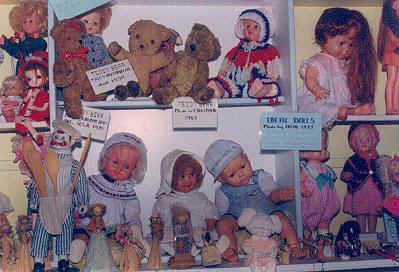
I have some pictures of my pretty edition of Yeats's poems which I have not gotten around to uploading or downloading or whatever loading that operation is onto the computer. There is another Yeats poem coming up, so I will put them up then. The obtaining of this book was another occasion where I stopped off at an old used book barn on Route 9 on the way to Vermont, left the family in the car and ran into the store to get the book. The necessary quickness of this purchase caused the proprietor, who you would think would be happen to be making a sale ($8.50 it was), made a comment along the lines of 'couldn't go any longer without some Yeats, eh', which annoyed me at the time, in part no doubt because the circumstance of my having this big Yeats collection on display is a big fraud anyway, not that I don't like the language and even the themes, but I just don't get it on that visceral level where poetry has to hit you. I'm sure the guy was just looking to make small talk, but being a squirrelly bookish fellow has no idea how to do it without coming off as pretentious. I did not handle the situation with the grace that I should have liked to.

Friday, October 16, 2009

This Week's Movies: Oldboy (2003) and Rembrandt (1936)

As you have may have noticed, I don't write about recent movies very often. I still have occasion to see one from time to time but they don't usually do much for me. It may or may not be their fault, but they lack either the poignancy or sense of spirited elevation from the mundane that I like most about the old classics, many of which may have only obtained these effects themselves with the passage of time. I don't know if this is what the professional critics have in mind when assessing movies, but I find that most of the ones I use as resources for what to see do not think much of most films made in the last twenty years either, and rarely give them their highest rating. So when I saw that Oldboy had earned almost universally enthusiastic praise not just from antisocial geeks but from the kinds of people who get excited at the prospect of a Billy Wilder retrospective, I was very curious to see it despite the indications that it was packed pretty much end to end with cruelty and extreme violence.


One review I read stated that "This is the kind of movie Quentin Tarantino wishes he could make" which is probably true, though why he, or for that matter even Chan-Wook Park, the director who did make the movie, have desires leaning in this particular direction, is something that eludes me. This is a really sharp, good-looking movie. Except for the more egregious scenes of physical torture (I didn't even find the part where he eats the live squid as disturbing as apparently other people did) I got a pretty big kick out of watching this. The commentary on the DVD, which I only listened to about 20 minutes of, doesn't give a lot of insight into the meaning of or motivation behind what the movie is all about, but there was some interesting technical information, such as the manner in which films are bleached in the final production process, and what kind and how many light bulbs are used to create a particular effect, etc. There are some obvious similarities to the situation in Kafka's The Trial, but in other important ways there are not. There is nothing entirely implausible or incommensurate with normal experience in the Kafka novel, which is the key to its brilliance. Not only psychologically but also in its practical measures it eerily mimics actual life, only with a more attuned sense than most people ordinarily can call on. The machinations of the plot do not hold together so well in Oldboy. Still, a lot of things were done well. I am impressed with how Asian filmmakers in general handle erotic scenes, which have become mostly ridiculous in Hollywood and overly serious/intellectualized in Europe in recent decades.

This film is Korean, and it is my impression, and I am certainly not alone in this, that South Korea--I won't even touch the north here--may be a society that is extremely psychically unhealthy. Stories about the competition to get into the best schools and so on, both in Korea and abroad, are legendary, the fanaticism of the parents, who sometimes send their children overseas as early as 8 or 9 years old so that they might learn English, making their hyperambitious American counterparts seem almost to have a rational perspective on what life is all about. Americans I have known and consider myself to be friendly with who have taught South Koreans have noted that while they are diligent students and test well across the board, they don't detect in them what might be called a love of learning for its own sake, or that they have much of a sense of education in the humanistic sense of development of the whole man or woman (not that many Americans do either, but the idea is still floating around out there in a few places). The Korean educational approach of course has been very successful at producing high achievers in terms of grades, test scores, mathematical ability, etc, compared to our own, so naturally there is some sense among our technocrats especially that we need to become more like them in our approach to schooling and learning. Except for the mathematical prowess, which I do think is impressive and which perhaps we should look at to see what they do, because we have too many capable people in this country who should know more advanced mathematics than they do, something in this approach strikes me as lacking. It certainly is not the answer to our existential problems.

Rembrandt is a very nice, pleasant, pretty little movie, and I mean that in the best possible way. I don't know all that much about Rembrandt so I am not sure if the film captured the essence of the man or not, but if Rembrandt was really anything like the man he was portrayed as here, he was as much as we might want him to be. This movie, which is British, has great stars; Charles Laughton, whom if I am not seeing him for the first time here I can't remember where else I saw him, is legendary among cinephiles, and it is not hard to see why. He may be playing an idealized Rembrandt, but he has a damn good sense of what that ideal consists of; the incomparable Gertrude Lawrence--now this was a talent: being this good means never having to sink to playing earnest (Kate Winslet and your ilk, take note); the absurdly gorgeous Elsa Lanchester. The stylized Dutch-themed sets are of course modeled after the famed paintings. They are beautiful. If the movie doesn't exactly lay out the nature of Rembrandt's genius, it evokes an attitude of appreciation and respect for it that has the air of being somewhat comprehending and of a worthy, affecting but not grovelling spirit.


I am going to share with you a couple of my favorite classic movie blogs, both by women, and both actually quite popular. (Given that I am not popular, and never been popular, you would think I would take the hint and give up--after all, nowadays we barely have time to give to all the popular people that we like--but of course I won't). They are The Self-Styled Siren and this one which is actually done by an 19 year old college student, but one who has an near encyclopedic knowledge of 1930s-50s cinema. She does memes with questions like: Your favorite post-Mildred Pierce Joan Crawford film or Columbia's 1930s archive is on fire; you can save one film; which is it? The thing is, it is pointless to lament that I didn't know people like this when I was 19, because if I had, I either wouldn't have, or couldn't have, hung out with them.

Classic film blogs--some of them anyway--tend to be more fun than classic book blogs. I guess great books are just too serious and too difficult and too important and too beyond the functioning sensibility of ordinary people to create a plausibly joyous atmosphere in writing about them at the level of intellectual camaraderie I would need to seek. The level of intelligence required to enjoy 1930s Hollywood movies well is of course much lower, but still high enough to exclude most of the contemporary riffraff, which is about all I'm looking for at this point.

Saturday, October 10, 2009

One of Those Interminable Essays I Get Sucked Into Doing to Try to Prove That I Have a Lot to Say or
I'm Bored By the Obsession Contemporary Smart People Have With Our Food and Where It Comes From.

Believe me, I like a superior meal when I can get one as much as any reasonable person, but the extent and tenor of the mental energy being expended on it by my generation especially is getting out of hand. Listen, I know that anything you buy from any entity that makes a lot of money is never as good, or as good for you, as something made by hand from small scale enterprises featuring fresh, locally grown ingredients. My preference would even be to have such meals whenever they are practicable. However, I don't care enough to put this quest at the center of my life, even though increasingly I see people insisting I should. I can easily enough live with most of the slop sold at supermarkets and served at the Olive Garden if I have to. I can't seem to bring myself to hate white bread, store-bought salad dressing, factory farmed meat, and highly processed crackers, cheeses and pies, as much as I ought to. Given the class issues so pointedly involved in this whole food movement, the passion for which I do not so fervently share, I am a little resentful that this is becoming such a big issue socially. Politically it seems to have aims with which I would be inclined to be somewhat sympathetic but I would like it better if I felt a little more of the spirit of say, Jefferson, and less that of Robespierre (i.e., humorlessness tending towards authoritarian fanaticism) among its advocates. Not that such people don't already run most of what passes for cultural life at the local levels in this country. We can never have everything we want, and for my part I would far rather have entertaining company whose basic interests ran somewhat along similar lines as my own over some horrible salty dish than have an exquisite meal acceptable to the stringent requirements of the food police, given that it seems difficult to have them both at the same time.

Of course I am threatened by these enlightened modern eaters. They are the same ones who have always had lots of coll friends, known in the long run how to position themselves to land desirable and comparatively lucrative jobs, been aware of the best bands and on top of all the latest trends and gadgets in technology, while I continue more or less eating a 1940s diet and catching up on the art and ideas and scientific advances that were current in that era, while having nothing to talk about when confronted with contemporary adults. He who subsists mainly on eggs and bacon, pancakes, butter, steak, roast chicken, potatoes, peas, pork chops, corn, gravy, chicken broth, tomato soup and dinner rolls, and has never had caviar and still thinks of it as something only rich people eat does not get invited to many groovy dinner parties. In my defense I also like a lot of the Mexican dishes and so on that have entered the culture since then [as long as they existed in Mexico in 1940], the year-round availability of salmon, and I have come a long way in my appreciation of lettuce drenched in corporate salad dressing in the last five years or so [though not other salad ingredients for the most part]. In beer I have even become somewhat demanding after spending my year overseas; I haven't bought a mass-market American brand in 13 years, and will argue to anyone who will listen that the taste tests where domestic microbrews defeat esteemed Czech and German pilseners are frauds, that the samples of the foreign beers being tested are almost certainly not the same product sold in their domestic markets (In wine, alas, I'll pretty much drink anything, though I have begun of late to shy away from anything under $7.99 a bottle). In the end, though, there are just too many fronts in the food wars to keep up with. Such as:

Vegetarianism: Obviously I am not a vegetarian. Among other things (such as that I really don't like vegetables) I'm not convinced that it's really that healthy for people, certainly for children. If humans, and Northern European types in particular, have not in fact evolved to need and thrive on a meat-based diet, any understanding or sense of this as possessing real truth has eluded me. Is not our height, our strength, our increased brain capacity the result of a diet rich in animal proteins? Are not vegetarians kind of, well I don't want to say boring, because I am boring, but they become rather a sect apart from other people, because you can never really share food with them, which as we all know often substitutes for sensual communion in a pinch, and the crowd over on the veggie side, while some of them are tempting, are more tempting in a way that makes me strongly desire to see them digging into a steak at my table than that I should go gnaw on a cucumber on their blanket.

Then of course there is the cruelty, the brutality issue. A lot of people seem to think that the typical meat-gorging, comfort-loving, essentially disgusting modern suburbanite would never have the stomach to be able to kill an animal themselves, which means that they therefore shouldn't be eating them. But I don't think these people get around much, because apart from a few sensitive overindoctrinated types such as myself who might struggle with this at first, I am pretty sure this would not generally be a problem among the general run of the population (and anyway, I have also been assured, often from the same quarters, that if a fascist regime with snappy haircuts and uniforms ever seizes power and commands this same overfed class to set violently upon certain of its neighbors that it will set to bludgeoning them gleefully and without a second thought). After one such occasion of being pummelled by a militant vegetarian in a moral debate regarding the horrors of meat-eating, in which this argument was among those raised, my wife suggested that anybody would be able to kill an animal if he was hungry enough. Of course the point is in modern middle class life no one is ever hungry enough to justify killing an animal, and that there is more than enough lettuce and sprouts available for us all to live well and sustainably, and due to the health benefits, for much longer than we do now.

As you can see, I am really unwilling to concede this ground in my life. It would be one thing if my friends and people I admired were exhorting me respectfully and as a mental equal to consider the arguments, but this is almost never the case. The culinary philosophers are obsessed by how far removed modern man has become from the sources of his food--this is lamentable, but probably necessary given the population explosion and therefore in a way rather admirable--but people seem to have had much less angst about killing pigs back in the days when those beasts and humans lived regularly on much more intimate terms than they do now. One can think of so many examples from the arts in which the reality that farmers kill farm animals is simply an unconscious fact of life, something taken for granted. Jude in Jude the Obscure had some problems turning the knife in the pig's throat, it is true--his lusty, bawdy mismatched first wife had to help him because he wasn't controlling the blood flow properly--but he was a sensitive soul who continuously had trouble confronting and dealing with the messy realities of existence. I don't remember that he became a vegetarian. In the Laura Ingalls books, the acquistion of a new animal is immediately anticipated in the form of a steaming Sunday dinner somewhere down the road. This art exhibit of paintings from the 30s I went to in Washington recently had a couple of cheerful, totally unironic Grandma Mosesish pictures by a lady from Iowa depicting the simple pleasures of farm life one of which was titled "Slaughtering Day" in which several pigs are in the process of being hung up, gutted and butchered by the hardworking menfolk. Even in the movie Oh Mr Porter I wrote about recently, some pigs being left at the station by their owner, the instinct of the railroad employees (and I know this was a joke, but still) is to turn them into bacon in time for the morning's breakfast (the joke comes when the farmer comes back and asks where the pigs are as the stationmaster is lifting a slice of bacon to his mouth). I know none of this quite justifies slaughtering individual beasts on an individual level, even if I take the egotistical human chauvinist route and posit that my existence is more existentially substantial than a cow's. I am not however convinced that my well-being as a whole human, in this world certainly, will be improved by abstaining from meat. Perhaps morally it will; I have always been morally weak, though this has always seemed to me as much a matter of assertiveness as anything else. The people I think of in my life as the staunchest moralists are those who let it be known that not only do they live by a code, but that they insist upon others following the same code, or at least deferring to the moral authority of the moralist while in his presence. I never do this.

The stuff that gets written about how to feed children and so on, that you must control their diets and deny them french fries and so on, I think are ridiculous. Obviously there are things I don't let my children eat and drink, but one can be reasonable. The occasional french fry or prepared dinner isn't going to retard anybody's development. As in all matters, moderation is the key.

Wednesday, October 07, 2009

A Few Old Notes on Old Shakespeare Readings (From the Pre-Blog Archives)

Coriolanus: The traditional interpretation in the circles in which I moved was that W.S. is sympathetic to Coriolanus's greatness and superiority, being a great and superior man himself after all, and is equally disdainful of the masses as a concept (qua masses), but judged that (Coriolanus) exercised his superiority unwisely. Of course these struggles between the truly superior type of man and the vermin become more acute and uncomfortable to hold an impassioned view of if one gets older and understands that the side he naturally belongs to is not the one with which he breezily identified as a younger man.

Macbeth: I was impressed by the manner in the many longer speeches in which image after image after image bursts out, each seemingly at an extreme of human possibility, language, characterization and meaning. The standard of expression established in itself makes the writing self-evidently important in a way that is unknown except among the very small number of the truly greatest writers in history. I don't know how many constitutes the number of those possessing this quality, but it is a small minority even of those whose work is recognized as literature, even of those whose work has legitimate historical importance.

Othello: If one can find everything in Shakespeare, one ought to write about him every chance...

All is found in all. The answer was indicated in every pattern... (on Iago's speech comparing the body to a garden in I, iii).

More human condition in all its glory and squalidness (sic). O. never one of my favorite plays. Problems perhaps not my problems (?). The demonstration of active will is a proper chastisement to me, however. Much irony, half-true observations by Iago. Is Othello sensitive or just intemperate? I suspect the latter. Was does W.S. think about life, as gauged by this play? A hard call...

Iago achieves his ends by speaking exact truth in a manner of modesty...is a man of philosophy and poetry...wise, yet evil...more dangerous because paradoxical...convinces Othello that women are devils and dishonest by nature, or at least that all desirable ones should be...He believes he cannot enjoy what he loves, and thus believes that Iago is wise and honest (I used to struggle with a problem similar to this)...Because his reason is powerless, he is already lost...

The wordplay and poetry serve direct purposes and augment such language as was already necessary, unlike in other, less mature Shakespeare. Poetic power and literary experience (tightness, immediacy of action, etc) are here combined at one of the highest levels ever attained.

I post this because it is a kind of tradition in our language for literary men to record their personal impressions of Shakespeare from time to time, probably in order that others may better know them, by what they like, what they take from him, how they come off against and amongst the idea of humanity that he has put forth and in which the at all competent reader (or player) of him must be immersed. If there are very specific, esoteric meanings in him only to be gotten at by a specific intelligence and education and upbringing, I certainly will not be one of the people that has them. I really don't think that is the case, however. Certainly not the whole case, in any event.

Monday, October 05, 2009

Music Post

This is still not about serious music, but videos I have been watching lately. And I am fully conscious that they are not the best I could be watching. I am tracking my general state of mind by what songs produce some emotional response in me at various times.

My real goal as a blogger you know is to become one of those guys who constantly goes on about how he is the only genuinely educated, courageous, and free man left in America, and how everybody else should be ashamed of themselves. Knowing one is of that degree of superiority has to be somewhat satisfying.

I remember liking this song when it first came out. I never saw the video at the time, so I didn't realize quite to what extent the guys in the band were flaming.

This was a big Euro-hit when I was in Prague. I have never heard it in this country, so I am guessing it didn't make it over here. It calls up to memory the five months of continuous grey sky that lasts from mid-September till February in that land and the excitement of all the "firsts" one experiences during a long stay in a new foreign city. It is in a way like having one's freshman year of college all over again. I apologize for the singer not being as attractive as we might like.

I need a new theme song, and this one pretty much encapsulates my life, right down to the ever-flowing fountains of Asti Spumante.

I am not the biggest James Brown fan in the world, but the allusion to him in the last song reminded me that this particular number, at least, is about perfect, expression and entertainment-wise.

We might as well get as many hyper-gay groups out of the way as possible. Yes, I'm talking about the Pet Shop Boys. I don't usually go with the extended version, but this has to be one of the greatest music videos of all time. Yes, it is also supergay, but I am man enough to handle it, I think. Obviously the ridiculous chick trumps all of that other stuff. Here's another good one. Love the chorus girl in the 1950s NHS-issue glasses.

1972. If not the Ground Zero year for totally ordinary suburban people engaging and exulting in raw and unbridled sensualism, it must have been pretty close. Sometimes I think I wish I had been there, but then again, sometimes I don't.

As far as my new theme song goes though, in reality it's always going to have to be something like this. Man, is this a sweet, sweet song, or what? If this isn't a SJC Waltz Party standard--and I don't remember it being one--it should be. This is like the extreme essence of an SJC waltz party song

Wednesday, September 30, 2009

Mid-Atlantic Trip

I drove to Washington/Annapolis--and back--last weekend (now 2 weekends ago) for my fifteen year school reunion. I enjoyed it maybe more than I expected to--I had been open to the possibility of being depressed afterwards, though a depression interladen with meaningful assocations at least, which is better than the purely anomistic, low-intensity one with which I am ordinarily afflicted. There was not a big turnout for the reunion--most people my age are very busy living their proper lives even they want to come--but for all that the collection of people seemed to be good. At this point anyone who is still coming to school has an affection for it that I suppose is largely incurable, whatever form their subsequent lives have taken, which contributes to a pleasant, even if somewhat gentle atmosphere, as was the case here. It poured rain all afternoon and night on Saturday, which contributed to the mood of nostalgic melancholy I was feeling most of the time.

But I am not going to dwell on the reunion, which was certainly not without some real problems (running out of or shutting off the beer at 11:30 at the official Friday night function--unacceptable!). I also have a theory of people who go to reunions which does not cast them in a flattering light, though I find I am unable to adopt my own principals in these matters. My trip had other aspects to it that I want to write on.

On the long drive down the East Coast, I got a good sampling of the major sports talk radio stations in each area, these being WEEI in Boston, WFAN in New York, and WIP in Philadelphia. There were stations in Washington and Baltimore too, but they were atrocious. Most callers and hosts on talk radio are obnoxious, unfunny, vapid in the most unimaginative way, and devoid of any kind of distinguishing personality to some degree, but in the Baltimore/Washington corridor all of these qualities were seemingly combined in every person who made it onto the air. I couldn't endure them for five minutes. Washington is a weird area in that with the exception of the black population there aren't many people with deep generational roots there, and the social competition is brutal with no sort of alternative identity or community for people to fall back on so that many people who grow up or live there have even more than ordinarily crimped and damaged souls, as well no affection for the area whatsoever in a way that isn't common in New York or even the oft-maligned Philadelphia. But Baltimore used, anyway, to have a more colorful blue-collar fan base for sports, which is the lifeblood of these kinds of shows, back in the 1950s and 60s, but they have either left or suburbanization has totally lobotomized them. But here are a few observations on the different views of the current sports scene in the other cities:

Phillies: People in Philadelphia, doubtless impressed by the unexpected ease with which the Phillies cruised to the championship last year, are very bullish on the team's chances of repeating. This would be astounding to anyone who regularly listened to sportstalk in Boston, where you might have the impression that no such team as the Phillies even exists. Indeed, the entire National League scarcely exists in WEEI-land, unless former Red Sox players, usually pitchers who failed in Boston but become miraculously above average upon moving to the weaker league, are being referenced. The Phillies are talked about a little more in New York, though mainly in reference to their being the current main competitors of the Mets. Otherwise they are not highly interesting to people their either.

A-Rod: One of my favorite summer rituals in recent years is tuning into WFAN for a half hour on my way down to Philadelphia to get a good helping of vicious A-Rod bashing from the New York fans. This year however they have backed off from this--Yankee fans in general seem to be taking a cautious, wait-and-see attitude where this current team is concerned. In Boston meanwhile the hosts and fans alike have been talking for weeks about the chills A-Rod must be getting at seeing the calendar march inexorably towards October 1. They fully expect him to choke.

Patriots: The Patriots receive a lot of attention/fascination, both in New York, where of course they have been pounding on the Jets for the last decade, and, surprisingly, in Philadelphia, mostly in the form of the duo of Reid/McNabb being compared unfavorably to that of Belichick/Brady.

Eagles: Except in 2004 when they had T.O. and started the year 13-1 and were killing most of their opponents, the Philly fans are in a constant state of angst about the Eagles, even though in other cities they are considered one of the better organizations in the league. The fans are bitter about the team's failure to ever win a Super Bowl (or any championship since 1960), a bitterness now accentuated by the rival Giants sort of sneaking in for an unlikely title in 2007 after the Eagles had dominated the division for the entire decade. The pro-Giants people in New York seem to think of the Eagles as having the upper hand on their team in recent years and talk as if they are worried about them, despite their having won a title recently while the Eagles haven't.

Eli Manning: He gets absolutely no respect in Philadelphia, and is considered a total chump. This is in the tradition of Troygirl Aikman and Phil Simms, other Super Bowl winning QBs from division rivals considered horribly overrated and effeminate by Eagles fans.

With the exception of the reliably nasty Howard Eskin in Philadelphia, the Boston radio hosts tend to be the most surly and aggressive towards callers who disagree with them, or are meek or confused in their point. Surprisingly the New York guys struck me as going the easiest on people, or at least they saved their combativeness for callers who could take it and come back quickly with another point.

I hate to admit it, but New York callers were the most intelligent and interesting. Even the guys who were obviously not very educated knew how to talk, and express a coherent series of thoughts as they related to the world as they experienced it, which is something of a lost art out in the provinces.

Philadelphia had by far the most black callers on their station. I realize they have a bigger black population, but still, I think I heard one black caller in New York, and none in Boston. The Philly station is still overwhelmingly white-oriented, in a knucklehead kind of way, sponsoring buffalo wing eating contests at Bennigan's in Bensalem and that sort of thing. Most of the callers in Philadelphia don't seem to have traveled much beyond the boundaries of Eagles nation, which runs roughly from Lancaster in the West to the Lehigh Valley/Poconos in the North, East in New Jersey to the shore (south of Atlantic City) and south into Delaware about as far as the line which I-95 cuts across the state. Sometimes you will get somebody calling into who actually attended Penn State, which is seen as being really far away. Almost nobody has ever been to Harrisburg, let alone Pittsburgh.

I couldn't get a room in Annapolis for less per night than what I paid in monthly rent when I lived there, so my hotel was in Washington. It was near the Museum of American Art and the National Portrait Gallery, which I had never been to, so I got up pretty early on Saturday and looked around for a couple of hours. I only saw the first floor, after which I began to get tired anyway, but it was a good museum, although in the portrait section I found I was frequently distracted by the biographical information on the subject rather than looking at the painting itself. There was a special exhibition on art commissioned by the NRA during the Depression which I thought was outstanding. These were mostly realist, very Hopperesque paintings of industrial subjects, highways, bridges, factories, main streets, scenes from city apartments, baseball games. I was disappointed that there were no postcards of the paintings available, and I even considered buying the companion book for $34, but I was the only person in the shop and the salespeople were eyeing me in a way I didn't like so I put it down. But I kind of wish I had bought it now. Here is the page for the exhibit.

I ate at quite a few diners on my trip, since there aren't a lot around where I live. There is one that is pretty good about 20 miles away, but it's right off the highway and is very popular with tourists, so there is almost always a wait for a table except in the dead of winter. So I'm going to review them.

Mamaroneck Diner, NY. On Route 1. Got to this place around 10pm. Open 24 hours. Not crowded. Very sleek, silvery shiny type diner, super clean. Staff immigrants of indeterminate origin--somewhere in the Eastern Mediterrenean/Black Sea area--casually dressed but very professional and perfunctory in carrying out their duties. Sparse crowd very diverse. There was what looked like an East Asian gang in one corner--hoodies, odd gloves, scowling, etc--as well as a pair of Italian or Hispanic babes out with boyfriends, all of whom diddled on their cell phones the whole time. Got the corn beef sandwich with cole slaw on the side and a bottle of Samuel Adams. Outstanding.

Aberdeen, Md. Diner. Unfortunately I can't remember the name, and there are several diners there very close to each other on the old Pulaski Highway (Route 40). This one was a classic boxcar type diner with jukeboxes in the booths. Nice view of the road, which is the main drag in this town. Ate here around 2-3pm. Not many people there, all local, all white. There was a group behind me from some business where a very Maryland-looking guy with a bad mustache and haircut was haranguing his hapless companions (presumably co-workers about marketing strategies). Waitress looked older than me but probably wasn't, acted kind of youngish and peppy (though she did call me hon), also her name was Jennifer, which is a name of my generation. I had the Philly Cheesesteak with Fries. Pretty good. Bathroom was great, looked as if it hadn't been updated since the late 60s.

El Riconcito, Cafe, Washington, DC. Not a diner, but an El Salvadorean restaurant that was near my hotel. El Salvadorean cuisine appears to be fairly similar to Mexican. Very small restaurant, full when I was there, people standing at the counter. Except for one other table of hipsters, and me, everyone else in the place speaking Spanish. A gangsterish looking guy and his heavy-cleavage revealing girlfriend came in and sat right in front of me, cleavage right in my direct line of vision. I had a beef nacho plate, which was heavy but very good. Waitress was pleasant, although she laughed at my Spanish pronunication and taunted my failure to eat my halapenos, I think she rather liked me.

248 Diner, Easton, Pa. More a restaurant than a proper diner. Upstate Pennsylvania means old-fashioned patriotic white Americans, many old, many fat, many with really bad clothes, but still, in many ways they are my people, so I do kind of have affection for them. I had the lasagna special with dinner rolls and a green bean and mushroom dish for my vegetable. The meal was so-so. What this place really had going for it was three or four quite beautiful and genuinely personable and chatty waitresses. Upstate Pennsylvania is very hit or miss in this regard. You can go one place and it's full of totally crass and hideous-looking people, and then go down the road and see some of the dreamiest Hopperesque American girls you've ever seen in your life. If I could have had the waitresses in this restaurant as my harem I would have had to give serious consideration to staying in town for several years. Kind of like Odysseus on the island of Calypso, really, and of course everybody (except my wife) thinks he's great now.
George Crabbe--"The Village" (1783)

George Crabbe, who lived 1754-1832, is sometimes considered to be the last of the true 18th-century, pre-romantic poets. The idea of being the last of a kind has always appealed to me, perhaps because I always seem to be undertaking projects just before cataclysmic changes in the way the things I am doing need to be approached take place, which of course I never see coming, because I was usually already quite a few decades behind current trends even before the really big shift occurs. "The Village" is famous for being a rare unsentimental account of the hardships and inconveniences of the frequently romanticized traditional rural life, which itself was soon to be thrown into upheaval by the continual progression and pressures of the Industrial Revolution. Part I appears in many anthologies, very frequently as the last poem in the book if it is an 18th-century compendium, the literary 18th-century being generally considered to have ended either with Johnson's death in 1784 or perhaps the publication of Boswell's Life in 1791.I thought the poem was an interesting specimen of the national history. It apparently 'led me to ponder the nature of truth', my reasoning being that in taking a poetic form one's ideas always thus deviate from strict truth right off the bat. Yet I also thought there were very few, if any obliquities in the poem, that the idea being set forth was done in a straightforward manner; I evidently had some doubts about its veracity, or at any rate its greater, ultimate veracity.

"What form the real picture of the poor/Demand a song--the Muse can give no more" (Book I ll. 5-6) lays out the unconventional attitude the poem is going to take in a completely conventional-seeming style, which is a technique I admire in all the arts. From there we get an ironic catalogue of the errors the other poets have fallen into, such as "No shepherds now, in smooth alternate verse/Their country's beauty or their nymphs rehearse" (ll. 9-10), "From Truth and Nature shall we widely stray/Where Virgil, not where Fancy, leads the way" (19-20), and "Can poets soothe you, when you pine for bread/By winding myrtles round your ruined shed?" (59-60). After asking where the usual country heroes of pastoral poetry are to be found in the present day, he offers a reality check almost straight out of a rap song (101-108):

"Where now are these?-Beneath yon cliff they stand,
To show the freighted pinnance where to land;
To load the ready steed with guilty haste;
To fly in terror o'er the pathless waste;
Or, when detected in their straggling course,
To foil their foes by cunning or by force;
Or, yielding part (which equal knaves demand),
To gain a lawless passport through the land."

This passage is supposed to refer to smuggling, Crabbe having been born in Aldeburgh in Suffolk, which is located on the sea. The house where he was born was washed away by the sea a long time ago ("Who still remain to hear the ocean roar/Whose greedy waves devour the lessenign shore" [125-6], which prompted my wife to ask if we should have to be photographed out in the water if we ever make a pilgrimage there. As I am generally afraid of water, I said no, the shore will make a nice enough occasion for commemorating old Crabbe.

ll. 172-3: "Ye gentle souls, whom dream of rural ease/Whom the smooth stream and smoother sonnet please..." I think I am being paged here.

ll. 238-9: I like the description of the local populace: "The lame, the blind, and, far the happiest they!/The moping idiot and the madman gay."

306-13: A pleasant existence for the parson anyway, which profession I am pretty sure Crabbe, who published nothing between age 31 and 53, undertook himself:

"A jovial youth, who thinks his Sunday's task
As much as God or man can fairly ask;
The rest he gives to loves and labors light,
To fields the morning, and to feasts the night;
None better skilled the noisy pack to guide,
To urge their chase, to cheer them or to chide;
A sportsman keen, he shoots through half the day,
And, skilled at whist, devotes the night to play."

The much shorter and far inferior Book II is usually excluded from the anthologies. I read it because I like to be thorough, but it really doesn't add anything to the first part that I can see.

Ezra Pound, whose criticism I confess to find interesting, seems to have liked Crabbe a little, and wrote a four-page article about him. This is noteworthy because Pound doesn't like much, and is especially brutal towards the English. Indeed, most of the essay is devoted to bashing people like Tennyson and Wordsworth and the part of the reading public that admires them as intellects. Here of some of his observations on Crabbe, writing in 1917:

"'Since the death of Laurence Sterne or thereabouts (ca. 1768), there has been neither in England or America any sufficient sense of the value of realism in literature, of the value of writing words that conform precisely with fact'...I had forgotten, when I wrote this, the Rev. Crabbe, L.L.B."

"Think of the slobber Wordsworth would have made over the illegitimate infant whom Crabbe dismisses with: 'There smiles your bride, there sprawls your new-born son.'"

"The worst that should be said of him is that he still clings to a few of Pope's tricks, and that he is not utterly free of the habit of moralizing."

"Crabbe is never absolute slush, nonesense or bombast. That admission should satisfy the multitudinous reader, but it will not."

"If the nineteenth century had built itself on Crabbe? Ah, if! But no; they wanted confections."

"Crabbe has no variety of metric, but he shows no inconsiderable skill in the use of his one habitual metre, to save the same from monotony."

"He does not bore you, he does not disgust you, he does not bring on that feeling of nausea which we have when we realize that we are listening to an idiot who occasionally makes beautiful (or ornamental) verses."

"Browning at his best went on with Crabbe's method."

Wednesday, September 23, 2009

Classic Movies That Are Not Readily Available in this Country #2.5


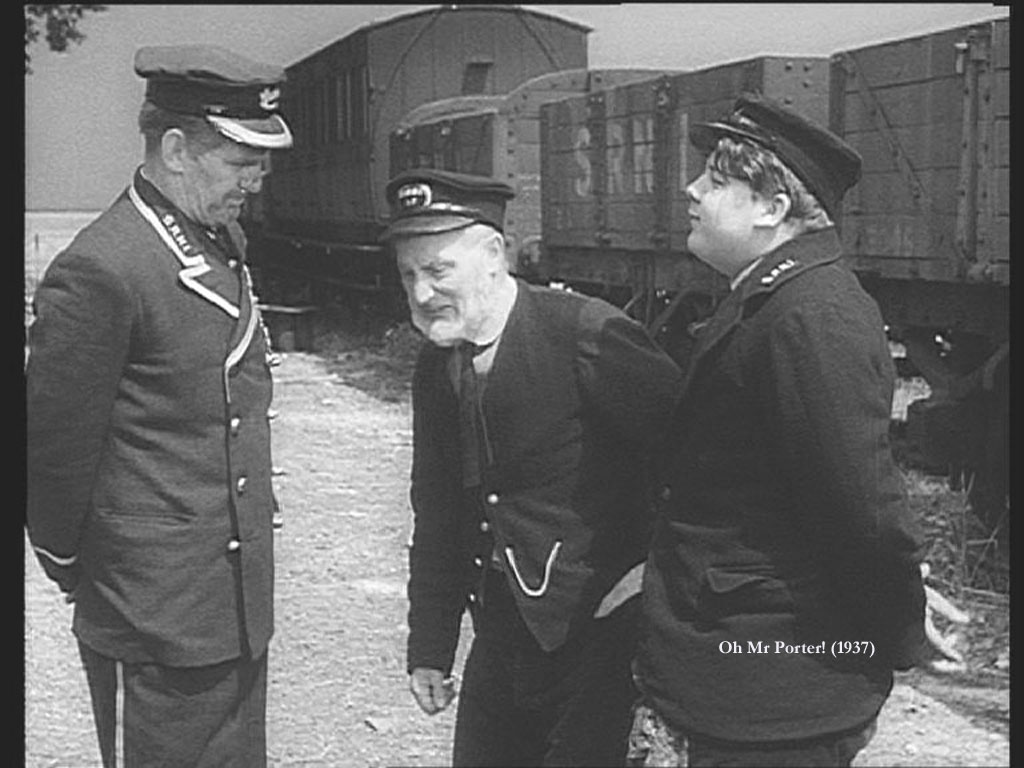
Oh Mr Porter! (Britain-1937) This one has actually been uploaded in full on the internet in five parts on a site called dailymotion.com, so I was able to see it, though the picture quality on the computer isn't all that great. Here is part 1. The clip below is a short characteristic scene.


The star of this movie is Will Hay, whom I had never heard of, but who is apparently still a famous comedian of this period in Britain. His two sidekicks in this movie, the bumbling half-senial old guy and the fat, oblivious-looking younger guy acted with him regularly in other films as well. This is yet another train-themed movie, a genre which seems to be particularly popular in the U.K., though many countries and systems have produced classic films centering on some aspect of the railroading life, the elements of which appear to be especially suitable for and suggestive to the cinematic imagination. I should probably watch this one again a little more closely--the speech in this comes pretty rapidly in a 1930s British colloquial style and over 80 minutes of trying to follow it against an often watery computer screen picture my concentration had moments where it lapsed; however I can see why it would be considered to have classic qualities. Much of it was filmed along abandoned rail lines in the actual English countryside (standing in for Northern Ireland), and reveals a kind of naturalistic rawness of what the country must have looked like in that general time period that I don't know that I have seen before, and which is quite fascinating in itself. I cannot say that the jokes had me rolling around on the floor, but the manner of speaking, the rapid give and take and quick-wittedness both of tongue and spirit that is written into all the characters in these kinds of films I find very interesting. There were some decent sight gags, thinking here of the multiple-telephone scene and the windmill scene.


Among the running gags at this rural station was the presence of various life farm animals, usually stolen by the fat kid, hanging around the tracks, offices, idle train cars, etc, often resulting in a scene where a farmer comes to claim the pigs he had left or was expecting to pick up at the station and cannot find just as the oblivious Will Hay is lifting a forkful of bacon up to his mouth. I am working on a longer essay about vegetarianism and current attitudes towards food in general among the enlightened classes, and I will probably have cause to refer to these scenes at some point.
This makes for a lot of tired old movie and book-rehashing posts right in a row, which is not in the main what I really want to do. I am going to come up with a few essays this fall. I have been quite busy the last couple of weeks; at any rate the readership seems to have fallen away entirely, so there is no reason not to take my time and write a few things approximating real articles.


The movie takes its title after this famous song, which I'm sure somebody will enjoy, as the internet brings the once-lost world of the British music hall into potientially every home.

Tuesday, September 22, 2009

Movie Music Video of the Week

This week's classic film was the 1938 Hitchcock (British period) effort "The Lady Vanishes". I hadn't seen it before. Surprisingly I had never seen any Hitchcock movies until I undertook this educational program within the last couple of years. Their reputation, such as it was, for being good, but not in the ways bourgeois audiences thought they were good, I suspect psyched me out when I was younger. I had no interest in seeing them.

I still haven't seen that many to this point. Psycho seems to me to be overrated. Strangers on a Train was a very cool and good-looking movie to watch but I didn't think the plot was particularly brilliant in that either. I liked this one. The plot is pretty silly of course but the wit and humor throughout more than redeem this. I thought the climactic scene with all the jokes as the British vacationers have a shootout with the demented Germanic contigent was brilliant. I hadn't seen Margaret Lockwood, the de rigeuer Hitchcock "girl" of this movie, before, and I like her a lot. She looks really intelligent; the 1930s British form that intelligence took of course detracts nothing from the effect upon the imagination.. I don't know if it is that I like this generation of women better than the 50s and 60s generation, or Hitchcock had better taste as a younger man, but the type of girls he casts in these earlier films are much more interesting to me than those who came later. Five years after this movie we got the much-celebrated (on this blog anyway) Teresa Wright, who was also intelligent after the manner I like, in Shadow of a Doubt, which has a similar overriding theme, that is to buck up the prettiest girls and the boys who love them for a big fight in which Western Civilization itself hangs in the forest. I suppose you can't really go wrong with Grace Kelly, but Janet Leigh and people of that ilk didn't bring much to the entertainments that couldn't have been much more than a simple line of dialogue, a single movement, to begin with.

I'm falling asleep. Enjoy the song.

Thursday, September 17, 2009

Henry Carey--"Sally in Our Alley" (1725)

I thought that this poem's claim on immortality was pretty slight when I read it as a poem, though I thought it might be a parody or a fun favorite of schoolboys though the generations. I see that I also thought it might be a song, which is in fact what it is. Henry Carey was, as it turns out, the Paul McCartney, or Andrew Lloyd Webber, of the 1720s and 30s, the most popular songwriter of the time. "Sally in Our Alley" has enjoyed a long fame, and was known to be one of George Washington's favorite songs. Carey is also among the suspects for the authorship of "God Save the King", which is evidently undocumented, having been present at the first recorded occasion of its having been sung. He was also the author of the satirical poem "Namby-Pamby", which was pointedly directed at Ambrose Philips, whose own poem I was recently writing about.

Carey hanged himself when he was 56, the reason for which is in dispute, the main contenders being financial difficulties and despondency over the death of his son. As I noted in an earlier post, suicides among prominent British artistic figures seem quite rare compared with those of other Western nationalities, including the United States. Here is the best sounding English version of the song I could find. I guess it's...nice...I have neglected the development of any real emotional connection to this sort of music, which I think I could have.

Here is a German version, which sounds to me to be the best musically.

This 60s version , while having slightly updated lyrics, is obviously playing off the original. The story is pretty fundamental.

Favorite lines?: "Her father he makes cabbage-nets,
And thro' the street does cry 'em;
Her mother she sells laces long
To such as please to buy 'em..."


I've tried to analyze these lyrics to wring some insight from them, but I think there isn't much to say other than that this is the 18th century version of a kitchen sink drama or skiffle love song. We're British, we're living the squalid urban working class life, Sally is one of us, she's hot, and I want her in spite of all the evidence before me that working class British marriages are wretched, miserable affairs. That's called culture, baby.

Tuesday, September 15, 2009

Bennington Visit II

These pictures are really not necessary, but on the other hand, it isn't as if they are going to damage the quality of the blog all that much either at this point. The windows are helpfully labelled with the general idea of the view out of them. I thought the mountains looked especially attractive in this one.

So You Can Have a Better Idea of the Battle. The detail when you enlarge these pictures is pretty good, so I am actually curious to examine this diorama at leisure myself once my post is done.

The Significance of this Kettle will be revealed in the next photo.
I Promised You It Would Be Worth It.
Another Shot That Figures to Be Greatly Enhanced By Being Blown Up. Lots of good souvenirs and collectors' items from days of yore.
Rough-Hewn Stone (Sandy Hill Dolomite, Supposedly) and Antiquated Wiring. Two of the more endearing features to be found in New England's many dank old structures.
Education With the Illusion of Visual Stimulus. I wish I had more to say, but I don't. I am trying to crank up some quasi-big idea posts in the near future though. Assuming I am capable of it in any mentally meaningful way--and in spite of the multitude of evidence to the contrary, I still probably am--I have to be more accountable for the way I live my life and my choice in sentiments, amusements, stances or non-stances on essential issues, beliefs about and emotions towards other people, than I have allowed myself to become.
More Summer Pictures. Visit to Bennington I

I did other things during the summer, and maybe I'll put some pictures of those up sometime too if I get the chance. I liked the trip to the Bennington monument, hence the overkill on the pictures. It was a beautiful day, and a simple, quaint kind of attraction, in spite of which the children seemed to like it, at least for an hour or so. They are pretty good about not getting constantly bored, though one doesn't want to develop too strong a tolerance of non-excitement, which I recognize now has really held me back in life. General John Stark. I'm not sure if he is here saying "Live Free or Die" or "They are ours, or this night Molly Stark sleeps a widow", which are his two most famous quotes. People are surprised when they meet me by how much sexier I am in person than I appear in photographs.
This is the Gift Shop. The gift shop was pleasant and relaxing, actually. The monument costs $2 to go up in, $1 for children 6-12, so it isn't like it's being run by people who are highly skilled in manipulating visitors to part with their money.
This is the marker in front of the gift shop. For such readers as are interested in more details than I have given. I actually know very little about this particular battle, other than that it wasn't actually fought in Bennington or even in Vermont, but was 10 miles away across the border in New York, and was a prelude to the crucial victory at Saratoga, which is not far from Bennington (though I haven't been there), about a month later.
The Grounds Around the Monument. The surrounding neighborhood is very pretty, and includes among other highlights the picturesque Old First Church, in the yard of which Robert Frost is buried, and the Bennington Museum, which I believe has the largest collection of original Grandma Moses paintings in one place in the world, though I am not certain on that one.
This Was Their Idea. I would never force anyone to pose beside a plywood cutout of a man if his will and aesthetic sense rebelled against it. They seem to like these kinds of things. As yet they don't appear to have the same sense, which I already had when I was 5, of life as a continual series of traps your social competitors have laid to make you ridiculous and weaken you for the day when you have to take them on face to face.
View of Old Bennington and in the distance Mt Wheelock or Greylock and the Berkshires in Massachusetts. I visited the town for the first time and came to see Robert Frost's grave on New Year's Eve in 1998, not knowing that the gravestone lay flat on the ground and would be buried under several inches of solid ice. That was around the height of the micro-brewpub craze, in Vermont anyway, which I liked, and I had a very good sausage and sauerkraut dinner that night at one of these places in Bennington. I don't remember the name of the place. I didn't notice whether it was still there or not.

Up in the Tower Amidst the Stonework. That round boiler-like installation behind me I believe is actually the staircase, which you aren't allowed to use anymore.

I'm not done. I'm following this post right up with a whole 2nd set of photos.