I haven't done one of these in a few years. It seems like a good time to see what answers I would give now.
When and where were you born?
I was born in 1970 in Abington, Pennsylvania near Philadelphia
.
Where did you grow up?
I grew up primarily in Manassas, Virginia, where we moved when I was around 8 months old for my father's work and stayed until I was sixteen when my parents divorced, at which time we finally got out of there and I moved to Maine for my last two years of high school. Apart from maybe my father, I don't think anyone else was ever very happy in Virginia. We went back to Pennsylvania frequently, almost every weekend when I was very little, every holiday, and for weeks at a time during the summer. I thus identified with Philadelphia, the longed-for home, as my real home. Everything always seemed both more fun and normal there, people were more rooted, they had a wider variety of regular jobs, they did the kinds of social things like going to happy hour and bowling that characters in old books and movies did. My parents still went to and even had me go to their old eye doctor and dentist in Pennsylvania for a long time, until I was around ten. For most of my life since I have never told anyone I ever lived in Virginia, not even my wife, until someone in my family had to let it slip in front of her and ruin my carefully cultivated image of my childhood.
What is your earliest memory?
I have always considered my earliest memory to have been some kind of party with cake in the apartment in Virginia where we lived at the time when I was three, but this is just an image, a momentary snapshot of memory. The earliest memory of an event is a time that we went on a long ride to visit some fancy gardens somewhere and had to leave because my mother had a migraine, with my father being very angry all the way home. He always had little tolerance for sick people, so it is ironic that the woman he married turned out to be an extreme hypochondriac. My parents would only have been around 26 and 24 years old at that time.
What was your upbringing like?
There wasn't a lot of joy in the home. My parents were, as noted above, quite young and not well-suited to each other. My mother suffered from depression and a myriad of health woes from as far back as I can remember, while my father was a good-looking, vigorous young high school teacher in the 1970s with the full 1970s licentious mindset, which was not conducive to a harmonious and calm home life. I will say, at that time my father never drank, at home at least, because his own father had been a terrible alcoholic, though much later, after I was grown up, he became, or fancied himself to have become anyway, something of a wine connoisseur. My father was quite bored by family life I think and he was out a lot, while we were left with my mother who spent a lot of time lying around crying. I was always taken to the library and when I was very young, before my father started to basically go away every weekend, we went to a lot of historic sights. My father thought I was very bright because I was an early reader and displayed a rapid understanding of math and the ability to memorize facts--being a young public school teacher he was accustomed I suppose to dealing with complete morons--but I don't think he knew what else to do about it.
Do you have happy memories of that time?
No, not of family life. I have some happy memories of being in Pennsylvania.
Did you ever have nightmares?
Not as a child. As an adult I have gone through periods where I have had dreams of being in my parents' power again at which I thrash around and react violently.
Do you have any brothers or sisters?
I have 2 younger sisters.
How would you describe your relationship with them?
I don't really have one. It's my fault, they have tried to be friendly and to reach out to me, but I don't relate to them very much. I don't really relate to anybody very much at this point.
What did your parents do?
My father was a history teacher until I was 25 or so, and he was 47, when he left that profession and did a number of other things to get him to the present, when I think he is more or less retired (I last saw him 6 or 7 years ago; I piece my sense of what he is doing through 3rd party sources). My mother did not work when I was a child. Much like me, she was mentally prepared to lead the life of the previous generation, and that life only. and did not adapt strongly to feminism and the divorce wave and the burgeoning new economy of the 1970s and early 80s. Eventually she held a series of jobs in florist's shops and drug stores after she was 40 and there wasn't really any alternative to not working.
Your family: are you close to them now?
No, not at all.
What sort of values did they instill in you?
I don't know. I'm kind of a valueless person. Part of the problem is that my parents were so much in conflict with each other, that the qualities they most held dear were what they considered to be the character flaws in the other. There was no united front in anything. My father thought my mother was lazy and weak, so he promoted the idea that we all had to fight the urge to be lazy and weak, especially me, as I was inclined to be those things. However I still have no idea how to overcome those flaws and banish them entirely from my character, though I am ashamed of them. My mother on the other hand resented that my father was a jerk and was mean to her, so of course in the cliché scenario she thought the most important thing was that I be a "good"--meaning essentially a nice--person regardless of whether I developed any more useful or interesting qualities or not.
Who was your role model when you were growing up?
My father, I'm sure. I didn't know anybody else.
Did you go to church when you were younger?
No, never.
What was your school life like?
It was all right. When I was in elementary school we lived in a fairly low-income neighborhood so I was a much more able student than almost everyone else in the school, which was not great for me, as it gave me an exaggerated sense of my actual comparative cognitive ability. I don't have a lot of great memories of school, until I lived in Maine, where I really did love the school.
Did you like school?
I didn't hate it, but I didn't love it either. I liked the early grades. From 3rd through 7th I would be sad on Sunday evenings at the prospect of the weekend being over, but nothing worse than that. In 8th grade I actually began to like going to school again, getting to see the girls and all of that. Though I did not make the connection at the time, I did go from being around 5'6" in 7th grade to 6'2", and from then on I was always one of the bigger kids wherever I was, which has been a bigger help to me in my life than I am wont to acknowledge. The girls did not exactly begin to love me at that point, but they at least stopped laughing at me to my face as they had done in 7th grade, which was decidedly an improvement, though whether this was because I was taller or because they were more mature, I don't know. 10th grade was kind of a lost year as I went to 3 different schools as a result of my parents' difficulties, but then as noted above I loved my school where I went for 11th and 12th grade very much.
Did academia come easy to you?
To a point, after which I should have tried a lot harder. Needless to say I don't feel like I advanced to my maximum potential. But who cares? I don't wonder whether anybody else achieved their potential, unless they strike me as being really uniquely and interestingly intelligent, which is rare.
What were you like as a teenager?
I was probably even more openly desperate to be loved and for something exciting to happen in life than most people. I walked all over creation as if it were a kind of penance for whatever I had done to offend the gods that I did not have the talent, personality, sexiness, etc, that I craved, that I would in this way purge the evil spirits that were causing me to be deprived of these things. Otherwise I pretty much liked the same things I like now. I haven't developed very much, though if I had not had so many children I probably would have found some different and more adult hobbies and interests.
Did you have any school nicknames?
None worth remembering.
Were you a popular kid?
No. I was never really popular. I had some friends, but even within the larger group there were always some members who did not care much for me.
What did you do after school?
From 2nd to 5th grade I played football a lot, almost every day during the season. In the winter I don't remember what I did. Later on I walked around a lot, went to the library, cheap restaurants and diners in high school when I began to have some money. In high school I would hang around for some time after the regular day was over, often for practices, but even when I didn't have practices I would walk around the hallways and look out the windows and linger near areas where activities were going on because I liked it there so much and I did not want to go home.
Did religion have much impact on your life?
It must have had some impact. Not that I am especially religious, though I read a fair amount of Christian literature and I have attended church pretty regularly, albeit in a going through the motions kind of way, for the last ten years or so. I don't participate in any of the activities the church sponsors to help poor people or refugees, I don't regard the priests as my spiritual leaders or superiors in wisdom, and I politely resists all exhortations from the church authorities to step so much as a millimeter out of my comfort zone. And then of course to appease my wife, who feels strongly about these matters, I go to a Protestant church even though I consider myself to be a Roman Catholic, and consider the theology of that church to make somewhat more sense if one is really going to take the religious view. I like hearing the Bible readings, I like the music, I like getting an hour alone in a nice room without my children, I like communion, I like the donut table after the service. I like hanging around the parish hall, though I liked it better when the church library was in this room before the books were removed to some locked office. This is all very shallow, obviously, but at some point as with reading the number of sheer hours you have committed to it must have some effect. Most people are persuaded that if you spend enough time doing bad things like watching television or eating at McDonalds that you cannot avoid being damaged by it, yet it is easily believed that one can engage frequently in supposedly positive activities and get nothing out of them at all.
Did you ever get into trouble with the law?
No.
Have you had experiences of racism?
Probably, but nothing that was traumatic or especially bothered me. I have to confess, as long as there aren't any pretty white girls joining in on the side ridiculing me or ripping me apart on account of my racial characteristics--which has never actually happened, though I often imagined it happening--my sense of self is pretty strong.
Have you ever had a drugs phase?
No, though I would have if I had gotten in with people who encouraged me in that sort of thing.
Are you a political person?
Not like everyone else. I did not as a young person expect faction to be as much of a determining factor in how people regarded you as it has become. The last candidate I remember running who I felt any kind of trust or kinship with in my idea of what the country is was Bill Bradley, and that's going on 20 years ago.
Are you violent by nature?
No. Really, to the point that being more naturally violent might have been an asset to me, at least as a youth.
What makes you happy?
I like being out in cities and lively towns, bars and restaurants and train stations, public gathering places of a slightly highbrow nature. Some of the happiest days of my life were when I was able to be in crowds or in lovely places in Europe or the better parts of America where I felt I was among people at least at my level of sensibility and perception, and I am always seeking to replicate these feelings in my planned outings and travels, though it has been years since I have really experienced the sensation. Of course anything I can experience in real life that approximates the life I am nostalgic for in old books and films and so on. I should say my family, and I do love them and they do make me happy in a "real life", where would I be without them kind of way, but most of the times when I say I felt happy I was alone and imagined myself to be occupying, or potentially occupying, a particularly desired persona and role that was not actually real, and whenever other people such as my family members are introduced into an experience too much of my actual self rather than my perceived ideal self must inevitably be revealed, which renders the experience imperfect, in my view, in almost every instance.
Is there any difference between the way you are and the way you are perceived?
I certainly wish it were so, and in fact some belief of this sort still underpins my entire social existence, but I suspect it really is not the case.
Did you always know what you wanted to be?
I still don't really know what I want to be, and I have even less of an idea how I might go about getting there. Besides that many of the things I thought I might want to be when I was younger don't really exist anymore, at least in the forms that made them attractive then.
Tell us about the worst time of your life?
My life hasn't actually been that bad. My parents' divorce I experienced at the time more as a social inconvenience and embarrassment because I kept having to move schools and my family was presenting as not having its shit together, so to speak, at all. I was quite badly depressed last winter when I had the kidney stone surgery and did not feel well for a couple of months, sleeping and crying a lot and being convinced that I was dying. I am doing a lot better this year and am not having any of these extreme emotions. Since I met my wife, who is an unusually good-looking, positive, problem-solving sort of person who wants to have lots of babies and to whom nothing bad, or too difficult for her to overcome, ever seems to happen, I have really had nothing that could be considered a serious problem to contend with.
What's one experience that has had a big impact on you?
Moving to Maine when I was 16 was very important for me. Even though none of my classmates at that school really remember me now, the atmosphere there and getting to live in a beautiful town for a couple of years among kids who were quite smart and well-read but without the arrogance and social Darwinism of a mid-Atlantic high school was something I desperately needed at the time and probably salvaged such spirit as I had. Then St John's had similar nurturing qualities, though the more hard-headed thinkers there probably would not want to hear that, and of course my time in Prague was very important too, there would be a big hole in my life if I had never been able to travel in Europe, or somewhere approximating it, a little.
Who has had the biggest influence on you?
Probably my father. A lot of that influence seems to have come in the form of being stifled by his domineering personality, and hopelessly trying to imitate his more prominent qualities, even if some of them were ridiculous. I have not had much in the way of close mentoring-type relationships with men, no professional career or serious sports involvement such as being on a college team or something where any live people are going to be able to influence me. I suppose in school the cooler and most desirable men I was acquainted or even friendly with would have had some influence but I don't feel that that has persisted to this point in my life.
What issues concern you?
I am concerned about wealth concentration and the general degradation of the population which seems to be going hand in hand with that. The decline of college, in particular liberal arts education, even from the modest stature it attained in this country in say the 1950s and early 1960s, is sad to me. The cultural decline of the western countries in general as their populations age and the number of younger people shrinks with every generation seems like it must be some kind of loss too but no one except very bad people and idiots seem to care very much about it so I guess I shouldn't either.
Would you consider yourself a sane person?
Yes, sadly, I haven't got an un-sane cell in my body. I seem to be hopelessly, incorrigibly normal.
Who are your best friends?
Other than my wife I don't really have any friends at this point. I had friends at school, but some of them have already died and others I have seen just a handle of times in the last twenty years.
What made you pick up your instrument?
This questionnaire was originally directed to a musician, apparently. I don't play anything of course. I did take violin in school for about five years so I can read sheet music to some extent, but I wasn't very good. Not the most soulful person, which seems to be important in being good at music.
What first got you into music?
Well, popular music was always ubiquitous, so much of it has turned out to be laden with associations and meaning. Last winter when I was depressed one of the things that would cheer me a little was going to a diner that played 50s and 60s rock records. I'm sure if I had gone to a place that played 40s music or Billie Holiday-type songs that would have worked too though I am not aware of any such place near me.
What was your first show like?
I was the MC but I think I came off a little stiff and overeager to be judged good.
What was your first shag like?
I'm not free-spirited enough to answer this in any event, but...yeah. I didn't have the kind of life-is-a-great-lark carefree sex life that allows for 'shagging' and other sorts of wildness.
Is it true you ask women to shave themselves before sex?
Whoa, that one came out of the blue. I assume the question is referring to pubic hair. My very short-lived, Ryan Leaf-like career as a man about town seems to have long pre-dated the trend of shaving (down there) which I don't really understand. I like the natural look. I would want to ask a woman who had too much facial hair to shave, but I probably wouldn't do it for fear of losing the chance. It goes to show you, these questions assuming some amount of sexual agency and power are totally foreign to my sensibility.
How important is sex to your being?
Sadly it has mostly been the sole determinant of my worth as a human being, and the final tally was pretty much in years ago. I continue to exist, I suppose, but without anything like the same degree of interest or motivation. Even the ability to meaningfully affect/direct my children's lives as far as willing them onto a higher plane of intelligence or experience or economic instrumentality is not something I have proven to be driven to do to any great extent.
If you could live your life over, what would you do differently?
I'd have to find some way to be more aggressive and relentless, and everything else--the ability to insouciantly approach more women, to grapple for money, to pursue opportunities, to contend successfully with other capable people--would follow from that. But I still don't know how I would do that.
What is your philosophy on life?
Mental receptivity and adroitness are underrated and misunderstood qualities. The interplay of well-developed human minds is the height of our experience. The interposition of the machine as a more advanced, or at least faster kind of mind able to master infinitely greater quantities of data, is overwhelming the interactions between human brains and human people and is not enjoyable to this point for most of them. Practice a general macro-morality while allowing, generously but not too generously, for exceptions, it is the only way I have found to maintain sanity and positions I can be comfortable with in the face of extremists. I'm sure there are more things, these are the main ones that occupy my mind at the moment.
Wednesday, February 20, 2019

Tuesday, February 05, 2019
Unfinished/Abandoned Posts Saved On My Account
1. Post I began writing about my reaction to the Trump election (main point--I didn't vote for him, but the extreme reactions of so many people alarmed me, blah, blah, blah)
2. Post attempting to explain my views on immigration (confession--I would like less of it and to preserve more of the old America and its culture. The developments of the past thirty years have not done much for me.)
3. Post examining why so many people hate college and seemingly want to pressure/shame people likely to be underachievers into not going (always devolves into me trying to justify my own past attendance, which had no measurable value other than that that I [dubiously in the eyes of all my potential evaluators] try to claim it had for my personal development and experience apart from economic benefits, as well as the future attendance of my children, provided of course that they want to go). Quite simply, I conceive of myself and my family as college-going-type people, and not welding or plumbing or whatever other practical pursuit I am supposed to encourage-type people, and I am probably not going to get out of that mindset without a pretty extreme nudge from society saying "no!" which I am probably unlikely to get.
4. Post asking "Is there anything to look forward to in the future?" inspired by an observation I read somewhere on the Prince song "1999" which stated that it was almost impossible to conceive in the present day of an artist anticipating something taking place in the future as being fun. I thought this was an interesting point and concurred that even though people are miserable and bored and unfulfilled in every era, there do seem to have been times in the past--the 1920s, the 1960s, to some extent even the 1940s because of the intensity and purposefulness with which much of day to day life was infused, parts of the 80s and early 90s--where there at least existed the possibility of fun or earthly delights to be had that I do not feel to be the case, for a person like me anyway, in the present, even if I were twenty years younger. But this premise seemed absurd and vulnerable to easy assault--my children's conception of life before 20 years ago is that it must have been stupefyingly boring--so I abandoned it.
In truth, this blog has probably run its course, though I will continue to keep the record of my reading on the other blog. However I still think of myself as the kind of person who writes and who must have something inside me to say even when I don't, so I can't just stop entirely. But I don't really have many thoughts about anything at all. I crave experiences and to travel and to have intelligent interactions with people and I don't know what else I crave, something, but I cannot hold up my end in these pursuits or be persuasive enough to bring these things about so they never happen. And all the regular humdrum things I have to deal with are becoming, I won't say overwhelming, but too relentless, too distracting. And it will probably be a month now before I post again...
Tuesday, January 15, 2019
I Guess I'll Continue on With More Movie Reviews (Almost Caught Up!)
Willard (2003)
Remake of a 1971 movie, starring professional eccentric Crispin Glover as a sort of proto-incel who lives in a nice Victorian house he has, at least temporarily, inherited from his parents which gets taken over by especially vindictive rats. It's pretty terrible and disgusting. The non-rat parts of it, the character's inability to function in the workplace or the modern world in general, and his anachronistic house, held my interest briefly, but they were minor aspects of the plot. At the end of this movie I determined that it wasn't necessary for me to watch anything that wasn't a widely renowned classic all the way through any more if I didn't want to. Some stuff is really irredeemable, but it took me a long time to come to the point where I felt myself entitled/qualified to say so.

Casino (1995)
Famously interminable Scorcese movie about the mob in Las Vegas. Everything that happens in this is completely morally repugnant, with no redeeming qualities. You probably knew that, but there are films with similar overarching themes that manage to be more interesting. Sharon Stone's performance in this was pilloried at the time and marked at least the beginning of the end for her as a headlining star, but I have to say her acting did not stand out to me as any worse than anyone else's did. I know I am not differing much from consensus opinion on this movie. My recent belief, or at least curiosity, garnered mainly from reading the movie blogs of very clever film fans, is that there are infinite delights to be mined from films that are comparatively uncelebrated by the critical consensus. Doubtless there are many instances where this is the case, however my somewhat random approach to trying to find examples has hit a cold streak lately.

Vampyr (1932)
The first sound movie from the great Danish-born, but really pan-European director Carl Theodor Dreyer, made in France but with dialogue primarily in German. The style decidedly shares characteristics with the scary German expressionist movement that was coming to its final culmination at the time. With this at least I had the comfort of knowing I was watching a real European classic of impressive age from a master artist. The dialogue, such as it is, is minimal, and it is a little difficult to follow and sleep-inducing to watch at home. The most memorable scene is shot from the point of view of a corpse looking out through the window of his coffin at the sky, branches, steeples, etc, as he is being carried to his burial. That is what stands out to me about this film.

The Disappearance of Eleanor Rigby (2013)
For reasons that I am still trying to tease out, because the plot and the characters don't have any particularly outstanding appeal in themselves, and in fact are rather depressing, I quite liked this at the time that I saw it. Annoying and neurotic and over-privileged as most of the characters are, the general level of intelligence, cultural references, topics of conversation and so on which permeates the atmosphere of the picture is in the range where it holds my interest, which is something you know is increasingly lacking in my regular life. Most of the people in this movie belong to the higher end of the academic/well-traveled/urban liberal class, which is the class I certainly for better or for worse identify with, mainly because my IQ and general education level are commensurate with the average for this group I think, though I don't really belong to it, especially in the judgment of its actual members. Of course that none of these people are happy, their relationships are all disasters and they are inevitably professionally unfulfilled and disappointed, albeit their failures occur at a higher level than mine do. This is all true. There is nonetheless a relief in being in the company of people with mental outlooks and experiences that one can somewhat relate to.
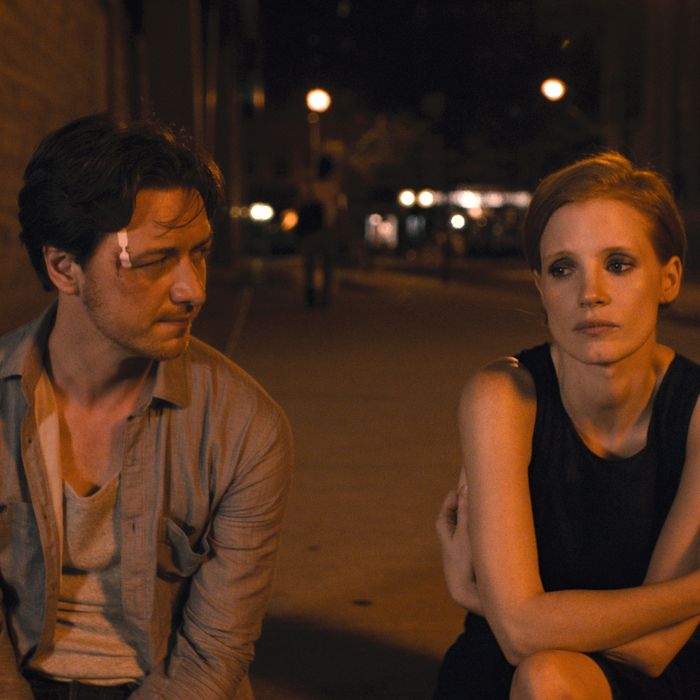
The Vanishing (1988)
Oh boy. They (actually, my wife) told me not to watch it, but naturally I said, 'it's a 5-star movie. I have to watch it.' I'm not sorry I watched it--the chance to revisit the scenes and pastimes of late 80s France alone make it worthwhile for me (this is the Dutch version, not the Hollywood remake that came out a few years later and apparently was not very good)--but the ending is definitely a downer. While I realize now that the movie is full of all kinds of creepy foreshadowing, it has the kind of languid pace and pointed, unfrenetic construction that I like when I see it, though if too many movies were made in that way I would grow tired of it. And as noted above, the atmosphere is congenial to me.
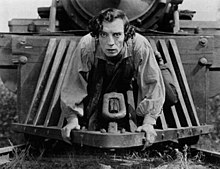
 The General (1926)
As someone who at least went through a phase a few years back where I really went in for silent movies, with the works of Buster Keaton (naturally) prominent among my favorites from that period, I was anticipating this, considered by many to be his masterpiece and which I had never seen before, with considerable excitement; however my attempts--for I made two--to watch this and absorb something of the frisson that often accompanies a viewing of such a universally-acclaimed classic, were failures on this occasion. As with so many similar experiences of late, I am chalking it up in part to where I am currently in life, in which my constitution as well as my brain are undergoing another transitional period with regard to how they process and respond to things like art. I have at present no other time to see movies but in the evening--my family doesn't allow me to get through so much as a football game when they are awake--and I simply cannot stay awake, at home anyway, for something like this at that hour, with the only sound being repetitive silent movie music. Besides this though, any resemblance of the old thrill that I would at times feel when confronted with a film of this class and stature was lacking entirely. At no point was I pulled in in any aspect. Perhaps (hopefully) this phase of my sensibility will pass and a future version of myself will be able to encounter this again and be moved by it in the way that its acclaim promises is possible. It has happened before.
 Far and Away (1992)
I have not been averse to certain of Ron Howard's crowd-pleasing films, namely Cocoon and A Beautiful Mind, and thought at the least that this mini-saga about Irish immigrants in America might share some similarly comforting qualities, but I found it to be emotionally flat and distant on top of a story that was oddly un-engaging and pedestrian. I've never been enamored of Tom Cruise in any movie that I've seen; his longtime stardom, even accounting for his handsomeness, is a mystery to me. Nicole Kidman I never generally liked either, though once she stopped appearing in so many movies with Tom Cruise and occasionally wore her hair in an appealing style, she grew on me, a little. My opinion of this duo has further doubtless been colored by a wild story about them told to me by a woman I worked with back in the 90s who had gone on a vacation to a resort where, she said, Tom Cruise and Nicole Kidman were also staying and that it was "known to all the other guests" that Nicole went to bed every night in her trainer's room while Tom was shacking up with a younger gentleman friend. Of course I completely believe this. Anyway this movie was a dud. It had top end Hollywood production values and a reasonably competent team working on it, but it never picked up or came alive.

Remake of a 1971 movie, starring professional eccentric Crispin Glover as a sort of proto-incel who lives in a nice Victorian house he has, at least temporarily, inherited from his parents which gets taken over by especially vindictive rats. It's pretty terrible and disgusting. The non-rat parts of it, the character's inability to function in the workplace or the modern world in general, and his anachronistic house, held my interest briefly, but they were minor aspects of the plot. At the end of this movie I determined that it wasn't necessary for me to watch anything that wasn't a widely renowned classic all the way through any more if I didn't want to. Some stuff is really irredeemable, but it took me a long time to come to the point where I felt myself entitled/qualified to say so.
Casino (1995)
Famously interminable Scorcese movie about the mob in Las Vegas. Everything that happens in this is completely morally repugnant, with no redeeming qualities. You probably knew that, but there are films with similar overarching themes that manage to be more interesting. Sharon Stone's performance in this was pilloried at the time and marked at least the beginning of the end for her as a headlining star, but I have to say her acting did not stand out to me as any worse than anyone else's did. I know I am not differing much from consensus opinion on this movie. My recent belief, or at least curiosity, garnered mainly from reading the movie blogs of very clever film fans, is that there are infinite delights to be mined from films that are comparatively uncelebrated by the critical consensus. Doubtless there are many instances where this is the case, however my somewhat random approach to trying to find examples has hit a cold streak lately.
The first sound movie from the great Danish-born, but really pan-European director Carl Theodor Dreyer, made in France but with dialogue primarily in German. The style decidedly shares characteristics with the scary German expressionist movement that was coming to its final culmination at the time. With this at least I had the comfort of knowing I was watching a real European classic of impressive age from a master artist. The dialogue, such as it is, is minimal, and it is a little difficult to follow and sleep-inducing to watch at home. The most memorable scene is shot from the point of view of a corpse looking out through the window of his coffin at the sky, branches, steeples, etc, as he is being carried to his burial. That is what stands out to me about this film.

The Disappearance of Eleanor Rigby (2013)
For reasons that I am still trying to tease out, because the plot and the characters don't have any particularly outstanding appeal in themselves, and in fact are rather depressing, I quite liked this at the time that I saw it. Annoying and neurotic and over-privileged as most of the characters are, the general level of intelligence, cultural references, topics of conversation and so on which permeates the atmosphere of the picture is in the range where it holds my interest, which is something you know is increasingly lacking in my regular life. Most of the people in this movie belong to the higher end of the academic/well-traveled/urban liberal class, which is the class I certainly for better or for worse identify with, mainly because my IQ and general education level are commensurate with the average for this group I think, though I don't really belong to it, especially in the judgment of its actual members. Of course that none of these people are happy, their relationships are all disasters and they are inevitably professionally unfulfilled and disappointed, albeit their failures occur at a higher level than mine do. This is all true. There is nonetheless a relief in being in the company of people with mental outlooks and experiences that one can somewhat relate to.
The Vanishing (1988)
Oh boy. They (actually, my wife) told me not to watch it, but naturally I said, 'it's a 5-star movie. I have to watch it.' I'm not sorry I watched it--the chance to revisit the scenes and pastimes of late 80s France alone make it worthwhile for me (this is the Dutch version, not the Hollywood remake that came out a few years later and apparently was not very good)--but the ending is definitely a downer. While I realize now that the movie is full of all kinds of creepy foreshadowing, it has the kind of languid pace and pointed, unfrenetic construction that I like when I see it, though if too many movies were made in that way I would grow tired of it. And as noted above, the atmosphere is congenial to me.
As someone who at least went through a phase a few years back where I really went in for silent movies, with the works of Buster Keaton (naturally) prominent among my favorites from that period, I was anticipating this, considered by many to be his masterpiece and which I had never seen before, with considerable excitement; however my attempts--for I made two--to watch this and absorb something of the frisson that often accompanies a viewing of such a universally-acclaimed classic, were failures on this occasion. As with so many similar experiences of late, I am chalking it up in part to where I am currently in life, in which my constitution as well as my brain are undergoing another transitional period with regard to how they process and respond to things like art. I have at present no other time to see movies but in the evening--my family doesn't allow me to get through so much as a football game when they are awake--and I simply cannot stay awake, at home anyway, for something like this at that hour, with the only sound being repetitive silent movie music. Besides this though, any resemblance of the old thrill that I would at times feel when confronted with a film of this class and stature was lacking entirely. At no point was I pulled in in any aspect. Perhaps (hopefully) this phase of my sensibility will pass and a future version of myself will be able to encounter this again and be moved by it in the way that its acclaim promises is possible. It has happened before.
I have not been averse to certain of Ron Howard's crowd-pleasing films, namely Cocoon and A Beautiful Mind, and thought at the least that this mini-saga about Irish immigrants in America might share some similarly comforting qualities, but I found it to be emotionally flat and distant on top of a story that was oddly un-engaging and pedestrian. I've never been enamored of Tom Cruise in any movie that I've seen; his longtime stardom, even accounting for his handsomeness, is a mystery to me. Nicole Kidman I never generally liked either, though once she stopped appearing in so many movies with Tom Cruise and occasionally wore her hair in an appealing style, she grew on me, a little. My opinion of this duo has further doubtless been colored by a wild story about them told to me by a woman I worked with back in the 90s who had gone on a vacation to a resort where, she said, Tom Cruise and Nicole Kidman were also staying and that it was "known to all the other guests" that Nicole went to bed every night in her trainer's room while Tom was shacking up with a younger gentleman friend. Of course I completely believe this. Anyway this movie was a dud. It had top end Hollywood production values and a reasonably competent team working on it, but it never picked up or came alive.
Wednesday, December 19, 2018
For Dream Interpreters
I had a number of disturbing dreams over the past week that I am concerned portend some imminent crisis, or at least inconvenient period, in my life. Something of the sort is bound to happen someday.
Friday night I was reportedly thrashing about and screaming like a sissyboy in my sleep. I have no memory of this dream however and only heard about it in the morning when I woke up.
I don't remember the content of Saturday night's dream either, only that I was somehow tethered to my mother with no possibility of escape and I woke up in a kind of terrified rage where it took me a minute to realize that I was far away and in my own house where I have lived for 20 years, the existence of which life I had evidently forgotten about in the dream.
Then on Sunday night I had two vivid and bizarre dreams.
In the first dream I was going with my three younger children to the old Yankee Stadium in New York (It was doubtless the old one because, one, I am sure that is the one that exists in my subconscious, and also its walls were the cracked concrete covered with blue and red lead paint that brings to mind the decaying world of my 1970s childhood). Yankee legend Phil Rizzuto (who has been dead for about twenty years), in his Money Store-era incarnation, was waiting by one of these walls under a harsh bare bulb to greet us and take us to our seats, which were at the very top row of the stadium. Indeed to get to the top level we had to climb up a rickety ladder several of the wooden steps of which were loose, on which we were, by the third step (of about eight) also in danger of falling over a low fence all the way from the top of the stadium to the ground. Also at the top of the ladder we had to pull ourselves over another low but tricky wall to finally get into the stadium again. All of this with children of 9,7, and 3 years old (Phil Rizzuto did not accompany us on the climb). Of course not getting on the ladder was not an option. Needless to say it was very nerve-wracking, and when my little boy was struggling to get over the final wall at the top--as a stadium attendant curiously looked on without helping--was the point when I woke up. I will add that scary as it was on the ladder, it did afford a gorgeous view of New York City, probably the 1950s version of it, on a clear and not overly humid day, albeit almost certainly from a much higher vantage than the stadium actually is, because the bridges were far below where we were climbing.

I interpreted this dream as meaning either: I was about to die and something like this was a preview of my entering the afterlife; or, that I had taken on more than I could deal with of late, and was not going to be able to ascend to the relative sanctuary of the upper deck, especially bringing everyone else along with me. This seems the more likely explanation at present.
 In the other dream I was hanging out at a Chili's restaurant (I was last at a Chili's restaurant sometime around 2003, I think) when a trio of girls, not notably gorgeous, but young (around 25ish), with normal body weights, long hair, and wearing distinctly feminine jackets and skirts, suddenly accosted me, and one of them, who was giggling kind of insanely, pulled me to her and kissed me aggressively on the mouth for about 15 seconds. Needless to say, I thought the lucky night I had been waiting for all my life had finally arrived, for nothing like this has ever actually happened to me. At the end of this kiss however she drew back and proceeded to regurgitate fourteen bottle caps covered in yellow goo, gave one more chortle that was more insane than wicked, and ran away again. Figuring that, exciting as that had been, it was probably the end of it, I sat back down at my table and tried to look as if I regarded such events as routine in my life. Then an older man, apparently the father of this girl who kissed me, came up to me and asked me if I had any degrees as if he were vetting me as a potential son-in-law. After hesitating for what seemed a decent amount of time and attempting to deflect the question I admitted to having gotten a B.A. "a long time ago." He observed that he expected I was some kind of intellectual type, seeing as I lacked "vascular structure" which I am sure is either impossible or a nonsense expression, though it sounds insulting enough to be told this. This guy was not exactly projecting a ton of vascular structure himself, being rather small and slight, with a bald dome and gray hair and beard rather in the style of Solzhenitsyn. However he seemed to like me well enough, and he handed me his business card, which revealed his profession to be that of an undertaker. At this point I noticed my wife and some of my children seated in a booth on the far side of the room, of course became concerned that my behavior had been observed, etc, and the whole dream fell apart.

Solzhenitsyn (1918-2008) and Rizzuto (1917-2007) were exact contemporaries who led nearly parallel long lives
I really don't know what this one means other than the obvious desire for something--anything-- interesting and exciting to ever happen in my life again. Every day now is an endless routine of chores and dealing with difficult behavior and trying not to spend money, and I can't travel and I can't really even go to any of the many interesting places within an hour or two of my house anymore if they are going to cost anything. I am not exactly unhappy, and if I have all of the underutilized cognitive ability that I believe I have I certainly have ample opportunity to demonstrate some of it in the upbringing of my family and in my workplace and in figuring out other possible ways to increase my income, and I am not able to do so, so I have to assume I am at my proper level for the most part. The inexorableness of it all gets to me sometimes though.
Once the weekend ended I was evidently so tired by the time I went to bed Monday and Tuesday that I slept so hard that I retained no memory of any dreams at all.
Friday night I was reportedly thrashing about and screaming like a sissyboy in my sleep. I have no memory of this dream however and only heard about it in the morning when I woke up.
I don't remember the content of Saturday night's dream either, only that I was somehow tethered to my mother with no possibility of escape and I woke up in a kind of terrified rage where it took me a minute to realize that I was far away and in my own house where I have lived for 20 years, the existence of which life I had evidently forgotten about in the dream.
Then on Sunday night I had two vivid and bizarre dreams.
In the first dream I was going with my three younger children to the old Yankee Stadium in New York (It was doubtless the old one because, one, I am sure that is the one that exists in my subconscious, and also its walls were the cracked concrete covered with blue and red lead paint that brings to mind the decaying world of my 1970s childhood). Yankee legend Phil Rizzuto (who has been dead for about twenty years), in his Money Store-era incarnation, was waiting by one of these walls under a harsh bare bulb to greet us and take us to our seats, which were at the very top row of the stadium. Indeed to get to the top level we had to climb up a rickety ladder several of the wooden steps of which were loose, on which we were, by the third step (of about eight) also in danger of falling over a low fence all the way from the top of the stadium to the ground. Also at the top of the ladder we had to pull ourselves over another low but tricky wall to finally get into the stadium again. All of this with children of 9,7, and 3 years old (Phil Rizzuto did not accompany us on the climb). Of course not getting on the ladder was not an option. Needless to say it was very nerve-wracking, and when my little boy was struggling to get over the final wall at the top--as a stadium attendant curiously looked on without helping--was the point when I woke up. I will add that scary as it was on the ladder, it did afford a gorgeous view of New York City, probably the 1950s version of it, on a clear and not overly humid day, albeit almost certainly from a much higher vantage than the stadium actually is, because the bridges were far below where we were climbing.
I interpreted this dream as meaning either: I was about to die and something like this was a preview of my entering the afterlife; or, that I had taken on more than I could deal with of late, and was not going to be able to ascend to the relative sanctuary of the upper deck, especially bringing everyone else along with me. This seems the more likely explanation at present.
Solzhenitsyn (1918-2008) and Rizzuto (1917-2007) were exact contemporaries who led nearly parallel long lives
I really don't know what this one means other than the obvious desire for something--anything-- interesting and exciting to ever happen in my life again. Every day now is an endless routine of chores and dealing with difficult behavior and trying not to spend money, and I can't travel and I can't really even go to any of the many interesting places within an hour or two of my house anymore if they are going to cost anything. I am not exactly unhappy, and if I have all of the underutilized cognitive ability that I believe I have I certainly have ample opportunity to demonstrate some of it in the upbringing of my family and in my workplace and in figuring out other possible ways to increase my income, and I am not able to do so, so I have to assume I am at my proper level for the most part. The inexorableness of it all gets to me sometimes though.
Once the weekend ended I was evidently so tired by the time I went to bed Monday and Tuesday that I slept so hard that I retained no memory of any dreams at all.
Friday, December 14, 2018
More of the Same
The Threepenny Opera (1931)
Director: G.W. Pabst
Notable Stars: I have the impression that Lotte Lenya is something of a name. Doubtless several of the other actors are substantial figures in German cinematic history but none of them are as yet familiar to me.
Did I like it? I found it difficult to self-generate any kind of response to it, positive or negative.
What I remember: All of these Weimar Republic era movies, especially the very late ones, are almost impossible to have any thoughts about without reference to the period that followed. This has the oppressive atmosphere, the hard characters and the air of cynicism that I associate with this family of movies, though I was unable to break through this impression to detect anything I thought was grand. Based on the 18th century John Gay play The Beggar's Opera, it is nominally set in London, but there is nothing about it that evokes any sense of London in any period whatsoever. While this may be an unimportant detail, it is nonetheless strange.
What I associate it with: M
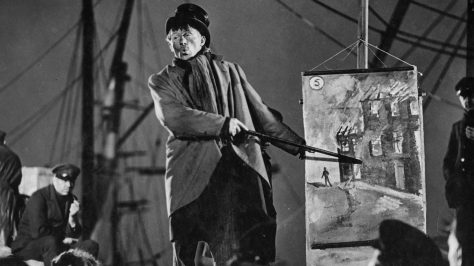
Immortal (2004)
Director: Enki Bilal
Notable Stars: Charlotte Rampling
Did I like it? No
What I remember: It's set in 2095, when my daughters will be 80 and 84, and my sons, if any of them are still around, 86, 89, 92 & 93. The future, as always, appears to be even more seriously horrible than the present. There's no romance, no fun music, no sunshine actually--is that a side effect of climate change? People are killed a lot. Some of them are genetically enhanced, which seems to make them more coldly rational and heartless. It's based on a comic book/graphic novel. I don't care about it.
What I associate it with: Avatar? I don't know, I don't watch these kinds of movies for the most part.

The art of the modern world is absolutely killing me.
About Time (2013)
Director: Richard Curtis
Notable Stars: Rachel McAdams, Bill Nighy, the guy who played Levin in Anna Karenina.
Did I like it? I am ashamed to admit it, but at the time, yes. The explanation in the next section will hopefully put this in some context.
What I remember: This was not on any of my lists. My wife had seen it on an airplane, and when I had my kidney stone last December at this very time and was laid up in bed for a week and had a catheter in and was feeling like my life was essentially over she made me watch this ridiculous English movie (from the same team that foisted the gross Love, Actually, which I genuinely detest, on the world) about a young man of the geeky type who has the ability to travel in time, though generally only in short distances, because when you go back too far the consequences of changing your past have too many other effects, including altering the genes of people not yet born, etc. However if you make a false step in talking to a girl or not being aggressive enough in bed or whatever, you can keep going back 5 minutes or a half an hour and try something else until you get a more satisfactory outcome. Rachel McAdams is a sweet-faced Canadian. She is also renowned as a activist for environmentalism and other left-wing causes, I am not sure how ferociously. Apparently Zooey Deschanel was originally supposed to have her role and she probably would have carried it off well enough too, but it would have been more playing to type for her, and I liked Rachel McAdams' presentation of the character. After being shell-shocked from all of the nihilistic modern movies full of mumbling dialogue, I was softened up enough to find the Bill Nighy (an actor I usually find annoying) character's propensity for quoting Dickens and finding consolation in the civilized pleasures of life a welcome diversion. If one were more critical one could take issue with the family's self-satisfied bourgeois smugness and apparently unassailable comfort and financial security--I believe they are all academics and lawyers in the most respectable tracks of those professions--but obviously I would like nothing more at this point than to have those comforts myself, my desire for which is much stronger than any I have to man the barricades (which desire Rachel McAdams, a participant in the "Occupy" movement, ironically does have). The occasion on which the Levin actor met Rachel, his love interest, for the 1st time, took place on a blind date type event in London in which the various opposed types--this is the kind of movie that wants to present itself as believing that same sex and other non-heterosexual orientations and couplings are completely socially mainstream--go separately into a basement restaurant in complete darkness where they are seated at a table with possible dating partners who they are supposed to talk to while being served a meal by blind waiters. It struck me as a quintessentially ridiculous 21st century ultra first world rich city idea while also making me kind of wistful at having both aged out of and been largely priced out of taking part in such scenes. The mere thought of having to sit alert for two hours and try to eat a meal and try hopelessly to make out what any women I might be talking to looked like in complete darkness caused my eyes to be possessed by a kind of panic though.
I associate this with: Four Weddings and a Funeral, which is the only other modern British movie of this type (romance among young professionals) that I can bear.

The Man With the Golden Arm (1955)
Director: Otto Preminger
Notable Stars: Frank Sinatra, Kim Novak, Eleanor Parker.
Did I like it? Yes. I love the down and out 1950s (cinematic version) pretty much everywhere it turns up.
What I remember: Great jazz soundtrack by Elmer Bernstein (we'll see him again later). I've always thought Frank Sinatra was quite good as an actor. He did not, prior to 1960 or so at least, often play Himself, or the popular image of Himself, that has come down to us. He frequently played a scrappy underdog or deeply troubled type of character, and played them endearingly. The atmosphere of the dingy bars and apartments of this era in glorious black and white. Eleanor Parker's hair and skin tone. Kim Novak's hair and skin tone. Connection with late 40s/50s literary scene through the novel on which the movie is based, which I haven't read however.
Associated in my mind with: On the Waterfront, Edge of the City


Far From Heaven (2002)
Director: Todd Haynes
Notable Stars: Julianne Moore, Dennis Quaid, Patricia Clarkson. I'm not a great fan of any of these people, but I can't pretend to not know who they are.
Did I like it? I have to admit I do like it. The story was not anything I thought great, but it is a gorgeous movie, and as a visual homage to the Sirk pictures of the 50s and the general nostalgic fantasies that have grown up around that period it strikes the right note a lot.
What I remember: While I don't have any better suggestions for what might have been done with the plot other than having more original treatments of the two major themes of repressed (though by the end not very) homosexuality and vile racism against the backdrop of evil 1950s society. The black character who befriends Julianne Moore checks off every box in the educated white liberal imagination: he is dignified, cultured, hardworking, entrepreneurial, an expert botanist, (tragically) a widower who is devoted to his daughter as well as an aging parent, he is constantly harassed and condescended to by moronic whites who don't have a tenth part of his intellect, grace, or character. Not that a person like this couldn't have existed, of course, but all of these qualities existing in the same person while suffering from oppression seems a little heavy-handed. Dennis Quaid's secretly gay corporate 50s man in the gray flannel suit on the other hand is so physically overwhelmed by the pull of his true orientation that everything else in his life has to be cast to the winds so that he can indulge whole hog in the love he craves. That aside I do love this particular recreation of 1957 Connecticut, though it is over the top in its preciousness as well, down to the dreamy blue title letters and the soundtrack by authentic 50s composer Elmer Bernstein, the same guy who wrote the music 47 years earlier for the just catalogued Man With the Golden Arm. He died in 2004 at the age of 82.
I associate this with: What you would expect. The authentic 50s movies, Sirk, et al, plus the more recent Mad Men type stabs at the era. But no direct companion stands out.

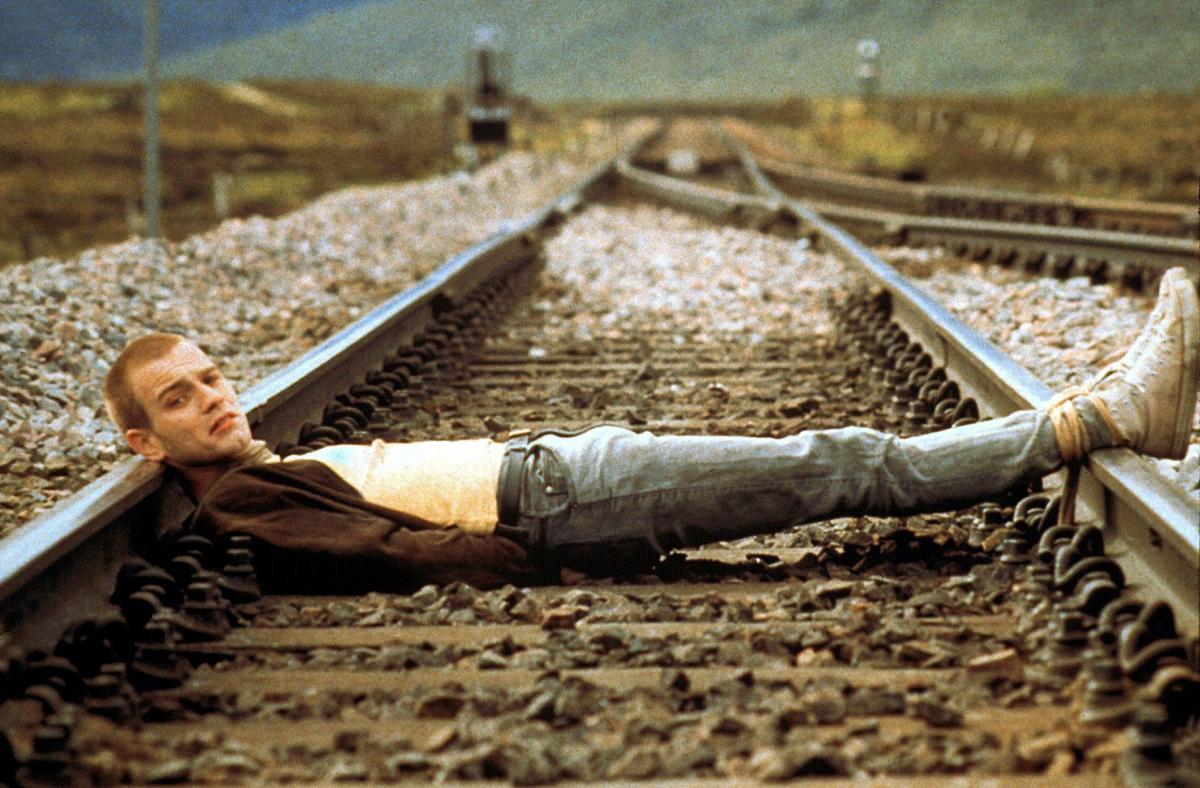
Trainspotting (1996)
Director: Danny Boyle
Notable Stars: Robert Carlyle became kind of famous, and Ewan McGregor I think became even more famous, though he isn't someone I usually take note of even when I see something he is in.
Did I like it? Yes, it is really good. I actually saw this in a theater in Prague when it initially came out, and I'm sure I thought it was good then, but when it came up now I had my doubts as to how well it would hold up, but upon seeing it again I was really impressed by how good it is, it's fantastic even. It's hard now at a remove of some months to exactly explain why this is so, but it gets so many things right, pace, energy, mood, the various scenes feel authentic but also feel like something actually important is at stake, which is remarkable for a movie about a bunch of heroin addicts and thugs in Scotland whose lives in conventional terms "aren't going anywhere." It is inventive in a genuinely interesting way. It never feels dated or obsolete even though it obviously takes place in a different time and predates the internet and other systems and attitudes characteristic of the present.
What I remember: I kind of summed up my impression above, but I still haven't put my finger on what is so effective about this movie. It is very good at inducing a sense of longing, for love or some approximation of it, or comfort, or joy or some thrill, and occasionally something like these desires actually come to fruition, but very fleetingly, a matter of seconds or minutes at best. I suppose the whole pattern of life is very much like this, which is why the movie works so well.
I associate this with: I don't know. Itself? It seems like there must be other movies like this, but they are all kind of rip-offs of this in one way or another.
Throne of Blood (1957)
Director: Akira Kurosawa
Notable Stars: Toshiro Mifune. Isuzu Yamada is a legend among film snobs but this is the only thing I've seen her in so far.
Did I like it? I know it's a classic. I sometimes have trouble connecting with Kurosawa's samurai pictures (my favorite movie of his is The Idiot, which I love). I would love, at least in theory, to join some kind of film club that showed these films on a big screen and had some kind of drinks and hors d'oeuvres reception afterwards with light but intelligent discussion. However whenever you go to one of those things, at least if you are me, the people are never the crowd you were looking for.
Yes, this has come up here previously. This is another title that I watched on VHS while the DVD languished in the Netflix "unavailable" purgatory for eight years or so before suddenly appearing in my mailbox.
What I remember: I know it's Macbeth translated to a medieval Japanese setting. I remember a lot of scenes in the rain. The woods of Dunsinane scene was very well done. The madness of the two lead characters was by Western standards highly exaggerated but I guess it is characteristic of the Japanese tradition.
I associate this with: the 1950s Kurosawa canon

This stretch ended with quite a few good movies in a row. Our luck will not hold out (entirely) into the next set.
Director: G.W. Pabst
Notable Stars: I have the impression that Lotte Lenya is something of a name. Doubtless several of the other actors are substantial figures in German cinematic history but none of them are as yet familiar to me.
Did I like it? I found it difficult to self-generate any kind of response to it, positive or negative.
What I remember: All of these Weimar Republic era movies, especially the very late ones, are almost impossible to have any thoughts about without reference to the period that followed. This has the oppressive atmosphere, the hard characters and the air of cynicism that I associate with this family of movies, though I was unable to break through this impression to detect anything I thought was grand. Based on the 18th century John Gay play The Beggar's Opera, it is nominally set in London, but there is nothing about it that evokes any sense of London in any period whatsoever. While this may be an unimportant detail, it is nonetheless strange.
What I associate it with: M
Immortal (2004)
Director: Enki Bilal
Notable Stars: Charlotte Rampling
Did I like it? No
What I remember: It's set in 2095, when my daughters will be 80 and 84, and my sons, if any of them are still around, 86, 89, 92 & 93. The future, as always, appears to be even more seriously horrible than the present. There's no romance, no fun music, no sunshine actually--is that a side effect of climate change? People are killed a lot. Some of them are genetically enhanced, which seems to make them more coldly rational and heartless. It's based on a comic book/graphic novel. I don't care about it.
What I associate it with: Avatar? I don't know, I don't watch these kinds of movies for the most part.
The art of the modern world is absolutely killing me.
About Time (2013)
Director: Richard Curtis
Notable Stars: Rachel McAdams, Bill Nighy, the guy who played Levin in Anna Karenina.
Did I like it? I am ashamed to admit it, but at the time, yes. The explanation in the next section will hopefully put this in some context.
What I remember: This was not on any of my lists. My wife had seen it on an airplane, and when I had my kidney stone last December at this very time and was laid up in bed for a week and had a catheter in and was feeling like my life was essentially over she made me watch this ridiculous English movie (from the same team that foisted the gross Love, Actually, which I genuinely detest, on the world) about a young man of the geeky type who has the ability to travel in time, though generally only in short distances, because when you go back too far the consequences of changing your past have too many other effects, including altering the genes of people not yet born, etc. However if you make a false step in talking to a girl or not being aggressive enough in bed or whatever, you can keep going back 5 minutes or a half an hour and try something else until you get a more satisfactory outcome. Rachel McAdams is a sweet-faced Canadian. She is also renowned as a activist for environmentalism and other left-wing causes, I am not sure how ferociously. Apparently Zooey Deschanel was originally supposed to have her role and she probably would have carried it off well enough too, but it would have been more playing to type for her, and I liked Rachel McAdams' presentation of the character. After being shell-shocked from all of the nihilistic modern movies full of mumbling dialogue, I was softened up enough to find the Bill Nighy (an actor I usually find annoying) character's propensity for quoting Dickens and finding consolation in the civilized pleasures of life a welcome diversion. If one were more critical one could take issue with the family's self-satisfied bourgeois smugness and apparently unassailable comfort and financial security--I believe they are all academics and lawyers in the most respectable tracks of those professions--but obviously I would like nothing more at this point than to have those comforts myself, my desire for which is much stronger than any I have to man the barricades (which desire Rachel McAdams, a participant in the "Occupy" movement, ironically does have). The occasion on which the Levin actor met Rachel, his love interest, for the 1st time, took place on a blind date type event in London in which the various opposed types--this is the kind of movie that wants to present itself as believing that same sex and other non-heterosexual orientations and couplings are completely socially mainstream--go separately into a basement restaurant in complete darkness where they are seated at a table with possible dating partners who they are supposed to talk to while being served a meal by blind waiters. It struck me as a quintessentially ridiculous 21st century ultra first world rich city idea while also making me kind of wistful at having both aged out of and been largely priced out of taking part in such scenes. The mere thought of having to sit alert for two hours and try to eat a meal and try hopelessly to make out what any women I might be talking to looked like in complete darkness caused my eyes to be possessed by a kind of panic though.
I associate this with: Four Weddings and a Funeral, which is the only other modern British movie of this type (romance among young professionals) that I can bear.
The Man With the Golden Arm (1955)
Director: Otto Preminger
Notable Stars: Frank Sinatra, Kim Novak, Eleanor Parker.
Did I like it? Yes. I love the down and out 1950s (cinematic version) pretty much everywhere it turns up.
What I remember: Great jazz soundtrack by Elmer Bernstein (we'll see him again later). I've always thought Frank Sinatra was quite good as an actor. He did not, prior to 1960 or so at least, often play Himself, or the popular image of Himself, that has come down to us. He frequently played a scrappy underdog or deeply troubled type of character, and played them endearingly. The atmosphere of the dingy bars and apartments of this era in glorious black and white. Eleanor Parker's hair and skin tone. Kim Novak's hair and skin tone. Connection with late 40s/50s literary scene through the novel on which the movie is based, which I haven't read however.
Associated in my mind with: On the Waterfront, Edge of the City
Far From Heaven (2002)
Director: Todd Haynes
Notable Stars: Julianne Moore, Dennis Quaid, Patricia Clarkson. I'm not a great fan of any of these people, but I can't pretend to not know who they are.
Did I like it? I have to admit I do like it. The story was not anything I thought great, but it is a gorgeous movie, and as a visual homage to the Sirk pictures of the 50s and the general nostalgic fantasies that have grown up around that period it strikes the right note a lot.
What I remember: While I don't have any better suggestions for what might have been done with the plot other than having more original treatments of the two major themes of repressed (though by the end not very) homosexuality and vile racism against the backdrop of evil 1950s society. The black character who befriends Julianne Moore checks off every box in the educated white liberal imagination: he is dignified, cultured, hardworking, entrepreneurial, an expert botanist, (tragically) a widower who is devoted to his daughter as well as an aging parent, he is constantly harassed and condescended to by moronic whites who don't have a tenth part of his intellect, grace, or character. Not that a person like this couldn't have existed, of course, but all of these qualities existing in the same person while suffering from oppression seems a little heavy-handed. Dennis Quaid's secretly gay corporate 50s man in the gray flannel suit on the other hand is so physically overwhelmed by the pull of his true orientation that everything else in his life has to be cast to the winds so that he can indulge whole hog in the love he craves. That aside I do love this particular recreation of 1957 Connecticut, though it is over the top in its preciousness as well, down to the dreamy blue title letters and the soundtrack by authentic 50s composer Elmer Bernstein, the same guy who wrote the music 47 years earlier for the just catalogued Man With the Golden Arm. He died in 2004 at the age of 82.
I associate this with: What you would expect. The authentic 50s movies, Sirk, et al, plus the more recent Mad Men type stabs at the era. But no direct companion stands out.
Trainspotting (1996)
Director: Danny Boyle
Notable Stars: Robert Carlyle became kind of famous, and Ewan McGregor I think became even more famous, though he isn't someone I usually take note of even when I see something he is in.
Did I like it? Yes, it is really good. I actually saw this in a theater in Prague when it initially came out, and I'm sure I thought it was good then, but when it came up now I had my doubts as to how well it would hold up, but upon seeing it again I was really impressed by how good it is, it's fantastic even. It's hard now at a remove of some months to exactly explain why this is so, but it gets so many things right, pace, energy, mood, the various scenes feel authentic but also feel like something actually important is at stake, which is remarkable for a movie about a bunch of heroin addicts and thugs in Scotland whose lives in conventional terms "aren't going anywhere." It is inventive in a genuinely interesting way. It never feels dated or obsolete even though it obviously takes place in a different time and predates the internet and other systems and attitudes characteristic of the present.
What I remember: I kind of summed up my impression above, but I still haven't put my finger on what is so effective about this movie. It is very good at inducing a sense of longing, for love or some approximation of it, or comfort, or joy or some thrill, and occasionally something like these desires actually come to fruition, but very fleetingly, a matter of seconds or minutes at best. I suppose the whole pattern of life is very much like this, which is why the movie works so well.
I associate this with: I don't know. Itself? It seems like there must be other movies like this, but they are all kind of rip-offs of this in one way or another.
Throne of Blood (1957)
Director: Akira Kurosawa
Notable Stars: Toshiro Mifune. Isuzu Yamada is a legend among film snobs but this is the only thing I've seen her in so far.
Did I like it? I know it's a classic. I sometimes have trouble connecting with Kurosawa's samurai pictures (my favorite movie of his is The Idiot, which I love). I would love, at least in theory, to join some kind of film club that showed these films on a big screen and had some kind of drinks and hors d'oeuvres reception afterwards with light but intelligent discussion. However whenever you go to one of those things, at least if you are me, the people are never the crowd you were looking for.
Yes, this has come up here previously. This is another title that I watched on VHS while the DVD languished in the Netflix "unavailable" purgatory for eight years or so before suddenly appearing in my mailbox.
What I remember: I know it's Macbeth translated to a medieval Japanese setting. I remember a lot of scenes in the rain. The woods of Dunsinane scene was very well done. The madness of the two lead characters was by Western standards highly exaggerated but I guess it is characteristic of the Japanese tradition.
I associate this with: the 1950s Kurosawa canon
This stretch ended with quite a few good movies in a row. Our luck will not hold out (entirely) into the next set.
Friday, December 07, 2018
Movie Reviews End of November 2018
Silent House (2011)
Director: Chris Kentis & Laura Lau
Notable Stars: None, although Elizabeth Olsen is a sister of the once-famous child actors the Olsen twins. She was cute.
Did I like it?: No. It was boring.
What I remember about it: Not much. It was a remake of a Uruguayan movie, of all things, which I'm sure was awesome. For some reason which was never clear to me the titular house that was being remodeled had no electricity and the windows were all boarded up with boards that were effectively impossible to wrench off so that if you misplaced your flashlight you were in complete darkness. I have no recollection of what happened in the movie.
I associate this with: The third movie in this set, maybe, but really nothing.

King of the Ants (2003)
Director: Stuart Gordon
Notable Stars: George Wendt; late-80s era MTV bimbo Kari Wuhrer
Did I like it?: In spite of the excessive violence, I am going to say yes. It held my interest.
What I remember: There is an interesting dynamic going in that this starts out like a 90s era Generation X slacker movie--aimless guy sleeping on a futon looking for odd jobs, the presence of at least the 2 actors named above in an apparent indie movie--and then it transitions rather abruptly into the more sinister, ruthless, dystopian cinematic world that has been familiar to audiences since around this time. The George Wendt character is introduced as the kind of schlumpfy, house painter type guy that you would expect a 90s era George Wendt character to be, but he turns out to be a brutal, sadistic administer of violence, and a good one. He also wears t-shirts and shorts throughout so you can see how enormous he is, which is considerably more so than I had realized previously. I don't like Kari Wuhrer even though I find her alluring, which is unusual with me. She radiates bitchiness, which in itself of course is not an admissible criticism anymore in itself, but she doesn't compensate for this by ever being witty or incisive or any fun at all, so what's the point?
I associate this with: Some combination of Quentin Tarantino meets Kevin Smith meets Traffic meets whoever the big 21st century nihilists are in a dystopian California.

The Others (2001)
Director: Alejandro Amenabar
Notable Stars: Nicole Kidman. Christopher Eccleston, who has appeared in a couple of things that have been written up on this blog.
Did I like it? No. It's another movie full of scary weird people or people-like entities who obviously have something off about them. Not my type of film.
What I remember: The house is very nice. It's set in Britain in the 1940s, but since the children who live in it cannot be exposed to sunlight this is another movie that takes place largely in the dark, which having just seen Silent House was a plot device I was already weary of. This was a good example of how I have a hard time discerning by the style of filmmaking or theme in what year many movies since around 2000 were made, especially period pieces that don't give themselves away by what technology the characters have. By the time it came in the mail I had forgotten it was on the list or what year it was from, and I thought it was a relatively new movie. As such I found myself thinking throughout that Nicole Kidman, who I believe is older than I am (she is--she is 51 now, which would have made her 33 at the time this was filmed), looked remarkably good, and that the 1940s era hairstyle she was sporting really worked for her compared to the usual way of she wears her hair. It did not occur to me that the movie was actually 20 years old until I looked it up.
I associate this with: Everything wrong with modern movies. The production values are lush and beautiful, but the result is lifeless and unsatisfying.


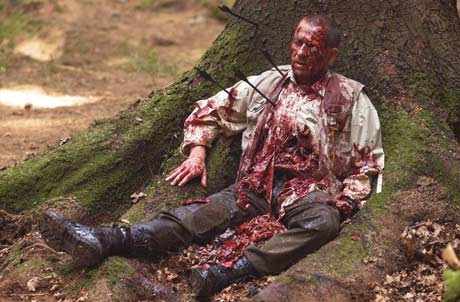


Director: Chris Kentis & Laura Lau
Notable Stars: None, although Elizabeth Olsen is a sister of the once-famous child actors the Olsen twins. She was cute.
Did I like it?: No. It was boring.
What I remember about it: Not much. It was a remake of a Uruguayan movie, of all things, which I'm sure was awesome. For some reason which was never clear to me the titular house that was being remodeled had no electricity and the windows were all boarded up with boards that were effectively impossible to wrench off so that if you misplaced your flashlight you were in complete darkness. I have no recollection of what happened in the movie.
I associate this with: The third movie in this set, maybe, but really nothing.
King of the Ants (2003)
Director: Stuart Gordon
Notable Stars: George Wendt; late-80s era MTV bimbo Kari Wuhrer
Did I like it?: In spite of the excessive violence, I am going to say yes. It held my interest.
What I remember: There is an interesting dynamic going in that this starts out like a 90s era Generation X slacker movie--aimless guy sleeping on a futon looking for odd jobs, the presence of at least the 2 actors named above in an apparent indie movie--and then it transitions rather abruptly into the more sinister, ruthless, dystopian cinematic world that has been familiar to audiences since around this time. The George Wendt character is introduced as the kind of schlumpfy, house painter type guy that you would expect a 90s era George Wendt character to be, but he turns out to be a brutal, sadistic administer of violence, and a good one. He also wears t-shirts and shorts throughout so you can see how enormous he is, which is considerably more so than I had realized previously. I don't like Kari Wuhrer even though I find her alluring, which is unusual with me. She radiates bitchiness, which in itself of course is not an admissible criticism anymore in itself, but she doesn't compensate for this by ever being witty or incisive or any fun at all, so what's the point?
I associate this with: Some combination of Quentin Tarantino meets Kevin Smith meets Traffic meets whoever the big 21st century nihilists are in a dystopian California.
The Others (2001)
Director: Alejandro Amenabar
Notable Stars: Nicole Kidman. Christopher Eccleston, who has appeared in a couple of things that have been written up on this blog.
Did I like it? No. It's another movie full of scary weird people or people-like entities who obviously have something off about them. Not my type of film.
What I remember: The house is very nice. It's set in Britain in the 1940s, but since the children who live in it cannot be exposed to sunlight this is another movie that takes place largely in the dark, which having just seen Silent House was a plot device I was already weary of. This was a good example of how I have a hard time discerning by the style of filmmaking or theme in what year many movies since around 2000 were made, especially period pieces that don't give themselves away by what technology the characters have. By the time it came in the mail I had forgotten it was on the list or what year it was from, and I thought it was a relatively new movie. As such I found myself thinking throughout that Nicole Kidman, who I believe is older than I am (she is--she is 51 now, which would have made her 33 at the time this was filmed), looked remarkably good, and that the 1940s era hairstyle she was sporting really worked for her compared to the usual way of she wears her hair. It did not occur to me that the movie was actually 20 years old until I looked it up.
I associate this with: Everything wrong with modern movies. The production values are lush and beautiful, but the result is lifeless and unsatisfying.
Imitation of Life (1959)
Director: Douglas Sirk
Notable Stars: Lana Turner; Sandra Dee; Mahalia Jackson. Juanita Moore, who played Lana Turner's black maid, is much lauded for her role in this, for which she received an Oscar nomination. I have to admit I had never heard of her before this, though.
Did I like it? I think I like All That Heaven Allows better among the Douglas Sirk oeuvre, but compared to all the more recent stuff I've been making myself watch, this was like cultural oxygen.
What I remember: Personally I found it somewhat uneven and clunky. Sirk has come back in fashion to a certain degree, but I don't always find that whatever it is people like about him overcomes his well-documented shortcomings, such as the extreme artificiality and heavy-handedness of his movies. This film is an adaptation of a novel by Fannie Hurst, a book which I have not read, though I did read another of her novels, Back Street, which is one of the most relentlessly depressing books I can recollect reading, though one which admittedly tackles some often overlooked subject matter. I wrote about it on my other blog. This story has a similar unsentimental and pessimistic underpinning though proximate to and in this instance even achieving a certain degree of worldly success. The most memorable storyline involves Juanita Moore's mulatto daughter who wants to pass as white once she becomes a teenager and is consequently resentful of her mother and wants nothing to do with her, though the mother has devoted her entire life to her. I have always been rather cold to my own mother in a similar way over the years, and have always wanted nothing more than to get away from her, because of my various unhappinesses with regard to my own social status and popularity and education level. I don't exactly believe that my failures in these areas were her fault, but she would never acknowledge, or more probably had no idea how serious and angry I was about them, and in any event she was incapable of doing anything that might improve my relative standing in any of these areas. Most people would say that at this point of my life I would have been able to move past this but no, I haven't, or at least do not want to. I may have come to some amount of peace with who I am now, but I have not been able to do the same with what I was in the important, formative years of my life. Anyway I have gotten away from the movie. The appearance of Mahalia Jackson was a highlight, and a surprise.
I associate this with: Nothing, really. It doesn't specifically remind me of anything else.
Wilderness (2006)
Director: Michael J. Bassett
Notable stars: No one I am familiar with.
Did I like it? No. It's a British movie, and I think they have an even more dystopian view of life in the 21st century than we do.
What I remember: It's about a bunch of juvenile delinquents sent to a remote island which is already inhabited by other criminals, and in the ensuing conflict almost everyone dies by some kind of extreme violence. The dialogue does not share any lineage with the fizzy British stage tradition either. I remember people being killed every few minutes, ambushes, things being burned, 2 girls being on the island among about 20 or 30 guys and one of them having sex, which I think was sort of consensual, in that she seems to picked a favorite out of the crowd, though abstinence probably would not have been a option. I was not into this. I am watching more of these modern movies to try to get a more nuanced understanding of what's going on in the present day world of my own adulthood. They are by and large not helping me.
I associate this with: Fish Tank, modern British crime shows emphasizing the psychological and physical hellscape that apparently a lot of people think England has become.
We're a long way from Stolen Kisses.
The Train (1964)
Director: John Frankenheimer
Notable Stars: Burt Lancaster, Paul Scofield, Jeanne Moreau. Now these are movie stars.
Did I like it? Of course. I cheated a little here, since I watched this and wrote about it for the blog back around 2010-11, and I have a policy generally about not repeating myself. However as I had watched it on VHS on that earlier occasion, and as it came available after sitting in my "saved" Netflix queue for the better part of a decade I took advantage of the opportunity to see it again. It does feature Nazis and there are firing squads and bullets to the head and crowds sprayed with machine gun fire and all of the well worn associations of the 2nd World War, so to criticize the other movies for their fixation on murder and blood while enjoying the wartime body count in this one because I find it more aesthetically to my taste seems not wholly consistent. The 1964 take on World War II does nod at least to the former existence of a fairly advanced civilization and the continued existence of individual people who have some such idea as a reference point, which saves films of this type from just being pointless demonstrations of depraved man's savage butchery without any redeeming higher qualities, which is how I experience these more modern movies.
What I remember: As I noted before, I love all of the old European railroad stuff, the stations, the yards, the iron and steel and grinding wheels, the little offices with their wooden file cabinets and their coffeepots. This was filmed in France and while my memory of that country is that much of the railroading scene had been modernized and suburbanized by the 90s, the aesthetic in Eastern Europe, the Czech Republic, Poland, Hungary, et al, was still similar to that depicted in this movie. The France presented here, while still somewhat romanticized, is nonetheless done so in a grimier and more elemental way than it is usually presented, especially by Americans. I even like Jeanne Moreau here, who in her immortal ur-French art movie roles is usually a little too complicated and lofty for me to appreciate.
I associate this with: Closely Watched Trains (for the railroad connection). I have not seen a lot of the classic World War II action movies that were ubiquitous in this era, to which family I imagine this movie belongs somewhat. They must not be rated very high.
Harry Potter and the Sorcerer's Stone (2001)
Director: Chris Columbus
Notable Stars: You probably know.
Did I like it? Maybe it is because I have children and have been overexposed to them, but it seems that, in part because of the popularity of this series, there are so many movies like this now, and to me this didn't stand out from any of the other hundreds of kids' fantasy movies that have been released during the last 20 years. Ho hum. But obviously it is beloved by people of a certain age.
What I remember: There is a school story, and traditionally I have liked school stories. Maybe it is a generation gap problem, but the characters in this world do not grab me. Nor do I have any interest in the problems they face. The story isn't beautiful, or poignant, or profound, that I can see, and an air of self-satisfaction and arch runs through it that I find annoying.
I associate this with: Every carefully formulated kids' series of the last 20 years.
Tuesday, November 27, 2018
Post-Mortem on the Mid-Terms
Though I don't have anything pertinent to say about it, I did want to acknowledge the 100th anniversary of the Armistice that was marked the other day 2 and a half weeks ago. I don't know how important or how much influence the occasion of the World War has had on my life and thought compared with other people, I think something at least. In any event the anniversary seemed too important to let it pass without saying anything.
A couple of days before the mid-term election I took to Twitter for a rare 5-tweet "storm" expressing my feelings at the time about that spectacle, which fortunately I don't believe anyone read, but not willing to let any opportunity for emoting pass I will reproduce it here:
(1) I have no passion for voting in this upcoming election. Nothing is going to happen as a result of it that is going to make me happy. The exultation that others may feel if results go their way is nothing I will be able to share in (2) The left are the good people, I know, and I should desperately want them to prevail, but they are grown so obnoxious and condescending that the wailing and gnashing of teeth and rage that will emit from them if they lose is the only satisfying prospect to look forward to (3) even though they are so, so good and decent and high-minded and the only bulwark against a complete moral catastrophe and collapse and such national disgrace as can never be overcome. Yet somehow their goodness is of such a repellant quality that one dreads to see them triumphant. (4) The hope I suppose is that continued defeat and repudiation will humble them enough that some degree of introspection and re-humanization in their interactions with other people can take place and we can move forward soberly with the better of their ideas without all of the (5) militant posturing, self-righteousness, cackling and demonizing and hideous moral certitude. Until there are signs that such an evolution is underway, I am unable to take any interest in the success of these so very good people. Their goodness is too opaque to me.
I'm boiling off a little frustration here. In reality nobody cares much about me or has any interest in winning me back, or over, to their side. I am not a coveted entity, politically or otherwise, in 2018. Yet I must be subjected to the endless existential drama of everyone else's passions and righteous fury. I will admit, I am jealous. If I could just pick a position and throw myself into it whole-heartedly and pour out endless and unrestrained vitriol on my opponents secure in the love of my political allies all of this would be a lot more fun. But I cannot do that because I am not secure enough that the barbs of my enemies on either side do not sting.
As to the results I guess I am glad that the Democrats won the house, though I would not have been overly emotional if they had lost. I still voted for them, though they seem in their own way awful enough that I feel some need to justify myself in doing so, though most people I know believe to do so is to be on the side of the angels. In New Hampshire, identity politics don't come into play, nor for the most part do culture war issues that elsewhere inspire outrageous demagoguery or behavior so as my overall leanings are in that direction, pro-workers, pro-keeping business interests somewhat under restraint, I am not conflicted about voting for them in state elections. I suspect that my congresswoman doesn't have any great love for men and would welcome the opportunity to be more antagonistic towards them and gloat over their comparative downfall but she has been able to maintain enough discipline in this area that I do not have any real cause for voting against her on these grounds. Overall I still suspect major political shifts and tumult are on the horizon over the next few cycles, though this election just past does not seem to be as momentous or decisive as may have been anticipated.
The prolific religious conservative blogger Rod Dreher, whom I read because he produces a lot of content and is attracted to the collapse of Western civilization narrative much like I suppose I am, had a post recently in which he encouraged people to write about their "political mental maps" by which he meant the events in one's (mostly) earlier life that had the most influence on his later political attitudes. This seemed like an interesting exercise. I never comment on other sites, but I started to write up a response to this. However it was taking so long and was so unwieldy that I abandoned it, though I thought it might be a good idea for a post here.
I was born in 1970. I do not have a focused political attitude, but if I had to describe myself as anything I think I would most qualify as a New Deal Democrat, 30s-60s era. Even in my childhood in the late 70s this model of government seemed to be so much the natural order of things that whatever complaints one might have about the system would necessarily have to be addressed within a general New Deal framework. Perhaps to my regret, I grew up in an environment where business people and anybody who appeared to care about money as a life pursuit more than the typical English professor would have found acceptable were regarded as more or less a danger to all normal people, and requiring strict oversight from the regular population to keep them in check. One of the interpretations I took from this was that I must be so firmly embedded among the anti-money grubbers that I would always be able to find some degree of protection among them from the worst depredations of capitalist society, which has not exactly happened, though at least I am not yet homeless or in prison. The AI and techno-driven future does not hold a lot of appeal to me, though as I get older and the years that I will have to try to navigate it grow smaller and perhaps more manageable, combined with the general and increasing hopelessness of huge masses of people younger than I am, I think I am less afraid of it. I don't have any idea how to specifically help my children get on (i.e., make enough money to not live in squalor) in this new age, though I guess they at least won't have some of the extreme handicaps that disadvantage other young people before they can even get in the arena. With regard to specific events/phenomena in historical time that had a big influence on me, I would say:
1. The decline of the great eastern cities and the accompanying crime explosion after 1965 which lasted through my entire childhood up to about my mid-20s. Growing up in the mid-Atlantic (predominantly just outside Philadelphia) this sense of everything having been considerably more lively and functional and cohesive until relatively recently cast a significant shadow over my youth and doubtless contributed to the propensity for nostalgia and living in an imagined past that I so often exhibit. I also feel like many of the real crime problems of that era have disappeared down the memory hole, or are laughed off now, but crime was a major election issue in every cycle I remember up to Clinton's first term in a way that it simply is not now. Our house was broken into on numerous occasions, and it would have been unthinkable for me to leave my bicycle or a football out or unattended on the lawn for two minutes, let alone ever leave a car or house unlocked. I lived in New Hampshire for years before I could get used to leaving my door unlocked when I was at home. Paranoia about being robbed especially, and to some extent being violently assaulted, though this latter never happened to me, was a mild concern of day to day life that has kind of gone away. How this influenced me politically I am not sure other than that it instilled the belief in me that the institutions and schools and social order that prevailed during the 1920-1965 period were more effective and conducive to human flourishing than what I knew in my own time. Something like the paternalistic liberalism that I identified as being predominant in that era informs my political sense to this day, though I don't think it is coming back as a force in the national life.
2. The hyperactive (hetero-)sexual environment of the 1970s and 80s, or at least my perception of it as a young person, has clearly had an ongoing negative effect on my whole outlook on and approach to life. I won't begin to get into it all today, but in general the desire (never realized of course) to be a great sexual winner in life overwhelmed every other interest and pursuit, stunted my development in other areas of life and totally warped my morals. For example I don't like Donald Trump and in theory I find some of his sexual behavior objectionable but, perhaps with the exception of the prostitutes and porn stars, which I am a little prudish about, it seems normal to me, the way any man not setting himself up as a moral paragon would behave if he could figure out how to get away with it, or could bring himself not to care about getting away with it. This affected my politics in the sense that, especially living in the northeast, by high school I had determined that the attractive girls I might have the best chance of getting any attention from tended to be the super squishiest liberals, which in truth at the time did make the prospect of leaning in that direction more appealing, since these girls I am thinking of were actually pretty nice and reasonable and didn't tend to make blanket condemnations of men and Western civilization on principle the way everybody seems to now (though judging by their social media presences some of them have definitely moved with the times in this regard).
3. The Berlin Wall falling. This was easily the most exciting political development at the time it happened that I can remember. In that fall of 1989 I was out of high school but not yet in a college, total social isolation, misery, etc, and I remember being riveted by all of the people around my age who were shown celebrating and so on in the countries where this transition took place peacefully and being more convinced than ever that I was missing out on everything interesting that was going on in the world. This did end up being an event of no small significance in my own history since I did go to Prague about six years after that for a year or so, and while everyone assured me that already by that time it had been completely transformed from what it had been prior to 1989, I am sure life there has changed a great deal more than that since I left in 1997, since besides the changes in technology and the acceleration of the movement of peoples, a whole generation has grown up that has no direct experience of nor to the same extent the ingrained habits and worldview of the Communist era. How this influenced my politics is hard to pinpoint, but certainly the bewildering direction that the world has gone in following the collapse of the Soviet Empire has not been anything like the future I anticipated, most of all culturally, I suppose. I am well aware that change and innovation and the possibilities unleashed by the aforementioned new technologies and cultural cross-fertilizations have been invigorating for most people, but these have tended to leave me disappointed and unfulfilled in my search for meaning as an adult in this world.
4. My college, at the time I went there anyway, was pretty non-political, and if anything being any kind of fanatical partisan was discouraged. A vending machine selling The Washington Post had been installed in the coffee shop within a couple of years of my matriculation, and this had been attended with some controversy apparently as introducing worldliness and contemporaneity where it was generally considered neither necessary nor desirable. This was in 1990. The idea I took away from all of this was not that one should not have sophisticated political views to the extent that that was possible so much as that attaching oneself exclusively to a particular faction or viewpoint made it unlikely that any such nuanced understanding could possibly come about.
5. The Internet and the Iraq War. The negative effects of the Internet on the politics and general psychology of modern man cannot be emphasized too strongly. One reason for this is doubtless the awareness of the amount of hatred so many people on all sides of the socio-political divides--including many of one's friends--apparently harbor towards those they consider their enemies, which I certainly was not aware of before the internet. The constant drama and grandstanding that internet platforms seem to inspire, with their tremendous outpourings of heat and limited quantities of light, is another development of my adult years that I have found discouraging and unsatisfying.
At the time it happened I regarded the rhetoric accompanying the Iraq War buildup, which I was convinced from the beginning by the bullying tone which its promoters adopted in pressing the issue on the public was nothing that the ordinary American citizen had any reason or obligation to support, as a defining test of the intellectual strength and courage of the portion of the population at that time, in which I then included myself, whose education and upbringing should have enabled them to effectively offer some opposition to this manner of governing and the naked, unabashedly enthusiastic pursuit of war at the very least. But there was a complete failure to do this, and to establish the existence of any capable movement or opposition that had to be engaged. The political discussion has only deteriorated since, which is in part why I am kind of numbed by the whole Trump debacle. I might have hated him and his supporters more vehemently if so many people were not hating them with impressive reserves of vitriol and contempt already. There is no need for my input when most of the people I come in contact with are dropping scorched earth denunciations on anyone who even appears to be thinking about trying to defend any isolated aspect of any Trump position, or supposed position. But we have gone over this and I want after 3 full weeks to get back to my movie reviews....
Wednesday, October 31, 2018
Going to do a Few Movie Posts Now
I'm still about 31 behind even though I haven't seen too many in the past few months. Needless to say I don't remember most of these very well now. I will do these accounts in a formulaic fashion and see if anything comes of them:
The Westerner (1940)
Director--William Wyler
Notable star(s) (to me; every character actor in old Hollywood has his own cult on the internet): Gary Cooper. Dana Andrews apparently had a small role in this but I don't remember him
.
Did I like it? Yes. I didn't love it, but it's a Golden Age Hollywood Western, it's William Wyler, I have been weaning myself away from so many old movies because they are too comforting so any time one comes up now it is a great treat.
What do I remember most about this? The bar at the saloon and the bedroom off of it which I believe they have to shoot themselves out of at one point.'
Associated in my mind with: The Gunfighter; Destry Rides Again.

That's Entertainment III (1994)
Director--Bud Friedgen and Michael J Sheridan
Notable Stars--Many fixtures of MGM musicals. A lot of Cyd Charisse, Lena Horne, Ann Miller, etc
Do I like it? Yes. As the third installment of reminiscences about the glory days of MGM, my impression is that That's Entertainment I and II covered most of the true watershed moments in the studio's history and that this one is mopping up with its coverage of the June Allyson era and other now lesser known films. I was (am) supposed to be seeing the first two compilations as well, but they haven't come up available in my Netflix queue yet (yes, I still get DVDs mailed to me), which is what I have been working off of exclusively for about a year now, with a long backlist of stuff, mostly old, that they don't have.
What do I remember most about this? It's got a decent amount of old Hollywood "movieness" about it if you are the kind of person who has romantic ideas about Grauman's Chinese Theater and Schwab's Drug Store. At the time that they made it in the 90s a lot of the old stars of the 40s and 50s were still alive and were able to be interviewed, almost, in fact probably all, of whom have since died.
Associated in my mind with--The Band Wagon; On the Town.
 No one evoked Old Hollywood nostalgia like Tammy herself, Debbie Reynolds
For Love of Ivy (1968)
Director--Daniel Mann
Notable Stars--Sidney Poitier, Carroll O'Connor, Beau Bridges
Do I like it? I found some of it morbidly fascinating.
What do I remember most? Evokes what a weird time 1968 was as well as recalling what is now very much a lost world, one that I have some memories of though from my childhood. The white family makes its comfortable living by owning a suburban department store of a type that I do remember hanging on as late as the 70s at least. The repeated attempts of Beau Bridges and his sister (the young people) to talk to Sidney Poitier in some kind of jive is equal parts painful and bizarre, but it doesn't seem to be intended as particularly satirical and emphasizes how the average sheltered white person evidently had no idea how to go about talking to black people in any kind of regular way at that time. Lauri Peters, who plays the sister, did not go on to have much of a film career but her look, clothes, voice, etc, were quite striking to me in this as being a perfect 1968 suburban babe. I was quite taken with her. All of the period touches. The loud trucks, the gas guzzling cars, the pollution, the lounge lizard inspired basements, the New York skyline looking rather grimy and shabby in an orange-ish light. I have to confess, the romance between Sidney Poitier and Ivy, Carroll O'Connor's family's black maid, which is ostensibly the point of the movie, did not excite me that much.
Associated in my mind with--Diary of a Mad Housewife. It is similar in its unintentional late 60s-early 70s weirdness.

Yes, posting a picture of the white girl is too predictable, but this chick is such a quintessential 60s babe I could not resist.
I Am a Fugitive From a Chain Gang (1932)
Director: Mervyn Leroy
Notable Stars: Paul Muni. A highly respected actor of the 30s, I think this is the first movie of his I've ever seen.
Do I like it? Yes, it's great.
What do I remember most? As I frequently note, classics from the 30s, particularly the early 30s, have the most extreme variation with me with regard to holding up across the years or communicating in a cultural idiom which has become completely incomprehensible. This is an example of the former, as the major themes in it, corruption and injustice in the legal system and the brutal indifference of the greater society, are equally pressing problems today. But even aside from this realism the tone and psychological approach to the material seem much more modern than what is usual in that time. It's an unnerving movie.
Associated in my mind with: The Bicycle Thief.
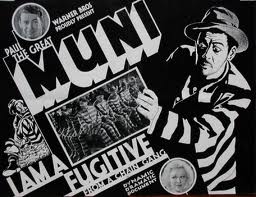
It's All True (1942--released 1993)
Director: Orson Welles, primarily
Notable Stars: Welles, I guess
Do I like it? It's an unfinished documentary. The footage is interesting.
What do I remember most? Not very much. It's Orson Welles set loose in Brazil with a camera. There is a carnival, old time South American beach scenes, fishermen. The impetus behind the movie was that it was going to contribute to the war effort, Brazil being one of the Allies. I'd like to see it in a theater. It is worth seeing, but at home I found it to be somewhat sleep-inducing.
Associated in my mind with: Mutiny on the Bounty, Cruise of the Zaca.
Here Comes Mr. Jordan (1941)
Director: Alexander Hall
Notable Stars: Claude Rains
Do I like it? I found it disappointing. Given the era in which it was made, the presence of Claude Rains, and its status as a classic, I was especially looking forward to seeing it, but I couldn't get into it.
What do I remember most? This disparate ingredients of it failed to coalesce for me. I never understood whatever it was I was supposed to be getting. Maybe I'm too eternally tired to do this anymore.
Associated in my mind with: Carousel

L'Argent (1983)
Director: Robert Bresson
Notable Stars: No one I am very familiar with.
Do I like it? Yes. This was the third time I have seen it. I did not get much out of it the first time, but on both the second and third viewings I have been able to appreciate more and more how good it is.
What do I remember most? Though not exactly what the movie is about, it is always great to see Paris in the early 1980s, which is very much the city I encountered when I first went there in 1990, and which I suspect is not very much at all the city that one encounters today. There was an excellent little extra on the Criterion DVD called "Bresson A to Z" which elaborates on a number of common themes in his work, as well as a lively Q & A session from Cannes. The darkness, for lack of a better word, since Bresson would probably argue that the truths portrayed in the movie are just truths that are morally ambiguous, weighs more on me with each viewing.
Associated in my mind with: Sauve Qui Peut (La Vie), French in Action TV Show.

The Westerner (1940)
Director--William Wyler
Notable star(s) (to me; every character actor in old Hollywood has his own cult on the internet): Gary Cooper. Dana Andrews apparently had a small role in this but I don't remember him
.
Did I like it? Yes. I didn't love it, but it's a Golden Age Hollywood Western, it's William Wyler, I have been weaning myself away from so many old movies because they are too comforting so any time one comes up now it is a great treat.
What do I remember most about this? The bar at the saloon and the bedroom off of it which I believe they have to shoot themselves out of at one point.'
Associated in my mind with: The Gunfighter; Destry Rides Again.
That's Entertainment III (1994)
Director--Bud Friedgen and Michael J Sheridan
Notable Stars--Many fixtures of MGM musicals. A lot of Cyd Charisse, Lena Horne, Ann Miller, etc
Do I like it? Yes. As the third installment of reminiscences about the glory days of MGM, my impression is that That's Entertainment I and II covered most of the true watershed moments in the studio's history and that this one is mopping up with its coverage of the June Allyson era and other now lesser known films. I was (am) supposed to be seeing the first two compilations as well, but they haven't come up available in my Netflix queue yet (yes, I still get DVDs mailed to me), which is what I have been working off of exclusively for about a year now, with a long backlist of stuff, mostly old, that they don't have.
What do I remember most about this? It's got a decent amount of old Hollywood "movieness" about it if you are the kind of person who has romantic ideas about Grauman's Chinese Theater and Schwab's Drug Store. At the time that they made it in the 90s a lot of the old stars of the 40s and 50s were still alive and were able to be interviewed, almost, in fact probably all, of whom have since died.
Associated in my mind with--The Band Wagon; On the Town.
For Love of Ivy (1968)
Director--Daniel Mann
Notable Stars--Sidney Poitier, Carroll O'Connor, Beau Bridges
Do I like it? I found some of it morbidly fascinating.
What do I remember most? Evokes what a weird time 1968 was as well as recalling what is now very much a lost world, one that I have some memories of though from my childhood. The white family makes its comfortable living by owning a suburban department store of a type that I do remember hanging on as late as the 70s at least. The repeated attempts of Beau Bridges and his sister (the young people) to talk to Sidney Poitier in some kind of jive is equal parts painful and bizarre, but it doesn't seem to be intended as particularly satirical and emphasizes how the average sheltered white person evidently had no idea how to go about talking to black people in any kind of regular way at that time. Lauri Peters, who plays the sister, did not go on to have much of a film career but her look, clothes, voice, etc, were quite striking to me in this as being a perfect 1968 suburban babe. I was quite taken with her. All of the period touches. The loud trucks, the gas guzzling cars, the pollution, the lounge lizard inspired basements, the New York skyline looking rather grimy and shabby in an orange-ish light. I have to confess, the romance between Sidney Poitier and Ivy, Carroll O'Connor's family's black maid, which is ostensibly the point of the movie, did not excite me that much.
Associated in my mind with--Diary of a Mad Housewife. It is similar in its unintentional late 60s-early 70s weirdness.
Yes, posting a picture of the white girl is too predictable, but this chick is such a quintessential 60s babe I could not resist.
I Am a Fugitive From a Chain Gang (1932)
Director: Mervyn Leroy
Notable Stars: Paul Muni. A highly respected actor of the 30s, I think this is the first movie of his I've ever seen.
Do I like it? Yes, it's great.
What do I remember most? As I frequently note, classics from the 30s, particularly the early 30s, have the most extreme variation with me with regard to holding up across the years or communicating in a cultural idiom which has become completely incomprehensible. This is an example of the former, as the major themes in it, corruption and injustice in the legal system and the brutal indifference of the greater society, are equally pressing problems today. But even aside from this realism the tone and psychological approach to the material seem much more modern than what is usual in that time. It's an unnerving movie.
Associated in my mind with: The Bicycle Thief.
It's All True (1942--released 1993)
Director: Orson Welles, primarily
Notable Stars: Welles, I guess
Do I like it? It's an unfinished documentary. The footage is interesting.
What do I remember most? Not very much. It's Orson Welles set loose in Brazil with a camera. There is a carnival, old time South American beach scenes, fishermen. The impetus behind the movie was that it was going to contribute to the war effort, Brazil being one of the Allies. I'd like to see it in a theater. It is worth seeing, but at home I found it to be somewhat sleep-inducing.
Associated in my mind with: Mutiny on the Bounty, Cruise of the Zaca.
Here Comes Mr. Jordan (1941)
Director: Alexander Hall
Notable Stars: Claude Rains
Do I like it? I found it disappointing. Given the era in which it was made, the presence of Claude Rains, and its status as a classic, I was especially looking forward to seeing it, but I couldn't get into it.
What do I remember most? This disparate ingredients of it failed to coalesce for me. I never understood whatever it was I was supposed to be getting. Maybe I'm too eternally tired to do this anymore.
Associated in my mind with: Carousel

L'Argent (1983)
Director: Robert Bresson
Notable Stars: No one I am very familiar with.
Do I like it? Yes. This was the third time I have seen it. I did not get much out of it the first time, but on both the second and third viewings I have been able to appreciate more and more how good it is.
What do I remember most? Though not exactly what the movie is about, it is always great to see Paris in the early 1980s, which is very much the city I encountered when I first went there in 1990, and which I suspect is not very much at all the city that one encounters today. There was an excellent little extra on the Criterion DVD called "Bresson A to Z" which elaborates on a number of common themes in his work, as well as a lively Q & A session from Cannes. The darkness, for lack of a better word, since Bresson would probably argue that the truths portrayed in the movie are just truths that are morally ambiguous, weighs more on me with each viewing.
Associated in my mind with: Sauve Qui Peut (La Vie), French in Action TV Show.
Subscribe to:
Posts (Atom)

