Monday, May 30, 2011

Movies 1983-1998


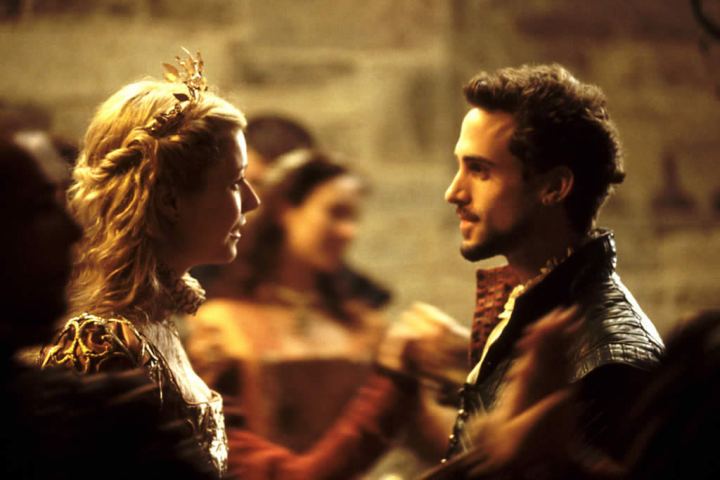
The first one this time is Shakespeare in Love.

I am protected by my inability to be too much enamoured of anything this recent from imagining that it was actually any good, though I think it is harmless enough, and unlikely to delude many people into thinking they are cleverer than they are or understand anything important about Shakespeare or literature or English history, which some of the people who do understand these things often seem to worry about. It won the Oscar for Best Picture in its year (1998--I hadn't realized this was that old either--1997 seems to be the cutoff point after which my active participation in life effectively stopped. Everything since then merges together in one amorphous period lacking in any demarcation of time) and is often rated among the worst such winners, though I could probably come up with 10 even lamer ones pretty easily. I don't remember what ought to have won in its place. There were a few things I liked about this movie however, which is what I will emphasize here.

1. The Imagery of Taking a barge down the Thames and debarking at a palatial estate. Preferably your own, though that of a dear friend or lover I suppose would be acceptably pleasant too. They break out this motif in other movies set during the Tudor period, such as A Man For All Seasons, and even now there is the option for tourists of riding a barge down to Hampton Court Palace, which Henry VIII famously accepted as a 'gift' from Cardinal Wolsey in the latter's unsuccesful bid to preserve his head. I admit to finding the prospect of this ride tempting at the time, and the idea of it still stirs my romantic imagination, It is inextricably identified with that age when what we think of more or less as classical England burst forth (from the standpoint of cultural, political and economic power) from the winter of the Middle Ages in all its sunny freshness.

2. Having the Run of One of These Palatial Estates Even For a Short Period. I would almost be content to have this even if I knew beforehand there was to be no possibility of sex/romantic intrigue whatsoever. This has nothing inherently to do with the movie's actual quality again, but is another image of European high civilization served up for middlebrow consumption without any indication of or necessity of undergoing any of the difficult mental work that was required to build and maintain that civilization, which perhaps more than anything in the world drives legitimate intellectuals and artists to absolute fury when it attempts to pass itself off as meaningful or edifying. These homes are central to the cultural and artistic history of every European country, and are replete with significance in all their parts to such as can interpret them. One of the running underlying half-comic themes in Powell and Waugh is that many of these houses (whose numbers are obviously limited) have at any given time fallen--before WWII, still usually through ancestral inheritance at least--into the possession of dull people who are failing to properly maximize these houses' potential as the settings for great social occasions.

3. I Am Always a Sucker For Depictions of Artistic Troupes, Even When Not Romanticized As It is Here. This is because the dream of my life was to be an artist and associate primarily with--indeed live among--artistic people, and needless to say that has not happened. I could not be more estranged from the kind of people whose lives consist of the sorts of things I am actually interested in if I had set out intentionally to avoid them. Seeing the interactions among and processes of theater people, even idealized beyond the point of being interesting to a normal person, warms something in my bone-dead soul that I wish I could bring out into the arena of actual life.

4. I Rather Like the Depiction of Shakespeare That is Offered Here. Even more than with other great authors, the dearth of certain knowledge about Shakespeare seems to encourage people to imagine him, or whoever was the author of the plays published under his name, as a more or less idealized version of their vision of themselves. Individuals not given much to frivolity, such as Henry James, often insist that the author of the 'Shakespeare' oeuvre must have been a figure who emitted an air of gravitas so thorough and imposing as to be quite terrifying and incomprehensible to anyone beneath the most diligently bred and educated quarters of society. I like to think of him as a man with an extraordinary talent not merely for literature but for living, who found means to express that talent from the very midst of the tumult of life rather than as an aloof, calculating pure genius of intellect surveying humanity from a perch of consciousness far removed from tumult. I take that to be the spirit in which this character was written, and I think it came off reasonably well.

5. I Was Not Able to Hate Ben Affleck, Eager as I Was to do so. I can see what people mean when they say he can't act, but I didn't think he was that bad, he was certainly trying, and he seemed pretty good-natured. I know good-naturedness is no substitute for talent or skill, but on the whole I don't think his presence detracted that much from the movie.

A Private Matter (1992)

The main rating book I am using must have a different person critiquing TV movies and programs than whoever is doing the regular films, because on several occasions it has given a pedestrian TV movie a 5-star ranking while grading some groundbreaking European masterpiece or other a mere 4 or 4 and a half. This movie was well-made, and everything in it looks good--it is set in Phoenix, Arizona in 1962, when that city/region was around 1/10? 1/20? the size that it is now, and before the complete perfection of the antihuman, corporate-inspired architecture of sprawl that has prevailed for most of my life. Sissy Spacek is the star, and I don't know how old she was at the time--she looks to be around the same age I am now (ed--she was 42)--but she looks great as a 1962 version of an ubermom, and of course she's a swell movie actress, indeed one of the few Baby Boomer stars I actually like (it takes a lot to get me to admit that). There was not anything even quirkily brilliant or thrilling about it that I am going to remember in a month, however. Aidan Quinn plays the husband and he is kind of blandly creepy and insubstantial, as indeed are pretty much all the men, and most of the women too for that matter, except for Sissy Spacek, which gives a hint I think as to what is wrong with the movie.


The film is based on a factual (I think) incident, in which the host of the children's TV show Romper Room, who already had four children, got pregnant again, was told that there was a likelihood due to some defective medicine she took as a sleeping aid that the baby would be severely retarded and was persuaded by several male doctors to make arrangements to (quietly) abort the baby. Unfortunately the media got wind of the story, the woman became for a short time a pariah, she of course lost her position on the television show, and her medical situation became much more problematic, since nobody in the United States would agree to perform the procedure now out of fear of all the negative publicity. In case you haven't guessed, the movie has a decidedly pro-choice message, the transmission of which was the overarching concern of the screenwriters. The good Romanian film I referenced a few weeks ago, Four Months, Three Weeks, Two Days, also centers around an abortion which is illegal and puts its women characters in a really terrible position, but it is still primarily about its particular characters and the society which they inhabit. The abortion is the crisis through which various aspects of these are revealed, and it is probably a symbol, but it is not in itself the object of either moral or political crusade, or outrage; and as such the circumstances in which it occured rendered the characters involved and their situation more sympathetic than in the typical Hollywood social justice movie.

Hollywood social outrage movies, and this even includes Holocaust films, have always been marred by various blindnesses, but one of the major ones is the seeming inability to identify at all with whatever force or ideology is the designated enemy of the idea it wants to push. Whether it is Nazis, southern racists, paternalistic males, greedy capitalists or whomever, they are presented as creatures of a mindset of such thorough evil as to be completely unfathomable to any decent person watching the movie, and great emphasis is made of their awesome and wholly impersonal and merciless power, whose origin is so remote from its victims that it can only be expressed by terrifying images. This is a highly unsatisfying way of understanding such matters, and this mindset has no doubt contributed to the particular political and social problems which afflict this country.


Zelig (1984)


I'm not in Woody Allen mode at the moment. I have my own existential problems, and currently they seem to me to be more serious than his do. I like the idea of the roaring 20s homage. I usually like the idea in Woody Allen movies. He has similar interests to me. This movie just wasn't funny or clever enough.


The movie is made in a mock documentary fashion and there were a number of cameos by famous writers. Saul Bellow, who would have been about 68 at the time, was one of them, and he looked great. But the real coup de grace was Bruno Bettelheim, who I had not realized had still been alive at this time, and even then never imagined that he knew Woody Allen or would have deigned to have anything to do with such a low form as the popular cinema.


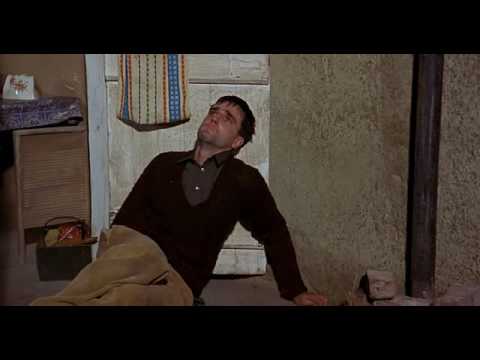
Experience Preferred...But Not Essential (1983)


British TV production, where it was called First Love. Not sure what necessitated the name change, unless there some worry about it being confused with the Brooke Shields catastrophe Endless Love, which came out around the same time. I could not find any uploadable picture of it. It doesn't seem to be out on DVD, and I had to buy an old VHS tape to see it. Here's a clip from the beginning.


I have to say, I liked this quite a lot. It's not a sweet movie, exactly--most of the lives depicted in it are about equal parts grim and hopeless by our standards--but it has a certain good nature and spiritedness that is appealing. Most of the characters, the women especially, try in their own ways to enliven and make as good a go as they can of what are not very promising situations. It probably helps the story that no one in it is married or has any children--this leaves them available for sex and the attendant sexual tension that inhabits places where even passably attractive single people congregate. The movie is set in--yes--1962 (was that a great year or what?) in a third rate seaside hotel in Wales, so we are talking about not particularly good-looking British people having not particularly good pre-60s liberation sex, but, as I have written elsewhere, something about it is not completely unappealing. Recommended.



Saturday, May 21, 2011

Essay Concerning Human Understanding Part 3

It is important to me to remember to try to imagine the spirit of inspiration and ferment in which so many men of realized and energetic humanity in the eighteenth century received the writings of Locke; not necessarily Jefferson or Franklin, the strain of attempting to enter whose singular spirits would likely throw the entire enterprise off course, but some among the largely forgotten figures, the men of leisure and enterprise who had somehow managed to obtain good enough schooling to retain a lively interest in humanistic developments throughout life, the diffusion of which characters was so crucial to the history of that era. In short, I need to keep in the front of my mind the remembrance that the writings of this particular author set some of the most interestingly developed and ideally educated men found in all of history to consider and write long interpretations and opinions of his arguments, largely as personal correspondence, and to regard the material in a manner as commensurate with this history as possible.

This is off-topic, but I came across this 1883 passage from Henry James the other day regarding Oxford, which he frequently lamented his ill-fortune at not having been able to attend in his youth (he did go to Harvard, but he considered it, like the rest of America, to be crude, modern, devoid of poetry, tradition, meaning, etc. He wrote of his years there as if they constituted a several years quarantine from beauty and civilization that scarred him for life):

"(Oxford) typifies...the union of science and sense--of aspiration and ease. A German university gives a greater impression of science, and an English country house or an Italian villa a greater impression of idle enjoyment; but in these cases, on the one side, knowledge is too rugged, and on the other, satisfaction is too trivial. Oxford lends sweetness to labour and dignity to leisure."

I cannot testify as to whether this is an accurate assessment of Oxford in 1883 or not, but there is much in this that corresponds with my own ideas of what school should ideally be like which I have been having some trouble expressing, ideas which are very much out of fashion, to say the least. The last sentence, particularly the bit about 'sweetness' captures well what I often have perceived to be missing from many contemporary attitudes towards learning and accomplishment, which Henry James, needless to say, would have found beyond barbaric. Not that anyone can be expected to care much what he said in 2011, he being a fellow of extreme privilege for whom having to attend Harvard College (where his brother, incidentally, now probably regarded as the greater of the two, was on the faculty for most of his career) ranked as a major calamity in his life. He did think a great deal about the cultivation of the mind for reasons other than professional advancement, it was perhaps the most important consideration in the world to him, and I think he had many good ideas where it was concerned, even if he was not able to, or interested in, making their development applicable to the needs of the economy.

Henry James of course is not the best role model for the likes of me. It was not imperative on him to have a career as a means of sustaining his physical existence in the way that it is for most people. I still seem somehow to think of myself as a man of leisure, though I have not had more than two consecutive weeks off from paid labor since 1997. I still haven't any idea what practicable career that is both necessary, realistic of attainment, and which would identify me as belonging in some way to the more generally educated class of people I might have liked to have pursued. I have been working in the health care industry for a long time and one cannot help but observe the gulf in status and general social presentableness between the actual MDs and the other medically trained professionals (The administrators/business class type people in the organization are a whole other category, which I cannot relate to at all however). I probably did not have the focus to complete the training properly, but I suppose at this point I can see myself getting up every day and being a doctor, whereas I still cannot envision myself doing most regular high-paying respectable jobs that I am aware of. People warned me all my life that I needed to be serious about this, so I cannot complain that nobody explained the hard cruel realities of the world to me, but it just doesn't sink in when you're 25--let alone 18--and you think you still have some life in you on a modestly grand scale and people are badgering you to become an accountant. I thought I had enough general talent that I could eventually make my way into the life and the circles where I would recognize myself as belonging and making the best use of my abilities. I don't really think that has happened, but as it still is not clear to me what exactly I should have done to produce a more desirable outcome, this particular aspect of my sluggishness (apart from the sluggishness itself) does not bother me that much.

The will is determined mainly by uneasiness. This is something I picked up from the reading. It would explain in great part the persistence with which I pursue my mainly fruitless endeavors, such as this site.

From the section "Idea of Power": "...the will being the power of directing our operative faculties to some action, for some end, cannot at any time be moved towards what is judged at that time unattainable..." This would explain why nerds never try to bird-dog hot chicks.

"God Almighty himself is under the necessity of being happy; and the more any intelligent being is so, the nearer its approach to infinite perfection and happiness." I.e., free will is overrated in the grand scheme.

"...we should take pains to suit the relish of our minds to the true intrinsic good or ill that is in things; and not permit a...possible great and weighty good to slip out of our thoughts, without leaving any...desire of itself there, till...we have formed appetites in our minds suitable to it, and made ourselves uneasy in the want of it..." The quotation is rather unwieldy, but I think it contains good advice.

Torture on the rack is offered as an example as a cause of uneasiness in the will. I thought it was funny at the time. Possibilities for humor can be rare in philosophy books.

Montaigne is quoted in the notes on numerous instances, which was also a source of momentary excitement. This one struck me as particularly elegant: "Si la douleur de teste nous venait avant l'ivresse, nous nous garderions de trop boire; mais la volupte', pour nous tromper, marche devant, et nous cache sa suite." ("If the unhappiness of the result came to us before the drunken state, we would keep from drinking too much; but the pleasure, in order to deceive us, walks before us, and hides from us what follows.")

After I had an inconclusive grapple with the wager as regards eternal happiness that men who determine to be good are said to make, I quickly moved on to the section "Our Complex Ideas of Substances". Of these, "Powers therefore justly make a great part". What a thing does is what it is. This pretty much applies to all of life as far as it is lived by most people.

"...were our senses altered, and made much quicker and acuter, the appearance and outward scheme of things would have quite another face to us; and, I am apt to think, would be inconsistent with our being, or at least wellbeing, in this part of the universe which we inhabit." I seemed to think that the expansion of modern knowledge, including the increased possibilities of body modification/enhancement, might offer some kind of test of this statement. But under soberer consideration I have reverted to the opinion that these changes in the modern condition are cosmetic and trivial in comparison with the conception of the original sentiment.

Black swans apparently had not been discovered in 1690. (There is a passage in the section on ideas of substances where among the characteristics identified with the word "swan" was whiteness of color. A footnote explains that "Black swans have since been found").

I like the way this is put. It strikes me as elegant:

"For putting together the ideas of thinking and willing, or the power of moving or quieting corporeal motion, joined to substance, of which we have no distinct idea, we have the idea of an immaterial spirit; and by putting together the ideas of coherent solid parts, and a power of being moved, joined with substance, of which likewise we have no positive idea, we have the idea of matter."


"...it seems probable to me, that the simple ideas we receive from sensation and reflection are the boundaries of our thoughts; beyond which the mind, whatever efforts it would make, is not able to advance one jot; nor can it make any discoveries, when it would pry into the nature and hidden causes of those ideas." According to the notes, this is the main thesis of the Essay. It seems intuitively wrong, since some people anyway must have the ability to push beyond existing boundaries. Perhaps he is saying that even these expansions of existing ideas are dependent on this basic procedure however, and that we are not capable of generating ideas via different means.

"The ideas, then, of relations, are capable at least of being more perfect and distinct in our minds than those of substances." Ideas of substances would be truer and deeper knowledge however.

"But the sun and stars, though they have outlasted several generations of men, we call not old, because we do not know what period God hath set to that sort of beings." More scientific improvements.

I wish I had more time to think and write about these various things that I like. I suppose I do neither well, but I used frequently to feel that I did them well, which is something I rarely feel when doing anything else.

Saturday, May 14, 2011

Exercise at Writing a Real Post Again (Because I am Powerless to Give Up Producing Superfluous Content, Even Though Most of the Professional Thinkers of the World Are Begging People Like Me to do This Above All Else)

I was listening to the podcast (needless to say, I have been tempted by the idea of doing that sort of thing here; however I don't have the technical equipment for it at the moment) on Gil Roth's site about the recently deceased Argentinian (Argentine?) writer Sabato, of whom I had never heard. He quoted some commentary in which this author was contrasted favorably with Borges on the grounds of being more engaged with political and economic reality. I don't know much about Borges either, but his name calls up for me numerous associations, nearly all of which up to now have signified to me a nearly perfect realization of life and talent such as tens of millions aspire to in the course of a century and I don't know how many actually attain--ten thousand? twenty thousand? A couple hundred? I don't think I had ever heard a criticism of him before that struck me as possessing such an air of surety, that was not obviously defensive and arising from a position of weakness. Ambitious but obscure professors, second and third rank critics, and such others as constitute the lower ranks of the artistic wing of the official intelligentsia generally come across in their writing and conversation as unhappy people. Life and other people are largely disappointing to them, the conversation and artistic efforts of most others, especially their contemporaries, bore them to point of inducing misanthropy, and they find their own little better. Their positions in society are providing them but a fraction of the pleasure and satisfaction they desire. All the excitement and success and progress is taking place in other fields of which they have no understanding and consequently no standing or ability by which to help consecrate and celebrate the triumphs. These are the people who, certainly in this country, largely idolized Borges, or what he represented. He, or the idea of him, satisfied them. He figured out how to do that most difficult and concretely desired of artistic tasks, come up with something new and clever and thrilling in a familiar and prestigious medium. He escaped, or gave the appearance of having escaped, the mediocre, unfulfilled mental life mired in trivialities that is the fate of nearly everyone in advanced societies, writers and musicians and professors included.

My primary image of Borges's life as Realized Other is from the account Paul Theroux made of visiting him in Buenos Aires in, I think, 1978. I went through a period there for a while where about once a year I would read one of Theroux travel books, where he makes his way along some interesting itinerary using mainly public transport, staying in slightly rundown hotels, and so on. Usually in the course of these journeys, around once or twice per book, he will drop in on some famous writer who lives along his path, usually the big name (in the West) associated with his country's literature--we get to meet Mahfouz in Cairo, Pomuk in Istanbul, Murakami in Tokyo, etc--but sometimes the person visited is an English-speaking expat whose decades living in exotic locales far from New York and London (which they hate) have made them kind of difficult to effectively communicate with--Paul Bowles in Tangiers and the aged and nearly senile Arthur C Clarke in Sri Lanka, where he lived for many many years and found far preferable to England, are the two examples of this type of interview which stand out. Anyway, on the South American trip, after several months of crossing through the tropics and poor cities and sparsely populated and perhaps even poorer mountainous regions of South America, he arrives in Buenos Aires, a famously Parisian-like city practically at the end of the earth, and goes to visit Borges, who was even at that time aged, blind, and not really a creature of the familiar world.

Borges lived, if I remember correctly, in an apartment, but one of those large ones, with a suite of rooms, very comfortable and in its decoration and visible air of culture a refuge from banal life. I cannot remember if he had any wife or not at the time, though there was an old housekeeper. (One of the fatal mistakes most aspiring smart people make that contributes to their unhappiness when they turn out to be not so smart as they imagined themselves is that they take it for granted that some other poor schmoe or schmoes, whether a spouse or a servant, are going to take care of all their housework for them so they can be left alone to live brilliantly). He kept asking Theroux to read to him--Theroux speaks Spanish pretty well, from what I gather. I think there were cats. Nothing else that the Great Man said really stands out so much as the atmosphere of transcendence over ordinary experience which emanated from his presence.

The type of mind needed to produce this effect of serenity--by which I refer really to a fuller self-possession and control over the material and substance of one's thoughts--and transport from most of the peculiar banalities of modern life seems to be passing out of existence altogether. Though the internet age magnifies these trends even more, it really affects everyone who has grown up since television and perhaps popular music became ubiquitous, which at this point includes pretty much everyone in the western world at least. When I was at school I would go to the houses of some of the older professors and it was like going to a foreign country as far as the depth of immersion in certain attitudes of thought, living, etc. The houses of the younger professors, which at that time (20 years ago) included anybody under age 50-55 or so, even where the person involved was quite intellectually brilliant, nonetheless had the same tone about them as anyone else's house did, as if the higher orders of civilization in which they were certified experts and had devoted years and years of study to had yet been taken up too late in life and not been able to penetrate and influence every minor ritual and action of their existences, their dress, their manners, etc, which is the impression that Borges and various of these other genius writers and scholars of the early 20th century give me...

Gave that one five days. Having a busy week. On to the next post now...

Monday, May 09, 2011

Music Video Deluge

I know I need to try harder than this.

I happened to be driving close enough to Maine on Saturday that I could pick up one of their public radio stations, which unlike those in the state I live in, actually play music once in a while. It was the 70th anniversary (May 7, 1941) of Glenn Miller's famous recording of "Chattanooga Choo Choo", so that was the centerpiece of one of the segments on the program I was listening to.


In contrast to the 10 and 20 year-old artifacts which seem to me to be more or less on a continuum with the present, this song seems a lot older than 70 years. Is it possible that anyone with any memory of the world out of which it arose can really still be alive? In addition Glenn Miller's music in particular sounds more dated right now than that of most of his prominent contemporaries. Besides that the more famous hits have remained ubiquitous enough even for people my age to have grown overfamiliar with them, their animating spirit is about as far from the current zeitgeist as it probably ever will be. I still like them, but they definitely come across as dead museum pieces that don't have anything to say about even my life going forward.

My favorite Elvis song. Probably in part because the Smiths did a partial cover of it, which led me back to the original. I have never really been much of an Elvis fan and was decidedly not one in those days.

That said, the young Elvis seems to be pretty close to the absolute limit of coolness, at least if you're white. He is untouchable. Pretty much everybody who has come along after him pays him deep homage, and ridiculing him on the grounds of one's own superiority to the King whether in taste, musicianship, breeding, manliness, overall worth to humanity, and so on, even if it is absolutely true, has little effect on the stature he possesses as an icon of modern life and usually recoils on the ridiculer, diminishing him and his claims to importance even more.

Someday, when I find a few more solid examples, I am going to do a post called Books and Movies Nominally Set in New Hampshire That Bear No Resemblance to Actual Life in New Hampshire (there are probably already enough to do a similar post for Maine, though). So far I can think of Peyton Place and Our Town. I haven't seen On Golden Pond, so I can't include that one for sure. There is some dispute as to whether the college in Animal House is supposed to modeled on Dartmouth or somewhere else. If it is Dartmouth, I can assure you there is no bar like the one Otis Day and the Knights were playing at within about a five hour drive of campus. The most egregious example by far of course is the first half of the 1962 Stanley Kubrick version of Lolita. As if!

Lolita is rare among films of the 60s in that it seems to be more popular among people around my age and younger than older cinephiles, who have always regarded it rather indifferently. It was a favorite among my set at school back in the early 90s. Of course at my school, especially at that time, it was frequently possible to imagine that something of the air of 1962, especially that particular strain of it illuminated (suggested?) in the movie, still infiltrated the atmosphere. This was one of the charms of the place. Whatever the purported flaws of the film are supposed to be, I would have to consider them as minor compared to the barrage of style, good humor, intelligence and coolness that bursts out of from practically every set, song, role and line in this movie.

If I may once have tried to qualify my interest in the following as a guilty and rather shameful pleasure, I have to admit now that I have moved beyond any sense of guilt. I am not giving them up.

The Lennon Sisters's father was Irish, for what it's worth (I am lately realizing that 90% of the girls I am in love with are substantially of Irish descent).

I was on a 70s kick a couple of weeks ago. This is rare but it does happen from time to time. I was listening to the Blackbyrds ("Walking in Rhythm"), Yvonne Elliman, who had a number of hits and also played Mary Magdalene in Jesus Christ Superstar, the songs "Midnight at the Oasis" and the pathetic "Seventeen", and last but not least, the immortal Andrea True Connection ("More More More") who is just a bit too much for this site's handling capacity. I've chosen this song because for some reason I was in love with the backup singer on the left in the video for several days. I am mostly over it now, but it still happened. She is very 70s looking and was probably a total bitch but I was taken with her look. That retro-1890s hairstyle was quite prevalent for a few years there, especially among the more fair-haired types. It didn't work all that well on everybody, but this particular woman has very fine, clear features and it suits her.

Leo Sayer, 30 years on and channeling Richard Simmons in a multitude of ways, came out of retirement to collaborate with the Wiggles on a version of his signature hit. Other than one goofy part in the middle it pretty much is a jam. Singing in Greek during the second half of the song was an inspired touch.

The guy in the yellow shirt is not the original yellow-shirt Wiggle. The original guy was the frontman, and he was much cooler, but he had some kind of illness and had to drop out of the band. I confess to being somewhat fascinated by the Wiggles. They are Australian, and when they get going, they really do appear to be having a good time--oh yes, and perhaps more importantly the hot Aussie girls that they have singing and dancing backup appear to be having the time of their lives too. The cuts are very quick--the dads don't really have time to leer at these girls at all, but they flash by just long enough that you are like "Wow! Who was she? I want, I..." They are really...at the bottom of it all, is there any better state of life to inhabit in 2011 than being a young stud in Australia with direct and eagerly welcomed access to perhaps the last large group of Western women on the planet who have some sense of how to have a good time? I am not seeing it right now.

Another retro Smiths video. I like it even though it doesn't really fit the song that well. The saddest thing to me is that the boys who are having such a swell and wholesome time in the film would be pounded into jelly and turned into quivering psychological wrecks within a couple of days at the typical high school nowadays.

I included this because the images in the video really grab your attention, and the song is great too. It reminds me of the summer I painted houses. Like almost every job I have had, I was dismal at it--on my most infamous day on site I spent the entire 8 hours painting a single closet that was supposed to have taken 90 minutes tops--which leads me to think that maybe I really was meant for a more aristocratic life. Almost everyone else I know is rather good at working, and at their jobs; or at least believe themselves to be so. I wonder why I am not good at doing anything. It is not merely laziness; for I know a number of essentially lazy people who are still very good at their work.

You really can't sing. I am pretty sure that you are evil, and I have resisted you for years. But I am giving up. You win.

She looks Irish too--and she is Irish. And French. That appears to be all. God, she must be a Catholic too (if we were still using 1960 requirements; which is how I count, by the way.)

Tuesday, May 03, 2011

Movies 1985-2004

Recent movies again--recent in my case being anything after about 1980--so it's no surprise that the undertaking of the new series has been sluggish again.

The Lord of the Rings, Part I: The Fellowship of the Ring (2001)

The critics were enraptured and by and large gave five stars to all three parts of the LOTR saga. As they were originally released at yearlong intervals however--and as they are all 3 and a half hours long--I am going to count them as three different movies and watch them separately over time myself.

I am burnt out on this type of picture, as it is what constitutes my older children's main current obsessions--Star Wars, Harry Potter, Narnia, and so on--so I'm sure most of the stuff that is supposed to be great about it floated past my attention without disturbing its slumber. The Lord of the Rings movies look to me to be pretty much the same as these others, perhaps a bit slower and bleaker, with less action, less interesting enemies, and a less compelling, or more confusing premise. No small part of the first film involves the main characters endlessly journeying across barren landscapes and empty forests and mountains speaking in whispers (this is a movie that would probably be much better to see in a theater, provided there was an intermission) with an occasional interval of conflict. The first 15-20 minutes or so has an omniscient narrator filling in the backstory of the rings and various of the inhabitants of Middle Earth for the unitiated viewer. I did not mind this, but my 8 and 7-year old sons were annoyed by it and wanted to know if the whole movie was going to be "someone explaining everywhere"--they want to be shown, not told, I guess. I have never read the books, which I assume are better, or at least make more immediate sense, given the wild popularity and devotion which they inspire. Oddly, I never had much of an interest in this genre of literature dealing with wizards and elves and tokens and power which is so popular among a certain type of boy (i.e., nerds), of which I might seem to have been one, though in fact I was not quite of that extreme masculine high intelligence that with the emergence of the internet especially has become so ubiquitous and even dominant throughout a wide strain of popular culture. The pop culture of the decade+ since the year 2000 has been heavily dominated by these sterile, escapist, rather humorless fantasy stories that almost revel in their sense of arrested development, movies especially, but certainly books, games, organized social life, et al, to a great extent. I assume that the people who most voraciously indulge in this mental atmosphere are unhappy, frustrated, bored, disappointed, and so on, with actual life, but while in other genres and eras, where the escape sought through entertainment was frequently to a life of easy wealth, glamour, dancing girls, champagne and generally the opportunity to partake of some of the fun available to people doing better than oneself, the impulse of this escapist bent seems to be a desire to be substantial and important; which, however, being perceived now as largely unattainable in actual life, involves getting away from as much resemblance to reality as possible. The imagination, heroism, identification with the characters and so on which are supposed to be driving the success of these kinds of films are nothing to which I find myself responsive at all. They really do not speak to me. Maybe I should read the books. Apparently the people who read them as adolescents are somehow much smarter as adults than those small numbers who read Dickens and Balzac and the like. That is the opinion on a wide swathe of the internet at least.

As I still think of this movie as something that has just come out recently, I was astounded to realize that it was ten years old. A fourth of my life has gone by since this was made, though it feels like about 5% at most based on traceable brain activity and the quantity of other experiences that have made any impression on my memory. The careers of most of the stars in this movies have already long crested too, though with the exception of the long-established Ian McKellan I would consider all the rest of them as new stars with whom I had little acquaintance.

One reason however why I might be forgiven for still imagining LOTR as a recent saga is that the radio station I usually listen to in the morning runs a commercial featuring "Sean Astin, star of Lord of the Rings" in which the star reminds any young men who might be listening, or on this station more likely their parents, of the necessity of registering for Selective Service ("It's what every young man's got to do"). I realize now though that they have been running the same ad since around the time the current unpleasantness in the Middle East first got underway, which does date back to when the movies were new. I just looked up Sean Astin and he is at the moment 40 years old, well past the expiration date for draft registration, and more likely to be regarded by the ad's supposed target audience as an old man than as someone who has anything to do with them. They are still running the ad though. I just heard it the other day.

I'm Not Scared (2004)

I was beginning to think the Italians had lost it entirely, and perhaps even given up, but this was a promising sign, at least for the time being. It is not quite Great, but it is comfortably above mediocrity, and often very good. I would not have been inclined to see it based on the plot if it had not shown up on my list. A boy living in a remote village in the impoverised south of Italy discovers another boy his age chained up in a hole in the ground near an abandoned farmhouse where he sometimes plays. Shortly afterwards he finds out that a rich Milanese child has been kidnapped and ransom is being demanded for his return; and also that his father is in on the plot.


That much revealed, the interest of this movie is more in its style that in the story. I had the feeling in watching it that the director (Gabriele Salvatores--b.1950--apparently has a venerable resume, though I am not familiar with his other work--I had imagined it to be done by someone around my age, I suppose because the story is set in 1978 and told from a child's point of view) was trying to re-establish some of the strengths that were formerly characteristic of European art cinema as contrasted with Hollywood and that the formal plot was just a device around which to create the atmosphere and attitude he sought. The filming looks to have taken place in Basilicata and Puglia (the instep and the heel, repectively of the Italian boot), poor, hot, thinly populated and, in human terms, ancient regions that I would consider to be among the most beautiful, unique and haunting landscapes on the planet. Much is made of this countryside, and its isolation, antiquity, poverty, extraordinary light and geography that is really unlike anywhere else, and wisely so, for the visions it produces tells at least as much of a story as the dialogue and action of the human characters in the movie.


Another signature device in this movie that I like is how it plays off your conditioning by Hollywood movies by setting up terrifying scenarios where you are constantly expecting that at the next false step some knife-wielding maniac or adrenaline-pumped SWAT team to burst out of the darkness and begin going to work carving up the protagonist's body, but in fact what happens, while still terrifying enough--finding a filthy and starving, though not physically dangerous child chained up to a rock in a cave, for example--is always a more subdued and realistic outcome than the confrontation which organized and expert practitioners of violence which the movies really haved trained us to anticipate lurking around every corner. There were four or five little tricks like this in the course of the film, and I fell for every one of them.


One notable development in Italian movies in recent years is the evolution of the Italian mother character from the traditional fat, rosary-counting, neck-cuffing, soup and pasta-cooking battle-ax into (increasingly) a tank top wearing, physically handsome 30-something M.I.L.F. exuding European sexual maturity and attitude. I believe Cinema Paradiso may have gotten this trend rolling back in the late 80s--wasn't the boy's mother a hottie in that? I've seen it in some other movies since then. The actress's name in this one is Aitana Sanchez-Gijon. For some reason pictures of her on the internet are harder to find. She's about 14 months older than I am (now 42--she was probably 34 when this movie was filmed) and modern Italian women seem to age well, so if you're my age I bet she still would get your attention at the hotel bar in Cannes the next time you're all there.


My Left Foot (1989)


Has definitely been superceded in the genre of Biographies of Writers Overcoming Serious Handicaps by The Diving Bell and the Butterfly, in which a single eyelid is the only part of the guy's entire body that moves--that one will be hard to top--but still pretty entertaining. And of course the acting required was much more involved in this role.


Although the protaganist, Christy Brown, is an artist and writer, the main energy in this movie centers around growing up in an enormous Irish family in the 1940s and early 50s--the mother gave birth to 22 children, of which 12 survived long enough to distinguish themselves as a separate group from those that did not--one of whom has cerebral palsy and whom everyone except possibly his mother assumes is utterly retarded until he is around ten. My father is 100% of Irish descent and grew up in a family (in Philadelphia in the 1950s-60s) with a lot of similar characteristics. My wife is also about 75% Irish, so my own children have more Irish blood in them than I do. In brief, I did have the sensation in watching this of seeing a lot of people who looked and acted a lot like most of my own closest relations--Daniel Day-Lewis when he has his 50s haircut and he's curling his lip and furrowing his eyes angrily actually looks quite a bit like my father did at the same age (seriously, my father was, and still is, a very handsome and suave man. Though now in his his 60s, he was still within the last few years dating a woman younger than I am who would never let the likes of me so much as ride on an elevator alone with her. This in part explains in part why I have bothered having children, as I am wondering if talent really does sometimes skip a generation; for he was also a division I college athlete and supported himself as an artist for a good part of his adult life). The Irish girls tend to look to me more like sweethearts than the run of other nationalities too, even when they are supposed to be bitchy. But that is doubtless the family resemblance working in me again. This has no effect of course on whether the movie is any good or not, but there is an added interest in the story because I imagine myself to have a certain empathy with the kind of people they are biologically, the sort of temperaments and intellects they have, the nature of their emotions and psychological maladies, etc.


One area in which the internet has had an understated impact on contemporary life is that one is much more readily made aware of how much some people are conscious of individual and group biological and ethnic characteristics, hold them to be of great importance, and consequently really hold other types of people in disdain. I have to admit, while I was growing up, if I was aware that there were people who considered the ethnic Irish to be intellectually inferior, I a) did not understand on what basis they could possibly be determining this belief, and therefore easily persuaded myself that it must be frivolous, and b) did not believe that it would ever apply in my case anyway, because everybody would just see and know by looking at me that I was smart. I have since come to realize of course that the matter, and most discussions of intelligence in this vein refer to the mastery and application of science, mathematics, engineering, technology and other such subjects as are, or are believed to be, the main sources of any modern nation's power. Ethnic Irish are not as a group (I gather) prominent in these fields, and indeed, in the specialized global marketplace, those of Irish blood seem to be not especially well set up to thrive, as there are not, apart from speaking English, any broadly required skill sets in the modern economy in which they have a meaningful competitive advantage vis-a-vis people of other ethnicities.


To my contemporary docile bourgeois eyes it is striking how much Christy Brown is allowed to drink--he apparently drank a great deal in real life, too--considering that he cannot unscrew a bottle or fill his own glass, has to sip through a straw, and is prone to throwing rather violent and enraged fits once he gets going in his cups. There is one especially famous scene in a restaurant where in a pique of love jealousy he furiously begins to slurp up entire tumblers of whiskey one after the other while screaming more or less unintelligibly and banging his head on the table; all the while the waiter standing by dutifully refills his glass and the other people around the table do nothing until 5 or 6 drinks have been sucked down. At various times and places in history it is just sort of accepted that this is what people will do, and it is too much a part of the fabric of life to seriously consider preventing them from doing it. We are not living through such a period now, I think it is pretty safe to say.


Cocoon (1985)


I should--well, maybe not should, but I want to note that I had never seen any of today's four movies previously. The Italian one I had not heard of. I am sure I meant to see My Left Foot when it came out but never managed to get around to it. The Lord of the Rings I was already in my 30s and not going out to movies much, besides that the look and presentation of it that I was seeing just did not appeal to me. Cocoon was kind of a surprise hit back in '85 when I was fifteen. I don't think I was tempted to see it and probably would not have gotten to much into it at the time. Seeing it at a remove of 26 (wow!) years the characters and the world in which they live are immediately recognizable to me, almost remarkably so, given that the collective presence and personality of the major generation (that being the WWII cohort) highlighted in this movie, still prominent in 1985, has almost entirely passed into shadow now.


Baby Boomer director Ron Howard, 31 at the time, pays a kind of homage to these once powerful but now fading elders by restoring their sexual vigor and sending them on a one way trip to the outer reaches of space with a bunch of aliens disguised as respectable middle class Americans but who in fact possess more frightening powers than I think I would be comfortable being alone for eternity in a spaceship with. It is insinuated that these powers are all completely of a positive kind and will bequeath strength and serenity of mind to the old people far beyond anything they could have attained on Earth. For the viewer who is asked to believe that Brian Dennehy, who plays the role of the leader of the aliens, is exuding a reassuring and spiritually elevating vibe exponential by many factors beyond regular human experience.


There are certain pleasant reminiscences specific to the generations involved--I do miss the days when the music associated with geezers was Glenn Miller rather than the Doors, for example, or the skill, increasingly lost among us, with which the old-timers of that era could deliver an elaborate or formal joke. It is different from the usual run of movies, and has some poignancy in it, though the take on old age and eventual death in themselves as the most depressing and horrible things conceivable gives has an especially Baby Boomerish quality about it. These generational aspects are what is most interesting about it to me, as well as the sensation of returning to the mid-80s and realizing various little things that have changed.


Not many women in this group of movies that I feel the urge to gush about. The Italian mother was really good-looking. A couple of the girls in the Irish movie were adorable, but their parts were decidedly of the bit variety. Lord of the Rings had Liv Tyler, who besides being born in Portland, Maine was actually kind of pretty for a time, though her career seems to have lacked any kind of coherent direction, and the unshakeable image of her father's general nastiness does get in the way of any sense one might try to make of what kind of a person she might be. Cocoon had Jessica Tandy, Gwen Verdon, and um, well, this lady, who played the human disguise of one of the aliens. Her name is Tahnee Welch and she is the daughter of legendary 60s bombshell Raquel Welch. She seems to belong to that class of women which are known as specimens, about whom nothing ever does or can strike one other than the extreme perfection of her form. This was definitely the role she was born for.


Among the male stars of Cocoon (leaving out Steve Guttenberg), Don Ameche--who won the Oscar for Best Supporting Actor for this role, and may have deserved it, I don't know--and Hume Cronyn were appropriately aged (77 & 74), but my man Wilford Brimley, who was born in November of 1934, was a mere stripling of 50 when the film came out, and might only have been 49 during the filming. That's only nine years older than I am. Heaven knows he certainly looked old enough to be living in a retirement home. I probably will be by then too.

Monday, May 02, 2011

curtain wall poet dead occurrence (or, this site needs a more definitive personality)

There are three possibilities to achieve this that I can see. The first is what I originally envisioned the site as being, which is the dissemination of a highly developed, sparkling, singular and consistently rigorous point of view in the matter of my pet subjects. This obviously has not come to pass. The second is to find some niche or quirky subject matter that will capture some people's attention --bathroom stalls of Manhattan or obscure baseball players or high end Belgian furniture or bicycling culture--and burrow deep enough into it so that everything you write or post a picture of becomes informed and often made slightly more interesting than it was before by your consuming obsession. I might like this, but I have not been struck yet by the particular theme that I was born to run a blog about. The third possibility is to stop being earnest at all costs and try to cultivate a kind of mannered weirdness wherein coherence with regard to anything independent of the manner is of scant importance. This last is, while a slim one, probably the best hope I have at this point. There are others, such as to go the Samuel Beckett route and start writing in French or some other foreign language to cultivate a more streamlined style; but most of these are not really practicable at the moment either. I don't know what to believe is going on in the supposed Osama Bin Laden killing, but if the official story is true, I think he should have been brought back to the United States and placed on public trial. Yes, it would have been a circus, but so what? The American public needs to become better acquainted with its alleged enemies, besides that openness and the spectacles of justice and respect for law are supposed to be our core values, to which this whole saga right from the start has demonstrated either a lack of faith in or indifference, both of which strike me as bad. The new policy of openly (as opposed to covertly) targeting specific prominent international figures and killing them, accompanied by a high degree of public enthusiasm based on limited knowledge of the government's motivations strikes me as a dangerous mindset to be cultivating in the masses. I am not reassured when I encounter it.

I put up a few old pictures from college on my Facebook page, in commemoration of one of the rites of spring there. I had told myself when I first went on that I would never do that, that I would try to remain psychically in the present and facing forward there as much as possible, but in truth for the 99% of the population who are not visionary figures and the 80-85% who have not figured out the secrets of true adult satisfaction vis-a-vis the freedom and sensual possibilities of youth this mindset is probably nonsense, and does more harm to the associations and relationships which might give his life meaning, which sources of that meaning are almost entirely rooted in past memories. I certainly have some need to be alert to present life and cognizant of the future, but in general when I seek in my day to day existence for signs or indications of new associations and causes for optimism as regards my own prospects, as well as those of my children, I do not encounter much that excites a sense of possibility stronger than what I felt when I was in my 20s (hopefully the children are experiencing their own present lives differently) so why should I give up entirely the sense of self and life that I had when I was less resigned and dull until I do figure out the superior, or at least more realized, mode of being, that will allow me to leave the past more or less where it belongs, and live eternally in the moment, with the most vital parts of my psyche always pushing, slightly but ever firmly, into the future?


I am going to make this another short posting. I do have other things I would like to write about but they all require organization or elaboration or review which would take longer than the 15 minutes I have right now before I want to post this. Better pre-organization of the random observations and subjects I sometimes would like to touch upon, as well as the half-baked serials I undertake, would be a major step in improving the quality of the site. I just don't have a lot of time.

Tuesday, April 26, 2011

John Locke II

Unlike us, Locke didn't think much of babies' mental abilities, which he compared to vegetables.

Another philosopher who is quoted a lot in the notes, and who seems to be a much clearer writer and better thinker than Locke, is Hume. Though the standard narrative at St John's, as far as I could make out, was that the extremely clever but in some sense facile Hume threatened to lead philosophy down a dangerous, materialistic path but was overcome by Kant, who restored the emphasis in the discipline to metaphysics where it belonged, and beautifully so, Hume at least offered evidence that a high order of philosophical thought could find expression in a mind formed within the confines of the English language, about which many people through the centuries have expressed varying degrees of doubt, including myself. Boy was he cocky though. I seem to have neglected to mark any specific examples of what I am talking about however, so I will have to hunt them up.

"The variety of smells, which are as many almost, if not more, than species of bodies in the world, do most of them want names." Surely now there are people who do this professionally.


Somewhere around page 167 I decided that the notes explaining Locke's ideas were harder to understand than his own sentences, that they were impeding my reading, and that I would stop. Then on page 185 (during the section on "Faculty on Perception") I wrote that I was having to read every sentence 4-5 times, while at that point having 813 pages to go.


"And how covetous the mind is to be furnished with all such ideas as have no pain accompanying them, may be a little guessed by what is observable in children new-born; who always turn their eyes to that part from whence the light comes, lay them how you please." A pleasant observation about babies in the midst of all this straight theoretical philosophy, though this instinct is probably not the most perfect illustration of his idea upon which he could have fallen.

Moving onto the "Faculty of Retention" chapter, a good illustration of my own mind, and my attitude towards it: "Thus the ideas, as well as children, of our youth, often die before us: and our minds represent to us those tombs to which we are approaching; where, though the brass and marble remain, yet the inscriptions are effaced by time, and the imagery moulders away."

On having a faulty memory: "This, if it be to a great degree, is stupidity; and he who, through this default in his memory, has not the ideas that are really preserved there, ready at hand when need and occasion calls for them, were almost as good be without them quite, since they serve him to little purpose." Real intellectuals are a pitiless crowd. "The dull man, who loses the opportunity, whilst he is seeking in his mind for those ideas that should serve his turn, is not much more happy in his knowledge than one who is perfectly ignorant." True.

A Great name comes up that I have not had occasion previously to reference on the site: "It is reported of that prodigy of parts, Monsieur Pascal, that till the decay of his health had impaired his memory, he forgot nothing of what he had done, read, or thought, in any part of his rational age." There is a footnote, however, which says that "This about Pascal must be taken with allowance. That he never forgot anything 'which he tried to retain' is what Madame Perier records of him."

There is a long section about the existence of space and body, which in brief asserts that man's capacity to conceive the extension and multiplication of distance, mass, space and so on is crucial to his ability to think, that can be skimmed, I believe.

Another Great man turns up at the beginning of Chapter XIV ("Idea of Duration and Its Simple Modes"), St Augustine, in reference to the time he was asked what Time was, which strikes me as a fitting question for a Great man, and a poor one for anyone who is not Great. The giant of Western thought replied "Si non rogas intelligo" which looks roughly to me to translate as "If you don't ask, I understand", but is explained by Locke as "The more I set myself to think of it, the less I understand it". Locke is willing to attempt some definitions, albeit of a more prosaic and technical nature than the Saint would likely have found it worthwhile to do. Locke did not however anticipate science's ever increasing ability (instant replay!) to measure and control very precise amounts of time--the comparison of two periods of equal duration, for example, he thinks ultimately impossible, because no two parts of it can be certainly known to be equal. This does not strike me as a concern that would afflict most scientists or philosophers today.

Going to leave this one off a little short.

Wednesday, April 20, 2011

Prague Pictures 4

A slightly truncated set this time. We are also afield again, this time mostly in Cracow, Poland. Do not fear, however: we will return to Prague again in future editions.

View of Major Boulevard From Hotel Window, Cracow. There are ridiculously few pictures from this trip. If I remember correctly, Cracow is the only major city in Poland that was not completely leveled in World War II. These buildings look to me to date from the 1900-1920 period. There are a lot of similar edifices in Prague and other cities of the Austro-Hungarian empire--of which, again unlike all of the rest of present day Poland, Cracow was a part up to 1918--from that time, provided they escaped bombing.


2. Hotel Room, Approximately $6-$8 a Night. Does one really need anything more? I know the Economy does, but I am not asking about it right now.


3. Main Square and Cloth Hall, I Think. The Cloth Hall is one of the major landmarks in this city. Cracow is hyped a lot in the tourist books and consequently some people assume it must be both overcrowded with tourists and have something essentially wrong with it, but I don't think a ton of people actually go there, or Poland generally. Unlike Prague, it is quite a bit out of the way from Germany or anywhere with similarly established popularity. The crowds don't look too overwhelming in these pictures compared with pretty much anywhere in Western Europe.


4. Bread Cart. There was also a corn on the cob cart, though unfortunately we did not get a picture of that. Poland probably has the gloomiest ambience of any place I have ever been, though I felt strangely comfortable and calm there. It was often like being in one of those black and white movies from the 50s and early 60s of a Europe that is largely lost now--slow moving, minimal action, elegant--lots of high-ceilinged, enormous, near-empty cafes, train stations and the like. Of course I have remarked often of the beauty of the young women in Poland, who were largely unconscious of the true enormity of it and how much power it would have stood them in other circumstances. In their mannerisms and moods and apparent thought processes they were very like ordinary (ugly) people, which phenomenom one almost never sees among women of comparable attractiveness in Western countries, and as such is mesmerizing to look upon.


5. Pigly Wigly Market. I have never even seen one of these stores in the United States. We do not have them in the northeast, though their fame has reached us, and evidently Poland as well.


6. Back in the Bohemian Countryside. A weekend trip. This landscape is emblematic to me of youth and time, as in the possession of vast amounts of it. Other landscapes, often of comparable beauty, are emblematic to me of other not unhappy aspects of existence, lest anyone thinks I have allowed my engagement with life to cease all together. But these scenes will always call up certain feelings and remembrances that nothing else can generate.


7. Standard Bohemian Church, Apparently Recently Restored. To complete the set.


I have more general topics to rail against, but I haven't got a lot of time presently and I have decided to let them pass. If they are still on my mind in two weeks, maybe I will take them up then.

Wednesday, April 13, 2011

John Locke--Essay Concerning Human Understanding (1689) Part 1

Having become somewhat more aware in recent years of what studying an academic discipline such as philosophy both really entails and signifies to people who have hard-earned degrees in a subject, I am careful now never to declare myself as having studied anything at a quasi-serious level. This is the type of thing that we used to read quite a bit at my old school, however, so while I do not often plow through 17th century philosophical tomes anymore, I was able to settle in comfortably right away and was transported back to those days, which, seemingly having suppressed all of the unpleasant memories, which latter experiences at the time I am quite certain ran quite neck and neck at the least with the more fortifying ones, was productive of what I took to be an unusually fruitful reading. Something of the form and spirit of the Great Books--among which Locke is always accounted a member with a minimum of controversy--must have managed, after all, to insinuate itself in me, for I felt as though an aspect of my brain and indeed entire existence that had long been closed off was (at least) temporarily opened.

While we did read John Locke at school, I have no recollection of the specific titles. If we did read any of this--and I have no memory of it--it would merely have been excerpts, as my edition of the book is two volumes and 996 pages, though without the extensive footnotes it would probably be slimmed down to 600-700 or so. There was also a 140 page prolegomena (introduction) which I skipped. In spite of my overall enjoyment at engaging with the Enlightenment again, my armchair St. Johnsian impression of the philosophy in it was that it was not especially persuasive or airtight by the standards of the greatest practitioners of the field that I am aware of anyway--i.e. the Greeks and the Germans--whom I would be quickly exposed as having no understanding of if put to the test but whose presentation and arguments I know at least try to account for every contigency or objection to them that might arise that even a dull reader could conceive of, which Locke seemed to me to fail to do. Given the general extensiveness and thoroughness of the book in general, and contemplating the task of attempting to arrange a work of the intellect on such a scale and with the necessity of such thoroughness and precision of thought myself, this led me to the conclusion that writing a successful work of philosophy might be the most difficult of all mental/literary tasks to achieve, though at the time I was forgetting about epic poems, which may actually be harder.

Locke was renowned in England for his extreme seriousness. There was one story in particular that I remember, I believe it was in one of the books from the Samuel Johnson-o-sphere, in which Locke was invited somewhere for dinner and could not be brought to sit and fritter away an evening of his life at the card-table, and went home the instant the conversation dropped beneath a level that was acceptable to him. Unlike places such as Germany and Russia where almost all writers and intellectuals maintain this level of seriousness at all times and on all subjects by our standards, this attitude was pretty rare in Restoration England. The poets and dramatists of Locke'e age, and the novelists of the next, Pope not least among them, give the impression that a substantial portion of the life of the elite centered around the card-table, and indeed depict these sessions so vividly that one wonders whether the video game will perhaps find its poet in the coming years. As well the Cavalier poet and anthology favorite Sir John Suckling was long attributed as the inventor of the game of cribbage, though, as is their wont, in recent years the scholars of card games have dug deeper into this legend and found it not to hold water.


On page 10 of 996, our author states: "...when I put pen to paper, I thought all I should have to say on this matter would have been contained in one sheet of paper..." That was a serious underestimation of the vastness of his subject, I'd say.

A note on page 31 (still in the Introduction) on the sentence "Our business here is not to know all things, but those which concern our conduct" suggests that it could serve as the motto of English philosophy generally. I should add that the notes appear to date from 1894, so they are not exactly current either, though I am certainly willing to give them a fair hearing.

Classical philosophers in general have little use for children, considering them incapable of reason among other deficiencies. Perhaps we would not be unwise to remember this sometimes in our assessments of their development, especially at early ages (The first section of the book is spent establishing Locke's contention that there are no such things as innate universal principles in the mind, of which the crudity of children's natural understanding and consequent behavior, in Locke's view, is a prime illustration).

After using the examples of rampaging armies and cannibals in Peru who reputedly ate the children they begot on their female captives (and indeed kept them for that purpose) to demonstrate the absence of innate moral principles, caps the argument with "The saints who are canonized among the Turks, lead lives which one cannot with modesty relate."

Locke's Victorian editor--Alexander Campbell Fraser--did not wholly like this idea of principles, moral ones especially, not being innate and offered the suggestion that while perhaps these do not involve "actual realisation in the consciousness of each individual from birth," they might be "potentially innate, and only evoked in the consciousness of the few who are highly educated, morally and intellectually." He then further goes on to declaim that "to awaken a response in individuals to the principles on which human life reposes is the aim of the higher education", and that "from Socrates onwards this has been recognized by teachers of religion and philosophy." I would have to say that the peculiar biases of his generation and culture are negatively affecting his reading here, as doubtless mine do my reading, and almost everyone else theirs too. Indeed almost half of almost every page is given over to notes either contradicting or refuting Locke's arguments, and the case would probably be the same if I were to annotate my own edition, which after a time led me to wonder why exactly it was (is?) considered so great. Is it asking the right questions? Are there specific points that are so well expressed and so well important that they compensate for the many seemingly weaker parts of the work?


In addendum to the previous note, Locke's definitions and the other grounds/postulates of his arguments are also far from impregnable. Among other issues he seems to accept a God very like the Christian God as an absolute fact, "He Is," though he puts forth the argument that as most people have but "odd, low and pitiful" ideas about God's actual nature, this is an indication that even this knowledge is not innate though "wise men of all nations have come to it". I would venture to say that modern philosophy, perhaps even modern life, has made the Christian God appear no more natural or logical than any other deity, and all real believers of specific faiths to be peculiar above anything else.

"Nor is it a small power it gives one man over another, to have the authority to be the dictator of principles, and teacher of unquestionable truths; and to make a man swallow that for an innate principle which may serve to his purpose who teacheth them." One of my own obsessions.

"And how great a mass of knowledge soever he imagines to be lodged there, he will, upon taking a strict view, see that he has not any idea in his mind but what one of these two (ed--the objects of his senses or the operations of his mind) have imprinted;--though perhaps, with infinite variety compounded and enlarged by the understanding, as we shall se hereafter." Didn't Shakespeare already break all this down, and more pithily?


"But he that would not deceive himself, ought to build his hypothesis on matter of fact, and make it out by sensible experience, and not presume on matter of fact, because of his hypothesis, that is, because he supposes it to be so; which way of proving amounts to this, that I must necessarily think all last night, because another supposes I always think, though I myself cannot perceive that I always do so." I included this somewhat inscrutable quote because it seems to me that I do this myself all the time, and that it is a major factor in my being essentially philosophically weak, which among other tragedies, hinders one from having any hope of ever being a true St Johnny, which having had few other potential associations which ever struck me as particularly desirable, would have meant something to me. It seems to me there must be some consolation in talking of intricate matters one has some degree of mastery over with a mind of nearly equal status and development, though I suppose everything always seems magical to those outside the pale. This is merely routine thought and human intercourse for the people I am aspiring to be, and signifies nothing exciting to them.

Liebniz, who apparently addressed many of the same ideas Locke is concerned with in this book, is much excerpted in the notes where the comparison of his perception with Locke's suggests itself. Gottfried seems to be the better thinker of the two by no insignificant margin. He is certainly the clearer thinker at least.

Monday, April 11, 2011

More (Hopefully) Brief Observations on the Current Scene/////

There is some problem with this website where my paragraph divisions are not always being saved or honored or what have you and I cannot figure out why. So in case it doesn't work the slanting lines represent where paragraph breaks are supposed to be./////

I spent a not insignificant part of my day today trying to remember the word "corroborate". This sort of thing happens all the time now. This incident ended happily in that the word came to me about 30 minutes after I gave up trying to think of it, but increasingly that which I am looking for, often so far even having a sense of its syllabic and musical relation to the other words I intend to use it with, does not come. I seem to be reverting, as most people seem to as they age, to only really possessing the vocabulary I had when I was 14, which is about the time I set out consciously to improve it. Evidently you can improve it somewhat during your late teens and twenties for the sake of establishing your place in life, but then around 35, being, like physical attractiveness, presumably no longer needed, it begins to atrophy./////

Before I go on I thought I should address an objection which sometimes is brought up when taxation of the wealthy is under discussion, that being the global society argument, wherein I am (hypothetically) asked if I would be willing to see my own standard of living suffer to redistribute wealth to the masses of the third world, and, if not, how that is any different from the situation the Forbes 400 is in in relation to me. I of course have not yet assimilated fully to the globalist outlook that the people out on the frontiers of current thought and perception move in so easily, so this is to me like the argument that even though I live in a region of the world where the number of children under 18 is declining considerably (N.H-Maine-Vermont-Massachusetts-Upstate N.Y.; if you throw in Quebec and the Canadian Maritimes which adjoin these states the decline is even more dramatic, and over an enormous expanse of territory) I should have myself refrained from having more than one preferably, and more than two absolutely, because in Yemen and Niger the birth rate is still around 8 children per woman and the resources are not present there to support them all. Regarding the original question however, while I would not be willing to adjust my standard of living to slums of Rio levels, I would certainly be able to live, and it could be argued that I have lived, easily enough at a considerably lower level of material consumption, as could many Americans. A great deal of our overconsumption and constant need to be generating money is built into the system and is largely unavoidable compared to many countries that get by on more modest GDPs. I have written many times on this site that I was quite happy when I lived in Prague with its per capita income of $6,000 a year, and I certainly did not have or spend much more than that. Of course the price scale for things like housing and food was commensurate with the local incomes, and the offerings in the market meager compared with advance economies, but I at least found these limitations not unbearable. Other goods and services such as heating, public transportation, health care, and education were heavily subsidized by the government, doubtless at far cheaper rates than is or could be done here, and apart from the upper ends of our population providing as good or better quality as similar efforts achieve in the United States./////

Indeed, the major obstacle that the United States faces in convincing its people to give up anything for any kind of common good is the absolute horror people have of losing whatever precious amount of social status they can lay claim to having, because they cannot count on the general tenor of life at any level of the pyramid beneath their own (which is frequently unsatisfactory enough) to be bearable. In Prague and similar expat locales and in certain other places of refuge, such as graduate school, reduced circumstances are more bearable to intelligent people mainly because there is still a critical mass of people there of comparable intelligence at a similar level of income and consequently interesting and accessible social and cultural opportunities. This has never been the case in mainstream American life however and only seems to be getting worse./////

The two rackets--the Scylla and Charybdis, if you will--that are currently getting the most blame for the current demolition of the former American middle class, are the costs of Health Care and education, which of course in almost every other advanced country are heavily subsidized, if not administered, by the government. Having worked in the health care industry and long followed the world of academia with longing eyes from afar, I can tell you that the executives and administrators and other top professionals in both hold a similar view where the public is concerned. Both regard having a plan in place to pay for their services should be after food and maybe clothing (your house is seen as something you could transfer into cash to give to them) the number one financial priority any person has. Health care executives affect astonishment that more people haven't stashed away a couple hundred grand at least to deal with unforeseen medical expenses in old age. Personally, I would prefer that both of these enterprises be considered as public goods with broadly agreed upon standards governing accessibility and restrictions to accessibility, because I think these would be indicators of a more coherent and politically healthier society, which is the main problem of course underlying almost every issue in American life today. Of course there would be some limitations compared to what is available now, though if you are below the 80th or so percentile of wealth, do not have extraordinary health issues, and are not a hypochondriac, I do not see that such limitations would be likely to affect the typical consumer much. I actually have thought for a long time that we would eventually move back more in that directions, but now I am not so sure. I do not see how either can survive in its current form either however./////

Other problems that are underscored, which I don't have time to expand on this week: the disparity of pay, as well as opportunity for any advancement or even wage increases, between the ever-shrinking numbers of decent to high-paying jobs and the mass of dead end jobs, and how this distorts both civil society and the economy, and is almost certainly unsustainable; entrepreneurship as an increasingly unrealistic solution given the numbers of underemployed and deeply indebted people and the size of the market in which entrepreneurs have to compete; the problem of what to do with all the unemployable liberal arts graduates who imagine themselves (incorrectly) to belong to some kind of intellectual/professional class, a topic especially dear to me. I know there is a movement to try to direct these mush headed people (at least the male contigent of them) into more masculine pursuits, which are also seen as needed and in short supply in our civic and economic life--the military, plumbing, carpentry, oil-drilling, engineering maybe if they have legitimate academic aptitude--where they can be productive, useful, strong members of society and leaders in their homes and communities, instead of the effeminate, cowardly, useless parasites we are all so familiar with in our own time./////

Our standard, and overly literary, narrative of childhood, largely English in origin though with a dose of good old irreverent common sense Americanism (think Tom Sawyer or Penrod) mixed in, wherein childhood is a largely whimsical time to wander freely about the streets or fields or riding the trains taking in life, finding wonder in some of it, perhaps picking up some useful skills and knowledge by the by, in the worst case scenario honing one's sensitivity in preparation for an adult life as an author, is, it is implied in so many words, outdated, and is getting us clobbered in this new age by the likes of the tiger mother and the ferociously developed quantitatitive abilities of the technology overclass and their offspring. I'll have to expand on this another time too.

Thursday, April 07, 2011

Brief Comments on Politics


I only ever write about politics as a penance for not having a greater mastery over them, either in actual influence or merely ideologically.


This rush, in my state as in many others, as well as at the federal level, to smash public unions, reduce pensions and other benefits of public workers, cut funding for schools and health care, among various other of the usual bugbears of the right wing, all accompanied of course by much talk about adult responsibility and seriousness, the inability of leftists to grasp basic economics, the non-productiveness and unconscionable selfishness and parasitism of public employees, the thankless toil and groaning agony of the ever-dwindling number of net tax contributers and the increasing difficulty of retaining these vital people in the municipality/state/nation, it probably goes without saying, has a stink about it to me that is beyond rotten. There is nothing objectionable in pointing out that governments at all levels are in a financial crisis and that certain levels of spending at current rates are unsustainable. This does not account for or excuse the way the right wing is attempting to address these issues. The tone of discourse as well as the character of the moves taken is absolutely ideological. Everyone knows that destroying public unions, and taking the hammer to Medicare and Social Security and school funding have been long-held goals of the right wing, and their politicians and more zealous supporters anyway are in their glory at having an opportunity to do this. If these cuts absolutely must be made, as the self-proclaimed responsible heads insist, it should be undertaken in a considerably more sober attitude. Taxes should be raised if for nothing else as a token--by the nominal political leadership of the people--of societal solidarity and respect to those who will be badly hurt by these cuts, and to help mitigate the effects of them as much as possible.

I do believe that if deficits are the problem that they are said to be, that tax increases on the upper brackets should have been one of the first options rather than the last. However poor my grasp of economics and deficient my sense of justice are compared to Republicans if the numbers published regarding the wealth possessed by the top people are true 1) they can absorb a substantial tax hit and not suffer in the least, let alone unduly, compared to the needs of the greater society which, as great as individually many of them doubtless are, still affords them a considerable amount of support in ensuring their lives go off without too many unpleasant hitches and 2) there is something badly wrong with the system that requires correction. Superrich people really do not like it when you say, in the political arena, that their massive wealth has any whiff of having been gained unfairly. So I will merely say that whatever system we are currently operating under by which people who already possess enormous wealth are positioned to fairly easily acquire ever more jaw dropping sums while large swathes of the population sink ever deeper into debt just to maintain the bare trappings of a civilized modern life, and even larger swathes have largely abandoned any pretense to those trappings altogether, is so badly skewed in favor of the wealthy as to be in my opinion a structural problem of society, in much the same way that in the past other gross inequities and abuses of privileged status by one class or group over another came to be viewed as structural problems of the society and addressed politically as such.

As to the argument that there are not enough billionaires to tax to pay for all of the entitlements the masses crave, there are at least enough to pay for a few of the more worthy ones. If it is true, as it is frequently reported, that the 400 richest Americans have as much combined wealth as the bottom 100 million--some accounts say the bottom 150 million--then there are definitely enough to keep Social Security (average recipient around 14K a year) funded, especially with the contributions of present workers contuining to stream in, for a few more years, if that were a national priority.

I want to put something up before a week goes by, so I am going to save my thoughts on health care and education spending and the general need of the whole structure of the economy to adjust to a level that would make our society reasonably functioning again for another posting.

Monday, April 04, 2011

Religio Medici--P a r t II

Browne's reading of Scripture is quite modern, reminiscent in a way of the "close reading" school of criticism which flourished in the middle of the last century and still holds influence in certain corners of academia today--it seems to me that in both my high school and college (1984-94 or thereabouts) this was still the predominant way of reading and understanding literature. His separation of the making of Man, for example, from that entailed in the rest of Creation as these are presented in the Bible, I thought was undertaken in this spirit. The section in which he determined that men can have no idea of who is going to be saved was another. If there is anything I can identify in his writing that stands out, it is that his understanding of the concepts underlying whatever unities one finds in the Bible is very good, and also rather unique even now in its points of emphasis, and in the kinds of things he notices. I will attempt to illustrate this further in what follows.

For one example there is this sentence: "Some Divines count Adam thirty years old at his Creation, because they suppose him created in the perfect age and stature of man." Now, at first this may appear an innocuous thought that everyone has had fleetingly at some time or another, though the way it is phrased is not only more elegant than usual thought attains but gives a probable reason why these Divines would think this at all plausible, and even a hint of a suggestion that their argument might not be entirely implausible. He then goes on to describe a conception of existence in which Man's chronological time on earth is fairly insignificant, which of course is in keeping with the ultimate concept of the Scriptures while leaving room to take notice of and muse upon such incongruent though possibly interesting details as the stories may suggest.

This physician also notes, quite matter-of-factly, his consciousness untroubled by exposure to our modern abortion debates, that "we are all out of the computation of our age, and every man is some months elder than he bethinks him; for we live, move, have a being, and are subject to the actions of the elements, and the malice of diseases, in that other World...the Womb of our Mother...In that obscure World...our time is short, computed by the Moon, yet longer than the days of many creatures that behold the Sun..." This is the sort of description that, from the conscientious male point of view anyway, seems very beautifully and truthfully stated; forgetting that this perception of and attitude towards the matter is not afforded to all who consider it.

"Not that I am ashamed of the Anatomy of my parts, or can accuse...my own vitious life for contracting any shameful disease upon me, whereby I might not call my self as wholesome a morsel for the worms as any." Regarding his material fitness to depart this life. Mainly another example of one of his architecturally elegant and ingeniously conceived and expressed sentences.

This is my own copy of the book. You may have noticed I have largely gotten out of the pattern of photographing all of my books as I report on them. I will make an exception from time to time however if I think there is something visually worth sharing. The imprint states that this is from the Temple Classics series, London 1896. I got it at the main used bookshop in Brattleboro for $4.

There is a meditation whether any good can come out of living past "that age wherein He thought fittest to dye", which is traditionally considered to be thirty-three. He posits the argument that "age doth not rectify, but incurvate our natures, turning bad dispositions into worser habits, and...brings on incurable vices; for every day as we grow weaker in age, we grow stronger in sin..." He also does not consider that those die young (about thirty) die immaturely. "...when all things are completed in it (the soul, one's life), its age is accomplished." I am open to this general idea on the grounds that very few people develop in a way that is at all interesting after age 33. About the best to be hoped for is that the direction your youthful exuberance and abilities once propelled you in allows you to retain something of presence and agency and interest in your own life longer than it does with most people.


He is skeptical of the relevance of prophecy: "In those days there shall come Wars and rumours of Wars, to me seems no prophecy, but a constant truth, in all times verified since it was pronounced." This guy's sentences, even the simple ones, really do achieve an unusually satisfying sense of balance and proportion. They are not dense, either, like Russian sentences, and do not concentrate the mind upon a specific salient truth, but open up pleasing vistas and possibilities for it to move about in.


Some (juvenile?) humo(u)r? On Adam's fertility: "...the magick of that sperm that hath dilated into so many millions." On the possibility of the earth and every physical body within it's turning to glass at the Last Judgement: "Philosophers that opinioned the worlds destruction by fire, did never dream of annihilation, which is beyond the power of sublunary causes...and therefore some of our Chymicks facetiously affirm, that at the last fire all shall be christallized and reverberated into glass..." How about on the fate of the pagan philosophers and other Worthies of antiquity in Hell: "How strange to them will sound the History of Adam, when they shall suffer for him they never heard of! when they who derive their genealogy from Gods, shall know they are the unhappy issue of sinful man!"


Now I am come to the actual 2nd part of the book, which examines various aspects of the Christian life in earthly practice.


Charity, for example, is only good if it comes from the desire to do the will of God. Pity, or the sympathy of considering that one might someday find himself in a similar situation, do not cut it in Browne's understanding of Christian theology.


Here's some social life for you.


"I envy no man that knows more than my self, but pity them that know less." He could afford this magnanimity. I strike out on both counts. Still, he expresses in numerous places thoughts that we would take as evidence of vanity or otherwise being pleased with himself. "There is, I think, no man that apprehends his own miseries less than my self...I could lose an arm without a tear, and with few groans, methinks, be quartered into pieces..." There is with us a terror of physical pain that makes us regard those who can endure even a mild amount it, or survive a debilitating injury, even if accompanied by lots of tears and whimpering, with awe. The psychology of the 1640s, as well as the overall toughness of the population with regard to pain, was of a considerably different quality from the way we understand it.


Was any railing against pride ever effective?


I liked the paragraph where he declares himself thankful to God to have escaped the sin of conceit, even though he be "in a condition that can hardly avoid it". What condition is this? "For my own part, besides the Jargon and Patois of several provinces, I understand no less than six Languages...I have not onely seen several Countries, beheld the nature of their Climes, the Chorography (ed.--essentially geography, mapping) of their Provinces, Topography of their Cities, but understood their several Laws, Customs, and Policies...I know the names, and somewhat more, of all the constellations in my Horizon...I know most of the plants of my Countrey, and those about me..." In fairness, he claims that these various knowledges have not elevated him in wisdom beyond any number of simple working men he has encountered, so that it is impossible for him to take too much pride in them. The mindset is simply so foreign to anything we encounter today, that we could never take any widely-educated and accomplished professional's assertion that they were in truth little more knowledgeable in important matters than the next guy as being in the least sincere.


Browne is down on marriage and procreation: "...it is the foolishest act a wise man commits in all his life..." He appears to have gotten married later in his own life however (the extant portrait of his wife bears some resemblance to Katie the available atheist in the picture above), though I do not know whether he had any children or not. "...I borrow occasion of Charity from mine own necessities, and supply the wants of others, when I am in most need my self..." It is hard for me not to see a guy who is somewhat in love with himself.


"Statists that labour to contrive a Common-wealth without poverty, take away the object of charity, not understanding only the Common-wealth of a Christian, but forgetting the prophecie of CHRIST." I'll leave this one to the theologians. We hear a variation on this theme espoused frequently in our political life as well, though there seems to be considerable confusion in our day on how this Christian charity is to be implemented with any substantial effects, spiritual or material, on the receiving parties.


Happiness, according to Browne, belongs exclusively to the realm of God. The life of men on earth apart from God has nothing to do with it.


I have no idea what is going on with my paragraph breaks here. This is getting really tiresome. Hopefully this will work.