Thursday, January 21, 2016

Eleven Movie Reviews

Getting to the point where I am forgetting all the movies I have to write about...

Woodstock (1970)

I had never seen whole thing before, though of course I have been seeing loads of the footage my entire life. It is probably the best rock concert movie I have seen, or been able to endure, though I haven't seen that many of them. The difference in the levels of physical exertion between various of the performers was marked, Richie Havens being the most vigorous, with the Grateful Dead, whose soporific thirty minute guitar indulgence was thankfully relegated to the bonus features, being at the opposite end of the spectrum. The Who was probably my favorite of the groups here, but it seemed like they were out of place in this scene. I was never much into the hippie music which predominates in this movie, though my wife used to listen to some of it when I first met her. I was in the womb in August of '69 when this was going on, and this is very recognizably the world I was born into, so that is interesting to me. Some of my earliest recollections, or impressions, of life involve being on a wool blanket placed on stamped down and dried out grass in the middle of what seemed to my three or four year old self a large crowd of people at some kind of festival, though I don't remember there ever being loud rock music. My father went in more for the kind of fairs where there were blacksmiths and people making saddles and dressing up like it was 1790, which must have been somewhat popular at the time. Back to Woodstock, this was when the middle class was so large and constrained within narrower extremes of education and income so as to almost constitute a world onto itself, as well as being at the end of the four decade period of very low immigration, so that pretty much everyone in the enormous crowd comes from a similar socio-economic and cultural background. This will be especially striking to anyone watching the movie today. Even if it were possible I don't know that I would want to go back to that kind of society entirely, at least in the form it had taken by the late 60s and 70s, which had induced a kind of broad despair throughout the populace, but it is remarkable how much everyone at the time, including the young me, took it for granted as the normal and hopelessly permanent state of society. I am still pretty sure I would not have wanted to be at Woodstock, unless I was part of the crowd bathing with the beautiful naked girls in the lake. But I wouldn't have been.
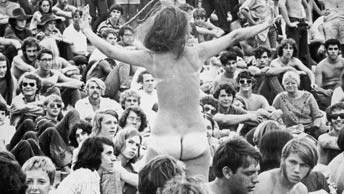

Party on

Stella Maris (1918)

Silent, obviously. Not tremendous, but enjoyable enough for what it is, which is an over the top melodrama featuring alcoholic first wives who beat their servants, beautiful invalids, fortunes that need to be maneuvered into the legal possession of the most likable characters, and so on. It stars Mary Pickford, the original "America's Sweetheart", and after this one movie I am a believer in the Mary Pickford legend. The bonus features included great home movies from Mary Pickford featuring a glimpse of the glories of pre-smog, pre-sprawl (and pre-income tax) Los Angeles during the teens and twenties.


42 Up (1998)

Installment of the much acclaimed British documentary series which has followed the lives of fifteen or so people every seven years since 1964 when they were seven years old. I had seen a couple of the earlier ones, I assume 21 and 28, back in the 90s, and remember liking them. 42 I found to be somewhat depressing. These people are for the most part distressingly ordinary, though there was one guy who ended up as a science professor (I don't recall which branch, physics, I think) at the University of Wisconsin who was obviously more intelligent than most of the subjects, and the one upper class bred man, at age 42 a successful and rather hard-headed barrister, who still consented to take part in the program, had a few matter of fact observations about the professional life that were interesting to me at least, though he was mostly pretty guarded with the interviewer/director (Michael Apted, who has been with the project from the beginning all the way to the most recent episode, which was 56. He himself is 73 or 74 now). The main problem for this episode from the narrative standpoint that I see is that as people get into their 40s and beyond, they don't change or develop that much anymore. Things may still happen in their lives, but they themselves pretty much are what they are, and as noted earlier, most people once they age out of the time in their lives when their personalities, education, sexual desirability can be understood in terms of potential to that when these have been effectively established, generally have nothing left that is very compelling about them. By that token I would expect the series to get worse as it goes on. However the critics seem to have thought that the two installments that have come after this have kept up the interest of the project. Doubtless they will come up on my list at some point.

The Trial (1962) 

Orson Welles take, made in Europe during his long exile-from-Hollywood period, on the seminal Kafka novel, starring Anthony Perkins (!) as the hapless K. While it has great visuals, it suffers for me from some of the same problems I observed in seeing The Magnificent Ambersons, too much long, intellectually dense and hard to follow dialogue combined with a lack of music, or at least noticeable music, that between the combination of my age and declining verbal intelligence, at least for interpreting the spoken word in large portions, made it difficult for me to concentrate/stay awake. Welles's celebrated genius clearly contains a claustrophobic/oppressive element, in this apart and beyond that suggested by the source material, that I do not find congenial. However many people think this is a masterpiece of sorts.


Office Space (1999)

Something of a cult movie, apparently. I found it diverting in a return to the late 90s way, nothing very profound. It is noticeable to me that such ennui and cultural pessimism as made its way into this--most of which is played as comedy--seem as nothing compared to the almost apocalyptic vision of society that has become predominant in the last ten years or so. It may just be me, and that I work in an unusually female-heavy environment, but I had forgotten about the atmosphere of offices full of placeholding, quietly desperate middle aged men who have no enthusiasm for the actual work they do but are terrified of losing the paycheck. The kinds of guys who lose it if they don't get their coffee breaks at the set times and all of that. I am one of those guys now, but there are not as many like me as there used to be. Most of the men I know seem to be either somewhat major professionals with purpose, authority and so on, or freelancers of one kind or another, with purpose and authority of a sort.


The Plainsman (1937)

Entertaining golden age western starring Gary Cooper as Wild Bill Hickok and Jean Arthur as Calamity Jane (the two had been paired a year earlier in Mr Deeds Goes to Town as well). Buffalo Bill and George Custer feature as characters also, as does Abraham Lincoln, who opens the movie by reiterating four or five times in a cabinet meeting as the Civil War is winding down that the plains need to be made "safe" for settlement for all the restless Americans coming home from the war or otherwise released from past claims or duties or ways of life from its result. Very smooth production, with the characters presented mythologically but not in a 'serious', overly reverent manner. Enjoyable, but not distinctly memorable.


Melancholia (2011) 

This kept turning up in various of the games I play with word combinations on Google, so I decided to get it. Relentlessly dour and pessimistic movie, even before it becomes certain that the world is going to end before the summer is out. Like a lot of modern movies it is well done in a slick kind of way. The characters have everything, seemingly--great looks, brilliant intellects, vast wealth, estates, leisure, privacy--yet they are uniformly miserable and disdainful of others and nothing is good enough for them. I have no sympathy towards them whatsoever, though of course I would still like to sleep with all of the women. They would prefer anybody else, but unfortunately our civilization has produced me, or variations on me, a few million times over. And women have, seemingly, never been less satisfied with the quality of men available to them.


All That Heaven Allows (1955) 

Archetypical 50s technicolor melodrama by Douglas Sirk of the type that was dismissed at the time as pap, but has gained respect in recent years for its lush production and cinematography as well as its sly undercurrent of commentary on the moral and intellectual rot at the heart of bourgeois American society in the 1950s. I was kind of fascinated by it. Nothing in it--town, characters, houses--resembles anything real in the naturalistic sense, yet it feels like a familiar, real world--a horrible one, mostly, but nonetheless psychologically it is only too attainable.


The Emperor's Club (2002)

Probably an all right movie, but more stinking rich and privileged kids who transition mostly smoothly from prep school to the Ivy League to the heights of finance, law, politics, culture, and so on. I'm at a place in my life where the stories of people of this sort, unless they go off on some sort of completely bizarre and unpredictable tangent, are not interesting to me. The crisis in this movie concerns the charismatic but academically indifferent son of a senator who mocks/undermines his classics teacher and cheats during the Mr Julius Caesar pageant/history quiz, which is one of the social highlights of the school calendar. Because his father his so important/gives so much money to the school, no one can bring the hammer down or even effectively express anger towards the kid, who goes on to Yale and eventually becomes a CEO of some kind. Later, at a 25 year reunion of the class in which the Mr Julius Caesar contest is reprised, the CEO cheats again and announces he is running for his father's old senate seat. The classics teacher tries to call the CEO on his cheating but the guy laughs in his face and asks his old teacher where all his learning and study of virtue, etc, has gotten him, and the teacher lacks the wherewithal/confidence in his own learning and development to effectively give any kind of an answer. So it does not really give us the alternative universe vis-a-vis real life that we are looking for. There is a reason why Mr Smith Goes to Washington is a classic and this is not, after all.


Gone Girl (2014)

Silky smooth Hollywood product that investigates more of the rotting heart of the American dream. The most fascinating thing for me about modern movies like this is to see how my contemporaries live, or are supposed to live, since I have little social contact outside my immediate family, and our lives and home follow an apparently outdated rhythm, and we are as well located very far from most of the drama propelling national politics, culture, etc. The main characters is this are around my age, or slightly younger. The Gone Girl, who literally has the adjective 'Amazing' as a huge part of her identity (her parents were the authors of a once popular book series based on her life titled "Amazing Amy"), is a lifelong New Yorker who is forced by the recession, and the losses of her and her husband's media jobs, to move out of the city to her husband's hometown, which unfortunately is a cultural black hole town on the Mississippi River in Missouri (though not so dead that there aren't plenty of large-breasted twenty year old bimbos who are interested in having sex with her husband). All of this drives Amazing Amy over the brink and she disappears in an elaborate hoax to make it appear that she has been bodily as well as spiritually murdered by her fundamentally inferior husband. Perhaps she is a symbol of our whole generation, though she is not really an attractive representation of the supposed brilliance, hotness and overall awesomeness of the contemporary woman. At the end she morphs into what Hollywood seems to consider to be a current feminine ideal, a sculpted. hardened, pitiless shrew whose combination of hyperintelligence and unapproachable sexual magnetism is not to be engaged or resisted, similar to the Robin Wright character in House of Cards, which program I abandoned after about two and a half episodes because I determined my life was too short to feel that miserable, both about myself and the greater society...


Gillian Flynn, best-selling author of Gone Girl and Generation X superwoman

White Bird in a Blizzard (2014)

This movie came up in one of my games rather out of the blue. I have to say I thought it was kind of good, and stylistically attractive. The director is a American of Japanese descent named Gregg Araki, with whose work I was previously unfamiliar. He seems to be a big name in gay cinema. While there is certainly gayness hovering around the edges of this movie, it is mostly of a subdued kind. The main character is another girl/woman of exactly my age, but it is set from 1988-1991, so she is 17/18 to 21 in the film. Other than a kind of uniform blandness and by comparison to now somewhat less all-encompassing relation to media, there is not much specific in the film that is that evocative of 1988. There is a pretty good soundtrack (The Cocteau Twins!) of some of the affecting melancholy sensitive white kid music of the time, but it is doesn't seem to me to quite fit with the movie.


The girl who is my age in generational time has a sexual coming of age at what appears to be the right age for it--when you get your 1st kiss in your junior year of college (as a man at least) it appears that you missed the time for 'coming of age' and all of the specific later-in-life maturity related to that experience--including a lover who is a much older man, which despite having gone out of style in our time appears to be a dynamic that is usually incredibly healthy for all concerned. I am reminded, depressingly for myself, that almost all interesting and attractive women have these deep secret lives and wealth of erotic experiences that people like me have no inkling of, and therefore have can have no real relation to them and their lives and art and basically everything good and desirable in the world. So a good movie, but it did depress me because of the particularly gut-punching reminder of my ------- irrelevance.


I am caught up now, though I wish I had expanded more on some of these.

Saturday, January 02, 2016

Year in Review

I only managed to get done 35 posts in 2015 on this blog (though I did put up 27 on the spinoff Vacation blog) and readership was not so hot either. Quality, though never near as high as I anticipated when I took up this pursuit, I suspect is down even from what it was formerly. So I am in a bit of a down cycle. However, maybe this past year marked the bottom in some ways and I will be able to come back somewhat.  Become calmer, more comfortable, less distracted and rushed, or at least approaching somewhat the level I formerly had. I feel like I must be close to peak distractedness or jumpiness; well, what I really feel is that it must be impossible that I will never regain my ability to think and write somewhat coherently. In any case, here were my top-viewed posts from the last year:

1. Mid-Winter Music and Videos on this blog got 174 page views, making it by far my most popular post of 2015.

2. Author List Volume VIII from the Vacation blog, a dry catalog of writers' birthplaces, burial sites, museums and other monuments, was the runner-up of all my postings this year with 73 views.

3. The Battle of the Broadcasting Erins, a consideration of the merits of Generation-X TV newscaster babes Erin Burnett and Erin Fehlau, took the bronze medal for this year with 58 page views.

4. A movie review post with the eclectic-sounding title of Luis Bunuel/John Huston/James Joyce/Andy Williams was checked out by 44 people.

5. My recount of my experiences reading An American Tragedy by Theodore Dreiser on the other blog attracted 39 visits.

6. Addendum to Edward Bok post (Vacation)--28

7-8. Tie between the original post on The Americanization of Edward Bok on the Vacation Blog and my account of taking my children to see the movie Tomorrowland, both with 25 views.

9. Author List Volume VII (Vacation)--24

10. Report on All's Well that Ends Well (Vacation)--23.

The least viewed post I had this year was my June reading update on the Vacation blog, which drew only 7 visitors. In general those monthly reading updates are not popular, but I started doing them to give that blog a somewhat more frequent consistent source of content, so I think I will keep it up for now. The least viewed posts for this blog were the last two I put up in December, which have both drawn 8 views. 8 seems to be about the baseline number of regular readers I have. Most of my posts get to eight views within a week and then other visitors will trickle in periodically after that.


The rather groovy early 70s video for 'Uncle Albert" on my #1 post for this year seems to have been taken down. We'll try and see if this one is any good.


Videos featuring the beautiful Mirielle from the 1980s "French in Action" TV series (one was on that prize-earning post) never stay up for long, but it is usually worthwhile to find more.

I have had a good Christmas season, of course one always has to work too much in my line of employment this time of year, but I think my children will have pleasant memories of it in their later life. Hoping my brain recovers some of its elasticity and stamina, however modest these were even at their peaks, in the New Year, and I can produce some worthy as well as more frequent posts in 2016.

Friday, December 18, 2015

In Which I Once Again Try to Rationalize Various Crimethoughts

So I have not had the most productive year of blogging. I suppose the main reason for this is that I seem to have ever less to say. This is disturbing of course, since I might have to live another two or three decades at least, and the possibility of being unable going forward to have any kind of intelligent thought processes that could be translated to writing is a state of existence that, due to the absence of other skills or interests at a recognizably adult level of development, I find unpleasant to contemplate. So I feel somewhat obligated to try to carry on. I am also going to cling to the hope that this bad year has been to some extent due to 1) the presence of the new baby, which, even though she is the sixth baby I have had, and is a remarkably easy baby as far as babies go, has still, given my age and the presence of five older children and their various needs--I have to spend almost one hour out of the twenty-four every school day washing out and then making up lunchboxes, for example--impeded more and more on my writing time since I am really too tired at night to do much of anything now, which formerly I could still usually put in a hour or so worth of effort; and 2) the current absence of a functioning computer for writing at home--I do have a smart phone now that has internet access but as yet I have not committed to trying to blog on it, though I suppose if I were truly alive and driven to write, I could. The obvious solution is just to buy a new one, but the timing has not been good for it. Between my wife being out earlier in the year on maternity leave, and the necessity of taking out maximum insurance in anticipation of the baby, and having to buy a new dishwasher, and keeping the children up with all of their camps and lessons and private schools, I have been holding off on the new computer, which would be pointless anyway unless my posting began to show a marked improvement.

It is true though that I don't seem to know my own thoughts, or trust them, on any number of matters, which tends to make writing about anything impossible. Lately, for example, most of the people of my general socio-economic group (or at least that to which I aspire to belong because there aren't any very appealing alternatives) who deeply believe themselves to be good and morally correct, and obviously care about being so, have been greatly excited in favor of the continued mass migration of refugees and other aspiring people from all corners of the world into the United States and other wealthy Western countries, with apparently no limits on such migrations as to number or any strict measure of social desirability other than those determined by the global marketplace and the would-be migrants themselves; to do otherwise would be a moral wrong. I tend to be conflicted about this, at least at the level, numbers-wise, that have already immigrated into these countries since about 1990, and that are being anticipated for the foreseeable future. There are any number of places in the heart of the great western cities and homelands that have had their populations transformed by foreign-born people without much of a visceral attachment or seeming cultural respect, beyond economic and certain educational opportunities, for the host country. There are a lot of old natives of these countries and cities who are deeply unhappy about the changes that have come over the societies that they grew up in, to the point in some cases of demoralization and despair, though as these tend not to be important or respected people, we are not supposed to worry about them. I am not quite in this latter condition--while I struggle some with constant change and 'disruption', I more or less accept its necessity and even its desirability, to a point. I believe I could even live contentedly enough in many places that are more diverse and heavily populated with immigrants than where I live now, provided that, first, the levels of overtly racially-motivated conflict and violence were low (low meaning, 'it is not something I have to account for in my daily life outside of the occasional extraordinary circumstance') and second, if in the United States, the local area were to maintain some strong institutional and cultural ties to the old American republic. A lot of people who occupy somewhat extreme positions, both on the left and the right, including many on the left who would be designated as belonging to the white tribe, seem to relish the prospect of some kind of racial conflict, for the leftists seemingly under the assumption that certain classes of especially distasteful white people are going to be receiving their deserved comeuppance, but I do not share this enthusiasm. For similar reasons I am not really that enthusiastic about the prospect of the western countries being continuously inundated by people from countries with whom they have had very few, and in some instances no cultural or historical ties until recently, though given the global demographic situation, I realize it would require a particular severity and arrogance of will on the part of the western societies to effectively do anything about the flow of migrants, which the powerful classes in these countries seem not to have, or be interested in having, presently.

The professed love that many leftists seem to have for almost any immigrant or person of color in the abstract, and their near ecstasy when a success or demonstration of superiority over the run of ordinary bland Americans by someone from one of these communities is recounted, while I actually think it is understandable given the bitter enmity which has prevailed in domestic politics during most of my lifetime, I also think is not truly real, and therefore not sustainable, especially when the current extreme left wing-right wing hatred dies down a little, which it will,  

I admit I am strongly affected by the stories all of the girls in Sweden and Norway who are supposedly getting raped at staggering rates by immigrant men, while their fathers and brothers and the civil authorities of their nations stand aside and do nothing, as if acknowledging their powerlessness in the face of forceful virility. Of course one hopes these stories are not broadly true, that the problem has been somewhat exaggerated as to scale or embellished as to its brutality, the impression given being that beautiful and unassuming young Scandinavian girls are being routinely attacked, captured and defiled in their own countries in broad daylight and with complete impunity by violent bands of young men of foreign origin, mainly Muslim. Of course I am affected because I imagine the women involved to be the typical beauties of their highly advanced countries, and the imagery of their being violated in their homelands by people hostile to their way of life and their very persons who could have been prevented from ever settling there in the first place is risible. People will argue that women are raped and treated terribly in various hellholes all over the world and I don't care about them. This is not entirely true, though in places where the racial composition, language and culture are completely different it is natural I would not have quite the same visceral affinity where the victims are concerned, and also the chaos and lack of social order and protection for women in these societies are not things to which I feel as direct a connection or responsibility, as I would say, do most Americans, because once you really try to confront all of the atrocities with which the world in all its glorious parts is filled, and keep them always in the forefront of one's consciousness, one must become rather humorless, and be possessed by the tireless zeal of either the saint or the crusader to live at all effectively forthwith, and those are callings that few people are equipped for. In any case one could say the same for me with regard to Sweden, but that country is not dissimilar in many ways to Vermont or New Hampshire, certainly when compared with the Zimbabwes of the world, and the breakdown of order and the safety of women there is more disturbing than it is in a place which had never quite achieved Western levels of those things in the first place.

Well, enough of this.

Thursday, December 03, 2015

Lightning Movie Posts

I am so far behind on my movie documenting now, that I am going to go through as many as I can as succinctly as I can, sticking as much as possible to my most pertinent impressions:


Die Nibelungen: Siegfried & Kriemhild's Revenge (1924)

On Youtube, which is never my preference, but I have to take what I can get. Earlier Fritz Lang. Very good, I was into the Teutonic mythology. Supposedly Hitler was an enthusiast of these movies, which do feature a lot of Aryan types engaging in bloodshed. When Kriemhild marries Attila and goes off to live with the Huns we get a more convincing idea of the extreme filth and squalor in which barbarian peoples habitually lived of old. Margarete Schon, the actress who played Kriemhild, was striking to me for personal reasons (i.e., she bore a strong resemblance to someone I know and find attractive).


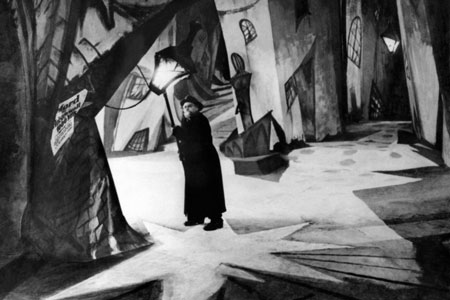
The Cabinet of Doctor Caligari (1919)

Dark, menacing German Expressionist classic, in a great print. Admirable for its style, daring, grasp of the civilizational mood in its moment, but with my current diminished concentration due to lack of rest and downtime this is one of those movies that I had a hard time staying awake through and actually following what was going on. Definitely appropriate for genuine smarties though. I will have to take it up again at some less hectic time.


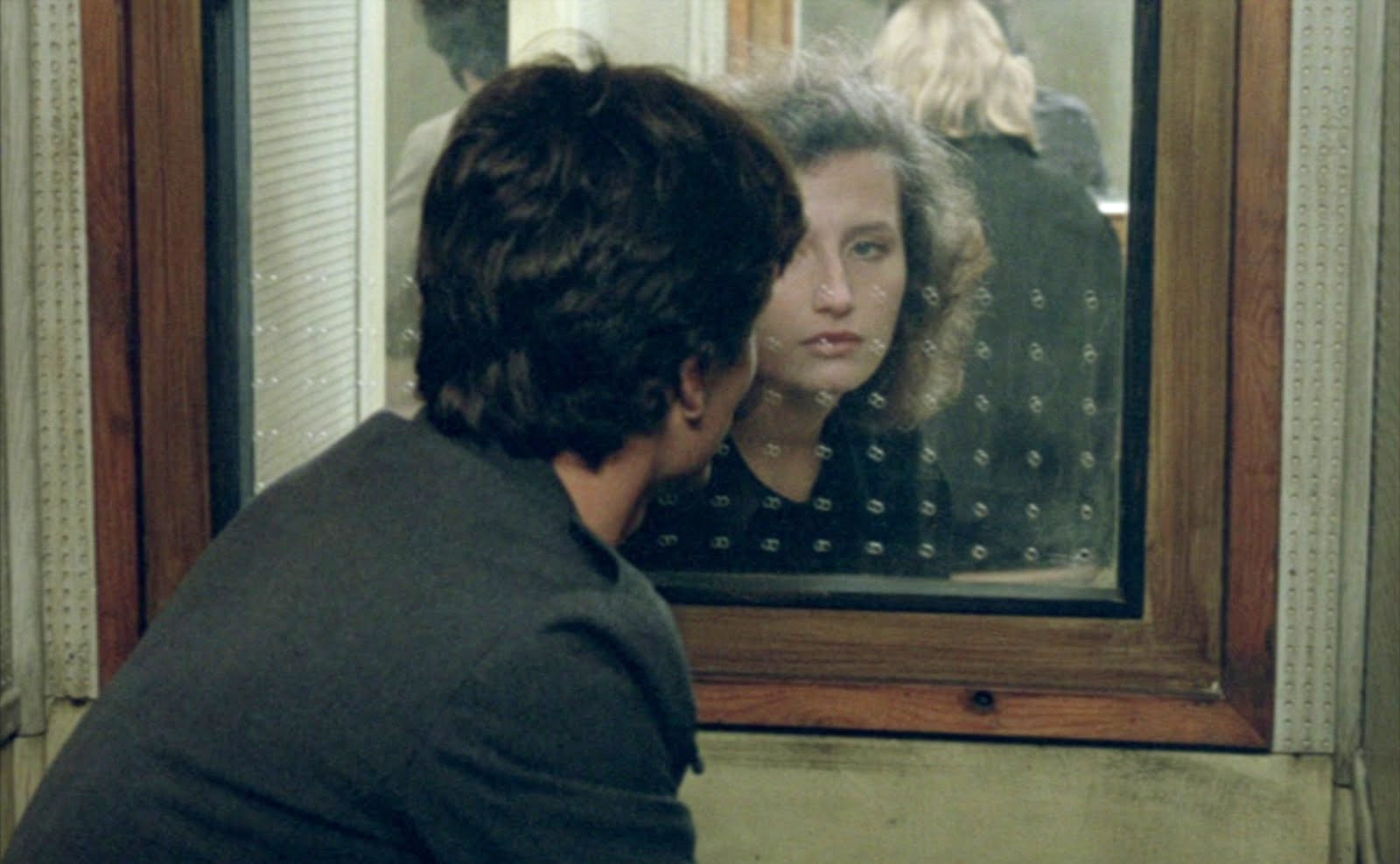
L'Argent (1983)

Among the directors who seem to be universally considered as serious contenders for all time top-20 status, Robert Bresson has always been to me the most obscure. None of the video stores I used to frequent during that era ever had any of his movies, the college film society never showed any of them, his movies were never obviously referenced in any writing or other cinema that achieved any kind of mainstream penetration. Yet in time, influenced by the odd drop of the name in various corners accompanied with a forceful conviction of the greatness of the man's oeuvre, the idea formed in me that he was one of the small number--twenty? fifty? certainly one hundred--of the all time greats in the field. L'Argent was his last movie, and still the only one of his that I have seen. I bought a used VHS copy of it some years ago now, and had been unable to keep up with it at that time, but this revisiting was much better in that regard, and I was able to appreciate much more the amount of skill and control that is packed into every shot and scene, and their interconnectedness and flow, the quality of which is Bunuel-like. The movie is only around eighty minutes in length, yet a great many significant actions and psychological transformations happen. All of this is impressive, and therefore pleasing in spite of the rather doleful story and seeming message. Also on a less substantial note, we have some nice scenes from (a deliberately gritty and workaday) early 80s Paris, which resembles pretty well the city as it looked and felt like when I was there in 1990, but which I sense it does not in general tone resemble very much any more.

  
So I did not get too far tonight, but I will revisit this exercise again until I have caught up somewhat...

Friday, November 20, 2015

2016 Primary

I'm having a tough time getting this one going. I have really become indifferent...

I thought I should write something about this primary season before I miss it altogether. As with everything else, my level of interest in the process seems to be diminishing with every cycle. I still care enough about the overall well-being of myself the country that I think it matters a great deal that a Republican is not ultimately elected president, but beyond that I do not have a lot of enthusiasm or positive feeling for anything political that seems likely to happen. My waning interest, especially with regard to the primary, may be a symptom of things always appearing more interesting when we are younger and encountering them as a novelty and growing stale upon repetition; that said, I have the impression that the New Hampshire primary is getting a lot less intimate and spontaneous and all of the things that it prides itself on being, every time around. Perhaps as we get closer to the vote--we are still three months out--more of the traditional stump campaigning and the atmosphere that accompanies it will take place; still, the major, big money candidates increasingly eschew this approach when they can, preferring to stick to staged events with carefully selected and prepped audiences, with all public appearances calculated to maximize national media coverage.

My wife, who in contrast to me is known to and liked by the progressive crowd, was invited to a Bernie Sanders house party, but she declined to go because she supports another candidate whom she believes to be the inevitable nominee anyway and she does not think that the presence of Bernie in the campaign serves any useful purpose to the goal of electing this other candidate. I have not as yet been invited to anything other than a generic robo-message inviting me to a Chris Christie pancake breakfast in a town about twenty minutes away. This event took place at 8am on a Tuesday however, which is not a convenient time for me. I guess I am pretty close to being a stereotypical representative of the Bernie Sanders constituency, persuaded as I am that the economic arrangements of the New Deal era were not that terrible, appreciating his efforts to conduct his campaign at at least a high school graduate level of discourse,generally wanting no part of the Darwinian aspects of the capitalistic arena while hoping to maintain some respectability. The conventional wisdoms that he is so far outside the mainstream and that his positions are in some sense absurd strike me as odd. The most fervent supporters of his in New Hampshire whom I know tend to be quite affluent and seemingly successful in the various meritocratic and capitalistic competitions which define our society, and do not give off the least indication that they are concerned about the confiscatory taxes on their substantial and hard-gained incomes that would inevitably follow upon their man's election. The gentleman who hosted the house party referenced above, while something of a new age type, is a lawyer with an international background who travels all over the world and one of whose children at least attended the famous St Paul's Prep School. The other big supporter I know of has a stylish modern house on a good plot of land in the country, and her children also attend boarding school. I do not know what the source of either her or her husband's income is, but they both project the easy, comfortable force of the capable professional class.

That part of Bernie Sanders's platform where he says he wants college to be free has been much mocked by the practical men and ideologues who have a vision of their coffers being raided yet again to throw away on worthless people, but I have heard him (Sanders) explain the rationale behind this on several occasions, and it is not without a certain logic. The argument, as I understand it, is that in the past, when society, for lack of a better word, or some substantial or influential portion of the collective polity, determined that it wanted as many citizens as possible to enter upon adulthood with a high school education, and to in many cases require that either as a condition for employment, or for advancement to a more secure and lucrative position within employment, it was grasped, eventually anyway, that the providing of this education, or the opportunity for it, on the mass scale required would be the responsibility of organized governing bodies at various levels, which public version at least should be free. Bernie Sanders argues that we have come now to the same state with regard to college, or post-secondary training resulting in certification or a degree at any rate, and that if society is going to insist on people having these credentials in most instances to have any hope of earning a sustainable income, that it must, as formerly with high school, offer the opportunity to obtain this education to everyone at no personal cost. I do not know that I agree with this position, and I am not optimistic that it would work in the way that it would be supposed to work anyway, but there is a practical issue of too many people not being productive or self-sufficient or otherwise engaged or positively contributing well into adulthood, if ever, and there being very little structure or guidance or apparent interest on the part of the greater society to assist them to become so. This is a gesture at addressing a part of that problem anyway.      

Hillary Clinton. Yes, I think she is probably, if not precisely evil, more corrupted of soul even than is standard for a professional politician, at this point. But for all that I still don't think she actively wishes the American public, or the completely docile and harmless portion of it anyway, ill will if it can be conveniently avoided. We are constantly assured by the media of how brilliant she is, and doubtless she is possessed of a high general intelligence, but her public speeches, campaign literature, and so on are aimed, clearly intentionally, since her husband did the same thing, at voters in the vast middle of the intelligence distribution, which is politically savvy in the current system I suppose, but is frustrating because the country really needs a more sophisticated political discourse, especially from its leadership Though no one seems to be saying this, I assume that her entire campaign and the lack of any serious opposition to within the ranks of the party establishment is premised on the idea that somehow she, and the people around her, presumably veterans of her husband's administration, will be able to restore some semblance of the fondly remembered prosperity of the late 90s, that perhaps all of the difficulties in the intervening years really could have been avoided with competent leadership. What else is she running on? She has a commercial out about the pay gap between men and women, which takes a tone that seems to me likely to be unnecessarily divisive, especially in the general election, given that most men do not, and cannot regard themselves as riding especially high these days, and probably are not in much of a mood to be taken down any further pegs by feminist political candidates. The pay gap anyway is one of these issues that is always presented as an absolute truth, and an evil one at that, without regard to context, fruitful examples, explanations of whether these wage differentials where they exist reflect some kind of official policy, whether there is any legal recourse if this be the case and if not why not, and so on. I don't doubt that there is something to the pay gap, but the reasons for it are a little more complicated that some of the rhetoric would have you believe, and I doubt in most instances it is of a kind that Hillary Clinton or anyone else will be able to legislate across the board pay raises for every woman in the country (or pay cuts for the men, if you prefer that).

I actually saw a couple of twenty-something girls wearing Carly Fiorina t-shirts walking around my decidedly off-the-beaten-track neighborhood one day passing out flyers. I happened to be driving and in my usual hurry at the time, so I didn't have the opportunity to speak to them. I really would have been curious to know why they were working for her, why they thought it would be a good idea for her to be president, etc. They looked very normal, almost as if they lived in the neighborhood. No make-up, no jewelry, no expensive hairstyle or clothes, none of the air of impatience or educational or financial hauteur that often marks the young political operative or even volunteer from out of state. I know we are supposed to get over the fact that everything Carly Fiorina says or does basically screams out that she is a flat out bitch, because that is sexist, and we love it when Donald Trump behaves in an equivalent manner (though I don't), but I don't understand what her redeeming qualities might be supposed to be. I can't see any.

Among the Republicans, Christie, though I guess the evidence points to him as being more than ordinarily evil too, strikes me as the most interesting candidate, and certainly the most convincing as a person who might actually believe, in a self-generated manner, the things he says. Perhaps it is because he is from the northeast and his persona is familiar to me. Ted Cruz might as well be from another planet, the same with Rubio, Carson needless to say, nothing in their entire worldview has relation to mine. I guess Christie does not come off to me as a rigid ideologue, though I do not like his displayed tendency to personally attack and even savage ordinary people who are opposed to his positions...

I'll have to end this now and maybe do an update in January before the big day. I couldn't even get to stating my positions on the college racial insurrections, the Paris terrorist attacks, Syrian (and other) refugees, the obsessive and unquenchable fury of good modern people about the Japanese detention camps set up in America during World War II (Yes, they were wrong, but people seem to have gotten over the Japanese, you know, bombing Pearl Harbor and waging aggressive war against the United States, while the detention camps and atomic bombs dropped by the Americans on Japan are crimes eternally unforgivable). But as I say, I'll have to get to all this some other time...

Wednesday, November 04, 2015

Three Movies From 1925

1925 was the high point, in terms of spiritedness, of the silent era. Of course there would still be further development and notable achievement, artistically, in the form up through the end of the decade; but by then the end of the silent period was obviously at hand, and while the self-consciousness of this inevitability does not diminish the quality of these later works, it imposes an air of artificiality and constraint on them that is missing from the efforts of 1925, which are not yet afflicted by this consciousness.

The Phantom of the Opera 


One of the most legendary silents, famous for the performance of Lon Chaney as the title character, fresh off of his similarly dominating portrayal of The Hunchback of Notre Dame (which I have not yet been seen), the previous year. People love this story, and a sense of Drama pulses through one at the mere contemplation of the title and the outline of the plot. So I was fired up to see it, and I have to admit I was a little disappointed, though I believe in this instance the fault is probably my own. I don't feel like the print I saw was very good--it was sepia-tinted and was neither sharp nor striking to me. I found my mind wandering a lot, to the point of frequently losing the track of the intertitles and the flow of the story, so that I needed to backtrack to the beginning of a scene, at which my brain would immediately drift off again. Perhaps I was too tired during the particular stretch of days that I took on this movie. Perhaps I am simply too stupid to watch it, though I don't think the basic story is overwhelmingly difficult to follow. I have frequently maintained that it is not reasonable or desirable to expect that one will click with everything even that is good, at least on the initial run, and I think something of that kind happened here. I would be attentive at the beginnings of scenes, in anticipation of some promising development, and then for whatever reason it would not go off with me. I accept that some grand things probably escaped me. What is to be done? I will have to come back to it some other time.

The Freshman


Harold Lloyd comedy, the first of his movies that I have seen. Even though it is enshrined indisputably as a classic, I had to watch it on Youtube because I could not procure a copy of it in any physical form for less than $20 or so. I love it. It has great energy, and while most of the jokes are ridiculous on the surface and to the faculty of higher thought, they are hammered through so relentlessly and elaborately that they extract a feeling of delight in spite of one's modern defenses. Hollywood, being after all not devoid of people who approach things from the artistic mindset, figured out early on that what is really significant--the essence, if you will--about 'college' as far as the general public, even some of the more intelligent levels of it, are concerned, is not professional credentialing, STEM training and research, debates over the Canon, or finding innovative ways to put the whole experience online so as to save a few bucks, but football, parties, and girls. The Freshman goes light on the academics--indeed it leaves them out altogether--and organizes itself around these other often absurd but nonetheless highly formative experiences. And then who, who is a kindred spirit to the likes of us, at least, does not love the image of the 20s that survives in artifacts like this? Such beautiful clothes and rooms and an outdoor physical environment that to contemporary eyes is attractive, manageable and not an overwhelming mess, parties and other activities that look as if they may actually have been fun. At some point in our history the emphasis on having 'fun' seems to have given way in more instances to that of being cooler or smarter or otherwise more dominant than other people in social settings, though perhaps this is not true within true peer groups.

Jobyna Ralston, who in mainly remembered now for frequently appearing as the love interest in Harold Lloyd movies, was pretty beautiful in this. So much so, in fact, that the plot contrivance that Harold requires the whole movie to figure out that she is the one who likes him and that he should be with should be ludicrous, but she is so sweet, so unneurotic, so unconniving, so apparently unnoticed in her ridiculous beauty, that I appreciate the effort and doggedness to create such an unreal but highly satisfying sentiment.


Stella Dallas (silent version)


This was included in the extras for the DVD of the more famous 1937 version starring Barbara Stanwyck. It had no accompanying music, so it was a truly silent hour plus long movie. Ronald Colman, who later transitioned successfully to talkies, appearing in A Tale of Two Cities (1935) among other noteworthy roles, was the big star in this version. Stella was played by the more obscure Belle Bennett, who at the beginning of the movie was more appealing and wholesome than Barbara Stanwyck but in the inimitable old Hollywood style quickly metamorphosed into every man's (or at least cutie-pie lover's) worst nightmare. It was directed by Henry King, who would keep working into the 60s and who has turned up a couple of times in my dabbles in film history (The Gunfighter and Carousel, both from the 50s). I wish I did not take so long to get around to filing these reports, because while I remember that I liked the movie, and liked it about equally with the 1937 version, I no longer remember, what, if anything, was substantially different about the two versions, which have now kind of blended together in my mind. Some of the aspects, such as the squalid Ed Munn character and the extremity of Stella's lower class habits and mindset, stand out more from the sound version, but that may be because they can be emphasized more fully and directly with the aid of sound, especially to the more unsubtle viewer.

Monday, October 19, 2015

St John's College Dining Hall, Annapolis, MD

I had lunch here with five of my children on the last Saturday of September, while my wife, who was attending her class reunion, hung out at the $20 a head luncheon out on the back lawn. The dining hall was around $8 per person for all you can eat as well as ice cream and other dessert included, so it was as good of an option as anywhere else within walking distance, as we had already gone to the (in)famous Chick and Ruth's diner the night before. I had not been in the dining hall in more than twenty years. Not surprisingly, it had changed.


The Scene at Chick and Ruth's. This must be early in the day. Everything looks too clean.

The Ride. I was looking forward to the trip, as I had not gone further afield than Boston in the entire year previously. The way down was not at all onerous, and even pleasant, as we took two days in coming, stopping the first night in Philadelphia, and after some visiting in the morning, having a fast (for us) three hour ride down to Annapolis, including an obligatory stop for snacks at a Wawa in an especially flat and treeless part of Delaware. Since we seem to want very much to be conscientious workers and parents of schoolchildren, we had to return all the way home on Sunday in order to be ready for Monday morning. Besides having to leave abruptly right after partaking of the farewell brunch, this inevitably takes about twelve hours to get back home. As I get older I do care more about convenience as well as the ability to travel more leisurely. My last two times in Annapolis I have spent extra money, quite a lot of it really, to stay within walking distance of school and the center of town, and I find that it is worth it in terms of my overall mood, especially given that I am only taking such trips once or twice a year now, if that. Now I am reaching the point where I don't want to have to rush back on an extremely long ride in one day. Our trip home also coincided with the last day of the Pope's visit in Philadelphia, with the attendant closure of half the highways around that city, so we went up through York, Lancaster, Allentown and Scranton and then across I-84 to Connecticut. The first half of this ride, during the daylight, was very pleasant. on mostly empty roads through the interior of Pennsylvania. When we got to Connecticut there were three separate occasions where we got stuck in construction back-ups for at least 45 minutes. It was also, as always, considerably colder and darker and gloomier once we got back into the New England evening. It is home, but it is a dark and lonely place to drive across at night. In any case we did not get home until around 2:30 in the morning, and it took us most of the week to recover our sleep. But the trip was still worth it!


I love the Pennsylvania Turnpike's eternally empty Northeast extension

Location. St John's is an old school in the old section of an old town, so it is pretty much where it should be. Most of the students in my time had little use for Annapolis, and the cool kids especially were merciless in their evisceration of the local scene. It is true that the dominant character of the local population has never meshed well with the culture of the college, though I am surprised by how unfavorably the town seems to be considered with locales of roughly similar colleges, many of which are in far more isolated locations and have much colder weather, winter lasting in many instances (such as almost all of New England) nearly the entirety of the school year. But I have written about all of this before. Predictably, the surrounding neighborhood has become desirable and incredibly expensive compared to what it was in the early 1990s. Students, including those from the regular middle classes, used to rent well-worn rooms or apartments in the historic district within a few blocks of campus in those days, but these places have been renovated for more upmarket purposes, and I don't think too many students live in town anymore, unless they are from wealthy families. The college had to build a couple of new dormitories for the first time since perhaps the 1950s to address this issue.


The main building of the college, dating from 1743.

Day. The weather was wonderful, overcast with temperatures in the low 70s. I could comfortably wear long pants outdoors. As I had primary children-minding responsibilities I mostly hung out near the play areas during the day instead of meandering from scene to scene of social action, and, sadly, I was unable to attend any of the parties later in the evening.

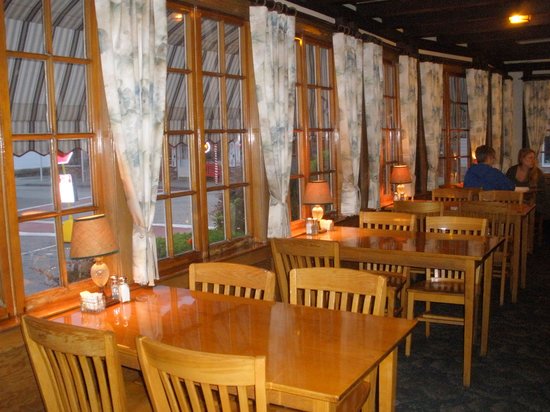
Ambiance. Back now to the dining hall, the main room is largely the same as it was, with the exception of a buffet line at the front manned by two or three employees of the catering service, which I have to admit I found kind of intrusive, though this may have been because I was sitting at the front table right beside it. The booths in the smaller room that had been the smoking section in my day had been ripped out and replaced by a double row of drink and ice dispensers, not an improvement to my mind. I cannot say I got any real feel for what the social atmosphere is like now. It seemed kind of subdued. It was Saturday afternoon, and the crowd is always lighter on the weekend, and is usually absent the most intense and energetic students, who tend to be more vigorously and productively occupied elsewhere on the day off.


This is it. I guess the full length portrait of William of Orange must be at the other end (behind the photographer)

Crowd. Mostly students obviously. I only noticed a couple of other older people in there, though there is no objection to their going in. I sat facing away from most of the students and was pre-occupied with prodding my children through the meal so I actually did not have much opportunity to observe the students.

Food. I had fired my children for this dining option beforehand with promises of chicken patties or fishwiches with fries being on the menu. Times have changed however, and the type and apparent quality of the food being served is of a much higher standard than I actually ever encounter in my own current life. Indeed, it is in this matter of food and diet that I most worry that our family may have dropped out of the college-going classes, or at least those classes that attend colleges like St John's (I confess that, never having gone to the kind of school that the Buffalo Wild Wings crowd went to, I am mildly terrified of them). They had whole grain pasta, potato latkes,good quality pastrami on a fresh onion roll. They did have some French fries, though these too looked to be more of some kind of modern hand-crafted variety rather the old freezer burned crinkle cut model that we used to know. It was all very good, and I know that these offerings are hardly exotic, but the whole presentation, remodeling of the serving area and so on struck me as riffing on some kind of San Francisco, i-pod, vaguely exclusive aesthetic, in the sense of, some people have the mannerisms, thought processes, etc, that assure you that they belong in this environment, and other people, like me, really do not. Incongruously, there was one of those flip-over waffle irons that they always have at the continental breakfast at hotels along the interstate. My children were most grateful to see this, and I think it was the main part of the lunch for the younger ones.


Latkes

Friday, October 09, 2015

Two Movies by Josef von Sternberg

An American Tragedy (1931)

Josef von Sternberg was born in Austria but emigrated to the United States with his parents when he was fourteen, so that professionally he came up through the American film industry, first in New York and then Hollywood, though he would later make movies in Germany as well. He seems to be well-regarded by experts, though none of his catalog of movies stood out to me as a familiar classic title.  An American Tragedy, based on the then six-year old Dreiser novel that I happened to read, and thought highly of, over the summer, is a somewhat forgotten adaptation--it does not appear to have ever been been released even on VHS--in the shadow of the later A Place in the Sun, starring Elizabeth Taylor and Montgomery Clift. Someone has posted it, apparently in its entirety, on Youtube. As is to be expected with an 874 page book condensed to a 90 minute movie, the plot of the movie is considerably streamlined from that of the source material, but as an admirer of the book I found it a good treatment, probably better in that regard than A Place in the Sun, though I also like that version as a movie qua movie. Von Sternberg's version has the advantage of being nearly contemporary with the book; this is especially helpful where the actors are concerned, as they all conform more to my idea of what the characters were like both as far as looks and general temperament went. Also the 1931 version placed its emphasis more on the relationship between Clyde and the factory girl Roberta, who was played beautifully (and far more sympathetically than Shelley Winters's depiction 20 years later) by an actress named Sylvia Sidney, whom I had never heard of before, but who had a very long career, earning an academy award nomination in 1973 and appearing in movies as late as 1996's Mars Attacks!, while the later one was much more interested in that between Clyde and the wealthy Sondra Finchley character, which was the role played by Elizabeth Taylor. The Sondra role in the 1931 movie was played by the way by Frances Dee, whom I had never seen before either but whom I remember having been praised by James Agee for 'having a face' and 'never being around nearly enough', and indeed her part in this was surprisingly small. As is often the case in old mid-list type Hollywood movies of this type, the general impression one gets is that there were an absurdly large number of beautiful women under contract in Hollywood in the 30s. In this movie even among the extras and non-speaking, whether among the factory workers or Sondra's chi-chi friends, there are just rooms full of gorgeous girls.


Sylvia Sidney (with the much-maligned Joseph Holmes, as Clyde)

The dialogue in the courtroom scenes in the book were I thought unusually well-written, and the writers of the screenplay had the good sense to transfer several of the key exchanges pretty much as they were into the movie, which maintains its interest and intensity, despite the circumstance that the verdict in the case is never for a second in doubt, more than is common in courtroom dramas.


...and Frances Dee

Whenever titles are employed to indicate a passage of time or a change of locale, they appear against a backdrop of a shimmering lake with a frame of leaves, which I thought was a really fine aesthetic touch, and a nod to the serious quality of the book.

Highly recommended.


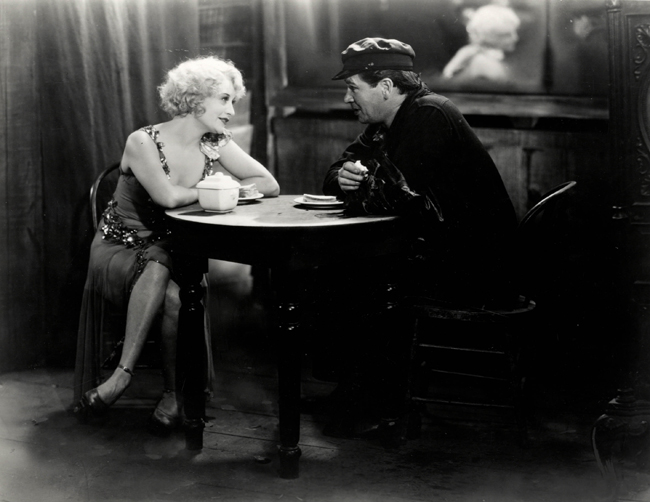
The Docks of New York (1928)

Taking us back to the silent era, this movie feels like being dropped into a Eugene O'Neill play (The Hairy Ape, especially), with its desperate, brutish machine-age laborers, dive bar never more than an inadvertent jostle or stare held a second too long from bursting into violence, and prostitutes and other damaged women who never had a chance. I didn't like this one quite as much--even with O'Neill, I have to admit I prefer his plays which feature somewhat more evolved and articulate characters--though the (presumably) restored print from the Criterion Collection I saw was striking. But I don't have much more than that to say about it.


Wednesday, October 07, 2015

Notes on the Death of Frank Gifford and Other Old Sportsmen

Frank Gifford died about a month ago--maybe two months ago, by now. Like everyone younger than retirement age, I remember him only as the fossilized, stupefyingly vacuous football commentator of the 80s and 90s, but at one time, as it was dutifully noted in the aftermath of his death, he had been a great football player and an A-list celebrity in New York City and 'always the coolest guy in the room'. This time was so long ago that most of the contemporary people noting these circumstances were hazy on the details of the forms these had taken, or even could have taken, since the idea of Frank Gifford either as a football great or, perhaps especially, a cool New York socialite does not translate into any context that is recognizable to the modern media consumer. It was also observed by many commentators, apparently unable to think of anything else to say about him, that Gifford had been blessed throughout his life by an almost uncanny run of good timing, continually finding himself in exactly the right place at the right time, relative to where his inherent abilities would enable him to land in today's world.


I will postulate that the main reason Gifford's football stardom, both at USC and with the New York Giants, on which his long media career was contingent, was almost impossible for post-1970 football fans to conceptualize, it that the type of player he was has gone extinct. Gifford was an elegant, good-looking, even glamorous white running back of the sort that held a prominent place not only in football but in the national psyche throughout the early part of the 20th century, especially in the college game, where he was the epitome of the oft resented and always envied B.M.O.C., whose lineage ran from the Gipper to F Scott Fitzgerald's idol Hobey Baker to Red Grange ("The Galloping Ghost") to Glenn "Mr Outside" Davis from the legendary West Point teams of the 40s to Gifford and Paul "The Golden Boy" Hornung. This progression came to a dead halt around 1965. Indeed it is fitting that Hornung's last signature performance came in the final pre-Super Bowl championship game in the mud in Green Bay in 1965, which game in retrospect marks ever more symbolically the break with football's pre-modern era. Gifford played for the Giants from 1952-1964, though he took off a year in 1961 after getting knocked out by Chuck Bednarik in the most famous play in Philadelphia Eagles history, and coming back in his last three seasons as a receiver. His heyday was the late 1950s. He was named to the All-Pro team in 1955, '56, '57 & '59, peaking in 1956 when he was voted the league MVP and the Giants won the championship. Presumably this is the period when Gifford became established as a popular New York City personality. My impression is that the late 50s would be considered among the culturally blander times in post-1880 New York City history and therefore more accommodating to vapidly handsome, colorless jock types with less than transcendent athletic achievements than might ordinarily be the case, that the differences between the City and the rest of America were less pronounced and the relationship between the two more reciprocal in that brief era than two allow themselves, or desire, to have today. The Giants in that time, helped by the rise of television and, I suspect, the professional sporting void left in New York by the departure of two of the city's three baseball teams in 1957, were one of the first pro football teams to achieve a wide popularity, and numerous players on it in addition to Gifford, such as Rosey Grier, Kyle Rote, Pat Summerall and Sam Huff remained fixtures on television through my childhood in the 70s and well beyond.


That hair.

This is a pretty good overview of Gifford's incredibly long career as a pitchman and TV personality. Maybe it is because I am from Philadelphia, where he will always be in the pantheon of hated Eagle-enemies, but I don't understand who his fans are, and at whom his constant media presence over a period stretching four decades was aimed.  

Darryl Dawkins and Moses Malone. From age 7 to 12, I was a fairly conscientious follower of the Philadelphia 76ers, from the 1976-77 playoffs, at the beginning of which season they acquired Dr J and ended by being upset in the Finals by the Bill Walton Portland Trail Blazer team, until 1982, a period which included 2 more losses in the championship round against the Lakers, and the blowing of a 3 games to 1 lead against the Celtics in the '81 Eastern Conference Finals with a mediocre Houston Rockets team awaiting in the trophy round. The '82 loss I remember taking especially hard, I think even to the point of crying, though perhaps I was affected by hormonal issues in addition to my disappointment at the team failing In the 1982 offseason of course the increasingly desperate Sixers acquired--in actual effect stole--Moses Malone, then the reigning MVP, from Houston, got rid of the underachieving Dawkins and proceeded to dominate the league, going 65-17 and storming through the playoffs, including a sweep of the detested Lakers in the finals. Yet I found once the season was underway that the interest in the team I had had formerly had dissipated as far as watching the games on television, though I still followed the results every day in the newspaper. I don't think I even watched any of the playoff games that year, and none from the final round, after having watched all of the ones I could during the previous few seasons, and I certainly experienced no satisfaction from the championship--the last one any Philadelphia pro team would win for 25 years--comparable to the unhappiness, even humiliation, that I had personally felt when they lost the previous year. A part of this disconnect I think was my 12 and 13 year old self's sense that it was not quite fair that the Sixers, already the second-best team in the league, should acquire perhaps the best player (at the time), and certainly the best at his position. That was the kind of thing the Lakers or the Dallas Cowboys or the Yankees would do, not a Philadelphia team (of course they had similarly acquired Dr J when the ABA collapsed a few years earlier, but that had been necessary to take them from mediocre to a contender; the Moses Malone acquisition seemingly guaranteed them the championship). Also the character of the team changed a bit, probably for the better, given that Darryl Dawkins especially was something of an underachieving clown, but in any event in importing a new superstar they didn't feel like the same team anymore, and it never seemed to me that this was going to count as redemption for all the chokes and playoff defeats of the previous six season even if they did win the title. So, like Roger Kahn of The Boys of Summer fame, whose fascination with the Brooklyn Dodgers teams of the early 50s who always fell short in the end did not translate into joy when 'next year' finally came in 1955, I never wholly embraced the state of the art remodel that was the '83 Sixers. Anyway, this effusion was inspired by the circumstance that both Dawkins and Malone died recently.


Yogi Berra. Who doesn't love Yogi Berra? I like him, as I like most sports-related things, for shallow and sentimental reasons--I do not get much into the gritty substance of the sporting life, I am afraid. Berra 's playing career stretched from the real old days (segregation, train travel, the sixteen franchises of the 1901-1960 era in their original cities in their classic stadiums) into the color TV and baseball in California age, and his heyday from around 1950-1956 takes place in the modern imagination very much against the backdrop of the Marty and Honeymooners era, a lost black and white, smoky, unironic Ballantine beer drinking and Lucky Strike smoking New York world that has more romantic connotations than the day to day life of the time, especially the baseball time, probably merits. Such images of him as a superstar player that I have belong still to the realm of print rather than image or the blather of sportstalk, due to playing in the underfilmed era that he played in. He was famous as a bad ball hitter, and for being in Casey Stengel's eyes the backbone of the team. And yes, I am aware that he really was a tremendous player. I have studied the statistics and the popular literature of the era more than I would like to admit.  


Yesterday, or last Sunday now, marked the end of the regular baseball season. As with nearly all of the team sports, I find I am usually more interested anymore in the regular season than I am in the endlessly expanded playoffs. I still like seeing how the records and statistics over 162 games add up, who finishes 1st in the league and so on. The expansion of the baseball playoffs of course is the worst by far. Yes, the old days of baseball were racist and no one knew how to interpret statistics properly, but they had enough sense to know that finishing the World Series by October 12 (and playing the games in the daytime), at least north of the Mason-Dixon line, was the most sensible way to conclude the season. Since I grew up with having the League Championship Series round with the four division winners leading into the World Series I could go back to that, but the current system is just inane. It is October 7th and the round of eight series haven't even started yet. The World Series is still 2 and a half weeks away. I think it is way too removed from the actual season now. It is not a big event anymore, by the time it actually happens even I don't care about it unless one of the teams I like is in it, and I follow the season! The TV ratings for it (The World Series) have been shrinking to near-irrelevance for years, the games are on too late and last too long for either children or anyone over 40 to watch with any enjoyment. I don't see why they cannot, or would not, go back to playing the World Series games during the day (it isn't like workforce participation, particularly among males, isn't at the lowest rate in recorded history anyway). Because it would be giving up?  It think it would make for a much better experience, though it be even better if it could at least be brought back to mid-October.  

I will have to save my latest lamentations against the abomination of interleague play and the absurdly ever-shrinking number of innings pitchers are asked to throw for another day. `

Friday, September 18, 2015

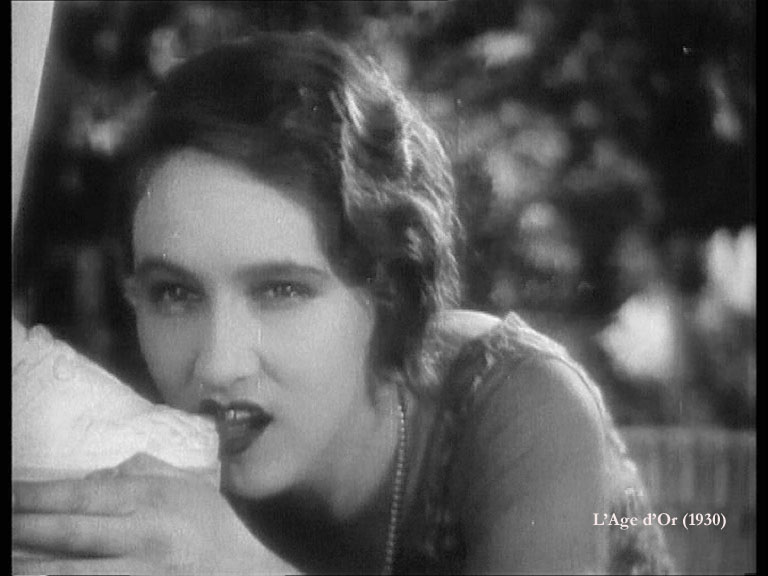
L'Age D'Or (1930)

The third of the group of really old European classics that I had never seen but have been conscious of going back thirty years, to the time when I used to flip through the pages of a 1970s Edition of the Oxford History of World Cinema that I had, which singled each of these out, among others, as especially great and worthy efforts in what was at that time the pretty short history of the art, the silent era being, at the time of the book's publication, less than fifty years gone. As with many of the histories and surveys that influenced me as a young person, I am sure it is due to my memories of this book that my ideas about movies have a sharp divide around 1970, with everything that came afterwards, too late to be included, and perhaps more importantly, judged by the standards of the book, not able to be regarded by me in the same aura.


L'Age d'Or, Luis Bunuel's second major work, after the short but legendary Andalusian Dog he made with Salvador Dali in 1929, was firmly included in the pantheon of films that promised, or seemed to promise, that the mere act of seeing them would be transformative enough to make one more like a character in one of these movies and less like the kind of person book authors and critics appeared to hold in contempt. There may even have been some truth in this in the days before home video, when any public showing of these films would required some physical concentration of sophisticated people to make the showing worth anyone's time. But now that one can see anything without the necessity of being in contact with or even seeing other people, the social benefits, especially as applied to the intellect in some kind of real time way, are less tangibly realized.


Bunuel was a cinematic genius, but I need to watch all of his movies multiple times before I begin to pick up on what is either supposed to or might be brilliant in them. Hopefully someday I will get more than 4-5 hours of sleep a night and will not be too exhausted at the end of every day to concentrate and think a little about complicated images, ideas, suggestions, and so on, but I am increasingly doubtful about this. While I have come around to find instances of real joy in Bunuel, I do have the feeling that for someone of my age, experience as an arts-consumer, and, though it has faded badly, formerly pretty high cognitive ability, getting to these points is requiring a lot more repetitive effort than it should be.  

So I will have to revisit this some time in the future.

Cherrybombs Diner, Dover, NH

The Ride. Dover is located off the path of most of my main routes, being almost due east, right on the border with Maine, but away from the coast. I thought I had only been there once before, some years ago to check out a library sale, but as I came into the town past the handsome late Victorian/early 20th century houses on Route 9 I realized I had been there numerous times, and indeed I had forgotten that the New Hampshire Children's Museum was located there, to which I used to go quite frequently, though usually on rainy or exceedingly frigid days, when my older children were smaller. I don't think my current small children, who are 6 and 4, have ever been there, because now everything we do is geared as much towards the edification of junior high schoolers as it is little boys and girls. As noted above, Dover has a well-preserved older central core and a surprisingly lively Main Street, with few vacant storefronts and a lot of bars. The population is around 30,000, which is comparable to Portsmouth and Concord, and much larger than I would have thought, since it is a pretty anonymous city even within New Hampshire. I am curious to know what accounts for all the bars. Durham, where the University of New Hampshire is located, is only about five miles away, though I have never heard that trekking over to Dover to go drinking was something that was done. For the main ride, I went down on US-4 again to NH-155, which was about seven miles of country road past woods and farms until running into the intersection of NH-9 and 16 (the mysterious Spaulding Turnpike, which due to my awkward location relative to it I have never had occasion to take an extended ride on) on the outskirts of Dover proper. On the return trip I took route 9 back on its way in that part of the state until it joined with US-4--a winding road, that passed a mildly diverting looking general store that retained some slight air of authenticity only because it had not quite attained its ambition to be a known destination on the tourist trail, a lake, and a lakefront community. But other than that I do not remember much distinctly.


Location. Interesting. This establishment is located in a low slung, warehouse type building in a clearing surrounded by woods on a side road beyond the town center towards the Maine state line. The only signal visible from the road indicating its existence is a hand-lettered folding wooden sign sitting on the ground under a tree at the edge of the driveway. It is unlikely many people who do not know it is there or are not looking for it will stumble across it, even if they are completely lost. There is a beaten up hulk of a car from the 1950s sitting near the sign that upon closer inspection is a further piece of advertising for the restaurant. But as ancient, rusting cars are common sights along country roads in this part of the world, it is nothing anyone passing through would take any especial notice of. The wooded setting, especially looking out away from the building, is peaceful and pretty however.

The Day.  The weather had called for heavy rain most of the day, but this held off at least for the duration of the outing. It was overcast, but bright, and warm, around 80 degrees. A good day to be about.

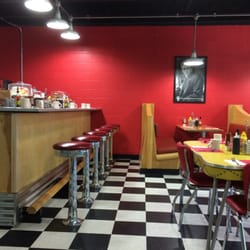
The Ambiance. Weird. The place gave off an amateurish, even half-hearted vibe. The ruling idea, clearly, is to create a 50s, Americana type diner atmosphere, though this aim is somewhat incongruous with the circumstance that the space with which they are working is a 1970s or 80s industrial park structure with cinder block walls. There are a few items of memorabilia affixed to the walls here and there--single pictures of the usual suspects, Elvis, Marilyn, & Jimmy, a plate featuring Dwight and Mamie Eisenhower, a few records and advertisements for cars, soap, soft drinks, as well as a steady soundtrack of 50s hits being piped into the mostly empty and energy-less room.


The Crowd. When I first arrived the crowd consisted of two old guys sitting silently at separate tables and the waitress, who was doing something with her back turned behind the counter and did not notice I had come in for over five minutes. Later on though, a couple of other people trickled in, one a younger (late 20s, early 30ish) man who was on friendly terms with the waitress, and a mother/daughter/baby party who were a little livelier. Everyone in the place appeared to be local and decidedly working class, since no one appeared to have an important or lucrative job and most of the conversations, once they got going, kept coming back to depressing themes like not having any money, haphazard and decidedly non-50s family arrangements and such. With regard to sociability the lunch progressed in a stereotypical New England manner, with everyone, including the waitress, being dead silent and outwardly not very friendly towards me or anyone else for half an hour (and I being I suppose the same towards them), in my case I think until they could get some kind of a read on who I was, a strange middle aged man in a button down shirt and toting a baby. But some tentative comments and questions were offered with regard to my baby by the waitress and the family of females and it was established that we were not innately hostile to each other, and it could almost be said that we were on fairly friendly terms by the end.

I think it is worth noting, or at least a curiosity, that so many of the long established family dining restaurants along the coast and in other tourist spots seem to employ exclusively young foreign students nowadays while 10 miles inland at some hole in the wall where six people show up for lunch all of the employees are kind of tough-looking local people of a certain background that does not keep up to date with the fashion in education or food or politics or allows for much evolution in those realms. I know the tourist restaurants are seasonal and I guess they cannot find a workforce adequate to their specific needs among the local population, though it seems strange that the latter are willing enough to work in any number of dingy grease joints and fast food restaurants in Dover when they live ten, fifteen, twenty miles from a busy tourist area that has a desperate need for restaurant workers.

The Food. The menu kept pretty close to the spirit of the 50s--they even offered grilled liver! I got the chili dog, I had never had a chili dog before, mainly because I was always averse to dealing with the inevitable messiness of this dish. It was all right, though it tasted more like something an undistinguished amateur cook would produce in his home kitchen. The fries were good though, and tasted like real restaurant fries. I wanted to help them out a little by ordering dessert, but the pies and cupcakes on the tray again looked more fattening and unfulfilling than inspiring, as if they had been made from a mix by someone who had little experience even with that. In addition they were drooping a little in the warm weather so I had to pass on them.

I am not going to rush back, but I would be willing to try it again to see if different circumstances, crowd, etc, brings out a more satisfying atmosphere. 

Thursday, September 10, 2015

M (1931)


Legendarily dark and disturbing Fritz Lang masterpiece about a child murderer (played by a pre-Hollywood Peter Lorre) in an impersonal and alienating modern city. It has been ranked by important critics and polls in Germany itself as the greatest film ever produced in that country, which tells something about how that nation's intelligentsia at least regards itself and the nature of existence, because there is little in it, if anything, that could be called joyous or sentimental or life-affirming. Some people prefer their movies this way, however. Certainly like many of the celebrated films of the Weimar Republic--several more of which are waiting in the wings in this set of reviews--it captures the atmosphere of foreboding and dread and despair that in retrospect is the clear precursor to the the national nervous breakdown of the Nazi era, does not look away from it or deny it to feed the public pablum and feel-good lies, etc, in this sense it is a frank and truthful art that many people in this country wish that we had, though obviously in the case of the German avant-garde of the 20s it had little practical effect on the course of history, and resulted in most of the artists themselves leaving the country, though not before they had had their substantial say in defining the character of this tumultuous and endlessly fascinating era.

As with most of these iconic movies I make notes about here, this was my first time seeing M, and afterwards I went through it again with the commentary and the other extensive special features that you get with the Criterion disk, though I cannot remember any earth-shattering revelations in these. As is often the case with me on encountering something great on a first viewing (or reading, or listening), I found it more strange than immediately compelling, but that usually indicates that the thing is good and has layers of meaning and significance that will speak to people further up on the brightness ladder than I am. So I tend to find strange things to be attractive and mildly thrilling for the connection I can imagine having to the kinds of people whose acceptance I have always fantasized about, even if when it comes down to it, I have been rather shy about really desiring it. The sets and props in this are some of the most desolate and alienating, psychologically, in a Western environment that I have ever seen.


A favorite image from M.   

So now at least I have improved my basic familiarity with the filmic canon, had my initial introduction to a titanic director, and really, in this new and somewhat more alert phase of journal-keeping in these matters, to an entire major period and movement in the development of the art, all of which helps one gradually feel ever so slightly more like a real film buff, and all of the dreams of revival houses and arguments in smoke-filled taverns, and the art girls--oh, we'll never stop dreaming of the art girls--that I associate with that state of being.


Art girls here I come

Saturday, September 05, 2015

The Goldenrod--York Beach, ME

Taking a break from the movie write-ups to recount my outing for lunch this past Thursday. I am thinking about doing a series of 'cheap restaurants of New England' posts, at least through the fall, as all of the children are back in school now except for the baby, and it gives me an excuse to get out of town and take a ride once a week during this really lovely season of the year. Of course I have to be back by 2:30 to hand the baby off to her mother and go to work so I cannot go very far away or linger in a place for very long, but I can manage anywhere within 90 minutes if I leave by 10 am, which given my location covers a fair amount of good territory, including most of the state of New Hampshire. I have also devised some internet word search games to generate restaurant possibilities, though for this initial excursion I opted to finally go to a place that I have had a hankering interest in going to for many years, but which has not been practical because it was either too crowded or I have had too many children with me, and which I also mentioned in my summer vacation post, the old-fashioned luncheonette attached to the Goldenrod taffy-candy-gift store, both because of this interest and because I thought they might be closing for the season after Labor Day (though in fact they are remaining open through Columbus Day; maybe I will go down again before then).

I am going to set these posts up in the category style, which has always been popular with consumers of ephemeral media.


The Ride

Usually when going to Maine from Concord I take US-4 to Portsmouth and pick up I-95, or if I am really not in any hurry, US-1. This is a pleasant ride, 50-55 mph the whole way, minimal stoplights, antique stores, book stores, old barns and churches, lakes and lake houses, woods, farms, the famous New Hampshire Trojan horse (said to have been built by a disgruntled old isolationist Yankee in the 50s as a protest against the U.N.), and it takes a hair over an hour to get to the Maine state line, and a further 15-20 minutes to get to York Beach. However all of the internet mapping sites claim that the fastest way to get to the ocean from Concord is to take the interstate south to Manchester and go east on NH-101, which is a highway on that stretch, so I tried that, but that way took me 90 minutes (and route 101 from Manchester to Hampton is for New Hampshire an unusually blah road as far as scenery goes, though the part of it that runs west to Keene, a humbler two-lane blacktop, is a quite beautiful, if plodding route). I took Route 4 home and it was the usual 75. I have really come to love the old U.S. highways in recent years, most of which outside the congested Boston-D.C. corridor you can keep up a good speed on most of the time (and even in some places in it, such as US-301 from Wilmington to Annapolis, and even US-1 between Philadelphia and the Verrazano Bridge and Holland and Lincoln tunnels is usually just as fast as taking the turnpike) and I try to take them now whenever possible.

The Location

I think it is perfect, 100 yards from the beach, but as the beach isn't visible the view out the curtained windows gives the sense of being in a densely built little city through which a constant stream of pedestrians are moving, a really charming effect that, due to the rarity of it anywhere in this country, I had forgotten about in recent years.

The Day

It was nearly 90 degrees, so it still felt like summer, though with school being back in session the beaches on a Thursday had only about half the crowds they would normally have, and the amusement arcades, though still open, were practically deserted. I am guessing they will close up after the Labor Day weekend. As I left home an hour later than I wanted to, I was only able to take a quick peek at the beach before I had to hurry off home.

The Ambiance

Well, I'll read to you from their brochure: "Step back in time to when things were simpler...the classic New England dining room...The heavy beamed ceilings, oak tables and stone fireplace set the stage." It's a great space. It is one big room, but it has a long, not entirely straight perimeter, with a little alcove in the back that I actually could not see. I was given probably the worst table (as I usually am, I guess because I am so ugly and unimportant looking), in the middle area right next to where the people stand when they are waiting to be seated. My ambition for my next visit is to get a seat by one of the windows. The bathrooms are up an interior, dark, narrow, carpeted, wood-paneled staircase lit by yellow light bulbs in sconces, reminiscent of one of the better old bars in Boston. The bathroom itself was more modern, but it did have nice dark-wood doors, both at the entry and in the stalls, that looked legitimately old.


The Crowd

Due to the absence of school-age children, it was mostly older people and people with very young (pre-preschool age) children. I was with my own 7 month old daughter, who is so well-behaved that I do not have the slightest pause about bringing her out with me on these excursions. There were a couple of 20ish New England rocker chicks out for the day with their biker-looking parents, and one MILFy type, petite and wearing glasses, long curly-ish hair, who was giving off a moderately "I'm not dead in that way yet" vibe. I did overhear an overweight, slovenly dressed, doofus-y looking family discussing having seen The Philadelphia Story recently, with the mother claiming it as one of her favorite movies and expostulating a little on the appeal of Cary Grant, which surprised me, especially as in appearance she looked about as far from the Cary Grant style ideal as it is possible to get. As at an increasing number of restaurants in touristy areas around here, the wait staff consisted entirely of young people from non-western countries--the ones here looked to me to be Russian or elsewhere in the former Soviet Union.   

The Food

My waitress was the cutest one of the bunch, though by 'cute' I mean in the way a serious, mildly severe Russian girl would be cute, not like a cheerleader. She was not especially friendly, but she was not unfriendly either. Neither was she terribly conscientious, though she was not completely indifferent. She was busy, I guess (the dining room was about 60% busy) and her mind was elsewhere. The first time she came to take my order I was not quite ready, so she went away and didn't return for 20 minutes. I began to wonder whether this was deliberate, that the hard Russian girl was going to amuse herself by ignoring me and making me have to loudly call after her or make some public complaint which she would know at a glance someone like me would be inherently loath to do. However, I think she just forgot about me, as she did apologize, sincerely if not weakly or obsequiously, when she came back. I just ordered a BLT, but I am happy to report that it was a extremely good one, the lettuce and bacon and even the side pickles, which I usually skip, were of a perfect crispness. So I am a believer in the product now, whatever I get the next time. Due to my late start and the additional 20 minute delay in taking my order, I was up against it for time and was unable to linger any longer to have coffee or dessert, which of course I love to do, because I really don't have anything important to do in my life, ever, or anywhere to get to accomplish amazing things, unless someone else has arranged for me to have to be somewhere. But I had frittered away all of the time that was my own and I had to get back. But I will return now, for certain.