Freelance Post
I was going to put up a movie of my children playing a game here but the upload didn't work, so now I have to fall back on some unplanned topic.
I've seen 4 movies in the last ten days or so. I'm not proud of it, but sometimes these things happen.
1. A Hard Day's Night. This has been getting written up more and more as a classic in recent years. It really isn't that good. When I was in college they showed it against the wall of one of the buildings during an outdoor party in the springtime, which was great fun because you get the music and the atmosphere without having to devote your whole attention to the movie; watching it by yourself in your living room in your late 30s the thrill isn't quite the same.
2. The Naked City. This is the 1948 neo-realist-noirish police procedural famous for being the first film shot almost entirely on the real streets of New York City in the sound era. The plot and underlying social commentary are rather stilted but it is worth seeing if you like New York and/or that time period. The deservedly famous Williamsburg Bridge sequence at the end is especially beautiful. I liked the technique of subtly promoting the postwar social agenda (according to one of the interviews on the supplemental materials) by having the wife of the young cop who has returned from the war and gotten hit immediately with a baby, a mortgage and a grinding job welcome him home in the afternoon in a skimpy outfit.
3. I Served the King of England. Czech. Looks to be pretty new. Directed by Jiri Menzel (director of the 1966 Czech New Wave classic Closely Watched Trains) after the novel by Bohumil Hrabal (who also wrote Closely Watched Trains as well). The movie also has quite a lot of similarities to the film version of The Tin Drum. It isn't as good as either of these other movies but it's O.K. Hrabal is a very big literary figure in the Czech Republic. He is not as famous or well-regarded in the West as Kundera or Vaclav Havel because, I am assuming, he was not perceived as antagonistic to the communist system, was perhaps even accomodating to it, and therefore apparently of little interest to us. However, most of the people I knew when I was there who were engaged with literature considered Hrabal to be the most representative writer of the Czech experience over the last 50 years. His view of life is more carnal and absurdist than earnestly ideological. His characters are defined by what appear to be stubbornly cultivated and adhered-to, though for the most part fairly harmless, idiosyncracies, which is their singular and outwardly ineffective act of protest against the madness of the world around them and its systems, whether it be that of the Austrian monarchy, capitalism, Nazis, war, or Communism. The movie is rated R for nudity and sexual situations. As my wife commented "That's about all (the ratings wickedness) the Czechs can muster."
4. The Curious Case of Benjamin Button. I didn't think this was going to be any good, and these expectations were not disappointed. My excuse for sitting through the whole 2 hours and 45 minutes is that I was watching it with other people in Vermont, and unlike Picasso or John Locke, I don't know how to get up and leave the room the second the level of intellectual intercourse drops below a level that is acceptable to me. I have no idea what the point of the film was supposed to be, other than that there is no obvious benefit in having a non-traditional life cycle if one is still to be bound by the ordinary limits of time. The only reason I am even acknowledging that I saw it is that, while I forget what its rating was, I thought it was noteworthy that one of the naughty things prompting it not to be a "G" was "smoking". Someone needs to go back and re-evaluate A Hard Day's Night I guess because that was rated G and of course they're smoking all over the place in it, not to mention all the (mild) sexual (and by current standards sexist) innuendo in it too.
I was going to do something on one of the Issues of the Day, but I think I'll start another post for that.
Tuesday, June 30, 2009

Sunday, June 28, 2009
Anne Finch (The Countess of Winchilsea)--"Adam Pos'd" (c. 1700) This is a short poem about the confusion Adam (the Biblical fellow) would face if a vain modern coquette were presented to him, her type being supposedly unknown in our earliest natural state. It isn't a terrible effort, but I can't really get into it. Its claim to fame is that it is supposed to be funny, but I was grimly unstirred to laughter. The joke was introduced too soon, instead of being built up to, and then having been introduced, didn't have anywhere else to go, but re-emphasized the point brought up in line 4 for the remaining seven lines of the poem. Nothing interesting is brought to life in the sketches either of Adam or the generic nymph. As this is an assignment I have given myself, there is no need to tax my brain to try to extract thoughts from it which aren't there.
 Now Anne Finch's hotness is a subject on which I might have something more to say. I'm kind of liking this picture of her. Not that she is a ravishing beauty, but she does have the curls, she isn't a tank, and she has the eyes of one of those highly sexed, almost too intelligent for what the practical world has to offer them literature babes that in fallow ages are one of higher civilization's few salvations. Does she crack my list of the top 10 serious writer babes of all time? Let's see.
This is a short poem about the confusion Adam (the Biblical fellow) would face if a vain modern coquette were presented to him, her type being supposedly unknown in our earliest natural state. It isn't a terrible effort, but I can't really get into it. Its claim to fame is that it is supposed to be funny, but I was grimly unstirred to laughter. The joke was introduced too soon, instead of being built up to, and then having been introduced, didn't have anywhere else to go, but re-emphasized the point brought up in line 4 for the remaining seven lines of the poem. Nothing interesting is brought to life in the sketches either of Adam or the generic nymph. As this is an assignment I have given myself, there is no need to tax my brain to try to extract thoughts from it which aren't there. Now Anne Finch's hotness is a subject on which I might have something more to say. I'm kind of liking this picture of her. Not that she is a ravishing beauty, but she does have the curls, she isn't a tank, and she has the eyes of one of those highly sexed, almost too intelligent for what the practical world has to offer them literature babes that in fallow ages are one of higher civilization's few salvations. Does she crack my list of the top 10 serious writer babes of all time? Let's see.1. Dorothy Parker. She was genuinely funny and a genuinely terrific writer in her form, as well as a babe. I don't have to live with her, so her being neurotic and miserable is not anything that bothers me. Plenty of people have these unfortunate qualities without a tenth of the redeeeming ones.
2. Charlotte Bronte. The drawings of her at least are very sexy, and we all know that she was a very intense writer giving off a flood of pent-up erotic frustration that even I could pick up on.
3. Fanny Burney. Author of Evelina, a good book which unlike many famous books by women, has the air of being written by someone who bears no latent animosity towards the sort of good-looking women men like. She looks in the paintings of her to be cute, or at least has the features of someone who had been cute, and Samuel Johnson is recorded, by her, of being very warm towards her at a time when she was in her twenties and he was celebrated for being one of the grouchiest men in England, which indicates to me that she must have been possessed of some attractiveness.
4. Ellen Glasgow. I confess I haven't read anything by her, but she was a real babe when she was young.
5. I guess the Mitford sisters can be taken as a group, since they were all better writers, in that spare, beautiful, stinging 1930s upper class English prose that I love so much, than 99% of published authors today. They also did things like dump their husbands to run off with avowed Fascists because the Fascist was a manlier man. Who in the literary world does stuff like that anymore?
6. Helen Keller. We've been over this before, but Helen Keller as a teenager and young woman = Cutie pie!
7. Anita Loos. Author of Gentlemen Prefer Blondes, which is also a much better book than the supposedly smarter stuff people write nowadays with all their research and fellowships and everything. She was recognized as quite glamorous in her time actually, so I almost didn't count her, but she was a babe, and a pretty good writer too.
8. Edna St Vincent Millay. Camden, Maine is in the house! She didn't age very well, probably not unrelated to being a notorious nymphomaniac, but she was quite cute in her early days. We are heavy on 1920s American girls on this list, but that's what I like, in a lot of different areas, literature not least among them.
9. I know I am missing somebody but I can't think of who it is now, so maybe we'll put Anne Finch here. I guess I don't have a #10 I feel confident about.
Honorable Mention: Jane Austen--it is my personal opinion that she was probably reasonably attractive; she was apparently a very small person. Edna O'Brien--I saw a picture of her once when she was young where she looked really gorgeous. However, every other one of her I have seen is frightening. I've also never read anything by her. I also once saw a photograph of Doris Lessing, who is generally even more frightful, where she looked sort of cute as well, so almost everyone short of George Eliot has her moments. Virginia Woolf--She wasn't bad-looking, but jeez, if I'm making a list of prospective dates I want there to be some possibility of having fun on them.
Monday, June 22, 2009
My Bias Towards A Portrait of the Artist as a Young Man, Examined
My Bias Towards A Portrait of the Artist as a Young Man, Examined
I succumbed to the temptation recently to leave a comment on another web site, Gil Roth's very good and reliably updated Virtual Memories page, to be specific. The matter under discussion was somebody's list of the top 100 novels, English-language only I believe, of the last century. One of the commenters had objected to the high ranking of Joyce's two most famous books, arguing that Ulysses was not a novel and that Portrait of the Artist was vastly overrated, adding that he was of the opinion that many of the people who ranked the books so highly did not really regard them that much, but for their own various reasons were afraid to say so. I had recently read several similar opinions on this subject by people who evidently did not suffer from such failings of nerves, and, being pretty confident myself that the spirit in which these opinions were proclaimed, at least, was wrong, I felt moved to speak a word, though of course in my own defense and justification rather than Joyce's, whose reputation overall in the literature world is still on the whole about as secure as one could hope for. His estimation does seems to be slipping some, but given that in the 1960s he was apparently the second most-commonly written about English language writer (after Shakespeare) in academic publications, that was probably inevitable.

To my surprise the writer whose comment I had replied to, who signs himself Vince Czyz, wrote back in a comment on this site, back on one of the Caesar and Cleopatra articles, in which he restated his previous opinion regarding Joyce most forcefully and succintly, the intention of which, or one of them, I presume, was to challenge me to re-examine my high opinion of Joyce as a novelist; or perhaps it was simply to let me know that I was a fool, but for the sake of this essay, I am going to pretend it was the former. Before I address the specific points my correspondent brought up, none of which I can ultimately accede to within the admittedly narrow limits of my own knowledge, I suppose I had better come clean on my longstanding emotional attachment to the Portrait.
I read the Portrait twice when I was pretty young--I was 17 or 18 the first time and 24-25 the second time (and I was, I confess, still very young, almost childlike at 25)--so I haven't read the whole thing through in at least 14 years. It had a great deal of influence in the way I chose to live, or at least think about, my life, and, I suspect, it has had a similar influence in the lives of quite a few other impressionable young people who generally turned out to make rather comical, if not outright sad, figures in the exposure of full adulthood. I suppose this could be considered a damning mark against the book, if it could be widely demonstrated and proved to have deluded lots of hopeless people into thinking themselves of superior intelligence and sensitivity, and possessed of an artistic spirit and so on. Personally I think the book is more than just this kind of posturing, but certainly there is a danger of an intelligent but inexperienced or poorly educated person misunderstanding how the experiences of Stephen Daedalus/James Joyce relate to his own life. When I read it in high school it was actually part of my Senior English class. My high school had a quite good English department for a public school, though as we were constantly assured, it had been much better, the students smarter, the teachers more exacting, etc, 30-40 years earlier. Still, we read good books, and most importantly, it was conveyed to a lot of us at a pretty young age what constituted superior writing and why it was important to pay attention to it. I wish I had had teachers who could have made the wondrousness of science and mathematics thus vivid to me at a young age, because I think I could have made somewhat more progress in those areas than I did. Anyway, The Portrait of the Artist was one of the books that most helped me to gain this appreciation at the time, at which also such reading was a consolation and pleasure to me in the midst of various difficulties that were going on in my family, and these therapeutic qualities meant a lot--perhaps too much--to me for quite a long time, even, to a certain extent, down to the present day, when I am not really getting much out of the old habit anymore. The Portrait was also the book I chose to write on for the admissions essay to the college I went to, for what it's worth, and at the time I really had no consciousness of phoniness or pretentiousness in this choice. I truly did feel it to be a very important book to my development (which it was, though obviously whether for good or ill is still very much in question).
The second time I read it was during a fairly quiet period, when I was recently out of school and was living essentially alone, in a boarding house with a bunch of people I didn't talk to, and I had, certainly compared to now, an unbelievable amount of free hours to kill in the course of a day. I was also I think only half-employed and somewhat impoverished, though still in a shabby genteel way--I could at least afford to have dinner in a bar most nights, for example--so I was probably slightly depressed and the Portrait served again to buck up my spirits in the face of an ugly and indifferent world rather than inspiring me to throw it out the window in manful disgust at its pieties. I suspect, just judging from the pages I glanced at at random in preparation for this post, that if I read it again now I would still admire the writing and, yes, the art of it. I can see the juvenile sentiments expressed in it more for what they are than I probably did formerly, but what they are--callow, perhaps--did not strike me as necessarily wrong, or as unworthy subject matter. The world which he was writing about was one that was, or least certainly appeared to be, completely stifling to a young man of ambition and talent. Breaking somewhat free from the psychological confines of it would have been the defining struggle of his life, which, yes, he did not completely succeed in overcoming to achieve the mature perfection of the absolute cultured man. Though, in his defense, he certainly made it a pretty good part of the way.
Regarding the particular objections raised in Vince Czyz's comment:
1. Ulysses is not a novel. I don't see this. There has hardly ever been a book more steeped in novelistic lore and self-consciousness about its form, and there is as much of a recognizable traditional story within its shenanigans as in several ordinary novels. I agree that the book is probably largely unintelligible picked up cold, and I was fortunate to come to it at a period when I had just gone through a lot of the sort of historical reading that it constantly refers to and had had several friends with whom I regularly ate and drank who had taken a six or eight week seminar exclusively on the book which they talked about frequently as well as clearly and also, perhaps like myself, being at least in part of a middling but sort of educationally ambitious Irish Catholic background, were well attuned to a lot of the underlying spirit at work in it.
2. He objected to my bringing up the famous (infamous?) "uncreated conscience of my race" quote at the end of Portrait as pretentious and overblown--which of course it is--and by pointing out that Joyce was hardly the only person in Ireland with such a conscience. The sentence is central to the psychology of the novel however, and gives the ending a power which a more sober and deferential statement of ambition would lack. Ireland in 1902 or thereabouts was not, as it is today, a country with a highly respected international tradition in literature or any other arts. It was not an independent nation at all, nearly all of its best known native writers (Swift, Shaw, Wilde, Sheridan, etc) to that point had quickly absconded to England upon reaching adulthood and been absorbed under the umbrella of English literature, and any writer or other artist self-identifying as "Irish" would have been regarded at the heart of the dominant European cultures--English, French, Italian, German-Austrian--as at best an interesting quasi-barbarian with a vigorous animal spirit, but ultimately still rather childlike. As an incurable Euro-high-culture-phile Joyce was, whatever one thinks of it, very sensitive to this state of affairs, and to his mind, as far as the people who counted in the world were concerned, the conscience of his race was very much uncreated and unknown. Today, as we all know, this is not the case, and the indigenous Irish had a great 20th century as far as their literary impact on Western culture and the Anglosphere goes. But James Joyce is by far the most responsible figure in making this happen.
3. He doesn't think Portrait is one of the 20 greatest novels of the century, not remotely. I will have to let this one go, since a) I really haven't read that many novels to make anything like a definitive list, and b) beyond the general categories of great, very good, good, and doesn't really grab me, I don't have a great passion for ranking things in a rigid hierarchy, be they books, movies, women, dinners, etc (which I why I really can't make it through anything Harold Bloom writes, who has to rank everything, and for whom one of the primary virtues of good books is they forever after utterly negate the value of slightly less good books, which I don't really agree with). That said, if somebody sent me a check and asked me to list what I thought were the 20 best books of the 20th century as I currently perceive them, I would certainly include the Portrait among them.
4. Dedalus (Joyce) is self-absorbed and arrogant, and thinks he is the only person paying attention. As to the last two, he at least demonstrates a better claim to think these things that most people put forth. As to the first, I don't agree; he is not especially compassionate towards people who fall short of his standards for them, but he is quite sensitive to and aware of what passes around him. He clearly at least pays attention to what people say and how they say it, as is evidenced by his dialogue, which is always masterful.
5. The Portrait has no story, not much to say but to expound an aesthetic theory. I wrote something about this in my original comment on Gil Roth's page. Personally I find the development of a well-educated and very fine mind with an intensely felt aesthetic theory to be a highly interesting and worthy story with a great deal to say, but evidently my correspondent thinks otherwise.
From the (Barely) Pre-Blog Archives: March 20, 2006. I re-visited Ulysses after 10 years or so and was apparently still impressed by it:
"Whatever its vulgarities/shortcomings, it is truly awesome in parts, and the climax at the end remains one of the pinnacles of English language and European literature. A decade on the coarseness and low-classness of Molly is a little more striking. At 25 (me) she seemed a normal healthy and fun-loving sort of girl. Perhaps to intellectuals she seems over-the-top, unrealistic in her bodily obsessions, a 33-year old woman, etc. As always in this book the perfect tone and precision and detail with which minor details are recalled and inserted into the story is staggering. There is no other writer, Shakespeare maybe Shakespeare who is close to this ability. Proust's memory is of experience in isolation, a moment frozen and separated from the rest of life, beautiful and exquisite but one doesn't feel the rush and flow of all life, which is Joyce's great power. In the competition for literary genius-20th century I see Joyce and Kafka as the two contenders. Joyce's books are more real and lively than life though they are very like life at bottom, while Kafka's are more real than life without being really like life at all, which is a very unique sort of artistic genius. But Joyce is perhaps the consummate writer-artist of all time, certainly since the Renaissance..." At this point I confess that I don't know where I am going with all this however.
Saturday, June 20, 2009
John Dryden--All For Love (or, The World Well Lost) (1678)
This is the last of the Cleopatra plays. As I had read this one not too many years earlier I just skimmed over it, and did not take a lot of notes. The first time I had read it, I had liked it quite a bit, thought it reminiscent of Shakespeare, on whose own Cleopatra play it was modeled, perhaps even a sparer, cleaner version of it, or, at least, was my impression. Looking over it again just after having read the Shakespeare though, as well as the Daniel and the Shaw, I did not like it quite as much. For one thing his Antony struck me as perhaps overly romantic ("One look of hers should thaw me into tears,/And I should melt, till I were lost again...If I should hear she took another love,/The news would break my heart--now I must go;/For every time I have returned, I feel/My soul more tender..."). Shakespeare's Antony, it goes without saying, is much manlier than this. For that matter, his Lepidus is manlier than this too.
The poetry of the speeches I have marked in several places as "so-so" ("And while she speaks, night steals upon the day/Unmarked of those that hear: Then she's so charming/Age buds at sight of her, and swells to youth...), "humorous" ("Even I, who hate her/With a malignant joy behold such beauty/And, while I curse, desire it") and "kind of silly" ("And then he grew familiar with her hand/Squeezed it, and worried it with ravenous kisses") .
There is some bawdiness thrown in for the Restoration crowd ("Your Cleopatra/Dolabella's Cleopatra; every man's Cleopatra...You know she's not much used to lonely nights...ANTONY: Though heaven and earth should witness it/I'll not believe her tainted. VENTIDIUS: I'll bring you then, a witness/From hell, to prove her so...")
Octavia (Antony's wife)'s pain gets more play in this version of the story than it usually does, though there still isn't a lot of sympathy for her.
"Sure that face/Was meant for honesty; but Heaven mismatched it/And furnished treason out with nature's pomp/To make its work more easy." This makes little sense, on the part of Heaven.
Antony does show stirrings of being a genuine man later on though, when he declares "I do not know how long I can be tame" and "my justice and revenge/Will cry so loud within me, that my pity/Will not be heard for either."
 Overall not as impressive as I remembered; characters are not grand or even particularly interesting. Mirrors the age I suppose. Much too soppy-romantic. Images, poetic tension better elsewhere.
Of all the figures in English literary history who have been the dominant force in their own epoch, as Dryden was in the 1670s and 80s, he is really the only one whose works don't arouse much excitement in anybody nowadays. Pope doesn't seem to be read all that much, but most of his work is at least in print, while of the twenty or so plays Dryden wrote it is difficult to find more than 2 or 3 in a common edition (Pope is also still broadly considered to be a very good poet, I think). I am also not aware of any of these plays being revived theatrically, if ever. Dryden does not, compared to the other authors of this class, including his own rough contemporary Milton, seem to have either the same quality of ideas, or the same control over such ideas and other material he does have. He was a very shaky literary dictator, often in a defensive mode in his public political and philosophical disputes, and was even suffered to be beaten up in the street by thugs on account of a book review, all of which it is hard to imagine happening, or being allowed to happen to, the likes of Milton or Samuel Johnson or Dickens.
This is the last of the Cleopatra plays. As I had read this one not too many years earlier I just skimmed over it, and did not take a lot of notes. The first time I had read it, I had liked it quite a bit, thought it reminiscent of Shakespeare, on whose own Cleopatra play it was modeled, perhaps even a sparer, cleaner version of it, or, at least, was my impression. Looking over it again just after having read the Shakespeare though, as well as the Daniel and the Shaw, I did not like it quite as much.
For one thing his Antony struck me as perhaps overly romantic ("One look of hers should thaw me into tears,/And I should melt, till I were lost again...If I should hear she took another love,/The news would break my heart--now I must go;/For every time I have returned, I feel/My soul more tender..."). Shakespeare's Antony, it goes without saying, is much manlier than this. For that matter, his Lepidus is manlier than this too.The poetry of the speeches I have marked in several places as "so-so" ("And while she speaks, night steals upon the day/Unmarked of those that hear: Then she's so charming/Age buds at sight of her, and swells to youth...), "humorous" ("Even I, who hate her/With a malignant joy behold such beauty/And, while I curse, desire it") and "kind of silly" ("And then he grew familiar with her hand/Squeezed it, and worried it with ravenous kisses") .
There is some bawdiness thrown in for the Restoration crowd ("Your Cleopatra/Dolabella's Cleopatra; every man's Cleopatra...You know she's not much used to lonely nights...ANTONY: Though heaven and earth should witness it/I'll not believe her tainted. VENTIDIUS: I'll bring you then, a witness/From hell, to prove her so...")
Octavia (Antony's wife)'s pain gets more play in this version of the story than it usually does, though there still isn't a lot of sympathy for her.
"Sure that face/Was meant for honesty; but Heaven mismatched it/And furnished treason out with nature's pomp/To make its work more easy." This makes little sense, on the part of Heaven.
Antony does show stirrings of being a genuine man later on though, when he declares "I do not know how long I can be tame" and "my justice and revenge/Will cry so loud within me, that my pity/Will not be heard for either."
Overall not as impressive as I remembered; characters are not grand or even particularly interesting. Mirrors the age I suppose. Much too soppy-romantic. Images, poetic tension better elsewhere.Of all the figures in English literary history who have been the dominant force in their own epoch, as Dryden was in the 1670s and 80s, he is really the only one whose works don't arouse much excitement in anybody nowadays. Pope doesn't seem to be read all that much, but most of his work is at least in print, while of the twenty or so plays Dryden wrote it is difficult to find more than 2 or 3 in a common edition (Pope is also still broadly considered to be a very good poet, I think). I am also not aware of any of these plays being revived theatrically, if ever. Dryden does not, compared to the other authors of this class, including his own rough contemporary Milton, seem to have either the same quality of ideas, or the same control over such ideas and other material he does have. He was a very shaky literary dictator, often in a defensive mode in his public political and philosophical disputes, and was even suffered to be beaten up in the street by thugs on account of a book review, all of which it is hard to imagine happening, or being allowed to happen to, the likes of Milton or Samuel Johnson or Dickens.
Wednesday, June 17, 2009
(Super) Quick Hits
Because now that I'm an experienced blogger I just can't bother anymore with developing my thoughts at length.
I think the predictions I have seen that in fifty years New Hampshire will have the climate that Virginia has now are not plausible unless the pace of change starts picking up considerably. Having lived in both places, the contrast between the two places in the extent and duration of coldness especially is pretty vast. While is true that the weather seems to be trending warmer longterm, we are still a long way from Virginia-type winters. While the difference in average temperatures may not seem that far apart over the course of a year, the extremes are markedly different. Whereas the temperature in NH would formerly go below 0 40-50 days a year and below -20 10-20 days a years, now it is below 0 10-20 days a year and only very rarely below -20. In Virginia it almost never gets colder than 10-15 above at the worst. Similarly the lakes and rivers in NH are frozen for a significantly shorter period, 10-20 days in some cases, than they used to be 60 years ago, but they are still frozen for a good 90-100 or so days a year. In Virginia a solidly frozen river even for a single day is a once every several decades event. A permanent change that dramatic in such a short time would, I think, be fairly unprecedented in recorded human experience. Perhaps it will happen, but I am not planning for it yet. That Northern New England will become more like Connecticut climatolgically in fifty years, I could buy. Virginia, I really can't.
America will never have an adequate general education system until there is once again a certain level of credible intellectual leadership with a consensus on what people should know widely distributed throughout the society, leadership in which the effects of its own learning would be palpably visible and alive in the persons assuming this mantle themselves. These are the sources of conviction and authority, without which I am not aware of any enterprise that can achieve even modest success. Right now even the groundwork to provide any kind of sophisticated or deep education to more than a handful of people is not present, and is several generations from being built up in the populace in significant numbers again. The scholarly life is a habit, easily enough demonstrable to others when one really has it, but we have turned it into a theory, wherein we crave for others, but especially ourselves, to know things, but haven't got the least idea where to confidently look to go about getting it, or the inner resources to attain the goal.
The next really important, epoch-changing literary genius, I think, will have to come up with a vision of our modern existence that gives it some kind of weight, that gives it the form or appearance of actual/authentic human life out of which a real culture could actually draw strength from. I do believe such a figure, or group of figures, will still emerge. What form they will work in I have no sense of, but as long as language is the most common advanced way through which to delineate experience, some segment of the people will still require literature.
From the pre-blog archives: This is always a popular segment. When we were doing Shaw lately, I forgot to go back and look at my great insights into other of his works in the past, so I present them now. On Arms and the Man from February 12, 2001:
'Much more impressed with the play the second time around, the conflict between ideality and "reality" is quite clear really, I'm not sure why I wasn't "struck" by it before. I think it seems apparent that (GBS) is skeptical of the idealists, though I think he understands the need for these feelings--in his society I believe he felt their aims--and people's energies--were often misplaced.'
On Major Barbara from July 10, 2004:
'A lot of ideas to sort out, making for a very unique picture when one can view them in a sort of composite. I think the idea is that we can admire achievers and people who step on toes, etc, so long as they are not allowed to become oppressive and self-serving parasites. Consequently the masses ought not be summarily crushed out of hand for sport, but pity must be dispensed with. Religion does not appear to be dismissed out of hand, but rather recognized as one of the great achievements of the human mind and demanded to be understood as such. Evidently this "humanistic" approach will greater encourage political equality as well. Funny, more similar to Wilde now with the lapse of time than I had realized.'
An awful lot of things have to go wrong to end up with a mind like mine but, amazingly, they all seem to have happened, and to keep happening incessantly.
Now that we have opined, we can listen to some unremarkable to bad songs that I have stumbled upon lately. Someday I am going to have to undertake a study of serious music--maybe that can be the subject of a later blog, after I finally put this one out of its misery.
A very early MTV-era hit. Like the video, not sure why. Pretty good-looking chicks, people seem to be enjoying themselves, and not much posturing, I guess.
I have a policy of only putting up Morrissey/Smiths songs when accompanied by clips of vintage (pre-1980) British movies. So I have found one.
I must be having some kind of minor midlife crisis. How else to explain the circumstance that I have developed a (mild) fascination with the slightly freakish, quasi-lobotomized, totally edgeless Lennon Sisters, the proteges of Lawrence Welk, the Vanilla Ice (many times over) of jazz, and laughingstock of the better half of America (of course my grandparents, who were diehard Republicans--they truly formed part of the hard spine of Nixon's silent majority--were devoted watchers of the Welk program). Well, they are rather pretty, and there is something in the way they sing that I like, though it is amazing how any trace of any individual personality is totally expunged from these performances. This one where a responsible elder male of the white community breaks in to shut down the girls' foray into "rock n roll" is pretty amusing. If only more real fathers had done the same.
I wish there were a way to reclaim Judy Garland from being almost exclusively an identifier of unabashed gayness, because she can really deliver a song the way you want a song to be delivered.
Because now that I'm an experienced blogger I just can't bother anymore with developing my thoughts at length.
I think the predictions I have seen that in fifty years New Hampshire will have the climate that Virginia has now are not plausible unless the pace of change starts picking up considerably. Having lived in both places, the contrast between the two places in the extent and duration of coldness especially is pretty vast. While is true that the weather seems to be trending warmer longterm, we are still a long way from Virginia-type winters. While the difference in average temperatures may not seem that far apart over the course of a year, the extremes are markedly different. Whereas the temperature in NH would formerly go below 0 40-50 days a year and below -20 10-20 days a years, now it is below 0 10-20 days a year and only very rarely below -20. In Virginia it almost never gets colder than 10-15 above at the worst. Similarly the lakes and rivers in NH are frozen for a significantly shorter period, 10-20 days in some cases, than they used to be 60 years ago, but they are still frozen for a good 90-100 or so days a year. In Virginia a solidly frozen river even for a single day is a once every several decades event. A permanent change that dramatic in such a short time would, I think, be fairly unprecedented in recorded human experience. Perhaps it will happen, but I am not planning for it yet. That Northern New England will become more like Connecticut climatolgically in fifty years, I could buy. Virginia, I really can't.
America will never have an adequate general education system until there is once again a certain level of credible intellectual leadership with a consensus on what people should know widely distributed throughout the society, leadership in which the effects of its own learning would be palpably visible and alive in the persons assuming this mantle themselves. These are the sources of conviction and authority, without which I am not aware of any enterprise that can achieve even modest success. Right now even the groundwork to provide any kind of sophisticated or deep education to more than a handful of people is not present, and is several generations from being built up in the populace in significant numbers again. The scholarly life is a habit, easily enough demonstrable to others when one really has it, but we have turned it into a theory, wherein we crave for others, but especially ourselves, to know things, but haven't got the least idea where to confidently look to go about getting it, or the inner resources to attain the goal.
The next really important, epoch-changing literary genius, I think, will have to come up with a vision of our modern existence that gives it some kind of weight, that gives it the form or appearance of actual/authentic human life out of which a real culture could actually draw strength from. I do believe such a figure, or group of figures, will still emerge. What form they will work in I have no sense of, but as long as language is the most common advanced way through which to delineate experience, some segment of the people will still require literature.
From the pre-blog archives: This is always a popular segment. When we were doing Shaw lately, I forgot to go back and look at my great insights into other of his works in the past, so I present them now. On Arms and the Man from February 12, 2001:
'Much more impressed with the play the second time around, the conflict between ideality and "reality" is quite clear really, I'm not sure why I wasn't "struck" by it before. I think it seems apparent that (GBS) is skeptical of the idealists, though I think he understands the need for these feelings--in his society I believe he felt their aims--and people's energies--were often misplaced.'
On Major Barbara from July 10, 2004:
'A lot of ideas to sort out, making for a very unique picture when one can view them in a sort of composite. I think the idea is that we can admire achievers and people who step on toes, etc, so long as they are not allowed to become oppressive and self-serving parasites. Consequently the masses ought not be summarily crushed out of hand for sport, but pity must be dispensed with. Religion does not appear to be dismissed out of hand, but rather recognized as one of the great achievements of the human mind and demanded to be understood as such. Evidently this "humanistic" approach will greater encourage political equality as well. Funny, more similar to Wilde now with the lapse of time than I had realized.'
An awful lot of things have to go wrong to end up with a mind like mine but, amazingly, they all seem to have happened, and to keep happening incessantly.
Now that we have opined, we can listen to some unremarkable to bad songs that I have stumbled upon lately. Someday I am going to have to undertake a study of serious music--maybe that can be the subject of a later blog, after I finally put this one out of its misery.
A very early MTV-era hit. Like the video, not sure why. Pretty good-looking chicks, people seem to be enjoying themselves, and not much posturing, I guess.
I have a policy of only putting up Morrissey/Smiths songs when accompanied by clips of vintage (pre-1980) British movies. So I have found one.
I must be having some kind of minor midlife crisis. How else to explain the circumstance that I have developed a (mild) fascination with the slightly freakish, quasi-lobotomized, totally edgeless Lennon Sisters, the proteges of Lawrence Welk, the Vanilla Ice (many times over) of jazz, and laughingstock of the better half of America (of course my grandparents, who were diehard Republicans--they truly formed part of the hard spine of Nixon's silent majority--were devoted watchers of the Welk program). Well, they are rather pretty, and there is something in the way they sing that I like, though it is amazing how any trace of any individual personality is totally expunged from these performances. This one where a responsible elder male of the white community breaks in to shut down the girls' foray into "rock n roll" is pretty amusing. If only more real fathers had done the same.
I wish there were a way to reclaim Judy Garland from being almost exclusively an identifier of unabashed gayness, because she can really deliver a song the way you want a song to be delivered.
Tuesday, June 16, 2009
EXCURSION: Dublin, Ireland
This is not going to be as exciting as I thought it was going to be. These pictures were taken a long time ago--1996--I hadn't seen them in years, and it turns out they were more exciting in memory than they turned out to be in actuality. Also, in that pre-digital time, there weren't very many of them, maybe 12 or 15 for a 3 or 4 day visit. Several of them, including one that I know was one of the better ones, are also missing, and I have no idea where they are. There are also not any pictures of women anywhere in the whole Ireland set. I was in a phase at that point where I was convinced taking pictures was uncool, or weak, or took one out of the moment, sapped all one's sensual aura, hindered the mind from operating at its optimum capacity, or something. So all of the pictures are courtesy of other people.
George Bernard Shaw's Birthplace, 33 Synge St, Dublin. It had very recently been acquired by the state or whatever and turned into a museum at that time. In '96 the effects of the economic miracle which transformed the culture and personality of Ireland in recent years were only just beginning to be noticeable. There were still no superhighways in the country, for one thing, though I recall plans were being made to build one. This street, which is very close to the center of town, was still a residential neighborhood full of middle to working class families, children wearing school uniforms, no yuppies or hipsters, or at least hipsters non-indigenous to the neighborhood, anywhere in sight. It was all very superficially Irish literary-looking, and feeling, which of course I like, though I liked it because I believed it would somehow lead me by some means or process to a more meaningful engagement in contemporary life than I would otherwise have managed. The Inside Furnishings are of Course Period Stand-Ins and Recreations, Not the Author's Actual Furniture.
 The Piano Was an Important Piece of the Exhibit. Shaw's mother was a highly musical lady, and active in serious singing circles in Dublin. Affairs with musical men to whom she was not married (I forget what happened to Shaw's father) were rumored. This room apparently was where a lot of this tension and action would have taken place.
This is not going to be as exciting as I thought it was going to be. These pictures were taken a long time ago--1996--I hadn't seen them in years, and it turns out they were more exciting in memory than they turned out to be in actuality. Also, in that pre-digital time, there weren't very many of them, maybe 12 or 15 for a 3 or 4 day visit. Several of them, including one that I know was one of the better ones, are also missing, and I have no idea where they are. There are also not any pictures of women anywhere in the whole Ireland set. I was in a phase at that point where I was convinced taking pictures was uncool, or weak, or took one out of the moment, sapped all one's sensual aura, hindered the mind from operating at its optimum capacity, or something. So all of the pictures are courtesy of other people.
George Bernard Shaw's Birthplace, 33 Synge St, Dublin. It had very recently been acquired by the state or whatever and turned into a museum at that time. In '96 the effects of the economic miracle which transformed the culture and personality of Ireland in recent years were only just beginning to be noticeable. There were still no superhighways in the country, for one thing, though I recall plans were being made to build one. This street, which is very close to the center of town, was still a residential neighborhood full of middle to working class families, children wearing school uniforms, no yuppies or hipsters, or at least hipsters non-indigenous to the neighborhood, anywhere in sight. It was all very superficially Irish literary-looking, and feeling, which of course I like, though I liked it because I believed it would somehow lead me by some means or process to a more meaningful engagement in contemporary life than I would otherwise have managed.
 The Inside Furnishings are of Course Period Stand-Ins and Recreations, Not the Author's Actual Furniture.
  The Piano Was an Important Piece of the Exhibit. Shaw's mother was a highly musical lady, and active in serious singing circles in Dublin. Affairs with musical men to whom she was not married (I forget what happened to Shaw's father) were rumored. This room apparently was where a lot of this tension and action would have taken place.
Because I saw these pictures again I had planned to write at some length about how I couldn't believe how thin and handsome I had been in those days, and how astounding it is that the ladies were not only not beating down my door, but apparently insensible of my existence at all. Unfortunately upon seeing the pictures I did not strike myself as quite so handsome as I thought I had been. Indeed, I might even look better now, though I can't seem to produce any photographic evidence that would support that argument either. In any event, the mystery as to why the girls weren't all over me back then that has been occupying my thoughts for the last few years has been satisfactorily cleared up. It is remarkable how generous our memories become where our past states and qualities are concerned, when it takes but one small reminder to blow all of these delusions to dust.
 These are the old Irish Punts and Pence, At Least. Fascinating picture this. Gripping photography is a process of continual trial and error like any other art, I suppose, and these are early photos, upon a subject (i.e., me) on which the artist has to take on the burden of supplying pretty much all the potential interest.
 I walked all over south Dublin for several hours to find James Joyce's birthplace, but there is no picture because my photographer did not accompany me on this jaunt, and I thought taking a picture myself (but not walking 2 hours to find the house) would mark me as lame to what I imagined would be all the beautiful women and international level literati I anticipated running into on the way. The 40-something guy living in Joyce's house was lying out sunbathing in the front yard anyway, as it turned out.
 These are the old Irish Punts and Pence, At Least. Fascinating picture this. Gripping photography is a process of continual trial and error like any other art, I suppose, and these are early photos, upon a subject (i.e., me) on which the artist has to take on the burden of supplying pretty much all the potential interest.
 I walked all over south Dublin for several hours to find James Joyce's birthplace, but there is no picture because my photographer did not accompany me on this jaunt, and I thought taking a picture myself (but not walking 2 hours to find the house) would mark me as lame to what I imagined would be all the beautiful women and international level literati I anticipated running into on the way. The 40-something guy living in Joyce's house was lying out sunbathing in the front yard anyway, as it turned out.
 Sunday, June 14, 2009
Caesar and Cleopatra--Part 3
After the play ends there are ten pages of Shaw's own "notes" which attempt to address predictable stupid questions and misunderstandings provoked by the play directly, one presumes to avoid the agony of having to read discussions of them in every paper. These explanations are full of statements like "it will strike us at once as an unaccountable fact that the world, instead of having been improved in 67 generations out of all recognition, presents, on the whole, a rather less dignified appearance in Ibsen's Enemy of the People than in Plato's Republic." Well, the world has a less dignified appearance in so far as the arts and literature have become, over time and the extension of their study and practice into ever wider and less exclusive swathes of society, less generally dignified endeavors.
This is nothing really to the point, but my wife found the film versions of Major Barbara and especially Pygmalion highly entertaining, and her views on the relative value and significance of the overall human condition in relation to everything else that exists aren't actually that much different from Shaw's own. Nonetheless she is not to be put on record as any kind of GBS fan. He throws out too many lines disparaging of the capacities of women that are not to be forgiven. Shaw was of the opinion, contrary to Plutarch and therefore most English writers on the subject, that "Cleopatra was a queen, and was therefore not the typical Greek-cultured, educated Egyptian lady of her time...I do not feel bound to believe that Cleopatra was well educated. Her father...was not at all a parent of the Oxford professor type." I suspect this is an example of him trying to unsettle the middle class playgoer's comfort zone with regard to the latter's own learning by suggesting that his ambered received wisdom may not contain a shred of truth. At a certain point of course, if Cleopatra is neither really beautiful, nor educated, nor cultured comparative to the majority of humanity--someone has probably put forth that she was a total moron to boot, though I am not familiar with him--the legend ceases to offer much possibility of dramatic interest, and the personal aspects of its historical interest are greatly diminished. I don't feel bound to accept this view of the matter.
Shaw compares Caesar to Charles XII, Nelson, Joan of Arc, and modern self-millionaires, which latter group consists of "half-witted geniuses, enjoying the worship accorded by all races to certain forms of insanity.
"...in civil life mere capacity of work...enables men...to distance all competitors in the strife of civil ambition. It was this power of work that astonished Cicero as the most prodigious of Caesar's gifts, as it astonished later observers in Napoleon before it wore him out...a prodigy of vitality." I touch on this subject frequently in these pages.

 The edition of this I have was published in 1966 and belongs to a series called "Airmont Classics" ranging in price from The Call of the Wild at $0.40 to The Portrait of a Lady at $0.95 (Caesar and Cleopatra was $0.50). There are 116 titles in the series, of which I have read 36. This isn't bad, though when you figure every single book in the series is something everyone has heard of, it gives you a good demonstration of how much reading it takes to put a dent even in a list of long-established classics. The first five books in this set that I haven't read for example are Treasure Island, Tom Sawyer, Oliver Twist, Kidnapped, and 20,000 Leagues Under the Sea, all of which are pretty standard favorites, as are pretty much all of the other 75 I haven't gotten around to yet. (By the way, R.L. Stevenson, Jules Verne and Jack London--all 0-fers).
After the play ends there are ten pages of Shaw's own "notes" which attempt to address predictable stupid questions and misunderstandings provoked by the play directly, one presumes to avoid the agony of having to read discussions of them in every paper. These explanations are full of statements like "it will strike us at once as an unaccountable fact that the world, instead of having been improved in 67 generations out of all recognition, presents, on the whole, a rather less dignified appearance in Ibsen's Enemy of the People than in Plato's Republic." Well, the world has a less dignified appearance in so far as the arts and literature have become, over time and the extension of their study and practice into ever wider and less exclusive swathes of society, less generally dignified endeavors.
This is nothing really to the point, but my wife found the film versions of Major Barbara and especially Pygmalion highly entertaining, and her views on the relative value and significance of the overall human condition in relation to everything else that exists aren't actually that much different from Shaw's own. Nonetheless she is not to be put on record as any kind of GBS fan. He throws out too many lines disparaging of the capacities of women that are not to be forgiven.
Shaw was of the opinion, contrary to Plutarch and therefore most English writers on the subject, that "Cleopatra was a queen, and was therefore not the typical Greek-cultured, educated Egyptian lady of her time...I do not feel bound to believe that Cleopatra was well educated. Her father...was not at all a parent of the Oxford professor type." I suspect this is an example of him trying to unsettle the middle class playgoer's comfort zone with regard to the latter's own learning by suggesting that his ambered received wisdom may not contain a shred of truth. At a certain point of course, if Cleopatra is neither really beautiful, nor educated, nor cultured comparative to the majority of humanity--someone has probably put forth that she was a total moron to boot, though I am not familiar with him--the legend ceases to offer much possibility of dramatic interest, and the personal aspects of its historical interest are greatly diminished. I don't feel bound to accept this view of the matter.Shaw compares Caesar to Charles XII, Nelson, Joan of Arc, and modern self-millionaires, which latter group consists of "half-witted geniuses, enjoying the worship accorded by all races to certain forms of insanity.
"...in civil life mere capacity of work...enables men...to distance all competitors in the strife of civil ambition. It was this power of work that astonished Cicero as the most prodigious of Caesar's gifts, as it astonished later observers in Napoleon before it wore him out...a prodigy of vitality." I touch on this subject frequently in these pages.
There is a long paragraph in which Shaw explains that in contrast to most historical figures whom he deservedly makes fun of, he believes that Caesar was genuinely Great, and the source of this legitimate Greatness lay in his being Original. "Originality gives a man an air of frankness, generosity, and magnanimity by enabling him to estimate the value of truth, money, or success in any particular instance quite independently of convention and moral generalization...His lies are not found out: they pass for candors...He knows that the real moment of success is not the moment apparent to the crowd...Having virtue, he has no need of goodness." I found many of these points to ring true.
"Indeed it is clear from his whole history that what has been called his ambition was an instinct for exploration. He had much more of Columbus and Franklin in him than of Henry V." The second sentence is another taunt meant to confuse the earnest masses, probably, but I included it as I love to pepper my posts with famous names wherever I can. The point is that it is true that the whole biography of Caesar is quite uniquely interesting from many aspects; I still find it hard to get a sense of what he was like temperamentally; for if he was a man of the sort I imagine him to be, brilliant and perceptive mixed with hard and pitiless and violent, this is not a kind of guy most people have much direct familiarity with anymore.
Are there any "great men" in the Shavian sense living among us today? I can't think of who he might be, unless there is a warload somewhere in Africa with a perfectly clear perception, a biting wit and a better education than all of the journalists who will fail to properly understand him. But I don't think there is, and such a character would be rather insignificant in the global picture anyway.
 The edition of this I have was published in 1966 and belongs to a series called "Airmont Classics" ranging in price from The Call of the Wild at $0.40 to The Portrait of a Lady at $0.95 (Caesar and Cleopatra was $0.50). There are 116 titles in the series, of which I have read 36. This isn't bad, though when you figure every single book in the series is something everyone has heard of, it gives you a good demonstration of how much reading it takes to put a dent even in a list of long-established classics. The first five books in this set that I haven't read for example are Treasure Island, Tom Sawyer, Oliver Twist, Kidnapped, and 20,000 Leagues Under the Sea, all of which are pretty standard favorites, as are pretty much all of the other 75 I haven't gotten around to yet. (By the way, R.L. Stevenson, Jules Verne and Jack London--all 0-fers).
I was going to link to clips of some of the movie versions, though none of them look too good. There is a '76 TV version starring Alec Guinness, who I believe has been in at least one version of every work of British literature adapted for a screen, as Caesar, and some woman who doesn't seem to get Shaw as Cleopatra (Where are you Wendy Hiller!). Here is the trailer for the '45 movie starring Vivien Leigh at least, which is slightly amusing. Fans of the TV show Rome seem to like the part where Cleopatra seduces Caesar, but I couldn't get through it.
Friday, June 12, 2009
Bourgeois Surrender Hot(t) Links
Because psychologically I need to keep the site as up to date as possible and bulk up my post totals. To convince myself that I exist. Don't expect much. The more stuff that gets put on the internet, the harder it is to find anything good.
On the theme of people who organize their lives, and their blogs, around completing lists, this guy is reading the entire set of Harvard classics, and, of course, writing about his experience. Considering that he is an editor at Harper's Magazine, and even scored a book deal out of his project, his blog entries don't really strike me as that much more spectacular than my own are, but maybe he saved his A-material for the book, or memoir, as it is billed. His page shows many highly flattering reviews, including one from Heidi Julavits, who was the golden girl of my high school (she graduated two years ahead of me) and was rather always swimming far above the level of such an obviously low life form as myself, so I have even further cause to be jealous of him.
As far as I can tell, no one is stepping up to take on the entire Britannica Great Books set (Syntopicon included), or if they are they are not keeping a blog about it. There are a few people however who at least write about how much they enjoy seeing the set taking up prime real estate on their booksehelves. This guy seems to have even read Plutarch. all the way through. Wait! I found a site that specializes in comments on readings from the series, though it looks like they are picking and choosing choice nuggets rather than barrelling right through from Volume 1 to 54. They are serious though. One of the posts referred to a DVD available featuring "3 hours with Mortimer Adler"; and the author sounds excited at the prospect.
I am pretty sure I am glad that there was no internet for the masses when I was eighteen and nineteen. For people who aren't getting any girls or are in an unfortunate social position where they are hardly allowed even to be near any, the temptation to spend all one's time online trying to find one, or watch intimate videos of ones you'll never be able to get but in former ages would have had no psychic access to must be overwhelming. One of the subgenres I have (completely accidentally, by the way) stumbled upon in this vein is that of girls smoking cigarettes, usually in a bedroom, while wearing lingerie or a bikini, smoking being so bad now that the viewer is more astonished at the brazen puffing than that someone is posting video of themselves in a state of undress that formerly required binoculars and a good hiding spot for most people to ever see, if they ever saw such a thing at all, for all the world free of charge. The mistake most of these videos make is to have the girl start talking, or worse, have the voice of some swarmy guy offscreen asking them lascivious questions about their preferences, bra size, etc, which destroys the illusion that they are possessed of even average intelligence or human sensibility, without which a life wallowing in such vice offers little that is appealing. I do kind of have a crush on this girl though. She is so good at being bad, she really does kind of become good again. It is my firm belief that every properly developed man must, in the course of his youth, be capable of having fairly involved dealings with a creature like this, and of coming through psychologically intact whatever course he chooses to take with her, if he is to attain that completeness of mature manhood that we so admire when we see it, and so lament the lack of in other men.
Still, for all the necessity of our last adventure, one cannot help feeling perhaps a little dirty afterwards. Time to wash off some of that musky afterstench by calling up some less tainted and sweeter friend, such as one of the Lennon sisters from The Lawrence Welk show perhaps. Especially if it's Christmas time.
Due to the unfortunate demise of my local video store, I have become dependent on the library, which doesn't have much that I haven't already seen, and occasional mail order for my classic movie viewing. Consequently I haven't seen much lately. The last thing I saw was the African Queen, which I had always been kind of ambivalent about seeing, even though I like Humphrey Bogart, and Katharine Hepburn is starting to grow on me now that my adherence to a list is forcing me to see some of her movies, which I had avoided before because I thought I didn't like her; however, I was still not sure I wanted to see them together. However, it wasn't bad, well made, a good-looking movie, less grating than I had feared. The danger in it was fairly tame, until the very end, and then the way that was resolved was kind of silly, but...it is certainly better than 95% of the stuff that gets put out, though putting it on lists of the top 100 movies of all time, where I have seen it show up on several occasions, is either wishful or sentimentally blinkered thinking.
Because psychologically I need to keep the site as up to date as possible and bulk up my post totals. To convince myself that I exist. Don't expect much. The more stuff that gets put on the internet, the harder it is to find anything good.
On the theme of people who organize their lives, and their blogs, around completing lists, this guy is reading the entire set of Harvard classics, and, of course, writing about his experience. Considering that he is an editor at Harper's Magazine, and even scored a book deal out of his project, his blog entries don't really strike me as that much more spectacular than my own are, but maybe he saved his A-material for the book, or memoir, as it is billed. His page shows many highly flattering reviews, including one from Heidi Julavits, who was the golden girl of my high school (she graduated two years ahead of me) and was rather always swimming far above the level of such an obviously low life form as myself, so I have even further cause to be jealous of him.
As far as I can tell, no one is stepping up to take on the entire Britannica Great Books set (Syntopicon included), or if they are they are not keeping a blog about it. There are a few people however who at least write about how much they enjoy seeing the set taking up prime real estate on their booksehelves. This guy seems to have even read Plutarch. all the way through. Wait! I found a site that specializes in comments on readings from the series, though it looks like they are picking and choosing choice nuggets rather than barrelling right through from Volume 1 to 54. They are serious though. One of the posts referred to a DVD available featuring "3 hours with Mortimer Adler"; and the author sounds excited at the prospect.
I am pretty sure I am glad that there was no internet for the masses when I was eighteen and nineteen. For people who aren't getting any girls or are in an unfortunate social position where they are hardly allowed even to be near any, the temptation to spend all one's time online trying to find one, or watch intimate videos of ones you'll never be able to get but in former ages would have had no psychic access to must be overwhelming. One of the subgenres I have (completely accidentally, by the way) stumbled upon in this vein is that of girls smoking cigarettes, usually in a bedroom, while wearing lingerie or a bikini, smoking being so bad now that the viewer is more astonished at the brazen puffing than that someone is posting video of themselves in a state of undress that formerly required binoculars and a good hiding spot for most people to ever see, if they ever saw such a thing at all, for all the world free of charge. The mistake most of these videos make is to have the girl start talking, or worse, have the voice of some swarmy guy offscreen asking them lascivious questions about their preferences, bra size, etc, which destroys the illusion that they are possessed of even average intelligence or human sensibility, without which a life wallowing in such vice offers little that is appealing. I do kind of have a crush on this girl though. She is so good at being bad, she really does kind of become good again. It is my firm belief that every properly developed man must, in the course of his youth, be capable of having fairly involved dealings with a creature like this, and of coming through psychologically intact whatever course he chooses to take with her, if he is to attain that completeness of mature manhood that we so admire when we see it, and so lament the lack of in other men.
Still, for all the necessity of our last adventure, one cannot help feeling perhaps a little dirty afterwards. Time to wash off some of that musky afterstench by calling up some less tainted and sweeter friend, such as one of the Lennon sisters from The Lawrence Welk show perhaps. Especially if it's Christmas time.
Due to the unfortunate demise of my local video store, I have become dependent on the library, which doesn't have much that I haven't already seen, and occasional mail order for my classic movie viewing. Consequently I haven't seen much lately. The last thing I saw was the African Queen, which I had always been kind of ambivalent about seeing, even though I like Humphrey Bogart, and Katharine Hepburn is starting to grow on me now that my adherence to a list is forcing me to see some of her movies, which I had avoided before because I thought I didn't like her; however, I was still not sure I wanted to see them together. However, it wasn't bad, well made, a good-looking movie, less grating than I had feared. The danger in it was fairly tame, until the very end, and then the way that was resolved was kind of silly, but...it is certainly better than 95% of the stuff that gets put out, though putting it on lists of the top 100 movies of all time, where I have seen it show up on several occasions, is either wishful or sentimentally blinkered thinking.
Tuesday, June 09, 2009
Gay Marriage Enthusiasm
I had been working on a long post about this, but I didn't like it. The main problem is that I'm not really all that interested in it either way. I was feeling a bit out of sync with the people who are absolutely certain there is nothing reasonable to be argued against it--the first time I heard it mentioned, about 10 years ago, my moral imagination/sophistication whatever was so poorly developed that I thought it was a joke. I still can't quite get fired up about it, but at the same time I don't think it is important enough to be worth ruining friendships, or in my case potential friendships, over, which seems like what would be at stake in many instances. There is a bit of the sense, in the mocking and scornful tone of some of the rhetoric, that an ascendant authority which has no especial place of honor (which is all most broken down men approaching forty have any desire to possess, in whatever pitiful degree they can manage) in it for people like me, is in fact largely defined by its opposition to people like me, is imposing itself, so why would I be inclined to wholeheartedly submit to it anyway? But in truth if felt I myself to have been constantly winning in life, and had this reinforced by the society around me, if I could have figured out how to have a career in a field that interests me or it if pretty girls had preferred dancing and talking with me at least rather than with homosexuals at art parties I would hardly care. Traditional marriage was a sop to sops, an institution replete with solemn ceremonies, the illusions of roles to play in life for people who otherwise had none and, for the man at least, of privileged status and respectability, and, at least within his own household, authority, with the intent of keeping the sops well-behaved and engaged in the greater projects of life that their masters orchestrated. That is obviously already largely eroded but the trappings still carry symbolic power, which is why people of stunted intellect especially feel an instinctive urge to resist such a sweeping change in the definition of it.
Why I Will Never Be Taken In By the Episcopalians
My wife's church, which I also go to as it happens, though my participation in the spoken rituals at least is limited, has finally selected its new rector, to replace the one who ditched his wife of 30+ years to run off with the pretty young adjunct priestess, who was also married and had little children by the way, all of which scandalized the good parishioners, though I'm not sure why, since no one in the chuch seems particularly religious, and numerous of them of course have similar histories and alternative family arrangements themselves. Anyway, the new rector could not be more perfect for this congregation; or perhaps I should say her resume could not be more perfect, though among this crowd the one and the other are pretty much identical. She has an American mother and a English father, and has lived in the UK nearly half her life. After college in the U.S. she worked in publishing and marketing in Britain for 13 years--this is important, to demonstrate that she was able to succeed in a competitive environment, without which nobody under the age of 70 has any hope of attaining credibility with the high-achieving flock at St Paul's Church. At this point of her life, having decided she wanted to do something different, more spiritual, she decided that being an Episcopalian priest might be a fulfilling career. Unfortunately there was little information or indication in her biography about her involvement in the church or spiritual development up to this time. I don't think that was of much interest to the search committee though. At any rate, she was admitted to the divinity school at Durham Cathedral, where the Venerable Bede I believe formerly held sway, and which is regularly accounted one of the five or ten most spectacular cathedrals in all of Britain. This is important as it establishes her as a person who is enthusiastically welcomed into and knows her way around rarified institutions with gorgeous buildings and esoteric traditions, which is another qualification that carries great weight with the flock. At press time the committee and the new priestess are still in "negotiations" as to her compensation (you can bet the house the humble old rectory will not be adequate accomodation for this servant of God; no one has lived there in 25 years, and they use it for church offices now), which makes it sound as if she hired Scott Boras to deal with the phalanx of lawyers who constitute about half the positions on the committee.
Past clergy at this church have included a former lawyer and a guy who had gone to Yale, both of whom made much use of these past experiences by frequent allusions to them in their sermons, a lady who was on the faculty of the exclusive St Paul's prep school who at least sort of admitted that she had become an Episcopalian because the Evangelicals and born-agains, though probably closer in religious fervor to what Jesus would have encouraged, were just too gauche in their organization, their institutions, their buildings, for her to be comfortable with (also unstated was that her credentials would have nowhere near the authority they carry in the eastern prep schools in which she was accustomed to work), and one lady who was just annoyingly vain and arrogant and insecure at the same time, (her pseudo-knowledge of Greek was one of the pillars of this trinity of noxious characteristics) all without emitting a spiritual aura in the least. One thing about hanging out with Catholics, at least when I was a kid, almost nobody, even if they are smart, has been to a non-Catholic prep school or the Ivy League or Oxford, especially the priests (maybe they have done some time at the Sorbonne or somewhere in Italy if they are super scholarly), and even if they have, and they are rich or uber-professional class, if they continue to hang out with Catholics the distinction simply doesn't carry the same obsessive weight in their dealings and relations with other people as it does with these damn Episcopalians.
I was going to do a few pop culture/middlebrow art links, but I think I will save them for another short post.
I had been working on a long post about this, but I didn't like it. The main problem is that I'm not really all that interested in it either way. I was feeling a bit out of sync with the people who are absolutely certain there is nothing reasonable to be argued against it--the first time I heard it mentioned, about 10 years ago, my moral imagination/sophistication whatever was so poorly developed that I thought it was a joke. I still can't quite get fired up about it, but at the same time I don't think it is important enough to be worth ruining friendships, or in my case potential friendships, over, which seems like what would be at stake in many instances. There is a bit of the sense, in the mocking and scornful tone of some of the rhetoric, that an ascendant authority which has no especial place of honor (which is all most broken down men approaching forty have any desire to possess, in whatever pitiful degree they can manage) in it for people like me, is in fact largely defined by its opposition to people like me, is imposing itself, so why would I be inclined to wholeheartedly submit to it anyway? But in truth if felt I myself to have been constantly winning in life, and had this reinforced by the society around me, if I could have figured out how to have a career in a field that interests me or it if pretty girls had preferred dancing and talking with me at least rather than with homosexuals at art parties I would hardly care. Traditional marriage was a sop to sops, an institution replete with solemn ceremonies, the illusions of roles to play in life for people who otherwise had none and, for the man at least, of privileged status and respectability, and, at least within his own household, authority, with the intent of keeping the sops well-behaved and engaged in the greater projects of life that their masters orchestrated. That is obviously already largely eroded but the trappings still carry symbolic power, which is why people of stunted intellect especially feel an instinctive urge to resist such a sweeping change in the definition of it.
Why I Will Never Be Taken In By the Episcopalians
My wife's church, which I also go to as it happens, though my participation in the spoken rituals at least is limited, has finally selected its new rector, to replace the one who ditched his wife of 30+ years to run off with the pretty young adjunct priestess, who was also married and had little children by the way, all of which scandalized the good parishioners, though I'm not sure why, since no one in the chuch seems particularly religious, and numerous of them of course have similar histories and alternative family arrangements themselves. Anyway, the new rector could not be more perfect for this congregation; or perhaps I should say her resume could not be more perfect, though among this crowd the one and the other are pretty much identical. She has an American mother and a English father, and has lived in the UK nearly half her life. After college in the U.S. she worked in publishing and marketing in Britain for 13 years--this is important, to demonstrate that she was able to succeed in a competitive environment, without which nobody under the age of 70 has any hope of attaining credibility with the high-achieving flock at St Paul's Church. At this point of her life, having decided she wanted to do something different, more spiritual, she decided that being an Episcopalian priest might be a fulfilling career. Unfortunately there was little information or indication in her biography about her involvement in the church or spiritual development up to this time. I don't think that was of much interest to the search committee though. At any rate, she was admitted to the divinity school at Durham Cathedral, where the Venerable Bede I believe formerly held sway, and which is regularly accounted one of the five or ten most spectacular cathedrals in all of Britain. This is important as it establishes her as a person who is enthusiastically welcomed into and knows her way around rarified institutions with gorgeous buildings and esoteric traditions, which is another qualification that carries great weight with the flock. At press time the committee and the new priestess are still in "negotiations" as to her compensation (you can bet the house the humble old rectory will not be adequate accomodation for this servant of God; no one has lived there in 25 years, and they use it for church offices now), which makes it sound as if she hired Scott Boras to deal with the phalanx of lawyers who constitute about half the positions on the committee.
Past clergy at this church have included a former lawyer and a guy who had gone to Yale, both of whom made much use of these past experiences by frequent allusions to them in their sermons, a lady who was on the faculty of the exclusive St Paul's prep school who at least sort of admitted that she had become an Episcopalian because the Evangelicals and born-agains, though probably closer in religious fervor to what Jesus would have encouraged, were just too gauche in their organization, their institutions, their buildings, for her to be comfortable with (also unstated was that her credentials would have nowhere near the authority they carry in the eastern prep schools in which she was accustomed to work), and one lady who was just annoyingly vain and arrogant and insecure at the same time, (her pseudo-knowledge of Greek was one of the pillars of this trinity of noxious characteristics) all without emitting a spiritual aura in the least. One thing about hanging out with Catholics, at least when I was a kid, almost nobody, even if they are smart, has been to a non-Catholic prep school or the Ivy League or Oxford, especially the priests (maybe they have done some time at the Sorbonne or somewhere in Italy if they are super scholarly), and even if they have, and they are rich or uber-professional class, if they continue to hang out with Catholics the distinction simply doesn't carry the same obsessive weight in their dealings and relations with other people as it does with these damn Episcopalians.
I was going to do a few pop culture/middlebrow art links, but I think I will save them for another short post.
Friday, June 05, 2009
Caesar & Cleopatra--Part 2
I am doing a second book report post in a row because I didn't feel like writing about anything else when I started this post last Thursday. I realize that I haven't undertaken any kind of longer essay-type piece in a while as I have become more accustomed to *blogging*. This is not improving my overall ability to either write or think however.
We are in Act III now.
APOLLODOROUS: "...when a stupid man is doing something he is ashamed of, he always declares that it is his duty."
One of the highest praises that can be bestowed on a work of art or thought is to declare that it tears one's previous assumptions to pieces. This "one" I assume is never quite everybody, except in works of the absolute highest genius, like the Principia or something; in most instances I assume (one of my assumptions here) that the author or artist's truth is not wholly but just generally unknown, and that the fellow whose mental superstructure is being torn apart is a common fellow who fancied himself to be more clever and knowledgeable about the world than reality justified and needed to be knocked down a peg or two. For otherwise the critics and the intellectuals would be having their assumptions devastated so frequently that I would think they would have to lose all faith in them and cease to be effective in their professions. This is sort of what has happened with me. Whatever my assumptions are, I know far better than to imagine they will stand up to any rigorous scrutiny when challenged, and I cannot seem to formulate for myself very many that will. If anything, my intellect is at this point so shredded that I find I cannot even deal with actual ideas at all most of the time but am just looking at things like basic sentence structures, word usages, running themes across particular strains of history, and the like, simply to try to recover some base of language and cultural possession to enable me to live out the remainder of my days in some semblance of a human condition formed under some influence of noble and civilizing forces.
I had forgotten about the stage direction where a hook-nosed man looks longingly at a purse. It is certainly crude, as well as petty, neither of which however is uncharacteristic of this author in his descriptions of characters he holds in low regard. Shaw seems to have been pretty blatantly anti-Semitic, certainly by any standard that would be acceptable today. The main argument usually presented in his semi-defense is that he was more or less a general misanthrope, but this latter affliction, which literature at least often finds to be secretly lovable, is distinct from racial bigotry, which is certainly held to be a much worse wrong, either as based on faultier premises, supposing guilt, or suspicion, but peculiar to and by association with the particular group being demonized, and of which, of course, the bigot can with greater assurance claim and feel no association. I knew of nothing of this some years ago when I was visiting the home of a (Jewish) friend of mine, and blithely responded when the father, an old New Yorker, asked me what I was reading lately, Arms and the Man. "Really," the man had said, not in an angry but more an incredulous tone, "I didn't think anybody read Shaw anymore." Nothing at the time so much as set off the slightest suspicion in my mind that Shaw might be offensive to this guy. I just thought he was laughing at it (which maybe he was that, too). The tone however was just weird enough that it always kind of stuck with me. I was not really sure at this point where Act III was going, and felt compelled to record this in my notes. Caesar makes more idiosyncratic political statements (to the suggestion that he examine some letters which will reveal who is plotting against him, he replies "Would you have me waste the next three years of my life in proscribing and condemning men who will be my friends when I have proved that my friendship is worth more than Pompey's was--than Cato's is") and the act ends with a demonstration of the excitement alpha males like himself arouse in everyone around them when he makes a minor military attack that appears dangerous to the others in his party (and in which he easily triumphs) an occasion for spontaneous gaiety and even hijinks.
Act IV begins with a satire of a pompous musician which is moderately funny if you are in the right mood.
(Later) CAESAR: "...Oh, this military life! this tedious, brutal life of action! That is the worst of us Romans: we are mere doers and drudgers: a swarm of bees turned into men. Give me a good talker--one with wit and imagination enough to live without continually doing something." This will have to speak for itself.
 I know nothing about food, so most of the jokes in the section about Caesar's dinner I don't quite get. He raves at some length about the greatness of British oysters, which I assumed was facetious, but my researches indicate that the general opinion of them is that they are good. He then requests barley water instead of wine and threatens to outlaw extravagances of diet when he gets back to Rome. Austerity of diet is one of Shaw's pet themes. Among other things, I know he was a vegetarian, and his funeral featured, at his own direction, a parade of various animals he had pointedly not eaten in life.
 On to Act V. Caesar has just crushed some enemies in battle.
I am doing a second book report post in a row because I didn't feel like writing about anything else when I started this post last Thursday. I realize that I haven't undertaken any kind of longer essay-type piece in a while as I have become more accustomed to *blogging*. This is not improving my overall ability to either write or think however.
We are in Act III now.
APOLLODOROUS: "...when a stupid man is doing something he is ashamed of, he always declares that it is his duty."
One of the highest praises that can be bestowed on a work of art or thought is to declare that it tears one's previous assumptions to pieces. This "one" I assume is never quite everybody, except in works of the absolute highest genius, like the Principia or something; in most instances I assume (one of my assumptions here) that the author or artist's truth is not wholly but just generally unknown, and that the fellow whose mental superstructure is being torn apart is a common fellow who fancied himself to be more clever and knowledgeable about the world than reality justified and needed to be knocked down a peg or two. For otherwise the critics and the intellectuals would be having their assumptions devastated so frequently that I would think they would have to lose all faith in them and cease to be effective in their professions. This is sort of what has happened with me. Whatever my assumptions are, I know far better than to imagine they will stand up to any rigorous scrutiny when challenged, and I cannot seem to formulate for myself very many that will. If anything, my intellect is at this point so shredded that I find I cannot even deal with actual ideas at all most of the time but am just looking at things like basic sentence structures, word usages, running themes across particular strains of history, and the like, simply to try to recover some base of language and cultural possession to enable me to live out the remainder of my days in some semblance of a human condition formed under some influence of noble and civilizing forces.
I had forgotten about the stage direction where a hook-nosed man looks longingly at a purse. It is certainly crude, as well as petty, neither of which however is uncharacteristic of this author in his descriptions of characters he holds in low regard. Shaw seems to have been pretty blatantly anti-Semitic, certainly by any standard that would be acceptable today. The main argument usually presented in his semi-defense is that he was more or less a general misanthrope, but this latter affliction, which literature at least often finds to be secretly lovable, is distinct from racial bigotry, which is certainly held to be a much worse wrong, either as based on faultier premises, supposing guilt, or suspicion, but peculiar to and by association with the particular group being demonized, and of which, of course, the bigot can with greater assurance claim and feel no association. I knew of nothing of this some years ago when I was visiting the home of a (Jewish) friend of mine, and blithely responded when the father, an old New Yorker, asked me what I was reading lately, Arms and the Man. "Really," the man had said, not in an angry but more an incredulous tone, "I didn't think anybody read Shaw anymore." Nothing at the time so much as set off the slightest suspicion in my mind that Shaw might be offensive to this guy. I just thought he was laughing at it (which maybe he was that, too). The tone however was just weird enough that it always kind of stuck with me.
I was not really sure at this point where Act III was going, and felt compelled to record this in my notes. Caesar makes more idiosyncratic political statements (to the suggestion that he examine some letters which will reveal who is plotting against him, he replies "Would you have me waste the next three years of my life in proscribing and condemning men who will be my friends when I have proved that my friendship is worth more than Pompey's was--than Cato's is") and the act ends with a demonstration of the excitement alpha males like himself arouse in everyone around them when he makes a minor military attack that appears dangerous to the others in his party (and in which he easily triumphs) an occasion for spontaneous gaiety and even hijinks.Act IV begins with a satire of a pompous musician which is moderately funny if you are in the right mood.
(Later) CAESAR: "...Oh, this military life! this tedious, brutal life of action! That is the worst of us Romans: we are mere doers and drudgers: a swarm of bees turned into men. Give me a good talker--one with wit and imagination enough to live without continually doing something." This will have to speak for itself.
I know nothing about food, so most of the jokes in the section about Caesar's dinner I don't quite get. He raves at some length about the greatness of British oysters, which I assumed was facetious, but my researches indicate that the general opinion of them is that they are good. He then requests barley water instead of wine and threatens to outlaw extravagances of diet when he gets back to Rome. Austerity of diet is one of Shaw's pet themes. Among other things, I know he was a vegetarian, and his funeral featured, at his own direction, a parade of various animals he had pointedly not eaten in life. Why have Caesar denounce vengeance and violence? Because unlike lesser men he knows what he is talking about? Because he is great and different standards are applied to his character? Because human excellence presupposes, due to the overall baseness of the race, a certain necessity of unsavory action to move humanity forward? Because in Shaw's moral system, understanding and being able to explain your reasons for what you are doing is the most important quality, and is the only possible source of human good attainable?
RUFIO: "Tell your executioner that if Pothinus had been properly killed--i n t h e t h r o a t--he would not have called out. Your man bungled his work." I thought it might be useful to remember this someday.
On to Act V. Caesar has just crushed some enemies in battle.BELZANOR: A marvelous man, this Caesar! Will he come soon, think you?
APPOLLODORUS: He was settling the Jewish question when I left.
Another pretty rough joke, if you look at it either from the point of view that the "Jewish question" the implication of which I take here to be "how to either render the Jews more or less docile and impotent in society (A) under question or find somewhere else (B) where they can go which will make everyone happy", could be considered never to have been settled to the satisfaction, or at least resignation, of all interests, or also that Caesar's way of "settling" questions, while breezily alluded to in the dialogue here, could suggest rather brutal connotations.
APPOLLODORUS: ...Rome will produce no art itself; but it will buy up and take away whatever the other nations produce.
CAESAR: What! Rome produce no art! Is peace not an art? is war not an art? is government not an art? is civilization not an art? All these we give you in exchange for a few ornaments. You will have the best of the bargain...
The interesting quality of these plays is that they are never earnest with regard to their ideas in themselves apart from the character who is speaking them. It is in the person and mind of the particular character only that ideas have value and merit consideration. Ideas are only important really in the sense of how they take hold in and act upon stupid people, which is where they become dangerous. A world where everyone was of fairly equal (high) intelligence and more or less had a good grasp of what was going on would, it is suggested, mitigate the effects any particular distortion of a human phenomenon could have.
I'll have to do one more on this.
I'll have to do one more on this.
Monday, June 01, 2009
George Bernard Shaw--Caesar and Cleopatra--Part 1 (1907)
I had a dream the other night that my wife had decided that our lives had grown stale and that we had consequently moved to Los Angeles (the chance of this happening in real life is zero). This Los Angeles was more like a wine-growing country or at least the back lot towns and villages in movies from Charlie Chaplin's era than anything like Los Angeles is supposed to be now. Being me, I naturally went straight to a TV studio to look for work (I apparently arrived in town unemployed), and all the employees talked in the exaggerated style of commercials and game show hosts. And I loved it. I was quite confident I was going to be offered a good position in the industry too--perhaps acting like a person on television?--based on these positive first impressions. I was thinking this was really a brilliant and invigorating midlife move, just what I needed. My wife seemed happy to be in California too. In reality of course I have never been to California. I would still like to go someday, but it strikes as a place you can't really go to on vacation and get much out of it, unless it's for six weeks at least. Probably you really have to live there for a time, and trying to achieve something that you haven't achieved before and can't achieve in the same way anywhere else. That is what people do there. You have to have some purpose.
George Bernard Shaw is a funny kind of writer to read today, about a hundred years after his heyday. It is easy to tear apart his political and social opinions, declare their fallacies and feel generally superior about oneself from the internet commentator understanding of the world, but from the literary point of view he was really quite brilliant. His plots and situations are truly funny and ingenious compared to almost all other writers. He was a great iconoclast, in a time when the whole of cultural life was dominated by icons and idols in which people had a lot invested, and it is this that I take to be the main object and value of his assertions. I think you have to be wary of taking much of what he says literally and seriously. I can pretty much be brought to believe in anything if it is presented well enough, but there are always several occasions in any Shaw play where I find myself writing "This guy is totally full of shit" or something to that effect. That, and all the doubts one has about this author's sincerity, decency, courage, that you either detect from the writing or see hinted at in the commentaries of other authors, aside, Caesar and Cleopatra is a highly entertaining--not to mention short--piece of literature. Take it to the beach even, if you go to a beach where it would not be wholly unreasonable to whip out a copy of G.B. Shaw. I think you could do this at East Hampton town beach in NY, Ipswich in MA, Rye and nearby state beaches in NH, York (Long Sands), Ogunquit and Kennebunk in ME, among doubtless many others. It's a very smart play, even if half the opinions or more expressed in it are dubious; indeed, it even causes one to question the importance of having correct opinions, or if these are actually possible given the absurd state of human existence.
My Model Hasn't Figured How to Pose the Cover of the Book For the Camera Yet. Which is why you see a struggle taking place for the positioning of the book. Act I begins with more irreverent stage directions than are customary. Examples: "Below...are two notable drawbacks of civilization: a palace, and soldiers." "The palace...is not so ugly as Buckingham Palace." "(Belzanor, a warrior) Is rather to be pitied just now in view of the fact that Julius Caesar is invading his country." It is thus established right way that one must be wary of taking anything seriously with George Bernard Shaw.
A soldier entering the camp in flight from a battle with the Romans ("I am Bel Affris, descended from the gods." (Auditors) "Hail, cousin!" states that their javelins "drove through my shield as through a papyrus." I thought that was funny.
The Romans seem, after some degree of consideration, to be an exteme case of a race of men that is more exciting to read about than to experience first hand.
There is an absurd exchange among the besieged Egyptians regarding whether they should kill the women to protect them from the Romans. At length it is decided that it would be cheaper to let the Romans kill them, because they would have to pay blood money if they did it themselves.
This Was a Picture of the Box of a Caesar and Cleopatra Card Game. I am surprised they do not allow it to be shown, as it would be good advertising for them. Who is more likely to buy this kind of game than the kind of person who would find this site distracting?
 The stage directions for Act II, ostensibly laying out for us the scene at Cleopatra's palace, include one of George Bernard Shaw's most cherished hobby horses, a direct dig at the English bourgeoisie ("The clean lofty walls...absence of mirrors, sham perspectives, stuffy upholsteries and textiles, make the place handsome, wholesome, simple and cool, or, as a rich English manufacturer would express it, poor, bare, ridiculous and unhomely"). Bourgeois sensibilities never change of course, because such people, I gather from my reading, have no other distinguishing personal characteristics than what can be glossed from their possessions and their manner of ornament, so the observation can more or less be applied to the same crew in our own time and nation.
The part where Caesar's aide-de-camp Rufio "with Roman resourcefulness and indifference to foreign superstitions" dismantles the tripod where incense was burning upon entering the palace because it was in Caesar's way I thought was presented amusingly.
Cleopatra is 16 in this play, and Shaw writes her as a silly and totally naive (though intelligent) schoolgirl ("Mark Antony, Mark Antony, Mark Antony! What a beautiful name!"). I don't know how accurate this take is--my impression is that 16-year old girls from educated backgrounds in the Victorian and Edwardian eras were more sheltered from the sordidities of worldly social life than has been common historically--but it does add a degree of charm to the play.
At one point in Act II the famous library of Alexandria catches on fire (though something like this does seem to have happened during Caesar's invasion, the big and final destruction especially lamented by scholars, historians, book lovers, etc. occurred several centuries afterwards). Shaw presents the occasion as the notorious fire however, or at least implies it, and naturally uses the opportunity to skewer anyone who might be inclined to regard the event as some kind of tragedy:
CAESAR (on hearing from an hysterical scholarly type that the library is in flames): Is that all?
THEODOTUS (the hysterical scholar) (S.D. unable to believe his senses): All! Caesar: will you go down to posterity as a barbarous soldier too ignorant to know the value of books?
CAESAR: Theodotus: I am an author myself; and I tell you it is better that the Egyptians should live their lives than dream them away with the help of books.
THEODOTUS (kneeling, with genuine literary emotion: the passion of the pedant): Caesar: once in ten generations of men, the world gains an immortal book.
CAESAR (inflexible): If it did not flatter mankind, the common executioner would burn it.
THEODOTUS: Without history, death would lay you beside your meanest soldier.
CAESAR: Death will do that in any case. I ask no better grave.
While Shaw may have (sort of) believed all of these things about books, I find it highly improbable that Julius Caesar would have been in quite as close agreement with his sentiments on the matter as this play would suggest. Do I agree with any of it? I agree that books and other entertainments--and if you are of a pedantic nature, even a work of incomprehensible philosophy can still serve as an entertainment for you in the contemplation of reading/understanding it, etc--often have the unfortunate effect of substituting for any other engagement in life. It is not clear to me that removing the books will necessarily force an improvement in the typical faux-intellectual's level of engagement with life however.
 Reading much Shaw at any one time can quickly become exasperating however, and leads one to ask the question, O.K., so what did Shaw like? I was able to come up with three possible things that he seems not at least to have openly detested. 1. I remember reading somewhere that he liked Wendy Hiller , who acted in a lot of his plays, and was the female lead in the outstanding movie versions of Major Barbara and Pygmalion. She was very good at playing the humor, which she clearly "got", and without which watching a production of Shaw would be excruciating. 2. Music? His mother was one of those fanatical Dublin singers and music aficiondos whose passion led so far as to bring trouble to her domestic life, and Shaw's early writing career consisted largely of music criticism, so it was at least central to his view of life. He probably would not have liked this though. 3. Caesar, evidently, at least in that he writes his character as being a great deal like George Bernard Shaw himself, which is a high compliment from the pen of this author.
Shaw loves to teach lessons and set people straight. Nowadays he would probably be the host of a talk radio program.
CLEOPATRA: "Those Roman helmets are so becoming." This is followed by a discussion of Caesar's baldness, which of course only someone with the mentality of a teenage girl would think important. Rules of playwriting for the entertainment of a bourgeois audience #1: Exploit any popular and easily recognized cliches your subject offers to the full (See Amadeus or any other popular biographical drama of a Great historical figure).
I had a dream the other night that my wife had decided that our lives had grown stale and that we had consequently moved to Los Angeles (the chance of this happening in real life is zero). This Los Angeles was more like a wine-growing country or at least the back lot towns and villages in movies from Charlie Chaplin's era than anything like Los Angeles is supposed to be now. Being me, I naturally went straight to a TV studio to look for work (I apparently arrived in town unemployed), and all the employees talked in the exaggerated style of commercials and game show hosts. And I loved it. I was quite confident I was going to be offered a good position in the industry too--perhaps acting like a person on television?--based on these positive first impressions. I was thinking this was really a brilliant and invigorating midlife move, just what I needed. My wife seemed happy to be in California too. In reality of course I have never been to California. I would still like to go someday, but it strikes as a place you can't really go to on vacation and get much out of it, unless it's for six weeks at least. Probably you really have to live there for a time, and trying to achieve something that you haven't achieved before and can't achieve in the same way anywhere else. That is what people do there. You have to have some purpose.
George Bernard Shaw is a funny kind of writer to read today, about a hundred years after his heyday. It is easy to tear apart his political and social opinions, declare their fallacies and feel generally superior about oneself from the internet commentator understanding of the world, but from the literary point of view he was really quite brilliant. His plots and situations are truly funny and ingenious compared to almost all other writers. He was a great iconoclast, in a time when the whole of cultural life was dominated by icons and idols in which people had a lot invested, and it is this that I take to be the main object and value of his assertions. I think you have to be wary of taking much of what he says literally and seriously. I can pretty much be brought to believe in anything if it is presented well enough, but there are always several occasions in any Shaw play where I find myself writing "This guy is totally full of shit" or something to that effect. That, and all the doubts one has about this author's sincerity, decency, courage, that you either detect from the writing or see hinted at in the commentaries of other authors, aside, Caesar and Cleopatra is a highly entertaining--not to mention short--piece of literature. Take it to the beach even, if you go to a beach where it would not be wholly unreasonable to whip out a copy of G.B. Shaw. I think you could do this at East Hampton town beach in NY, Ipswich in MA, Rye and nearby state beaches in NH, York (Long Sands), Ogunquit and Kennebunk in ME, among doubtless many others. It's a very smart play, even if half the opinions or more expressed in it are dubious; indeed, it even causes one to question the importance of having correct opinions, or if these are actually possible given the absurd state of human existence.
My Model Hasn't Figured How to Pose the Cover of the Book For the Camera Yet. Which is why you see a struggle taking place for the positioning of the book.
 Act I begins with more irreverent stage directions than are customary. Examples: "Below...are two notable drawbacks of civilization: a palace, and soldiers." "The palace...is not so ugly as Buckingham Palace." "(Belzanor, a warrior) Is rather to be pitied just now in view of the fact that Julius Caesar is invading his country." It is thus established right way that one must be wary of taking anything seriously with George Bernard Shaw.
A soldier entering the camp in flight from a battle with the Romans ("I am Bel Affris, descended from the gods." (Auditors) "Hail, cousin!" states that their javelins "drove through my shield as through a papyrus." I thought that was funny.
The Romans seem, after some degree of consideration, to be an exteme case of a race of men that is more exciting to read about than to experience first hand.
There is an absurd exchange among the besieged Egyptians regarding whether they should kill the women to protect them from the Romans. At length it is decided that it would be cheaper to let the Romans kill them, because they would have to pay blood money if they did it themselves.
This Was a Picture of the Box of a Caesar and Cleopatra Card Game. I am surprised they do not allow it to be shown, as it would be good advertising for them. Who is more likely to buy this kind of game than the kind of person who would find this site distracting?
The stage directions for Act II, ostensibly laying out for us the scene at Cleopatra's palace, include one of George Bernard Shaw's most cherished hobby horses, a direct dig at the English bourgeoisie ("The clean lofty walls...absence of mirrors, sham perspectives, stuffy upholsteries and textiles, make the place handsome, wholesome, simple and cool, or, as a rich English manufacturer would express it, poor, bare, ridiculous and unhomely"). Bourgeois sensibilities never change of course, because such people, I gather from my reading, have no other distinguishing personal characteristics than what can be glossed from their possessions and their manner of ornament, so the observation can more or less be applied to the same crew in our own time and nation.The part where Caesar's aide-de-camp Rufio "with Roman resourcefulness and indifference to foreign superstitions" dismantles the tripod where incense was burning upon entering the palace because it was in Caesar's way I thought was presented amusingly.
Cleopatra is 16 in this play, and Shaw writes her as a silly and totally naive (though intelligent) schoolgirl ("Mark Antony, Mark Antony, Mark Antony! What a beautiful name!"). I don't know how accurate this take is--my impression is that 16-year old girls from educated backgrounds in the Victorian and Edwardian eras were more sheltered from the sordidities of worldly social life than has been common historically--but it does add a degree of charm to the play.
At one point in Act II the famous library of Alexandria catches on fire (though something like this does seem to have happened during Caesar's invasion, the big and final destruction especially lamented by scholars, historians, book lovers, etc. occurred several centuries afterwards). Shaw presents the occasion as the notorious fire however, or at least implies it, and naturally uses the opportunity to skewer anyone who might be inclined to regard the event as some kind of tragedy:
CAESAR (on hearing from an hysterical scholarly type that the library is in flames): Is that all?
THEODOTUS (the hysterical scholar) (S.D. unable to believe his senses): All! Caesar: will you go down to posterity as a barbarous soldier too ignorant to know the value of books?
CAESAR: Theodotus: I am an author myself; and I tell you it is better that the Egyptians should live their lives than dream them away with the help of books.
THEODOTUS (kneeling, with genuine literary emotion: the passion of the pedant): Caesar: once in ten generations of men, the world gains an immortal book.
CAESAR (inflexible): If it did not flatter mankind, the common executioner would burn it.
THEODOTUS: Without history, death would lay you beside your meanest soldier.
CAESAR: Death will do that in any case. I ask no better grave.
While Shaw may have (sort of) believed all of these things about books, I find it highly improbable that Julius Caesar would have been in quite as close agreement with his sentiments on the matter as this play would suggest. Do I agree with any of it? I agree that books and other entertainments--and if you are of a pedantic nature, even a work of incomprehensible philosophy can still serve as an entertainment for you in the contemplation of reading/understanding it, etc--often have the unfortunate effect of substituting for any other engagement in life. It is not clear to me that removing the books will necessarily force an improvement in the typical faux-intellectual's level of engagement with life however.
Reading much Shaw at any one time can quickly become exasperating however, and leads one to ask the question, O.K., so what did Shaw like? I was able to come up with three possible things that he seems not at least to have openly detested. 1. I remember reading somewhere that he liked Wendy Hiller , who acted in a lot of his plays, and was the female lead in the outstanding movie versions of Major Barbara and Pygmalion. She was very good at playing the humor, which she clearly "got", and without which watching a production of Shaw would be excruciating. 2. Music? His mother was one of those fanatical Dublin singers and music aficiondos whose passion led so far as to bring trouble to her domestic life, and Shaw's early writing career consisted largely of music criticism, so it was at least central to his view of life. He probably would not have liked this though. 3. Caesar, evidently, at least in that he writes his character as being a great deal like George Bernard Shaw himself, which is a high compliment from the pen of this author.Shaw loves to teach lessons and set people straight. Nowadays he would probably be the host of a talk radio program.
CLEOPATRA: "Those Roman helmets are so becoming." This is followed by a discussion of Caesar's baldness, which of course only someone with the mentality of a teenage girl would think important. Rules of playwriting for the entertainment of a bourgeois audience #1: Exploit any popular and easily recognized cliches your subject offers to the full (See Amadeus or any other popular biographical drama of a Great historical figure).
Saturday, May 30, 2009
The Hamlet Song
You have probably noticed by now that I have a fondness for these little video compilations from favorite black and white movies of mine set to music. This song is really pretty silly I know, but, it isn't a bad idea for a novelty tune. I like the images from the movie. They are supposed to be depressing, I know, but your own mind has to be pretty beautiful and exquisite to really feel even a decent Shakespeare interpretation oppressive.
You have probably noticed by now that I have a fondness for these little video compilations from favorite black and white movies of mine set to music. This song is really pretty silly I know, but, it isn't a bad idea for a novelty tune. I like the images from the movie. They are supposed to be depressing, I know, but your own mind has to be pretty beautiful and exquisite to really feel even a decent Shakespeare interpretation oppressive.
Friday, May 29, 2009
Disappearing New Stories, Bourgeois Paranoia, or Am I Simply Losing My Mind?
I am not the kind of guy who goes around looking for conspiracies. Indeed, today's subject is more the result of my taking everything I read in the papers or hear from official new outlets too seriously.
A couple of years ago I read, or thought I read, a news item in my local paper about a guy who lived about 1/4 to a half a mile down the road from me who had ordered a guillotine kit on the internet, assembled it and used it on himself; when someone noticed that he had not been seen in a few months the police, the account said, were dispatched to the house, found the guillotine, the head on the floor, etc, etc. Naturally I thought the story was shocking, but I remembered that there was a house in the neighborhood where all the shades had been pulled down and the lawn overgrown for some time, and I was certain I had read it in the paper I thought, well, why not? When I began repeating the story to other people however no one had seen this item, or anything like it. My wife, who really should be a detective or something, so impossible is it to sneak any B.S. past her whatsoever, immediately dismissed it by pointing out that "You can't order a guillotine over the internet". But I say, would I--could I--make this story up? I swear I read it in the paper. Another instance that happened just a couple of months ago was that one day around noon I was listening to the radio, and the CNN hourly report or one of those things came on the station I had on, and the lead story was that North Korea had massed its army along the border with the South, that the latter nation was on full war alert, and that some military conflict was considered imminent. This being alarming news, I assumed that the story would be followed up immediately and throughout the day. Nothing followed. I went to the internet. Nothing. Nothing at all. What was this story I heard? Does CNN already have recordings of potential lead news stories on file and someone just popped in the wrong tape? If so, or if you reported a false story, why not acknowledge the error and provide a retraction? To definitely hear something like that and then have it disappear from the information pipeline without any acknowledgement that it ever happened is not reassuring to me.
I guess my credibility as a listener and reader is already suspect, so I shouldn't even bother with the 3rd and most obvious instance of disappearing news stories (obvious because for once I am not the only person who noticed it) that I am thinking of, but it involves the plane on September 11, 2001 that crashed in Pennsylvania that it is said a bunch of passengers said "Let's roll" and took it over in a struggle with the terrorists before crashing. This scenario never rang true to me for a number of reasons, and I was really kind of astounded by how far pretty much everyone seemed to go along with it, but I remember the day it happened several local witnesses saying on television that they had seen a second plane or some other large object in proximity with the plane that crashed before it went down. Again, when the other version of what happened came out, there was no attempt to address or explain what these earlier recordings of witnesses thought they saw; they were just expunged from any archive as if they had never happened, and I'm sure it was denied that they had ever happened. But I am quite certain that they did happen.
I am not the kind of guy who goes around looking for conspiracies. Indeed, today's subject is more the result of my taking everything I read in the papers or hear from official new outlets too seriously.
A couple of years ago I read, or thought I read, a news item in my local paper about a guy who lived about 1/4 to a half a mile down the road from me who had ordered a guillotine kit on the internet, assembled it and used it on himself; when someone noticed that he had not been seen in a few months the police, the account said, were dispatched to the house, found the guillotine, the head on the floor, etc, etc. Naturally I thought the story was shocking, but I remembered that there was a house in the neighborhood where all the shades had been pulled down and the lawn overgrown for some time, and I was certain I had read it in the paper I thought, well, why not? When I began repeating the story to other people however no one had seen this item, or anything like it. My wife, who really should be a detective or something, so impossible is it to sneak any B.S. past her whatsoever, immediately dismissed it by pointing out that "You can't order a guillotine over the internet". But I say, would I--could I--make this story up? I swear I read it in the paper.
Another instance that happened just a couple of months ago was that one day around noon I was listening to the radio, and the CNN hourly report or one of those things came on the station I had on, and the lead story was that North Korea had massed its army along the border with the South, that the latter nation was on full war alert, and that some military conflict was considered imminent. This being alarming news, I assumed that the story would be followed up immediately and throughout the day. Nothing followed. I went to the internet. Nothing. Nothing at all. What was this story I heard? Does CNN already have recordings of potential lead news stories on file and someone just popped in the wrong tape? If so, or if you reported a false story, why not acknowledge the error and provide a retraction? To definitely hear something like that and then have it disappear from the information pipeline without any acknowledgement that it ever happened is not reassuring to me.I guess my credibility as a listener and reader is already suspect, so I shouldn't even bother with the 3rd and most obvious instance of disappearing news stories (obvious because for once I am not the only person who noticed it) that I am thinking of, but it involves the plane on September 11, 2001 that crashed in Pennsylvania that it is said a bunch of passengers said "Let's roll" and took it over in a struggle with the terrorists before crashing. This scenario never rang true to me for a number of reasons, and I was really kind of astounded by how far pretty much everyone seemed to go along with it, but I remember the day it happened several local witnesses saying on television that they had seen a second plane or some other large object in proximity with the plane that crashed before it went down. Again, when the other version of what happened came out, there was no attempt to address or explain what these earlier recordings of witnesses thought they saw; they were just expunged from any archive as if they had never happened, and I'm sure it was denied that they had ever happened. But I am quite certain that they did happen.
Wednesday, May 27, 2009
Samuel Daniel--Part IV
(V. ii, 1428-1432) NUNTIUS (a messenger, exhorting the chorus to procure some asps for Cleopatra):
"And looke so long as Cleopatra shall
In after ages live in memory,
So long shall thy cleere fame endure withall,
And therefore though must not my sute denie
Nor contradict my will..."
The loyalty of servants onto death is a common theme in this play.
Hey! Some university in Australia has put out a selection of Samuel Daniel's poems.
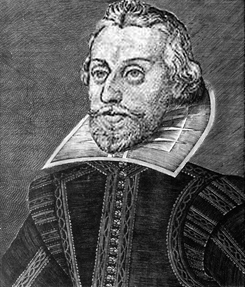
(V. ii 1520-5) NUNTIUS (on the asp):
"Well did our Priests discerne something divine
Shadow'd in thee, and therefore first they did
Offrings and worships due to thee assigne,
In whom they found such mysteries were hid,
Comparing thy swift motion to the Sunne,
That mov'st without the instruments that move..."
I think this is quite good poetry. So unburdened and unstrained in its effect! The idea of the world it depicts is at such a great remove from the ordinary scenes and conceptions of my life that I must be scarcely receptive to it most of the time. However modest its power, there is a becalming, organic wholeness in the order it creates from its language that I have never been able to form out of the materials which have informed my own existence.
Another obvious point about this play not being intended to be performed is that there is not actually any, or at least not very much, action in it. The characters mostly just recite long speeches in verse.
Acting is another of those skills/experiences that as I get older I regret not having tried at some point in my development. I never thought much of it as, unless you move in (and are accepted as one of) a circle of fairly serious artistic people, it is not seen as having much value for young people as a pursuit, indeed if anything it is seen as frivolous. This tradition of course goes back a long way--in Mansfield Park for example the young people attempt to amuse themselves by staging a play only to have the master of the house come home unexpectedly and forbid the thing in horror. Now I am kind of fascinated by its possibilities and think it must have beneficial effects on one's social interactions and personality if nothing else. I look at some of the clips, especially of these old stage actors like Olivier on Youtube, here he is Hamlet, here Henry V, now Richard III, now he puts on the blackface and he is Othello, now he is Archie Rice--there must be a kind of refreshment in continually becoming someone else, someone usually greater than oneself but whose embodied greatness also depends in the instant upon your skill in infusing it with corporeal vigor.
Memorial to Samuel Daniel in the church at Beckington, Somersetshire. He is buried in the churchyard. I have not been to this place, though it is the kind of place I would go. I stole the picture off the internet.

The play closes with the chorus chanting a long bit about the Nile and death and the sun and the moon and the desert and the natural and eternal elements of the universe. I like this naturalism. It is highly satisfying to us to put and see put our language to such good use. It may not be why we invented it, but it is a craving that its existence has elicited in some of us. Here is some of the bit about the Nile, whose source was famously unknown throughout most of literary history (V. ii, 1702-11):
"And turn thy courses so,
That sandy Desarts dead,
(The world of dust that craves
to swallow thee up all)
May drinke so much as shall
Revive from vastie graves
A living greene which spred
Far florishing, may gro
On that wide face of Death,
Where nothing now drawes breath."
Eventually I am going to have to admit that my writing and insights are not as good as other people's are because they are just better and more intelligent than I am, but I am as yet still clinging to the hope that the circumstances of my life at the moment are handicapping me in such a way that someday when I am freed from them will bring me back to some parity with other people. My daily time for reading or writing or watching movies or whatever comes in extremely small increments, often late at night when I am really too tired to concentrate you know. Going to the bathroom is a opportunity to maybe read 7 pages or so of something (a goal nonethelessly frequently interrupted before it is accomplished. Here is another time where I can possibly watch 43 minutes of a movie. Oh, bother, there are no excuses. There are no excuses. There are no excuses. We are exactly what we are and if we really were what we want people to think of us as we would be those things too.
If you do a search for Cecil Seronsy, who wrote a book about Daniel that I checked out of the library and referred to in an earlier post, this blog is the #8 item--perhaps it will be higher after this post. Here is the #1 item; the contents of five boxes containing the academic and personal effects of the man's life. I like the photograph. This country was once full of people who were carrying that same basic style, for better or for worse. They're all pretty much gone now. The Daniel book was the only one Seronsy finished, at age 59. The flap on the back of it states that the professor is at present engaged in preparing a book on Shakespeare, but evidently this was never completed. He wrote his PhD thesis on Daniel also. Maybe scholars do look over this guy's class notes from 1962 or his masters-degree course papers from the 1930s. It isn't really sad in itself any more than life is sad. I think it is nice that all this stuff was preserved. I bet they threw him a swell party in '73 when he retired, with lots of drinking and smoking and literary references, who knows, maybe a few pretty English major girls in bell bottoms were there too. Who could ask for anything more?
(V. ii, 1428-1432) NUNTIUS (a messenger, exhorting the chorus to procure some asps for Cleopatra):
"And looke so long as Cleopatra shall
In after ages live in memory,
So long shall thy cleere fame endure withall,
And therefore though must not my sute denie
Nor contradict my will..."
The loyalty of servants onto death is a common theme in this play.
Hey! Some university in Australia has put out a selection of Samuel Daniel's poems.
(V. ii 1520-5) NUNTIUS (on the asp):
"Well did our Priests discerne something divine
Shadow'd in thee, and therefore first they did
Offrings and worships due to thee assigne,
In whom they found such mysteries were hid,
Comparing thy swift motion to the Sunne,
That mov'st without the instruments that move..."
I think this is quite good poetry. So unburdened and unstrained in its effect! The idea of the world it depicts is at such a great remove from the ordinary scenes and conceptions of my life that I must be scarcely receptive to it most of the time. However modest its power, there is a becalming, organic wholeness in the order it creates from its language that I have never been able to form out of the materials which have informed my own existence.
Another obvious point about this play not being intended to be performed is that there is not actually any, or at least not very much, action in it. The characters mostly just recite long speeches in verse.
Acting is another of those skills/experiences that as I get older I regret not having tried at some point in my development. I never thought much of it as, unless you move in (and are accepted as one of) a circle of fairly serious artistic people, it is not seen as having much value for young people as a pursuit, indeed if anything it is seen as frivolous. This tradition of course goes back a long way--in Mansfield Park for example the young people attempt to amuse themselves by staging a play only to have the master of the house come home unexpectedly and forbid the thing in horror. Now I am kind of fascinated by its possibilities and think it must have beneficial effects on one's social interactions and personality if nothing else. I look at some of the clips, especially of these old stage actors like Olivier on Youtube, here he is Hamlet, here Henry V, now Richard III, now he puts on the blackface and he is Othello, now he is Archie Rice--there must be a kind of refreshment in continually becoming someone else, someone usually greater than oneself but whose embodied greatness also depends in the instant upon your skill in infusing it with corporeal vigor.
Memorial to Samuel Daniel in the church at Beckington, Somersetshire. He is buried in the churchyard. I have not been to this place, though it is the kind of place I would go. I stole the picture off the internet.
The play closes with the chorus chanting a long bit about the Nile and death and the sun and the moon and the desert and the natural and eternal elements of the universe. I like this naturalism. It is highly satisfying to us to put and see put our language to such good use. It may not be why we invented it, but it is a craving that its existence has elicited in some of us. Here is some of the bit about the Nile, whose source was famously unknown throughout most of literary history (V. ii, 1702-11):
"And turn thy courses so,
That sandy Desarts dead,
(The world of dust that craves
to swallow thee up all)
May drinke so much as shall
Revive from vastie graves
A living greene which spred
Far florishing, may gro
On that wide face of Death,
Where nothing now drawes breath."
Eventually I am going to have to admit that my writing and insights are not as good as other people's are because they are just better and more intelligent than I am, but I am as yet still clinging to the hope that the circumstances of my life at the moment are handicapping me in such a way that someday when I am freed from them will bring me back to some parity with other people. My daily time for reading or writing or watching movies or whatever comes in extremely small increments, often late at night when I am really too tired to concentrate you know. Going to the bathroom is a opportunity to maybe read 7 pages or so of something (a goal nonethelessly frequently interrupted before it is accomplished. Here is another time where I can possibly watch 43 minutes of a movie. Oh, bother, there are no excuses. There are no excuses. There are no excuses. We are exactly what we are and if we really were what we want people to think of us as we would be those things too.
If you do a search for Cecil Seronsy, who wrote a book about Daniel that I checked out of the library and referred to in an earlier post, this blog is the #8 item--perhaps it will be higher after this post. Here is the #1 item; the contents of five boxes containing the academic and personal effects of the man's life. I like the photograph. This country was once full of people who were carrying that same basic style, for better or for worse. They're all pretty much gone now. The Daniel book was the only one Seronsy finished, at age 59. The flap on the back of it states that the professor is at present engaged in preparing a book on Shakespeare, but evidently this was never completed. He wrote his PhD thesis on Daniel also. Maybe scholars do look over this guy's class notes from 1962 or his masters-degree course papers from the 1930s. It isn't really sad in itself any more than life is sad. I think it is nice that all this stuff was preserved. I bet they threw him a swell party in '73 when he retired, with lots of drinking and smoking and literary references, who knows, maybe a few pretty English major girls in bell bottoms were there too. Who could ask for anything more?
Tuesday, May 26, 2009
Supposedly Great Movies I Can't Find a Copy of:
#2 The Magic Box (Britain-1951)
This film, which I have never seen a poor review of, or any negative criticism at all apart from a few complaints about his hagiographic treatment of its subject, is still widely regarded as a classic in Britain, where it continues to show up on many top-50 type lists of British film. This popularity appears to have never translated to America, where the movie remains in contrast largely unknown. It is a biography of William Friese-Greene, an Englishman who has a strong claim, enthusiastically promoted in this film, to being the inventor of the movie camera. It has a unique origin, being the British Film Industry's official contribution to the 1951 Festival of Britain, which seems to have been an earnest attempt in the old English style in the days before they had legions of aging rock stars to call on to inject some fun and optimism into the grim austerity period and demonstrate how the nation was recovering from the tough conditions which the war and its aftermath had imposed upon it. The movie was made in Technicolor--I cannot think of any other British film shot in color before 1965, unless those David Lean epics (The Bridge on the River Kwai, Lawrence of Arabia, et al) count as British films--and featured appearances by many of the top stars of the time, such as Laurence Olivier and Peter Ustinov. The lead was played by Robert Donat, a legendary British actor probably most well-known in the U.S. for playing the title character in the heart-tugging 1939 classic Goodbye, Mr Chips, which is a movie, by the way, that I love and endorse wholeheartedly.
The clip above is the only one from the movie I can find on Youtube, posted by someone in Germany who is actually a fan of the singer making a cameo in this scene, Oda Slobodskaya, a Russian soprano (1888-1970) of whom I know nothing, and of whom most of the consensus I can find on the internet--which isn't much--is that she was underappreciated. Even from this little bit, the films appears beautifully and meticulously made. I would like to see it.
This movie does appear to have been released on VHS at some point, but there are no copies of it for sale at Amazon or other sites I have looked at, new or used. There is a new DVD out in Britain (box pictured below) but all the places selling them warn that "British DVDs may not work in American systems" or something to that effect, which I did not know, but anyway there is no point in my sending away for something that might not work. I am assuming it will become available in a format I can watch comfortably within a few years, so I can wait for it.
What Not Being Able to See This Movie Means in My Life. Well, it sounds like this is something that is expertly made, optimistic, celebratory, patriotic and communal in spirit, well-written, tells a story that has an important bearing on our lives, etc, etc, so I think it is pretty ironic that it is never shown and is generally hard to see, as if those qualities were too dangerous for people to be exposed to or something. Of course it is intended to be inclusive and crowd-pleasing, was directed by an establishment institution operating at a time of heavy-handed government intervention in private life, all the while passing itself off as something serious and intelligent, i.e. good for you, and probably freethinkers and other aware people are attuned to this and find it distasteful. But I am sure it is miles better than the ordinary run of media the unsuspecting and earnest bourgeois are exposed to.
 I am in the process of seeking ways to improve the substance and novelty of this page (within reason) without resorting to examining the more hysterical hidden workings and impulses of my mind. Eventually I will have to address the questions "Why am I doing this? What do I hope to get at?" and suchlike because I imagine everybody and nobody to be my audience at the same time, and to an individual writer both of these audiences kind of impose the same requirements for continuing.
Subscribe to:
Posts (Atom)

