Saturday, August 17, 2019

Notes on Trip to New York

This "trip" was actually two days a couple of weekends ago. The parents of an old schoolmate of mine who lived there had recently died and as my friend was cleaning out their apartment I was invited, along with several of my children, to come and stay overnight and take any books or other things I might want. Since I hadn't been there in seven years this was too good an offer to pass up, so after staying over Friday at the camp in Vermont to cut an hour and a half off of the drive we got up early on Saturday and with the light weekend traffic made it onto Manhattan Island and even found free street parking before noon. Once I was there I realized how easy it would be for me to come down this way for the day on a Saturday several times a year, though I probably won't do it because while I don't seem to do much somehow there is always something going on that makes it almost impossible to take a spontaneous day trip to New York. But I will have to watch for my opportunity.


I had three of my children with me--the ones aged 15, 10, and 8--and I didn't make any real plans for serious sightseeing or activities on this occasion, which is my way of saying we didn't do anything original or challenging in town by the higher standards of such things, though I felt excited enough just to be there again. As such our visit consisted of riding the subway to Times Square, walking around that area and then up Seventh Avenue to Central Park (Saturday) and then taking the subway to Coney Island, doing some rides and games there, then walking over the Brooklyn Bridge (Sunday). On Saturday night my friends took us out to an Indian restaurant, which was great, especially as they had enough food snob hauteur to insist that my children try the Indian food, where I probably would have thrown up my arms and gotten them pizza or a burger.

Weekends are obviously a lot different than if I were to go there doing the week--I don't seem to have gotten in any important person's way, except for one guy riding a bicycle across the Brooklyn Bridge, who (in my opinion unneccesarily) admonished me for having wandered a few steps into the bicycle lane to sidestep the crowd. I did get to walk a little around the gentrified part of Brooklyn near the bridge as well as the area of Lower Manhattan around City Hall and the Woolworth Building, which I had never done before. I would have walked a lot more, but having my 21st century children with me, they don't get wandering, they want to get somewhere.


The street vendors/food carts were selling things for a lot cheaper than I remember from my previous visits. One guy was selling hot dogs for $2, which is less than what it costs in Concord, and I saw $1 drinks (in plastic bottles) all over the place. I suspect something fishier than just the free market working its magic is going on.

I unfortunately couldn't make it to a bar this time. I did get some beer at the Indian restaurant at least.

I loved my subway ride, especially on Saturday. All of the beautiful women dressed for the 90 degree weather doesn't hurt, of course, but I like the ambience anyway. I read about all the complaints about the system, how antique and slow it is compared to every other great city, even London and Paris, but for me it's hard to bash it as it is now, considering that this is what the ride to Coney Island looked like for about the first 25 years of my life.


There is much discussion and celebration of New York's famed diversity, and much consternation from the denizens of that city about why much of the rest of the country cannot embrace it with the same enthusiasm. Of course the dynamic in New York, perhaps especially in 2019, is completely different from what it is in some exponentially smaller community, or even a larger but less cosmopolitan city. There are just so many people there everywhere all the time, most of whom at this point are either self-selected or have some purpose for being there--unlike Akron or Baltimore, there don't seem to be that many people trapped or left behind, especially in Manhattan and the gentrified parts of the other boroughs, anymore. For someone like me, the circumstance of there being so many  people--especially women--like the people you went to college with, or imagine you went to college with anyway, combined with the substantial decline in the crime rate means that the overall environment remains attractive and also familiar enough to not be as alienating as maybe some would wish me to find it. Also the continued presence of so many longstanding institutions and landmarks central to mass America's cultural identity, from Broadway to Carnegie Hall to the Yankees to Grand Central Station and on and on, make you feel that you are still at home even if you are the kind of old American who is not in the highest favor among the intelligentsia at present.

There was a blackout in midtown on Saturday afternoon about an hour after I was walking through there. I was back up near Fort Tryon Park where I was staying getting ready to go out to dinner when it happened and I didn't actually find out about it until I got home.

My mood was great, especially the first day. I haven't been able to get much excited about going places lately the way that I used to. Part of it is the children getting older--when they are small you can just drag around to where you want to go and they usually will like it well enough but now they have their own ideas about what is fun, or would be fun, that are usually at odds with my vision. Also both of my cars are very old (255,000 and 185,000 miles respectively), and while they have actually run this whole year since I had them inspected in January and gone on separate occasions to Florida, Maryland and New York in that span, I anticipate that they are going to break down anytime such that I can't really enjoy the journeys until I can breathe the sigh of relief upon arriving (and then immediately begin to worry about the ride back). But arriving in New York on a sunny Saturday morning was a tonic. Some people will make a sour face if I say anything about riding on the train with all the attractive women--theater people, Italian tourists, even the hostile progressive-signaling book readers shooting darting looks at the subhuman male dreck populating the car--but if that isn't a part of your regular experience it is a lift to the spirits.....

Shortly after I returned home I had an Ashley Smith dream. I don't know who Ashley Smith is or why exactly she keeps showing up in my dreams, which has occurred now at least twice. She is somewhere between 19 and 23, albeit very mature for her age, probably 5 foot 7 or 8, with pale skin and blue eyes, but straight dark hair which would fall to the middle of her back except that she always has it pinned up with those knitting needle/chopstick looking things girls like this wear in their hair. I have always loved this look, perhaps because I have only seen it on people who were strangers to me, never having gotten into or near a social circle or even a school where anyone was like this. During the dream I imagine that she is like the Franny character from Salinger, but she is a completely contemporary person, she wouldn't have to tell you that she disdains Trump or racism or homophobia, her superiority to all of these petty temptations projects itself from her being, at least where I am concerned. Ashley lives in New York City of course, in an apartment like one story house situated right on a busy but unidentified highway with what looks like the Triboro Bridge in miniature about a hundred yards away. Ashley's New York is very much the New York of Salinger in character, though I imagine it is the present, or at least no earlier than 1989-93, since I am obviously about 22 or 23 myself in these dreams. Hers is the kind of house that one always visits during some kind of holiday time, never on a Tuesday afternoon in March. Ashley herself, whom I always imagine for some reason when I arrive that perhaps something may exist or develop between us, always greets me at the door with great warmth that makes me feel like 50 million dollars, after which her charming parents come and say hello as if I were the Harvard quarterback in 1947 or something and actually belonged in their apartment as a personal friend of their incredible daughter. Ashley and her parents then invite me to sit in the living room while Ashley repairs to the kitchen and the parents to wherever it is they repair to, and I wait for Ashley to rejoin me; which however, she never does. As further evidence of her genius she never leaves me alone, for there are always other interesting people waiting with me in the living room, such as her adorable younger sister, whose name I don't know, invariably accompanied by one of her equally cute friends from boarding school who is visiting the city over the break, and these two actually talk to me a lot. When I wake up I always wonder why I don't pursue love with the sister, who is a 1% cutie herself, instead of pining for Ashley, though I think the sister is only 14 or 15, which does however seem to be about my maturity level. Other times there were humorous artists talking shop in the living room, and on this last occasion a classmate of mine from college who actually does live in New York, a robust and caustic fellow, a great smoker and drinker, who would be the sort of person who knew Ashley without being a romantic rival for her, not because he is not more desirable than me but because she is not really his type. When we met up on this last occasion we determined to walk out into the road and figure out which highway we were on and where this was relative to anything else and it all had the spirit of a great adventure. But Ashley never turned up again....

Here are a few pictures. I haven't done this much in recent years, since I got a phone. I had uploaded some to Facebook and then copied them to here but those seem to have disappeared. I'm not a big picture taker, especially when I have my children with me, so these aren't much.


Our triumphant entrance to the city on the Henry Hudson Parkway.

We happened to be wandering past Carnegie Hall, so I had them take a picture of me in some dignified surroundings. Not the greatest look, but it was about 90 degrees, which is hot for me.


My three children by the Dakota apartments. They don't pose, so I have to try to catch them when I can.


The view of the George Washington Bridge from the roof of the apartment building where we were staying.


The children in the subway waiting for the "A" train.


I thought this was a very good, eye-catching ad. It speaks to the New York dream many non-aspiring mogul type people have.


When we went above ground in Brooklyn, my children took many pictures from the train windows.


My daughter was fastidious about not getting any graffiti in her pictures (there still is some).


Coney Island. They were going to go on this Ferris wheel but they burned out.


The golf took a lot out of them.


Gentrified Brooklyn.


You can see that the pedestrian lane was crowded and it was difficult to stay out of the bike lane.


Me on the Bridge, shortly before the incident with the biker.


As with Carnegie Hall, I wasn't looking for the Woolworth Building, but I was quite excited when I noticed I was walking by it.

Friday, July 26, 2019

July 23 Post (Latest Movies--Almost Caught Up!)

This is a pretty good group, though noticeably lacking in anything recent, which is probably why I like it. Of course I consider 2008 to be contemporary, but can you imagine a filmgoer--even an aged one--in 1970 or 1981 or even 1992 regarding something eleven years old as up-to-date?


Taxi Blues (1990)


This is a Russian movie, made during the truly waning hours of the Soviet Union, and as such it looks like what I think most people my age and older still imagine that part of the world looks like, though in seeing some clips from more recent movies made there, in the cities at least stores, kitchens, computers, living rooms, etc, look like what you would see in the modern United States! At the time I saw this, which is quite a while ago now, I thought it was at least interesting, however I don't remember much about it now other than the dingy atmosphere and the seeming aimlessness of the lives of the characters, who were well into middle age. I think its relatively modest themes may have been for the present-day viewer superseded by the knowledge of the immense changes in the experience of life and perhaps consciousness itself under the new order. It is worth seeing for the end-of-the-communist-era aesthetic if nothing else.


Rebel Without a Cause (1955)


One of the all time iconic Hollywood movies of course, especially of the decade of the 50s, and as such I cannot help but to take some enjoyment in it, though I've never been able to see that it was particularly great. The plot and dialogue are more lumbering than even I usually like, the various messages seem heavy-handed, James Dean looks great of course but as much as I want to get into his acting I just can't do it--I really don't know what he is trying to say with this performance beyond the obvious, life-is-a-grand-disappointment-and-it-should-be-a-hell-of-a-lot-more-than-it-is kind of stuff. All that granted, every chance I get to see a young people type American movie from the 50s--and my system doesn't seem to generate very many of them for me to watch--I wish I could figure out a way to tweak it so I could see more, not that a lot of the sorts of things I would like would be available anyway, odd as that sounds.


Dear Zachary: A Letter to a Son About His Father (2008)


A documentary that I stumbled upon kind of randomly about the case of a male medical student named Andrew Bagby who was murdered by an unstable woman whom he had been involved with and gotten pregnant, the woman's flight from the United States to Newfoundland, the attempts of Bagby's parents both to have the woman extradited back to the United States and to get custody of their grandchild, and other sundry developments, made by one of Bagby's childhood friends. This is not usually the kind of thing I go in for, but I developed a certain affection for Bagby, video of whom as a somewhat goofball teenager, college student and 20-something appeared throughout the movie. He was around my age, and seemed like someone who could have been a friend of mine if I had known him, a genuinely nice guy, intelligent enough obviously to get into medical school, although he did have to go to Newfoundland for that, liked to have fun and was clearly beloved by his family (he was an only child) and his male friends. He seemed to have had some trouble connecting with women--you can see in some of the videos where he is dancing or making an over the top speech at a wedding reception that the women at the party are not really into his schtick. He had one girlfriend in medical school who seemed to be the kind of person guys like him (us?) spend most of their youth hoping they might be able to get someday, but she dumped him and ended up marrying someone else pretty soon thereafter, which led to Andrew's becoming depressed and probably to his unfortunately getting involved, however half-heartedly on his part, with the mentally ill woman who would turn out to be his murderer. As you can see the story of Bagby himself, ordinary as it was in many ways, quite interested me on a one-time basis, and he lived in a number of places, such as Latrobe, Pennsylvania and St John's, Newfoundland, that I have never seen in a movie before and have picturesque qualities. Whenever the documentary went away from him and focused on his parents or the deranged girlfriend I didn't find it as compelling.


Andrew with, I think, the girlfriend everybody liked who broke up with him

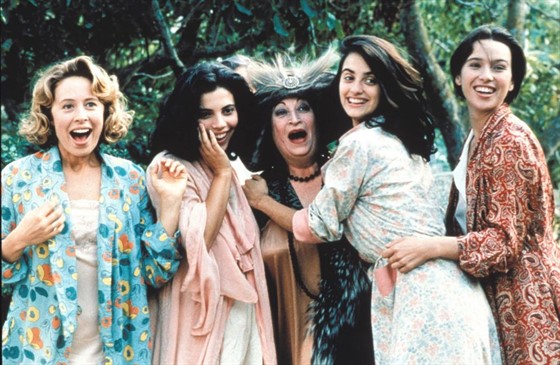
Belle Epoque (1992)


A Spanish movie that won the Foreign Picture Oscar in its year, I am not sure how I missed this when it came out, since it is exactly in the mainstream of early 90s American arthouse-friendly European imports that I regularly devoured at the Ritz 5 theater in Philadelphia and wherever else this class of movie was shown during that 1990-94 period. Since I hadn't seen one of these films in quite a while it awakened all sorts of memories and emotions in me while I was watching it and I frequently paused it to take down notes (on my phone!) for this review, which I probably should do for every movie that shows up here, though in most instances I am not inspired to say much about them. Here are some of my in-the-moment thoughts about Belle Epoque:


Early 90s art house world/era looks ever better.


Atmosphere great, fun, like the characters.


Usually I hate the guys who are being chased by beautiful women but I like this guy (in the movie a handsome young deserter from the Spanish Civil War takes refuge in the decaying mansion of a lapsed painter with four beautiful daughters, all of whom he has sex with--I don't consider this a spoiler since it is obvious this is what is going to happen the minute they arrive at the house--the question is what it is all supposed to mean).


Little touches, lovely things I haven't thought about in years, the night air (I almost never spend time outside late at night anymore), an outdoor party with cigarettes and dancing, beds in attics. It does make me want to be young again in a particular way that I have not felt in years. It reminds you what was fun about it.


Lot of SJC feeling. Early 90s, the old, deep Europe, an artistic family with books, etc.


It's one of those magic realism type movies, and has kind of a sad ending--the old European dream that the main body of the movie takes place in dies or fades out at the end and the young characters turn their faces, grimly in my view, to the modern world and the future, represented at that time by the United States.


While this is probably not a great movie, if you are my age and the kinds of sentiments and themes that I have mentioned here speak to you at all, I think you will find it emotionally rewarding if nothing else. But there seem to be fewer and fewer people who share my sentiments and reactions to anything as the years go by.


Belle de Jour (1967)


While very celebrated to the point that even people like me are familiar with its iconography, this is obviously an all-time classic, and I am becoming increasingly persuaded that Luis Bunuel is the greatest directing talent of the sound era at least, though like many directors who worked into the 60s and 70s I believe he may have started in film during the silent period, or close enough to it that his early attempts were informed by its peculiar requirements. Paris in the 60s, especially by '66-'68 when almost everyone was filming it in sumptuous color, always looks so perfect in movies. Ironically these were the last years just before a massive societal upheaval. One is reminded that the Paris/Europe of 1788 loomed as the lost Eden to many reactionaries through the first half of the 19th century at least. And of course perfect though it all looks, much of this film is set in a brothel, though certainly a clean and comparatively attractive one, is about characters who dress well but whose minds are (primarily) fairly vapid, who have little connection to each other. The only child I recall in the movie is the daughter of the brothel's housekeeper, about whose grades all of the prostitutes and even some of the regular customers seem solicitous. The later Bunuel movies that I can recall rarely feature any children, which I think is worth noting. The character of Henri played by the famous actor Michel Piccoli as a kind of prototype of the (compared to us) sophisticated adult French male with an assertive and unapologetic heterosexuality especially stood out to me. Remarkably, Piccoli is still alive at age 93, which means he would have been about 40 when this was filmed, a decade younger than I am now. I regarded his character as being at a stage of mental life much beyond my own, to which I had not yet attained. In truth however I missed that stage of life altogether and am probably never going to attain it. As to taking up going to brothels or propositioning the wives of acquaintances and engaging in role-playing and real sexual behavior in general, depraved or otherwise, with actual live women--that sort of thing is truly unthinkable. 


Ragtime (1981)


One of the more trite of the many trite comments that people make about older movies is to observe that "they don't make them like this anymore". Consequently I don't just try to avoid saying it, I try to avoid even having the thought as much as possible. However, in the midst of watching Ragtime, which was made during the period of my youth and which resembles in form and character a kind of movie that was common in that era, the thought kept recurring to me that, you know, they really don't make movies like this anymore. I'm not exactly sure what I mean by "like this". I liked the pacing of it, which seemed to suit the time period in which it was set, which had an decided energy, but not "energy" in the speed and volume and flashing pixels way that that word seems to be understood now. The shifting between multiple stories I thought was well done in giving some picture of America circa 1904, which comports somewhat with the idea that I and probably many people of my upbringing have always had of it (interestingly it was directed by the Czech émigré Milos Forman). Nowadays the idea of a feature film aimed broadly at adults is itself a novelty, I suppose. I haven't read the book, and the meaning of the various plot resolutions beyond the obvious racism-is-foundational-to-America-and-the-rich-always-triumph themes didn't make much of an impression on me. But the possibilities just beginning to be felt and hinted at in this country at the turn of the last century are suggested appealingly throughout this movie.


I don't like to be a cast nerd in these reviews--I've held back from going too deep in that vein on some of the other movies in this very post--but this one has too many notable people to omit mentioning them. First of all, of course, Forman persuaded the aged Jimmy Cagney (!) to come out of a 20-year retirement. The medium is so much more comparatively mature and the exposure of celebrities so massive now that this effect of bringing back an old star would be impossible to duplicate today. Jimmy Cagney dated back to the very beginning of sound movies, he was a real *movie star* with a public persona largely bound within those limits and then he effectively dropped off the face of the earth, and came back for one last hurrah. I like it. There is also Elizabeth McGovern (naked too!) as Evelyn Nesbit--and she is Evelyn Nesbit, who admittedly doesn't seem to have been a terribly deep person to try to portray--and I have always liked her more than the usual. She must be my type. Norman Mailer (!) has a small role as the celebrated architect Stanford White, there was Brad Dourif, the stuttering guy in One Flew Over the Cuckoo's Nest, who plays another weird guy here, there was Mandy Patinkin, who I read about for years in the New York Times theater coverage when I used to subscribe to it but never had any idea who he is, though I must have seen him somewhere. Howard Rollins, Jr, who I see died some years back at just 46, gave a famously strong performance. Pretty eclectic group.


Bend it Like Beckham (2002)


I thought this would be the weak link in the group, and while it was, it was not actually as bad as I thought it was going to be, and it probably succeeds on the terms it was seeking, which was to be a feel-movie for teenagers. To be honest I am surprised there are not more movies of this type. I also had some idea that this was fairly recent, but as you can see, it is not. I don't know how much more London has changed in the nearly 20 year interval since this was made. At that time at least, despite all of the ugly modern architecture and signs of cultural degeneration, there was still something beautiful about it, even just in the sky sometimes. It's a hallowed place in the psyche of many people, such as me, who can trace large portions of their mental formation to its environs. The director (Gurinder Chadha) noted in one of the extras that much of the shooting had taken place during a heat wave in the summer of 2001, and I was actually there during that heat wave, the last time I was there, in fact, so perhaps that association had an effect on my response.


I believe at the time the depiction of Indian culture in a mainstream film in Britain was still something of a novelty--the director Chadha presents it it seems to me as a fairly broad caricature, though not as bad as the caricature of the "traditional" (white) British family--Satyajit Ray she is not. At least as recorded by the right wingish internet, the old Britain went through a period of cultural squalor about a decade ago marked by extreme female promiscuity, public drunkenness (and I was thinking, oh if I could only be there!), educational decline and the like, media coverage of which at least seems to have abated in the most recent years. I haven't kept up much with what the British Indian community is doing, though I suspect they are doing fairly well, and their culture must be beginning to have some influence on the traditional British institutions which must be resulting in some conflicts, since it seems to me really different from the West and unlikely to hold much appeal to most people with any grounding in that tradition. But if our modern age has taught me anything, it is that I know nothing of the minds of other people and that almost every intuition I have about the current state of society could not be more misguided. So I will leave that here for now.


The real Evelyn Nesbit was a babe too.

Friday, July 12, 2019

July 4 Post

I've never cared much for fireworks. This may go back to the Bicentennial day, July 4, 1976, the only real memory I have of which was of going to the enormous fireworks display in Washington, D.C. sometime in the afternoon and sitting on a blanket on a hillside for hours and hours in the middle of a crowd of thousands of people waiting for the event to begin, and then at the end of it the ordeal of walking back to the car amidst that crowd for what seemed like forever. In retrospect, I guess it was too much for a six year old. My fondest memories of fireworks are of setting up a chair in the street in front of my grandparents' house during the years between 1985 and 1990 or so and watching the display from one of the parks in nearby Northeast Philadelphia, which was visible over the trees and telephone wires at the end of the street that formed the horizon. No crowd, I guess. In some recent years we have gone to York Beach in Maine where they shoot the fireworks off from a barge out in the ocean. Those days are fun, and my children like them, but logistically I don't find them enjoyable, finding parking, trying to feed a lot of people when everyplace is so crowded (yes, we bring a lot of food with us, but it's never enough), getting out again at night, being envious of the adults in the bars and nicer restaurants I am walking by. These are my associations with fireworks. A more hard-bitten critic would take them apart on some grounds of stupidity at the idea of gawking at a display of lights being shot into the air, and I admit that I do wonder what, if any, appeal these shows have to other people's minds, but if my family members like them, for whatever reason, I cannot bring myself to go full H. L. Mencken on them for the sake of trying to win points with some imaginary public or group of people that is going to then welcome me into their exalted society.


The other day I went to a store and the girl at the cash register had so many piercings around her mouth that were filled with rather sharp jewels that I realized you couldn't very well kiss this person on the mouth comfortably even if you were the sort to take liberties with little concern for any adverse consequences. But I haven't seen anyone complaining about this or writing about it being a problem from an actual kissing standpoint so the people who do kiss these girls obviously have worked the matter out.


Some people online were challenging themselves for the Fourth of July to list 50 reasons why they're glad to be an American. While I probably don't need to do this, as there is a lot of evidence on my blogs that I am something of a patriot, lists of 50 tend to be a challenge to come up with, and it is sometimes worthwhile to write things out in an organizing, clarifying way.


That said, there is a difference between "things I like about America" which is the way I instinctively began filling out the list, and "reasons I'm glad to be an American", which implies the condition "as opposed to something else" and is a little more difficult, and even prosaic, to express.


1. The United States is, for everything that is unserious about it, still an important country, at the center of many of the great movements and events of the time, not for the most part a backwater, and while I am not as connected as intimately with these exciting things as might have been hoped for, I am not as completely shut off from them as some people, even among our own citizenry are, either.


2. It is unlikely that the country is going to be invaded and occupied by an especially vicious, genocidal foreign army within my lifetime (I think). Some think the internal oppression will be ratcheted up to ever-increasing levels of dominance and humiliation and the like, but I don't consider matters to be at that point yet. I actually just missed crashing into 2 moose at 60 miles an hour on a dark road last Saturday night, which might have killed me off without a government domestic or foreign having to lift a finger.


3. Obviously I think our "mainstream" history, traditions, arts and literature, etc, are actually rather inspiring, and being somewhat immersed in/part of the continuity of this has always been something I've taken pleasure in.


I'm already worn out after three responses.


4. I personally found many aspects of my schooling experience, both at the high school and college level, to be highly rewarding, but I am aware that most people do not share in these positive associations, and there are indications that the quality of the experience in many instances is not as satisfying as it often was formerly.


5. I have not managed to travel in the wide open spaces of the country as much as I would have liked to do, and perhaps I would be disillusioned if I were to take the trip someday, but the romance of the idea is powerful, and even though I have never been near places like Texas, Arizona, Kansas, California, et al, and geographically they have nothing in common with where I have lived all my life, I still feel that the mythology associated with them is something I have some claim to.


6. American women are often maligned, though I think the real problem for most men is that if you are not yourself a winner in some way you don't have a lot of opportunity to come across the more attractive ones with pleasing personalities because they do not linger long in dead end, non-happening type situations (because they don't have to), and this does contribute to a sense of cultural desolation that I think is under-rated. Much of the country is almost more haunted at this point than elevated by their existence, or the idea of it, but without the idea, what do you have?


7. Football (and by extension baseball and basketball, but 1970s football was the first sport I took an interest in). While I prefer the 1960s and 70s version of it, and despite all of the highly publicized long term downsides to playing the sport, I do still kind of love it. It was the game I played most in my childhood, and to be outside at the onset of autumn as well as its gloomy end still calls up images of the old field set surrounded by the townhouses in the development where I lived, with the sidelines marked by the back fences of the houses on one side and the playground equipment on the other, and the silver electrical box marking the right corner of the goal line in the enclosed end of the stadium...


Going back to #6, do American men give up on enjoying life earlier than men in other places because of the difficulty/inaccessibility of interacting socially with charming women? It seems that they might.


I'm going on vacation for a week, and I'm not going to get to 50 by the end of the night anyway. There is enough here to make a posting though.

Friday, June 21, 2019

June 3, 2019 Movie Log

Separate Tables (1958)


This is one I saw on a VHS tape about five years back. After having sat in the "availability unknown" section of my Netflix queue for seven years or so, it finally turned up in the mail one day so I watched it again. I wrote quite a lot about it on that earlier occasion. I sounded like I was more sure of myself than I probably would be now, though I don't have any much stronger takes than I had on the earlier occasion. I evidently thought Burt Lancaster was out of place in this film on the earlier viewing, which I was not struck by this time, I thought his presence was good. I also wrote that the while the author of the play, Terence Rattigan, was gay, that any suggestion of homosexual themes were "nowhere in evidence." I feel like this isn't quite true. It isn't explicit, of course, but a number of the more repressed characters, those played by Wendy Hiller and David Niven especially, and maybe even Deborah Kerr's, seem like the explanation of some of their issues could lie in that direction. Most of the other comments I made I pretty much feel the same. One thing I noted on this occasion was the portrait of Queen Elizabeth, at that time still a very young woman, hanging in the hallway. I don't know what to say about that other than, it's been a long reign.


In looking over my movie books I discovered that this film I have watched twice now is not even the version of this play that I was supposed to watch for the list. There was a 1983 version directed by John Schlesinger and which starred Alan Bates and Julie Christie which was the one that earned 5 stars in my book. Copies of that version appear to be even more difficult to come by than the 1958 one however.


Scent of a Woman (1992)


I don't like the title and I don't like the ending. Some of the other parts of it were all right. I had no idea what this was about. I was surprised that prep school was involved, as well as a weekend jaunt to a New York City that was still somewhat recognizable to me. In general I like re-visiting the early 90s, it's a time in my life that I am fond of even if it was otherwise not the most exciting period, and in fact comes off at times as the last dull years before the explosion of technology and globalization that has really marked the adult phase of my life. Al Pacino won the Oscar for this, widely regarded by experts as a lifetime achievement award, as he had not won one previously. I would agree that while his role here was not wholly uninteresting, it was not a great one. I thought overall that this movie was not that bad at the time, but not much of it has stayed with me. There is a somewhat famous scene where Al Pacino's character (who is blind) expertly dances a tango with a young woman of my generation who, it is supposed, had never had the opportunity to dance with anyone skilled in the art before, but the scene is memorable mainly because the lady was so gorgeous (Gabrielle Anwar, born 1970, about a month younger than I am, in Laleham, Surrey, England, which is also the hometown of Matthew Arnold).


One minor pet peeve I had about this movie which is not a big deal unless you happen to live here is that the boarding school is supposed to be in New Hampshire and the story to take place over Thanksgiving weekend, but the weather is about six-seven weeks off, the fall foliage is still in its robust fullness and the students are still walking around in light jackets, which is a season that is over by the middle of October. Thanksgiving is pretty much winter, it's not getting above 40 degress and about a third of the time, including last year, there is already snow on the ground. So after going through 20 Thanksgivings in this climate the picture presented of it on the screen is not congruent with experience.


Medium Cool (1969)


Another one that I had already seen and that then suddenly showed up after languishing for years in the Netflix queue. It had held my interest when I saw it before so I watched it again. It throws a lot of zeitgeisty type things of its time at the viewer, most prominently the manner in which the modern media, especially visual media and television, frames and manipulates news and information and so forth, but also black empowerment, discontent over the Vietnam War, the assassination of Robert F Kennedy, middle class fear of crime and disorder, the war on poverty, drug psychedelic culture. The various issues are presented episodically, though there are a couple of main characters (a television journalist and a pretty young single mother who has moved from Appalachia to a poor part of Chicago) who re-appear throughout the story. While there is I guess some actual footage from the 1968 Democratic convention in Chicago, almost all of the movie is scripted and uses actors. The first time I saw it I was under the impression, I'm not sure why, that more of it was a documentary. It's different. Most of the themes raised in it are things I feel like everyone has been railing on my whole life without ever resolving to any serious person's satisfaction so I'm not sure in the end I took away much from this film even on the second viewing other than a sense of where certain observers thought society was headed in 1968/69.


Schindler's List (1993)


I remember when this came out it was a very big deal, or least to me as a 23 year old it felt like it was, that if one was any kind of regular moviegoer at least you were supposed to see/pay homage to it, the great, or at least colossally successful, Steven Spielberg's acknowledged magnum opus, at some point. The Best Picture Oscar was a foregone conclusion, the only year I can remember where there was not even a contrarian attempt at debate. It placed 9th in the AFI's by-the-book 1998 rankings of the one hundred greatest American movies of all time--the only post-1980 offering to crack the top 50. Yet for all this hoopla I don't remember any of the real giants of either the movie industry or among critics and historians making a passionate case for its being a film of this level of greatness. I did my duty and went to see it in '93 and I thought it was kind of what you knew it was going to be, a catalog of senseless atrocities and murders against the gloomy, dead, black and white backdrop of the Eastern European hellscape. I went with some intelligent friends of mine from school and their comments upon leaving the theater were pretty much of the shrugging "what can you say?" type. While it is very detailed and large in its scope, unless you went in knowing nothing, or at least not very much, about the Holocaust, it didn't feel like there was anything new to really chew over. It follows the Hollywood tendency to keep the focus on the most inarguable manifestations of evil and sensations of terror. Some of the better European films on the subject, such as the 1965 Czechoslovakian Oscar winner The Shop on Main Street, have always struck me as perhaps being a more accurate depiction, at least in some places, of what World War II in occupied Europe was probably actually like, a lot of people who were not especially smart nor brave nor, when their own hides were on the line, inclined to care much about the fate of anyone else, caught up in an enormous world historical event that nothing in their previous lives had begun to prepare them to navigate admirably. And yes, in these other films you get the snarling dogs and relentless searchlights and preening vulgar Nazis, but there was a lot more involved in the whole mess that Hollywood tends to leave out.


So, 26 years later this movie comes up on my very complicated selection system to see again. In the interim I had not thought much about it nor seen it referred to in the kind of movie writing that I read when compared with things like Fight Club and Office Space. Seeing it again, I do have respect for it as a production. It is well-made, even lush in its attention to detail and objects. I noticed more how stupid all of the German characters are depicted as being, and how foolish in believing themselves to be cultured. Even Schindler, who comes out in the end certainly as a kind of hero, is portrayed as somewhat lazy and not on the same level of shrewdness as the smarter Jewish characters. It's a stupid thing to notice I suppose but if you're putting it in the movie fairly unsubtly, especially in this day and age, of course people are going to pick up on it. It does still have something of a flat effect about it--it really is more like a monument in some ways than a work of art--that causes me to resist embracing it as the great movie it wants to be. Those are my main thoughts about it at this time.


I remember there was a guy at our college when this came out, not the smoothest operator, who after plotting for months to ask out a particular girl, when she accepted his request for a date, took her to see this. I don't think they went out again (this guy was not me by the way--my folly would have been taking somebody who was deadly serious and mature to something like a Jerry Lewis movie).


The word "taxi" came up in one of my internet search games that determines some of the things I do, so I ended up having a spate of taxi movies to watch. The next two both garnered "turkey" ratings, which is lower than even one star, in the most of the ratings guides I have, so I was a little disturbed that I kind of liked both of them.

Taxi (2004)


The--I don't want to say all-star but recognizable personality--cast includes Queen Latifah, Jimmy Fallon, Ann-Margret, Gisele Bundchen and someone named Jennifer Esposito whom I did not recognize but who is attractive. Except for Ann-Marget all of these people are around my age. This movie involves a lot of wild driving around New York City, especially in pursuit of Gisele and the gang of supermodel-gun-toting-bank robbers that she is the leader of. The premise is not really the attraction. That, I guess, would be the efforts of Queen Latifah and Jimmy Fallon especially to good-naturedly re-create some of the spirit of the more middle class New York City of my generation's teenage years and young adulthood, which was already waning by the early 2000s.  Gisele Bundchen is not the most accomplished actress, though she manages to smirk attractively a few times. In general I am not a big supermodel lover, in the sense of rating them so far above other attractive women. I often think that this is a somewhat artificial distinction promoted by wealthy and powerful men who need others to be convinced that their wives have as many times the value of lesser men's wives as they themselves do in their achievements/financial success, etc, over their lesser fellow creatures. But that's enough to say about this movie.  


D.C. Cab (1983)


This one I really was not expecting to last beyond a few minutes, especially when I saw it was directed by Joel Schumacher, whom I have always found to be perhaps the most execrable director in Hollywood who seems to have some idea that he is trying to be good. However the downtrodden characters had a camaraderie that was kind of infectious, maybe because it is something that you almost never see anymore, at least genuinely. It also has a goofy humor that is none the less engaging as well. Now, while it may be Joel Schumacher's personal masterpiece, I am not claiming that it is really a good movie. However, like the other Taxi movie, it reminded me of some things from my youth that I guess I missed without realizing them.


This picture is not from this movie but this girl (Jill Schoelen) was adorable.


Taxicab Confessions--New York City (2006?)


The sleeve this came in gave a date sometime in the 90s but the people in it speak of 9/11 as already several years in the past; at the same time no one has a smart phone yet so it can't be too many years afterwards. This is just a reality show where people riding in a taxi reveal things about themselves. Apparently there were episodes in other cities and so on. Again, there is nothing of greatness in it, but to me it is an interesting slice of life type of thing to look at for an hour because, especially since I have had children, I haven't really done anything else. I haven't gone out at night, I haven't ridden in a taxi in New York, no women have flirted with me, I haven't had conversations with smart people. I've been kind of dead to the greater world. So these sorts of shows which even suggest the possibility of nightlife or adventure hold more fascination for me than they really merit.


Friday, May 31, 2019

Early Take on the Presidential Primary Candidates

Trying to see where I am, if I am anywhere at all at this point, and making note of any local gossip I may have overheard about any of these present or future celebrity candidates. It is not very serious or well-informed, but of course I live in the first primary state, and the candidates have already been around for months now, and many people are passionate about the upcoming election, so I feel like I should make an attempt to figure out where my mood is. I am still registered as a Democrat, increasingly wary of them as I am, and I will probably vote in that primary.


Wikipedia has the candidates lifted in alphabetical order, so I will do them in that order, with the exception of a few which my mind considers to be paired with another candidate further down the list.


Michael Bennet:  I had not heard of this guy until the other day, when he appeared on a local radio program. There is nothing objectionable about him, I guess, but he didn't say anything much different from the other Democrats who have more star appeal so I am not sure what his plan to get more attention is going to be. I don't have a lot of faith (yet) that any of these people can really accomplish what they say they want to accomplish--increasingly these elections are taking on the character of desperate gambles in which the electorate prays it will be lucky in its choice as far as the direction they hope for their lives to take. I don't sense that Michael Bennet is the vessel in which that fortune is to be found. He did make a Don Quixote reference which indicated a possible familiarity with the actual book in his radio interview, but I need more than that to go on.


Biden and Sanders: We are already being warned from some quarters of the respectable press about being ageist, but I don't care, I think being on the doorstep of 80 is too old to be beginning the presidency, especially at this hinge of history which we seem to be struggling to negotiate at present. I think Churchill may have hung on as prime minister until he was 81, but even in his case--and his second stint as P.M. was, after all, something of an anticlimax--Britain in the mid-50s was pretty sclerotic, though possessed of a certain literary charm. The only appeal of Biden, that I can detect, is that he has been close enough to the Presidency to have some idea of how the office is supposed to function, which I guess is important to a lot of people now. Otherwise, I never thought he was particularly smart even when he was younger, politically he's a fossil, it's not clear to me that the struggles of younger people, which at this point includes anyone under 45 or 50, which is going to be a major issue at least underlying this election, is even on his radar. I suspect his high poll numbers are a smokescreen, that people are marking or giving out his name to the pollsters because they haven't figured out who they really like yet.


While I like Bernie Sanders's public persona better than almost any other politician on the contemporary scene (which isn't hard), I think he's a more divisive figure within the Democratic ranks than is widely acknowledged. The more diehard of the Hillary people, who are still numerous (and whose intractability when it comes to hearing any disparaging words with regard to their champion even now is I think a problem) hate him, not perhaps as much as Donald Trump in substance, but probably more in consequence. Of course we are assured constantly that any one of his pet policies if adopted would almost instantaneously destroy the country, though attempting to gauge which aspects of this catastrophe the naysayers actually are worried about is a telling exercise, which is why his supposedly terrible ideas can still get traction with the electorate, because it is far from clear that anyone representing mainstream power is dealing with them on the level. But I can't see him winning anyway, and I'll be surprised if he retains his following in the face of other at least potentially intriguing younger candidates.


Cory Booker:   I haven't really figured out what his angle is going to be yet, at least in New Hampshire, where I don't expect there is a lot of enthusiasm for slavery reparations, though I could be wrong. His campaign actually called my phone regarding an event, though they were looking for my wife. When they found they had gotten me, they said sorry and hung up. Hey, I'm a registered Democrat, can't I come to your event too? Seriously, the last campaign that got me when they thought they were getting someone else and actually asked me questions and invited me to something was Bill Bradley's in 2000. I was severely chastened in the last election by one of Hillary Clinton's young workers who got me when they were (again) trying to reach my wife, whose participation in this process seems to be much more coveted than mine is. She was however occupied with something at the time of this call and didn't wish to come to the phone. I told the person calling that my wife was busy, but assured her that she was all in for Hillary, etc, apparently in an overly paternalistic voice, as the volunteer(?) proceeded to snarl at me, "I think your wife can speak for herself."


I have been hearing about Cory Booker as a potential future president since I was in college, and I thought when he was still in college, though perhaps he was in law school by that point. There was a story in the newspaper about how Bill Clinton had personally contacted Booker, having identified him as one of the most promising young men in the country, to encourage him to consider getting involved in Democratic politics. My takeaway from the article at the time was of course, "Hey, why isn't Bill Clinton calling me?"


Steve Bullock: I haven't heard of him. Governor of Montana apparently. When I lived in the D.C. area I knew a girl who was the daughter of a congressman from Montana. She was like half a Gen-X grunge person, half one of the sisters from the Waltons. She was cute.


Mayor Pete and Andrew Yang: Representatives of the under-45 meritocratic class. I find both of these guys kind of chilling, since in spite of their best efforts to be empathetic and inclusive, they clearly consider the mass of the population to be so limited due to their lack of intellectual and other useful talent as to be practically retarded, such that they will require more aggressive tending and managing going forward. Yang is the really scary one to me since he is so persuaded of the inevitability of the future as envisioned by the technology oligarchs that he allows for no alternative possibility or rival faction that those currently in ascendance would ever need to take seriously, and it seems like a decent number of people who at least consider themselves to be coldly rational and unsentimental agree with him. Now I do not think he will move much beyond the 3% or so he is polling at now because his message is not inspiring in the tradition of American political heroes like John F. Kennedy or Franklin Roosevelt (to say the least), who, whatever one might say about them, had a genius for making their supporters feel like they had a significant and even exciting part to play in making both the present and future life of the country, which is the complete opposite of Yang's core message that at least half the population is about to become totally redundant without any recourse or hope of contributing, while the technocrats and the hyper cognitive elite continue to rule and amass enormous fortunes completely unchallenged. Personally I still don't think the ruling class could get off that easily, without any unpleasantness, forever if these sorts of blows keep raining down especially upon the former middling orders, though I suppose it is possible that they have amassed enough high-tech weaponry to deploy remotely against discontents without needing the support of a human police force or military that resistance really is futile. These are still proud people, some of them, the provincial old Americans, even if you think this is impossible because they haven't got anything to be proud of. Dismissing them too off-handedly and humiliating them too much I think is a dangerous game.


I overheard some old ladies at my church who had gone to see Mayor Pete in person gushing about how--I can't remember now whether the exact word they used was "wonderful" or "fantastic"--he was. Perhaps I am just jealous of his relentless brilliance, but something about this guy smells just a little phony. Maybe all of the stories about his language prowess are real, and he is a prodigiously gifted linguist, though most of the testimonials raving about him do not seem to be coming from quarters who would be able to tell. The one that set off alarm bells with me was the story of how he happened to be passing though an emergency room where a family of bewildered refugees with a sick three old were waiting, unable to communicate effectively with anyone on the hospital staff, and Mayor Pete with his Arabic ability was able to step in and comfort the child and effectively set the process of care in motion. Obviously I cannot disprove the story, and I know nothing about the situation in Indiana or wherever this took place, but I do work in a hospital and in my state there are regulations regarding who is qualified to serve as an interpreter in a medical setting and so forth, and interpreting is considered a good source of employment for immigrants who might otherwise struggle to find professional work. Also cultural sensitivity in the healthcare setting, generally not considered a strong suit of white Americans especially, is currently a big issue throughout the medical field. So it strikes me as incongruous that a white guy passing through the ER would be able to interject himself into this situation so readily. However, he was the mayor, and he apparently radiates a kind of genius, which I have not really paid enough attention to to pick up on yet, so perhaps the usual rules did not apply in the case. But if Mayor Pete hangs around in the race I'm sure I will come back to him...


Julian Castro: I have heard of him, though unfortunately mostly on alt-rightish sites which consider his role to be comic relief. That said, I have not read anything else about him that is able to serve as an effective counterweight to this impression.


John Delaney: I don't know anything about him.


Tulsi Gabbard: I've come across a few things about her in passing that sounded interesting, though I have not done any real research on her. I assume that if she hangs around in the election and says more interesting things that she will at least make it onto my finalists list, since there is nothing about her that I am aware of yet that is a big turn-off.


Kirsten Gillibrand: Superficial impression: she is tall, icy, blonde, and her base is affluent women around my age who drink wine and went into such deep depressions when Trump was elected that they absent-mindedly crashed their cars into houses and didn't talk to their husbands for months. I'm actually interested in this demographic, though the candidate doesn't seem to be getting much traction thus far. Her proposals seem the dippiest of the bunch that I have encountered as well.


Mike Gravel: This guy has run before, multiple times. He got 91 votes in the primary here in 2008. The internet says he is 89 years.


Kamala Harris: Seemingly the choice of at least some segment of the Establishment, she is not, coming in, a well-known figure in New Hampshire, or in the northeast generally I think. The main reputation she brings is that she is a strange combination of pro-corporate and strongly pro-immigrant to the extent that she identifies more with this population than with the old Americans. She is also coming out of California whose politics over the last 20 years look, from afar, to have resulted in disastrous, bordering on apocalyptic, outcomes. That's going to be a lot for her to overcome here, at least, I think, unless people just don't care about these things and determine that she is somehow what is needed at the moment.


John Hickenlooper and Jay Inslee: Total blanks on these guys.


Amy Klobuchar: Here is what I know about Amy Klobuchar: she has been accused of being verbally abusive to people who work for her, she was a childhood fan of Fran Tarkenton and the 1970s Minnesota Vikings, and there is a guy on my Facebook page who thinks she is the best candidate (along with Swalwell) to actually defeat Trump and run a serious, mature White House that accomplishes something positive for the American population. The verbal abuse business I really shouldn't care about, and it may well have been exaggerated or was in no degree different from how any of these other people treat their staffs. However the fact that it was one of the first things that came out without a countervailing image (as yet) that is equally vivid might be difficult for her to overcome, unless a not wholly aboveboard source and motivation for the story coming out can be, or has been, identified. Also I am bitter because I lack the capacity to deal forcefully with anyone myself, and I am always resentful of having to submit to or at least quietly endure people who can.


Wayne Messam: Who? This guy has the name of a quality control coach on a football team.


Seth Moulton: This guy sounds like the kid you went to high school with who didn't seem like he was all that much smarter than you were but evidently was.


Beto O'Rourke: I like what I've seen of his wife, I will give him that. Normal, attractive married couples in their 40s have become something of an exoticism, apparently. The circumstance of their being billionaires is kind of strange, since outwardly at least they don't appear to be preternaturally hard-driving or ambitious or desirous of re-organizing or correcting society. He has raised a lot of money. Who wants him and why? Why am I supposed to like/vote for this guy? I feel like he is not going to go away, that he is going to be buoyed up insidiously and people subliminally confused into thinking they ought to consider voting for him.


Tim Ryan: Has a similar name to a number of other people with whom I am more familiar. I am not familiar with him at all.


Eric Swalwell: As I said above, I have a Facebook friend who is a fan of this guy. My problem, and I suspect that of many current voters, is that the suggestion that someone is "competent" sets off alarm bells. Competent at what? I associate the word with having the capacity to frustrate and stifle the ability of the middling type of people to thrive and live at home in the world, and perhaps these people should be stifled, but since I seem to be one of them the competence is not reassuring. I should really look up his program and see if there is anything interesting in it.


Elizabeth Warren: I don't dislike Elizabeth Warren. She is the only person in the field who genuinely seems to care about addressing some of the difficulties that the present system wreaks on families with children--even the fathers!--which obviously would be important to me. She also still comes off as not really being of the 'ruling class', even though she has obviously achieved some degree of acceptance within it. It is not clear whether she has any powerful allies on her economic issues.


The Republicans seem determined to make an issue of her claiming to have been Native American despite her only being (apparently) genetically 1/1024, native blood, but I don't think most people care about that particular issue. On the contrary, for most people (rightly or wrongly) I think it highlights how ludicrous many of the avenues for advancement in the country have become for sort of regular middle class white people. Elizabeth Warren was clearly perfectly capable of succeeding at Harvard and using that as a springboard to even greater prominence and achievement, but to get a foot in the door, apparently, she had to claim to be a Native American, which in her case was about the least significant thing about her. I think people have moved beyond the stage of being angry about that sort of thing and are increasingly wondering how they can possibly work the system to benefit themselves a little.


Marianne Williamson: I seriously thought this was Marilynne Robinson the celebrated author. It is not though.


(Late Entry) Bill de Blasio: I assumed this must be a joke since he has managed to pull off the rare feat in this age of bi-partisan unpopularity among his own constituency. I cannot see any substantial part of America being interested in what he is selling right now...


Of course this is a dashed off post...I will revisit some of these people if anything more comes to me about them.

Thursday, April 11, 2019

In Which I Ponder Whether I am Afflicted by "Lost Child" Syndrome

Since for most of my adult life I have not had the time or quite enough excess money to undergo a course of really good psychiatric treatment, I have had to try to figure out on my own some possible causes for why my mind and will turned out the way they did, which has been a source of considerable dissatisfaction for me over the years. Some time ago now, before it became a well known and widely diagnosed condition, I read about Asperger's Syndrome in a fairly highbrow publication, where it was presented as an eccentric and even interesting condition associated with stronger than ordinary intellects, and I thought that some of the characteristics of it were not unlike things I had observed in myself. I made the mistake of mentioning this to my wife at the time. In those days of the late 90s and early 2000s when it was more associated with people who were difficult and odd but generally quite brilliant she was hesitant to attribute the condition to me, but once it entered the mainstream and began to be treated more as something of a handicap and socially undesirable (a diagnosis qualifies you for special education in school) she seemed to become much more open to, even convinced of the possibility that I indeed had this, with connotations that seemed to me more negative than positive, as if to infer that had I been properly identified and labeled as being this sort of person earlier in life, for which such a clear definition did not exist at the time, she would had better insight as to my likely future and perhaps have been able to avoid getting so involved with me. And this for something that I have never been clinically diagnosed as having but mentioned in passing once 20 years ago.


I came across the "Lost Child" (also known sometimes as "The Invisible Boy") while reading a history about Ronald Reagan's rise to prominence. Reagan apparently struggled with Invisible Boy type behavior in the early part of his childhood but somehow managed to overcome it between the ages of 10 and 14 or so, to which some psychologists attribute the subsequent lifelong artificial-seeming nature of his personality and worldview. One website I found ("Dysfunctional Family Roles") describes this condition thus:


"The Lost Child is usually known as "the quiet one" or "the dreamer". The Lost Child is the invisible child. They try to escape the family situation by making themselves very small and quiet. (S)He stays out of the way of problems and spends a lot of time alone...Because the Lost Child is rarely in trouble, the family can say, "He's a good kid. Everything seems fine in his life, so things can't be too bad in the family." This child avoids interactions with other family members and basically disappears. They become loners, or very shy. The Lost Child seeks the privacy of his or her own company to be away from the family chaos. Because they don't interact, they never have a chance to develop important social and communication skills. The Lost Child often has poor communication skills, difficulties with intimacy and in forming relationships. They deny that they have any feelings and "don't bother getting upset." They deal with reality by withdrawing from it."


This admittedly sounds a lot like me. Some things about my behavior that I think are related to this include:


1. While it may not seen that way from my persona on the blog, in real life I almost always accept the position that other people's goals and desires and successes are more important than mine, and I am very conscientious about never being actively obstructive to them. I used to have something of an idea that if I possessed the value I believed myself to possess, that I would in time be able to achieve some things that I wanted anyway without ever having to inconvenience anyone else (in effect I would be rewarded for not being obnoxiously pushy), but it is pretty obvious now that the world does not work that way.


2. Despite having some self-esteem, which is necessary to being able to function and go out in public at all, I have always tended to avoid interacting much with other people, usually because it seemed impossible that I would have anything to say to them that would be interesting to them, and especially when the case was vice-versa. There are in truth very few people I know at any given time that I have any interest in talking to anyway, but at this point in my life I cannot really do it because I am so long out of practice unless the other person is able to engage me nearly on my approximate level a good portion of the time, which seems to be rare.


3. It is true that most of my mental engagement with life, and even with language itself, in my youth was through older books and to a lesser extent older movies, and as such I have never had any success socially with people whose minds are informed entirely by the contemporary environment. This is why I will always maintain that St John's was on the whole good for me, because everyone there has some degree of this kind of consciousness of the past. Since leaving school I have met very few people possessing any amount of normal attractiveness with whom I have been able to establish any rapport. Of this small number most either seemed to come from large religious families or have gone to the same kind of small, unorthodox or anachronistic schools that I went to.


4. One of my hopes in having so many children and why I was for the most part on board with doing that was my consciousness throughout my life of always being alone, not having anyone with any force helping me or ever being on my side, and I thought that having a lot of siblings might help to mitigate those kinds of problems. I am not sure that it is quite working out that way with my older children, though to me their high school years do not appear to be as full of the Sturm und Drang that I remember having gone through myself, though it is possible I am not attentive to it. I also don't know how much help in navigating this 21st century I and the rest of the family will be for anyone either, though given the effort put into it I have to believe it will be something.


There was another point I wanted to hit on but I lost it, cannot remember what it was now.


I heard this song from my later youth on the radio the other day for the first time in some years, and remembered that I liked it. I couldn't find a vintage MTV video of it, but I think this one of what looks like someone's girlfriend wandering around is actually better (though apparently the city is San Francisco, not New York, though I would not know whether it really was San Francisco).


I remember how all the cool people, even if they were otherwise dedicated U2 fans, trashed this song when it came out. I don't really get what's wrong with it, it's catchy, and the lyrics in the beginning of the song about arriving in New York in December in the rain and hearing a song on the local radio evokes a real feeling of the excitement and thrill of such an arrival, I have had similar feelings, or close to them, upon arriving there by train at that time of year, when I was younger. The critics seemed to think that the attempt to pay homage to Billie Holliday was, at best, cheesy, but on the whole pretentious or ridiculous. I don't know. I like listening to Billie Holliday in the right atmosphere or in the right company, though she was never a great favorite of mine. I think the U2 song works, at this remove in time I like the enthusiasm and the joie de vivre even if all of the lines don't strike a perfect note.

Wednesday, April 03, 2019

TV & Movies Update

I am almost all the way caught up. This is not, alas, a particularly inspiring group.


The Young Pope (TV Show--2016)


This came up in one of the internet search games I use to pick out movies to watch. I have not really seen any of the myriad high quality made-for-cable TV series that have been so popular over the last decade so I thought I would give this a try. There were 10 hour-long episodes. At the time, which I think was last summer, I found it mildly interesting, but looking back I don't think it was really worth the time I had to invest in it (It could be asked whether the time I spend reading books, many of them outdated and of little apparent contemporary value, is any more worthwhile. It is worthwhile to the extent that I really do enjoy it, because I really have trained myself to enjoy it, but it does seem to serve me primarily as an escape from the actual questions and problems that are too overwhelming for me to contend with and resolve in reality. I don't think the reading at this point holds much benefit for my mind in this important regard). It stars Jude Law as the first American Pope who is chosen as a compromise candidate because the really powerful and not morally admirable people in the Vatican think they will be able to easily control him but he takes wholly unanticipated positions and actions which seem to baffle them. I was never really sure what it was supposed to be about. It's a great looking show, as most shows seem to be these days. I admit to having had concerns that it was going to be a Hollywood production that would be unable to restrain itself from gleefully piling on against Catholics and the Church, so I was pleased to find out that it was largely written and made by Italians, who at least treat the institution with the seriousness it deserves. Diane Keaton, whom I cannot stand, is unfortunately in this as a nun. Jude Law's Pope leads a fairly ascetic life, certainly compared to most of the other church officials. His main vices are smoking and drinking Diet Coke at breakfast.


There was a pretty catchy Italian pop song in it that I will forget about if I don't mention it here.


Young Soul Rebels (1991)


I'm not sure that Giants jersey is historically authentic for 1977.


This is a British movie set in 1977 about young gay black men who are into DJ'ing and circulating cassettes of soul music. Needless to say, they are very much out of the mainstream of British society in 1977, a point emphasized by the contrast of Queen Elizabeth's 25-year Jubilee that is taking place in the background of the film. Of course nowadays it might be increasingly the case that Queen Elizabeth is the one who is out of the mainstream of British society, but that is an idle digression. The opening scene features a murder during a gay sex encounter in a London park at night, which was provocative but didn't get the movie going on the right foot for me, and in truth I never really got into it, though I am sure it is very good if you are the sort of person who would get into this sort of thing. I was never quite able to make it to being that sort of person however.


Barabbas (1961)


I was looking forward to this lesser-known Biblical epic from the era of Ben-Hur and Spartacus, which, if not as celebrated as these other films, I anticipated as perhaps sharing some of their more agreeable qualities (and yes, I know agreeable is a strange word to use about movies that feature people being drowned by having their heads held down in pots of boiling soup and widescreen shots of hundreds of wretched people nailed to crucifixes stretching away to the horizon. Perhaps memorable was the better word, as those movies are memorable). I had also recently read the book from which it was adapted, which I had liked. This movie was slow, however, and it dragged, and it was pretty relentlessly dark, and it wasn't memorable to me, or perhaps I was not in the right frame of mind at the time that I saw it, because I see it has good reviews. It stars the legendary macho actors Anthony Quinn (in the title role) and Jack Palance, as well as Ernest Borgnine and the Italian actress Silvana Mangano.


Secrets of the Cross (2009)


This is a National Geographic TV series about "mysteries" of the Bible, such as the tomb of Jesus or the truth about Mary Magdalene. I found it rather boring and unpersuasive, I guess. There was something interesting that I learned at the time, but I didn't write it down and I've forgotten what it was now. I imagined it was going to be something like a Rick Steves travelogue meets Joseph Campbell, because the show featured a number of what appeared to be oddball academics, mostly British, on location in the Holy Land, but it didn't come off in any kind of compelling way.


You should trust me that 1) sometimes I really do like things, and 2) that I will tell you if I do. But I am not finding much I like lately. I may have to go back to my old system of only watching 5-star rated classics soon, at least for a while.


Die Another Day (2002)


I don't know why I even watched this all the way through. It's one of the "modern" James Bond movies (although almost 20 years old now) and I suppose I thought something might happen in it that would be interesting to me, but that did not occur. I have never actually seen any of the original James Bond movies from the 60s, which are supposed, I think, to have a kind of British charm that set them a little apart from your run of the mill action films, but anything redolent of old England is completely dead in this even with the appearances of John Cleese and Judi Dench in the cast. Even having been made in 2002 the "action" and atmosphere are way too 'tech' influenced for me to understand, or care about. Really the whole thing was a ridiculous waste of my time.


This girl (Rosamund Pike) was attractive. But only sexually accessible to a James Bond level man.


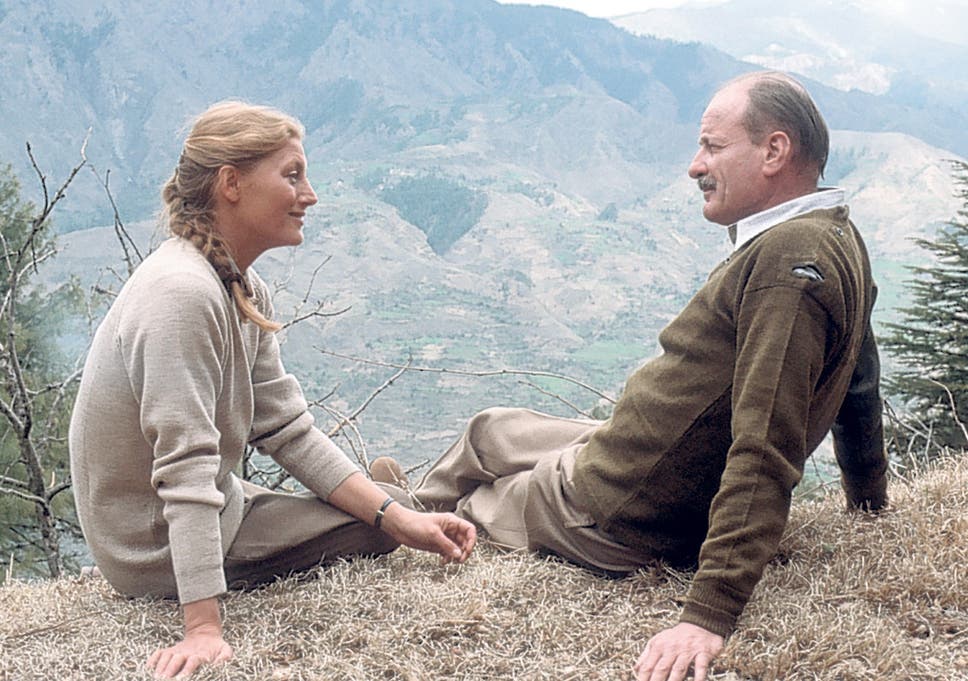
The Jewel in the Crown (1984)


Highly regarded 14 episode Masterpiece Theatre type British TV series from the Brideshead Revisited era, based on the even more highly regarded Raj Quartet novels by Paul Scott, which I have not read. I watched these on DVD and did not realize until the end of the very last episode, when I idly pushed the "settings" button, that there was an option to watch each episode with the original Alistair Cooke introduction, which would have been the piece de resistance for TV viewing nostalgia. But that did not happen.


Where to begin with this...The pace and the writing and the overall lack of freneticism are much more novelistic than most things being produced now are. Needless to say it was much more attuned to the way my mind processes stories and information. Of course the world moves on, no one would really wish it otherwise (though they might take issue with the particular directions it has moved into), but it is striking to see at a distance of 35 years how familiar and natural it is to encounter the forms of one's upbringing. There is no way to put this without sounding ridiculous either, but the (non-Indian) actors in this are to me strikingly "English" physically in a deep sort of way that I do not detect in more recent generations. I grant that they are actors, and are in general finer-featured and expressive in a way that likely makes them stand out from the general population anyway, and also that we are doubtless influenced by the kinds of faces and cultural tics that served as identifiers in our formative years. But certainly the people in this are more evocative of the tea-sipping, rose garden-cultivating, well-lettered, reserved and somewhat forbidding people of popular imagination than the likes of say, Russell Brand and Keira Knightley are.


This story, for the unaware reader, is about a number of ends--the end of World War II, the end of British rule in India, and I suppose of the imperial attitude in general. As you know I love stories about the ends of great and epic events when the old order is in the process of being swept away but the new one is not yet fully in place, so I liked this aspect of the series. Most of the British characters are from the higher social classes, and for the most part the sympathies of the story are with them, though a few of them are depicted negatively. Such persons from lower social strata as make it into the story are however either not terribly substantial or are depicted as vulgar or not able to perceive what is going on. At one point one of the well-bred characters observes of a socially ambitious officer that he (the officer) didn't realize that no one (meaning no one who mattered) cared about the empire anymore, and that was that. But there was a lot about this that I liked, and certainly it was much better than anything else I had seen in a while.

Friday, March 22, 2019

On the Disappearance of Toll Booths (and Cash)

I recently returned from my annual driving trip to Florida, which is increasingly almost the only occasion in the year when I am able to get beyond a 100 mile or so radius around my house. The most striking part of this year's trip was how many long familiar toll booths have been removed and replaced with eerie banks of cameras. I had come across these occasionally before, of course, but only one or two on a trip. This time I will probably have $40 or $50 worth of toll bills coming in the mail over the next few weeks which I would just as soon have paid for out of the beautiful billfold of cash I had brought along with me for the purpose, and which I ended up paying out for sodas and pretzels at Wawa and other lesser gas stations along the way instead...


Before expanding upon the toll theme I want to digress onto the subject of carrying around paper money, which even in this modern age I have tried to do as much as possible, though in recent years many circumstances have chipped away at my adherence to this position also. I am fond of reminiscing about my routine in college, when I did not even have an ATM card or any other credit card, but would go to the bank every Friday afternoon and withdraw $25 for the weekend, with no hope of getting any additional funds until Monday. While most weeks this money was depleted by Saturday night, as I ate lunch and dinner in the dining hall on Sunday and in those days always maintained enough of a stash of alcohol so that I was never in danger of having to go a night without it, it was very rare that I encountered any inconvenience from not being able to buy anything on Sunday. Up until recently I have always regularly carried some cash, though many years ago I gave up using it for bigger purchases such as gas and, as my family grew larger, the grocery store. Unfortunately in November the branch of the bank, and its accompanying ATM machine, that was located around the corner from my house closed, and the nearest machine where I can withdraw money now without paying fees is 6 miles away. The consequence of this has been that, somewhat against my will, I don't have cash on me as frequently as I used to, though I still need some from time to time, as my children often need snack money or $4 for a field trip or other such small sums which it is irritating to have to write a check or pull out a bank card for every time. But as with the smart phone, which I could tell was evil and held out against getting until 2015, circumstances seem to be moving in a direction where trying to have paper money about one at all times, at least for the harried person with children and too many things to do in the course of a day, is going to get increasingly impractical and inconvenient.


Anyway, this business about the tolls I am finding more and more disturbing the more I reflect upon it. The awareness of how constantly you are being tracked alone is enough to sap you of your will to go on living. In New Hampshire, where I live, there are 4 toll areas in the state, though I only ever encounter two of them, they cost $1 (there was much gnashing of teeth when this rate was raised from 75 cents about 10 years ago), and for the moment at least they all still have a couple of booths at the far end manned by actual human beings to collect cash. Neighboring Maine still has human toll collectors on their turnpike as well, and as these are the toll roads which I mainly frequent at this point in my life, I have been oblivious to what has been going on elsewhere. Massachusetts, perhaps prodded by a notorious scandal earlier in this decade where an unscrupulous toll worker had managed to scam enough overtime that he brought home $70,000 (or perhaps it was $90,000) in a single year, seems to have eliminated all of its former toll booths both in Boston, where it does have obvious benefits from a traffic standpoint, and along the turnpike. New York City doesn't have toll booths for at least the Triborough and Verrazano Narrows bridges anymore either, though upstate (I came home by a different route) the New York Thruway is still running on the pay-by-the-distance-travelled system and still has a toll-taker, and I was most delighted to encounter the toll booths still running on the Hamilton Fish Bridge on I-84, though who knows for how long (as an aside, in the area of 19th century New York politicians, I've never able to keep straight Hamilton Fish from Rufus King. And then you can also throw in William Rufus Devane King, though he was not actually from New York). (ed--and then perhaps the Bridge is really named after Hamilton Fish II, Hamilton Fish III, or Hamilton Fish IV, all of whom served in Congress representing New York. There is also a Hamilton Fish V, but he is still alive and works in publishing. It appears that he only has 2 daughters).


New Jersey, both on the turnpike and on the Garden State Parkway, which I took on the way home, have stuck with the old toll booth ways, though the Turnpike, which used to be about $3 from New York to Philadelphia, is more like $10 now. The bridge over the Delaware River connecting the New Jersey Turnpike with the Pennsylvania Turnpike, which was previously always included in the price of the latter, is now a separate toll--for how much I don't know, since the once somewhat dignified entry into my home state is now marked by the sinister flashing of a bank of cameras, and I haven't received that particular bill in the mail yet. The PA turnpike you can still pay for with cash. Ever since I started at St John's almost 30 years ago I have almost always made the trip from Philadelphia by getting off of I-95 in Delaware and taking US 301 down through the eastern shore of Maryland to the Bay Bridge, which is an uncrowded and pleasant way to get there, as that particular road and the farmland through which it mostly passes is old-fashioned and looks as if unchanged since the 1950s at least. There had never been a toll on it in all of these years until the state of Delaware, through which it runs for about 10 miles, decided apparently in the past year to divert the old road onto a newly built section entered through an arch of flashing cameras and charging $4 for the privilege. What a greedy little state they are! The one consolation was that once you get into Maryland the road again is the same sleepy old road it has always been. For now. The Bay Bridge still has a toll booth too, for the record.


In the course of writing about these roads I remembered a by today's standards quite bad thing I did when I was younger that I had completely forgotten about for more than 20 years, and that would be, if not impossible, difficult to pull off today unless you were very aware of where all these cameras were, though even in that case there are other ways to track you, GPS records or what have you. When I was in college, this would be around 1993 or '94, whenever there was a holiday or vacation during the school year, as I didn't care to go home for more than a couple days I would often arrange to squat in the house or apartment of people I knew during some part of the break. As I would often be alone and did not require a great deal of maintenance in those days, food and drink for one person who slept 12 hours a day being cheap enough, I enjoyed these occasions, read any number of books in a leisurely manner, went out in the evenings and in general led the kind of life I would have least indulged in more of if it had been the gods' pleasure to make me born to wealth. Over one Christmas holiday while staying in such a situation, I quite by accident stumbled upon the car keys that one of the regular inmates of the house, who lived somewhere too far to drive to and had flown home, had left behind, and, somewhat uncharacteristically for me, the temptation was too great to resist and I took the car on a little overnight trip which involved paying many tolls and driving into and parking in a major city which was a more hazardous undertaking at that time than it would be now. However I made it back and I must have even gotten the car back in the same parking spot, or one close enough to it, because the owner, who was not a particular friend of mine (I was more friendly with one of the other residents of the house) does not seem to have ever had any suspicion of my journey.


As I noted above, in the time elapsed while this post was written, a couple of the bills have already come in, from Massachusetts and New York, and it appears that the process is not going to come off without a good deal of the chicanery that has been creeping, or perhaps re-asserting, itself into American life over the past couple of decades. The Massachusetts bill only includes my Turnpike toll on the way down, which was 90 cents. However they are also charging 60 cents for a completely bogus "invoice fee"--you are the ones who ripped out the toll booths and made these mailings necessary, I believe, though I suppose they will argue that I could have an E-Z Pass account set up, though as I do not drive on a toll road more than once or twice a month why should I have to do that? Oh, and there is a "Previous balance" of $22.40, what for is not explained. I will note here that I have paid every toll by mail bill I have gotten in good faith (though not the invoice fees), if not always on time, so either they are cashing my checks and failing to record this in their books, or there is some kind of accrual of 'late fees' or some such nonsense that exist because it is no longer possible to pay on the spot and I have to send out a check for 90 cents (sorry, paying online involves filling out too many personal questions). In short, I won't be paying the previous balance. The New York bill is actually slightly less offensive, though they are claiming that I have an overdue balance of $8.50, which I either never received an invoice for or I have paid and they have neglected to note this in their system. I did rack up $26.75 worth of actual tolls there, headed by a whopping $17 for the Verrazano Narrows Bridge, which I took because the George Washington Bridge was, as usual, backed up, even though it was around midnight when I passed through. When you throw in the $8.50 for the Triborough Bridge, it was an expensive detour. On the other hand, this is the extent of my experience of New York City for about five years past now, so I have to take what I can get. The radio stations are still free when you get close enough to town, at least.