Wednesday, April 04, 2018

Movies--Many Movies

I've fallen way behind on my movie notes. I have a list of thirty-seven that I haven't recorded here yet! I hardly remember a lot of them, naturally. I will go seven at a time, and put down any impressions that have stayed with me. I should also note that around the time these new lists start I tweaked my system to allow more recent movies to be included, since the main book I was relying on ceased publication in 2007. I don't generally like the more recent movies but I'm not quite ready yet to give up everything current and escape into the past at every possible chance. I am now extra excited when an oldie comes up though.


Ironweed (1987)


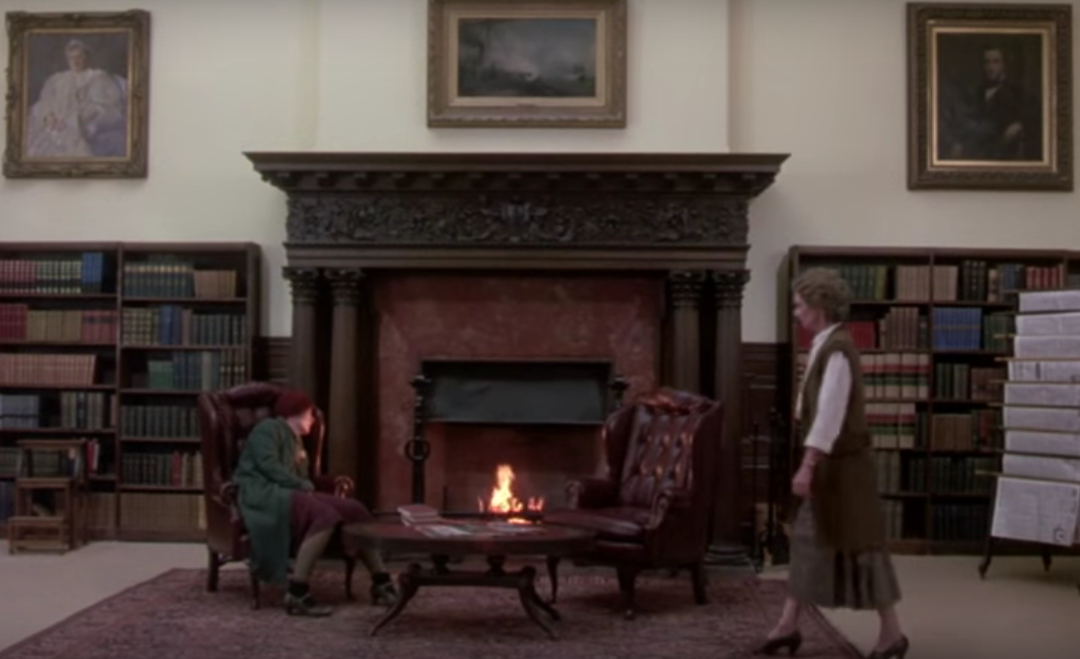
I wouldn't have chosen to see this if it hadn't come up via the System, mostly because it stars 80s era Jack Nicholson and Meryl Streep as alcoholic vagrants in depression era Albany, the idea of which, probably because of my age relative to them, has not traditionally appealed to me. It wasn't bad I guess, though it wasn't great either. Its depiction of how dreary being homeless in the long, dark, cold nights of the American Northeast would be was pretty accurate. Jack Nicholson, whom I found annoying most of my life, inhabits the role here well, I think. We all know about Meryl Streep and how remarkable she is. Her character dies in this (spoiler alert, sorry) and she has to play dead on screen for around five minutes, and I don't know that I have ever seen a more convincing portrayal of a dead person. It also illustrates an observation I have made elsewhere, the uncanny ability Meryl Streep has to always command your attention upon whatever awesome thing she is doing. Here she is just lying down, on a carpet I think playing dead, and all I can think about is her technique in portraying this dead person, whose character however I had forgotten about.


Tom Waits was in this too, perhaps not surprisingly as a fellow vagrant. I had not thought about him in years, though in this era he was something of a cultural touchstone, making several forays into acting. I found him mildly annoying at the time too because he was supposed to be cool, though you would only get that if you were a certain kind of person, which I was not. But now that he's been kind of forgotten and no one talks about him anymore I like him. He takes me back to that era.


Serpico (1973)


I had never seen this before--again, in my youth the themes would not have appealed--and while it has always had a decent reputation, I think seeing it now that it holds up really well. It has the whole gritty-New-York-in-the-70s vibe that was scary to live through but looks great on television 45 years later, but the story, about a policeman with a conscience taking on corruption in the NYPD that was apparently based on a true story that did not resolve in the exaltation of the honest cop and the disgrace of the crooked, seems daring to me. I don't feel like I have seen anything recent where some evil force in society that has not as yet been taken down has been confronted so directly and the exact nature of their crimes identified and demonstrated so clearly. This was directed by Sidney Lumet, who did not necessarily make the most lovable movies, but whose work I usually find to contain admirable aspects, even if I do so grudgingly.


There is a great scene shot on a hill overlooking the old Yankee Stadium from beyond center field, where the train tracks are. If you follow baseball at all of course you've seen the view looking out that direction from the stadium, but I had never seen it from that outside vantage, where in 1972-3 at least there was still a decent amount going on as far as traffic and street life. This would have been filmed before the 1974-75 renovation of the classic stadium too, which we still see intact.


Al Pacino's look in this was very early Springsteen-esque, which I have to assume was characteristic of the time. I at least don't see many people who look like that anymore. When I was a child I thought the era I lived in (this one) was nasty and terrible, and longed even then for some unknown past, but now of course I find I miss some of what has been lost since then--animated conversation, normal people and what seem to me normal business enterprises in cities come immediately to mind as examples from this movie.


Around the World in Eighty Days (2004)

This version starring Jackie Chan in the Passepartout role came up in my revised system because I had read the book (which I enjoyed), though the 1956 version, itself often maligned though it did win the Oscar for best picture, did not. This illustrates the risks of the open system, since I don't remember anything about that that was worth seeing. I had the impression that Jackie Chan was a mixture of comedian and action hero, but not here. Dreadful. Waste of money.


Read the book.

Fantastic Beasts and Where to Find Them (2016)

Written by Harry Potter author J. K. Rowling and set in a 1930s New York version of the same magic universe--there is a hoity-toity American counterpart to Hogwarts, naturally--I actually liked this better than the Harry Potter movies I have seen. I'm sure this is because of the highly stylized retro setting, which apparently is supposed to be 1926, but it looked and felt more like the 30s to me. I remember thinking the women actresses in it were pleasantly attractive enough without being gratuitously 'hot', though you probably aren't supposed to remark on that. The plots of all these fantasy movies with their incredibly violent final battles don't make much of an impression on me, but this was engaging enough as a nostalgia piece.


L'Auberge Espanole (2002)

A French-Spanish joint production made during the heady days just after the introduction of the Euro and the true realization of the dream of the free movement of Europeans, especially young and relatively good-looking and educated ones, throughout the zone. The title refers to an apartment in Barcelona that is shared by about eight different post-graduate 20-somethings, all from different (Western) European countries. Seriously, there is a Frenchman, an English girl, a Dane, an Italian, a Spanish woman, probably a German. I didn't particularly like any of the characters in the house, all of whom spoke English with the arrogance peculiar to their particular nationality, but I enjoyed the movie because it was made not long after my own time being there and it was familiar to me. If I were dropped into this movie I would be able to function and get along very well right away. My children like to watch the TV show The Amazing Race and when the contestants are in these foreign cities everything seems so different now. People are doing everything with their phones of course, even buying metro tickets, and everything everywhere looks so crowded and expensive. In this movie eight people in an apartment are still sharing one telephone hung on a wall, and this is only sixteen years ago! (though I feel like some of the characters had cell phones). Third world immigrants are barely a presence at all in this film, apart from Africans getting Phds in economics. There are no Muslims at all, nor does there seem to be much consciousness of them. Relatively average looking young people are still a real threat to have sex, or try to have sex, if they have too much to drink or otherwise find themselves in a bawdy mood, which is an element that seems to be missing from more recent movies, where everyone is too interested in maintaining control, or at least the appearance of it. The movie spawned two sequels featuring several of the same characters, Russian Dolls (2005) and Chinese Puzzle (2013), which I have not seen, though I would be interested to see how they have incorporated the changes in the European scene into the newer films, since the early 2000s time capsule quality of the original is the most interesting thing about it to me.


I liked this chick the best. She didn't live in the house.

Arsenic and Old Lace (1944)

We do make it back in this set to a couple of old classics. Here of course we have the impressive lineup of Frank Capra directing and Cary Grant and Peter Lorre among others, including Raymond Massey. The story is implausible to say the least--the implausibility level is about the same as something like I Married a Witch, actually, but as you know I almost never watch movies for the story anymore. According to Wikipedia this was filmed way back in 1941, but was held back from release until the popular stage show from which it was adapted finished its run. Either way it has a good 40s ambience, good sets, etc. I like both the indoor and outdoor scenes, which are supposed to being taking place in Brooklyn, but which look like they belong in Connecticut, though the outdoor scenes have what is supposed to be the Manhattan skyline in the background. Somehow it works though. It's a nice little movie if you are into that kind of thing (basically a 1940s mainstream American idea of wackiness).
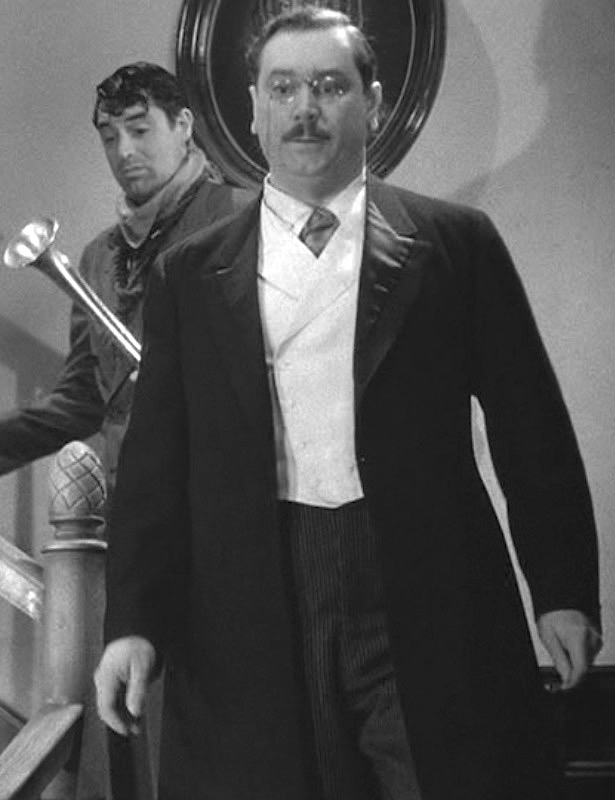


Hey Priscilla Lane. I liked her in this (romantically). Haven't seen her in much else.

I Love You Again (1940)

The first half hour of this screwball-esque comedy starring the classic Thin Man duo of William Powell and the ubiquitous Myrna Loy I thought was great, the best movie I had seen since maybe Rebecca. It couldn't keep up that torrid early pace, which was disappointing, but I still think it merits a high rating. The subject is one that I have seen in other old movies and that never fails to hold my attention, doubtless because I often fantasize about something of the sort happening to myself. A sententious, risk-averse, teetotaling prig, played by Powell, receives a blow to the head while on a cruise ship and wakes up with a completely different personality, roguish, witty, vigorous, and so on. His wife Myrna Loy, here still in her sexy 30-something persona, to be distinguished from the handsome, dignified, almost arch 40-something persona which she later inhabited, was bored out of her mind and in the process of drawing up the divorce papers before the accident, but needless to say gradually backed off from these legal activities as her husband's transformation into a completely irresponsible and even amoral person began to become apparent. In the end a minor favorite, especially in its genre.


Thursday, March 22, 2018

March Thoughts

This is supposed to be my monthly check-in, but once again I am going to use the occasion to try to finish something of a post I have been working on in one form or another for several months. I am always trying to figure out and write little commentaries on various of the issues that command the headlines and the passions of the rest of the populace, but being as it seems ever more self-absorbed I find that I don't care about most of these things very much one way or the other, apart from that almost everyone's position on these matters is about equally unsatisfactory to me. So I want to get at why I both don't have any strong opinion on most of these things, yet think everyone's else's opinions are unconvincing.
.


Guns! I've never had a gun nor had any experiences where I've regretted not having one, and I am nearly fifty years old and grew up in a time and in an area where violent crime rates were much higher than they are where I live now. Given current lifestyles and the number of children, and especially sons, that I have, the dangers of having any firearm in the home far outweigh those incurred by not having them. Likewise I am skeptical that there is a social good in allowing ordinary citizens to possess assault weapons that outweighs the unnecessary carnage that they inflict in these criminal types of mass shooting events. I am in general afraid of guns and other highly potent weapons and am attracted by the dream of a society that is effectively free of them. I am not however unswayed by the arguments that given their existence there is at least symbolically some imperative for men who would be free to have the capability and willingness to own and use them, and I don't like the idea of police and militaries being the only entities with access to these weapons, especially as they seem to be less and less responsive and subject to the will of the population than may have been the case formerly. I grant a personal handgun or rifle will not avail an individual man much against any kind of professional modern day force with a legal right to violence that has any determination to dominate him, however the symbolism of this right to self-defense and resistance has a sacred aspect to its adherents, a fervor that is no doubt exacerbated by the ongoing assaults on what is considered by many to be traditional masculinity. Many on the 'left' seem to consider the truth of this last assertion to be some combination of dubious, irrelevant, or pathetic, and perhaps it is, but since progressivism does not offer a particularly compelling vision of what it thinks manhood should consist of going forward and as it does not seem to recognize much in the way of limits where the transformation of the culture is concerned, it stands to reason that some portion of the population would gravitate towards guns as the point of resistance. Perhaps in the end the NRA and the pro-gun faction will be as deftly outmaneuvered as the forces of reaction have been in so many other arenas and will meekly submit in the face of progressive pressure without recourse to violent or dogged resistance. Something of the sort seems to have taken place in other countries, where surely some people must have relinquished their prerogative to bear arms with some reluctance...


Sexual Assault. I guess we have to say that whenever it happens it's really that bad, but is it really happening enough that colleges and other institutions have to adopt policies and take on attitudes that express a kind of blanket hostility towards heterosexual male behavior even when it is not explicitly sexual (my alma mater issued a statement on the subject recently which included issues like male domination of class discussion). It might be nice to hear some more input from women with a more positive experience of intersexual relations, which I believe there are some who exist; especially with regard to the college report, the place comes across as having been a total nightmare for women I guess since time immemorial, which is now to be corrected by enacting policies that at the very least operate under the assumption that men possessing even a hint of what used to be considered normal (non-criminal) masculine attitudes and behaviors are at their very best and most inadvertent potential problems that require strict governance. I don't think this can go on, at least in the sense that men are going to be willing forever onward to submit to the social position vis-a-vis their female peers that these kinds of policies impose on them. It's infantilizing and ridiculous, not the stands against actual assaults and rapes, obviously, but the seeming imperative to effectively neuter them and manage/dictate all interpersonal relations in what should be one of the most vital and expansive periods in life for those sorts of things  


Immigration. I go back and forth on this one because I generally like the pro-immigrant people better than the anti-immigrant people, and they are so deliriously in favor of ever more immigration and virtual open borders. I don't really understand why they feel this way so strongly, however. In my heart of hearts in the past at least my wishes generally trended in favor of less rather than more. The population of foreign-born in the U.S. now is well over 10%, which is about the same level it was when policy became more restrictive in the 1920s. By the 1960s the percentage was under 5%, and indications were that livelier people at least thought day to day existence was getting a little stale at that level, though from my vantage point it doesn't seem like it was that terrible. I have no doubt that there are specific environments and times of life, especially at higher levels of intellectual and artistic ferment, where the interplay of global-class talent is truly exhilarating, but for more regular people cut off from these worlds so much change tends to be stressful and destabilizing and alienating, especially when direct emotional or material benefits from all the changes are hard to perceive. Clearly a lot of people are definitely at this last stage now.


Universities. I see repeated often the idea that the main purpose of a university is to challenge people to wake up from their complacency and make them uncomfortable. Perhaps this has become the case, though my impression was that their primary function was to impart knowledge and instruct students in the processes and approaches to thinking which are characteristic of the most intelligent minds. Perhaps this includes actual moral and political indoctrination, though the idea is that the acquisition of the habits and basic learning of a liberal arts education will provoke the student to examine all of his attitudes and proclivities in the comfort at least of knowing he has some of the tools to do a decent job of it. Even if it is incorrect, having one's worldview exposed and ripped to shreds as a kind of sport with the expectation that, stripped intellectually naked before the world, the student must either submit to the new worldview ready-provided for him by his teacher or slink away in a kind of exile and disgrace, which sounds to me to be what a lot of people mean by insisting they need to make people uncomfortable, does not seem like an especially effective way to educate an undergraduate.


Trump Chaos.  It certainly seems like it must be very bad, but bear in mind people voted for this. The supposed competence of the Hilary Clintons and Mitt Romneys of the world, to be frank, has become a little terrifying to many people, who can see their lives in these kinds of expert hands being discovered to be not efficient or productive enough for the modern world and summarily disposed of. That said, the constant Trump chaos does seem like it must be really bad.


Friday, March 09, 2018

One More Time to Florida

As reported numerous times here, I went to Florida (finally) last week, which I badly needed, as dramatic as that sounds. I had spent much of the winter persuaded that I wouldn't be able to make this trip, or even that I was actually dying. I was convinced at one point that I might never throw the baseball around with my little boy again. It was absurd, but I really did feel these things. My wife, who has great sense, observed that I had evidently never known any discomfort in my life up to this point (which is largely true), but that everyone else had been dealing with it for years already and I really needed to get over myself, which helped me regain a little perspective. I know I need other goals at which to direct my energies going forward, though finding anything that interests me that much and is reasonably achievable has always been oddly challenging. But the trip was beautiful and even though it too belongs to the past now, it is yet the recent past, and the memory of those happy hours is not yet so remote as to be oppressive, for it gives hope that the upcoming summer may bring more times similar to those just passed.


This picture made me quite sad the day it was taken, which was our first day there and I had not shaken off my general depression or otherwise felt that great yet. This is at a place called Spanish Point where you walk around the grounds and there are some historic buildings and displays among the native flora (no palm trees). We had gone there what feels like many years ago when we just had the two older boys--I revisited a couple of sites I had been to in earlier days in the hopes that seeing them again with the current incarnation of the family might cheer me up, which it largely did--but when I first saw this picture my response was, oh, we have been coming here so long, and I look so old, and everybody is so big and everything will be coming to an end soon and there will never be any more happy times, etc, etc, all of which is probably not true, but it is how I felt. It is rare for us now to go anywhere with all four of the boys together. Maybe it will be one of the latter, if not last, times for that. My older daughter wasn't on this outing, but she went out for ice cream with her grandmother, so she still enjoyed herself.


My daughters in their matching bathing suits on the old back walkway returning from the beach. These pictures are really very nice, and I understand even when I am melancholy that I do not actually have at the moment any very serious, real problems compared to most people. I don't exactly know what has gotten into me of late, to the extent that it seems to have gotten into me.


#4 and #6 cavort among the flamingos at Sarasota Jungle Gardens. We go here almost every year because it is an especial favorite both of my 3rd son and my mother in law. It is a large zoolike park full of Florida animals. It strikes me as being an old-time Florida (i.e. pre-Disney) kind of attraction, so I am inclined to like it.


View of one of the gardens at Spanish Point, just for a sense of atmosphere.


Beach play on Siesta Key's famous white sand.


This is more Spanish Point. You can see there is something of a drowsy, old south or old Florida vibe about the layout, at least in this section.


The child is almost too precious for good taste, but I believe she will be able to overcome it.


More shenanigans at Jungle Gardens posing with the plastic alligator. It is not the most serious life perhaps but they are beautiful children really with reasonable intelligence and I have to think some society somewhere if not our own will have a place and use for their abilities and other better qualities. Why wouldn't there be such a place?


The youth eating an early dinner in the "condo".


And the contrast with the later meal, and a glimpse into the habits and perhaps mindset of the author of these blogs.


I'm really pouring on the pictures for this post. But I suspect most real people stopped visiting my site years ago, if any ever did, so what does it matter? This is at the Desoto National Memorial in Bradenton, near the site where the famous, if not especially competent, explorer and adventurer is supposed to have first landed in Florida on his doomed expedition hunting for gold across much of the southern U.S. We went here on our second to last day, by which time I was feeling much better in every way. We had also been here many years ago, which I will come back to later on. This place is really lovely, easy to take in but with some interesting things to see and it is also free, which is always attractive when you have a lot of people.


Sense of the nature at Desoto Park.


We stopped in at St John's on the way back, as we always do. Much of the world, including many of our own alumni, seems to be down on St John's now too. Either they lament the college has been a failure at turning out successful and influential graduates, or they want it to change and get more with the spirit of modern times where dead European males hog much less of the spotlight in the curriculum and living ones of European descent do the same in the life of the campus, or they fume that the current administration is too welcoming of "conservatives", Christians and homeschoolers (I know some families who fit various of these descriptions and the children seem to me to be fine young people, though libertarians are perhaps a different story. To me, if you can't stand the idea of being in the same room with a polite eighteen year old homeschooled Christian, maybe you have some problems of your own). At least this is the overwhelming impression I get from the (mostly childless) people who weigh in on the subject on social media. The place has its flaws and if I would not say that it failed me so much as that I failed myself in some respects, it is true that there were some qualities it claims its graduates to possess that I did not come out of it in possession of. However at the time it did a number of important things for me that admittedly the better sorts of students already had a grasp of when they arrived, but that I might never have gotten if I had not bothered to come and just continued drifting through life as I have largely done, the years at the college being something of an exception to this otherwise sad pattern. I understand that the school hopes its students and the other students hope their classmates will be something more than this, but I am grateful to have been able to get such good as I was able to get out of the experience, which was something to me at least. So I always find that my spirits are lifted by just dropping in on the campus even when no one is there. Of course maybe I wouldn't like it if I went when the students were actually there (it was Spring Break when I was there this time).


These next three are some random pictures from my phone on the last day, when it became cloudy.


My oldest boy.


View of the public beach on Siesta Key.


This was another "sad" picture. It came out a little dark. Here we are walking out of the Desoto Memorial park back to the car at the end of that visit. Just off to the left, not visible in the picture, is a small picnic area which we sat in and ate lunch on our previous visit when the boys had been three and two. My wife remembered that some kind of strange animal (not an alligator) had come out of the wood and invaded the picnic area when her babies had been sitting in it on that occasion. "And look at them now", she said, with this view before her.

Thursday, February 22, 2018

Life With Six Children

This is supposed to be my monthly update, but I am going to continue on with a post I was already working on about having so many children. I've really been a basket case lately. Very sad all the time, overwhelmed with nostalgia, fear, anxiety. I suppose some of it can be laid on seasonal mood disorder, which has really begun to effect me in recent years, and some of it on the circumstance that I haven't felt that great since December when I had my kidney stone, but in truth a great deal of it is because I am really very happy, and I am suddenly overcome with terror that it is slipping away and that all these disasters are going to befall me, mostly financial in origin, but also now health-wise, that are going to rob me of my happy life with my children. Of course to some extent I have always felt this way. Looking back at 2005, or 2006 when I started this blog, I thought myself fairly plagued by misery, yet now I think of those years as an impossibly happy and simple time, the golden years of my life. But I was very fearful of the future then as well, I never imagined I would have made it to at least 2018 without some catastrophe befalling me from which I would not be able to recover.


Part of this melancholy is tied up with my second son's finishing 8th grade this year. 8th grade seems to be a big milestone for me, I was also quite overwrought two years ago when my oldest son finished that year. Of course I am deeply moved at seeing them grow up, and also these schools, and paying for them, consume so much of your energy, they become your whole life almost. But I still have four more children to go, including a just-turned-three-year-old who hasn't started preschool yet. My life is hardly over. But the older ones do take me back to when I was younger and more energetic, and it's sad to see them get big. They are very unsentimental about these things themselves though. For people who only have one or two children, every grade they complete, every sport they finish playing or toy they outgrow, that's it, the end, forever. It must be unbearable. Or maybe they have ordinary adult lives and hobbies to return to or continue with. I really don't after 15 years of having babies in the house.


I am even sad that technological changes have made the tapes and DVDs that my older children watched obsolete. The younger ones watch everything through streaming.


One downside of having six children without being extremely wealthy is that I am probably not going to be able to leave them very much, and since I had them mostly later in life, I will likely die when the younger ones are still in their 30s and 40s at best. So they'll be on their own, which in today's world is a scary prospect. However, I still do believe, largely because I have to, that our culture and economic arrangements are going to improve from the near-dystopia that they are today. I would feel guilty about having brought them into the world only to doom them to a wretched, hopeless existence. But I don't think they feel that way yet, or have occasion to, though neither do I and I often do anyway.


When I hear people saying they don't want to have any children because of concern for the environment I think that they must really be hammering this into people's brains in college, and that it's too bad. The world, or at least my part of it, desperately needs young people, especially smart ones. The rapid aging of the population while the number of people under 30 or even 40 continues to shrink is really becoming visible in New England. My children and their sports and activities are probably keeping me from descending into total existential despair.


I could write so many more things here, and maybe I will sometime, but I determined that when I reached my time limit, I would publish what I have, so here it is.  

Monday, January 22, 2018

Trying a New Feature

On my other blog I started doing a monthly update a few years ago, mainly a record of what books I happen to be reading, in order to increase somewhat the number and frequency of posts there. I thought I would try something similar here, fifteen days or so apart. The idea here was that I would just write about something about the days themselves, in the hope of opening up my stifled mind and get it thinking (or at least seeming more alive) again. What one wants, of course, is for other minds to emerge that are receptive to the produce of one's own, and that one can be receptive to mentally in turn, which is an experience I have not had in a very long time. What material is there to work with though(?) I will start by going over my day yesterday, which was the 21st, the scheduled day for this report.


Woke up at 6am to take my 14 year old to a swim meet in White River Junction, Vermont, about an hour away. I don't mind this drive during the daytime, it is quiet and reassuring, and I always am happy to go to Vermont, even just over the border it is quainter and less up to date than New Hampshire. I have a hard time maintaining conversation with my older children now, the teenagers, they are not exactly sullen but they are content to be mostly quiet. I feel I should be imparting all kinds of advice and information to them about such things as I have any knowledge about, yet I don't seem to be able to do much of this. I think, for example, that I know more than or at least as much about colleges, in terms of how good they are/how smart the students at them are (and this still seems the most important thing to me), than most people do, yet I have not begun to expostulate on my theory of all of this yet, whereas at Christmas other relatives quite freely and naturally began to tell my oldest (a sophomore in high school) that it was time to start preparing for the process, and to ask him whether he wanted to stay in the area, what he wanted to study, whether he had any places he was interested in, which I hadn't begun to think of introducing yet, because I feel I don't have a clear enough idea of how advanced or talented a student he is. On the other hand these other people probably have a clearer understanding that the questions they asked better mirror the way life actually plays out if one is to be a part of it. I am nearly fifty and am still trying to figure out where exactly I slot in in the intelligence hierarchy (not highly, based on re-reading this post), what useful talents I might have had and which would have been fruitful for me to pursue, etc. So it likely that my helpfulness in this whole process for my children might not be of any great extent.


Swimming is not a sport that is in my background, plus I have many (other) children involved in endless sports and activities, so I am not as intense at the swim meets as many of the other parents are. Track, basketball, baseball are all sports I have played or followed so I have more of a sense of what a good time is, whether the coaching is any good, and so on. The atmosphere at the pools is probably good for my sanity, getting to rub elbows with adults (i.e. the other parents) who mostly have something on the ball, though it is very warm in most of the venues where the pools are and this makes me drowsy.


My son finished 4th and 5th in the events he was entered in, though he did not lower his time in his best event, which he needs to do by 2 seconds in order to qualify for some regional mega-meet in Massachusetts. He didn't want to linger around Vermont at all as he might have done in the old days, so we came home and were back by noon. My wife wanted to take the four younger children to the park to sled and ice skate. Originally I was going to rest at home but she decided she needed help so I went along too. The main park in our town actually has a historic marker which I stopped to read for the first time. The land was donated by one of the founders of the American Express Company. Another historical figure with associations to the park, though he was not named on the state sign, was hockey legend and alpha male Princeton classmate and alleged idol of F Scott Fitzgerald Hobey Baker, who founded a hockey tournament on the park's pond during his time at St Paul's Prep School that is still revived annually.


Then I went home and watched the end of the Patriots winning the AFC Championship game and then watched the Philadelphia Eagles, my childhood team which I supposed I must say, given the amount of time and thought I gave to them over the course of many years, I at one time at least loved as much as one loves any entity outside one's self, also advance to the Super Bowl, which they have still never won. This certainly looks like the best Eagles team of my lifetime....


I will stop now. This wasn't the worst thing I've ever written, I don't think (actually,...).


Thursday, January 18, 2018

Some Songs

I haven't done a song post in a while. "Lacking wit or originality" anymore as the expression goes, I offer with complete earnestness some of the tunes I have been firing up of late in idle moments.


Vance Joy--"Riptide"


I'll even start with a relatively contemporary one (2013). My eight year old son started taking guitar lessons last year, and this was the first song he learned to play that was recognizable. He has moved on from this and is actually pretty good for his age, but I have developed a fondness for this song whenever I hear it in the grocery store or wherever. Indeed I have come to think it's a great pop song, and I hear very little recent music that appeals at all. I like the retro style of the video as well.


Hugo Winterhalter--"Canadian Sunset"


Having paid some tribute to the current decade though, I have to retreat right away all the way back to 1954. The much-loved radio station I used to listen to on my drives around the old and lonely roads of New Hampshire before the entirety of its listenership with the exception of me finally died off was very strong in the neglected area of popular 50s era instrumentals, none of which I ever managed to learn the names of apart from a few movie themes. Even on satellite radio I cannot find a station that reliably plays these numbers. This one overall being my favorite I was able to track it down on the internet despite not knowing the title by trial and error. It evokes numerous images and memories for me, including my grandparents, lunch at old-fashioned roadside inns, the day after a snowstorm when the sun shines so brilliantly, the days when my oldest boys were little before they went to school and we went on day trips all over our area. A highly sentimental song.


Pat Boone--"Moody River"


Pat is a smarmy dork, but along with "Love Letters in the Sand", this belongs to my personal List of Shame, consisting of songs by crummy singers that I have always liked, though in the instance of the two Boone songs and the next one, I genuinely did not realize that the songs were performed by these inferior artists until I was past 40 years old! This also reminds me a lot of my grandparents, mainly of their dining room, into which the flicker and sounds of their television, which was always on, would eternally faintly penetrate from the adjacent living room with the sounds of programming such as this.


The Monkees--"A Little Bit You, A Little Bit Me"


Written by Neil Diamond as well for bonus schmaltz points, but a very catchy song. The Monkees in my childhood were one of those seemingly random phenomena that my father despised so vehemently that there was no question of ever admitting any aspect of their existence to have any possible redeeming quality whatsoever. This particular song somehow escaped my attention as being theirs until it turned up as part of the soundtrack on the video yearbook one of my children's classes put out.


Billy Joel--"Rosalinda's Eyes"


This one I knew all along was a Billy Joel song, so I have no excuse. I heard it at Rite Aid one afternoon when it was pitch dark at 4:30 and thought, this isn't that bad of a song, really. And this video is pretty cheerful.


Buddy Holly--"True Love Ways"


My current favorite Buddy Holly song. Wistful late 50s vintage Americana. Makes me think of leaning against a kitchen sink in front of a closed blind drinking a class of milk late at night after getting home from my last date with Phyllis before she called it off. Deep stuff.


Bob Welch--"Ebony Eyes"


Another forgotten song that seemed pretty great to me when I listened to it again, at least the first few times. Our society doesn't seem to be producing a lot of guys like Bob Welch, whether for good or ill. I would wager that he committed what would now be considered sexual harassment at some point in his life, though blissfully unaware of the fact, and thought of his actions as a "move" or something of that sort. The quality of the video is not great, but I recognize some of those late 70s type women whose mantra was something like "live fully in the moment now, become angry later". I don't know, the party looks fun comparative to what we can hope for in the present.


Jo Stafford--"Try to Remember the Kind of September"


Tribute video featuring the truly delectable Jeanne Crain and many of her wonderful underrated movies (Margie is an especial favorite). I don't necessarily want to be taken back, but I don't want to be taken completely away either.


Andy Williams--"Can't Get Used to Losing You"


Just because...To be honest there will be probably never be a hit song like this again.


Thursday, December 28, 2017

End of Year Post (Includes Personal Update of Sorts)

I was laid up for a week in the middle of December with a kidney stone, which I still have, but I had a stent put in about 2 weeks ago that it is keeping me from being in pain while my system gets cleaned out. As it is likely too big to pass on its own, I am going to have to have another procedure soon to get it out but hopefully the recovery from that will be fairly quick. Between the four days of pain before I had the stent put in and four days I had to spend attached to a catheter afterwards I was pretty depressed at the beginning of last week. However after a couple of sluggish days even once I got the catheter out I have been feeling more like myself again. While I don't like allowing myself to get into the clutches of the medical system, and they took the opportunity of my presenting myself to them to draw blood and run a bunch of tests on me, there was good news in that apart from the stone I appear to be pretty healthy. One of my remaining goals in my life as a nominal member of the downwardly mobile former white middle class is to live long enough not to contribute to the in some quarters celebrated decline in life expectancy that has become a signature characteristic of this group, so I am (cautiously) happy about this apparent state of affairs.


As this was the first time in my life that I have had any problem requiring real medical intervention, as I noted above, it had a depressing effect. It was not a terribly serious problem, but it effectively took a week of my life from me, insofar as I wasn't able to drive or go out or eat or drink very much, and while I could read a little, the discomfort I was in made it difficult to derive much enjoyment from it. While the days when I had the catheter in were not as painful as what had come before, it was difficult to move around and while I won't say that was worse than being in pain, in that stage I was at least thrashing about and I couldn't concentrate as much on how depressed I was. When I was in bed with the catheter I was looking at photo albums of myself when my children were younger and we were at the beach and going on trips and eating and drinking and I thought "there is my old life, when I was healthy and strong, before I had this thing attached to me", as if all the happy part of my life were over and I would never be able to leave the house or do anything enjoyable again. It certainly made the prospect of getting prematurely sick or terribly old much more vivid and terrifying than it was previously. Even for a few days after I got the catheter out and being able to return to my routine, which I thought would energize me, I still felt rather flat and out of it. At that point I hadn't done much to take part in the Christmas season, and I didn't know if my mood would allow me to enjoy anything very much. But this week I have felt much better and have in fact been unusually happy, which kinds of mood swings are not uncommon with me anyway. I don't even care about the bill anymore. If it takes three years to pay it off so be it. I always want to be a good little dog of course and honor all my debts but I have had to learn to accept some limits with regard to how dogged I am in these responsibilities so as to not impinge too much on my actual life you know.


Three days before I went to the hospital was my 20th wedding anniversary, which was a lovely day. My beautiful wife even took off from work to hang out with me. We drove up to the Lakes Region of New Hampshire with our 2 year old (everybody else being in school) and had lunch at a venerable restaurant that has been in the same family since the 1950s and retains much of the atmosphere of those bygone days, which makes it a favorite of mine. Being both a weekday and well off-season for vacationers, there weren't many people there, but one of the perks of spending the winter up here is getting to go to popular places, assuming that they stay open, when they are quiet and calm.


I was given percoset to take to manage my kidney stone pain before they could get the stent put in. As this was my first experience taking an official opioid I was mildly concerned about developing an addiction that eventually spiraled into the ruination of my life and a premature death of the sort that I imagine would be amusing to my imaginary social rivals. While it did do an admirable job, once it kicked in, of dulling the force of my pain (I was scrupulous about not taking it more frequently than at the recommended 4-6 hour intervals), once the pain went away I felt no desire to take it any more. One interesting note I have about it is that I happened to be reading a late Henry James novel (The Awkward Age, fwiw) when this all hit and of course this was impossible to try to read before I got the medication. However when the percocet did take effect, as I had nothing else to do, I did find for an interval everything to be so slowed down and calm that I was able to read this somewhat excruciatingly dense and subtle book with much more penetration and less distraction than I was in the more normal state in which I tried to read the book before and after the period in which I was drugged. So in addition to controlling pain, one other useful function of opioids at least seems to be as an aid in reading Henry James novels.


Percoset also tends to induce a fairly heavy sleep, and when I was taking it I had the most drawn out and boring dreams I have ever had in my life. There was one where I was in a department store walking around a long table on which various customers had set down piles of purchases and I was taking an inventory of the piles: one green shirt, one red skirt, one washcloth with Pac-Man on it, etc. And I literally went through this process like 18 times! In another one an airplane I was flying in broke apart as it entered a hanger and the passengers were left floating in the air on individually numbered planks that were attracted to velcro magnets bearing corresponding numbers that were held up by numerous Africans standing on high platforms inside the hangar. As my plank, which was #34, drifted in the direction of the platform, it was apparent that the velcro on magnet 34 was worn off and the attraction was not working, meaning that my plank was going to crash at an inconvenient angle into the edifice towards which it was moving. I was shouting at the Africans that the magnet wasn't working and for them to help pull me up onto the platform as I approached it, but no one seemed to hear or understand me and I woke up just as I was about to crash into the tower...


I didn't have any new Christmas videos that I liked enough to put up this year, and we are already three days past anyway, so I guess I will skip it.


This is probably the last posting I will be making here this year, bringing my total for 2017 on this blog to a whopping 11 (I did manage to make 30 posts on my other site, which is a record for it), the eighth straight year that my post total has declined here. I have to think this will be the nadir, and next year I can manage to get that total up again somewhat. I hope so anyway.

Friday, November 17, 2017

Other Topical Matters

I do wish I could write these posts earlier in the day, when my mind is fresher and sunnier, and I think more reasonable, than it is at night. But I can't.


I have kept out of commenting on the sexual harassment mania, which I don't consider myself as having much to do with anyway. I'd be happy enough if other guys would stop doing it, not because I am so virtuous, but because I am worried that for some men these harassing-type acts, which I am incapable of even mildly trying to engage in, kind of work, or at least have worked in the past, in the sense of achieving, or getting a lot closer to achieving what they want than men who are subject to the same lusts but are constrained to be appropriate and inoffensive on every occasion. Obviously the idea is that with very few and very special exceptions, the run of men should never even be thinking about these things in any work or ordinary social environment, especially ones that are supposed to be professional and serious. People presenting themselves as reasonable and enlightened seem to think this is a completely reasonable expectation to have, as are the base principles on which it has to be constructed. If this is not entirely right, it is obvious that under strong enough social pressure and coercion most people will outwardly at least conform to the expected behavior. Most people I am sure have always considered me to be a completely sexless and vitally dead person, if mostly an inoffensive one. Yet today even I was at the grocery store and when a woman I found attractive passed in front of me my brain as if involuntary launched into the intro to a 1970s disco song.


I caught myself fairly quickly and thought of this post I was working on and all of the scandals and how the juvenile, entitled mentality I was indulging in was the very scourge all the better people were so up in arms about and I suppressed the beat. At the same time I really do believe that the reasons I have never reached full adult emotional maturity, developed gravitas, was unable to or uninterested in pursuing a career with the necessary doggedness, all relate in some way to my never having been daring or aggressive in the pursuit of erotic desires.  Though I probably wouldn't bother doing it at my age now, there have been numerous occasions over the years where I wondered if I shouldn't be taking testosterone supplements or other drugs to increase my aggression, capacity for envelope-pushing, and all-around combativeness, qualities that, since I did not have them and was rarely able to get what I wanted not merely with women but in every important and contested area of life, seemed desirable to me.


I was almost certainly warped in these matters by the environment in which I grew up in the 1970s. I never witnessed anything explicitly sexual or, god forbid, was the subject of any abuse myself, but I certainly developed a sense, mostly from my father and his friends, that men who were brash and bright and alive enough were constant objects of feminine desire, and later on I suppose implicitly active participants in the great sensual arena. The scandalous thing to current sensibilities is that these men were all high school teachers. Several of them, including my father, ending up marrying or cohabitating with much younger former students, at least for a time. But this happened near the end. All through my childhood we constantly had my father's female students over at our house, frequently as baby sitters, but often for socializing. He was still pretty young at the time, as he is only 21 years or so older than I am, but he was married, and the talk with some of these girls struck me even as a young boy as pretty sophisticated and suggestive, much more so than anything I would have seen on television, and certainly more charged than any conversations he had with my mother, who was not a lively talker and endured these gatherings (which often included the other lecherous teachers and occasionally even a bright male student or two who my father liked) rather blankly. Many years after the fact it was suggested to me that the reason my father had rather suddenly moved to Maine in the mid-80s was spurred by a situation of this type that was no longer found tolerable, which I had been too self-absorbed to consider at the time, if I had even cared about it. By the early 90s he got out of teaching altogether and pursued several other careers with some success, as he has always been an energetic and forceful man, if many people would not consider him a decent or moral one. In temperament he actually has quite a bit in common with Trump, albeit obviously on a smaller scale.


It is now Friday night and I have to publish what I have. I have another tidbit to write about in relation to these cases but maybe I will address that in a shorter post. It involves one of the women who has come forward with allegations (one of the milder cases, for sure) who grew up in my neighborhood and went to my elementary school, and how what I know of how she and her family operated even 35-40 years ago colors my interpretation of her story, even though the guy accused was clearly in the wrong as far as it goes. Still, when I heard the name and read the accompanying story, it was not without a little eyeroll too. 

Friday, November 10, 2017

Robert E Lee and Others

While I am not angry about the Confederate statues being taken down, I am not exultant about it either. The responses I have upon each new episode of desecration indicates that I would prefer on the whole that some of them remain standing. It is true that they belong more to the Old America, in which the Civil War was an outsizedly meaningful event in the formation of the national character and mythology, than to the one that is coming into being, but if you are one of those people who retains a strong identification with that old bad America in spite of all its deficiencies, these memorials can have an arresting and even eerily alive quality. I recall when I was in Atlanta, a city that does not have a lot of visible reminders of its pre-1970s self, I was wandering over the grounds of the state house and found half buried among bushes a stone with a memorial on it to a veteran of the Confederacy who later become a judge and had a distinguished career in politics lasting into the 1910s at least. It was pointedly noted at the end of the testimonial that this gentleman was the embodiment of the spirit of the Old South, at which point, if you didn't know it before, you knew this was a very, very bad man, racist to the core, complacent in the face of injustice and all the rest of it, yet to me there was a certain force emanating from this old bronze plate that was more powerful than that of the perfectly pleasant and prosperous modern city I had spent the previous several hours walking around in. The scale of the war, of the death and destruction, the absolute and seemingly necessary quality of it and the acceptance of this as a fact largely on both sides during and for many years afterwards are circumstances that I cannot dismiss that easily, even admitting that the perpetuation of race-based slavery was a motivation for some portion of the most dogged of the fighters. Yet in the aftermath these were largely welcomed back by the men they had fought against as fellow Americans, and several of their leaders admitted more or less by the same to the pantheon of American heroes. The Hall of Fame for Great Americans in the Bronx, for example, an artifact of the early to mid 20th century (i.e. it figured prominently in the reference books of my childhood) that still exists, albeit in a neglected state, enshrined Robert E Lee as early as 1900 and Stonewall Jackson as late as 1955 (though the Hall has been largely forgotten since the 1970s, someone alerted New York governor Andrew Cuomo to the presence of the busts of the two Confederates there, which he has duly ordered removed, though I cannot tell if this order has been carried out yet).


Robert E Lee himself of course by 1950 had famously come to be considered by much of the establishment and book publishing class to be one of the most outstanding Americans of all time. Digging through some of my favorite childhood books that I have saved confirms that I and the many others who have weighed in on this were not deceived. Here is the opening paragraph of the Lee entry from the 1968 edition of the Illustrated World Encyclopedia, from which I have taken the reading list I record on my other blog:


"Robert Edward Lee is ranked among the greatest generals. He was one of the best-loved and respected men in American history. During the Civil War he commanded the Confederate army. Though defeated, he became a symbol of the highest courage and devotion."


Most of the books adopt a similar tone. If it were more convenient for me I would do a more extensive inventory of these testimonials, which are almost stupefying to read in the current environment. Here is another snippet from the IWE article, on the immediate aftermath of the surrender at Appomattox:


"When Lee returned from this historic meeting, his men met him with tears in their eyes. They all wanted to touch the hand of their beloved leader, and many men petted Traveller, Lee's big gray horse, which had been with him through the long and terrible years of the war."


While I know I am supposed to take a story like this and dismiss it as sentimental bull---t, even assuming there is as much as 10% in it that is remotely true, there is probably nothing more emotional, in the subdued post-cathartic sense, than the end of a massive war. People today--and I will even limit this to people whose backgrounds are somewhat similar to my own, since perhaps it is not reasonable to expect others to be moved by such scenes from American history--seem to me to be emotional in a histrionical sort of way, but not sentimental, and stories like this don't make much of an impression on them. The salient points that I absorbed about Robert E Lee in the course of my childhood go about as follows:


1. He was the greatest student in the history of West Point and was still held in reverence there as recently as the 1980s, in spite of the now oft-recited circumstance that he earned his greatest renown as the leader of an army opposed to the United States. I always had the impression that down to that time he had been the only cadet to graduate from the Academy without a single demerit, though there seems to be some dispute about that now.


2. His abilities and leadership in own time were as universally acknowledged and admired by significant men as those of almost anyone in recorded history. Most of the extant legends indicate that the men who served under him were unusually devoted to him even in defeat, and even when it was obvious that defeat was inevitable.


3. Though he is criticized endlessly by internet historians especially for his generalship skills, the consensus of him that I grew up with was that his was the most gifted military mind that this country had yet produced.


4. He was admired, in a similar manner to George Washington, with whom his life had many parallels, for his patrician bearing and manners. This is run down now because the social position and way of life out of which this arose is so bound up with slavery.


There are probably other things, but I'm going to end this post and move on. Maybe I will come back to it at some point. After all, I can't pretend that I am doing anything more than writing down musings and trying to get through this part of my life, if I ever get through it.


On the whole I am not persuaded that many of the qualities for which Lee was admired were not in fact admirable, and certainly I don't think he comes off terribly unfavorably in comparison with most contemporary leaders and powerful people. I do believe these latter are genuinely against slavery as a social institution, not that that is a particularly risky or otherwise inconvenient position to hold in present society.


For all their faults, the old books seem to have the intention, at least where the likes of me are concerned, of wanting their readers to grow up to be somewhat strong and successful men, the future backbone of a great and proud nation. Whatever role the correctors of the historical record envision people like me fulfilling in the future, it is clearly not as rousing or inspiring as this.


I couldn't even get to Stonewall Jackson, who was an interesting case himself. He was renowned for a piety that seems to have approached biblical intensity, yet he was a master of the arts of war. Of course the link between fanatical religious belief and a talent for military endeavors has a long history, one that seems to be underappreciated among the modern educated classes. The professed hatred of these people that has become fashionable I guess seems to be heartfelt enough in some cases. I should like to have it, since it appears to be empowering in those who do have it, but I don't seem to be able to be pushed to such an extreme position if I haven't started on that way from an early age.


I am going to try to get something up every Friday at least, even if it is only a fragment... 

Friday, September 29, 2017

Playing Some Catch Up

Needless to say I've fallen way behind on recording the movies I've seen. Some of these go back to the beginning of the year. I've got twenty-five of them that I haven't written about. I'll be keeping these very short, hopefully honest, which shouldn't  much of a challenge since I won't have remembered many details by this time.


The Last Days of Pompeii (1935)

I am prejudiced in favor of almost anything halfway decent from this time, so I enjoyed it as far as that goes. It was produced by Merian Cooper of King Kong fame. Cooper was a dynamic man of action more than an aesthete, and the film takes on this general character. In the credits it claims to be "inspired by" the famous Bulwer-Lytton novel, which I have not read, though apparently it has a completely different plot. While I believe the book features some early Christians as major characters, this movie is set mostly during the time of Christ, which of course pre-dated the famous Vesuvius eruption by about 50 years, tying the stories together by having a man who encountered Jesus while young be settled as a rich old man in Pompeii at the time of the disaster. As a production the movie is a little clunky and forced anyway, and all of this rather fantastic far-fetchedness is not done in a way that holds together. The always entertaining Basil Rathbone appears here as Pontius Pilate.
Good enough for fans of 1930s Hollywood, but I would not call it a classic.


Rebecca (1940)


It won the Oscar for best picture, the only movie directed by Alf Hitchcock (in I believe his first Hollywood effort) to do so, featuring a comparatively young Laurence Olivier and Joan Fontaine, though all of this is incidental. It is famously not a typical Hitchcock picture--he was under some restraint by the studio at this time--and while a well-regarded classic, it seems to be ranked outside his most essential films by the experts, and the same critique is often applied to Olivier too. I had never seen it before, but it has all of the kinds of things I like with regard to dialogue, setting, faces, sensibility, general intelligence, etc, which I recognized within about five minutes. It's easily my favorite movie since Stolen Kisses.


Raging Bull (1980)


I had seen this a couple of times before, though I'm pretty sure the last time was when I was in college, which was a long time ago, so it seemed like a good opportunity to revisit it when it came up. I'm not a huge Scorcese fan, mainly for reasons that have little to do with the quality of his movies, the better of which I usually concede are decent enough. His characters tend to be completely unrelatable to me, to the point of striking me as probably having advanced forms of various mental illnesses, a pattern which runs through movie after movie after movie. The other reason is that he turns up on a lot of these DVDs I get on the commentary track or some other of the special features, and I don't enjoy him or find what he has to say particularly interesting. He goes on too much for my taste about the lens being used or the panning and so on, a little bit of which is informative, but there is no humor or sense of mischief such as I like to leaven the technical presentation.


But this has nothing to do specifically with Raging Bull, which I think holds up pretty well as a work of cinema art. As far as deriving a thought exercise from the movie, I suppose the obvious question is, What are we supposed to think of LaMotta? He is possessed of a kind of demonic force that is relatively rare even among the more violent subcultures in America, which is the entire source of interest in him. Early on he is able to at least temporarily impose enough discipline on himself to become a top ranked prizefighter, yet he seems to give up even on this as he gets older, and has more need of it. He demonstrates an obnoxiously low level of intelligence, however I think we are supposed to feel a little sorry for him for this as such things are not ultimately one's one fault. He causes an awful lot of havoc however, and the people around him don't really seem to get much in return.


California Solo (2012)


I've adopted a new system for picking movies which is not completely an improvement, though it allows more opportunity for more recent films and others that may not have attained the highest rankings. For every title generated by the new system, which is a much more random process, I match it with one attained via the old system, to ensure that I still have a steady supply of the classics that I like.


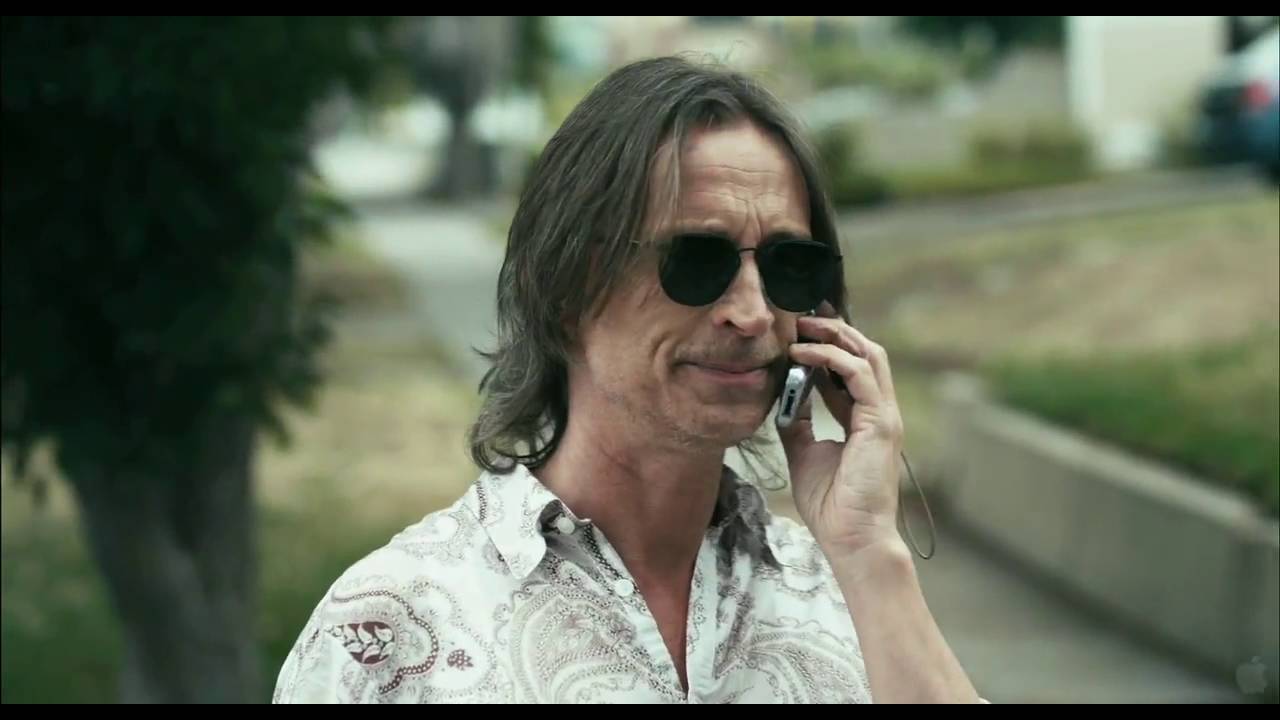
California Solo, a recent production of modest distinction, is thus one of the first movies of this "new" type to appear in my lists. It features the actor Robert Carlyle, who appeared in the late 90s indie hits Trainspotting and The Full Monty. Here he is playing a former minor member of a moderately acclaimed 80s era British rock band who now lives in California doing agricultural labor, making music-related podcasts, and drinking a lot. He's also divorced and has a teenage American daughter whom he barely knows; and he is also facing deportation back to the U.K. because he gets arrested for drunk driving. While he has a certain amount of British rocker charm, his life is in the mess it's in because he drinks so much that no one can really help him. I suppose that is the most interesting part of the movie, I have rarely seen a depiction of alcoholism that is so thorough and illustrative of the pitiful state that it reduces a man to. A lot of movies that are supposed to feature the bleak side of alcoholism still induce me to want to join in and imagine that I could carry off that lifestyle if I put my mind to it. But this character I knew was beyond anything I would be able to pull off at this point of my life. I can't go that far, not that I want to obviously, but some people have compulsions to be so extreme in everything, their souls are so volatile. My soul seems to be entirely bland in that regard.
I think there was supposed to be a message for us about immigrants here because it's a fairly relatable Scotsman who is being put through the grinder with police, lawyers, and all the rest of it, and perhaps we'll be sympathetic to his desire to stay and equate that with the plights of people who aren't white and/or English-speaking and move or fortify our personal take on this issue. I tend to be of the mindset that seemed to me to be prevalent when I was growing up that if any individual country decided that they didn't want any particular foreign national camping out on their territory indefinitely that there was always a risk of deportation. Obviously the sentient part of the world has moved on from this way of thinking about the matter.


The Tree of the Wooden Clogs (1978)


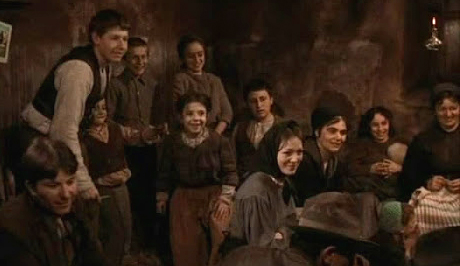
Italian epic from the heroic era of European filmmaking. I had seen this a few years back on a poor quality VHS tape and written a post about it. In addition to the dark print on the much smaller television I had at that time, I seem to have been distracted on that occasion and not taken much away from the viewing. In the meantime I kept the movie saved in my Netflix queue along with about thirty other DVDs whose statuses are perpetually "availability unknown". However, as occasionally happens, one of these elusive discs will suddenly become available and turn up in my mailbox, in this instance the Criterion Collection release. So I had to see it again.


Of course my experience was much better this second time. I was evidently in a more relaxed state of mind, which helped, and the bigger screen and clearer print brought out much more of its grandeur and depth than I had been able to perceive the first time. There is a very well known scene in which a pig is slaughtered, and there was another episode again involving an animal, a diseased cow that has to be put down. As this cow is the only one that the family, who was exceptionally poor, owned, and they cannot sell the meat or anything due to its being diseased, it represents years worth of financial devastation. It would be hard to concoct a "pitch" of this movie describing what it's about, it's an accumulation of small incidents or strokes of ill or good luck that given the narrowness and rigidity of this world determine the courses or nature of people's lives. One boy is identified by the local priest as intelligent and is given the opportunity to go to school. A woman's husband dies and she has to take in laundry to support herself. Meanwhile the local lord of course has access to books and newspapers and even a record player on which he listens to recordings of Caruso while his peasants lead the same lives their forbears have led for hundreds of years, and this all taking place, as I noted in the earlier post, perhaps within the lifetime of the filmmakers themselves, or at least their parents, as the director (Ermanno Olmi) was born in 1931. He is still alive, by the way.


The Red Shoes (1948)
Much-loved Powell and Pressburger film about a ballet troupe and the artistic process intended as an infusion of beauty and color into a still dreary postwar England. There is a lot about it that I like, though I did not have the same response to it as I did to the earlier The Life and Death of Colonel Blimp by the same duo, which I thought was pretty much a masterpiece. However this does star favorite of this blog (and of Powell and Pressburger) Anton Walbrook as the ultra sophisticated and exacting director of the ballet company, and an English redhead (seemingly another P & P staple), Moira Shearer, who, I had not realized, was a real ballerina of some renown, as the unknown dancer who persuades the master Walbrook that she has what it take to dance the lead in his company. There are some pretty hard observations on the demands and sacrifices necessary to lead the life of the true artist, though these probably apply almost equally to being a true businessman, or a true scientist, or true tech innovator, or ace high school student, or almost anything requiring true excellence. Whether true art still occupies an elevated position relative to these in anyone's mind I am not sure.


There is of course the incongruity of the brilliant young composer and the brilliant young dancer in the film both being standard issue born and bred English people, given that these are arts in the English are not traditionally recognized as having a culture of greatness in, and even the English composers who have achieved some degree of fame (Britten, Vaughn Williams, Walton) I tend to think of as somewhat stodgy, respectable establishment types--sort of like the professor at the beginning of the Red Shoes who cribs from his student's work for his new composition--rather than the more fiery, intense younger men identified with this art on the continent. However, I find the optimism expressed by attributing the possibility of attaining great and noble heights where they have not traditionally been considered to have been reached to one's own people, as the phrase goes, to be admirable. This particular sort of confidence is not consistent with most peoples across the ages.


Iron Man 3 (2013)


Another selection by my new system, I figured that these movies were hits so they must have some kind of appeal, or fun to them, so I wasn't opposed to seeing it. I couldn't understand this at all, it made absolutely no sense to me. All the technology and machines that were constantly introduced were way over my head, explained in an impenetrable foreign language. I lost the plot about fifteen minutes in, around the point at which any resemblance to life on Planet Earth as I have always experienced it departed from the movie. If this is at all representative the mental world the mass of the population comfortably inhabits nowadays it no wonder I am so isolated and incapable of understanding anybody. Good God. Look at the cast they got for this thing. Gwyneth Paltrow? Not that I ever liked her particularly, but I thought she wanted to be a snob. Don Cheadle is in this too. I know, money, money, money. Not too many people in America can win a real following doing the kinds of movies I like, But some can.


Wednesday, August 30, 2017

Ancient Literature Review: John Dryden--"To the Pious Memory of the Accomplished Young Lady Mrs Anne Killigrew"

The original idea when I read this poem nearly concurrently several months ago with the two recent works I just wrote about was that this would be a companion piece to the other one. I don't remember the intention now, but it was not to try to purposefully beat down the newer books by contrasting them with an old classical English poem. Believe it or not over the years I have come to feel bad, even guilty that I usually only like older things. I don't know why I should respond to them, since I have no more really to do with them than I do with all the wonders and glories of modern life that I don't relate to, for which reason I actually have a certain respect for them. The advantage an author like Dryden has with me is that I associate him with nostalgia for the time when all this literature was exciting and seemed to offer hope and promise everything else. Anyway, at the time I wanted to write something about this poem, but I don't remember what it was now.


The beautiful Anne Killigrew


The occasion of this ode of course is the death of a young lady otherwise of little interest to history. My only marginal comment on it is "amusing and fun". Yes, well it is those things. Are you telling me that such sequences as


"Whatever happy region is thy place,
Cease thy celestial song a little space;
Though wilt have time enough for hymns divine,
Since heaven's eternal year is thine."


when you consider that he is addressing a dead person, are not funny? Maybe they aren't. I laugh at inappropriate and poorly understood things a lot . How about this comment on one of Miss Killigrew's paintings, crowded with satyrs, flocks of sheep, Roman ruins and other trappings of the Classical world:


"So strange a concourse ne'ver was seen before
But when the peopled ark the whole creation bore."


How about this one, on a portrait the dead lady had executed on King James II:


"The scene then changed: with bold erected look
Our martial king the sight with reverence strook;
For, not content to express his outward part,
Her hand called out the image of his heart:"


I have written about Dryden and the decline of his reputation and influence over the centuries before, one of the reasons for this being the frequently absurd and consequently hilarious effect he has when writing about somber topics. His writing abounded in exuberance and bombast, which I have a taste for when done in a somewhat clever style. And perhaps there is some value in being familiar with this type of literature in one's youth, it does enhance the perception and color one's experiences in a generally positive way for a time. But there seems to be a limit to the period when it has this value if one is not moving in some positive direction oneself. If you are moving as your force these works can move with you in a kind of parallel or complement, but when you are not then the books will take on that air of stagnation and deadness, for you at least and for the people you would extol them to.


"Now all those charms, that blooming grace,
The well-proportioned shape, and beauteous face,
Shall never more be seen by mortal eyes:
In earth the much-lamented virgin lies!"


Thursday, August 24, 2017

New Literature Review: "Look" by Solmaz Sharif and "A Constellation of Vital Phenomena" by Anthony Marra

It's now about two months since I read these, but I am going to go ahead and finish the article as an exercise anyway.


Solmaz Sharif is a Turkish-born American poet of Iranian descent and Stanford faculty member whose debut collection, published when she was thirty, was nominated for the National Book Award. While from my standpoint it would appear from this outline that her adopted country has embraced her and honored her talent as much as could reasonably be expected her work is very much fueled by rage against the inane brute power of the American state, especially in its military operations and other meddling in the Middle East. Most, if not all of the poems are take-offs on particularly antiseptic definitions from the U.S. government's official Dictionary of Military and Associated Terms. This is a clever enough conceit, though I probably would have confined my use of it to trying to make one especially powerful poem. Over the course of a series of poems it relies too much on sarcasm, spite, the denigration and really dehumanization of mainstream American culture, people, soldiers, etc. Who is the audience supposed to be, even in an aspirational sense? Who is her "us" that she is one of, or would be one of? This was published by the Greywolf press, and is in line with what seems to be their aspirations and mindset. It appears to be edgy, it is the work of what is still considered in the West an outside voice, at least in terms of ethno-cultural background, and it is the kind of thing a lot of influential people say they want, though did I mention that the author teaches at Stanford? Isn't that place teeming with the people who run the damn country and start all these wars? I believe Condeleeza Rice herself is a colleague on the faculty. Yet I don't sense that this is where her anger is really directed.


I concede that she is intelligent enough and her points about the problematic nature of American military power put to use in foreign countries are reasonable though within the usual range of complaints and accusations from the progressive globalist left. She comes off as somewhat incurably joyless (do I come off this way I wonder?) and seems to be one of these people who is interested in "controlling" language with an end in mind of rendering those she considers to be her enemies mentally impotent, which are not appealing qualities in a poet. I happen to be reading some Swinburne currently for the program on my other blog, and I came across a passage he wrote in an essay on Baudelaire that I found interesting, and which attitude certainly informs the spirit of much of traditional Western European poetry, whether it is correct or not. He says, in an article dated September 6, 1862, of contemporary French poetry, "A French poet is expected to believe in philanthropy, and break off on occasion in the middle of his proper work to lend a shove forward to some theory of progress. The critical students there, as well as here, judging by the books they praise and the advice they proffer, seem to have pretty well forgotten that a poet's business is presumably to write good verses, and by no means to redeem the age and remould society." This does not apply exactly to Solmaz Sharif, though the main impression her book made on me was not the artistic quality or spirit of her writing but the sense that this person hates America so much but is possessed somehow of moral authority over us, somehow possesses, or believes herself to possess, a culture, insight and moral righteousness that we lack.


Anthony Marra's well-received 2013 debut novel is set in Chechnya, mainly during the two wars with Russia in the aftermath of the collapse of the Soviet Union, though time shifts throughout the course of the book and there are flashbacks at least as far back as World War II. The book struck me as similar to another book by a contemporary American man I had read, David Benioff's City of Thieves, which is set during the siege of Leningrad during World War II. The Eastern European/ex-Soviet Empire theme also recalls the acclaimed novel Everything is Illuminated by Jonathan Safran Foer (set in Ukraine), which I have not read. The brother of one of my high school friends is coming out with a book set in old Jewish Prague that seems like it might make one of this school also. The three latter authors are Jewish. I am not sure whether Marra is or not, and the characters in his book were not Jewish that I picked up on, Chechens being generally Muslim I believe, though religious fervor was not a particularly strong force in the book. The heroine of the story, perhaps unsurprisingly given the way the smart contingent of this generation (the author was born in 1985) was brought up, was a dogged, serious, cosmopolitan, highly competent female doctor. There were times when I admired this book and thought there were flashes of talent, and certainly it is, like so much of what is written today, the work of an almost impeccably trained intelligence and professionalism. The characters didn't strike me as being very much like actual Chechens so much as what our meritocratic class imagines everyone whom they want to ennoble must be like. It was all a little too polite, I mean of course there were impolite people, but they were obviously bad, the murderous ones who had a lot of bad ideas besides. The sympathetic ones tended to have, even if they didn't realize it yet, manners and attitudes more in keeping with the right side of history and the globalist future.


As I say, this is not a bad book, but for the most part the war stuff hasn't stayed with me. The evocation of the typically dreary atmosphere, which is easier to imagine, has a little. The characters to me were more vehicles to represent certain kinds of people in certain ways desirable to people in influence rather than vivid people. Perhaps the world will develop (or deteriorate) in such a way that this type of character and their manner of thought will be attractive to reader types, or whatever evolves from them, fifty or sixty years from now, or two hundred as the case may be. Though that would surprise me.


I don't know if it is a full blown trend or not (though it seems like it to me), these books by younger American writers, primarily Jewish perhaps, set in far Eastern Europe, usually in wartime. I know younger writers in this country, especially men, have been discouraged for some time, if they are ambitious to succeed, from writing about themselves and their own lives if they come from any kind of conventional background, and taking an interest in other people and other ways of life. The Eastern European angle probably presents itself as a way to do this with people whose lives and interests are still somewhat relatable, though the two books I have read have an unmistakably modern American character--with happy endings where the protagonists end up safe and prosperous in the West--that, even when it is skillfully done, left me wondering what the real story or point that the writers want to get across is.


Also, as I think the popularity and success of Knausgaard with critics shows, ordinary life when taken up by someone who is a good writer and has an interesting mind can still yield books that people will want to read, even in the future if they find our time of interest, which many people will. I get the impetus behind discouraging everybody from following that course in the 1970s and 80s, but children's upbringings, especially those of the smarter and more privileged kids, over the last generation have changed dramatically enough that I want to read about them and see what these wunderkinder have to say.