Friday, August 09, 2013

Sad Songs I Am Listening To, Many By People Who Are Now Dead


I had forgotten about this guy...


This particular style of singing, with its exaggerated, but still in a certain sense somewhat earnest, affectation of passion and a soul in torment, has never really been imitated satisfyingly in the English-speaking world. I guess some soul singers go for this effect, but I generally don't like them. I suspect this is because I feel like everything about their performance is ultimately about them more than about me, which puts a different spin on the affectations. Julio Iglesias, who has sold 38 million records, slept with 5,000 women, driven the best cars and drunk the best wine and hung out in the most beautiful places in the world for the last 50 years and seemingly enjoyed every second of it, is decidedly not singing for or about himself, at least the way other people do. His job, for which he has a great instinct, is to use his talents and gifts for showmanship to express the passion and torment of others in a more pleasing and entertaining way than they are able to do themselves. Highly gifted entertainers grasp this without needing it spelled out for them.  


I generally find this group annoying, but I heard this song somewhere the other day--already I can't remember where--and it struck me as poignant. So I've been listening to it for the last few days. I still don't like any of the other Talking Heads songs that I know. This band was wildly important to a lot of people just a few years older than I am; by the time I was at the age where one is deeply susceptible to pop music whatever emotional power they exerted over young people seemed to be in decline, and it never made much of an impression on me. But for a brief time they really got to people.


I have to admit I think this is a great song. In fact I like quite a bit of Zooey Deschanel and the rest of her group's pop music. I did not want to succumb to the too-obvious charms of this woman, and for a long while I did not allow myself to do so, but she kept after me with a persistence that I found both touching and admirable; indeed I was almost flattered by her seemingly perverse determination to please me and bring happiness into my life, on which point most female celebrities of the moment doggedly maintain they will never stoop to do if they can help it.

While we are on the subject of performer's instincts as far as how to approach/deliver a song and present oneself as a vessel through which to articulate a more palatable version of your audience's sense of the world, hers are as good certainly as any mainstream pop star currently out there that I am aware of. She is filling a (presumably lucrative) niche in the popular culture that seems rather obviously to have been screaming to be filled, but that no one else seems to have had the right combination of instinct, personality, type of brain development (I suspect she is pretty smart by most standards outside the realms of professional mathematics and science) and connection to this particular corner of the culture to fill.


I haven't gone back to the 40s for a while. This first song was referenced in a short story I read ("Lost in the Funhouse" by John Barth--the mother sings a verse from it while they are in the car on the way to Ocean City on Independence day in 1943). The other selections here kind of followed from that. I like the voice of this singer Kitty Kallen here, whom I had never heard of previously. She was a serious looker too.


Going to have a bit of a Harry James fest here. This is another one that always puts me in a positive mood, no matter how far down into the existential abyss I am gazing. Terrific song.


Kitty Kallen again on another old favorite. Girl could sing.


This is a singer named Francey Lane, whom I find to have an interesting face, in that it looks to me more like the face of a woman born in the 1960s or 1970s than the 1920s. This clip (in which she sings while ironing dollar bills) is from a 1951 TV and is only one of two videos of her I have found, and the only one in which she sings.


The only other Francey Lane video I can find, evidently from the same TV program as she is wearing the same dress and interesting headpiece as in the other one. Here she is merely serenaded with a classic by future talk show host and game show producer Merv Griffin, who like so many of us got our start in the business as a singer.

Biographical information on Francey Lane is scant on the internet, but it seems she had something of a career on the fringes of real mainstream success, without ever really breaking through. Her name turns up in various projects or promotions dating from 1945 to 1956. Besides this TV appearance in '51 she appeared in two short movies as a singer ('45 & '52). She is probably most identified as a singer with the Johnny Long Orchestra. They put out a release of "Winter Wonderland" (1947) and an album of "College Favorites" (undated), at least. In 1949 Francey Lane had a hit song called "Easy Does It" and appeared on the cover of TV Guide. There are at least four different "busty" vintage promotional photos of her available for sale online. By 1953 she was posing with her arms and shoulders and neck covered up and was apparently heading her own orchestra. By '56 she was apparently still hanging on in the game (and was back to posing in strapless gowns) but her hair has been cut and the smile is forced and it isn't the same old Francey Lane I have taken such an interest in.

Monday, August 05, 2013

1946-1949 Movie Post

I have been on vacation, hence the delay in posts. For any secret regular readers out there.

On the Town (1949)

This movie is quite silly, it doesn't have any songs that I am particularly taken with, one of its three leading women is decidedly ugly, and one of its other leading women has something too all around weird about her for me to warm up to. One will imagine that I am now going to say that I like it anyway, but that would not be wholly accurate; however, I do like certain things about it, and it was painless to get through, though it should not have been. In addition to all of its bombast and effort, it had a lot of that real, unconscious postwar optimism that is so infectious, and the like of which someone my age has never known. There is the sense, for example, that New York really does in a way belong to all of "us" who have any feeling for it, and that when we are young and energetic it is reasonable that we should go there, for a time at least, and test ourselves and engage with the life to be found there, and that if we do this, a more interesting version of our lives should happen for us, even if at 27 or 32 or 38 or 45 our time and usefulness in the life of the city has run its course and we have to vacate the premises to let a new wave of energetic people take our places. Like many musicals from this period, the movie allows its audience the conceit that life, or at least life as presented in it, is full of fun, romance, new experiences, new and like-minded compadres and all of the other things ordinary boring people daydream about endlessly but rarely get to experience. There are variations on this attitude throughout the history of Hollywood especially, but they were able to most consistently, organically, and spontaneously achieve it in the way I am thinking of in those first few years after the war.  

Frank Sinatra's role in this is odd to the modern viewer in that he had not quite become Himself yet. He's surprisingly small and scrawny, and is not the commanding superman-type presence among the other actors that one would expect from his later iconic status and "My Way" reputation. He is pretty much one of the group here. His character is also the least worldly among the males, and he ends up with the least attractive, indeed nearly mannish woman, which is also a departure from type.

I watched this the night before Esther Williams died, which was a coincidence, since Gene Kelly, Sinatra, and Betty Garrett, who are all in this, had teamed up with her the previous year in Take Me Out to the Ball Game. The double play combination of "O'Brien to Ryan to Goldberg" in that film was a reminder of those heady days, so short-lived that maybe they only ever existed in my imagination, when it looked like Catholics, especially the Irish and Italians, and Jews might be teaming up for some desirable cultural or social purpose, before the American Catholic population fell apart as a substantial force in society starting in the late 1960s.

For some reason I had not known this movie was in color before this viewing. I had always imagined it in black and white.


Oliver Twist (1948)

Solid British version, directed by David Lean, who is widely regarded, on the strength of this and 1946's Great Expectations, which I have not seen, to be the best cinematic interpreter of Dickens. The movie is handsome, well-acted, and the story well-told. Only one time did I notice I missed one of the numbers from the later musical version of the story:


The depiction of Fagin, played by Alec Guinness, has been controversial for being obnoxiously anti-semitic. Guinness wears an enormous hook nose, which has been usually explained away by observing that this is how the character was drawn in the famous illustrations that accompanied the book, which the filmmakers tried to adhere to as closely as possible. Guinness also plays the character with a lisp, which I am pretty certain is manifest through the dialogue in the story, which anyway does not in itself suggest Jewishness to me. I suppose there are other negative Jewish stereotypes written into the character, though if you were not already aware of them I doubt you would make the connection from what is given in the movie. The dialogue and idiosyncracies of the character are overall extremely well-written and well-acted. I cannot really convince myself that this is not in general true. Fagin, at least as played by Alec Guinness, who really demonstrates considerable acting talent here, is the most vivid, verbally interesting character in the film. Do the stereotyping and prejudice detract tremendously from the story? One may feel it should, but that is not the same thing as feeling that it does. Most characters in Dickens are caricatures of one kind or another with one dominant aspect that is developed to a greater degree. Fagin in this sense probably is more roundly developed than the run of characters in Dickens's books, though the author committed a major faux pas by investing the caricature here with insulting traits associated negatively with ethnicity rather than personal qualities or education level or class origins, which modern people are generally more willing to tolerate (though many pure and dogged souls, God bless them, will not). This story does present particular problems for the person who would rather avoid these kinds of unarguable arguments because the character in question is a good and more than usually interesting literary or cinematic character, in the sense of what he says and does in driving the story along.


The Postman Always Rings Twice (1946)

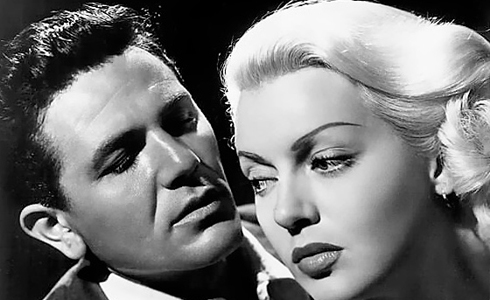
Much-praised film noir that I had some anticipation to see because in addition of course to being a fanatic of this period I did not know what to expect at all. It wasn't bad but it didn't seem to me to be quite the classic it is made out to be either. As in a lot of these noirs, the premise is rather clumsy, and the film is dependent on other elements--atmosphere, dialogue, compelling performers/characters--to have anything to say to me, and none of that really happened here, apart from the scene where Lana Turner's lawyer gets her to spill out and sign the confession that turns out not to be official so that she would get it out of her system--that part was good. Of the two leads, Lana Turner was considered one of the absolute bombshells of the age at the time, and she is what she is, but I cannot say I find her all that fascinating; and the male star, John Garfield, I have to admit I had never heard of before this movie, though there was a short documentary about him included in the extras that made the claim that he was a huge star for about ten years from the late 30s to the late 40s, before getting called before the un-American activities committee and not naming names, shortly after which (1952) he died of a heart attack at the age of 39. He sounds like an interesting guy--he was an important stage actor in one of the major movements of the serious theater during the 30s--but I can't say he drew me in to him in this movie either.

The book on which the movie was based was written by James M Cain, who was also the author of Double Indemnity. Cain's father was on the faculty of St John's College Annapolis, and the author was born in the Paca-Carroll house on campus where the family lived. This building is now a dormitory, though so renovated as to be quite modern on the inside.     


Thursday, July 18, 2013

Departures, The Yakuza, Celine and Julie Go Boating


I would expect an even slower rate of posting in the future. They seem to have finally around to jamming up my ability to access this site at work, and it is virtually impossible for me to get anything done at home, since I have to share one computer with 4 and a half other people now, all of whom have work to do on it that rates a higher priority than my blog. I would just shut it down, but I find it useful for recording and dating some of my scattershot hobbies. My attempts at more expository pieces have never really worked here anyway.

I am getting behind on movies again, with six to comment on, so I will do two sets of three in this and a following post, one modern trio and one ancient, if we draw an artificial line demarking (demarcating--I checked my dictionary and they are variations on the same word) the modern period as beginning around 1970, though really I would put it more around 1980, with the 1965-1980 years serving as a kind of cinematic middle age.

Departures (2009) 


This was another Roger Ebert selection, though it did win the Oscar for Best Foreign Film in its year, which in this era indicates that at least it probably won't be egregiously offensive to middlebrow taste. It's Japanese, and like almost all modern Japanese movies that achieve arthouse distribution in this country, it is about death. Indeed, the main character is a failed and disillusioned cellist who becomes an undertaker, which, like so many professions in Japan, is conscious of and honors its artist aspects. The popular impression, aided by films like this, is that the Japanese nation, symbolized by its ongoing anemic birthrate, declining population, workers who collapse and die on the factory floor of convulsions brought on by extreme stress, and growing numbers of adult men who refuse to come out of their childhood bedrooms, has largely lost its will to live in the modern world. An exorbitant number of the corpses represented in this movie were of attractive young people, women in particular. The protagonist is married, and cutely, as it were--being cute, if you're a woman, is I think trendier is Asia, particularly in the advanced economies, than it is among us--but his wife is not really sold on his new career and their new life out in the provinces, the husband decamping back to his mother's house (she is dead) from one of the big cities, probably Tokyo, after the collapse of his music career. I had the sense at the end that she was supposed to have gotten pregnant, but I don't really remember now. It was not that explicit, unless I nodded off for a moment. It is a quiet, low energy sort of movie. It is probably worth seeing if you are young, have a lot of time, and need to get a general sense of what Japan looks like and the kinds of things is expending its creative energies on. If you are older, and time is more precious, I think it can be safely skipped.

There was a setup in the plot for a cathartic emotional payoff, but this was relied on too much, considering that nowhere near enough had been invested in the setup. It did not come through.

The Yakuza (1975)


I didn't know what a yakuza was until a month ago, and now I feel like I see a news story on them every other day. They're Japanese gangsters, but they have a deep and complex code of honor that among other things requires you to cut your little finger off and offer it to someone if you have profound obligations to them that you cannot otherwise adequately repay. The movie is a Hollywood picture, directed by Sydney Pollack and starring Robert Mitchum. It was an ambitious undertaking, but it did not really work for me. It is, as even Sydney Pollack admitted in the commentary, very much an artifact of its time, and, I would add, not in the best sense. Its predominant atmosphere was similar to that of the TV show Hawaii Five-O, and overall it very much plays up the whole 1970s idea of the Pacific Rim as a kind of futuristic vision, in which the ancient cultures of the Orient take on a remarkably Hawaiian and Southern Californian influenced character. The action scenes seem to me mostly ludicrous. Robert Mitchum is believable as a certain kind of tough guy in a conventional social or business situation, but coming into Japan as essentially a solo foreigner and taking out dozens of thoroughly trained and hardened native gangsters, particularly as a 50-something, is asking too much of one's credulity.

I posted this on Facebook already, but it amused me, so I will put it up again here. My wife's capsule review of this film was "Let's have some tea and cut our fingers off." That really about sums it up.

Celine and Julie Go Boating (1974)


1974. What a year! My memories of it are naturally scant, and either elusive or melancholy. However, it is the first year I have any memory of at all, and I like to imagine that it was in this year that my intelligence peaked, at least comparative to other people my age, mainly because it appears to have have declined by this measurement almost every year since. In any case, my personal future looked more rosy and brilliant in 1974 than it ever managed to afterwards. So, after a fashion, so poignantly illustrated in this film, did modern France's. This is the backdrop against which I am going to attempt this review.

Celine and Julie Vont en Bateau, which, while interesting in some ways, is also three plus hours of the kind of artsy self-indulgence that only the French have truly mastered, and probably only truly appreciate, is regarded as the most accessible film, certainly from the earlier part of his career, of the director Jacques Rivette, who is usually identified as part of the Nouvelle Vague, but in many ways remained always too new to ever get pinned down enough and made a symbol of anything intelligible by some mass of cinemagoers, as occurred with Truffaut and even Godard, to a certain extent. His masterpiece, according to many, is the 1971 epic Out 1, which has only been screened one time in its original cut, ostensibly because it 12 hours and 40 minutes long (there is a 4 and a half hour version that is also rare, though it has been seen by a few more people than its parent, and is said to have a cult following). The plot of Celine and Julie is supposedly based on a couple of Henry James short stories. I don't know whether "The Turn of the Screw" is one of them or not, or whether it is even considered a short story; I suppose the movie had some elements that were reminiscent of that tale. It also would not surprise me if there were 20 Henry James short stories that were superficially alike. There are also acknowledged references to Alice in Wonderland, Proust, and Jean Cocteau. The Alice ones are not too obscure, and the influence of or obvious similarity to aspects of Proust did flicker through my mind, though I did not think much of it. The affinities with Cocteau I tended to see more as generic obscure French artist poses that are stock in trade in that country, without making a specific connection to Cocteau.

This is the 3rd highly acclaimed French movie in the 1974-1983 period I have seen in the last year that is not available on DVD in America (joining Madame Rosa and Entre Nous). Apparently from the commercial standpoint we have given up on this epoch of film history. Usually when this happens I will buy an old VHS tape on the internet but the tapes for Celine and Julie started at $45 so I had to watch it on Youtube, where somebody had fortunately uploaded a watchable version of whole movie, and with English subtitles too.

As I noted in the Madame Rosa note, people in 1970s French movies look fantastically healthy and almost absurdly natural, despite all of their seeming pretension and affectation in the realm of the intellect. The actresses who play Celine and Julie (Juliet Berto and Dominique Labourier) do not seem like any spectacular beauties at first glance, especially with their ludicrous 1970s clothes and untamed hairstyles, but the effect of bodily health combined with mental engagement with the physical, living world around them creates a sense of vitality that is striking and impossible to ignore, especially Celine/Berto, who seems to me to have a glorious and almost perfectly realized beauty. There was another woman in the Henry James/Proust-like country house that they are transported to when they eat the candies that was quite extraordinarily beautiful as well--the blonde one. Of course you have a lot of leisure to examine the skin and figures and facial expressions of the actresses and actors in this movie because your attention is not diverted by an overabundance of action or plot, and there is a lot of repetition.


While the film itself is antagonistic to any emotion of sentimentality or even meaningful specificity of time and place apart from the realm of pure art and mind, its presentation, almost matter-of-fact for our purposes, of the Paris of 1974, its streets ruled by clanking Citroens and Peugeots, its sleepy little shops and languid afternoons in leafy parks and the library with its open windows on a hot day and wooden shelves and wooden files and wooden tables and rubber stamps and its garish and sweaty bohemian apartment with a panoramic view of the city and its (compared to today) scant evidence of oppressive Anglo-American and international capitalist infiltration of the culture, is among the main charms of the movie for me, especially as so much of the background impressionism in it hits at the exact points that have most strikingly been lost or are fading rapidly, but were especially central to a certain life and myth of Paris, particularly that I bought into. The whole '65-'75 period, which I tended to think of as fairly recent up until the last five years or so, when finally the accumulation of change made it suddenly appear to be quite long ago; and 1974 has never seemed as long ago as it does in this.  

Thursday, July 11, 2013

Tower of London 2


Hopefully this will go quickly, as I am not as fired up to write about this book as I was last week. On the other hand, I have been having a lot of problems with computer 'errors' and so on in the field where you write these posts which is hindering my effort so far this week.

I am going to skip over a bunch of passages regarding architectural details of the tower, the inscriptions left on the walls by numerous of its doomed inmates, including the Duke of Northumberland, many of which can still be seen today, and numerous poignant thoughts that might effect a sensitive tourist while wondering the grounds, particularly at certain times of the day. I found them to be not unenjoyable, however.

On Lady Jane, preparing her soul for her imminent execution: "...anxious as she was to obtain the queen's forgiveness, she could not purchase it at the price of her salvation...", i.e., by renouncing Anglicanism for Rome. Not that it does not make perfect sense that the Church of England is the surest way to the Christian Heaven while there is no greater abomination to the same than professing adherence to the teaching of Catholicism.


p. 208, a prisoner thrown into a pit is devoured by rats in an especially gruesome scene. When I was in New York City in April, my unfortunate wife had a large and muscular rat brush against her leg as it rushed past while sitting on a bench in Central Park. It was, I gather, a feeling equally gross and disturbing, and I think it put a damper on the trip for her.

"Ever brooding upon the atrocious action he was about to commit, he succeeded in persuading himself, by that pernicious process of reasoning by which religious enthusiasts so often delude themselves into the commission of crime, that it was not only justifiable, but meritorious." Refers to a character who attempted to assassinate Queen Mary.

While Ainsworth was, at least as far as the most serious people are concerned, a failed author, he seems not to have been a failed person. The persona and mind that he reveals in his book are, if not unique or great, at least seem capable and worthy of participating in and appreciating many of the better aspects of human existence. Most people cannot even get to that level.

"In swordsmanship, horsemanship, and all matters connected with the business of war, he was, as may be supposed, eminently skilful." Sir Thomas Wyat of Allingham Castle in Kent, the son of the poet. A man worthy of emulation, by all appearances.

p. 282 "But that which imparted the almost angelic character to her features, was their expression of perfect purity, unalloyed by any taint of earth. What with her devotional observances, and her intellectual employments, the mind had completely asserted its dominion over the body; and her seraphic looks and beauty almost realised the Catholic notion of a saint." I was momentarily carried away with emotion, and scribbled in the margin: "Oh Lady Jane! How we wanted you at SJC and shall never get your like!"

The manipulations of manifold insidious Catholics were skillfully written, enough to make me hate them too.

"I know Elizabeth too well to believe for a moment she could abandon her faith". Lady Jane is beginning to resemble my wife in the extent of her dedication to defying popery.

"'My project once carried, and Philip united to Mary,' he muttered to himself, 'we will speedily cudgel these stubborn English bull-dogs into obedience.'" Sinister Renard!


The importance of romance in political affairs during aristocratic eras is beneficial for artistic plotting and themes.

On a related note, I always love it in this class of novels when people step out from behind the arras after eavesdropping on a secret and vital conversation. This trick is used on several occasions in this book. It provides some kind of dopamine rush, replenishing our sense that we are engaging with the mainstream of old European literature and history, which we like, and I suspect the author had enough sense to know this. This is why it is for me not bad to read such books as this on occasion.

"Her courage never for one instant forsook her, and her spirit and resolution sustained the wavering minds of her adherents." Queen Mary. This guy does like to suck up to royalty.

The scene where the giants/rebels are throwing their enemies off bridges and parading around with heads on stakes was rather gruesome.

It is all fun because we are so knowing where religion is concerned. And I am in that knowing group, whether I really want to be or not.

I'll have to check out making a visit to Oxburgh Hall in Norfolk, which received an odd personal plug in the middle of the headlong rush to the climax ("...still in the possession of his lineal descendant, the present Sir Henry Bedingfield, and one of the noblest mansions in the county"). I wonder what homage Ainsworth owed Sir Henry.


Oxburgh Hall is currently a National Trust affiliated property. 

"Renard followed, and beheld the fugitive speeding across the nave of Saint John's Chapel, and without regarding Wolfytt, who was lying on the floor, bleeding profusely, he continued the pursuit." Renard himself had set Wolfytt on the fugitive. Needless to say, Renard is the best character in the book.

"Here, besides the ill-fated and illustrious lady whose history forms the subject of this chronicle, was confined the lovely and, perhaps guiltless, Anne Boleyn." I like the "perhaps".


"'Do not question the purposes of the Unquestionable, Angela,' replied Jane, severely." I have to admit I have never liked this literary custom of chastising people who express sorrow over your imminent death for ostensibly religious reasons, especially when the person you are addressing is obviously simple-minded. If you are surrounded by your supposed philosopher friends, whom you have put to many rigorous tests for the purpose of rooting out mush-headedness over the years, a la Socrates, maybe that is a different story.

Though a less than stellar novel, it is still one of those books where it was a little sad when the characters' stories began to be wrapped up. Every somewhat personable book finished past a certain age--around 33 in my case--takes on the character of a bunch of mini-deaths, especially when you know you will never read them again. Of course this relates to all manner of other things, cities, restaurants, activities, as one's experiences with them clearly begin to wind down or perhaps are a one time occasion. I did not feel this way about things when I was in my 20s. I knew when I graduated from a school or had to return home from overseas that a certain part of my life was coming to an end, but I expected that other things equally important, and in which I would be more important than I had been theretofore, still awaited me. Needless to say I do not feel this anymore.

I end by giving you an excerpt from the charming song that the executioner sings:

"Queen Catherine Howard gave me a fee,--
A chain of gold--to die easily:
And her costly present she did not rue,
For I touched her head, and away it flew!"

Even though I have been to London 3 times in my hilarious life, I have never visited the Tower, which has a fearsome reputation for being expensive, crowded, and woefully uncool to boot, but I think if I ever go back I will have to confess my colossal unimaginativeness to the world and go see it.


Thursday, July 04, 2013

Notes on the Class of '88

or cerchi se io

I went to my 25th high school reunion last weekend. Here are my impressions:

The self-consciously "smart" people--I would loosely define this group as the people who cared and thought very much about which good college they were going to go to, or in a few rebellious cases, which good college they were assiduously not going to go to--were largely absent. I would probably not have been considered to belong to this group of people, and certainly would not be now, but I would have liked to have seen more of them make an appearance. Those who had been most notable in their school days for partying constituted the dominant group in attendance. Most of these seem to still live in the area. I don't have a great rapport with most of the party people either. I was exceptionally immature in high school. Most of my real male friends were a year behind me; I suspect that even now it would be considered bad form for me to crash that reunion however. I did not have any real girl friends in school, but if any exist who would remember me with any degree of friendly feeling, they would have been two years behind me at least. This is not unusual, I don't think, and as such it shouldn't really matter that the girls exactly your own age never liked you that much; but somehow it always does.

The class of '88 missed being part of the Tattoo Generation, if not by much. I did not see a single person who was sporting any visible ink, which is unusual in any social setting nowadays, and there were certainly those present who if they were ten, or even five years younger, you would scarcely be able to see much of their actual flesh by this point. If I remember accurately the trend of widespread tattooing really got rolling sometime around '96 or '97, which indicates to me that if you are able to make it to twenty-five without succumbing to this ridiculous temptation, you are not going to be easily seduced by it thereafter, even if you are an incurable knucklehead. Perhaps future generations will even consider us early 70s birth cohorts to be possessed of a certain old school elegance, as we will apparently be the last group of people for a long time to enter old age on the whole tattoo-free.

People born in the early '70s are also the last group to get through a lot of their formative experiences--school, college, early dating, early jobs, living abroad or otherwise away from home--before the technology explosion which has so altered people's relationships to information. Although being exclusively with people around your own age is common during one's school years and I suppose again in the nursing home, when you are 43 it is unusual to be somewhere where everyone else is exactly the same age as you. So while of course people had their i-phones with them and a few people pulled them out from time to time--mostly to read messages from their children--they were not ubiquitous, nor did they interfere with conversation, that I noticed. I even found another guy, indeed someone who had been a pretty good friend of mine, who hated phones and refused to carry one, which has not happened to me in a long time.

As I have very little to say for myself I appear to not be very social at these kinds of events and periodically have to go and sit down or step out on the balcony alone for a few minutes. Some people get the impression I am not having a good time; if asked I will usually say that if I really didn't have a good time at these reunions, I wouldn't come to them, though that is not exactly true. Other people I sense are annoyed or even, if not 'uncomfortable' (a loaded and increasingly unsatisfactory word nowadays), discomfited by my being there without any identifiable role or place in the proceedings. I do feel more and more after each of these reunions that maybe I shouldn't go anymore, no one really knows me, I don't look forward to having to try to explain who I am and what I have done with my life, and every brief exchange is a bit of an ordeal. On the other hand, I still want to keep up some connection with the old town and the school--I have not, to my mind, so far transcended them that the connection has ceased to be meaningful--and I also think that, if I am 43 and am uncomfortable telling other people what I am or do, maybe I need to go through more such ordeals, then perhaps sometime  something might happen that motivates to do something about this problem.


The most unpleasant conversation I had was with a woman to whom I had never spoken before. I think she was one of those discomfited by my general appearance of purposelessness and took it upon herself to question me about it. It went badly. There is a certain level of condescension with regard to social status, personality, intellect, general adult substantiality, etc, that I have grown accustomed to and can usually either maneuver around or at least dig in and hold fast at a certain point in a short conversation, but I was wholly unsuccessful in pressing any case for myself as a man possessed of even a modicum of human worth. Everything I tried to say to her questions about my life, she would not accept, but would want to know more precisely what I meant, and would proceed to call it what it really was. And of course all of her answers to my questions in return were unassailable, in part because I chose not to assail them, but really I could see no way to do so that would be seen as acceptable. I am sure she was a fairly miserable person, but it was quite established that I was nobody to suggest such a thing. It would have looked like an aggression on my part against a person to whom I must be crushed by a massive sense of inferiority. So I was in a bind. Because I said I worked in a hospital she kept threatening--under a veneer of politeness, of course--to introduce me to her husband, who was an attorney who specialized in hospitals so that we could talk together about the changes, the doom, as it were, that were coming to the industry--this really was vicious--but fortuitously we were interrupted at this point by the arrival of one of her old friends and I was able to slip away.

At that point, even though I had told myself beforehand that I was going to endure, as a kind of penance, whatever judgements, spoken or unspoken, were cast upon me, I did think for a few minutes that perhaps I really did have no business there, that my presence was offensive to people, and that I ought to go back to my hotel and call it a night. However, I decided to go back in the direction of the bar, which is so often curative in itself in such circumstances, and a couple of hail fellow well met types with whom I had drunk on a few occasions in the past assailed me, and I was brought back into the fold of conviviality once more.

You tend to talk to the most successful people at these kinds of things earlier in the evening, for a variety of reasons, one being that most successful people are by nature gregarious, and also because the obvious conversation opener at a class reunion is one's career, and people who have good ones are naturally more eager to have that conversation than those who don't. One such person had made a lot of money off four patents he had filed and was now involved in redeveloping old warehouses. He told us that "entrepreneurship is the number one way to achieve financial security; and number two is so far behind it doesn't even matter". I thought it was a good quote.

Later on I talked to a guy who was the manager of a strip club. I was a little taken aback, but it was a public school, so why shouldn't there be a strip club manager in the class? It isn't a glamorous life. Twelve hour workdays. The base pay is criminally low though I guess they make up for it with a cut of the tips ('I have strippers paying me. Am I a genius or what?') I had always thought of strip clubs from the purely business standpoint as quaint, fly-by-night deals, probably connected with the mob in waterfront cities, but for the most part, locally owned. The one this guy worked at was owned by a corporation based somewhere in the midwest. The person over him was a less than scintillatingly talented relative of the CEO's who, it was surmised, had been sent to Maine as a means of getting rid of him. I have heard this theory expressed before by people in this godforsaken part of the country, with regard to an incompetent but well-connected boss who has been shipped in from Dallas and has no understanding of our peculiar market and its conditions (i.e., raising prices in September). I wonder if there isn't something to it.

I had planned to leave as early as possible the next day because my two older sons were going away to camp, but I had left my car in a garage that, I had neglected to note, was locked up until noon on Sunday. So having a few hours to kick around Sunday morning and having skipped the breakfast at the hotel, I decided to have brunch at one of the numerous hipsterish eateries that have sprung up in town since my era. Having had a chance to survey a bunch of them on the mile walk from my hotel to the garage, I went back to the one which had had the most attractive liberals arts type girls sitting outside; though the original girls had gone by the time I got back, their replacements were no less pretty or liberal artsy. I don't where these girls/women came from, or why they decided to come to Portland. It is a well-situated town with lots of beautiful old buildings, but it had been that way for 200 hundred years without being known to attract good-looking and reasonably refined young women in any sizable numbers. Certainly it was not the case when I lived there. Anyway, despite all the lovelies sitting in the outdoor cafe area, it was 85 degrees and I was hung over, so I opted for an inside seat. At first I couldn't see anything but a bunch of low tables surrounded by sofas and I had a slight moment of panic; but they had a few tables set off in the corner for the odd traditionalist, and I gladly accepted one of those. I had a good view of the room, with its red and green crushed velvetlike sofas, its ceiling fans, its plant boxes and artwork and the front opened up to the street, its collection of eclectic dishes and glassware. I rarely have the opportunity to go to such places, and it seemed to me both gorgeous and decadent and even mildly sinister. It was full of the kinds of people I should have been friends with, as well as reminiscent of the blithe summer of 1914 or even the British Raj. I couldn't help thinking that surely in a few years something is going to happen that is going to sweep all of this away (What will happen to all of the pretty liberal arts girls?). Because I was hungover I was craving an ice cold Coke, but you can't get one of those at a place like this, so I had a mimosa and about four glasses of water. Thankfully they had a old-fashioned eggs, hash browns and english muffin plate on the menu. As the place reminded me of the Raj so much, I had to order my eggs poached, because that's how the British in India always have their eggs in the old novels, or at least that was my memory. The meal was a little heavy, given the heat of the day and my overall condition, but I think it was pretty good.

Here is the place, the Local 188 on Congress Street, across the street from the Longfellow statue.

Saturday, June 29, 2013

The Tower of London--William Harrison Ainsworth (1840)


I am still intending to catch up on my reading list without wasting all of my marvelous notes. I now have a set of five mostly little-remembered English novels from approximately 1820-1850. I thought to dash these all off in one post, but I seemed to have a lot to to say about the first of these books, the prolific William Harrison Ainsworth's historical novel The Tower of London, which was concerned with the saga of Lady Jane Grey and Mary Tudor, though of course so much time has passed (I began the book March 18, 2009) that I don't remember much of the story, which was 455 pages and probably took me at least a month to read.

Ainsworth wrote 40 novels, and was one of the best selling writers of the Victorian period. He was good friends with Dickens and worked with or was well-known to most of the cosmopolitan literary figures of the time. He threw a dinner party to celebrate the success of the Tower of London that still is considered a noteworthy event in the social history of English literature. The Tower has usually been considered his best book, followed perhaps by Old St Paul's: A Tale of the Plague and Fire of London, which came out the following year. He was 35 and 36 at that peak, though his career would continue for another forty years. Other titles include Windsor Castle (1843), and "The Lancashire novels", The Lancashire Witches (1848), Guy Fawkes (1841), and Preston Fight, or The Insurrection of 1715 (1875). Also notable was Mervyn Clitheroe (1857) in which, according to the introduction to the 1909 Everyman edition "Mr W.E.A. Axton says that (Ainsworth) has left...an accurate picture of the life of the ('famous old Manchester Grammar School') at that time." His fame and his books were already falling into obscurity within a few years of his death, though the authors of the GRE Literature exam are at least familiar enough with him to list one of his titles as a possible (though wrong) answer on their practice tests.

I enjoyed the book reasonably enough at the time I read it, though Ainsworth was subject to almost all of the conventional characteristics and attitudes held by the writers of his day, and lacked any distinctive strengths. As I say, I remember hardly anything of the book, though I am going to go over my copious notes and see what I had to say at the time:


1. "The austere course of life prescribed to, and pursued by, the fathers of the Reformed Church, had stamped itself in lines of unusual severity on their countenances." Page 5. A typical sentence. I noted that 'I hope this is supposed to be comedy'.

2. On page 8 we get our first sinister foreigners, a couple of French ambassadors who pepper their discourses with "Mortdieu!"s and "Pardieu!"s.

3. The speculation that Edward VI was poisoned by Lady Jane Grey's father, the Duke of Northumberland, was naturally incorporated into the story. I had not been familiar with this theory previously, which is well known among people who approach English history from the romantic standpoint, though I do not have the impression that it holds much weight or interest with real historians.

4. "Jane mentally ejaculated...'Whatever betide me, Heaven grant that that noble pile may never again be polluted by the superstitious ceremonies and idolatries of Rome!' Talking about the old (pre-fire) St Paul's Cathedral. Also another characteristic sentence.


5. p. 42 "Can it be possible you are the same Jane whom I left--all love, all meekness, all compliance--or have a few hours of rule so changed your nature that you no longer love me as heretofore?" You got it, dog.

6. The book is full of real men who not merely escape confinement, but burst chains in rage at the thought of another man possessing their lovers.

7. p.66 Another lament about the loss of Old St. Paul's ('the heaviest...sustained by the metropolis in the great fire"). It would be the topic of his next book as well.

8. p. 81 A tour of the bodies deposited in the grounds of the tower brings up Thomas More, of whom we are told "his body was afterwards removed, at the intercession of his daughter, Margaret Roper (played by the delectable Susannah York in the film A Man For All Seasons), to Chelsea." The consensus in the case seems to be that Margaret rescued her father's head, which by custom would have been pitched into the river after its ------cision from the body, and had it buried with herself in Chelsea Old Church, though both Margaret's remains and St Thomas's head have since been removed to St Dunstan's in Canterbury. The specific location of the rest of Thomas More's body is unknown but is assumed to be within the Tower grounds, and there is a memorial to him now in the Church of St Peter-ad-Vincula therein. The details of the remains of very ancient famous people especially are a subject of great matter with me. The reasons for this have to do with feelings and my sense of estrangement from everything, history, the physical world, learning, etc, and are not interesting. One's head must have some facts and dim line of thought to follow in it.


9. The book does not really explain why Popish Mary was so wanted by most of the populace, including the influential classes. I presume it was to avoid wars of legitimacy.

10. p.128 "Though a contrary opinion is generally entertained, Mary was not without some pretension to beauty."


11. pp. 129-30 Assessment of Elizabeth's hotness (with a further note by me in parentheses. 'Michele?' What does that mean?). "In personal attractions the Princess Elizabeth far surpassed her sister. She was then in the bloom of youth, and though she could scarcely be termed positively beautiful, she had a very striking appearance, being tall, portly, with bright blue eyes, and exquisitely formed hands, which she took great pains to display."


12. p.133 "The sun poured down its rays upon the ancient fortress, which had so lately opened its gates to an usurper, but which now like a heartless rake had cast off one mistress to take another."

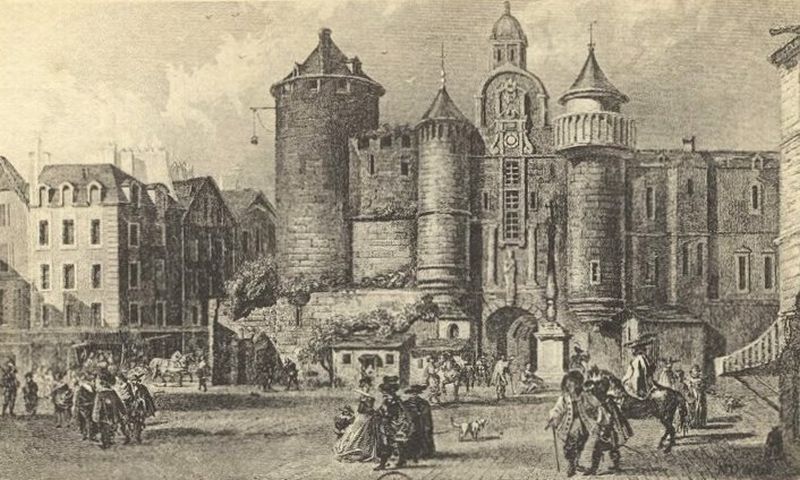
13. p.143  M. Dulaire, quoted, in his description of the Grand Chatelet at Paris: "every old building, the origin of which is buried in obscurity, is attributed to Caesar or the devil." The witty French.


14. In 1241, the 'citizens of London' protested expansion of the Tower/prison. They weren't fools, but of course they were stearolled anyway.

15. "Edward the Second commanded the sherriffs of London to pay the keeper of his lions sixpence a-day for their food, and three half-pence a day for the man's own diet..."

16. The citizens protest the gallows erected by Edward IV, circa 1465. He was also all business, however.

In keeping with my goal of posting at least something every week, I will stop here and break this edifying visit into the romantic past into multiple parts.

Monday, June 24, 2013

X-Rated Dream (Microaggressive?)

A smartly dressed girl, smallish, bones delicate and well-proportioned, light brown eyes, light brown hair, alpine features, the same who had insouciantly checked me out at the supermarket in Brattleboro earlier that day, drinking a pointedly better-than-ordinary coffee in a Starbucks-like chain coffee-shop (I don't drink coffee, so I have never actually been to Starbucks or any other coffee shop like place. I would if I had time and didn't always have children with me). I walk up to her, pull a fried chicken tender out of a pocket somewhere on my person, and dunk it in this girl's coffee. I remember nothing else. The dream stopped with the dunking of the chicken tender.

This was yesterday. Today I was walking down the main street in Brattleboro and a good-looking girl, robust and giving off a glow of sorts, passed me with a dog. I would not have thought much more of it but that just after we passed a car sped past from which a man shouted, with great hostility in his voice, some extremely vulgar things--you can imagine what they were--that were obviously aimed at this girl. I am not often present at these kinds of scenes, but it was very nasty, and it is easy to see how if one were exposed to this even a couple of times a year, she would not have any very high opinion of the run of men. Some years ago when I worked for a courier company in Philadelphia, I had to partner sometimes with a guy who was fond of shouting at women this way, with the same malicious hostility in his voice. He was quite a lowlife type. I don't know how old he was--I would guess mid to late 30s, which I considered ancient at the time--but he was overweight and greasy, and had no kind of education or refinement. I noticed when we would go downtown or to the UPenn area he especially enjoyed screaming at women who were obviously professional or belonged to the wealthier classes. I did not disguise the fact that I found his behavior mortifying. The case was not hard; if he had been an open misogynist who nonetheless maintained a harem of attractive women, I probably would have been more conflicted. He of course considered me sheltered and deluded about the real natures of women, which I am pretty certain he considered to be nothing good, though I can't recall the details. What stays with me though is the degree of absolute venom that this guy, and a lot of these other truck drivers, felt towards women, and especially educated women. It was really vicious, and I had kind of forgotten about it until today.

Sunday, June 16, 2013

The Beers That Made Me: Part 1 of a Series


This will not be a display of connoisseurship. I do not think I could make a hierarchical list of my favorite beers by a criterion of quality if I wanted to. I don't have the discernment (and at this point probably not the language, either), for that sort of undertaking. Every day my children ask me some question such as how gingerbread tastes different from graham crackers, and I find I cannot really say. My experience with beer is not far dissimilar most of the time. While all of these long-ago associations rely on a sense of taste to a degree, the strength of the pleasures and feelings of self-actualization that are recollected, along with the mild jolt of elation I still feel upon seeing even an image of their labels, are mainly dependent on the atmospheres which marked my first encounters with the brands. Nothing has made such an impression on me since 2001, and I cannot remember or find the name of the beer I am thinking of in that last instance. Everything I drink now that is not total swill seems essentially the same, and I am willing to try whatever fancy things come my way. But as with books, new experiences that really effect me and change the course of my mind going forward in positive ways just do not happen anymore.

I was going to do the whole thing in one post but the time involved makes me think it is better if we do another series.

Kronenbourg 1664


This is the primary mass market beer of France, and esteemed nothing spectacular, though it is refreshing enough on a hot afternoon, especially if you are sitting at an outdoor table after a long day of sightseeing. I went to France when I was 20, my first time out of the country, which made the ubiquitous Kronenbourg the first beer I ever had the pleasure of being able to order in a bar or restaurant. I mostly stuck to this brand the entire visit, because it was easy to do so. I was alone, I did not speak French very well, I was thrilled enough at being able to hang out in bars that I did not really care about what I was drinking. I was depressed because I was crimped in soul, timid, confused, mentally paralyzed, and I knew I was not doing the trip right, I was not opening up and improving and breathing new air and taking my place among that society of smart young people who travel and make the world turn. This is not a happy beer memory--I am not sure that any of these will be that--and certainly not a triumphant one, but it did symbolize a sliver of Real France that I had managed to lay some claim to, and served as some indication of what my trip could have been, if circumstances had worked out differently. It was a terrible wasted opportunity. 23 years later I have never been able to go back for 1/10 as long, and of course the country and the city of Paris, like everywhere else, is greatly changed from what it presented to me then.

Genessee Cream Ale


I have not had this in 20 years, and I have no doubt that it is terrible. At the time however, perhaps because I was low in spirit, or perhaps because I was accustomed to drinking even worse stuff, or perhaps because I was manipulated by the evocative promise of a "cream" taste, I thought at the time this was absolutely wonderful. The first time, when I was around nineteen, I was hitchhiking outside of Wilkes-Barre, Pennsylvania, and was picked up by a couple around thirty, friendly, but in a rough around the edges, heavy metal listening roofer and his Bon Jovi-preferring chick kind of way, where the conversation, especially that part of it directed towards me, was jovial but constantly interspersed with sarcasm and little digs at my lack of any kind of interesting qualities or apparent reasons for my doing what I was doing, which I did not explain to them because I did not think they would really get it. Their car was one of these old deals from the 70s that had ripped up seats and was full of tools and junk and smelled like dogs, though the woman's seat had some kind of macrame afghan covering over it. Anyway, it was near evening at that point, and I had come up from Pottsville, which is a down at heel old city in central Pennsylvania that happened to be John O'Hara's hometown (I did not mention this to my hosts), all day through the mountains in misty, drizzly weather. I had slept out the previous two or three nights too. The lady, sarcastic motormouth though she was, I now realize was probably at least mildly concerned about me, because she insisted that I get a room somewhere and get to bed. These people did not pay for it or anything, but they did take me to a motel that cost $21, which was pretty cheap even at that time. They also threw in a six pack of Genessee Cream Ale (which they had paid for) before they drove off, for which as you can imagine I was extremely appreciative. I think I could only finish off three before I fell asleep that night but I carried the rest with me in my bag and had one a night for the next few days when I could find a discreet and pleasant enough spot to do so in.

Later, when I was in college, there was an occasion when a case of Genessee Cream Ale was the evening's offering--actually I might have been the one who provided that offering, but in any event, the remembrance of my old associations with this beer acted upon me positively on this occasion as far as my overall spirits, and my impression was that other people found it a marked improvement over the usual fare as well. My recollection is that the night overall was one of the happier ones in the annals of my freshman year group of friends. Maybe we thought it must be too good for us to have on a consistent basis, or perhaps subconsciously we knew that we could never recapture the particular spirit of camaraderie that had infected us that night, and which the beer would inevitably call up the memory of. We did, even long afterwards, sometimes talk about why we had never gotten the Cream Ale again and ought to do so before even what was left of the original crowd went its inevitable ways; but our hearts evidently weren't in it, for it never happened.

Watney's Red Barrel


This was the "good" beer on draft at the Little Campus Tavern in Annapolis, which does not exist anymore. It cost $1.90 for a glass like this:


The cheap beer, which was Michelob, went for $1.10 in the same glass. I usually got that. The Watney's would be for a special occasion. That's if you were drinking beer at all. Cocktails were $2, and at happy hour, which lasted from 4 to 7pm if I remember correctly, you got 2 identical drinks for the price of one. I was thinking the other day how when I was in school I would to go to the bank on Friday and take out $25 or $30 for the whole weekend. I didn't have any credit cards, and I did not have an ATM card either, because I knew that especially if I was drinking I would not be able to resist withdrawing cash to buy myself food or more drinks. I can only remember a few occasions where I had spent all of my money by Saturday night and was very unhappy that I couldn't get more, but obviously I lived through them. I wish I could live this way now, but getting to the bank when it's open, and with a bunch of children to boot, is a hassle, and you'd probably have to go every day unless you want to carry around hundreds of dollars in cash at all times. I spend more on a single tank of gas now than I spent in a week in 1992. Of course my grandparents could remember when you could slap a dime on the counter at Woolworth's and be served a full meal, so we didn't think we were all that lucky at the time.

But this is about Watney's. Its redness, of which it was so proud, seemed to me to truly effect the taste. It was different, and that difference seemed to me to lie in that redness, almost like it was a beery cherryish syrup injected into a ordinarily-bodied ale. I don't know whether I thought it good or not. I liked it, and it was certainly better than Michelob and anything else readily available, but I don't know that I ever knew it was good, the way I knew beers were good when I got to the Czech Republic. So the influence of Watney's is really the influence of a now-defunct tavern operating under a woefully outdated business model even in the early 90s. And it was a good influence, too. I have never felt that a minute of the time I spent in the place was wasted, even though you could hang out there for many hours and drink a lot before you had spent 10 dollars. But then at that time of life, very little that you do is an absolute waste of time compared to nearly everything later on.

I have to go to bed.

Friday, June 07, 2013

Would I Want to Be One of the Google People?


It isn't really my ideal, but I will give them credit, they at least have a real identity, and such a one as I never foresaw when I was coming up in the world.

I was reading about them in this article--the beginning of which, before it gets into an exploration of current trends in experimental pornography, presents a very vivid picture of the phenomenon. I do not actually know any people like this, and certainly none close to the extreme specimens of the type delineated here, but I believe in their reality. There is something both clear and essential about them that seems to me worth investigating. I would be interested in seeing the way that they live and think depicted in good art, beyond their diets and exercise regimens, which do not speak to me as I desire to be spoken to.

At one time--1974, at least, when almost everything would still have been possible for me--it was a possibility, albeit a remote one, that this would be the sort of adult I might develop into. I feel farther away from being a full-fledged Google person even than other major identifiable contemporary types, but had I at any point in my upbriniging been introduced to some aspect of this general culture, if something therein had clicked for me and I had realized by it something about who I was--I might be a lot closer to it than I am. In my current state, it seems to me I have passed through life much as it is said of Magellan's ships that managed to cross from the tip of South America all the way to the Phillipines without coming upon any land. I have been affected by little, touched by little, absorbed by little in the life around me. Doubtless I appear to others as some identifiable contemporary type, one of the stupefyingly sluggish ones. Whatever identity this be, it will certainly have been nothing I have been conscious of choosing.

But this is about the Google people and it I must concentrate and remember to write about them, and not myself. Are they satisfied with themselves and at home in the world? Are they fully realized and alive men and women, by some venerable and durable standard of classical literature and philosophy? I have often felt that this may require generations to develop in a high degree, and modernity certainly does not allow for that slow of a pace of development. There seems to be a guardedness about them, with regards to their capacity for intimacy, of the body and mind both. The substance of their cognitive superiority, the pleasures and ecstasies that its forms inspire, will of course be inaccessible to anyone contemporaneous to them who has not acclimated himself to the conception of existence that moves all of these trends and developments, or is unable to do so.

How much the world gets away from one as one ages in almost all cases, even where discipline and study in youth have borne real fruit. Where they have borne no fruit, the case is hopeless. At the moment the world has not gotten away from the Google people. They are the drivers and the primary actors in it (I am talking about the people who have adopted the ultra-up to the minute aesthetic and ethos touched upon in the article; I don't know whether these people are genius in-the-guts tech workers or not, though I suspect most of them would be in the 'ideas' or 'promotion' or 'early adaptor' class of this movement rather than programmers). Even more importantly, perhaps, their education has not gotten away from them. Perhaps they are, as the saying goes, free men. Mine seems to have gotten away from me, for almost all practical and social and moral purposes anyway. But that is a topic for another day's posting...

Saturday, June 01, 2013

Classic Movies 1950-1960


These are all well-established classics that a certain class of mind is supposed to like. There is another class of mind, that consisting of independent spirit or intelligence, which would probably not deign to bother with them, except to pick out their inanities. I do not belong to that class however.

I had seen all three of these before now, but only once, maybe twice in one instance, and all a long time ago.

Inherit the Wind (1960)


I don't love this movie, but I kept getting the nagging suspicion that it was better than I was giving it credit for. For one thing, I think I was letting myself be deceived by the circumstance that its sets reminded me of a television show of its period. Here are some of what I thought was good about it:

The screenplay is very good, despite being apparently didactic. It is an adaptation from a well-regarded play of the time, which (the time) had a definite strain of earnest concern for social justice and liberty about it. It is frequently intelligent, and thorough, while being lively enough to move the story along and keep the attention of viewers like myself, who like mild stimulation but are generally too tired/out of practice to give much mental exertion.

I saw Spencer Tracy again, and was more impressed with him than I was in Father of the Bride, which I had just seen a week or two before, because I thought he was more or less playing himself in that other movie, and would effectually be the same guy here; but he played a quite different guy, and rather subtly, such that I don't have any sense that one of these characters is more indicative of who he is than another.

It probably does not have to be noted, but Spencer Tracy's physique and overall look, for somebody who was a major star for three decades, is pretty amazing. The guy's upper body was mashed potatoes, and he always looked 10 or 15 years older than he actually was. When he did Father of the Bride, he was 50, about the same age as Brad Pitt and George Clooney are today (or, to make a more contemporary comparison, as Cary Grant was circa To Catch a Thief. On the other hand, Wilfred Brimley was an even older-looking 50 at the time of his career-making performance in Cocoon). He is 60 in this one. I used to thnk of 60 as old, but many 60 year olds nowadays prefer training for and running marathons to loading up on steak and martinis (Tracy is what 60 looks like when you focus on the latter). Even Philip Seymour Hoffman probably employs a personal trainer and dietician.

The great Frederic March played the William Jennings Bryan character, I suppose well. He is at least quite unrecognizable to me as Frederic March in his costume, the bald head especially.

Things that irritate me about this movie:

I have no particular love for Bible-thunping rural white southerners, but I thought the rather raw contempt poured out on them in this movie did not really do the filmakers much credit--it certainly did not add anything to the quality of the film. I realize that this came out as the civil rights era was starting to gain heat, and though there is no direct racial dimension in it, anti-southern sentiment among the mosr progressive social justice liberals--and Stanley Kramer was perhaps the most avowedly politically motivated major studio director of this time--was running high. Nonetheless, given the star power on display in the movie, and the extras showing the film being feted at gala celebrations in Berlin and Cannes, my class instincts kicked in with the feeling that this was not quite a fair fight, and while maybe at some level it was an honest representation of the reality on the ground, it was not an artistically worthy or fair one.

Gene Kelly--yes, the dancer, though at least they don't have him break into any numbers here--is not well cast as a cynical newspaper reporter who I believe is supposed to be H L Mencken. Having read even a little H L Mencken, I cannot imagine he was anything like the character depicted here, though one would assume most of the brain trust involved in the making of the movie would have been more familiar with his works than I am, or even known the man personally. My impression of Mencken is that he was a rather pitiless person towards people he considered inferior (pretty much everybody), who never smiled, and only laughed with people who had demonstrated some worth. Kelly plays the role as a kind of nihilistic, wisecracking, light person, which does not ring true to me.

Donna Anderson (this is not in the category of things that irritated me) is the token babe in this, and she has an appealing 1960 look, which is why I mention her. She went on to have a modest career in television, though not in any shows that I ever watched.

Paths of Glory (1957)


This was a St John's favorite. I think they showed it twice there, once as the regular Saturday night classic, and a couple of years afterwards as part of the Wednesday Kubrick series. It has a sensibility that fits comfortably there. Its time is close to the heyday of the College's modern era--I believe Jacob Klein himself was still the dean in 1957. It has a kind of classical spareness both of plot construction and in its sets and general style. Its themes are the sorts of things you can talk about at the bar afterwards without straining yourself or falling asleep, so that you feel you taking part in mental life to some degree. So needless to say my viewing, after about a 20 year interval, was heavily colored by these associations.

I had forgotten that one of the guys was chosen to be the sacrificial lamb from his platoon because, among other reasons, he was a 'social undesirable'. At times I feel like there are some people nowadays--perhaps even myself--could stand to gain by the sort of concentration upon self-improvement that the threat of being sentenced to execution because you are so repulsive to people might inspire.

An Adolphe Menjou sighting! He is in the cast as a cynical, weaselly, sybaritic French general (I think there are several redundancies).

I still don't really understand the part at the end where a terrified German girl is put in front of a pack of ravenous, wolf-whistling French soldiers and manages to subdue their raging boorishness by singing a melancholy song.

Conscripting armies to fight wars, especially wars like this where 75-90% of a birth cohort is killed, and the military leadership considers itself justified to make an example of conscript citizen-soldiers it considers not to be fighting with enough zeal by shooting them, is almost unthhinkable in the current state of society, on the mass scale of the 2 world wars especially. Aside from reticence about possibly being killed, huge segments of the present population simply don't regard the state as having authority over them to that degree. Power, yes, but power to which they are in a state of antagonism, not something to which they see themselves as owing a duty.

Sunset Boulevard (1950)


This is even more firmly ensconced in the Pantheon than the other two, so much so that many of the more highbrow or edgier iconoclasts on the internet take glee in knocking it down as much as they can, along with its similarly popular and acclaimed director, the great Billy Wilder, by whose creations they are decidedly unimpressed. I actually worship these people in a way, at least when they are obviously the sort of people who are cool and are successful with women, or are themselves desirable women hopelessly beyond my social reach, but unfortunately even when I am able to share their tastes I am unable to partake of what must be the exhilirating sharpness with which they savor their particular likes and especially their dislikes. Needless to say, I am a fan of Sunset Boulevard. Like other Billy Wilder films, it is fantastic (in the sense of being over the top in its storytelling and characterizations) and yet seems to me more like real life than a hundred other movies, and good ones too..

Quickly, some favorite dialogue bits:

JOE (upon Norma's declaring that he needs some new clothes): What's wrong with this shirt?

NORMA: Nothing, I suppose. If you work in a filling station.

That line kills me for some reason.

Near the end when Betty Schaffer comes to the house and discovers the truth about Joe:

BETTY: No, no. I haven't heard any of this. I never got those telephone calls. I've never been in this house...Get your things together. Let's get out of here.

JOE: All my things? All the eighteen suits, all the custom-made shoes and the eighteen dozen shirts, and the cuff-links and the platinum key-chains, and the cigarette cases?

I've never had nice clothes or accessories, and rarely think about wanting them, but I want them when I see them.

The Oscar for best actor in 1950 went to Jose Ferrer for Cyrano de Bergerac. I haven't seen that, so maybe it was the clear cut winner, but as, similar to Brando the next year in A Streetcar Named Desire, if not quite so dramatically, William Holden's role and presence is one of the more memorable performances in the history of the movies, I am thinking he probably would have been a deserving winner. Incidentally, Spencer Tracy was also nominated that year for Father in the Bride, another iconic role, but not I don't think in the same class as Joe Gillis. I like William Holden as a actor. He had that All-American midwestern charm combined with an unassuming studliness, a type which seems to have disappeared from the national scene in the last generation. He was apparently very good friends with Billy Wilder. This is noteworthy to me because Billy Wilder is one of the all time giants in his field and it is curious to know what kind of friends and intimates such people have. William Holden had some problems with alcohol such as we tend to frown on nowadays, most notably killing a person in a car accident while driving drunk. He also died at the age of 63 by falling onto the edge of a table while intoxicated in his apartment and bleeding to death, which is sad, really, but he had a little bit of an artistic flair about him, enough to be likable, and the possession of a restless and regularly unsatisfied soul often seems to be a prerequisite for attaining to this state.

Nancy Olson, who plays the fresh-faced aspiring screenwriter Betty Schaefer and represents to Joe the illusion of escape from the deformation of his soul that has been expedited by his taking up with Norma Desmond, was know as "Wholesome Olsen" in her high school days. That was in Wisconsin; in the 40s. That's pretty wholesome.


Doubtless this has been remarked upon before, but Norma Desmond is basically Don Quixote in drag and possessed of a massive fortune. The scene where she goes to the studio and is not able to be disabused of the conceit that she is still the greatest star in the world is reminiscent of various Don Quixote episodes, especially those in the second part where people begin to humor him by acting as if he were really the knight he claims to be.

Given Buster Keaton's current status in the very first rank of the Pantheon of the all-time greatest movie directors and actors, it never ceases to astound to see his cameo appearance with fellow washed-up, and at the time forgotten, silent film stars essentially playing themselves as Norma Desmond's old friends. In 1950 though the means of delivering old movies, to the extent people were even interested in seeing them, especially silent ones, was pretty limited, and film history as constituting some part of one's artistic education had not yet entered the general consciousness; which pretty much left Buster Keaton on the outside looking in, though he remained active and made guest appearances on venues like The Donna Reed Show, which would sort of be like Woody Allen appearing in a bit part on The Big Bang Theory, except that Keaton is normally considered now to be a major modernist artist, admired by Samuel Beckett and other cultural titans of the 20th century.

Contemporary Bonus: I watched Silver Linings Playbook because besides being much touted I knew it took place in Philadelphia and mildly deranged Eagles fans constituted a major part of the plot, and a decent Philadelphia-themed movie is pretty once in a generation event. I have to say it was very entertaining, though I would have liked more Inside Philly stuff and I think at some level the movie would have to be considered a failure because it purportedly is about rather dark subject matter, but I, and probably a lot of other people, came away from it thinking that maybe getting arrested and committed to a mental institution, taking a few years off to hang out at somebody else's parents' house (I don't want to live with my own parents), jogging, reading books, watching football games, visiting my zany Indian psychiatrist who really cares about me, and practicing dancing with a 23 year old babe who is also a mental health patient while I recover might be just what I need in my life at this time.

Regarding such Philly stuff as there was: They started strong by having the Bradley Cooper character carrying something around in an empty jar of Hellman's Mayonnaise, and I thought, this is going to be good, because Philadelphia people, for reasons which I have never understood though I too suffer from the affliction, cannot endure any other mayonnaise than Hellman's. I cannot bring myself to purchase another brand. I had to do the shopping for my son's camping trip with the scouts and they told me, 'just buy the store brand of everything' but I couldn't bring myself to put another brand of mayonnaise in the cart. The really odd thing about this is that most sophisticated people outside of the 215 think it is an absolutely terrible variation on mayonnaise. My wife thinks it is nasty stuff, but she has been to Philadelphia enough times to know that what I am talking about is real, and something deeper than taste. Apparently French mayonnaise is so incredible that normal people after having one bite are never able to stand the taste of Hellman's again. But this doesn't apply to people from Philadelphia.

I thought they got the Christmas scene at the house with the lights, the kind of food, the Frank Sinatra Christmas song in the background, pretty accurately. When you are a kid you assume everybody everywhere listens to Frank Sinatra Christmas albums, and Johnny Mathis and Nat King Cole and Perry Como and other people like that, but people in New Hampshire, for example, really don't. In general people in New England after they are about 25 don't seem to have popular music records or radio on obsessively in the background all the time, and especially at parties, like everybody I know did growing up. Sometimes my wife will let me put a record on when we have a birthday party or family guests, but the sound is put low and we always turn it off when it is time to eat or serve cake. The music in this movie was good in general. There was nothing in, other than the Sinatra, that was specific to Philadelphia life, but it was all things people would be into if it came on.

Things that were wrong: The most egregious error was when the Jennifer Lawrence character talked about a car broken down, 'on 76, near the King of Prussia Mall'. Though I-76 is the main east-west highway running out of Philadelphia, I have never heard anyone refer to it by its number. In town out to Valley Forge the road is always called the Schuylkill Expressway, after the river it runs alongside, at which point it joins with the Turnpike. Both the Expressway and the Turnpike predate the numbered Interstate highway system and everybody still refers to them by the old names. Most other state and U.S. roads are also called by their local names. I-95 is referred to by its number. This is nit-picking, but when somebody in a movie refers to something you have been on or heard spoken about a thousand times using a term for it you have never heard anyone use in real life, it is rather jarring. New Yorkers certainly wouldn't stand for it.

Also a real die-hard Eagles fan could never be friends with a Dallas Cowboy fan. The mindset and life experiences are too disparate for any real bond of intimacy to develop. I don't even think I could be in love with a woman who was in any way a serious Dallas Cowboy fan. This is extreme, because sometime in the early 90s I remember watching a TV show--I think it was Beverly Hills 90210--where one of the guy characters had to dump a gorgeous blue-eyed Aryan goddess he was dating because she revealed racist tendencies, and of course my reaction was, "Who cares?" If anything, I thought a girl who sincerely disliked blacks or Arabs or whomever could probably be counted on not to run off with one under my nose, and that seemed at the time not an unappealing thought to me. But a Dallas Cowboy fan, you know it would be doomed from the start.

I like the high school reading list he does, though he continually is frustrated by the endings of the books and hurls them through the window. A lot of the books he reads I never read either in high school or afterwards--Lord of the Flies, The Grapes of Wrath, whichever of the two early Hemingways he reads. I don't remember much which novels I read in school. A Separate Peace, I remember, and Great Expectations. David Copperfield had been the Dickens novel they had read at my school up to about 1980, when they changed it because David was too long. I'm guessing by now Dickens has been dropped from the curriculum altogether.

I've got to finish this post tonight, so my last points will be quick and un-expanded upon.

So let me get this straight. You go home and catch another man having sex with your wife in the shower and you beat him up, you get arrested? That doesn't sound very American to me.

Jennifer Lawrence does strike me as embodying some especially characteristic strain of this new generation of women (the millenials) that we are getting. It would take me at least an hour though to tease out what I mean by that, so I will leave it for another time.

Like many movies that crave mainstream approval nowadays, there are a lot of extraneous multicultural characters thrown in whose characters nor multicultural qualities are essential to the plot. The materialistic wife of Bradley Cooper's vaguely ethnic (Hispanic?) friend who was being driven to an early grave by stress had some reality as a character, but was completely extraneous to any story (then again, the story itself is largely extraneous to what is interesting about the movie). The Indian psychiatrist who turns into a face painting, insane Eagles fan on fall Sundays is a nice try, but a bit of a stretch, I think. It's clear they had no idea what to do with the black guy.