Soldier of Orange (1977)
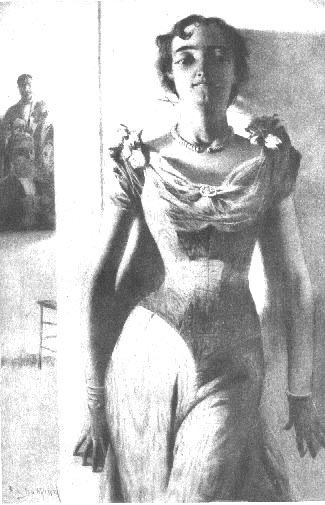
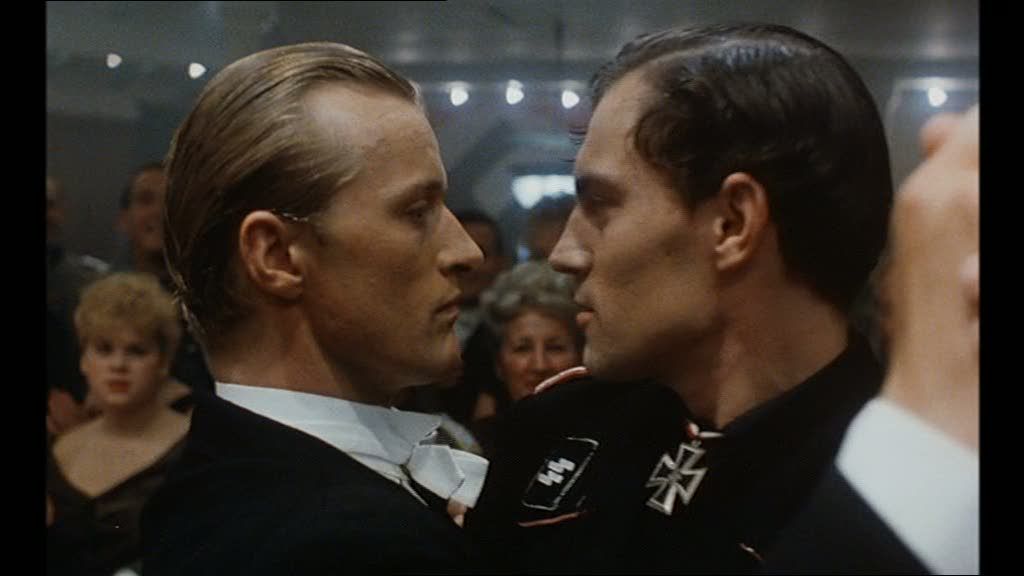
The first Dutch movie (I think) to have made its way into the record here, made in the densely plotted novelistic style that was prevalent in Europe at the time. It is a style that I like whenever and wherever it recurs. I also like the story here (as a cinematic device), which is about a group of friends who formed at university in 1938 and whose schooldays were interrupted by the Nazi takeover of the Netherlands in May of 1940, after which the history of their youths and friendships play out in the arena of World War and occupation. With the exception of the main character every one of the group dies (this is not a huge surprise in any World War II movie about young men), so the film has that poignant doomed and beautiful youth aspect going for it as well. Still, unlike in other Nazi movies, these guys are not, or at least do not come off as, completely powerless victims who are humiliated and murdered without having been able to assert any agency on their own parts. Most of them die as a result of some manner of resistance or at least trying to escape. There is one who turns collaborator (and therefore is working directly against his friends) when his underground activities are discovered. There is another who ends up with the German army in Russia, though I think we are supposed to believe that he is not really into the war and the Nazis and so on. The dangers they undergo are leavened with interludes of romance, sex, riding motorcycles and attending galas while wearing tuxedos, elegant European coffee and liqueur-drinking and educated conversation. This last sentence sounds flippant, but it accounts for much of the appeal of the movie.
The opening scene takes place at the Dutch equivalent of a fraternity house rush. To people like myself who have not undergone this particular trial of male bonding and initiation, the torments and physical abuses that are inflicted on the new pledges seem on the surface little less humiliating and excessive even than what we know is coming in the war. You would think that nothing is worth enduring this hazing, certainly not gaining admission to a society of sadistic jerks who treat you as subhuman scum for the first six months or whatever that you know them. However, the main character (played by Rutger Hauer in what would be his breakout role) eagerly submits to this and the chief tormenter and president of the secret society, who in the first scene you believe to be about the most horrible person in the world, a soul brother of Hitler himself, eventually becomes his closest friend and comrade in war and everything else. I assume the mayhem and violence of this first scene in the dinner club is supposed to refer in some way to the much greater mayhem and violence of the war years which follow. One of the strengths of this movie for me is its portrayal of friendship among men who have some traditional masculinity and competitive drive but also have refinement and intelligence. I largely missed out on this in my own life, and certainly our society on the whole suffers from the lack of it. So I find it very attractive when it is depicted in books and movies.
Netflix Availability: You can "save" it, which means that they acknowledge that it exists, but that they don't actually have it. Availability is unknown. I ordered a copy on VHS. When I have more time I would like to see it again.
Sauve Qui Peut (La Vie) (1979)
Jean-Luc Godard is one of the great men of our age in the arts, so great that it clearly requires one not only to be of genius level intelligence but almost devastatingly cool to really even follow his movies, let alone get what is really going on in them. I am forty-four and I don't really have much idea of how to watch or what to take from his movies. Effusive and strident and confidently knowing as they are, I don't find professional critics to be particularly helpful either with regard to Godard either. With other movies you can read something pointed out in a review and it strikes you as just so, and perhaps you even wonder how you were so dull as not to have picked up on it. But most Godard reviews, especially the deeper you go into his career, are not convincing or illuminating in this way at all. I have no more sense of what the film is supposed to be about or wherein its real claim to greatness lies after reading one than I did before. There is supposedly all of this incredible, innovative, challenging greatness, yet whatever it is defies persuasive articulation, and does not affect a discernible influence on those who supposedly grasp it other than perhaps to accentuate already obnoxious tendencies (which would make sense, because what I can make out of Godard's general worldview would seem to indicate a singularly obnoxious person in his core). I'm not saying it isn't there. Obviously it is there. Perhaps in time I will be able to develop some sense of the man's mind, what he most deeply cares about and sees about him. I do think I am starting to get somewhere in this vein with Bunuel. Not at the level of intellect of course, but of recognizing feelings and symbols and themes that he favors.
What do I make of Sauve Qui Peut? By this point it has been two weeks since I saw it and it is slipping away from me. Prostitution is a theme, so to speak, running through it, and the prostitutes, to my surprise are treated rather brusquely, given sharp orders to do this or that. I think this is because in American movies the person using these services is usually some kind of nerd who is terrified of the prostitute because of her superior experience and knowledge of harder men. But in this there is no respect towards the sex worker as a person at all, she is merely a body. Most of the men in the movie are pretty vulgar as a rule, though one could say Godard is simply showing them as they essentially are, with the facade of any kind of social niceties stripped away. Beautiful women sit in large windowsills opened to let in the country air while languidly perusing books or doing writing of some kind or another (this was reminiscent of Celine and Julie Go Boating, another 70s French classic). There is a suave-looking character named Godard, who is played by another actor however. Godard is divorced and has a twelve year old daughter to whom he seems reasonably well-intentioned in the way a suave French creative type would be, but is probably a little aloof. The world in general is a cold place if you were hoping to develop closeness with other people. The film is great to look at. Apart from the various genius and coolness that only Godard could have contributed to its outcome, the 70s in Continental Western Europe (this was apparently shot in Switzerland) seem on film at least like a pretty great time to have been there, as far as culture, girls, cheap food and lodging and so on.
Netflix Availability: No. This has not been released in any form in the US as far as I can see. I shelled out for a Korean-made DVD (it did have English subtitles), and I will, I hope, have occasion to study this masterpiece again at some point in the future. Another addition to the ever-growing list of highly rated French movies from 1974-1990 that are not readily available in this country.
Monday, August 18, 2014
Wednesday, August 13, 2014
Four Movies, None of Which are Readily Available on Netflix (Part 1)
Cross My Heart (1990)
This is a strange French movie about a bunch of schoolchildren who rally around a classmate whose mother's sudden death has left him an orphan by secretly burying the corpse and bringing him food so that the adults won't remove him to an orphanage and he can continue living in his house and going to their school. I guess it is supposed to be sweet (especially by French standards) as well as somewhat subversive (those killjoy adults with their rules and duties) but I found it unconvincing. Of course the whole premise is not plausible, but any very well made story will make even the most unrealistic possibilities seem as if there is a grain (or more) of important reality in it that is truer than actual life. I did not reach that state with this film.
The aspect of this movie that made the strongest impression on me is its having been made in 1990, and apparently is supposed to be set more or less in that time (the clothes at least look like what the French were wearing in the late 80s). As I have noted elsewhere, movies from that 1987-91 or so era look now like they come from a more remote and obscure age than some stuff from the 70s does. The kids in this movie are 7-8 years younger than I am! and still there isn't a computer in sight, nor the thought that there even ought to be one, they are using those absurdly clunky box public telephones (the era of which lingered well into the 90s) and their schoolroom is the dreary, screenless, pencil- paper-book-and-chalkboard dominated cell that my sense is has been relegated by technology to the scrap heap of history. The outdoor scenes also have what I immediately recognize as the light that was peculiar to the 1988-92 period (I was 19-21 in those years, and very alert to the physical environment). This is a real natural phenomenon--it is connected with changes in the ozone or sunspots or something, I suppose I should look it up. Anyway, this is noticeable in film history. In the mid-60s, '63-66 or so, the light is very bright. Then around '69-'71 things are more drab, vegetation seems more sickly and so on. Around '74-'75 the light always looks as if it is slanted or otherwise off-kilter, and is shining down on the earth through a filter of grit. In the '88 to '92 period, and this film corroborates with my memory, twilight, or the sensation of it, occupied a much greater portion of the day than it does now (at least in the fall and winter), in fact pretty much the whole afternoon after about 2 pm, until it finally got dark. This may not be an accurate description, but I tell you, when I was watching this movie, I thought on several occasions that it was uncanny that I remember the afternoons and the light looking exactly as they do in this movie, and that I have not had the same sense recur for many years since.
Netflix Status: They don't have it. It doesn't seem to be available on DVD in the US (add it to the list of well-regarded French movies from 1974-90). I had to buy a used VHS tape.
The World According to Garp (1982)
It happens by coincidence that Robin Williams died while I was in the middle of writing this. I was not much of a fan of his--this was probably the movie of his that I liked best, though oddly, in the various memorials that have been playing on TV and radio programs the past few days, I have not noticed any mention of nor footage from this at all. It was well-reviewed at the time, but it does seem to be kind of forgotten now.
I also thought (before the media coverage of Williams's death, at least, suggested otherwise) that the general esteem for both John Irving and Robin Williams, which were probably around whatever peak these attained at the time Garp was made, had since declined to the point that any movie which was heavily dependent on their talents must have a decidedly limited ceiling with regard to its potential greatness. And while I think there probably is such a ceiling, and also that thirty years on certain elements of the story, at least as translated to film, do not hold together, I found the movie more watchable than I thought it was going to be. Amidst the various incoherences and seeming misfires at social commentary, there is quite a bit that is good, or at least that speaks to me. The director was George Roy Hill, who had several big hits in the 60s and 70s (Butch Cassidy & the Sundance Kid, The Sting, Slap Shot, etc). I saw some of these films when I was around 10-15 years old, and I remember liking them well enough, though at that time I could not possibly have understood most of what was going on in them. Still, I am guessing there was something in the look and narrative style that has primed me to respond to this manner of filmmaking when I see it now. John Irving of course is from New Hampshire and the story has a lot of good old New England elements to it, a little higher class than I can lay claim to (oceanfront mansions, boarding school, people with literary-oriented lives), but recognizable enough that I find the scenes depicted enjoyable (my college at least was kind of like boarding school). Besides Robin Williams the cast included several other baby boomer actors who would go on to become insufferably annoying (Glenn Close, John Lithgow), but they are all in the early part of their careers here and are tolerable. Mary Beth Hurt, who plays Garp's wife, does a good rendition of a cute, bookish New England girl/wife, and I quite enjoyed the parts that she was in (though now, in her 60s, she looks just as superciliously annoying as other people in her generational cohort, she was very pleasant-looking back in the 80s). The film has a flow to it and is always pushing forward in a number of different directions, some of which are mildly interesting, though as noted before, the whole thing in my mind does not add up to anything especially coherent.
I haven't read the book, so I will assume that the worldview suggested by the title is made a little more manifest. In the movie Garp comes off as a pretty conventional person, who is more shaped by circumstances and events around him than the shaper of them, though perhaps this was the point. He decides as a young man to become a literary novelist and succeeds in this, though there is no indication in the movie of what his books are about or why they are good. The circumstances of his conception and birth were unusual, though his upbringing by a feminist single mother and exposure to her radical friends, close friendship with a transvestite, etc, make less of an impression of eccentricity/zaniness than they would have in the 70s--this is what our lives ought to be like now if we're open-minded and have gone to the right schools, aren't they? It is suggested that Garp possesses a heterosexual virility greater than the average, and the movie reveals him having sex with at least four women during the movie; besides his wife there is a childhood friend who conveniently has become a nymphomaniac in their teenage years, a prostitute that his mother sends him off with after interviewing her for one of her books in disgust at his unbridled male lust (?), and his children's teen-aged babysitter. Babysitter sex of course was not far-fetched in the least in the 60s, 70s and 80s. My father's second wife was one of our old babysitters, and apparently she was not the only one he knew thus intimately. Nowadays of course the idea of such a thing taking place has become so monstrous that any man who would be revealed has having done it--probably who had even given a thought to doing it--would be thought of as among the most depraved sorts of criminals imaginable. And of course all the people (mainly middle-aged and older women) who are committed to overseeing my behavior and making sure I do not get any ideas about wandering off the accepted path love to emphasize how my father is a deeply unhappy person, has no relationships with his children, etc, though whenever I see him, which is about every three years or so he seems perfectly fine. He's very enthusiastic and is usually boasting about his latest project or accomplishment. I'm sure he would be more interested in maintaining relations with his children if we had not turned out so hidebound and lame. He is vigorous and engaged with the world. I'm the one who is the repressed basket case.
Garp's wife has an extramarital affair too and there is a bizarre and rather horrible part (with an attempt to be darkly comic as well) that is the result of this that I was not really satisfied with the resolution of. Perhaps it was handled more thoroughly in the book.
I have noted that there were a number of pretty good large scale novelistic mainstream movies that came out in '82-'83 (Sophie's Choice and The Right Stuff are two other ones that come immediately to mind, and I'm sure there were others) there were aimed at reasonably intelligent adults. I don't want to imply that the modern stuff that correlates to this, whether it be Coen brothers movies or the Sopranos-Mad Men-Breaking Bad TV dramas are worse--they almost certainly are not--but the tone and presentation of them are different in some particular way that I am having trouble identifying but that seems important to me. I'm pretty sure it has something to do with the hyper-knowingness of almost all contemporary productions. That may be inevitable given the point that our society has come to, but I do find something artistically oppressive about it.
Netflix Status: You can put it in your queue, but its status is 'very long wait', and I have never actually received a movie that was a very long wait, though I have had a few of them in my queue for years. My library had a VHS copy in storage, so I checked that out, but the tape did not work. So I ordered a cheap copy off the internet. This movie was surprisingly difficult to find, considering that it is pretty good and has lots of famous actors in it.
I wanted to get four movies in this post, but given that it's taken me a week to do these two (I did go to the beach for about four days) I will divide the post into two parts
This is a strange French movie about a bunch of schoolchildren who rally around a classmate whose mother's sudden death has left him an orphan by secretly burying the corpse and bringing him food so that the adults won't remove him to an orphanage and he can continue living in his house and going to their school. I guess it is supposed to be sweet (especially by French standards) as well as somewhat subversive (those killjoy adults with their rules and duties) but I found it unconvincing. Of course the whole premise is not plausible, but any very well made story will make even the most unrealistic possibilities seem as if there is a grain (or more) of important reality in it that is truer than actual life. I did not reach that state with this film.
The aspect of this movie that made the strongest impression on me is its having been made in 1990, and apparently is supposed to be set more or less in that time (the clothes at least look like what the French were wearing in the late 80s). As I have noted elsewhere, movies from that 1987-91 or so era look now like they come from a more remote and obscure age than some stuff from the 70s does. The kids in this movie are 7-8 years younger than I am! and still there isn't a computer in sight, nor the thought that there even ought to be one, they are using those absurdly clunky box public telephones (the era of which lingered well into the 90s) and their schoolroom is the dreary, screenless, pencil- paper-book-and-chalkboard dominated cell that my sense is has been relegated by technology to the scrap heap of history. The outdoor scenes also have what I immediately recognize as the light that was peculiar to the 1988-92 period (I was 19-21 in those years, and very alert to the physical environment). This is a real natural phenomenon--it is connected with changes in the ozone or sunspots or something, I suppose I should look it up. Anyway, this is noticeable in film history. In the mid-60s, '63-66 or so, the light is very bright. Then around '69-'71 things are more drab, vegetation seems more sickly and so on. Around '74-'75 the light always looks as if it is slanted or otherwise off-kilter, and is shining down on the earth through a filter of grit. In the '88 to '92 period, and this film corroborates with my memory, twilight, or the sensation of it, occupied a much greater portion of the day than it does now (at least in the fall and winter), in fact pretty much the whole afternoon after about 2 pm, until it finally got dark. This may not be an accurate description, but I tell you, when I was watching this movie, I thought on several occasions that it was uncanny that I remember the afternoons and the light looking exactly as they do in this movie, and that I have not had the same sense recur for many years since.
Netflix Status: They don't have it. It doesn't seem to be available on DVD in the US (add it to the list of well-regarded French movies from 1974-90). I had to buy a used VHS tape.
The World According to Garp (1982)
It happens by coincidence that Robin Williams died while I was in the middle of writing this. I was not much of a fan of his--this was probably the movie of his that I liked best, though oddly, in the various memorials that have been playing on TV and radio programs the past few days, I have not noticed any mention of nor footage from this at all. It was well-reviewed at the time, but it does seem to be kind of forgotten now.
I also thought (before the media coverage of Williams's death, at least, suggested otherwise) that the general esteem for both John Irving and Robin Williams, which were probably around whatever peak these attained at the time Garp was made, had since declined to the point that any movie which was heavily dependent on their talents must have a decidedly limited ceiling with regard to its potential greatness. And while I think there probably is such a ceiling, and also that thirty years on certain elements of the story, at least as translated to film, do not hold together, I found the movie more watchable than I thought it was going to be. Amidst the various incoherences and seeming misfires at social commentary, there is quite a bit that is good, or at least that speaks to me. The director was George Roy Hill, who had several big hits in the 60s and 70s (Butch Cassidy & the Sundance Kid, The Sting, Slap Shot, etc). I saw some of these films when I was around 10-15 years old, and I remember liking them well enough, though at that time I could not possibly have understood most of what was going on in them. Still, I am guessing there was something in the look and narrative style that has primed me to respond to this manner of filmmaking when I see it now. John Irving of course is from New Hampshire and the story has a lot of good old New England elements to it, a little higher class than I can lay claim to (oceanfront mansions, boarding school, people with literary-oriented lives), but recognizable enough that I find the scenes depicted enjoyable (my college at least was kind of like boarding school). Besides Robin Williams the cast included several other baby boomer actors who would go on to become insufferably annoying (Glenn Close, John Lithgow), but they are all in the early part of their careers here and are tolerable. Mary Beth Hurt, who plays Garp's wife, does a good rendition of a cute, bookish New England girl/wife, and I quite enjoyed the parts that she was in (though now, in her 60s, she looks just as superciliously annoying as other people in her generational cohort, she was very pleasant-looking back in the 80s). The film has a flow to it and is always pushing forward in a number of different directions, some of which are mildly interesting, though as noted before, the whole thing in my mind does not add up to anything especially coherent.
I haven't read the book, so I will assume that the worldview suggested by the title is made a little more manifest. In the movie Garp comes off as a pretty conventional person, who is more shaped by circumstances and events around him than the shaper of them, though perhaps this was the point. He decides as a young man to become a literary novelist and succeeds in this, though there is no indication in the movie of what his books are about or why they are good. The circumstances of his conception and birth were unusual, though his upbringing by a feminist single mother and exposure to her radical friends, close friendship with a transvestite, etc, make less of an impression of eccentricity/zaniness than they would have in the 70s--this is what our lives ought to be like now if we're open-minded and have gone to the right schools, aren't they? It is suggested that Garp possesses a heterosexual virility greater than the average, and the movie reveals him having sex with at least four women during the movie; besides his wife there is a childhood friend who conveniently has become a nymphomaniac in their teenage years, a prostitute that his mother sends him off with after interviewing her for one of her books in disgust at his unbridled male lust (?), and his children's teen-aged babysitter. Babysitter sex of course was not far-fetched in the least in the 60s, 70s and 80s. My father's second wife was one of our old babysitters, and apparently she was not the only one he knew thus intimately. Nowadays of course the idea of such a thing taking place has become so monstrous that any man who would be revealed has having done it--probably who had even given a thought to doing it--would be thought of as among the most depraved sorts of criminals imaginable. And of course all the people (mainly middle-aged and older women) who are committed to overseeing my behavior and making sure I do not get any ideas about wandering off the accepted path love to emphasize how my father is a deeply unhappy person, has no relationships with his children, etc, though whenever I see him, which is about every three years or so he seems perfectly fine. He's very enthusiastic and is usually boasting about his latest project or accomplishment. I'm sure he would be more interested in maintaining relations with his children if we had not turned out so hidebound and lame. He is vigorous and engaged with the world. I'm the one who is the repressed basket case.
Garp's wife has an extramarital affair too and there is a bizarre and rather horrible part (with an attempt to be darkly comic as well) that is the result of this that I was not really satisfied with the resolution of. Perhaps it was handled more thoroughly in the book.
I have noted that there were a number of pretty good large scale novelistic mainstream movies that came out in '82-'83 (Sophie's Choice and The Right Stuff are two other ones that come immediately to mind, and I'm sure there were others) there were aimed at reasonably intelligent adults. I don't want to imply that the modern stuff that correlates to this, whether it be Coen brothers movies or the Sopranos-Mad Men-Breaking Bad TV dramas are worse--they almost certainly are not--but the tone and presentation of them are different in some particular way that I am having trouble identifying but that seems important to me. I'm pretty sure it has something to do with the hyper-knowingness of almost all contemporary productions. That may be inevitable given the point that our society has come to, but I do find something artistically oppressive about it.
Netflix Status: You can put it in your queue, but its status is 'very long wait', and I have never actually received a movie that was a very long wait, though I have had a few of them in my queue for years. My library had a VHS copy in storage, so I checked that out, but the tape did not work. So I ordered a cheap copy off the internet. This movie was surprisingly difficult to find, considering that it is pretty good and has lots of famous actors in it.
I wanted to get four movies in this post, but given that it's taken me a week to do these two (I did go to the beach for about four days) I will divide the post into two parts
Wednesday, August 06, 2014
On Not Visiting Concentration Camps
A few years back I began periodically putting up pictures from my time in Prague. That series was far from finished, but it has been on hiatus because I have not had a working scanner for some months. I was however reminded of a Prague story recently by the photograph that went viral on the internet that a youngish woman had taken of herself grinning fecklessly while visiting the Auschwitz concentration camp. The picture was, to say the least, unfortunate, in poor taste and revealing of a surprising lack of self-consciousness (considering that even in this day and age it takes some planning and effort for an American student to get to Auschwitz, such that one assumes they have some idea of where they are going). Doubtless many internet denizens were appalled or outraged, ones supposes not to the same extent that they are towards the actual atrocities and injustices themselves, but still with some degree of power. Outrage is a great response, provided one's sense has some kind of coherent form and organization. I wish mine did, but unfortunately I do not have that degree of righteous and sustained fire in my makeup. I never feel outrage. There was another story last year about the Auschwitz museum's having a gift shop that--apart from the question of the appropriateness of having a gift shop at Auschwitz in the first place--sold Woody Allen key chains and similar kitsch items that opened itself to suggestions of institutional insensitivity. I was somewhat surprised by this story, and 'uncomfortable'--middle aged people in the 2010s want to be comfortable, in body and mind, above all other concerns--but I am pretty sure I was not outraged by it.
But with regard to my Prague story. It does not involve my going to a concentration camp--I have never, in keeping with the title of this posting, gone to one--but rather a person who came to stay with us while we were there whose first priority in visiting that part of the world was to see one. This primacy of the desire struck me as strange at the time--the person in question was neither Jewish nor had any other personal connection to the camps, though even in those instances I probably would thought it an odd thing to want to do, or, as our visitor explained to me, feel it to be something they ought, or had to do. I admit I don't feel any compulsion or moral obligation to visit Auschwitz or Terezin (Theresienstadt, which is the camp nearest to Prague that our guest went to see), and the idea of going to a place where people were gassed to death and tortured and otherwise abused and humiliated does not hold any especial fascination for me. Obviously the camps were preserved, I have always assumed in the hope that ordinary people, citizens, functionaries in positions of moderate authority and their underlings, would remember what went on in them and develop their consciences to resist the establishment and execution of similar atrocities in the future. This may have had an effect for a time in certain segments of the West, though it seems that even there the nature of power is taking a form that is getting away from most people's understanding again. (This is not to say that I believe a mass genocide to be imminent, only that I don't think very many ordinary citizens at present would be equipped to effectively stand up to it in the form it would be likely to take if something of the sort did arise). At the time, and not much less now, I did not understand what good purpose would be served by my taking a day outing to the countryside to traipse through this ground of horrors, especially given that the horrors occurred in living memory, and the wounds of the period, the literal as well as the psychological ones, remain so raw and bitter (though I have never been there either, I have considered going to visit Andersonville in Georgia, the Civil War prison camp where men suffered starvation and horrible diseases and cruelties. Perhaps because this is far enough in the past that both the sufferers and the inflicters of the suffering are long dead, and even the differences in the identities of the same are no longer of such great significance that such guilt and anguish as are to be found there do not continue to fall especially heavily on some people more than others. While I know that many natives of the old Confederacy especially still identify with that rebellious era, I for my own part do not consider the Civil War to be an issue that has an active bearing on my life). There are sad reminders of history everywhere in that part of the world. It permeates most atmospheres, and no, the minor spirit is not going to penetrate it, or be very much penetrated by it, any more than he is by anything complicated that he is exposed to; seeing that a concentration camp is this type of evil atmosphere multiplied to an extreme, it seemed to me foolish and obscene to go to such a place without a sense of real purpose impelling me there; and I did not have any such purpose.
The visitor who went out (by himself) to Terezin did not say too much about it that I remember, other than what you would expect. He did seem as if he had undergone some kind of purging of emotions, though as I did not have those particular emotions I still cannot guess what they were and where they originated, and why my guest felt that something in his experience had caused him to be able to deal with them. I should have asked him these questions at the time, but I have never been very forthright with other people in this way, and when I have tried I have not been able to present my thoughts in a way that set people at ease. So I let it go.
But with regard to my Prague story. It does not involve my going to a concentration camp--I have never, in keeping with the title of this posting, gone to one--but rather a person who came to stay with us while we were there whose first priority in visiting that part of the world was to see one. This primacy of the desire struck me as strange at the time--the person in question was neither Jewish nor had any other personal connection to the camps, though even in those instances I probably would thought it an odd thing to want to do, or, as our visitor explained to me, feel it to be something they ought, or had to do. I admit I don't feel any compulsion or moral obligation to visit Auschwitz or Terezin (Theresienstadt, which is the camp nearest to Prague that our guest went to see), and the idea of going to a place where people were gassed to death and tortured and otherwise abused and humiliated does not hold any especial fascination for me. Obviously the camps were preserved, I have always assumed in the hope that ordinary people, citizens, functionaries in positions of moderate authority and their underlings, would remember what went on in them and develop their consciences to resist the establishment and execution of similar atrocities in the future. This may have had an effect for a time in certain segments of the West, though it seems that even there the nature of power is taking a form that is getting away from most people's understanding again. (This is not to say that I believe a mass genocide to be imminent, only that I don't think very many ordinary citizens at present would be equipped to effectively stand up to it in the form it would be likely to take if something of the sort did arise). At the time, and not much less now, I did not understand what good purpose would be served by my taking a day outing to the countryside to traipse through this ground of horrors, especially given that the horrors occurred in living memory, and the wounds of the period, the literal as well as the psychological ones, remain so raw and bitter (though I have never been there either, I have considered going to visit Andersonville in Georgia, the Civil War prison camp where men suffered starvation and horrible diseases and cruelties. Perhaps because this is far enough in the past that both the sufferers and the inflicters of the suffering are long dead, and even the differences in the identities of the same are no longer of such great significance that such guilt and anguish as are to be found there do not continue to fall especially heavily on some people more than others. While I know that many natives of the old Confederacy especially still identify with that rebellious era, I for my own part do not consider the Civil War to be an issue that has an active bearing on my life). There are sad reminders of history everywhere in that part of the world. It permeates most atmospheres, and no, the minor spirit is not going to penetrate it, or be very much penetrated by it, any more than he is by anything complicated that he is exposed to; seeing that a concentration camp is this type of evil atmosphere multiplied to an extreme, it seemed to me foolish and obscene to go to such a place without a sense of real purpose impelling me there; and I did not have any such purpose.
The visitor who went out (by himself) to Terezin did not say too much about it that I remember, other than what you would expect. He did seem as if he had undergone some kind of purging of emotions, though as I did not have those particular emotions I still cannot guess what they were and where they originated, and why my guest felt that something in his experience had caused him to be able to deal with them. I should have asked him these questions at the time, but I have never been very forthright with other people in this way, and when I have tried I have not been able to present my thoughts in a way that set people at ease. So I let it go.
Sunday, July 27, 2014
Two Recent Werner Herzog Movies
Bad Lieutenant: Port of Call New Orleans (2009)
While hopefully not a too realistic depiction of the law enforcement profession in one of our more mythologized Southern cities (to which I have still never been), this was pretty entertaining. Some of my acquaintance are of the opinion that Nicolas Cage is perhaps the worst technical actor currently active, and I suppose I can see how he might not be too good at live classical theater, but in this over the top, rather parodic (and subtly artful) take on the Hollywood big city cop film, he is the right man for the job. He inhabits and sells the role to the extent that it is almost believable, at least more than anyone else in the movie. The character of the bad lieutenant of course is quite wretched, as well as frequently indifferent to moral considerations in a way that is viscerally off-putting to obedient bourgeois people, but in contrast to (and to the deep envy of) most such people, things happen in his life, even if as is the case here, most of them are almost suicidally destructive. He is still a sexual factor in the world as well, which always makes an impression on me, even if physically he is often not in prime condition to finish the job.
The only Werner Herzog movies I had seen up to now were his German New Wave classics Kaspar Hauser and Fitzcarraldo from over thirty years ago. For some years now he has evidently primarily been working in the U.S. and in English. Because he has continued to be so prolific and so consistently strong and probing and unique in his outlook in his movies, and is still at age 72 quite vigorous and seemingly plugged into what is going on in contemporary life rather than a sad, moldy relic from the 70s, he is a figure of almost universal awe in both the film and film criticism worlds, one of the living gods of the medium.
What he has mainly done here is taken the elements of the standard humorless and unengaging police movie and tweaked the more hackneyed aspects of them so as to make them palatable to film buffs and people of above average verbal intelligence. The world of the movie has life in it, and while I might not wish to wake up and find myself in it on a day in and day out basis, I was interested to see what it had in store for Nicolas Cage.
Encounters at the End of the World--(2007)
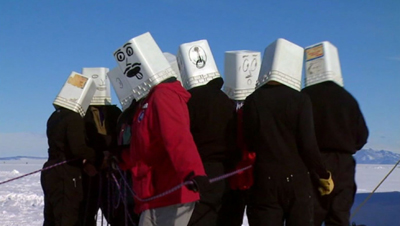
A documentary in which Herzog goes to Antarctica, interviews various people, some scientists, some skilled craftsman, some support staff, at the American base (one of the American bases?) there, as well as goes on a few excursions out into the southern polar wild. It wasn't bad, but in my view I don't think he quite got what he was looking for out of the project. It would seem that if there was any artistic filmmaker who was smart enough, odd enough, inquisitive enough, and so on, to connect with scientists and draw them out enough to get into the spirit needed to make a really good movie, Herzog would be the guy to do it. But most of them are not really responsive to him, they act as if his questions and observations are odd, that he doesn't really understand and can't understand what they are doing--I suppose you could say that they don't understand what he is doing either, but they seem to me oddly uninterested in the circumstance that one of the top living filmmakers in the world has shown up on the base to make a documentary. So I find that the finished movie lacks the kind of unity and driving purpose that is characteristic of Herzog's fictional films that I have seen. It's still worth seeing, and other writers and film people do consider it another major triumph for the great director.
While hopefully not a too realistic depiction of the law enforcement profession in one of our more mythologized Southern cities (to which I have still never been), this was pretty entertaining. Some of my acquaintance are of the opinion that Nicolas Cage is perhaps the worst technical actor currently active, and I suppose I can see how he might not be too good at live classical theater, but in this over the top, rather parodic (and subtly artful) take on the Hollywood big city cop film, he is the right man for the job. He inhabits and sells the role to the extent that it is almost believable, at least more than anyone else in the movie. The character of the bad lieutenant of course is quite wretched, as well as frequently indifferent to moral considerations in a way that is viscerally off-putting to obedient bourgeois people, but in contrast to (and to the deep envy of) most such people, things happen in his life, even if as is the case here, most of them are almost suicidally destructive. He is still a sexual factor in the world as well, which always makes an impression on me, even if physically he is often not in prime condition to finish the job.
The only Werner Herzog movies I had seen up to now were his German New Wave classics Kaspar Hauser and Fitzcarraldo from over thirty years ago. For some years now he has evidently primarily been working in the U.S. and in English. Because he has continued to be so prolific and so consistently strong and probing and unique in his outlook in his movies, and is still at age 72 quite vigorous and seemingly plugged into what is going on in contemporary life rather than a sad, moldy relic from the 70s, he is a figure of almost universal awe in both the film and film criticism worlds, one of the living gods of the medium.
What he has mainly done here is taken the elements of the standard humorless and unengaging police movie and tweaked the more hackneyed aspects of them so as to make them palatable to film buffs and people of above average verbal intelligence. The world of the movie has life in it, and while I might not wish to wake up and find myself in it on a day in and day out basis, I was interested to see what it had in store for Nicolas Cage.
Encounters at the End of the World--(2007)
A documentary in which Herzog goes to Antarctica, interviews various people, some scientists, some skilled craftsman, some support staff, at the American base (one of the American bases?) there, as well as goes on a few excursions out into the southern polar wild. It wasn't bad, but in my view I don't think he quite got what he was looking for out of the project. It would seem that if there was any artistic filmmaker who was smart enough, odd enough, inquisitive enough, and so on, to connect with scientists and draw them out enough to get into the spirit needed to make a really good movie, Herzog would be the guy to do it. But most of them are not really responsive to him, they act as if his questions and observations are odd, that he doesn't really understand and can't understand what they are doing--I suppose you could say that they don't understand what he is doing either, but they seem to me oddly uninterested in the circumstance that one of the top living filmmakers in the world has shown up on the base to make a documentary. So I find that the finished movie lacks the kind of unity and driving purpose that is characteristic of Herzog's fictional films that I have seen. It's still worth seeing, and other writers and film people do consider it another major triumph for the great director.
Thursday, July 10, 2014
Fourth of July
We went to York Beach in Maine. The holiday happened to coincide with the day last week's hurricane came up our way, so it was rainy and chillier than usual. Of course it also cut down on the crowds. On a regular warm and sunny July 4, the beach would be shoulder to shoulder with people.
When we first got there they weren't even letting people go in the water--the lifeguards were standing at the edge of the water keeping you away--but after about an hour they abandoned their posts and anyone could go in.
One of the famous amusement halls along the shore at Short Sands beach.
The even more famous Fun-o-Rama (with child #3 running down the steps). Both of these buildings are at least pre-war and are built like old barns. Once glance up at the rafters and psychologically I am transported back about 28 years, to the impression I had at that time of being transported back fifty or sixty years while being simultaneously more fully engaged in the moment than I am now. That is to say, I am really thinking of all that has changed and passed away in this area since 1986, but even in 1986 I was thinking the same thing with regard to 1936.
Four of the five children playing or picking things up on the beach. #4 is out of the picture. They were all in the picture when the button was pushed. Our cameras all have 2-3 second lapses which means you need to have luck to get a good picture of the children.
#5 doesn't like having sandy hands.
Here is #4 inside Fun-o-Rama. This composition was another victim of slow camera syndrome.
Cashing in the game tickets.
Mechanical fortune-teller (and my daughter).
It stopped raining and they letting people into the ocean again, so we went back to the beach.
Some relatives of my wife's used to have a house here, a little further down from these off to the right, which is one of the reasons why York is one of the main beaches we go to. They sold it off some years ago and naturally the new owners knocked it down and built a bigger house. The old house probably dated from the 30s or 40s and was a real classic New England, Summer of '42esque beach house, no air conditioning, whipping white curtains, creaking screen doors, a bookshelf that hadn't been augmented since before I was born. By the end though the surrounding atmosphere had changed enough that it almost felt like it didn't really belong anymore. Keeping it more or less exactly as it was for so long, pleasing though that was in some ways, seemed to suggest either ambitions or financial limitations on the part of its owners that were unacceptably modest for contemporary times. Feeling this way about things that don't change or innovate eagerly and rapidly enough, even when one is sympathetic to the laggards, has become second nature to me, and I would presume many people who have absorbed the dominant attitudes of the past twenty years.
Child #2 draws a map of the northeast in the wet sand.
Back at home, but a good picture of daughter by #4, who seems to have something of an artistic temperament and flair about him.
When we first got there they weren't even letting people go in the water--the lifeguards were standing at the edge of the water keeping you away--but after about an hour they abandoned their posts and anyone could go in.
One of the famous amusement halls along the shore at Short Sands beach.
The even more famous Fun-o-Rama (with child #3 running down the steps). Both of these buildings are at least pre-war and are built like old barns. Once glance up at the rafters and psychologically I am transported back about 28 years, to the impression I had at that time of being transported back fifty or sixty years while being simultaneously more fully engaged in the moment than I am now. That is to say, I am really thinking of all that has changed and passed away in this area since 1986, but even in 1986 I was thinking the same thing with regard to 1936.
Four of the five children playing or picking things up on the beach. #4 is out of the picture. They were all in the picture when the button was pushed. Our cameras all have 2-3 second lapses which means you need to have luck to get a good picture of the children.
#5 doesn't like having sandy hands.
Here is #4 inside Fun-o-Rama. This composition was another victim of slow camera syndrome.
Cashing in the game tickets.
Mechanical fortune-teller (and my daughter).
It stopped raining and they letting people into the ocean again, so we went back to the beach.
Some relatives of my wife's used to have a house here, a little further down from these off to the right, which is one of the reasons why York is one of the main beaches we go to. They sold it off some years ago and naturally the new owners knocked it down and built a bigger house. The old house probably dated from the 30s or 40s and was a real classic New England, Summer of '42esque beach house, no air conditioning, whipping white curtains, creaking screen doors, a bookshelf that hadn't been augmented since before I was born. By the end though the surrounding atmosphere had changed enough that it almost felt like it didn't really belong anymore. Keeping it more or less exactly as it was for so long, pleasing though that was in some ways, seemed to suggest either ambitions or financial limitations on the part of its owners that were unacceptably modest for contemporary times. Feeling this way about things that don't change or innovate eagerly and rapidly enough, even when one is sympathetic to the laggards, has become second nature to me, and I would presume many people who have absorbed the dominant attitudes of the past twenty years.
Child #2 draws a map of the northeast in the wet sand.
Climbing on the rocks. Another time-honored Maine pastime.
Back at home, but a good picture of daughter by #4, who seems to have something of an artistic temperament and flair about him.
Thursday, July 03, 2014
Fish Tank (2010)/Remains of the Day (1993)
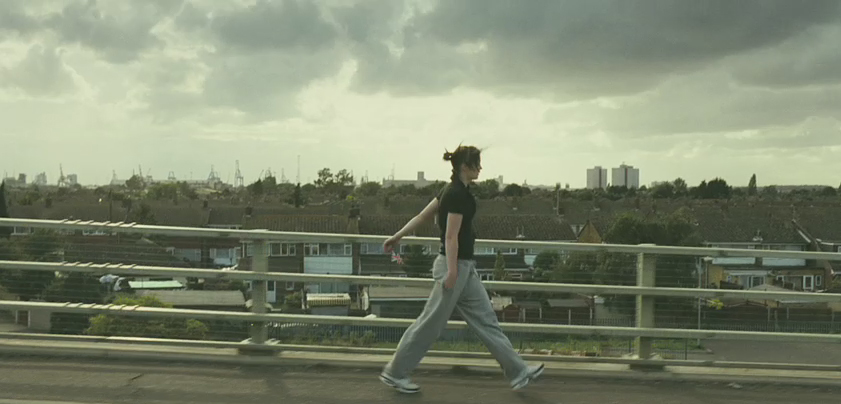
Modern Britain has, by reputation, the most depraved white underclass this side of Cherepovets. The data on educational attainment, employment, criminality, and other markers of social well-being indicates that this group has devolved to a far worse condition than their counterparts in America, which would seem to take some doing. Fish Tank is set in this milieu. It is a movie of the probing, grimly realistic, not particularly concerned with being entertaining type that is more common in the U.K. than it is here. One feels that is good work, that it approaches its material in a more original and intelligent way than most writers and directors can muster, and that it confronts sides of life that a mature adult ought to be able to look at unflinchingly and have some knowledge of and ideas about. Whatever humor or joy is in it, or is supposed to be in it, is inaccessible to me, and I was glad enough to move on from it. That said, its director, Andrea Arnold, has a real talent for conceiving plots and for carrying the most potentially unpleasant scenarios much farther than one suspects most mainstream artists and audiences have the nerve to pursue, or stand. One of her short films, called Wasp, that was included in the Criterion DVD, was very good in this nerve-wracking sort of way.
The people in these stories are perhaps a little too authentic--their lives are so hopeless and joyless and artless that there is no ground (or air) on which to feel anything that might draw me to care about them or find them interesting.
As a rule-following middle level person terrified of the consequences of ever stepping out of line with regard to anything, I was struck by how much stress I felt just watching the various criminally negligent behaviors and potentially violent or sexually dangerous situations in which the underclass persons continually found themselves (or brought upon themselves), which was probably greater than what the characters would have felt at the time. In these Andrea Arnold movies a lot of the stress originates from the circumstance that these situations involve children, or teenagers that the respectable classes still consider to be children who require to be protected in matters of sex and violence at the very least, and we see them decidedly not being protected from those things. If you are the sort of person however whose instincts for any rawer and more spontaneous brand of violence and sexuality, assuming you ever had any, never achieved expression in actual life and died stillborn somewhere in your desiccated soul long before you were twenty-five, it is disconcerting to see them alive in other people, even if it is, by the standards you have adopted as sacred, destroying their lives.
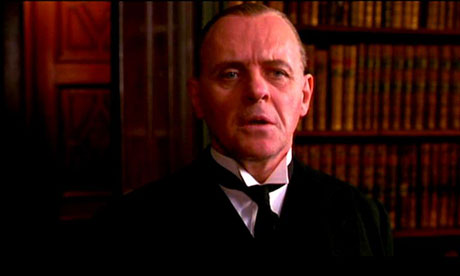
I always thought The Remains of the Day was the best of the old Merchant/Ivory movies. I thought that their Forster versions were all right at the time, though Howards End seems either to have dated noticeably or does not hold up well on a second viewing, but that their Henry James adaptations were kind of pointless. I am not an expert on Henry James either, but even after reading and probably not understanding The Golden Bowl, I was pretty sure that whatever they were going for in the movie was not really what the book was about either. This (Remains) is an almost perfect contrast to Andrea Arnold, especially given the English setting of both (Fish Tank was set in Essex, and I believe the house in Remains is supposed to be in Oxfordshire), being highly mannered, even prissy, self-consciously literate and historical and mature and serious. Acting on an impulse, or even being so undisciplined as to allow oneself to have any, is beyond unthinkable. After seeing Fish Tank, this feels like a lightweight production, perhaps because it is, perhaps because it is so doggedly old-fashioned in its artistic values that one feels it cannot possibly be addressing anything important. However I still like it, and I think there is a good deal suggested in it that one can talk about, even if the film itself does not face these matters with a penetration or intensity that would be satisfactory to us.
According to my wife I talk and act just like the Anthony Hopkins character in this movie (the talking with a Mid-Atlantic accent), which I don't think is meant to be a compliment, though at least the guy is about as good as he can be at his job, and he has a well-developed sense, albeit an extremely narrow and limited one, of who he is. I suppose one of the questions suggested by the movie is whether it is better that people like Stevens, and myself, should be exposed to a slightly more expansive view and understanding of the world, and live as confused, undefined men, or be narrowly brought up to do particular tasks, for which they are supremely fitted, extremely well, but be at the same time unable to act as free men with political, or even very much moral agency. The movie, not surprisingly, I think would say that Stevens would have definitely benefited from some liberal arts type training in his upbringing, that this would have been good for society and helped to avoid some wrongs, etc. And he does give indication of desiring improvement in his education and speech and level of culture in the movie, though it is clear he does not have much real sense of the best way to go about it. However that was 20 years ago, when Western affluence vis-a-vis the rest of the world allowed us the luxury--which was never exactly indulged in too excessively even then--of wondering whether the servant class ought to be afforded a greater degree of intellectual development. The trend since then has been so severely in the other direction, to the point that even most people with college degrees do not seem to have any sense of why liberal arts departments even exist in colleges, or ever existed, at least since the invention of science.
Thursday, June 26, 2014
Oliver Wendell Holmes--Elsie Venner (1861)
I have finally given up on trying to keep up a full record of all the books I read here. I had fallen more than five years behind, and of course had long forgotten what had happened in most of the books or what they were about. However I may periodically post something about whatever I happen to be reading off my 'A-List' at any given time (the B-list I write about at the Vacation blog). Currently this is the volume referenced in the title of this post, a 596 page Victorian novel, though as it is a very old [1887] edition, the number of words per page is actually not that great). I started it on June 5, and as of today (June 26) I have gotten to page 388. This is, for me, a pretty good pace.
Oliver Wendell Holmes, physician, poet, Harvard professor, coiner of the word "anesthesia", the term "Boston Brahmins", and all around best-selling author, along with his son, Oliver Wendell Holmes, Jr, the famed longtime Supreme Court Justice of the early 20th century (perhaps most famous nowadays for his "three generations of imbeciles is enough" statement in upholding a case of forced sterilization), were the most prominent members of one of the dominant American families of their age, and New England families of any age. Due to both father and son living long and active lives, their age lasted close to a century (Holmes, Jr, who died in 1935 at the age of 94, does not appear to have had any children. I am not sure whether the family lives on to this day or not). Holmes Senior's most famous book, The Autocratic of the Breakfast Table, was still prominent enough in the 1960s to make it onto my 'B' list. As I am reading those books in alphabetical order and am currently in the AGs, I should be getting to it within the next few years at least, and I cannot say that I am dreading it.
Elsie Venner is an odd book, not uninteresting, overwordy and padded in the typical Victorian style. It has an old New England setting, in a New England old, or young, enough to still be suggestive of 'wildness', presumably in contrast with the more ancient civilizations of Europe, that is of interest to me, as a longtime resident of this part of the country. When Holmes gets around to presenting actual scenes, and has his characters speak for themselves, the book is not so bad. But the introductions and descriptive passages, while typical for their time, are more noticeably so in their extravagance than in those authors contemporary to Holmes whose fame has carried through to our own. The chapter I am in now, for instance, is titled, "The Widow Rowens Gives a Tea Party". I am anticipating that the scene of the actual tea party will be entertaining enough; but at seven pages into the chapter we are still being introduced to the Widow Rowens, her mode of dress, her attitude towards remarriage, speculation on her ancestry, and so on, following several pages devoted to a recap of her late husband's military career and how his eye for a worthy horse carried over into a similar sense for women. It is also worth noting that while Holmes seems to have been devoted to American democracy and a believer in political equality, he was also acutely conscious of his personal superiority, and that of his class, to the mass of the population. While he does not harp on this to the point of overkill, it is a pretty consistent theme running through the book, and it comes up enough that he gets off some pretty driving sentences about the differences between the energetic, achieving, ruling portion of society and that occupied by lackluster slavish types.
The most famous part--probably the only famous part--of this book is on the very first page, in the second paragraph, in which Holmes describes "The Brahmin caste of New England", a passage that one still sees quoted sometimes even now, especially the part about how this class "gives parties where the persons who call them by the above title are not invited, and have a provokingly easy way of dressing, walking, talking, and nodding to people, as if they felt entirely at home, and would not be embarrassed in the least, if they met the Governor, or even the President of the United States, face to face." In the early chapters of the book and intermittently thereafter there is a first person narrator who, like Holmes, is a professor at Harvard, though he does not play any part in the main action of the story other than writing a recommendation for one of his favorite scholars that enables him to get a teaching job in an academy for teen-aged girls. The professor is the author of an as yet unpublished book about Anglo-American Anthropology in which the physical characteristics of the various types of that race are no doubt rigorously investigated. His pet student is like himself, obviously a specimen of the highest type of their kind, and the professor/Holmes writes with regard to him that "I have great confidence in young men who believe in themselves, and are accustomed to rely on their own resources from an early period. When a resolute young fellow steps up to the great bully, the World, and takes him boldly by the beard, he is often surprised to find it come off in his hand, and that it was only tied on to scare away timid adventurers".
Holmes's house on Beacon Street.
With regard to the approach of this superior type of man to marriage:
"By the time he was thirty, he would have knocked the social pawns out of the way, and be ready to challenge a wife from the row of great pieces in the background...I would not have him marry until he knew his level...remember that a young man, using large endowments wisely and fortunately, may put himself on a level with the highest in the land in ten brilliant years of spirited, unflagging labor." I think something like this is the arc your life is supposed to take after you graduate from St John's, if you have properly absorbed the course of study during your time there.
"Silas Peckham was a thorough Yankee, born on a windy part of the coast, and reared chiefly on salt-fish". I just thought this was funny.
"You cannot get together a hundred girls, taking them as they come, from the comfortable and affluent classes, probably anywhere, certainly not in New England, without seeing a good deal of beauty." Wow. I agree, but I don't think I've ever seen anyone else actually express this sentiment with regard to New England.
Speaking of New England beauty, the title character Elsie Venner finally appears on page 73, as a notable student at the girls' school. After which she promptly disappears again for another thirty or forty pages.
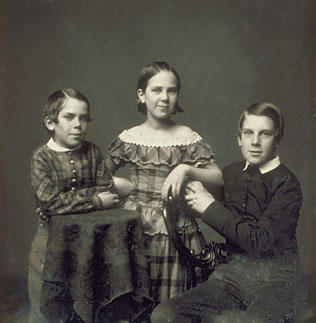
Holmes's children.
"...nothing but a gentleman is endurable in full dress." I know I would be considered one of the unendurables, but it is fun for me to imagine being able to laugh at people like myself in the absolute security of a superiority acknowledged on all sides.
Holmes refers to New Hampshire as a "queer sort of state", "in more than one sense the Switzerland of New England", and "naturally enough deficient in pudding-stone", which I take to refer to a lack of settlements large enough to have paved roads and sidewalks in comparison with Massachusetts.
Elsie Venner by the way is a ferocious and untamed girl whose condition is believed to be the result of her mother's having been bitten by a rattlesnake while pregnant. She dances wild Moorish fandangoes and sprawls on a tiger skin rug in her bedroom. This would be exciting stuff if it were going on in most New England villages now, but maybe it was not so unusual in 1860.
"The absolute tyranny of the human will over a noble and powerful beast develops the instinct of personal prevalence and dominion; so that horse-subduer and hero were almost synonymous in simpler times, and are closely related still." I do like this aspect of these old writers, that there was no mincing about on matters related to manhood and the necessity of mastery and domination over one's environment to attain a sense of fullness. This is what the education of boys should be directed to, and maybe still is at the highest reaches, if you can break through to those, it still is (and must be, because the naturally strongest will insist upon it).
I liked the comparison Holmes makes of a house to a seed-pod, its front door opening and projecting its young outwards in all directions. My house will probably take on something of this personality when the children grow up.
Elsie Venner has a wild cousin who grew up in Argentina (and who is also infatuated with her). Though he enjoys hanging out and riding on the Pampas with the native population there, at a certain point he yearns for New England and refers to his Argentinian companions as "degenerate mongrels" (it is humorous when it happens in the book).
"The clergyman, the physician, the teacher, must be paid; but each of them, if his duty be performed in the true spirit, can hardly help a shiver of disgust when money is counted out to him for administering the consolations of religion, for saving some precious life, for sowing the seeds of Christian civilization in young ingenuous souls." I laughed at this too, and wrote, 'where does this come from?', but I think there is something of sincerity in the sentiment, even though ordinarily Holmes was one of the greatest champions of'getting on in the world of his time. There is nonetheless a vulgarity in getting paid for doing truly noble things that I believe most noble men feel, and this is why aristocrats and certain deeply cultured people were so long loth to accept money in exchange for services. But it is hard to reconcile democratic society, the American version anyway, with the damnation of money.
"Elsie was naturally what they call a man-hater..." This sounds like a term people at the time would have used for people exhibiting lesbian tendencies. It is not really indicated that Elsie Venner is a lesbian so much that her sexuality and intelligence are of a more masculine quality, to the point that she is way too much woman for almost all of the ordinary mortal men with whom she comes into contact.
"Always handle any positively electrical body, whether it is charged with passion or power, with some non-conductor between you and it, not with your naked hands."
Referring to one of the harried teachers at the school: "Why does not somebody come and carry off this noble woman, waiting here all ready to make a man happy?" I have had similar thoughts about certain people, and the reminiscence of them made me happy. Not many people, mind you, but every few years you will run across someone fitting the description.
Helen is the woman who ought to be carried off to make some man happy.
"So it is that in all the quiet bays which indent the shores of the great ocean of thought, at every sinking wharf, we see moored the hulks and the razees of enslaved or half-enslaved intelligences." Now we getting back to what people like Holmes do very well, exposing the cold reality of the mental lives of the likes of me. Such as this:
"The magnificent constituency of mediocrities of which the world is made up,--the people without biographies, whose lives have made a clear solution in the fluid menstruum of time, instead of being precipitated in the opaque sediment of history--" What separates Holmes from other writers in this vein is that there is no sense with him of having been especially fortunate, or thoughts that the uninspired, servile life could ever have been his lot. No, the idea of himself existing in such a state, not being at the forefront of things, having dull thoughts and no ability to hold intelligent conversation, is unfathomable.
I have not finished the book yet, so I don't know how certain medical conditions are going to resolve themselves. While Holmes, the physician, admonishes amateur medical scholars, who were doubtless abundant in that age, and does it pretty well, it is curious that the main theme of his book seems to rest on a rather fantastic and dubious condition both of body and soul.
"He had entered that period which marks the decline of men who have ceased growing in knowledge and strength: from forty to fifty a man must move upward, or the natural falling off in the vigor of life will carry him rapidly downward." There is no letting up with Holmes.
"It takes too long to describe these scenes where a good deal of life is concentrated into a few silent seconds."
Oliver Wendell Holmes, physician, poet, Harvard professor, coiner of the word "anesthesia", the term "Boston Brahmins", and all around best-selling author, along with his son, Oliver Wendell Holmes, Jr, the famed longtime Supreme Court Justice of the early 20th century (perhaps most famous nowadays for his "three generations of imbeciles is enough" statement in upholding a case of forced sterilization), were the most prominent members of one of the dominant American families of their age, and New England families of any age. Due to both father and son living long and active lives, their age lasted close to a century (Holmes, Jr, who died in 1935 at the age of 94, does not appear to have had any children. I am not sure whether the family lives on to this day or not). Holmes Senior's most famous book, The Autocratic of the Breakfast Table, was still prominent enough in the 1960s to make it onto my 'B' list. As I am reading those books in alphabetical order and am currently in the AGs, I should be getting to it within the next few years at least, and I cannot say that I am dreading it.
Elsie Venner is an odd book, not uninteresting, overwordy and padded in the typical Victorian style. It has an old New England setting, in a New England old, or young, enough to still be suggestive of 'wildness', presumably in contrast with the more ancient civilizations of Europe, that is of interest to me, as a longtime resident of this part of the country. When Holmes gets around to presenting actual scenes, and has his characters speak for themselves, the book is not so bad. But the introductions and descriptive passages, while typical for their time, are more noticeably so in their extravagance than in those authors contemporary to Holmes whose fame has carried through to our own. The chapter I am in now, for instance, is titled, "The Widow Rowens Gives a Tea Party". I am anticipating that the scene of the actual tea party will be entertaining enough; but at seven pages into the chapter we are still being introduced to the Widow Rowens, her mode of dress, her attitude towards remarriage, speculation on her ancestry, and so on, following several pages devoted to a recap of her late husband's military career and how his eye for a worthy horse carried over into a similar sense for women. It is also worth noting that while Holmes seems to have been devoted to American democracy and a believer in political equality, he was also acutely conscious of his personal superiority, and that of his class, to the mass of the population. While he does not harp on this to the point of overkill, it is a pretty consistent theme running through the book, and it comes up enough that he gets off some pretty driving sentences about the differences between the energetic, achieving, ruling portion of society and that occupied by lackluster slavish types.
The most famous part--probably the only famous part--of this book is on the very first page, in the second paragraph, in which Holmes describes "The Brahmin caste of New England", a passage that one still sees quoted sometimes even now, especially the part about how this class "gives parties where the persons who call them by the above title are not invited, and have a provokingly easy way of dressing, walking, talking, and nodding to people, as if they felt entirely at home, and would not be embarrassed in the least, if they met the Governor, or even the President of the United States, face to face." In the early chapters of the book and intermittently thereafter there is a first person narrator who, like Holmes, is a professor at Harvard, though he does not play any part in the main action of the story other than writing a recommendation for one of his favorite scholars that enables him to get a teaching job in an academy for teen-aged girls. The professor is the author of an as yet unpublished book about Anglo-American Anthropology in which the physical characteristics of the various types of that race are no doubt rigorously investigated. His pet student is like himself, obviously a specimen of the highest type of their kind, and the professor/Holmes writes with regard to him that "I have great confidence in young men who believe in themselves, and are accustomed to rely on their own resources from an early period. When a resolute young fellow steps up to the great bully, the World, and takes him boldly by the beard, he is often surprised to find it come off in his hand, and that it was only tied on to scare away timid adventurers".
Holmes's house on Beacon Street.
With regard to the approach of this superior type of man to marriage:
"By the time he was thirty, he would have knocked the social pawns out of the way, and be ready to challenge a wife from the row of great pieces in the background...I would not have him marry until he knew his level...remember that a young man, using large endowments wisely and fortunately, may put himself on a level with the highest in the land in ten brilliant years of spirited, unflagging labor." I think something like this is the arc your life is supposed to take after you graduate from St John's, if you have properly absorbed the course of study during your time there.
"Silas Peckham was a thorough Yankee, born on a windy part of the coast, and reared chiefly on salt-fish". I just thought this was funny.
"You cannot get together a hundred girls, taking them as they come, from the comfortable and affluent classes, probably anywhere, certainly not in New England, without seeing a good deal of beauty." Wow. I agree, but I don't think I've ever seen anyone else actually express this sentiment with regard to New England.
Speaking of New England beauty, the title character Elsie Venner finally appears on page 73, as a notable student at the girls' school. After which she promptly disappears again for another thirty or forty pages.
Holmes's children.
"...nothing but a gentleman is endurable in full dress." I know I would be considered one of the unendurables, but it is fun for me to imagine being able to laugh at people like myself in the absolute security of a superiority acknowledged on all sides.
Holmes refers to New Hampshire as a "queer sort of state", "in more than one sense the Switzerland of New England", and "naturally enough deficient in pudding-stone", which I take to refer to a lack of settlements large enough to have paved roads and sidewalks in comparison with Massachusetts.
Elsie Venner by the way is a ferocious and untamed girl whose condition is believed to be the result of her mother's having been bitten by a rattlesnake while pregnant. She dances wild Moorish fandangoes and sprawls on a tiger skin rug in her bedroom. This would be exciting stuff if it were going on in most New England villages now, but maybe it was not so unusual in 1860.
"The absolute tyranny of the human will over a noble and powerful beast develops the instinct of personal prevalence and dominion; so that horse-subduer and hero were almost synonymous in simpler times, and are closely related still." I do like this aspect of these old writers, that there was no mincing about on matters related to manhood and the necessity of mastery and domination over one's environment to attain a sense of fullness. This is what the education of boys should be directed to, and maybe still is at the highest reaches, if you can break through to those, it still is (and must be, because the naturally strongest will insist upon it).
I liked the comparison Holmes makes of a house to a seed-pod, its front door opening and projecting its young outwards in all directions. My house will probably take on something of this personality when the children grow up.
Elsie Venner has a wild cousin who grew up in Argentina (and who is also infatuated with her). Though he enjoys hanging out and riding on the Pampas with the native population there, at a certain point he yearns for New England and refers to his Argentinian companions as "degenerate mongrels" (it is humorous when it happens in the book).
"The clergyman, the physician, the teacher, must be paid; but each of them, if his duty be performed in the true spirit, can hardly help a shiver of disgust when money is counted out to him for administering the consolations of religion, for saving some precious life, for sowing the seeds of Christian civilization in young ingenuous souls." I laughed at this too, and wrote, 'where does this come from?', but I think there is something of sincerity in the sentiment, even though ordinarily Holmes was one of the greatest champions of'getting on in the world of his time. There is nonetheless a vulgarity in getting paid for doing truly noble things that I believe most noble men feel, and this is why aristocrats and certain deeply cultured people were so long loth to accept money in exchange for services. But it is hard to reconcile democratic society, the American version anyway, with the damnation of money.
"Elsie was naturally what they call a man-hater..." This sounds like a term people at the time would have used for people exhibiting lesbian tendencies. It is not really indicated that Elsie Venner is a lesbian so much that her sexuality and intelligence are of a more masculine quality, to the point that she is way too much woman for almost all of the ordinary mortal men with whom she comes into contact.
"Always handle any positively electrical body, whether it is charged with passion or power, with some non-conductor between you and it, not with your naked hands."
Referring to one of the harried teachers at the school: "Why does not somebody come and carry off this noble woman, waiting here all ready to make a man happy?" I have had similar thoughts about certain people, and the reminiscence of them made me happy. Not many people, mind you, but every few years you will run across someone fitting the description.
Helen is the woman who ought to be carried off to make some man happy.
"So it is that in all the quiet bays which indent the shores of the great ocean of thought, at every sinking wharf, we see moored the hulks and the razees of enslaved or half-enslaved intelligences." Now we getting back to what people like Holmes do very well, exposing the cold reality of the mental lives of the likes of me. Such as this:
"The magnificent constituency of mediocrities of which the world is made up,--the people without biographies, whose lives have made a clear solution in the fluid menstruum of time, instead of being precipitated in the opaque sediment of history--" What separates Holmes from other writers in this vein is that there is no sense with him of having been especially fortunate, or thoughts that the uninspired, servile life could ever have been his lot. No, the idea of himself existing in such a state, not being at the forefront of things, having dull thoughts and no ability to hold intelligent conversation, is unfathomable.
I have not finished the book yet, so I don't know how certain medical conditions are going to resolve themselves. While Holmes, the physician, admonishes amateur medical scholars, who were doubtless abundant in that age, and does it pretty well, it is curious that the main theme of his book seems to rest on a rather fantastic and dubious condition both of body and soul.
"He had entered that period which marks the decline of men who have ceased growing in knowledge and strength: from forty to fifty a man must move upward, or the natural falling off in the vigor of life will carry him rapidly downward." There is no letting up with Holmes.
"It takes too long to describe these scenes where a good deal of life is concentrated into a few silent seconds."
Sunday, June 15, 2014
You, The Living (2007); Wag the Dog (1997)
You, the Living is a Swedish movie, directed by Roy Andersson. He is known for being experimental. I don't believe he used any, or not very many, professional actors in this. It is quite short for a modern film, less than 90 minutes. It consists of a series of vignettes of ordinary life with mildly absurdist embellishments, some of which involve recurring characters and themes that intersect tangentially with other recurring characters and themes, but some of which do not. I feel like I have seen several movies similar to this that have come out in the last 20 years, though I cannot think of what any of them are at the moment. The 90s/Generation X movie Slacker was kind of like this, though it is not really one of the ones I was thinking of; but it is that idea, moving from one obscure, secretly weird or disturbed person or environment to another, this variety of life and thoughts and obsessions and habits and desires all around us that we may or may not be awake to, or don't have the energy to care about, or maybe in most instances don't have the nerve or social acumen to engage with. Being Swedish, the atmosphere, settings, emotions, conversations have a subdued nature that is congenial to me. The slight element of absurdity that I mentioned above (along with at least one departure into whimsy) was needed. The themes here are not such as require unflinching realism, which, even when it is good, I find keeps me at a distance from the material and doesn't have the effect on me that it ought to. I am kind of deadened to realism, even my own.
This was OK and it interested me a little bit but it didn't really excite me either. I don't have a lot to say about it.
Wag the Dog on the other hand was cringingly painful to get through. I guess the idea must have seemed clever or incisive at the time, which caused people to rate it highly, but has anyone gone back and looked at it recently? The combination of personalities in the cast--this production was full of big names, as well as people who were names of a sort at the time--does not really work. To begin with, even though the script was written by David Mamet, who is supposed to be a genius, it was too ham-handed to be either funny or even diverting. The director, Barry Levinson, was an old pro who had made some movies I liked in the 80s, but evidently he was past his prime even by this time (he continues to work to this day, though I have not even heard of most of the stuff he has done in the last twenty years). The two big stars, Dustin Hoffman and Robert DeNiro, neither of whom I really like all that much to begin with, are very hammy and way oversell the jokes, which of course causes the other members of the cast either to play along to this tune, or even worse, to follow their lead. Given the absence of any James Mason type figure (which this movie sorely needed) to provide even a hint of gravitas, the movie has nothing resembling a solid center at all. And then there are the minor cast members, who besides not meshing either with anything resembling a spirit of a story or with the other actors, constitute a true who's who of nightmarish 90s awfulness. Anne Heche! If you're making me wistful for Helen Hunt, let's just say, you are not getting it done. Dennis Leary! One of the most profoundly unlikeable personas in the history of show business. And also a comedian who is not really funny. A very 90s combination. Woody Harrelson! I hate him in everything he does. I don't really know why. He seems like one of these people who is vapid and vaguely hostile, without any real charm. The famous country singer Willie Nelson is in this, sort of, playing himself. I mean, you see him, but he doesn't have any lines or interact with any of the stars, so artistically it is hard to see how it was worthwhile for him to be in the movie. Maybe he was supposed to be ironic, or there was supposed to be a joke about his tax problems or something. But I have nothing personally against Willie Nelson.
The further we get from it, the more the late 90s looks like a cultural black hole. It's a shame I was not ready to seize the moment, because looking back on it, it seems like it must have been one of the easier times in history for any young person who displayed talent in writing, acting, singing, comedy, etc, whatsoever, to any substantial degree to break into and launch a professional career in these fields. You would have stood out so grandly, like David Foster Wallace did. He was the great white hope, the Knausgaard, or the Gravity's Rainbow-era Thomas Pynchon, of that time. He was what all the (mostly male) working pros and top English professors of the age had wanted, they realized upon encountering him, to develop into themselves, and they were too fascinated at the thought that someone had actually managed to pull it off to hate him for it. Quite the contrary, in fact. (One thing I have noticed about the Knausgaard phenomenon is that the English professors really have not been at the forefront of the hype, if they have even been involved much at all. Is it an illustration of how much their status has collapsed [or their ranks have been thinned] in the last twenty years?)
This was OK and it interested me a little bit but it didn't really excite me either. I don't have a lot to say about it.
Wag the Dog on the other hand was cringingly painful to get through. I guess the idea must have seemed clever or incisive at the time, which caused people to rate it highly, but has anyone gone back and looked at it recently? The combination of personalities in the cast--this production was full of big names, as well as people who were names of a sort at the time--does not really work. To begin with, even though the script was written by David Mamet, who is supposed to be a genius, it was too ham-handed to be either funny or even diverting. The director, Barry Levinson, was an old pro who had made some movies I liked in the 80s, but evidently he was past his prime even by this time (he continues to work to this day, though I have not even heard of most of the stuff he has done in the last twenty years). The two big stars, Dustin Hoffman and Robert DeNiro, neither of whom I really like all that much to begin with, are very hammy and way oversell the jokes, which of course causes the other members of the cast either to play along to this tune, or even worse, to follow their lead. Given the absence of any James Mason type figure (which this movie sorely needed) to provide even a hint of gravitas, the movie has nothing resembling a solid center at all. And then there are the minor cast members, who besides not meshing either with anything resembling a spirit of a story or with the other actors, constitute a true who's who of nightmarish 90s awfulness. Anne Heche! If you're making me wistful for Helen Hunt, let's just say, you are not getting it done. Dennis Leary! One of the most profoundly unlikeable personas in the history of show business. And also a comedian who is not really funny. A very 90s combination. Woody Harrelson! I hate him in everything he does. I don't really know why. He seems like one of these people who is vapid and vaguely hostile, without any real charm. The famous country singer Willie Nelson is in this, sort of, playing himself. I mean, you see him, but he doesn't have any lines or interact with any of the stars, so artistically it is hard to see how it was worthwhile for him to be in the movie. Maybe he was supposed to be ironic, or there was supposed to be a joke about his tax problems or something. But I have nothing personally against Willie Nelson.
The further we get from it, the more the late 90s looks like a cultural black hole. It's a shame I was not ready to seize the moment, because looking back on it, it seems like it must have been one of the easier times in history for any young person who displayed talent in writing, acting, singing, comedy, etc, whatsoever, to any substantial degree to break into and launch a professional career in these fields. You would have stood out so grandly, like David Foster Wallace did. He was the great white hope, the Knausgaard, or the Gravity's Rainbow-era Thomas Pynchon, of that time. He was what all the (mostly male) working pros and top English professors of the age had wanted, they realized upon encountering him, to develop into themselves, and they were too fascinated at the thought that someone had actually managed to pull it off to hate him for it. Quite the contrary, in fact. (One thing I have noticed about the Knausgaard phenomenon is that the English professors really have not been at the forefront of the hype, if they have even been involved much at all. Is it an illustration of how much their status has collapsed [or their ranks have been thinned] in the last twenty years?)
Wednesday, May 28, 2014
Hereafter & The Ghost Writer (2010)
These two sort of go together.
I don't see a whole lot of contemporary movies--it is usually more fun to catch up on the classics, and the newer ones rarely speak to me anyway. However, I found I enjoyed both of these, mostly due to their presentations. They are well-made, by famous and very old directors, Clint Eastwood (b. 1931) on Hereafter, and Roman Polanski (b.1933) on The Ghost Writer. Despite having been made by these dinosaurs, both of these felt contemporary to me--or at least what the contemporary world looks like through the lenses of minds rooted in the 1960s or 70s, or even the 50s, which is about where I seem to be stuck as well. A younger person attuned to the thought processes, aesthetics, attitudes and so on of this digital era might not find these to have much to do with the present at all.
The main appeal to me of both of these is what I will call 1% porn. I wonder if there has not been a trend in this direction in recent years since the recession and the ever increasing gulf in educational and professional achievement between the cognitive and financial elect and the masses. There is something in this that echos the many movies of the 30s that depicted the lavish lifestyles of the wealthy, though the emphasis in this modern incarnation is less on raw luxury than on quality of life aspects that suddenly seem inaccessible to large numbers of formerly semi-competitive people. In my youth in the 80s and even the 90s, wealthy people were often presented in movies and other pop culture in a rather cartoonish aspect. The emphasis was on over the top or otherwise absurd and useless frivolities that millionaires indulged in, such as having a hundred sports cars, or a thousand pairs of shoes, or a specially installed room for tanning in the mansion. Qualititavely there was otherwise little difference in the life of such a person and the viewer at home. While the rich kid's boarding school, for example, may have had more thoroughly obnoxious snobs and girls who were into horseback riding, it was not implicit that it was academically superior to any ordinary suburban high school, if anyone even cared about such things. Indeed the servants or other help were usually at least the intellectual equals of the master, so much so that anyone who took the message of these programs too seriously could not help but believe that fortunes were distributed in the world on a completely arbitrary basis. This trend I am noticing in more recent works is not merely a corrective to this faulty view that prevailed in the past, but probably is reflective of a change in the public imagination and sensibility where the wealthiest and most privileged people are concerned.
In Hereafter, for example, which has a rather bizarre plot about communicating with the dead, most of the appeal of the movie, which I cannot otherwise explain, is in its tasteful settings and what it shows people doing in them . There are three storylines, centered in Paris, San Francisco and London, and the movie opens with a modern French supercouple, a journalist/author and a television personality, at a resort in Thailand that is neither too grandiose nor too bourgeois, which seems to be the sweet spot of modern life. There is, objectively speaking, no little unpleasantness. The Thai vacation coincides with the famous tsunami, in which thousands of people are killed, and the London family consists of a drug addicted single mother living in a council estate with her twin boys, one of whom is killed by a truck. However, after being dead, or very nearly dead, for several minutes, the Frenchwoman caught in the tsunami ends up coming back to life and discovering priorities that are more attractive to the typical fan of the cinema; and in the London episode the surviving son begins traveling all around the city to various beautiful old buildings, train stations, libraries, auditoriums, doctors' offices, etc, in his quest to communicate with his dead brother. Even when the drug addicted mother consents to go to rehab, her facility is in a remodeled castle. We are told that Matt Damon's character works in a factory making $2,000 dollars a month (do they still have jobs like this in San Francisco? as least where the workers speak English as a native language?), but he lives at a much--much--higher tone than this situation implies. He has a very nice 1920sish apartment, where he lives all alone, in what looks to be a neighborhood in the area of the wharf. I am not very familiar with San Francisco, though I am guessing the area where this apartment seems to be is expensive. He takes a Italian cooking class from a distinguished Italian chef in which the students drink good wine and listen to classical music as they slice tomatoes, and everyone in the class is beautiful and well-educated--even the old people. Socializing with or even being around people who are good-looking and smart to any degree (and not being in a position of subservience to them) seems increasingly to be a mark of privilege. I suspect that even if I signed up for a class or joined an activity that had these kinds of perfectly developed persons, I would stand out as not belonging so egregiously that I doubt the desirable people would stay in the class or the outing club once they found I was to make part of the group.
Hot girl picked up in the cooking class in Hereafter
I almost forgot that Matt Damon is a rabid Charles Dickens fan. He chills out at night by listening to David Copperfield on books on tape and has the great man's portrait hanging up in his kitchen. Later on, after he gets laid off from his $2,000 a month job, he regroups by taking a trip to London, perhaps the world's most expensive city, and goes to Charles Dickens's house on Doughty Street (I was there too! It looks like they have re-arranged some of the displays since that time). This was all very corny, but I admit, it drew me in.
In the Ghost Writer the impression made is more of the untouchable power, knowledge, raw intellect and grim professionalism of the modern well-educated and connected. The movie is very persuasive on the point that pretty much all the core faculty and best graduates of places like Harvard and Oxbridge are in the employ of the CIA or Halliburton-like corporations and deeply involved in endless political machinations of a decidedly sinister character, to which they seem to devote an even greater part of their considerable intelligent energy than to their glittering academic careers (which only underscores how impressively brilliant they must be). While the bulk of the story takes place in a pretty ugly modernist bunker (albeit on the ocean on Martha's Vineyard) we do get to examine the interior of one particularly evil Harvard professor's perfectly maintained and appointed colonial home in one of New England's most desirable zip codes. Most of the movie was actually shot in Germany and France due to Roman Polanski's well known legal situation, but a second unit was dispatched to Provincetown and Wellfleet on Cape Cod to shoot some exteriors. As I have written before, all these years I have lived in New England, but I have never made it yet to Cape Cod. It looks great in this movie, though it appears to have been filmed in November, when it is unlikely I will have the time or opportunity to go down there anytime soon. Maybe this summer--Gloucester is also on my never been/to visit list, courtesy of the Captains Courageous movie, though Gloucester is on the north shore and I could go there as a daytrip. Cape Cod is too far to go for the day, and during the high season it is difficult, both due to expense and availability, to drop in for an overnight or a weekend on the spur of the moment. The summer is so short anyway when you have to work.
Ghost Writer star Olivia Williams: The favorite middle-aged actress of a certain kind of Anglophilic, book collecting, undersexed middle-aged dilettante intellectual. Born Camden Town, London, 1968
Another facet of this movie that was of personal interest was its depiction, somewhat unusual I think, of the professional aspect of the publishing industry and writers, people who are actually in it to make money, who take on projects and assignments for hire, and are expected to be able to execute those tasks competently. In other words it bears somewhat more resemblance to real life than the image of the writer wrestling with his typewriter in his film noir inspired New York apartment or cabin on a lake in Maine hoping to wrench something resembling literature out of it that I somehow latched onto. This more adult version has probably always been out there for me to pick up on, in movies and real literature itself, but when I was younger I would either not have seen it or thought it was somehow beneath consideration. It is true, it is not an aspect of writing that most English teachers, either in high school or college, treat as of much importance, or maybe they take it for granted that everyone understands the nature and importance of professionalism. I am not going to blame them for the oversight.
Troy (2004)
I am going to review this very quickly. I don't think this got especially good reviews, but if you were able to block out all of your pre-existing knowledge and feeling about The Iliad and the legend of the Trojan War and maybe ancient Greece itself the movie is somewhat successful as an entertainment. The actors are very good looking, have incredible bodies (assuming they are real), to the point that it would almost be ridiculous if they did not have sex with each other all the time, which they do. I like the casting of Diane Kruger as Helen of Troy--she is plausible--and I like the seduction scene where she lowers her top and invites the willing Paris to come and get it, though I don't think it happened quite that way back in the day. There is a similarly smoldering Briseis who holds a knife to the throat of Achilles, played by a supernaturally buff Brad Pitt. Needless to say he does not panic, but smiles devilishly and begins to massage her sensitive areas, and pretty quickly the knife falls harmlessly to the floor. After all this sex, in marked contrast to modern life, the women are wiped out and look as if they won't be able to rise from the bed in any kind of functional state for several days, while the men are up at the break of dawn as fresh as newly laid eggs ready for a full day of ancient warfare in open arid terrain in 90 degree heat.
Diane Kruger as Helen. I like her look. Born Algermissen Germany, 1976 (around age 27 at the time of the filming this movie, which, though now ten years old, I still think of as being brand new. I have no sense of cultural time after about 1999).
All this aside, I think there is a certain point, depending on the amount of immersion in Homer and the study of Ancient Greece that you have had in your life, where it is hard to get past the many liberties taken with the traditional story (Agamemnon and Menelaus don't die during the war, obviously, and it's kind of hard to get past that here) and the general atmosphere of lightness with regard to the material. I don't want it to be over-reverent, but I would like to have seen more of a sense of the true epic quality of the story, which I did not get. The gods, just to name one example, play no part in the film at all, and they are kind of central to any understanding of the Trojan war story, I would think.
Rose Byrne (Briseis). Born Sydney, Australia, 1979
I like Peter O'Toole, but I don't like his teary-eyed, moist-lipped turn as Priam here.
I don't see a whole lot of contemporary movies--it is usually more fun to catch up on the classics, and the newer ones rarely speak to me anyway. However, I found I enjoyed both of these, mostly due to their presentations. They are well-made, by famous and very old directors, Clint Eastwood (b. 1931) on Hereafter, and Roman Polanski (b.1933) on The Ghost Writer. Despite having been made by these dinosaurs, both of these felt contemporary to me--or at least what the contemporary world looks like through the lenses of minds rooted in the 1960s or 70s, or even the 50s, which is about where I seem to be stuck as well. A younger person attuned to the thought processes, aesthetics, attitudes and so on of this digital era might not find these to have much to do with the present at all.
The main appeal to me of both of these is what I will call 1% porn. I wonder if there has not been a trend in this direction in recent years since the recession and the ever increasing gulf in educational and professional achievement between the cognitive and financial elect and the masses. There is something in this that echos the many movies of the 30s that depicted the lavish lifestyles of the wealthy, though the emphasis in this modern incarnation is less on raw luxury than on quality of life aspects that suddenly seem inaccessible to large numbers of formerly semi-competitive people. In my youth in the 80s and even the 90s, wealthy people were often presented in movies and other pop culture in a rather cartoonish aspect. The emphasis was on over the top or otherwise absurd and useless frivolities that millionaires indulged in, such as having a hundred sports cars, or a thousand pairs of shoes, or a specially installed room for tanning in the mansion. Qualititavely there was otherwise little difference in the life of such a person and the viewer at home. While the rich kid's boarding school, for example, may have had more thoroughly obnoxious snobs and girls who were into horseback riding, it was not implicit that it was academically superior to any ordinary suburban high school, if anyone even cared about such things. Indeed the servants or other help were usually at least the intellectual equals of the master, so much so that anyone who took the message of these programs too seriously could not help but believe that fortunes were distributed in the world on a completely arbitrary basis. This trend I am noticing in more recent works is not merely a corrective to this faulty view that prevailed in the past, but probably is reflective of a change in the public imagination and sensibility where the wealthiest and most privileged people are concerned.
In Hereafter, for example, which has a rather bizarre plot about communicating with the dead, most of the appeal of the movie, which I cannot otherwise explain, is in its tasteful settings and what it shows people doing in them . There are three storylines, centered in Paris, San Francisco and London, and the movie opens with a modern French supercouple, a journalist/author and a television personality, at a resort in Thailand that is neither too grandiose nor too bourgeois, which seems to be the sweet spot of modern life. There is, objectively speaking, no little unpleasantness. The Thai vacation coincides with the famous tsunami, in which thousands of people are killed, and the London family consists of a drug addicted single mother living in a council estate with her twin boys, one of whom is killed by a truck. However, after being dead, or very nearly dead, for several minutes, the Frenchwoman caught in the tsunami ends up coming back to life and discovering priorities that are more attractive to the typical fan of the cinema; and in the London episode the surviving son begins traveling all around the city to various beautiful old buildings, train stations, libraries, auditoriums, doctors' offices, etc, in his quest to communicate with his dead brother. Even when the drug addicted mother consents to go to rehab, her facility is in a remodeled castle. We are told that Matt Damon's character works in a factory making $2,000 dollars a month (do they still have jobs like this in San Francisco? as least where the workers speak English as a native language?), but he lives at a much--much--higher tone than this situation implies. He has a very nice 1920sish apartment, where he lives all alone, in what looks to be a neighborhood in the area of the wharf. I am not very familiar with San Francisco, though I am guessing the area where this apartment seems to be is expensive. He takes a Italian cooking class from a distinguished Italian chef in which the students drink good wine and listen to classical music as they slice tomatoes, and everyone in the class is beautiful and well-educated--even the old people. Socializing with or even being around people who are good-looking and smart to any degree (and not being in a position of subservience to them) seems increasingly to be a mark of privilege. I suspect that even if I signed up for a class or joined an activity that had these kinds of perfectly developed persons, I would stand out as not belonging so egregiously that I doubt the desirable people would stay in the class or the outing club once they found I was to make part of the group.
Hot girl picked up in the cooking class in Hereafter
I almost forgot that Matt Damon is a rabid Charles Dickens fan. He chills out at night by listening to David Copperfield on books on tape and has the great man's portrait hanging up in his kitchen. Later on, after he gets laid off from his $2,000 a month job, he regroups by taking a trip to London, perhaps the world's most expensive city, and goes to Charles Dickens's house on Doughty Street (I was there too! It looks like they have re-arranged some of the displays since that time). This was all very corny, but I admit, it drew me in.
In the Ghost Writer the impression made is more of the untouchable power, knowledge, raw intellect and grim professionalism of the modern well-educated and connected. The movie is very persuasive on the point that pretty much all the core faculty and best graduates of places like Harvard and Oxbridge are in the employ of the CIA or Halliburton-like corporations and deeply involved in endless political machinations of a decidedly sinister character, to which they seem to devote an even greater part of their considerable intelligent energy than to their glittering academic careers (which only underscores how impressively brilliant they must be). While the bulk of the story takes place in a pretty ugly modernist bunker (albeit on the ocean on Martha's Vineyard) we do get to examine the interior of one particularly evil Harvard professor's perfectly maintained and appointed colonial home in one of New England's most desirable zip codes. Most of the movie was actually shot in Germany and France due to Roman Polanski's well known legal situation, but a second unit was dispatched to Provincetown and Wellfleet on Cape Cod to shoot some exteriors. As I have written before, all these years I have lived in New England, but I have never made it yet to Cape Cod. It looks great in this movie, though it appears to have been filmed in November, when it is unlikely I will have the time or opportunity to go down there anytime soon. Maybe this summer--Gloucester is also on my never been/to visit list, courtesy of the Captains Courageous movie, though Gloucester is on the north shore and I could go there as a daytrip. Cape Cod is too far to go for the day, and during the high season it is difficult, both due to expense and availability, to drop in for an overnight or a weekend on the spur of the moment. The summer is so short anyway when you have to work.
Ghost Writer star Olivia Williams: The favorite middle-aged actress of a certain kind of Anglophilic, book collecting, undersexed middle-aged dilettante intellectual. Born Camden Town, London, 1968
Another facet of this movie that was of personal interest was its depiction, somewhat unusual I think, of the professional aspect of the publishing industry and writers, people who are actually in it to make money, who take on projects and assignments for hire, and are expected to be able to execute those tasks competently. In other words it bears somewhat more resemblance to real life than the image of the writer wrestling with his typewriter in his film noir inspired New York apartment or cabin on a lake in Maine hoping to wrench something resembling literature out of it that I somehow latched onto. This more adult version has probably always been out there for me to pick up on, in movies and real literature itself, but when I was younger I would either not have seen it or thought it was somehow beneath consideration. It is true, it is not an aspect of writing that most English teachers, either in high school or college, treat as of much importance, or maybe they take it for granted that everyone understands the nature and importance of professionalism. I am not going to blame them for the oversight.
Troy (2004)
I am going to review this very quickly. I don't think this got especially good reviews, but if you were able to block out all of your pre-existing knowledge and feeling about The Iliad and the legend of the Trojan War and maybe ancient Greece itself the movie is somewhat successful as an entertainment. The actors are very good looking, have incredible bodies (assuming they are real), to the point that it would almost be ridiculous if they did not have sex with each other all the time, which they do. I like the casting of Diane Kruger as Helen of Troy--she is plausible--and I like the seduction scene where she lowers her top and invites the willing Paris to come and get it, though I don't think it happened quite that way back in the day. There is a similarly smoldering Briseis who holds a knife to the throat of Achilles, played by a supernaturally buff Brad Pitt. Needless to say he does not panic, but smiles devilishly and begins to massage her sensitive areas, and pretty quickly the knife falls harmlessly to the floor. After all this sex, in marked contrast to modern life, the women are wiped out and look as if they won't be able to rise from the bed in any kind of functional state for several days, while the men are up at the break of dawn as fresh as newly laid eggs ready for a full day of ancient warfare in open arid terrain in 90 degree heat.
Diane Kruger as Helen. I like her look. Born Algermissen Germany, 1976 (around age 27 at the time of the filming this movie, which, though now ten years old, I still think of as being brand new. I have no sense of cultural time after about 1999).
All this aside, I think there is a certain point, depending on the amount of immersion in Homer and the study of Ancient Greece that you have had in your life, where it is hard to get past the many liberties taken with the traditional story (Agamemnon and Menelaus don't die during the war, obviously, and it's kind of hard to get past that here) and the general atmosphere of lightness with regard to the material. I don't want it to be over-reverent, but I would like to have seen more of a sense of the true epic quality of the story, which I did not get. The gods, just to name one example, play no part in the film at all, and they are kind of central to any understanding of the Trojan war story, I would think.
Rose Byrne (Briseis). Born Sydney, Australia, 1979
I like Peter O'Toole, but I don't like his teary-eyed, moist-lipped turn as Priam here.
Tuesday, May 27, 2014
I Can't Do the Writers' Workshop Essay
My instinctive response was that something about the whole controversy was absurd, since two of the major reasons for the existence of writing programs, as far as I can tell, are for affluent white people who don't know what else to do with themselves to pretend to be engaged in a serious and prestigious pursuit, and for the colleges who run them to collect fees from these people. Of course nothing is absurd to people who are involved in things, and my sense of the less than brilliant dynamics and results of writing programs doesn't mean that they are not too white, or that they are not successful in some way that it is too subtle for me to discern. Still, it struck me as picking a fight over something that is not that desirable to infiltrate or emulate.
The social atmosphere at the writing camp that I went to, admittedly a small sample, did not strike me as suffering from excessive and rampant male heterosexuality. I was surprised by the number of energetic New York lawyer/doctor/finance types looking to break into the crime fiction market. These people did project masculine confidence, though as the origin of this was outside of their literary prowess or thorough domination of the humanities, it had the effect of being alien in the context of the conference.
The one thing that always ensnares me in these racial debates with regard to literature is that it seems to be almost implicitly assumed that there is a body of literature written by underrepresented groups that is almost as large as, and equal in quality to, that of the major national literatures of Europe, of which obtuse people like me, much to their detriment, are wholly, wilfully, embarrassingly, shamefully ignorant. My general feeling about this is that the people pressing these kinds of arguments, especially if they are enraged in some sense, can't possibly have enough of a grasp of European literary history, or much affection or respect for literature in general, or even reading, for me to have to take them wholly seriously. However I have long established that I don't see anything, whether hidden in shades of meaning or sitting out in plain view, that it would be useful for me to see.
I am falling behind on my movie notes. I wanted to keep those up to date.
The social atmosphere at the writing camp that I went to, admittedly a small sample, did not strike me as suffering from excessive and rampant male heterosexuality. I was surprised by the number of energetic New York lawyer/doctor/finance types looking to break into the crime fiction market. These people did project masculine confidence, though as the origin of this was outside of their literary prowess or thorough domination of the humanities, it had the effect of being alien in the context of the conference.
The one thing that always ensnares me in these racial debates with regard to literature is that it seems to be almost implicitly assumed that there is a body of literature written by underrepresented groups that is almost as large as, and equal in quality to, that of the major national literatures of Europe, of which obtuse people like me, much to their detriment, are wholly, wilfully, embarrassingly, shamefully ignorant. My general feeling about this is that the people pressing these kinds of arguments, especially if they are enraged in some sense, can't possibly have enough of a grasp of European literary history, or much affection or respect for literature in general, or even reading, for me to have to take them wholly seriously. However I have long established that I don't see anything, whether hidden in shades of meaning or sitting out in plain view, that it would be useful for me to see.
I am falling behind on my movie notes. I wanted to keep those up to date.
Saturday, May 17, 2014
Hi Public
I am working on the post about the writing workshops. It is taking me a long time. I cannot tell anymore if it is the time or the stamina I lack to get anything done. Even five years ago I used to be able to put something out a couple of times a week.
I have had a pretty good life, but I wish I could have had more fun, learned how to dance, met more girls. That is really my only regret. It would have been nice to have had a distinguished career, but even at age 44 I don't have any sense of what I might have been any good at, to the level of having a distinguished career, so I can't really regret what might not have been possible in the first place.
I like these videos for 1960s TV show dance parties:
Here's one for the 70s too. It may be even more amusing than the 60s ones, for the George Jefferson dance alone. I am clearly more of a 60s guy though. There is actually a picture of me dancing with my wife that looks very similar to the dance Dick Van Dyke was doing in his living room. Dick Van Dyke of course had a lot of real dance training, and was known for his talent in that area, so I sure I looked much worse than he did in the show.
While we're in this vein, here's a well done tribute to Mary Ann from Gilligan's Island that gets at the essence of its subject, always an achievement. My children had never seen this show, or any of the 60s junk that I grew up on. It came on when we were in Florida. They regarded it from an almost anthropological standpoint, but I think they found it interesting.
I used to like Bruce Springsteen when I was about fifteen. This was the time when he was most popular, but as he came out of the same part of the world and general part of society as I did, I gravitated to some of his older songs. After about a year though I pretty much stopped listening to him, 'and never went back', as the song goes. I don't think all of his stuff has aged well, but recently I listened to a few of his old songs that I think have held up. "Blinded by the Light" is a great song. Most of the album The River still resonates with me. That's a world, and people, and an emotional response to people that I recognize. I like 'Atlantic City' too, and the video is very reminiscent of the visual life I had at age fifteen, shambling around the not especially mean but decidedly forlorn streets of Northeast Philadelphia, Cottman and Rising Sun Avenues especially. I have never acually been to Atlantic City itself. I have been to every other place all around it, and I distinctly remember being on the southern end island just north of it (Barnegat?) and staring across the sound there at its high rises and whirling lights. But by the 70s and 80s it was too seedy for any of my relatives to consider taking me there.
I found another winsome Dianne Lennon video. This one has her children in it. Usually other people's children annoy me, but now I realize that that is because I don't really like the mother. Where I like the mother I find I am inclined to feel kindly toward the children, even though obviously I am not the father. But in most cases of this sort the father tends to be somebody like me, who got his girl by a combination of luck, choosing wisely, and finding somebody the extent of whose real worth was not widely appreciated by our stupid society (and yes, I think even someone like Dianne Lennon could fall into this latter category), and I cannot begrudge anybody for that.
I have had a pretty good life, but I wish I could have had more fun, learned how to dance, met more girls. That is really my only regret. It would have been nice to have had a distinguished career, but even at age 44 I don't have any sense of what I might have been any good at, to the level of having a distinguished career, so I can't really regret what might not have been possible in the first place.
I like these videos for 1960s TV show dance parties:
Here's one for the 70s too. It may be even more amusing than the 60s ones, for the George Jefferson dance alone. I am clearly more of a 60s guy though. There is actually a picture of me dancing with my wife that looks very similar to the dance Dick Van Dyke was doing in his living room. Dick Van Dyke of course had a lot of real dance training, and was known for his talent in that area, so I sure I looked much worse than he did in the show.
While we're in this vein, here's a well done tribute to Mary Ann from Gilligan's Island that gets at the essence of its subject, always an achievement. My children had never seen this show, or any of the 60s junk that I grew up on. It came on when we were in Florida. They regarded it from an almost anthropological standpoint, but I think they found it interesting.
I used to like Bruce Springsteen when I was about fifteen. This was the time when he was most popular, but as he came out of the same part of the world and general part of society as I did, I gravitated to some of his older songs. After about a year though I pretty much stopped listening to him, 'and never went back', as the song goes. I don't think all of his stuff has aged well, but recently I listened to a few of his old songs that I think have held up. "Blinded by the Light" is a great song. Most of the album The River still resonates with me. That's a world, and people, and an emotional response to people that I recognize. I like 'Atlantic City' too, and the video is very reminiscent of the visual life I had at age fifteen, shambling around the not especially mean but decidedly forlorn streets of Northeast Philadelphia, Cottman and Rising Sun Avenues especially. I have never acually been to Atlantic City itself. I have been to every other place all around it, and I distinctly remember being on the southern end island just north of it (Barnegat?) and staring across the sound there at its high rises and whirling lights. But by the 70s and 80s it was too seedy for any of my relatives to consider taking me there.
I found another winsome Dianne Lennon video. This one has her children in it. Usually other people's children annoy me, but now I realize that that is because I don't really like the mother. Where I like the mother I find I am inclined to feel kindly toward the children, even though obviously I am not the father. But in most cases of this sort the father tends to be somebody like me, who got his girl by a combination of luck, choosing wisely, and finding somebody the extent of whose real worth was not widely appreciated by our stupid society (and yes, I think even someone like Dianne Lennon could fall into this latter category), and I cannot begrudge anybody for that.
Labels:
60s pop music,
70s pop music,
ennui,
lennon sisters,
new jersey,
television
Thursday, May 08, 2014
The Woman in the Dunes (1964) and a Teaser
I had recently read the book, which is considered an important enough work of 20th century Japanese literature to have been translated into English and reprinted numerous times in this country. I liked the deliberate style, and some aspects of the spare atmosphere and nature of the story, though in other instances I found it a little too spare, and was desirous of more meat, or at least a denser broth. I am aware that the Japanese are masters of subtlety and it is probably impossible that I could pick up on the multitudinous things that were really going on in the story; however I also did not have the sense of missing things of great import that I get sometimes in other books. I decided near the end that the story was an allegory about marriage, though probably it is a more general statement about contemporary life, in which marriage, especially at that time, was an overwhelming force in the lives of ordinary people.
The premise by the way is that a fairly regular man, a schoolteacher, though possessed of a certain amount of ego and self-regard about his abilities and status among men, while on a weekend insect collecting expedition to the seaside, is fooled into allowing himself to be lowered into a very deep hole in the sand where there is a house, occupied by a woman who is of the man's general age and not unattractive, from which hole he cannot afterwards get out.
The movie, which I had not heard of previously, is highly rated by the experts. It did not take long for me to accept it into my mental category of "1960s foreign art house masterpieces (as determined by other people)". It has that atmosphere through and through. I thought the material would translate well to film when I was reading the book, and the movie is highly faithful to the source (the author, Kobo Abe, wrote the screenplay). The director was Hiroshi Teshigahara, about whom I otherwise know nothing. The dominant motifs here are nihilism and alienation, and the atmosphere with the sand and the woman whom one is willing to relate to in an animal way but does not have much of a spritual bond with conveys this state of being well. There is also that very particular atmosphere of 1964 film productions here--a pivotal year, the spirit of which apparently carried across disparate nations, and one that has been important to me. In addition to all of the other major transitions during that year and the one after it--the Civil Rights act and reform of immigration law in America, the last year of high birthrates across the Western world, which have never recovered since, etc--it has always felt to me like the last year of black and white movies and television being the norm, and color being the departure. I know that there continued to be a number of landmark black and white movies in 1965 and '66, particularly overseas, but most of those have to me an archaic sense to me now, as if they were projects already in progress when everything went over to color, that the directors were allowed to finish. One thing about film is that technological advancements have often rather quickly brought an end to eras that artistically had not seemed to exhaust themselves. As time progresses in its still relatively young history, these eras grow shorter and more constricted within that history. The silent era now appears very brief, and silent movies as art were starting to get really outstanding in the last couple of years just as the form was becoming obsolete. I would not say that the same thing was happening with black and white movies or the studio system (which latter may indeed have exhausted itself), but I find it interesting to think that when I was a boy, in the 1970s, color television and movies were still somewhat new, and most of the history of these mediums, and a substantial number of the reruns that played on televison were in black and white, whereas now it is almost rare to find anything in black and white there. But anyway, the atmospheres of the famous black and white '64 films--Dr Strangelove and A Hard Day's Night are two examples that come to mind in addition to this one--all give off something of the vibe of the new era having arrived, the recovery from World War II being over, there is all this new technology and media, we are going to start addressing really egregious social problems and injustices because our conscience is kind of demanding it, etc, however, we are still wearing the clothes and acting in the attitudes of the era that we are moving out of (including black and white film) and then of course there is also the circumstance that the to me highly attractive social and cultural era that the 60s seemed to be building towards in these films was very short-lived, and was completely exploded by 1968. But I have to stop here.

I was going to offer some commentary on the Junot Diaz-writing workshopssuck are too white controversy but I will save that for the next post.
The premise by the way is that a fairly regular man, a schoolteacher, though possessed of a certain amount of ego and self-regard about his abilities and status among men, while on a weekend insect collecting expedition to the seaside, is fooled into allowing himself to be lowered into a very deep hole in the sand where there is a house, occupied by a woman who is of the man's general age and not unattractive, from which hole he cannot afterwards get out.
The movie, which I had not heard of previously, is highly rated by the experts. It did not take long for me to accept it into my mental category of "1960s foreign art house masterpieces (as determined by other people)". It has that atmosphere through and through. I thought the material would translate well to film when I was reading the book, and the movie is highly faithful to the source (the author, Kobo Abe, wrote the screenplay). The director was Hiroshi Teshigahara, about whom I otherwise know nothing. The dominant motifs here are nihilism and alienation, and the atmosphere with the sand and the woman whom one is willing to relate to in an animal way but does not have much of a spritual bond with conveys this state of being well. There is also that very particular atmosphere of 1964 film productions here--a pivotal year, the spirit of which apparently carried across disparate nations, and one that has been important to me. In addition to all of the other major transitions during that year and the one after it--the Civil Rights act and reform of immigration law in America, the last year of high birthrates across the Western world, which have never recovered since, etc--it has always felt to me like the last year of black and white movies and television being the norm, and color being the departure. I know that there continued to be a number of landmark black and white movies in 1965 and '66, particularly overseas, but most of those have to me an archaic sense to me now, as if they were projects already in progress when everything went over to color, that the directors were allowed to finish. One thing about film is that technological advancements have often rather quickly brought an end to eras that artistically had not seemed to exhaust themselves. As time progresses in its still relatively young history, these eras grow shorter and more constricted within that history. The silent era now appears very brief, and silent movies as art were starting to get really outstanding in the last couple of years just as the form was becoming obsolete. I would not say that the same thing was happening with black and white movies or the studio system (which latter may indeed have exhausted itself), but I find it interesting to think that when I was a boy, in the 1970s, color television and movies were still somewhat new, and most of the history of these mediums, and a substantial number of the reruns that played on televison were in black and white, whereas now it is almost rare to find anything in black and white there. But anyway, the atmospheres of the famous black and white '64 films--Dr Strangelove and A Hard Day's Night are two examples that come to mind in addition to this one--all give off something of the vibe of the new era having arrived, the recovery from World War II being over, there is all this new technology and media, we are going to start addressing really egregious social problems and injustices because our conscience is kind of demanding it, etc, however, we are still wearing the clothes and acting in the attitudes of the era that we are moving out of (including black and white film) and then of course there is also the circumstance that the to me highly attractive social and cultural era that the 60s seemed to be building towards in these films was very short-lived, and was completely exploded by 1968. But I have to stop here.
I was going to offer some commentary on the Junot Diaz-writing workshops
Subscribe to:
Posts (Atom)