Sunday, September 11, 2011

The Price of Art?

I am going to open this posting--every new one holds, at the beginning at least, the promise of attaining its aims, which are, tritely, liveliness, interest, and a suggestion of timelessness--with a very short excerpt I have read recently. The story, fictitious as far as I know, though perhaps it was based on a similar 'real' legend, regards the history of a piece of fine art, a spectacular ebony statuette of a turbanned, muscular moorish slave:

"Two hundred years ago (note--the time intended would have been circa the 1460s) there was a Venetian lady--very beautiful, as all ladies in legends are--and she owned a gigantic black slave whom her husband imagined to be a eunuch. But he was not and when the lady bore his black child she had the infant killed and a white one put in its place. The midwife, from some motive of jealousy or revenge, told the husband of his wife's infidelity and he killed the slave before her eyes. She had the ebony statue made, secretly of course, in her lover's memory."

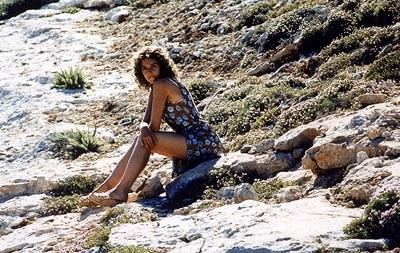
This passage occurs about three-quarters of the way into Kathleen Winsor's scandalous 972 page 1944 novel, Forever Amber, a Gone With the Wind-style blockbuster set in the first decade of Restoration England which was my bathroom/poolside reading for much of the summer. This was from my "B" reading list, which consists of things I take up that have piqued my interest for whatever reason and which I do not feel compelled to read all the way through if I don't want to. Sometimes I write about these books here, though usually I do not. Forever Amber is not quite refined and penetrating enough in its perceptions to be literature, I suspect, but there is nonetheless some skill and vision in it that approach to being enviable. It is not a book that I would always pick up eagerly, but I did find often upon getting started that it was easy to become absorbed in the frequently outrageous story and be carried for 20 or 30 pages at a stretch without being conscious of keeping up an effort either to follow the author's genius or endure her banality. I suspect that Kathleen Winsor, a 28-year housewife, and evidently a rather boisterous one, at the time of the book's publication, was plenty bright; as a normally adjusted middle, probably professional class, midwestern American of her time, subtlety and the inclination to experience life as something which primarily took place in one's own head were perhaps not overly developed in her. As can be seen below, she was quite conventionally attractive, and by most accounts enjoyed, and was capable of having, a good time in the conventional sense of parties, drinking, dancing, flirting with men and so forth. This book is almost certainly most famous for all of the sex in it, almost all of which occurs in a very direct, matter of fact manner, that is much in accordance with the probable way most men, and to judge by the sales of the book, apparently many women as well, dream that their own sex lives were like, though far contrary to the way they usually actually are. To cite some statistics, the attorney general of Massachusetts, in banning the book, noted 70 references to sexual intercourse, 39 illegitimate pregnancies, and 7 abortions (as well as 10 descriptions of women undressing in front of men). It seemed like there were a lot more than 70 instances of the Grand Act that to so many people is for the most part something not quite real. Sex in this book is bluntly understood to be for men a token of and duty paid to their personal power, and for the women a currency through which to obtain resources and position. Such people as do develop tender feelings for particular individuals are quickly made to suffer for them, frequently onto the point of death. Amber is supposed to be "in love" with Carlton, but it seems more that she is obsessed with the glamour he represents that, by the end of the book practically alone, she can never have. It's not surprising that such themes resonated deeply with the mass American public.

Kathleen Winsor appears to have had an even more extreme than usual hunger for what are known in contemporary parlance as alpha males, in her case the highest of the high, as well as a complementary eagle eye and searing contempt for male weakness or inferiority in any form, and delight in its exposure. She would have fit in well at Duke or Southern California or any of our other contemporary universities where the social competition is especially noted for its ruthlessness and lack of pity towards losers. Bruce Carlton of course is the ultimate male of this story--the recent civic disturbances in Britain would have been very short-lived if men like Lord Carlton and his pals still predominated in the upper ranks of that nation. He is a noble born cavalier, he recoups his fortune privateering, he is the greatest swordsman in England, and probably the world, he has rock hard abs and a gorgeous dark complexion. He does not come on to a single woman, that I remember, in the book; they beg him to ravish them, heedless of all possible consequences. He promises them nothing and openly goes to bed with whomever he wants, and the women remain powerless to do anything but nurture irrational hopes that somehow he will be moved one day to commit to them more or less exclusively while expending their fury on the rivals with whom they share his love. When he does get married it is to the most beautiful and purest virgin of the noblest birth imaginable, who lives for nothing but to serve her husband's happiness. The other main alpha males in the story are the "sexually driven" (as the book's introduction, written by a woman, approvingly puts it) King Charles II, who gets to pretty much order up whomever he takes a fancy to to his bedchamber, though those receiving an invitation are invariably delighted with the honor, unless they're supposed to be getting it on with Lord Carlton that same night; and the sadistic, brilliant and impeccably, for social purposes, educated and bred Lord Buckingham, who also has his way with pretty much whomever he wants, sexually and otherwise, and makes them feel his domination of them to the innermost core of their psyche. These are thus our role models of what a man should be.

The great book I suppose for getting a sense of what English society, and particularly London, was like during this period, is Pepys' Diary, which I have not however read to this point. Forever Amber attempts to paint an idea of this world within a fairly wide, if not deep, scope, and I think it is handled pretty well. The different aspects, of nature, of social classes, of historical events and personages, of amusements, of the idea that the various characters and customs in the book constitute a single people or nation, do not hold together at all times in the reader's mind, as complex ideas are supposed to be able to do in superior works of literature, and often are temporarily forgotten about or neglected all together, which is doubtless a flaw in the composition. Still, I was reminded at many instances in the book of the flow of history, and of the rise and decline of peoples and generations and institutions and beloved customs, set against a background, in some cases more or less permament than others, but all at least longer lasting than a single generation or even three, of nature, climate, geography (including human settlements, roads, etc), language and human lineage. Perhaps the picture produced was an especially superficial and inaccurate one, but the effect at least was produced.

I have strayed a bit from the opening question, as it were, of the post, which was essentially whether the capability of producing great art, clear thought, and an overall high level of culture required long centuries of hard and dispassionate action with severe and frequently deadly consequences for weakness and failure as the working ethos of a society. This idea was very popular in the 1940s--it is redolent of Orson Welles's famous cuckoo-clock speech in The Third Man--and can be found as well in numerous 20th century works chronicling (sympathetically) the passing of the old aristocratic Europe. This was doubtless a result of some insecurity on the part of the more sensitive and astute representatives of the New Order, with the comfortable and self-consciously 'nice' masses of America leading the way, both with regard to the desire to live up to the cultural achievements of their predecessors, as well as justification for the brutality of the wars and harshness of other political and economic policies they had undertaken to maintain and expand their newfound power. The main problem with modern culture, America perhaps especially, is not that they are too nice and naive to produce art, but that at the mass level there are too many nice and naive people who want to produce art, without having any idea what they are about. There are people at the heart of the culture who know exactly what is going on and what being a human being in present day society really means, and some of them doubtless are expressing this artistically and beautifully, but is there a substantial and coherent enough audience for this work to make it influential in any social milieux?

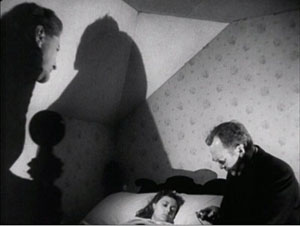
Linda Darnell as Amber in the 1947 Film Version of FA.

The movie of Forever Amber is not supposed to very good, and I regret to report that this is an accurate assessment. Given my usual affinity for the period and the fact that Linda Darnell, whom I wrote about positively in these pages for her role in the Letter to Three Wives ('49), was starring, I thought it was worth a try. In the first place, the length of the book necessitated cutting out 80-90% of the story right off the bat, and otherwise often combining two or more episodes into one scene. Various characters make a single 60-second appearance whom, if you had not read the book, you would have no idea who they were.The sex also had to be toned down quite a lot, though not to the extent that it was not still more than a little tawdry; the effect that was needed however was that of total and unrelenting moral dissipation, which is not achieved. The prolific and ubiquitous (not in a good way; rather in the way girls who were tired of seeing me at beer parties in my youth used to say that I was ubiquitous) Otto Preminger was given the assignment to direct the movie by 20th Century Fox--this is getting scary, I am finally starting to pay attention, in the old movies anyway, to which studio was behind each project, like a real film scholar--which was envisioning a possible Gone With the Wind-like success. Preminger apparently hated the book and called the movie the worst one he ever made, but compared to the greats and very goods I have been concentrating on these last few years, the clunkiness of the direction really stands out. The material is not perhaps ideal, but no one involved with the movie seemed to have much of a feel for it. It seems that someone could have wrung some spirit or magic out of it, but it is for the most part just dead on the screen.


Bruce and Amber Seeking Refuge in London During the Plague of 1665

Unlike, apparently, most people with a pulse, I did not feel much emotion with regard to the 10th anniversary commemorations that were everywhere in the media this past week, and wherever I found them I usually skipped over them or changed the station. I do not handle talking about that kind of thing well, and neither, quite frankly, does almost anyone else. That said, the event for whatever reason does not seem to have had the same impact on me as it has on other people. Of course I did not personally know anyone who died, nor am I a New Yorker or a fireman or any of the other people who felt the impact of this in a personal way which is hard for me to understand. To me the whole episode felt extremely random and impersonal, and perpetrated by people who knew very little about either America or New York City. While at the moment the event was certainly terrible and shocking, I did not find it surprising that such an event should ever have happened, as evidently most people did, and still do. I was surprised by the form, bordering at times on hysteria it seemed to me, which the emotion aroused by the event took. I had not recognized it as such a predominant character in the American people up to that time. I suspect a good number of my countrymen would take great issue with my fairly blase response to these phenomena and would feel compelled to question what was so horribly neglected in my upbringing, education, and so forth, to leave me so devoid of ordinary human feeling and instinct, and I do feel a lack in this area which does bother me; which is why I felt compelled to write anything about the matter at all.

Some good searches found their way to the site this week. My favorite was "females being taught to surrender sexually", a subject on which I thought there would be more expert information than that which I offer here, though "what did they wear for clothing in norway in the early 1900s" a subject which to my knowledge I have never addressed here or anywhere else, was also inspired.

Sunday, September 04, 2011

The Best and the Brightest

Though it may not be evident to the reader, I do know that it is unseemly for me to protest too stridently that I am just as good as people who have achieved exponentially more worldly success than I have, and this does effect some restraint upon my writing. Still. my heart dies a little whenever I see Wall Street multimillionaires extolled as the best and brightest minds of my generation. That this frequently occurs in articles or other fora decrying the deprivation of all this dynamic talent from other fields such as the arts, academia, and even science, which have presumably been left with very little for themselves, rubs the wounds of failure that much harder. All I can say, since I personally seem incapable of either effectively combating the image of this as truth, putting some curb on these people's ability to amass such an extent of power and wealth within an evidently largely closed system, or to succeed to a comparable extent in some alternative system, is, I dearly hope it is not true.

I was re-reading some Plato lately--yes, it is ridiculous, especially as I seem to understand anything important about it less now than I did when I was twenty, though I still do not think reading it is completely valueless--and I was struck by a statement in the Republic in which Socrates (I assume) observes that the "best and strongest natures are most thoroughly corrupted in bad environments". I thought this might apply to certain aspects of the contemporary scene, where the perception among much of that part of the public that are not possessed of the best and strongest natures is that for a critical mass of their superiors life has gone beyond mere triumph and claiming the positions of leadership and wealth that are rightfully theirs, but of actively making life more unpleasant and unnecessarily difficult for everyone beneath them. I know this has been the case more or less in all times and all places, but the degree and kind of the pressure fluctuates in different eras, and it is my impression that currently we seem to be in a fairly severe downturn in the cycle, in which the brightest and strongest people, or those who are supposed to be they, are dissemenating very little in the way of joy, or optimism, or sense of shared humanity through the greater society, and are applying the hammer instead. I am probably more optimistic than most that the mood and tone of society, if not concrete economic and social conditions, will eventually improve from what they are today; while I don't see myself ever taking much of a part in that change, my children, if they live, will be able to pass much of their youth and young adulthood in, I hope, a more generally positive atmosphere than what I have perceived to be the norm in my own life. Properly, it seems one should take some delight in the most intelligent and energetic people, or at the least a good many of them-- else the alleged desirability of these qualities seems difficult to conceive; yet I find most of the people who are supposed to be the best educated to be nearly as dreary in personal intercourse as I am, which leads me to believe that something is missing.

Why are the strong so strong? What is the source and nature of this mental power? This is not a minor question, for whatever this quality is the lack of it not infrequently has the effect of rendering a human life in a post-religious society, in particular that of the male of the species, essentially worthless, whatever other positive qualities he may have. Not necessarily unpleasant or devoid of simple delights, but not usually, except in rare instances of unique talent, a life befitting a Man. This life properly demands a high, or at least comparatively high degree of testosterone combined with an equally virile and energetic intelligence, the two traits constantly feeding off of and amplifying their counterpart. Other than working harder and more purposefully than most people in our society have any idea how to go about doing, there seems to be little the person of mediocre mind can do to actually improve his intelligence; what seems to be hoped for in his case in that education will persuade him somewhat of the breadth of his limitations and he will defer more readily to those of greater understanding. It would seem that the testosterone deficiency could easily be cured by medical means, and that the general population would be pleased by this, as it hates languid and effeminate men, but the tendency to be over- and perhaps unnaturally aggressive seems as yet to outweigh any of the more positive effects of this treatment.

On Debt

I have to finish this post in the next 25 minutes--as well my 2-year old is refusing to take a nap--so I am going to truncate this section on debt in order to rush it to the press. In short, I have always for the most part been afraid of it, and have tried whenever possible to avoid it assiduously, and now I realize in middle age that that was in many ways as foolish as indulging every idle whim. When I think now of certain experiences I missed or places I did not go to or improvements to my appearance I neglected to undertake because I didn't have 50 or 100 dollars and I refused to even consider the possibility of enhancing my daily life through the power of credit, I wonder if it was really worth it. Men with high testosterone and self-regard do not let the lack of present funds get in the way of living, and they tend not to worry about or be much stressed by the consequences of being in or even defaulting on debt comparative to what I would be. The regrets I have in life are primarily the lack of interesting experiences and social interactions, and the failure to develop either proper adult talents or skills. Money obviously was not the only obstacle preventing me from attaining these things, but allowing myself a little wider vision (of that substitute for real money, credit) to operate in might have allowed for a little more expansion of life itself, wherein the world I inhabited was not such a pinched and constricted one, both of experience and possibility to generate income.

I also note that while I have at various times taken out loans, for college, cars, household necessities, etc, and while in the past especially this debt always weighed heavily on my mind and sense of possibility, the instant they were paid off all memories of the worry they caused me seemed to dissipate into nothing and seemed as if they never existed; yet as this worry was a dominant part of my life, the result is that it seems as if my life has consisted of very few actual episodes or events or periods even of fervent mental activity, spaced out at very long intervals.

Titles/Phrases Read in Youth That Stick in the Mind All Life Long

1. Ja, the Rebels Eat Babies

This was the title of Chapter 1 of Gettysburg from the 1950s Landmark series of children's history books. This expression pops into my head about once a week. The bit about eating babies referred to wartime propaganda, but I never figured out where the Ja came from.

2. You Can't Do Business With Hitler

This was the title of a Reader's Digest article from 1938 or thereabouts that had been ripped out of the magazine and stuffed into the pages of an old (but cheap) book I bought at a book barn in Bucks County, Pennsylvania when I was a teenage (circa 1985). I'm sure the article was ridiculous, but the title caused my grandfather, who rarely laughed at anything, no small amount of amusement for a few minutes, enough for the incident to be memorable more than 25 years later.

Tuesday, August 23, 2011

Four More Movies I Have Seen Recently

Sophie's Choice (1982) It is probably apparent by now that my primary interest in movies, and most other forms of art, is escapist, so as to imagine myself communing with modes of life that have more camaraderie, mental activity, sensualism and so on than my own has. While I am not adverse to occasionally learning something or even having my comfortable world view 'challenged', provided the challenge is presented in a way that appeals to the idea of my having a better self that has for whatever reason not had the opportunity yet to properly consider whatever the matter is that the artist thinks himself impelled to call to my attention, I do not feel any obligation to seek out works that I sense may be calculated to make me overly uncomfortable or even merely unhappy. Perhaps it is true that one often does learn something by being made uncomfortable in this manner, but I have never found such learning to lead to anything either better or more useful than such learning as takes place under rosier conditions. At the best, it is a supplement to one's mental core rather than a replacement.

As the only thing, or one of the only two things, I knew about Sophie's Choice, whether the book or the movie, was the incident which provides it with its title, I had always avoided having anything to do with either of them, because I thought that this constituted the bulk of the narrative, and I did not see what good could possibly come out of reading or watching such a story, at least to me, as it was always presented to me as being like a kind of literary or historical medicine without any obviously redeeming benefits, and as such I had no interest in it. In time however it came up on my list as a 'great' movie, so I submitted to see it. I am still not sure if ultimately there are redeeming benefits in it given what everybody knows happens, but I was surprised to find that before you get to the infamous part, which doesn't come until nearly the end, there was a fairly mentally lively and energetic movie set mainly in late 1940s New York. I have seen it argued by some critics that the story is implausible. There is something in that. I think the problem is that the interpretation of the situation and its effects is an overly, even audaciously, American one, and it does seem off. It is hard for me to see an Eastern European artist-director treating the material in this way, certainly not from this particular angle, if he would have chosen to treat it artistically at all.

The other thing I knew about the movie beforehand was that Meryl Streep blew everyone away with her Polish accent. While I am always looking for an excuse to find fault with Meryl Streep, it does sound good to me too, and overall I have to say I can't find much wrong with her performance. Indeed, she is appealing enough here that one almost wishes she could have adopted the Polish accent as her permanent voice. You still always notice the work, the craft in her acting though. She is one of those people who forces you to confess that she is admirable at every minute, and never allows you the pleasure of making the case to yourself upon some overlooked or unconsidered point, for she admits no such points to exist in her work. This is why so many people find her annoying or only grudgingly give her the credit that is due her.

Kevin Kline is like a male version of Meryl Streep. Obviously very talented and capable at acting, but numerous qualities of his appearance and demeanor annoy me to no end. I don't derive any pleasure from watching him in a movie.

The director of this was Alan J. Pakula, whom I did not recognize as a household name, especially among the many celebrated directors of his generation (roughly late 60s on), but he made several well-known movies. All the President's Men was a big deal when it came out, though it does seem to have been forgotten in recent years. I saw his first film, The Sterile Cuckoo, which is a 60s college movie, on TV a long time ago and thought it was pretty decent, despite its having foisted the song "Come Saturday Morning" on the world (I actually kind of like the song, of course, but I doubt you will find anyone alive who is at all knowledgeable about music who does).

Respiro (2003)

In a similar vein as other those other modern Italian movies written about here recently, I'm Not Scared, and The Best of Youth. Like both of these, it makes heavy use of the incredible light and barren ancient scenery of southern Italy--Sicily in BOY, Basilicata in INS, and here the remote island of Lampedusa, which is out near Malta. Like I'm Not Scared, children are featured heavily, and also like that movie, despite being set in the present, or near present (1978 in the case of INS) the economic and communal lives of all the characters in the film appear to have much more in common with that of the 1940s and 50s than more contemporary times. The general consensus even within Italy is that the nation is sclerotic and dying, no one is able to move out of their parents' house or get a decent paying job until they're pushing forty, the birth rate has been so low for so long that even with immigration the population is already declining, the last golden era of Italian culture and style which flourished in the postwar decades is long dead, Venice has been almost entirely depopulated of native Italians and is probably sinking, the Pope is a German--the point is, these movies are indicative to me of this sense of decline. Their subject matter and sense of the world seems small. The attraction to remote corners of the country with great natural beauty where people lived as they did 50 years ago seems a confession that the filmmakers do not know how to set a story in the world of present society but need the familiar structure of the village, the square, the land and sea, the non-abstract occupations, etc, as a base (I notice something of this same effect at work in American movies set in Maine or other rural New England locales, as well as in some of my own efforts--indeed my own life even). Or perhaps I misunderstand, and Italy is such an ancient country that unlike America, where people and fictional characters and industries and everything else need be always on the way to some other destination than where they currently are, it is taken for granted that most people are going to live and die pretty much as people have for the last 5,000 years for the next 5,000, and that if you are living in a fishing village in Italy there really is not effectively anywhere else for you to go. I do not think that is the reality however.

These nagging thoughts aside, I enjoyed this movie more than either of the others I have associated it with in this post. I don't know how memorable it is however, since I actually saw it several years ago and had no recollection of it whatsoever when I read the title and even the synopsis of the plot (which in a way is a justification for keeping this diary of all the movies I see) and while I knew in the early parts that I had once seen a movie with a similiar milieu some years before, it was not until about an hour in that I recognized 2 distinct scenes as ones that I had definitely seen before, at which point the memory of the other elements of the story began somewhat to return to me. I don't know how I could have forgotten about Valeria Golina, aged 36 at the time of the movie, and a mother of 3 adolescents in it, but acting and dressing about 20 years younger in erotic terms, and pulling it off rather well; but as I have noted here before, the rather astonishingly sensual late-30s mother character, often from a traditional or working class background, has become a staple of the modern Italian cinema. This development may say something about the psychology presently at work in the Italian nation, though it may also just reflect a real phenomenon. I remember when I was staying in a perfectly adequate but modest one-star hotel in that nation--I forget which city, possibly Mantua--and one of the maids working in the place, who looked to be around 40, was absolutely mesmerizing to look at, and at the time I was 27 or so and generally had a very scant interest in women any more than a year or two older than I was. Her poise and grooming and sense of self were remarkable, a realization of mature femininity that was very much of the old world, though one recognizes it for what it is when one sees it. And this was a chambermaid.

Melvin and Howard (1980)


This is about a more or less regular, though impulsive and not doggedly steady or responsible guy (Melvin) living in Utah who picks up a stranger by the side of the road after a motorcycle accident one dark night out that way who, unbeknownst to him at first, happens to be the legendary reclusive billionaire Howard Hughes. A few years later, when Hughes dies, he leaves Melvin, along with bequests to about ten other obscure people, 156 million dollars. This was evidently based on actual events. Needless to say, Hughes's family and other important interests intervened and got the will declared invalid so none of the nobodies ever got to see any of the money. While this last is part of the narrative, Melvin kind of knows that the powers in society are not going to let the likes of him walk away with the cash, so the movie is more or less about the possibility of his rather uneven lower middle class life being dramatically altered. I didn't love it, but I liked it. It gets the feel of what life was like in that time and place and stratum of society pretty good, or at least as good as any movie I have seen lately. Melvin's major problems in life seem to be largely the result of his having an excess of vitality for his social station. He is not able to just while away his life in the boring jobs that are available to him and the restraints of social conventions and periodically has to blow up the aspects of his life in which these inconveniences were involved. He is the kind of guy who, to the extent that he still exists, gets slaughtered in short order in the economy and legal system today. No chance.


Hearts and Minds (1974)


Anti-Vietnam War documentary. It's a little dated, and I didn't find that the different parts of it had quite the coherence that I would really like, but it's worth seeing, if for nothing else than to be reminded of how events that seem all-consuming and hopeless of resolution at a particular time eventually exhaust themselves and enter the realm of history. I would say as well that it is also a good reminder of how stupid most wars are, especially when carried to the totally unnecessary extreme than this one was, though the determination of so many of the Vietnamese people to persevere unto the point of death through decades of this dreadful conflict also reminds that when you are fighting against a foreign power in your home country your experience of what is happening necessarily takes on a different sense. The movie of course was made several years after the main fury of both the American involvement in the war and the domestic protest movement had attained their peaks, and the prevailing atmosphere is one of weariness. There are a number of interviews with important American military and political figures in which these men say what seem to us incredibly stupid things, and reminded me (again) of how clearly stupid all of the rhetoric and chest-beating of this whole period of history we are living in now will seem to most sensible people in 30 years time.


Though these are not the object of the movie, the glimpses of America circa 1973 are of some interest, just to see how things have changed just in the course of my lifetime (I was 3 then). The fashions and hair of course were atrocious, though that is a minor point. Most of the regular people over age 45 or so look much older than people the same age do now; their skin is sallow and rather nasty-looking--I remember this in the older people I knew at the time too--perhaps from smoking and drinking too much hard liquor. A one point they were interviewing a soldier who had been a POW for seven years on the back stoop of his parents' house in New Jersey and the screen door and the iron railing were the exact same ones that my grandmother had at the time. There was a section where they interspersed scenes from a high school football game in Ohio with some of the war footage, including a genuinely insane halftime speech delivered by one of the coaches, which did not quite work, though there was an awesomely cute cheerleader who admitted to the camera that she was too wrapped up in her own life to think much about the war in Vietnam.


It is ironic that global communism, which wide swathes of the American populace were so obsessed with for so long to, at times, the point of madness, at the moment looks like it may have been the best thing that ever happened to the American laboring classes.


This film was produced of course by the legendary so-cool-it-was-actually-scary 70s Hollywood mogul Bert Schneider, who was one of the more interesting characters of that era to me. His rougish production company backed Easy Rider and Five Easy Pieces among other iconic films of the era. Babes and cocaine were part of the workday at the BBS offices. Given how cool he was, his downfall shortly after this film is puzzling to me. I guess he made some powerful enemies, but still, a guy with that much charisma and sense for the business seems like he should not have receded from any position of influence that easily.


The 4th movie in these sets always gets the sloppiest review. I know I should cut them down, and do one post, one movie, but then I might be tempted to go on forever about each movie and I don't want to do that.

Friday, August 19, 2011

Greatest TV Themes of All Time #s 10-6

#10 Car 54, Where Are You?


I went through various periods in my teens where I would watch a certain TV show, or sometimes two, every day for what seemed like several months, though maybe it was as little as 4-6 weeks, as part of my daily routine, and then something would happen where the routine would be broken, or changed, either on my part or that of the programming station, and I would never watch the show again. "Car 54" which originally aired in the early 60s, was one of these shows. On the surface it seems to be an even more than usually silly show, yet there was an exuberance in its absurdity that my young self found satisfying, and which was of a quality that is not much prevalent in the current culture. My favorite episode was the one where Gunther confesses to not having read a book in his entire life and everyone nags him about it until he agrees to try The Robe, which proceeds to consume him to the point that he ceases temporarily to be the guy everyone loves such that by the end of the show they are begging him not to read any more books.

When I was a very young child, my grandmother had a dog named Gunther J Toody, so I gather the program was popular in that household as well.

It is worth noting that despite the show's protagonists being New York City policemen, its storylines rarely centered around any actual crimes, and when they did I cannot recall anything much more serious than petty fraud or running red lights, though it is possible my memory is faulty in this.

#9 Dallas

They aren't letting me embed the themes from any of the early seasons, so I will have to link to it here.

As far as embedded material goes, I can offer some footage of the great Victoria Principal disco dancing.
http://youtu.be/Bmv3SIzuTL4

Dallas was to me the opposite of Car 54 in terms of the emotional reassurance it offered, and I often wonder if it did not mark a significant stage in the decline of the overall morale and spritual well-beings of the mass of Americans during this period. This was the first television show I can remember that openly reveled in the total ruthlessness and moral depravity of wealthy and powerful people rather than affecting to be appalled by it, indeed even presented it as a central component of their success. And make no mistake, compared to the average schlub viewer, they were indisputably successful, and the schlub viewer was not so gently warned that if he should ever run across people of this type he had best get the hell out of their way as quickly and unobtrusively as possible, unless he has a taste for seeing the entire edifice of his pitiful life collapse in humiliation and ruin in a matter of seconds that those inflicting the pain upon him probably would not even notice. I am quite certain that the show scarred me at an impressionable age when I ought not to have been watching it. There was in particular one episode in which J.R. had just finished financially destroying a minor rival in the oil business and giddily delivered the news by telephone from bed after ravishing the rival's woman. I realized all at once that this was what serious people were really like; and all the years of optimistic and supposedly uplifting movies and books and TV programs about adhering to the bourgeois virtues were swept away in a single blow, and I don't think I have ever had true faith in them again.

#8 The Jeffersons

Whoever owns the rights to the Jeffersons theme song is adamant that no one be allowed to hear it without a royalty, hence the silent video.

Obviously one of the great songs of all time in this category.

#7 Green Acres

While I don't remember it, Green Acres apparently vied with Petticoat Junction as my favorite TV show when I was four. I would love to be able to figure out why these 2 programs appealed to me so strongly as they did, but thus far I cannot do so.

#6 The Odd Couple


I've been having one of my retro-crushes lately on New York in the early 70s, or more precisely from around 1969-73, roughly the apogee of the Joe Namath and Tom Seaver era. In the case of New York it seems to be especially true that the heyday of sporting icons roughly parallel a particular character in the epoch of the city, and they start to fade when the character of their time fades, or perhaps vice versa--for while the changes in the city's character are fairly easy to mark through most of the 20th century, and the 1965-1980 period can almost be identified season by season, I find I have lost track of any sense of the subtleties of such changes since the late 90s--perhaps until Derek Jeter and Mariano Rivera fade from the scene and are replaced by new heroes everything will seem to me fundamentally the same as they were then. As far as New York in the 70s goes, it is only this early part that I have as yet come around to finding somewhat attractive. The disco era, perhaps because I have some actual memories of it, I still have not been able to warm up to, and the Death Wish/Taxi Driver-era New York of the mid-70s, and even of the later seasons of this show, while fascinating, also seem yet a little too dark and despairing, as well as representing the period when certain appealing aspects of the old New York that were still lingering into the early 70s seem to have been, if not entirely killed off, stifled to the point that they became overwhelmed by other qualities and difficult, or at least more difficult, for people like me who are perpetually starved for them, to imbibe at second or fifth hand as perhaps it was possible to do formerly. What were these mystical qualities of which I speak? I am going to have to try to identify what it is I mean, only because it is an important matter to me, and I experience it when I do sense its presence as some absent or lost vigor that I should be partaking in, but am not. But this will have to be saved for a future post.

Thursday, August 11, 2011

Robert Burton--The Anatomy of Melancholy (1621) {I}

Often extolled as one of the most remarkable books in all of European literature, I think I may have come to this at the wrong time of life. Like Thomas Browne, Burton's most ardent admirers tend to be men past the age of 50 who have a lifetime of committed reading behind them and are tired even of most of the classics. Among the testimonials left by fogies of this class, Anthony Burgess, a noted linguist and composer of music as well as the author of dozens of books, A Clockwork Orange being perhaps the most famous, stated that "Most modern books weary me, but Burton never does"; gruff middle-aged male man of letters extraordinaire Samuel Johnson declared it "the only book that ever took him out of bed two hours sooner than he wished to rise"; Llewelyn Powys, whose late Victorian son of a clergyman to Cambridge to Africa to country retirement biography is practically the template for the kind of reader who has traditionally found Burton most engaging, called it "the greatest work of prose of the greatest period of English prose-writing". In addition Anthony Powell in the 10th volume of Dance to the Music of Time (Books Do Furnish a Room), which is set in the couple of years just after the conclusion of World War II, has the world-weary character who is supposed to be the stand-in for himself undertake a book about the Anatomy as his means of finding some bearings again in a world gone mad. Thus I will leave open the possibility of reading this again when I attain that time of life and have more time to bestow on it the concentration it evidently deserves. This is not to say that I did not to some extent enjoy the book this time around. For a 1,132 page tome written in the 1620s it was not too much of a slog nor took an unusually long time to get through, and it is full of interesting and ingenious anecdotes and stories and observations, enough to fill up 11 pages of notes, which is much more than I usually take down. My problem was that I could not keep the overarching structure of the book, and the way that these anecdotes were supposed to be relating to each other, straight in my mind, so that all of the amusing and interesting parts I was experiencing in isolation, and not as part of this highly fascinating personality and worldview that one presumes these other celebrated readers were commiserating with. Now it is possible that this aspect of the book was simply over my head as far as being able to appreciate it went, but the truth is I did not put in the necessary effort to grasp Burton's very complicated system of melancholy in all its types with their origins and effects and treatments, presented in the form of a medical treatise, which besides being difficult seemed too ridiculous to expend the energy to keep properly straight in my mind, assuming the real brilliance of the book to lie elsewhere. Apparently the exquisiteness of this system and the peculiar genius of the man who conceived it are where a considerable amount of the beauty and appeal are to be found, and I, reading under the constraints of time and the various distractions which afflict me in my current state of life, was not able to focus my concentration on these with the attention they required.

If I had read this when I was 26 or 27, I probably would have put in more of the required effort, or at least would have been able to more easily. Whether my overall understanding of the book would have been good, or better, I am not certain, but I would have been able probably to enjoy a more unified and coherent sense of reading.


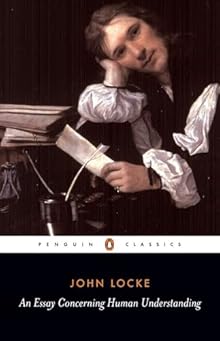
I'm really going to try to keep the transcribing of quotes and half-legible observations from my notes to a minimum here. With Locke I allowed myself to get carried away, in part because I did not think his book worked on the level that a "Great Book" properly ought to--which I thought I had become pretty adept at over the years, especially with English language authors--and could not think of how else to to demonstrate my meaning, in part because I probably will never read anything else by him again and wanted to have some sense of why he was, and sometimes still is, considered great, but I need to show some restraint here.


Unfortunately for my purposes he gets off to a good start with a lawyer joke in the introductory poem: "Should crafty lawyer trespass on our ground/Caitiffs avaunt! disturbing tribe away!"


Another poem follows immediately after, titled "The Argument of the Frontispiece", which refers to the illustration above depicting various types of melancholics. which hopefully is still visible. This was a inspired and helpful idea. Of the Inamorato (pictured middle left), for example, it is pointed out that "His lute and books about him lie,/As symptoms of his vanity." Of his own picture (middle panel below the title), the author notes:


"It was not pride, nor yet vainglory

(Though others do it commonly)

Made him do this: if you must know,

The printer would needs have it so."


This is followed by yet a third poem, "The Author's Abstract of Melancholy", which features these choice lines:


"Now desperate I hate my life,

Lend me a halter or a knife..."


There is very little I derive more enjoyment from in literature than the hilarious rhymes of 17th and 18th century verse.


After these poems comes the "Introduction to the Reader", which is 106 pages long, and is full of riotous sentences and thoughts, of which I will give a sample below:


"I am insignificant, a nobody, with little ambition and small prospects".


"So that oftentimes it falls out (which Callimachus taxed of old) a great book is a great mischief." The concise quotation referred to ("Mega biblion. mega kakon.") was included in one of the early exercises of the Greek manual at SJC, at the stage before most people began giving up any hope of learning that language to any substantial degree, and as such was a favorite phrase there, especially among people like myself who scarcely knew any other fragments of Greek thought to toss about in company.


Referencing Proverbs XXX.2--Burton was a walking encyclopedia of quotations, perhaps rivaled only by Montaigne among authors I am familiar with--"Surely I am more foolish than any man, and have not the understanding of a man in me."


I think I will stop there for now.

Sunday, August 07, 2011

Checking Up on my Class Markers

I'm suddenly missing some big ones.

My passport expired last summer, so I now make part of that oft-cited figure--is it 70%?--of Americans, most of whom are presumed to be benighted, who don't have one. Sadly, I probably won't be getting another one any time soon either--certainly I won't need to--unless something spurs me with great force to desire to go to Canada again, as I think you need one even for there now.

I also don't have a master's degree, which I did not think of as a socially crippling lack formerly, but it seems in the past few years, especially since women have started getting the sizable majority of them, to be the new cutoff in some quarters for qualifying as officially educated. Real men don't care about this, but lacking a high degree of authentic competence, as well as basic horse sense, I have a pathological need to retain some means by which to plausibly deceive myself that I can claim to other contemporary people to be an educated person, or at least comparable in mental development to what they are themselves. It is doubtful that my projected M.A. in theology or whatever will make much of a difference in how I present myself socially, but by not having one I am almost making it too easy for people to dismiss me out of hand.

I went to my local Borders the other day, which is already in full-fledged shutdown mode--they have already taken out all the chairs. While I haven't spent as much time in bookstores in the last couple of years because seeing all the books that had made it successfully to publication was depressing to me, it never impressed itself upon me that they would literally begin disappearing. Librairies doubtless will be next to go--I think half the people running for my local city council in the next election are doing so just so they can close the library down. A lot of people want to put college online too and turn the current campuses, or least the non-STEM portions of them, into tract housing or something. When I was young of course these places were inspiring to me--wrongfully so, apparently, though in my defense children generally are still not allowed to hang out in and poke around insurance offices or medical research labs or other places serving useful purposes--and these are very sad changes and passings for people like me (I seem to be too old to be able to imbibe from the computer screen the physical and aesthetic atmosphere and more appealing conception of life that the presence of actual books, pictures, oak reading tables, etc, suggests, and while it doubtless sounds ridiculous to someone who did not pass many significant hours in one's early life in such places, I do experience many aspects of the new age as a loss which I won't be able to wholly recover with the new and improved methods). I do enjoy tormenting myself by reading the myriad commentators who find these developments cause for celebration, directing laughter and a surprising amount of contempt at English majors and other sensitive idiots whose cherished and already irrelevant world continues to collapse around them. I can sort of grasp the hardcore technophilia, and the exhiliration of feeling one is fully on board with the creative destruction ushering in a new cultural paradigm and all that. The total disdain for the era that is passing away does always catch me off guard. I don't get that.

As I had another weekend of staying behind to work whilst the family was away I tried going out to dinner again. This place was not as bad as the Olive Garden though the dining room was full and I had to sit at the bar, which I would have preferred not to do. There were a pair of distracting TVs on--in my inexorable march to unmitigated crankiness, I find I increasingly dislike televisions on when I am eating in a restaurant, which formerly did not bother me, and which indeed I often enjoyed, especially when in a foreign country--one of which had on COPS, which really puts one in a great frame of mind for enjoying one's dinner, and the other was showing a competition from the "X Games" in which a bunch of guys oozing some kind of I'm-better-than-you attitude whom I still have no real desire to be like other than that they get to sleep with tons of the kinds of girls I would have wanted for myself were doing some skateboarding thing on a U-shaped wooden track kind of structure. Shaun White, the multiple Olympic snowboarding gold medalist, was one of the competitors in this event, though I did not notice where he finished. This guy seems to get a lot of publicity, and I don't really see why. Is he genuinely popular among any segment of the public? I have seen that he also has a clothing line with an alternative sportswear type theme at Target. There isn't a lot in his presentation that I can see would be appealing at all. He is the dominant figure in his sport, but what kind of a sport even is it? I did watch his turn at skateboarding expecting to see clear evidence of unique athletic abilities, but nothing jumped out at me. It does seem to be true in general in the winter sports, especially those contested on mountains, that the most skilled practitioners are the kingpins (and sometimes queenpins) of a fairly vibrant social scene, with groupies and disciples and the rest of it. This is not the case in every Olympic type sport. Top runners are greatly respected by other runners, but as compared to skiers their lives seem rather boring. They neither rule over a desirable party scene nor exude much sexual charisma. But does Shaun White exude sexual charisma, or any other kind? He probably does, but it's so original I can't even see it.

The main thrust of this post was going to be a short discursion on the subject of immigration, but there really is no short discursion on that subject. Politically I have the problem that I can rarely refute the arguments of either of the more extreme positions, so I end up having to stake the moderate ground where you mainly hear the furious demands coming from both sides simultaneously that you grow a pair and declare for one side of the confrontation or the other. None of this namby-pamby I-can't-make-up-my-mind-stuff. So my article, at least for now, was not going to be intentionally inflammatory, and indeed likely would not have had anything in it that hasn't been written a million times. It would mainly have served the purpose of adding support to a few particular positions which already exist, and which strike me as reasonable enough, and not callously offensive. Questions such as What is the plan in instances when say, several thousand Somalian refugees begin turning up in places like Lewiston and Portland Maine? Should there be a plan? Why are the perfectly legitimate and natural concerns of the native population regarding quite drastic demographic changes as well as strains on existing institutions not treated seriously, and indeed with contempt, by so many of their fellow citizens, including most of those in positions of influence? What is the source of the ideological refusal to even address these concerns as adults and equal partners in the future of the country. Why has the leadership of the country seemingly given up on developing intellectual talent and other desirable qualities for a vital civic life in the native population? or, Why has the human capital and spirit of the native population collapsed so spectacularly that the top people increasingly prefer to deal with any other people but them? (For me a lot of the emotion on this subject is the sense of shame and rejection by the elders and leading people of my own country and seeing them extol foreigners as preferable and better than I am. I can't claim that I didn't deserve this rejection, I guess, but it still hurts).

All of this would have taken a long time to write.

Sunday, July 31, 2011

Going to Close Out John Locke (#6)

Book IV, Chap. XVI ("Degrees of Assent"). There is a section on the difficulty of changing or giving up one's opinion (try doing this on the internet), as well as an observation about the most thoroughly instructed people being less imperious towards others, which latter argument however I think, speaking as a less thoroughly instructed person, is dubious. The older I get, the more I am inclined to think the real reason it is difficult for people to change their opinions about anything is less stubbornness than because they no longer trust their brains' capacity to perceive any ideas, especially new ones, with the degree of clarity and totality needed to embrace an understanding of existence completely opposite to what has informed them previously, however airtight the arguments in its favor are laid not. I certainly cannot.

Locke on the subject of miracles (quotation from a footnote, from a work called Discourse on Miracles): "A miracle I take to be a sensible operation, which being above the comprehension of the spectator, and in his opinion contrary to the established course of nature, is taken by him to be divine." This seems a reasonable definition, or did to me at the time I read it. Now I think it is not solid enough, unless "the spectator" refers to the entirety of humanity.

This chapter closes with the assertion that faith was "nothing else but an assent founded on the highest reason", which is complemented in the notes by a quote attributed to Coleridge ("Christian faith is the perfection of human intelligence"). Would that it were that easy, "easy" striking me here as an ugly thought, in the face of these fine and very beautiful sentiments. I mean this sincerely, and I even believe it is possible that religious faith may in fact be the perfection of human intelligence, especially if ultimate 'truth' is either unknowable or fails to rise above what the most refined minds would consider to be prosaic. Or perhaps these are two of those deceptive statements, at which the naive reader, reassured perhaps, or at least satisfied that he grasps the author's intent, is content to stop considering the matter, while the real intent of the words lies behind this apparent meaning. Or at least one hopes so.

Book IV, Chap XVII ("Reason"): "Secondly, another way that men ordinarily use to drive others, and force them to submit their judgements, and receive the opinion in debate, is to require the adversary to admit what they allege as proof, or to assign a better. And this I call argumentum ad ignorantiam". This is an excellent point.

Book IV, Chap. XIX ("Enthusiasm"): "Hence we see, that, in all ages, men in whom melancholy has mixed with devotion, or whose conceit of themselves has raised them into an opinion of a greater familiarity with God, and a nearer admittance to his favour than is afforded to others, have often flattered themselves with a persuasion of an immediate intercourse with the Deity, and frequent communications from the Divine Spirit." Hmm...No, it is just that I would have had a lot of these traits I'm sure if I had lived in that age.

Book IV, Chap XX ("Wrong Assent, or Error") "Take an intelligent Romanist, that, from the first dawning of any notions in his understanding, hath had this principle constantly inculcated, viz. that he must believe as the church...believes, or that the pope is infallible, and this he never so much as heard questioned, till at forty or fifty years old...how is he prepared easily to swallow, not only against all probability, but even the clear evidence of his senses, the doctrine of transubstantiation? This principle has such an influence on his mind, that he will believe that to be flesh which he sees to be bread." The further we move from an intellectual universe where Anglo-Saxon antipathies toward Catholic doctrine and culture constitute one of the primary energies and points of contention--and we seem to have gone a long way down that road just in the last 25 years--the more passages like this, which are to be found all through the major strains of English literature and even philosophical writings, from the Elizabethans up to World War I at least, will serve to call into question the seriousness and even cognitive abilities of the authors who fall into these kinds of traps, especially of course if their powers of reasoning are supposed to be the main basis of their fame. Questioning Catholic beliefs and their origins, or those of other systems one finds distasteful, mind you, I do not see as the problem, but rather to do so, especially as a philosopher, from an attitude that takes for granted one does so within an inherited belief system of his own that is superior without making it clear why this is so that is unacceptable.


"Tell a man passionately in love that he is jilted; bring a score of witnesses on the falsehood of his mistress, it is ten to one but three kind words of hers shall invalidate all their testimonies."

Monday, July 25, 2011

John Locke 5

Book III, Chapter X ("Abuse of Words"): "...he that will look into that sort of learned writings, will find the words there much more obscure, uncertain, and undetermined in their meaning, than they are in ordinary conversation." There are some good points in this section about idle, useless pedants, as well as something useful, which word unfortunately I can no longer make out in my scribblings, which I too often forget.

"He that hath words of any language, without distinct ideas in his mind to which he applies them, does, so far as he uses them in discourse, only make a noise without any sense or signification; and...is not much more advanced thereby in knowledge, than he would be in learning, who had nothing in his study but the bare titles of books, without possessing the contents of them." O.K., they have me figured out.

Book III, Chapter XI ("Remedies of the Abuse of Words"): "This exactness will, perhaps, be judged very troublesome; and therefore most men will think they may be excused from settling the complex ideas of mixed modes so precisely in their minds." The "excused" is well-chosen here.

I believe I have already mentioned that the guy who wrote the footnotes is more obscure than Locke, but he must have been really bad, seeing as I felt the need to note it a second time in the course of the reading.

Book IV, Chapter I ("Of Knowledge In General"): "Nobody, I think, can deny, that Mr Newton certainly knows any proposition that he now at any time reads in his book to be true; though he has not in actual view that admirable chain of intermediate ideas whereby he at first discovered it to be true." Perhaps not the whole view, but I would guess that he had a lot of it.

Book IV, Chapter IV ("Reality of Knowledge"): "...the truth and certainty of moral discourses abstracts from the lives of men, and the existence of those virtues in the world whereof they treat: nor are Tully's Offices less true, because there is nobody in the world that exactly practises his rules, and lives up to that pattern of a virtuous man which he has given us, and which existed nowhere when he writ but in idea." Morality as an abstraction comparable to mathematics. Or art.

"...where God or any other law-maker, hath defined any moral names, there they have made the essence of that species to which that name belongs..." The influence of lawgivers and other authorities is a serious matter with Locke.

In Book IV, Chapter VII ("Of Maxims") Locke discusses unlocking and opening the "secrets of knowledge". For the most part it is all just a big secret, isn't it?

"The Schools having made disputation the touchstone of men's abilities, and the criterion of knowledge, adjudged victory to him that kept the field: and he that had the last word was concluded to have the better of the argument, if not of the cause." Someday wisdom is really going to have to learn how to project itself better.

Book IV, Chapter X ("Our Knowledge of the Existence of a God"): "If, therefore, we know there is some real being, and that nonentity cannot produce any real being, it is an evident demonstration, that from eternity there has been something; since what was not from eternity had a beginning; and what had a beginning must be produced by something else." Pretty clever, I guess. It caught me napping at first, but on a closer look you can see all the assumptions that are embedded in it.

There's a translated quote from Cicero, or as Locke refers to him, Tully, on the same subject: "What can be more sillily arrogant and misbecoming, than for a man to think that he has a mind and understanding in him, but yet in all the universe beside there is no such thing?" I believe much of this line of thinking with its fairly wild range of generalities was later clarified by Hume and perfected by Kant. Not that I would know.

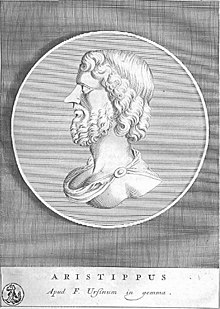
Remember Aristippus, who placed happiness in bodily pleasure? I was a terrible philosophy student and would be hard pressed to name ten general principles running through the history of the pursuit if my life depended on it, but you sure will never be able to persuade me that happiness lies in bodily pleasure. That teaching I cannot seem to forget.

"Hence I think I may conclude, that morality is the proper science and business of mankind in general,...as several arts, conversant about several parts of nature, are the lot and private talent of particular men, for the common use of human life, and their own particular subsistence in this world." I have never developed an effective program of my own for how to live/approach life as an active agent in its course. This being after all the purpose of philosophy, I would have to say that my education was really not a success. This is besides that it is hard to participate in any kind of social intercourse requiring a decent level of thought when one does not have (or does not wish to reveal) a coherent explanation of why one's existence is playing out the way it is in any way and in what directions one might wish to direct it in the future.

Locke does not appear to be one who is especially impressed by nature (as in outside, the natural world) as something more interesting or grand than the human mind. One would have spent a lot more time grappling with it in the 17th century than we do today, and it doubtless seemed less wondrous than the possibilities of rigorous thought to the intellectuals of that time. It is a tone that I think few thinkers would take, and maybe even feel, today.

Thursday, July 07, 2011

Movies 1981-2002 (Common Theme: Great Depression)

The Road to Perdition (2002)My main impressions while watching this movie:

What is the point of this story?

I'm not buying Paul Newman and Tom Hanks as ruthless gangsters, especially to the extreme they are supposed to be in this movie.

I can more easily buy Daniel Craig and Jude Law as sociopaths, I guess, though I don't get the point of their characters either.

Despite a lengthy trail of corpses and bank robberies, no police ever appear. They do not exist in this movie. The characters only have to worry about other gangsters.

It might be worth seeing just for the sets and clothes and heavily artsified 30s ambiance. If they hadn't actually gunned down a child and his mother in their own bathroom I would probably say it was definitely worth seeing.

Jennifer Jason Leigh, in the period (1931) dress and hair, looks quite a bit like my wife in this, which probably caused the scene where she is murdered with the child in cold blood to upset me more than it ordinarily would have. I know this is at least the 3rd time I have said a movie actress resembles my wife (Shirley Maclaine circa The Apartment and Sybil Seeley from the Buster Keaton movies are the other 2 I can think of off hand), but in each instance something in the resemblance was striking enough to make an impression that I thought it worthwhile to take note of.

I wondered how differently the history of cinema might have developed if the United States had not been the dominant filmmaking country during the formative years of this art. Specifically I was assuming that the genre of the super-violent gangster film would not have attained quite the place of esteem in the cinematic repertoire that it has attained, to the point that nations as disparate as Britain and Korea, who do not have much of a history of their citizens engaging in machine gun massacres and shootouts in their streets and places of public business, feel impelled to regularly make movies in which as many people are blown away by advanced weaponry in a single scene as normally die in such manner in a couple of decades in those countries.

It may be argued that my quibbles about the lack of realism in certain instances in this movie are prosaic and beside the point, that the narrative does away with these restrictions because it is really about other things. In the present case however this is where the movie, which is otherwise almost impeccably made, most falters. The departure from probability and consistency within the parameters it sets out, especially given the excessive brutality of its violence, I found to be too great. Most stories that attain a degree of cultural importance require some suspension of literal disbelief, to be sure, but the psychology of the characters has to be believable and consistent within the parameters of whatever imagined or idealized world they are inhabiting, which also necessitates the mental and emotional universe of that world being comprehensible to the audience. That did not occur to my satisfaction here.

Tarzan (1999)


In addition to the undiscriminating reviewer who overly loves TV movies, my system suffers from another critic who has caused me to suspect him or her to be in the employ of the Walt Disney Corporation, so uniformly and emphatically partial to the works of this studio he be. There are a few Disney movies that I will admit to liking, though they were all made before 1960; the artistic sensibility of the pre-1945 productions especially, middlebrow though it was, is of an entirely different order from what they seem to be able to muster lately.


This late model Tarzan, following in the train of the big 90s hits like The Lion King and Beauty and the Beast, wholly escaped my notice on its initial appearance. I was willing enough to like it if it had moved me to do so, but I did not see anything the least noteworthy or at all different from any other 90s Disney movie.


King of the Hill (1993)


Another movie set in the Great Depression ('33 I believe was the year in this case) which seems to have been a recurring theme with me lately, or perhaps the time is such a good one to set movies in that more of them turn up on my list than they do from other periods. While Road to Perdition was based on a comic book/graphic novel and had a more mythical atmosphere about it, this was based on a memoir by a more conventional earnest writer type (A. E. Hotchner, of whom I had not previously heard). Despite being directed by Steven Soderbergh, whom I thought was considered an A or near A-list director, having a largely recognizable if not star-studded cast, and receiving almost uniformly positive reviews, the film is still not available on DVD. (I still have a VCR, so I bought an old videotape and watched that).


The sets and props and costumes lack the calculated grandeur and overall sense of Sturm und Drang, so in keeping with the post-millenial spirit, that we got in Road to Perdition, and are more in what I would consider the 'traditional' Depression period-piece style, iron bedsteads, print dresses in muted colors, peeling wallpaper and flaking plaster, scratchy radios, dusty streets, all of which motifs I am much more comfortable with. They boil some hot dogs--never destined to be eaten, as it happens--in water in a big heavy pot at one point which for some reason I found extremely pleasing, as if the image summed up all of my most superficial feelings about the 1930s in a single blow. While there is a plot, and a not wholly insignificant one, the interest in the movie to me rests on the effectiveness of these images from the lives of our grandparents and great-grandparents and what relevance we can be persuaded to think they have for us now. It is about half-successful in this.


This movie has a couple of early 80s era actresses whose careers never really blew up big but whom I always liked a little, Lisa Eichhorn and Elizabeth McGovern. Lisa Eichhorn is 41 here, my age exactly now, and she still looks like her sweet senstive self. Now she is 59 and she looks old and not like her sweet sensitive self at all. This is nothing to the point except that I probably had not thought about her since around that time, so it came as rather a shock to realize that she was nearly 60 now. 1993 in certain things does not seem to me a long time ago. I was already with my wife in that year, for example, and she is still only in her 30s, and does not seem to me to have changed all that dramatically. Elizabeth McGovern probably is not much my type personality-wise. However she always reminds me of my main junior high love interest, who was also named Elizabeth, who also had an Irish surname beginning in McG--, who also had short cropped curly brown hair, and who due to the custom of forcing students to sit in rows in alphabetical order in class which was the rule in my middle school was seated about 2 feet in front of me around five hours a day for two years. Though she engaged in some mild teasing, on the whole she was cordial to me, and even danced with me twice at the Christmas dance in 1983, which was practically the highlight of the entire decade of the 80s as far as I was concerned; nonetheless she expertly managed me so that my passion remained always at a fairly low boil and never threatened to burst out in an unseemly spectacle, which looking back I think is quite admirable. She was flirty and playful without being conniving or narcissistic, and at least in junior high and early high school she always maintained a genuine respectability without being a killjoy, all of which are qualities I like in females. But all of this has very little to do with Elizabeth McGovern outside of my own head...


On Golden Pond (1981)


Just a few postings ago I mentioned that I had never seen this New Hampshire-set movie, a few days after which my system predictably turned it up to go on my list. This summer happens to be the film's 30th anniversary, so there are a number of events in New Hampshire commemorating the occasion as well, such as local theatrical productions of the original play and so on. I am not planning on attending any of them, but I think it is of interest to note that these goings-on are in the atmosphere as I try to make some sense of this old--in many ways really prematurely old--movie for myself.


In the first place I suspect that the most noteworthy aspect of the picture is the performances of Katherine Hepburn and Henry Fonda, which appear to be so strikingly good that one almost wonders if it is not somehow an illusion, and that either the rest of the cast, or the writing of their characters, are abnormally terrible, or that there is something in the old legends' superior, almost effortlessly self-assured bearings that hoodwink the viewer into thinking their acting work grander than it really was, because we have become unaccustomed to seeing these particular qualities in our contemporaries. The dominance of the aged stars also contributes to the film's seeming to belong to a more remote past than it really does, Hepburn and Fonda's careers of course dating back to the earliest days of talking pictures, nearly half the entire history of which is (remarkably) contained within my own lifetime, but which are such a ubiquitous part of our cultural lives that its early era psychologically feels nearly as distant to us as artistic movements hundreds of years old.


The story is also dated in other of its concerns. Its primary theme is the generational conflict between the hard core of the Depression/WWII generation (Hepburn and Fonda) and their children, the Silent Generation that came of age in the 50s and early 60s. Unlike the baby boomers, who though usually obnoxious even they aren't being dangerously wrong-headed are at least adversarially strong, the Silents were never much of a match for their elders, and even in this movie which was clearly written by one of their number (it has been noted that the cohort of Americans born in the 1930s has been highly prolific and accomplished in most of the arts comparative to most of those which followed it), which I gather was intended to present their situation in a sympathetic light and try to reconcile especially the Henry Fonda character's overbearing and stifling qualities with his strong ones, they come across as almost hopelessly weak and stunted in their development when juxtaposed against their parents. One of the major plot threads is that Henry Fonda and his daughter (played by his actual famous daughter Jane, whose limited acting ability contrasted against her father's brilliance while essentially on his deathbed only further emphasizes the previous point) are estranged because he was hard and emotionally distant. In 2011, with middle class society on the brink of collapse and when our concerns are almost exclusively socio-economic, these 1970s era complaints about domineering and emotionally unavailable fathers strike one as almost quaint. From our vantage point, Henry Fonda hardly seems like such a terrible father. Besides being married and having a better relationship with his children's mother than most contemporary men are able to manage, he not only had a career, but quite a prestigious one (professor at an Ivy League university! think of the advantages! the connections!). The children doubtless were all sent to private schools. He was a competent outdoorsman and was a good role model as far as not being a total pussy or woman-dominated man goes. No evidence is offered that he beat his children unduly. Who cares that he was not the most cuddly guy in the world? Where is all this sensitive new age fathering getting us anyway?


This was filmed at Squam Lake in New Hampshire, about a 45 minute drive from my house. While I have driven past it numerous times, I have never actually gone in or on it, though I believe there are points that are publicly accessible. There are a multitude of other lakes around that I have been to, so it is more a matter of chance that I have not been there rather than socioeconomic deprivation, though I am under the impression that it is one of the more expensive lakes in the area as far as property values. Although I don't think of myself as having any friends, I have still managed over the years to get myself invited to a few private cabins on other lakes, several of which were older and a lot like the one in the movie, though the ones I visited were probably a little smaller. It has been a trend since affluent people began to really rake in the bucks in the mid-90s to knock down these older cabins and build something more in keeping with one's contemporary level of grandeur, but there are still a good number of old New Englanders of more modest means clinging to the old cabins their family bought in the 40s. These are the people I mainly know. Of course the temptation to sell out when mom finally passes on is increasingly great, and if Mitt Romney (to name one noted summerer on the New Hampshire lakes) or one of his buddies is the buyer, you can be sure they won't be keeping the old house standing, unless it is to store boats and take showers in.

Monday, July 04, 2011

Human Understanding--Part the Fourth

***(Picture, see below)


I seem to have already exhausted all the pictures of John Locke that are in circulation, so this post will be words only. Not even any girls today. I could not find anything that fit the mood.


Book II, Chap. XXVII (Idea of Personal Idenity): "...I once met with one, who was persuaded his had been the soul of Socrates." I think I met that guy too.


Chap. XXVIII (Idea of Moral Relations): "...mankind have fitted their notions and words to the use of common life, and not to the truth and extent of things." Yes, but if you do not have something of the thought process of a philosopher, this idea will have no meaning for you.


Chap XXXI (Of Adequate and Inadequate Ideas): "And so each sensation answering the power that operates on any of our senses, the idea so produced is a real idea, (and not a fiction of the mind, which has no power to produce any simple idea)..." I like the clarity of this. I have very few distinct ideas which would contribute in any way to a general understanding or world view. This sounds correct to me, but I have a very hard time adhering to any singular, precise viewpoint where abstractions are concerned.


"Thus by having the idea of a figure with three sides meeting at three angles, I have a complete idea, wherein I require nothing else to make it perfect." The perfection of the idea of the triangle is one of the pillars on which my old school was built, and the extent to which you are able to internalize this idea and allow it to become a guiding tenet of your life plays a great role in determining the nature of your experience there. Not necessarily the quality of your actual learning, but definitely the nature of your experience.


I thought that the breakdown of true and false ideas was clear and sensible.


I am finally through my tidbits from Volume 1. I am pretty sure I have much fewer notes on Volume 2.


Book III, Chap IV (Of the Names of Simple Ideas). "I say that the names of simple ideas, and those only, are incapable of being defined." His reasoning was that a definition is an explanation of the meaning of one word by the use of other words, but these cannot describe a basic idea that is not a composite of other ideas but has only a single attribute that it signifies, and is in fact meaningless itself until brought into relations. My impression is that this difficulty has been overcome.


Old philosophers in general are concerned with (......? I cannot make out my note here. It is a big word too) the mind, which is not only the locus of knowledge but the most important repository of it. I am not certain that going forward this is going to be regarded as the case.


***Chap VI (Names of Our Ideas of Substances) "...and our idea of any individual man would be as far different from what it is now, as is his who knows all the springs and wheels and other contrivances within of the famous clock at Strasburg, from that which a gazing contryman has of it, who barely sees the motion of the hand, and hears the clock strike, and observes only some of the outward appearances." I would have liked to have gone to Strasbourg. Some major segment of the EU governing apparatus operates out of there, so it is modernized and trendy to a greater degree than I am usually comfortable with, but the cathedral and the old quarter are still reputed to be remarkable, and the food is supposed to be very special as well, the Alsatian cuisine being as far as I can make out something like the marriage of Germanic ingredients and Gallic sensibility, both of which I like.


I thought that the bit about necessity applying to ideas rather than things themselves uncontemplated was ingenious. Of course without mind, what does the entirety of creation signify? It is preposterous.


"There is not so contemptible a plant or animal, that does not confound the most enlarged understanding." I know these forays into high Civilization must be profoundly boring and singularly uninstructive to everybody else, but they restore my equilibrium.


There is a reference in this same chapter to Thomas Aquinas's "ordines angelorum"--gradations of angels. This evidently invoked a reminiscence at the time, though unfortunately I forgot to record what it was.


Personal anecdote: 'November 19, 2008--Oscar (my oldest son, then 6 1/2) said "Is everything I do something?" A Lockean question. I answered, "If your mind is capable of perceiving the action, it is something."' I would never have remembered this if I had not jotted it down hastily in the margin of my book.


Locke quotes a story from a French miscellany of anecdotes and bons mots that I think will make a good end for this post:


"When the abbott of St Martin was born, he had so little of the figure of a man, that it bespake him rather a monster. It was for some time under deliberation, whether he should be baptized or no. However, he was baptized, and declared a man provisionally [till time should show what he would prove]. Nature had moulded him so untowardly, that he was called all his life the Abbot Malotru; i.e. ill-shaped. He was of Caen." Caen is not so distinctive and remarkable as Strasbourg, but I should have liked to have gone there too. I believe it is a run down old seaside resort in Normandy, and was frequented by many of the Impressionist painters. It sounds like my kind of place.

Thursday, June 30, 2011

Anatomy of a Failed Dinner

So tonight I went to the Olive Garden--why is not important, but it was a combination of not being dressed properly to go somewhere else, wanting to eat a meal the rhythms of which resembled that of a real dinner but without requiring me to do a lot of thinking, and laziness.

It did not go as I had hoped.

Most of this was my fault, though in most of the offending incidents I could twist the facts enough to cast some of the blame on the establishment.

My main problem was that I was not prepared to concentrate on what I was doing and be 'in the moment' to the extent that it was necessary for me to be until it was too late, and my good time was irretrievably lost. Granted, I went to the Olive Garden largely because I wanted to think about other things and not have to pay close attention to the progress of my meal, but that is beside the point.

I was alone, which is unusual for me. My family went to Vermont for the weekend but I stayed behind because I had to work. This may, as it turned out, have thrown me off, because I have become unaccustomed to going out alone. My first disappointment, albeit it a mild one, came when I was given a cocky male server instead of the attractive, or at least young, lady I had been subconsciously expecting, and which is (admittedly sadly) one of the main reasons one goes to such places. I would have gotten over this disappointment easily enough, but the guy immediately began trying to manipulate me to buy a more expensive wine than I had been planning to do.

Being the kind of person who spends a lot of time getting in a stew over my various failures to broach the realm of high level drinking, the thought of getting worked over or embarrassed in wine etiquette and knowledge on the floor of the Olive Garden caused my ego to circle every wagon at its disposal (which unfortunately was not many). Immediately after dropping the menu he whips out a bottle of some cabernet and asks me if I would like a sample. I should have cut it off right there, because my intention was, as it always is, to order the house wine, as I am foremost a quantity-oriented drinker, and require at least two glasses to properly enjoy myself, preferably three. However, I agreed to try the sample, still imagining I would easily be able to control the exchange to my satisfaction. A glass was set before me and a small portion of wine was poured into it, I imagine approximately like they do in a real restaurant, though it has been so long since I have been to one that I forget. As I do not remember all the parts of the wine-tasting ritual exactly, I merely took it up and emptied it in a draught, which is anyway my impression of how Samuel Johnson and company dealt with their wine in the 18th century. It was tasty enough to me, enough that I made my first big mistake, which was to distract myself by trying to scan the menu to see what the price of it was.

It was $8.25 a glass, so I was not having it, and I thanked the man for the sample and said I would stick with the house wine.

He was uncertain about whether I would like the house wine--many people found it strong, even overpowering--and strongly encouraged me to try a sample of that before I committed to ordering.

I should definitely have refused the sample here but I still felt myself to be in command of the situation and regarded the offer as an opportunity to steal an extra mouthful of drink at no charge. Yes, I said, bring it on. He had to step away for a moment to fetch the bottle, which time I used to make a cursory examination of the menu.

At his return with the other bottle I had to confess that it was not very good in comparison with the wine that was $8.25 a glass, and my eyes began to flit over the menu again in search of a possible substitute, though I refused to succumb to the product he was pushing on me. I felt myself becoming more and more uncomfortable however and said, probably in an irritable voice, that I was going to stick with the house wine. I was now distracted however, and, though I did not realize it at the time, I became careless. I ordered fettucine alfredo when I actually wanted, and meant to ask for, chicken alfredo. Though there were four soup choices, I did not bother to inquire about what they consisted of, and quickly ordered minestrone, and when asked if I wanted a bowl of some sauce or other to dip my breadsticks in, said yes without thinking about it.

All of these distracted orders led to mild but frustrating little incidents which accrued to the point that I could not repair my mood and ability to enjoy the meal.

Campbell's minestrone soup, I believe, is made up of little chunks of beef, the little white noodle-like things that share a common shape with Sugar Crisps cereal, small carrots and pieces of potatoes and beans, etc. Anyway, a heartier version of that was what I was expecting. What I got was a meatless stew filled with enormous quantities of vegetables, such as crunchy beans and zucchini, that I don't like. This was not the fault of the restaurant of course, but as it represented an anticipated pleasure that failed to achieve fruition, it had the effect of lowering my mood, as well as my ability to resist further disappointments, the next of which came when the fettucine alfredo I had ordered arrived without chicken in it as I had expected. My inward overreaction to this disappointment was no doubt the result of its being the second dish within ten minutes to arrive which I had anticipated to contain meat which turned out to contain none, on top of the sting with which I was already agitated after my blundering during the ceremony with the wine.

At this point, especially as I knew that if I ate the meal before me without the chicken I was craving that the whole enterprise would be irretrievably ruined, I know I should have explained my situation to the waiter and requested a change in my order. However, I knew that technically I had ordered the plate they had brought me, it was a busy Saturday night, I did not want to come across as a dick when I was the one who had made the mistake, and so on. So I ate my plate of noodles, rather miserably, out of all proportion to what the circumstances called for, and though I had intended to have a full dining experience with dessert and coffee, decided before I had finished to just give up after the main course and get out of there.

When the check came there was a $3.50 charge on it for the bowl of sauce that had been brought me to dip my bread sticks in.

This was the breaking point. I knew that if I did not offer some official protest that I would have no inner peace for the next week. My immediate thought was to deduct the sauce charge from the tip, which would have reduced that sum to a quarter. It occurred to me that my waiter would likely have no idea why I was stiffing him in this way, so I thought to write a note on the blank side of the check approximating the substance of this post in explanation. But as that not only would have taken too long, but seemed weaselly, I resigned myself to having to declare my intentions, and the reasons for them, aloud upon the man's return.

I commenced by informing him solemnly, as I handed him the settlement of my account, that I would not be able to leave him a tip.

He was practically enthusiastic at the reception of this news and assured me it was no problem at all.

I asked him if he did not want to know my reasons for taking what seemed to me this rather momentous decision.

Not at all, he said, it did not matter, whatever I wanted to do was fine with him.

This obfuscation of my gravity and its intended effect annoyed me and I stated directly that I wished to tell him my reasons, at which he consented to hear them.

It was at this point that my most egregious failure was realized. No, they did not laugh at me--indeed, the $3.50 charge for the dipping sauce which I felt I should have been informed of was immediately struck from the bill, though the spirit was much more "please don't come back and shoot me, O.K." than submission to my overpowering will. Midway through my retracing of my various complaints with the entire evening's progression, I became incoherent and I could feel my voice quavering. I am in my 40s. And I cannot dress down, let alone dominate, the staff at an Olive Garden in New Hampshire without faltering. I had once imagined by this point of my life to be able to enter any establishment or social setting in the world and be able to hold my own with anyone present. This was ridiculous, obviously, but not being able to take control over my dinner at Olive Garden represents a serious failure of development, that at this point probably cannot be corrected. As I wrote in my novel when I was 25 years old: "He had sunk his head and asked how his parents, his schools, his country could have allowed such a boy as he to have drifted into that degree of useless and cowardly adulthood under its auspices." If anything, I have only gotten worse since then, though I acknowledge that that is my own fault, as anybody over a fairly young age--fourteen maybe--is responsible for directing his own further development.

I view this as a snapshot illustration of why our country is in such a mess. People like me who are reasonably intelligent and in the prime of life who should be helping to resolve some of the problems besetting us cannot command a simple situation in a forking fifth rate restaurant. It's very frustrating.