Wednesday, October 15, 2008

Ruskin--Part XIV

How many Ruskin posts are there going to be? I don't know. The sections "The Spite of the Proud", and the one after it, "The Street of the Tombs" were both outstanding after their manner and very persuasive. This is not to say that I am completely won over to a preference for the Gothic over the Renaissance, and will forever shun the false pleasures of the latter, but, unless I can be even more persuasively shown that Ruskin understood nothing about any of this, I will probably always be more wary of their real sensibilities than I would have been otherwise. Ruskin really starts to break out with specific superlatives in these chapters. "The perfect type of the Gothic tomb" in general, he proclaims, was reached in the thirteenth century, and the Italian style superior to that developed in England, those of Italy "kept massive, smooth and gloomy,--heavy-lidded dungeons, of stone, like rock tombs,--but bearing on their surface, sculptured with tender and narrow lines, the emblem of the cross, not presumptuously nor proudly, but dimly graven upon their granite, like the hope which the human heart holds, but hardly perceives, in its heaviness."

Fig. 1--Church of St Paul & John, Venice. Where the most interesting examples of the simple sarcophagus tombs are to be found in that city.


These are just notes for me to refer to should I have occasion to return to that part of the world as a tourist some day, especially as I will probably be past the age at that point where I can expect to do a lot of damage in the area of nightlife:

"...the consummate form of the Gothic tomb occurs in the monument of Can Grande della Scala in Verona."

Another perfect tomb of the Gothic style is cited in "the second chapel counting from right to left, at the west end of the Church of Frari (Venice)...It is a knight's; but there is no inscription upon it, and his name is unknown."

Fig 2--Monument of Can Grande della Scala, Verona

"...the tomb of the Doge Andrea Dandolo in St Mark's...and that of St Isidore in another chapel of St Mark's...are, on the whole, the best existing examples of Venetian monumental sculpture." I was unable to find any pictures of these. If I were really diligent I would do searches in the Italian language, which would probably turn up more than I am able to find doing it this way, but that is something I really don't have time for at this stage.

Four pages later however we find, in the choir of the Church of St John and Paul, "the richest monument of the Gothic period in Venice; that of the Doge Michele Morosini, who died in 1382."

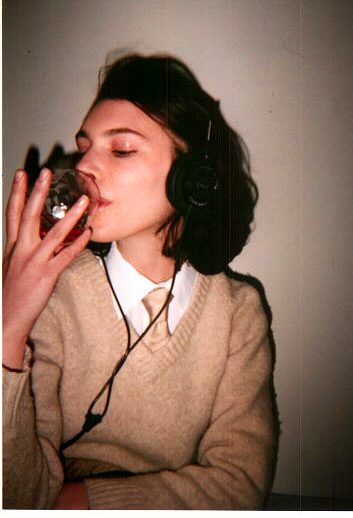
Fig 3--If you do a photo search for "John Ruskin girls" this comes up. Upon further inquiry, I have discovered that this woman is a Canadian film actress named Liane Balaban. After the first two pictures I saw of her I thought I was in love, but being able nowadays to pull up anybody you want on Youtube--though I only found about 5 'hits' for Liane, her career has not really taken off--I did not like her quite so much. She is trying, but she comes off as being pretty much just like everyone else of her particular type--sort of urban, sort of cosmopolitan, sort of educated, sort of artistic, sort of clever, sort of sexy, all without quite being any of these things enough to the core to knock one backwards. Her mother is Catholic and her father is a Jewish emigrant from Uzbekistan, which sounds like a vigorous combination, and she is from Toronto, which for some reason I always think is promising. I think all Canadian women are promising when I find out where they are from, but have any ever come through for me and lived up to my imagination? No! Yet the place maintains an aura of romance for me that I cannot destroy.
Ruskin refers in so many places to the greatness of Carlo Zeno in the history of Venice--he dates its decline practically from the moment this leader drew his final breath--that I thought I ought to do a whole piece just on him. At the very least I should issue a formal statement regarding my thoughts on such a personage. I don't have a good sense of who he was, however, beyond being an almost perfectly-realized representative of a culture that had reached an especially realized fullness of time in his youth and maturity. Such people are to my mind more worth studying than any other kind; they are what every civilization is, or ought to be, working towards the attainment of, the type of which every great artist and scholar awaits the arrival. That said, I haven't been able to get around to doing the research for this analysis.

I made a very cryptic note, which I believed is intended to be a comparison with our own present situation, regarding the expectation of the wealthy to devote their fortunes to the war effort (in times of such crises), not profiteer. Michael Morosini, who was chosen as Doge over the Carlo Zeno himself and set the decline of the republic in motion, had tripled his fortune during a war that had recently concluded by speculating in real estate during the period of uncertainty.

Fig. 4--Inside the Church of the Frari, Venice. This is not the tomb that Ruskin liked though.

Ruskin speaks with such intimate feeling about these people from the 14th century, and in a way that makes them seem so civilized and and advanced and fully-rounded as characters, that one begins to forget that they didn't exactly live yesterday. The 1300s was a long time ago.

With regard to the changes in attitude and feeling that Ruskin so laments in art history, surely he knew it would be inevitable that artists would eventually want to do something different, even if it were inferior (or maybe not. Perhaps this idea is a prejudice of us moderns, and there is no inherent reason why human beings should ever try to do thing differently, especially if there possibility of its being an improvement on what came before it. Some sensible people do think this way, too, and do their best to imitate the style of their masters. However, the fine in fine arts hints at a delicacy and subtlety in perception and experience and knowing that changes and transmits itself through the form, and from which the form must take its life or fail. Right?)

Fig. 5--This Is One of Liane Balaban's movies. I was still crushing on her at this point. Then I watched a little preview of this movie on the Internet. My interest was piqued because it's about teenage girls in some nowhere town in Newfoundland where its freezing and there is a significant Catholic population, which has some similarities to parts of my own life, but it looked pretty badly written, and it looks like Liane can't act much either, certainly not enough to give a mediocre film some respectability. (The reason she came up on the search by the way is because this film appears on a list on the same page with a film called "The Passion of John Ruskin"--God only knows what that is about--which does not seem to gotten much of a release, even on video.

A subtle, but symbolic development in the transformation of Venice from virtuous to decadent state is demonstrated by the changing nature of the battle-shields of the nobility. In the earlier period, of course, the shields were actually used in war, "and therefore there was no need to add dignity to their form by external development", but as firearms rendered this equipment obsolete in the 15th and 16th centuries shields became fields for elaborate decoration and engraving, usually regarding the glory of their owners' family. Ruskin thought that this ornamentation greatly diminished the dignity which had belonged to the formerly much plainer but more useful shields.

Friday, October 10, 2008

Would-Be Statement Regarding the Great Issue of the Moment

The great issue of the moment having apparently no substantive force or reality in my imagination however compared to movies made in 1962 or histories written in the 1840s, I find I cannot write about it in a direct or serious way. So I have scrapped the article I was laboring on it. My main point was that I thought people, even if they were not technically overstating the scope of the problem, were still overreacting, that their perspective was not right. I have demonstrated on numerous occasions both on this site and in real life that I have very little feel for the drift of the future, so in all likelihood we are facing an imminent breakdown of our civilization, with violence, anarchy, severe food and energy shortages, and a general return to conditions last seen on such a wide scale during the Thirty Year's War, if not the heyday of the Vikings, as so many people, especially on the Internet, seem to believe. I won't say that this scenario is impossible, but I do say there is no reason why it should happen, or why anybody should expect it to happen. The strong and intelligent part of society--and we know it is there, right?--has to display more psychological fortitude and leadership to adjust to these crisises and muddle through them without the kinds of horrors one sees predicted being unleashed. Isn't that supposed to be one of their primary responsibilities? It is evident that a good many people have absolutely no confidence either that we have a society capable of coping with the slightest hardship or disruption without going berserk, or in their own ability to influence or direct events by their own steady example and exhortations. That to me is the most disturbing revelation which has come out of the last few weeks.

To give one example--one of many, by the way--from my own generation of the extent of the pessimism, here is a 36 year old woman, married with 4 children, who has moved to an organic farm in upstate New York to grow soybeans, keep chickens, homeschool, and otherwise avoid the fallout from the disintegration of industrial society as much as possible. Now after I read over a couple of her posts I was pretty certain that this person was "insane" (by which meaning that she shows strongs tendencies towards being delusional). Yet she has attracted a large readership for a blog--50-70 comments for every post, most of which seemed to be in agreement with her views, many with even more certainty and militancy, while many others indicated that their authors had adopted or wanted to adopt a smiliar lifestyle. She has also made something of a little profession out of her relentless and humorless doomsdaying and negativity, with academic positions and conference invites and published articles and books that appear to be highly respected among the however-many-hundred people who follow this movement. I confess to searching for a picture of her to see if her person was as unattractive as her view of life, and, not surprisingly, I found that it was indeed so, though I felt rather less sated in the confirmation of my suspicions than I thought I would.

This is the more left-wing, hand-wringing, anti-consumption and exploitation strain of this school of negativity; the other, far more entertaining one, at least to read about, is the angry, culturally dislocated white male revelling in fantasies of anarchic conditions where their expertise with guns and tools and other traditional practical skills will give them the upper hand over lawyers, liberal academics and other modern pantywaists who are utterly lacking in any such useful knowledge. A typical theme in comment boxes on the various doomsday sites involves the contemptuous, well armed commenter magnanimously stating that while he will do his best to protect and take care of as many defenseless suburban wives and children as he is able when the SHTF (from what? starvation? being taken as concubines or forced into prostitution?), neither he nor other men like him will be able to carry and support the masses of useless men our society has produced over the last several generations; these will have to fend for themselves, he warns darkly, and--he will not mince words--most are likely to die by one means or another within a couple of months. Personally I am sure the lawyers at least will be fine, even in the unlikely event that our society is about to dispense with all need for their particular expertise. Much is made among survivalist types about how no one will have the slightest idea how to field dress big game or construct a hut or a canoe out of logs or preserve enough food to survive a long winter in isolation and without access to electricity or natural gas, but I suspect anyone who is reasonably strong and has the will to survive would be able to pick these skills up more quickly and naturally than is commonly supposed. In truth since in my community at least the lawyers are in the habit of taking over and running everything important, I would expect in a crisis that the would-be warlords will, with a few exceptions, more likely find themselves acting under the direction of the lawyers than vice versa before they realize what has hit them. I make no such claims for the liberal academics however...

My other point was that I thought it unlikely that the United States, a nation in which supposedly the vast majority of the available intellectual talent is single-mindedly devoted to wealth creation and the advancement of material comfort, was really likely to become poorer, and to function at a lower overall level, than the likes of Cuba, a nation where for half a century one of the main functions of the authorities has been to stifle any potential outburst of individual economic initiative. Yet even in Cuba my impression is that there is not a high degree of starvation, or anarchy, whatever other deprivations exist there, and even these conditions--housing, mobility, etc--don't seem as bad as what some of the doomsdayers are predicting are going to befall us. Even given energy shortages, does it seem plausible that we will not be able to maintain a 1920s level of production of food and other goods, an era which again, obviously did not offer the scale and variety of good and services to which we have become accustomed, but which I should think most people would be capable of tolerating? I hate to always be boring people with my old Czech stories, but when I was in that country the per capita income was around $4,000, few people had cars, and most lived in small apartments in rather dingy and lifeless apartment blocks. Now I do not want to play down the real problems that afflicted the citizens of this country, though if exposure to the lifestyle available in Western countries and the possibilities of emigration to these did not exist most younger people especially would have been able to bear the life there all right. Opportunities to make any kind of real money were very limited. The choices available in such things as food were equally narrow, though this was in part compensated by the circumstance that the five or six basic things that were eaten nearly every day--beer, bread, cabbage, bread dumplings (knedliky), pork, cheese and an array of sauces--came to be made expertly, good enough that someone like me whose palate was not overly refined, or spoiled, in youth could go a month without tiring of them and craving something else too terribly. Indeed, though impecuniousness in itself is not pleasant, especially to contemplate, there was much about leading an impecunious way of life--at least in a city both with a good level culture and where almost all of the other inhabitants are equally poor--that I found very pleasant, though a) I know these conditions are unlikely to be reproduced in many places in America, and b) like a good American I fretted over whether revelling in and glorifying economic stagnation rather than attacking it with all one's might was ever acceptable. Still, I think if the smart people can keep their heads, trust in their inner resources as constituting the real substance of life even though diminished materially, embrace the social possibilities that hard economic times may bring--with limitations on the ability to spend a lot of money individually, outings and excursions, for example, may need to be undertaken more in small groups or replaced by more socializing in the home, both of which were the norm for most educated bourgeois types until the last 30 or so years anyway.

By the way, my wife has a garden with pumpkins, cabbages, broccoli, tomatoes of course, corn, funny round watermelons that are able to grow in northern climates and that have a million seeds in them, and she has often expressed a desire to live on a farm, though I think her idea of a farm is something with hogs and cows and a silo--this kind of thing--and that does not double as a political statement, and I live in an extremely stable and civilized, if rather boring, area of the country that will probably be one of the last places to succumb to anarchy if it comes, so I guess I am already half-living the life of the societal dropout/refugee anyway, though I had not exactly planned on it.

Wednesday, October 01, 2008

Ruskin--Part XIII

This book was written at the same time as the Irish potato famine. Given our modern proclivity to be aware of and in some cases wring our hands over catastrophes quite a long way from home, I thought it worth noting that the crisis does not seem to have borne much on Ruskin's thoughts, though his own country and class was the ruling power in Ireland. Many modern people have wondered why England, nominally the wealthiest country in the world at the time, appears not to have attempted anything meaningful to relieve the mass starvation at the very least. While I do not doubt that the leadership of Britain was largely indifferent to the suffering, especially by our standards of decency, I wonder how logistically possible it would have been to pull off a humanitarian intervention on anything like the scale that we would expect now. I expect not very. The English nation at the time had not come to grips with feeding its own masses that, severed from the rural life or the cultivation of their own food, and without adequate employment, were unable to feed themselves. A lot of people seem to think we are going back to this level of civilization within the next few years, if not months, but I will comment on that in another post.

Fig. 1--Crusaders' Chain Mail. One of the many inexplicable, minor unrealized dreams of my life was to pick up a girl at a Renaissance fair. The reputation for beauty of the girls who attends these fairs is not high, but there are some acceptable lookers among the crowd, who would have more of the kind of education and other strange qualities that I would find appealing. This was to be a temporary, artistic-infused affair. Aren't the girls who dress up like this supposed to be notoriously easy if you can convince them you are one of them? Of course I never had any intention to dress up like the clown in this picture; I would have been willing to put on a tunic and a gauntlet if I had had to get in, but that is it.

I was greatly surprised in my researches to discover the extravagant cost of these fairs. They are $40 or $50 a person just to get in. Since they are so strongly associated with losers and the hopelessly uncool, I had assumed they must be free, or nearly so, to get any girls other than completely desperate ones inside the gates at all, but evidently that is not how this dynamic works (though judging by the reports on the internet, there are still a handful of studs who monopolize all the women, and the majority of male attendees go home bitter and alone, just like everywhere else in life; my miscalculation was always in thinking I would be one of the dominant ones among this crowd because to my eyes even the "cool" ones appear so weak. Yet their ladies love them as they are). "It is for each man to find his own measure in this matter (i.e., the activity of one's life); in great part, also, for others to find it for him, while he is yet a youth. And the desperate evil of the whole Renaissance system is, that knowledge is thought the one and only good, and it is never inquired whether men are vivified by it or paralyzed." By knowledge here, I am pretty sure he means mainly modern scientific knowledge.

Like most people--and I do mean most people, though not most very, very smart people who understand somewhat better what human existence is about--my instinct when reading a condemnation of contemporary life, whatever previous epoch of history it happens to be being compared with, is usually to nod in affirmation, though when pressed (and contrary to what it may sometimes appear), I do not believe that past ages were on the whole any better than our own. Obviously I find in certain individuals or pockets of people in former times admirable or delightful qualities that seem not to have been passed down to many people in our own age and that I should like to see a little more of. All of the problems with life elucidated here I have both at one time or another felt myself, and felt that my own society was particularly lacking in the wisdom or perception to meaningfully address. Perhaps these really are psychological conditions unique to the organization of society in modernity, and men in the high middle ages were the happiest and most fully realized people of all time--it is remarkable to me how many authors and scholars have come to this conclusion--but even if it were true, it is quite as impossible to return mentally to this manner of life as it would be for me to try to relate to the world as I did when I was a child--in which period, I might add, I was not especially happy, or brilliant either, at the time, but only seem so in retrospect when contrasted with the irreparable ruin I have since become.

"...one effect of knowledge is to deaden the force of the imagination and the original energy of the whole man: under the weight of his knowledge he cannot move so lightly as in the days of his simplicity." Again, one feels something like this to be the case in himself, though on the other hand it is impossible not to observe that many people who do not appear to know or think about very much at all also display little evidence of imagination or vigor. The problem I think may lie in the half or less than half-understood form that most knowledge consists of. The more mastery a man has over his knowledge, the more he is one with it and it with him, the greater his ability to manipulate it, the more vigorous and imaginative he will be.

Fig.2--Ruskin bearded. I have never had a beard of any kind. On the few occasions where I did not get around to shaving for a couple of days the growth did not look too terrible but I found it to be unbearably itchy. My children want me to grow a beard for Christmas and then shave it afterwards. I have always felt that one's face had to contain a high degree of solidity and purpose to carry off a beard with dignity. At the same time it seems like something one ought at some point in his life be removed far enough from pleasant civilization for some time to be forced to try on.
"...the Renaissance knowledge is like the Renaissance armour of plate, binding and cramping the human form; while all good knowledge is like the crusader's chain mail, which throws itself into folds with the body, yet it is rarely so forged as that the clasps and rivets do not gall us." I thought this figure and analogy especially well-down. That was my years as an earnest aspiring man of letters rearing itself out of the sludge, as such things will have the occasional tendency to do.

"They (men) look back to the days of childhood as of greatest happiness, because those were the days of greatest wonder, greatest simplicity, and most vigorous imagination." I don't have terribly fond memories of my childhood. In truth I very rarely think much about it up to about age 16 except in little fragments of memory that something has jolted. I was never one of those children who was infected with a high degree of "wonder", nor do I recall anything ever appearing especially simple to me other than lists of facts, dates, numbers, etc. My imagination was functional, but even at seven or eight I knew that it was not as vigorous--though I would have lacked the language to express this--as it might be. I guess I was just a bad seed through and through from the very start.

Fig. 3 This is supposed to be Croesus, I think.

The whole chapter "The Spite of the Proud" is very good reading. Though I don't know if he was thinking of Pope when he chose the title--somehow I doubt it--the phrase appears in the "Essay on Man", the closing couplet of Epistle I:

"And, spite of pride, in erring reason's spite, One truth is clear, Whatever is, is right."

"...of the paltry knowledge they possessed they could only be proud (as opposed to loving)...the one main purpose of the Renaissance artists, in all their work, was to show how much they knew." This is the same criticism Johnson made of the metaphysical poets, who were I suppose Renaissance figures, though late ones. Our time of course is so infused with this attitude that even I would not swear that anybody ever really did anything out of pure affection for their task more than egomania.

Fig. 4--I don't remember what this building is, or why I have a picture of it up here. I am pretty sure it is one of the colleges at Cambridge, but I cannot guess what it is supposed to refer to.

"Raphael, Leonardo, and Michael Angelo were all trained in the old school; they all had masters who knew the true ends of art, and had reached them; masters nearly as great as they were themselves, but imbued with the old religious and earnest spirit, which their disciples receiving from them, and drinking at the same time deeply from all the fountains of knowledge opened in their day, became the world's wonders." I thought it was an attractive theory. I don't know that I believe it, or that I can make it mean much to my outlook on life--so deadened to impressions and ideas my imagination has become, though it is still interested in coming upon them--but it carries with a whole vision of the organization of the world that I would find most desirable to believe in if I could.

"For instance, when perspective was first invented, the world thought it a mighty discovery, and the greatest men then alive were as proud of knowing that retiring lines converge, as if all the wisdom of Solomon had been compressed into a vanishing point." I thought this was humorous.

Fig 5--Dance Club on the Tech Company Trip to Miami. Now why the hell do I have this picture in here? These people look totally lame. The girl with the tattoo has nice hair and might not be a terrible person at heart or have a terrible mind but one suspects both of these have been somewhat constricted by society. I was thinking that any man of reasonable parts should be able to dominate this crowd with little problem, inspire lust in the women and awe in the men and so on, and yet so far am I from dominating them, that I couldn't even get invited to tag along with them or to work in a respectable position at their company. The distance between my perception of who I am vis-a-vis the rest of the world and who I really am is quite stunning even to me. Criticism of the excessively aristocratic bent to Renaissance architecture: "For, observe, all other architectures have something in them that common men can enjoy; some concession to the simplicities of humanity, some daily bread for the hunger of the multitude." Thankfully he did not leave to see Modernism. At first I wasn't sure about this quote either but there might be something in it; the architecture styles of certain ages definitely warm me more than others do. I don't know, however, either whether the Renaissance is really as off-putting to the common mind as he says it is, or whether it is really alone among pre-1900, or, given that Ruskin seems to hated the 19th century, pre-1800s epochs in being so.


Monday, September 29, 2008

Political Questionnaire

This list of foreign policy questions some smartypants drew up for Sarah Palin, with the more than strongly implied suggestion that she would not be able to answer them, attracted my interest, since it also suggests that all responsible grown-ups who would call themselves educated (people who are clearly brilliant in some demonstrable way I think would be exempted) ought to know the answers and have nuanced opinions on each of these topics. As longtime readers will know that I am on occasion overcome with longing to be one of these people I thought I ought to give it a try. The reader will have to take my word for it that I will not cheat to find the answers; I believe being fraudulent about the extent of one's knowledge is a more deforming moral failure than is commonly believed anyway, and as so little is at stake here besides I have no temptation to do so.

1. In a broad and long-term sense, would you have responded differently to the attacks of 9/11? Well, yes. To be honest, at the time I found the hysterical response of the American public more shocking and disconcerting than the fact of the terror (though I was surprised that the terrorists managed to succeed, so far as they did). I am not impressed by Muslim terrorist organizations as posing a threat to the American people on any significant scale (I say this so that in the event I am randomly killed some day as the lone, absurd victim of a ridiculous suicide bomb attack people won't say "he underestimated the threat"). If the goal of these groups is really to kill and terrorize Americans and Jews on a large scale, then their tactics are stupid and their results pitiful. The Virginia Tech killer took out as many people as it sometimes takes 15 or 20 suicide bombers to dispatch of in Israel. That their operations are primitive is of less concern, for if they were committed to an intelligent, realistic long term plan of violence they could still be dangerous. But I have seen no evidence that they either as smart or as determined as this would require. If I had been convinced that the Al-quaeda group were absolutely responsible and constituted an ongoing threat of course I would have agreed with going after them, though being of that sort of liberal strain that is very reluctant to go to war and not comfortable with the idea of open-ended military actions as a way of life I would probably have been inclined to push for a rather brutal policy once the decision was taken, to forestall criticism, achieve or not achieve the stated objections quickly and decisively, and get out. I would have encouraged a more sober tone of patriotism than what we got in 2001. I also certainly would not have gone crazy pushing through lots of unsettling security legislation such as happened also.

2. Is Iraq a democracy? I am pretty sure it does not merit the name.

3. What's the difference between a Sunni and a Shiite? I have read the answer to this like 10 times, and I really don't have the slightest idea. One of the sons or grandsons of Mohammed formed his own sect, I believe, but I can never remember over what issue this took place, or what, if anything, beyond this is the cause of the continuing hostility between the camps onto this day. For that matter I can't explain the differences between Methodists and Baptists and Pentecostals and Seventh Day Adventists--what the Catholic hierarchy tidily groups under the heading of "absurd religions", either. I know one of the groups--I believe the Sunnis--are the dominant sect in Iran, and although a majority in Iraq were ruthlessly suppressed during the Saddam Hussein era. Most of the rest of the Muslim world, including the homeland of the religion (I almost said church; good Lord!) and its leading authorities in Saudi Arabia, belongs to the other sect (I believe the Shiite). There most be something profoundly unengaging to the Western mind in whatever the difference is, because no one seems to be able to keep it straight.

4. What is your preferred plan for peace between Israel and Palestine? A two-state solution? What about Jerusalem? I was asked this question 20 years ago in a law office in Portland, Maine during my alumni interview for Columbia University (needless to say, I didn't get in). Being at that time in some ways--politically anyway-- an even less formed version of the being I am now, if such a thing is conceivable, and completely failing to take into consideration, or even to realize, that my interviewer was a Jewish man of a certain age, I said something to the effect that all religious conflicts in minor countries (and I included Northern Ireland in this assessment) seemed petty, of about the same level of significance as gang warfare in Los Angeles, and that it annoyed me to see the differences of what were essentially neighborhood thugs treated like matters of the highest international importance. I was of course jealous at the suggestion I perceived to be everywhere that the lives of people in these conflicted places were both more interesting and more worthy of respect than my own. In this I have, one might say, learned the lesson that it was necessary I must learn, but I am still not reconciled to it.

So twenty years on, have I got a better opinion? Well, as for the peace plan, I don't see as there can be any peace plan without some degree of reasonable compromise on the part of the Palestinians, which, at least from the Jewish-dominated point of view I am mostly exposed to (Arab points of view, even when available, usually being, how shall I put it, somewhat incoherent to the Western political sensibility in one or more major points) do not appear to be forthcoming any time soon. I have never understood why Israel should be expected to evacuate the territories seized in 1967 and return to the 1948 borders. Israel is, or always has been anyhow, the stronger power, and what exactly are the other countries supposed to be offering them? Peace, as an American President would define it? I don't think it's likely. The only plausible argument I have heard for Israeli concessions is the insistence by many people, some of whom I find reasonably credible, that the Israeli authority is arrogant, heavy-handed and oppressive beyond what is necessary, and therefore must be opposed on moral grounds. However I would have to look into the matter a great deal more before signing on to this point of view.

5. How do you feel about French President Nicholas Sarkozy's recent visit to Syria? Do you believe the United States should negotiate with leaders like President Bashar Al-Assad? I don't know to what the visit of the French president specifically pertained; however, it is well known that politically the French have a long tradition of attraction to and fascination with rascals of all sorts--it stimulates their especial craving for intellectual danger. If we could appreciate and humor this requirement a little better, I believe it would do wonders for our relations with that nation, which on the whole I think is inclined to friendly feelings for us. As to the Syrians, sure, if they are willing to make grave concessions to our interests on the matters by which they offend us so egregiously, negotiate with them. If they are not, then don't. It's Syria. Romantic land, great crusader castles, Damascus an ancient city harboring profound stories and secrets of a noble race and all that, but how much does the United States really stand to lose by having strained relations with its government?

6. Nearly 40 percent of the world's population lives in China and India. Who are those countries' leaders? Back in the day, when Nehru and Chairman Mao, true international superstars who even inspired their own fashion lines in the West (no mean feat for a pair of avowed socialists), were running the show, such a question would have been considered an insult by the most superficial newspaper reader. Even in the 70s the likes of Deng Xiaoping and Indira Gandhi had enough star power to lodge themselves in the consciousnesses of the quasi-alert. Today? I think the Chinese leader's name is something like Xi Hutong(?) They showed him several times in the audience during the Olympics. He looked like a typical middle-aged Chinese guy in a suit, an aspiring technocrat, whatever he might actually be as the office of Chinese head of state evolves toward that goal. India's leader I have no idea. I would assume he is a pragmatist committed to the similar program of building infrastructure, making nice with corporations and the other leading organs of the global economic order, encouraging wealth creation/accumulation on the one hand while politically managing both the national ambition to seek India's place in the sun internationally and the masses of hundreds of millions who are left further and further behind their countrymen at the forefront of growth.

7. Do you support the U.S.-India Civil Nuclear Agreement, which would lift restrictions on sales of nuclear technology and fuel to India, a country which hasn't signed the Non-Proliferation Treaty? I haven't spent a lot of time thinking about this one. Ideologically and instinctively, and as the question is worded, of course I would say "No!" But perhaps it is somehow necessary, i.e., we need the money, India will be under threat of domination or partition by hostile powers if we don't let them have the goods, perhaps a donation from the nuclear technology industry was the source of my college grant money and I owe them a favor. I will have to confer with my advisors and see what the story is here.

All right, I give up. I'm not going to answer all 20 questions.

Thursday, September 25, 2008

Ruskin--Part XII

There is some especially good material today.

On the topic of marble, still in the chapter called "Early Renaissance": "Over the greater part of the surface of the world, we find that a rock has been providentially distributed, in a manner particularly pointing it out as intended for the service of man." The more I study the past, the better I am able to grasp that this really was the mindset of even many of our most intelligent ancestors. I suppose many people still have feelings akin to this regarding oil, or diamonds, or uranium, and so on, though perhaps not so finely formulated. Such an attitude doubtless contributes to the vigor, invention, violent struggle, and even romance which continue to be associated with those industries, however.

Fig. 1--Santa Maria della Salute by Turner. Ruskin was an especial champion of Turner, as was Kenneth Clark, to such an extent that I think he is broadly regarded by most people who take an interest in such rankings as the greatest of all English painters. He is quite good. The famous light in his pictures does most definitely capture the perceived light of the mind in a moment of high feeling as well as anyone's does; for while it truly looks nothing like any real light really ever looked, yet it strikes one as a more accurate portrayal of things than what the eye ordinarily sees in them.
Various forms of the word "noble", including its negatives, ignoble, etc, I noted as being particular favorites of the author's.

On the discernment of the difference between real and imitation marble: "And the whole field of this knowledge, which nature intended us to possess when we were children, is hopelessly shut out from us." This argument, which I think everyone instinctively feels, that exposure to cheap imitations of superior materials contributes in no insignificant way to preventing us from fully realizing our manhood, is worth being reminded of, especially as it is put here in a fairly forceful manner. On the other hand, taking this tenet too much to heart would force any readership this blog might have to abandon their patronage and seek more substantial nourishment for their minds. But it is our foremost duty to ourselves, and to others, to raise ourselves up to the highest state of personhood we can attain, not merely to humor ourselves and everyone around us in lives of darkness and folly. This does not mean I will abandon the blog however, though it must be divested of its readership; for it remains my duty to seek my own improvement, however meager, wherever I honestly consider I have the most reasonable expectation of finding it.

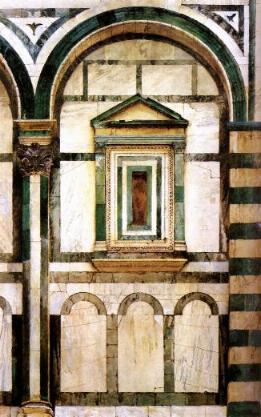
Figure 2--Example of Italian Marble. I don't know specifically what building this is. It looks decidedly Florentine however. "Nature has supplied other materials,--clay for brick, or forest for timber,--in the working of which she intends other characters of the human mind to be developed, and by the proper use of which certain local advantages will assuredly be attained..." I would not put it in quite these terms, although I don't think the underlying idea is as ridiculous as it initially seems. I do conceive of existence, perhaps foolishly but nonetheless it is so, both my own as well as that of all the natural world, as necessarily having a purpose, though what it may be and what is directing it are entirely inscrutable to me, as well as, I suspect most of the time, not commensurate with most of the more grandiose conceptions of the human ego. Man having sprung from and being in fact part of what is referred to as Nature, of course his relations to it, his responses to its limits and recognitions of its possibilities, have shaped every step of his evolution and progress; and a certain level of conscious engagement with and consideration of the natural/material world does seem to have uncannily positive effects on the development of the mind. My belief is that this is because such considerations encourage the welling up of strong feelings of a beneficent quality, which I must make it a point to define more clearly; for obviously some people are aroused by strong feelings in libraries or particularly luxurious department stores, though these feelings are, I would argue, of a different character, supplementary, and perhaps even fortifying, but not, I think, sustaining in themselves.

"I know not anything so humiliating as to see a human being, with arms and limbs complete, and apparently a head, and assuredly a soul, yet into the hands of which when you have put a brush and palette, it cannot do anything with them but imitate a piece of wood." He is still railing against the concept of imitation materials here. This thought reminds me of a place I once worked for two days when I was employed by a temp agency. It was in a large 1960s-ish building that resembled an old factory, which is probably what it was--high windows with large metal fans in them, enormous flourescent lights, pipes, tubes, wires, exhausts, various loud machines, etc, on the ceiling, lemon and pale green lead paint on the walls, cold concrete floors, locker rooms, heavy doors with windows of wired glass, etc, etc. The business of this factory was essentially assembling the contents of junk mail, though much of this was done by machine (you had to feed the machine) so the noise was similar to being in a factory. Loud bells rang when it was time for breaks, and when it was time to go back to work. It employed hundreds of people, very grotesque people, unintelligent, vulgar, very ugly, very badly dressed; the kind of people one sees at places like Wal-Mart and thinks "Who are these people? Where do they come from? What do they do?" Apparently a lot of them work at places like the envelope stuffing factory. During the breaks at this place it was not uncommon to see five or six different couples among the employees--usually fat and often well north of 30 years old--getting in ten minutes of fairly serious making out and groping each other in a hallway or a corner of the break room or in a phone booth (this was quite a few years ago). I suppose there was some concession to the idea of discretion, but all of this was certainly well within sight of anyone who chose not to willfully ignore it. The bosses evidently did not care that this went on, though obviously it would be well beyond scandalous to even think about carrying on in such a manner at most bourgeois workplaces. My idea I guess was that if Ruskin thought the artisans of artificial wood were degraded men...

Figure 3--This medal is awarded annually by the Geological Society of London, which august organization features in one of the sentences below. I imagine it must be no too minor thrill for most of its recipients to win one of these. When I went to see the career counsellor a few years back I lamented at one point that I ought to have studied geology (no reason other than that I had never met anyone who had actually studied geology and I imagined one got to do jobs in Mongolia or on the Black Sea, working side by side with earnest and sexy young research assistants, sleeping in tents and grilling wild boar at night for weeks at a time, all while contributing to the store of human knowledge) but the counselor told me she had just had a distraught unemployed geologist in to see her a couple of days before. We have now moved on to the chapter titled "The Spite of the Proud."

Ruskin attempts to defend art as a superior means for gaining insight than science. "Science studies the relations of things to each other; but art studies only their relations to man...Art does not represent things falsely, but truly as they appear to mankind..." What a thing has to say to men, and what it can become to them, is "a field of question just as much vaster than that of science, as the soul is larger than the material creation." This conception of the centrality of human existence in the universal order is a fight that it is pretty clear educated modern first world men, despite his rampant personal egomania, has lost. This more objective viewpoint however seems not to be, as currently formulated, to the long-term or even temporal benefit of human self-interest. The admission, in high language, of individual hope or vital essence beyond triumphing in competition, now mainly among one's fellow humans, seems not to be present in many contemporary breasts.

There is a section of decent length on the nature of an artist. "...the kind of truth with which art is exclusively concerned...is to be ascertained and accumulated...only, by perception and feeling. Never either by reasoning or report. Nothing must come between Nature and the artist's sight; nothing between God and the artist's soul...There is no great painter, no great workman in any art, but he sees more with the glance of a moment than he could learn by the labour of a thousand hours...God has made every man fit for his work: he has given to the man whom He means for a student, the reflective, logical, sequential faculties; and to the man whom He means for an artist, the perceptive, sensitive, retentive faculties." This is a little too simplistic, I think, though it at least acknowledges the very real existence of different mental types, which though certainly studied and categorized to death is scholars, is still not much accepted by us in our day-to-day dealing with people, and I have to include myself as being ever inpatient and irritated with those who reveal themselves to be of an especially opposed type to myself. The idea of God suiting us to our particular line of work (assuming one even has one) I do not find a comforting proposition.

Figure 4--The College of Surgeons, London. The lamp makes it look like a stage set for a musical.

Ruskin says, disdainfully, that it took the Geological society 50 years of labor to ascertain "those truths respecting mountain form which Turner saw and expressed with a few strokes of a camel's hair pencil fifty years ago, when he was a boy." The astronomers' knowledge of planetary laws and the curves of the motion of projectiles would not enable them to draw a waterfall or a wave; "and all the members of Surgeon's Hall helping each other could not at this moment see, or represent, the natural movement of a human body in vigorous action..." This ragging on scientists for their inability to draw a great picture of course would not be considered at all important by anyone in our day, would be laughed at. Still, it is an interesting perspective on the lack of deep value which we place on the talent for drawing, and the insight which it reveals in a person. Ruskin advocates in another of his writings for drawing being made as major a part of the school curriculum as reading and mathematics, for the capacities of the mind, particularly those of seeing, that this would hopefully develop. I thought it was an interesting idea.

"...what we want art to do for us is to stay what is fleeting, and to enlighten what is incomprehensible, to incorporate the things that have no measure, and immortalize the things that have no duration...this, the beginning and the end of the aim of all noble art, we have, in the ancient art, by perception; and we have not, in the newer art, by knowledge." The first part of this is pretty much in accord with my own sensibilities. I am sympathetic with the premise of the second part as well, though I don't have quite the confidence of Ruskin to bash knowledge, the cult of which I don't think set out expressly to destroy the artistic capacity of man at all, though at times it certainly seems that it had this result, mostly by making the effort of high artistic creation--which was physically much more labor-intensive in the past, even leaving aside the mere fact of procuring and making the very materials--paint, writing implements, paper, musical instruments-- increasingly unnecessary.

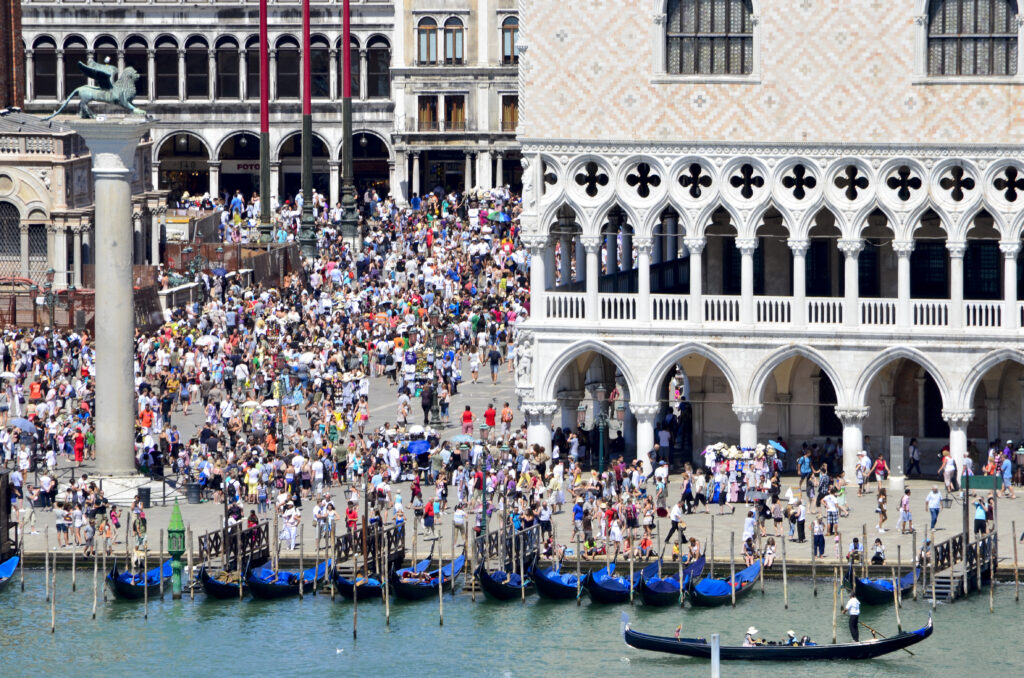
Fig.5--This is an especially nice-looking photo of the climactic confluence of the Venetian experience.

"...for as soon as we try to put our knowledge to good use, we shall find that we have much more than we can use, and that what more we have is an encumbrance." Now there's an insight for you.

Monday, September 22, 2008

The Rest of the Calvin Coolidge Pictures

This picture reminds me of a landscape painting of a century or two past. My son had decided after lunch to run to the top of the hill in the distance and back again. This is inside the more modest birthplace house. Other options for pictures here included the bedroom where the president was born and the boots he wore when he was three, but upon review I found they lacked the human impact I was looking for compared to the old kids-by-the-spinning-wheel shot.
This is obviously a little dark, but it is an historic room. It was here, amongst these familiar scenes and this very furniture, that President Coolidge took the oath of office in August, 1923, in the middle of the night after learning of the death of his predecessor. Besides this, the room evokes so much of the atmosphere of our second tier literature and other arts from this period, the collective memory of and emotional connection to which is doubtless fading, but which minor works I find to be a great aid to one's sense of history, not only in our country, but in others as well. Authors like Booth Tarkington, Sinclair Lewis, Edwin Arlington Robinson, Thornton Wilder, James Thurber, John O'Hara, even Dorothy Parker a little. It is a world that, living where and how I do, I still encounter and even still inhabit to a certain extent.
Some nice nature in the background. The guys broke into a spontaneous dance on this picnic table for reasons that are unclear to me, though I suppose I am glad to see that their joie de vivre has not been shamed out of them yet. I had myself already largely abandoned attempts at physical expression of any kind by the age of five, and I think that was a bit early, and even crippling toomy proper development in many ways. Besides, there were no hip families around. There are never hip people at any of these kinds of historic places; the best you can hope for is an occasional buxom, nerdy-cute girl-poet type.
This is the "Coolidge Club", which is basically a large room above the general store with a bandstand at one end and a wide space for tables, games, and I suppose dancing, in the rest of the room. When Coolidge was President he used the space as his office/northern White House when he was in town for extended stays. This kind of space I think is ideal for general socializing. This is how the beer halls and gardens in Central Europe are laid out; one can easily take in/retain at least metaphysical contact with the whole room at all times, there is a more or less even distribution of energy. When you have windows you can have air circulation. The traditional American bar/house party set up allows for isolation too easily. It is of course a characteristic of the age that less and less socializing seems to go on in these public hall/legion type places.


Friday, September 19, 2008

Friday Party Post

Deborah Walley, I think it is clear, was by far the hottest Gidget.


Now a lot of cool people in my generation would say that all this 50s-early 60s beach stuff looks like no fun at all. Really? I don't know, from my vantage point this culture of 18 cent-per-gallon gas, commercially undeveloped, traffic free cruises to the coastline, snappy, optimistic music, cute girls, and men who have yet to discover the joys of steroids or 40 hours a week in the weight room looks like it would be a pretty good time to me. Ultimately I'm sure they all got it on as much as and even more than most of us did anyway.

Sunday, September 14, 2008

Ruskin Part XI

Ruskin--Part XI Still speaking of the qualities found in the capitals of the Doge's Palace: "...their perfect, pure, unlabored naturalism; the freshness, elasticity, and softness of their leafage, united with the most noble symmetry and severe reserve,--no running to waste, no loose or experimental lines, no extravagance, and no weakness." The praising of "no experimental lines" is the choice kernel in this sentence. Can he possibly really mean it? Certainly, in the sense that, at this particular instant in human history, they were not necessary for producing beautiful and profound artistic effects, such a high state of psychological vitality had the society in which they originated attained. This idea suggests a particular contrast with the well-known writer who killed himself the other day, David Foster Wallace, who could be said to represent an idea of art and artists almost completely opposite to that espoused here. The primary broad impression I got from the few pieces and interviews of this author's that I read or saw was that he did not experience human life as something that made a lot of sense, or at least not in a way that was capable of sustaining, for lack of a better word, the spirit, and most especially perhaps when taken all together. When I read that he had killed himself--and I should add, I am not someone who had followed his career closely--I was at once certain that he had become convinced that his writer had no justifying object, and that therefore he could no longer do it; and as he could not persuade himself that life in general had no justifying object either, he thus could not continue to endure life. No intelligent man can carry on without a sense of some purpose to his existence, even if it is only the poorest excuse for one, such as drinking. Wallace does not seem to have had any children. That does not stop some people from killing themselves either, of course, but the sense of having such an obviously vital relationship such as that of a parent to a young child has probably prevented more suicides on the grounds of the pointlessness of existence than it has caused, even if the desponder considers the children to be the primary cause of his woe. This author had a reputation for bedding an enviable (by the standards of failed writers) number of young English major type women attracted by his literary notoriety and, doubtless, the aloof, sometimes cutting nature of his intelligence when deployed in the social arena, but it is not hard to imagine these conquests based on the tenor of his writing as rather joyless, nihilistic affairs. He neither looked nor carried himself like a spiritually vigorous person, and like most Americans of an intellectual inclination, seems to have regarded most of the actual life taking place around him as something with which he really had very little to do. Ruskin would insist that this doleful mindset was the antithesis of that found in the old Venetian sculpters. Figure 1--Tintoretto's Paradise. Occupying the entire wall of the main room of government business in the Doge's Palace. It will be referred to in a item below.


"The fact is, that the greater number of persons or societies throughout Europe, whom wealth, or chance, or inheritance has put in possession of valuable pictures, do not know a good picture from a bad one, and have no idea in what the value of a picture really exists." There is much more added to this opening salvo, but I won't copy it out. The repetition of "valuable/value" is what interests me here. The "valuable" could be referring in part to monetary worth--certainly it is suggested--while the "value" clearly refers entirely to something else. This value is clearly something that can be transferred to the mind, can indeed "enrich" it, if the possessor or student of it knows what to make of it, which, however, very few do. Also the serious concern that the possessors of art could not appreciate their real value, to the extent that it is implied that someone else ought therefore actually to have them, seems to me to be a relatively new development in 1850, such an open avowal that one will not show deference to rank in aesthetic matters, I mean. It is a pose that separates the value of art itself from the value of the people or the society that owns it, which I think was a pretty radical step. He then goes on to denounce the practice of "restoring"--in this time apparently more like re-painting--pictures: "Nearly all the gallery pictures in modern Europe have been more or less destroyed by one of these operations...the contents of many of our most celebrated galleries are by this time, in reality, of very small value (ed--there it is again) indeed." My impression is that cleaning paintings at least is a necessary evil, or was anyway for such paintings as were hanging on walls exposed to dust for hundreds of years before the invention of modern climate/air quality control devices. He has a point however that restoration in whatever form it takes places at least some further layer, some step, behind the modern perception and the original essence of the artwork, which latter is the primary value it would ever have possessed. Figure 2: A Capital. I don't know which one.


"...the 'Paradise'...which is yet in tolerable condition--the largest work of Tintoret, and the most wonderful piece of pure, manly, and masterly oil-painting in the world." See Fig. 1. I always love such declarations of superlatives and try to note them wherever I come across them. I remember reading a similar assessment somewhere else in later years, long after I missed seeing it when I was actually there. It looks rather similar in conception to the "Last Judgement" in the Sistine Chapel, which is a more famous work, if not perhaps more celebrated by the cognoscenti. At the end of the first volume (we have reached it!) there is a short note from the 1879 edition, in which Ruskin notes that the old capitals, which we have been reading about in methodical detail for the previous 86 pages are "now for ever removed, in process of the Palace restoration, from their life in sea-wind and sunlight, and their ancient duty, to a museum-grave." Ha! I don't know if you can still see the originals anywhere now or not, but obviously those adorning the building now are copies. I had forgotten about this tidbit when doing the other commentary. Fig 3--The Statue of Bartolomeo Colleone, by Verrochio. The significance of this will be revealed below.


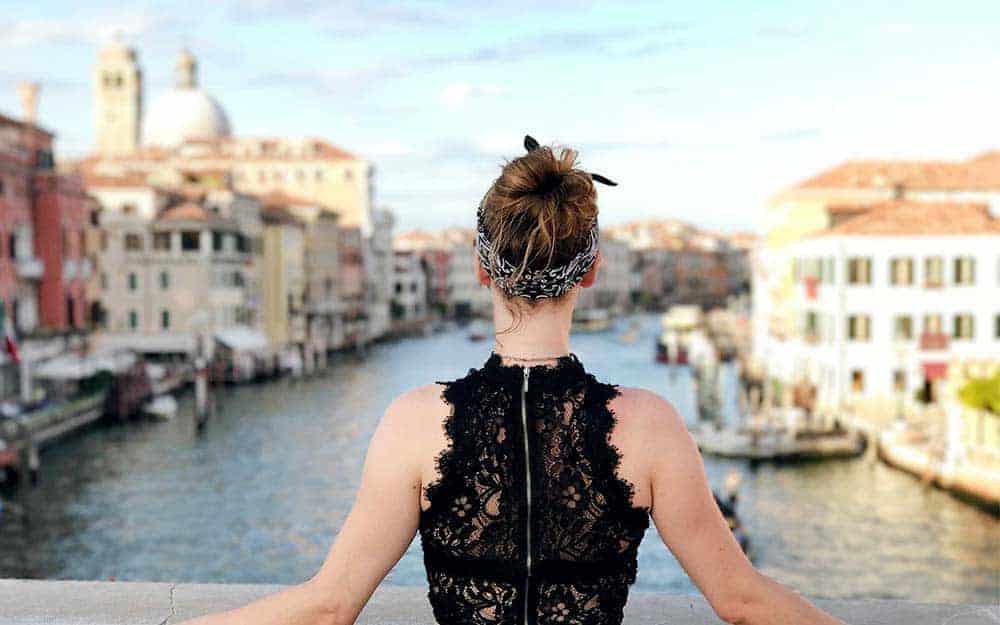
We are now in Volume II of the 1900 edition, in the chapter titled "Early Renaissance". Here is a characteristic sentence: "Renaissance architecture is the school which has conducted men's inventive and constructive faculties from the Grand Canal to Gower Street; from the marble shaft, and the lancet arch, and the wreathed leafage, and the glowing and melting harmony of gold and azure, to the square cavity in the brick wall." Carlyle also once wrote an essay in which he compared the beauty of the Tudor-era brick wall in his back garden (there is a lovely photograph of Sabrina fondling this very wall in her young days), with its handmade bricks, each one solidly and carefully formed, each distinct from the other, etc, with the inhuman, lifeless, brutal walls built by culturally stunted men from uniform, factory-made bricks of his and Ruskin's own Victorian era. Cultural and moral decay was as popular a theme at the time as it is in our own. Eventually he does acknowledge that while the general trend of civilization over the previous 500 years has been that of decline, there remain instances of individual excellence, though they are growing increasingly rare through time: "When it (i.e. Renaissance art--ed) has been done by a truly great man, whose life and strength could not be oppressed, and who turned to good account the whole science of his day, nothing is more exquisite. I do not believe, for instance, that there is a more glorious work of sculpture existing in the world than that equestrian statue of Bartolomeo Colleone, by Verrochio..." Figure 4--View of the Grand Canal


"It is the great principle of Brotherhood, not by equality, nor by likeness, but by giving and receiving; the souls that are unlike, and the nations that are unlike, and the natures that are unlike, being bound into one noble whole by each receiving something from and of the others' gifts and the others' glory." All men seek universal and unifying principles around which to organize their lives and the societies to which they belong (or, in our time, to which they perceive themselves as belonging). All "culture wars" are rooted in the dispute over what are the true universal and unifying principles necessary for a thriving communal life, and which are appropriately left to individual discretion.

"...in whatever has been made by the Deity externally delightful to the human sense of beauty, there is some type of God's nature or of God's laws; nor are any of His laws, in one sense, greater than the appointment that the most lovely and perfect unity shall be obtained by the taking of one nature into another." It almost sounds as if he means to talk about Barack Obama here.

Fig 5--The Rio Facade of the Ducal Palace, which, "though very sparing in colour, is yet, as an example of finished masonry in a vast building, one of the finest things, not only in Venice, but in the world...it still retains one pure Gothic character, which adds not a little to its nobleness, that of perpetual variety. There is hardly one window of it, or panel, that is like another..." This is hard to discern from this photograph, but Ruskin assures us that "there are few things in Italy more impressive than the vision of it overhead, as the gondola glides from beneath the Bridge of Sighs." All right.

It has been a long time since I posted last. Though it seems to be nothing, this post took me longer to compose than is usual anyway, and then when I had finished it I somehow erased it, and had to write out the whole thing over again. However, as I like to pretend that I am some kind of professional, serious person, this mishap was good practice for me.

Thursday, September 11, 2008

They Laughed When I Suggested We Visit Calvin Coolidge's Birthplace; and When We Got There They Were Still Laughing

In August some relatives of mine from Pennsylvania came up to Vermont for their vacation and they wanted me to show them some exciting places. While these visitors love the natural beauty of the area, they prefer to limit their enjoyment of it to gazing upon it and contemplating its sublimity rather than engaging in strenuous activities amid it. On a previous visit we had gone to the Von Trapp family's Austrian chalet complex near Stowe and that had been a hit, as had been the entire village of Stowe itself, which is quaint and has lots of shopping. An excursion to the Vermont Country Store had proven to be popular too, as had taking a tour of antique shops. Indeed, with the restrictions placed upon what we could do, I began to worry that I was running out of good options for new experiences. I considered Stockbridge, Massachusetts, which was where Norman Rockwell lived, and which has not neglected to cash in on the connection, but as James Taylor once noted, it is the very last town in that state before one gets to New York, and due to the configuration of the roads in that mountainous area it is actually about a three hour drive from Brattleboro, where we were all staying, too far for these guests of mine to go to and back in a day.

As I always do when I am in doubt, I went to my 1966 Illustrated World Encyclopedia to see their recommendations for visitors to do in Vermont; being a mid-century family-oriented publication, they love parks, monuments, and American history, and I am always reassured that a place is worth seeing in some way if they recommend it, even if for no other reason than it's been around for 40 years. The IWEs lineup of sights for Vermont include the Shelburne Museum near Burlington, which would have been good I think but it too was around 3 hours away; the Green Mountains National Forest including the Long Trail, a 250 mile hike, which would have been too ambitious; the granite quarries at Barre, which do not sound very exciting, but I see that they are still being touted in current travel books, so maybe I will make an effort to go see them sometime; Mount Mansfield State Forest, more rugged outdoors stuff (Sabrina has us do this on our own) and, of course, Calvin Coolidge's birthplace at Plymouth Notch, which is about 80 minutes from Brattleboro. I decided I would investigate it.

The farming village where the 30th President of the United States (term: 1923-29) was born and raised, which only had around 29 residents even when he lived there, has been preserved as it would have looked like in 1923 as much as possible. As such it is sometimes called the "Brigadoon of Vermont". There is a general store/post office with an upstairs social club, several barns, a restaurant (converted from one of the old houses), a cheese factory (which, along with the general store, now houses a gift shop), a Unitarian-looking church, a schoolhouse, the houses where Coolidge was born and the bigger one where the family moved when he was four years old, and his father's workshed where they keep the tools, sledges, ice saws, etc. The historic area is still surrounded by working farms and rolling hills, as the pictures will show.

Coolidge's presidency is viewed either as a disaster or as the last period in American history where any respect was shown by the government to the nation's founding principles, depending of course on one's political ideology. Coolidge seems to have been an incredibly hands-off, even at times disinterested executive compared to what anybody would find acceptable today. He must be the last president who actually did not want to spend any taxpaper money unless he absolutely had to. He also refused to forgive the Europeans their World War I debts on the grounds that the banks had to be paid one way or another, and why should that fall on the American taxpayer? (as you can imagine, the paleo-conservatives love this guy). The government ran a budget surplus every year of his administration which he applied to paying down the national debt, which was reduced from $24 billion in 1920 to $16 billion in 1930, a low point that I think it is safe to say will never be reached again. During his re-election campaign in 1924, the President spent most of the summer helping his aged father with the farm chores in Vermont, staying in the old family house which still lacked plumbing among other modern conveniences; the general store did have a functioning telephone so that Washington could reach the President in a case of national emergency, though the caller may have had to hold for a while the chief executive was fetched from the fields. I note this because this is only 80 years ago that we are talking about, when my grandparents, and many other people who are still alive now, were children, that the government was able to operate at this rather low-intensity level.
One ironic development is that when we were at the place I was thinking that no one from this type of background would have any chance of becoming President today. Why, Coolidge went from being a small town attorney in Northampton, Massachusetts, to the mayor of that municipality, to the lieutenant governor, to governor, to eccentric choice for Vice-President of the United States, and then to President upon the death of Warren G. Harding, in ten short years (four of which involved a war which just about levelled Western Civilization), without any obviously calculated plan for attaining that office. It is impossible he, or anybody else, could have dreamed it possible, and today, or so I thought, it would not be possible. And then about 2 weeks later we were introduced to the Governor of Alaska, whose possible ascent to the highest office is if anything more improbable than Coolidge's was. I haven't noticed that there is much, if any commentary on the similarity of this particular aspect of Sarah Palin's career to Calvin Coolidge's, though I think it is quite striking. Personality-wise, they don't appear to have much in common. Coolidge was the minimalist President, both in his conversation and style of governing. His biography, while typical in his era, was pretty undramatic. His family was of a modest size, especially for the time. He only had 2 sons, one of whom died as a teenager, I believe from an infected cut he got playing tennis or something, which now seems a rather stupid thing to die of. Similar to Sarah Palin, Coolidge was not considered much of a deep thinker, though this was probably even less of an issue in the 1920s than it is now. If common sense, rural wisdom, etc, weren't adequate qualifications for the Presidency, the thinking seemed to go, than America had lost its way and turned into something unrecognizable that we don't acknowledge. Evidently a lot of people still feel that way.

But I should get on to the tour. I will probably have to do more than 1 post on this.

Figure 1: An apple tree. They were all eating the apples too, though they weren't ripe yet. Figure 2: This is the house where Coolidge was born in 1872. I meant to put a picture of the birth-room up. All the furniture was the possession of the Coolidge family. It was interesting to us because they had a lot of the same furniture that is in the Brattleboro house I am always talking about, which they probably got from some common local manufacturer. This house has been in my wife's family for around 75 years and no one has lived in it full time for close to 30 so it has a kind of time capsule effect about it (though someone caved and put up a satellite TV dish about 5 years ago). It is in the woods and has a swimming pool and is used now as a kind of shared camp among various relatives who still live in the area.
Figure 3: This house is across the street from the modest birth-house, where the family moved when Coolidge was 4, and where he was actually sworn in as President by his father (who, as a notary public, had the privilege to do this) in the middle of the night on August 2 (I think), 1923, having of course been on vacation in Vermont when he found out that Harding had died. This is a pretty standard late-Victorian New England house. I have known lots of people who have lived in houses just like this and have lived in a few myself. They are lovely, well-built, atmospheric houses, which helps to mitigate the fact--and it really does mitigate it to a large extent--that they are freezing in winter and cost a fortune to keep even at 50-55 degrees.
Figure 4: This is sort of the edge of the preserved town. The ramp on the right leads to the 1880s era schoolhouse. The fallow-looking field in the background was part of a neighboring farm and the farmer came out on the tractor about five minutes after this picture was taken and mowed some of that hay.
Figure 5: Picnic lunch. This is almost how they drew it up in America 101, or at least on those homeschooling/wholesome childhood/Christian websites. Nobody is fearing that a riot is about to break out, that middle American values are about to be subverted in any way. But at least I am having some doubts about the desirability of that.

All right, this was kind of an overview. The next group of pictures will have, if not more edge, perhaps slightly more flair, or aesthetic value.

Sunday, September 07, 2008

Ruskin--Part X

The pages from which the the subject matter for today's entry are taken are one by one descriptions of the sculpted capitals of all thirty-six pillars which form the support for the upper stories of the Doge's Palace. Someone has helpfully uploaded photographs of these capitals onto the Internet which will at least be of use to me as a reference to some of the quotes below.

At some point during this section I came to the conclusion that vanity and delusion were, and must be, the same thing. If it is never appropriate or desirable to be vain, even privately, perhaps especially privately--and from the theological vantage at least, this seems to be the common opinion--then this must be because it in some way obscures or ignores truth.

"12TH CAPITAL, 3RD SIDE: Stultitia, Folly...there represented simply as a man riding, a sculpture worth the consideration of the English residents who bring their horses to Venice." I am just getting the joke now (i.e., there is nowhere to ride in Venice).

"Nothing is more remarkable in all early sculpture than its appreciation of the signs of dignity of character in the features, and the way in which it can exalt the principal figure in any subject by a few touches." He is commenting on a carved head on the 16th capital which he believed was "meant to express the superiority of the Venetian character over other nations". This is one of my pet subjects, the necessity of a society that aspires to rise to a high degree of greatness to find beauty and dignity and all the virtues among its own people first and foremost. The point when doubt and other sophistications begin to creep in among men of real talent is the point from all societies can date their decline.

Figure 1--Giotto's Portrait of Dante. This was mentioned by Ruskin in connection with the statement that I quoted in the last chapter about the peculiar energies of the Middle Ages being gathered at their highest point right about the year 1300. In Giotto, he said, can always be found the central Medieval idea on any subject. The main ideas I get from this painting? Emphasis on color red, a tempered but difficult to contain ferocity of approach to life, the vividness of the subject in the foreground in contrast with the rest of the picture, strength. It is a start.

The figures on the 17th capital, both what was recorded as having been in the original sculpture as well as what remained in 1850 I found interesting enough to convey at some length. The subjects are the intellectual and artistic endeavors of man represented by the giants of antiquity in each field:

1st side: Solomon (the wise: a figure with two books, in a robe richly decorated with circles of roses).
2nd: Priscian (the grammarian: a man with one book, poring over it; he has a long stick or reed in his hand).
3rd: Aristotle (the logician: he has a peaked double beard and a flat cap, from under which his long hair falls down his back).
4th: Tully (the orator: sculpture destroyed by 1851 however).
5th: Pythagoras (the philosopher: destroyed, all but a board with three (counters?) on it)
6th: Archimedes (the mechanic: a figure with compasses)
7th: Orpheus (the musician: nothing is left but a guitar with its handle wrought into a lion's head).
8th: Ptolemy (the astronomer: unfortunately this one was completely destroyed).

I like these descriptions for the charming picture they present of the possibilities of human life, which activities seem so simple and natural, and it is from these that the great bulk of human knowledge springs, yet one feels and one knows that one is estranged from it most of the time.

Ruskin called the 18th capital, which features the planets, sun, moon, stars of the zodiac, etc, the most interesting and beautiful of the palace. I ought to reiterate again that I once stood in the shadow of this palace for at least an hour and probably walked past it another 15 or 20 times in all, maybe more, and was completely oblivious to most of this work. There are a few sculptures, such as a depiction of the drunkenness of Noah on the corner of the building, that are pointed out in guidebooks and I do remember looking at that for a minute or so, but most of it, being either largely worn down and hard to see from the ground anyway, I did not examine in any detail. One note on this 18th capital reads "The moon was, I believe, represented in Egyptian sculptures as in a boat; but I rather think the Venetian was not aware of this, and that he meant to express the peculiar sweetness of the moonlight at Venice, as seen across the lagoons." He goes on to describe the rippling of the moon's drapery on the scuplture to suggest the trembling of the moonlight on the water and adds "This beautiful idea is highly characteristic of the thoughtfulness of the early sculptures: five hundred men may now be found who could have cut the drapery, as such, far better, for one who would have disposed its folds with this intention." Ruskin was of course highly partial to the conception of existence and human life which took hold in 14th-century Venice. I don't know how much good it does to lament that such glories have no place or animating energy in the minds of one's contemporaries. This does not prevent me from doing it myself all the time however.

Figure 2--This is supposed to be another portrait of Effie by Millais, a very nice one, in which she is wearing a pink blouse, but it was not meant to be. This picture is in the Delaware art museum in Wilmington, Delaware however (they apparently have a large Pre-Raphaelite collection), if you want to see it.

Classics scholars may enjoy the indignation which the contemplation of a Latin inscription is able to arouse in our author: "Note the o for e in adolescentia; so also we constantly find u for o; showing, together with much other incontestable evidence of the same kind, how full and deep the old pronunciation of Latin always remained, and how ridiculous our English mincing of the vowels would have sounded to a Roman ear." Something about the tone of this makes me think the accusation is unfounded in fact. Nothing true in philology is ever perceived and expounded so suddenly, so succinctly, so excitedly and on such a thin presentation of evidence. It is not given to all disciplines to be swashbuckling, I suppose.

Figure 3--This is some emblem of the Ruskin Memorial Society. Holly? Now I am wondering if it has to do with the town of Ruskin, Florida rather than our author, though I do not think of holly as growing in Florida. Perhaps it is something else.

36th CAPITAL (the last in his ordering, which I believe is at the end nearest the Basilica and away from the canal). The depictions on this capital are of acts of justice or good government, and figures of lawgivers. Among those featured are Aristotle, Solon, Numa Pompilius, Moses and Trajan. The fifth side features a depiction of the chastity of Scipio (Africanus): "A soldier in a plumed bonnet presents a kneeling maiden to the seated Scipio, who turns thoughtfully away." This incident, recorded in Livy and said to have occurred during the Roman conquest of Spain, and crucial to that conquest for the supposed goodwill it engendered for Rome among some of the native tribes of that country, has been widely celebrated among students and other cultural descendants of that epoch. Poussin made a painting of it.

I don't have a blogroll but every now and then I stumble across blogs of people in doing my little researches who 1) share some major interest of mine and 2) (and this is the hardest criterion) don't appear to be completely hopeless, who I can imagine I might have been friends with if I had developed slightly differently.

This guy is a medieval literature instructor at Oxford, high culture omnivore and book fetishist to the point of creeping nerdiness (this is what prevents him from getting too far out of my social league however), who seems to enjoy zipping around England to exhibits and Chaucer conferences and getting drunk with his fellow medievalists. I would like that too.

These two blogs on the pre-Raphaelites (here and here) are a bit narrow in focus and not particularly interesting, but they are earnest, enthusiastic, express similar general tastes to mine and well, most pertinently, their authors are by my standards kind of babes, at least they seem like the kind of women I should have been able to both get along cordially with at a reasonably intellectual level and have a slight frisson of some variety of erotic tension at the same time. However, this never quite happened.

This person, on the other hand, it is hard for me to envision being too chummy with, as she gives off an air of being both easily bored and easily aroused to anger, neither of which maladies I have any ability to assuage. However she is a pretty dedicated and knowledgeable writer, albeit one who also doesn't seem to be able to get published, and she is also a (seemingly rare) non-campy, non-silly, almost masculine Judy Garland fan, so I give her props as well.

Tuesday, September 02, 2008

The Hamburger vs. The Ideal of Demanding Food

If there is a single dish that embodies America, it is surely the hamburger. As such, unlike the national foods of most countries, it is frequently controversial and openly vilified on nutritional, ideological and aesthetic grounds. While it is often identified, especially among the formerly downtrodden, with youth and fun and freedom, or at least 20th-century illusions of those things, it also functions as a symbol of corporatism, mass production, blandness, unsophistication and the general destruction of and disconnection from the deeper and more subtle relationship which humans have to food and the earth itself in traditional culinary cultures. The essential banality of the hamburger is such that people raised in serious food cultures either cannot make, or cannot bring themselves to make, this dish as it is generally made in the United States. It is virtually impossible to find an acceptable imitation American hamburger anywhere in Europe unless it is at an American-owned establishment. For most Europeans anyway, to grill one straight from the recipe in Fonzie's All-American cookbook is to be neither adventurous nor to seek a deeper understanding of and appreciation for American culture, as people often consider themselves to be doing when trying a foreign cusine, but to violate deeply held and treasured beliefs about the proper techniques, purposes, relationships, flavors, etc, involved in the preparation of various foods. Those who are most highly sensitive about the place of food in their self-identification, and are most disturbed about how little serious consideration of it occupies in that of barbaric Americanized types, will not even acknowledge the hamburger as legitimate human cuisine, but rank it on the level of something more appropriate for animals.

Though I cannot pinpoint the moment exactly (and it was long afterwards--40-50 years after it first appeared in Europe--before the concept began to gain wide creditably in America), I believe that the idea that food should be demanding, or at least should not be undemanding, began to arise among certain of the more sophisticated classes of people around the time that the hamburger and its equally tasteless and unsubtle relations, the hot dog, the donut, Coca-Cola, ketchup, Oreos, etc burst upon the world scene in a big way in the 1920s. Before that time gourmets and other people who were inclined to think a lot about food tended to make demands on it, (namely that it be good, or for the less fanatical at least not be the sort of wretched fare associated with the dregs of society), rather than expect the food to make demands on them. But whereas throughout most of history people who had to eat terrible food generally would have recognized and happily eaten something better if they could have gotten their hands on it, America's emerging and, to some, terrifying masses of hamburger chompers had a much wider range of culinary possibilities, and not only willingly ate garbage, but began to export it aggressively all over the world. These modern Americans, these mass democratic men, when presented with superior food that was offered them for the taking, as they did with superior art and superior choices in clothing, on the whole responded as if the superior choices were impositions upon their enjoyment of life rather than the tenfold enhancements of it they ought to have been, in a word, as if they were demanding. This blatant rejection of quality split the human race into 2 parts in a way and on a scale that it had never been split before, and, the vulgar both so far outnumbering the sophisticated and having more freedom to impose vulgarity throughout the culture than had ever existed previously, sophisticates began to consider that the civilization that they had built and upheld must in as great a danger of collapsing as it had ever had been.

Americans themselves however tended to remain loyal to and even proud of their hamburgers and starch well into the 1970s. Much of this, doubtless, was the bliss of ignorance. Many older people who grew up in New Hampshire and Vermont tell me that they had never seen or heard of such things as pizza or edible yogurt before 1960, and I remember when my 1st grade school lunch menu offered tacos one Wednesday, my mother's having no idea what they were (this was in 1976-77). Celebrities ate the same heavy fare as the rest of the populace. Marlon Brando wowed one reporter at a diner in the 60s by putting away "two steaks, potatoes, two apple pies a la mode, and a quart of milk (?)." The 1962 Betty Crocker New Picture Cookbook, which according to my wife Sabrina is the greatest American cookbook of all time (and she is not alone. Copies on Amazon start at around $75 and have rave reviews. I don't know why they don't reprint it) includes a section on the favorite meals of numerous notable people, and the same pattern is revealed. Former President Eisenhower shared similar tastes with Brando: "Broiled Sirloin Steak, Baked Potatoes, Green Beans, Green Salad with French Dressing, Apple Pie with Cheese, and Coffee." Nobel Prize recipient Ralph Bunche, though a little more sophisticated, still went with Crabmeat in Tomato Halves (or Green Turtle Soup in cold weather), Prime Ribs of Beef, Stuffed Baked Potatoes, String Beans (maybe I should eat more string beans) Tossed Salad, Rolls and Butter Balls, Strawberries and Vanilla Ice Cream Scoops, and Demitasse (this a nice touch). "Glamorous opera star" Helen Traubel couldn't up come with anything more intimidating than "Chicken en Casserole, Mixed Green Salad, Hard Crusted Rolls, and Persian Melon filled with Raspberries, Cut-up Pineapple, and Blueberries." Little Caroline Kennedy's White House birthday party saw Roast Chicken, Mashed Potatoes (with clown faces) and Green Peas on the Menu, a modest repast compared to what the papers tell us our best children are eating nowadays. Jimmy Durante, whom I would not have expected to eat healthily, favored Shrimp Cocktail (yes!), Tossed Salad with Umbriago Dressing, Broiled Steak, Baked Potato with Sour Cream and Chives, Asparagus or Chopped Spinach. These are solid, hearty meals fit for a hearty people, and they are especially suited to the climate and traditions of the colder Northern states (which used to be populated by hearty people), which is doubtless why this manner of eating evolved as it did, for this is how and why culinary tradition has evolved in every country and every region.

But to go back to the hamburger: it is my theory that the modern form of food snobbery, which I really find distasteful and among the more trivial barriers that people have erected between themselves and others, arose as the result of mass displacement from traditional customs and habits on too many fronts for people to absorb all at once, and thus ever unsure of their footing in the new order of the world, have to stake out some patch of cultural turf on which to stand fastly and make a fetish of. As I have written before, I do enjoy, or rather did enjoy before I had children, going to certain gallery events or museum cafes and eating the crisp, airy food and eavesdropping on the conversations of the smart set on occasion, and I also agree that the general standard of cookery and diet among the American masses, including, about half the time, myself, is an absolute disgrace, and is not contributing to the production of either a physically strong or intelligent people. That said, I think the situation were better addressed by the more exalted part of the eating public in a graver and less scolding and sneering, as well as a more practical manner. I don't like poor and lazy people either, and I have even been both of those things at various times, but our society enables people at its lower levels to eat badly very easily. People will want to cast the argument in terms of economic theory, and say that if people are willing to pay a certain price for junk, one has no right to prevent them; there is also the argument, which I tend to agree with, that imposing some kind of health or quality standard on food will bring out fascistic tendencies in Americans appointed to set these standards. The cafeteria where I work imposed a healthy new menu a few years back, supposedly to fight soaring health insurance costs, and things like butter and meatballs disappeared from the premises and chickpeas began to be served as the main dish every Tuesday (which basically means that I now end up stopping at Wendy's drive-through on my way home from work every Tuesday to prevent myself from passing out from hunger). I wouldn't wish to impose absolute judgements of the virtues of kinds of foods, staple foods especially, but to cut down on the ubiquity of utter garbage. In France (I know, I know, but bear with me) or Italy, if you see a beggar sitting on some steps eating a crust of bread and a jug of wine, even if they are the worst brands available they are still generally way better than what a person in similar circumstances would be having in the United States because the floor of what is deemed acceptable for human consumption, the very bottom of the market, is much higher than it is in the United States. Unfortunately they seem to be drifting our way more than vice versa. Economics trumps all, I suppose.
I wanted a picture of a cute girl eating a hamburger but when I searched for "cute-girl-hamburger", I got ten pictures of the girl from the movie Juno (who is plenty cute to me of course, don't get me wrong, but the picture wasn't quite what I had in mind) talking on a hamburger telephone. This guy was #17, which if nothing else demonstrates the limitations of internet search engines. I tried other searches: "malt shop-girl-hamburger"; "old-movie-girl-eating-hamburger"; "pretty-girl-diner-hamburger"; "Gigdet-eating-hamburger"; but none of them turned up anything better.