Saturday, July 11, 2015

Maybe the Most Classic Movie Post Yet (1933-1940)

The Grapes of Wrath (1940)

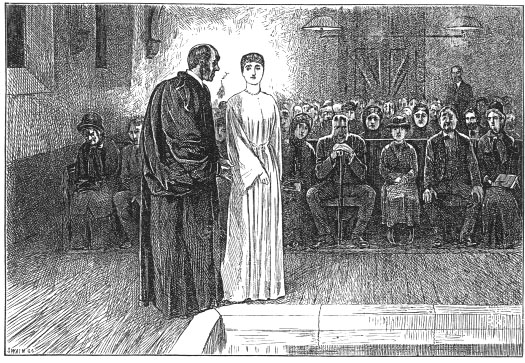
I have never gotten around to reading the book yet (though it appears on all of my lists eventually), nor had I seen the movie until now. It was probably time for one of them. The film was satisfying to me. John Ford of course directed it, though I have still not had that moment of profound, I-see-the-light connection with his personal style. It is more that I like most of the studio productions I see from this specific period, the prewar pinnacle from '38 to '41 or so. The images and sensibility they present, of the landscape, of the people, of history, of literature, still inform the ideas of much of the common mind with regard to all of these subjects. It was a transitional period, which will be a theme throughout this post. For me at least, the people in movies in 1930 and the world they inhabit seem quite remote and foreign, but by 1940 these have become very recognizable--in many instances almost more so than the present.


I liked the presentation of the road trip--Route 66, passing the state capital in Oklahoma City, how the road was unpaved when crossing into Arizona, the roadside diner, the bridge at Needles, the desert. Some hardcore critics have complained, as someone always must, that the real hardships and poverty of the Okies were softened to be palatable for the public, but I think their circumstances as presented here are plenty grim. Movies that insist on being relentlessly miserable also tend to kill in me any hopefulness that improvements can be effected. I liked the beginning scenes in Oklahoma too, they they are reminiscent of the Kansas portions of the Wizard of Oz. I thought the tone was a good one to take, the emphasis on these people being Americans and having cultural and linguistic affinity with both the filmmaker and the audience, and the confidence that the government, representing the greater nation, could have a positive role in mitigating some of the really ugly consequences of the economic situation (as represented by the much more pleasant and competently organized government camp--with showers!--that the family is able to stay at near the end of the movie).

Mutiny on the Bounty  (1935)

Another real monument, eminently watchable and crowd pleasing. an early realization of the finely polished Hollywood product that we all know. We also have the irrepressible Charles Laughton starring as Captain Bligh, though while he still gets some good lines ('Clear the deck of this r-rrrabble"), he does not have quite the free range to completely take over the character of the film the way he does in many of his other roles. I really notice in this movie and the two below the jump, or break, as some might see it, that took place in film production from 1933 to 1935--those in the latter year seeming so much more modern in terms of dialogue, mood (superficially at least much less dark), humor, what constitutes attractiveness in women, the stars such as Laughton and Clark Gable still have a general resonance with modern audiences whereas some of the earlier stars do not. I mentioned in an earlier post (on Baby Face, I think) how I was struck by the general crassness and slatternliness of the pre-code era films in contrast with anything that has come since, even the self-consciously edgy movies of the post-1970 era. The Code doubtless is responsible for a lot of these changes, but perhaps, in certain areas, it had a positive influence. It did raise the tone of movies, and one suspects of public discourse in general, as far as the mass mind was concerned.


The part where the daily log is read when Bligh and those loyal to him in the castaway boat have been several weeks on the open sea and are out of food and water, with no immediate prospect of finding land, essentially dead men floating, and it is noted that all there is left to do is to pray to the Almighty for deliverance struck me as noteworthy, for this is precisely the kind of situation at which modern intellectuals, or the more comfortable ones at least, are fond of pointing out as a demonstration of the absurdity of the idea of a higher power, conscious or otherwise, that takes the slightest hand in human affairs. Yet it makes perfect sense that if a man were really reduced to the woeful state that the castaways found themselves in, that prayer, or something akin to it, would be almost the instinctive response. That does not mean that it is 'true' or that it proves the material or objective supernatural existence of anything, but the impulse in such instances is a profound one and means more in terms of the human experience than perhaps some people appreciate.

This was based on an at one time famous book as well, though I don't think it is read much anymore.

Dinner at Eight (1933)

Now in two years we are back practically in another era, not just in the movies of course but in American history, as doubtless along with the code the Rooseveltian political ascendance and the more hands-on, technocratic approach to governing and its underlying aims that Americans began to accept after 1933 had no small influence on the character of films. Based on a hit play by George S. Kaufman and Edna Ferber, who were big name writers at the time, the movie was an extravaganza full of huge stars who were at the peak of their fame at the time, most of whom however would be facing has-been status within a couple of years. John Barrymore, one of the greatest American actors ever and in my top ten favorite male stars, though I had only seen him before this in two movies (Grand Hotel and Counsellor at Law), in both of which he was magnetic, is in this, though he was not his usual awesome self such as I was expecting. And indeed, many historians of the movies note this particular film, in which he plays an alcoholic has-been actor having an affair with a woman half his age that apparently was a mirror of his own place in life at that time, as the beginning of his decline. This is my first time seeing Marie Dressler, a blowsy, overweight, middle-aged vaudeville veteran who was the number 1 box office star in the country in 1932 and 1933. Her persona in this was as a wise-cracking, seen it all, worldly wise artistic mother hen with a big heart. My impression was that her shtick was a little overplayed, but that was the vaudeville style. She actually died of cancer in 1934 at the height of her fame, but it is hard for me to see her maintaining her status as a top draw as the 30s wore on. Jean Harlow, who was one of the major 'sex symbols' (I thought today that this was an odd expression; but then as I don't especially like most of the people who are designated as symbolic in this way, it is perhaps because the term does not strike me with significant meaning) of the 30s, famous for her pussycat pouting, platinum hair, and the pointedly underdeveloped intellects of most of her characters, is also here. Not really my type. She died (at age 26!) in 1937, at which time she was still a pretty big star, though I have not heard of most, if any, of the movies she was in.


The story in this, as well as its tone, definitely belong to that side of the 1930s cinema that I find to be strange, of enormous doors and lavishly furnished rooms that look as if no one ever occupied them, of naked social climbing and social misery, and a certain blunt honesty about people's sexual and financial interests. The movie is of interest as a glimpse of its time, and of all of its so soon to be vanished megastars, and if Netflix ever sends me a DVD of it (I had to check it out on early 90s era VHS from the library) I will certainly watch it again and see if I can get anything more from it.  

King Kong (1933)

Probably more important and epic for the sci-fi/monster/special effects aficionado, but it is certainly historically iconic, and I feel like I have achieved the next level in my progression as a movie buff in having seen it. Speaking of seeing it, have the PC police checked this out lately? I would advise them to skip it, but I get the sense that a lot of them feel a thrill of righteousness and vindication in seeing what they know all white people really perceive exotic peoples and countries to be like anyway depicted on the screen.


There was quite a bit of material in the extras about the director, Merian Cooper, who was the kind of daredevil, hyperenergetic, independent, endlessly resourceful and creative American male specimen that seems to have especially flourished in the early decades of the 20th century, at least I am discovering more and more individuals who broadly fit the type. A fighter pilot in World War I, Cooper was shot down and taken prisoner, knocking him out of action for the remainder of the war. His appetite for fighting not quenched (thus joining Hitler as the only men I am aware of who did not get enough of World War I), he went and joined the Poles in their fight for independence against the fledgling Soviet Army, in which conflict he was taken prisoner again. He escaped from Soviet prison, where his life was only spared because they did not realize who he really was, and made his way back to the United States, where he and his friend and collaborator Ernest Schoedsack took up documentary filmmaking, making intrepid ventures to places like Iran and Thailand and Sudan that were scarcely on anyone's radar in the United States in the 1920s. In addition to producing many films, especially numerous of John Ford's classics, he became an off and on executive at MGM and other companies. When the United States entered World War II he immediately re-enlisted in the Air Force and directed numerous bombing raids in Japanese held areas of China, rising to the rank of brigadier general. One could go on, but you get the general idea. And this guy is not someone who is really all that well-known, even as the director of King Kong, which is what he is most famous for.

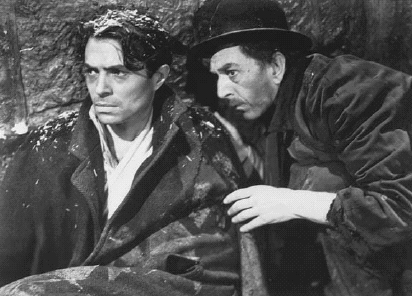
I also watched Odd Man Out again, as Netflix finally sent me a disc of it, from the Criterion Collection too. My second impressions are, above all, that it is one of the most gorgeous movies I have ever seen, which is all the more remarkable when you consider that much of it was shot in Belfast (with the remainder in London) in 1947, a time and place not thought of at the time as being beautiful, but in contrast with today's world there is an elegance in day to day common speech, clothing, cityscapes, customs and the like that hold a deep attractiveness to a person like me. This atmosphere, more so than in The Third Man (which was Carol Reed's next film after this) is what makes the movie what it is.

Saturday, July 04, 2015

Some Brief Book Notes

I finished The Brothers Karamazov recently. It was very different from what I had always imagined it was. It is a fine book and all of that, especially in terms of characterization, but I was surprised by how little in the way of incident and episode the book consisted of. It did not exceed or really fulfill my expectations of it, which were extremely high, on a first full reading. Yet when I read the first 300 pages as a college student I remember feeling at every instant certain that it was the truly great book it is celebrated as being, and I did not really feel that going through this time--when I reached the 300 page mark, which is right around where the Grand Inquisitor episode starts, I noted that my sense of the book was completely different from the way I had remembered it and I wondered what had happened to me. Even the Grand Inquisitor section, so celebrated, did not resonate deeply with me. Maybe I am too cut off from the habits of life and thought needed to take in these books now, or I have grown to distrust them. I am going to be reading this again in a couple of years for my other list, and I plan on that occasion to immerse myself in it a little more deeply than I did this time, when I was more interested in seeing what effect it had on me and what I would get from it as myself, without making any special concessions or adaptations to understand it. But that proved to be not wholly satisfactory.


After finishing Karamazov I moved on to the lesser known Thomas Hardy novel A Laodicean (from 1881, almost exactly contemporary with Karamazov). I am something of a fan of Thomas Hardy at times. I like the atmosphere of the Thomas Hardy world, the slowness and almost eternal quality of it. A Laodicean is, ironically perhaps, in large part about the changes in the way life was lived during the 19th society, but the pace and scale of the change will strike the 21st century reader as modest, and, as recorded in the book, quaint and even kind of romantic. The story takes place in a castle that has been purchased from its owners since time immemorial by a railroad magnate, who has died, the possession passing to his intelligent and attractive twenty-something daughter. A telegraph line has been run into a cozy office set up in one of the castle's turrets, that comes crackling to life once or twice a day, and the young owner, since she has to live there at least part of the year, is contemplating a renovation of the decrepit castle to bring it up somewhat to a 19th century standard. The main occupants of this castle most days are the young owner, her friend and companion, who is a member of the dispossessed aristocratic family who formerly owned the castle, and the young (male) architect who has been employed to carry out the renovations, a process expected to take the better part of 2-3 years. All of these people are intelligent and attractive, and the minor characters--clergymen and other member of the local society--are reasonably bright and presentable as well. There are as yet none of the wretched, obviously doomed sort of person who occupies the more well-known Hardy books. I assume something excruciatingly awful is going to happen to someone eventually but it has not become apparent what this is going to be yet.   


I am tempted to try to wrestle more with the big contemporary political issues, especially all of those that in my heart of hearts and brain of brain I am on the wrong side of (which is most of them), but hopefully a time will come where I will hit on the right ideas to make my position intelligible to someone, for it must be that at some level. (See, I am falling asleep now, and I don't want to wait a month to post this while I sort through the origins and ongoing basis for my political beliefs and reactions...)    

Friday, June 12, 2015

Movies, 1969-1990: Unifying Themes: Societal Repression, The Cosmic Illogic Inherent in Money Ownership & Power Relations

Ju Dou (1990)

Early offering from the Chinese New Wave of the 1990s that produced many fine pictures in the classic art house tradition, much appreciated by me. This starred the soon to be legendary Gong Li, who amply demonstrates why she became a huge star and the international face of Chinese art cinema in that decade. I saw her in some other films (though not this one) at that now distant time, but I had not been struck by her talents as I was on this occasion. Perhaps it is because I am older or this is a better performance than the other movies I saw, or maybe having watched the social evolution of people from all over the world in the last twenty-five years I am simply nostalgic for the time and personalities of my youth. I believe this is the first Chinese movie from that 90s Wave, which I guess must be long played out by now, that I have seen since they were relatively new--judging by this, they are holding up well, but as noted above they always had a timeless, universal, classic air about them.


As you have probably discerned, this is very much the kind of movie that I like, and the kind that will always work if well-executed (ed--because it is like a literary stage play), in that it is a simple story, in which the number of characters and the actions/possibilities open to them are severely restricted due to social mores/physical disability/social status/power/duties, and so on, but several very clever and not obvious twists take place within these restrictions that besides constituting the plot heighten the interest in the story by creating possibilities and conflicts that given the bare outlines of the situation one would not have been foreseen but which are in fact the kinds of developments that do come up in life in almost every individual instance to some degree and constitute most of its drama.

I had to watch this on Youtube, as I was not able to procure a copy of any recording either free or inexpensively via the usual means (the computers I use are still plugged into a wall, and where they are is not my favorite place to have to watch a movie.

Sugarcane Alley (1983) 

In French, set in Martinique in the French West Indies (which remain to this day a colony of France). The director was Euzhan Palcy, a native of the island and, as people like to note these things, a black woman, which latter fact I had not known when I saw the movie, as the style seemed to me in line with what was typical in mainstream French cinema at that time. The film is based on a novel, Rue Cases-Negres, which is usually translated as "Black Shack Alley", by Joseph Zobel, who was also a Martinique native. It is about the hard, materially impoverished lives of the black laborers who work in the sugar cane fields, and the struggle of one of the boys of the village to win acceptance to and attend the colonial school in the main city on the island.


The movie certainly has value for its atypical setting and characters, and the presentation was tasteful, though as noted above the attitudes and assumptions and aesthetics it seemed to promote I did not find noticeably different from what seemed to prevail across the general spectrum of respectable haute bourgeois French opinion in 1983. Palcy, the director, was only 25 at the time and a first time filmmaker, after having come to Paris at 17 and taken degrees in French literature, theater, Art and Archaeology, and film; so it is fair to speculate I think that her brain would, at the time she was making this film, have been pretty well saturated with the outlook prevalent in the Parisian intellectual world. I did not find any unanticipated pleasures or twists in it. As the main drive of the movie is effectively about escaping from Sugar Cane Alley and being able to lead a wholly different kind of life this prevents the viewer, I think, from taking too much of an interest in the life of the characters stuck there, apart from the usual voyeuristic one. This is in contrast to Ju Dou, which is able to generate, by zeroing in on certain pertinent aspects and and curiosities of individual situations, a considerable amount of interest and drama out of lives lived in circumstances at least as suffocatingly narrow as those in Sugarcane Alley. This bit of skill in my opinion was missing from this movie.

The Stunt Man (1980)

I probably should have watched this a second time, as I began to sense towards the end that there was something in it that might be interesting that I was not picking up on. This is a different kind of movie from a different kind of time, and a time that I have a pretty solid memory of (I was ten years old in 1980), the mores of which, probably to my detriment, probably still inform my sense of what the world must actually be like even today. As I went along with this movie my mind, which was doubtless tired to begin with, often got sidetracked by recollections of the moods and attitudes of that era and neglected to pay close enough attention to the story. So I barely even remember what it was about.


1980 of course is now clearly seen as the last year of that drifting, indulgent, minimally organized period that followed upon the social rebellions of the late sixties, and some of the signature behaviors unleashed during the period, such as drug-taking, divorce, rates of violent high crime and underachievement as a political statement had ceased to be novel energies adding excitement and subject matter for conversation to the national life but were settling in as the banal normal order of life that the dullest people could take for granted. Of course these behaviors did not end or even begin to substantially decline in 1981, but it does seem that with the election of Reagan and his immediate slashing of the highest tax rates from 70% to 28% and his general unabashed cheerleading of money-making and striving that a tighter order began once again to be imposed on society from above. It was fairly imperceptible at first and to me at least did not really come into any sharp view until the 90s, but it was enough that it made some of the drifting and indulgence that had characterized the 70s seem suddenly less desirable or likely to lead to anything really interesting.

Apropos of nothing, Peter O'Toole in his old age somehow came to look just like my grandmother.

Barbara Hershey was the babe in this movie. I haven't seen her in much and don't have much of an opinion about her, except that she gives off an aura of always expecting more from you where she is concerned while she considered herself to be perfectly sufficient as she is where you are concerned, which is obviously more than I can successfully undertake in any interpersonal relation. She was (and is) very popular as babes go among the men of the 1970s generation. They are quite devoted to her.  

Butch Cassidy and the Sundance Kid (1969)

This one speaks I guess to the virtue of seeing something a second time. The first time I saw this, which was some years ago, I didn't see what the big deal was, and I especially couldn't figure out why it had been so popular. I let what I perceived to be its archness--archness being something I detest--get under my skin, and it prevented me from being able to appreciate some of the finer points of the movie. It is really quite well-made, has a good script, a very good story, is quirky, and is not, I think, so arch as I thought it was previously. In truth, it was better than I had anticipated it would be even before the first time I saw it, as I was predisposed against it because I knew the baby boomers liked it, it was seen as transgressive against old Hollywood and so on, but of course now it is obvious that it is much more in the tradition of what everybody likes about old Hollywood than almost anything being made now.


This movie has been written about ad nauseam, and I don't have anything pertinent to add to the existing body of work, but I am glad I am still capable of seeing something differently, and in a positive sense, on a second viewing.

This was supposed to be a really short post describing my most basic, even animal responses to these movies, and perhaps it is, but it once again still took a week to write.  


Friday, June 05, 2015

Blogging Practice

I wanted to put a song in this post, but among the many activities I have had to (further) cut down on recently is digging around for old songs online. Also my main computer at home now has, for the benefit of the children, a gigantic security block on it which forbids access to any website that might contain anything offensive or inappropriate, which includes Youtube, Google images, and the like. Obviously I could either summon up the energy to figure out how to undo the block for my personal use and put it back on again when I am finished, or I could just buy myself a tablet (especially seeing as everyone else in the family over age 5 already has one for him or her-self) that I could theoretically do all kinds of private things on; in the second instance though I ultimately don't think the extra expense is worth the potential pleasurable reward at this point.

I went out to the movies last week with three of the children, something I only do about once or twice a year. One of my sons, the one (so far) who has been diagnosed as being 'on the spectrum' had for some reason which he never explained to me a very strong desire to see Tomorrowland, which has gotten, accurately, pretty mediocre reviews as a story, though there were some parts at least where the expensive production values saved the experience from being wholly unsatisfying. Anyway, it is unusual that any of my children express such an interest in seeing anything, so I was curious to go, besides that I always enjoy an excuse to go out among the public, going to the movies is a venerable tradition in our country, etc, etc. The children got pins associated with the movie as a promotional gimmick when we bought our tickets--silly, perhaps, and obviously intended to be manipulative, though I don't remember ever getting any kind of souvenir or door prize at the movie theater when I was a boy (though I certainly encountered plenty of references to them and wondered what they were), so I appreciated the gesture. This movie has tanked at the box office. There were about twenty people in the theater, besides us, on a Saturday night on its second weekend of release. I'm very curious as to why my son wanted to see it so much. He wouldn't tell me, even though he asked me if he could go every day for two weeks. I am guessing somebody at his school must have talked about it in a way that made it seem desirable. The children all seemed to enjoy it, at least the outing gave them something to talk about. I think the plot was a little convoluted for my six year old, but he appreciated the magic parts and got some material for jokes to be used later in the week, so the experience was not wholly lost on him either.

  
I had a longer exposition I was going to slip in here but I think rather than let another week go by I will just post this little bit to make the site seem as if it is still active.

Saturday, May 30, 2015

Videos from the Czech Republic

Monday evening--I had a good weekend, but now I am back in an old end-of-holiday, remembering-all-that-I-have-lost kind of melancholy mood, and wishing I were back in Prague eating goulash and dumplings and drinking beer, afterwards going out onto the dark, cold hush of the Sunday night streets there on the way back to the train, or perhaps to one of the special mysterious cigarette kiosks that were only open from 10pm to midnight on Sunday... 

Tuesday Evening--Everybody wanted to be City in those days. Everybody who mattered to me anyway. Even though in the 80s and early 90s, American cities, or at least the ones in the Northeast where I lived, were, especially in retrospect, not I think what most people really wished them to be. People affected to love the edginess and the constant threat of crime, which I think in many cases they mistook for part of the innate character of urban living; this is perhaps true to a certain extent, but not to the extent that prevailed in most northern cities by 1990. I read a query on the internet written by a younger person the other day asking why in the world people endured the now infamous inconveniences imposed by the circumstances of the at the time apparently permanent crime wave of the post 1965 era, such as not walking around after dark, barricading oneself in his or her apartment, being resigned to periodic robberies of your car or your person, and so on. In the first place, popular opinion at the time held that nothing really could be done about it, short of implementing the kinds of extreme policies regarding policing and imprisonment that finally have been implemented in our time, which was a path many people, myself included, were reluctant to go down then even in the face of massive violent crime rates. For once such large systems are in place as sources of employment or other forms of wealth acquisition, they are difficult to dismantle, and as they also face constant pressure to maintain and even grow the revenue flowing into them, they will inevitably turn their energies in directions that would have been considered intrusive and totalitarian at one time. But in the second place the love that many people have for great cities, or some idea of them, and the desire to live in one if it is at all possible for them to do so will inspire them to put up with a lot for the privilege, even when the conditions and atmosphere presently ascendant are not those of our literary or artistically informed imagination. And besides, in my day, especially if you were a man, having grown up anywhere within the limits of a great city--and it seemed the more notorious for crime and violence the better, in most instances-- made you conspicuously cool in any environment, such as college, or an ex-pat setting, that primarily consisted of the suburban-bred, the contrast with the males of whom in verve, dash, mental quickness and lightness, style of dress, and so on was so pronounced that after a few minutes in such company, any bland or timid suburban boy who still imagined he would be the recipient of any willing, free female love in the immediate future in that social circle was only embarrassing himself and establishing his inferiority further by the demonstration of such delusion...

Wednesday Evening--What I mean to say is that many intelligent but not phenomenally well-connected or wealthy people had desires for a particular kind of city lifestyle that American cities thirty years ago were not really equipped to deliver in any kind of broad way. It was necessary, in a sense, to be cooler (or at least wealthier) to get what good things there were to get out of them than it should have been. I don't know whether this state of affairs has improved in the interval or not. Most people who were not devastatingly cool in this way developed the habit of looking at the cities of old Europe and finding a model of urban living that appealed more to their aesthetic and self-image. This was certainly the case with me, especially with regard to the more egalitarian and less international corporate-finance oriented (i.e. cheaper) cities on the continent. Perhaps the amenities and cultural entertainments--restaurants, concerts, nightclubs, operas, festivals, transit, museums, bookstores, intellectual societies, etc--in a place like Prague are second-rate overall, but one can, or at least could, live a ten minute subway ride from and partake of all of these activities on a regular basis, and feel like one is living a version of a cultured urban life, which seems to be difficult for the person at a certain level to realize in America without a fortunate confluence of circumstances...     

Thursday Evening--I saw a post on a Very Concerned Traditional Serious Christian blog in the wake of the Irish gay marriage vote last night in which an apparently respectable source was quoted with the hint of a shrug that the game had been up in that country for a while; that indeed, when he had spent some time there in 1990, young Irish girls were more than willing to fornicate with American tourists. Oh my God! Why are these glorious aspects of the world never revealed to me, who has no sense of sexual morality and for whom the whole trajectory of life, had I been able to enter this world of willing Irish girls in 1990, would have been different, I cannot help but assume in a positive way. Meanwhile these poor male Christian writers, who want nothing more than to be chaste and virtuous, and to promote the same qualities in women, cannot seem to avoid coming into contact with an endless parade of horny girls signaling carnal interests to them (to say nothing of the scourge of pornography that has already gutted the souls and ability to form mature relationships of a substantial portion of what was formerly Christendom). These poor guys should have traveled with me when I was young. I probably could have backpacked around all of the most celebrated tourist destinations in Europe and the rest of the world for the entirety of my twenties without encountering a single wild party or nightclub or stray woman in a park desirous to cajole me or be cajoled by me into an immoral relation with her (for free, that is), even though that would have been all I was really looking for the whole time. But I guess the problem is that these Christians and preachers are somehow sexy guys. When you are a sexy guy temptations and offers to betray your moral system will inevitably make their way to you no matter how powerfully or authoritatively assert your antipathy to them. When you aren't a sexy guy you can leave the house every day open to engaging in any indecency attractive to you that opportunity may present but, almost as if God were shielding you from being able to commit the sins you have not got the moral sense to be repulsed at the prospect of, the opportunities never do present...

Friday Morning--As any dedicated reader of mine knows, I have been struggling over the past few years to feel the excitement and righteousness in the ongoing gay rights ascendancy that seems to come so naturally to everybody else, so the Irish vote promised to be a good test of my development in this area. When the results came in and the forces of Good had carried the day, my response was...ehhch. I must confess, my heart sank a little, in anticipation of all the triumphant braying that it was inevitable must ensue. I had obviously been holding out hope that some large body politic somewhere that included some cool people might say 'Um, no. I love you brother, but be serious now, two men doth not a marriage make'. But evidently this is not going to happen. People will doubtless think, 'What is wrong with this guy? What's it to him if I want to marry someone who doesn't meet some antiquated heteronormative standard?'...It should be nothing to me, I agree, and if I could be excused from being expected to take it seriously as marriage and didn't have to be subjected to quite so much pro-gay sarcasm and moral instruction (which is at least every bit as grating and obnoxious as that coming from religious conservatives) I would probably be more broadly sympathetic on all of these issues. At bottom, I know that for me this is all really a struggle over who is going to lead and hold authority in public life with regard to tone of discourse and standards of behavior and whose interests are prioritized and whose aren't and I am obviously not really happy that a kind of aggressively overt homosexuality has become the distinct force in these areas that it has...  

Czech version of "Where Have All the Flowers Gone" from a to me interesting-looking movie called Rebelove that featured Czech versions of a number of 1960s American pop hits. As far as I can tell, this scene appears to feature people leaving the country in the aftermath of the 1968 Soviet crackdown. Since many people did this, and at the time it seemed likely they would never be able to return, it is kind of a poignant scene.


Tramvaje circa 1995. I don't expect you to watch this.


Pankrac Metro! My old station! The underground part actually looks exactly the same. It looks like they have built a kind of modern shopping mall with fountains and all on the street level above the station. In my time there were merely a bunch of motley stalls set up selling fruit, cheap clothing, flowers and suchlike, a throwback to the Communist era.


Goofy Czech version of "King of the Road" from 1970.


Friday Evening: I have a very memory from when I was in Florence, which would have been in 1997. I was at one of the famous sites there, and I remember this middle-aged American man who was standing near me, very affluent-looking, distinctly well-dressed, and as I was lingering near him his two extremely beautiful, expensively-dressed and doubtless expensively educated daughters came up to meet him, and they struck me, who devoted very little energy to thoughts of either domesticity or the future at that time, as the kind of family that was actually worth the trouble, and thought the man must in that moment at least be very happy. I always had an idea from that time that if I had children they must be at least as good-looking and smart as this man's daughters and that we must meet together when they are twenty-three or so in some grand place and that that would be something that would make me happy. I feel in some sense that this is a terrible desire to have, because it puts some kind of pressure on my children to be a certain way that they might not want or be able to be, and that also might be superficial, which would both be wrong. At the same time I feel that this idea I have could actually come true, that we will be able to meet in Florence or Granada or New York or walk the Camino de Santiago and I will be able to do certain things I have always wanted to do and be happy doing them just as I have always imagined...

I noted the days and times when I wrote all of these things because I am frustrated and embarrassed by how infrequently I am able to put up postings. Each dated item represents about a full hour of attempted writing.  

Friday, May 15, 2015

I Was Going to Interrupt the Movie Reviews to Comment on Current Events But I Thought Better of it

All of the tired, expected topics: Baltimore, the confusion of the political left, the general level of hatred in society, what seems to me the desperate need to find solutions to problems that don't involve business interests getting to dictate terms that are disproportionately favorable to themselves. But all of this was taking too long, and I did not have a great fire for writing it, so I have put these ideas aside until the next crisis calls them forth.

I find that my responses to movies from the 30s are more unpredictable than they are for any other decade. Sometimes I see something from that decade (Captains Courageous, A Tale of Two Cities, Counselor at Law) and I cannot believe how good it is. Then I will see something else and I am reminded that we really are living in a very different world, which was largely the case with the two films here, both of which I had approached with a higher than normal anticipation of greatness and found myself let down by to some extent.

Gunga Din (1939)

One of the many celebrated films (very few of which I have seen to this point, including this one until now) from what has become enshrined in the popular consciousness as Hollywood's greatest year. On this initial viewing I found Gunga Din interesting for its abundance of classic Hollywood tropes--huge stars, adventure and spectacle in an exotic locale, the unabashed cheering on of the great Western empires in collision with the mystifying cultures of the non-European descended world--but somewhat hard to get into as a story that demanded attention in itself. That is to say that it is more than a little silly unless you apply a whole lot of context. Based on the famous poem by Kipling, Gunga Din (played in brownface by a perpetually loincloth-clad Sam Jaffe, who was a widely respected actor--we have seen him here in The Asphalt Jungle) is preternaturally eager to serve the British and throw over those who are, as far as I can make out, his own people. According to the ethos of 1939 this apparently should suffice to make him a winning chap in our (Western) eyes, and we are even encouraged to get teary-eyed at the end. This last is difficult in the original version of the movie (which has been restored on the DVD release I saw) because an actor comes in for the final sequence depicting an absurd and sheepish looking Rudyard Kipling, who is so moved by the denouement of the Gunga Din saga that he immediately sets to writing his immortal poem in his tent as soon as the body is carried away. Kipling's widow, upon seeing a preview or early showing of the film, demanded that this part be removed, as certain to induce hilarity in audiences, which it subsequently was in all of the prints released until recently.


When you are watching this movie, it is probably impossible for the modern instinct not to demand you express some concern for what people in India must make of it. My impression though is that, compared with other peoples historically disrespected by Europeans, Indians, and Indian intellectuals specifically, have enough confidence in the rigor of their thinking and educations, and interest in those processes for their own sakes, to consider these past condescensions a little more dispassionately than we have come to anticipate.

When watching this type of film I try to imagine myself as a scrawny nineteen or twenty old in 1939, living in one of our dense old cities--New York dominates our imagination of urban life at this time but many of our old northern cities, Philadelphia, Cleveland, Detroit, Cincinnati, Buffalo, St Louis, even places like Newark and Akron and Utica, were significantly more populous and livelier in 1939 then they are now. I work at some fairly wretched job, either in a factory or a dingy, backroom office, but I am still young enough to go out and I don't have a wife or any sweetheart yet (though I have undeclared affections for various lunch counter workers and regular riders on my favored streetcar routes all over the city). I am in general depressed because my life lacks excitement or purpose and the prospects for improvement in my conditions are not promising. As such my twice-weekly pilgrimage to the movie theater is, for the moment, one of the highlights of my existence, and one of the few suggestive of attractive possibility. So once I have entered this mode somewhat, I am more ready to enjoy the films of this period that require such an adjustment.


The only picture I could find of Reginald Sheffield as Kipling in the movie

Rudy Behlmer, a film writer and historian who is one of my favorite commentators, did the commentary for Gunga Din. While I did not like this commentary as much as I did the one he made for the 1938 Adventures of Robin Hood, it was decent. It was a little too heavy on biographical information about the actors and other prominent people involved in the film, much of which I found I knew already, but overall I like his approach and conversational style in these things, which are important.

Mr Deeds Goes to Town (1936)

Seminal Frank Capra picture, considered by some to be his masterpiece, considered by seemingly everybody to be one of the all time classics, I came to this expecting to be satisfied in about the highest degree a person like me can ever know of true satisfaction, but I never arrived anywhere near that point. I did not hate it, but it is much more dated--in the mildly unpleasing sense of the word--in all of its main aspects than I was anticipating it would be.


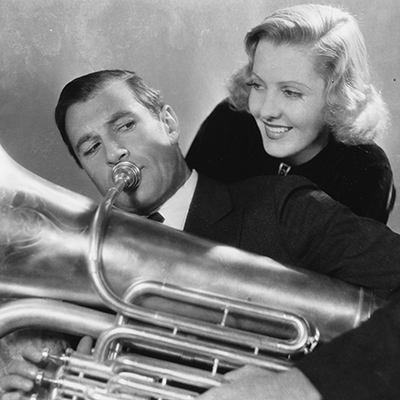
Incredibly, this is the first Capra movie I have seen other than It's a Wonderful Life. It certainly operates in the style Capra is famous for, with broadly drawn themes and human types, with an everyman hero whose solid good nature and practical wisdom suffices for him to contend with the more wily and grasping element which seeks to manipulate and control him, strip him of his American birthright of autonomy of conscience and so on. Gary Cooper, a massive star at the time, not exactly forgotten now but perhaps less actively legendary than his previous status might have suggested he would be, fills the Jimmy Stewart role here as a relatively simple guy in a small town in Vermont who inherits 20 million dollars from a distant relative of whose existence heretofore he seems only to have been vaguely aware. Upon gaining this windfall, he goes to New York and has various adventures, most of which involve hardened city sophisticates trying to take advantage of him for some wretched benefit to themselves. The premise of the story is fine, it is actually one of the kinds of thing I like most, but the execution did not hit home to me. One problem is that Cooper's character develops early in the film a propensity to punch people out who are snobbish to him or otherwise do him a wrong turn. One time this might have been effective, provided a sort of catharsis, but once he begins he starts doing it in every situation involving a confrontation of some kind, including to the opposing lawyer during the trial at the end when he is accused of being incompetent to handle his fortune due to insanity. The trial scene is something of a mess as well, and is for me a kind of microcosm of what is the problem with the movie. I can buy one or two fairly outrageous and unexpected things in this type of movie--in It's a Wonderful Life, for example, I completely accept Clarence the guardian angel as what he says he is--but I can't buy every aspect of a scene or a story bearing no resemblance to what it is supposed to be representing in real life whatsoever. The bit where Cooper undertakes to tackle the depression by being a one man jobs program does not really come off either. Besides the fact that it would never happen, even most amateur students of economics, especially nowadays, would laugh out loud at the idea that it would produce good or sustainable results. So that is what I took away from Mr Deeds Goes to Town, though I do want to read up more on it to see what serious men and women saw in it and presumably liked. I was psyched up for this one, so I took it hard that I found it disappointing.

There was a commentary by Frank Capra Jr, but it was very sparse and not particularly enlightening, so I gave up on it after twenty minutes.


Sunday, May 03, 2015

Movies 1945-1949, One From Each Year

All the Kings' Men (1949)

I had read the book recently. Here is my report on that from my other blog. The movie version won the Best Picture Oscar in its year. It isn't bad, though it is definitely one of the weaker Best Picture choices of the 40s. I haven't seen a ton of 1949 movies so I don't know how strong a year it was overall, but The Third Man came out that year at least (in England anyway) and seems to have been the movie of that year, though it got very little attention from the Academy other than an award for best black & white cinematography in 1950, which is when it was released in the United States.

Back to All the Kings' Men, it is pretty faithful I think to the general spirit of the book, but it is lacking something in the way of power or anything else that would make it compelling in the way the great classics of its era are. It doesn't have any iconic stars or otherwise interesting movie figures of the time among its cast. The director was Robert Rossen, with whose other work I am not familiar, though other than The Hustler, which came out twelve years afterwards, none of his other titles are widely referenced in the day-to-day discussion of the history of cinema. The noir-ish aspects of the film, in keeping with the fashion of the time, are noted in most of the literature on the movie, but I cannot say that I found that these affected me one way or the other. My opinion on the character of Willie Stark, which I hinted at in my report on the book and mostly refers to that, is that he is the only person in the story who seems to exert any agency of his own, who is even able to respond aggressively to and not be completely destroyed by the threat of shame, or disgrace. It is hard to judge him as someone who assumed more power than it was his right to do, because he seems to be surrounded by people who are largely incapable of effectively exercising basic personal freedom, let alone direct institutions and events. Maybe it is a flaw in the story, that there is no opposing power, and certainly no moral counterpart, anywhere in it to contrast with Stark.


I have seen it noted that All the Kings' Men is the last adaptation of a Pulitzer Prize-winning novel to win the Best Picture Oscar. Since the Oscars were only about twenty years old in 1949, I figured it couldn't have happened that often, and indeed, Gone With the Wind was the only other instance of this happening. I had thought The Grapes of Wrath was a third, but it did not win the Best Picture Oscar. As I have noted elsewhere on this blog the prestige of the Pulitzer was higher among the general public at least prior to about 1960 than it is today, and there have actually been a number of Oscar-quality adaptations made among its winners, though more so in the early days of the award. Just looking down the list of winners, notable films were made of The Magnificent Ambersons, The Age of Innocence (albeit decades later), Alice Adams, Tales of the South Pacific, The Caine Mutiny, and To Kill a Mockingbird. In more recent years The Color Purple and The Hours seem to have gotten some Oscar attention, and a few of the other winners were at least adapted into major movies or television serials. But not really that many.

The Search (1948)

A fairly difficult to find choice--it is available on DVD from Warner Brothers as part of a Classics series, but I had to buy it to get it--this stars Montgomery Clift in what I believe was his debut as an American soldier in postwar Germany who takes in a ragged, uncommunicative child, one of the legions of displaced and orphaned children who were all over Europe in those years and attempts to nurse him back to a state of some trust in humanity and ability to participate in civilization. At the same time the child's mother, a concentration camp survivor, is crisscrossing central Europe on foot in desperate hope of finding the boy alive. It is quite good, and I am surprised it is not better known and celebrated. It acknowledges the existence of what was a very serious issue at the time in the mass displacement of people in Europe. Granted, the Czechs and Hungarians and other eastern nationalities, assuming they returned to their countries of origin, which I think was still taken to be the ideal scenario in 1948, would be going right back to another politically repressive situation, though perhaps the extent and the permanent nature of this in some of the countries with more traditional ties to the West was not yet clearly discerned in the immediate aftermath of the war. Clift, whom I did not like all that much in the other two films I have seen him in, A Place in the Sun and Judgment at Nuremberg (also, oddly enough, set in a bombed out landscape in postwar Germany), is much better here. Apparently he had not imbibed the teachings and philosophical outlook of the Method so fully yet. The director was Fred Zinnemann, who would go on to direct a number of famous movies over the next thirty years, including A Man For All Seasons. Zinnemann, who was Jewish, was, like many of the golden age Hollywood directors, born in Austria-Hungary, in the part that is now Poland, and went to university in Vienna before leaving for Paris and eventually Hollywood. While this family of directors generally did not express a great deal of sentimental feeling for the country of their youths in their work, the European milieu depicted in this movie has a much more naturalistic feel about it, to the point of being unobtrusive, than Hollywood might have been thought capable of at this time. I  suspect this was in large part the work of Zinnemann.


I need to remind myself to take the time to see this again someday, since there is a good chance it will never come up of itself in the course of events, but it does have some qualities about it that are important to understanding the character of the era, in my view.

Life With Father (1947)

Based on the once famous New Yorker stories by Clarence Day, Jr about his childhood as the son of a Wall Street mover and shaker in 1880s and 90s New York. The book is on one of my reading lists--the most ancient and politically naive one--though I probably won't get to it for a long time, if ever. The movie is interesting as a nostalgia piece looking back from the 40s to the 1880s, a time that has now receded too far out of the living memory even of people our oldest acquaintances may have known for us to have nostalgia for. I believe the Days are supposed to have lived on either Park or Madison Avenue, and the street, at least as depicted in the film, was a wide, blissfully uncrowded boulevard along which trolley cars and orderly carriages passed leisurely, lined with handsome and spacious but comparatively low rising (three or four storeys, tops) mansions, though without much in the way of shady tree cover. Of course New York in the 1880s was never really so sedate or orderly as it is made to be in this movie, though if this idea of it came from the book I will grant that it probably gave some sensation of that kind to the memoirist in his youthful goings about, perhaps for reasons peculiar to himself, though the tone he hit on in his writings did resonate with many readers. I am willing to trust people's memories of their experiences rather than what I might think their memories of those experiences should have been.

Compared to what we read of families similarly situated in contemporary New York City, the Day children seem to lead an almost blissfully unharried and carefree existence. Day, Sr was certainly an energetic and hard-driving man, but he is not depicted as being manic or possessed nearly beyond the limits of recognizable human desire by the drive to succeed and make money and be number one and mold his sons into equally aggressive dominant men such as is the popular image of Wall Street brokers in our time. Of course this is almost certainly the nostalgia of 1947 seeping through the filmmaking.


The extremely prolific and apparently indefatigable Michael Curtiz directed this. William Powell and Irene Dunne were the attractive and substantial leads. The 15 year old Elizabeth Taylor appears at her most simpering as the teenage romantic interest of Day, Jr.

By the way, in case you couldn't tell, I did like this.

Peter and the Wolf (1946)

A fifteen or so minute cartoon, this one barely counts, but it did turn up on the list so I will put it in here. It didn't blow me away, but it is diverting for what it is. I am more favorably inclined to Disney's work in the 1940s and 50s than I am in other periods.


A Tree Grows in Brooklyn (1945)

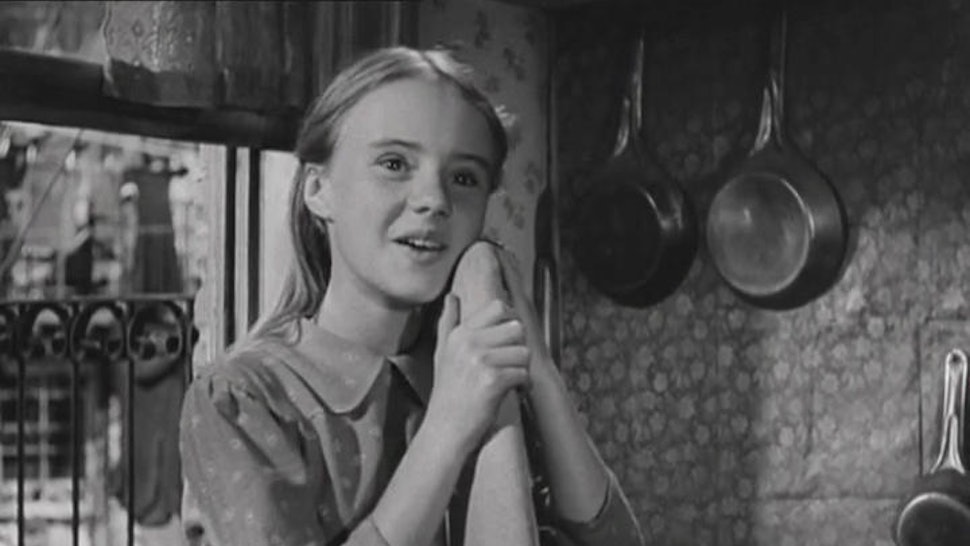
I have written previously that 1945 is my personal favorite year for movies, and this moving film about family life, childhood, school, death, the past, the immigrant experience during the great wave of the last century, all against the hyper-somber backdrop of the stub end of World War II that characterizes all of the movies of that year that I like so much, fits in with the rest of these. I had recently read this book, too, which impressed me as having much merit, particularly with regard to our collective memory of the details of what things and experiences in our past were like. Like any movie, this one had to leave a lot of significant incidents and developments and characters out, but on the whole it is a good adaptation of the basic aspects of the story, and it is even better I think as a movie than it is as an adaptation. This was the directorial debut of Elia Kazan and the atmosphere and the development of the major characters and the way they inhabit the movie are its strong points. The ending is a much truncated version of what happened in the book, doubtless done to not be left with an ending in nothing is resolved or seems to be progressing for the better, but the movie really did not need to be tied up this way. In this it is similar to Life With Father, which operated on an even thinner plotline that was not all that essential to such interest as the film possessed.

The family at the center of this story is an Irish-German union, much like my own family, with both parents being the first generation born in America--and it was emphasized in the book that theirs was the only household Francie knew of in their neighborhood where both parents were actually American born. Despite their status as citizens and immersion in the culture and language of the United States since birth, Johnny and Katie Nolan had not gotten very far by 1912. Johnny of course was fairly hopeless, at least in economic terms, though a highly lovable guy. The circumstance of Katie's being German-descended does not play into my theory of the peculiarity of Irish romance, in which, comparative to more traditionally prosperous peoples, the long term career prospects of a potential husband do seem to be regularly taken into consideration. I feel myself to be in certain ways something of a modern day version of Johnny Nolan, only minus the charm. I suppose one could say minus the alcoholism also, but it is only the greater effectiveness of social control exerted on modern men that prevents me from following that mode of life, as I remain greatly attracted to it. The other characteristics--the inability to perceive the world and my place in it realistically, the endless empty promises to improve myself, the natural inclination toward squalor with regard to living arrangements--are there.


One of the other parts of this story that I relate to is the episode where Francie desires to transfer to a more beautiful and dignified-looking school without knowing much else more about it, since I did the same thing when I lived in Maine. I was not supposed to go to the school I went to, the one that was built in 1924 and had busts of famous white male giants of literature and history lining the hallways and a venerable history as perhaps the premier large public school in the state, but when I saw it I became consumed by a desire to go there as if it were owed me as the natural end of my development to that point to go to such a school, and it was arranged that I was able to go there, and I loved it dearly the whole time I was there, though it is hard to explain why, because in terms of the other students it was just a regular public school, I did not have any very close friends, and when I go back for my reunions most of the people don't remember who I am, and some of them act almost perturbed at my being there, as if I am crashing a party where I really don't belong. But at the time the atmosphere, not merely of the school but of the equally antique neighborhood and city around it, gave me something that I desperately needed to imbibe the air of, even if I was unable to make any very deep connection with it. I have not pushed for very much in my life, but I have a couple of times when it comes to schools. I was determined as well to go to a particular kind of college--residential, preferably somewhat old, average test scores above a certain level, an atmosphere of study that was acceptably masculine without being reactionary or arch-conservative, though this last I would not have been able to articulate in such terms at the time--and I was pretty dogged at not getting pushed into the community college, taking computer classes route that well-meaning people were trying to steer me towards and getting to go to the kind of place I wanted in the end, even though I guess most people would say, given my subsequent career, that the wisdom of those who advised community college has been vindicated.


Dorothy McGuire, who plays Katie, has a lovely voice, and is the easy choice for the honor of favorite 40s girl/woman for this set of reports from that era.

Saturday, April 25, 2015

First of Three Movie Posts

I have a backlog of about ten movies, all from the favored period from 1936-1963, to write up. I am going to break those up into three posts, one for the 50s-60s, and one each for the other two decades cited

Charade (1963)

I knew nothing about this movie going in other than that it starred Cary Grant and Audrey Hepburn at a time when both were long established stars with definite celluloid personae. I surmised that it would likely be 'stylish' after the fashion of the time. I did not anticipate however quite how relentlessly and even absurdly stylish it is--it goes well beyond anything that ever transpires, or that probably would ever even be desirable to transpire, in actual life, from the theme music and the opening titles to the settings and clothes and the glossy smoothness of the impossible plot.


Despite my socialist tendencies. I still like Audrey Hepburn, who besides did have to flee her native Belgium as an early adolescent during the Second World War and spend her teenage years in England in a situation of some hardship. 

But I actually like it, because I sense that everybody involved was to some extent in on the joke. For all of the beautiful clothes and beautiful people and the ridiculously chic Paris of the early 1960s, all projected in glorious technicolor to an even more exaggerated pitch of these qualities, it retains the feel of being something of a lark, of not really taking itself all that seriously. Being apparently an inveterate socialist by inclination, I have always found the Audrey Hepburn fashion show which is always a big part of her movies to be annoying, lovely though even my shrunken socialist heart finds her to be. In Charade it makes up a considerable part of the character of the movie, yet, as its director and writer also conceded, it is also absurd, since in the very opening scenes we are shown that Audrey Hepburn's character's husband, before being mysteriously being murdered on a train, had completely cleaned out their apartment, and afterwards she spends much of the rest of the film rushing around and darting into the phone booths and taxicabs and subway stations of Paris avoiding a gang of thugs who are trying to get at some money they believe she has, yet she is decked out in a different fabulous designer outfit in every scene.

Forward thinking people, especially from the tech and finance worlds, are fiercely insistent about how much better across the board life is now than it was fifty years ago, and that most of us would find living under the conditions of the 1960s unbearable now. This is probably true if we talking about the suburban life of that time vis-a-vis that of the affluent modern day professional, for whom the thought of having no alternative to the food and coffee alone that he would have to endure if transported back to that time and place would cause him to wake up in the middle of the night in a cold sweat, but it still seems to me that life in the great cities of the west, perhaps especially Paris, would have been at that time close to the peak of their enjoyability as places to live. But then again I am looking at the case through a very middle class perspective, and am oblivious to the finer points of life in these cities accessible to elite types today.

Party game for sophisticates, early 1960s


The Band Wagon (1953)


A, to my mind, somewhat forgotten musical near the end of MGM's legendary run of them in the years following the second world war, directed by Vincente Minnelli, many of whose movies I am fond of, and starring an older Fred Astaire, to whom I always pay due homage for being the great star and showman that he was, playing a past-his-prime movie star kind of like himself who is taking a shot at Broadway. While there are bits and pieces of it that I like, and while all of the commentaries that come with the DVD try very hard to persuade the vacillating viewer that this is truly one of the greatest musicals of all time, I don't think it holds together. The songs are O.K., though there are none that I think of as immortal ("That's Entertainment" is probably the most famous). Fred Astaire is Fred Astaire, and I always find it uplifting to see him, though this uplift is a separate emotion from whatever is actually going on with the movie. The time was one of mild transition, from the immediate postwar Truman years to the (seemingly) psychologically less intense and decompressing Eisenhower era, and perhaps the classic Hollywood musical could not withstand this relaxing of the general tension in the culture, certainly without really great songs. I remember that I did not like On the Town all that much on the first viewing, and did not think much of its songs either, but it had an optimistic energy that grew on me the more I recollected and considered it. That has not happened overall with the Band Wagon, though I do like some of the atmosphere. I also don't really like the leading women in this, Cyd Charisse and Nanette Fabray, that much. They seem to have begun to be affected by the limp, rather gusto-less quality that became all too characteristic of traditional musicals during the 50s.

"That's Entertainment". The shoeshine number, "All By Myself", and the beer and pretzel song (ed--"I Love Louisa") are all decent, but nothing exhilarating. This is the first Minnelli film I have seen where I have not come away thinking that what he was able to do with the material was somewhat underrated (The others I am thinking of are Meet Me in St Louis, The Clock, Father of the Bride and An American in Paris). 

I guess I have nothing else to say about this.


Alice in Wonderland (1951)


This wasn't actually on my list but I had recently read the book and thought I should like to see one of the older movie versions, and could not find a copy of the 1933 Paramount movie featuring W.C. Fields, Cary Grant, Gary Cooper and others that devotees of the books seem to have at least found interesting, I settled on the Disney cartoon. While I tend to find especially the modern Disney cartoons tiresome, I often like the ones from this era. I thought this Alice was excellent, imaginative, captured some of the manic intelligence of the story (particularly the parts voiced by the very talented ex-vaudevillians Sterling Holloway and Ed Wynn), interesting and vivid drawings. Compared to some of the other Disney films I think it is underrated today. It is also very short, 75 minutes according to the internet. This voice of Alice was done by a 13-year old English girl and cartoon Alice lookalike named Kathryn Beaumont who appears (via several extras on the DVD) to have been every American's, and certainly my, ideal of what a properly brought up thirteen year old English girl ought to be. She would also do the voice of Wendy in Peter Pan two years later.


The memory of the Disney Alice seems to have been hurt by her not qualifying as one of their proper princesses, though as far as female characters go, she would seem to be a much more acceptable object of identification for impressionable young ladies in our modern age than the unfortunately named (and fated) Snow White or Sleeping Beauty. But she does not seem to be one of their more popular characters, despite the circumstance that the adorable cartoon depiction of her is even more exaggeratedly Aryan-looking than the Tenniel illustrations, and as we all know, Disney, much to the dismay of all right-thinking people, tends to cash in when they go full-on Aryan with their female characters, as in Frozen, which features an ur-Scandinavian princess named Elsa who is so unvibrant that everything she touches becomes encased in ice. Somebody out there cannot get enough however.

There were a couple of Disney produced television programs from 1950 and 1951 not too subtly promoting the upcoming Alice release that I must say I found kind of charming. The first one was a show that aired on Christmas Day and featured a bunch of kids, including Disney's teenaged daughters and the aforementioned Kathryn Beaumont quaffing Coca-Cola along with Edgar Bergen, Charlie McCarthy, and the great Mortimer Snead. Now that I have children near this age (13) and am given to sentimentality over them when their energies are not negatively directed, I found this rather endearing. In the second program Beaumont and Sterling Holloway, who was a show business person, appeared as guests on some orchestra leader's program, as a number of musical pieces from Alice were performed. This also had I believe the footage of Ed Wynn acting out and doing the recording for the Mad Hatter, which was very impressive to see.   


Monday, April 13, 2015

On Blaming One's Parents For One's Fai-- Problems as an Adult

When I was a youth, my mother had this ridiculous friend, we'll call her Mrs B. Mrs B was ugly as sin, was frequently ensconced in a neckbrace, and was given to lamenting that 'the world was against her'. She had an equally hopeless son who was around my age, fat, myopic, hair that never managed to look clean, cheap supermarket sneakers, took band lessons but never became good or learned any songs that might have contributed to a swinging party, etc. One day Mrs B was enumerating many of the unfortunate facts of her son's existence and personality to my mother, for some reason within my earshot, summing up with the observation, 'not exactly the in-crowd', to which lament my mother found the most appropriate response to be 'sounds familiar'.

Thanks mom.

In contrast to that story I will tell one about my father's childhood from about 1961, when he would have been around thirteen. There was in his class at school a rather brutish fellow who, in evident confusion as to how to cope with some feelings he was having about a rapidly developing young lady in their class, took the path of invoking her name endlessly in a hostile and negative guise (i,e., 'your sandwich smells like Rhonda'; 'You're as dumb as Rhonda', etc*). My father, who being probably mildly sociopathic was always comfortable in routine social settings and enjoyed a good rapport with women, eventually made a witty observation in front of Rhonda and the rest of the class with regard to this gentleman's apparent obsession that caused some general laughter, and caused the brutish boy no small mortification. In fact, an hour or two after school that very afternoon, this Jimmy, or maybe it was Billy, showed up at my father's house with a couple of his cretin friends, though they were brought along merely to be witnesses, who are always needed on such occasions. My grandmother answered the door, and Jimmy asked with as ominous an air as he could muster for my father, who, after his mother had given these motley characters a quick bemused perusal, was called for. As my father made his way down the stairs or wherever he happened to be coming from, Jimmy, or Billy, supposedly said to my grandmother, "You might want to pull the shades down. There is probably going to be a lot of blood". This being 1961, another kid openly declaring that they were intending to fight with and hopefully injure your child was apparently accepted as a normal stage of development that all boys at least were expected to have to go through. "Oh, thank you for the warning," was all that my grandmother said, and she proceeded then to make a big production of closing the shades. When my father came to the door, she said matter-of-factly, "These fine gentlemen are asking for you", ushered him outside to deal with them, and swiftly closed the door. Jimmy at that point demanded that my father step out into the street and fight with him. He was larger enough than my father and accustomed enough to pushing people around that I guess he was confident he would beat him easily without too much resistance, but in reality of course my father, who turned out to be a Division I athlete and a man who could always self-generate a considerable amount of aggressive fury when he wanted to, pummeled this guy into submission within a few minutes, as his mother doubtless knew he would, though he himself had not, really, until that day. The point of this whole story is the reaction of my grandmother and the way she handled the problem is the exact opposite of how my mother would have handled any such situation involving me. She would have been hysterical and been certain that I would be overwhelmed and crushed.

This business of blaming and holding grudges against one's parents however is very much frowned upon among the leading people, certainly of my generation. They consider it banal. I am highly conscious of this, though the temptation to rouse it up as a cause of or excuse for any deficiency anyone might judge me as having--at the very least to myself-- remains strong. I do not even rationally believe that they could have done anything that would have made any massive difference in the outcome of my life because of my inherent nature, and if anything I have probably done slightly better in most areas than might have been predicted based on the available data. Still, my sense of emptiness with regard to having any kind of real personhood, past or present, is such that somebody has to be the scapegoat for my unhappiness about this, I need someone on whom to focus my displeasure who might actually feel it, and my parents are the obvious candidates. I harbor some hope that intensive psycho-analysis would demonstrate that there is some cause deep in my background that prevented me from developing into a dominant force in the world; whether the particular cause is my parents, or an unexplored phobia of water fountains or carrots or Austrian economics is a matter of indifference to me. Nothing is really their fault, unless all of my frustrations with life can attributed to inferior genetics, but even in that case they would able to plead that I had been the victim of extraordinarily bad luck.

I would discuss this with a psychiatrist but I have not had satisfactory results in dealing with such people in the past, as the ones I have seen haven't seemed to consider my problems either serious or interesting. Perhaps they are not. Still, I would be willing to pay somebody to humor me just a little, at least pretend that I was an adult or some other kind of serious person. I don't know why no one is able to do this with me. I have been told that I lack gravitas, but still, my lack cannot be that much more pronounced than other that of people who manage to get themselves considered as adults.

When I consider how if I could somehow be transported back into the body of a 16-25 year old but possessed with my present mind, if my development and life outcome from that point forward would be substantially different. I am not sure that it would be in any grand way. I think I would be a little better organized with school work and be able to keep up a little better, but would I dedicate myself to habits and a program that would guarantee my entry into medical or law school or some other grand, prestigious and high compensation field? Probably not, because at some point doing that has to become your ruling priority in life, almost your second nature, and I don't seem to have either the background or the sensibility to get to that level. Would I drink less? Again, probably not. I would hope I would be able to curtail some of the more desperation-driven episodes with regard to all bodily lusts, though even if I were to possess my current mind, I would be burdened with the hormones of a twenty year old again and even my present mind is likely not  strong enough to constrain and channel those urges in more productive directions. I also miss the camaraderie and social aspects of drinking, which I have not really had now for about 18 years, since I left Prague. Similarly I miss sitting around at meals with people and listening to their conversation as one did at school, even though at the time it was widely noted that the very top students and achievers did not waste time in this way but ate quickly, evidently getting all the social nourishment they required from lunch in ten or fifteen minutes, before going back to their studies, or to exercise, or to work on internship applications and so on. I would probably fall back into that habit as well, because I would not feel the same sense of purpose back alone in my rooms as the high achievers did while knowing my friends were still yakking it up at table. The big changes I would make would be in terms of presence and attempts to be more social. I would try to join more activities, widen my circle of acquaintance. I would go to the dancing lessons, hopefully retaining enough self-possession that the women would find my presence there somewhat welcome and not 'creepy'. I would probably try to join some kind of outing club and a literary society as well. Again I hope I would not approach these things with anxiety or stress. I believe I would be able to control my day-to-day drinking enough now to show up every day for class, at least have read if not understood all the assignments, and be able to bring in my papers on time, though I still do not know that the quality of them would be especially high. In doing all this I could at least cultivate a relationship with some of my teachers as a responsible and well-meaning if not brilliant person, to the extent that they might be willing to write a recommendation for me. For whenever I considered going to graduate school the necessity of having three recommendations was always the major stumbling block (my grades probably would have been another, but I never got so far as to check those), as I could not think of anyone I felt comfortable or justifiable in asking for one from...

My self-imposed time limit on this post is up...

*I don't think her name was really Rhonda

Monday, April 06, 2015

Picture Meme


I was looking around for one those picture memes that sometimes go around on the internet--the kind that goes 'open the eighth file on your computer and choose the 23rd picture in it and explain what it is' or something along those lines--but I couldn't find one so I decided to pick a few numbers and do my own. I got lucky with the results, insofar as being able to explain the pictures and also for their comparative quality.

1. Late Last Summer (Probably August), Camp in Brattleboro


This camp in Vermont was my wife's grandfather's house. He died about 20 years ago but it has been kept to this point in the family mostly as a weekend getaway. There is a pool there that this grandfather dug out and poured himself back in the 1970s. The house itself is small and still has something of a 1970s time warp effect, though occasionally a piece of furniture is updated. There is no internet service or cell phone reception, and there was no television there until a few years ago, when some basic service was installed. I actually buy newspapers and magazines when I go there, and I enjoy this, especially in the summer when I can sit out on the patio and read them. It reminds me of some of the parts of my childhood that I like. Anyway, we are very lucky--privileged, really--to have this old place to go to, and we usually have it to ourselves, especially outside of the summer months.

2. Last April Vacation--Acadia National Park, Maine


We went back to Acadia last April after having finally gone there for the first time the summer before. There are so many wondrous places to go just in New England, and I am pretty conscious of this, but time slips by all the same, and especially with six children now it is tough to coordinate more than a couple of outings beyond an hour or two from home in a year. But as I noted on the site I think previously, I was very excited to go to Bar Harbor and Mount Desert Island on that first visit, and I enjoyed our second trip also, though it was out of season and a little less glamorous as far as places being open and the crowd around town and at sites goes. The real travellers, writers, etc would have liked the spring trip much better, or claimed to, but I am kind of mesmerized by crowds, especially if they seem to be from the expensively dressed and educated segment of society, and are not overwhelmingly large, which I almost never feel to be the case in North America as compared with the famous tourist centers of Europe. It was much more the regular Maine people on the spring trip, though as I went to high school in that state I still feel some emotional affinity for the place and the people.

I think this hike was on Gorham Mountain by the way.

3. Just Last Week. New Baby Daughter.  


In her Easter costume. It is hard most of the time to get a clear look at her face in real life, because she is either thrashing her head around, or crying, or has her eyes closed, or has a pacifier in her mouth.

Thursday, April 02, 2015

Dysgenic Breeding Even Within Comparatively Upmarket Communities?

Dysgenic Breeding, or the idea that society has been organized to a condition which encourages people deemed to be inferior (usually with regard to general intelligence and competency, often with a racial component involved) to reproduce at much higher rates than the better and more able classes find to be prudent to do themselves, is a popular theme in certain corners of the internet populated by people who are usually considered contemptible and defective of intellect themselves by the ascendant segment of the thinking population, who nonetheless often have ideas of their own that certain people perhaps more than others would do well to limit their fertility with the aim of producing a more desirable social, cultural and ecological environment in which to live. While I do think it is likely the case that people with certain characteristics would be more likely to produce children compatible with what I would consider to be a desirable organization of society, I do not consider myself or anyone else as having the right to restrict the fertility of others on this basis; that the existence of these others who are troublesome to me in some way is something I need to accommodate myself to as much I am reasonably able; and that those who consider me and my offspring as the dysgenic element at work in society would be bound by the same restraint and responsibility towards us.

This all came about because I happened to be thinking the other day about how the people who had been the most superior students, who had won all of the academic prizes and earned Phds and fellowships and are at least contending seriously to have distinguished careers in cognitively-restricted fields are almost uniformly childless into their early and mid-forties, and even among that minority who did have children they seemed to limit themselves in most instances to a single offspring. I have to admit I am not clear who exactly would have been considered the very stupidest students by the academic world and other professional assessors of cognitive talent (I suspect I would be put front and center in that group, but maybe not), but I'm sure they have collectively had more children than the most accomplished group has. Certainly the people (of varying degrees of intelligence and spirit) who habitually missed classes due either to being hung over or because they wanted to get an early start on their daily drinking have outproduced the stellar students in this regard. I presented this theory to my wife (who, it probably goes without saying) is also a graduate of the school. She didn't think much of it, though she did at least give me a couple of backhanded compliments, asking me "Do you really think you were the stupidest person there?", and "Do you really think (the school) would rather have someone like (names person with multiple graduate degrees from world-renowned universities) than you?" Since I did not feel like getting into a drawn out fight which would involve my questioning my dear one's understanding of what kind of people college professors and administrators like and don't like, I answered "I guess not" to this second question, though the answer is obviously otherwise, and should be. But really, I'm practically a walking composite of everything in an individual that the better colleges have spent the last forty years trying to get away from, and that is even irrespective of my racial background and gender identification, which I guess some people might find objectionable in themselves, but in terms of personality, palpable ambition, talent set, potential for seriousness, and the like.

Digging further into this question of dysgenic tendencies, however, I found it notable as well that most of the men, not many in number, who were broadly allowed by the ladies to be campus hearthrobs, have not by their early forties had any children either, or at least they have not publicized the fact, and none have large families. There is another related group, consisting of those men who manage to sleep with a couple of dozen women even though none of the latter were ever known to admit to 'liking' them, and these guys have even fewer children than the heartthrob group. So here again we have a sampling of men who distinguished themselves in their college years as markedly of a superior desirability to the run of men, and twenty years on they have virtually no children, and fewer on the whole than those their erstwhile classmates who were more memorable to the majority of their female peers for their defects than any charms they might have pretended to possess.

How about the women who were most broadly and uncontroversially accepted in their college days as having been the primary beauties of the place? Among the ones who come to mind who might be considered to qualify almost all would appear to have had at least one child, though none that I am aware of have big families, i.e. more than three children. Of further sociological interest, almost every woman who fell into this category married someone unconnected with the school, which is not surprising, given that the small size and general low level of average grooming and attractiveness which prevailed at our school exaggerated the impression anyone who came across as at all conventionally good-looking made on the pulchritudinally downtrodden mass of the student body there and seems almost to have enveloped them in a strange kind of aura that precluded them from being able to either seriously entertain marriage possibilities within the community, or be the objects of such entertainments themselves.

This leaves then the larger families, in which I include anyone with four or more children, though the majority of the ones I can think of actually have six or even seven. All of the mothers of these large families I consider to have been above average in attractiveness in their school days. This does not surprise me. Having five or six children is no joke, and I think it is probably necessary to have a more than ordinary amount of charm or likeability to persuade even the most pliable man (or arouse the requisite enthusiasm in a more vigorous one) to commit to having a family of that size with you. If they were not as widely celebrated in cafeteria and locker room banter, I suspect this can be attributed to the circumstance of the more accomplished ladies' men, who tended to direct these conversations, with their superior experience and understanding of women being able more readily to detect the presence of this incipient baby-lust and being, in keeping with their nature, somewhat repelled by it. Their husbands by and large seem happy enough to have gotten them, and in most instances at a pretty young age. Contrary to the title of this post, I don't really think there is a lot of real dysgenic breeding here, because this group of parents is I think very intelligent, certainly not below the median level for the school, well-read and cultured. For the most part they did not expend their energies very stridently in academic competition or striving, however, so they would not really stand out statistically as the Best and the Brightest, and probably they are not that. But they are people who ought to have some identifiable value and stature in a survey of the contemporary social landscape.

The husbands in most these families are like the solid second baseman who can hold down a starting position for seven or eight years without being a liability, and are among the favorite players of the manager, but will never receive all-star or MVP consideration by the media and general public. Indeed, I am a bit of an outlier among this group of men, most of whom were quite responsible and working in 'adult' professions pretty much right out of school. I also have the sense that these men get along well both socially and in the world of work with other men, are received as competent and worthy of their respect and so on, which are statuses I have never really been able to attain. There was even one guy in this group whom I took for a potential superman in his youth, as he was very fit and driven to win competitions and master skills and so on with an unusually effective tenacity. But even he changed his profession in mid-life to something which, while still traditionally masculine and involving leadership and so on, was still a considerable downshift from the testosterone-heavy life he seemed to inhabit comfortably when he was in his twenties.**

None of these people are divorced. It is not really worthwhile to divorce when you have many children unless you are extremely wealthy or guilty of extremely reprehensible behavior.

**Not really on-topic, but I have been considering the various capabilities and handicaps men have in meeting women, and I got to thinking of that class of men who can reasonably expect, when young, to meet women when shirtless, which is a massive social advantage, since probably 90% of men at least cannot even dare to try to pull off. I realized that the times when I had been most comfortable and felt most confident in bantering the fair sex was on occasions when the women themselves were dressed in some kind of retro or traditional costume, though I was always too self-conscious to ever dress in such a way myself. This was an extremely common affliction at our school, by the way, more than I think people are fully conscious of, and the question should probably be probed more thoroughly. Such occasions are fairly rare in actual life, especially if one if too obtuse to seek them out. Still, this explains in some part my secret lifelong attraction to 1840s style squaredancing clubs, renaissance fairs, and country-western themed bars and hoedown type events, though I have never been to any of these kinds of things...